



Abstract
Introduction:
Multiple publications provide guidance on the conceptualization, development, and maintenance of women’s heart centers. Despite religious implementation of those guidelines, the practical experience is fraught with roadblocks.
Objective:
Our focus in this communication is to share those practical lessons learned from our experience in establishing seven women’s heart centers in Michigan and three in Tennessee.
Conclusion:
To better understand - What does it take to make the centers sustainable, successful, reproducible, and viable? What is the blueprint for the future generations of leaders to develop women’s heart centers that are accessible and effective?
Current Knowledge Base
Multiple publications provide guidance on the conceptualization, development, and maintenance of women’s heart centers. These predominantly emphasize structure, financial support, research, and advocacy. We are past the stage of debating that heart health in women needs prioritization and dedicated attention.
This document is a complement to the multiple publications that focus on the biological, hormonal, and reproductive mechanisms that corroborate women’s distinct cardiovascular presentations.
Our focus in this document is (a) to share practical lessons learned from our experience in establishing seven women’s heart centers in Michigan and three in Tennessee (Fig. 1), (b) to recognize the challenges in implementing a homogeneous and evidence-based concept across both private and hospital-employed sectors, and (c) to share the six elements to excellence and sustainability. These have worked for us not once, not twice, but in fact, 10 times over.
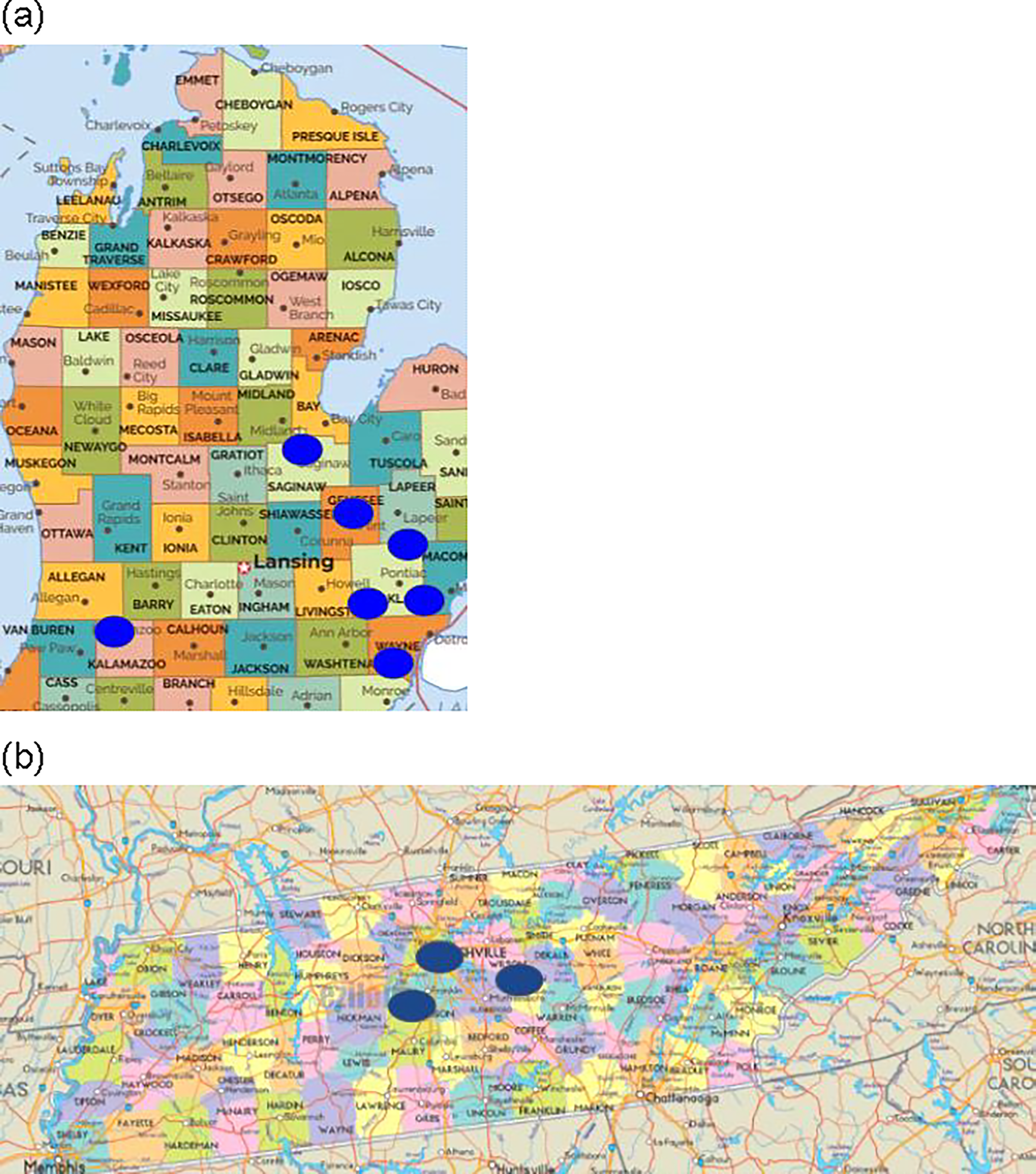
Locations of Ascension Women’s Heart Programs Launch in Michigan (seven total)
The Critical Elements
Administrative buy in: the key
Hospital leadership and administrators, specifically the chief executive officer and the heads of the department of cardiology, are the architects of organizational culture. 1 A well-orchestrated group of administrators with a champion in women’s heart health is both instrumental to developing a viable health care ecosystem.
The alliance between women’s heart program clinical and institutional executive leadership starts with addressing the most rudimentary question, “the need.” It is central and essential to acknowledge it early on. Despite mounting evidence affirming lack of evidence-based care delivery with the current framework of cardiac services for female patients. 2 and superior clinical outcomes with specialized centers; 3 a surprising community of physician colleagues continues to challenge the true role of specialized centers for women. A robust comprehension of the culture, the appetite, and the diagnoses that demand attention will set you up for success.
Partnership with the executive team also helps manage finances and allocate resources to maintain program caliber and safety. It is our common goal to achieve high quality, positive patient outcomes, including overall health, recovery, prevention of adverse events, and satisfaction with the care provided. Recognizing the administrative team that supports and nurtures the initiative is the prime first element. Key components of efficacious hospital administration are (1) leadership and Governance, (2) financial management, (3) human resource management, (4) quality improvement and patient safety, and (5) information technology and health care Systems. 1 Patient outcomes improve with prioritization of (1) patient-centered care, which is tailored to individual patient needs and preferences, (2) collaboration and interdisciplinary care, (3) measurement and evaluation, and (4) future trends and challenges.
Alliance with the leadership ensures an aligned vision, synergistic efforts, and an escalated probability of a triumphant consequence. In fact, having a dedicated administrative dyad can be instrumental in providing periodic peer comparison in quality metrics and ensuring ongoing refinement in rendered services. Clearly defined goals SBAR (situation, background, assessment, and recommendation) solidify (1) formulation of a business plan for the proposed women’s heart services, (2) acknowledgment of the socio-demographic profile of various locations, and (3) intentional acknowledgment of minority populations to identify gaps and prioritize access.
Recurring meetings with the executives and leadership aid the program to sprout with the character that is harmonious with the institutional culture. Incorporation of their counsel, opinions, and recommendations validates teamwork. For the program to prosper, leadership from the CEO to the department leaders needs to be aligned without exception.
Let the community speak to you
Though listed as the second ingredient, this one goes hand-in-hand with the first. Knowing the people we serve and their genuine needs is fundamental. It starts with stratifying the geography by pin codes, per capita income, and major demographic determinants. Detailed analysis of the household income, family structure, and urban versus rural areas can help tailor the implementation. Comprehension of the prevalence of various forms of dysautonomia, compromised maternal access, and food deserts can direct efforts geared toward awareness and intervention. The existent health care services from competing regional health systems and organizations can also direct the best strategy. Any new program that hits the ground is expected to have a unique “niche.” Women’s heart program is a specialized initiative in itself, but having premier services exclusive to your program affirms market leadership. As an example, with the predominance of microvascular disease in female patients, the availability of algorithmic diagnoses and management adds further primacy when your team is a singular expert in the region. Any such advanced niche is above and beyond the rudimentary framework of the program, which should be equipped to cover both traditional and nontraditional risk factors across every stage of a woman’s life.
In addition to the “niche,” dedicated patient demographics, and robust system to follow quality metrics, another sizable asset of a women’s heart program is how it can bring the community together. Partnership with the foundation team to establish a fund specific to the cause can save considerable hassle when resources are needed for community engagement and screening efforts.
The network of experts: protect yourself and your patients
Never lose sight of any member of the team. It is essential to perceive the importance of your own well-being and safety while developing the program as well. With the lack of data on women’s heart health that we are unfortunately plagued with, most treatment options are expert opinions. Recognize an expert in each realm, discuss cases and algorithms with them, and ensure cyclical academic revision on each topic. This can be accomplished by a group of physician champions who meet periodically and contemplate important guideline updates. Caution is advised to sign up with only those physicians who are willing to put in the effort and time for this. You would ideally want a champion from primary care, general cardiology, interventional cardiology, endocrinology, oncology, sports medicine, lipidology, mental health, cardio-obstetrics, maternal–fetal medicine, obstetrics and gynecology, and neurology.
It is important to keep abreast and collaborate for both evidence-based medical care and medico-legal protection. I would never undermine the gravity of protection and coverage rendered by physician colleagues. This is particularly true to medical and surgical management of high-risk obstetric patients, spontaneous coronary artery dissection, hormone replacement therapy recommendations, and management for cardio-oncology therapy. Organizing and/or attending one national women’s heart specific conference is a proposed way to remain current. Developing and maintaining mentorship relationships is highly rewarding and shielding when the need must arise.
Get help and guidance from the community members
Once you have developed your program structure and workforce, the next greatest question is how to get the services to your patients in the community from within the walls of the medical center. The response varies by region and could range from a screening event in a church to a music concert dedicated to heart health to a fashion show with a panel discussion on heart health in women.
The most fitted approach is having a group of community leaders to guide and lead the cause from the public-facing front. Motivated individuals are willing to volunteer their time and expertise to generate awareness, organize campaigns, and spread the message. Advocates include lawyers, bankers, performers, media personnel, or business owners. This community advisory board serves as a cushion to develop the program with sustainable impact. The women we serve are much more likely to communicate with the women they can relate to. To serve as a practical example, we have organized concerts to direct the proceeds to the women’s program fund and utilized those to screen women affected by domestic violence or prostitution. This approach opens doors for multiple avenues of innovation and creation of your unique programmatic signature. The time and energy spent on the community endeavors, though with no work Relative Value Units attached to them, help build a sound foundation for robust future clinical growth.
The health care organizations that have earned the trust of our society over decades serve as persuasive avenues of alliance. The American College of Cardiology, the American College of Obstetricians and Gynecologists, and the American Heart Association along with local nonprofits, can serve as dependable collaborators.
A process of constant evolution
This is the last but the most pressing content of the magical potion. No matter how well thought out the inception and execution, there will always be some unforeseen hindrances. Every program is unique because of the people who build it and the culture they bring in. With more collaborations also come more personalities, disagreements and delays; as do opportunities, potential, and excitement. As all ingredients mix together, the director should never lose sight of the determinants of success for the program.
While we all can work off a similar mold, one size does not fit all. I would recommend staying in close contact with others who have voyaged the same path to expect, recognize, and manage obstacles; and commemorate triumphs. It is terrific how much we can learn from our counterparts. Collaborations potentiate us to (1) recognize and avoid setbacks early on, (2) deal with a programmatic issue with minimal compromise of the existing relationships, and (3) plan a safer and more efficient approach. Having a national forum for all women’s heart program directors can serve as a great resource as we continue to expand in this realm. Share, talk, engage; with webinars, conferences, and social media. There is enough space on the podium for all of us.
Conclusion
The process of developing and nurturing women’s heart programs is a tremendous journey. Conceptualization of a firm framework and incorporation of all the practical ingredients is only the inception. How the program blossoms is determined by the members of the health care team, the leadership, community engagement, and constant reform. And of course, the sixth critical element is Passion.
Footnotes
Author Disclosure Statement
Nishtha Sareen is a consultant for Abbott.
Funding Information
No funding was received for this article.