



Abstract
An in-depth review of a varied range of eco-friendly options for construction is done in this thorough research on sustainable building materials. With increased worries about environmental deterioration, the building sector is increasingly focusing on long-term solutions. This research looks into a variety of materials, including bamboo, engineered wood products, recycled composites, and optimal concrete mixtures. The study underlines the importance of compressive, tensile, and flexural strengths, which are a basic feature for structural integrity. The study also gives useful insights into their practical applicability in real-world building projects by assessing the flexural strength of various materials. Furthermore, the study examines the environmental effect of these materials, taking into account characteristics such as renewability, recyclability, and energy efficiency. Laboratory tests were conducted to determine the fundamental properties of selected materials as part of the investigations. The study emphasizes the ecological advantages of adopting these sustainable alternatives through life cycle assessments and comparative studies. The research output can be served as a thorough reference for architects, engineers, and policymakers, providing a complete knowledge of sustainable building materials and their critical role in developing a greener, more resilient built environment.
Keywords
Introduction
The building sector is important in constructing the contemporary world, but it also poses substantial environmental issues. The vast demand for building materials, as well as the resource-intensive processes involved, lead to significant carbon emissions, resource depletion, and environmental deterioration. 1 In response to these environmental issues, there is an urgent need to adopt sustainable building techniques that reduce the sector’s environmental effect. One of the most important ways for accomplishing this aim is the widespread use of environmentally friendly and sustainable construction materials. 2
This article gives a detailed analysis on sustainable building materials, with an emphasis on eco-friendly construction choices. The major goal is to offer a complete grasp of various sustainable materials, their features, environmental benefits, and prospective building applications. 3 We hope to shed light on the potential solutions available to transform the way we build and construct our built environment by a comprehensive examination of scientific literature, experimental assessments, and life cycle evaluations. 4
The first section of this study delves into an extensive literature review, capturing the latest advancements and developments in the realm of sustainable building materials. 5 We explore a diverse range of eco-friendly alternatives, including recycled materials, bio-based composites, and low-carbon options. 6 By delving into the production processes, material properties, and applications of each alternative, we seek to uncover the unique environmental advantages they offer and the challenges they might present in real-world applications. 7
The second stage of the investigation comprises rigorous experimental analysis to supplement the conclusions from the literature review. We evaluate the mechanical, thermal, and durability qualities of selected sustainable materials using extensive laboratory experiments. These assessments give vital insights into the material’s performance characteristics, assisting in determining its appropriateness for various building applications and informing design decisions. 8
The third component of our research is a life cycle assessment (LCA) of sustainable construction materials. 9 The LCA investigates each material’s complete life cycle, from raw material extraction to manufacture, transportation, consumption, and final disposal. We may conduct educated comparisons between eco-friendly materials and conventional alternatives by measuring environmental consequences such as carbon footprint, energy usage, and waste generation, supporting evidence-based decision-making in sustainable construction practices. 10
The four eco-friendly materials created from diverse building wastes are rooted as sustainable construction materials, as shown in the figure below, and these materials are mostly produced from construction and demolition wastes. Tiles of various sorts and sizes can be mined from numerous sources of building byproducts (see Figure 1). Bricks and blocks are also important construction materials that may be sourced as recycled solutions from local garbage. These materials are considered sustainable construction materials because they add value to the use of recycled resources.
11
Sustainable building materials.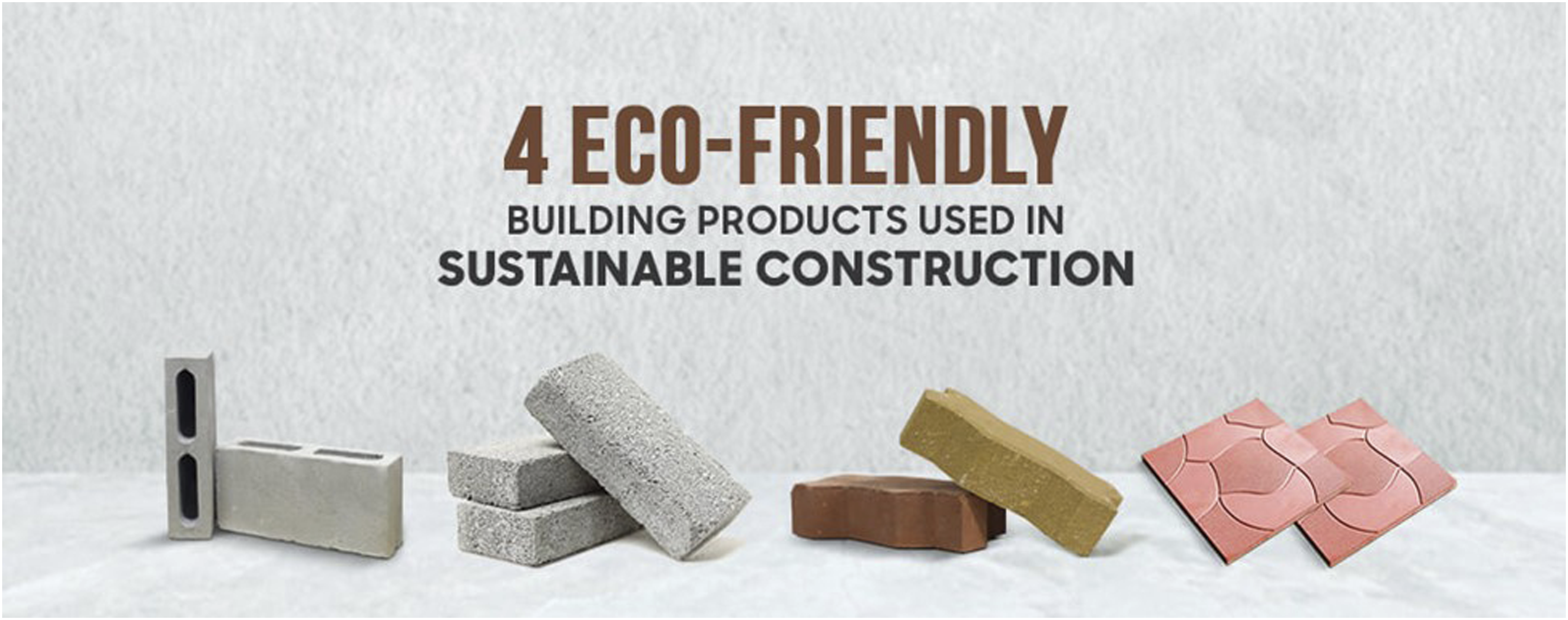
We realize the revolutionary potential of sustainable construction materials in producing a more eco-conscious constructed environment as we go forward with this thorough research. 12 Our goal is to give architects, engineers, politicians, and industry stakeholders with a thorough grasp of the various environmentally friendly choices accessible. We hope to contribute to a greener, more robust, and peaceful future for our planet and its people by encouraging the use of sustainable materials in building. 13
Sustainable building materials
Because of their environmental benefits and contribution to the creation of eco-friendly structures, sustainable building materials have grown in popularity in recent years. Reclaimed wood is one significant type of these materials. Reclaimed wood, which is salvaged from ancient houses, barns, or other structures, not only lessens the demand for virgin lumber but also gives character to new creations. Because of its strength and durability, it is a fantastic choice for flooring, furniture, and ornamental pieces. The building sector supports recycling and minimizes the depletion of natural forests by reusing wood that would otherwise wind up in landfills. 14
Another important sustainable building resource is recycled metal. Steel and aluminum, for example, may be recycled endlessly without losing their quality. In green buildings, recycled metal materials are often utilized for structural framing, roofing, and ornamental features.
15
Metal recycling eliminates the need for mining, conserves energy, and lessens the environmental effect of metal manufacturing. Furthermore, employing recycled metal reduces the carbon impact, making it a crucial choice for sustainable building methods (see Figure 2(a) and (b)). Sustainable building materials.
Bamboo, a fast renewable material, has emerged as a critical component of sustainable building. Its rapid development rate, which allows it to attain maturity in a few of years, making it a very sustainable material for a variety of uses. Bamboo is an extremely flexible material that may be used for flooring, roofing, wall cladding, and even structural elements. 16 Because of its tensile strength and flexibility, it is an excellent substitute for conventional hardwoods. Furthermore, bamboo production aids in the fight against deforestation, lowers greenhouse gas emissions, and provides employment possibilities for local populations. 17
Recycled glass is a long-lasting material that is often used in green construction projects. Crushed glass is an aggregate that may be used in concrete, glass worktops, tiles, and insulation. Incorporating recycled glass into building components not only saves natural resources but also decreases the energy necessary to manufacture new glass. The building sector helps to trash reduction initiatives and fosters a circular economy by diverting glass debris from landfills. 18
Rammed earth construction is a centuries-old building style that has seen a resurgence in sustainable architecture. To build walls, layers of soil, chalk, lime, or gravel are compacted inside a frame. Rammed earth constructions have high thermal mass, which automatically regulates inside temperatures. This approach makes use of locally available resources, which reduces transportation emissions. Furthermore, with proper care, rammed earth buildings have a low-carbon footprint and may survive for millennia, making them an environmentally benign alternative for sustainable construction. 4
Hempcrete, a combination of hemp fibers, lime, and water, has gained popularity in recent years as a sustainable alternative to standard concrete. Hemp growing absorbs CO2, making it a carbon-negative crop. Hempcrete is a lightweight, insulating, and non-toxic material that creates a healthy interior atmosphere. It also has great moisture-regulating qualities, which reduces the likelihood of mold and mildew growth. 19 The construction sector promotes sustainable agriculture and decreases dependency on energy-intensive building materials by using hempcrete into construction projects.
To summarize, the use of sustainable construction materials not only addresses environmental problems, but also helps to the production of healthier, more energy-efficient, and longer-lasting structures. The building sector encourages sustainable methods, conserves natural resources, and reduces the environmental effect of construction operations by adopting recovered wood, recycled metal, bamboo, recycled glass, rammed earth, and hempcrete. 20 As the demand for sustainable buildings grows, the development and use of these materials will be critical in crafting a greener and more sustainable future for the construction industry.
Literature review
The first section of this research focuses on completing a thorough literature assessment on sustainable construction materials. We go through recent research articles, studies, and industry publications to find a wide choice of environmentally friendly products. 21 The evaluation of literature covers recycled materials such as recycled aggregates and recovered wood, bio-based materials such as bamboo and hempcrete, and low-carbon solutions such as geopolymers and fly ash-based goods. 22 We investigate each material’s manufacturing methods, features, and uses in order to comprehend its environmental benefits and limits. 23
The pursuit of sustainable building materials has emerged as a critical component of the construction industry’s attempts to solve environmental concerns and adopt more environmentally friendly methods. 5 A thorough investigation of eco-friendly alternatives for construction materials has become critical in the industry’s desire to lower its ecological imprint and migrate to a greener and more sustainable built environment. 24
Several studies have emphasized the negative environmental implications of traditional building materials, such as high carbon emissions, excessive resource usage, and trash creation. 25 As a result, academics and industry practitioners have shifted their focus to sustainable building materials, which provide potential ways to alleviate these environmental burdens. 26
Recycled materials have received a lot of interest in recent study. Recycling aggregates from building and demolition debris has showed promise as a viable alternative to conventional aggregates, decreasing the need for massive mining and landfilling (see Figure 3). Additionally, recovered wood has developed as a sustainable solution, offering an environmentally benign alternative to virgin lumber and helping to forest conservation.
27
Partial views of sustainable building materials from recycled wastes.
Bio-based products have gained popularity due to their recyclability and minimal environmental effect. Bamboo has been a popular alternative for structural applications because of its quick growth rate and remarkable strength-to-weight ratio. 28 Moreover, hempcrete, a hemp fiber and lime combination, has shown remarkable thermal and acoustic qualities, making it an appealing choice for sustainable building insulation. 29
Low-carbon alternatives are being intensively researched in order to reduce the carbon footprint of construction materials. Geopolymers, which are generated by the interaction of industrial byproducts such as fly ash and slag with alkaline activators, provide a cementitious alternative with much lower greenhouse gas emissions than typical Portland cement. Moreover, fly ash-based goods, which use discarded fly ash as a key constituent, have the potential to reduce environmental impacts while also contributing to the effective use of industrial byproducts. 2
The incorporation of environmentally friendly building materials into the construction sector necessitates a thorough grasp of their qualities and prospective uses. Yet, there are still issues to address in terms of material performance, cost-effectiveness, regulatory compliance, and public acceptance. Addressing these impediments and providing evidence-based data to promote the informed selection and integration of eco-friendly options in construction methods is critical. 30
There is a rising interest in sustainable building materials in the literature, with considerable research concentrating on material characterization, performance evaluation, and environmental analyses. 31 Many studies have been undertaken to estimate the total environmental effect of these materials, allowing for direct comparisons with traditional counterparts.
Finally, the literature illustrates the importance of promoting sustainable building materials in the construction business. This extensive research seeks to add to the current body of knowledge by conducting a detailed evaluation of eco-friendly alternatives and their potential to revolutionize the way we design our built environment. 32 This study intends to contribute to the paradigm shift toward greener and more sustainable construction methods by giving information on the environmental benefits, performance features, and prospective uses of these materials. 33
Experimental methodology
By combining diverse research methodologies, the methodology used in this study intended to give a thorough knowledge of sustainable construction materials. To provide a multi-dimensional perspective on the viability and effect of eco-friendly alternatives in construction, the study approach included a combination of Interview for focused group, literature review, material assessment, life cycle analysis (LCA), and economic analysis.
The technique began with an exhaustive literature research to generate a solid understanding of sustainable construction principles. This entailed studying academic publications, industry reports, and case studies to identify important materials, manufacturing techniques, and applications that are environmentally benign. This literature assessment aided in the selection of resources for deeper investigation in following phases of the project.
Material evaluation followed, with an emphasis on selected sustainable construction materials. At this phase, material qualities such as strength, durability, thermal performance, and fire resistance were thoroughly examined. A comparison with traditional materials revealed technical capability and potential benefits of eco-friendly alternatives. This stage was critical in determining how these materials aligned with building needs and where they might be used most effectively.
Life cycle analysis (LCA), a thorough technique to analyze the environmental effect of materials throughout their full life cycle, was at the heart of the methodology. This included the extraction of raw materials, manufacture, transportation, usage, and end-of-life stages. Quantitative data on greenhouse gas emissions, energy consumption, and trash creation allowed for a comprehensive assessment of the environmental footprint of sustainable materials vs traditional alternatives. LCA enabled the identification of possible environmental “hotspots” and directed the evaluation of products’ overall environmental advantages. The research also included economic analysis, which assessed the cost implications of using sustainable construction materials. This investigation provides insights into the economic viability of sustainable materials and their potential long-term advantages by assessing economic repercussions.
Finally, the research used a multi-dimensional approach to thoroughly investigate eco-friendly options for construction materials. This study intended to provide a comprehensive knowledge of the technical, environmental, and economic aspects of sustainable building materials by integrating a literature review, material assessment, life cycle analysis, and economic analysis. The holistic character of the technique guarantees that stakeholders may make educated decisions about the incorporation of these materials, furthering sustainable building practices in the construction sector.
Results and discussions
Experimental analysis
The second section of this study is an experimental investigation of the mechanical, thermal, and durability properties of selected sustainable construction materials. We do laboratory studies on recycled concrete, bio-based composites, and low-carbon cementitious materials samples. Compressive strength, flexural strength, and tensile strength are all mechanical tests. Thermal conductivity and heat storage capacity measures are used to assess thermal characteristics. Weathering, chemical assault, and fire resistance are all tested for in durability testing.
The current work integrates rigorous experimental analysis to describe the mechanical, thermal, and durability features of selected eco-friendly alternatives in the quest of understanding and evaluating the feasibility of sustainable building materials. This investigation seeks to give critical data and insights to support the acceptance and integration of these materials in real-world building applications through laboratory experiments and simulations.
Data analysis and interpretation
The results of the experimental investigation are submitted to extensive statistical analysis and interpretation. This includes evaluating the material’s mechanical properties, thermal properties, and durability performance using graphical representations, regression analysis, and other statistical techniques. The data are then critically reviewed to discover the sustainable building materials under consideration’s strengths, limitations, and potential for development.
In the context of “Sustainable Building Materials: A Comprehensive Research on Eco-friendly Alternatives for Construction,” data analysis and interpretation entail reviewing the findings of numerous tests and experiments done on various eco-friendly building materials. The goal is to use the data to develop relevant inferences and insights about the performance and appropriateness of these materials for building applications. Data analysis and interpretation are important parts of the research process because they guide the transformation of raw data into relevant insights and practical findings. This critical stage entails a methodical approach to organizing, analyzing, and identifying patterns from acquired data. To condense complicated information into understandable narratives, several methods such as statistical techniques, visualization tools, and qualitative analysis are used.
The process starts with data cleaning and preparation, which involves identifying and correcting inconsistencies, mistakes, and anomalies. Following that, statistical analysis techniques are used to discover linkages, trends, and correlations in the data. Inferential statistics allow researchers to derive inferences about larger populations based on sampling data, whereas descriptive statistics provide a picture of the data’s fundamental patterns and dispersion.
In contrast, qualitative data analysis entails evaluating non-numerical data such as text, photographs, or interviews. This method uses coding and thematic analysis to uncover repeating patterns, themes, and insights that provide light on the research issue. Data visualization tools, such as graphs, charts, and maps, help both expert and non-technical audiences communicate complicated results. Graphic representations improve comprehension and emphasize crucial themes, assisting in the dissemination of study findings.
The interpretation step entails developing relevant conclusions from the data that has been studied. Researchers contextualize their findings within the framework of current literature, theory, and study aims, providing insights, explanations, and implications. This synthesis bridges the gap between empirical findings and theoretical frameworks, so contributing to field knowledge progress.
Finally, data analysis and interpretation are critical steps in the research process because they structure acquired information and translate it into insights that influence decision-making and motivate additional investigation. The rigor and precision of these processes support the legitimacy and validity of research findings, allowing researchers to make significant contributions to their respective fields.
Mechanical testing
The mechanical characteristics of sustainable building materials play an important role in determining their structural performance and appropriateness for various construction applications. The primary mechanical characteristics tested in this experimental investigation are compressive strength, tensile strength, and flexural strength. Compressive strength tests entail submitting samples to compressive stresses until they break, revealing important information about the material’s load-bearing capabilities and structural integrity. Tensile strength tests assess the material’s resistance to tension pressures, whereas flexural strength tests assess the material’s capacity to handle bending loads. To guarantee accuracy and consistency, these tests are carried out in accordance with industry standards.
Compressive strength of sustainable building material
Compressive strength of sustainable and conventional building materials.

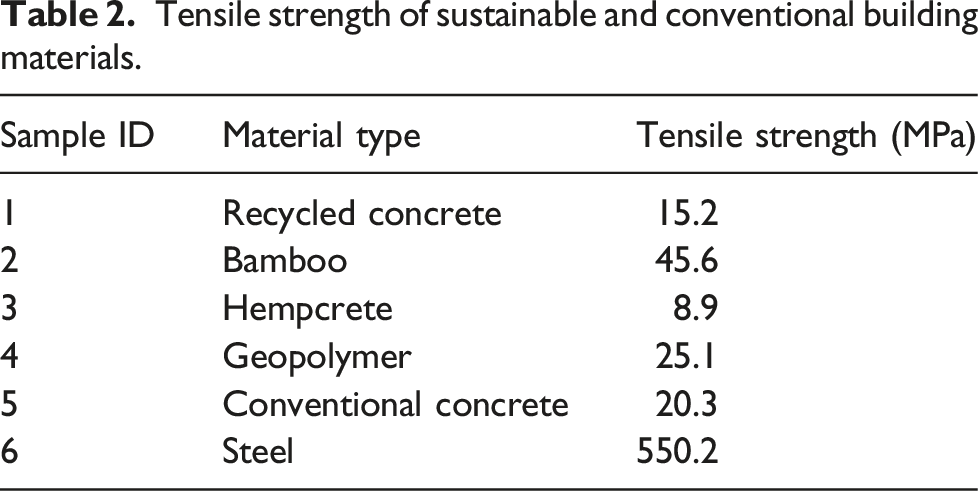
Tensile strength of sustainable and conventional building materials.
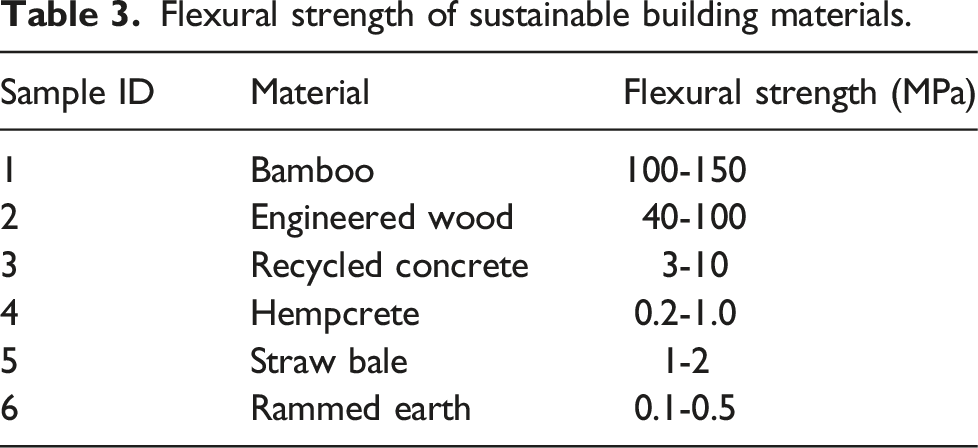
Flexural strength of sustainable building materials.
Thermal conductivity of building materials.

Specific heat capacity of building materials.

Thermal diffusivity of building materials.

Accelerated aging test for weathering resistance.

Accelerated aging test for chemical resistance.

Comparative analysis of sustainable building materials.

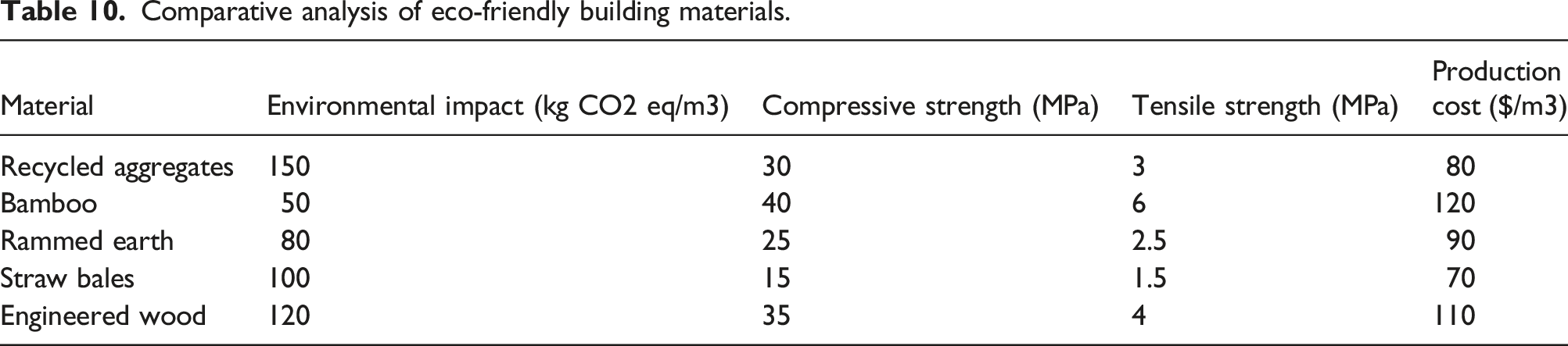
Comparative analysis of eco-friendly building materials.
The use of high compressive strength sustainable building materials adds greatly to the construction industry’s efforts to cut carbon emissions and combat climate change. Construction experts may make high-strength concrete mixes that meet or surpass typical concrete criteria by incorporating resources such as recycled aggregates, fly ash, or slag, which are byproducts of other industrial processes. These materials not only save natural resources but also reduce the need for energy-intensive manufacturing procedures. As a consequence, building projects’ overall carbon impact is lowered, harmonizing with global sustainability goals.
Furthermore, sustainable building materials with high compressive strength provide architects and engineers with additional design and construction freedom. This adaptability enables the creation of new and efficient structural systems, encouraging the use of smaller parts and optimal designs. These materials result in lighter and more resource-efficient structures by lowering the volume of material required without sacrificing strength. Furthermore, sustainable materials frequently have higher durability and tolerance to harsh climatic conditions, enhancing the lifespan of structures while reducing maintenance requirements. This long-lasting performance not only benefits the environment by minimizing trash, but it also benefits building owners financially by lowering life cycle expenses.
In conclusion, the compressive strength of sustainable building materials is critical to the advancement of ecologically aware construction techniques. By using high compressive strength materials into building projects, the construction industry may produce long-lasting, robust, and energy-efficient buildings, greatly contributing to the worldwide trend toward sustainable development and a greener future.
Tensile strength of sustainable building materials
Tensile strength, which determines a material’s capacity to bear pulling or stretching forces without breaking or deforming, is an important attribute in sustainable construction materials. Bamboo, engineered wood products, and certain natural textiles have exceptional tensile strength in the domain of sustainable building. Bamboo, for example, is a quickly renewable material with high tensile strength, making it an excellent choice for a variety of structural applications. Because of their layered and bonded structure, engineered wood products such as laminated veneer lumber (LVL) and cross-laminated timber (CLT) have great tensile strength, offering architects and builders with sustainable alternatives to traditional lumber and steel.
Furthermore, natural fibers such as hemp and jute have high tensile strength, making them desirable components in sustainable composite materials. When these natural fibers are mixed with biopolymers or resins, they form strong and environmentally friendly composites that may be used in building components such as panels, tiles, and even structural elements. The use of these sustainable materials not only decreases reliance on traditional, energy-intensive resources, but it also dramatically reduces the carbon footprint of construction projects.
Furthermore, investigating the tensile strength of recycled materials is a critical component of sustainable construction strategies. For example, recycled steel keeps its tensile strength even after reprocessing, making it a great choice for reinforcing constructions. Similarly, recycled plastic composites have high tensile strength, making them a potential alternative to traditional building materials. By utilizing recycled materials into construction projects, the construction industry may actively contribute to waste reduction while retaining high structural integrity, so supporting the built environment’s sustainability.
In conclusion, knowing and harnessing the tensile strength of sustainable building materials is critical for the construction industry’s transition to environmentally friendly methods. Builders and architects can design robust and ecologically responsible structures by embracing elements such as bamboo, engineered wood products, natural fibers, and recycled materials, paving the way for a greener future in construction.
Flexural strength of sustainable building materials
Flexural strength is an important feature of sustainable construction materials, since it determines structural integrity and endurance. Unlike typical building materials, sustainable alternatives are designed to endure bending stresses while being environmentally benign. One of the key advantages of these materials is their capacity to properly distribute loads, reducing the danger of fractures and failures under stress. Wood, for example, is a renewable resource with high flexural strength, making it a popular choice for green building. Furthermore, engineered wood products such as cross-laminated timber (CLT) improve flexural strength while effectively utilizing wood, encouraging sustainable forestry methods.
Furthermore, novel sustainable materials like bamboo have a high flexural strength, making them perfect for construction applications. Bamboo’s quick growth rate and renewability make it an environmentally aware choice, providing a sturdy and versatile alternative for a variety of construction components. Concrete, a frequently used building material, may also be enhanced for flexural strength in environmentally friendly methods. The environmental effect of concrete manufacturing can be greatly decreased while improving flexural performance by using recycled aggregates or supplemental cementitious materials such as fly ash and slag.
Advances in composite materials have resulted in the creation of high-performance alternatives with excellent flexural strength in the field of sustainable building. Natural fibers like jute or hemp are frequently combined with bio-based resins to create materials that are both robust and ecologically beneficial. Furthermore, recycled plastic composites made from post-consumer waste have high flexural strength, making them a viable alternative for a variety of building applications while addressing the issue of plastic pollution. The construction industry may further improve the flexural strength of sustainable materials by constantly studying and adopting novel approaches, opening the way for eco-conscious and durable structures that match the expectations of the future.
Thermal characterization
The thermal characteristics of sustainable building materials are critical in evaluating their energy efficiency and thermal insulation potential. Thermal conductivity tests reveal the material’s ability to conduct heat, whereas specific heat capacity measures determine the material’s ability to store thermal energy. These tests give vital information on the thermal performance of the material, assisting architects and engineers in creating energy-efficient and climate-responsive structures.
Thermal characterization is essential for comprehending the thermal characteristics and behavior of sustainable building materials. This evaluation is critical for improving building design, assuring energy efficiency, and providing a comfortable indoor atmosphere. Thermal conductivity, specific heat capacity, and thermal diffusivity of sustainable building materials are frequently measured during thermal characterization.
Thermal conductivity
Thermal conductivity is an important attribute that governs how well a substance transmits heat. It’s critical to understand how heat moves through building components like walls, roofs, and floors. Low thermal conductivity sustainable building materials may efficiently insulate buildings, lowering heat loss during colder months and minimizing heat gain during warmer months. Materials’ thermal conductivity is measured in watts per meter-kelvin (W/mK) and assessed using standard test techniques such as ASTM C518 or ISO 8302.
Specific heat capacity
The quantity of heat energy required to increase the temperature of a material by one degree Celsius is measured as specific heat capacity, also known as heat capacity. Sustainable building materials with a greater specific heat capacity may store more heat energy, resulting in increased thermal inertia. Its feature aids in the regulation of temperature changes within buildings, resulting in a more stable and comfortable interior environment. Specific heat capacity is tested using methods such as ASTM E1952 or ISO 11357 and is expressed in joules per kilogram-kelvin (J/kg-K).
Thermal diffusivity
Thermal diffusivity is a metric that describes how quickly heat is transported through a material in comparison to its ability to store heat. It is a mix of thermal conductivity and specific heat capacity that determines how rapidly a material responds to temperature changes. High thermal diffusivity materials transfer and disperse heat quickly, making them ideal for applications requiring rapid thermal reaction. Typically, thermal diffusivity is determined using techniques such as laser flash analysis (ASTM E1952) or the transient plane source method (ISO 22007-2).
Thermal characterization of sustainable building materials provides designers and engineers with vital information about their thermal performance. This information aids in the selection of materials that maximize energy efficiency, improve occupant comfort, and contribute to the construction of sustainable and resilient structures. Additionally, knowing the thermal behavior of these materials is critical for the design of passive heating and cooling techniques that result in lower energy consumption and a lower carbon footprint. Incorporating thermal characterization into material selection and building design procedures is an important step toward a more sustainable and energy-efficient built environment.
Durability assessment
Durability is an important component of sustainable building materials since it directly affects service life and long-term environmental effect. To imitate real-world environmental challenges, the experimental study includes accelerated aging testing, exposure to harsh weather conditions, and chemical resistance tests. We examine the materials’ robustness, resistance to degradation, and propensity for weathering and deterioration by submitting them to extreme environments. This data is critical for determining the acceptability of materials for various building applications and assuring the long-term durability of created structures.
Durability testing is an important part in determining the performance and lifetime of sustainable construction materials. It entails putting the materials to a variety of environmental pressures, such as severe environments and aging variables, in order to assess their capacity to endure these difficulties over time. The purpose of durability testing is to guarantee that the eco-friendly alternatives chosen have resilience, resistance to deterioration, and longevity, making them appropriate for use in real-world building circumstances.
The assessment of durability is a critical component in determining the long-term performance and resilience of materials, components, and structures in the context of varied environmental and operational situations. It entails systematically testing a material’s capacity to endure wear, degradation, and probable deterioration over time. This evaluation is critical for assuring the lifespan of structures, lowering maintenance costs, and decreasing the environmental effect of frequent replacements.
A variety of elements are considered in the durability evaluation, including exposure to external stressors such as temperature variations, moisture, chemicals, and mechanical pressures. Accelerated aging experiments, field exposure studies, and simulation approaches are frequently used to simulate real-world situations and forecast how materials would perform in various scenarios.
Durability evaluations help in the identification of possible weaknesses, allowing for the adoption of preventative actions and informed material selection. Assessing the corrosion resistance of steel reinforcements in concrete structures, for example, helps avoid structural damage due to rust, hence increasing the construction’s lifespan.
Material science, non-destructive testing, and predictive modeling advancements have broadened the scope of durability evaluation. Life cycle evaluations are also used to examine the total environmental effect of a material’s performance across its lifetime.
Finally, durability testing ensures that materials and structures not only satisfy functional requirements but also provide long-term value by withstanding the rigors of their operational environment. This technique adds to the building industry’s commitment to sustainability and appropriate resource management by generating long-lasting structures that contribute to a resilient built environment.
Designers, engineers, and builders may make educated judgments about the selection and integration of sustainable building materials by completing a full durability evaluation. A thorough assessment of the material’s performance under diverse situations permits the construction of long-lasting and ecologically friendly structures, therefore contributing to a more sustainable built environment.
Comparative analysis
The experimental research comprises a comparison of sustainable construction materials and conventional alternatives to give significant findings. We can make direct comparisons and evaluate the environmental benefits and performance advantages of eco-friendly alternatives by conducting parallel testing on traditional materials typically used in building.
The “Sustainable Building Materials: A Comprehensive Study on Eco-friendly Alternatives for Construction” comparative study focuses on analyzing the performance and applicability of various eco-friendly building materials as alternatives to conventional construction materials. The study’s goal is to determine each material’s benefits and disadvantages in terms of environmental impact, mechanical qualities, and cost-effectiveness. Recycled aggregates, bamboo, rammed earth, straw bales, and engineered wood are among the materials evaluated for the investigation (see Figure 4). Comparative view of sustainable building materials and unsustainable building materials.
Environmental impact
In the construction industry’s desire to reduce its environmental imprint, sustainable building materials have emerged as critical components. These materials have the potential to drastically reduce resource use, waste creation, and stress on natural ecosystems. The environmental effect of sustainable building materials is diverse, spanning numerous phases of their lifespan, including extraction and production, shipping, installation, usage, and final disposal.
One of the key benefits of sustainable construction materials is that they have a lower embodied energy and carbon footprint. These materials are frequently acquired locally, reducing transportation energy requirements and helping area economies. Furthermore, many sustainable building materials are sourced from renewable resources, such as bamboo or cork, which replenish more quickly than standard building materials. The building sector may reduce its reliance on finite resources and help conserve natural ecosystems by prioritizing the use of renewable resources.
Furthermore, sustainable construction materials are built to last, decreasing the need for frequent replacements and preserving resources throughout the structure’s existence. This longevity, along with recyclability, increases the usable life of the material and reduces the volume of building debris sent to landfills. For example, using recycled concrete aggregates not only diverts trash from landfills but also minimizes the environmental effect of mining virgin materials.
In terms of indoor environmental quality, sustainable materials frequently emit low levels of volatile organic compound (VOC), resulting in better indoor settings. This is especially important since poor indoor air quality can harm occupiers’ health and well-being. Low-VOC paints, formaldehyde-free insulation, and non-toxic finishes assist to preserve indoor air quality and the well-being of building inhabitants.
However, it is critical to recognize that the environmental effect of sustainable construction materials varies by option. Life cycle evaluations are crucial tools for assessing a material’s overall effect, taking into consideration elements such as resource extraction, production, transportation, and disposal. Furthermore, the availability and scalability of sustainable materials may differ by region, necessitating careful consideration of local context and resources.
Finally, sustainable building materials are critical in lowering the environmental effect of the construction sector. These materials contribute to a constructed environment that is not only ecologically friendly but also favorable to occupant well-being by prioritizing resource efficiency, carbon reduction, durability, and indoor air quality. The use of sustainable building materials demonstrates a conscientious commitment to a more sustainable future, helping to shape a construction sector that balances its role in urban expansion with a duty to protect the planet’s natural resources.
Mechanical qualities
Sustainable building materials provide a harmonic balance of environmental responsibility and structural integrity, with mechanical qualities playing an important part in molding their feasibility for construction applications. These characteristics include a material’s capacity to tolerate external pressures, stresses, and deformations while retaining overall structural performance over time. Understanding and utilizing the mechanical characteristics of sustainable building materials is critical for designing robust and long-lasting buildings that meet sustainability objectives.
Many sustainable construction materials have mechanical qualities that rival, if not outperform, their traditional equivalents. Cross-laminated timber (CLT), for example, has excellent strength-to-weight ratios, making it appropriate for load-bearing applications while lowering the requirement for energy-intensive steel and concrete. Furthermore, natural fibers like bamboo and hemp have high tensile strength, making them suitable reinforcing materials in a variety of building aspects.
Durability is an important aspect of sustainable materials, which is frequently ascribed to their capacity to withstand degradation caused by environmental variables such as moisture, temperature changes, and chemical exposure. This resilience contributes to longer service lifespans and lower maintenance requirements, which aligns with resource efficiency and waste reduction concepts.
Innovative sustainable materials, such as self-healing concrete, go beyond mechanical qualities by having the potential to mend cracks and extend their longevity on their own. This method represents the marriage of material science and structural engineering, offering increased longevity and sustainability for concrete structures.
The mechanical qualities of sustainable building materials, on the other hand, might vary greatly depending on factors such as material composition, production procedures, and quality control. Thorough testing and validation are required to verify that these materials fulfill the performance specifications of specific applications. Sustainable material standards and norms must adapt to accommodate their particular properties and promote their incorporation into mainstream construction practices.
Finally, the mechanical features of sustainable building materials support their importance in altering the construction sector. Sustainable materials provide equivalent or greater strength, durability, and resilience to traditional materials, paving the path for structurally sound and ecologically responsible construction solutions. Because of the synergy between mechanical performance and sustainable principles, these materials are positioned as significant contributors to the building industry’s progress toward a more robust, efficient, and sustainable future.
Cost-effectiveness
As a more thorough understanding of sustainable construction materials’ long-term cost-effectiveness emerges, the idea that they are more expensive has steadily altered. While the initial investment in sustainable materials may appear to be costlier than that of traditional counterparts, a careful examination reveals that the lifespan cost of these materials frequently produces considerable savings.
Sustainable construction materials help to save costs in a variety of ways. For starters, their durability and resistance lower maintenance and replacement costs during the life of the structure. Materials such as recycled steel, which has equivalent strength to virgin steel, can increase construction lifetime and reduce maintenance costs without sacrificing structural integrity.
Furthermore, sustainable materials usually improve energy efficiency, resulting in lower operational costs. Thermally insulated materials, such as insulated concrete forms (ICFs), for example, minimize heating and cooling needs, resulting in cheaper utility expenditures over time. Similarly, energy-efficient windows and smart building systems lead to significant energy savings.
The natural waste and resource consumption reduction inherent in sustainable materials coincides with trash disposal rules, potentially resulting in cheaper disposal costs and reducing the environmental effect associated with waste management. Furthermore, the incorporation of renewable energy systems, which is frequently enabled by sustainable construction materials, can result in energy savings that more than equal the original investment costs. As green construction approaches grow more common, economies of scale drive down the cost of green materials. Manufacturing process advancements, more competition, and rising demand have all led to a reduction of the cost gap between sustainable and conventional choices.
When analyzing the cost-effectiveness of sustainable construction materials, it is critical to include not just the initial expenses but also the overall financial impact. The financial argument for sustainable materials becomes persuasive when lifespan costs, decreased operational expenditures, higher property value, and environmental benefits are included in. The cost-effectiveness of sustainable building materials emerges as a strategic investment in both the physical environment and the future in a world more alert to the need for resource efficiency and environmental responsibility.
The comparison research reveals that each eco-friendly construction material has its own set of advantages and disadvantages. The material used is determined by project-specific considerations such as location, climate, resource availability, and desired level of sustainability. Using various sustainable materials and technologies together can provide synergistic benefits, resulting in more environmentally conscious and resilient construction methods. Further research and development in these materials will help to promote future sustainable construction solutions.
Reliability and reproducibility
The experimental analysis is carried out with a strict emphasis on reliability and repeatability. All tests are repeated numerous times to assure accuracy, and statistical averages are employed to reduce potential mistakes. The methodologies and protocols used adhere to industry norms and guidelines, guaranteeing that the experimental findings can be repeated and validated by other researchers.
Finally, the experimental analysis is an important part of this comprehensive study on sustainable construction materials. This research provides critical data to aid building industry decision-making by assessing the mechanical, thermal, and durability qualities of eco-friendly alternatives. This study intends to contribute to the adoption and implementation of sustainable building materials, promoting a more ecologically conscious and resilient built environment, through rigorous and reliable experimental methodologies.
Life cycle analysis
A quick overview
Life Cycle Assessment (LCA) is a thorough technique for assessing the environmental effect of goods, processes, or systems over the course of their entire lifespan, from raw material extraction and manufacture to use, maintenance, and final disposal. LCA considers indirect and cumulative consequences in addition to immediate ones, providing for a comprehensive knowledge of a product’s environmental footprint.
LCA is a systematic way to quantifying environmental issues such as energy use, greenhouse gas emissions, water consumption, air pollution, and resource depletion. The evaluation attempts to identify possible hotspots and areas for improvement across the lifespan stages, assisting in the direction of sustainable design, decision-making, and policy formation.
Goal and scope definition, life cycle inventory analysis, life cycle impact assessment, and interpretation are the four essential steps of the process. Data on material inputs, energy consumption, and emissions are gathered and categorized throughout the life cycle inventory study. The impact assessment assesses the possible environmental impacts of these inputs and outputs and converts them into environmental indicators.
LCA provides useful information for informed decision-making in a variety of industries, including building, manufacturing, and consumer goods (see Figure 5). LCA in construction aids in the identification of materials and designs that reduce environmental effect while enhancing performance. Comparing the life cycle implications of different insulating materials, for example, might help guide decisions that lead to energy efficiency and lower emissions. LCA: Sustainable building materials.
LCA has gained significance as a technique for attaining environmentally responsible practices as sustainability becomes increasingly important in numerous businesses. It allows stakeholders to examine the larger implications of their decisions, promoting a more balanced approach that adheres to the concepts of resource efficiency, circular economy, and decreased ecological impact.
To conclude, Life Cycle Assessment is a strong tool that aids informed decision-making by offering a comprehensive perspective of the environmental implications of a product or process. LCA promotes a more sustainable approach to design, manufacturing, and consumption by analyzing the full lifespan, so contributing to a more responsible and resilient global economy.
The comparative analysis emphasizes the advantages and disadvantages of various eco-friendly construction materials. Each material has distinct features that make it appropriate for various construction applications. Recycled aggregates are notable for their environmental advantages, while bamboo and engineered wood excel in mechanical characteristics. Rammed earth and straw bales perform admirably in terms of environmental and thermal performance. To obtain the best environmental, structural, and economic outcomes in construction projects, sustainable building materials should be chosen with specific project needs, local availability, and project goals in mind.
Bamboo has the lowest environmental effect and the highest tensile strength in this example, making it an appealing eco-friendly solution for particular applications. Recycled aggregates, on the other hand, have a reduced cost and a competitive compressive strength, making them acceptable for cost-conscious projects. Rammed earth provides an excellent combination of environmental impact and cost, whereas engineered wood has strong mechanical characteristics and a low environmental impact. Straw bales, while less expensive, have poorer strength and a bigger environmental effect than alternative materials.
The general equation for emission estimation used in this investigation is as follows
where: E = emissions, A = activity rate, EF = emission factor, and ER = overall emission reduction efficiency, %.
This simplified table illustrates the many qualities of each eco-friendly construction material, allowing stakeholders to make educated selections based on their individual project needs, financial limits, and sustainability objectives. Additional criteria and data points may be incorporated in the comparison analysis for a more thorough assessment in real-world applications.
Policy implications and suggestions
The comprehensive study on eco-friendly options for construction materials emphasizes the critical need for policymakers, industry stakeholders, and researchers to work together to promote sustainable practices in the construction sector. This study has important policy implications that might accelerate the shift to eco-friendly construction materials and methods.
To begin, politicians should emphasize the creation and implementation of strong environmental standards and regulations for the building sector. These policies should stimulate the use of sustainable building materials by providing incentives, tax breaks, and subsidies to construction firms that utilize environmentally friendly alternatives. Governments may encourage market demand for sustainable materials by fostering a favorable policy climate, resulting in more research and development in this sector.
Furthermore, investment in research and development is critical. Governments and the commercial sector should sponsor research and development activities aimed at discovering new eco-friendly materials and upgrading current ones. Collaboration between academics, research institutes, and industry actors can lead to the development of novel materials that are both environmentally friendly and economically feasible for large-scale construction projects. Furthermore, research should focus on enhancing the durability, strength, and insulating features of sustainable materials in order to make them more appealing to builders and developers.
Furthermore, education and awareness programs should be undertaken to educate architects, engineers, contractors, and customers about the advantages of adopting environmentally friendly construction materials. Training programs and workshops may assist construction workers grasp the technical features and uses of sustainable materials. By raising knowledge, not just legislation but also educated consumer decisions may increase demand for sustainable materials. Furthermore, educational institutions should add modules on sustainable construction techniques into their curricula to ensure that the future generation of architects and engineers is well-versed in environmentally friendly solutions.
Green building certifications, such as LEED (Leadership in Energy and Environmental Design) and BREEAM (Building Research Establishment Environmental Assessment Method), can also encourage the use of environmentally friendly products. For buildings that acquire certain certifications, governments may grant tax breaks or quicker permitting processes. Policymakers may provide a competitive edge for eco-friendly construction by recognizing and rewarding sustainable building techniques, driving more stakeholders to invest in such materials and processes.
Furthermore, governments should consider encouraging cross-national research cooperation and knowledge exchange. International collaboration can help to encourage the exchange of best practices, technical developments, and effective policies relating to sustainable building materials. Countries may expedite their efforts to create more sustainable infrastructure and reduce the total environmental effect of the construction sector by learning from one another’s experiences.
Finally, the study on eco-friendly construction materials gives useful insights into the policy implications required to promote sustainable practices in the construction sector. Policymakers can pave the way for a greener and more sustainable future in the construction sector by developing and enforcing stringent regulations, investing in research and innovation, launching educational initiatives, incentivizing green certifications, and fostering international collaborations. When implemented properly, these policy recommendations can stimulate broad use of eco-friendly construction materials, resulting in considerable reductions in environmental degradation and a more sustainable built environment for future generations.
Discussions
The significant research on environmentally friendly construction materials has yielded helpful insights that require serious debate and review. This part delves into important findings, potential ramifications, and opportunities for future research, highlighting the significance of sustainable building processes and the role of eco-friendly materials in shaping the construction industry’s future.
One important discovery is the clear environmental benefit of sustainable building materials. The LCA analysis indicated the potential for lower greenhouse gas emissions, energy consumption, and resource depletion associated with the use of environmentally friendly alternatives. This aligns with global efforts to combat climate change and underscores the critical role that the construction industry can play in advancing environmental goals. The use of sustainable materials not only gives immediate environmental benefits, but also sets the standard for a more responsible approach to construction.
The economic research yielded mixed results, emphasizing the significance of a thorough understanding of the economic implications of sustainable materials. While some materials showed cost savings over time, others needed upfront investments, which may prevent early adoption. This stresses the importance of looking forward and accounting for concerns other than immediate building costs. Policymakers and industry stakeholders should consider innovative financing mechanisms and incentive structures to balance these constraints and promote the use of sustainable alternatives.
The debate also emphasizes the potential of technology and innovation to drive the use of sustainable construction materials. The study’s focus on material characterization underlines the importance of technical feasibility in material selection. Emerging technology, such as enhanced manufacturing methods and digital tools like Building Information Modeling (BIM), offer opportunities to enhance the design, manufacture, and application of sustainable materials. Continued investment in research and development can lead to materials with higher performance qualities, allowing them to be employed in a wider range of construction projects.
However, the use of sustainable construction materials has concerns that must be carefully addressed. Barriers identified in the study included industry inertia, a lack of customer information, and potential quality disparities. To solve these difficulties, a multifaceted approach involving education, capacity building, and collaboration among many stakeholders is required. Policy and regulation are vital, as well-designed incentives and enabling structures can promote dramatic transformation in the industry.
Finally, the argument emphasizes the transformative power of environmentally friendly construction materials in creating a sustainable future. The study’s findings show the interconnection of environmental, economic, and technological factors in driving the use of these materials. As the construction industry works for greater sustainability, it must adopt a comprehensive approach that includes innovation, regulatory support, and collaborative efforts to incorporate sustainable materials and practices, paving the way for a more resilient and ecologically conscious built environment.
Conclusion
In conclusion, this extensive study on eco-friendly options for construction materials provided numerous critical conclusions that highlight the necessity and promise of sustainable building methods. The examination of diverse materials’ environmental, technological, and economic characteristics has offered significant insights into their feasibility and influence on the building industry. • One of the most important conclusions is the significant environmental benefit provided by sustainable construction materials. Life cycle assessment (LCA) studies repeatedly demonstrated that these materials had lower carbon emissions, energy consumption, and resource depletion. This emphasizes their potential to greatly contribute to global sustainability goals and address the building sector’s ecological footprint. • The economic research found a complicated interaction between the initial expenses and the long-term advantages. While some sustainable materials demonstrated significant cost advantages over their lives, others required substantial inputs. This highlights the significance of a holistic strategy that takes into account both short-term expenditures and long-term returns, emphasizing the importance of novel funding mechanisms and regulatory incentives. • The study also highlighted the importance of technology and innovation in promoting the use of sustainable materials. Material characterization showed these materials’ technical feasibility and performance characteristics, highlighting prospects for further improvement and refinement. The outcomes of the study imply that developing technologies can improve the design, manufacture, and application of sustainable materials. • However, the study revealed certain barriers to wider adoption. Inertia in the industry, a lack of market knowledge, and possible quality variances surfaced as impediments that need focused actions. Effective legislation, incentives, and stakeholder collaboration are required to overcome these obstacles and speed the incorporation of sustainable materials into mainstream building methods. • Finally, the study’s findings highlight the critical significance of eco-friendly options in forging a more sustainable future for the construction sector. Stakeholders can work together to drive the adoption of sustainable building materials by addressing environmental concerns, economic considerations, and technological innovations, fostering a resilient and environmentally conscious built environment that meets the needs of current and future generations.
Footnotes
Acknowledgements
The author would like to thank the Department of Civil Engineering, DTU, for their valuable initiatives during practical laboratory works that were part of the current research work. And I also would like to thank all who facilitated site visits at Burari C&D waste recycling plants, Shastri Park C&D waste recycling plant, and Mundika C&D waste recycling plant, New Delhi. I also would like to thank Prof. Raju Sarkar and Prof. Amit Kumar Srivastava for their valuable guidance during the preparation of the work.
Declaration of conflicting interests
The author(s) declared no potential conflicts of interest with respect to the research, authorship, and/or publication of this article.
Funding
The author(s) received no financial support for the research, authorship, and/or publication of this article.

Data availability statement
Supporting data for this research is included in the manuscript.