




Abstract
Natural fiber-reinforced composites (NFRCs) are expected to find growing applications in near future, especially in Europe where stringent environmental codes are being legislated and public pressure for their enforcement is increasing. Study has shown that NFRCs are also gaining recognition among civil engineers as a viable alternative to traditional materials for use as concrete reinforcement in load-bearing structural members as in building frames and bridge decks. The present review strives to provide a brief overview of NFRCs, state-of-the-art developments in their manufacture, and examples of their structural applications. Another aspect of the review involves investigation of the challenges facing the use of fiber composite materials in civil engineering. These include the high manufacturing costs, difficulties associated with appraisal of its potential benefits, uncertainties about their properties, lack of understanding among civil engineers of the material and its service life, and the relatively small battery of standards developed for the composite industry. Finally, the study will conclude with the prospects of bio-composite applications and the emerging trends in novel bio-composites for future structural applications.
Introduction
The use of natural fibers in composites dates back to three thousand years ago in ancient Egypt where straw and clay were combined to build walls. Over the last decade, polymer composites reinforced with natural fibers have won an ever-increasing attention among both academics and industrialists. The growing environmental awareness worldwide has led to an increasing interest in natural fibers and their applications so that their study is nowadays considered an important field. 1 There exists a wide variety of natural fibers that can be employed as reinforcement or fillers. Fiber composites composed of natural fibers offer such advantages as high strength, lightweight, and high durability as well as resistance to water, chemical attacks, electric current, fire, and corrosion. Moreover, they have proved cost effective in most applications as the properties of fiber composites can be engineered to match the requirements of each specific application. Therefore, interest in natural fiber-reinforced composites (NFRCs) composites is growing rapidly2–7 in the transportation sector, aerospace, marine, construction, and automotive industry. It is important to note that natural fibers have some disadvantages, such as low thermal stability (likely to degrade at 220–250°C). Hydrophilic nature of natural fibers results very poor interface and poor resistance to moisture absorption. The lack of good adhesion between natural fibers and polymeric matrix materials, as well as the high moisture absorption of natural fibers, negatively affect the mechanical properties. To develop composites with better mechanical properties and environmental performance, it is necessary to enhance the hydrophobicity of flax fibers by treating them with appropriate coupling agents or coating them with appropriate resins.
Fiber composite materials such as glass fiber, carbon fiber, and aramid have been widely used in the automotive and aircraft industries and are now being used for structural applications. In structural applications, fiber composites have been used to rehabilitate existing structures such as bridges and buildings, especially those that are exposed to the marine corrosive environment.
8
Their migration from the customary automotive, marine, aerospace, and military industries to the construction industry has continued to gain momentum over the last decade as new civil engineering applications develop. The use of fiber composite materials in civil engineering has now evolved from non-structural applications, such as handrails and cladding, to primary structural applications such as building frames, bridge decks, and concrete reinforcement.
9
The need for more environmentally friendly materials has nowadays shifted the attention once paid to synthetic products back to NFRCs. Manufacturing bricks and pottery with straw-reinforced clay is the first known use of natural fiber composites.
10
Much of the early research and development in fiber composites was devoted to the use of synthetic fibers. Although synthetic fiber composite materials such as glass fibers, carbon fibers, and aramid are high performance ones, they are not adequately biodegradable as they are made of non-renewable materials. These environmental benefits as well as the associated cost savings are enough justification for the use of natural fibers. There is a substantial difference between natural fiber composites and glass or carbon composites in terms of environmental impact. Taking into consideration that the energy required to produce natural fibers is less than half that for synthetic fibers, see Figure 1, can justify this. Production energy for some fibers.
11

Application of natural fibers as a construction material is not new. It has a long history as old as the Persian civilization in old Iran where many cities and towns still host ancient monuments and buildings made of adobe. Indeed, parts of Iran are museums of the adobe culture. Long before a century ago, people in many small towns and villages in China and Korea had already learned to mix straw and mud to make adobe for building walls. These peoples, however, had no idea how they could systematically study the fundamental mechanisms and processes involved in the reinforcing effect of natural fibers and what could be done to maximize their performance in strengthening structures. Currently, however, NFRCs have found wide applications in the automotive and building industries and there is still more room for their development in such structural ingredients as primary components of aerospace and marine structures. 12 The difficulty, however, lies in the evaluation of the quality of natural fibers for use in such applications. The real challenge in this regard lies in the development of a general relation capable of capturing and predicting the structural and mechanical properties of NFRCs since large variations are typically observed in their properties and characteristics.
The properties of NFRCs are to a large extent influenced by the type of fiber used, the environmental conditions where the fiber producing plants grow, and the type of treatment applied to the extracted fibers. 8 These issues are, in fact, critical deterrents to the generalized use of natural fibers in different applications. To address this gap, this article intends to provide a brief review of the literature on bio-composites, major classes of natural fibers, and real-life engineering applications of natural fibers including load-bearing structural members such as beams and roofs in building frames, bridge decks, and concrete reinforcement. Finally, the current limitations on NFRC applications are investigated in order for researchers and engineers to gain an understanding of the design requirements of NFRCs for structural applications in future.
Natural fibers
The new legislation and codes in the US and Europe (and to a lesser extent in other parts of the world) are now fueling an insatiable hunger for novel recyclable and/or biodegradable materials to avoid the financial penalties. Moreover, a corresponding interest is growing among materials scientists to use natural fibers extracted from wood or such plants as hemp, flax, jute, kenaf, ramie, and sisal in manufacturing new composites. Natural fibers offer such advantages as biodegradability, appropriate mechanical properties such as high strength and stiffness due to their high cellulose content,
13
and sustainability, which make them attractive alternatives to synthetic reinforcing fibers commonly used in composites.
14
These have led to a strong resurgence of interest in natural fibers over the past decade. If used in combination with a degradable polymer matrix, natural fibers also serve as an inexpensive, renewable, and less toxic alternative to synthetic fibers. Natural fibers are mainly of plant, mineral, or animal origin (Figure 2). The first is essentially comprised of cellulose, while the last is protein-based. However, in the composites industry, natural fibers are often referred to as vegetable fibers.
15
Plant fibers derived from bast (stem, soft tissues, or sclerenchyma); plant leaf, seed, fruit, and wood; or cereal and grass straw are generally the most popular of natural fibers used as reinforcement in fiber-reinforced composites.6,16 Classification of natural fibers.
16

Properties of natural fibers and synthetic fibers. 18

Mechanical properties of natural fibers composite are affected by some factors, these are listed below: (1) Selecting fibers (extraction method, type, harvest time, treatment and fiber content) (2) Resin type (3) Stacking sequence of fibers (4) Interfacial strength (5) Manufacturing process
Traditionally, especially in rural areas in developing countries, natural fibers have been cultivated and used extensively for such non-structural applications as multipurpose ropes, bag, broom, fish net, and filters. These fibers have also been used for housing applications as roofing and wall insulation. Figure 3 presents pictures of coir (obtained from the husk of coconut fruit), sisal twine, jute, gomuti, and short hemp fiber. Pictures of some natural fibers.
8
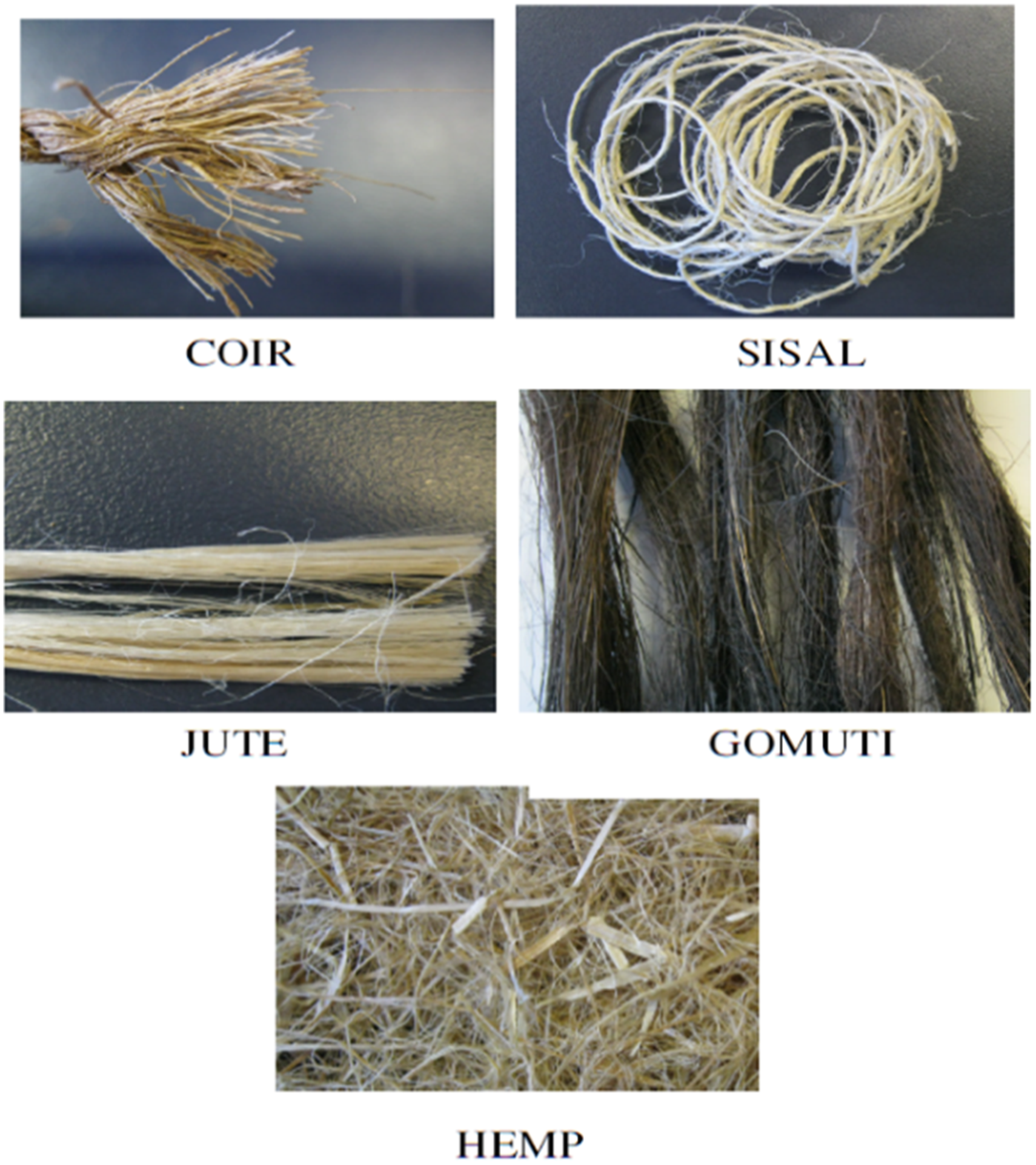
These fibers are generally coarse-textured with colors varying from white to dark brown. Sisal fibers, extracted from the leaves of sisal plant, are stiff and relatively coarse-textured, even though less coarse than coir. Gomuti fibers, obtained from Arenga Pinnata (sugar-palm) tree, are generally stiff and black in color. Hemp and jute fibers have finer textures and are smaller in diameter than coir, gomuti, and sisal ones but larger than glass fibers (diameter: 2.5–10 μm) 8 .
The construction industry consumes more than 40% of global resources and more than 35% of the global energy to produce around 50% of the non-recyclable waste. Until now, aggregate materials and concrete have been the predominant materials used by the building industry in the EU (UN Environment and International Energy Agency, 2017). 19 These facts highlight the crucial need for a change toward more sustainable methods of building in the near future.
Bio-Composites
Composite is a combination of two or more materials in which one serves as the reinforcing phase (fiber, sheet) and the other as the matrix phase (polymer, ceramics, or metals). Figure 4 shows a hybrid material made of a polymer resin reinforced with fibers; the composite combines the high mechanical and physical properties of the fibers used with the bonding and physical properties as well as the appealing appearance of the polymer.20,21 Schematic view of a composite material.
21

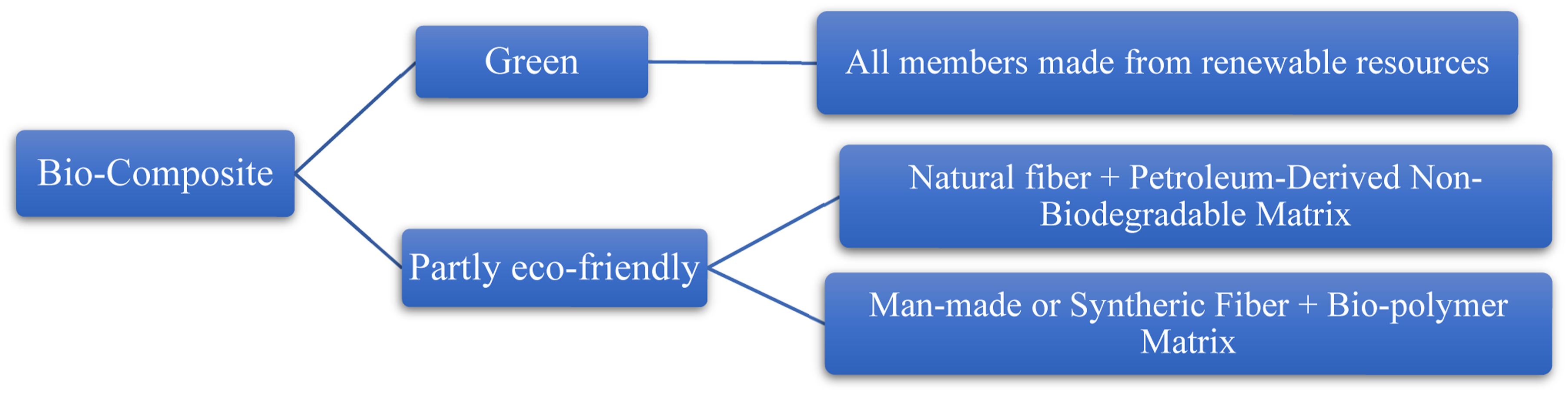
The term ‘bio-composites’ broadly covers those composite materials in which at least one constituent is bio-based. Examples include i) non-biodegradable, bio-fiber reinforced polymers derived from petroleum (e.g., polyolefins, polyester, epoxy, vinyl ester, and phenolics); ii) bio-polymers (e.g., PLA) reinforced with bio-fibers (e.g., jute); and iii) bio-polymers reinforced with such synthetic fibers as glass or carbon fibers. Depending on the nature of the constituents, bio-based composites may be classified into partly eco-friendly and green (Figure 5). By green is meant a composite whose components are obtained from renewable sources, potentially reducing carbon dioxide emissions and reliance on petroleum-derived materials. While partly eco-friendly composites have one constituent, either the fiber or the matrix, not obtained from renewable sources.
22
Natural fiber composites depend for their performance directly on the fiber counts, length, shape, and arrangement/orientation as well as their interfacial adhesion to the matrix.
24
Natural fiber reinforcement may be classified based on fiber length, dimension, and orientation as shown in Figure 6. Reinforcement may come either as fiber or particle. When in fiber form, it may be either continuous or discontinuous (i.e., chopped) depending on the length-to-diameter ratio (l/d). Commonly, fiber-reinforcement may assume a woven or a non-woven arrangement. A woven fabric is characterized by continuous interlacing of perpendicular yarns arranged in a regular pattern, with yarn referring to structures consisting of several interlocked fibers.
6
Types of natural fiber reinforcement.
6

While bio-composites with at least one biomass-based component manufactured mostly as wood polymer composites (WPCs) that consist of wood and agricultural residues bonded together by thermoplastics found their first applications in the building industry back in the 1990s, those containing lignocellulosic fibers were first employed in the automotive industry by Henry Ford in the 1940s. Other than the car industry, the natural fiber-reinforced polymer composites (NFPCs) have found building and construction, aerospace, and sports applications in such products as partition boards, ceilings, boats, office products, and machinery. NFPCs have found their greatest applications as non-load-bearing indoor components in buildings because of their vulnerability to outdoor environmental attacks. 25 In contrast, natural fiber reinforced composites also enjoy such advantages as high stiffness to weight ratio, lightweight, and biodegradability that make them especially suitable for different applications in the construction industry. 26
Natural fiber composite applications in industry. 8

As already mentioned, bio-composites offer the potential for “greening” our planet by reducing our dependence on petroleum products; unfortunately, however, this potential is yet fully exploited since structural applications of bio-composites by the industry has been limited by the difficulties associated with taking full advantage of the mechanical properties of natural fibers. 30
On the other hand, the main challenge in using these natural fibers in various polymer matrixes lies in their poor compatibility with the matrix due to their inherently high moisture absorption that causes dimensional changes in the lignocellulosic-based fibers. The efficiency of a fiber reinforced composite depends on the fiber/matrix interface and its ability to transfer stress from the matrix to the fiber. Stress transfer, indeed, plays a key role in sustaining the mechanical properties of the resulting composite. 31 The hydrophilicity of natural fibers results in their high moisture absorption and weak adhesion to hydrophobic matrices. As a remedy, natural fibers can be treated in order to improve their adhesion to matrix materials. Additionally, most natural fibers have low degradation temperatures (∼200°C), which makes them incompatible with thermosets that have high decomposition temperature especially when thermoset have been hardened with maleic anhydride. This range of degradation temperature also restricts natural fiber composites to relatively low temperature applications. Application of natural fibers for industrial purposes has been claimed to face such other challenges as large variability in mechanical properties,32,33 low ultimate strength, low elongation, clogging nozzle flows in injection molding machines, bubbled products, and poor resistance to weathering. 34
Moisture absorption tendency of several natural fibers. 17

In the absence of chemical agents, physical treatments have been employed to achieve improved natural fiber composites. The physical treatments proposed for altering the structural and surface properties of fibers have been classified into the following four groups: (i) corona, (ii) plasma, (iii) heat treatments, and (iv) steam pre-treatment. 37
The properties of natural fibers for engineering applications have not yet been adequately addressed in most previous research. However, some of the major issues raised include high moisture absorption (5–10%), flammability, inconsistent raw materials and their properties, and bonding between natural fibers and polymeric matrices; these appear to be the most pressing disadvantages that must be lifted in order to adapt natural fiber to real-life applications. Locality, climate during source plant growing period, plant part harvested for fiber extraction, and plant maturity are also the factors that influence the properties of the extracted NF since they raise uncertainties regarding the properties of natural fibers for product development. 12 Cementitious materials are recognized as tension-weak materials, in which micro-cracks easily form on the product surface or at the interface between the cement phase and the aggregates after the hydration reaction is complete. Even though tensile loading can be resisted by the embedded steel bar reinforcement, shrinkage and reduced moisture content cause micro-cracks during the hydration process. For concrete structures, cement is the fundamental substance to bond all the aggregates (i.e., sand, filler, and small and large aggregates) together to form structures of high compressive strength.
Fiber distribution is also important for in-house or on-site applications. Large amounts of agglomerated fiber would cause substantial reductions in concrete strength. Hence, many studies in the past have used short natural fibers as a measure to enhance the tensile strength of the cement phase and, thereby, to minimize the probability of cracking. This is why application of natural fiber-cement composites in residential housing projects has been limited to building exterior parts such as siding and roofing. It has been shown, however, that degradation due to such harsh environmental conditions as high humidity and temperature may be diminished by surface treatment or resurfacing of natural fibers with NaOH or AlCl3, H2SO4, or Ca(OH)2.38–42 Moreover, additional protection may be provided by applying coating materials on these structures to avoid weathering attacks. Overall, natural-fiber composites are seen as potentially useful materials for many engineering applications despite their drawbacks outlined above that limit their use in near future. In this regard, fracture mechanics might be exploited to gain insight into the physical conditions and processes within these composites that might help the production of natural-fiber composites with improved properties. 43
Structural application of natural fiber-reinforced composites (NFRC)
Natural fibers as construction materials are not entirely new; in fact, they have been used since the early seventies. In Bangladesh, primary schools were constructed using jute fiber reinforced polyester in 1972–1973 as the first natural fiber composite material to be used in a developing country. 39 Natural fiber composites have already been used to produce non-structural elements in the automotive industry. A study reported in 1986 that coir/polyester composites were being used to produce mirror casing, paperweights, projector cover, voltage stabilizer covers, mail-box, helmets, and roofs. 40 In the 1980s, Jamaican, Ghanaian, and Philippine houses were constructed using building panels and roofing sheets made from bagasse/phenolic. As part of a program to develop wood substitutes for packaging and construction, the Government of India supported the development of composite products based on jute. Many attempts have been made to use natural fiber polymer composites to fabricate wall panels, roof sheets, temporary shelters, and post office boxes, but such composites fail in wet conditions, either by swelled fibers or by delamination, due to crack growth between plies. 39
Burgueno et al. have shown that bio-composites are able to be used as load-bearing members by arranging their cellular materials in a way that increases their structural efficiency. To prepare laboratory-scale periodic cellular beams and plates, they impregnated hemp and flax fibers with unsaturated polyester resin. Tests were conducted on their specimens in order to assess their material and structural performance. The results were compared to those obtained for short-fiber composite micromechanical models and sandwich analyses. In conclusion, a short-term analytical assessment of full-scale cellular bio-composite components concluded that their properties were comparable to those of conventional components.
Natural fiber-reinforced polymeric structural insulated panels (NSIPs) were developed by Uddin et al. for use in panelized construction. The sandwich panel is made from skins of laminated polypropylene reinforced with jute, and a core of expanded polystyrene (EPS). The structure was characterized using flexural and low-velocity impact tests. The results of both tests confirmed that NSIPs could serve as an alternative to OSB SIPs and G/PP SIPs for structural applications such as floors and walls. 43
Despite the many studies conducted so far, no satisfactory results have yet been obtained concerning the structural characteristics or economic advantages of NSIPs. A bio-based building component that offers higher structural performance is normally associated with significantly higher cost, at least due to its larger dimensions. On the other hand, reducing dimensions to maintain costs within an affordable range will only produce building components of a low structural performance which may not be able to compete with conventional building materials. For instance, Singh et al. reported that the single-layered natural fiber-based panel used as an alternative to plywood lacked the desired qualities in terms of specific strength, stiffness, and dimensional stability to be used as a building material. To deal with this problem, hybrid natural fibers have been used to develop a composite laminate.
44
Christian et al. suggested that the shape of structural components could be modified in a way to prevent the large deflections of natural fiber composites due to their low modulus of elasticity.
45
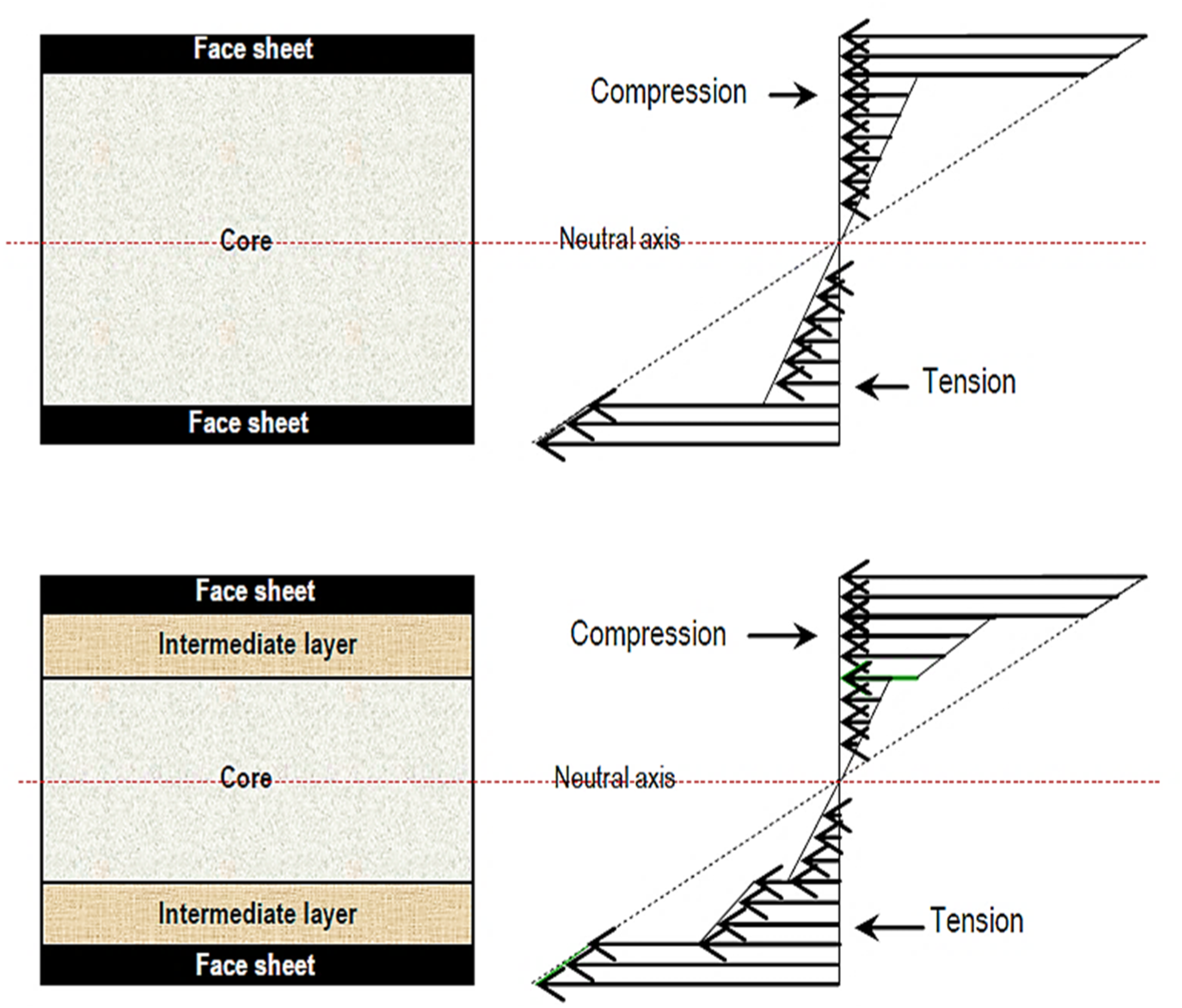
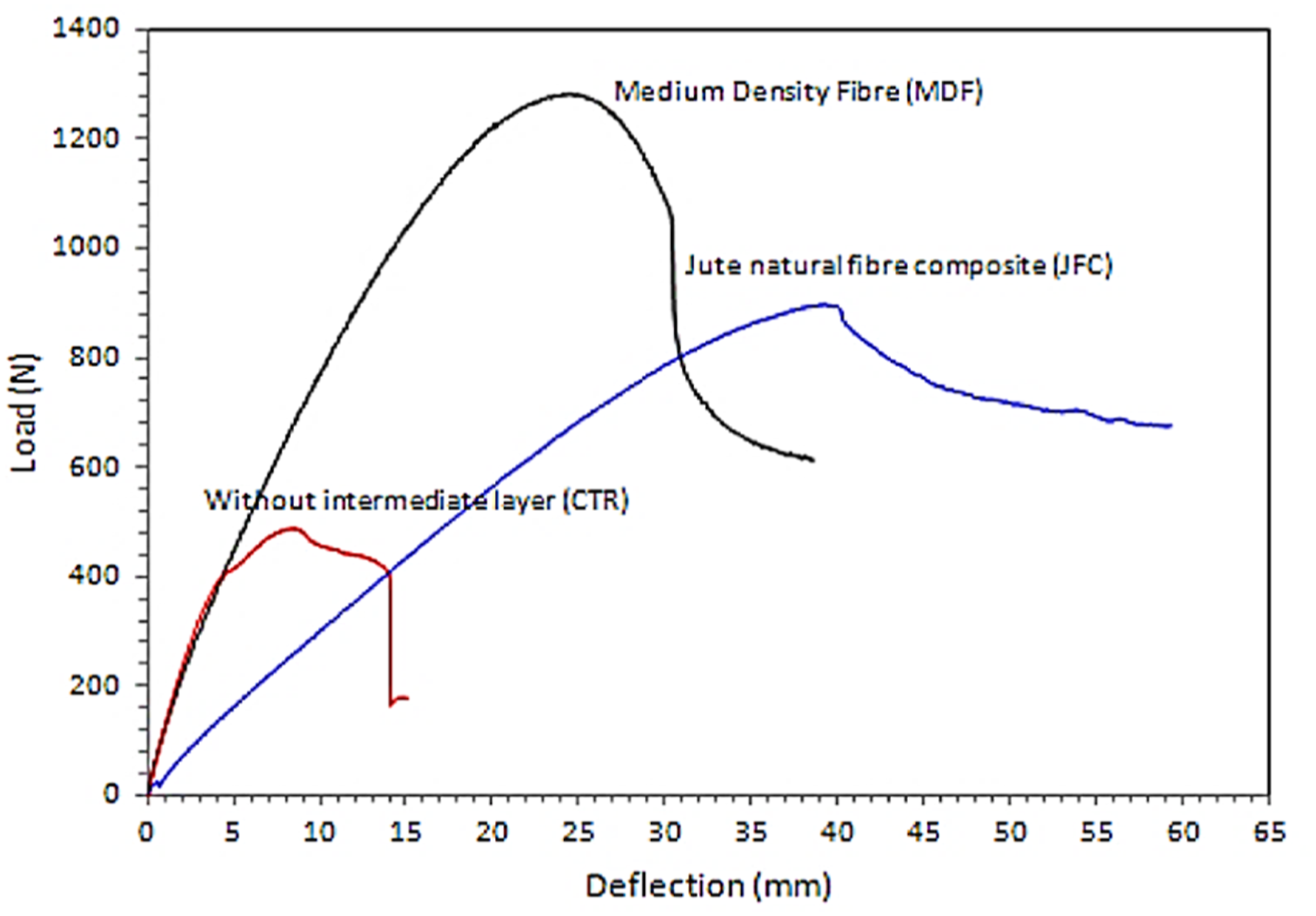
Using Natural Fiber Reinforced Plastics (NFRP), Fajrin et al. developed a novel building component they named ‘hybrid structural insulated panels’ (hybrid SIPs). Their test results showed improved structural properties of the novel hybrid SIPs. The authors found that laminates made from the two types of jute and hemp natural fibers and used as an intermediate layer to form hybrid SIPs would significantly improve the load-carrying capacity of the panels thus made.
46
In this technique, a natural fiber-reinforced plastic (NFRP) laminate is placed as an intermediate layer between the aluminum skin and the EPS core to produce a hybrid SIP (Figure 7). Figure 8 presents the load-deflection curve obtained from the full-scale test of structural insulated panels. Typical distribution of stress in conventional and hybrid SIPs (above and below).
46
Load-deflection curve of the full-scale structural insulated panels.
46
Several load-bearing components have been developed with natural fiber composites, including beams, roofs, multipurpose panels, and pedestrian bridges. More interest is now being shown in investigations to determine the suitability of natural fiber composites for structural applications that require moderate strength, reduced production costs, and environmentally friendly features.
Beams
As the structural members of buildings, bridges, and similar structures, beams are traditionally made from wood, reinforced concrete, steel profiles, or laminated veneer lumber (LVL). Meant to resist bending or flexural stresses, structural beams are subjected to three- or four-point bending tests to determine their load capacity, flexural stress, strain, deflection, and modulus of elasticity. It is now possible to design structural beams and pedestrian bridge girders with loads ranging from low to moderate by using NFRCs. As a result of their low density and low cost as well as their environmental benefits, natural fiber composites have been considered for beam development. Recent studies have also shown reduced cost, lower weight, as well as faster and easier installation procedures as advantages of fiber composites used as beams.
The concept of composite sandwich beams due to Dweib et al.
47
is one of the many feasible ones in which several layers of materials are combined to form a single structural element. The ultimate goal is to develop monolithic structural panels suitable for use as (load-bearing) roofs, flooring, or walls in housing or low-rise commercial building projects. The beams thus manufactured have been subjected to the four-point bending test to determine their strength, stiffness, and failure mode. First, small unit beams have been designed and fabricated using vacuum-assisted resin transfer molding (VARTM) technology in which the preform is vacuum-bagged on a one-sided mold, as shown in Figure 9, and resin is drawn into the preform from above by sub-zero pressure. Due to the prohibitive costs of high-temperature post-curing, room temperature curing of the resin has been found necessary for the manufacture of large-scale structures. Schematic view of the VARTM process when a structural part is infused.
47

A sandwich beam is constructed with soybean-oil-based resin, natural fibers (such as flax, recycled paper, and chicken feathers), E-glass fiber, and closed cell structural foam. Figure 10 shows a schematic illustration of the prototype beam studied in Dweib et al. The beam has a top horizontal face sheet, a bottom horizontal face sheet, and two vertical webs. A schematic diagram showing the dimensions of test beams (inches).
47

In spite of the fact that the authors reported that recycled paper produced good composites when they made flat sheets of composite, they failed to make a three-dimensional structure due to problems with resin flow. In order to overcome the problem, other porous fibers, such as recycled paper, were used along with the main reinforcement (i.e., recycled paper), to provide flow channels for the resin, particularly through the beam web. An example of how porous fiber mats were used in combination with recycled paper to deliver a better resin flow and properly-infused beams can be seen in Figure 11. A schematic view of the porous fiber in the preform.
47

An overview of the failure load, maximum strain, and modulus. 47

Descriptions of the beams’ failure modes. 47

Applying this type of composite in building construction brings various advantages such as desired ductility, high strength, and stiffness to weight, survivability in severe weather conditions, fatigue resistance, and design flexibility. 47
Roof
In developing countries, roofing materials are in high demand due to population growth, the increasing need for construction materials, and the desire to renovate and rehab existing homes. In rural tropical Africa, more than 90% of roofs are made with traditional materials such as grass, coconut leaves, or palm leaves. Tropical environments have high rainfall and humidity along with a high incidence of insects and pests that feed on cellulosic materials, which makes these materials insufficient, which limits the life of a roof to just a few years. 48 The use of corrugated iron and aluminum roofing materials has increased in recent years. Peasants, however, are not only faced with high prices but are also in short supply of these products. There have been a number of attempts to introduce ceramic tiles, but their higher timber requirements and greater skill requirements have made them uneconomical to introduce. In Tanzania, natural fiber-reinforced cement tiles (reinforced with asbestos or sisal fiber) are manufactured on a small scale. Materials in this category are heavy and fragile, and therefore they cannot be handled on a rudimentary level in rural Africa and other developing countries. Recently, vegetable fiber-reinforced polymers have been utilized for roofing and other building purposes. A low-cost housing solution has been developed to construct houses entirely out of jute and polyester composites using basic hand lay-up methods and filament winding molding. 49
The work of Bisanda demonstrated the potential for developing useful engineering products from natural resources of fibers and resins. The author claimed that even though these materials are not as strong as most conventional materials, their development and subsequent deployment in developing countries might revolutionize the construction industry in these countries, especially for the rural peasant population. It makes sense that vegetable fibers like sisal growing in these areas would provide strength and stiffness comparable to glass fiber. In addition, chemical treatment can be applied to the fiber surface to create an interface that is compatible with most thermosetting resin matrices. The cost of synthetic resins is higher than that of sisal fiber, making these composites less suitable for low-technology applications. CNSL (cashew nut shell liquid) has been identified as a cheap, naturally occurring resin with a phenol base. Using sisal fiber in the form of plain-woven mats, a CNSL-formaldehyde resin matrix has been blended with sisal fiber in compression to form corrugated composites. Composite materials and related manufacturing processes have been examined in order to determine whether corrugated composites are suitable for roofing and other construction purposes in tropical developing countries. It has been shown that bio-based composite materials can be used not only for roof structures, but also to fabricate structural beams with good results. A large-scale composite structural panel has been manufactured successfully based on beam test results. Additionally, natural materials such as plant oil-based resins and natural fibers have been successfully utilized as composite components for making roofs for homes at low material and operational costs.
50
The Figure 12 illustrates the different possible designs for a panel made of a composite skin and a foam core. Schematic view of the three different foam-core structural composites.
50

The bio-based composite roof was designed for a hypothetical ranch-style house with an area of 7.32 m by 15.24 m. Eaves height was 4.75 m (15 ft) and roof rise was 3.05 m (10 ft). Instead of a conventional roof made up of rafter/truss and plywood, the roof was designed as a monolithic composite sandwich panel with one-way webs running from the eaves to the ridge. An illustration of the house is shown in Figure 13. Schematic view of the hypothetical house.
50

There was a pitched roof consisting of two structural panels of 1.52 m by 2.59 m and a depth of 0.089 m that were attached at the ridge (Figure 14). A modified vacuum assisted resin transfer molding process (VARTM) has been successfully used to produce structural panels of this size, allowing visual inspection of the resin flow and an opportunity to use additional vacuum and injection lines on the normally hidden bottom side.
50
Bagged on a table and under vacuum part ready to be infused with resin.
50

Tiny house
Over the past few years, researchers have been focused on developing completely novel building materials in response to the need by the growing world population and the tremendous pressure on the climate due to high CO2 emissions by the construction industry, which have resulted in deforestation, climate change, and the rapidly declining biodiversity. On account of this, the Tiny House prototype shown in Figure 15 was presented in Emmen (NL). The prototype is completely built with bio-composites produced from agricultural products, residual flows, and recycled materials so as to confirm it is possible to construct a modern home without wood, concrete, or steel structures.
51
This prototypical house made out of such natural fibers as burlap, hemp, and flax serves as a strategic step towards full-scale industrial application of bio-composites in construction.
52
Picture of tiny house.
52
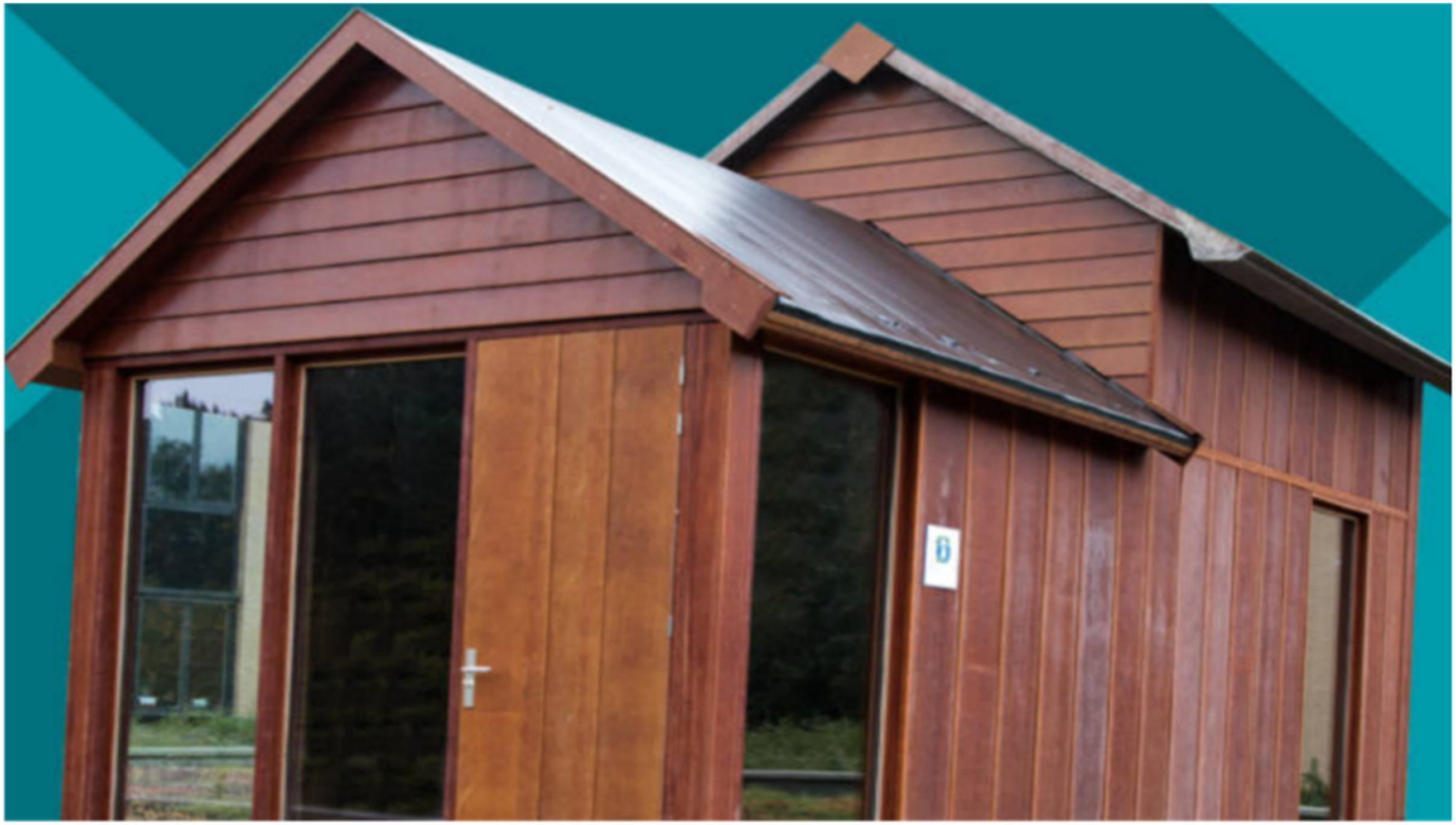
In the Tiny House project, use was made of insulating sandwich panels with bio-PUR, paper-based extrusion profiles, structural pultrusion profiles with natural fibers, and 100% bio-resins. In addition, this is a typical example of what can be done with composites to integrate multiple functions. For this purpose, use was made of a new technology known as vacuum injection in which all the materials are placed on a foam plate and wrapped in a film before the air is sucked out to create a vacuum and the resin is allowed to flow inside. Thus, a sandwich panel is created that comprises the roof structure, heat insulation, and eaves gutter profiles. 51
Bridges
Very few examples have been so far developed of bio-composites used as infrastructure components. One example is the pedestrian bridge made by the Eindhoven University of Technology (Figure 16), in which the girder is a bio-composite of hemp and flax fibers attached to a polylactic acid (PLA)-based foam core.
53
The bio-composite footbridge, 18 months after the installation across the river Dommel.
53

Three alternatives are traditionally in use for bridge building in the Netherlands, namely concrete, steel, and composites. Even if environmental concerns are not the most important factor, composites often come in as the winning solution. A composite bridge requires hardly any maintenance, while a steel bridge has to be painted every 5 years. From a building cost viewpoint, concrete is usually the cheapest alternative albeit a concrete bridge is impossible in some locations because of its high weight while it also occupies more space and takes more time to construct. In such cases, a steel bridge might be preferred but only at a higher cost. It follows that a composite bridge stands as the really most economical solution. Moreover, a bio-composite bridge will reasonably be the winner if environmental concerns are the main factor to consider. In most focus points, flax fibers score considerably higher than glass, except for one: land use.
54
The Ritsumasyl bridge is made of flax reinforced epoxy, which is more flexible than steel but less stiff than a glass fiber composite (Figure 17). In order to ensure the required stiffness would be achieved, the bridge design had to be modified solely by increasing bridge thickness. The bio-composite bicycle bridge “Ritsumasyl.”
54
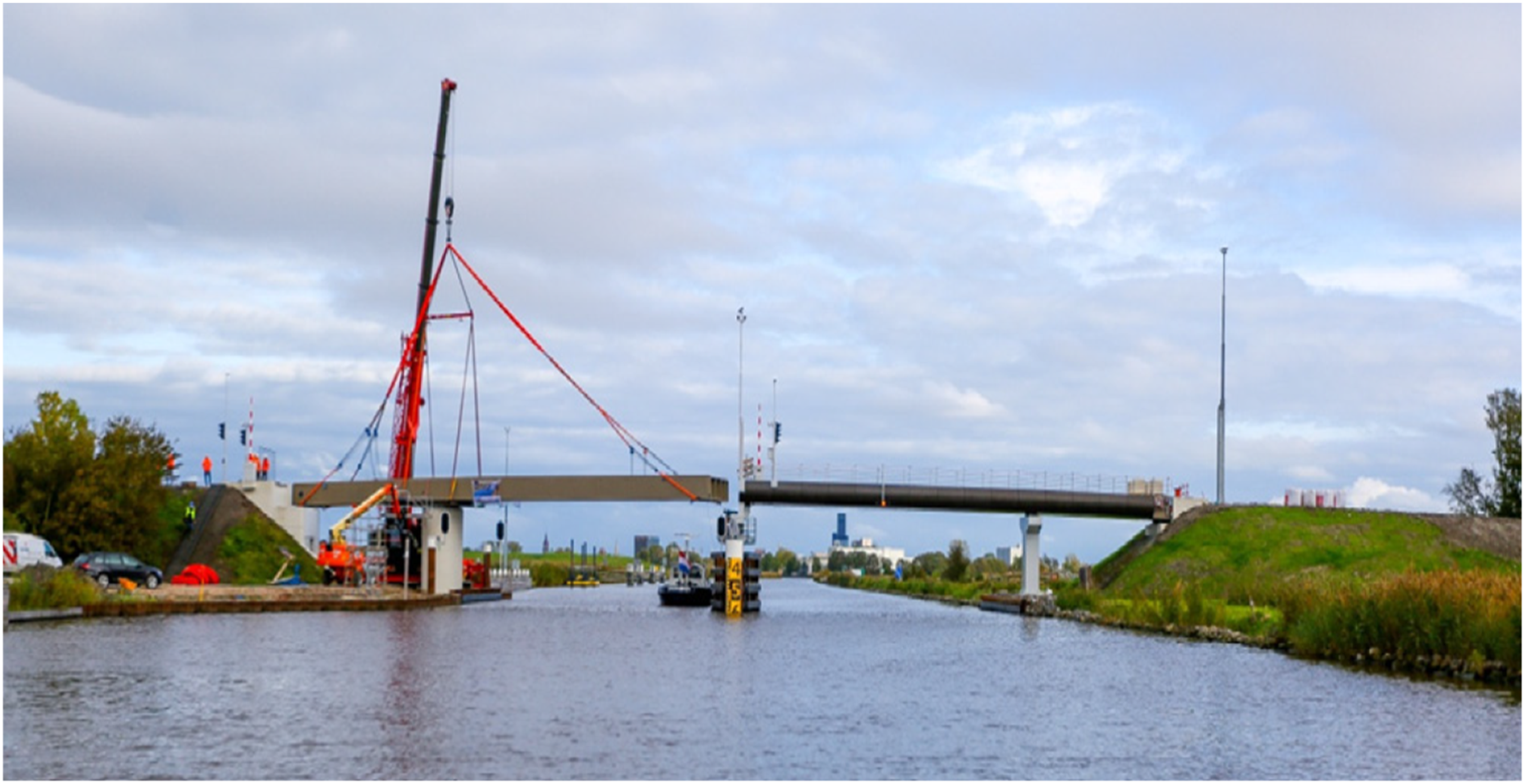
Although most materials exhibit a tendency to creep, the creeping in this bridge completely vanished after a while. There were even more surprising results; when tested for fatigue in Delft, a lifespan of a hundred years, rather than the required 50 years, was determined for the bridge; this came as a surprise because natural fibers were thought to be susceptible to moisture and damage while a special coating had been applied on the composite in this case to prevent moisture penetration. After years of service, the fibers are still enclosed in the epoxy matrix, making it difficult for moisture to reach them. The epoxy, a very durable resin that keeps out almost anything, accounts for more than fifty percent of the material used. A coating applied as an extra protective layer can guarantee even higher levels of waterproofing and protection against moisture penetration. Currently, 100% bio-based resins are being developed but more research is warranted before they can be used in building bridges. Once this technology becomes possible, the composites could in theory be shredded, ground, and scattered all over the land. There will then be no need for using different resins to make biodegradable bio-composites. 54 It is a misconception that it is always an advantage if a product is biodegradable; this is only true for short-lived products like packaging.
The Florida footbridge (Figure 18) is part of a 4-year Interreg NWE research project called Smart Circular Bridge (SCB) led by Eindhoven University of Technology (our group) and involves 14 partners. 90 FBG sensors were used to collect strain and temperature data in real-time. An experimental application of natural fiber-composites for load-bearing purposes is the goal of the SCB project. The design, production, and construction of two other pedestrian and cycling bridges (one in Germany and one in the Netherlands) will take place in the next 3 years. The SCB project proposes a new approach to overcome uncertainties through the use of a structural health monitoring system, which can monitor mechanical behavior and assess structural safety. The floriade bio-composite bicycle bridge.
Discussion
Application of natural fibers is on the rise and will continue to dominate the market for the years to come. In real life situations, natural fibers will carry on to be new materials used to make reinforced composites for different structural applications. However, their mechanical and chemical properties will remain not fully known for some time since they are not synthesized and no specific methodology is yet known for their manufacturing. The drawbacks with natural fiber bio-composite application as outlined above still await remedies while no substantial progress is yet reported in this regard. This is mainly because not much research has been devoted to the assessment of the life cycle of natural textile reinforced composites. Moreover, composite processing methods need further investigation in order to enhance their potential performance.
Bio-composites or biodegradable materials (like wood) are characterized by shorter life-spans and require more safety provisions to account for rotting and aging. A long-lasting, load-bearing product is highly unlikely to be biodegradable because any biodegradable material might encounter problems of moisture penetration in the long run. Water absorption deforms the surface of composites as a result of swelling that creates voids, leading to reduced strength and increased mass. The presently available mathematical and numerical models for predicting the properties of natural fiber-reinforced composites are not always accurate enough due to the nonavailability of reliable input data. In another vein, it is no easy to model natural fibers as a result of varying diameters along fiber length. Finally, composite materials reinforced with natural fibers are, in most cases, basically limited to the low to medium load bearing applications.
These considerations require an enormous amount of research in future as many of the issues raised in previous works still await reasonable and convincing answers in order to guarantee the reliability of natural fiber composites for different applications. Thus, those research efforts may be recommended as prioritized whose goal it is to improve the properties of fiber-reinforced composites for different applications.
Conclusions
Natural fiber composites have beneficial properties such as low density, low material cost, and enhanced flexibility when compared with synthetic composite products, thus providing advantages for their utilization in commercial applications (e.g., the automotive industry, buildings, and construction industry). Natural fibers used as reinforcement in composites have positive effect on the behavior of structural elements made of such composites. This review paper evaluated the properties of natural fiber reinforced composites including their mechanical, thermal, energy absorption, moisture absorption, and surface properties as well as their biodegradability. Also, structural applications of NFRCs were explored and the limitations on employing natural fibers were examined. The initial excitement over natural-fiber composites has now been somewhat tempered as a result of the realization that achieving theoretical strengths might not be possible, at least in the foreseeable future. Thus, a more humble and reasonable speculation is that the path to the adoption of natural-fiber composites for structural applications, as compared with the widely accepted advanced composites, will be hindered by technical challenges yet to be overcome.
It is expected that researchers will draw upon the insights provided in this study and will formulate new matrix materials compatible with natural fibers that seem beneficial in view of their availability and recyclability. Redesigning natural fiber-reinforced composites with properties adjusted to each specific structural application will no doubt enhance the market base of natural fibers.
Footnotes
Acknowledgements
The authors would like to express his deepest gratitude to Rijk Blok for always giving encouragement and providing invaluable suggestions. His enthusiasm, knowledge and exacting attention to detail have been an inspiration and kept this work on track although he recently passed away. We lost a brilliant scientist and an excellent professor in our department. Truly, your spirit is forever with us.
Declaration of conflicting interests
The author(s) declared no potential conflicts of interest with respect to the research, authorship, and/or publication of this article.
Funding
The author(s) received no financial support for the research, authorship, and/or publication of this article.
