




Abstract
Composite foams with 10–50 vol% hollow polymeric microspheres were prepared using bisphenol A epoxy resin and polyetheramine curing agent as the matrix. The results demonstrated that the density, hardness, and static mechanical properties of the epoxy resin/hollow polymer microsphere composite foams, as well as their dynamic mechanical properties under forced non-resonance, were similar to those of polymer/hollow glass microsphere composite foams. At 25°C and under 1–100 Hz forced resonance, the first-order and second-order resonance frequencies of the composite foams shifted to the low-frequency region as the volume fraction of hollow polymer microspheres increased. Meanwhile, the first-order and second-order loss factors of the as-prepared composite foams were improved by 41.7% and 103.3%, respectively, compared with the pure epoxy resin. Additionally, the first-order and second-order loss factors of the as-prepared composite foams reached a maximum at 40 vol% and 30 vol% hollow polymer microspheres, respectively. This research helps us to expand the application range of composite foam materials in damping research.
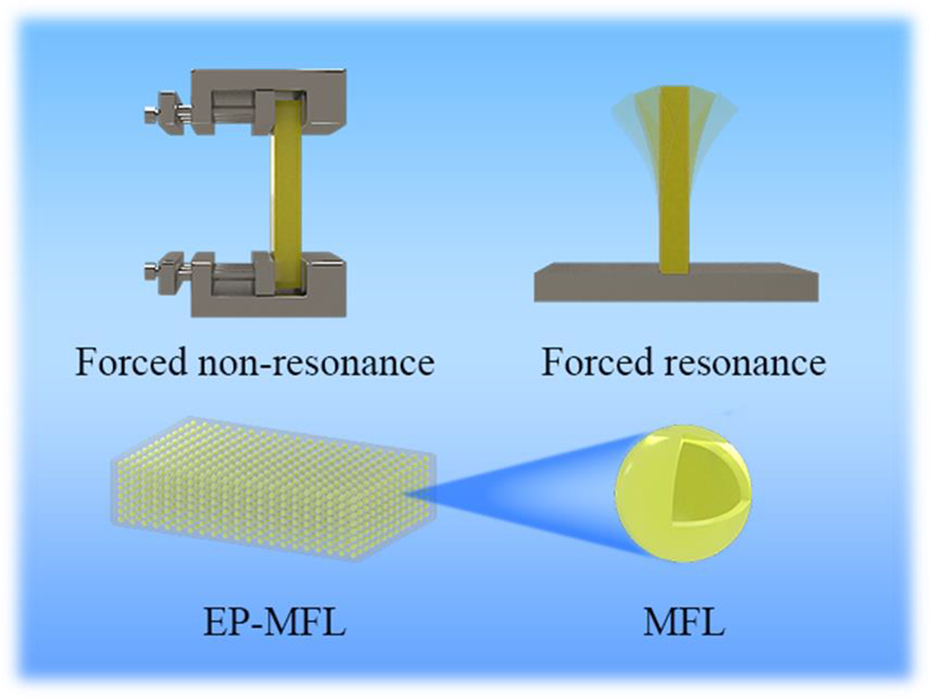
Introduction
Composite foams are typically prepared using fillers and a polymer matrix. Common matrix resins include epoxy, vinyl, polyurethane, and phenolic resins. 1 –9 Recently, phosphates 10 and metals 11,12 have also been used as matrixes for refractory materials without using resins. Fillers in composite foams include hollow glass microspheres, polymer microspheres, carbon spheres, and large-scale glass spheres. 13 –16 Due to their closed-cell structures, composite foams are lightweight, high-strength, waterproof, and have good corrosion resistance and low thermal conductivities. As a result, composite foams have been applied in aerospace and marine engineering fields. 17 For instance, composite foams have been used to reinforce the upper structure of the DDG-1000 littoral combat ship and the embedded radar in F/A-18E/F fighters. 18
Due to rapid economic development, the ever-increasing usage of machinery and equipment has led to increasingly serious vibration and noise pollution. Vibrations and noise are often linked: Vibrations can cause noise, and noise can also be transformed into vibrations. Vibrations and noise can damage human hearing and nervous systems, making people irritable and reducing their working efficiency. They can also interfere with the normal usage of equipment and instruments, reducing their accuracy and reliability, especially near resonant frequencies. Severe shaking will damage equipment and instruments, preventing meters from remaining in the correct position, making it difficult for an operator to make accurate judgments. 19
Damping materials can be categorized as metallic or nonmetallic, and nonmetallic damping materials have been widely applied. For materials with polymers as the main components, damping is achieved due to the viscoelasticity of polymers; hence, polymer damping materials are also known as viscoelastic damping materials, which have combinations of storage and loss components in different ratios. Under alternating stress, the mechanical energy acting on the energy storage component is stored as potential energy and returned to the environment. For this reason, viscoelastic damping materials appear to be elastic. The mechanical energy acting on the viscous part is dissipated due to friction between polymer chains. In this way, vibration and noise are reduced. 20
The mechanical behavior of viscoelastic materials follows neither Hooke’s law nor Newton’s law of motion. Instead, the stress relies on both the strain and strain rate. The viscoelasticity is linear if it is a linear superposition of ideal elasticity and ideal viscosity. The mechanical behavior of viscoelastic materials can be simulated by a combination of springs and dashpots. 20 The viscoelastic damping characteristics of materials are dependent on their dynamic mechanical properties, 21 which can be tested by various methods. They can be categorized according to the vibration mode using the free attenuation vibration method, forced resonance method, forced non-resonance method, and acoustic propagation method. They can be categorized according to the deformation mode as tension, compression, torsion, shearing (e.g. sandwich shearing and parallel-plate shearing), or bending (e.g. single cantilever beam bending, double cantilever beam bending, triple-point bending, S-shaped bending).
Previous studies of the damping performance of composite foams have focused on foams with hollow glass microspheres as fillers, and most were characterized under forced non-resonance, 4,22 –29 while the testing of composite foams under forced resonance has been rarely reported. 30
The dynamic mechanical properties of polymer-based composite foams can be investigated from the perspectives of the matrix resin, the content of hollow glass microspheres, the wall thickness of the hollow glass microspheres, the reinforcing materials, or interactions between the matrix resin and hollow glass microspheres. Sankaran et al. 23 prepared 0.50 g/cm3 epoxy-based composite foams using three curing agents and investigated the effects of the curing agent type on the storage modulus, loss modulus, glass transition temperature, and maximum working temperature of the composites. Gupta et al. 3 investigated the effects of the wall thickness and content of hollow glass microspheres on the storage modulus, loss modulus, and loss factor at different temperatures and loading frequencies. Capela et al. 28 introduced glass and carbon fibers into epoxy-based glass microsphere composite foams and investigated the effects of the contents of glass microspheres, glass fibers, and carbon fibers on the storage modulus, loss modulus, and loss factor of composite foams. Nair et al. 24 introduced nano-clay into cyanate ester resin-based hollow glass microsphere composite foams and investigated the effects of nano-clay on the mechanical properties, dynamic thermomechanical properties, and thermal properties of the composite foams. Rigdahl et al. 31,32 investigated the damping performance of matrix resin/filler interfaces and proposed a formula to quantify the damping performance of matrix resin/spherical filler interfaces.
Composite foams materials, as lightweight materials, are widely used in aircraft, ships, and marine equipment in forced non-resonant conditions or forced resonance conditions when subjected to external dynamic loads. At present, most researchers generally use Dynamic thermomechanical analysis (DMA) to study the dynamic properties of polymer/hollow glass microsphere composite foams materials under forced non-resonance conditions, and rarely study forced resonance of composite foams materials, especially under forced non-resonance conditions and forced resonance conditions of polymer/hollow polymer microsphere composite foams materials has not been reported.
This line of research studies has great significance to composite foam materials used in aircraft, ships, and marine equipment. In those equipments, the composite foam materials may be in a resonant state within the vibration band of equipment operation, which is not conducive to the normal operation of the equipment and may damage the equipment. Without changing the shape and size of the material, the composite foam resonance frequency can be adjusted using hollow polymer microspheres to move the material resonance frequency to lower frequency, so as to avoid adverse effects of composite foam material resonance when the device is working. This work may provide a feasible solution to the problem of lightweight and resonance of composite components.
Experimental
Materials
NPEL-128 epoxy resin (epoxy equivalence = 184–190 g/eq) was purchased from Nanya Epoxy Resin (Nanya Electronic Materials Co., Ltd., Kunshan, China). Polyetheramine T403 (active hydrogen equivalence = 81 g/eq) was purchased from Huntsman Corporation (Huntsman Chemical Trading Co., Ltd., Shanghai, China). Defoamer BYK-A530 was purchased from BYK (BYK Chemical Co., Ltd., Tongling, China). MFL-81GCA hollow polymer microspheres were purchased from Matsumoto Yushi Seiyaku Co., Ltd, Osaka, Japan.
The MFL-81GCA hollow polymer microsphere density is 0.24 g/cm3, the size of which is from 15 mm to 40 mm (Figure 1). The microsphere is composed of acrylic copolymer/CaCO3, and the pressure resistance is greater than 20MPa.
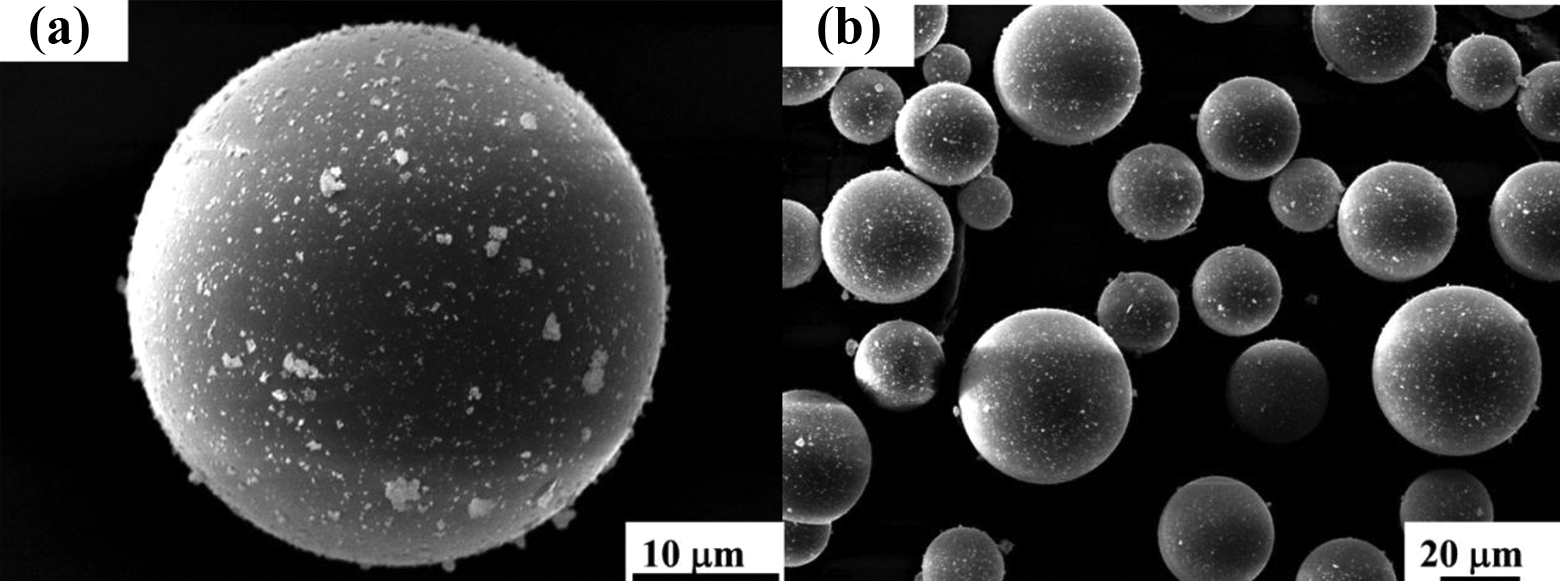
Microscopic morphology of MFL-81GCA microspheres.
Synthesis of composite foam
The matrix resin was prepared by mixing 100 g NPEL-128 epoxy resin, 42 g T403 polyetheramine curing agent, and 2 g BYK-A530 defoamer for 5 min. Six pure epoxy resins were prepared according to the above method, then 0, 3.3, 7.3, 12.6, 19.5, or 29.3 g of MFL-80GCA was added and stirred well. Then, the above mixture was placed in a vacuum drying oven for decompression and defoaming. After treatment, the slurry was poured into a mold to obtain a test sample for curing.
The curing process used a gradient curing process that included room temperature curing, 12 h; 80°C, 2 h; 120°C, 2 h to obtain pure epoxy resin and composite foams with volume fractions of hollow polymer microspheres of 10%, 20%, 30%, 40%, and 50%. After curing, the material was ready for testing.
The density test sample molds (internal dimensions of Φ40 × 4 mm2), compression strength test sample molds (internal dimensions of Φ8 × 10 mm2), tensile strength test sample molds (dumbbell type, 10 mm thickness, 20 mm width of clamping area, 10 mm width of the test part, 200 mm overall length), and bend strength test sample mold (200 × 15 × 4 mm3) were used for sample preparation. For the dynamic mechanical analysis, 32 × 10 × 3 mm3 sized samples (forced non-resonant dynamics performance test) and 400 × 40 × 6 mm3 sized samples (forced resonant dynamics performance test) were cut from a bulk composite foam with molds (internal size 500 × 250 × 40 mm3).
Pure epoxy resin and 10% to 50% volume fraction MFL-81GCA composite foam material samples are represented by EP, EP-MFL-10, EP-MFL-20, EP-MFL-30, EP-MFL-40, EP-MFL-50, and EP-MFL-50, respectively.

Epoxy/hollow polymer microsphere composite foams material formed directly in the mold: (a) density test samples, (b) compression strength test samples, (c) bend strength test samples, and (d) stretch strength test samples.
Characteristics of as-prepared composites
Density and porosity
In this experiment, the density of the material was measured in accordance with the ISO 1183-1:2004 standard. The instrument used was MH-300A solid density meter, which was manufactured by Kunshan Lugong Precision Instrument Co., Ltd, Kunshan, China. Samples were placed on the solid density meter, and the instrument automatically measured and recorded the mass of the sample in the air. Then, the sample was placed in an instrument cage. The cage was placed in water, and the instrument automatically measured and recorded the mass of the sample in the instrument water tank. Then, the instrument directly displayed the density of the sample. Five samples were tested. The porosity of the composite foam was calculated in accordance with ASTM D2734: 2003.
Hardness
The Shore D hardness was measured in accordance with ISO 7619-1:2004 standard. The instrument used was an LX-D Shore hardness meter manufactured by Nanjing Suce Measurement Instrument Co., Ltd, Nanjing, China. The sample was placed on a flat, hard surface and pressed as quickly as possible. The presser was kept parallel to the surface of the sample so that the pressure needle was perpendicular to the surface of the test material.
Mechanical properties
Compressive strength and compression modulus: The test was conducted in accordance with GB/T2567-2008 standard to measure the compressive strength of the material. The instrument used was an electronic universal tensile machine E44.106 (MTS Industrial Systems China Co., Ltd, China). The samples were cylindrical with diameters of 8 mm and a height of 10 mm. Five samples were measured for each type of material, and the test rate was 0.1 mm/s.
Flexural strength and flexural modulus: The test was conducted in accordance with GB/T2567-2008 standard for testing the bending strength of materials using an electronic universal tensile machine E44.106 (MTS China Co.). The sample size was 200 × 15 × 4 mm3, with a span of 6.4 mm and a loading rate of 0.02 mm/s.
Dynamic mechanical properties under forced non-resonance
The instrument used in this experiment was a DMA1000+ dynamic mechanical analyzer manufactured by 01dB Company (France). The size of the test sample was 32 × 10 × 3 mm3. During temperature scanning, the static force was −5 N, the dynamic force was 1 N, and the temperature range was −30°C to 140°C. The loading frequencies were 20, 40, 60, 80, and 100 Hz. Tests were conducted in tensile mode. During frequency scanning, the static force was −5 N, the dynamic force was 1 N, and the frequency range was 1–100 Hz.
Dynamic mechanical properties under forced resonance
The instrument used in this experiment was a Danish B&K vibration meter (Brüel & Kjær Acoustics and Vibration Measurement Company, Nærum, Denmark). The length and width of the test samples were 400 × 40 × 6 mm3, the frequency scanning range was 1–100 Hz, the test temperature was 25°C, and the clamping length was 50 mm. Figure 3 is a schematic diagram of the vibration meter.

A schematic diagram of the B&K vibration meter.
SEM characterization
In this experiment, a Hitachi (Hitachi High-Tech Co. Tokyo, Japan) SU5000 field emission high-resolution scanning electron microscope (SEM) was used to observe the microstructure of the sample cross-sections. The acceleration voltage was 10 kV, and the samples were sputtered with gold before observations.
Results and discussion
Density and porosity of composite foams
The porosity of composite foams has an important influence on their physical and mechanical properties. There are two types of pores in composite foams. The first type of pores exists in the fillers. The second type of pores exists in the matrix resin because, during the mixing of the epoxy resin, curing agent, and fillers, air is introduced into the material, forming air bubbles in the matrix resin. Due to the presence of air bubbles in the matrix resin, it is difficult for the matrix resin to completely infiltrate the hollow microspheres. 3 The presence of pores in the composite foam will affect the mechanical properties and density of the material. In addition, during the material preparation process, due to the use of mechanical stirring and mixing, the fillers may be broken, decreasing the filling ratio and increasing the density of the material. Hence, it is essential to investigate the theoretical density, practical density, and porosity of composite foams.
The theoretical density of a composite foam can be calculated by

where
The porosity of the composite foam can be calculated by

where Vv is the porosity of the composite foam (vol%),
Porosity, microsphere volume fraction, and density of the composite foam.

As shown in Figure 4, the theoretical and measured densities of the as-prepared composite foams varied consistently linearly with the volume fraction of polymer microspheres. For composite foams with 10 and 50 vol% polymer microspheres, the measured density is higher than the theoretical density. This may be attributed to the fracture of the polymer microspheres during sample preparation.

Theoretical and measured densities of composite foams with different volume fractions of polymer microspheres.
Hardness of composite foam
The local resistance of a material to the intrusion of external objects is called its hardness. As shown in Figure 5, compared with the pure epoxy resin, increasing the content of the polymer microspheres decreased the hardness of the material from 87 HD to 71 HD. This is because the polymer microsphere surface is made of an acrylic material with gas inside, and its own strength is lower than that of pure epoxy resin; therefore, as the content of polymer microspheres increases, the material hardness decreases.

Influence of polymer microsphere volume fraction on the composite foam hardness.
Mechanical properties of the composite foam
As shown in Figure 6, as the content of hollow polymer microspheres increased, the compressive strength/compressive moduli and bending strength/bending moduli of the composite foams decreased. This is consistent with other polymer/hollow glass microsphere, polymer-based hollow polymer microsphere, and metallic hollow glass microsphere composite foams. 33 –36 This can be attributed to the dominant role of the matrix resin on the mechanical properties of the composite foams. The presence of fillers reduced the content and continuity of the resin, thus degrading the mechanical properties of the composite foams. Lightweight performance is one of the important properties of composite foams materials, and the addition of hollow polymer microsphere determines the lightweight properties of composite foams materials. However, with the addition of hollow polymer material, mechanical strength is on the decline. Therefore, when composite foams materials are used as lightweight materials, the material density and mechanical strength must be balanced. Material lightweight design and application are carried out under the condition of meeting the requirements of mechanical strength.
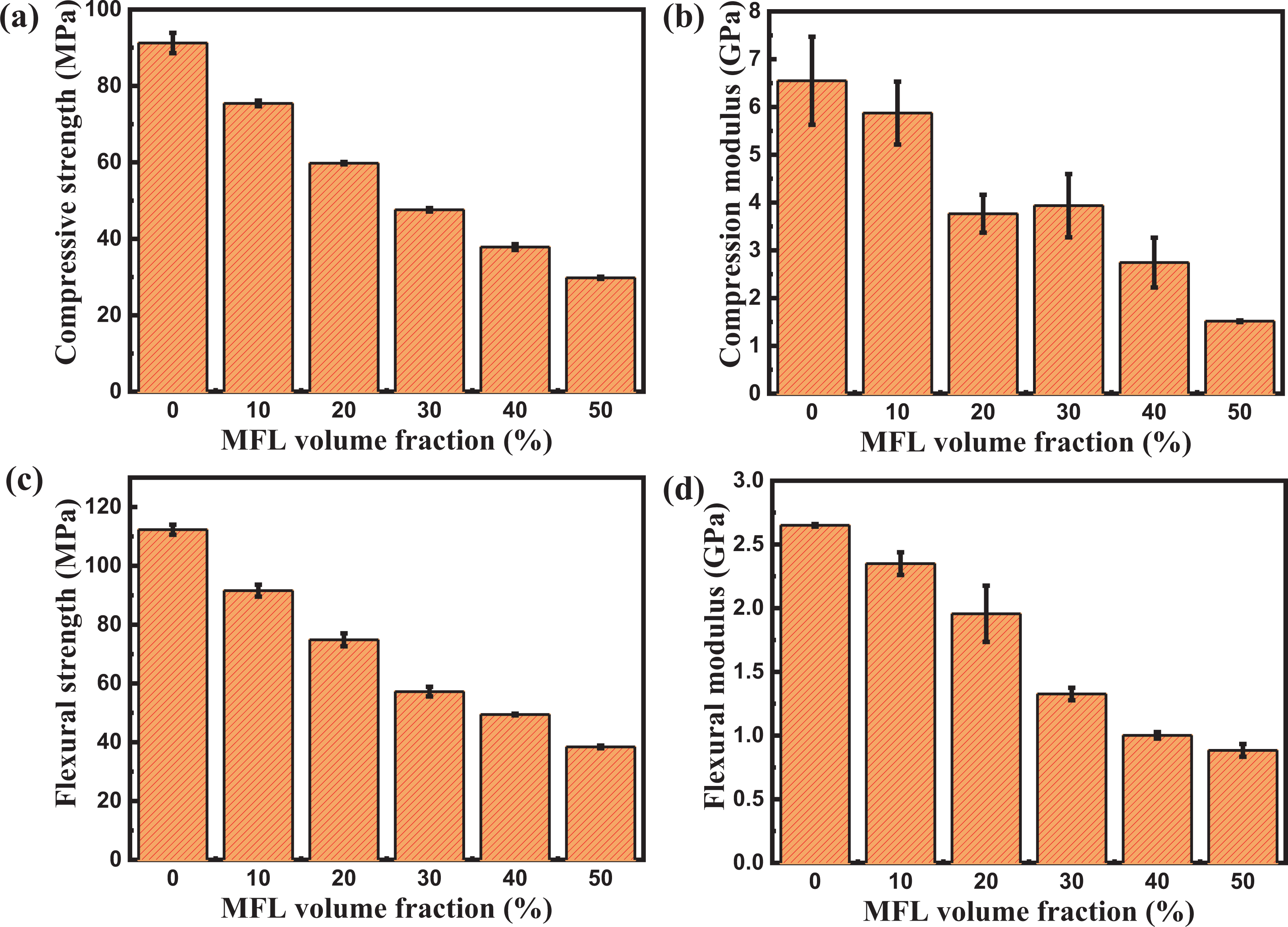
Influence of hollow polymer microsphere volume fraction on the composite foam: (a) compressive strength, (b) compressive modulus, (c) flexural strength, and (d) flexural modulus.
Dynamic mechanical properties of composite foam under forced non-resonance
The forced non-resonance method refers to forcing the sample to vibrate at a set frequency. The stress and strain amplitude of the test sample during vibration and the phase difference between stress and strain are used to calculate the storage modulus, loss modulus, and loss factor. In this experiment, the storage modulus, loss modulus, and loss factor were measured for the pure epoxy resin and composite foams with 10–50 vol% hollow polymer microspheres under constant frequency conditions (20, 40, 60, 80, 100 Hz), at −30°C to 140°C, respectively.
Since the dynamic mechanical properties of the composite foams are similar at different frequencies (20, 40, 60, 80, 100 Hz), this section only discusses the trends of the dynamic mechanical properties of composite foams with different polymer microsphere contents at 20 Hz and −30°C to 140°C. It can be seen from Figure 7(a), (c), and (e) that below the glass transition temperature, as the content of polymer microspheres increases, the storage modulus, loss modulus, and loss factor of the material decrease. This is consistent with the reported static and dynamic mechanical properties of polymer/glass microsphere composite foams 26 –28 because the dynamic mechanical properties of composite foams under these conditions are mainly determined by the matrix resin.

Effects of temperature on the (a) storage modulus, (c) loss modulus, and (e) loss factor of the composite foam under forced non-resonance. Effects of frequency on the (b) storage modulus, (d) loss modulus, and (f) loss factor of the composite foam under forced non-resonance.
Since dynamic mechanical changes are similar for pure epoxy resin and composite foam with different volume fractions of polymer at different frequencies (20, 40, 60, 80, 100 Hz), this section only discusses the trends of the dynamic mechanical properties of composite foams with 30% polymer at 20, 40, 60, 80, and 100 Hz and −30°C to 140°C. It can be seen from Figure 6(b), (d), and (f) that in the composite foam, as the loading frequency increases, the material storage modulus, loss modulus, and loss factor all increased.
Figure 8 depicts the trends of the stiffness and dynamic displacement of pure epoxy resin and composite foam under forced non-resonance frequency (1–100 Hz) at 25°C. As the content of hollow polymer microspheres increases, the stiffness of the materials decreases, and the dynamic displacement (amplitude) becomes larger. This is similar to the static mechanical properties of materials, as the composite foam stiffness is mainly determined by the matrix resin.

Effects of the volume fraction of hollow polymer microspheres on the (a) stiffness and (b) dynamic displacement (amplitude) of the composite foam under forced resonance.
Dynamic mechanical properties of composite foams under forced resonance
The forced resonance method refers to the method of forcing the sample to vibrate under a force with a constant amplitude within a certain frequency range. The resonance curve is measured, and the storage modulus and loss factor are obtained from the resonance frequency and the resonance peak width on the resonance curve. The test frequency range can include more than one resonance order. 22
Under the action of a constant periodic alternating force amplitude in any system, when the excitation frequency is equal to the inherent frequency of the system, the system deformation amplitude reaches a maximum, that is, resonance occurs. The trend of the deformation amplitude DA or deformation rate amplitude RA of a vibration system with a frequency f over a frequency range that includes the resonance frequency is called the resonance curve. Figure 8(a) shows the resonance curve of DA–f, which indicates that the system has multiple resonance peaks. The first resonance peak with the lowest frequency is called the first-order resonance, while resonances at higher frequencies are called the second, third, fourth order, and so on resonances. Figure 9(b) shows the RA–f resonance curve of the ith resonance, and the resonant frequency is represented by f
r
i
. The difference Δfi (=f
i
2 − f
i
1) between two frequencies corresponding to

Resonance curve: (a) multi-order resonance curve expressed in terms of the deformation amplitude (DA) and vibration frequency (f). (b) A resonance curve of a certain order expressed as the deformation rate amplitude (RA) and vibration frequency (f).
For the bending modulus, the loss factor and loss modulus of a homogeneous sample are calculated according to formula (3) to (6), respectively:


where
According to equations (4) to (6), the loss factor of the composite foam (tan δf) under forced resonance depends on the ratio of (f i 2 − f i 1) and resonance frequency (fi). Hence, the greater the amplitude resonance curve peak width, the lower the resonance frequency, the higher the loss factor, and the higher the damping performance during resonance.
Figure 10 shows the forced resonance sweep amplitude trend of pure epoxy resin and 10–50 vol% composite foam at 25°C in the frequency range of 1–100 Hz. As the hollow polymer microsphere volume fraction increases, the first-order resonance frequency and second-order resonance frequency of the material shift to a low-frequency direction, and the amplitude becomes greater relative to the pure epoxy resin. The amplitude increases because, as the amount of polymer microsphere increases, the rigidity of the composite foam decreases, and the amplitude of the composite foam increases when a constant external force is applied. Therefore, the amplitude resonance peak becomes wider, and both the first-order and second-order loss factors of the solid are higher compared with the pure epoxy resin. This indicates that the application of polymer microspheres improves the damping performance of the material under forced resonance conditions. When the hollow polymer microsphere volume fraction is 40%, the first-order resonance loss factor of the composite foam reaches the maximum. When the polymer microsphere volume fraction is 30%, the second-order resonance loss factor of the composite foam reaches the maximum. Compared with pure epoxy resin, the first-order and second-order loss factors increased by 41.7% and 103.3%, respectively. The first-order and second-order resonance dynamic mechanical parameters can be calculated by equations (3) to (5), as shown in Figure 11 and Table 2.

Resonance curve of composite foams with different volume fractions of hollow polymer microspheres.

First-order and second-order resonance dynamic mechanical parameters of composite foams with different volume fractions of hollow polymer microspheres.
First-order and second-order resonance dynamic mechanical parameters of composite foams with different volume fractions of hollow polymer microspheres.

Composite morphology
Figure 12 shows the presence of many irregular holes and a small number of complete polymer microspheres in the material. The composite foam was put into liquid nitrogen and broken at a low temperature to obtain a good sample for section observation. Due to the good compatibility between the polymeric microspheres, most of them were destroyed by the large external stress. The irregular pore structure was formed by the destruction of the polymer microspheres when the material fractured, which is different from the fracture morphology of polymer/glass microsphere composite foams. 3,37 –39 The cross-section of the polymer/glass microsphere composite foam contains many hollow glass microspheres, and only a few hollow glass microspheres were destroyed. The reason for the different morphologies may be that hollow glass microspheres have a higher strength than polymer microspheres. Additionally, an improved bonding interface between the matrix resin and polymer microsphere was observed. The bonding interface is similar to that of the hollow glass spheres treated with a silane coupling agent.

Morphology of a composite foam with 50 vol% hollow polymer microspheres: (a) large-scale observation and (b) detailed observation.
Conclusions
Epoxy resin/hollow polymer microsphere composite foams were prepared. As the content of polymer microspheres increased, the density, hardness, compressive strength/modulus, and bending strength/modulus of the composite foams decreased. The dynamic mechanics of epoxy resin/polymer microsphere composite foams were investigated under forced non-resonance. During scanning at temperatures of −30°C to 140°C, the storage modulus, loss modulus, and loss factor all showed a decreasing trend that was consistent with previously reported literature results. The dynamics research of the epoxy/polymer microsphere composite foam under forced resonance conditions shows that as the volume fraction of the hollow polymer increased, the resonance frequency of the composite foam shifted to lower frequencies. The first-order and second-order loss factors of the composite foams were improved compared with pure epoxy resin because the presence of polymer microspheres increased the amplitudes of the composite foams under resonance. The loss factors of composite foams reached a maximum at polymer microsphere volume fractions of 40% and 30%, respectively. Compared with other polymer/glass microsphere composite foams reported in the literature, the hollow polymer microspheres in this study formed a good adhesive interface with the epoxy resin.
Resonance conditions may exist in certain parts of the aircraft, ships, and marine equipment, such as composite base, composite structural parts, and composite core materials, which can lead to reduced equipment sensitivity and service life. According to the research results of this work, the hollow polymer microsphere can be added to the composite material without changing the shape and size of the composite material, so that the component resonance frequency moves in the low-frequency direction, avoiding the resonant operating conditions and ensuring the stability of the operation of the equipment. In addition, the use of hollow polymer microsphere can also effectively improve the lightweight performance of components. This line of research studies has great significance to composite foam materials used in aircraft, ships, and marine equipment.
Footnotes
Declaration of conflicting interests
The author(s) declared no potential conflicts of interest with respect to the research, authorship, and/or publication of this article.
Funding
The author(s) received no financial support for the research, authorship, and/or publication of this article.
