




Abstract
Blue spaces have long been associated with beneficially impacting human health and wellbeing. This article reflects upon the impact of the COVID-19 pandemic on people’s experiences in coastal blue space and the health and wellbeing benefits derived from exposure to the space. Undertaken after the UK’s first lockdown during Summer 2020, the work employed a qualitative mixed methods approach through a survey and interviews to provide an in-depth case study of people’s experiences in and value of coastal blue space before and during the pandemic on the Fylde Coast in Lancashire. Findings show that participants valued the physical and mental health benefits derived from routine visits to coastal space, stimulated by emotional connections, a sense of escape and sensorial immersion. However, a busier coast in the lockdown’s aftermath provoked a changed experience in coastal space for many participants due to a detachment from coastal space and the provoking of negative emotional experiences driven by heightened fears, reduced safety and increased litter. Mitigatory responses, through a changed coastal routine, and reflective responses, through a changed value of the coast, were found, the latter due to an increased appreciation of the health benefits from coastal exposure for some participants. Importantly, the findings highlight the need for coastal management to account for these experiences in protecting the health value of coastal space.
Introduction
Blue spaces, compared to terrestrial and vegetated green spaces, 1 are characterised by ‘the presence of water and include inland and coastal aquatic environments’. 2 Blue spaces have long been associated with beneficially impacting human health and wellbeing, 3 associations which were historically rooted in the apparent restorative and healing effect of water. 4 Recently, the literature field has evolved to focus on the health-enabling properties of ‘healthy blue spaces’, 5 due to the physical and mental health benefits which are described from blue space interactions. 6 For example, living near to coastal space contributes to improved general health, 7 including a higher likelihood of achieving physical activity, 8 activities which include swimming, water sports and walking. 9
Spending time in coastal blue space also contributes towards mental health and wellbeing benefits across the life course for residents and visitors alike.10,11,12 Coastal visits have been associated with stress relief,13,14 reduced depression, 15 enhanced wellbeing 16 and increased calmness, 17 particularly due to the coast’s restorative and therapeutic qualities.18,19 As such, increased interactions with blue spaces have been suggested as a simple medical prescription to improve patient health. 20 However, this notion of healthy blue space must not ignore the socio-economic challenges which many coastal communities face, 21 nor the broader social dynamics, contestations, and power relations in blue spaces which influence who can use the spaces and how they can be used. 22 Moreover, research must also be mindful that different world views may not subscribe to this Eurocentric association between blue space, health, and wellbeing, and that different cultures may have alternative blue space relationships. 22
This paper is interested in how the COVID-19 pandemic affected the association between coastal blue space, health, and wellbeing, and hence people’s experiences in and value of coastal blue space in a UK context. COVID-19, first identified in China in 2019, has claimed over five million lives globally to date, including over 140 thousand in the UK, 23 sparking global government responses to tackle the health emergency, including lockdowns, business shutdowns and social-distancing measures. Economically, UK coastal resort towns are amongst the most vulnerable places to the response measures because their economies and workforces are geared towards tourism, an economic sector which was strongly hit by business and travel shutdowns. 24 Combined with a high health vulnerability in coastal areas due to elderly populations, the pandemic is likely to exacerbate deprivation in coastal communities compared to non-coastal locations. 25 However, there is also the need to document the social impact of the pandemic on people’s experiences, emotions, sense of place and value of coastal space during this unique time period. This paper explores this through an in-depth qualitative case study of the Fylde Coast in Lancashire, UK.
People’s sense of place at the coast is a key theoretical concept within this research. Place can be defined as a location, or space, which people have made meaningful to themselves and they are attached to. 26 Sense of place considers the more intimate and emotional relationships with place which describe how and why the place carries an individual, or shared, 27 uniqueness or significance. 28 Therefore, a sense of place within coastal space captures a person’s lived experiences, reactions and emotional encounters within that space. 29 In this research, this includes how the space makes people feel, how it is made meaningful, how the space is constructed, contested, valued and experienced through a pandemic, and ultimately how the pandemic has shaped the nature of place encounters. Consequently, this research is grounded in people’s lived experiences and sense of place at the Flyde coast. This provides a rich and textured appreciation for how people encountered the coast during the pandemic, in terms of their practices, emotions and experiences within them, 30 helping to ‘deepen our understanding of individuals' lifelong experiences of coasts, and the meanings they attach to them’. 31
Consequently, the work is important to inform a holistic approach to coastal management which accounts for both physical coastal change and human experiences in coastal space, including people’s emotional and embodied coastal connections. 32 Accounting for this during the COVID-19 pandemic, when increased pressure was placed on UK coastal space due to an escalating demand for coastal recreation, 33 can highlight factors which detrimentally impact people’s coastal experiences. For example, factors including coastal developments 34 and litter 35 are known to undermine the psychological and emotional benefits of coastal exposure. Accounting for these factors within coastal management may help to safeguard the health and wellbeing benefits for the 271 million recreational visits to English coastlines annually, 36 from blue space investments 37 like coastal defence infrastructure or citizen science schemes, or help to overcome health inequalities by identifying demographic groups who have varying coastal exposure. 38 This study specifically investigates the impact of increased busyness, litter, and perceptions of reduced safety during the pandemic context.
Interestingly, coastal spaces have provided refuge or an escape from infectious diseases in the past. During the Cholera epidemic in 18th century England, the Devonshire coastal town of Teignmouth was described by a local newspaper as ‘an arc of peace in the midst of a deluge of pestilence’. 39 This could possibly be interpreted both in the sense of a physical escape from the epidemic, and as a mental health escape from the anxieties of the time. Revisiting this theme during the contemporary COVID-19 pandemic provides an important window to explore how the pandemic and associated response measures affected people’s coastal experiences and sense of place. To achieve this, the paper firstly outlines the case study, before investigating how people valued the Fylde’s coastal blue space before the pandemic, and then whether the pandemic has changed people’s use of, experiences in, and sense of place in the Fylde’s coastal blue space.
Case study
The research case study is the Fylde coast, a low-lying coastal plain in Lancashire, bounded by the Irish Sea to the West, Morecambe Bay to the North and the River Ribble to the South (Figure 1). Climatically, the Fylde coastline is warmer, sunnier, dryer and windier compared to the UK and North West England region averages.
40
The coastline is macrotidal (tide range of 8.0–9.0 m) and features an approximately 17.5 km concrete sea wall and promenade connecting the conurbations of Fleetwood, Cleveleys and the coastal resort town of Blackpool. Historically, the region, and Blackpool in particular, has a strong tourist tradition, facilitated by the arrival of the railway in the mid-19th century
41
and wakes weeks, a Lancashire tradition whereby each mill town would shut down for a different week throughout the summer,
42
ensuring a constant flow of tourists seeking the coast. However, driven in part by the subsequent socio-economic decline of both Blackpool’s tourism and Fleetwood’s fisheries, parts of the region face several socio-economic challenges characteristic of disadvantaged UK coastal areas,
43
including poor health indicators,
44
an ageing population (average age of 45 compared to the UK average of 39
45
), high crime rates and high deprivation.
46
In particular, Blackpool is the most deprived local authority in England and has the worst life expectancy in the UK.
47
Map of the Fylde. Inset, the location of the Fylde within the UK.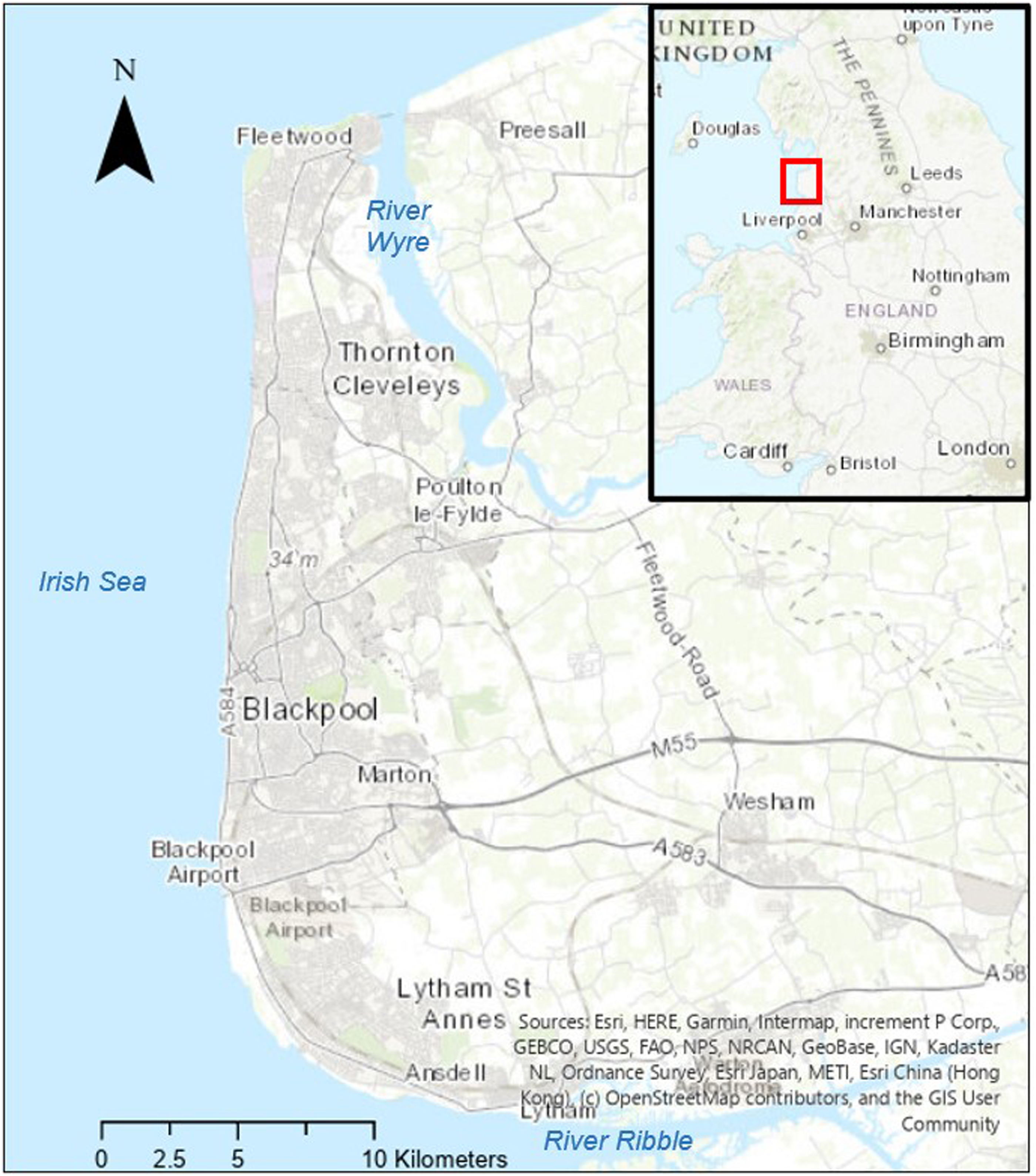
Methodology
To explore people’s experiences in and value of the coast along the Fylde during the COVID-19 pandemic, a qualitative mixed methods approach was employed through an online survey and interviews, which were undertaken during Summer 2020 in the aftermath of the UK’s first lockdown. The study received ethical approval from Lancaster University FST ethics committee (ref: FST19136). Informed consent was obtained from all participants before their involvement, whilst all data were anonymised, including the use of pseudonyms throughout the discussion.
The survey involved a sample of 137 people, 88 residents and 49 visitors of the Fylde coast, who self-selected themselves to answer an online survey of 25 questions, which was distributed to Fylde social media groups and email lists with the assistance of a local stakeholder. The questions were split across three sections, which explored participant’s demographic, their use of the coast and its value to them under normal, pre-pandemic conditions, and lastly, the extent to which their experiences at the coast and value of it changed during the pandemic and resulting lockdown. It is recognised that relying on memory of pre-pandemic times and the non-probability sample are limitations of the methodology, particularly since the sample is not representative of the wider population. 48 However, the context of conducting research remotely during a pandemic and the a-geographic nature of online communities made achieving a random sample difficult.49,50 Moreover, the sample is useful in this exploratory, qualitative research, whereby the results reflect a sub-group of the population to provide an indication and validation of themes and theory for a specific, localised case study.51,52 The sample captured a majority female (68% female) and ageing demographic, with 61–80 the predominant age category (59%) and ‘retired’ being the most numerous employment status (53%).
Follow-on synchronous online interviews were conducted using Microsoft Teams, involving a small sample of nine retired participants (six males, three females) who expressed interest after the survey. Seven interviewees live in the Fylde and two are frequent visitors, with all participants interviewed remotely from their homes. The interviews were semi-structured, with questions built around the salient themes identified in the survey and the participant’s own experiences, emotions and interests expressed in the interview. However, a key limitation was the omission of non-verbal gestures and expressive body movements because of the restrictive ‘head shot’ provided by the participant’s video cameras. 53
The analysis involved data screening and calculation of summary statistics for the survey, and manual transcription and annotation of the interviews. Qualitative data was thematically coded using NVivo 12, building a mesh of codes and an overlapping synthesis of themes. 54 Time was spent returning to the blue space literature to explore the themes identified, particularly place, emotional geographies, and health. Therefore, the data were approached both deductively and inductively; what is known about people’s encounters with blue space, how this compares to the Fylde’s unique coastal setting, and the extent to which the COVID-19 context has resulted in a coastal experience which contrasts the current way of knowing.
Results & discussion
The results suggest that a difference exists between the experiences in and value of coastal blue space along the Fylde before and during the COVID-19 pandemic. Part one of the discussion frames the perceived everyday coastal experiences and value of the coast for locals and visitors’ pre-pandemic. Part two examines how the pandemic has shaped local people’s place interactions with and value of the coast, exploring the main concerns of increased busyness, increased litter, and reduced perceptions of safety.
Part 1: The everyday value of the Fylde Coast pre-pandemic
Value was found in the physical and mental health benefits from routine immersion within coastal blue space. Local respondents reported that they visited the coast four to six times per week on average and 94% of respondents visited the coast at least once per week, whilst non-Fylde based respondents visited the coast monthly on average. Visits were predominately for recreation and leisure, including (dog) walking, cycling and running. Unsurprisingly, 85% of participants agreed or strongly agreed that the coast was important for their physical health.
The flatness of the Fylde was integral to the production of this physical health benefit. In particular, the flat and accessible promenade (Figure 2) permitted a wide array of users and wellbeing activities, a function which was valued by some participants including Fleetwood resident Steven,
‘we’ve got such a smooth prom here, a lot of people cycle, a lot of people out with the dogs, a lot of runners like me, a lot of people just walking’.
Example of the concrete promenade which extends the length of the Fylde Coast, photographed here at Blackpool.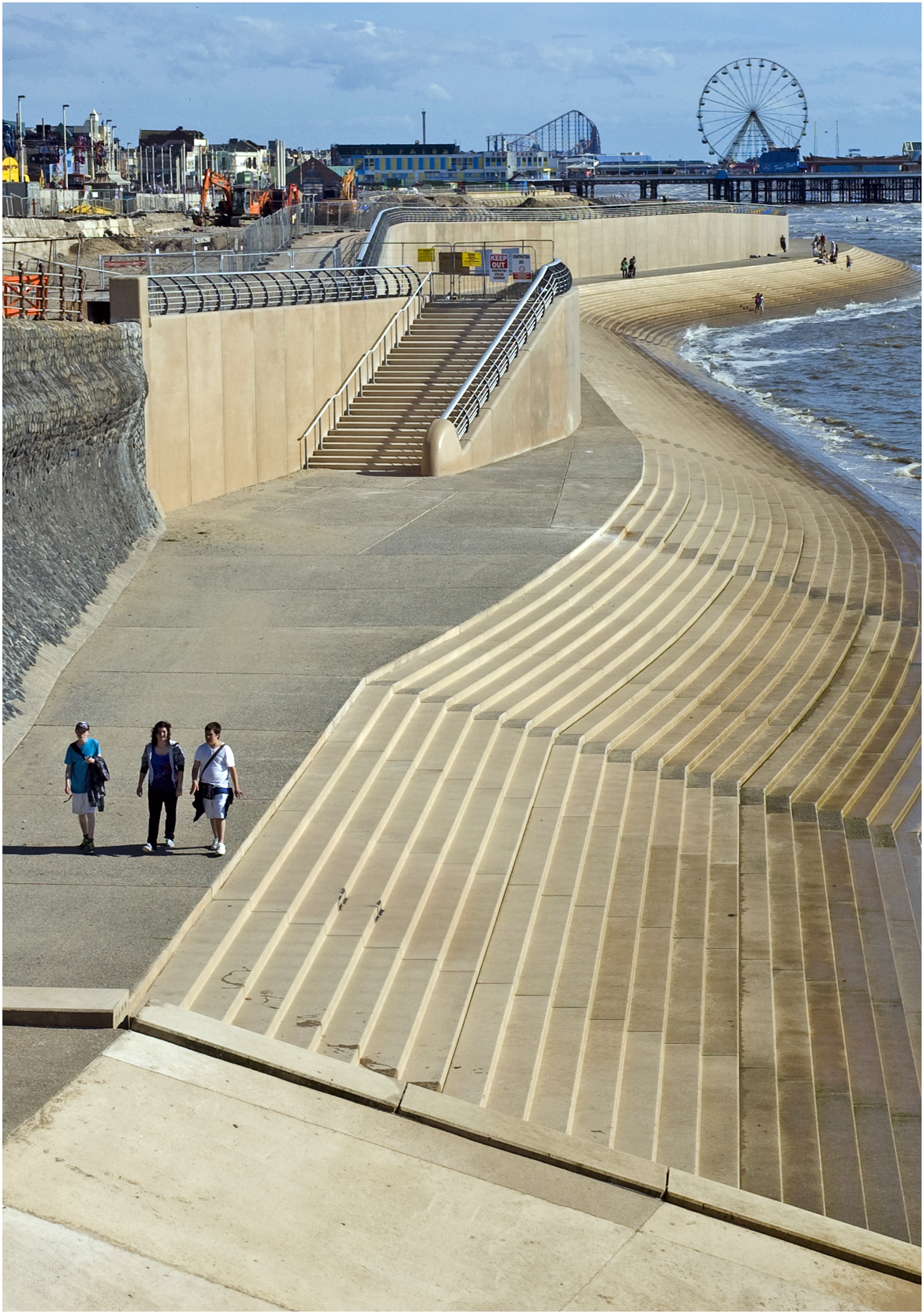
The promenade is a safe space away from road traffic and coastal processes, whilst the flatness is particularly accessible for the ageing demographic as found in other studies.
55
Mick outlined his thought process for choosing the Fylde for retirement: ‘I decided that the hills that I could walk up [now], five or ten years later might become a little bit more difficult, so I would become a little bit restricted by the geography of the place, so that’s why I didn’t go to Cornwall… as you get older you don’t want to be running up hills anymore, you want some level ground’.
Moreover, the Fylde’s distinctive macrotidal beach environment and extensive promenade provided an openness for leisure space and an escape from other beach users. As a result, the accessible promenade carries multiple social benefits beyond its defence function against flooding and erosion, 56 acting as a central component of the coastal experience by promoting routine physical wellness, wellbeing, and recreational activities at the coast. 57
Routine access to this space facilitated this physical health value and contributed towards many of the older participants ‘maintenance of habits and quality of life in retirement’.
58
Gammon & Jarratt
59
also note ‘that individuals are more open and more sensitive to the health-giving properties of blue spaces when there is time to focus and savour the moment’, suggesting a duality between physical coastal exposure and mental health. This may be important for the Fylde’s ageing demographic, who may visit coastal space more often than younger people
60
and have more time in retirement for coastal immersion as part of their daily routines. Consequently, 87% of respondents agreed that the coast was important for their mental health and 90% of respondents felt relaxed when in coastal space. Respondents also described feeling ‘happy’, ‘peaceful’, ‘calm’ and ‘freedom’ when in coastal space (Figure 3), terms which carry positive and hedonic mental health connotations.
61
Word cloud of people’s responses to the survey question: ‘What words would you use to describe how you feel at the coast and what the coast means to you?’, whereby larger words indicate more frequent use.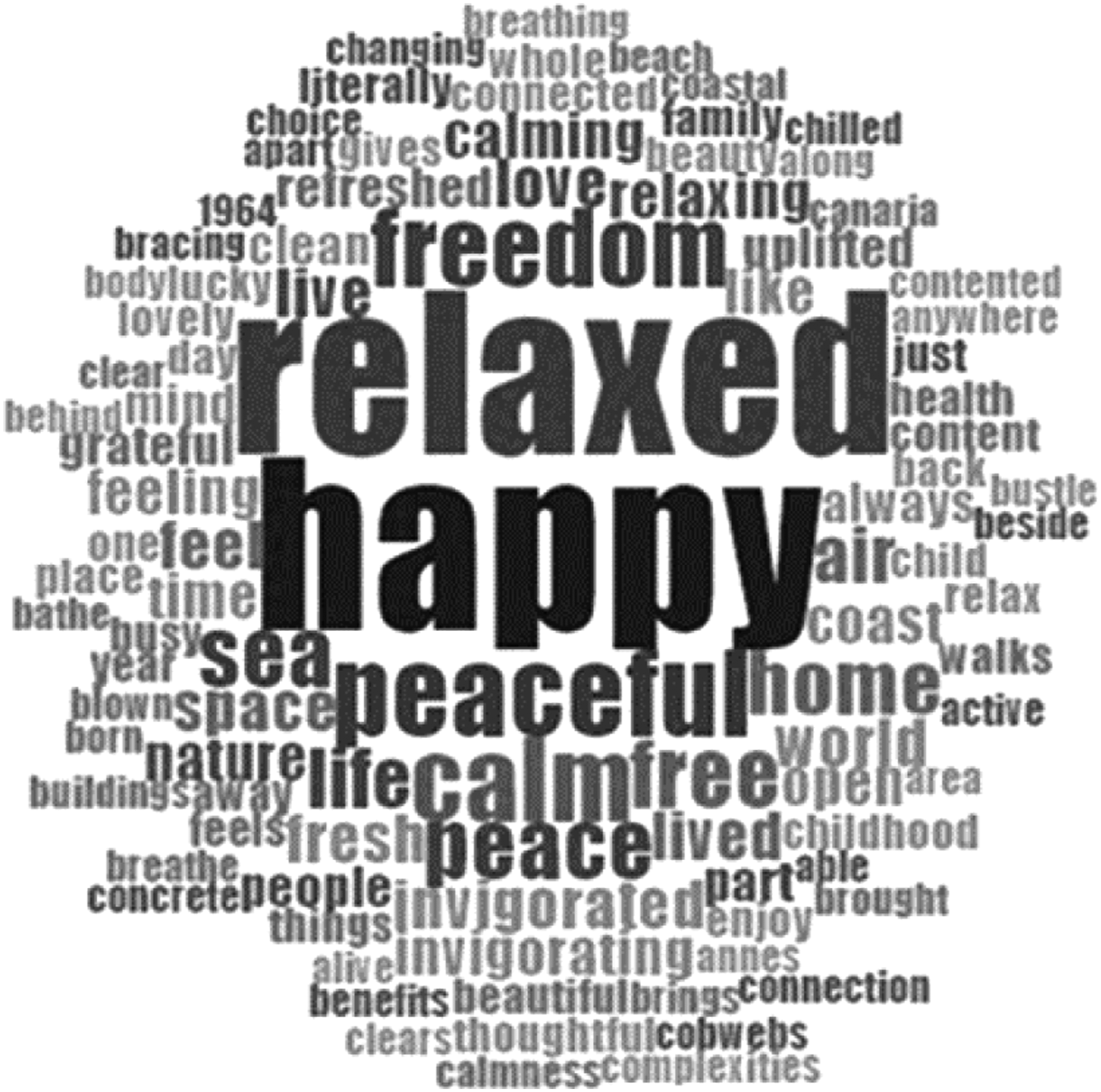
Being at the coast also invoked an emotional value for many participants, expressed through a sense of place and belonging at the Fylde Coast. For some, the Fylde coast was not just a landscape to be observed or appreciated, it was a lived experience and integral to their lives and livelihoods, expressing that it is ‘part of my life’, or that it ‘means everything’. One interviewee described the sea as a ‘magnet’, drawing them in until they cannot live without it – ‘once it gets in your blood it stays with you’. Coastal visits provided an opportunity to reconnect with this emotional value, particularly through the recall of childhood memories or nostalgic reflections from retracing routines, activities and visual stimuli in the coastal environment. For example, 77% of survey respondents reported that being in coastal blue space invoked positive memories, a finding which was to be expected, since memory is spatially and intimately connected to place and attachment to it, whereby childhood memories influence spatial memories in the present. 62
Consequently, for the sample’s ageing demographic, some of whom expressed childhood connections to the area through holidays, family, or have aged in place, past experiences and memories play an important role in their present-day attachment to the area and sense of place it generates. Moreover, such memory recall, specifically nostalgia, can benefit mood when in coastal space,
63
whilst reminiscence may be a form of therapeutic activity to repair the losses of later life in older adults.
64
For example, the coast offered opportunities for improved clarity of thought and enhanced connection to emotions and memory, particularly for those who are experiencing loss or trauma, with the seaside described as a backdrop to saying goodbye in the aftermath of loss by providing a sense of closeness to lost loved ones.
65
Brian, who experienced the loss of a loved one when he moved to Fleetwood, declared,
‘I just love going up and looking at the sea. It’s very calming. When Molly died, it was down there I went to get close to my emotions… I’m not into religion at all, but if there was a god that’s where you’d be close to him… I couldn’t be without the coast now’.
Therefore, it highlights that coastal immersion can stimulate a reconnection to multiple timelines, whereby past experiences and memories can influence and add value to the present experience.
Emotional benefits were also found in the sense of mental escape afforded by blue space immersion for many participants. An escape was apparent through a separation from everyday concerns, a finding also identified at nearby seaside town Morecambe
66
and for ageing adults in both blue and green spaces.
67
Here, participants reported that when in coastal space ‘the complexities of the world are literally behind me’, or that they are ‘disconnected from stresses of everyday life’. Wendy, a Cleveleys resident who had a demanding career in IT, built on this, stating
‘you don’t think of anything, you don’t think of any problems or anything… it just takes away all your worries. You’re in the now’.
Particularly for an ageing demographic, coastal space may provide a relief from life’s anxieties and stresses, offering an immersive, emotional and therapeutic landscape to lose themselves in. 68
Consequently, coastal space carries multiple layers of meaning which directly impact how people think and feel when present in it, providing a deep sense of emotional and refreshing escape which may not be apparent in other spaces. As such, being in coastal blue space is a ‘restorative emotional journey’, 69 characterised by a dynamic body of evolving sights, sounds, 70 smells, movements and routines, which provoke reactions and emotions in people and contribute to the coastal experience.71,72 In this sense, coastal space is not inanimate, with parallels between the refreshing mental benefit and the refreshing sensory nature of the physical coastal environment, 73 including the evolving vistas, the sea’s rhythmic properties and the breeze, a characteristic which Annie, a Cleveleys resident, valued – ‘it feels like it’s just blowing away all my cares and woes, I’m just happy’. Therefore, the coast may be described as ‘a rich, multisensory environment which allows us to reconnect with the natural world, relax and recover’. 74
Visually sensing the expansive views of the horizon and the varied colours, textures and shapes in the coastal environment was perhaps the dominant physical sense in this case study. Many participants associated observing the ever-changing coastal scene with a mental health benefit, evoking feelings of reverence, memory recall and nostalgia. The accessible promenade was again important in facilitating this, offering a raised platform for viewing the coast in its dynamic state. Smell, sound, and touch were also important senses experienced by the participants, who correlated feeling the elements against their bodies with refreshment. Annie proclaimed,
‘I just feel free and everything feels clean… it’s just a really good feeling that I get when I go to the sea front. I love to feel the sea breeze on my face, the sun on my face, the wind in my hair.’
Value was also found in the haptic nature of the beach, 75 particularly through physical immersion with the sediment and water which provided a closeness to nature, or through exposure to stormy sea conditions, which fuelled an almost sublime, high-energy experience for some participants.
Overall, the value of the Fylde Coast for participants aligns with current research in other coastal blue spaces, in that exposure offers physical and mental health benefits, particularly through a sense of a sense of place attachment and mental escape.76,77 The multisensory nature of the coast was also an important driver of the health benefits derived from coastal immersion along the Fylde, although it is a largely underexplored aspect of the coastal blue space literature and warrants further research. At this juncture, it is important to explore how local people’s experiences in and value of coastal space were shaped by the COVID-19 pandemic.
Part 2: COVID-19 at the coast
In Spring 2020, under the first phase of UK lockdown restrictions, people were required to stay at home and only exercise outdoors once daily, therefore footfall on the Fylde coast was reported by survey participants to reduce compared to pre-pandemic levels. There was a reduction in the number of coastal visits across the sample, including a fall in the average number of visits from four to six times per week to two to three times a week for the Fylde based residents. As the number of coastal users decreased, some participants also reported increased coastal cleanliness, a positive environmental impact of lockdown measures which was mirrored on beaches globally.78,79
However, as lockdown restrictions eased through May and June 2020 as the UK virus death and infection rate slowed,
80
people were permitted to travel further from their homes. Easing coincided with a period of good weather, resulting in escalating visitor numbers to the Fylde Coast,81,82 with survey respondents reporting an increased number of people walking, running, visiting in cars and cycling. Interviewees expressed surprise at the number of people, with Wendy stating, ‘I was actually quite shocked’, and Mick,
‘in the 8 years that we’ve lived here or going back the 30 years I’ve known the coastline of Cleveleys, I’ve never seen it so active.’
The trend was not exclusive to the Fylde, as thousands of people capitalised upon the good weather to travel to the coast across the UK, particularly to the south coast. 83 Across the Fylde and Blackpool in particular, which, in early June was still reporting one of the highest infection rates in England, 84 this increased busyness presented profound implications for the local participants’ experiences in and value of coastal space, driven by heightened fears, reduced perceptions of safety and increased litter.
Perceptions of safety
Increased busyness presented new perceived dangers to people’s health and wellbeing due to overcrowding and congestion in coastal space. This resulted in an inability to social distance, the practice of maintaining a physical distance between people to limit COVID-19 transmission. In particular, the promenade space, which was so highly valued by the participants pre-pandemic, became a space in which people feared contracting COVID-19. Many local respondents highlighted this changing experience, reflected in comments such as, ‘[it was] too busy and unsafe’. For some, this experience in coastal space translated to a decreased enjoyment and increased anxiety, with one respondent reporting ‘fear while walking… not a pleasant experience anymore, can't just enjoy the space anymore’. Another stated that they ‘will be glad when lockdown is over then I won't feel as at risk when walking on the beach in my local area’.
In some cases, this sense of fear when in coastal space was associated with a lack of knowing. There was a feeling that people do not want to contract the virus, yet there was a sense of unknown regarding who was safe and who was contagious, meaning there was an underlying anxiety when in coastal space for some people. David, a long-term resident of the Fylde, built on this fear, stating
‘It’s not a safe environment really. And we have found that not everyone is signed up to social distancing, whilst you know there are people out there with COVID-19, you don’t exactly know where they are’.
Under normal conditions, fear and anxiety in place is often associated with being away from home, in a place in which you feel that you do not belong. 85 Yet, normality and comfort can often be found amongst this unknown based on perceptions of safety and similarity to you, including gender, ethnicity and the way people dress and act. 86 However, in the scenario of a pandemic in busy coastal space, traits which help to distinguish between threat and safety become blurred or no longer apply, because anybody could be contagious, and hence dangerous, without visual signs.
Visitor safety on the busier beaches was also a concern for some respondents. Pre-COVID-19, survey respondents reported several aspects of the Fylde’s coastal space which challenged the ‘healthy’ coastal experience, including anti-social behaviour, litter and the restrictive nature of the loose and uneven beach sediment for older and disabled people. However, during the pandemic, respondents reported increased coastguard call-outs due to people getting trapped by the incoming tide or being swept out to sea on inflatables. For visitors who are potentially unfamiliar with local hydrodynamic conditions and the dangerous complex multiple intertidal bar landscape, 87 this can have disastrous consequences, including the drowning of two non-local boys after they were trapped by the incoming tide at St Annes in August 2020. 88
Overall, these examples reinforce the notion of a perceived unsafe post-lockdown coastal space, both in the physical environment, with the seascape being more than a benign visual pleasure, and in the social environment, due to the heightened threat of contracting a life-threatening virus. Such a changing experience directly affected individuals’ sense of place at the coast, disrupting, threatening and dislocating 89 people from their everyday normalities, provoking negative emotional reactions and experiences. Individuals negotiated this change in multiple ways, carrying implications for people’s daily coastal routines and sense of value attached to coastal space.
Increased litter
Furthermore, as busyness increased on the Fylde coast, so did litter.90,91,92 Most Fylde based interviewees reported a litter increase in coastal space post-lockdown, notably ‘fresh’ litter dropped onto the beach from the day’s activities. Mick, who collects litter daily, reported an increase in COVID-19 related personal protective equipment (PPE) litter, stating ‘it’s mostly these face masks that are showing up all over the bloody place’.
A survey participant correlated the increased litter with increasing beach users: ‘There’s been a substantial increase in the number of people using the beach since the easing of lockdown and with it a huge increase in litter too. People [have] careless attitudes and total disrespect for the environment… their litter has an impact, the beach is still useable but it’s not the same when you can’t move more than a few feet without seeing litter left by some careless muppet’.
Consequently, litter is an undesirable characteristic of the COVID-19 coastal experience and source of anger for some participants. 93 Increased litter provoked negative emotional reactions, impacting the restorative quality of the blue space environment and hence the mental health benefits gained from exposure to it. 94 Alongside the societal impact of litter, which is both a disliked and depreciative behaviour at the coast,95,96 a recognition of the broader detrimental impact of litter on the marine environment 97 also fuelled this anger, which left Mick fuming: ‘we all know about marine life and other creatures; we’re poisoning the bloody planet.’ COVID-19 related PPE litter is also particular stress on the marine environment, since it can contribute to the entanglement of marine life. 98
Implications for routine and value
For some respondents, the changing coastal experience caused them to avoid coastal space completely. A retired Fylde based survey participant reported –
‘I have actively avoided the coast since the lockdown was eased due to… the volume of people from out of town’.
Another respondent proclaimed – ‘I haven't been near as it is too busy, people aren't social distancing, people are leaving their rubbish and I don't want to catch the virus’.
Paradoxically, busyness was found to provide feelings of increased safety due to reduced vulnerability to crime for ageing adults in green and blue spaces, 99 yet here, under pandemic conditions, perceived overcrowding in coastal space translated to feelings of reduced safety and reduced access. There is a conflict between the desired coastal activities of locals and visitors, causing some respondents to seek alternative safer and less stressful spaces for exercise and leisure to mitigate the mental and physical health implications of busier coastal space.
More commonly, local people adapted their routines to accommodate the changing coastal experience during the pandemic and evade potentially dangerous human contact. Respondents reported visiting the coast earlier or later in the day to avoid peak periods of congested beach and promenade space, a trend replicated across beaches globally.
100
A female Fylde based survey respondent asserted –
‘I have visited late at night. If I visited in the day I have avoided narrow walkways as people aren’t social distancing… it makes me angry and anxious so have only been a handful of times over 11 weeks.’
Steven reported ‘we tend to go out very early morning. Whereas normally, I’d be on the coast midday, or anytime really… if it wasn’t COVID-19, I would be up there more I think’.
Yet, despite the changing experience, the flexibility of local respondents to visit coastal space during quieter periods highlights a benefit of their coastal proximity compared to visitors, as they can visit the coast in a safer, more spacious, and personal environment.
However, such adaptive strategies are not new, as residents of Cornish coastal blue space have been observed to change their routines to visit quieter blue or green spaces during peak tourist periods.
101
Yet, a perceived reduction in safety was associated with the exceptional busyness during the pandemic along the Fylde, which in non-pandemic conditions may not have provoked such significant mitigating measures. As such, the pandemic has changed the nature of everyday spatial interactions for many participants. In some cases, this has been a minor routine change, yet for some, the former mental and physical health value and experience in coastal space shifted to one which was inaccessible and unsafe. In response, over 10,000 people signed a petition calling for a localised lockdown in Blackpool in June,
102
whilst Visit Fylde Coast, the local tourism website, changed its name to ‘Don’t Visit Fylde Coast’ to discourage visitors
103
(Figure 4).
104
Although these measures may not have had the desired effect of limiting busyness, it does highlight the deep-rooted sense of danger that the increased busyness posed to the local population, their sense of place and their ‘own’ coastal experience. Poster encouraging people to stay away from the Fylde coast during the pandemic.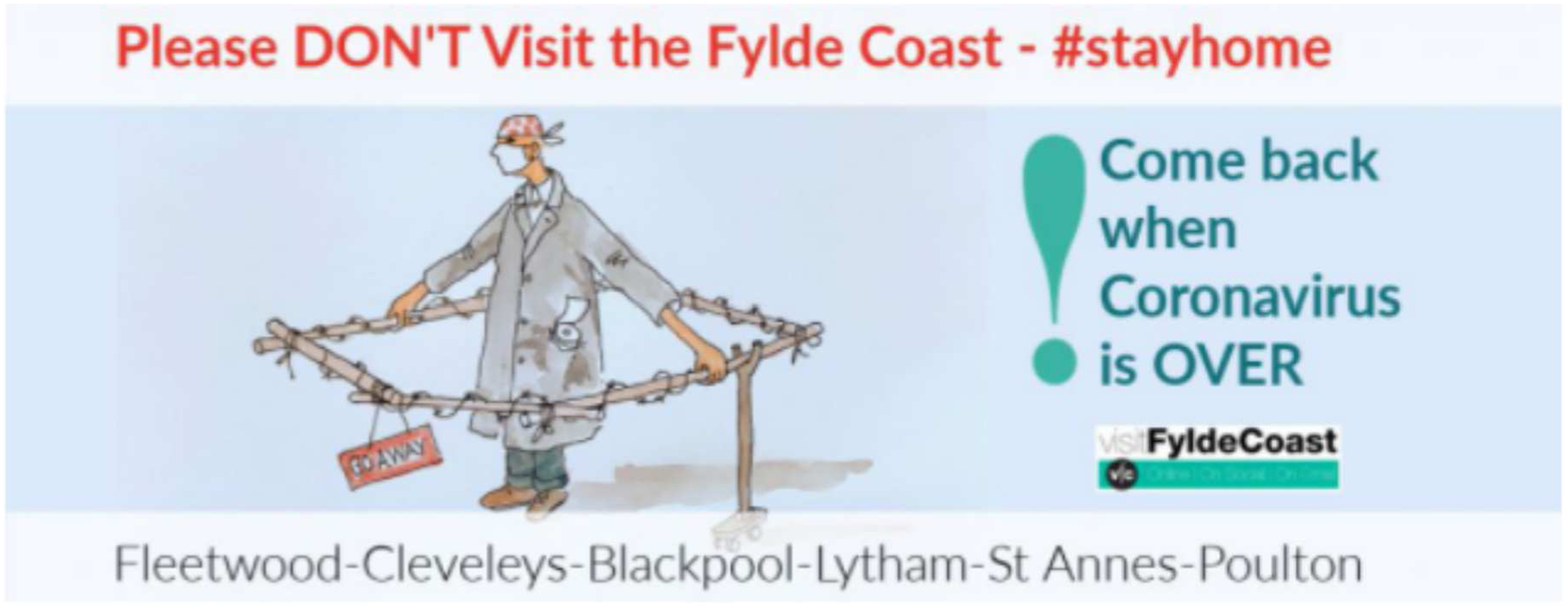
To some extent, the implications of a busier coast perpetuated feelings of resentment towards visitors during the pandemic. For example, increased litter was often attributed to visitors –
‘they are the people that annoy us, annoy the local people for defacing this beautiful spot you know with all their rubbish’.
There was a sense of othering of ‘tourists’, whereby they are not perceived to respect the coastal environment to the same extent as locals. These behaviours disrupted the status quo of what was deemed acceptable in coastal space, behaviours which are shaped by the dominant local voice. Consequently, a ‘transgression’ may have been committed, whereby visitors are ‘out of place’, since their actions and practices fell out of line with the normal way of doing things. 105 Transgressions can result in moral panic from the dominant social community, 106 in this instance disrupting place attachment and provoking negative emotional reactions107,108 such as anger, distress or policy change to protect normality. 109 Therefore, the Blackpool petition exemplifies local people seeking to protect their normality: their routines, their environment, and their ‘healthy’ coastal space.
However, many of the interviewees expressed sympathy with the visitors during this period, particularly for those without access to a green or blue space. Glen affirmed,
‘you can’t resent it. Especially if you’ve got small children and you live in a small flat or a terrace that doesn’t have anywhere for the children to play outside, you can fully understand why you’d come to the beach.’
Other interviewees echoed this feeling when asked if a pandemic experience without access to the coast would have been different. Responses drew upon an urban experience, with Brian saying, ‘In the cities I think it would have been dreadful because you couldn’t go anywhere, you’re trapped’; sentiment supported by Wendy, who stated -
‘it would have been horrific without that coast to be honest. If I would have been stuck in here, I would have been claustrophobic.’
Consequently, despite people’s changing coastal experiences and routines, the coast maintained a unique mental health for many participants throughout the pandemic period, predominately because of the sense of escape that immersion within coastal space provides. The sense of escape, a key driver of the health benefit of the coast pre-COVID-19, was rekindled by participants placing their bodies within coastal space to remove themselves from the everyday stresses of the pandemic and maintain a sense of normality and mental clarity. A female Fylde located survey participant recalled that during the pandemic ‘it’s [the coast] a place you can forget what’s going on for a bit’, whilst Annie remarked,
‘it’s been quite important for me to get up there, and it just lifts my spirits. And I think for mental health and mental wellbeing that’s quite important’.
The sense of mental and physical escape from COVID-19 on the Fylde was once again driven by the locality’s physical characteristics. Described by a retired Fylde based survey participant, the ‘openness of the beach and the never-ending horizon’ provides space in which you ‘don't feel enclosed’ or ‘trapped’ during the pandemic, the perfect antithesis to the ‘lockdown’. This notion of escapism at the coast during the pandemic implies that the coast itself is fundamentally different to other spaces, in that it can provide a source of refuge from crisis that other spaces cannot. For example, a Fylde based survey participant reported that
‘we’ve really felt a difference in not visiting, and our one visit yesterday made such a positive impact. My 4-year-old said it was his “best day ever since the bad germs came”’.
There is a ‘difference’ here, one that permits escapism and mental clarity, consistent with the finding that coastal space offered a disconnect from everyday life and trauma in normal, non-pandemic conditions.
Furthermore, the changing coastal experience and increased sense of escape at the coast during the pandemic caused many Fylde respondents to reflect on the extent to which they took the mental and physical value of the coast for granted. For example, a survey participant reported,
‘I really thank God we live so near to the beach and feel it has kept me sane during this worrying time’.
Annie resonated with this – ‘when they said you can only go for one walk a day, that made me appreciate that one walk more, and made me realise how lucky I am that I can walk to the coast any time of day that I wanted’.
Steven also reported an increased value of the coast – ‘for people living locally at the coast, it’s suddenly become a more valuable asset… whereas people living inland… they don’t have the same open freedom as we have on the coast, do they? They don’t have the same expansive views and things, so I think we could take that for granted yeah… and I do appreciate it more’.
In restricting people’s access to and freedom at the coast, the pandemic has re-framed how some participants perceive their relationship to the coast. This has resulted in an increased awareness and appreciation of the benefits that the coast offers to their daily lives, and in doing so, has contributed to 65% of the Fylde survey participants expressing an enhanced desire to protect the coastal environment more long term.
Summary: A changing sense of place
The concept of place is an underlying theme throughout this case study, particularly people’s ‘sense of place’, encapsulating emotional attachments, encounters, and experiences in coastal space. The first section of the discussion reflected upon how people value and experience the Fylde coast, with a sense of place emerging from the desire to be immersed within a mental and physical health benefiting environment for local and visitors alike. Immersion rekindled emotional experiences and memories, particularly for many of the older adults, whilst a deep place attachment was also felt by some of the residents through routine access to the coast.
Yet, as the second section of the discussion explored, these foundations which supported this sense of place along the Fylde coast were undermined and disrupted during the COVID-19 pandemic. The period witnessed increasing busyness, litter and a perceived reduction in safety, factors which contributed towards a changed coastal experience of reduced mobility and separation from coastal space and daily routines. People’s sense of place changed too, as this detachment from coastal space provoked negative emotional experiences and place contestations, as some locals sought to protect their coastal place from transgressing ‘others’. However, this defence of the local sense of place translated to a legacy of increased environmental appreciation, and a reframing of the local sense of place. Consequently, through a physical and emotional dislocation from coastal space during the pandemic, local people found an increased value of their sense of place on the Fylde Coast.
Such findings underline the importance of incorporating the social value of coastal blue space within coastal management. There is a requirement for management to account for the factors which detrimentally impact people’s coastal experience, their sense of place, emotional value and coastal attachment in specific coastal settings. For instance, forward planning and management of the overcrowding and increased litter at the Fylde Coast during the pandemic may have helped to protect local people’s diverse experiences in and value of coastal space, minimising the risk of such factors disrupting people’s everyday coastal encounters, and their health and wellbeing opportunities derived from this. However, there is also the need to ensure that these health benefits are preserved for everyone to obtain value from, particularly for demographic groups who have uneven or limited access to the coast. 110 The question of balancing people’s sense of place alongside increasing public access to the coast is well beyond the remit of this study, but presents a critical direction for future management and blue space research.
Overall, this study represents the start of long fallout from the impacts of the pandemic at the coast. Lingering questions remain around the long-term impact on place attachment and the coastal experience, and how these findings are comparable in other coastal settings or for other age groups.
Conclusion
Concurring with the current understanding of the physical and mental health promoting properties of immersion within coastal blue space, it was found that the value of the Fylde’s coast to local people and visitors was rooted in the health benefits of routine exposure to it. Participants encountered emotional, mental and physical benefits, facilitating, in some cases, connections to memories, nostalgia and a sense of coastal place. The Fylde’s coastal setting drove these benefits, from the accessibility of the promenade, to the escape within physical openness of the macrotidal beach and vistas, and immersion within the sensory environment.
However, this health value was distorted for local respondents by the COVID-19 pandemic post-lockdown in Summer 2020, contributing to a changed coastal experience of reduced safety, fear, increased litter and disrupted routines, instigated by a busier, less safe coastal environment. Yet, there were positives to be found. Coastal space still provided a sense of escape from the pandemic, permitting a sense of normality and mental clarity amongst an unprecedented and stressful situation. Many participants also expressed an increased appreciation for coastal space as a result, translating to an enhanced willingness to protect the Fylde’s coastal environment. Consequently, the findings demonstrate a unique opportunity to foster a sense of environmental stewardship in the wake of a changing value of the coast because of the implications of the pandemic.
Moreover, the findings also highlight the importance of coastal management to account for not only physical coastal change but also the multifaceted human value of, and experiences in, coastal space. This is crucial to safeguard the value of coastal blue space for residents and visitors long-term, and to also demonstrate the broader social benefits of coastal investments. Although the findings are specific for the local sample and geography, the conclusions may hold true in similar coastal settings, for example, those with an ageing population, promenade space or a macrotidal environment. It is also evident that the pandemic will serve to widen social, economic and health inequalities faced by UK coastal communities. As a result, it is paramount that future research explores the pandemic’s broader long-term implications, and recovery from such impacts, for coastal residents and communities.
Footnotes
Acknowledgments

Declaration of conflicting interests
The author(s) declared no potential conflicts of interest with respect to the research, authorship, and/or publication of this article.
Funding
The author(s) disclosed receipt of the following financial support for the research, authorship, and/or publication of this article: This work was funded by an FST Faculty studentship at Lancaster University.