



Abstract
For many years I have been absorbed by the transformative activities of an art workshop. In this paper, by tracking the physically conceptualising processes of an art project in reference to Latour’s research on science in action I argue that art-in-the-making and science-in-the-making have much in common, and that their shared correspondences distinguishes them both from the concept of their identity as products. Latour described laboratories as construction sites where social and material transformations realise facts from erstwhile amorphic material. He tracked the physically conceptualizing process of science, breaking it down into steps which he called articulations or translations. Rather than merely exposing each step’s morphic change, I suggest that he wants to give us a sense of the metamorphic betwixt. Like science, the creation of a perfect reflection of the world is no longer an aspiring feature of art. Contemporary art is gloriously and pathetically dissolute but what almost unites its divergent practices is also an urge to reveal and experience the metamorphic betwixt.
Introduction
I am an artist, and I work mainly with clay. Before that I was a clinical psychologist, and I worked mainly with people with brain injury. Over the course of these two careers, I learned that whatever art and science do, they do it in similar ways (March, 2023, 2024, 2025; March and Malafouris, 2023). In 2012, in an interview about an art exhibition entitled Newton is …doing good physics because he is doing alchemy…He is doing transformations of agencies, which is exactly what science is doing. And that’s what scientists have always done…
I understand Latour to mean that all knowledge-seeking endeavour is a form of scientific enquiry, and that he was concerned about a tendency in science (including social science) and western thinking more generally to separate one thing from another. Latour argues that science works through expanding and linking not by reducing and dividing. He suggests that, by explicitly embracing artistic ways of working, the sciences can mitigate reductionism. Law (2004) agrees and encourages social scientists to adopt, what he calls, “non-coherent methods”, ways of “knowing ...through techniques of deliberate imprecision”. (p. 3). He argues that we need to develop …tools that allow us to enact and depict the shape shifting implied in the interactions and interferences between different realities. There is need for assemblages that mediate and produce entities that cannot be refracted into words…There is need for the coherences (or the noncoherences) of allegory. There is a need for gathering. (p. 122)
Law and Latour are both relevant to multimodality. Law argues for facilitating the mediation and production of entities that cannot be refracted into words while Latour describes how the translation and transformation of agencies create a: …metamorphic zone where humans and non-humans keep exchanging their properties, that is, their figurations.
Law and Latour thereby outline a mute but materially active multimodal process of discovery which resonates with my experience of art-making, inviting me to draw parallels between the art workshop and the science lab. as epistemological construction sites in ways that question why the two activities are often portrayed as opposites Figure 1. Latour used the Roman God Janus to portray two radically different epistemological views of science.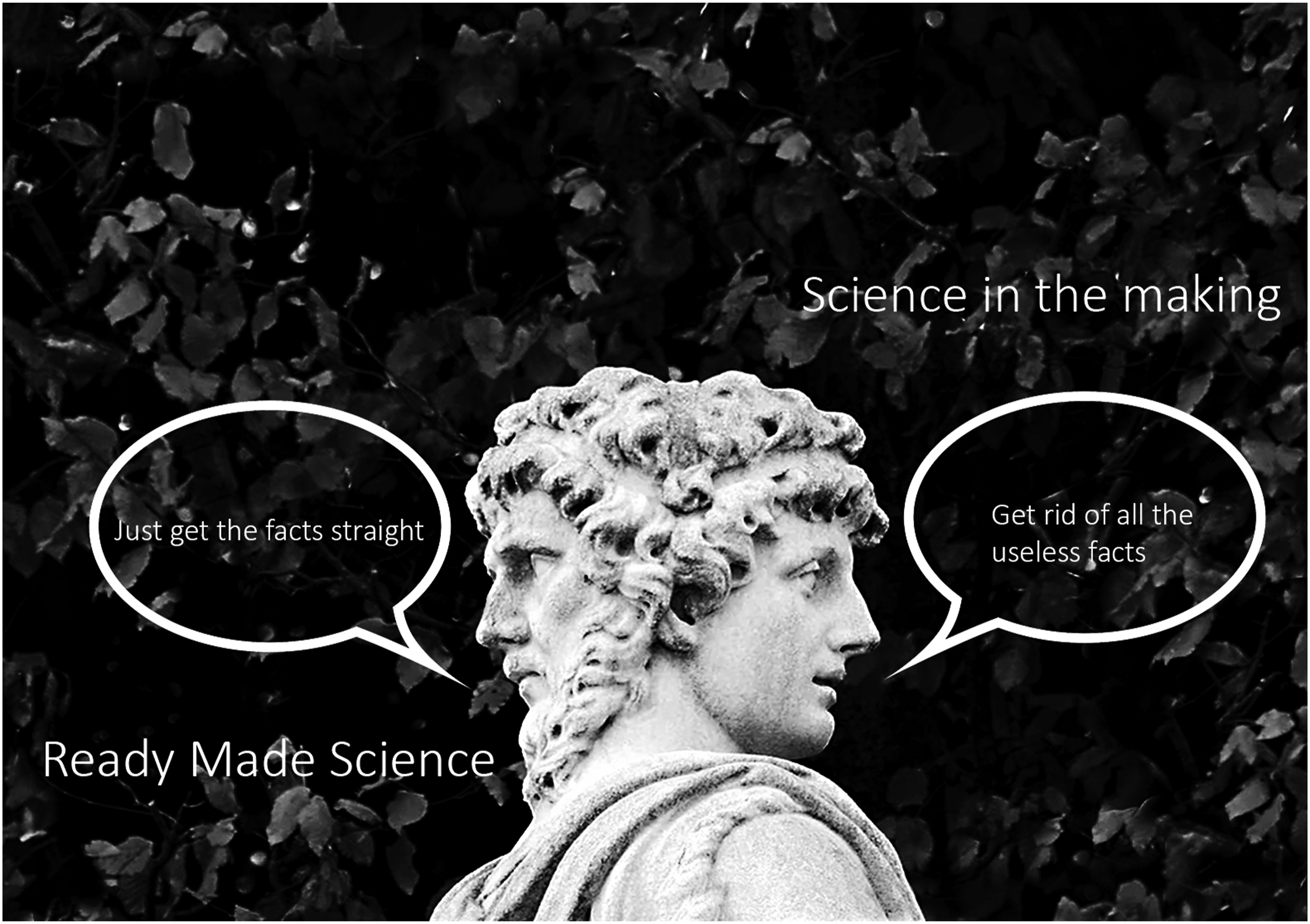
The photograph in Figure 1 is inspired by a series of images in Latour’s book,
According to Latour the left side of Janus is severe, the right side is lively, Ready-made science knows stuff, science-in-the-making is a journey of unknowing (see also Vallée-Tourangeau, 2023 & Vallée-Tourangeau and Soderberg, under review, concerning Latour’s position on science). Let us now see what happens if we replace Latour’s double-headed Scientist with the face of an artist Figure 2. Clay makes a sculptor out of giacometti.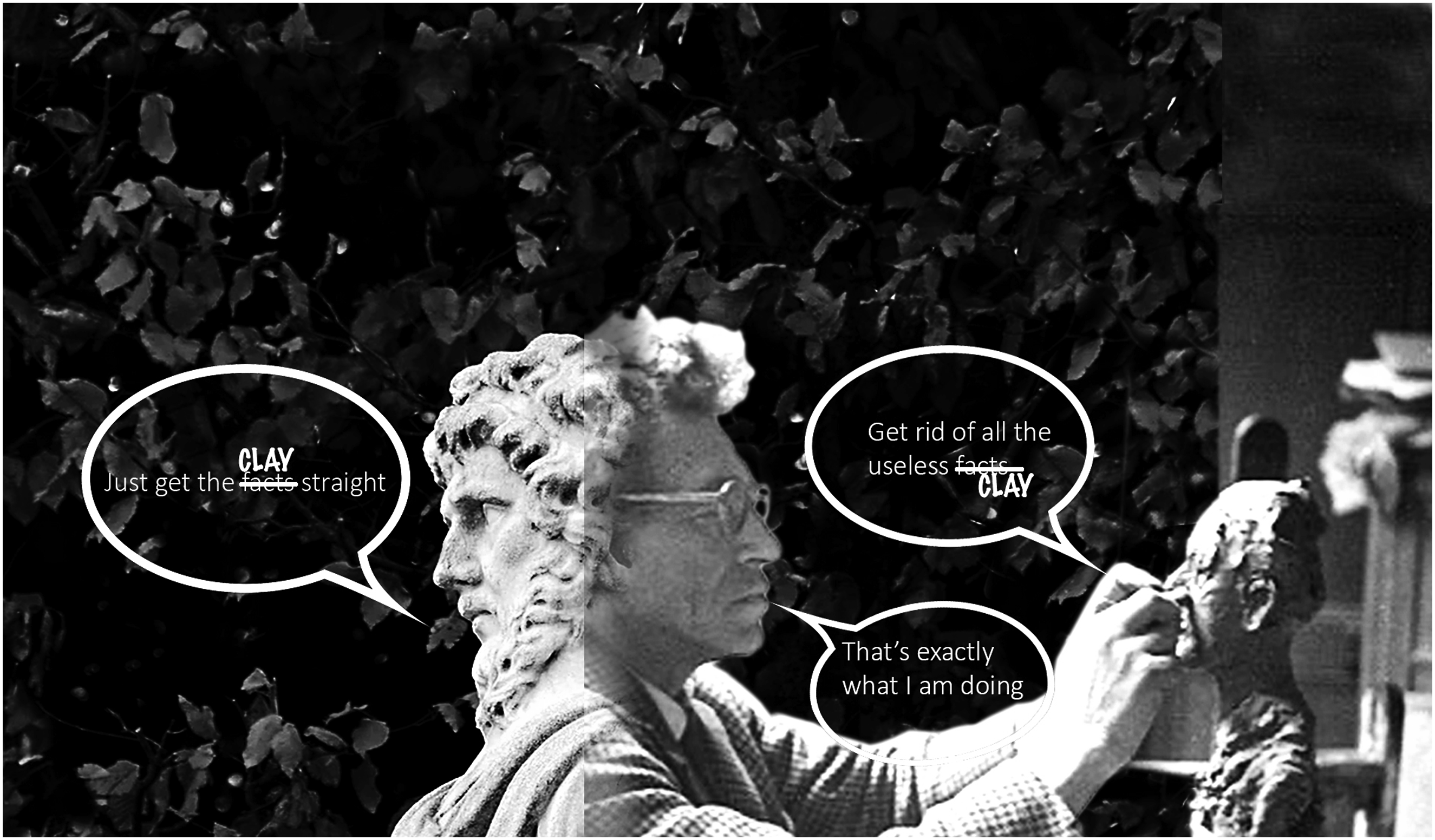
We see Giacometti in his Paris workshop. The sculpture-in-the-making is talking to the artist-in-the-making about clay. 2 I chose Giacometti because he habitually made life-size sculptures but then continued to work on them, removing more and more material until there was no sculpture left. His brother, Diego would go into his workshop at night and remove sculptures to save them from complete dissolution. If it wasn’t for Diego there would have been only art-in-the-making, no ready-made-Giacometti-art left for us to see. 3
Giacometti in his workshop helps introduce the interchangeability of art and science. If we put a blackboard in front of him look what happens…Figure 3. Equations make a physicist out of giacometti.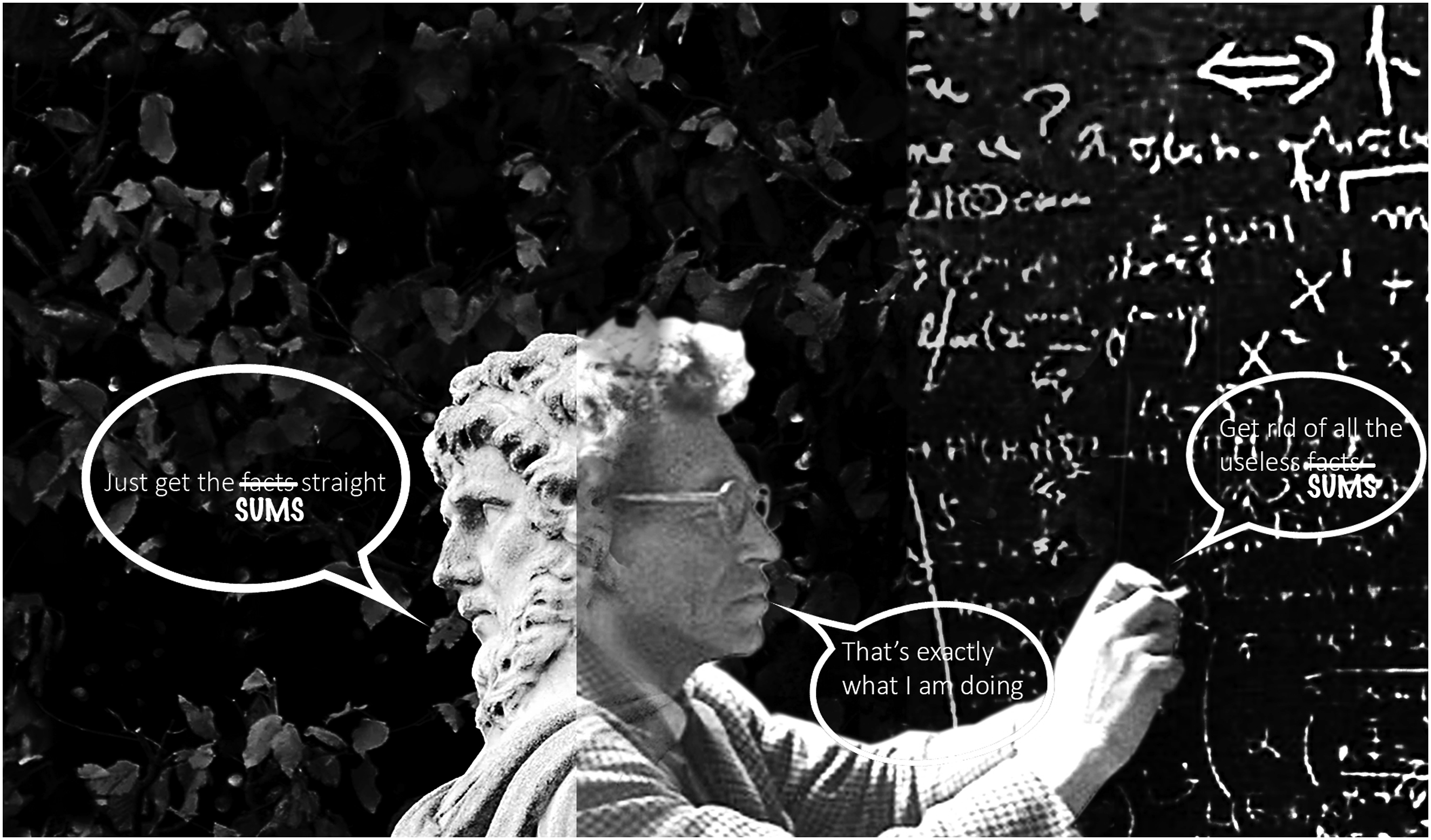
Take away the relationship between hand and clay and replace it with a relationship between hand and chalk and Giacometti becomes a physicist. You may complain that I am making a non-sensical visual joke when I should be making a reasoned verbal argument. But jokes are jokes not because they are incoherent but because they are, in Law’s terms, “non-coherent”. They are metaphoric facilitators of knowledge. A visual joke that combines and merges two erstwhile autonomous figures helps us to conceive of art and science as a single, two-headed Janus. Making a joke doesn’t turn the absurd into truth. It just makes it possible to think about.
Art at work, science in the making
In this section I provide a glimpse of life in an art workshop. I follow a single strand of an exploratory, materially embedded process as it develops into an explicit art-project that later found itself a temporary home in an exhibition space. The strand to which I give voice is woven into and emerges from a tangled mess of workshop contents and processes. Talking of her childhood, the novelist Margaret Atwood, said of her parents, They always allowed us to make messes in our room and by messes, I mean projects, which always begin as messes.” (This Cultural Life, BBC radio 4, 2024)
I will begin somewhere in the middle of the mess that is portrayed in the figure and video link below - the moment when the disorder is temporarily swept up into what Latour might call a handful of immutable mobiles Figure 4.
The project was an application to be part of a joint exhibition called Notebook entry 10.4.21. pots of oxides... mixes everywhere, shellac...A shifting crowd of actors - that I work on more or less in parallel. How did they come together ? And what does it mean to say they came together ? https://youtube.com/shorts/4dmIyFMjy-8?si=j9SkT-Iu-Q5j7ZVQ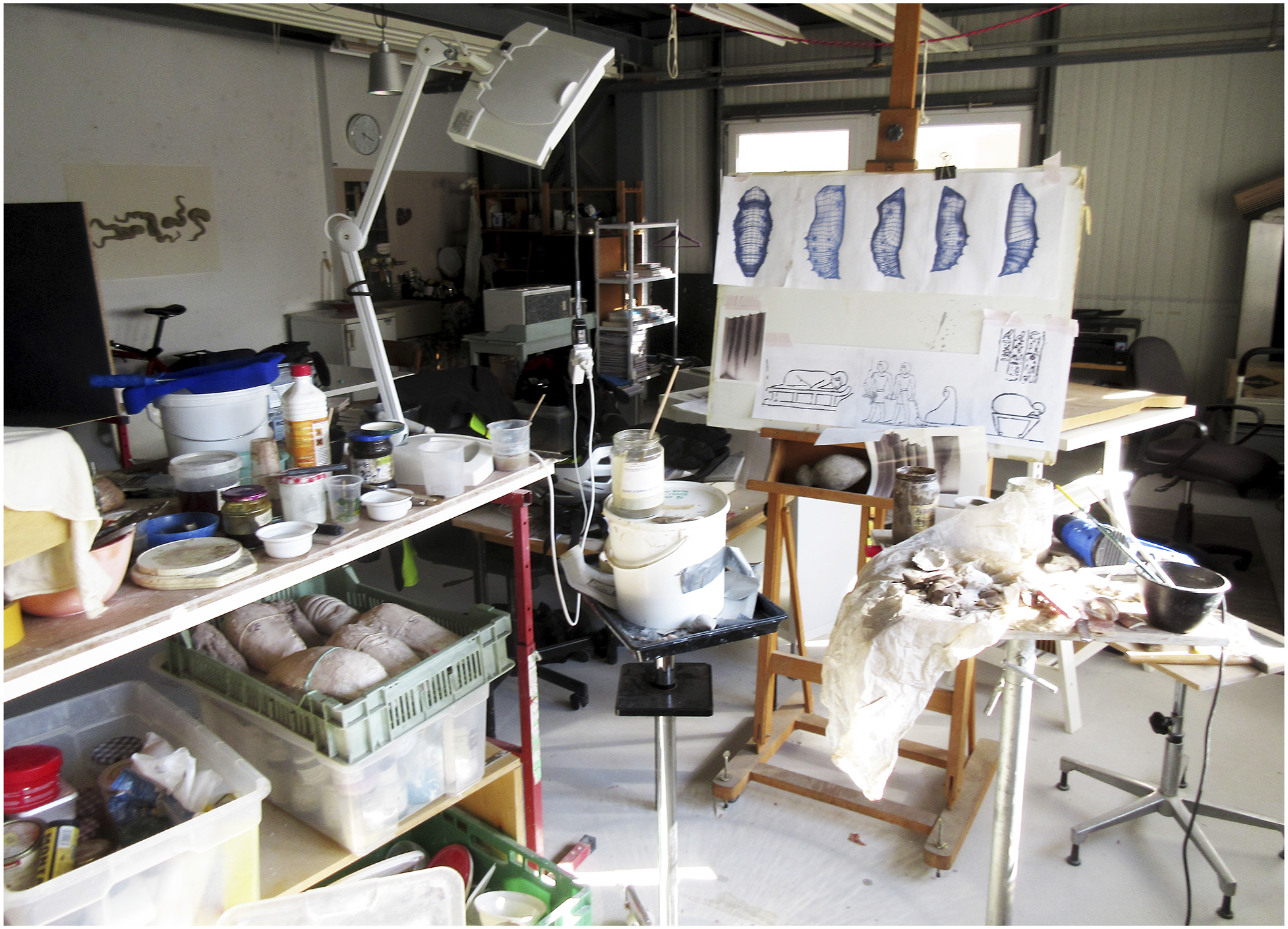
Tekenu’s Intent: a proposal for a piece of ready-made art
This project departed a little from protocol because the proposal to the museum contained two parts. Part one was indeed a piece of ready-made art - an installation called The words and pictures I sent in to support Part 1.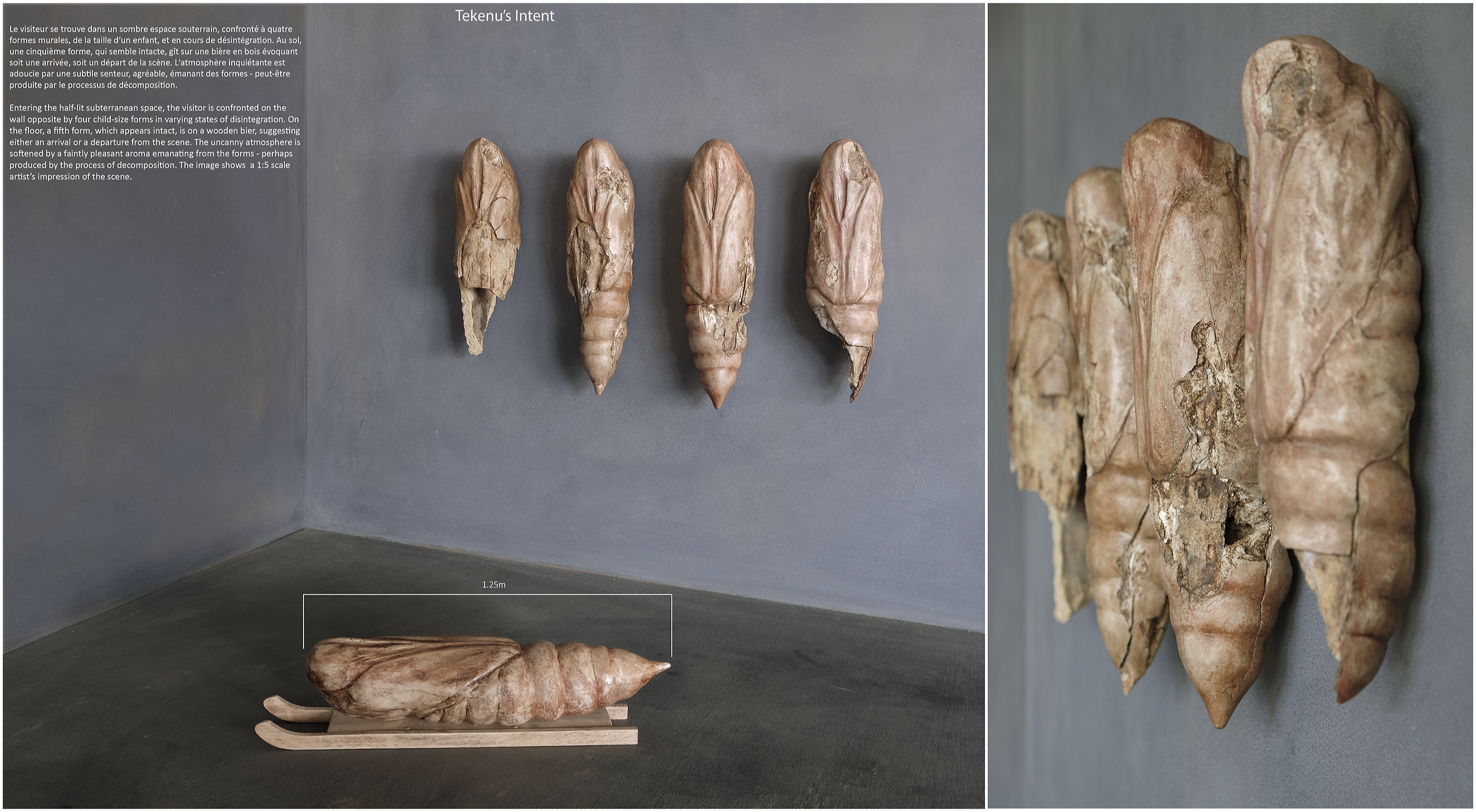
The above figures are like maps. They are a way of converting a specific materially and topologically embedded event-experience into a format that can be reproduced and displaced. We can even take the notion of immutable mobile a bit further here because the figures are mapping both an existing and a prospective terrain - prospective because it is an immutable mobile of an intention. Latour describes nine characteristics of an immutable mobile Mobile Immutable Two-dimensional (flat) Modifiable in Scale Easily Replicable Can be combined Can be superimposed Can be integrated with text. Being two-dimensional, the inscriptions they contain can be merged with other dimensions to build “re-representations” of objects.
The left head of Janus (ready-made art) understands immutable mobiles to be representational, in this case they represent a proposed product. In contrast, for the right head of Janus (art-in-the making), immutable mobiles are not figures that represent but event-experiences that have been transformed into things with the power to cross time and space and animate other situations.
The archaeology of cognition: a proposal for art-in-the-making
Part two of the proposal makes the case for a small sub-exhibition called Images in support of Part 2. Images in support of Part 2.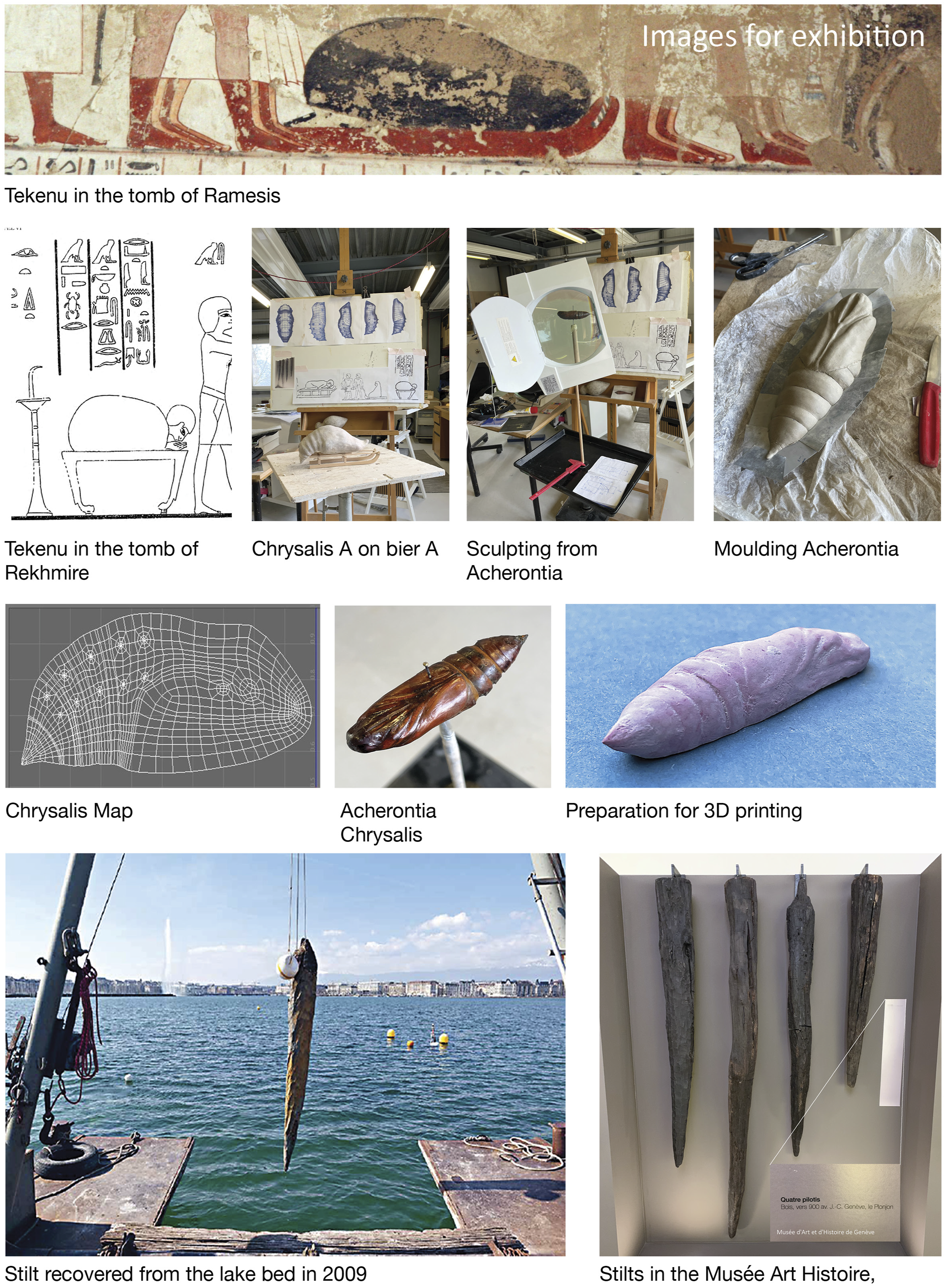
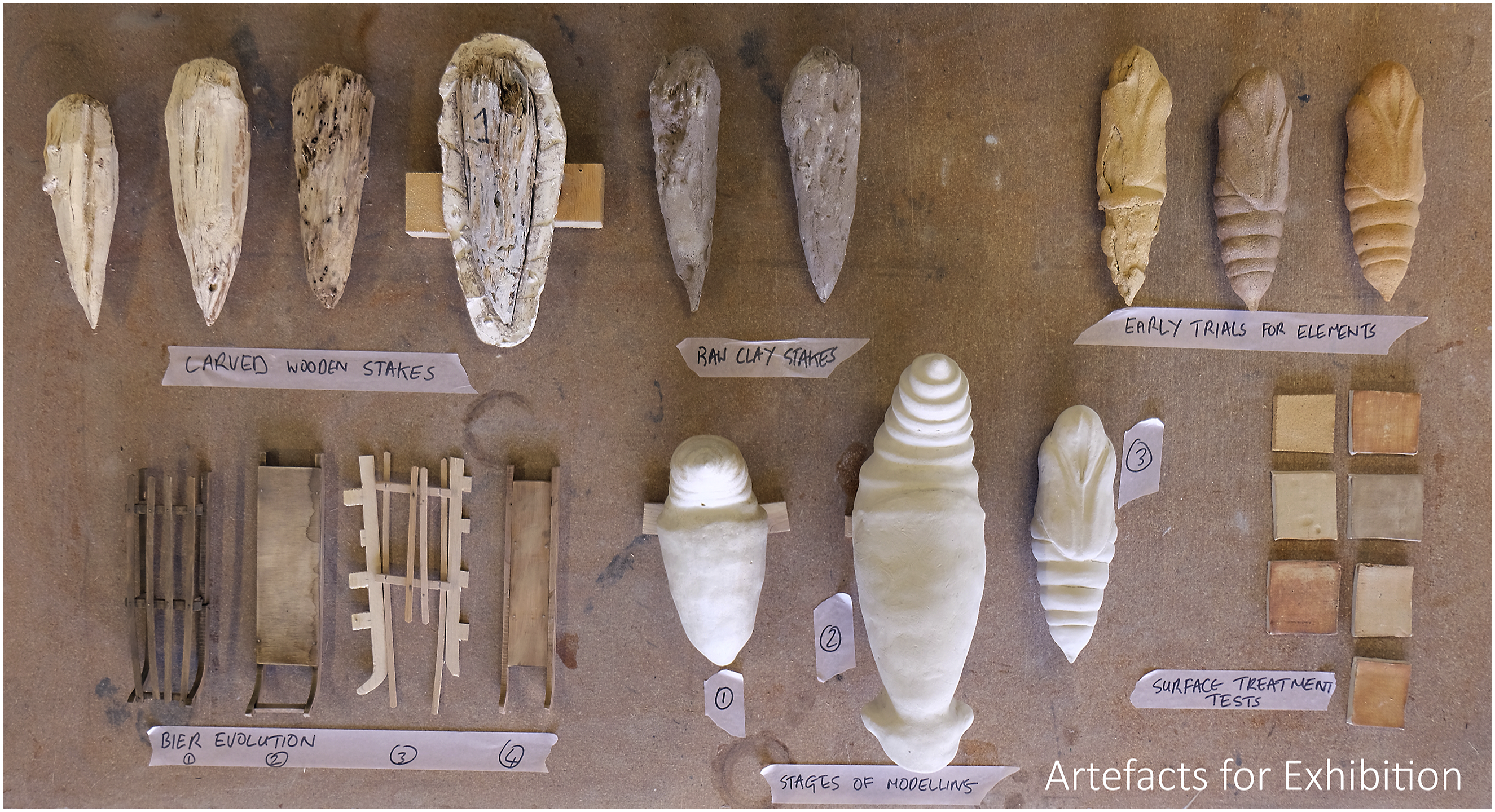
Perhaps predictably, the museum accepted the ready-made art but declined the art-in the making and
You can see a video of that exhibition here: 3 minute version https://youtu.be/5FObt6BecL0 30 minute version https://youtu.be/mxgKKt7HZQY
Let’s now go to the finished product - or at least some figures, that is immutable mobiles, of the finished product. I am insisting on calling them immutable mobiles because I want to make the point that a further displacement and translation is taking place now, as you read, this time into the realm of academia.
If you look at the two pairs of photos below you can compare and contrast the product with its model. You may be struck by how similar they are. This is because they issue from a professional workshop that must deliver on its promises Figures 8 and 9. The maquette (left) and the final installation (right) at the Musée Ariana, Geneva (2022). The maquette (left) and the final installation (right) at the Musée Ariana, Geneva (2022).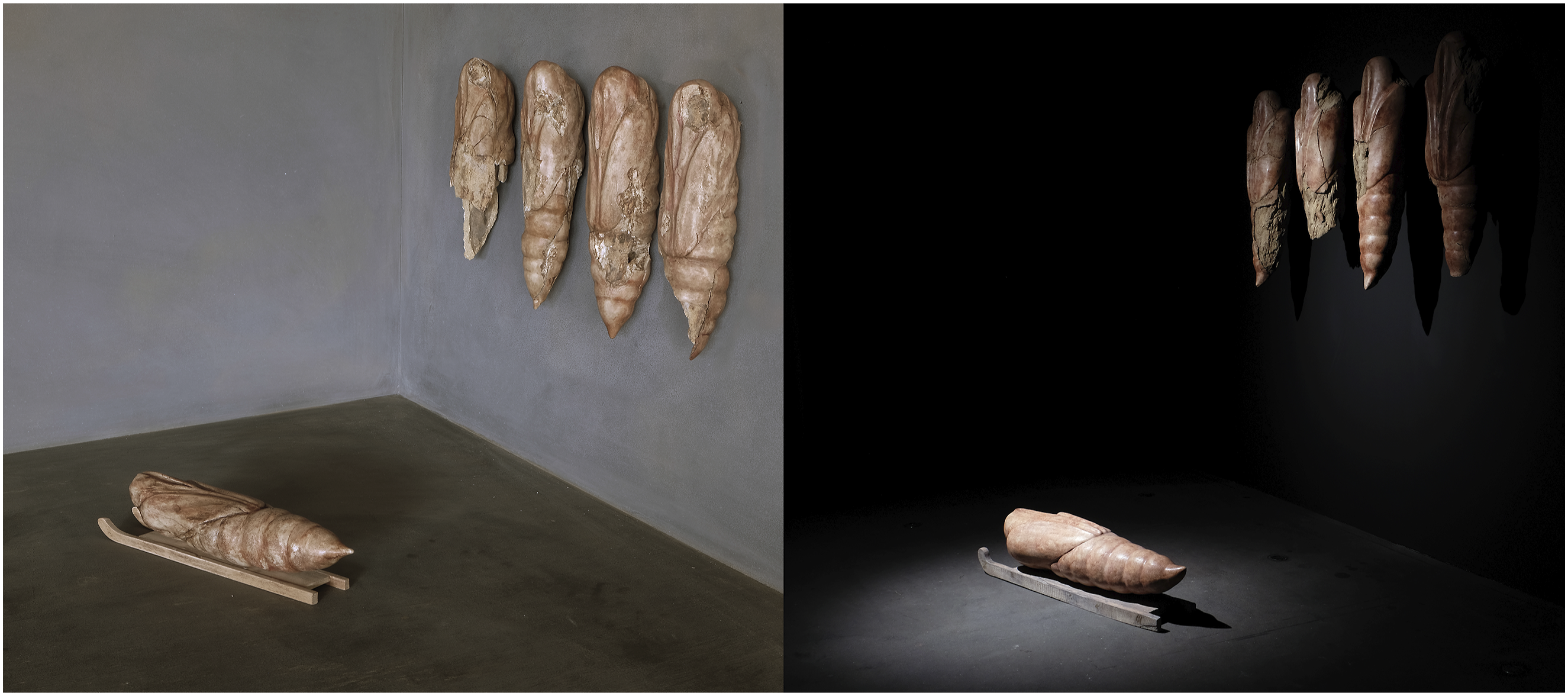
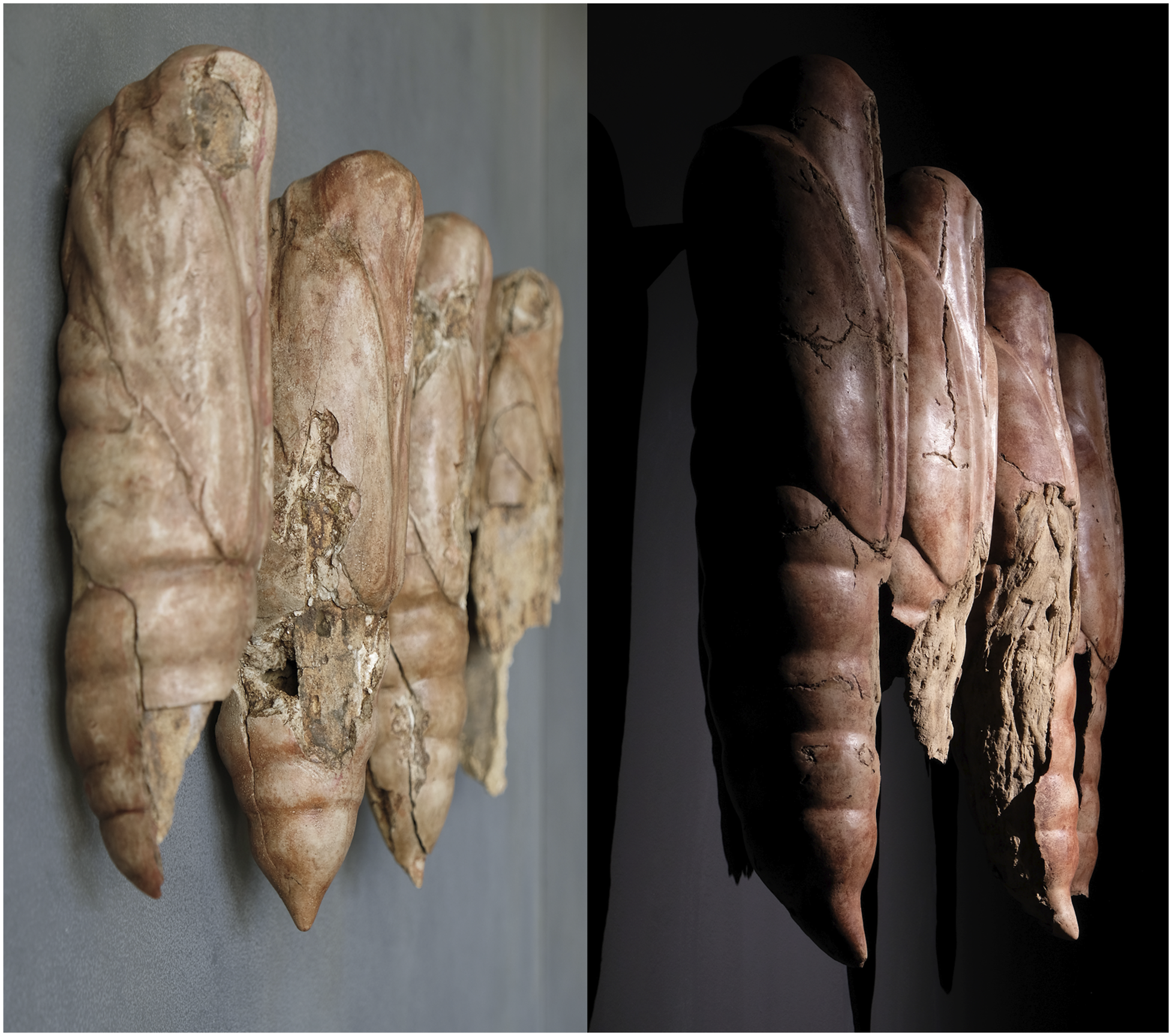
But perhaps you can also see or maybe feel some important differences that exist between model and finished work. These differences exist because a professional art workshop also knows that, to deliver a piece of art, workshop activity must risk prioritising process over product. The following video gives a 3 minute virtual visit to the final installation which I hope goes some way to showing you how ready-made art can transforms itself into a beholder’s experience https://youtu.be/9g0H1Vlq9z4?si=IBmA1YVsg8vSFbFZ
Next, I want to give you a glimpse of the sort of circulating references that inscribe themselves during a period of art-in-the-making. It is a snapshot that risks freezing the process into an illusion that there was a pivotal moment of insight. If you feel yourself drawn into this illusion it may be better to stop reading for a while.
I take you back to a time before I was preparing the proposal for the museum – to a Saturday in November 2018 at 17.30. I am walking past the Museum of Art and History in Geneva and on impulse I go in to wander around the archaeology section for a few minutes before the museum shuts at 18.00. At closing time, I walk past this Figures 10 and 11. I am pulled up short, enchanted. Quick Sketch of mystery installation.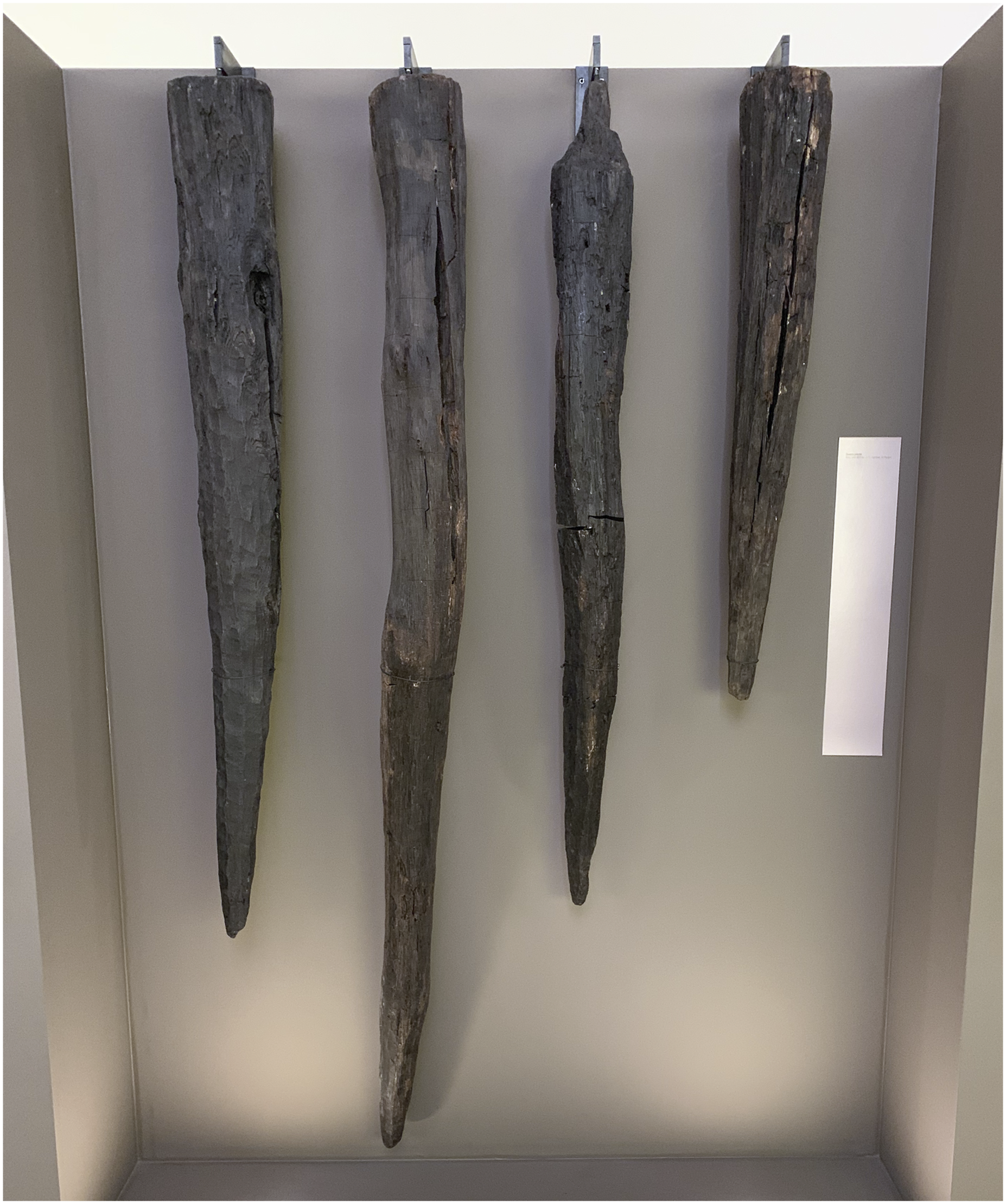
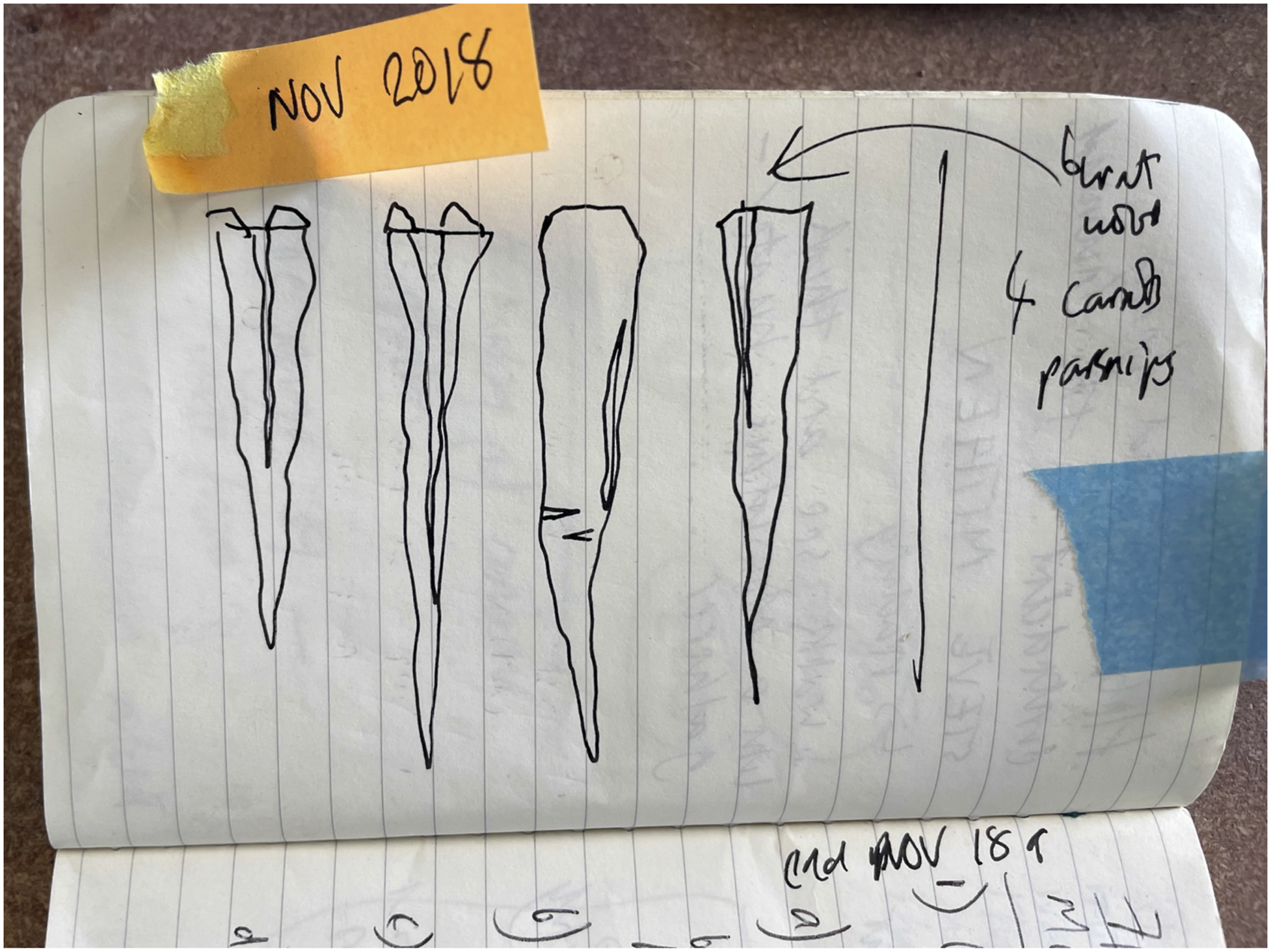
I cannot remember ever having seen this exhibit during previous visits and I am stopped in my tracks, captivated and fascinated. I would go so far as to say enchanted. It looks like a mysterious contemporary art installation. I do a quick drawing which leaves me no time to read the exhibit label before I am ushered out by security.
I come upon the drawing again a few weeks later when I’m leafing through my notebook, and again I am puzzled and curious about this strange exhibit. I go back to the museum; take some photos and this time I do read the label. I learn that the four stakes supported a bronze-age lakeside dwelling on the banks of Lake Geneva.
The photos return with me to my workshop where they too languish for a while –on a USB stick this time rather than in a notebook. More and more immutable mobiles are congregating there without any discernible intention beyond the act of congregating. The following spring arrives at the workshop and along with it a small team of researchers. We are about to spend 2 days looking at the feasibility of using newly developed, mobile eye-tracking equipment to study the creative process in pottery workshops. We use the first sculptural gestures in relation to these bronze-age stakes as a test. At the time, as I say, these stakes exhibited no clear creative intentions, but sculpting offers a way of thinking about things, an activity which is therefore better called Domain storming starts here. Goes to here. Then here.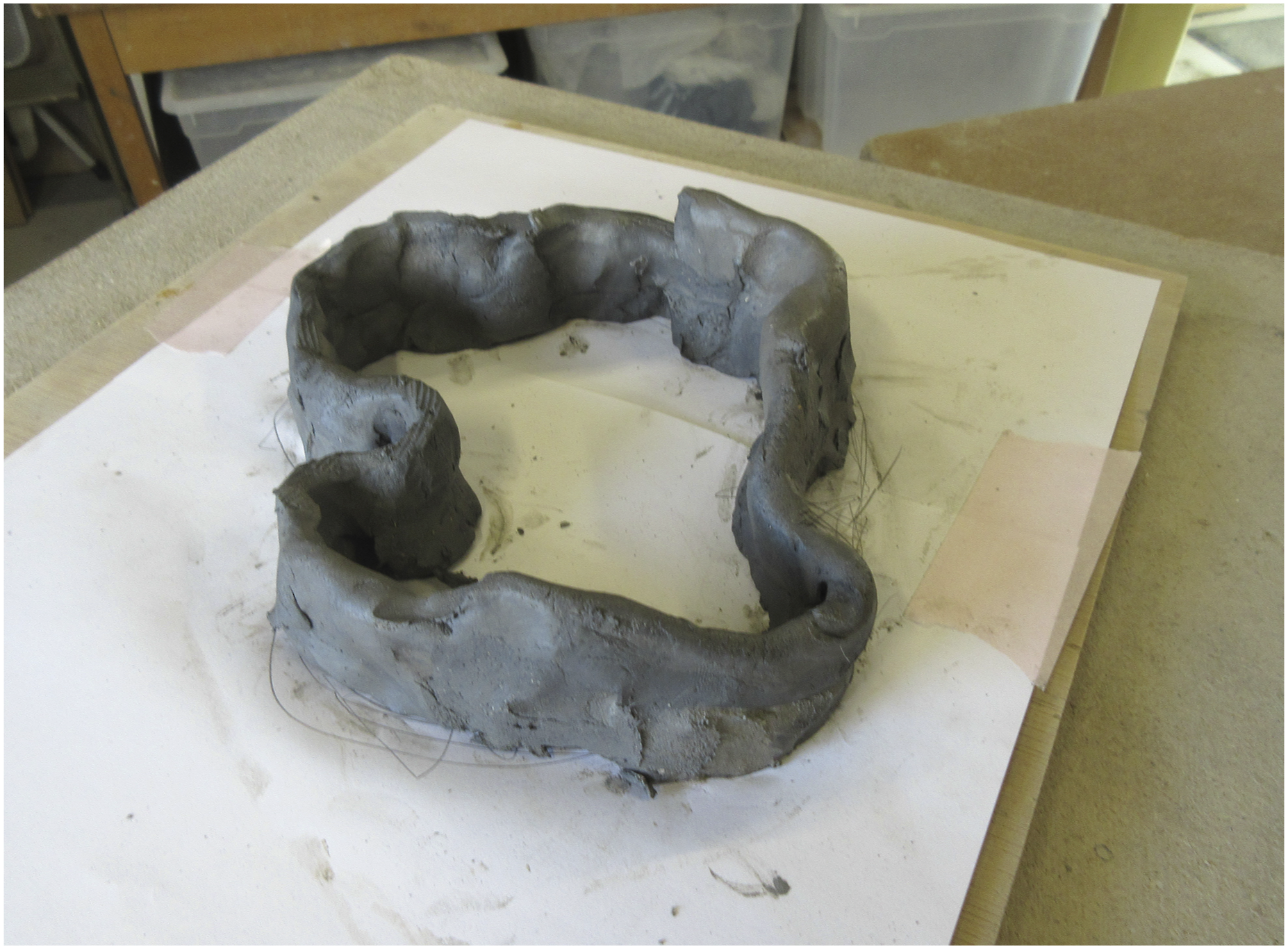
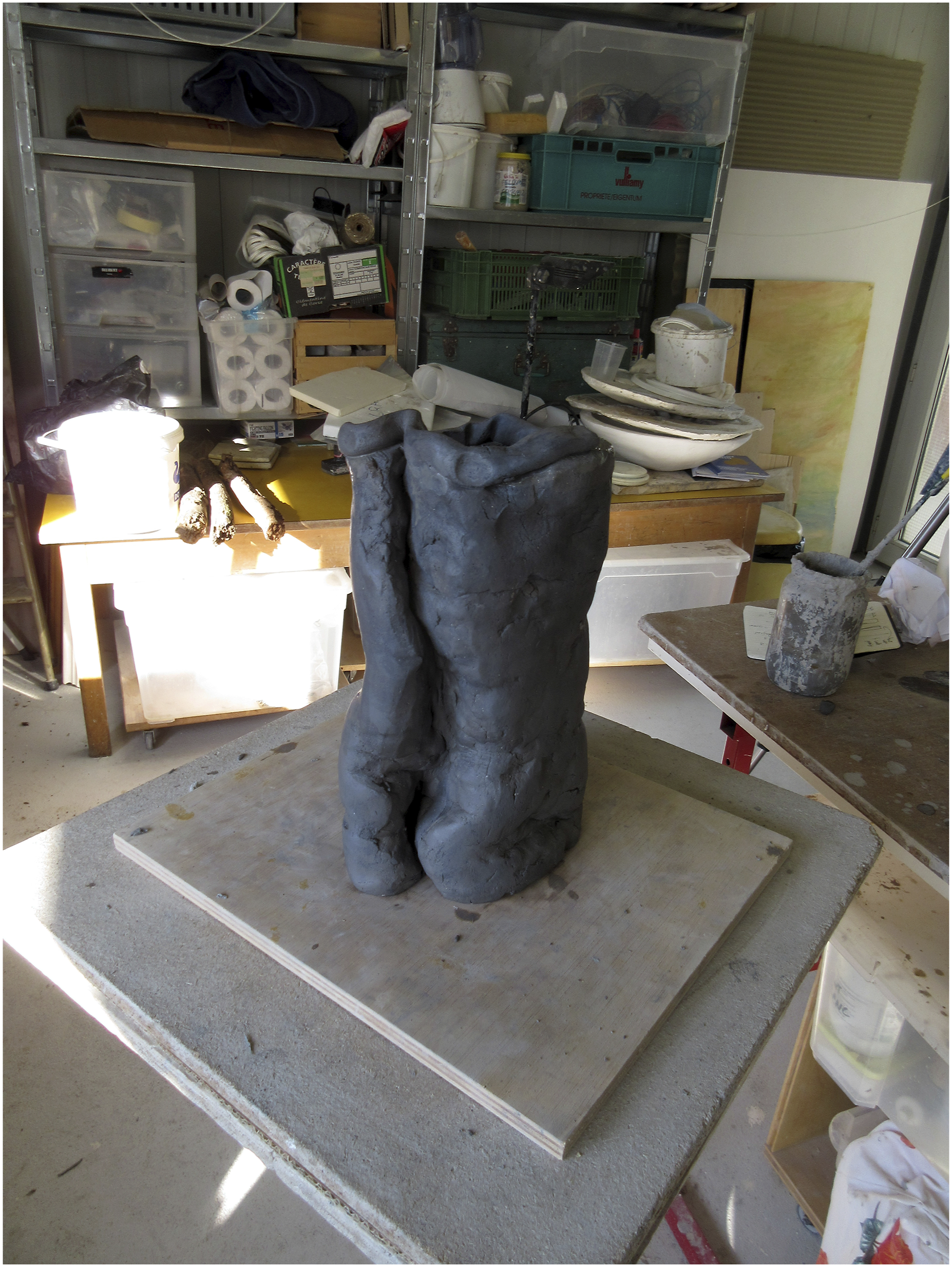
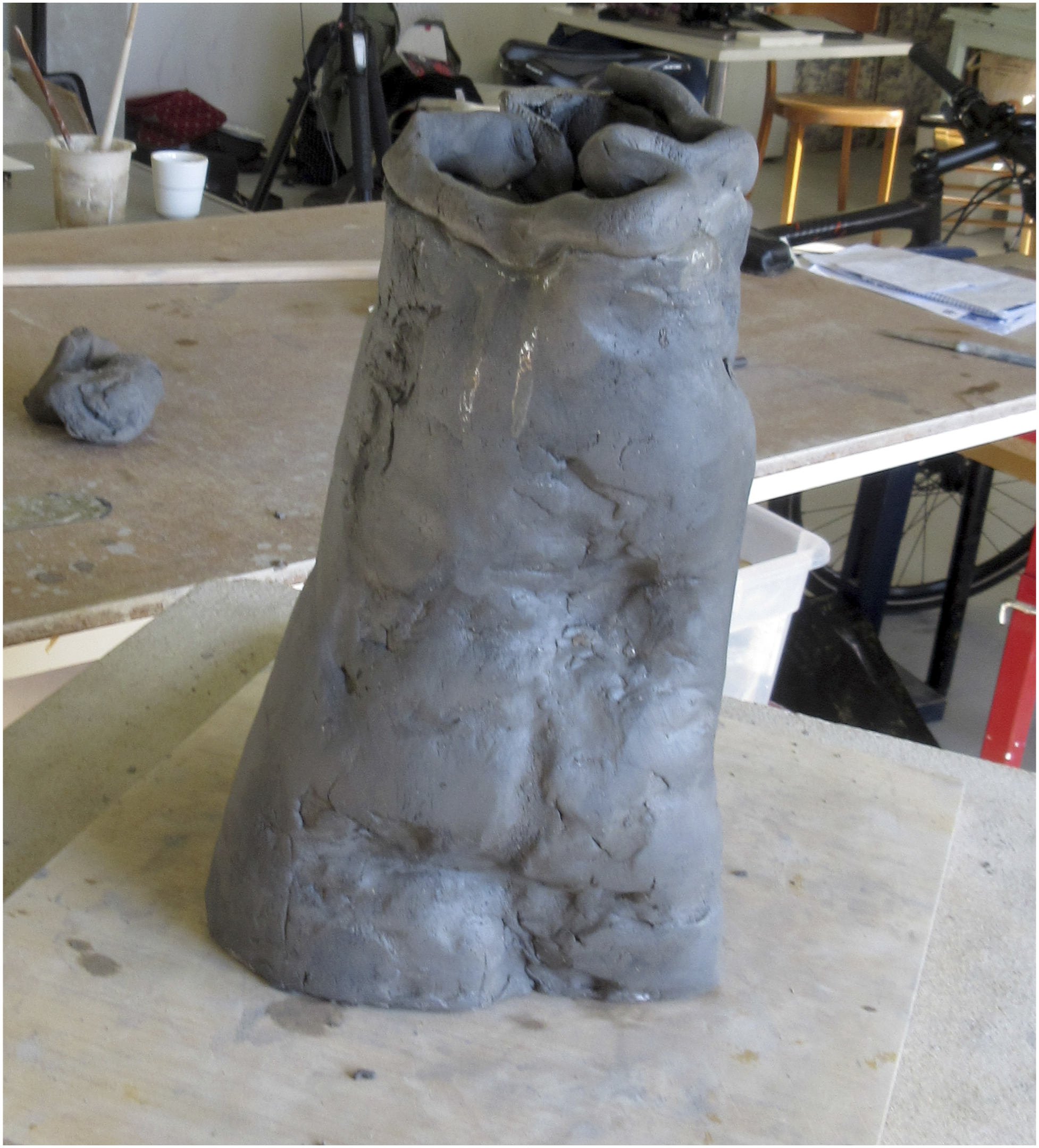
The exercise was useful for testing the eye-tracking equipment, but the domain-storming exercise found no creative issue and so, as you can see in the above film, I took the work apart and started making something else with the clay which did eventually find a developmental life of its own. Figures 15, 16 and 17. Before starting again and going here. And then evolved through stages A-D. To become these: Welcoming down the blessings. Details of an installation at Taste Gallery, Geneva, 2019.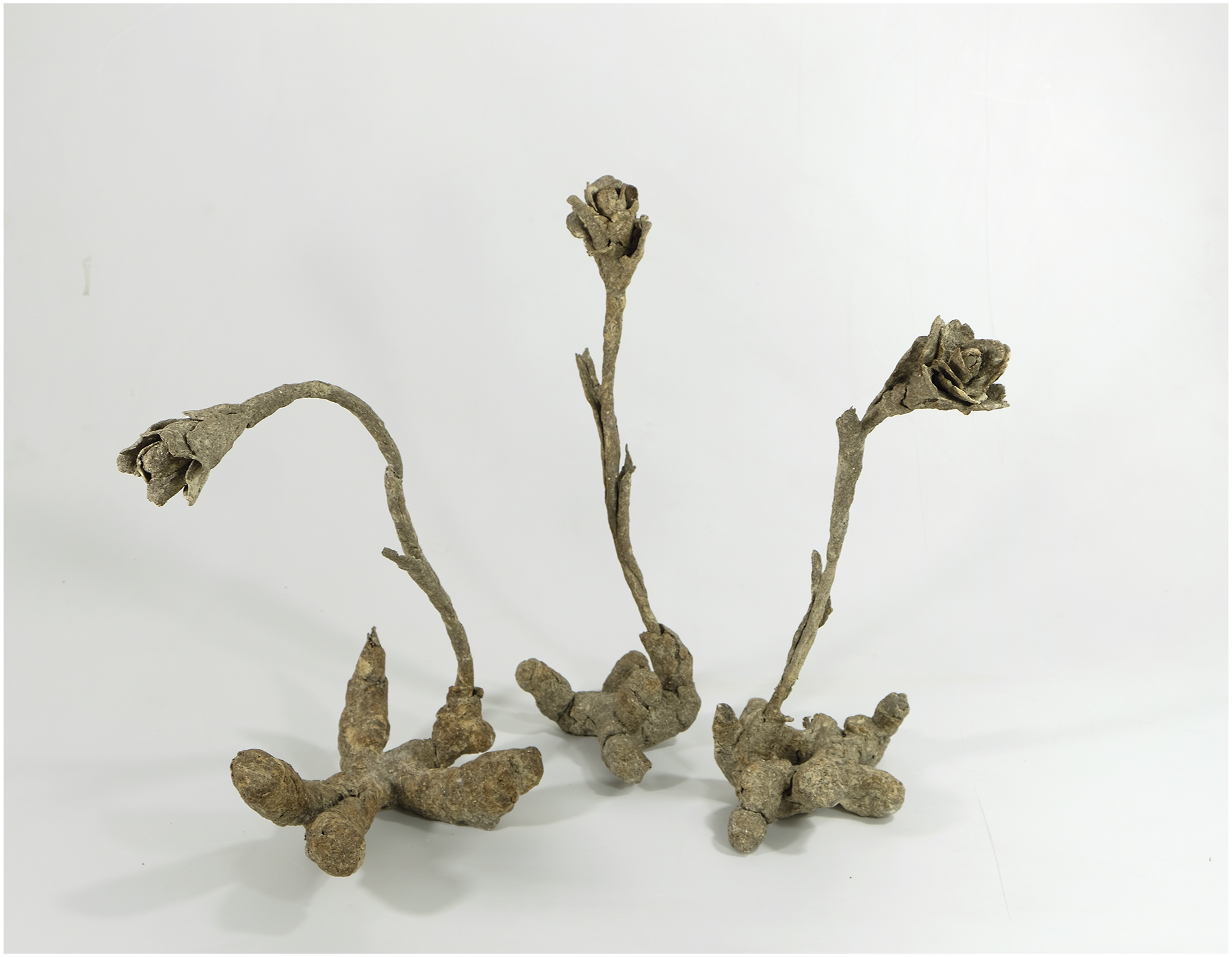
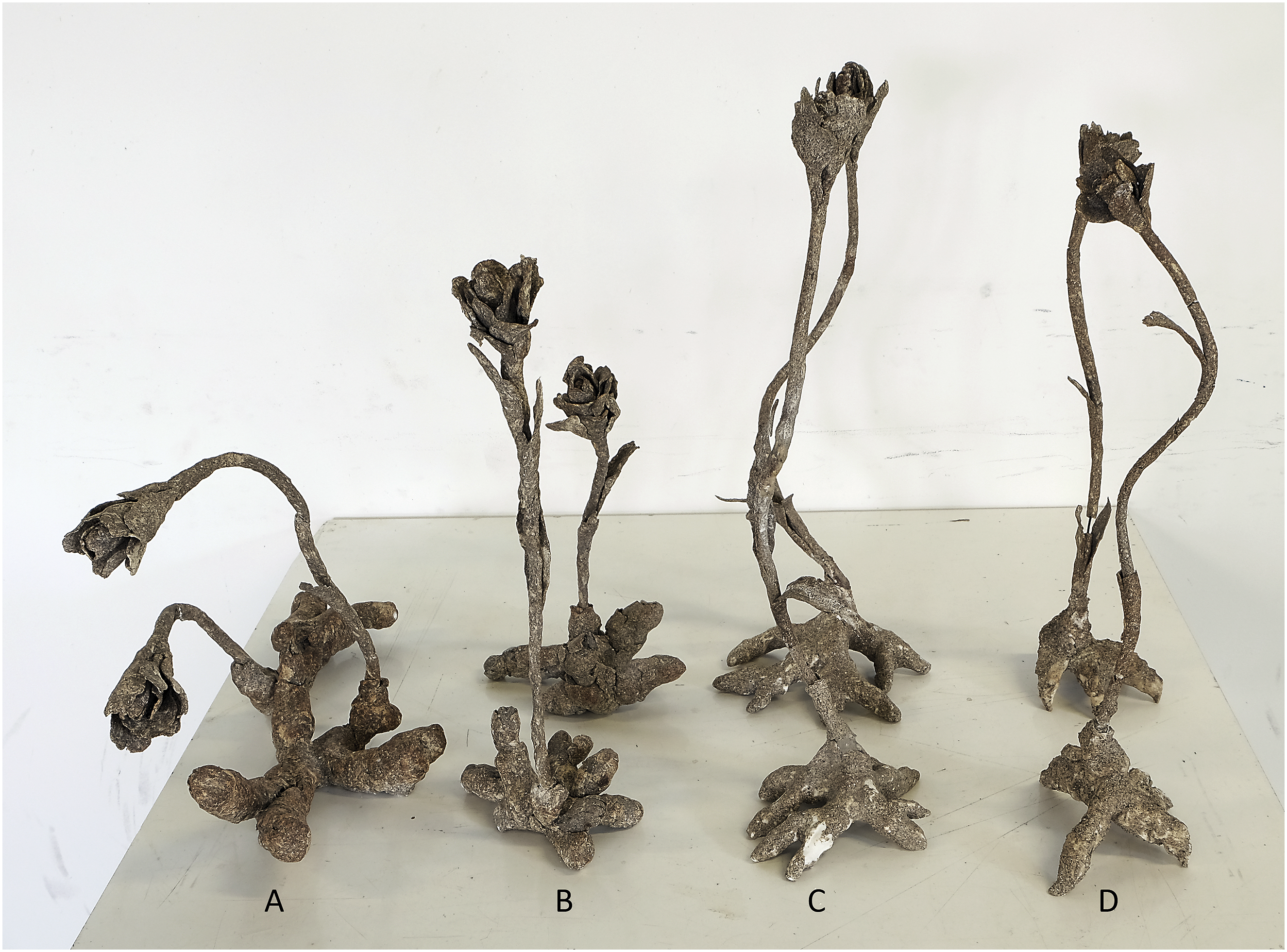
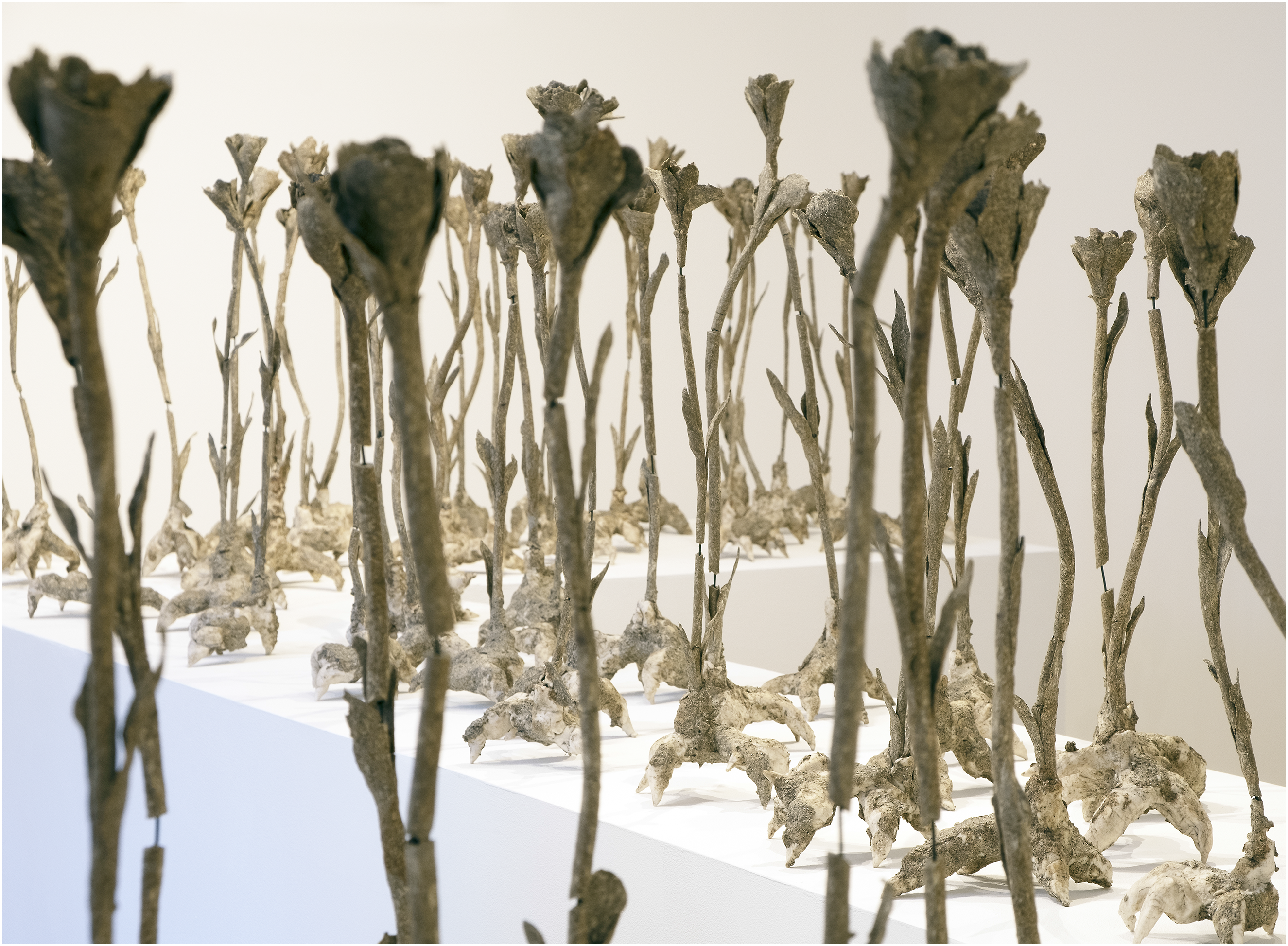
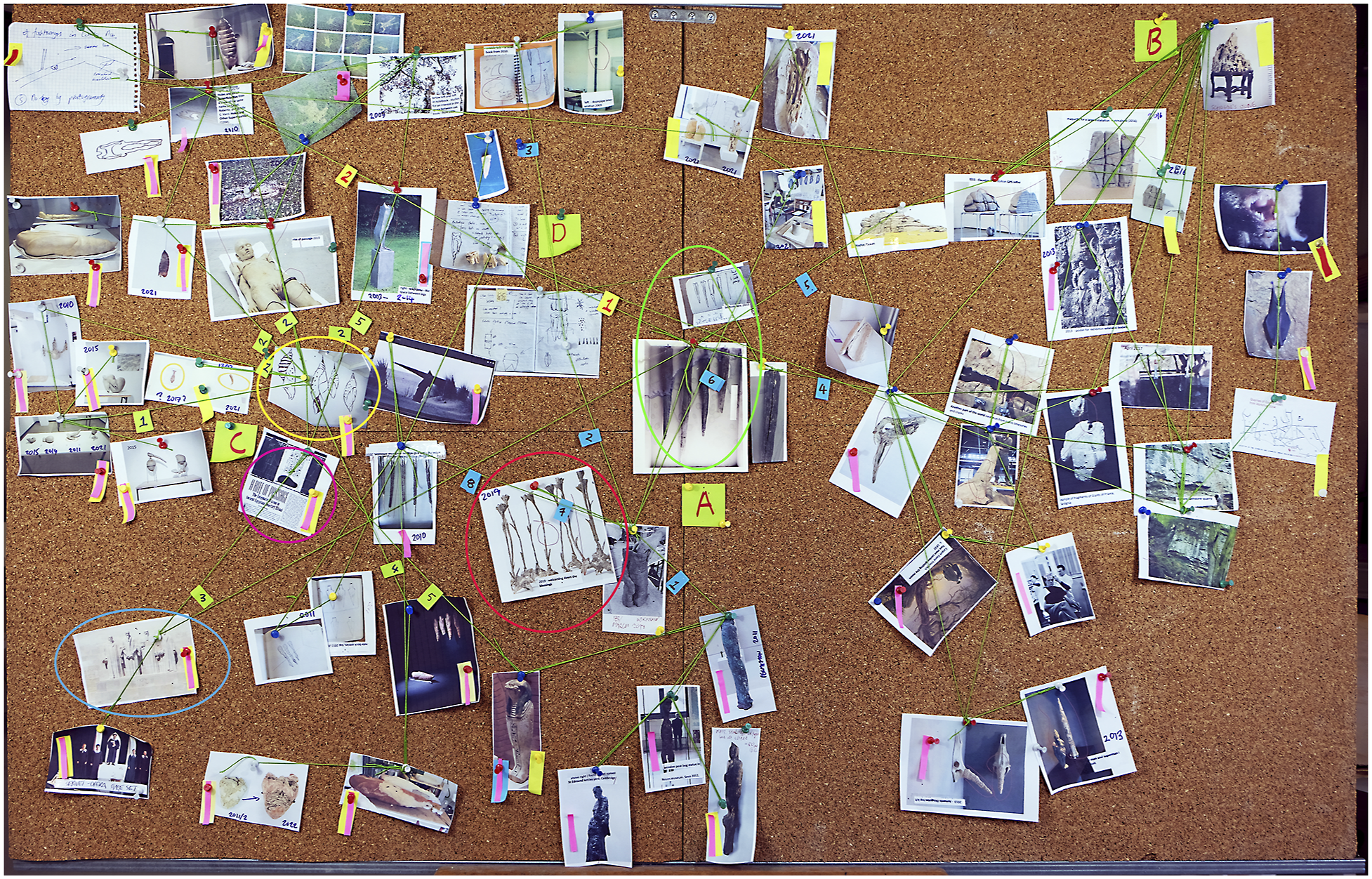
Not only do they share the same clay but circulating references pulled these elements into the story for another reason. Giving more details would require the snapshot to be extended into a feature-length movie. Instead, I include the image map below which gives an overview of the pattern of circulating references pertaining to Tekenu’s intent. I also hope that it goes some way to dispelling the illusion that the eponymous intent was in any way linear. Figure 18.
Here are the flowers in the centre, circled in red. Just above them highlighted in green is the drawing and the photos of the stakes. I am not going to spiral you through the whole image map. I will limit myself to drawing attention to three other elements and finish the story there.
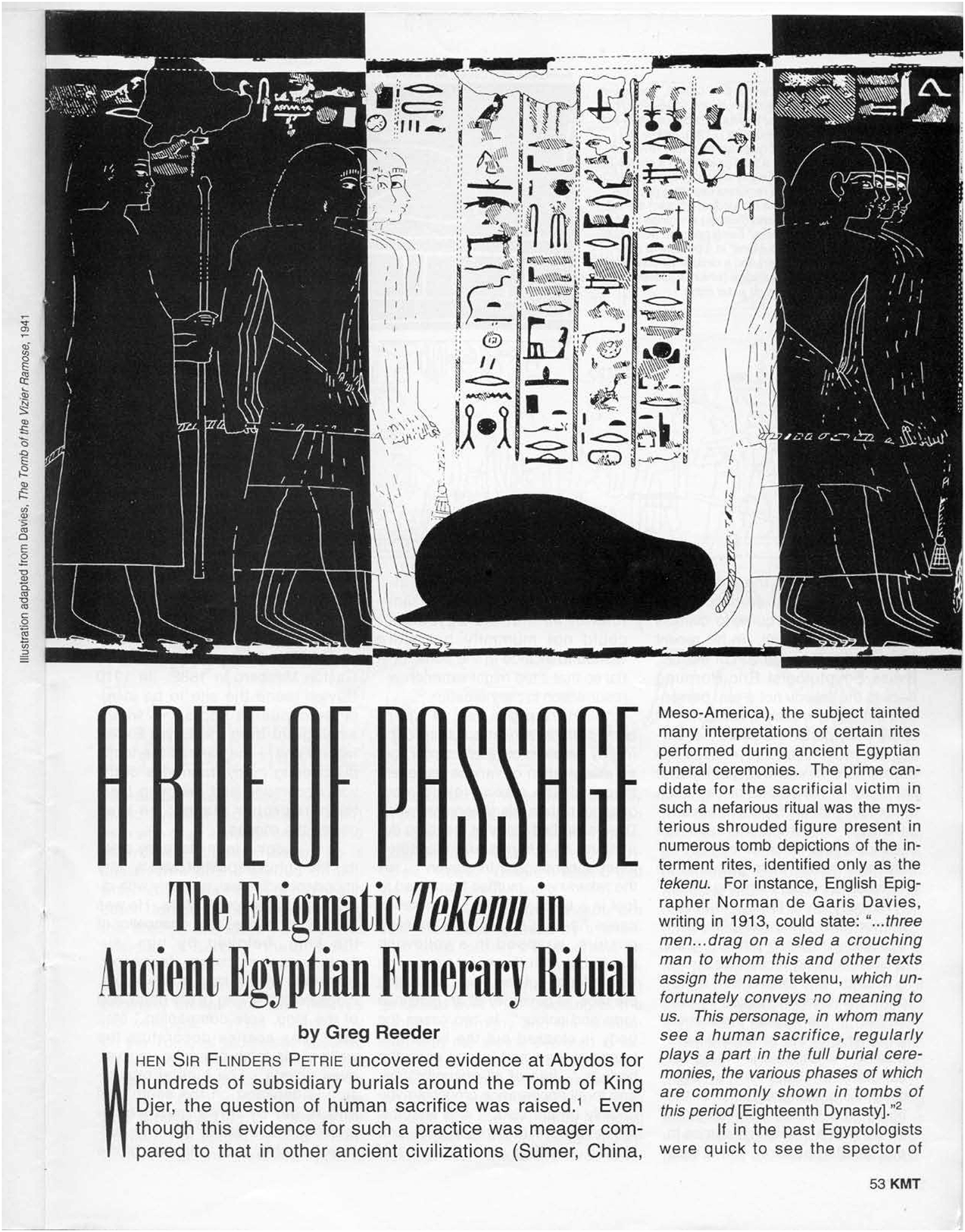
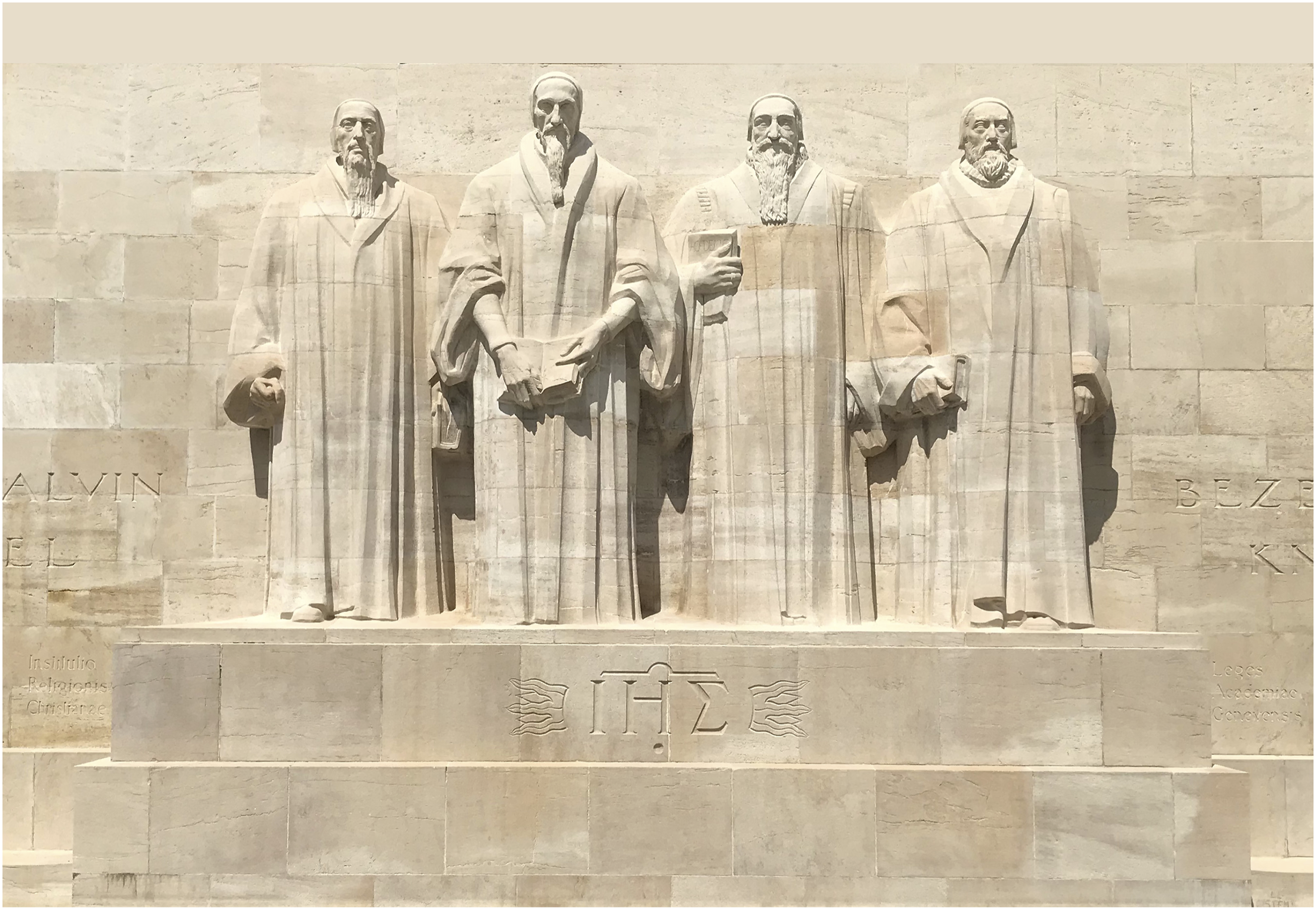
At the bottom left a blue circle highlights the image of the Wall of the Reformation in Geneva: a series of monumental statues that depict the leading players in the reformation. I saw these daunting figures for the first time when I moved to Geneva in April 2000. Above and to the right, highlighted in yellow, is a photo of a wall-drawing by artist Jerome Stettler which I saw in December 2020 in an exhibition in Geneva. Finally and just below a circle in lilac indicates a pdf which, based on my reading profile, was sent to me by the website, Two drawings of Tekenu on the wall of the tombs of Rekhmire and Montuherkhepeshef. (From Davies, 1943; 1913). The Gathering of the four immutable mobiles.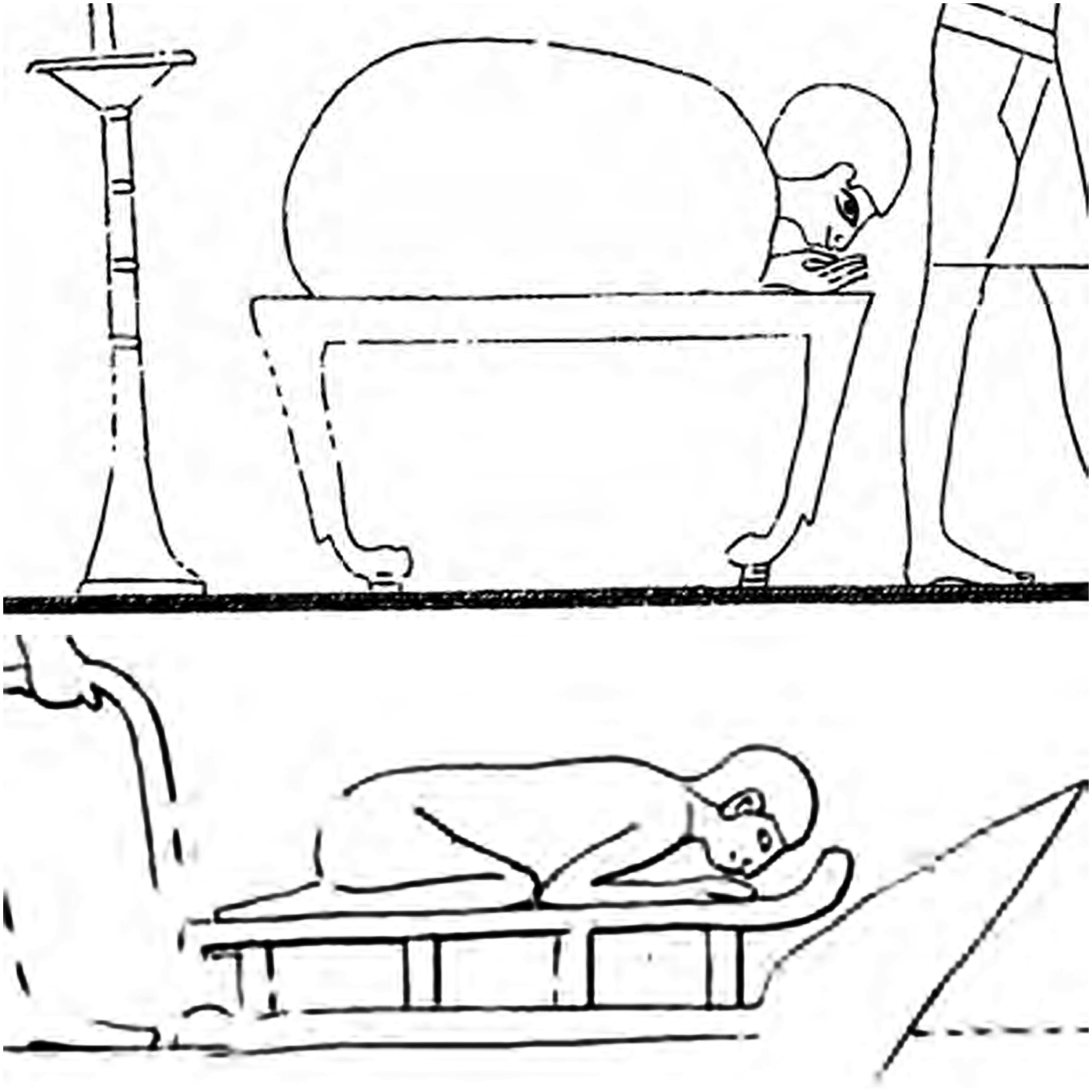
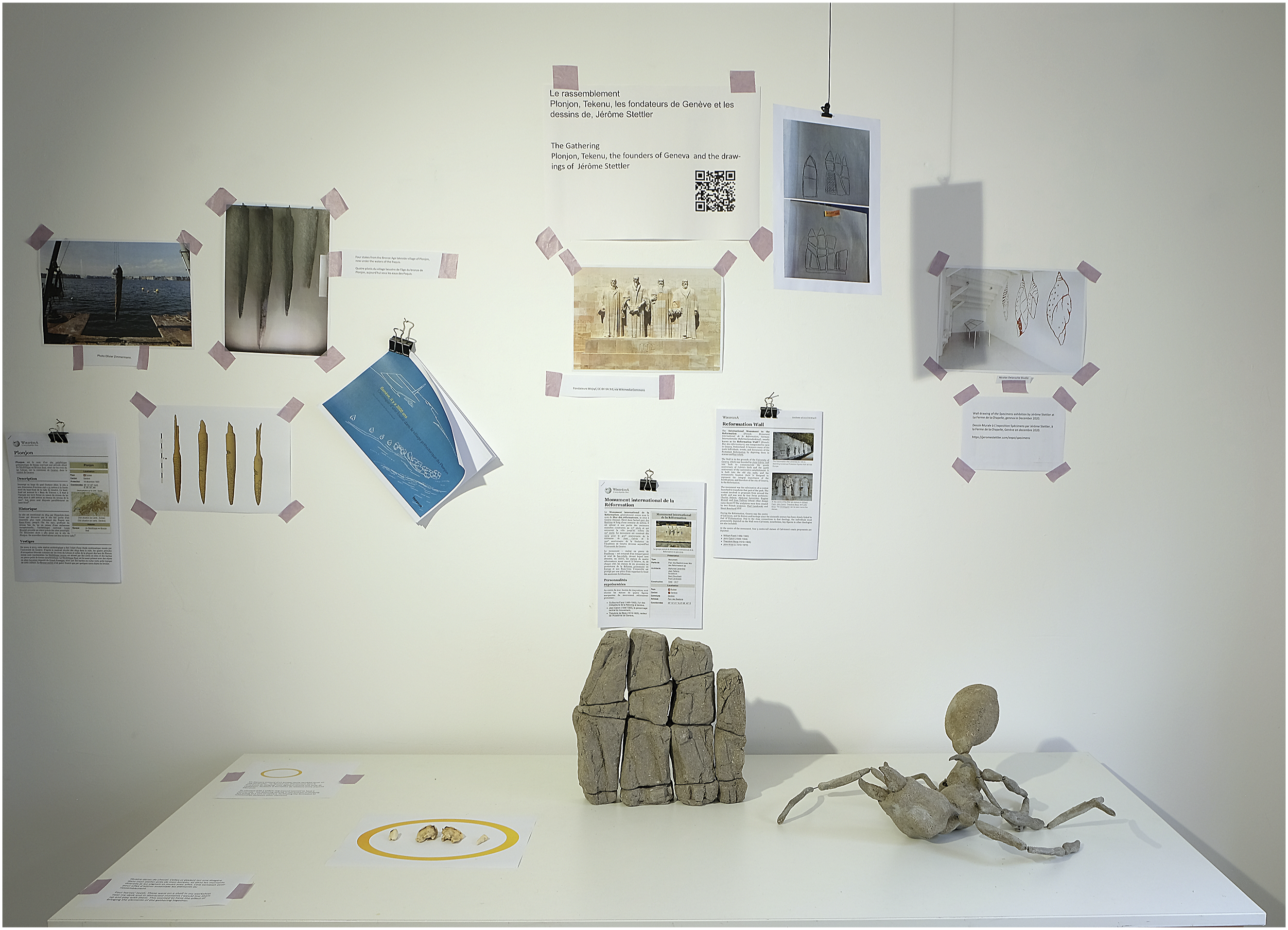
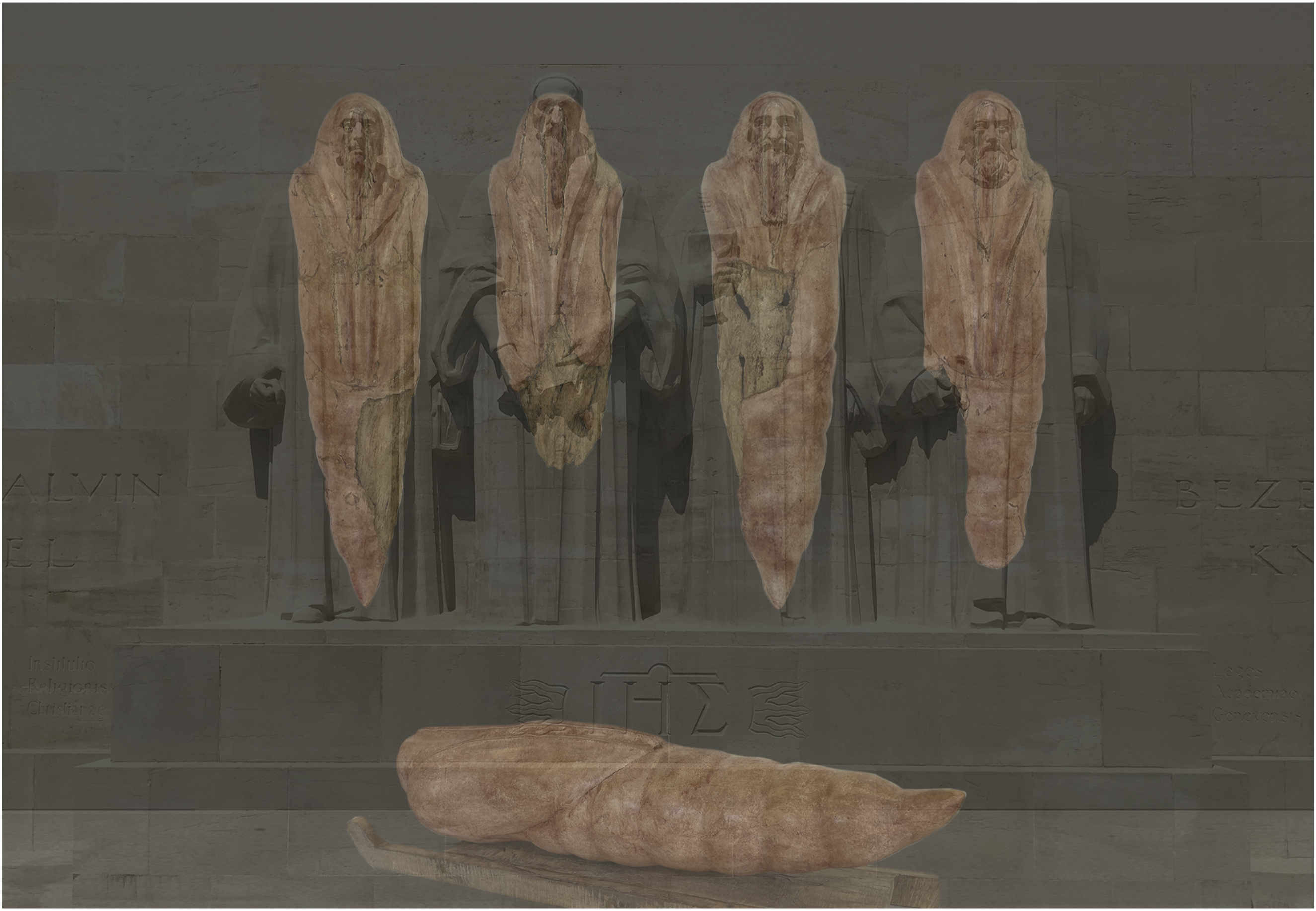
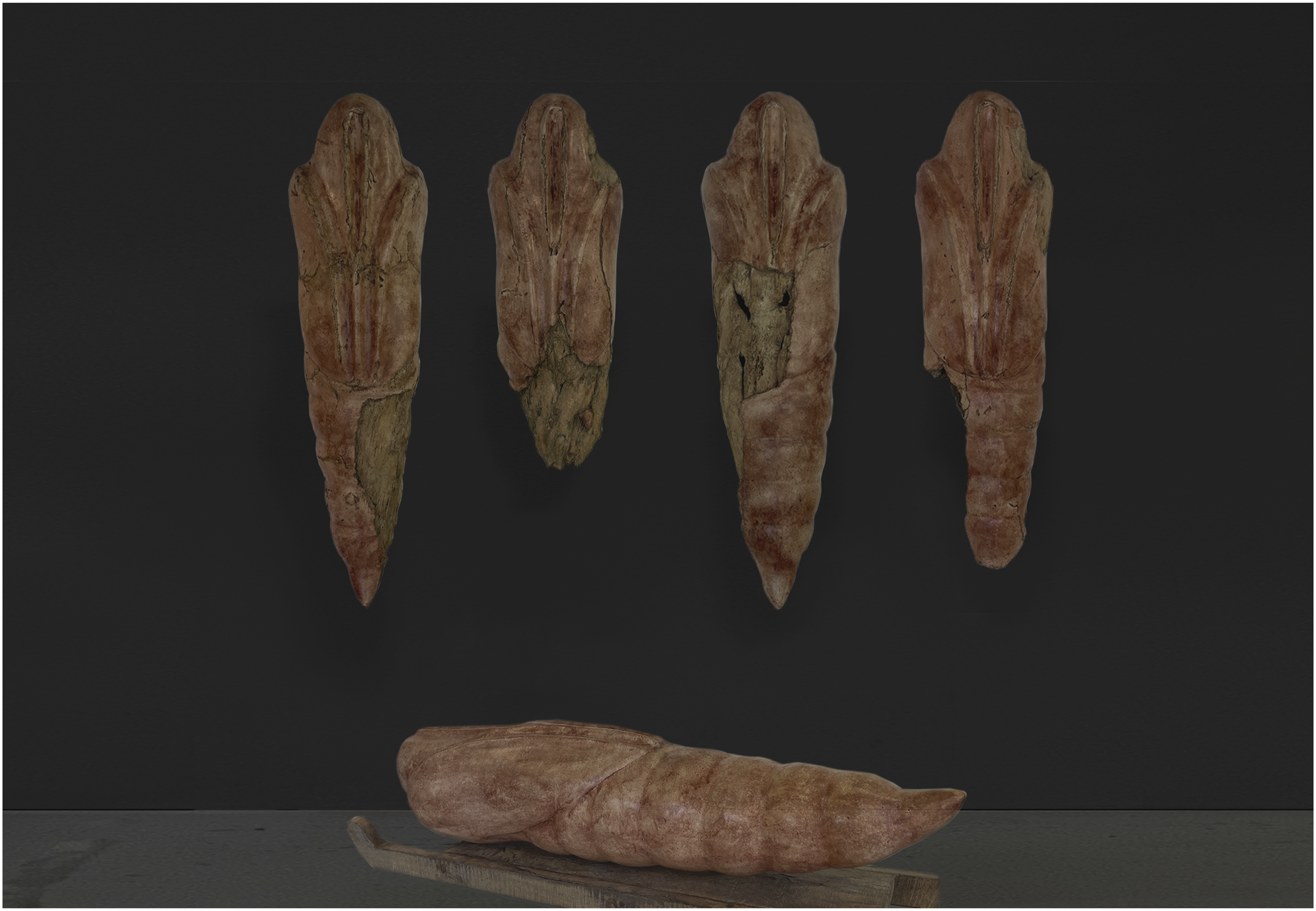
These four immutable mobiles - the stakes, the reformation wall, the wall-painting by Stettler and the pdf about Tekenu (all four already distillations of their own patterns of circulating references) – By finding common cause these four elements gave the process of thinging a focus, a process I called
Conclusion
To recap. We have the stakes from the bronze-age lakeside village of Plonjon, now part of a museum installation Figures 21, 22, 23 and 24. Four Bronze-age stakes in the Art and History Museaum. Geneva. Jerome Stettler's wall drawing of chysalids at the Ferme de la Chapelle gallery in Geneva. The title page of Reeder's article about Tekenu. Emailed to me by Academia. The four leading figures of the reformation as portrayed in the Parc des Bastions, Geneva by artist Paul Landowski.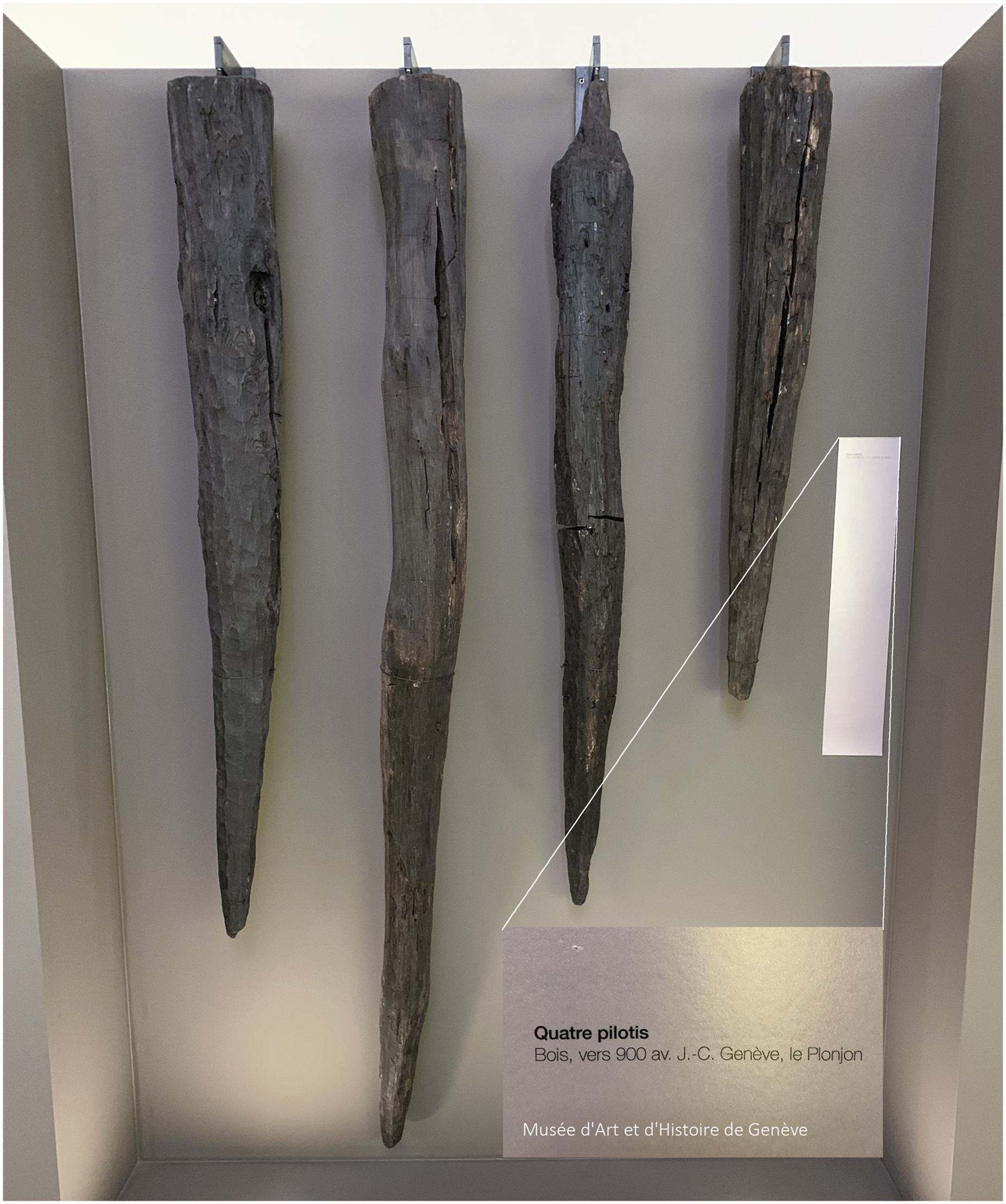
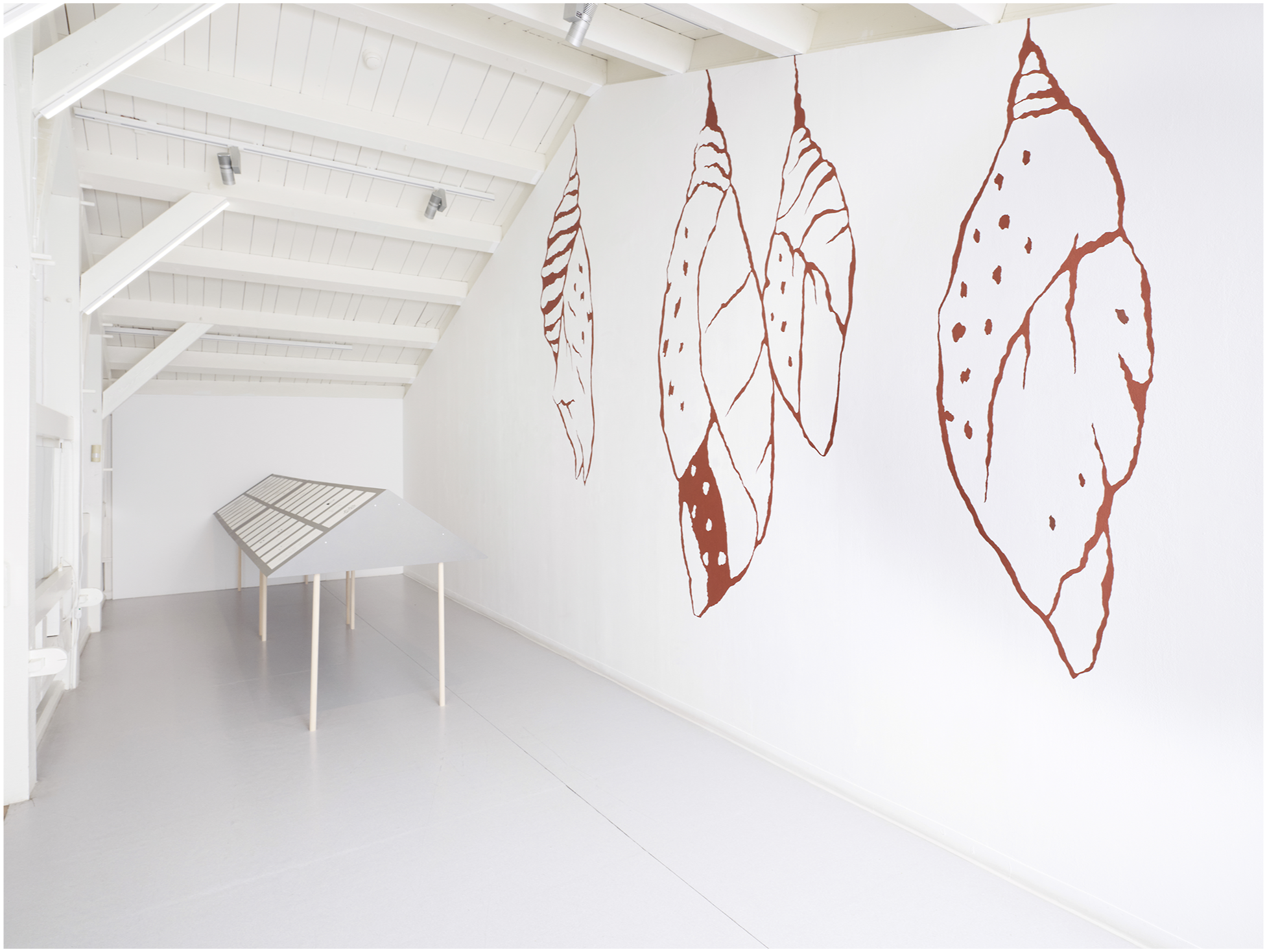
Then we have Stettler’s wall drawing which shows the chrysalis stage in the life cycle of lepidoptera.
Next, the pdf I received the week after seeing Stettler’s drawings - a pdf about Tekenu, an enigmatic figure from ancient Egypt (Reeder, 1994).
And finally, a few minutes’ walk from the museum where I saw the stakes, you can find the wall of the reformation, sculpted by Paul Landowski (the artist responsible for Rio di Janeiro’s sculpture of Christ). These four elements may have already done their gathering for you and merged themselves into Thinging about wooden stakes. Brings about a metamorphosis. Which turns out to be driven by Tekenu's intent. 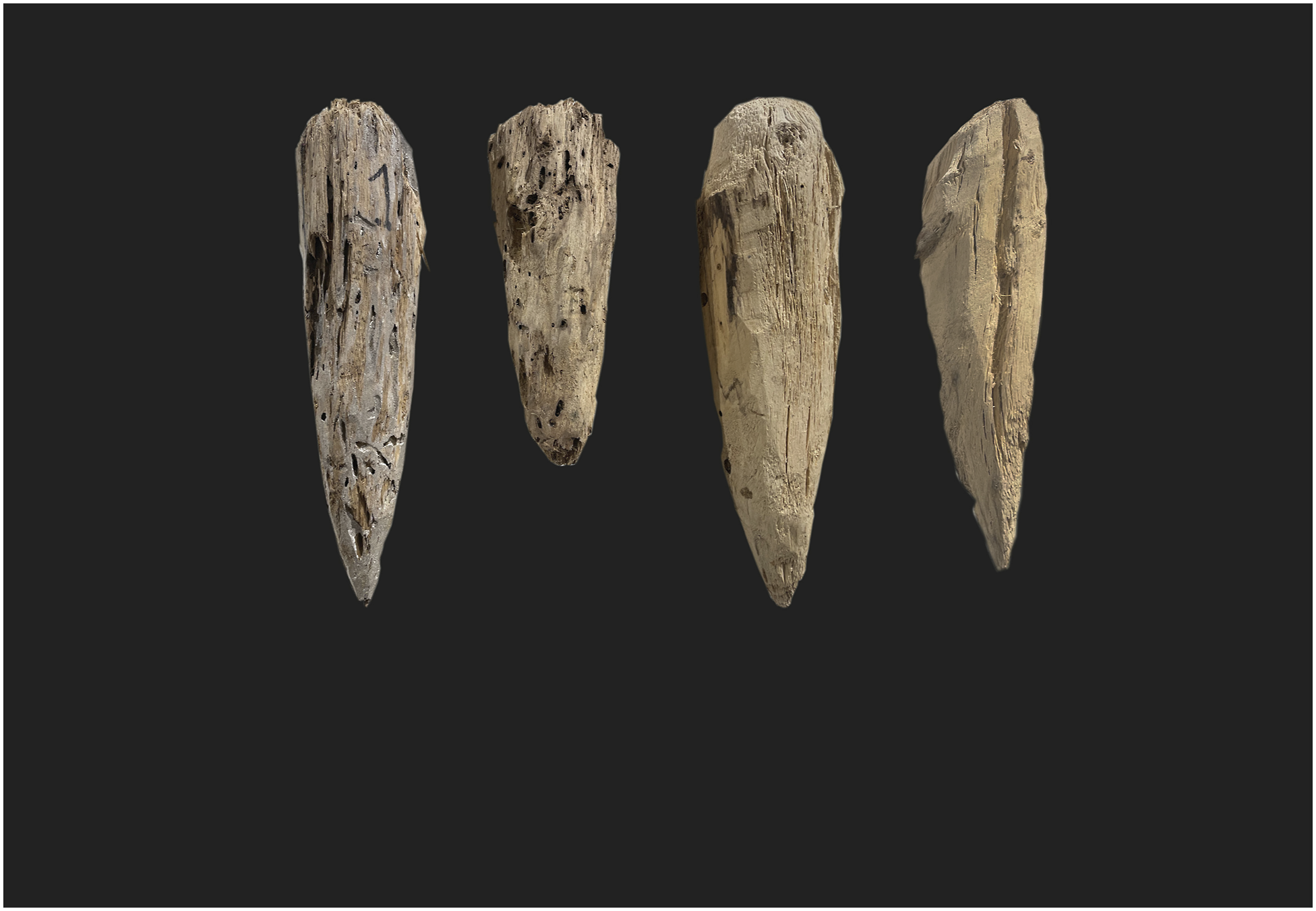
Footnotes
Declaration of conflicting interests
The author(s) declared no potential conflicts of interest with respect to the research, authorship, and/or publication of this article.
Funding
The author(s) received no financial support for the research, authorship, and/or publication of this article.
