



Abstract
Take care of yourself
This exhibition is about love and celebration.
It’s also about the difficult times – grief, prejudice, violence and the fight for change.
It’s about our bodies – dressed and undressed – and what we choose to do with them.
It shows how language was used, and how far we have come.
If you think it might be too much for you (or your kids), that’s ok.
Take care of yourself
Love the Pride [R]evolution team
1
Visitors were welcomed this way into the space of Pride (R)evolution, a major temporary exhibition at the State Library of New South Wales during Sydney WorldPride 2023. Described by the project team as “a love letter to the histories, struggles, hopes and lives of NSW LBGTQIA+ people”, the exhibition drew on and expanded the library’s collection of these histories, with many stories carrying strong personal connections to the lived experiences of the community consultants integral to the exhibition development. The exhibition encompassed discourses of commemoration, protest and celebration, of a ‘constantly shifting constellation of people, places, bodies and politics’. 2
This paper is a reflection on exhibition-making from my perspective as spatial exhibition designer on the Pride (R)evolution project team. My approach to exhibition design, and this reflection on it, are inspired by the multimodal social semiotic theory of representation and communication (Kress and Van Leeuwen, 2021) and Spatial Discourse Analysis (SDA) (Ravelli and McMurtrie, 2016), which explores how meaning is constructed in the socially contextualised, three-dimensional multimodal texts of built environments. The multimodal lens is extended to understand exhibition experiences as integrated spatial, sonic and temporal, four-dimensional texts (Osmond, 2022). Through this lens, I reflect on the exhibition planning process as a multimodal communicative practice – a generative process of negotiation, and also on Pride (R)evolution as emblematic of a complex multimodal entity, combining the semiotic modes of language, image, object and sound, visitor movement and speech, in temporal experiences distributed onsite, offsite and online.
A conceptual language for the Pride (R)evolution team
Our exhibition team and development process were multidisciplinary, consisting of four curators, a multimedia/creative producer, two spatial exhibition designers including myself, a graphic designer and a lighting designer, working with library specialists such as conservators, registrars and public programmers. We embraced the many disciplinary processes and perspectives brought to the exhibition development table, especially in our work with commissioned artists. In such teams, we cannot work with a single disciplinary vocabulary, as in, for example, publishing or architecture, but instead are challenged to mix, match and reconcile the specialist terminologies and discourses of sound and music, still and moving images, space and objects, written and spoken texts.
Collaborations in exhibition projects are multimodal processes in which we negotiate choices for the selection and combination of different modes and mediums of representation. To reflect on this multi-directional dialogic process of exhibition-making, the meta-disciplinary toolkit of social semiotics (Hodge, 2020) provides an interpretive framework outside the boundaries of different disciplinary systems. Three key aspects of the Pride (R)evolution exhibition planning and design development are outlined below, reflecting upon how multimodality was operationalised to generate a common conceptual language, and how different conceptual frameworks for sound as well as space were negotiated.
Creating a heuristic for affective meanings
The curators of Pride (R)evolution offered the concept of diurnal phases, or the cycles between day, twilight, night and dawn, as a tool for: Disrupting conventional temporalities in representations of LGBTQIA + history...Tapping into circadian rhythms to provide an embodied, sensory, immersive experience. Creating varied textures of mood, aesthetic, tone and emotion.
3
As spatial and graphic designers, we welcomed this opportunity to use the concept as a heuristic tool or an experimental working surface for design development. Importantly, the diurnal phases gave our project team a meta-disciplinary conceptual space to collaborate in that was not bound to visual or language modes. As such, I introduced the sonic concept of inner and outer soundscapes in the first concept schematic (Figure 1) that visualised this choice for a cyclical structure. Pride (R)evolution concept schematic 2022. ©Wendy Osmond, 2022.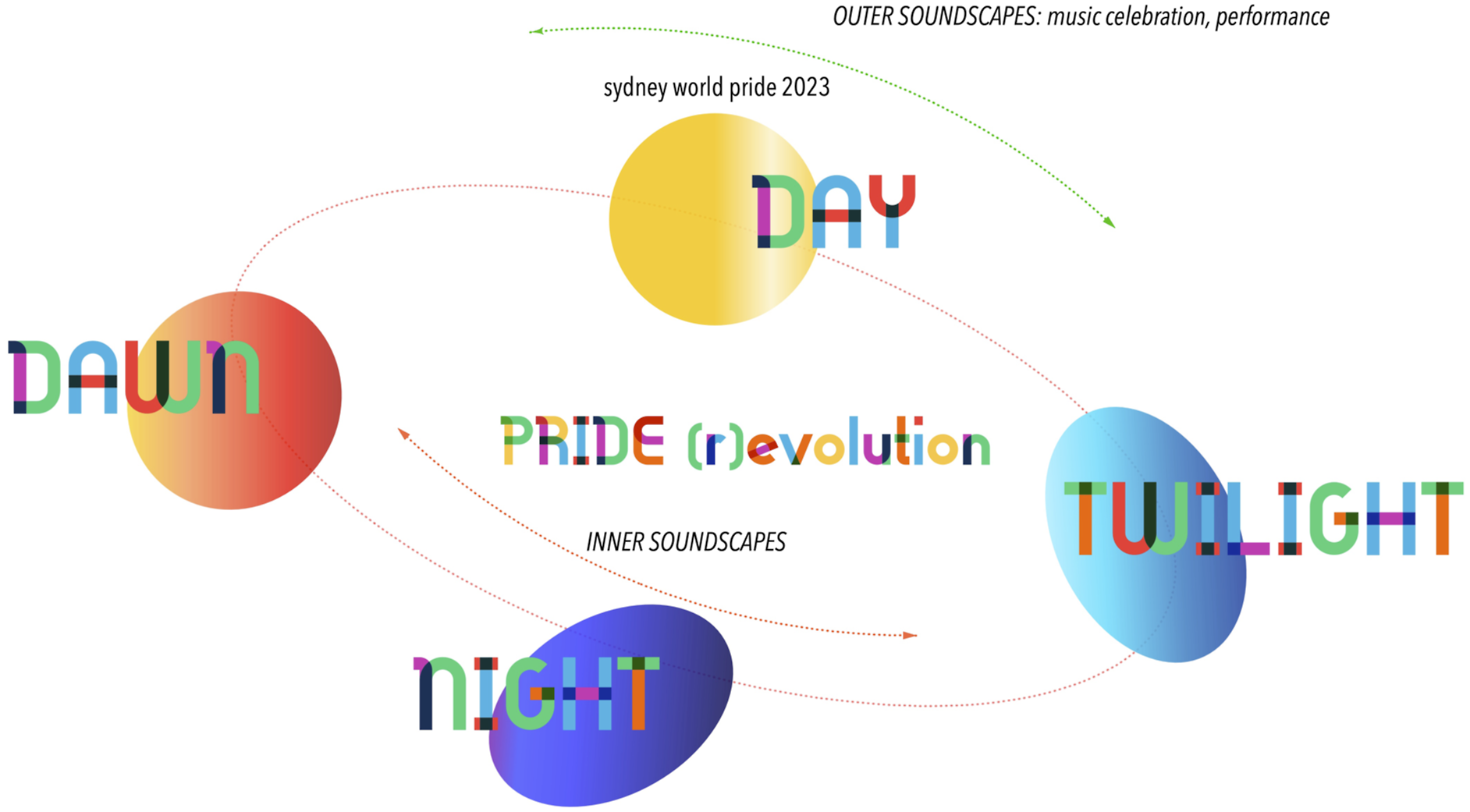
A meeting called “all the feelings” followed, in which each curator and the graphic designer shared a selection of images – of any colours, objects, textures, faces, spaces or typefaces that communicated Pride (R)evolution to them. We began to establish a multimodal conceptual language for the exhibition development in other ways – by verbally sharing our own lived experiences and impressions of, for example, Oxford Street in the 1980s, or reflecting on key images and objects like Mardi Gras posters. During the meeting, each team member also contributed key words in note fragments. Figure 2 shows the textual record of that ‘blue-sky’ dialogue, an assemblage dominated by affective meanings that could inform choices for representation in any mode, for example, ‘movement between moods’ or ‘retro glam'. Pride (R)evolution meeting postits, created 7 September 2022, ©SLNSW.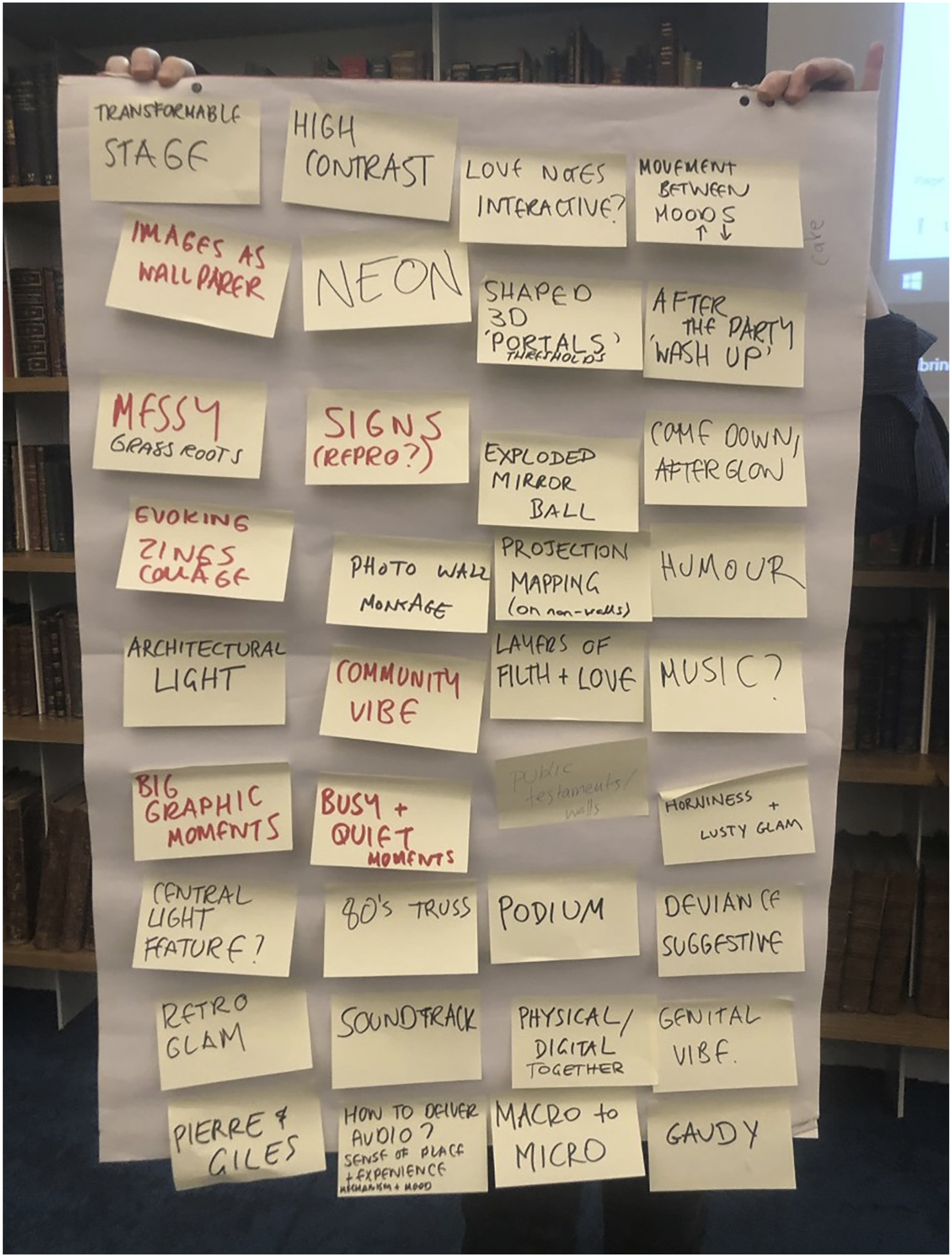
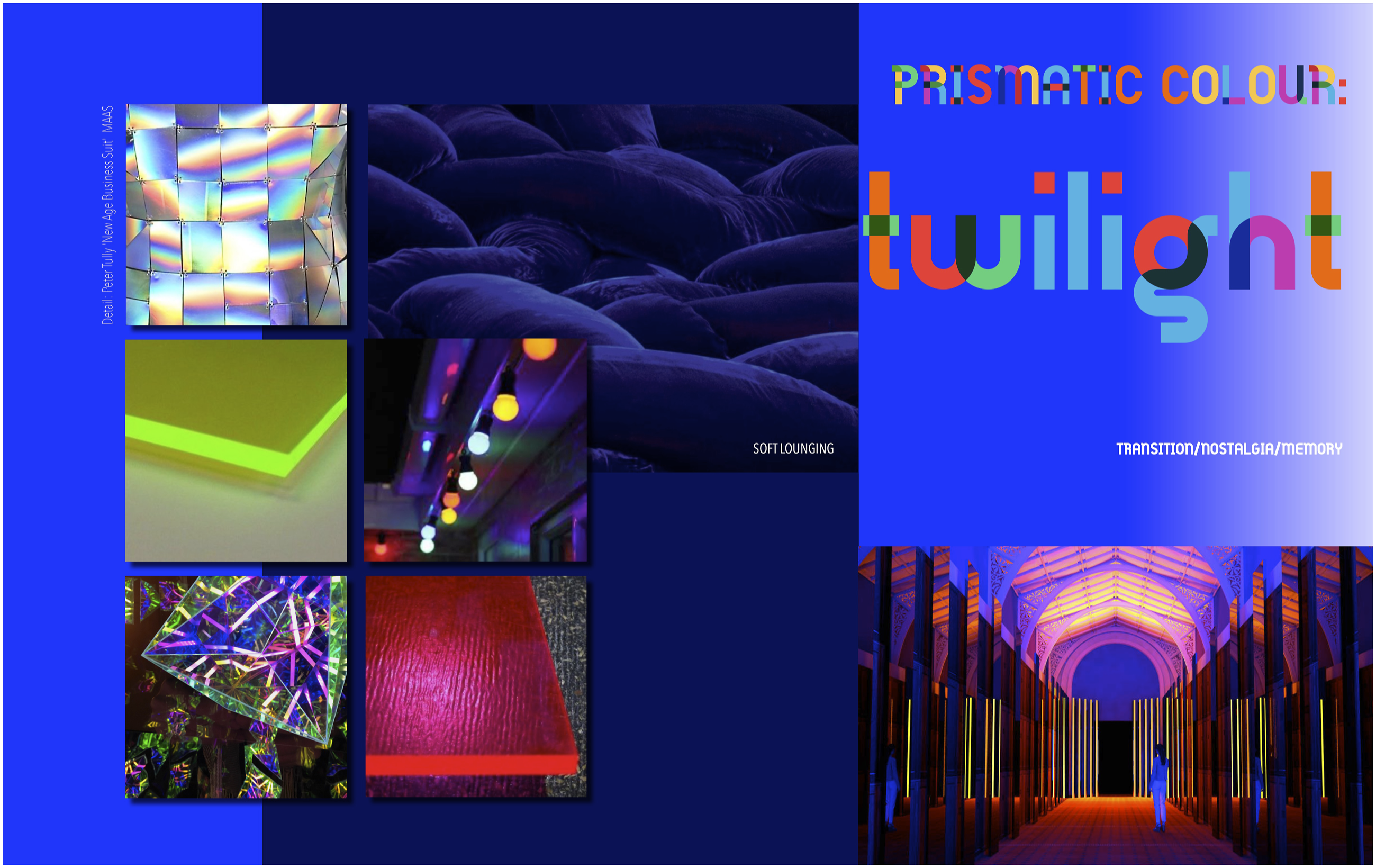
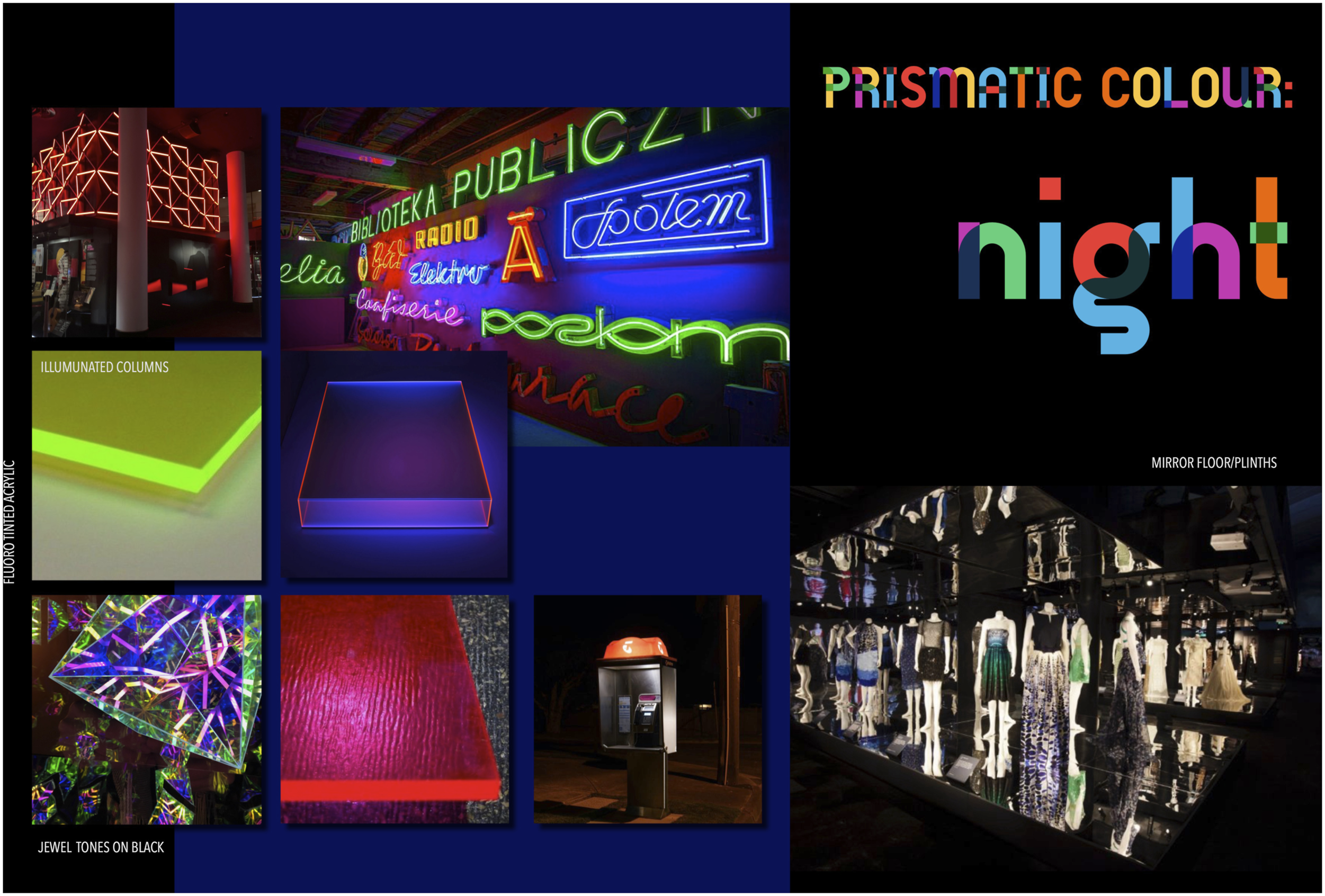
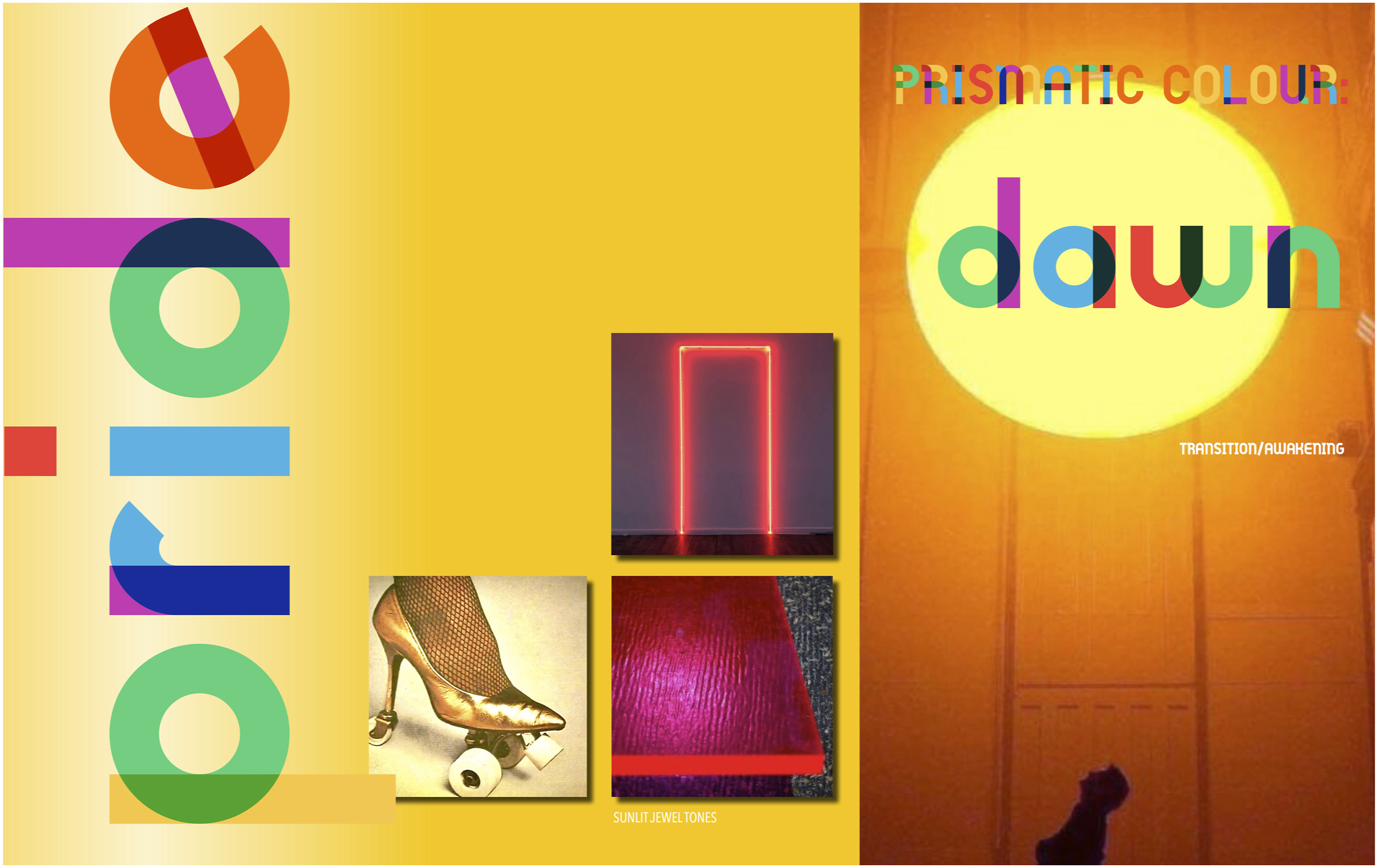
I returned a visual synthesis of these images and text ‘mood’ materials, mapping a selection into a four-part montage of diurnal phases (Figures 3–6). Throughout the design development process, spatial, graphic and lighting designers drew upon the principles documented in these diurnal mood boards to negotiate material, colour and lighting choices as a wholly connected system. Pride (R)evolution Diurnal Phases concept boards. ©Wendy Osmond, September 2022. Pride (R)evolution Diurnal Phases concept boards. ©Wendy Osmond, September 2022. Pride (R)evolution Diurnal Phases concept boards. ©Wendy Osmond, September 2022. Pride (R)evolution Diurnal Phases concept boards. ©Wendy Osmond, September 2022.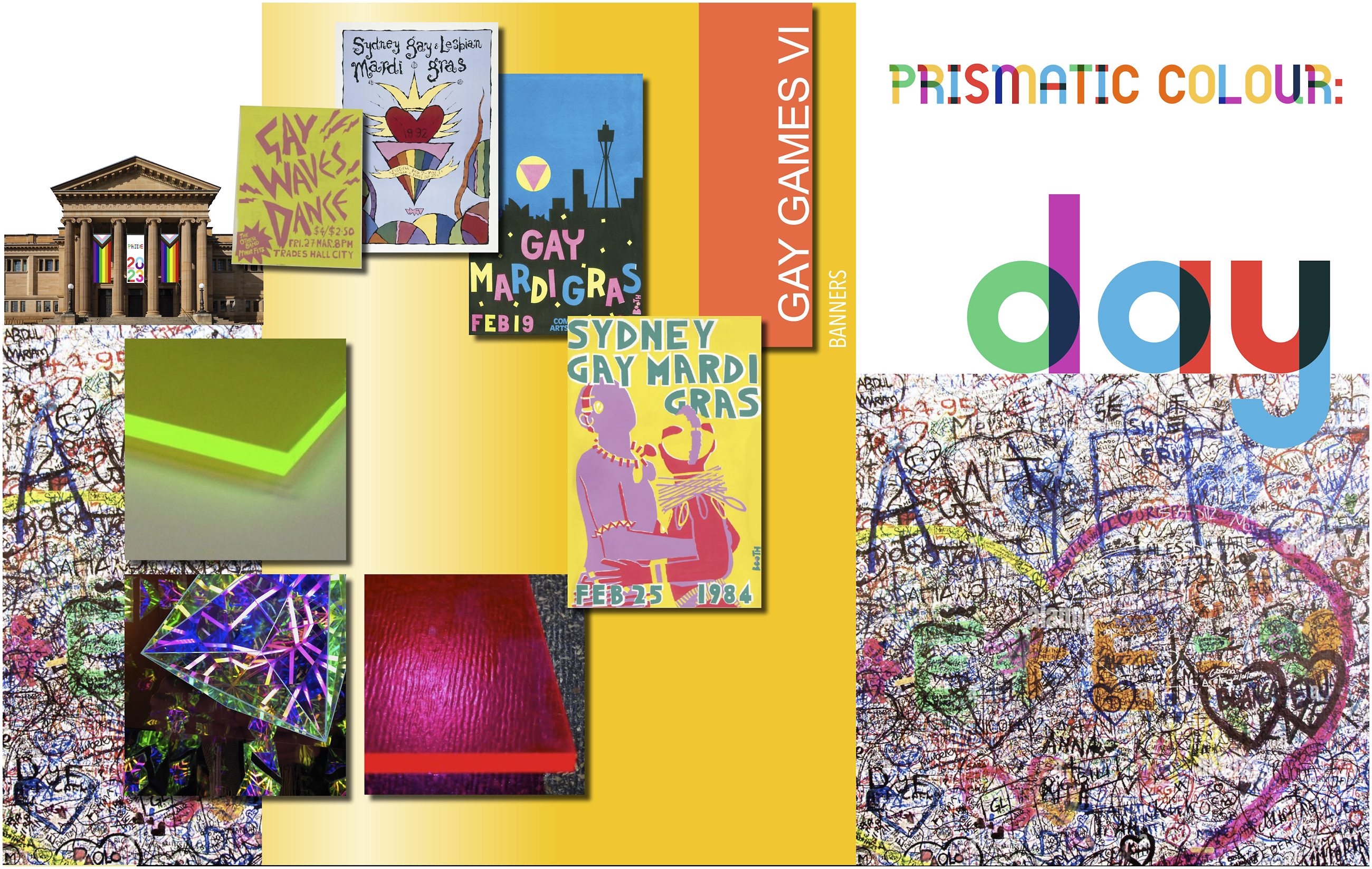
Mapping the visitor paths and social spaces
Next, we moved our conceptual experiments into the realm of visitor experience, mapping the exhibition as it might unfold for the visitor in the library spaces. We began by overlaying a few different ‘experiential metaphors’ (Lakoff and Johnson, 1980) suggested by the diurnal conceptual tool into speculative schematic plans. For example, Figure 7 mapped sound into the outer social space of the street or the inner social space of the nightclub, using the spatial metaphors ‘public is outside’ and ‘personal is inside'. Pride (R)evolution schematic plan of sound. ©Wendy Osmond, September 2022.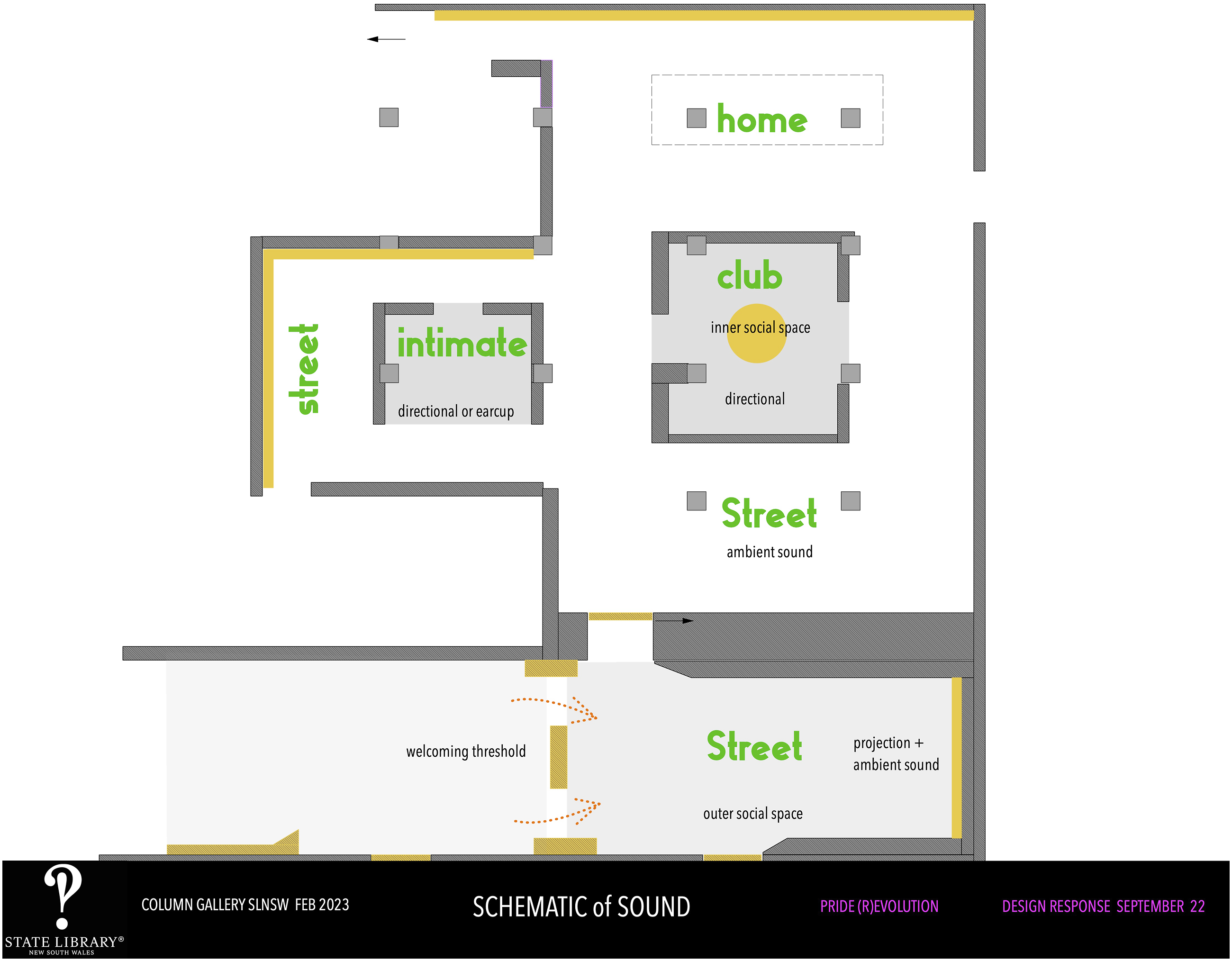
Then, using many iterations of the exhibition’s schematic plan of stories (Figure 8) and a digital 3D model of the exhibition spaces, we mapped the many stories of Pride (R)evolution into these metaphorical zones – guided but not delimited by the four diurnal phases. Material, colour and lighting choices were keyed to the zones. The open yellow-floored introductory area, for example, construed ‘street’ meanings – a place to assemble, protest, and celebrate (Figure 9). Two pink-floored inner rooms construed home or club, or a psychological ‘interior'– spaces for intimacy or introspection. Pride (R)evolution schematic plan of stories. ©Wendy Osmond, October 2022. Pride (R)evolution gathering space, March 2023. Photo by Joy Lai, ©SLNSW.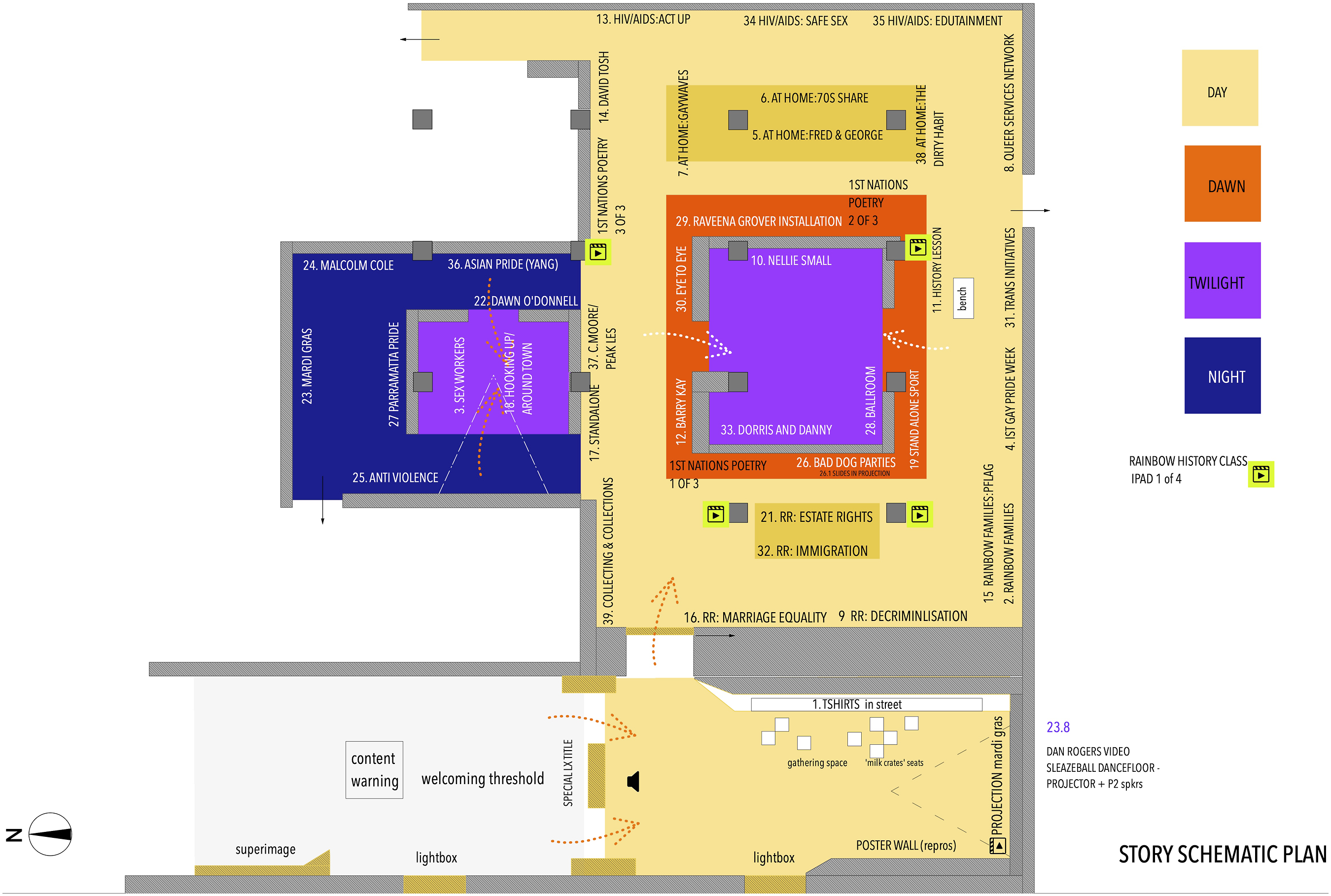
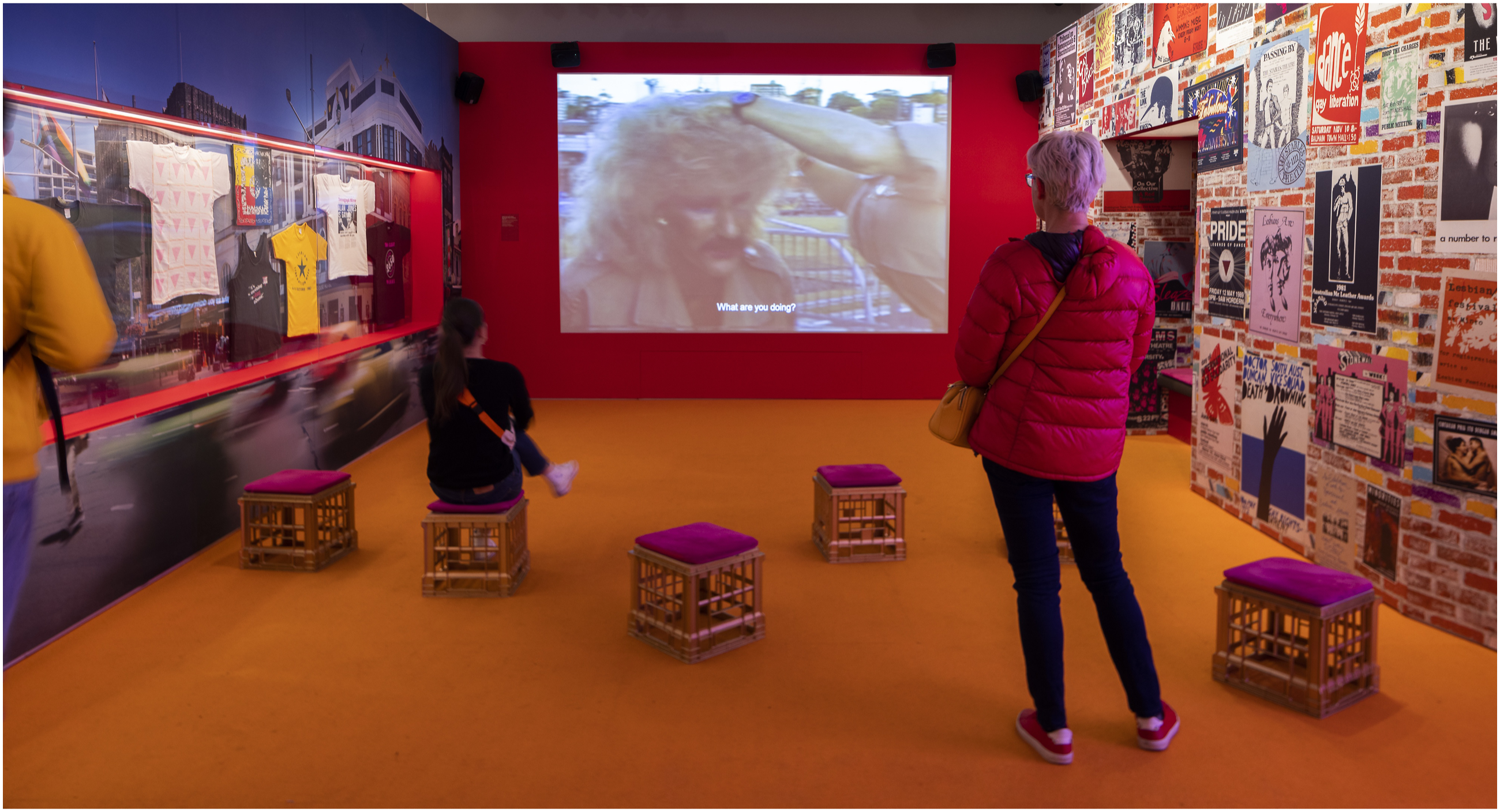
Our inclusion of social spaces in the exhibition was part of the strategy to prioritise the live agency of source communities. Areas to lounge, gather, listen or connect were important places for meaning potential, enacted by visitors. Special visitor furniture was keyed to the metaphorical zones, adding a few playful queer design motifs: the velvet and gold of ‘retro-glam’. For example, plush magenta banquette-style seating was the defining feature of the ‘club’ interior, and the Mardi Gras ‘street’ zone included pink velvet-topped golden milk crates for visitors to push around as they pleased.
Designing sound choices
Sound had several vital functions in Pride (R)evolution, layered in different modes and mediums. In collaboration with the multimedia designer and commissioned artists, we conceived different possible relationships between sounds, spaces, bodies, objects and images for each story. As a researcher, I have developed an understanding of the importance of sound in carrying affective meanings. This has informed my practice so that I include sonic tools in the earliest stages of design concept development. In the preliminary design schematic of Pride (R)evolution (Figure 1), the spatial metaphor for sound offered the team an experimental choice: whether a story was best interpreted in the outer, public soundscape of protest or celebration, or an inner, intimate sonic space, or both.
For example, the open ‘street’ area (Figure 9) was filled with the multi-directional amplified soundscape of Mardi Gras. Together with a large projected film and a line of protest t-shirts backed by a panoramic image of Oxford Street in Sydney, this sonic environment was intended to construe an exciting gathering – one ideally activated by a crowd of visitors. In contrast, as a visitor approached the threshold of a tiny 1980s-style bedroom nook, a motion sensor was designed to activate a bedside lamp, in turn illuminating the Gaywaves Radio interactive boombox. One or two visitors squeezing into this little vignette could then manipulate the song choice. In this way, the story of individuals connected to the community through radio and music was told through a multimodal series of small interfaces, scaled down to construe an intimate, domestic experience.
These ambient soundscapes and interactive sound interfaces blended with the sounds of visitors moving about the spaces. Visitors lounging in the ‘club’ room could pick up earcup devices to hear oral histories or use their mobile device to access a selection of stories narrated by key community historians and knowledge holders. 4 By calling the Pride Line from their mobile, or a dedicated phone booth outside the exhibition, they could contribute to the aural archive of the library. In these various ways as collaborating producers, designers and artists, we approached sound as a design tool, medium, spatial object and temporal element (Cox, 2015).
Reflecting on multimodal design practice
Reflecting upon Pride (R)evolution as a researcher-design practitioner, I understand the diurnal phase conceptual tool as key to the exhibition development process. Using this meta-disciplinary concept, the exhibition team negotiated story development in terms of how tactile, sonic and visual experiences construed affective meanings. Through a social semiotic lens on this multidisciplinary project, we recognise that even one story like Gaywaves Radio is a ‘complex configuration of different voices, different representational modes’ (Kress and Van Leeuwen, 2021: 171), in which each member of a creative team can contribute different truths of representation, according to the technologies of their discipline.
As a spatial designer working in a museum space which has been dominated by visual modes, this is an excellent provocation for a more truly interdisciplinary process, one that sees sensory, non-visual modes as equally salient in multimodal texts. For future collaborations, I am inspired to create non-visual return-brief sessions with exhibition teams, using music, sounds and textures of materials. These would have added sonic and haptic modes to our construction of a shared Pride (R)evolution conceptual language.
Programs of events like storytelling evenings, screenings, talks and public outreach such as the Pride Line also remind us that as designers, we work with an open and generative system of meanings. The way that visitors experienced the exhibition space interacted with all the ongoing social and cultural practices of the library, onsite, offsite and online, in a complex assemblage of multimodal communications. As creative teams, we are challenged to create these spaces for communities to make histories and the places for visitors to dance, cry and play.
Footnotes
Acknowledgements
Many thanks to Lisa Loader and my collaborators in the Pride (R)evolution project team at the State Library of New South Wales for their contribution to this reflection.
Declaration of conflicting interests
The author(s) declared no potential conflicts of interest with respect to the research, authorship, and/or publication of this article.
Funding
The author(s) received no financial support for the research, authorship, and/or publication of this article.