



Abstract
Although the teaching of narrative texts in primary school is well researched, there is a lack of insight into how visual models and multimodal prompts are used by teachers to convey genre-specific knowledge. Therefore, we conducted a multimodal study of the teaching practices in two first-grade classrooms during joint re-tellings of the folktale Little Red Riding Hood and subsequent interactions around narrative genre. In both cases, the teachers used the graphical model The Story Face as well as a whiteboard canvas in their orchestrations. Data was collected in the form of audio and video recordings. Underpinned by a social semiotic framework combined with Bernstein’s concept framing, the analyses revealed that both teachers focused on story events and the story’s macrostructure while displaying different orientations in the use of verbal language and visual representations. This resulted in different emphases on either story-specific or more general features of narrative genre. Furthermore, the students showed an interest in iconic and suspense-building story dialogue, but this aspect was generally de-emphasized by the teachers’ use of verbal language and visual resources. Based on these findings, we discuss the significance of studying teachers’ differing orchestrations through overlapping modes.
Keywords
Introduction and background
This study pertains to teachers’ intermodal orchestration around the narrative genre in early literacy teaching in grade 1 in Swedish primary education. In particular, we analyze two teachers’ negotiation of story elements in the classic fairytale Little Red Riding Hood by employing the graphical model The Story Face (Staal, 2000). We employ the framework of Design for Learning (Selander, 2022; Selander and Kress, 2021) to highlight the intermodal character of teacher-student interactions during the teaching of specific content relating to stories to young learners.
By viewing teaching as a form of educational design in a formal setting (Selander, 2022; Selander and Kress, 2021), teaching practices are understood as purposefully designed with a specific learning object. The conscious orchestration of available modes, prompts, and representational aspects within the classroom are seen as a social practice where meaning-making is constantly negotiated (Jewitt et al., 2016; Selander, 2022; Selander and Kress, 2021).
From a social-semiotic perspective, modes have different affordances within a given educational context (Jewitt et al., 2016). Regarding the modal affordances within textbooks and graphical models, previous studies of subject didactics have predominantly focused on the teaching of science. These studies have found that: (1) visual representations are challenging for students to unpack and require students to draw on personal experiences; (2) it is the teacher’s role to unpack and expand on such representations to invite the students into the subject’s discipline (see Airey and Eriksson, 2019; Fredlund et al., 2014; Lagerholm, 2020). Fredlund et al. (2014: 10) propose that the unpacking of visual representations “may need to take place through the use of multiple representations, since different representations have different […] affordances.”
In response to the relative lack of research into how visual representations are “unpacked” in the teaching of language arts, the present study focuses on two teachers’ didactic and intermodal orchestration in using the graphical model Story Face as a prompting stage for to negotiate narrative story elements when teaching first-grade students. As further described in the Analytical procedure section, we needed to go beyond studying multiple modes and their individual contributions, taking instead an intermodal approach (see Kartika-Ningsih and Rose, 2021; Ngo et al., 2022) to study how several modes are employed in conjunction with one another and used as prompts for various genre-theoretical features and dimensions.
Our approach differs from previous multimodally oriented research in Swedish language arts teaching, which have primarily focused on students’ production of multimodal texts (Andersson, 2014; Borgfeldt and Lyngfelt, 2017; Hell, 2022; Hultin and Westman, 2018). A similar research emphasis is evident in international multimodal research on language teaching (Lim et al., 2022), including studies showing how teachers promote students’ capabilities to construe multimodal texts (Lim and Unsworth, 2023; Mills et al., 2020; Moses, 2016). The use of graphical models and other multimodal resources to teach genre-specific features remains underexplored in research.
The present study highlights teaching inspired by the teaching/learning cycle (TLC) developed within genre-based based teaching with the purpose of supporting students’ ability to control different genres of schooling (Martin and Rose, 2008).1 A particular focus is given to teaching activities related to deconstruction which in TLC terms entails a joint analysis of the structure and linguistic features of the texts. According to the principles of genre pedagogy, this deconstruction involves a close analysis of features on different levels of language (e.g., Humphrey and Feez, 2016; Martin and Rose, 2008).
However, previous studies into primary education indicate that the uptake of deconstruction in Swedish classrooms seems restricted to modelling “linking words” and the macrostructure of narrative texts (Hell, 2022; Hermansson et al., 2019; Vuorenpää, 2016; Walldén, 2019; Yassin Falk, 2017). Regarding macrostructure, the aforementioned studies have shown that teachers tend to describe this in terms of “a beginning, some events and a clear ending” (Vuorenpää, 2016) or “orientation, a problem and a solution” (Walldén, 2019). In Yassin Falk’s study (2017), the teacher was shown to have a more content-oriented approach, describing the key story elements in terms of “something supernatural, good ones, bad ones, some adventure and it should always end happily.” These studies have focused on oral interaction and the story elements listed on teachers’ whiteboards. The present study contributes new knowledge by employing a multimodal framework to study how teachers use graphical models in the process of deconstruction.
The present study employs concepts from Bernstein’s (2000) sociological theory to describe how curriculum content in language arts is recontextualized in teaching practice. Prior studies employing a similar perspective have found that teachers make different choices in the teaching of similar content based on their beliefs about literacy learning and their understanding of their students and students’ learning needs. In Lim and Unsworth’s (2023) study of the teaching of multimodal composition, the participating teachers differed in their teaching with respect to the level of explicit guidance (e.g., Lim and Unsworth, 2023).
In a text-based study, Ridell and Walldén (2023) explored how content in the Swedish curricula for early literacy teaching were recontextualized in two graphical models. The findings showed that the graphical model the Story Face strongly aligned with the curricula by focusing on story events without suspense-building features. Furthermore, when story elements are represented by different shapes with unclear relationships to one another, the visual composition of the model can be challenging to decode in teaching practices. In the present study, we expand on Ridell and Walldén (2023) findings by discussing how two teachers employed graphical models in their teaching.
The purpose of the present study is to contribute knowledge about two teachers’ multimodal staging of a narrative text, Little Red Riding Hood, in whole-class interactions. Using video and audio data gathered from two different classrooms, we explore the use of verbal, visual and gestural prompts to discuss how the teachers interacted with the whiteboard canvas and students’ spoken utterances to negotiate features of the narrative genre based on adaptations of this classic folk tale. Particularly, the study highlights how the two teachers orchestrated their teaching by using overlapping modes to: (1) prompt story elements of the narrative genre; and (2) regulate the content and scope of students’ spoken interactions.
The research questions are as follows: 1. Which story elements are foregrounded in the teachers’ intermodal orchestration? 2. How do two teachers’ different approaches to intermodal orchestration shape the process of negotiating the story?
Method and analytical framework
In this section, we present the methods for data collection, ethical considerations, and the data analysis process. The video and audio data studied were collected as part of a PhD project in which the main author gathered classroom data over a period of 2 months. The selection criteria for participants were teachers in grades 1–3 already employing graphical models in their practice. The two participating teachers were recruited to the study since they expressed using the graphical model the Story Face in their teaching. Thus, the teachers’ orchestration and design of their teaching were based on their own choices irrespective of the research. The teachers received initial information about the study during in-service training.
Data production and ethical considerations
The findings of the present study are mainly based on video and audio recordings of the two participating primary school teachers as they stage the retelling of the classic fairytale Little Red Riding Hood while employing the graphical model the Story Face (see Staal, 2000) on the whiteboard. The main author conducted these recordings in the teachers’ respective classrooms where they taught at the same school but in different student groups. The students were in Swedish grade 1. According to the teachers, they varied in their reading proficiency between fluent readers and students needing support to decode written text, as is common in this grade. The material discussed in this study was produced during two sessions and consists of 45 min of video and audio recordings of how the two teachers employed the graphical model to highlight genre-specific features of the story. In previous lessons, the teachers had read and discussed the fairytale Little Red Riding Hood. The activity with the graphical model was a preparation for the upcoming lesson where the students were tasked to re-tell the story in writing pairs.
The use of video recordings to gain “new insights into classroom interaction”, (Flewitt, 2006: 25) focused on the teachers’ orchestration and didactic design (Selander, 2022; Selander and Kress, 2021). Therefore, the student groups were treated as cohorts with only their verbal input recorded by the camera’s microphone. We chose this design based on our main interest in the teachers’ role combined as well as the ethical considerations of producing multimodal classroom data involving young children as participants (Flewitt, 2006; Shürer and Jensen, 2022).
In accordance with General Data Protection Regulation (GDPR) requirements (Regulation, 2016/679) and guidelines for good research practice (Swedish Research Council, 2017), we collected informed written consent from participating teachers and the students’ legal guardians. Prior to this, students received oral information about the study and gave their consent to participate in it. Before participating, students and teachers were reminded of that the purpose of a camera in the back of the classroom was to capture the teacher visually and record spoken interactions between the teacher and the student cohorts.
During the video and audio recording, the camera was placed behind the student group and only the two teachers were visually captured. The students’ oral participation was recorded by the camera and no individual student could be identified by their utterances. Afterwards, the video data was multimodally transcribed by the main author of this study, spanning 7303 words and 285 still images. This was done to capture what was represented on the whiteboard canvas and how the teachers related to it through gestures and verbal utterances. All written text and oral utterances have been translated from Swedish to English by the first author. To ensure that the teachers were unidentifiable but still represented as main actors in the lessons, we employed Wallner’s (2019) approach to conceal personal features. It involved covering the teachers’ faces and hands with hand-drawn figures to hide their main identifiable features. To prevent identification, the teachers are pseudonymized as Ruth and Angela.
Theoretical framework
In this section we present the analytical procedure pertaining to the teaching practices. The first research question was explored in relation to which story elements were intermodally foregrounded. The second research question focuses on teachers’ intermodal orchestration in the process of negotiating the story with students. Each subsection (see also Figure 1) describes how selected social semiotic and didactical theories were employed to systematically study the two teachers’ orchestrations. Analytical framework for the study.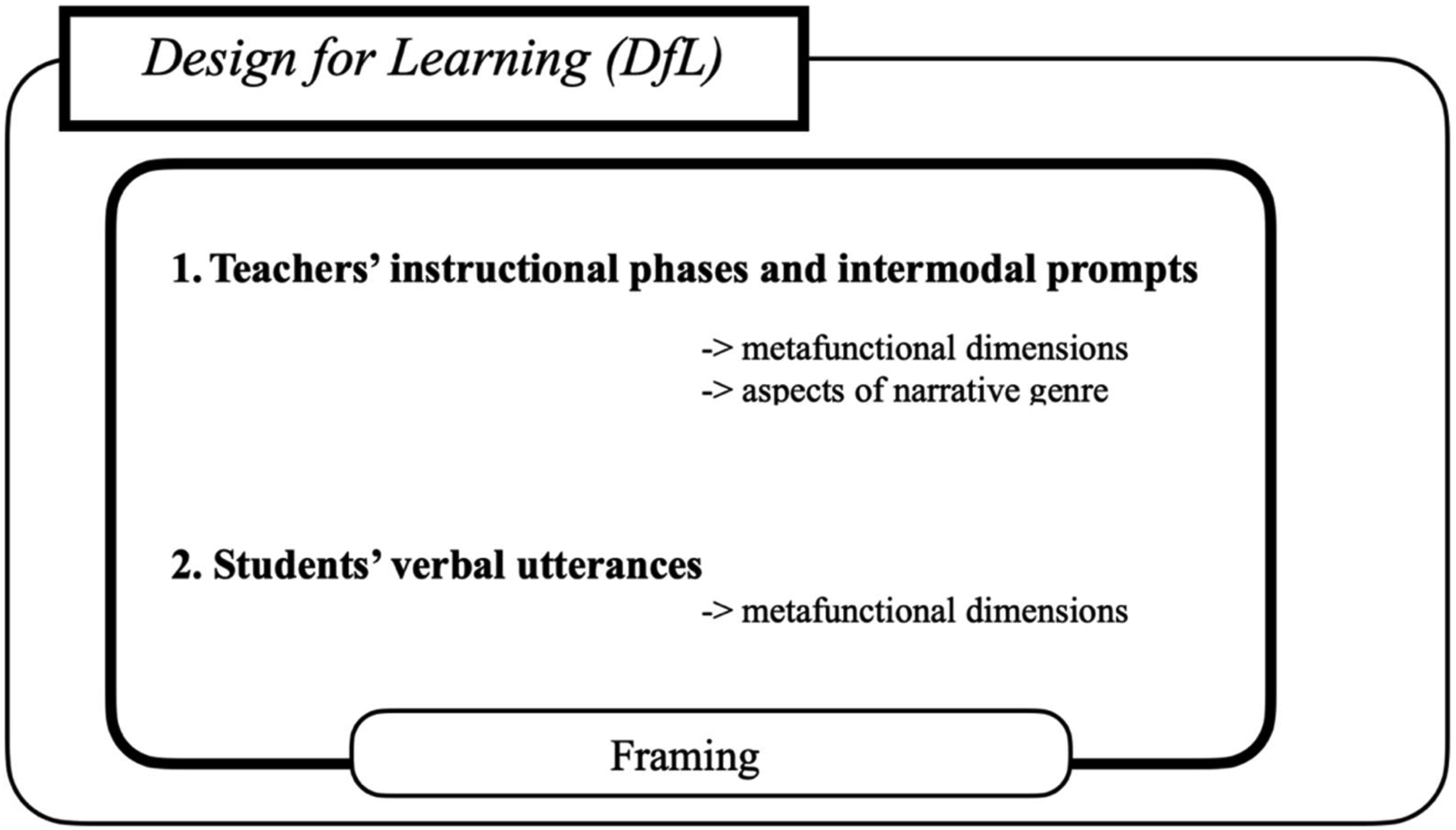
Figure 1 depicts how the study is framed in the formal teaching setting through Design for Learning (DfL) (Selander, 2022; Selander and Kress, 2021), and how the teachers’ orchestration was analyzed through metafunctional dimensions and the teachers’ representation of the narrative genre. The two orchestrations were further explored through the lens of framing (Bernstein, 2000) to understand how the teachers’ design restricts or expands students’ possibilities to contribute to the discourse. The theoretical framework and analysis process are explained in further detail below, with a starting point in genre-theory.
The narrative genre in early primary school
In the present study, we draw inspiration from systemic-functional genre theory. According to Martin (1992: 495), genre is a semiotic system which coordinates common patterns of linguistic resources to fulfil broadly defined communicative purposes. Importantly, genres are characterized by the different stages they move through to fulfil their purpose. For example, as opposed to other kinds of stories such as recounts and anecdotes, a narrative text needs to present and solve a complication in order to be perceived as complete by the recipient (Martin and Rose, 2008: 67).
As described by Christie and Derewianka (2010: 33–34), narratives typically move through the following stages: 1. An orientation that introduces characters and gives a spatial and/or temporal frame 2. A complication that needs to be solved 3. An evaluation of the complication 4. A solution of the complication 5. An optional coda that offers a comment or interpretation.
According to Martin and Rose (2008: 52), both the orientation and coda are optional. Although the orientation stage is missing in influential accounts of genre pedagogy (e.g., Gibbons, 2018; Kuyumcu, 2013), Martin and Rose (2008: 67) describe it as a crucial stage to build narrative suspense by halting the sequence of events. On a more local level, stages can be divided into different phases occurring more flexibly in within the narrative. Examples of phases are the descriptions of settings, problems, and reactions.
Metafunctional dimensions and features of narrative text.
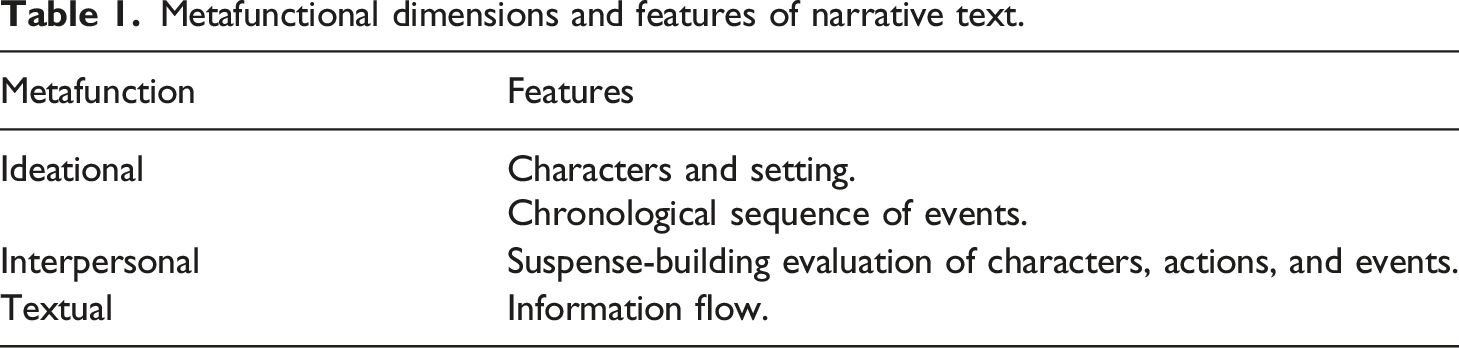
The ideational dimension concerns what happens and who is involved in the story, in addition to aspects of time and place. The textual perspective is more abstract and concerns the general information structure in texts, for example, the need to have a beginning, an end and something in between (Martin and Rose, 2008). Finally, the interpersonal dimension pertains to evaluating characters and events. This is important for engaging the reader through the building of suspense and conveying the moral position of the story (Christie and Derewianka, 2010: 38; Martin and Rose, 2008: 67). In our analysis, we will show how the teachers intermodally orchestrate their teaching of the narrative genre and adhere to these dimensions as they engage the students in classroom dialogue.
Analytical procedure
When the data was multimodally transcribed and gestural prompts were described, we initially noticed an overlapping use of modalities to prompt specific narrative elements. This necessitated a shift to an intermodal approach which could account for this overlap. Then, through a thematical analysis of the orchestration, we identified two distinct instructional phases, corresponding to the upper and lower parts of the Story Face which represent: (1) characters, environment, and problem (upper part), and (2) a sequence of events (lower part) (see Ridell and Walldén, 2023). This is shown in Figure 2. The order of the numbers relates to how both teachers orchestrated the instructional phases. The version of the Story Face used by the teachers The key words, numbered by the researchers, translate to (1) main characters, (2) time and place, (3) problem, (4) the beginning, (5) events, and (6) the end.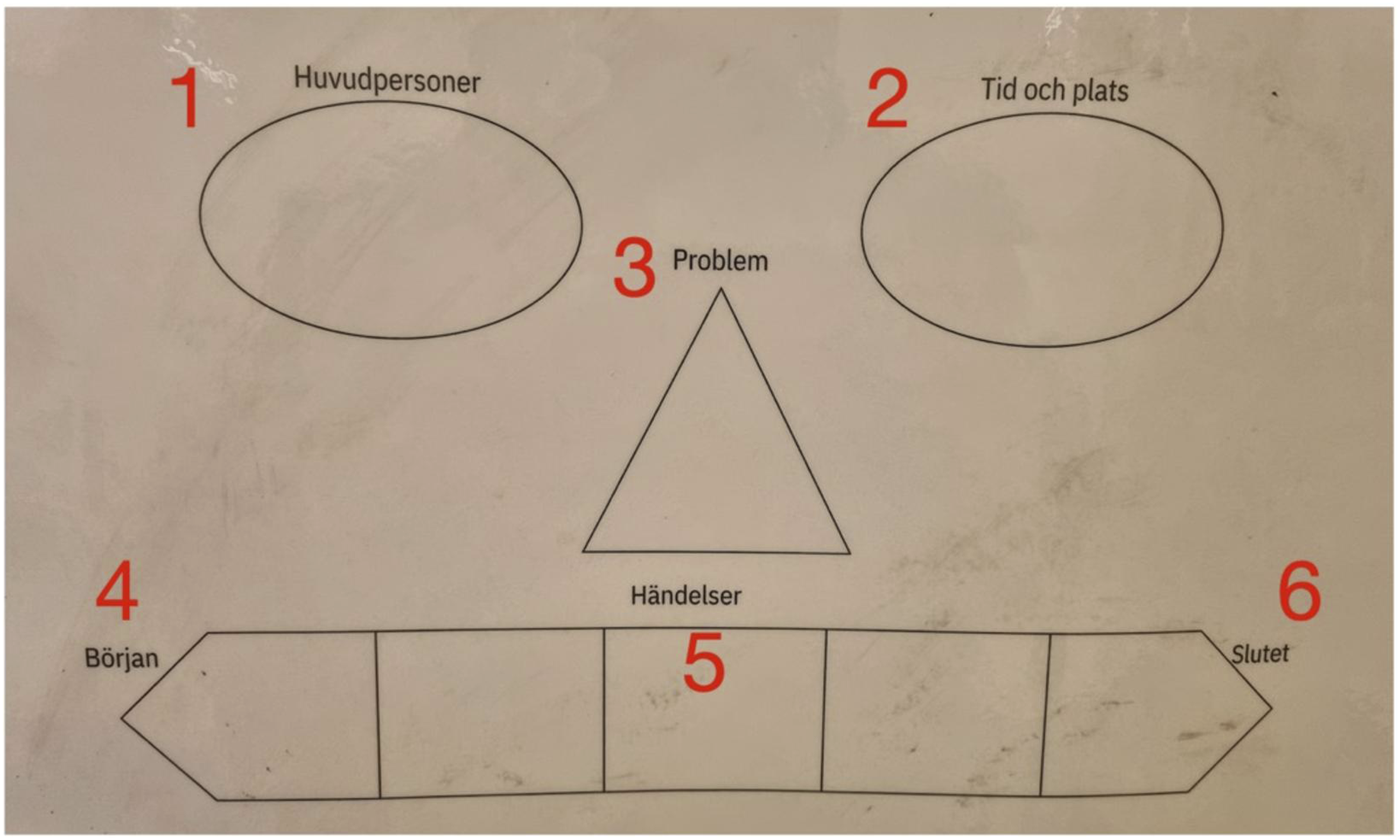
Next, we employed a genre-theoretical approach of metafunctional dimensions and stages of the narrative genre in all the visual and verbal representations. This was done to identify what the teachers intermodally prompted and what the students verbally suggested. Finally, we re-approached the data pertaining to the teachers’ prompts to understand how variety within their intermodal orchestrations shaped the students’ freedom to make contributions in the re-telling of Little Red Riding Hood.
Below, we provide further explanation of the analytical constructs in order of the instructional phases as extensions of the visual design of the Story Face and intermodal prompts, the didactical role of framing (Bernstein, 2000), and the modes of representation in the data.
Instructional phases and intermodal prompts
With Design for Learning (Selander, 2022; Selander and Kress, 2021) as a theoretical framework for the formal teaching cycle and staging phase, we employed an abductive process (Timmermans and Tavory, 2012). In a cyclical process of moving between theory and transcribed data, we tested and applied concepts from genre theory (Martin and Rose, 2008), visual grammar (Kress and Van Leeuwen, 2021), and visual narrative structure (Cohn, 2013). According to Kress and Van Leeuwen, conceptual components display a phenomenon in a static way, for example, the essential features of a story, while narrative components show an unfolding of actions and events. Finally, navigational components give cues to follow the progression of the events from start to finish (Cohn, 2013). In the analysis (further detailed below), we focused on how the teachers intermodally prompted (Kress, 2010) these different aspects of story structure.
In the staging of negotiating the re-telling of Little Red Riding Hood, two instructional phases were identified in both teachers’ practices. Ruth and Angela approached the Story Face in these distinguishable phases as they employed the model’s shape in the order presented in Figure 2: 1. A deconstruction phase where individual features from Little Red Riding Hood were prompted by the teachers. This included characters, environments, time of day, and the main problem of the story. This pertains to the upper shapes of the Story Face. 2. A reconstruction phase where most of the concepts are prompted to present a cohesive and chronological sequence within a narrative. Here, the story of Little Red Riding Hood was re-shaped through negotiation between the teacher and the student cohort within the mouth shape of the model.
Within the two instructional phases, we developed three categories of teacher prompts by analyzing the participants’ intermodal practices. In the analysis, the metafunctional dimensions and genre-theoretical features of narrative text (Halliday, 2014; Martin and Rose, 2008) relating to the data are used to describe specific functions of the prompts derived from different text structures as described by Cohn (2013) and Kress and van Leeuwen (2021). Conceptual prompts were mainly employed during the deconstruction phase and relate to identifying characters, environments, and time of day within the story and are by their nature ideational. Narrative prompts are conceived in the reconstruction phase and relate to the stages, phases, and chronological story events within the folktale. Lastly, navigational prompts also pertain to the reconstruction phase but take the meta perspective on the story and focus on textual dimensions related to the information flow in stories and the narrative genre. Across these categories, all modes potentially contributed to realizing the prompts.
To understand the control the teacher exercised in negotiating the re-telling with the students, Bernstein’s (2000) concept of framing was applied (see also Walldén, 2019, 2020). A weaker framing grants the students more freedom to contribute more and different content, whereas stronger framing narrows the students’ options for contribution. While the concept has been applied to study verbal interaction between teachers and students (Walldén, 2019, 2020), the present study considers how all the modes employed by the teachers contributed to the framing within the didactic design and staging.
Modes of representation
Both teachers employed the graphical model the Story Face. The model consists of both visual (the shapes within a face metaphor) and verbal representation (keywords relating to story elements). For a detailed analysis of the model, see Ridell and Walldén (2023). Furthermore, the analysis focused on participants’ use of other visual representations, gestures, speech, and writing to prompt story elements of the narrative genre and Little Red Riding Hood. While video recordings provide opportunities for fine-grained analysis of individual modes, such as meaning produced by the tone of speech, our research questions motivated a more overarching focus on the relationship between different modes in prompting story elements. This meant that spoken utterances were primarily analyzed with a focus on content timed with other modes of representation (see below). For similar reasons, we mainly focused our analysis of gestures on the teacher’s pointing at visual and verbal information on the whiteboard. The teachers’ use of facial expressions and gestures towards the students were of initial interest but proved less analytically relevant. While the teachers’ spoken emphasis was marked in the transcript, they both employed a strategy of emphasizing keywords already represented on the whiteboard (see Figure 3). Our analytical approach highlighted such overlapping use of modes. An overview of the orchestrated modes.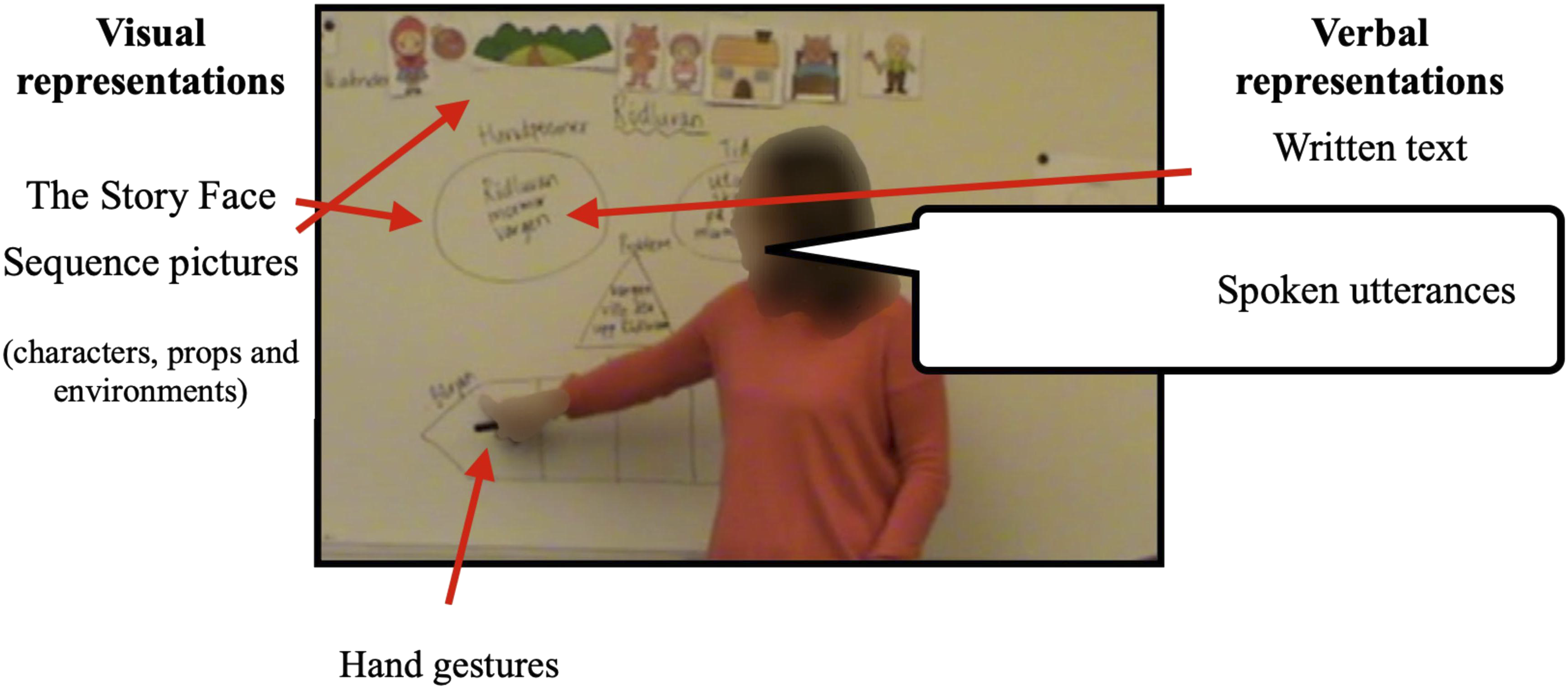
While the teachers’ orchestration and use of prompts are the main concern of this study, these must be understood in relation to how teachers evaluated and interacted with suggestions from the students. Therefore, the cohorts’ verbal utterances were analyzed through the perspective of metafunctions (Halliday, 2014) and features of the narrative genre (Martin and Rose, 2008). To understand the social dimensions of the prompts for the students’ suggestions, we employed Bernstein’s (2000) concept of framing in the analysis.
Findings
The findings from the two teaching processes are presented below. As previously described, each process involved a deconstruction phase followed by a reconstruction phase.
The deconstruction phase
During this phase, both teachers prompted features of Little Red Riding Hood when using the upper shapes of the Story Face. The two eyes and nose of the model represent the characters, environment, time of day, and main problem of the folktale. These features were deconstructed from the selected version of Little Red Riding Hood and were prompted by the teachers to their respective student cohort. Below, we present an analysis of how the teachers identified these conceptual features in dialogue with the students. As both Ruth and Angela adhered to the visual design of the Story Face, most of the prompts in this phase were conceptual and therefore focused on the following ideational dimensions: characters, environmental setting, and time of day within the story.
However, as the analysis will show, Ruth and Angela adapted to the student’s suggestions and employed navigational prompts to textual dimensions via the Story Face. Furthermore, they gave different instructional examples of how to make the abstract concept of a story relatable to the students.
Facing conceptual features
Both teachers started with the left eye of the Story Face by pointing towards it and making almost identical verbal prompts with reference to the conceptual feature of characters in the story.
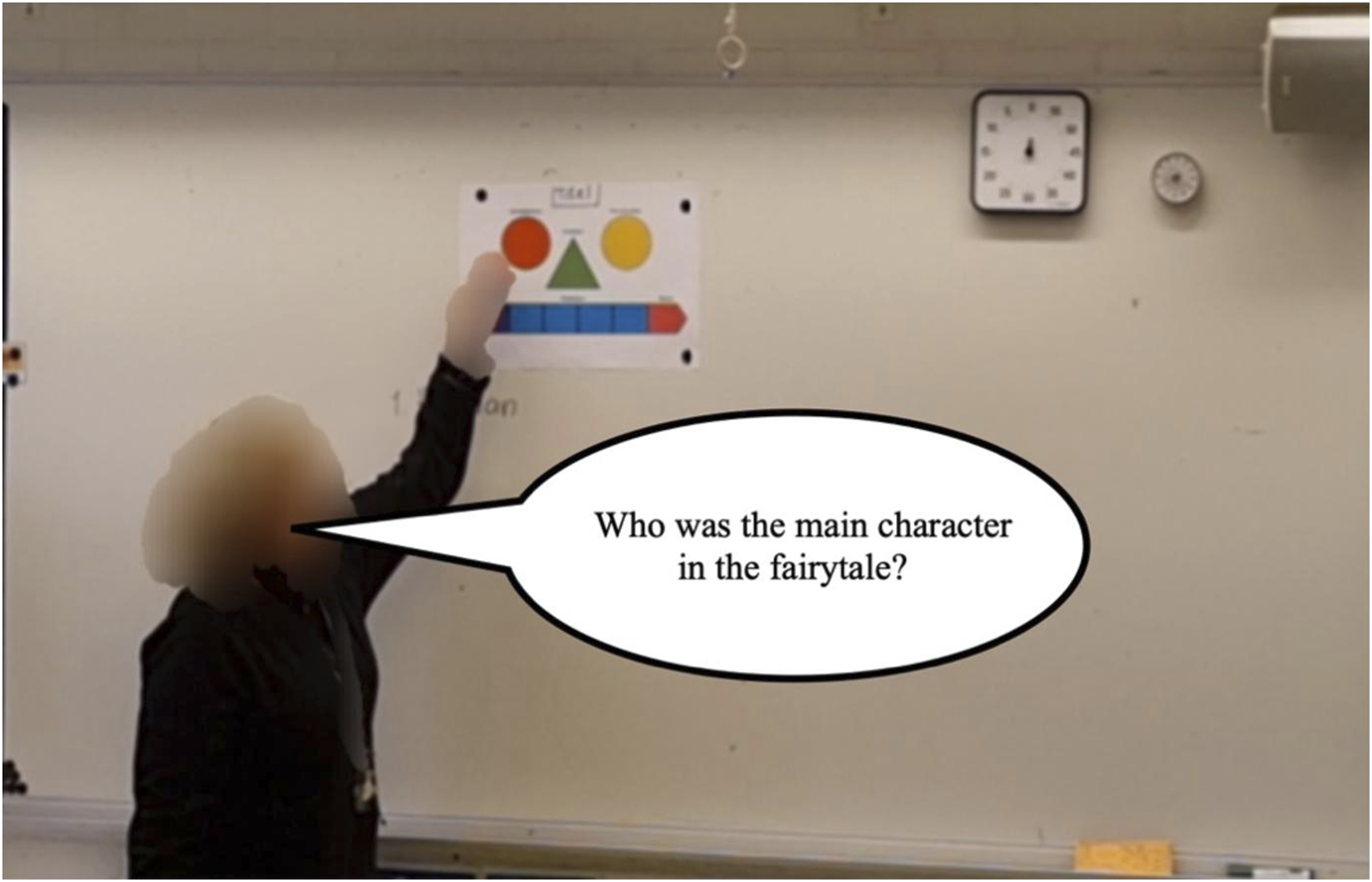
As the student cohort proceeded to list the characters by chronological appearance in the story, Ruth wrote each character within the eye shape (Figure 4) while Angela wrote the number “2” both inside the eye shape and in a list below the model (Figure 5). Ruth prompts for the main character. Angela prompts for the main character.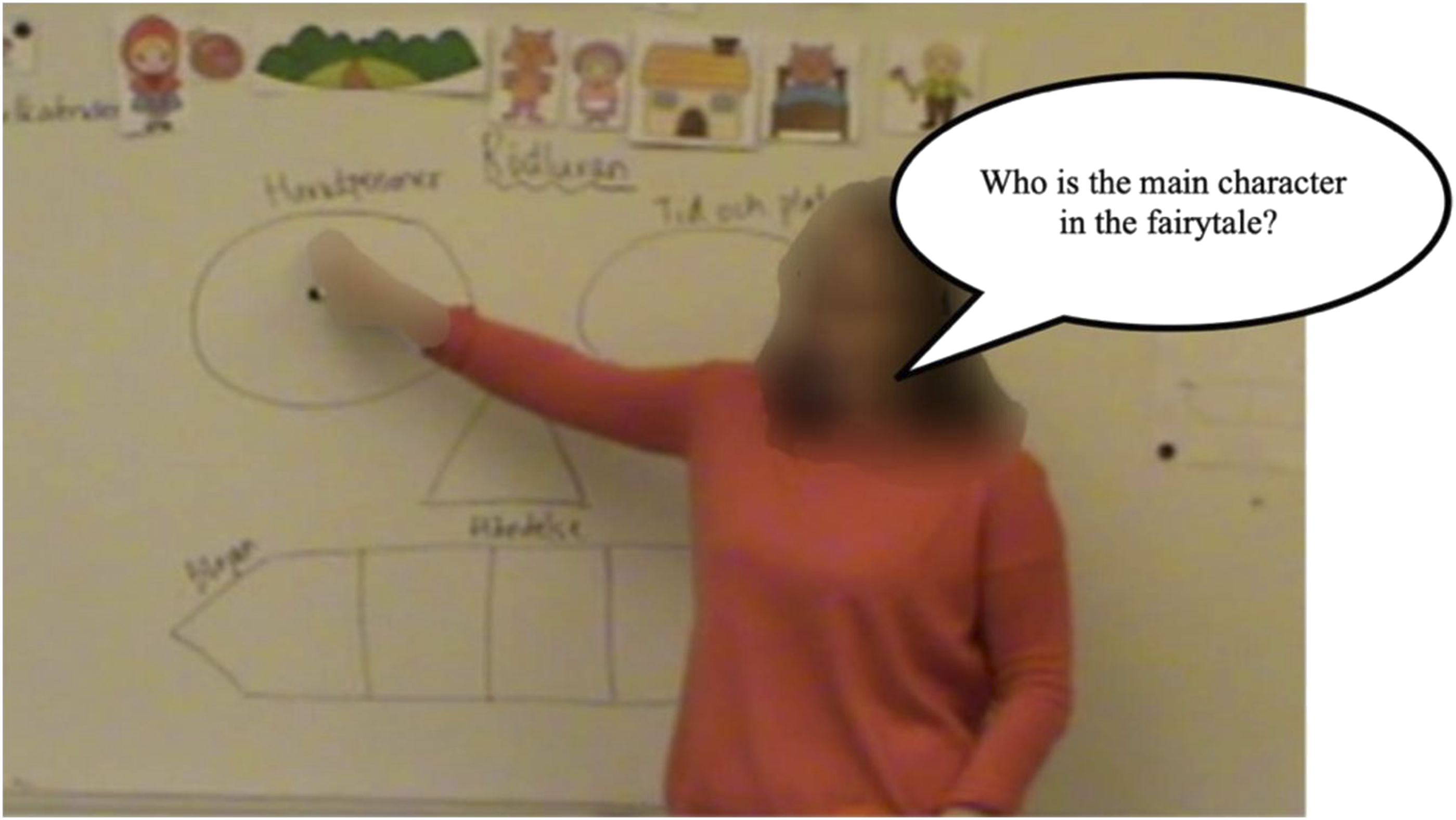
In her deconstruction, Ruth employed sequence pictures to represent conceptual features by order of appearance in the story. These pictures contributed to a strong framing which prompted the students to recall another character represented in sequence, the Hunter: Student: “What’s his name? The one who is last.” Ruth: “You mean him?” [pointed at the right-most figure – the Hunter] Student: “Yes.” Student: “The hunter!”
Since Angela did not utilize sequence pictures to point out certain characters, her orchestration opened for other suggestions and had a weaker framing. Therefore, Angela’s students suggested a character not present in Ruth's row of sequence pictures – Little Red Riding Hood’s mother. This exemplifies how the lack of visual character prompts enabled the cohort to add content not already present on the whiteboard. Another indication of weaker framing in Angela’s orchestration is that the written list of characters was visually distant from the Story Face and there were no visual frames to limit the number of characters to represent (Figure 5). In Ruth’s orchestration, the visual framing implies a limit to the number of characters as the left eye eventually fills up. Further, when the characters represented in the sequence pictures had been proposed by the students, Ruth ceased her prompts, whereas Angela continually used verbal prompts to elicit more content: Angela: “Is there any other that we’ve forgotten?” Student: “No!”
As the teachers moved on to the right eye and prompted suggestions about the environment and time of day in the Story Face, Ruth no longer pointed to the sequence pictures. Instead, her prompts relied on spoken utterances. However, the students remained fixed on the sequence pictures (see Figure 4) and wished to expand on the somewhat unspecified location of “outside” that had been previously written in the right eye: Student: “The green one!” Ruth: “There?” [pointed to the sequence picture depicting a hill in a forest] Student: “Yes!” Ruth: “Mm. Outside. In the forest.” Student: “On the path.”
This environmental feature sets the scene for a central event in the story where Little Red Riding Hood is instructed by her mother not to leave the path. It became evident that the sequence picture kept the students’ attention on specific story content even without any prompts from the teacher. Ruth returned to prompting via the sequence pictures in next instructional phase, with a similar alignment to the model’s ideational orientation.
Lacking sequence pictures, Angela continued the practice of linking the conceptual story list to the shapes of the Story Face by writing numbers in the eye and in the list (see Figure 6), and repeatedly tapped the right eye along with using spoken utterances to shift the focus to locations within the story. Angela connects the Story Face with a written list.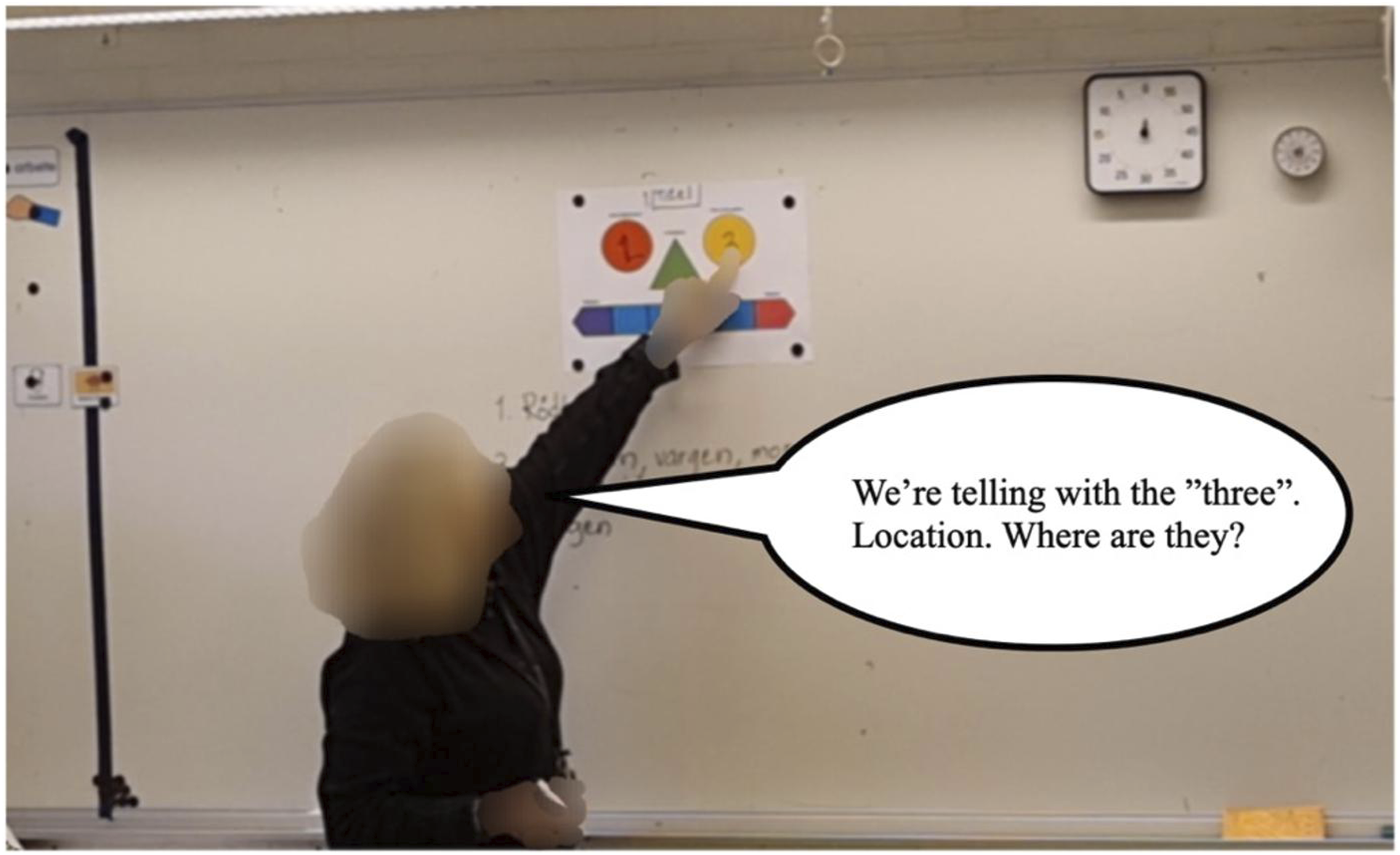
The prompts and suggestion of locations, such as “the forest” and “grandmother’s home,” incited one student to share an event and dialogue taking place in the forest in the story. Instead of elaborating on this in the process of deconstruction, Angela used gestural, verbal and visual prompts to draw attention to their current focus on the environment and not the events in the beginning of the story. She first pointed towards the right-most shape in the model’s mouth and then below, in the list, to signify a difference between the activities in the two instructional phases (Figure 7). Angela navigates the story during the negotiation. The red arrow indicates a gestural shift from the mouth to the written list.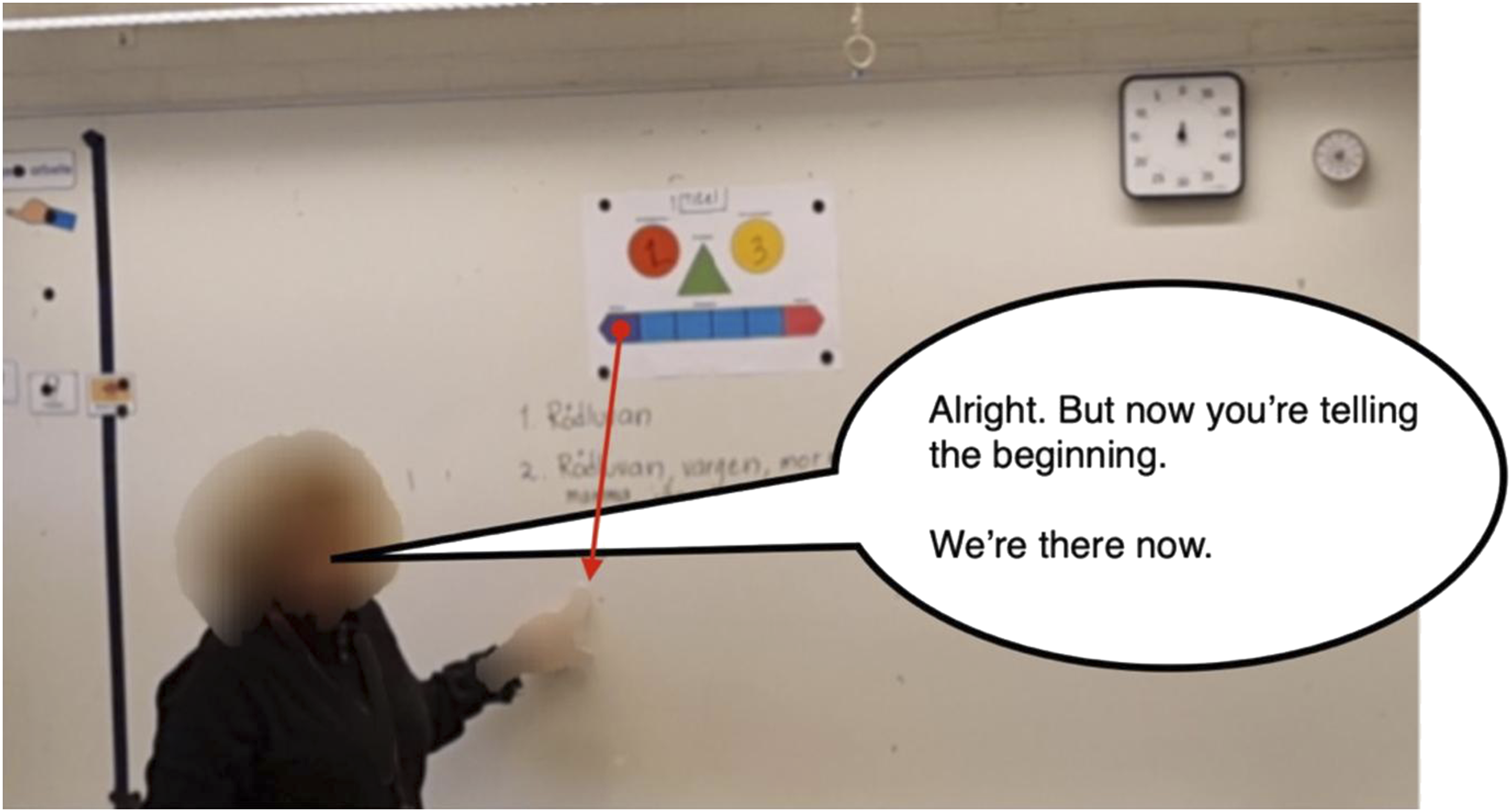
As they returned to the negotiation of location and time of day, the students inferred the time of day based on dialogue in the story: Student: “Wait! Now it’s the clock. I think eight o’clock.” […] Angela: “Yes, why do you think it was in the morning then?” […] Student: “The wolf said ‘you’re coming here so early’.” Student: “The wolf tricked her!” Angela: “Yes? Mm. Okay! […]”
Here, the students showed engagement with the story by pointing out the conniving nature of the wolf in a passage that builds tension, anticipating the upcoming problem of the story. The dialogue and the wolf’s antagonistic intentions fall outside the scope of “setting,” which may explain why the teacher did not note this suggestion on the whiteboard. This further indicates how interpersonally charged story elements, such as reactions, were present in the story, noticed by the students, but de-emphasized in the teacher-led deconstruction. Following the numbered parts of the graphical model, the teacher turned the focus towards the story’s problem.
The phrasing of the problem
Both Ruth and Angela continued by prompting the essential problem of Little Red Riding Hood, represented in the central nose shape of the Story Face. Ruth pointed towards the nose and Angela wrote “4” inside it and at the bottom of the list below the model. However, their verbal prompts resulted in two very different outcomes: Ruth: “What kind of problem happened, what was difficult and troublesome in this story?” Angela: “Then something happened. What happened? Because there was a problem?”
While the problem or complication is a genre-defining stage according to genre theory, both teachers referred to the problem as an event, as something that “happened.” However, Ruth drew attention to interpersonal dimensions of the event by elaborating on the problem as “difficult” and “troublesome.” This resulted in the cohort’s suggestion of “the wolf wanted to eat Little Red Riding hood” as the essential problem. In contrast, Angela displayed an ideational orientation by asking “what happened?” and adding that there was a problem without elaborating on what may distinguish that event from others. This approach resulted in the essential problem being written down as the following sequence of events: “The wolf came. The wolf ate grandmother and Little Red Riding Hood. The hunter comes, cuts the belly and lays stones.” As Angela noted when summing up this stage of deconstruction: “Are they all problems? Or ‘events.’ Mm.” This negotiation deviated somewhat from the purpose of identifying one essential problem to be solved and resulted in an ideational slant towards several narratively-prompted story events, which were more fully elaborated on in the next instructional phase – the reconstruction phase.
The reconstruction phase
After having identified the key conceptual features of Little Red Riding Hood during the first instructional phase, the teachers proceeded to a phase of realizing the concepts within a cohesive narrative as they negotiated the re-telling of the story with their students. During this phase, both teachers used narrative and navigational prompts to: (1) have the students to reiterate and piece together concepts and events particular to Little Red Riding Hood; (2) use the concepts and story to teach the students the macrostructure of the narrative genre.
While both teachers employed prompts for both elements, their practices once again foregrounded different metafunctional dimensions. As the analysis will show, Ruth mostly prompted events in the particular story according to an ideational perspective, while Angela had a more textual orientation towards abstract and generalizable features of the narrative genre.
During the reconstruction, both student cohorts tended to focus on key dialogue in Little Red Riding Hood and providing evaluative remarks about events in the story. These interpersonal dimensions were not prompted by either teacher. However, while Angela included story driving dialogue in the reconstructed text on the whiteboard, Ruth strictly adhered to prompting and acknowledging ideational aspects related to narrative events.
Prompting and negotiating narrative content
Ruth: “Let’s review the events in the story.” Angela: “Mm. Let’s see then if we can make a story out of it?”
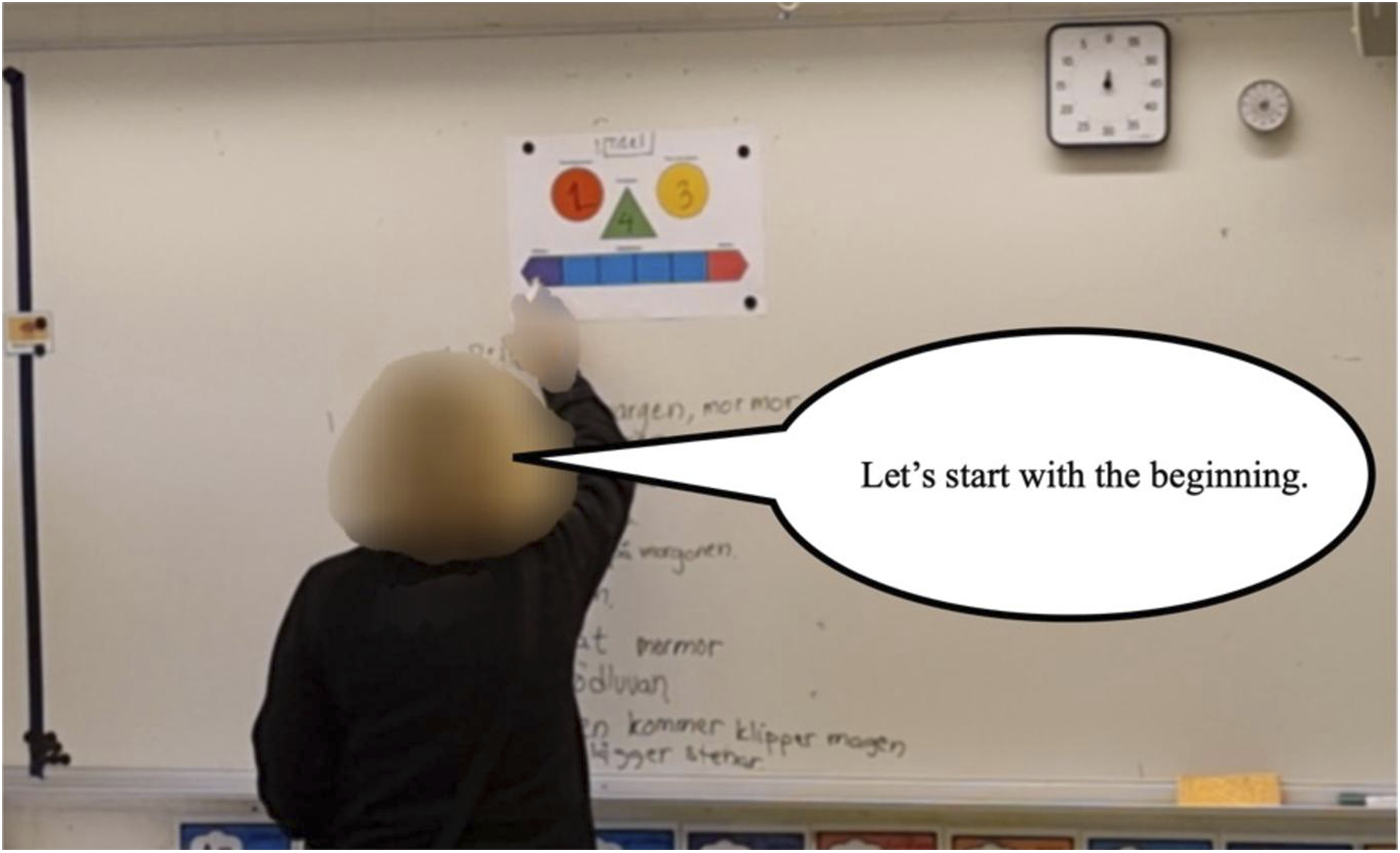
As the teachers departed from prompting and negotiating the concept during the deconstruction phase, they shifted their focus to the lower part of the Story Face: the mouth shape. In both iterations of the graphical model, the teachers had written three titles from left to write above the mouth: “the beginning,” “events” and “the end.” Both teachers followed this order of events within the story, but prompted and orchestrated them with various emphasis on different modes despite starting out in a similar manner (Figures 8 and 9). Ruth initiates the reconstruction phase. Angela initiates the reconstruction phase.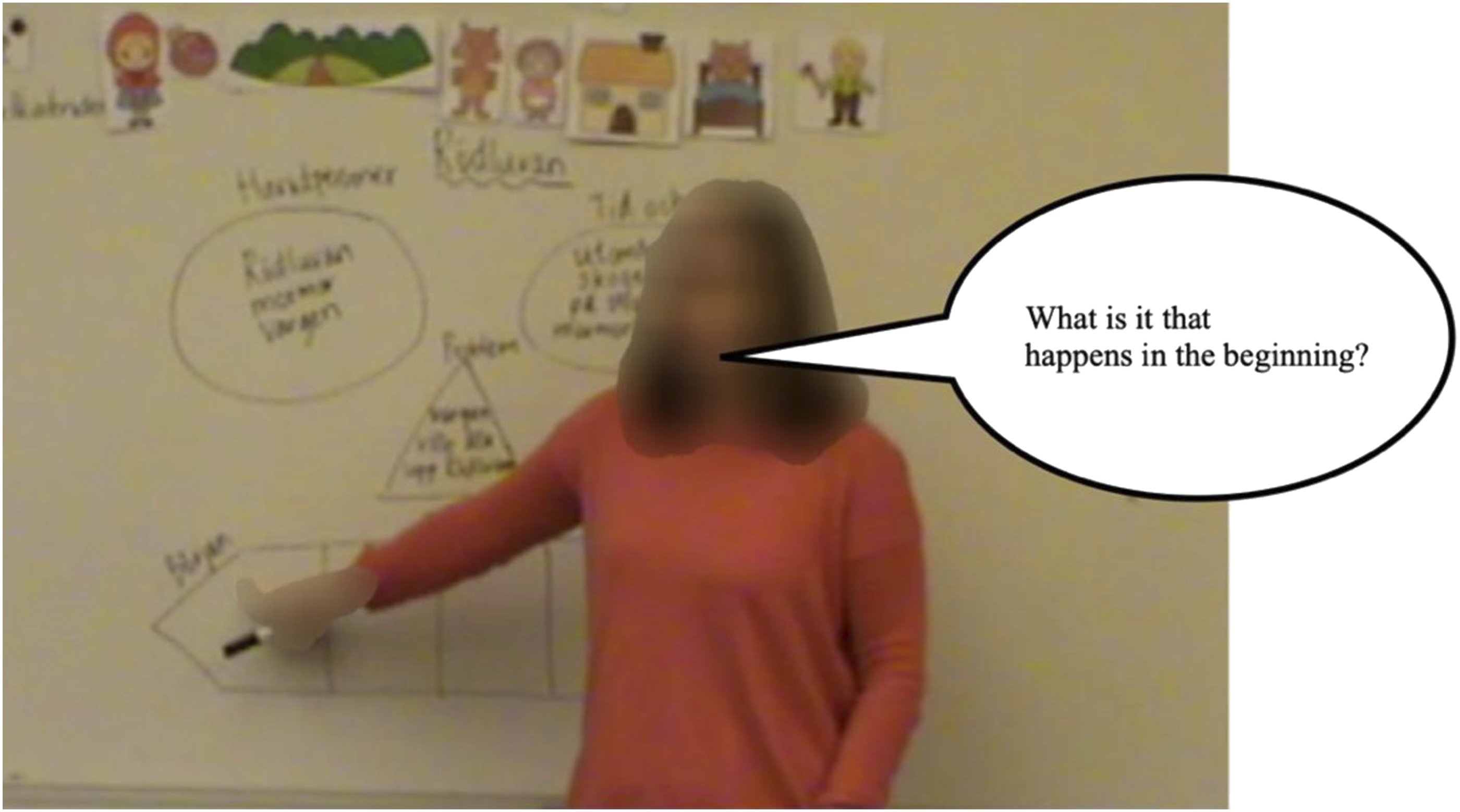
Ruth orchestrated the reconstruction of events within the shapes of the mouth and relied heavily on the available visual representations in conjunction with gestures and verbal narrative prompts. However, Ruth did not prompt, either gesturally or verbally, any of the written concepts within the upper shapes of the Story Face (“characters,” “environmental setting,” “problem”) from the earlier instruction phase. Instead, as seen below, Ruth pointed at the sequence pictures to prompt the story’s content (Figure 10). Ruth employs the sequence pictures to prompt story specific content.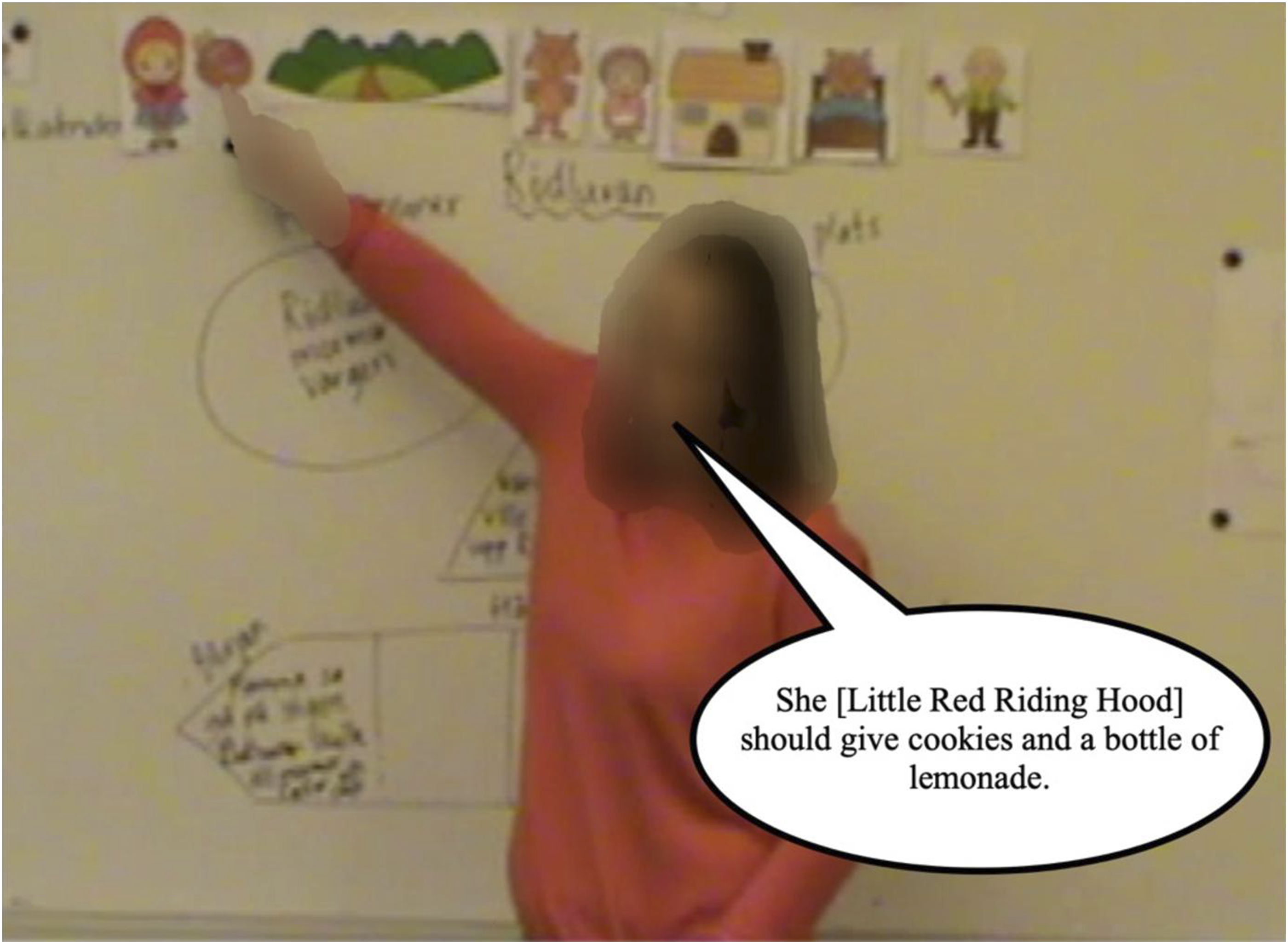
While the sequence pictures served as narrative prompts for the content, the mouth shape was employed as a representation of the story’s stages and chronological events. As the story’s content was prompted by already available images and the visual confinement of each small box of the mouth shape, this visual orchestration was strongly framed in a way which restricted the nature and scope of students’ contributions.
Beyond the visual orientation, the strong framing was further evident in the verbal negotiation as the teacher did not utilize student contributions which could have been used to expand on interpersonal dimensions of the story, such as the characters’ intentions and reactions to events. One such example is shown below: Ruth: “She [Little Red Riding Hood] is going to pick flowers.” Student: “She [grandmother] is going to be so happy.”
The students’ response to the teacher’s description of the flower picking draws attention to how the wolf delays Little Red Riding Hood’s arrival at her grandmother’s cottage. This builds suspense anticipating her later encounter with the disguised wolf. However, with a focus on chronological events the teacher did not comment on the student’s suggestion or write it on the whiteboard. This holds true for another recurring student suggestion in the reconstruction negotiation – phrases of story dialogue: Student: “He does–, without–” Student: “Chewing.” Ruth: “Exactly. Without chewing.” [wrote in a mouth box and said] “The wolf ate grandmother.” Student: “Also–, also when ‘why do you have such big ears?’” Ruth: [wrote in mouth box] “Little Red Riding Hood arrived at grandmother’s house.”
Here, a student offered a piece of iconic dialogue from the story of Little Red Riding Hood. It denotes the protagonist’s suspense-building reaction to the disguised wolf. Instead of acknowledging this interpersonal aspect of the story, the teacher maintained an ideational orientation by summarizing the story event and writing down a story event instead. The excerpt reveals the students’ penchant for suspenseful dialogue and phrasing, which in this case was verbally acknowledged by Ruth. However, the written representation of the students’ suggestion maintained an ideational orientation to chronological events. This further indicates the relatively strong framing focusing on identifying and acknowledging events with limited attention to suspense-building exchanges in between.
The suspenseful encounter with the wolf was also noticed by the students in Angela’s classroom: Student: [The wolf] went to grandmother’s house and devoured her.” Student: “He eats her?” Student: “Just ‘wham’!” Angela: “Yes, just like ‘wham’!”
In her verbal response, Angela echoed the dramatizing “Just ‘wham’” from the student. Moreover, in contrast to Ruth she employed weaker framing by including students’ suggestions of iconic dialogue in the reconstructed narrative written on the whiteboard. This is exemplified below. Student: “And then ‘what big ears you have’.” Angela: [wrote and said] “Red Riding Hood said: ‘What big ears you have!’”
In general, the written re-telling in Angela’s orchestration contrasted with Ruth’s visual orientation by its verbal orientation and the selective inclusions of suspense-building reactions and dialogue as part of the plot. This less selective documentation and weaker framing of the students’ suggestions was achieved by using the lion’s share of the whiteboard area as a writing canvas for the written story. Angela used the Story Face peripherally and relied more on verbal forms of representations, as seen below (Figure 11). Angela preferred verbally oriented orchestration of the whiteboard.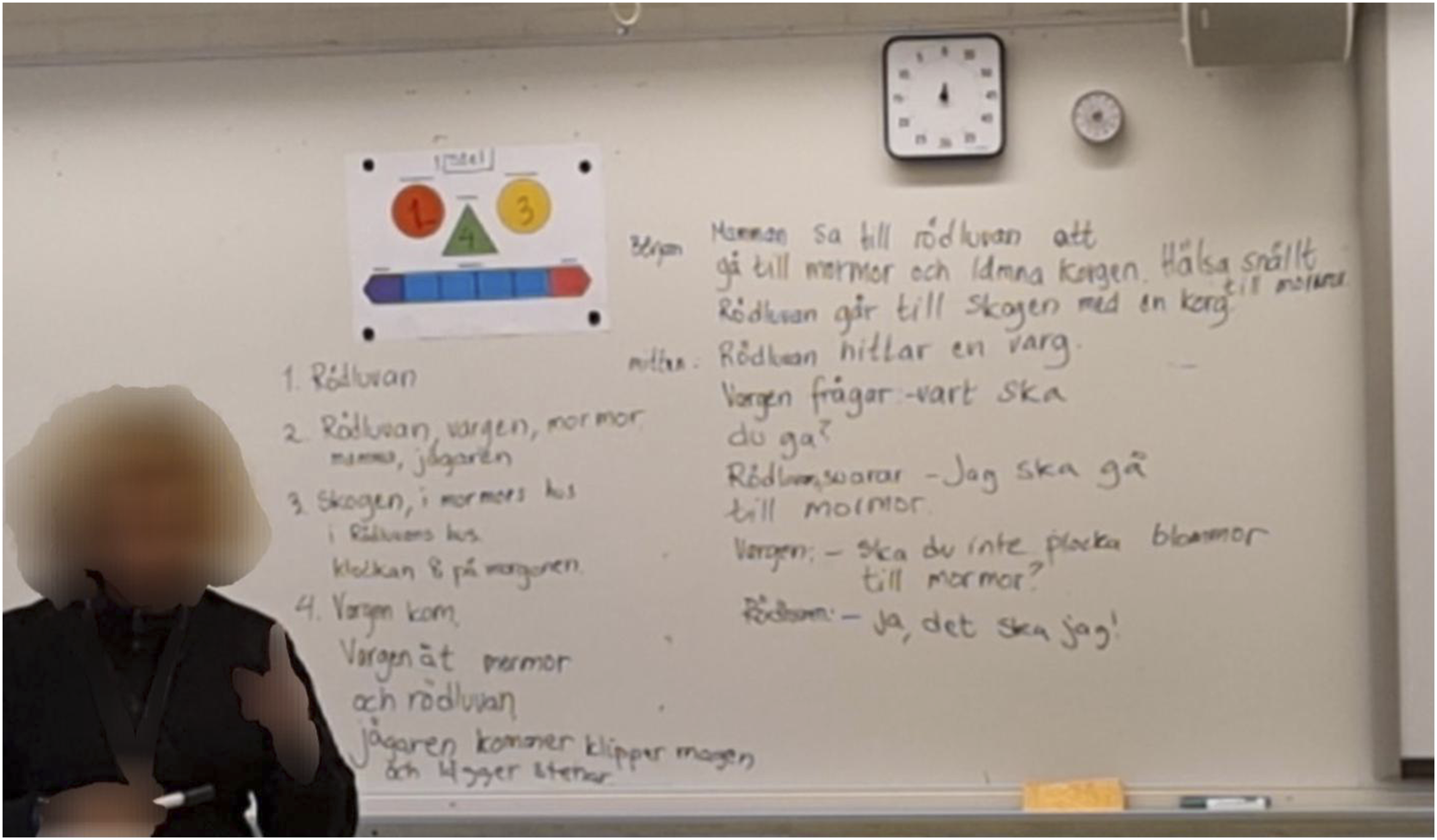
Due to the peripheral role of the Story Face as a narrative prompt, in combination with the ample space on the whiteboard to reconstruct the narrative, more of the students’ suggestions were acknowledged in the written reconstruction. This verbal expansion of written content was made possible by devoting less whiteboard canvas to visual shapes, such as Ruth’s larger Story Face and sequence pictures. Therefore, the weak framing of Angela’s orchestration resulted in a more fleshed-out narrative text than in Ruth’s visual orientation.
While Ruth employed the visual sequence row to prompt characters, environment, and objects to reconstruct the narrative, Angela used the open-ended verbal prompt “and then?” to negotiate the content and further the events with the students. Her narrative prompts consisted mainly of reading the written suggestions out loud as she wrote them on the whiteboard and occasionally to back-track the story, gesturally guiding the students with her index finger as she read the reconstructed story from the whiteboard.
While these two orchestrations differed in terms of modal representation and the form of framing, they also varied in how they related to different dimensions of the text. During this instructional phase, both teachers switched their focus between moving within the story and applying a meta-level perspective by concentrating on the macrostructure of the story. During the latter, they employed intermodal navigational prompts to navigate the re-telling. However, as shown below, they continued to vary in their preferred modal orientation but also in how they related to textual dimensions of the particular story and those of the narrative genre in general.
Prompting and navigating macrostructure
As seen in Figures 8 and 9, both teachers started the reconstruction of the narrative by prompting the beginning stage of the story. They pointed at the left-most box in the Story Face’s mouth which was titled “beginning” together with verbal prompts. While these prompts initiated the reconstruction phase, they also signaled a part of a macrostructure which can be applied to both Little Red Riding Hood and narratives in general. This textual dimension continued to be navigationally prompted by the teachers during the negotiations, but with varying emphasis relying on different modes.
A recurring interaction between the students and teachers was evident when the students received narrative prompts to recount the next chronological event in the story. Instead, they typically shared several more events, pieces of dialogue, or even the entire remaining story. At this point, the teachers shifted their focus to navigational prompts to shed light on textual dimensions (Figure 12): A student suggested “[…] and then the wolf says ‘because I can eat you.’”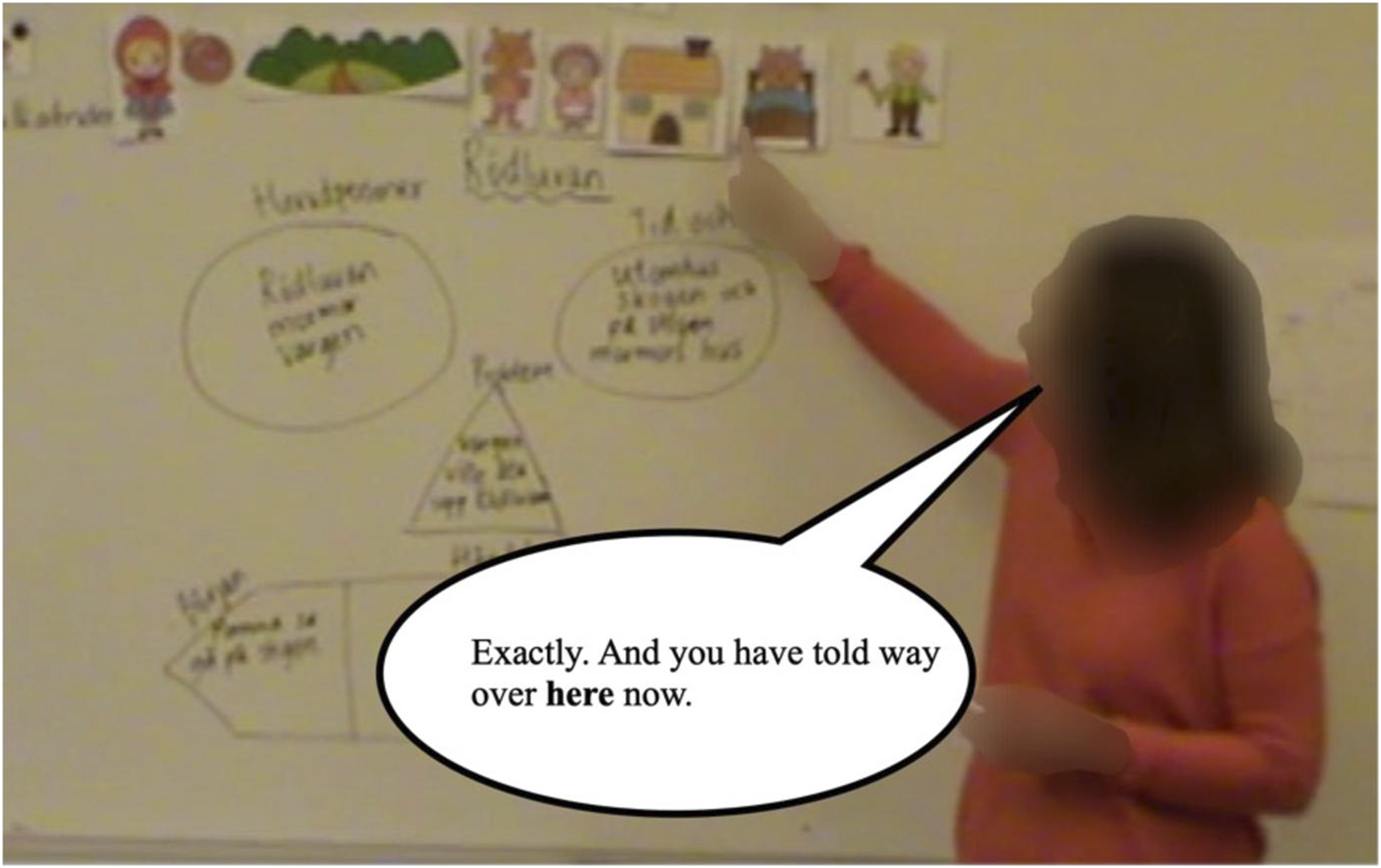
Ruth gestured toward the right-most parts of the sequence pictures as a navigational prompt towards the macrostructure of the chronological events in the story. As Ruth employed the visual representations on the whiteboard and always gestured towards them when navigating the story, the verbal prompts in this orchestration were more contextualized and embedded in the specific story of Little Red Riding Hood than in Angela’s orchestration. As seen in Figure 12 above, the visual and gestural prompts allowed Ruth to refer to the visual navigational prompt as “here.”
In sum, rather than focusing on textual dimensions that can be generalized to several different stories, the teacher intermodally employed context-dependent prompts that highlighted features specific to Little Red Riding Hood. This differed from Angela's approach in which the whiteboard canvas lacked the same visual representation as Ruth’s and a more verbal and written approach was employed. Part of this approach consisted of marking the paragraph with keywords on the left of the text (see Figure 9).
During the written expansion of the re-telling, Angela halted to write “the beginning” to the left of the text (see Figure 9) as a prompt to navigate the structure of the narrative. As the text continued to grow based on students’ suggestions about events relating to “the beginning,” Angela referred to the same written prompt. This denoted a shift from the students’ ideationally oriented contributions – focused on the specific story – to the textual dimension of the story’s generalizable macrostructure. Angela proceeded to read out loud from the written text to prompt negotiation of their whereabouts within the text’s macrostructure: Angela: “Is this in the middle”? Student: “Not the middle.” Angela: “Where is it then? It is in the middle, the beginning or in the end?”
As Angela noticed the students struggling to navigate the macrostructure while being prompted via the written text, the mouth of the Story Face was employed in its stead by the teacher pointing towards the middle of it (Figure 13). Angela shifts from a verbal to a visual navigational prompt.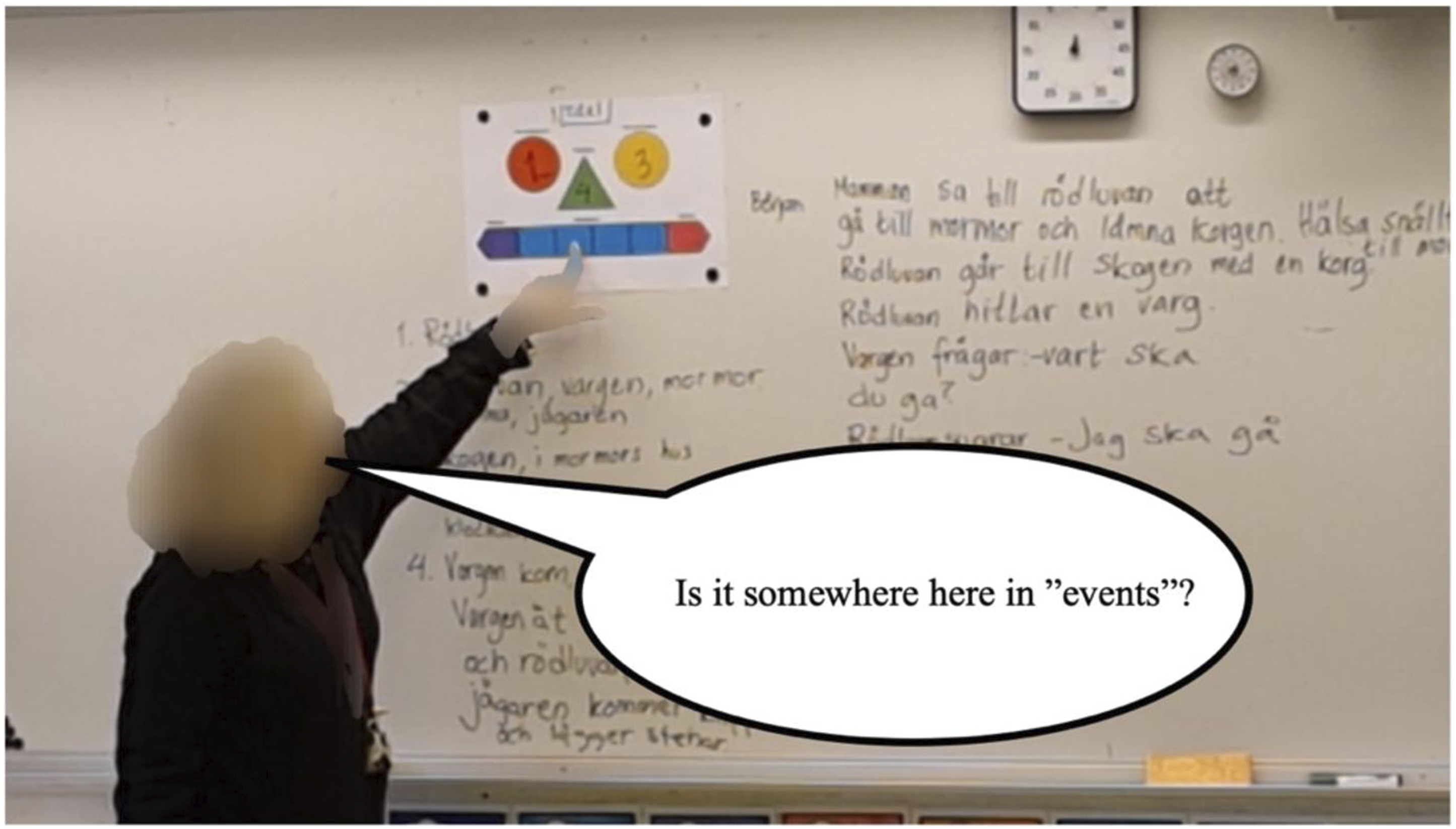
Prompted by graphical model, the students displayed a textual orientation by discussing among themselves where particular events fitted into the macrostructure. Although Angela tried navigational prompts by pointing at the “the beginning,” only gestures towards the mouth shape in the Story Face were successful as prompts for the students’ negotiation of the genre’s macrostructure. Further, when verbally addressing macrostructural aspects, Angela employed more decontextualized phrasings based on the model which, unlike in Ruth’s orchestration, were not explicitly tied to events in Little Red Riding Hood. This suggests, in addition to a verbal orientation, that Angela focused on generalizable knowledge about the narrative genre.
Conclusions
Overlapping and interacting modes when functioning as prompts.
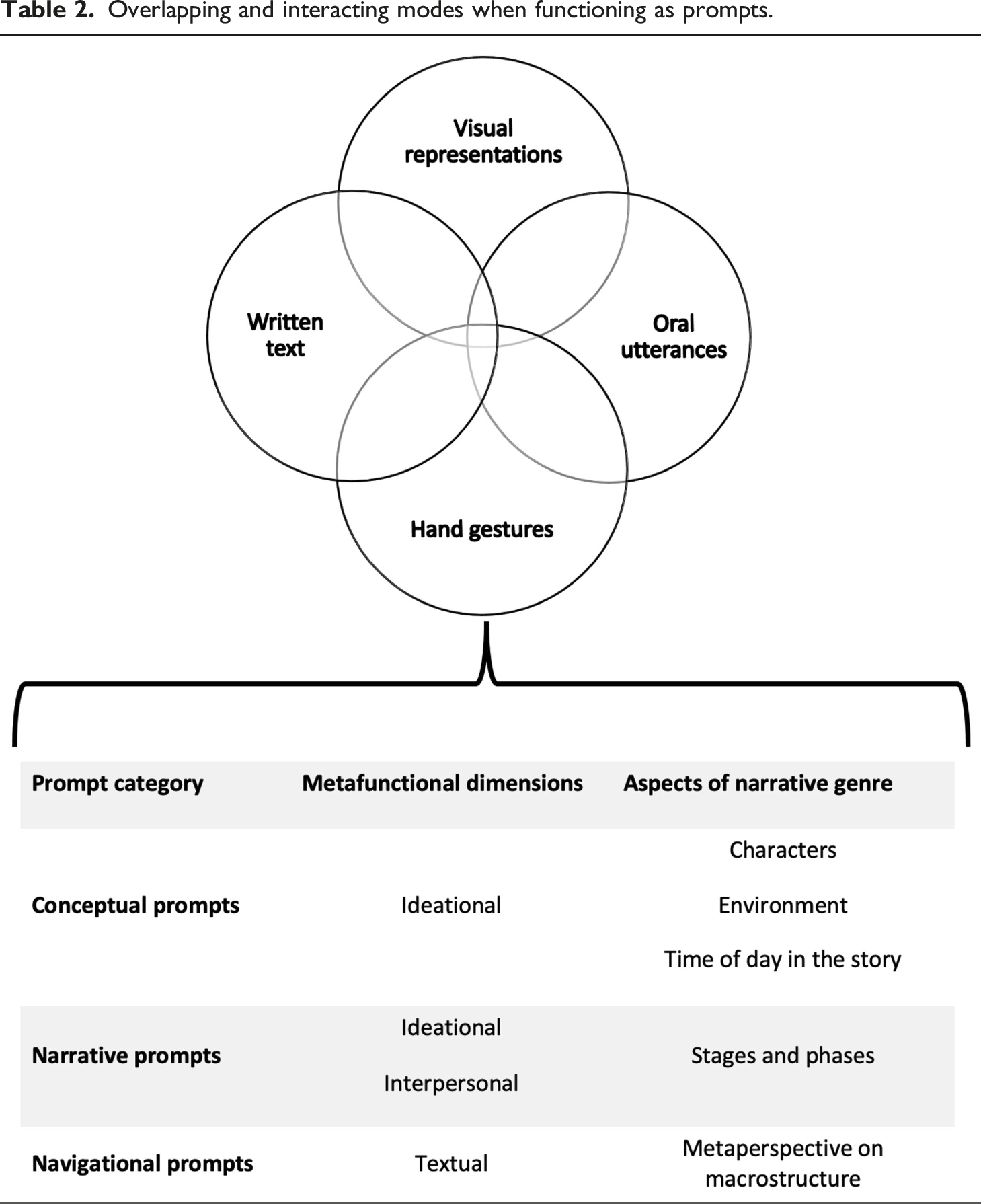
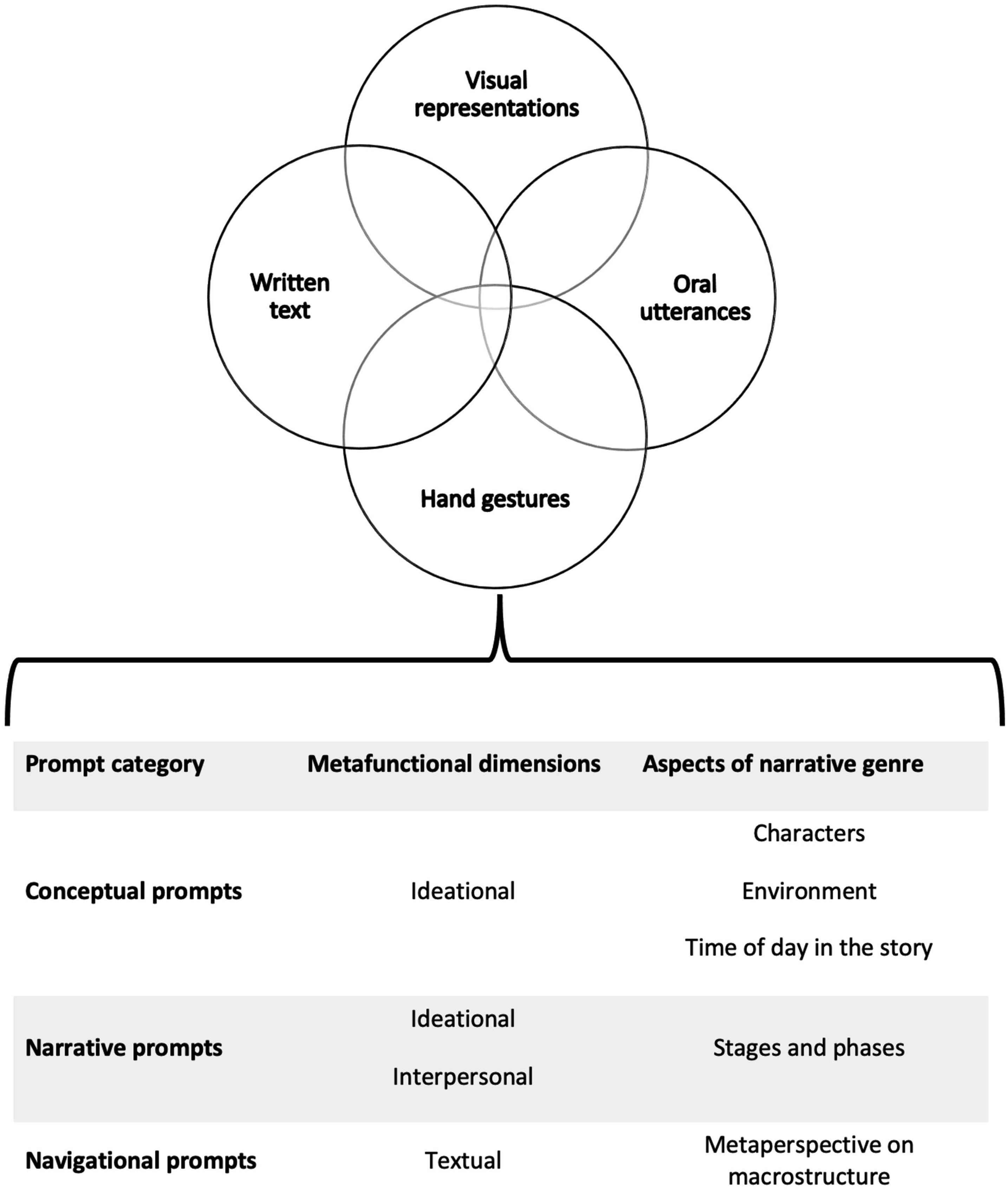
For instance, during the deconstruction phase, Ruth employed all modes to prompt the main characters of the story (see Figure 4). By pointing to the visual shape of the Story Face’s left eye and the written keyword “main characters” while also asking who the main character is, several modes were used in the conceptual prompts for the same ideational dimension of characters within the story. Another example where several modes were used was shown when Angela turned to the mouth shape in the reconstruction phase to prompt the beginning of the narrative (see Figure 11). Angela pointed to the left-most box in the mouth, headlined by the keyword “the beginning” and stated “Let’s start with the beginning.” Thus, the teachers’ different emphases in the teaching of the narrative genre were realized intermodally.
In general, Angela’s more frequent use of navigational prompts by explicit verbal phrasings of “the beginning,” “middle” and “the end” suggests a closer alignment with the phrasings in the Swedish curricula (Skolverket, 2022) pertaining to the narrative genre in early Swedish primary school. As shown in previous research (see Ridell and Walldén, 2023), the Story Face’s key words mirror that of the Swedish curricula. Angela was overt in using those verbal prompts which emphasized the keywords as part of the learning object. Rather than using verbal phrasings to highlight aspects of the narrative genre, Ruth’s orientation towards visual representations and context-dependent verbal prompts offered a visual map of the narrative genre. Both teachers’ designs were based on the model but focused on different aspects of it.
In her orchestration, Ruth’s applied a strongly framed guidance focused on story-specific features of Little Red Riding Hood. Contributing to this framing was a visual orientation, in which sequence pictures kept the students’ attention even without explicit prompts. In contrast, Angela’s orchestration applied a guidance with weaker framing and a more context-independent orientation towards generalizable features of the narrative genre beyond the specific story. This was achieved through verbal rather than visual prompts, which afforded the students a higher degree of freedom in suggesting additional story content.
In previous research, the abstract notion of problem in stories has proven to be challenging for students to grasp (Liberg and Nordlund, 2019; Thorsten, 2019). The teachers’ negotiations indicate two different approaches to making this genre-defining stage more concrete. The two practices illustrate that the concept of “problem” within the Story Face’s nose can be understood differently. Ruth approached the problem as a singular stage while Angela instead expanded on the model and accepted several of the students’ suggestions. This exemplifies the challenge of narrowing down the problem of a story to a specific event. As shown by Martin and Rose (2008), stories may have several complications or problems.
Regardless of whether the orchestration was intermodally weakly or strongly framed, both teachers showed an ideational orientation towards story events and the text’s macrostructure in their orchestrations. The analysis showed that while the students were prompted towards the same ideational orientation, they wished to expand this reconstruction with suspense-building moments and iconic dialogue which had sparked the students’ interest. While some of the interpersonally-oriented suggestions from students were included in Angela’s written text, most were not acknowledged in writing.
Lastly, navigational prompts relating to the macrostructure of the story were shown to be less efficient when employed in written text. Instead, the support of a visual shape, such as the shape of a unified mouth, appears a more suitable for navigating narrative text with younger students in early primary school.
Discussion
As previous multimodally-oriented research in language arts education has primarily focused on teaching related to students’ production or critical analysis of multimodal texts (Andersson, 2014; Borgfeldt and Lyngfelt, 2017; Hell, 2022; Hultin and Westman, 2018), we aim to contribute to this field of research by exploring how multimodal resources are employed in the teaching of specific genre knowledge. We acknowledge that intermodality is in no way unique for teaching practices within early literacy teaching and that most formal teaching sessions employ both multiple and interactive modes as prompts. However, we point specifically to the need to analyze these practices as an interactive and overlapping landscape of modal prompts to understand what they achieve in conjunction rather than individually. This viewpoint is particularly valuable in the context of early literacy teaching, where the use of visual representations is a key element.
Pertaining to the research question of foregrounded story elements, the study shows that both teachers aligned their orchestration with story elements explicitly represented by the Story Face previously identified by Ridell and Walldén (2023). In other words, the teachers adhered closely to the ideationally-oriented elements of character, descriptions of settings, and the sequence of events in their orchestrations. In turn, these elements build closely on the description of stories in the Swedish curricula (Skolverket, 2022). While the Story Face expands on the metalanguage in the curriculum by defining a problem, the problem was mentioned in the processes of story re-/deconstruction without being emphasized. Since the related genre stages of evaluation and solution (see Martin and Rose, 2008; Walldén, 2019) are not present in either the curricula or the model, it is not surprising that they were left out of the orchestrations.
Furthermore, the teacher also emphasized the textual dimension of macrostructure of a beginning, a middle and an end. While these features appear to be a prevalent focus in Swedish classrooms (Hell, 2022; Hermansson et al., 2019; Vuorenpää, 2016; Walldén, 2019; Yassin Falk, 2017), intermodal analysis suggests that the teachers took different approaches in their orchestration. While the teachers prompted and designed for ideational and textual dimensions, the students revealed a penchant for the dialogue and suspense-building aspects of Little Red Riding Hood. These interpersonal dimensions were mainly set aside by the teachers in favor of the sequence of story events.
Through a combination of the intermodal approach and Bernstein’s (2000) concept of framing, it was possible to show that differences in orchestration shape the process of negotiating the story. Ruth’s strongly framed, visually oriented, and context-dependent orchestration is made evident by understanding the interweaving of visual and verbal representations on the whiteboard and how they are emphasized and negotiated in her oral and gestural prompts towards the board. Angela’s contrasting approach of weaker framing, verbal orientation, and context-independency was identified through the same analytical procedure. However, when the expansive written text did not effectively prompt the students, she employed the graphical model instead, which illustrates the supporting function of visual representation in early literacy teaching.
It is noteworthy that the visual representations, Story Face, and sequence pictures are employed by the teachers without being overtly explained. They are not “unpacked” (Airey and Eriksson, 2019; Fredlund et al., 2014; Lagerholm, 2020) beyond an understanding that they represent elements of the story. Thus, the Story Face remains a container of keywords as metalanguage for the narrative genre, but one that is orchestrated rather than explicitly unpacked (Airey and Eriksson, 2019; Fredlund et al., 2014; Lagerholm, 2020). The results show that the Story Face does indeed represent foregrounded elements of story, but also constitutes a suggested analytical process for understanding the narrative genre. As the analytical process is strongly tied to the specifics of the Story Face, and subject to variety depending on the chosen graphical model, making the representational understanding explicit for young learners remains valuable (Lim and Unsworth, 2023), especially given the need for graphical models need to be unpacked (Fredlund et al., 2014; Ridell and Walldén, 2023). Aside from illuminating the different elements of the model and their relationships, a classroom unpacking could also involve discussing aspects of stories that are unrepresented or implicit in the model, such as tension-building exchanges and reactions. As indicated by the students’ responses, such unpacking could draw on the students’ implicit knowledge about stories and how they engage the reader.
By starting out with a multimodal approach and abductively expanding to an intermodal approach, we not only found that the graphical models need to be overtly unpacked, but also that the orchestrations of employing them need further analytical exploration. As shown in previous research, the analysis of individual modes and their respective affordances can be a way to deconstruct teaching practices. However, since different modes are utilized within prompts towards specific aspects of a story, an intermodal analysis of prompting practices may nuance the understanding of teaching practices beyond the affordance of an individual mode. Based on the present study, we suggest that teachers may benefit from an intermodal awareness of how different modes can be foregrounded in teaching and how they can overlap to shape students’ contributions. This appears particularly important in early literacy teaching where visual representations are often a key element.
Furthermore, an intermodal orchestration of the narrative genre builds upon teachers’ understanding of the genre, their goals with their teaching, and the way they adhere to students’ suggestions. These factors seem important not least to negotiating genre features not emphasized in graphical models. As such, the choice of a particular graphical model constitutes only a part of the teaching process. As the analyses above show, there is no deterministic relationship between the choice of a particular graphical model and a specific style of teaching. Based on the findings, we hope that teachers may draw inspiration from the variety of Ruth and Angela’s orchestrations and that they continue to explore how stories may be jointly experienced with young learners through graphical models.
The scope of the current study is limited to just one genre and graphical model in early Swedish literacy teaching. Despite this shared context, the two teachers showed an interesting variety regarding framing and the use of modalities. This challenged us to develop analytical tools to better understand and discuss these variations. We suggest that further studies of different genres in early primary school employ a similar intermodal approach through the lens of framing to contribute knowledge of how graphical models and the orchestration of them inspire teachers to (1) represent the narrative genre; (2) represent the analytical process of understanding the narrative genre and (3) shape the contributions of young learners’ negotiation of the narrative genre. Although multimodal transcriptions and analysis are time-consuming, it offers micro-analytical insight into teaching practices and a better understanding of the key components which teachers use to guide young learners in their exploration of the narrative genre. Further studies would benefit from using this approach on a larger set of classroom recordings would allow education researchers to study a richer variety of teacher orchestrations. They could possibly follow a few student groups through the early years of primary school to see how their understanding of the narrative genre develops as different graphical models and teaching practices are used.
Lastly, as previously discussed, we have shown that the teachers prompted specific dimensions of the narrative genre in alignment with the Swedish curricula (Skolverket, 2022) but that students’ interest partly lies elsewhere. Additional studies should be conducted to represent the perspective of young learners and their understanding of the narrative genre in the context of guiding teaching practices such as graphical models for the narrative genre. This could include a focus on how the students manage to move between understanding stories as a set of discrete elements – as prompted by the graphical model and current national curricula – and understanding them as a meaningful and interconnected whole.
Footnotes
Declaration of Conflicting Interests
The author(s) declared no potential conflicts of interest with respect to the research, authorship, and/or publication of this article.
Funding
The author(s) received no financial support for the research, authorship, and/or publication of this article.
