




Abstract
Many children grow up in multilingual communities characterised by linguistic heterogeneity and semiotic and cultural complexity. Translanguaging theory has provided a perspective attuned to communication and education in multilingual settings. However, translanguaging pedagogies have not yet had a broad uptake in early educational settings. The recent interest in embodiment within translanguaging studies and the study of touch combinedly provide a potential perspective for early childhood education. This study examines the role of touch in a multilingual preschool featuring 2-year-olds. The results point to two key functions for touch. One is that touch creates a shared experiential ground where languages can be learned. The other function is that touch allows children to sensorially explore and learn multicultural experiences from the diverse cultural and linguistic systems available. Based on the results, the role of touch in early childhood translanguaging is discussed as a way forward for translanguaging pedagogies for creating both equitable and diverse educational opportunities for children in multicultural and multilingual communities.
Introduction
Today, many urban settings are notably diverse, as globalisation and the migration of people create settings where a range of languages and semiotic practices are intertwined. These linguistically heterogeneous settings are sometimes referred to as being ‘superdiverse’ (Blommaert, 2013), showcasing a blending of languages and various cultural symbols that come together in acts of meaning-making in a diverse set of cultural practices. Meanwhile, pedagogical practices have been slow to adapt to match the increasingly multicultural and multilingual realities children grow up with (Kirsch, 2020).
Studies of bi- and multilingualism have needed new theoretical frameworks to make sense of these types of communicational settings. Here, translanguaging has gained attention as a perspective grounded in the often observed fluid crossing of languages in contemporary multilingual communities (García and Wei, 2014). It has also become clear that not only languages are increasingly intertwined but also other modes of communication, a development which has led scholars such as Li (2018) to include multimodality with translanguaging, proposing the concept of the translanguaging space, in which multiple modes of communication come together in meaning-making.
This paper joins the recent trend in translanguaging studies of including multimodality and embodied means (Blackledge and Creese, 2017; Li, 2018) in multilingual communication. Blackledge and Creese (2017: 67) note how ‘various semiotic repertories (not just linguistic, but multisensory and multimodal) are integrated into coordinated and meaningful performance and social action.’ This notion highlights the importance of embodied means of communication in the translanguaging space. Simultaneously with the embodied movement in studies of translanguaging, the multimodal study of touch has been growing. Once neglected as a field of academic investigation (Classen, 2005), it is now significantly gaining ground as an interdisciplinary area of study (Jewitt et al., 2020). However, while translanguaging has increasingly been taken to be an inherently multimodal phenomenon (Zhu et al., 2020), Kusters et al. (2017:221) note that research has yet to expand on what a multimodal conception of translanguaging entail. The combination of touch and translanguaging can potentially provide fertile new empirical and theoretical ground relevant for early childhood education.
The study aims to examine the role of touch in the translanguaging space of a preschool in a multilingual community. The focus of this study on 2-year-old preschoolers is particularly fitting for this examination, as 2-year-olds’ interaction is heavily reliant on embodied and sensory means of meaning-making (cf. Garrity et al., 2015). Being located in a highly diversified area, where no child at the preschool speaks the majority language of Swedish in their homes, the setting is also of interest as a translanguaging space. The study aims to make a theoretical and empirical contribution to the role of touch in translanguaging spaces and showcase what role touch plays when children connect using multicultural linguistic and semiotic communicative practices. Being set at the intersection of multimodal translanguaging and the emergent interdisciplinary field of touch communication (Jewitt, 2017; Jewitt et al., 2020), the study extends the understanding of communication in the translanguaging space.
Translanguaging and touch in early childhood
While translanguaging has been influential in recent scholarly educational discussions, Kirsch (2020) notes the relatively small influence on research and practice in early childhood education. Educational settings in multilingual communities can often display what Zhao and Flewitt, (2020: 267–268) call a ‘disjuncture between their multilingual out-of-school and often monolingual in-school language and literacy practices’. To counteract this, bringing translanguaging theory to early childhood education holds great potential for educational practices set in multilingual communities. A range of studies has now pointed to the potentials of bi- and multilingualism on children’s cognition (see Bialystok, 2017; King and Mackey, 2007), which has led Hornberger (2005) to conclude that education can be ‘maximised’ when children can use all of their linguistic resources. A translanguaging perspective also aligns with the ongoing discussion of the artificiality of a ‘monolingual bias’ in education (Block, 2003) and the potential for pedagogies with a pluralistic perspective on languages and learning (Gort and Sembiante, 2015). Not only is the translanguaging perspective changing the foci from monolingual practices of learning, but moreover, García and Kleifgen (2020: 566) argue that a complete understanding of multiliteracies today has to include a bi- or multilingual perspective, allowing children to ‘[deploy] their entire semiotic repertoire’. Here the focus shifts toward ‘intersections and the interaction processes between different cultures and their texts’ (Kumpulainen et al., 2018). This study continues the study of implications of the translanguaging perspective on early childhood education from the lens of touch communication.
Adjacent to translanguaging, ‘code-switching’, the phenomenon when people switch between languages in interaction, has been studied in preschool settings. For example, children code-switch as a resource during play (Björk-Willén, 2007; Cromdal, 2001). In addition, Ledin and Samuelsson (2017) have observed how newly arrived children can interpret embodied signs such as movement, gestures and touches when playing without a shared language. Still, it is relatively novel for childhood educational practices to utilise what (García et al., 2017) call the ‘pedagogical stance’ where educators actively use translanguaging in the educational practice. This is confirmed in the national context of the Swedish preschool, where the School Inspectorate (2017) recently pointed out a widespread monolingual bias and sometimes even hindrance of multilingual children and teachers in using their minority language in the preschool.
The translanguaging perspective is about breaking illusions of rigid language structures and the autonomy of languages. Instead, translanguaging favours a view highlighting fluid ways languages are used in the superdiverse linguistic settings seen in globalised communities (Canagarajah, 2018). Lately, the multimodal turn of translanguaging has also included the body (Block, 2013; Blackledge and Creese, 2017). Embodiment is a promising area for studies of translanguaging in early childhood education, where Samuelsson (2021) shows how everyday routines at the preschool provide a ground for ‘embodied participation’ as children can interact following the repeated patterns of daily practices such as mealtimes. This favours a broadened view of communicative repertoires, illustrated by Block’s (2013) proposal that bi- and multilingual children acquire multiple languages as they grow up and a multimodal repertoire associated with the development of the languages, in a view that also can include the multimodal and multisensory modes of engagement essential to young children.
The role of embodiment in translanguaging spaces has recently been a matter of focus (Zhu et al., 2020), particularly discussions of the role of multimodal resources for interaction and learning (Tai and Li, 2021). Other studies have pointed to the role of gesture as a resource used by preschool children for communication in the translanguaging space (Kirsch, 2017), and this study directs the multimodal focus toward touch. In the preschool context of the 2-year-olds in this study, touch is an integral part of the children’s everyday encounters. In nursery settings, touch has several functions that are related to the care of children, such as soothing (Cekaite and Holm Kvist, 2017), showing affection toward children and, at times, using it to show children how to move and socialising purposes (Cekaite and Bergnehr, 2018). However, little attention has been given to the role that touch plays in learning processes during early childhood, and according to Jewitt (2017), touch as a scholarly subject and analytical focus has been ‘largely neglected in pedagogy’. The above point argues for the role of touch as an analytical focus of this paper. This can expand the study of translanguaging practices that has been missing in the early childhood area (Kirsch, 2020), as it provides an empirical investigation that begins to uncover touch and translanguaging in terms of multilingual early childhood pedagogy.
Embodiment, translanguaging and touch
The role of embodiment has been making headway in understanding human action and development. A consequence of an embodied perspective on learning is that our use of language cannot be thought of as a stationary act decoupled from other types of bodily action and sensory experience. Here, the role of touch is pivotal, not least for the 2-year-old children featured in this study, that are often actively participating in their environment through touches. Touch, as both a sensory and communicative mode, is a means for children to simultaneously communicate and do things (Jewitt, 2017), thus providing an important resource for children to act and know the world around them (Perry, 2015).
The study is placed within the broadened conceptions of bi- and multilingualism tied to the notion of translanguaging. Translanguaging in this perspective entails a fluid view of how two or more languages are used in interaction and includes multimodal and multisensory views of communication (Hua et al., 2017). The study takes the view of Kusters et al. (2017), in that communicative repertoires are multifaceted and include languages, modalities, and sensory experiences, promoting a move away from ‘language-centric’ notions of human communication (Finnegan, 2015), encompassing what García and Otheguy (2020) refer to as children’s full communicative repertoires. This is a key notion for the studied early childhood setting, where multiple languages are present, and a multicultural set of experiences is available for children to explore.
According to Zhu et al. (2020), embodied forms of interaction also alter the view of learning that takes place. Likewise, this study’s translingual learning also includes embodied experiences known through touch and other senses, e.g. the feel of cultural objects such as textiles, the scent and tastes of foods, etc. This places the study at the intersection of translanguaging and the interdisciplinary area of multimodal touch communication (Jewitt et al., 2020). The study frames learning in the translanguaging early childhood space as an inherently multimodal and embodied practice. In this embodied sense, as Otsuji and Pennycook, (2010) note, learning is tied to the specific place and the semiotic repertories that children encounter. In this highly diversified community, children encounter various cultural experiences and languages in their daily lives. This ethnographic case study thus offers an examination of the role of touch in this multicultural and multilingual space.
Methods
Context and participants
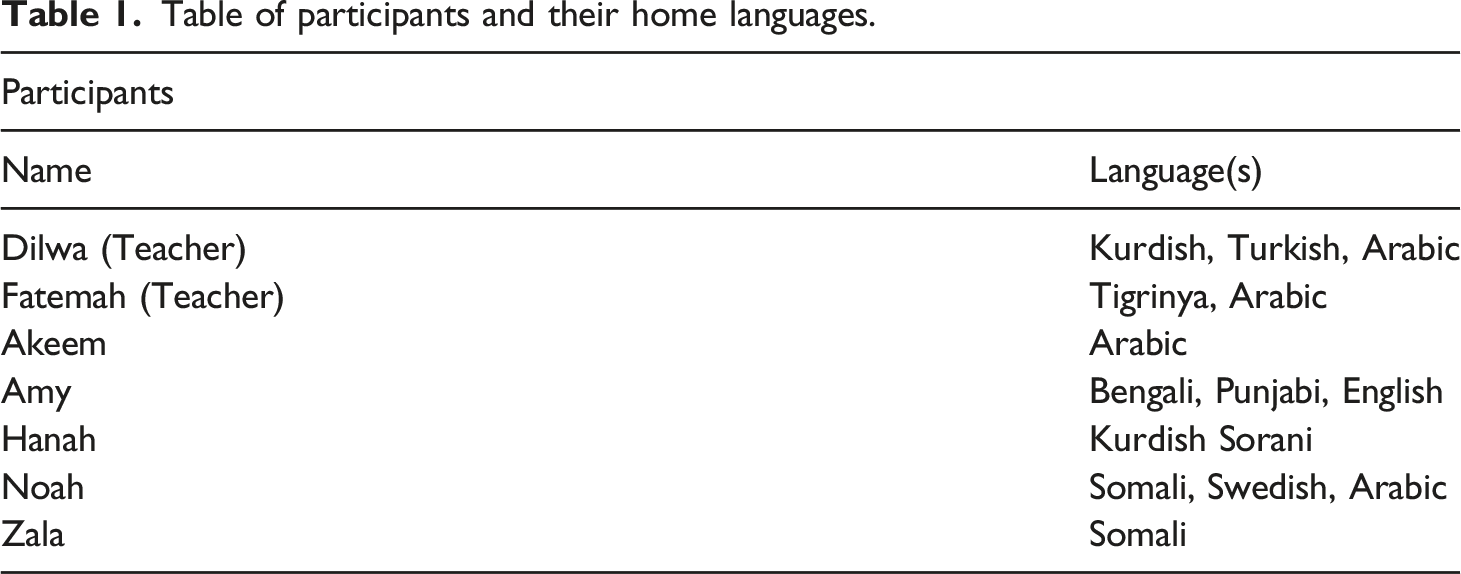
The study’s methodological approach is a 7-week, short term ethnography of a multilingual preschool in a suburb of Stockholm. The preschool is located in an area that that be classified as ‘superdiverse’ (Blommaert, 2013) through a large number of languages and cultural backgrounds represented in the community. This linguistic diversity is reflected at the preschool, where the children use 32 different languages. Reportedly, no child at the preschool predominantly uses the majority Swedish language in their homes.
Table of participants and their home languages.
Data collection
The study is a short-term ethnography inspired by the convergence of multimodality and sensory ethnography approaches (Jewitt and Leder Mackley, 2019). Following the embodied approach to translanguaging taken, the approach uncovered the ‘tacit and embodied knowledge and knowing’ (Jewitt and Leder Mackley, 2019: 97) that is implicit in the embodied translanguaging view (e.g. Blackledge and Creese, 2017). Specifically, for this paper, how touch is used in interaction and for sensory experience (cf. Pink, 2015).
Video recording was the primary data collection tool to capture the sensory level of action and interaction. The video data for the project was thus collected with attention to what children do with their bodies, hands and especially how and what they touch during preschool activities. The researcher used a free-roaming camera, prioritising angles above or in front of children where touch actions can be recorded – allowing as clear a view as possible of what children do with their hands and whom or what they interact with through touch.
Analysis
The analysis aimed to uncover qualitative themes emerging from the uses of touch during the ethnography, highlighting the role of touch in the translanguaging space. Thematic analysis is complemented with multimodal and sensory descriptions of touch, highlighting particular uses in the translanguaging space, thus conveying its specific functions in this context.
The analytical work was inspired by recent studies on touch and sensory analysis (Jewitt et al., 2020; Jewitt and Leder Mackley, 2019). Additionally, as this is a new area of study without established analytical methods, the study also examines and presents multimodal and sensory ethnographic material related to touch. The study and presentation of results, thus make use of visual information and attempt to convey sensory information about scents, feeling of textiles and children’s ways of touching and feeling things in the preschool environment.
The analytical procedure was tuned to examine the roles that touch plays in the multilingual preschool. As touch is ever-present in the lives of 2-year-olds, in some sense, it appears constantly. Therefore, the study limited the samples to activities and situations where touch influences the translanguaging space in terms of communication and/or meaning-making. For example, touch can be prevalent during a whole session when a child sits on the teacher’s lap reading a book. However, this type of session has not been part of the analysis (for examination of this type of touch, see Cekaite and Bergnehr (2018)), but here the active use of touch in activities involving translanguaging has been the object of analysis, i.e. when touch is used for deliberate purposes of gaining understanding or communication with others. This is typically seen when children explore a new setting or object for communication with other children and teachers and when teachers use touch as part of instruction.
Coding of the ethnographic data
Data from the ethnography (mainly video and field-notes) was coded to note instances when touch was used in the translanguaging space and describe the functions that touch provides. Notably, translanguaging is interpreted widely as multimodal and sensory (Blackledge and Creese, 2017; Kusters et al., 2017; Li, 2018; Zhu et al., 2020). Coherent with the discussions of a multimodal and sensory understanding of touch and translanguaging, touch is seen as being used for a broad set of purposes in multicultural communication. It is here implicated that cultural knowing implies embodied and multisensory knowledge (see Pink, 2011). For example, when the children are learning about a new ethnic food during a project, touch is relevant when the food is being verbally named in the language, but simultaneously when children are engaged in preparing the food, smelling it, eating it, etc. Thus, in the analysis, touch is related to the sensory and multimodal perspectives on translanguaging beyond a language-centric analytical focus. For the young children of this study, touch and senses are often fully integrated with the experiences at the multicultural preschool, and language is only one of several modes of making meaning.
Thematic analysis
The study first used qualitative thematic analysis and coded the ethnographic data for the function touch has in the translanguaging space. The themes were arrived at following a variant of Braun and Clarke’s (2006) thematic analytical method. The thematic analysis as adopted here can be broken down into the following steps: 1. Initial coding and idea processing during the field-work. During the observational period, field-notes were taken alongside or asynchronous to the video recordings. Here notes about touch in the live educational activity were noted and ideas were sketched out. 2. Combining codes and materials into emergent themes about touch, multiculturalism and translanguaging. A set of recurring themes was generated from trends in the coded data from the initial coding. 3. Relating codes to potential themes. Coded data was here related to the potential themes to assess potential key themes. 4. Definition and merging of themes. Most of the relevant codes could be related to the two key themes presented in this paper. In this stage, a third thematic could also be merged with one of the presented themes making a more conceptually coherent argument. 5. Conceptual development following the final themes for the paper. After final themes were generated, they could be further developed alongside the literature and concepts on translanguaging and embodiment.
These final themes are presented in the paper’s results section and make up the main sections. Alongside presenting the themes from the ethnography, examples of multimodal interaction from relevant activities are presented and discussed.
Analysis of multimodal interaction
The themes are presented to convey the patterns of touch and translanguaging in the ethnographic data. However, key insights are also derived from the analysis of the multimodal and sensory interaction in the preschool. Details from this are shared in the presentation of the resulting themes. Moreover, relevant sensory aspects and detailed multimodal interaction from key preschool activities and examples of interaction are provided with the themes, where extracts of multimodal data and interaction from the project are presented to showcase how touch is used within the translanguaging space.
Swedish is the most used language at the preschool, and presented examples has Swedish translated into English. However, in examples where the participants use English, both Swedish and English are provided for clarity.
Ethical considerations
The project has been conducted with the ethical standards of the Swedish Research Council, involving confidentiality and approval from the parents or legal guardians of children and the teachers. Before the study, the teachers introduced the research project to the children and pictures of the researcher. Together with the teachers, the researcher continuously discussed children’s reactions to the project to gauge any unease with the research project among the children. All materials pictured in this paper are anonymised. Furthermore, all names of children are pseudonyms. Ethical approval was granted by the Swedish Ethical Review Authority [2021-05725-01].
Results
Two important themes emerged from an analysis of the functions of touch in the observed preschool context. First, one key theme that was persistent in the ethnography was how touch provides a common experiential ground, as it allows children to do things together with each other and their teachers.
The other key theme that emerged was how touch allows children to engage with new cultural experiences in the translanguaging space, creating a way to explore the diversity of cultural experiences that arises from the community’s specific multilingual and multicultural features.
The findings of the two themes are presented in the following main sections and are supported by relevant multimodal and sensory examples from the ethnographic data.
Creating common ground by doing things together
The first key function of touch is a medium for doing things together and creating common experiences. This occurs when children are bodily engaged in shared activity – e.g. feeling the same objects, or creating things with their hands. Moreover, it can also be linked with communicational possibilities of a translanguaging space from the shared sensorial experiences in this multicultural setting. This was observed, for example, when children are outdoors, during play with teachers present, playing in the sandbox, during creative activities such as making things with clay, and in shared activities which are part of the themed projects at the preschool.
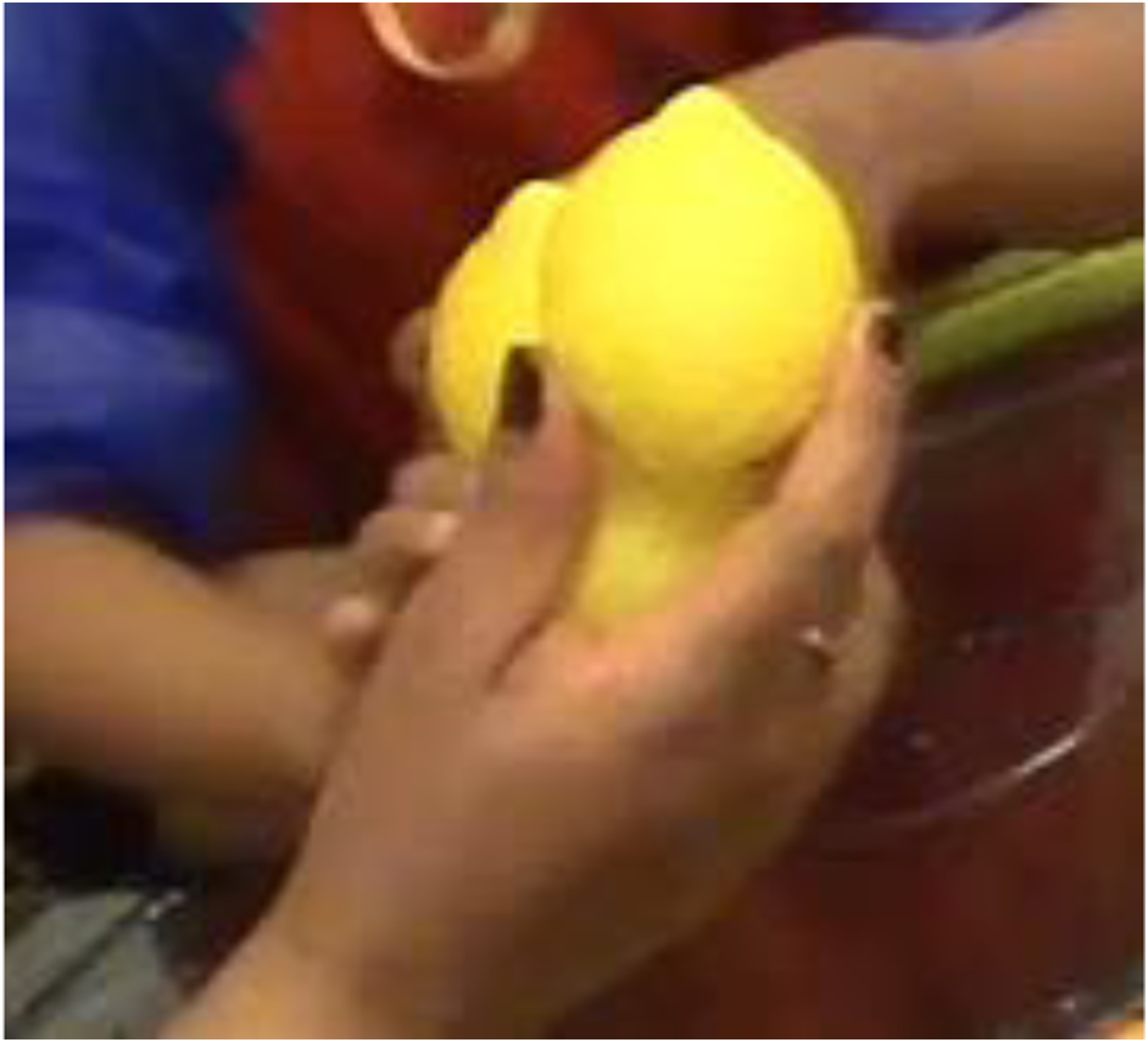
An illustrative example of the role of touch in creating this common ground is when children are engaged in explorative activity with water. The teachers fill a ‘water table’ and added plastic fruits for children can play with – children during the water activities are exploring through touch when trying things out by pouring water, dropping fruits, testing their buoyancy etc. In the session pictured below, the children played for an extended time with teachers continuously asking children questions – “what colour is it?”, “which one is bigger?”, “how many bananas are in the tub now?” and so on. The children are sensorially, and linguistically exploring the shapes and colours of fruits.
This activity is a way for children to explore different properties of the objects through touch and other sensory information – shapes and colours of different fruit here become a node for common experience between children and teachers, as they can use touch to feel the object of shared attention during this activity. In Figure 1, the teacher asks Noah about the lemon as they jointly feel it and later playfully drop it into the water – its shape, colour, and whether it will sink or float (see Figure 2). Children’s shared water play. Jointly feeling plastic lemons using touch.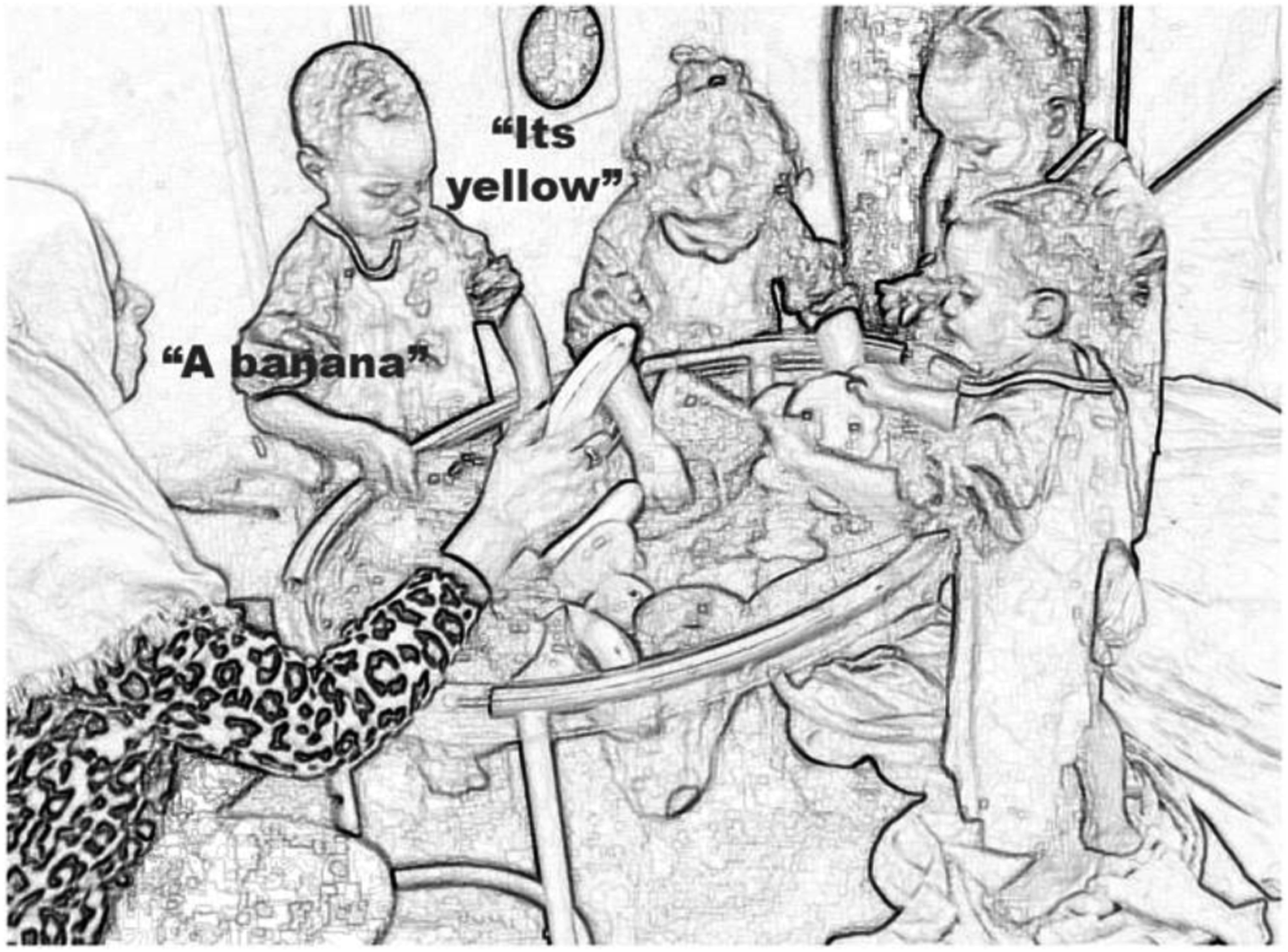
Touch here plays a part in creating a common experiential ground and provides a good ground for learning basics in the majority language Swedish. Moreover, as shown in the following example, this situation can also become a translanguaging space where multiple languages and modes of expression can be shared.
Example 1 – sensing and communicating about a pear
An example of an everyday routine is when children usually gather for a break from play or other activities to eat a piece of fruit – most often a choice between bananas, pears, apples or oranges. This routine gives a recurring opportunity to name fruits and talk about the fruit with the children (Figure 3), but also gives the children sensory experiences from touching fruits, the scents of smelling them, and the tastes of eating them. Having and naming fruits as part of the daily snack.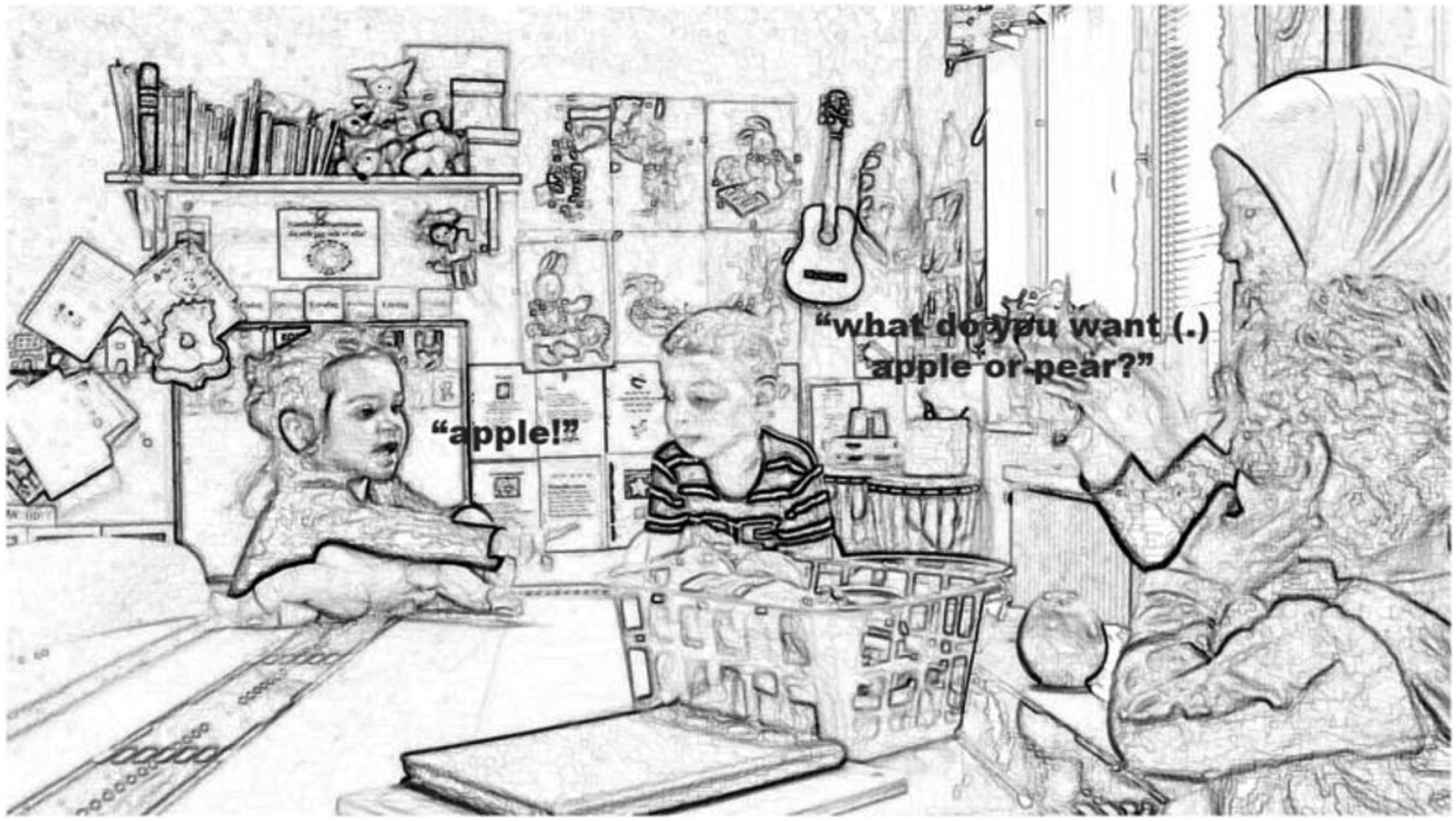
Despite being a basic routine, the fruit routine also becomes a way to establish common linguistic ground in this multilingual space. However, while the sensory experience of eating fruit may be shared, there are many ways of talking about it due to the number of languages and cultural experiences represented at the preschool.
This range of symbolic representations used to depict the fruit can be seen in the following sequence in Figure 4
2
. Here, Amy is reading a board book with the teacher Dilwa. Amy takes the lead in this interaction by pointing to pictures in the book that the teacher then names. During the interaction, the teacher use AAC
3
gestures to accompany the words. During this shared reading, they get to the picture of a can of pear juice. Excerpt from session where multiple symbolic means are used to name a pear.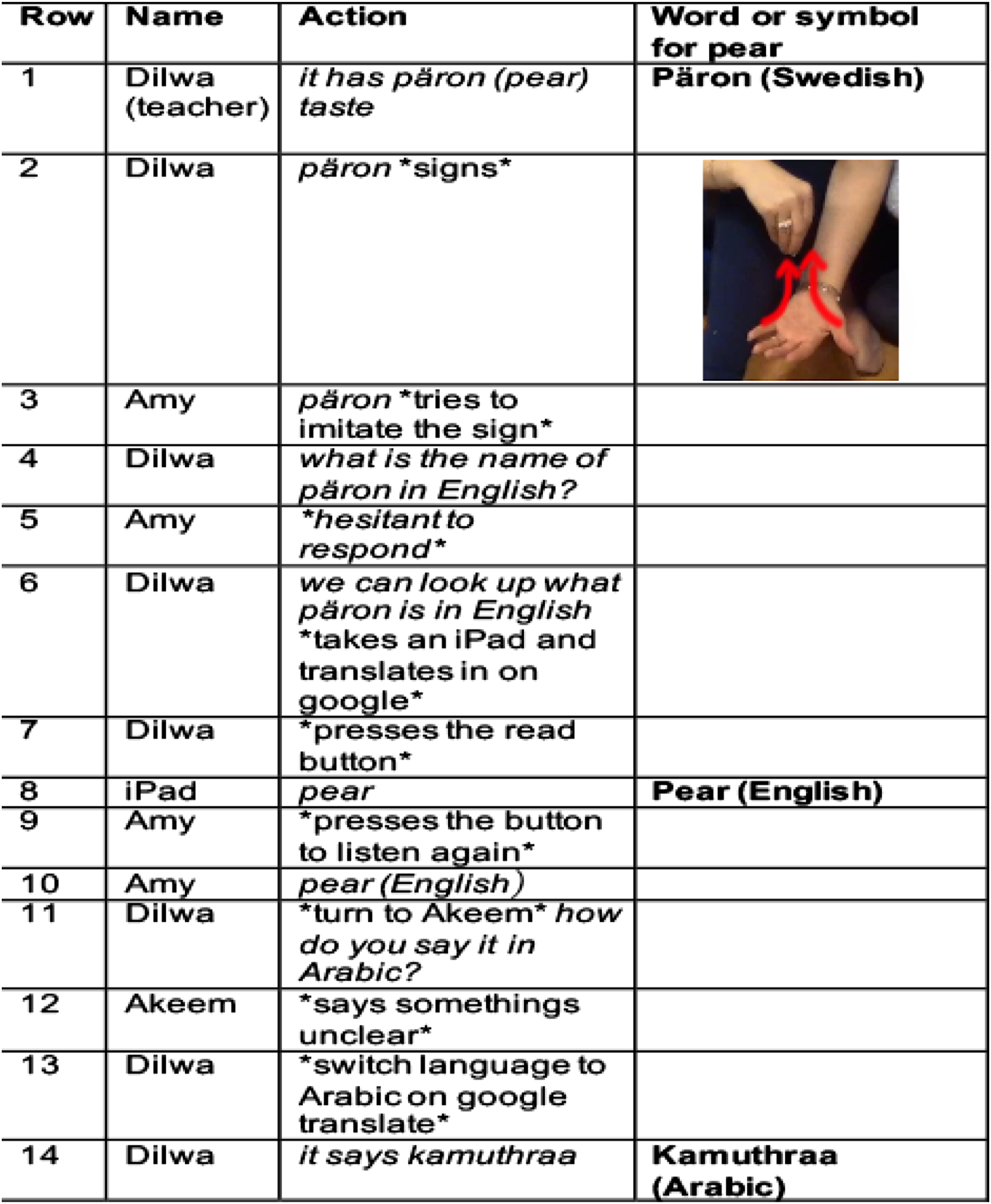
By the end of this session (shown in Figure 4), the children have heard and practiced the word and/or sign for pear in three languages, as well as the AAC gesture for it – being signed by fingers drawn up from the flat hand, gradually pinching into depicting a pear-shape – thus giving a total of four symbolic ways of expression. This can be seen as a way of including children of different linguistic and cultural backgrounds, but additionally, it also becomes a way for children to get to know each other’s languages.
Example 2 – communication in the translanguaging space
We continue to follow the communication about the pear. Figure 5 continues this examination on another day, about a week later, when Amy and the teacher Dilwa again interact over pears in the translanguaging space. This time Amy is playing ‘having fruit’ with her friend Hanah. Hanah takes plastic fruits from a basket and pretends to cut them with a plastic knife for Amy to ‘eat’. Dilwa is sitting alongside the girls and intermittently joins in, as during the following excerpt. Playing ‘having fruit’ in the translanguaging space.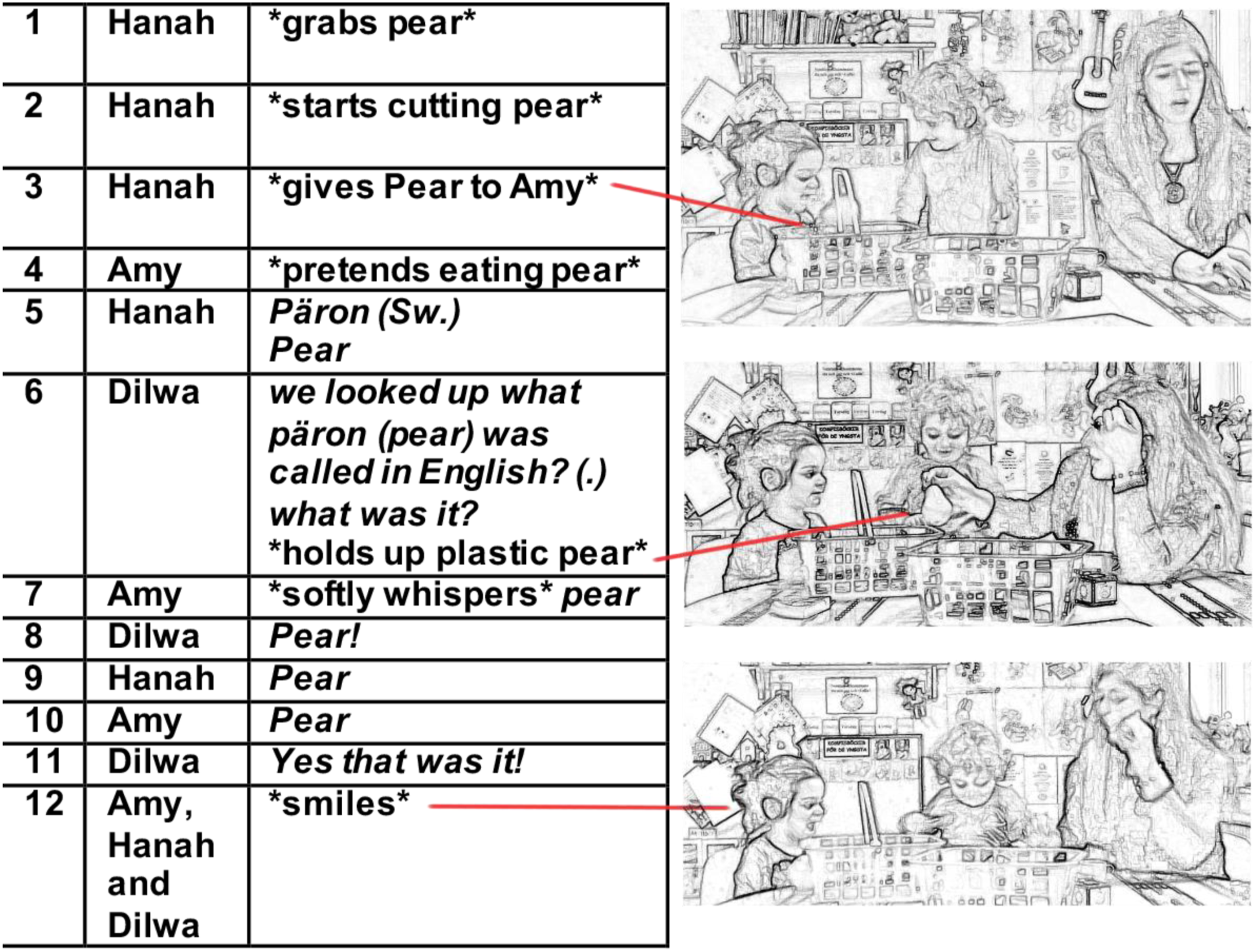
In Figure 5, the teacher Dilwa notices the girls playing with a plastic pear (1–3), essentially recreating the fruit-snack routine described earlier. As Hanah names the fruit, it spurs Dilwa to reminisce about the session from last week when she talked about the pear with Amy and Akeem. Dilwa takes this opportunity to, once again, bring the English language familiar to Amy into the preschool activity (6). First, Amy whispers pear, almost inaudibly (7), but after that Dilwa spells out the word loudly, Hanah joins in, and Amy comfortably says the word (10), which brings a smile to all three participants (12). The session then continues, and later Akeem is again brought into play, similarly adding the Arabic word.
Touch to create a common ground
The examples of the basic routine of ‘having fruit’, specifically the pear, show how touch plays a vital role in creating shared experiences between children and their teachers at the preschool. The translanguaging space encompasses experiences from the relatively simple sensory exploration of feelings, shapes, and tastes to more elaborate language describing fruits in multiple languages that children can use and share. Children’s senses and use of touch are crucial components in providing common ground through shared experiences underpinning communicational exchange beyond languages. This activity is inherently multimodal and multisensorial (c.f. Blackledge and Creese, 2017). We see how touch and multiple languages are intertwined in early learning, as translanguaging repertoires (Kusters et al., 2017), as being infused by touch and other sensory experiences. This exemplifies a widened view of communicative repertoires, and we will now turn to another side of the educational implications of this.
Touch and cultural learning in the transcultural space
The other key function touch plays in this translanguaging space is that it allows children to explore the diversity of cultural expressions and languages represented in the community. Being a wholly multilingual preschool, there are many ethnic expressions that the children encounter during their days at the preschool and everyday lives. Notably, the pedagogy at the preschool does not fit with the School Inspectorate’s (2017) observation of preschools where children’s minority languages and cultures are not pedagogically represented. Here, the children’s languages and cultures are rather taken into the preschool pedagogy and represented in books and the pedagogues' active use of diverse languages. This multicultural stance is clearly demonstrated during the monthly project involving the whole preschool, in which the children focus on learning about a specific country. The project importantly involves a range of sensory experiences, as the preschool presents children with music and dance from the chosen country and prepares a national dish that children eat for lunch.
This month, the theme country is Eritrea. While none of the children has a family connection to Eritrea, this is a fortunate selection as the assistant teacher Fatemah knows Tigrinyan and has part Eritrean ethnic origin, which leads her to bring not only knowledge of culture and language but even items for the preschool group to use.
Example 3 – preparing for the Eritrean dance
Today, the children learn a traditional Eritrean dance. Fatemah has brought traditional Eritrean children’s clothes for the children to choose from when assembling for the dance. The children are not only learning a new dance and Tigrinyan words on this day, but also through sensory experiences that go with the themed project, for example feeling and trying out the traditional clothing and sampling the popular Eritrean dish Kulwa (a stew to be eaten with Injera bread and/or rice).
Several children are highly engaged in the new set of clothing brought to the preschool. In Figure 6, Fatemah shows the child Amy how to tie a type of shawl around the neck on top of the traditional dress. Another child, Zala, who has already picked a dress for the dance attentively observes as her friend is being dressed up. Fatemah (assistant teacher): “Do you want that one?” Amy: “yes” Fatemah: *ties the shawl* Fatemah: “oh it’s so nice” Amy and Zala: *Smile* Fatemah aiding the children with traditional clothing, here tying a knot on a shawl for Amy.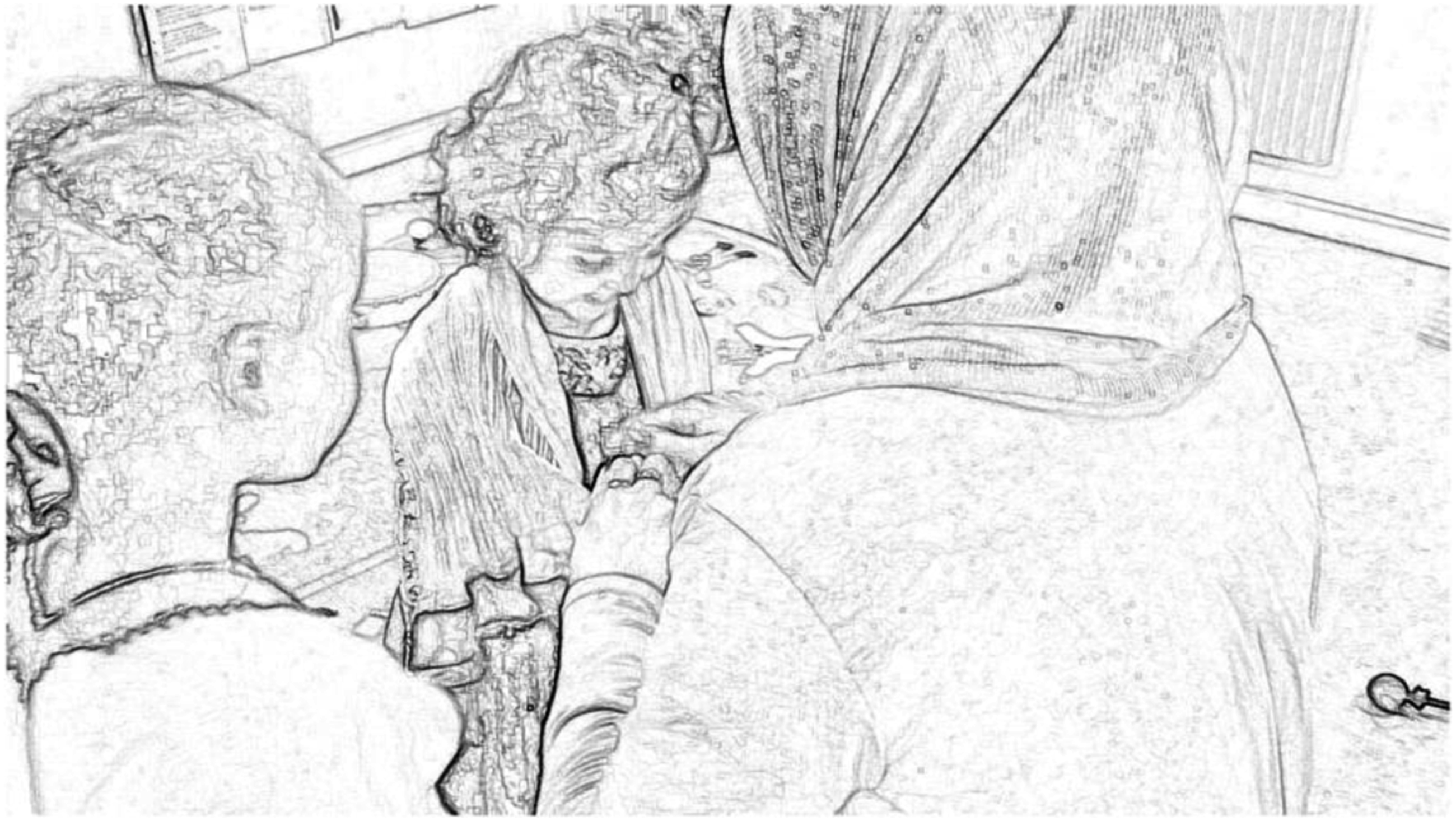
After picking various dresses, the children go to the assembly hall for the dance. The Tigrinyan language is present throughout the day in both songs and words. For example, when walking down the stairs to the assembly hall, Fatemah counts the steps in Tigrinyan, while the children repeats after her.
Example 4 – learning the Eritrean dance
Even if rather spontaneous at first glance, the dance lesson contains several key stages of learning the folk dance. The 25 min of dancing are compressed and presented as seven distinctive scenes here. Some children show a keen interest in the dance, its distinctive rhythm and Tigrinyan song.
4
Figure 7 shows how the children Amy, Hanah, and Zala learn the dance from the assistant teacher Fatemah. Excerpted scenes from the dance lesson.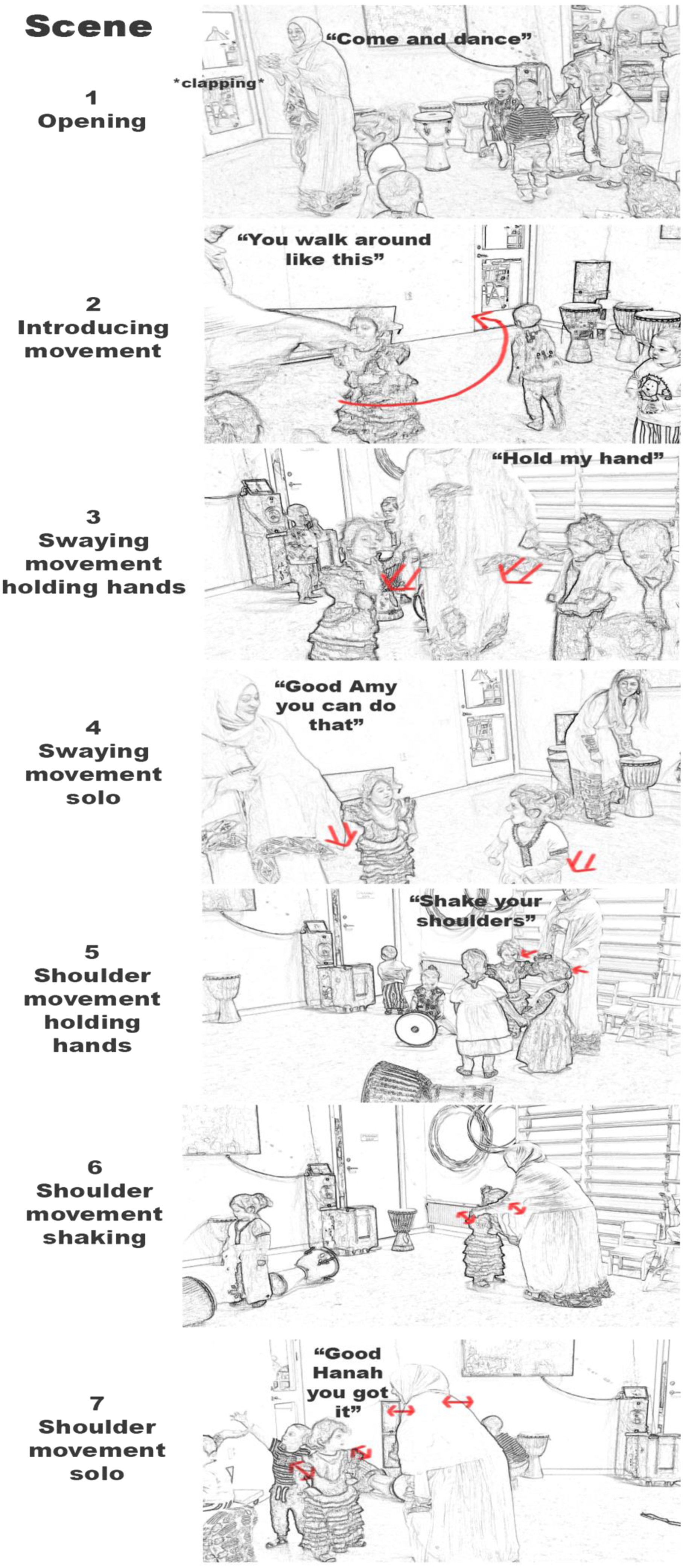
In scene 1, Fatemah starts the music and begins the swaying walk characteristic of the dance. Then, clapping her hands, she starts the walking part of the dance, and shouts out to the children to join her – “come and dance!"
Fatemah continues to instruct the children to dance around the room. She sweeps her pointed index finger in a circle over the room – “you walk around like this” (Scene 2). As she moves onward, Fatemah shepherds some of the children, moving them along, circling around the room in pace with the slow beat.
The dance consists of walking in a swaying way together in a circle, with a distinctive push of the shoulder to the beat of the music. Fatemah engages the children in the swaying walk by taking Amy and Hanah’s hands – “hold my hand” – while she walks, Fatemah can use the children’s hands to guide them in the swaying motion when the three walk together to the music.
After some time of walking together, with some of the children intermittently holding Fatemahs hand, the children move in more independent ways. Fatemah has been continuing the dance around the room while also seeing Amy practising the swaying movement by herself. While continuing the dance, Fatemah and Amy look at each other, and with a big smile, Fatemah says with an encouraging voice “Good Amy (.) you can do that” (Scene 4).
As some of the children are getting more comfortable with the walking part of the dance, Fatemah introduces the way children can move their shoulders in line with the dance. Again several children are led by holding Fatemah’s hand, and now Fatemah is dancing with three children joining hands. Finally, Fatemah instructs the children to “shake your shoulders” (Scene 5), as she moves the children’s hands, aiding the children to launch their shoulders forward to the beat.
The dance goes on as children try to add shoulder movement to their dance moves. Hanah shows particular interest in this move, and as displayed in scene 6, Fatemah instructs this movement by grabbing onto Hanah’s shoulders and shaking them until Hanah gets into the groove.
Hanah practices for a while, and as the song nears its end, it goes into a vigorous beat. Fatemah stops her leg movement and continues the shoulder movement in rhythm with this beat. Hanah stands in front of her, and as Hanah and Fatemah look at each other, Hanah moves synchronously with the teacher (Scene 7). This spurs Zala to join them in this movement together beside Hanah.
Touch and gesture for learning in the transcultural space
The above example is distilled from a 25-min dance session. During the session, a range of multimodal and sensory cues are critical in the learning process. Children observe, imitate, and are physically led by Fatemah when learning the dance. There is less reliance on verbal language during the session, and there are instead other communicational modes at play. For example, Fatemah uses gestures to show how the children should move (Scene 2). In the embodied communication, touch plays a notable role in the dance with the children. Fatemah takes the children’s hands and can, through physical touch (Scene 3), provide haptic feedback through joint movement with the children. This provides learnable information for the children, as shown in Scene 4, where Amy continues the movement by herself. The same principle repeats itself when Fatemah teaches the shoulder movement to a group of children and then directly with Hanah (Scene 5–7), here even shaking Hanah’s shoulders (Scene 6) in an act of embodied instruction through direct touch of how the shoulders can move with the music.
The Eritrean themed day shows an example of how intimately connected multimodal and sensory forms of meaning-making are with the translanguaging space (cf. Blackledge and Creese, 2017). It is not simply that children are meeting the Tigrinya language in the preschool, but additionally, there is a range of multimodal and sensory ways of engaging with the Eritrean traditions – food, scents, textures, music and dance – are jointly creating this experience. Through the mode of touch, the children feel and do things that are part of learning in this multicultural space – learning about its textures, the movement during the dance lesson etc.
The Eritrean project provides evidence for the role of touch in the translanguaging space, a role that narrow foci on verbal language could not have intercepted. The examples 3 and 4 point to the multimodal and multisensory nature of cultural learning in a diverse cultural and linguistic setting. It is here pointed to the vital role that touch has in the bridging of language with other modes (Jewitt and Leder Mackley, 2019) and the significance that this embodied framing of learning plays in this particular multicultural early childhood space.
Discussion
This paper has examined the role of touch in the translanguaging space of a multilingual preschool. The study has pointed out two major roles that touch provides in this space – for creating common ground and a diversity of cultural experience that is coherent with the multilingual and multicultural reality of the studied community.
The finding that touch provides a mode for doing things together and creating common experiences, is important for understanding pedagogy in the multilingual early childhood setting. As touch has been relatively unexplored in pedagogical terms (Jewitt, 2017; Kirsch, 2020), this paper provides a key result as it centres pedagogy around embodied actions and sensory experience as enacted through touch. In Example 1 & 2, children are exploring fruits through touch, and this experience creates a translanguaging space, where languages can be exchanged over the ground established through joint sensorial experience. Block (2013) notes how chances of using multimodal methods in studies of bi- and multilingualism are often missed. From this result, it is possible to argue that embodied experience generally, and touch specifically, provide a key theoretical frame and analytical units for studying translanguaging featuring young children. In the particular context of the study – where no child shares the language spoken in their homes – the preschool’s role to establish common sensory experience becomes central. This creates an interpersonal ground where languages can be exchanged and learned – providing a crucial pedagogical insight.
The other key result demonstrating how touch provides new transcultural experiences for children highlights another side to touch’s role in the multicultural pedagogical setting. Following Canagarajah ‘s (2018: 51–52) proposal that ‘there is more to the paradigm shift of translingualism than accommodating more diverse verbal resources in communicative practice or in one’s proficiency’, this paper shows how touch is an integral part of this shift. The pedagogical practice observed in this study embodies the view of a pedagogy set in a diverse linguistic setting and provides empirical examples of what types of learning opportunities this carries. During the Eritrean project, children encounter a range of experiences – the scent of the traditional food, the feeling and fit of clothing, patterns and colour, new words etc. This underscores the sensorial dimension and embodied pedagogical experience highlighted in this multicultural setting. Thus including the multimodal and multisensory as part of translanguaging (Blackledge and Creese, 2017; Li, 2018), here provides a multifaceted view of learning and shows how this provides diversity in the educational practice. This has critical implications for pedagogy. During activities such as the Eritrean project, the experiences and language may be common for one child or teacher, but entirely new to others, showing the pedagogical challenges and opportunities of translanguaging pedagogy. Here touch can have an important role, providing a common ground to pedagogically build on. In the case of the Eritrean project, none of the children shares this ethnicity, and it provides an example of learning from the wealth of cultural experiences and semiotic systems available in a multicultural community. Languages are tied to the embodied practices that children are part of (Samuelsson, 2021). Multicultural settings open pedagogical challenges for teachers to create routines that include learning opportunities attuned to the multitude of cultural knowledge latent in the communities where they teach.
The role of touch explored in this paper confirms the theoretical views highlighting an embodied and multimodal view of translanguaging. Communication has, of course, always been a multimodal phenomenon (Finnegan, 2015), even if sometimes disregarded in linguistic studies (Block, 2013). This study centres on how language learning is intertwined with ways of touching, feeling, gesturing, and moving and demonstrates that this has certain functions for children’s learning and specific meanings in the multicultural space featured in this ethnography. This study further supports the widened view of communicative repertoires (cf. Kusters et al., 2017) and points to the importance of understanding communication as a multifaceted phenomenon. The study clarifies the importance of methodological tools for studying this communicational diversity, not only linguistically, but also modally and sensorially as exemplified by touch. Touch in this study provided a view that carries a critical understanding of multilingual communication and education. Following this, attention to touch and new methodological tools may have to be developed to access the details and implications of touch in other learning environments and communication with children in diverse settings.
Future directions and pedagogical implications
The paper has pointed to a potentially understudied role of touch in multicultural education. For example, the feeling of textiles in learning about Eritrea in Example 3 displays a sometimes neglected, embodied and affective dimension to learning. Further studies should address the specific meaning-making resources afforded by touch, as it also provides a common linguistic ground underpinning the learning experiences of children, shown in the basic example of ‘having fruit’ (see Example 1 and 2). From this, we can begin to detail the various ways that, e.g. pinching, feeling, pressing etc., add to children’s educational experiences. This can provide major insights into the education of young children. While touch is a fundamental sense, its pedagogical potentials remain understudied (Jewitt, 2017), and this study corroborates that this may be an essential gap concerning multilingual and multicultural education. Future studies can beneficially examine the role of touch and sensory experience, potentially providing new perspectives on language and literacy practices concurrent with diverse settings. Example 1 in this paper shows how the routine of having fruit can involve four symbolic ways of expression in this translanguaging space. Studies of older populations can examine how touch influences children’s participation with written systems (e.g. Garcia and Kleifgen, 2020) or new ways for young children to engage with the multilingual literacy systems available in multilingual settings (see Kumpulainen et al., 2018).
The study concurs with Zhu et al. (2020) that multimodal and sensory translanguaging puts education into a new perspective and has made a novel contribution by introducing the perspective of touch communication. The two functions of touch proposed by the results – that touch creates a common experiential ground and provides children the diversity of cultural experiences – is a promising perspective for education in contemporary multilingual settings. It suggests how children can be educated toward common understanding while containing the rich cultural experience represented in a multicultural community.
Conclusions
This paper has examined the role of touch in the translanguaging space of a multilingual preschool and shown two important functions touch plays in this regard – creating common ground and providing a diversity of cultural experiences. The results concur with the recent uptake in translanguaging studies of multimodality, sensory modes and an embodied view of language and communication. Touch seems to play a major role in translanguaging for the young children featured in the study as it provides ways of creating a common experiential ground on which languages can be learned. Moreover, this diverse childhood setting also creates a new dimension to the cultural experience as children learn diverse communicative repertoires through the multicultural pedagogical practice of the preschool.
The results provide important insights for educational settings, where translanguaging pedagogies have not yet come to match the number of multilingual preschool settings that could benefit from this type of pedagogy. The role of touch is critically important for young children, as it provides a mode of meaning-making that is attuned to young children’s acts of expression and knowing. Notably, the focus on touch points to pedagogical potentials that appear when linguistic and modal borders are crossed. From this, a rich set of pedagogical experiences can be provided to children in inclusive ways in the multilingual community. Moreover, touch is pointed out as necessary in this regard, as it is a mode through which children can create a much needed common linguistic ground while simultaneously developing a bi- or multilingual repertoire. This provides a way forward for multilingual education that addresses the challenge of educating children in the majority language for their future participation in society, while also supporting children’s full linguistic repertoires. While challenging, this pedagogy holds great potential as it offers a form of equitable and diverse education stemming from the view of communication explored in this paper. This dual educational goal may be a way for contemporary childhood pedagogies to develop, as it embraces the multiple ways of knowing and communicating represented in today’s multilingual and multicultural world.
Footnotes
Declaration of conflicting interests
The author(s) declared no potential conflicts of interest with respect to the research, authorship, and/or publication of this article.
Funding
The author(s) received no financial support for the research, authorship, and/or publication of this article.