




Abstract
Contemporary case reports, such as the 2020 quadruple homicide of Hannah Clarke and her three children in Queensland, Australia, have brought renewed attention to the use of fire as a lethal weapon in Domestic and Family Violence (DFV), particularly in Intimate Partner Violence (IPV) contexts. Despite high-profile incidents, criminological literature has not empirically examined recent trends in fire-related homicides in Australia. Prior studies, using data from the National Homicide Monitoring Program (NHMP), compared periods between 1989–2005 and 2005–2010, which highlighted a 44% increase in fire-related homicides between 1991–2000 and 2001–2010, but trend analysis has not been completed post 2010. This study updates the evidence across 1989–1990 to 2022–2023 with a specific focus on cases where fire is used as the primary weapon, referred to as Primary Fire Homicide (PFH). The study pays particular attention to incidents occurring within DFV and IPV environments, where emotional motivation and power dynamics are key drivers to violence. Using NHMP data, this research provides updated insights into national trends and patterns of PFH, which can be used to inform policy formulation as well as investigative procedures for fire-related homicide.
Keywords
Introduction
This paper begins by reviewing academic and legislative literature on fire-associated homicide, including its definitions, typologies, and documented prevalence in Australia and internationally. It then examines contemporary events and statistical trends, with a particular focus on Primary Fire Homicide (PFH) and its relationship to domestic and Intimate Partner Violence (IPV). The method and data sources used in this study are described, followed by the presentation of quantitative results across victim and offender biological sex, victim–offender relationship, and temporal patterns. The discussion considers these findings in relation to coercive control theory, forensic investigation, and recent policy reforms. The paper concludes by outlining the implications for prevention, policy frameworks, and directions for future research.
Homicide in Australia: National patterns and trends
Analyses of combined data from the Australian Bureau of Statistics (ABS), the Australian Institute of Criminology (AIC), and the Australian Institute of Health and Welfare (AIHW) provide critical insights into the patterns and trends associated with homicide across Australia. The ABS reported that the most common methods of homicide in descending order are: stabbing with a sharp instrument, followed by assault with no weapon (bodily force), the use of a firearm, blunt instruments (e.g., bats or hammers), strangulation/suffocation, fire-associated methods (death by burning or other effects of fire), and finally, poisoning, drowning, and other less frequent methods (Australian Bureau of Statistics, 2023). Fire-associated methods (death by burning or other effects of fire), recorded under “other methods” in current ABS datasets, are considered to be statistically rare, accounting for approximately 5% of homicide cases in the 2023 Recorded Crime Report (Australian Bureau of Statistics, 2023).
Several criminological frameworks argue that an offender's motive shapes both their choice of target and their method of homicide, such as rational choice theory (Cornish & Clarke, 2006), routine activity theory (Cohen & Felson, 1979), and offender profiling (Turvey, 2011). This relationship is supported by empirical research finding that different homicide motives correspond to distinct weapon choices, underscoring the link between motive and method (Pelletier, 2017). In 2023, the ABS recorded 409 homicide victims. Within this dataset, 38% (n = 155) of homicides were domestic or family-violence related, 56% (n = 229) occurred in someone's home, and 70% (n = 286) of victims knew their offender (Australian Bureau of Statistics, 2023). Gendered violence is also addressed by the AIC, revealing that the proportion of women killed by an intimate partner increased from 0.32 deaths per 100,000 (n = 42) to 0.43 deaths per 100,000 (n = 56) between 2021–2022 and 2022–2023, indicating a 34% rise between these reporting periods (Australian Institute of Criminology, 2024). This is the second highest annual rate of female intimate partner homicide recorded in the last decade, with the highest rate occurring in 2015–16 at 0.47 per 100,000 women. Supporting this, the AIHW reported that, between 2022 and 2023, one female was killed every 11 days, compared to one man every 91 days (Australian Institute of Health and Welfare, 2024). The analysis underscores strong correlations between homicide, Domestic and Family Violence (DFV), residential locations, and pre-existing victim–offender relationships (Australian Bureau of Statistics, 2023).
Since 1989, the use of fire as a weapon in homicide has been recorded by the National Homicide Monitoring Program (NHMP), a database managed by the Australian Institute of Criminology (2024). Fire-associated homicide data has been analysed from 1989 to 2010, and research has shown a 44% increase in fire-associated homicide between the decades of 1990–2000 and 2000–2010 (Ferguson et al., 2015). In addition to the decadal increase, analysis of fire-associated homicide victims between 1989 and 2010 reveals that 82% (n = 140 of 170) of victims died from burns/effects of fire or smoke inhalation, indicating they were alive at the time the fire was started. These trends indicate an escalation in ante-mortem incendiary violence, as evidenced by the increasing number of victims who sustained fatal fire-related injuries whilst still alive, suggesting that fire is being used more frequently as a weapon to inflict harm prior to death. No research has been undertaken to determine if these patterns persist contemporaneously, with consideration given to modern contextual factors that have emerged since 2010 – such as the COVID-19 pandemic and the Royal Commission on family violence in 2016 (State of Victoria, 2016) and the update of implementation of the 227 recommendations in 2021 (State of Victoria, 2021).
Fire-related deaths can be classified into two categories: PFH and Secondary Fire Homicide (SFH). Methods of PFH include the use of fire ante-mortem (before death) or peri-mortem (around the time of death) (Dolinak et al., 2005). PFH reflects a violent intent to inflict significant harm and suffering on the victim, as fire is used when the victim is able to experience its physical and psychological effects (Davies & Mouzos, 2007; Ferguson et al., 2015). In contrast, SFH refers to the use of fire post-mortem (after death) (Dolinak et al., 2005), and is commonly employed by offenders to destroy evidence of a crime (Davies & Mouzos, 2007; Ferguson et al., 2015).
This study aims to address a critical gap in the Australian fire-associated homicide literature by analysing recent PFH cases, to establish if patterns of gendered violence persist in contemporary contexts. By critically analysing the victim–offender relationship and the use of fire as a lethal weapon, this research will augment our understanding of the trends and patterns of fire homicide from 1989 to the present. These findings are intended to update and inform targeted prevention policies and procedures, such as strategies for IPV and DFV-related interventions prior to escalation to domestic homicide, and enhance the effectiveness of existing prevention efforts.
Fire-associated homicide classifications
A key challenge in categorising and comparing fire-associated homicide data is the differences in terminology used in the literature, particularly around the definitions and subcategories of primary versus SFH. This issue is not unique to fire-associated homicide – as outlined by Yaksic (2015), inconsistencies in definitions of complex homicide typologies can contribute to fragmented data frameworks, which can lead to a disjointed understanding of current homicide trends. Yaksic's (2015) research highlights the concern that varying definitions can limit our understanding of the role fire plays in homicidal acts – whether as a primary cause of death or a means of concealment – and may affect the accuracy of trend analyses, case classification, and prevention efforts. This is illustrated in the comparison of Davies and Mouzos (2007) and Ferguson and colleagues (2015) work, as both studies classify fire-associated homicides into primary and secondary categories; however, slight differences in terminology and classification criteria used in each study complicate the interpretation or direct comparison of findings.
Davies and Mouzos (2007) categorised a total of 100 Australian fire homicide cases into two main groups – PFH and SFH. The study used the following definitions:
PFH: cases where fire is used as a direct cause of death or weapon against the victim.
Two subcategories of PFH were identified:
◦Primary arson-homicide: cases where fire is deliberately set to a structure containing a living victim, such as trapping someone inside a residence or vehicle and intentionally igniting it, with intent to cause death. ◦Ante-mortem burning: cases where the victim was directly set alight by the offender(s) whilst alive, and the cause of death is attributed to the direct effects of the fire. SFH: cases where fire is used as a secondary element rather than the primary cause of death.
Two subcategories of SFH were identified:
◦Secondary arson-homicide: cases in which the victim's cause of death was unrelated to the effects of the fire, and the homicide occurred in conjunction with the act of arson. ◦Post-mortem burning: cases in which the victim's cause of death was not linked to the effects of the fire, and no arson offence was recorded.
Ferguson et al. (2015) categorised 123 Australian fire homicide cases using similar primary and secondary classifications: primary Arson-Associated Homicide (AAH) and secondary AAH. This study used the following definitions.
Primary AAH: cases where fire was the cause of the victim's death, this includes:
Victims being burned alive. Deaths resulting from smoke inhalation or fire-related injuries Offenders setting fire to a structure while the victim was alive inside Secondary AAH: cases where fire was used post-mortem, after the victim was already deceased. This includes:
Burning the body after killing the victim by other means Using fire to delay victim identification Destroying evidence Staging the scene to appear as an accidental fire Concealing other crimes such as sexual assault, robbery, or battery
The current study follows Ferguson et al. (2015) by removing the subcategories used by Davies and Mouzos (2007) to streamline classification of fire-associated homicides and ensure consistent terminology, facilitating clearer case comparisons. PFH refers to flames applied ante or peri-mortem (i.e., while the victim is alive or at the moment of death), whereas SFH denotes burning post-mortem (i.e., after death).
Contemporary events and fire-associated homicide in Australia
The following sub-sections outline the current state of fire-associated homicide in Australia, combining statistical trends, high-profile case studies, and media coverage. It draws on national data to outline patterns in frequency, distribution, and changes over time, before considering recent DFV incidents involving fire and their portrayal in the media. Policy developments, coercive control, gender dynamics, victim–offender relationships, and motivational factors are also reviewed to underscore fire's role in contemporary lethal violence.
Statistics
Ferguson et al. (2015) identify fire as a common weapon in IPV, but adopt a broader approach to analyse overall patterns in AAHs. Their study analyses a total of 123 incidents, identifying 170 victims and 152 known perpetrators, with 23 perpetrators unknown. AAHs comprised 2% of total homicides (n = 123 of 6,265), averaging six cases identified per year between 1989 and 2010 (Ferguson et al., 2015). A time series analysis showed that 38% occurred between 1991 and 2000, rising to 54.9% between 2001 and 2010, representing a decennial increase of 44% even as overall homicide declined.
Rates of IPV have shown notable fluctuations in recent years. Satyen and Colleagues (2021) found that the proportion of women reporting at least one form of IPV in their survey rose from 61% in 2014 to a peak of 78% in 2015, representing a relative increase of roughly 30% in a single year. Over the same period, help-seeking by people experiencing family and domestic abuse increased by 20%, and demand for IPV-related services grew by 25%. While these trends likely reflect greater awareness and reduced stigma around seeking support, the sustained prevalence of incidents and service demand suggests that current support responses may not meet the full scale of need.
Rates of IPV rose 15%–20% during the onset of the COVID-19 pandemic, an increase attributed to contextual stressors such as financial strain, social isolation, and prolonged cohabitation with abusive partners (Satyen et al., 2021). These conditions intensified harm to victim-survivors, with more frequent reports of serious threats and physical violence in domestic settings, which in turn amplified media and public attention on domestic homicide cases (Douglas, 2023).
Media
High-profile domestic homicide cases in recent years have brought the use of fire into sharp public focus. In Queensland in 2018, Gary Hely broke into Doreen Langham's residence, and set fire to the property, killing both Doreen and himself. Hely had been stalking Doreen for several months and had previously set fire to another ex-partner's home. Shortly after this, another offence occurred in Queensland in 2020, when Rowan Baxter ambushed Hannah Clarke and their three children as they drove to school, dousing the vehicle with petrol and setting it alight; all three children died at the scene, and Hannah Clarke later succumbed to her burns. Rowan Baxter suicided at the scene (Coroners Court of Queensland, 2022). In 2022, Sarah Mudge allegedly broke into her ex-partner's home and proceeded to pour petrol on the bed where he lay sleeping with his new partner in Queensland (Doneman, 2022). Tragically, Mudge's ex-partner, Stanley Obi was killed, whilst Mudge herself sustained fatal burns in the attack. In 2024, Dean Heasman was accused of setting the family home alight in Sydney's west, resulting in the death of his three children.
Lelliot and Wallis (2023) conducted semi-structured interviews with 17 participants who worked as DFV service providers in 2021 across Queensland. Although the design of this study prevented a statistical analysis regarding the prevalence of threats of fire in DFV contexts, several of the participants reported an observed increase in abusers threatening harm-by-fire following the widespread media attention on Hannah Clarke's case, with victims reporting explicit threats such as, “you’re going to end up just like her” (Beckworth et al., 2023; Lelliott & Wallis, 2023). Some participants attributed the apparent rise to increased awareness among DFV service providers and consequently more targeted questioning, while others suggested that media coverage may have prompted more victims to disclose such threats.
These reports suggest media coverage may heighten DFV practitioners’ vigilance, prompting more focused questioning, and can also encourage victim disclosure. However, media influence may extend beyond this, with some perpetrators referencing high-profile cases in their own actions, suggesting that publicity can serve as a behavioural template and reinforce the use fire as a coercive control tactic.
Policy changes and reform
The 2015 Royal Commission into Family Violence (RCFV) released its Final Report in 2016, documenting extreme methods, including fire, to harm, intimidate, and control victims, and issuing 227 recommendations to mitigate DFV (State of Victoria, 2016). Its 2021 Ending Family Violence: Annual Report, tracking progress of those recommendations, noted that 204 had been implemented, with the remaining 23 slated for completion by October 2022 (State of Victoria, 2021). By 2025, the Victorian Government reported that all 227 recommendations had been implemented, though independent verification has not been established and some DFV sector stakeholders have questioned whether full implementation has occurred in practice (Douglas, 2023; State of Victoria, 2025). This sustained policy focus underscores the urgency of examining fire as a weapon in DFV and IPV contexts (Douglas, 2023; State of Victoria, 2016, 2021, 2025).
It would be beneficial for future research to explore extreme forms of coercive control and violence in domestic settings, specifically the use of fire to threaten or cause direct harm. These trends emphasise the critical need to understand the criminogenic factors, such as mental illness, substance abuse, coercive control and/or other prior records of violent offences, that may contribute to the frequency of fire-associated homicide in Australia (Douglas, 2023).
Gendered patterns and policy responses: Australian and international context
This section examines Australian research on fire-associated homicide alongside international trends, demonstrating that fire is a disproportionately harmful and gendered method of intimate partner and domestic/family violence. Despite this, it remains largely unrecognised in domestic abuse legislation worldwide, and explicit policy recognition could strengthen prevention, risk assessment, and sentencing in high-lethality cases. International research on fire-associated homicide occasionally notes fire as a method of homicide or as a means of concealing crime; however, few studies categorically distinguish or analyse it as a standalone typology (Yaksic, 2015). Yaksic (2015) critiques the fragmented ways in which atypical homicides are defined, studied, and compared internationally, illustrating that fire-associated homicide is under-classified in jurisdictions beyond Australia.
Australia is one of the few countries where fire-associated homicide has been clearly conceptualised in academic research, despite its continued classification under other methods in national homicide statistics (Australian Institute of Criminology, 2025). Davies and Mouzos (2007) identified primary fire-associated homicide, where fire is the cause of death, and secondary cases, where fire is used post-mortem. Ferguson et al. (2015) confirmed these classifications through to 2010 and reported an increase in DV-related cases in the final five years of their dataset, with both studies finding women overrepresented among victims.
Despite the serious lethality of fire as a method of intimate partner and domestic/family violence, this behaviour is not explicitly recognised in DFV or coercive control legislation in Australia or internationally. Existing homicide provisions, including murder and manslaughter, apply in cases where fire is used to cause death, and several Australian jurisdictions also provide fire-specific offences such as “arson causing death” [e.g., s197A, Crimes Act 1958 (Vic)] and “destroy or damage property with intent to endanger life” [e.g., s198, Crimes Act 1900 (NSW)]. However, these offences are framed without reference to the domestic abuse context. As a result, fire-related IPV and DFV behaviours are captured only within broader criminal offences, leaving their classification, risk assessment, and forensic interpretation to law enforcement rather than to Government statute. For example, the United Kingdom's (Beckworth et al., 2023) Domestic Abuse Act of 2021 formally recognises coercive control as a form of abuse without reference to specific methods. Similarly, Queensland's Domestic and Family Violence Legislation Amendment (Hannah's Law) in 2024, introduced in response to the high-profile Hannah Clarke case, establishes coercive control as a criminal offence without listing specific methods used by the perpetrator (Queensland Government, 2024). While these laws can encompass fire-related behaviours, they do so implicitly, leaving recognition, classification, and risk assessment to police and forensic processes, rather than statutory definition.
International comparisons reinforce the significance of this policy gap. Morewitz (2019) examined arson and AAH within the United States, the United Kingdom, and Australia, defining primary AAH as fire used to intentionally kill, and secondary AAH as fire used after death to destroy evidence or hinder forensic investigation. Although legal outcomes may vary from felony murder in the United States to unlawful killing in the United Kingdom and manslaughter in Australia, none of these jurisdictions create a defined category of fire in domestic abuse. India represents a rare exception, where Section 304B of the Penal Code of 1986 specifically criminalises dowry-related violence (Government of India, 1986), which involves fatal burning of wives by husbands or in-laws (Kaur & Byard, 2020). While this provides a targeted legal response to fire-related domestic violence, the policy is limited as it pertains only to spousal deaths within the first seven years of marriage and remains a reactive response rather than a preventative measure.
Empirical evidence highlights both the lethality and gendered nature of this form of violence. Singer and colleagues (2025) found that burn injuries sustained by women in domestic violence incidents in Australia were typically more severe, required longer hospital stays, and resulted in greater functional impairment compared to burns from accidental causes. This underscores the heightened risk when fire is weaponised in IPV contexts and supports the classification of such cases as extreme and high lethality. In the United States, recent analysis found that 19.5% of fire-related injury and homicide cases were linked to IPV (Bista et al., 2024), further defining the connection between fire as a method and intimate partner abuse. In the United Kingdom, while IPV-related fire homicide is comparatively rare, honour-based fire-related abuse has risen sharply—offences increased by 62% from 1,599 in 2020 to 2,594 in 2022 (Townsend, 2024). Such honour-based motives are significantly less common in Australia and the United States, where fire-related IPV more often appears as an extreme form of coercive control or overkill, rather than being culturally motivated.
Australian studies (Davies & Mouzos, 2007; Ferguson et al., 2015) align with international findings revealing a consistent gendered pattern in fire-associated IPV and homicide. An examination of 121 male perpetrated domestic homicides between 2010 and 2014 revealed that 2.5% (n = 3) of deaths were caused by firesetting (Australian Domestic and Family Violence Death Review Network, 2018). Similar findings were observed in domestic violence homicides perpetrated in New South Wales (NSW) between 2000 and 2019. Of the 58 male victims, one died because of fire (or heat), while among the 234 female victims, seven were killed due to firesetting (New South Wales Domestic Violence Death Review Team, 2020). Further research has shown that between 2010 and March 2022, 49 offenders were convicted of an arson offence due to either making a threat to set a fire, or because a victim sustained burns and was injured (Douglas, 2023). As observed by Douglas, “In most (n = 39) cases the victim was an adult female, usually the offender's current or ex-partner, and her body or her property was threatened with burning or was set alight” (p. 7). Additionally, in some of the cases, firesetting was also used to indirectly target a female victim through burning their children or setting fire to the property belonging to a family member or new intimate partner.
Research in the United States has also found that women are overrepresented as victims, accounting for 43% of AAH victims and 18% of non-arson homicides (Drake & Burnsville, 2003). The study by Drake and Burnsville (2003), which examined homicides between 1965 and 1995 in Chicago, remains one of the most detailed analyses in the U.S. literature linking fire and IPV. While this research demonstrates similar gender-based violence patterns within the Chicago sample it is geographically narrow and now dated by more than two decades, underscoring the urgent need for updated, cross-jurisdictional research.
Although research on fire-related homicide is limited, there is emerging evidence of this being predominantly targeted at females and perpetrated by males; or alternatively primarily occurring in the context of IPV. Notably, both Australian and international studies share a similar conclusion: fire in IPV is rare but highly lethal, disproportionately affects women, and warrants policy recognition as a high-risk, method-specific form of violence, in order to strengthen prevention and early intervention.
Motivational factors and victim–offender relationships
Research from the ABS has illustrated that the majority of homicide victims in Australia are killed by someone they had a pre-existing relationship with, most commonly in a familial or intimate context. The 2023 annual report of recorded crime revealed that 69.6% (n = 139) of homicide victims in NSW knew their offender (Australian Bureau of Statistics, 2023). Stranger-perpetrated homicides accounted for only 6.3% (n = 13) of cases in NSW in 2022, rising to 13.9% (n = 28) in 2023 (Australian Bureau of Statistics, 2023). Despite this increase, victims were still found more likely to know their offender, particularly in cases of homicide, assault, and sexual assault (Australian Bureau of Statistics, 2023). Relationship trends further indicated that family members accounted for a significant proportion of homicide perpetrators; in NSW, 31.6% (n = 63) of homicide victims were killed by a family member, an increase from 25.3% (n = 52) in 2022 (Australian Bureau of Statistics, 2023). Additionally, 38% (n = 155) of the 409 homicides and related offences recorded in 2023 were DFV related. These relationship patterns are relevant to fire-associated homicide as prior research has shown similar trends that the victim and offender have pre-existing relationships, with intimate and familial relationships frequently influencing the offender's motive and the use of fire as a lethal weapon (Davies & Mouzos, 2007; Ferguson et al., 2015). These statistics are presented in Box 1.
Homicide victim–offender relationship snapshot, Australia (2023)
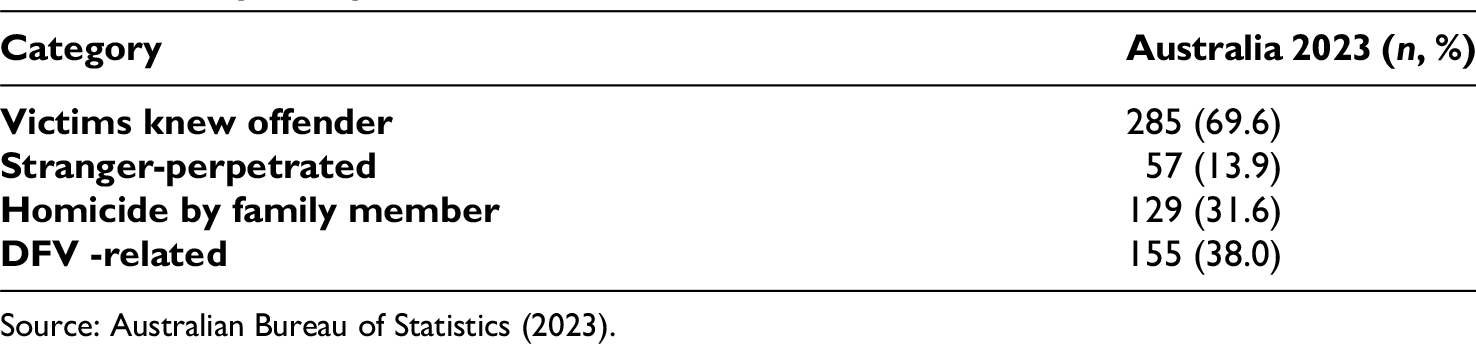
Source: Australian Bureau of Statistics (2023).
The type of relationship between the victim(s) and the offender(s) has been explored as a primary source of motivation for fire-associated homicides. In PFH, Davies and Mouzos (2007) found that strangers were the most common offenders (25%), followed by friends or acquaintances (22%), family members (19%), and intimate partners (19%). However, Davies and Mouzos (2007) define a subcategory of PFH cases called ante-mortem burnings (burning victim while alive), which was found to be most common in intimate partner relationships (46%) and involved only female victims. This finding suggests that intimate partners are more likely than other relationship types to use fire as a weapon of severe violence, with male perpetrators being the most commonly identified offenders (83%, n = 54).
Motivational factors in PFH further complicate offender profiling and IPV risk assessments. Fischer (2007) found that substance abuse and several co-morbid mental health conditions, such as depression, were significant risk factors amongst fire-related homicide perpetrators. D’Abate and colleagues (2024) examined two cases of intentional burning of a living-person, using accelerants to ignite the flames. They described the offenders in these cases as exhibiting strong intentions to inflict maximum harm or conceal evidence of abuse, with a high degree of premeditation (d'Abate et al., 2024). The study suggests that fire may be deliberately chosen by offenders to amplify psychological terror, due to the intense physical pain and emotional trauma associated with burn injuries. Within the two cases studies by d’Abate and colleagues (2024), the authors conclude that fire was not selected as a random tool by the perpetrator, but instead as a calculated means to gain retribution or maintain control. Moreover, perpetrators may be motivated by a sense of being wronged or slighted by the victim, leading to a desire for revenge or retribution. In an interesting study examining 114 cases of high-consequence firesetting within Australia, Nanayakkara and colleagues (2020) found that 34% (n = 38) of fires were motivated by a desire for revenge. Among the perpetrators acting based on revenge, 62% (n = 24) had been intimately involved with their victims. In addition to this, six of the cases classified as being motivated by revenge, were also associated with an intent to commit suicide during the offence. These findings underscore the importance of considering intimate partner relationships as a key demographic in risk assessments of potential victims and offenders, particularly the use of fire as a weapon within intimate partner conflict, including situations involving relationship breakdown or separation, which may heighten risk for some individuals.
Fire as a weapon in IPV
Fire as a weapon in IPV has been highlighted in the literature as a control mechanism, contributing to power imbalances and manipulation within abusive inter-personal relationships (Davies & Mouzos, 2007; Lelliott & Wallis, 2023; Satyen et al., 2021). Researchers in this space argue this is a key component of misogyny and the continued subjugation of women (Yates, 2020). Fischer (2007) examined fire as a tool in DFV settings, particularly within the intimate partner dynamic. This study revealed that fire was used as a method of maintaining control over a victim(s), and had severe psychological and physical impacts upon survivors. In these cases, a perpetrator can be known to allude to burning the victim(s) or actually set the victim(s) and/or their belongings on fire, inflicting severe psychological trauma regardless of whether physical bodily harm has occurred. Davies and Mouzos (2007) provide further support for the idea that fire is frequently used in domestic violence scenarios, specifically against women and children. Within PFH cases between 1989 and 2005, 46% occurred within an intimate partner context, all victims of which were female (Davies & Mouzos, 2007). This finding emphasises that when fire is used as a weapon it is most significantly documented between intimate partners and is disproportionately used against women. This is further supported by their analyses of all cases within the secondary fire-associated homicides category (fire used post-mortem), which revealed that intimate partners accounted for 40% of the victim–offender relationships between 1989 and 2005.
Analyses of dynamics on the basis of biological sex in fire-associated homicide reveal complex patterns and trends. Davies and Mouzos (2007) found that while male victims were more common (60%, n = 25) in PFH, female victims still accounted for a significant proportion (40%, n = 17). Furthermore, in cases where fire was used as a secondary element (post-mortem), females were more likely to have died of strangulation or suffocation (18%) when compared to males (4%). Offenders of postmortem fire use were overwhelmingly male (83%, n = 32) with only a small portion of female offenders (17%, n = 6).
Ferguson et al. (2015) report that, while males still accounted for most victims (56.5%) and offenders (74.3%) in fire-associated homicide, the proportion of females in these cases was markedly higher than in overall homicide. This indicates that, although fire remains a relatively uncommon method of homicide, women make up a higher proportion of victims when fire is used (43.5% in PFH compared with 36.3% in overall homicides), suggesting a disproportionately gendered pattern relative to general homicide trends (see Box 2).
Sex distribution in fire-associated vs overall homicide (2015).
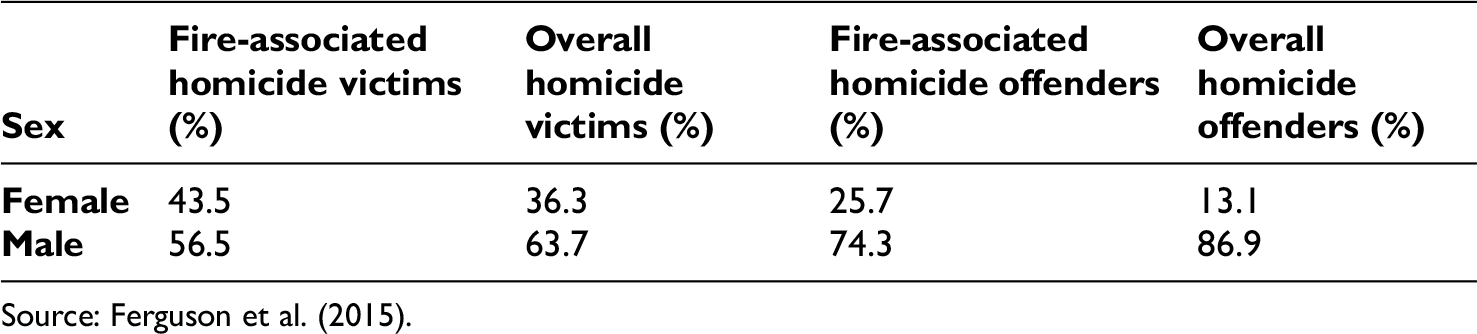
Source: Ferguson et al. (2015).
Kornhaber and colleagues (2023) further discuss burning as a method to inflict harm or death on a spouse, noting its prevalence in South Asian cultures, often stemming from interpersonal conflict within the domestic setting (Kornhaber et al., 2023). These instances are known as dowry-related violence, with the most severe outcome being death by burning (Ali et al., 2023). Although this form of violence may seem distant from societal norms in Western nations, statistical analysis reveals that dowry abuse in Australia has been increasingly recognised as a form of family violence. Concerns about dowry-related violence were initially raised by the Indian community in Australia in 2005; however, it was not formally recognised as a form of family violence until 2019 by Victoria and Western Australia (O'Connor & Lee, 2021). Research shows burning is a major cause of death among married women subjected to dowry-related violence and indicates that the most common perpetrators are men with a spousal relationship to the victim (Ali et al., 2023). This reinforces the role of fire as a method of abuse and homicide as a gendered weapon of IPV. In Australia, dowry-related violence continues to occur, especially among South Asian migrant communities. This is supported by the 2019 Senate Inquiry into Dowry and Dowry Abuse in Australia, which reported that a Queensland social worker assisted with over 30 dowry-related domestic violence cases in the Indian community across Queensland, NSW, and South Australia (Ali et al., 2023). Furthermore, a 2018 clinical audit showed that 50% (n = 26 of 52) of South Asian women engaging in outpatient mental health care services in Australia had experienced dowry-related abuse (O'Connor & Lee, 2021). These findings reflect a pattern of gendered coercive harm in which fire may be used as a method of both physical and symbolic violence. While dowry-related abuse is well documented in India, evidence in Australia relates to dowry-linked coercive control and financial abuse within South Asian communities rather than dowry-related deaths.
Davies and Mouzos (2007) also discuss the prevalence of coercive control in abusive relationships, noting that fire is not only used lethally but as a psychological weapon to control or intimidate victims prior to escalation. These dynamics align with broader patterns of coercive control used by abusive perpetrators in IPV (Douglas, 2023).
This evidence reinforces the overall trend that women are at a heightened risk of lethal victimisation by fire as a primary method. Further exploration suggests that fire is not only used as a lethal weapon but is also a strategic tool (that intends to cause fear and control) used in domestic violence cases, particularly against women and children. Davies and Mouzos (2007) emphasise fire as a tool for control, punishment, or revenge within domestic settings, reinforcing the presence of gender-based violence.
Evaluation
The literature highlights several consistent trends in fire-associated homicide, particularly its use in the context of intimate partner conflict, coercive-control dynamics, and broader gendered violence against women. The use of fire within DFV and IPV is prevalent as part of an ongoing pattern of coercive control, where fire is used not only to inflict harm or cause fatality, but also to intimidate and silence the victim(s). Prior studies show that these patterns were present across national homicide data, with a disproportionate number of women involved as both victims and, to a lesser extent, perpetrators, reflecting distinct gender motives and dynamics in the weaponisation of fire (Davies & Mouzos, 2007; Ferguson et al., 2015). However, beyond 2010, there is no updated analysis of fire-associated homicide incidents across Australia. Few studies have examined fire as a weapon of coercive control, and there has been limited policy attention to this pattern within the DFV/IPV contexts. There is also a lack of critical analysis of the increase in media reporting the use of fire, either as a threat or lethal weapon, within the DFV and IPV contexts. This study addresses the gap by analysing national homicide data related to fire-associated offences since 2010, up to 2024, with specific focus on gender, relationship dynamic between the victim(s) and offender(s), and the use of fire as a tool for control or lethal violence.
Method
This study employed a quantitative research design to examine patterns and trends in fire-associated homicide in Australia. The focus was on descriptive analysis of PFH cases, with attention to gender, victim–offender relationships, motive, and jurisdictional distribution.
Data source and collection
All data analysed in this study were obtained by request from the NHMP, which is managed by the AIC. The NHMP includes homicide data across all Australian jurisdictions and provides de-identified and aggregated information, including non-identifying details of victims, offenders, and the circumstances of each incident. Ethical approval was obtained from the University of Newcastle Human Research Ethics Committee (Reference No: H-2024-0335). It is noted that some incidents undergoing historical verification were unavailable at the time of analysis and were therefore excluded. The dataset included cases of both cleared and uncleared homicide. Percentages cited from external datasets include raw counts wherever they were reported in the original source. Where raw numbers were not published, percentages are presented as originally reported to retain the accuracy of the source data.
The specific data requested for analysis included:
Incidents of homicide where fire was used as the primary method of killing. Victims from those incidents who sustained burns or inhalation injuries. The recorded motive for each PFH.
The NHMP data were provided as an Excel Workbook containing pre-aggregated tables by year, jurisdiction, injury type, motive, and victim–offender relationship for PFHs.
Analytic approach
Analyses used descriptive yearly counts from NHMP tables. Chi-square tests of independence compared PFH distribution by victim–offender relationship (α = .05); effect size is reported as Cramér's V. Trendlines are ordinary least squares fits to annual PFH counts within each window.
Results
Sex of victims in PFH (1989–1990 to 2022–2023)
Figure 1 shows the annual counts of PFH victims by sex for 1989–1990 to 2022–2023. Figure 2 presents a focused view from 2009–2010 onward. Yearly frequencies are listed in Table 1.
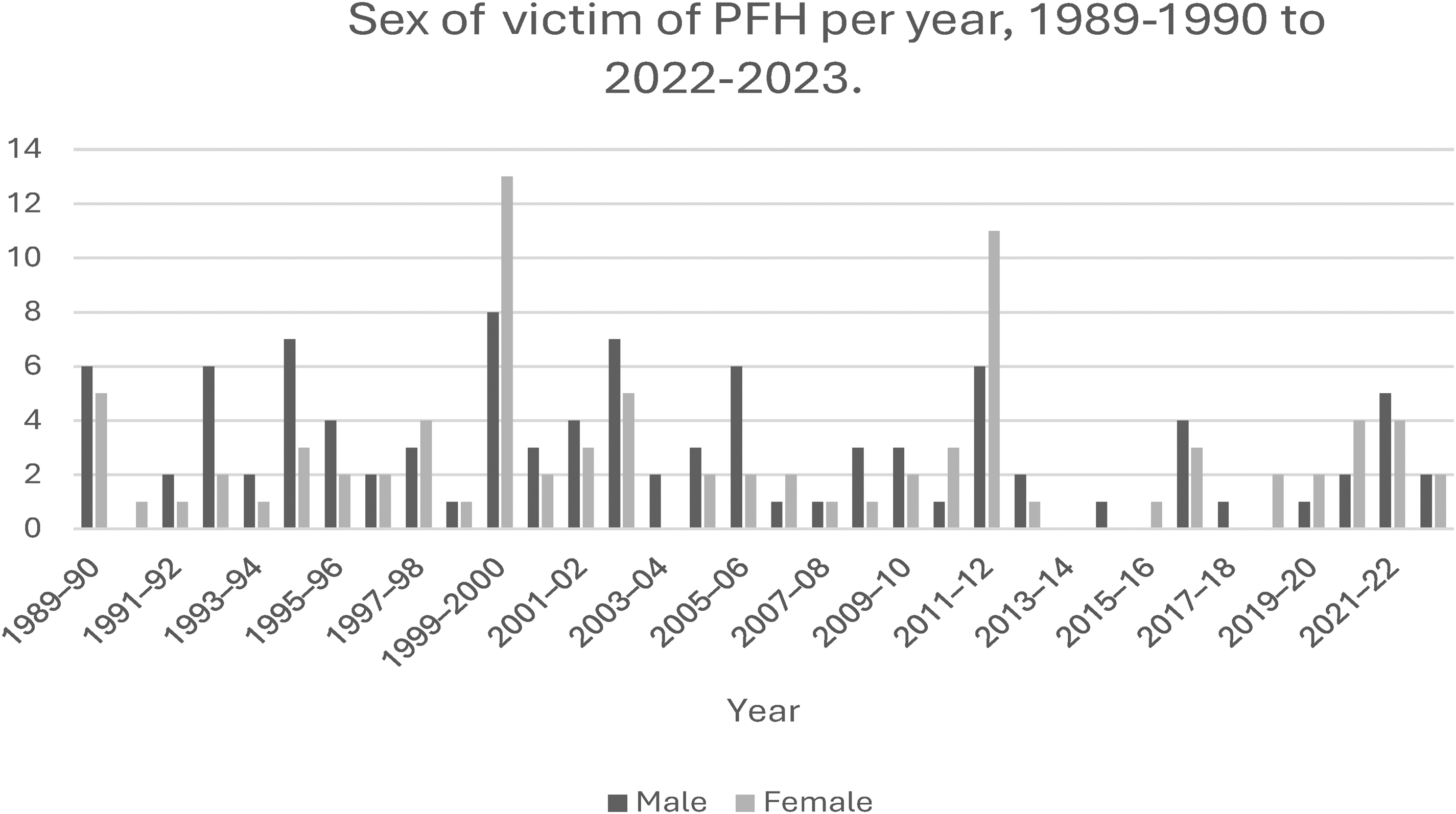
Annual counts of primary fire homicide victims by sex, 1989–1990 to 2022–2023. Counts vary year to year; male victims exceed female victims in 19 of the 34 years in the dataset. However, female victim counts show two pronounced spike years in 1999–2000 and 2011–2012.
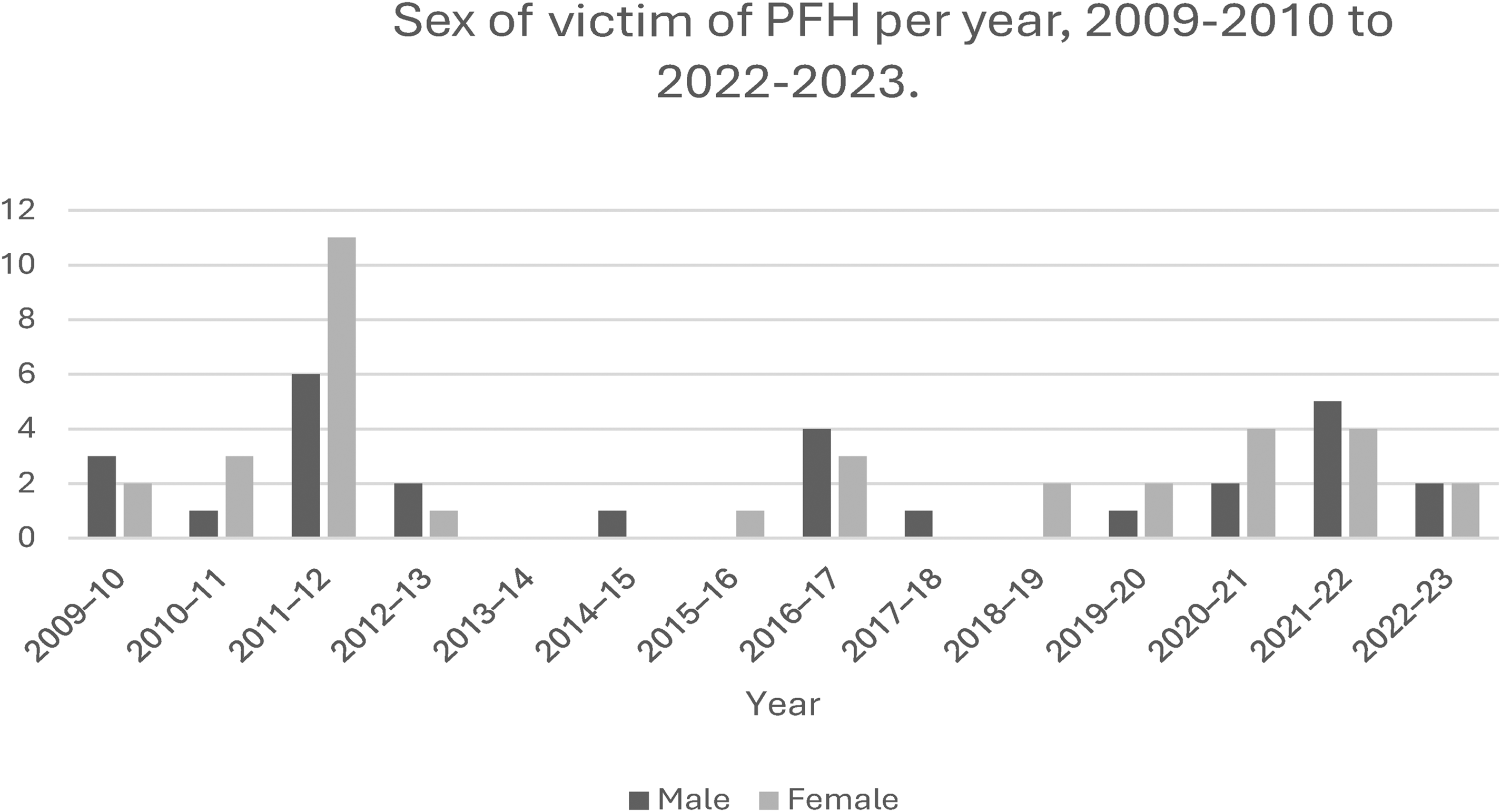
Annual counts of primary fire homicide victims by sex, 2009–2010 to 2022–2023. Counts remain small and variable, the highest annual count occurs in 2011–2012, driven by a spike in female victims.
Victims of homicide where primary weapon used was fire by sex, 1989–1990 to 2022–2023 (n).
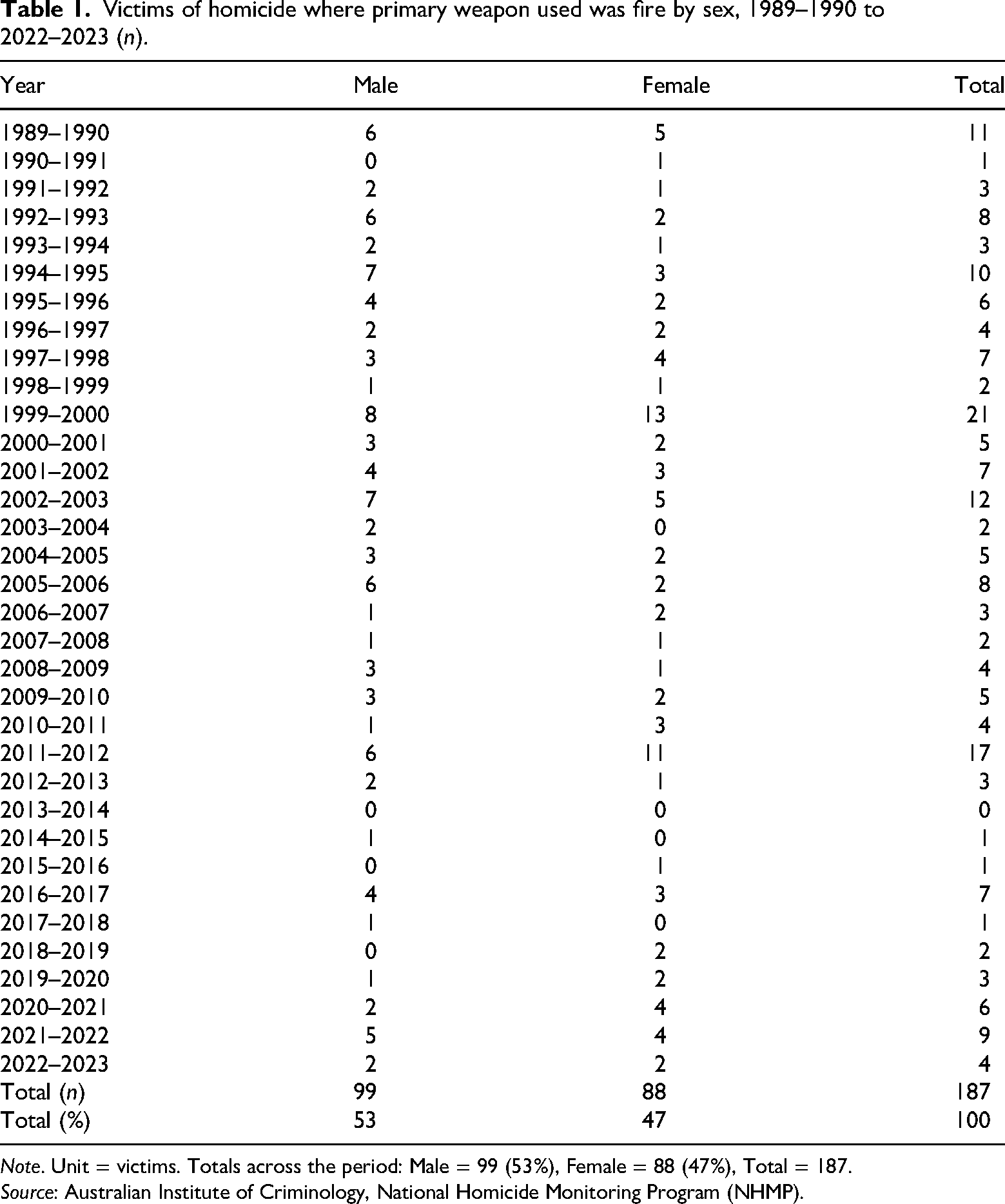
Note. Unit = victims. Totals across the period: Male = 99 (53%), Female = 88 (47%), Total = 187.
Source: Australian Institute of Criminology, National Homicide Monitoring Program (NHMP).
Biological sex of offenders in PFH (1989–2023)
Figure 3 shows the annual counts of PFH offenders by sex for 1989–1990 to 2022–2023. Figure 4 provides a focused view 2009–2010 onward. Yearly frequencies are listed in Table 2.
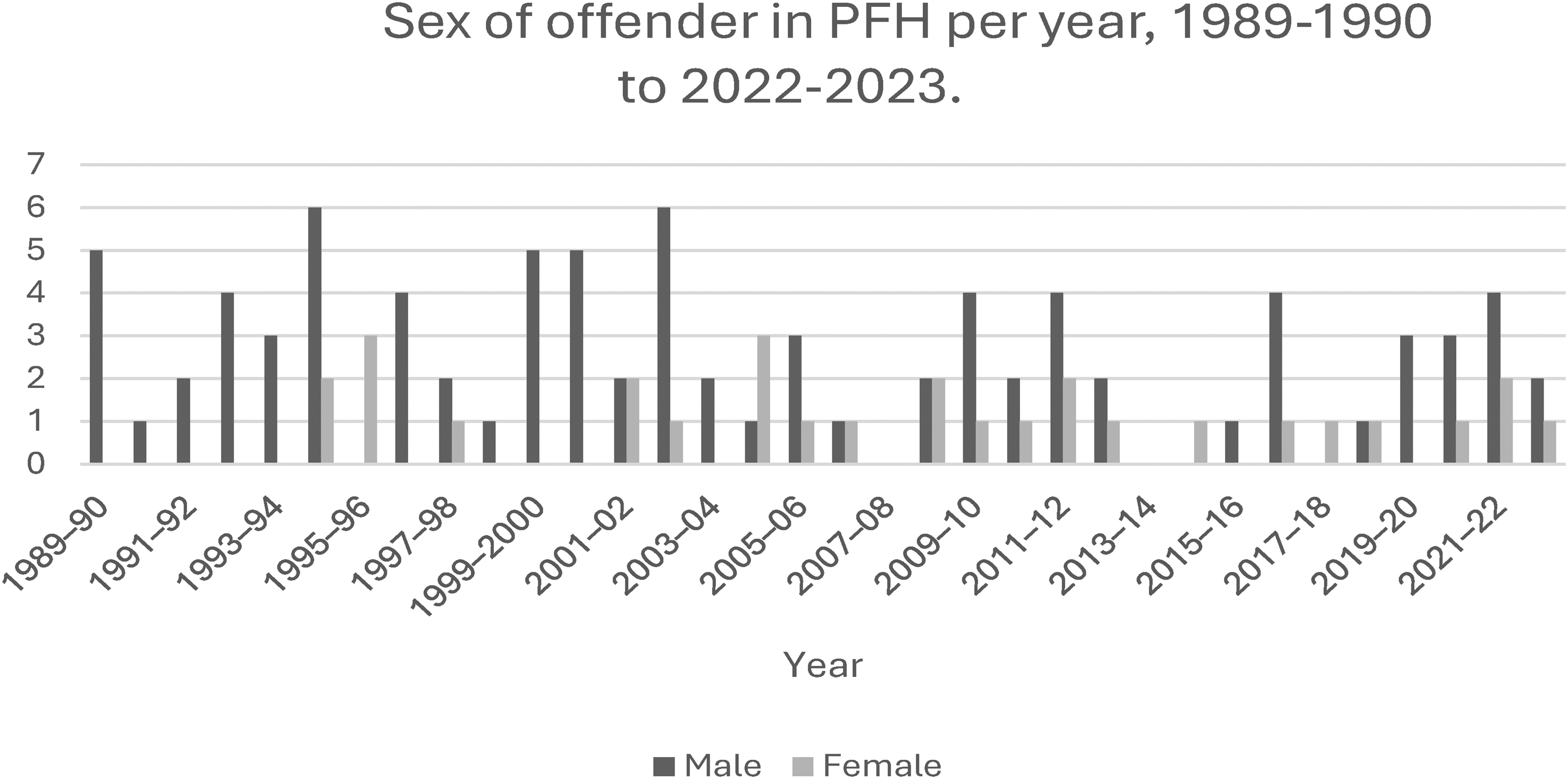
Annual counts of primary fire homicide offenders by sex, 1989–1990 to 2022–2023. Male offenders predominate in every year; female counts are low and intermittent, with occasional spike years.
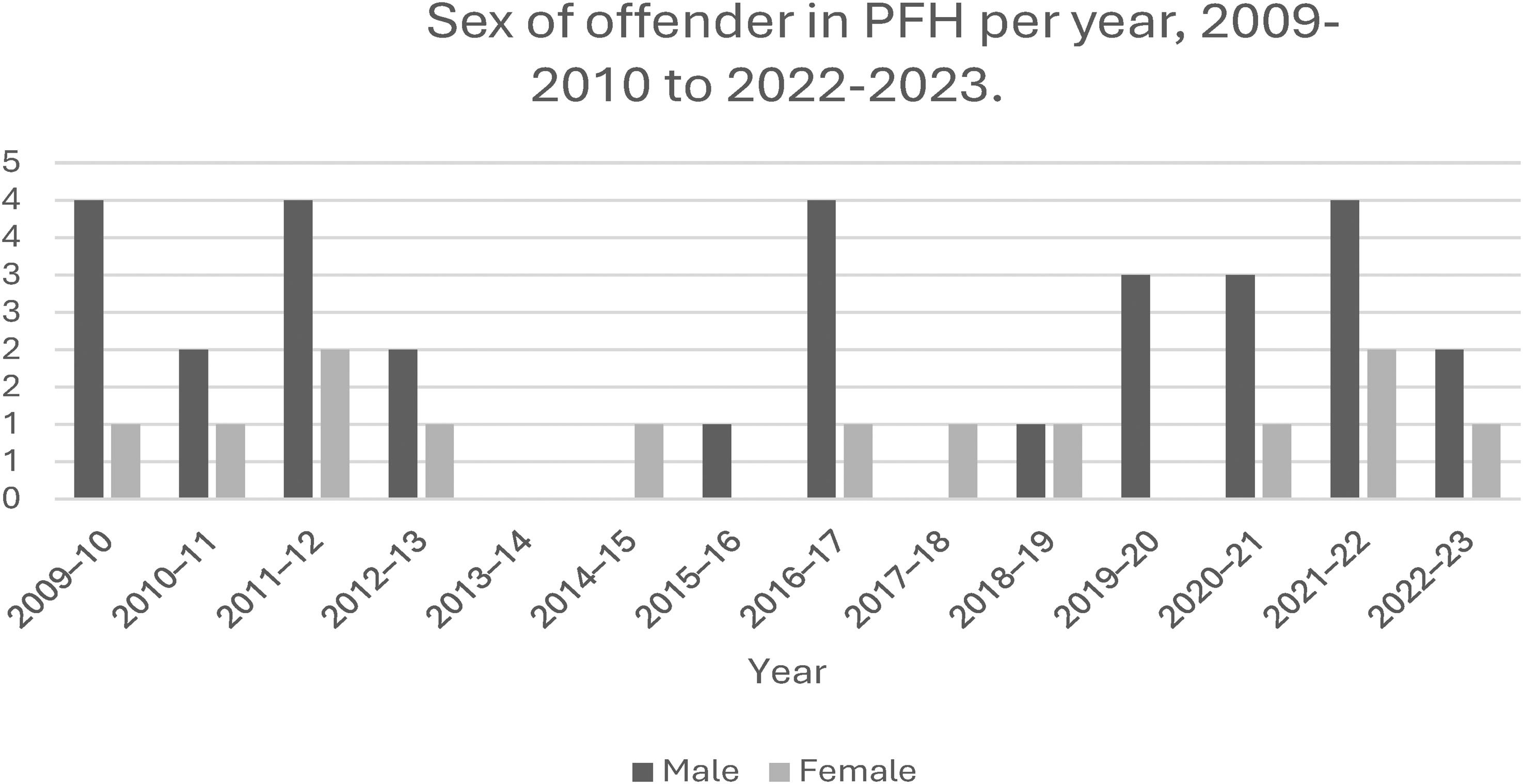
Annual counts of primary fire homicide offenders by sex, 2009–2010 to 2022–2023. Male offenders remain the majority across the period; female counts appear in a minority of years and at small values.
Cleared incidents of homicide where the primary weapon was fire, by sex of the primary offender, 1989–1990 to 2022–2023 (n).
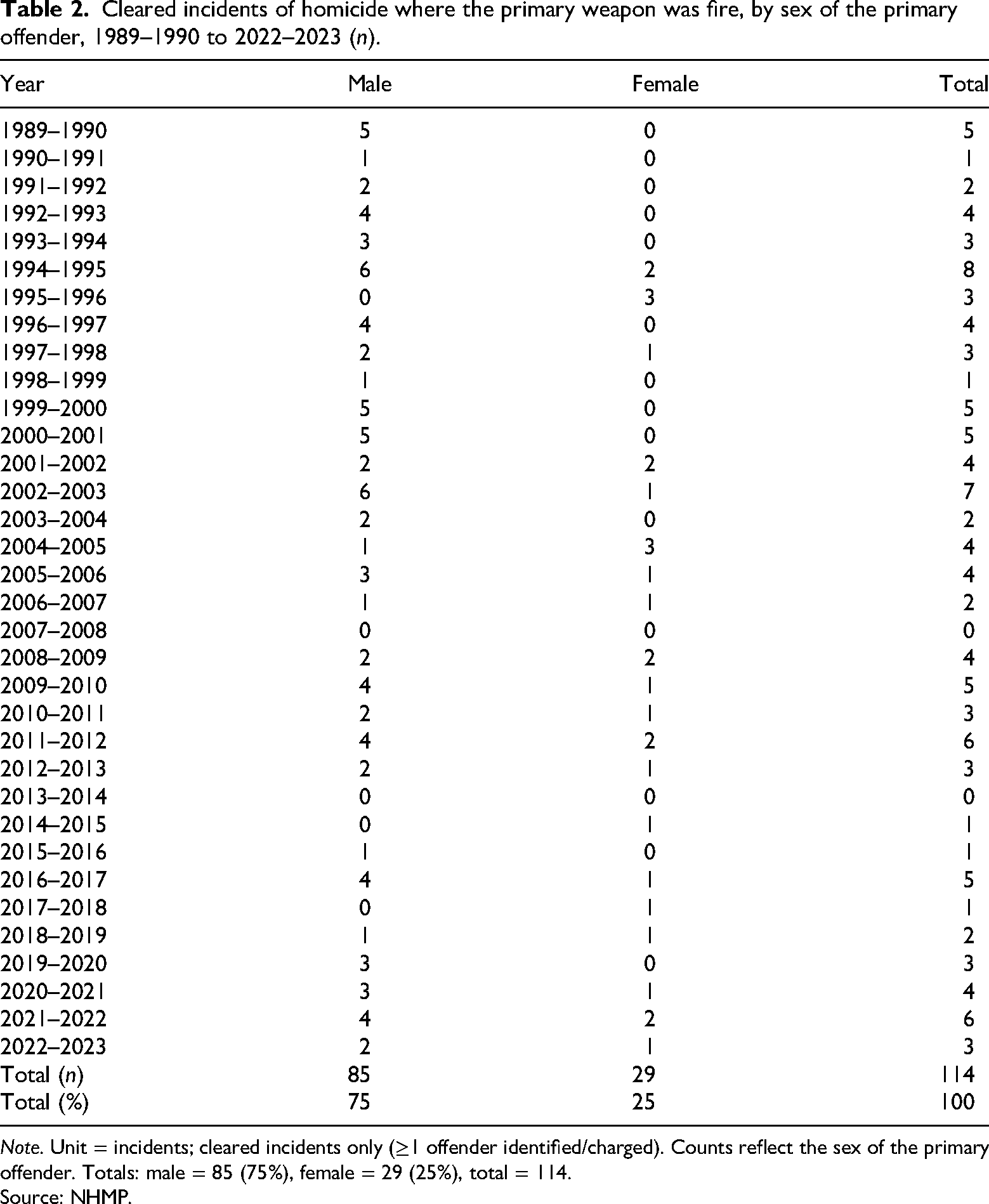
Note. Unit = incidents; cleared incidents only (≥1 offender identified/charged). Counts reflect the sex of the primary offender. Totals: male = 85 (75%), female = 29 (25%), total = 114.
Source: NHMP.
PFH by victim–offender relationship (1989–1990 to 2022–2023)
Figure 5 shows annual PFH counts for four relationship types (intimate partner; domestic including intimate partner; acquaintance; and stranger) from 2009–2010 to 2022–2023. Figure 6 contrasts domestic (including intimate partner) with stranger from 1989–1990 to 2022–2023. Exact yearly counts appear in Table 3.
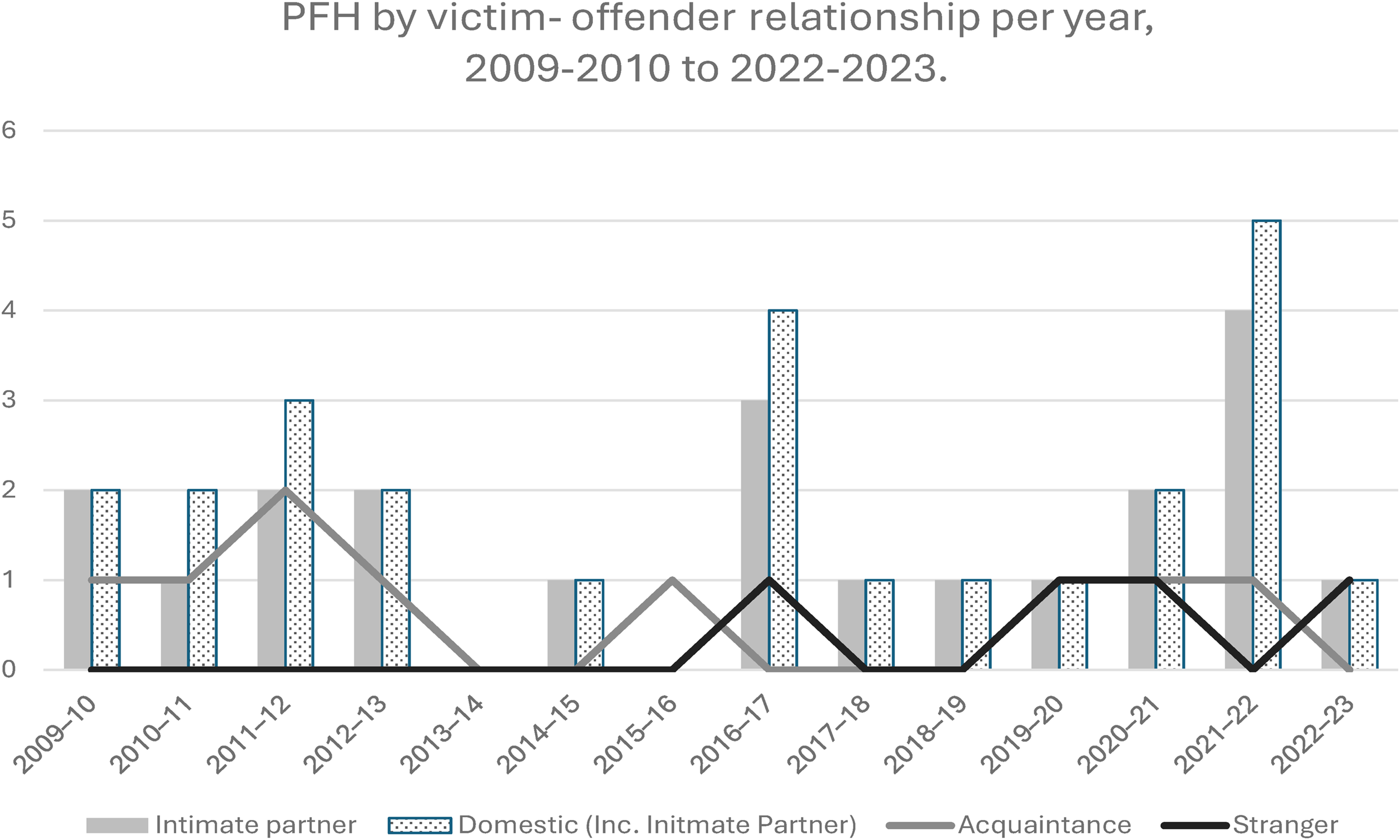
Annual number of primary fire homicide incidents by victim–offender relationship, 2009–2010 to 2022–2023. Domestic relationships (including intimate partner) are the most common, followed by acquaintances and strangers, with occasional peaks in intimate partner cases.
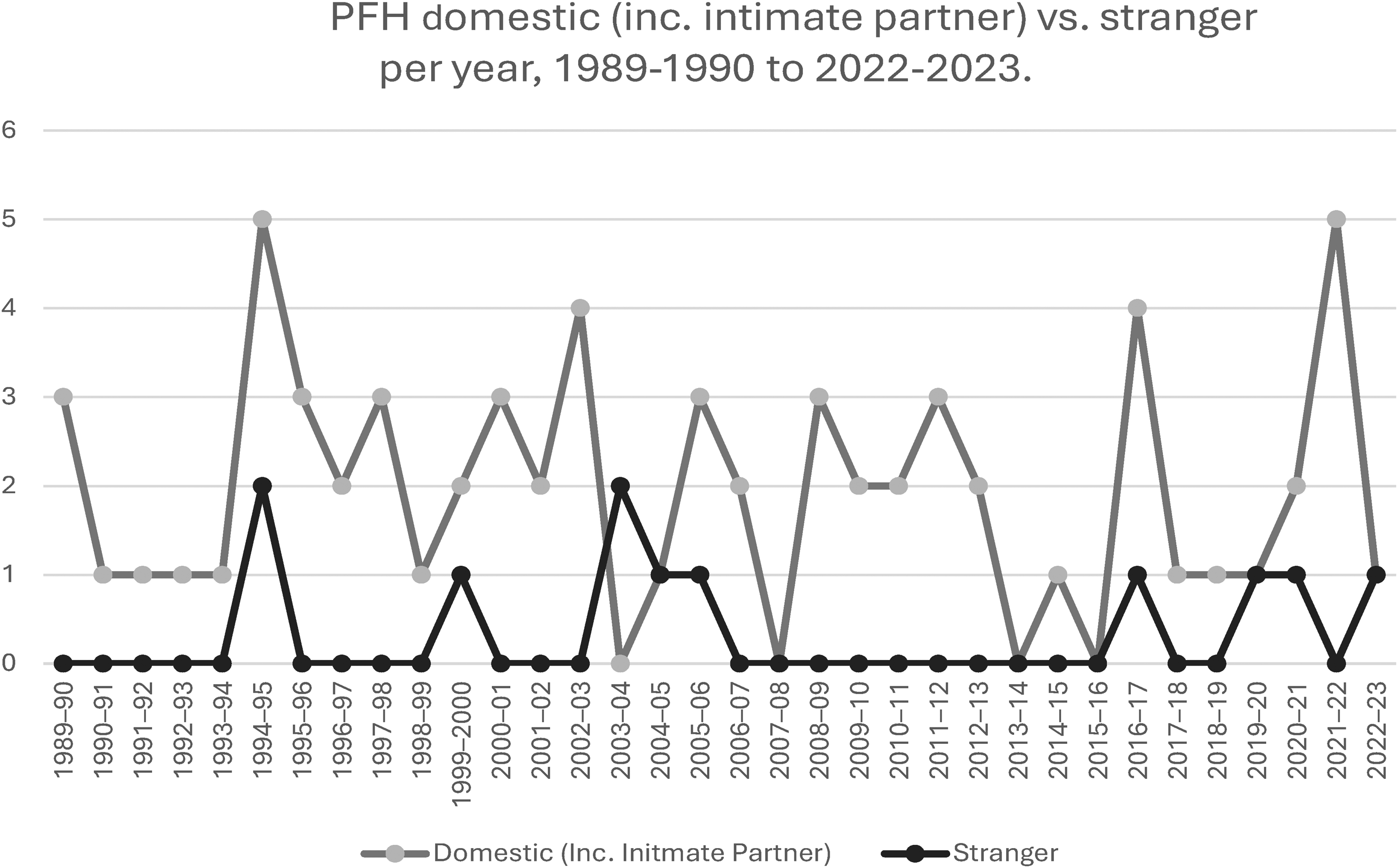
Primary fire homicide incidents involving domestic (including intimate partner) vs stranger relationships per year, 1989–1990 to 2022–2023. Domestic cases exceed stranger cases in nearly every year, with multiple small count peaks over the period.
Incidents of Overall Homicide (OH) where the primary weapon was fire, by victim-offender relationship, Australia, 1989–1990 to 2022–2023 (n).
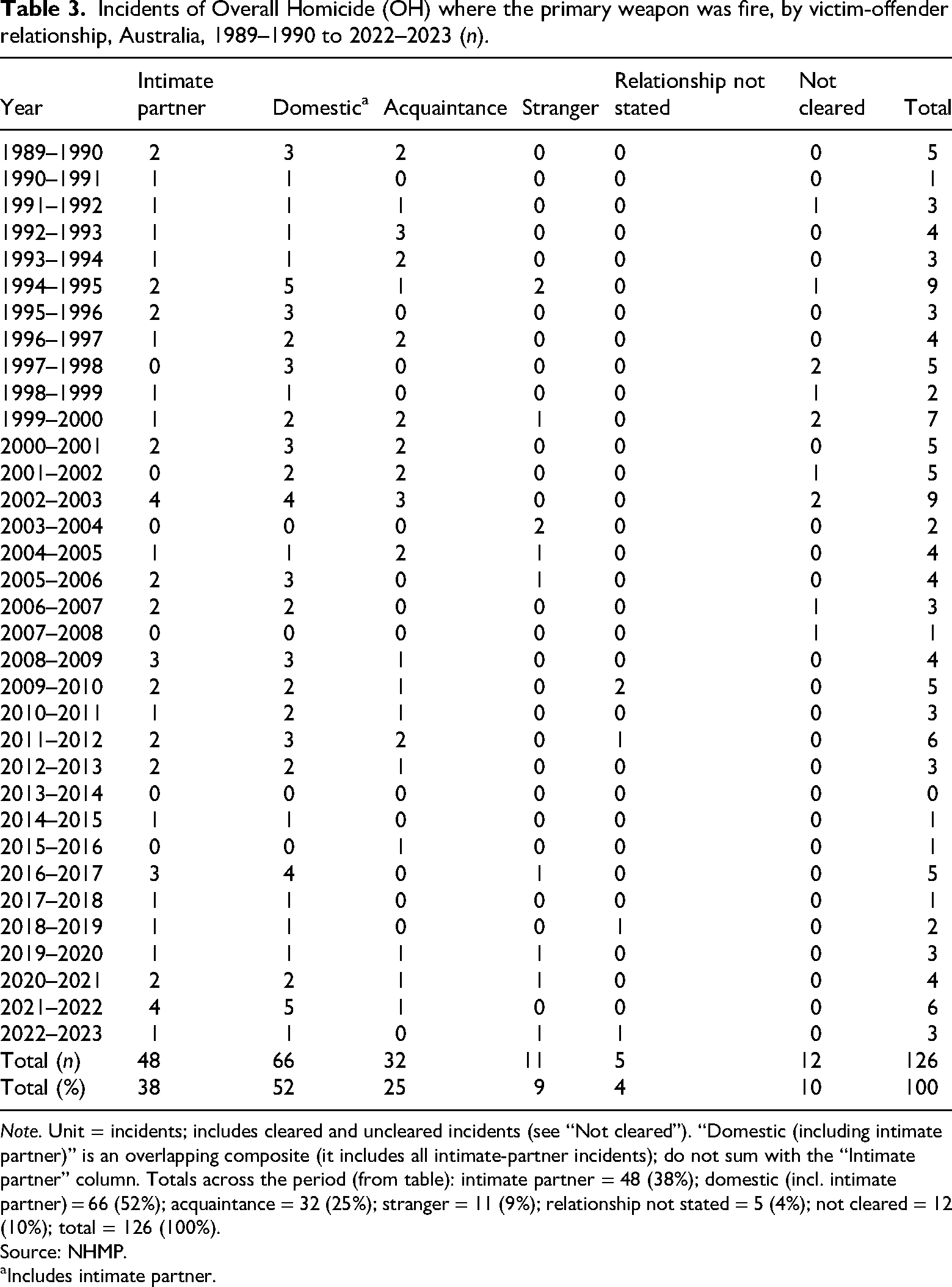
Note. Unit = incidents; includes cleared and uncleared incidents (see “Not cleared”). “Domestic (including intimate partner)” is an overlapping composite (it includes all intimate-partner incidents); do not sum with the “Intimate partner” column. Totals across the period (from table): intimate partner = 48 (38%); domestic (incl. intimate partner) = 66 (52%); acquaintance = 32 (25%); stranger = 11 (9%); relationship not stated = 5 (4%); not cleared = 12 (10%); total = 126 (100%).
Source: NHMP.
Includes intimate partner.
A chi-square test of independence on the 1989–1990 to 2022–2023 data indicated a significant association between victim–offender relationship and PFH, χ2 (4, N = 126) = 99.00, p < .0001; PFH is substantially more likely in domestic/intimate-partner contexts than among acquaintances or strangers.
Temporal trends of PFH versus OH
Figures 7–9 plot annual homicide (OH; left axis) against PFH (right axis). A linear trend is fitted to PFH for three windows: the full series, 2009–2010 onwards, and 2018–2019 onwards. Trendline equations are given as y = m x + b, where x is years since the start of each window; R2 indicates variance explained. Yearly frequencies are listed in Table 4.
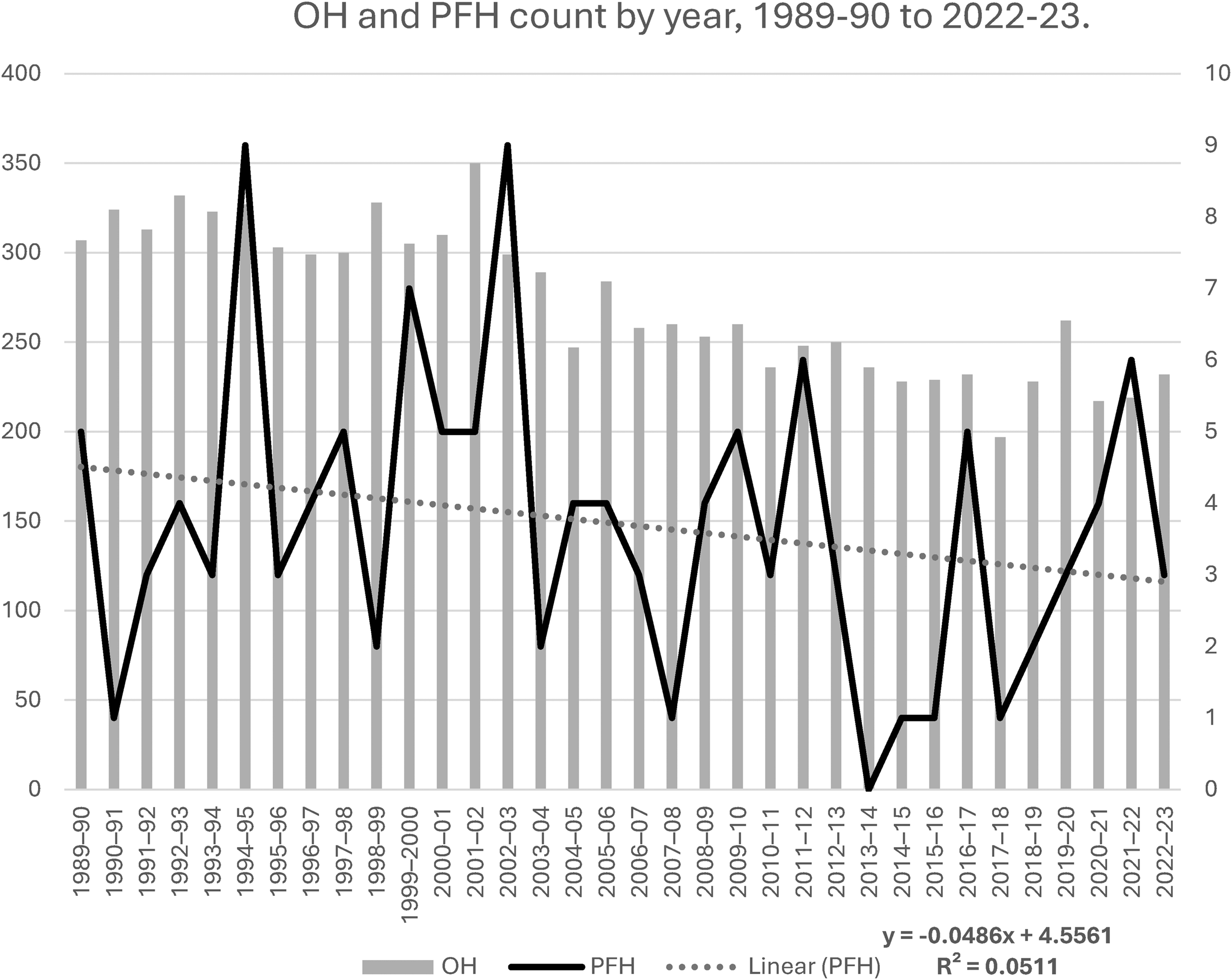
Annual counts of Overall Homicide (OH) and Primary Fire Homicide (PFH), 1989–1990 to 2022–2023 (OH: left axis; PFH: right axis). PFH is low and variable with a flat to slightly increasing linear trend over the period (PFH trendline: y = 0.0468x + 4.556, R2 = .0511).
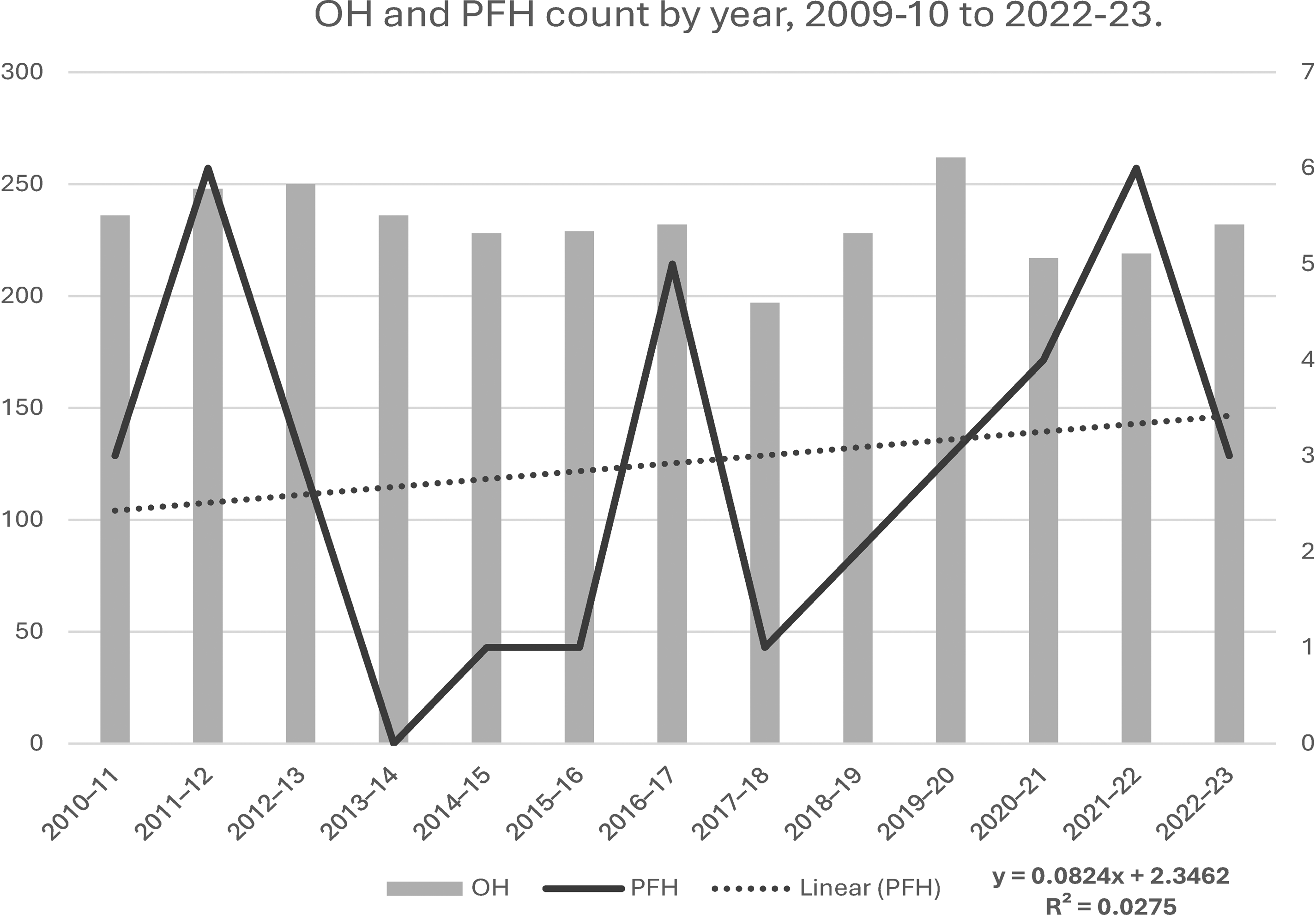
Annual counts of OH and PFH, 2009–2010 to 2022–2023. (OH: left; PFH: right). OH is relatively stable; PFH shows a modest upward trend (PFH trendline: y = 0.0824x + 2.3462, R2 = .2275).
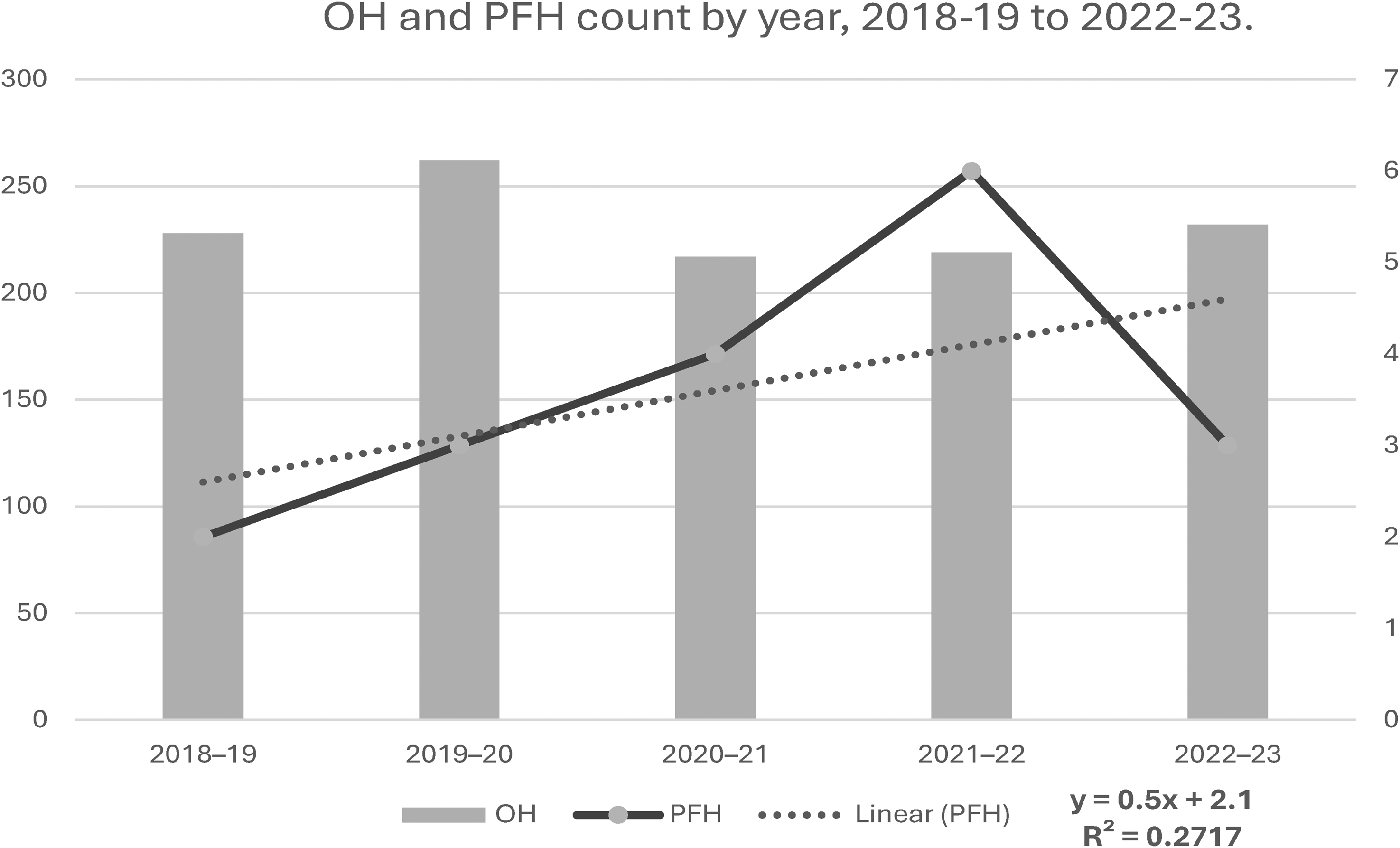
Annual counts of OH and PFH, 2018–2019 to 2022–2023 (OH: left; PFH: right). OH counts remain steady, while PFH rises through 2021–2022 then falls in 2022–2023; the short window trendline is positive (PFH trendline: y = 0.50x + 2.1, R2 = .2717). OH remains stable.
Incidents of OH and PFH per Year, Australia, 1989–1990 to 2022–2023 (n).
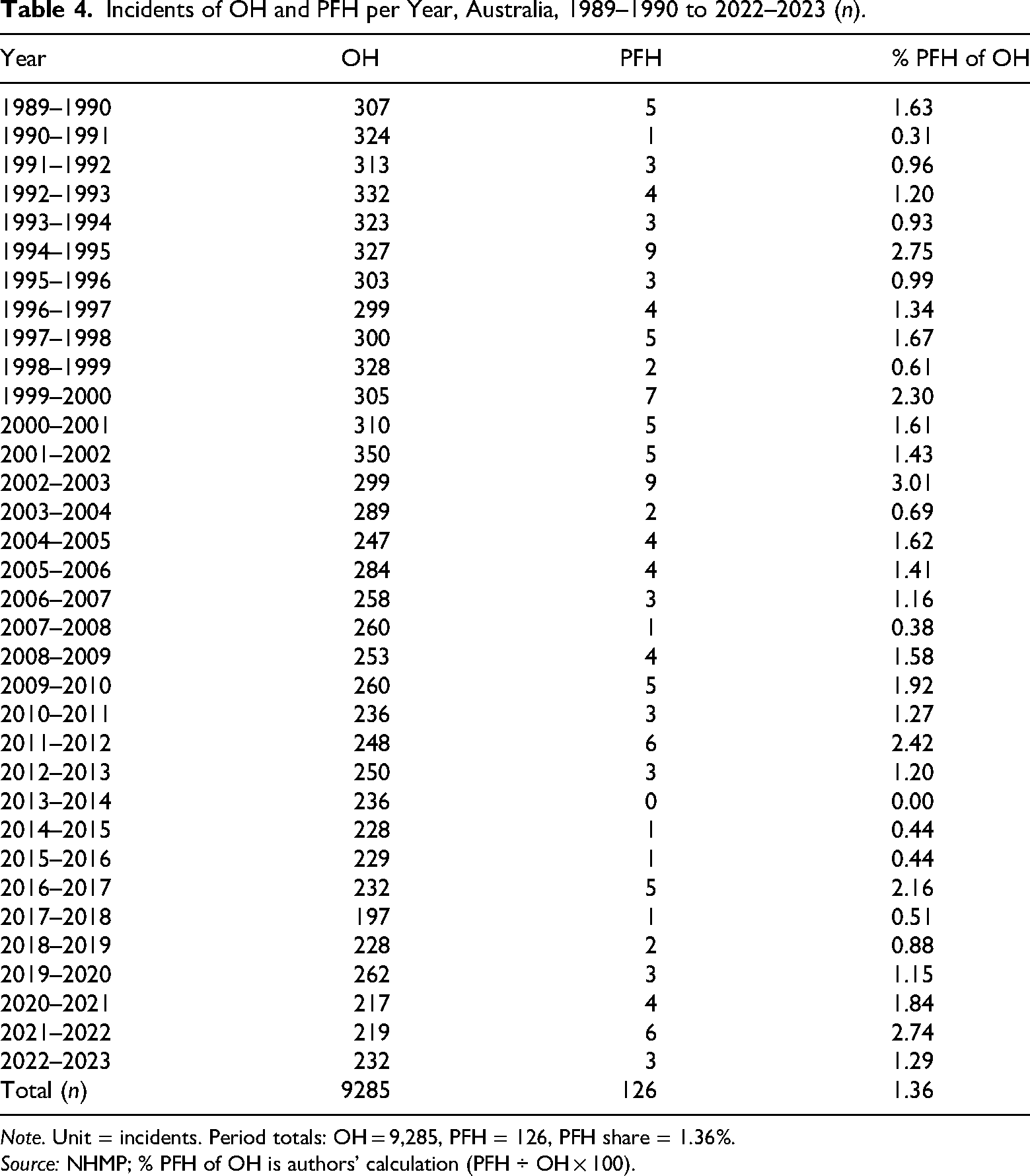
Note. Unit = incidents. Period totals: OH = 9,285, PFH = 126, PFH share = 1.36%.
Source: NHMP; % PFH of OH is authors’ calculation (PFH ÷ OH × 100).
Discussion
Key findings
Sex of victims
The evaluation of biological sex as a factor reveals inconsistent overrepresentation of female victims, with notable spikes in 1999–2000 and 2001–2002 (female n = 13; male n = 8) (Figures 1 and 2 and Table 1). More recent years (Figure 2) show further increases in female victimisation in 2011–2012 and 2021–2022, where counts equalled or exceeded male victims. It is important to note that in some IPV-related PFH incidents, multiple victims died within the same fire, which contributed to elevated victim counts in particular years.
Sex of offenders
PFH offenders are shown to be predominantly male (Figures 3 and 4 and Table 2). Between 1989 and 2023, 74.56% (n = 85) of cleared PFH incidents involved male offenders, while 25.44% (n = 29) involved female offenders.
Victim–offender relationship
The data also demonstrate a strong relational context, with the majority of PFH incidents occurring in domestic settings, most commonly within intimate partner and domestic relationships (Figures 5 and 6 and Table 3). These categories dominate across the time series, with peaks in 1993–1994 and 2021–2022. Some of these spike years reflect multi-fatality events in which several victims died within a single PFH incident, such as the Childers Backpackers fire in 2000, temporarily elevating annual totals despite the overall rarity of PFH. A statistically significant association between victim–offender relationship and PFH was found in the chi-squared test of independence (p < .0001), supporting prior research that fire is most often used in intimate and emotionally charged contexts.
PFH temporal trends
Analysis of NHMP records from 1989 to 2023 reveals a gradual rise in PFH, with two distinct periods of escalation: the first occurring from 2016–2017, and the second following the COVID-19 pandemic in 2020–2022 (Figures 7–9 and Table 4). While overall homicide counts remained relatively stable or declined slightly between 1989–1990 and 2022–2023, PFH incidents increased from an average of around three to four incidents annually in the early 2000s to four to sixincidents annually in recent years. PFH accounted for 1.62% (n = 4 of 247) of OH in 2004–2005 compared with 2.74% (n = 6 of 219) in 2021–2022, representing a proportional increase despite small absolute numbers. The most prominent growth occurred after 2018, aligning with the second escalation period. A linear trendline fitted to PFH incidents from 2018–2019 to 2022–2023 (Figure 9) shows a positive slope (y = 0.50x + 2.1, R2 = .2717) indicating a steady rise in the use of fire as a primary homicide method.
These trends suggest that although PFH remains rare, its relative proportion within national homicide data is growing, particularly in recent years. These findings position PFH as a small but intensifying subset of lethal violence, with clear gendered and situational patterns that merit focused criminological and forensic attention.
Gendered and relational patterns
While the sex distribution we observe suggests PFH may intersect with coercive control dynamics, it cannot infer mechanism from these counts alone. It remains unclear whether firesetting is one behaviour within a broader coercive pattern or a last resort act at the point of separation/escalation. Accordingly, coercive control is treated here as a hypothesised risk marker rather than a demonstrated pathway within the data. Future work should link PFH cases to case-level indicators of coercive control and temporal sequencing to test this mechanism.
Recent high-profile cases, including the murder of Hannah Clarke and her three children in 2020 (State Coroner of Queensland, 2022) by Hannah's husband and father of her children, illustrate how fire is deployed as a weapon of control, particularly when other avenues of coercion fail or are challenged by law enforcement, such as domestic violence orders or apprehended violence orders. In such cases, fire-setting represents a calculated extension of control that often occurs at the point of separation or resistance from the victim (Beckworth et al., 2023). Tyler and Gannon's (2021) multi-trajectory theory of adult fire setting further reinforces this interpretation, highlighting how relational grievances and emotional dysregulation intersect with histories of coercive behaviour in domestic fire offenders. As such, grievance-based firesetting is predominately an instrumentally based form of violence, with fires rarely set in the “heat of the moment” or immediately during a conflict. Instead, there is often a lead up to this form of offending, with a range of precipitating and perpetuating factors occurring prior to firesetting. In turn, the firesetting functions to assert power over a victim and achieve retribution and revenge.
The observed rise in PFH since 2016 and again following the onset of the COVID-19 pandemic invites further exploration. While causation cannot be directly inferred from these data, many plausible hypotheses are evident. First, increased national attention to coercive control as a form of domestic violence, especially following the deaths of Hannah Clarke and her children in 2020, may have led to improved recognition of fire-related deaths within official homicide data. This is supported by the spike in PFH incidents in the years following intensified public awareness and policy reform discussions surrounding coercive control in several Australian jurisdictions (Walklate & Fitz-Gibbon, 2019). Although PFH remains a low-frequency offence, the data demonstrate a discernible upward trend, particularly from 2016 onwards and following the COVID-19 pandemic. While annual fluctuations are expected given the relative rarity of these cases, the broader pattern suggests a genuine increase. This rise likely reflects both an escalation in the use of fire as a weapon in domestic and intimate partner contexts, and improved recognition and classification of such incidents by coroners and investigators. As awareness of coercive control has expanded across legal, forensic, and policy domains, fire-related homicides are more consistently identified and captured within national datasets.
Second, the escalation in DFV during the COVID-19 pandemic (Morley et al., 2021) may have exacerbated known risk factors of PFH. Lockdowns, social isolation, and reduced access to support services disproportionately affected women in unsafe households (Smyth et al., 2021). In this context, fire-setting may have emerged as a means of the offender exerting total control, especially in situations where the victim physically leaving the relationship was obstructed by lockdown and isolation rules during the pandemic (Morley et al., 2021). These factors likely interacted with other psychological, relational, and environmental dynamics that contribute to fatal outcomes in abusive relationships.
Third, these data may reflect earlier gaps in the identification and recording of fire-related homicides, particularly in the context of DFV. In previous decades, such incidents may not have been systematically classified as homicides involving fire, limiting their visibility in national datasets like the NHMP. As forensic and psychological understandings of deliberate firesetting have developed, including recognition of complex motivations (Tyler & Gannon, 2021), the capacity to detect and classify such cases accurately has also risen. This underscores the need for continued vigilance and consistent coding practices across Australian jurisdictions to ensure accurate documentation and prevention.
Implications for forensic practice, law, and policy
The findings of this study have important implications for forensic investigation, domestic violence risk assessment, and policy reform. First, fire-related deaths should not be viewed in isolation from the related context within each individual case. When fire is used as a method of homicide, particularly when the victim and offender share an intimate or domestic relationship, it should serve as a critical red flag for investigators and coroners. This includes recognising prior fire-setting threats, history of coercive behaviour from the offender, carboxyhaemoglobin levels in the victim post-mortem, or post-mortem fire damage to the body and surrounding environment.
In domestic homicide or abuse investigations, the integration of coercive control indicators and symbolic methods of violence, such as fire, into risk assessments can improve the identification of high-risk individuals and situations. The use of fire may represent an escalation in a pattern of coercive conduct, rather than an isolated or spontaneous act. Risk screening tools and intervention protocols used by police, legal services, and social support agencies must be adapted to capture these patterns more effectively.
These findings also interact with recent legislative developments in Australia. Recently introduced coercive control laws in NSW (Crime Legislation Amendment (Coercive Control) Act, 2022 (NSW)) and Queensland (Queensland Government, 2024) reflect growing recognition of the cumulative nature of non-physical abuse. This legal shift supports the broader argument that fire-associated killings are not simply extreme and opportunistic acts but may emerge from chronic psychological entrapment, threats, and control (Douglas, 2023). Including knowledge of fire-related risk into the application of these laws will be essential for their effective use in the prevention of fatal harm in IPV and DV.
Finally, this study underscores the value of national data systems, such as the NHMP, in tracking complex patterns of gendered homicide. Continued investment in and refinement of these datasets is critical, not only to detect emerging homicide methods but also to support responsive and evidence-informed prevention strategies. Collaboration between forensic experts, criminologists, legal practitioners, and family violence specialists will be vital in addressing this evolving form of IPV and DV lethality.
Limitations and future directions
This study draws on a representative national dataset from the NHMP to provide longitudinal analysis of PFH in Australia. However, some limitations must be acknowledged. The data includes only solved homicide cases where a suspect has been identified, meaning that fire-related deaths which remain unsolved, or are initially misclassified as accidents, suicides, or deaths of undetermined intent, may be excluded from analysis. While intentionally lit fires are generally straightforward to identify in forensic investigation and are rarely mistaken for accidental events, PFH cases may still be underrepresented in official data when cause of death cannot be conclusively established or when investigation evidence is lost. This is particularly relevant in incidents where fire damage destroys physical evidence or when multiple possible causes of death are present (Davies & Mouzos, 2007). Additionally, variation in coding and classification practices across Australian jurisdictions, and changes over-time, may affect consistency of PFH identification. These factors, as well as the broader shifts in forensic and legal recognition of coercive control (Fitz-Gibbon et al., 2024), may partially explain the observed rise in identification of PFH within the recent years.
Despite these constraints, the data clearly indicate that PFH is a rare but rising and deeply gendered form of lethal violence. The use of fire in domestic and intimate partner contexts appears not only as a method of homicide, but as a symbolic extension of coercively controlling behaviour. Research has shown that firesetting can be highly emotive and function as a means of to achieve emotional or psychological restoration (Brooks & Ebbrecht, 2025; Canter & Fritzon, 1998; Nanayakkara et al., 2020). Although the literature on firesetting psychology is well-developed, most of this research examines young firesetters and bushfire offenders rather than intimate partner perpetrators. Emerging evidence suggests that motivations in IPV-related firesetting may differ; for example, depression following separation and loss of control has been identified as potential drivers in IPV homicides (Douglas, 2023). It remains unknown whether the psychological characteristics and motivations of IPV firesetters align with those identified in the broader firesetting literature or represent a distinct perpetrator profile, warranting further investigation (Boxall et al., 2022).
The present findings underscore the urgent need for forensic awareness, and targeted risk monitoring of fire-related behaviours in abusive relationships. Future research should explore court outcomes within PFH cases, coronial findings, and media portrayals of PFH, as well as the lived dynamics within individual cases, to build a more holistic understanding of this evolving phenomenon. In particular, qualitative case study analyses of PFH incidents, especially those involving intimate partner relationships, may offer valuable insight into coercive control patterns, escalation pathways, and fire-specific risk factors, similar to the depth of analysis achieved through coronial inquest processes. These investigations would complement this updated quantitative analyses and provide the depth needed to inform targeted prevention, policy, and legal responses. Ongoing national tracking and consistent classification practices remain essential to preventing this form of homicide occurring across Australia.
Conclusion
PFH is rare but increasingly visible in Australia. Across the examined period, incidents clustered in intimate partner or domestic settings; where offender sex was recorded, men were the most common perpetrators. Victims include both women and men, with small annual counts and notable variability. The available data do not establish PFH as an act of coercive control. Patterns are consistent with two possibilities: firesetting may operate as one behaviour within a broader coercive pattern or as a terminal act associated with separation. Accordingly, coercive control is best treated as a plausible risk context and policy-relevant hypothesis rather than a demonstrated causal pathway for PFH. These findings support heightened forensic awareness, explicit recognition of fire-related behaviours in domestic violence risk assessments, and case-level research that links PFH to indicators of coercive control and the temporal sequencing of abuse. Such research is needed to locate PFH within broader domestic violence patterns and to inform gender-responsive prevention and safety planning.
Footnotes

Ethics Approval
This study received approval from the University of Newcastle Human Research Ethics Committee (Reference No: H-2024-0335). The project involved secondary analysis of de-identified administrative records supplied under a data access agreement; no human participants were directly involved.
Funding
The authors received no financial support for the research, authorship, and/or publication of this article.
Declaration of Conflicting Interests
The authors declared no potential conflicts of interest with respect to the research, authorship, and/or publication of this article.
Data Availability
The dataset analysed in this study is not publicly available. Access is controlled by the AIC and may be granted to qualified researchers on request and subject to approval. Materials created by the authors (e.g., code, coding instructions) are available from the corresponding author upon reasonable request.