




Abstract
Although prior research has linked adolescent truancy with lower educational attainment and income in young adulthood, less is known about how these relationships are conditioned by demographics, such as gender, race, ethnicity, and receiving public assistance. Using data from two waves of the National Longitudinal Study of Adolescent to Adult Health, we find that adolescent truancy predicts lower educational attainment in young adulthood, and the effect is significantly stronger for males relative to females and significantly weaker for recipients of public assistance relative to their peers. Truancy's effect on educational attainment was largely invariant across race and ethnicity. We found little evidence that truancy in adolescence is significantly related to income in young adulthood, net of controls. This study highlights the importance of examining the nuanced relationship between truancy and later life outcomes.
Introduction
A growing body of research reveals the long-term negative effects of truancy across the life-course. For instance, truancy can increase the likelihood of dropping out of school and has been proposed as an early warning sign of school disengagement (Baker et al., 2001; De Witte & Csillag, 2014; Gleason & Dynarski, 2002; Kandel et al., 1984; Maynard et al., 2013; Rocque et al., 2017). Similarly, truancy can lead to negative long-term outcomes because students are less prepared to transition to work when entering adulthood (Kandel et al., 1984). This is demonstrated by truancy's consistent association with a host of problematic socioeconomic outcomes in adulthood, including fewer employment prospects (Baker et al., 2001; Hibbett et al., 1990), more unemployment (Attwood & Croll, 2006, 2015; Hibbett et al., 1990; Robins & Ratcliffe, 1980), and more government welfare receipt (Collingwood, 2020; Collingwood et al., 2023; Kandel et al., 1984; Reid, 1999). Truancy may represent a weak social bond to school (Hirschi, 1969), making way for subsequent weak bonds and attachment to the workforce in adulthood. From a life-course perspective of crime and delinquency, truancy has the potential to “knife off” 1 future opportunities for success in numerous life domains (Sampson & Laub, 1997).
Although there is some research examining the socioeconomic outcomes among young adults who skipped school in adolescence (Attwood & Croll, 2006; Baker et al., 2001; Collingwood et al., 2023; Farrington, 1980; Hibbett et al., 1990; Robins & Ratcliffe, 1980; Rocque et al., 2017), there is minimal research on whether these relationships differ by sociodemographic characteristics. Maynard and colleagues (2013, 2017) have noted there are few investigations into the sociodemographic characteristics of truanting youth in research on truancy interventions more broadly, which could potentially explain our limited understanding of whether the relationships between truancy and later life outcomes are invariant among youth, or if social location – defined by race, ethnicity, gender, and class – has the potential to moderate these relationships. The current study draws on life-course perspectives (Macmillan, 2001; Sampson & Laub, 1997) to examine the relationships between truancy and two indicators of socioeconomic status in young adulthood – educational attainment and income – and the extent to which they vary among adolescents based on gender, race, ethnicity, and socioeconomic background. The findings help clarify the nuanced effects of adolescent truancy on later life outcomes.
Truancy and long-term socioeconomic outcomes
In 1980, Robins and Ratcliffe noted minimal research on truancy and life-course outcomes, with scholars echoing this same sentiment more recently (Maynard et al., 2013; Rocque et al., 2017). Schools are where young people spend most of their time and are important in preparing youth for adulthood (Mickelson & Nkomo, 2012). Much evidence from the social sciences demonstrates the life-course effects of schooling and education “that occur both in the short term while students are still in school as well as over the long term after they leave formal schooling and enter adulthood” (Mickelson & Nkomo, 2012, p. 199). Key long-term outcomes of schooling include higher levels of education, higher-status jobs, and better preparation to participate in the economy (Mickelson & Nkomo, 2012). However, truancy undermines the positive effects of schooling, with a growing body of evidence documenting the long-term socioeconomic outcomes of truancy (Attwood & Croll, 2006; Collingwood et al., 2023; Farrington, 1980; Hibbett et al., 1990; Kandel et al., 1984; Robins & Ratcliffe, 1980; Rocque et al., 2017). Socioeconomic status refers to one's ability to obtain financial human capital (Cowan et al., 2012). Objective measures of socioeconomic status, such as educational attainment and income, have been employed by researchers from a variety of fields, including those examining the long-term socioeconomic effects of truancy (Farrington, 1980, 1996; French et al., 2015; Hibbett et al., 1990; Kandel et al., 1984; Robins & Ratcliffe, 1980; Rocque et al., 2017).
The link between truancy in adolescence and long-term negative socioeconomic status in adulthood can be viewed through the lens social bond and life-course theories (e.g., Hirschi, 1969; Sampson & Laub, 1997). A strong attachment to school helps control delinquent behaviour in adolescence via exposure to teachers and other students who adhere to conventional educational values (Keppens & Spruyt, 2017). When young people engage in truancy, they have less exposure to such individuals and thus a weaker bond to school, which can lay the groundwork for weakened conventional social bonds to the labour force in adulthood. Specifically, truancy can knife off legitimate opportunities for future socioeconomic success (Carlsson, 2013; Collingwood, 2020; Sampson & Laub, 1997). Higher levels of truancy reduce the likelihood that young people will graduate high school (Attwood & Croll, 2006; 2015; Baker et al., 2001; Farrington, 1980; 1996; Gleason & Dynarski, 2002; Kandel et al., 1984; Robins & Ratcliffe, 1980; Wehlage & Rutter, 1986), leading to a lack of preparedness for successful participation in the labour force in young adulthood (Baker et al., 2001; Hibbett et al., 1990; Kandel et al., 1984; Robins & Ratcliffe, 1980). Further, there are noted correlations between truancy in adolescence and higher levels of unemployment (Attwood & Croll, 2006, 2015), unstable job records (Farrington, 1980, 1996), and poorer employment prospects (Hibbett et al., 1990; Rocque et al., 2017) in adulthood. Young people who engage in truancy may also be “labelled” as truants informally by teachers and school administrators or officially through the judicial system if adjudicated through legal channels, such as truancy courts (Rubino et al., 2020; Weathers et al., 2021). These labels, in turn, can result in future truancy, school exclusion, and weakened attachment to school (Sampson & Laub, 1997).
Differences by gender, race, ethnicity, and socioeconomic status
Evidence suggests young people who engage in truancy are characterised by heterogeneity (Maynard et al., 2012, 2013, 2017; Vaughn et al., 2013), with variations observed across gender, race, ethnicity, and socioeconomic background. Yet, there is little research examining whether these characteristics moderate the effects of truancy on later life outcomes. Sampson and Laub (1997) argue that an individual's structural location can shape life-course trajectories, modifying the effects of early life-course experiences on later life outcomes. Therefore, the degree to which truancy impacts adult socioeconomic outcomes may be explained by one's social location, with a young person's relative structural advantage modifying the relationship.
For those who experience social disadvantage, further “[deficits] and disadvantages pile up faster” (Sampson & Laub, 1997, p. 21). Young people who experience disadvantage in terms of social location and engage in truancy may experience more negative consequences from truancy, as cumulative disadvantage can limit opportunities for future life success. Persons with a more disadvantaged social location based on race, ethnicity, gender, and socioeconomic status may be more negatively impacted by “knifed off” opportunities, as their social location offers little to offset the consequences of truancy relative to their more affluent peers. Conversely, it is also possible that truancy's deleterious consequences are less impactful for more disadvantaged youth whose limited educational and economic opportunities are already somewhat fixed. Here, we draw on Macmillan's (2001) discussion of the life-course consequences of adolescent victimisation for personal and social development, and how structural location may moderate such consequences. Consistent with Sampson and Laub (1997), Macmillan (2001) posits that disadvantage in society may compound the effects of victimisation, as social advantage may help to buffer some of the long-term effects of violence. Macmillan (2001), however, also offers an alternative hypothesis, speculating that victimisation may be less important to determining the life-course outcomes of disadvantaged groups whose “limited life chances may be more firmly established” by their social location (p. 14). Consistent with this reasoning, truancy may be less disruptive to the life-course trajectories of disadvantaged youth. Rather, it is their more affluent peers who may experience truancy as a lifcourse “turning point” that effectively “knifes off” access to educational and economic opportunities that their social location would otherwise provide.
There is evidence that females, relative to males, have lower levels of income but higher levels of educational attainment in adulthood (Bobbitt-Zeher, 2007; Delaney & Devereux, 2021). Research examining the moderating influence of gender on truancy and socioeconomic outcomes reveals mixed findings. Kandel and colleagues (1984) found that skipping school in adolescence was significantly related to a lower likelihood of being employed in young adulthood for females but not males. French and colleagues (2015) found that males reported significantly more school days skipped than females. While the number of school days missed was significantly and negatively related to educational attainment for both men and women, a greater number of school days missed was associated with significantly more income for men, but not women. However, for educational attainment and income, the effect sizes of skipping school were not presented, nor were equality of coefficients tests across gender reported, so it is unclear whether the long-term effects of truancy are significantly different for men and women (see Paternoster et al., 1998). 2 Moreover, the models reported by French et al. (2015) did not control for excused absences, making it difficult to isolate the impact of truancy.
In terms of race and ethnicity, Maynard and colleagues (2017) highlight that Hispanic and Black youth have a higher prevalence of truancy relative to White youth, and there is evidence of gaps in educational achievement between White and Black youth (Assari et al., 2021). A recent systematic review highlights that punitive truancy policies within schools and the judicial system may impact Black and Hispanic students, contributing to future long-term negative outcomes (Weathers et al., 2021; see also Zhang et al., 2010). To the best of our knowledge, no research addresses the socioeconomic outcomes of truancy in adulthood by race and ethnicity. In their systematic review of truancy research, Weathers and colleagues (2021, p. 546) only found four studies examining differences in truancy by race or ethnicity. Three studies (Chen et al., 2016; Hong et al., 2020; Maynard et al., 2017) found that truancy was more prevalent among non-White (Black or Hispanic) youth than White youth. A fourth study (Vaughn et al., 2013) did not find significant differences in the levels of truancy by race and ethnicity. None of these studies assessed whether the effect of truancy on socioeconomic outcomes varied by race or ethnicity.
Finally, research suggests that young people who engage in truancy often come from socially disadvantaged environments (Attwood & Croll, 2006; 2015; Reid, 1999; Sosu et al., 2021), such as from families with lower household incomes or disadvantaged neighbourhoods (Maynard et al., 2017; Reid, 1999; Sosu et al., 2021). Recent research reports a positive relationship between receiving public assistance and truancy in adolescence (Collingwood, 2020; Collingwood et al., 2023) and coming from a family that receives public assistance in childhood and adolescence can act as a proxy measure for family socioeconomic status and social location (Diemer et al., 2013). Eligibility requirements for such programs are set by federal and state governments, with low-income individuals and families who qualify meeting criteria that indicate basic need. Sosu and colleagues (2021) argue that the family stress model (Conger et al., 1994) can be used to understand the link between socioeconomic status and absenteeism, with financial difficulties, such as a lack of resources and economic stress, producing familial stress (e.g., family conflict) and weakened social bonds between family members (Conger et al., 1994; Sosu et al., 2021). In turn, these weakened bonds can lead to behavioural problems among children, including truancy, potentially because of a lack of parental monitoring to ensure regular school attendance (Sosu et al., 2021). In short, public assistance receipt may signal a lack of resources, material hardship, and financial strain (Diemer et al., 2013).
Past research highlights that truancy in adolescence is associated with lower educational attainment in emerging adulthood, but only in youth who come from a low socioeconomic status family (Attwood & Croll, 2006). In contrast, a recent study did not find that family socioeconomic status conditioned the effect of truancy on educational achievement in a sample of Scottish youth (Klein & Sosu, 2024). A recent systematic review from Sosu and colleagues (2021) reported the associations between socioeconomic status and school absences across 55 studies. Of the eight studies that examined the relationship between socioeconomic status and school absences, seven found that socioeconomic status (measured by variables such as poverty and family income) had modest to medium associations with truancy (Sosu et al., 2021). Despite this, there is little research on the interrelationships between truancy, socioeconomic status in adolescence, and employment and education outcomes in young adulthood.
Current study
Schooling and education are designed to prepare young people for later life success (Mickelson & Nkomo, 2012), but the positive effects of schooling may be weakened when young people engage in truancy. Theoretically, truancy in adolescence can knife off opportunities for future success and attainment of post-secondary education and higher-status jobs by weakening bonds to school, reducing exposure to teachers and students who adhere to conventional education values, and weakening the later bond to the adult labour force (Collingwood, 2020; Hirschi, 1969; Keppens & Spruyt, 2017; Sampson & Laub, 1997). Truancy, therefore, is related to poor socioeconomic outcomes because young people are less prepared to seek higher education and successfully transition to the workforce, especially considering that truancy is a consistent correlate of dropping out of high school (De Witte & Csillag, 2014; Kandel et al., 1984; Rocque et al., 2017).
While existing research has established an association between truancy and socioeconomic outcomes in young adulthood (Attwood & Croll, 2006, 2015; Collingwood, 2020; Collingwood et al., 2023; Hibbett et al., 1990; Kandel et al., 1984; Reid, 1999; Robins & Ratcliffe, 1980), minimal work has investigated whether these effects are moderated by demographic characteristics. A young person's relative social location may modify the relationship between truancy and long-term socioeconomic outcomes (Macmillan, 2001; Sampson & Laub, 1997). Such research is essential for further refining theoretical explanations to explain how truancy can lead to negative socioeconomic outcomes and tailoring truancy interventions to the specific needs of young people. The current study fills this gap by addressing the following research questions:
Does truancy in adolescence predict education levels and income in young adulthood? Do these relationships vary by sociodemographic characteristics (e.g., gender, race/ethnicity, socioeconomic status in adolescence)?
Methods
Data
This study uses data collected from participants interviewed during Waves 1 and 4 of the National Longitudinal Study of Adolescent to Adult Health (Add Health), a nationally representative sample of adolescents in Grades seven through 12 in the United States in 1994–1995 (Harris, 2018). Systematic sampling and stratification methods were used to draw a nationally representative sample with respect to region, urbanicity, school size, school type and ethnicity (Harris et al., 2019). The Wave one interview data, collected during the 1994–1995 school year, includes information on 20,745 adolescents. Wave 4 in-home interviews, conducted in 2008 with 15,701 of the original Wave 1 participants (ages 24–32), 3 were designed to examine developmental and health trajectories into young adulthood, and included questions related to education, health, relationships, and economic status. The analyses are based on 12,335 participants with non-missing sampling weights and valid values on the variables of interest. 4
Measures
Outcome measures
At Wave 4, participants were asked about their highest level of education achieved and their personal earnings. To measure educational attainment, participants were asked, “What is the highest level of education you have achieved to date?” Responses were coded as “Less than high school degree” (1), “High school graduate” (2), “Some college or vocational/technical training” (3), “College degree” (4), and “Graduate degree” (5). Personal income was measured with the following question: “Now think about your personal earnings. In {YEAR}, how much income did you receive from personal earnings before taxes, that is, wages or salaries, including tips, bonuses, and overtime pay, and income from self-employment?” Those who responded that they did not know were asked to provide their best guess. Responses were coded as follows: “Less than $5,000” (1), “$5,000 to $9,999” (2), “$10,000 to $14,999” (3), “$15,000 to $19,999” (4), “$20,000 to $24,999” (5), “$25,000 to $29,999” (6), “$30,000 to $39,999” (7), “$40,000 to $49,999” (8), “$50,000 to $74,999” (9), “$75,000 to $99,999” (10), “$100,000 to $149,999” (11), and “$150,000 or more” (12).
Truancy measures
At Wave 1, participants were asked the following question: “During this school year, how many times {HAVE YOU SKIPPED/DID YOU SKIP} school for a full day without an excuse?” Because the responses were positively skewed (M = 1.81, SD = 6.71), truancy measures the number of days absent from school for a full day without an excuse during the current school year, with an upper limit of 15 or more days to limit the influence of outliers.
Control variables
Several covariates measured at Wave 1 are included in the multivariate analyses to control for sociodemographic, school, family, and individual differences among participants. Age measures participant age in years at the Wave 1 interview. Male indicates participants’ biological sex recorded at the Wave 1 interview (0 = no; 1 = yes). A series of dichotomous variables measure participant race/ethnicity – Black, Hispanic, Other (0 = no; 1 = yes) – with White Non-Hispanic as the omitted reference category in the multivariate analyses. Parent education measures the highest level of education attained by a resident parent, with responses coded as “Less than high school degree” (1), “High school graduate” (2), “Some college or vocational/technical training” (3), “College degree” (4), and “Graduate degree or professional training beyond a 4-year degree” (5). We use public assistance as a proxy measure for family socioeconomic status. Public assistance indicates whether a resident parent receives some form of public assistance, such as welfare (0 = no; 1 = yes). Concentrated disadvantage is based on the census tract in which the participant resided at in Wave 1, and is measured using a factor score comprised of percent of residents living in poverty, percent unemployed, percent receiving public assistance, and percent without a high school diploma, General Educational Development (GED), or higher educational degree (α = .87). 5
School attachment is the mean of five items asking participants about the degree to which they feel close to people at school, they feel part of their school, they are happy at their school, teachers treat students fairly, and they feel safe at their school (α = .77), with higher values reflecting stronger school attachment. School grade point average is the mean of self-reported grades in English, math, history, and science, with responses ranging from A (4) to D or lower (1). To account for excused absences from school, participants were asked, “During the school year, how many times {HAVE YOU BEEN/WERE YOU} absent from school for a full day with an excuse – for example, because you were sick or out of town?” Responses were coded from “Never” (0) to “More than 10 times” (3).
Parental attachment is the mean of four items asking how close participants feel to their mother, how close they feel to their father, how much they think their mother cares about them, and how much they think their father cares about them, with responses ranging from “not at all” (1) to “very much” (5) (α = .72). Impulsivity is the mean of four questions asking the degree to which participants agree with four statements: “When you have a problem to solve, one of the first things you do is get as many facts about the problem as possible”; “When you are attempting to find a solution to a problem, you usually try to think of as many different ways to approach the problem as possible”; “When making decisions, you generally use a systematic method for judging and comparing alternatives”; “After carrying out a solution to a problem, you usually try to analyse what went right and what went wrong” (α = .74). Higher values indicate greater levels of impulsivity. Depressive symptoms is the sum of five items asking respondents how many days in the last week they felt “depressed”, “sad”, “like they could not shake off the blues”, “happy” (reverse coded), and “like life was not worth living”. Original items ranged from 0 (rarely or zero days) to 3 (severe or five–seven days) (α = .77) (see Dennis et al., 2022).
The analyses also account for participants’ violent victimisation experiences and several forms of delinquent behaviour. Violent victimisation measures whether respondents reported any of the following experiences in the previous 12 months: “you had a knife or gun pulled on you”, “someone shot you”, “someone stabbed you”, and/or “you were jumped” (0 = no; 1 = yes). Violent behaviour measures whether respondents reported violent behaviour in the past 12 months based on four questions asking if they had hurt someone badly enough to need bandages or care from a doctor or nurse; used or threatened to use a weapon to get something from someone; pulled a knife or gun on someone; and shot or stabbed someone. Responses were coded so that 1 reflects any violent behaviour and 0 reflects no violent behaviour. Property crime measures whether the participant reported engaging in any of the following during the past 12 months: painting graffiti, damaging property, shoplifting, stealing, and/or burglarising a building (0 = no; 1 = yes). Drug use measures whether the participant reported using any illegal drugs in the past 30 days (0 = no;1 = yes), including marijuana, cocaine, inhalants, LSD, PCP, ecstasy, mushrooms, speed, ice, heroin, and pills without a doctor's prescription. Alcohol use measures whether the respondent reported getting drunk more than once a month in the past year (0 = no; 1 = yes). Peer deviance is the mean of three items asking participants about the behaviours of their three best friends: how many smoke at least one cigarette a day, how many drink alcohol at least once a month, and how many use marijuana at least once a month, with responses ranging from zero (0) to three (3) friends (α = .76).
Analytic plan
We first report how truancy, education, and personal income differ by gender, race/ethnicity, and public assistance recipient status in adolescence to examine how truancy and the outcomes of interest vary by the moderator variables. Next, we estimate multivariate generalised linear models with ordinal regression to explore the effects of truancy in adolescence on educational attainment and personal income in early adulthood, net of controls (see Weisburd et al., 2022; Williams, 2006). 6 We then estimate the effects by gender, race/ethnicity, and public assistance recipient status to determine the extent to which truancy's impact is conditioned by sociodemographic characteristics, testing for significant differences in coefficients across groups. To do so, we ran separate models for male and female participants and then conducted an equality of coefficients test to determine whether the effects of truancy on the outcomes of interest varied significantly by gender (see Gelman & Stern, 2006; Paternoster et al., 1998). The same procedure was used to test for differences in truancy's effects by race/ethnicity and public assistance recipient status.
Results
Table 1 reports the descriptive statistics for all study variables. The mean number of days truant is 1.28, with approximately 26.6% of participants reporting any truancy in the current school year. Table 2 reports the bivariate correlations among the study variables. Diagnostics did not indicate multicollinearity among the study variables (variance inflation factors ≤1.78).
Descriptive statistics (N = 12,335).
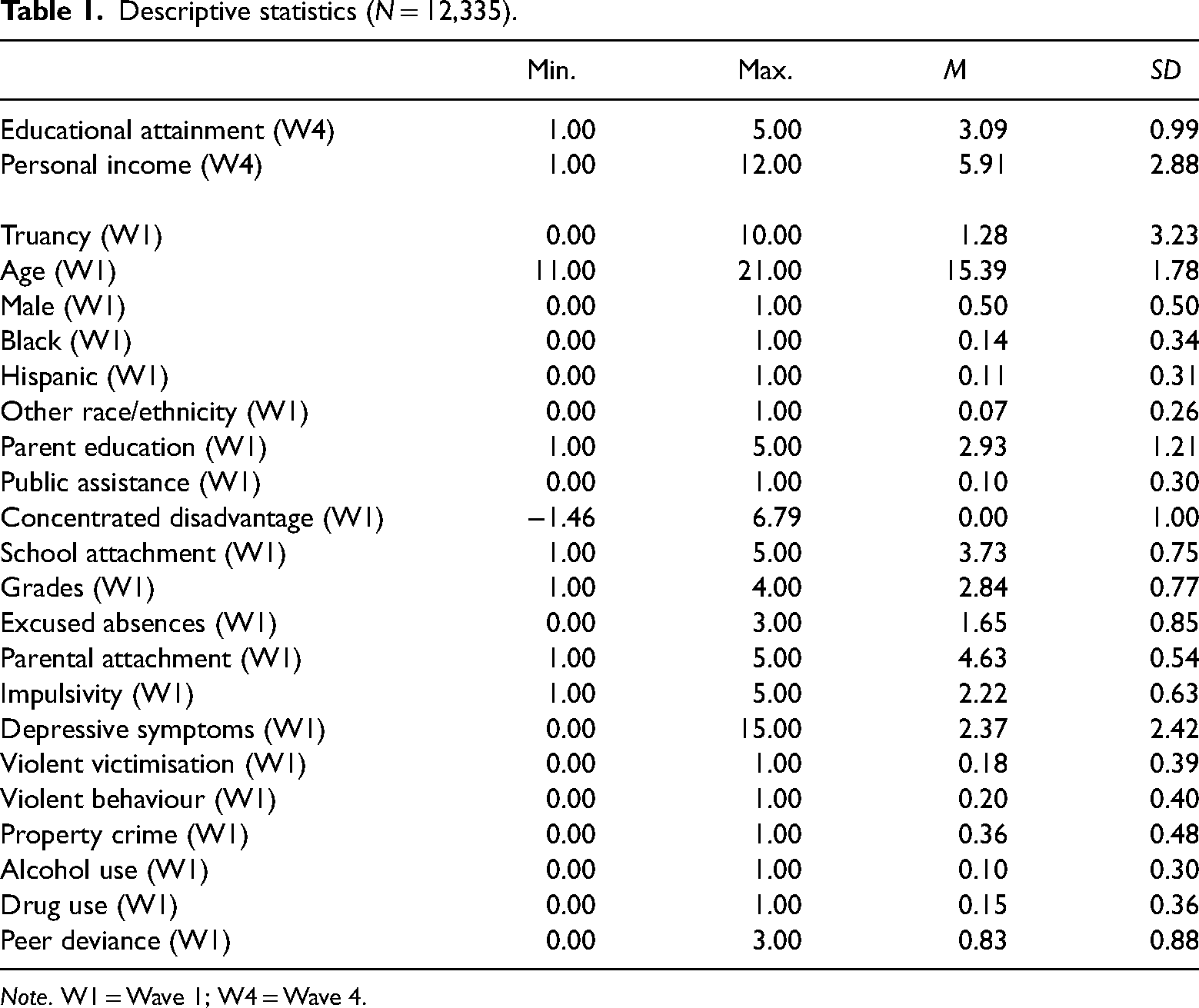
Note. W1 = Wave 1; W4 = Wave 4.
Bivariate correlations (N = 12,335).
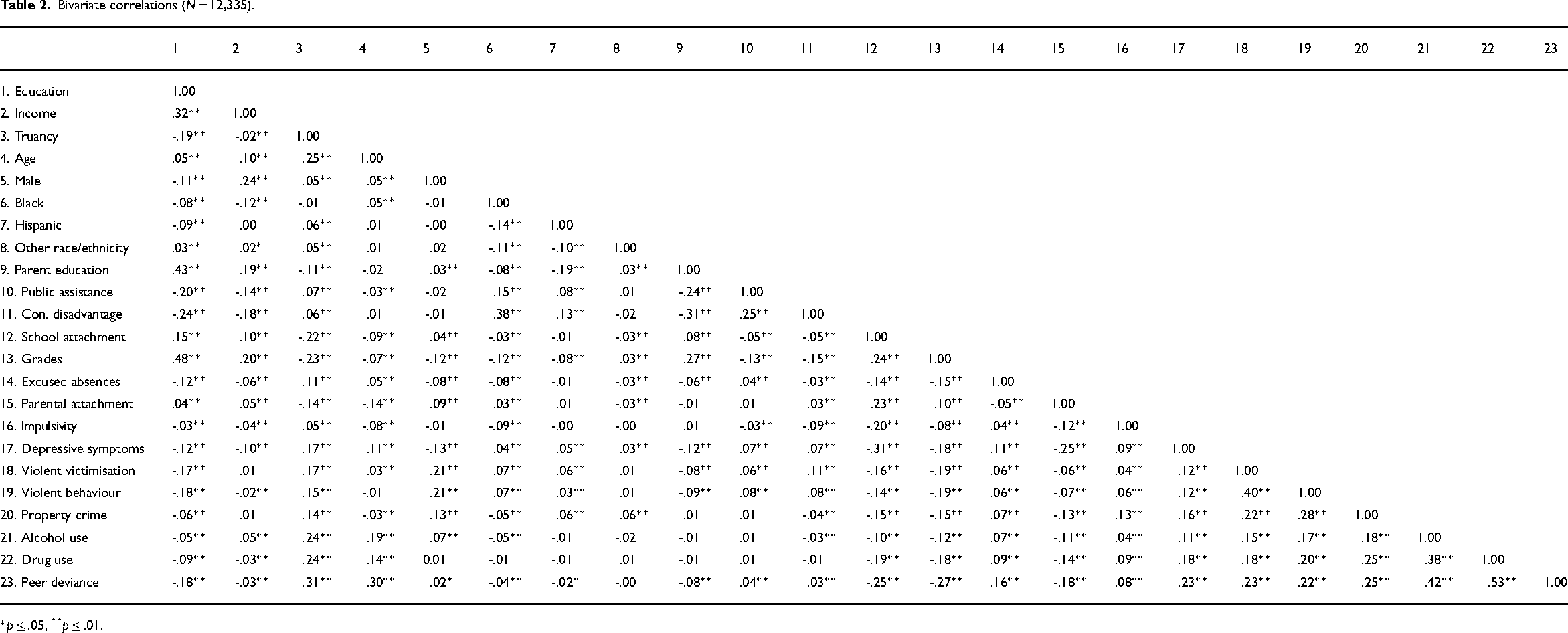
*p ≤ .05, **p ≤ .01.
Table 3 describes how truancy, personal income, and education vary by gender, race/ethnicity, and public assistance recipient status. The mean number of days truant is significantly higher among males relative to females (t = –5.03, p ≤ .01). Educational attainment is higher among women (t = 12.00, p ≤ .01), while personal income in adulthood is higher among men (t = –26.86, p ≤ .01). Truancy varies by race and ethnicity (F = 27.91, p ≤ .01), with adolescents of other races and ethnicities reporting the highest prevalence, followed by Hispanic adolescents, Black adolescents, and White adolescents. Educational attainment (F = 65.62, p ≤ .01) and personal income (F = 58.48, p ≤ .01) also vary by race and ethnicity, with White participants and participants of other races/ethnicities reporting higher levels of education and income relative to Black and Hispanic participants. 7 Finally, participants from households receiving public assistance skipped school more (t = –8.03, p ≤ .01), achieved lower levels of education (t = 22.49, p ≤ .01), and had lower personal incomes in adulthood (t = 15.78, p ≤ .01).
Mean differences in truancy, income, and education by gender, race/ethnicity, and public assistance (N = 12,335).

**p ≤ .01.
The first model in Table 4 reports the results from the generalised linear with ordinal regression for educational attainment in young adulthood. Truancy in adolescence is significantly and negatively associated with educational attainment in early adulthood, net of controls. Sociodemographic characteristics are significantly associated with educational attainment, with older participants and female participants reporting higher levels of education. Relative to White Non-Hispanic participants, Black participants report higher levels of education, net of controls. Parent education is positively and significantly associated with educational attainment. Educational attainment achieved in early adulthood is also significantly lower among participants from families receiving public assistance and those who reside in neighbourhoods with high levels of disadvantage. Those with higher grades and fewer excused absences in adolescence achieved higher levels of education by early adulthood, while school attachment, parental attachment, impulsivity, and depressive symptoms in adolescence are not significantly associated with educational attainment in early adulthood. Participants who report violent victimisation, violent behaviour, and peer deviance in adolescence have significantly lower levels of education in early adulthood, while those who engage in property crime, alcohol use, and drug use have significantly higher levels of education in early adulthood.
Educational attainment and personal income in early adulthood (N = 12,335).
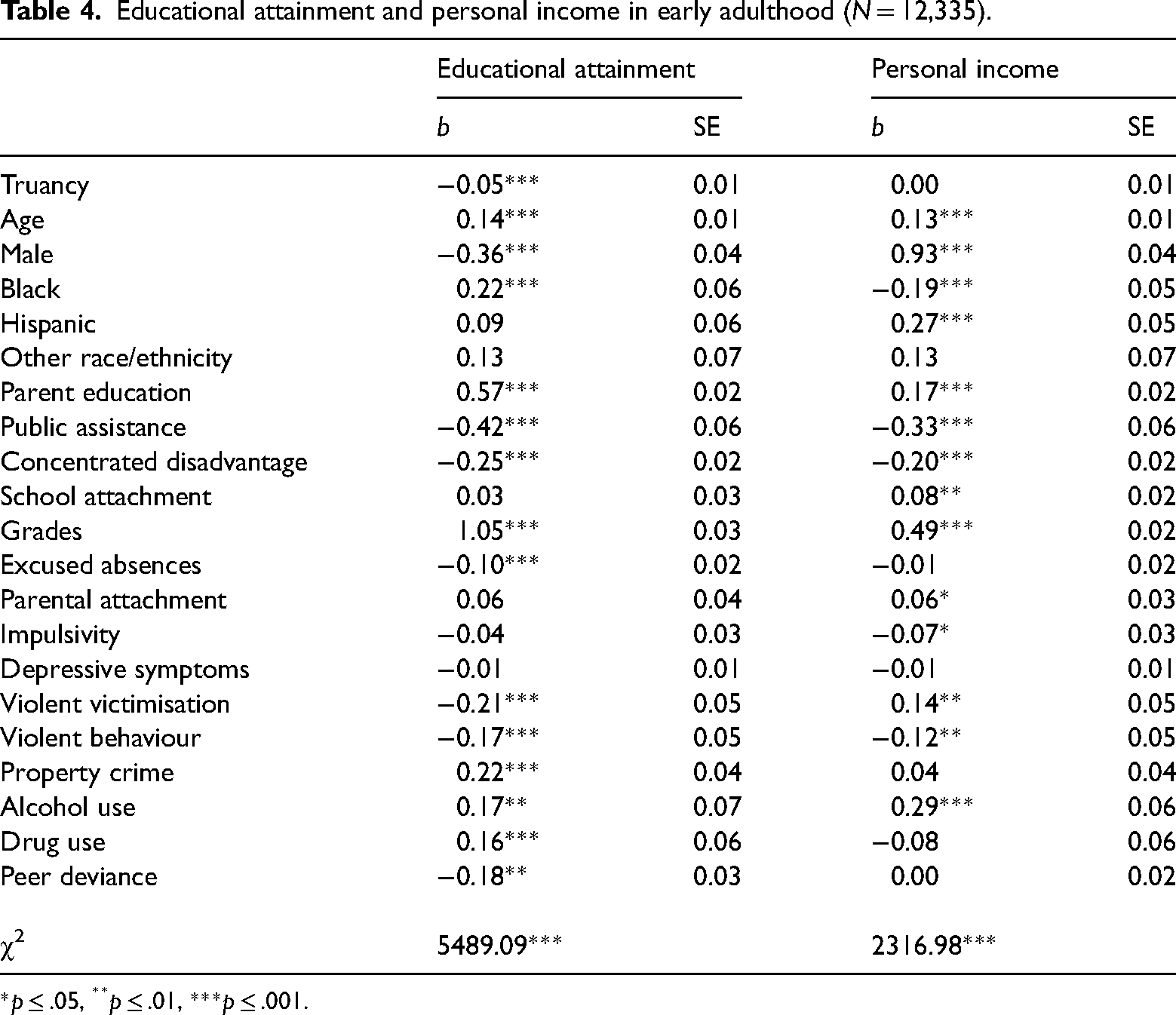
*p ≤ .05, **p ≤ .01, ***p ≤ .001.
The second model in Table 4 reports the results from the generalised linear with ordinal regression for personal income in young adulthood. Truancy in adolescence is not significantly associated with personal income in early adulthood, net of controls. Personal income in early adulthood does vary significantly by sociodemographic variables, with older and male participants reporting higher incomes. Income also varies with race and ethnicity, with Hispanic participants reporting higher incomes than White Non-Hispanic participants and Black participants reporting lower incomes. Parent education is positively and significantly associated with personal income. Personal incomes in early adulthood are also significantly lower among participants from families receiving public assistance and those who reside in neighbourhoods with high levels of disadvantage. Participants with higher levels of school attachment and better grades in adolescence report higher personal incomes in early adulthood. Excused absences were not significantly associated with personal income. Parental attachment was positively associated with personal income, while impulsivity was negatively associated with personal income. Adolescents who reported violent behaviour in adolescence had significantly lower personal incomes in early adulthood, while those who reported violent victimisation and alcohol use had significantly higher incomes.
We then estimated the effects by gender, race/ethnicity, and public assistance recipient status to determine whether truancy's relationship with outcomes in early adulthood are conditioned by sociodemographic characteristics. The significant effect of truancy on educational achievement in early adulthood does vary by sociodemographic characteristics (see Figure 1). While the effect is significant among both male (p ≤ .001) and female (p ≤ .05) participants, a difference of coefficients test revealed the relationship is significantly stronger for males than females (z = 4.84; p ≤ .001). Truancy is negatively associated with educational achievement for White participants (p ≤ .001), Hispanic participants (p ≤ .01), and participants of other race and ethnicity groups (p ≤ .001), but not Black participants (p = .15). However, the only significant difference in coefficient size is between Black participants and participants of other races/ethnicities (z = 2.26; p ≤ .05). Finally, truancy is significantly associated with educational achievement for participants whose families do not receive public assistance (p ≤ .001), but the effect is not significant among participants whose families receive public assistance (p = .40), and the difference between the coefficients is statistically significant (z = –2.56, p ≤ .05).
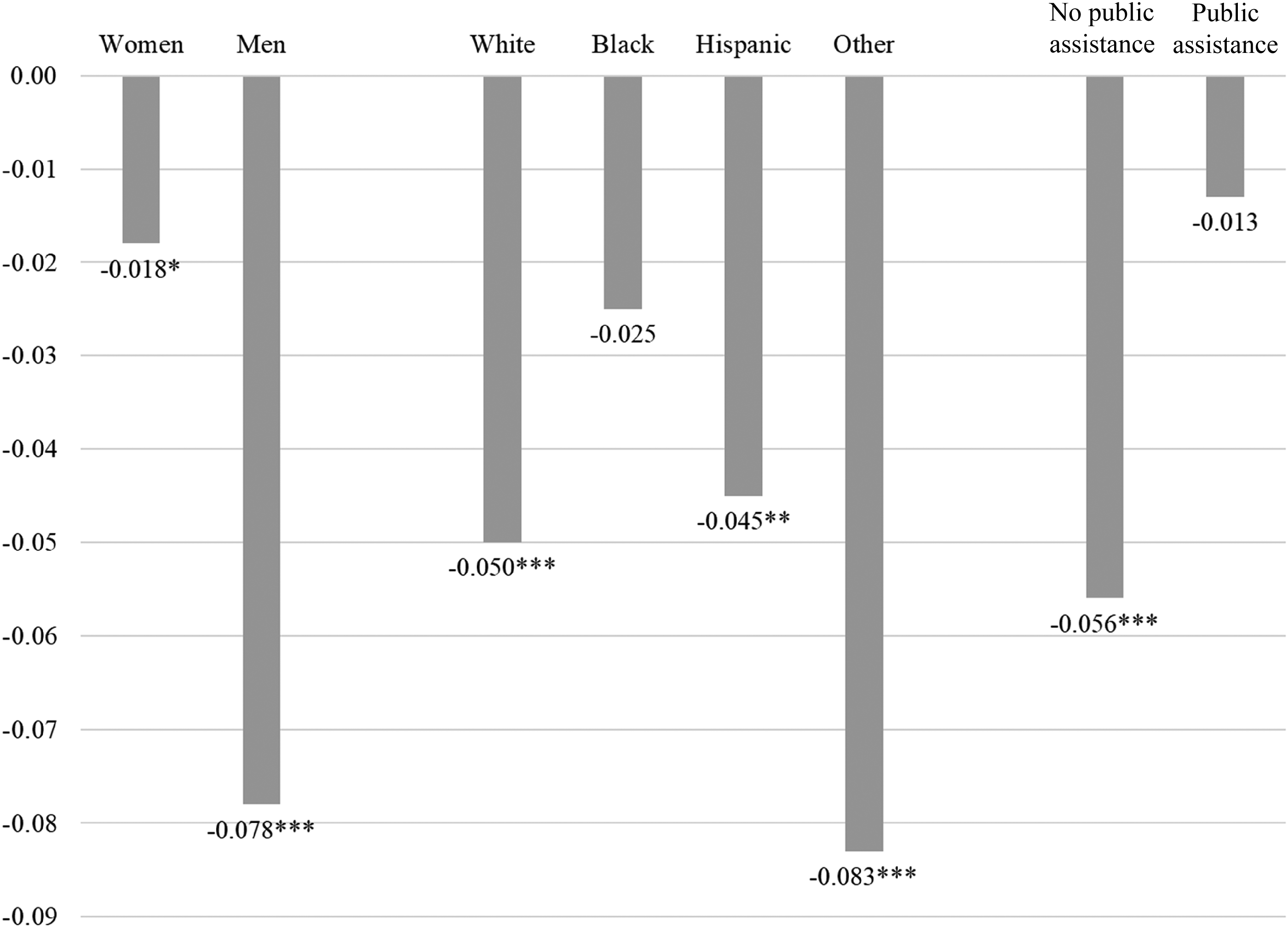
Truancy and educational attainment by gender, race/ethnicity, and public assistance receipt.
Similar to the main effects reported in Table 4, we found little evidence that truancy was significantly related to personal income for any gender, race/ethnicity, or public assistance status subgroup (p > .05), net of controls (results not pictured). The only exception was a significant and negative effect among participants of other race and ethnicity groups (p ≤ .05). However, this effect only differed significantly with the effect of truancy on personal income among Black adolescents (p ≤ .05).
Discussion
Prior research indicates that truancy in adolescence is related to negative socioeconomic outcomes in adulthood (Attwood & Croll, 2006; 2015; Baker et al., 2001; Collingwood et al., 2023; Farrington, 1980; Hibbett et al., 1990; Robins & Ratcliffe, 1980; Rocque et al., 2017). The lack of research sample diversity and investigation into whether the effects of truancy on life-course outcomes differ by individual sociodemographic characteristics are noted gaps in the literature (Maynard et al., 2013, 2017; Rocque et al., 2017). The current research was focused on addressing these issues to understand (a) the relationship between truancy in adolescence and educational attainment and income in young adulthood, and (b) whether these effects are conditioned by measures of social location: gender, race, ethnicity, and public assistance receipt. These questions were examined using longitudinal data from the Add Health.
Several key findings emerge from this study. Consistent with prior research (Attwood & Croll, 2006; 2015; Baker et al., 2001; Farrington, 1996; Gleason & Dynarski, 2002; Kandel et al., 1984; Robins & Ratcliffe, 1980; Wehlage & Rutter, 1986), truancy was significantly associated with lower educational attainment in young adulthood. Truancy may serve as an early indicator of school disengagement (Baker et al., 2001; De Witte & Csillag, 2012; Gleason & Dynarski, 2002; Kandel et al., 1984; Maynard et al., 2013; Rocque et al., 2017), and those who are disengaged may be more likely to drop out of high school or not seek higher education upon graduation. While truancy was significantly associated with lower personal income at the bivariate level, the relationship was rendered non-significant in the multivariate analysis, thus adding to the previously mixed research studying this relationship. For instance, it contrasts the work of Robins and Ratcliffe (1980), who found truancy was related to lower income in adulthood, but is consistent with Hibbett and colleagues (1990), who did not find a significant effect on personal income in young adulthood.
There are two potential explanations for the lack of significance between truancy and personal income in the multivariate model. First, the bivariate relationship may be spurious, and thus rendered non-significant when confounders are controlled. Second, there is the possibility that truancy's effect is indirect via one or more other measures. For example, truancy was negatively related to income and positively related to violent behaviour at the bivariate level. In the regression models, however, violent behaviour was significantly and negatively related to income, while truancy was not significantly related to income. Recent research indicates a positive relationship between truancy and violent behaviour (Cardwell et al., 2019). Truancy may increase the likelihood of violent behaviour, which could then reduce levels of personal income in adulthood. There is also evidence that offending in adolescence can increase the likelihood of arrest and criminal justice system involvement and is linked to later unemployment and welfare receipt in adulthood via high school dropout (Lopes et al., 2012). Arrest and criminal convictions can “label” individuals and limit access to certain jobs or increase the likelihood of unemployment, which can potentially indicate an indirect effect of truancy on income (Lopes et al., 2012). The findings highlight the need to further explore potential mediators of the relationship between truancy and later socioeconomic outcomes with alternative data sources.
Additionally, personal income fluctuates throughout the life-course (Lopes et al., 2012; Sweeney, 2015), which may limit the predictive validity of truancy. When young people enter the workforce, they frequently begin in entry-level positions with lower pay, advancing to higher-level positions and increased income over time. Young people who engage in truancy in adolescence may be slower to advance in the workforce, leading to lower incomes in the long-term. For instance, our findings follow the work of Hibbett and colleagues (1990), who also did not find a significant relationship between truancy and lower incomes in young adulthood. However, they did find that truancy in adolescence was associated with unstable work in young adulthood. It could be that truancy is a better predictor of income later in life when individuals have been in the workforce longer and have more time to become financially established. Thus, truancy may better predict cumulative or lifetime earnings as opposed to annual income during one developmental period (Lopes et al., 2012; Sweeney, 2015).
A primary goal of this research was to examine whether the effects of adolescent truancy on educational attainment and income in young adulthood were modified by participant demographics. On the one hand, young people who experience disadvantage in terms of social location may be particularly susceptible to truancy's negative socioeconomic outcomes in adulthood, given their social location offers relatively little to offset the missed opportunities resulting from truancy (Sampson & Laub, 1997). On the other hand, those who experience such disadvantage may already have limited life chances relative to their peers, and thus it is their more affluent peers who experience truancy as a turning point that is more disruptive to their educational and economic trajectories (e.g., Macmillan, 2001).
The effect of truancy on educational attainment differed significantly by gender, receiving public assistance in adolescence, and between some races/ethnicities. The effect of truancy on educational attainment was larger for males than for females. Research suggests that females have greater educational attainment than males (Delaney & Devereux, 2021). Our findings help account for these gendered differences in educational attainment: female adolescents are truant less often than their male counterparts, and when truant, they appear to be more insulated from its negative impacts on educational attainment. Of the limited work exploring gender differences in the reasons for truancy, some studies suggest males and females do not differ in their reasons for engaging in truancy (Attwood & Croll, 2006, 2015), while other research highlights potentially important gender differences (Dahl, 2016). Using semi-structured interviews with 34 young adults who engaged in truancy in high school, Dahl (2016) investigated what they did when they truanted. Females were more likely to report “selective ditching” relative to males by skipping only select classes (Dahl, 2016, p. 133). Dahl (2016) concluded that females showed some attachment to school in spite of truancy. In short, the nature and immediate implications of truancy may vary by gender, thus producing differential outcomes.
The effect of truancy on educational attainment was significant for participants who did not receive public assistance in adolescence but not for participants who did, and the differences in effect sizes between the two groups were significant. Receiving public assistance might be protective against the negative effects of truancy on long-term outcomes since it is designed to help parents support themselves and their dependents. For instance, Aizer and colleagues (2016) found that boys whose mothers received public assistance as part of the United States Mothers Pension Program had more years of schooling compared to boys whose mothers were not part of the program. Thus, young people who come from families that receive public assistance and truant may be less likely to experience additional long-term negative effects on educational attainment beyond those associated with their general economic disadvantage. While Sampson and Laub's (1997) theory of informal social control suggests young people from disadvantaged backgrounds may experience the negative impacts of truancy more strongly, our research indicates that the effect of truancy on educational attainment was weaker among participants from households receiving public assistance. The negative bivariate relationship between public assistance receipt and future educational attainment suggests some continuity in socioeconomic status across life-course stages. Truancy among those from higher economic strata can serve to disrupt that continuity, “knifing off” the educational opportunities afforded by one's social location (Macmillan, 2001).
Truancy was significantly related to lower levels of education in young adulthood for youth who were White, Hispanic, and of other races and ethnicities. When assessing the effect of truancy on outcomes by race/ethnicity, there were only significant differences between Black participants and participants of other races/ethnicities on educational attainment: the negative effect of truancy on educational attainment was stronger for youth of other races/ethnicities relative to Black youth. Interestingly, there were also differences in the effect of truancy on personal income between Black youth and youth from other races and ethnicities; again, the effect of truancy on income was stronger for youth of other races and ethnicities than Black youth. There were significant differences in levels across race, ethnicity, and public assistance receipt in adolescence on the main measures of interest. Broadly, Hispanic youth and youth of other races and ethnicities reported higher levels of truancy and lower levels of income and educational attainment than White and Black youth. Given the paucity of research on whether truancy's effects on socioeconomic outcomes in young adulthood vary by demographics, particularly concerning differences in race and ethnicity, more research is required to assess the generalisability of these findings.
Our findings have implications for the fields of criminology and criminal justice. Truancy itself is a status offence with potential legal consequences for young people and their parents. Truancy in adolescence can set young people down a path of further criminal involvement, especially if they are processed through the criminal justice system. This study emphasises that engaging in this delinquent act in adolescence has long-term negative implications in adulthood beyond just criminal outcomes. Further, as research links truancy to criminal behaviour in both adolescence and long-term in adulthood (Rocque et al., 2017), educational attainment might be a mediator in the relationship between truancy and long-term crime outcomes. Using longitudinal data from a sample of participants from Canada, Kennedy-Turner and colleagues (2021) found that school absences in adolescence were related to lower education, and subsequently more criminal charges in middle adulthood. This highlights the importance of future research to further investigate the role of truancy in various life-course outcomes. Considering that educational attainment is a protective factor for both crime and truancy, our findings emphasise the importance of preventing truanting behaviour in adolescence to help young people attain positive life-course outcomes.
These analyses controlled for prior excused absences to isolate the effects of truancy on educational attainment and personal income. Even when controlling for excused absences, truancy exhibited a statistically significant negative effect on educational attainment. This highlights the harmful outcomes of truancy above and beyond excused absences and emphasises that interventions to increase school attendance should be tailored to absence type (see Gottfried, 2009). Evidence from a systematic review of truancy interventions shows that such programs can increase school attendance (Maynard et al., 2013). Because truancy is a complex problem with many causes, it is imperative that interventions address the reasons why young people are skipping school. Indeed, effective interventions address the underlying causes of truancy (Dembo & Gulledge, 2009). However, because many studies do not always account for participants’ social location, there are still questions about for whom truancy interventions do and do not work.
For example, a recent truancy court evaluation found that Black and multiracial youth were more likely than White youth to recidivate and engage in delinquency two years post-referral (Rubino et al., 2020). Importantly, while referred youth were administered a risk assessment to identify the underlying causes and risk of future delinquency, the instrument did not predict truancy and other status offences. This emphasises the importance of ensuring the risks of truancy are properly assessed and managed in interventions. Further, it highlights the need for research assessing group differences in the effect of truancy on different life-course outcomes.
Limitations and future research
There are some limitations to the current study that warrant further discussion and offer directions for future research to better understand the relationship between truancy in adolescence and socioeconomic status across the life-course. First, while the findings demonstrate a significant relationship between truancy in adolescence and educational attainment in early adulthood, the research design does not allow for causal inference, nor does it reveal the mechanism(s) at work. Other methodologies and data sources are needed to better understand how truancy limits educational attainment and why it is particularly deleterious for some youth.
Second, future research should examine additional outcomes beyond educational attainment and personal income, including welfare receipt (Collingwood, 2020; Collingwood et al., 2023), occupation status (Farrington, 1980, 1996; Robins & Ratcliffe, 1980), individual perceptions of social status, debt levels, food insecurity, and community levels of socioeconomic status (Sweeney, 2015). Moreover, longer-term studies are needed to examine truancy's impacts across the life-course, as most work in this area has focused on truancy's effects in early adulthood, with few examining outcomes in middle adulthood and beyond (for exceptions, see Farrington, 1980, 1996; Rocque et al., 2017). Additionally, while we focused on three measures of social location (gender, race/ethnicity, and public assistance) as potential moderators, additional factors that might condition truancy's effects should be explored, such as age, grade, immigration status, and community type (e.g., urban, suburban, rural).
Conclusions
This study investigated the impact of truancy in adolescence on educational attainment and income in young adulthood. Using data from Add Health, we found that truancy exerted a significant negative effect on educational attainment but not income, and the effect did vary by some measures of social location. Our findings highlight the importance of future research assessing the long-term and nuanced impacts of truancy on adult socioeconomic status and emphasise the importance of interventions that target and prevent truancy. As truancy theoretically knifes off future opportunities for financial and educational success, further research examining the potential mediating mechanisms of this relationship (e.g., school dropout, criminal conviction, and adult social bonds) is needed to refine criminological life-course theories to explain these relationships.
Footnotes
Acknowledgments
This research uses data from Add Health, funded by grant P01 HD31921 (Harris) from the Eunice Kennedy Shriver National Institute of Child Health and Human Development (NICHD), with cooperative funding from 23 other federal agencies and foundations. Add Health is currently directed by Robert A. Hummer and funded by the National Institute on Aging cooperative agreements U01 AG071448 (Hummer) and U01AG071450 (Aiello and Hummer) at the University of North Carolina at Chapel Hill. Add Health was designed by J. Richard Udry, Peter S. Bearman, and Kathleen Mullan Harris at the University of North Carolina at Chapel Hill.
Declaration of conflicting interests
The authors declared no potential conflicts of interest with respect to the research, authorship, and/or publication of this article.
Ethical approval
The Add Health project was approved by the Institutional Review Board at the University of North Carolina, School of Public Health. All procedures performed in studies involving human participants were in accordance with the ethical standards of the institutional and/or national research committee and with the 1964 Helsinki declaration and its later amendments or comparable ethical standards.
Funding
The authors received no financial support for the research, authorship, and/or publication of this article.
Informed consent
Add Health participants provided written informed consent for participation in all aspects of Add Health in accordance with the University of North Carolina School of Public Health Institutional Review Board guidelines that are based on the Code of Federal Regulations on the Protection of Human Subjects 45CFR46:  .
.