




Abstract
This study provides the first Australian epidemiological evidence of sex differences in patterns of contact with police during childhood and adolescence. Using population-based data for 79,446 young people in the New South Wales Child Development Study, we report that one-in-four had contact with police by their 17th birthday. Boys were generally more likely than girls to have contact with police, especially as a person of interest, while girls were more likely to have contact as a victim of sexual assault and of harassment. However, prior to the age of 10 years, the rate of police contact was higher for girls, whereas from age 10 through 16 years, the rate of contact was greater for boys. Consideration of the location of incidents did not significantly affect the general pattern of higher rates of police contact in boys, although girls were more likely to have police contact as a victim or witness in educational facilities and in residential premises. Overall, this research demonstrates that young people's contact with police is common, suggesting that law enforcement might adopt a sex-specific and trauma-informed response in their interactions with young people.
Keywords
Introduction
Young people under the age of 18 years are disproportionately represented in the criminal justice system (ABS, 2021–22, 2022), with notable sex differences in patterns and frequency of contact (Piquero et al., 2005; Steffensmeier et al., 2023). Early contact with the criminal justice system can be a marker of serious socioeconomic and psychosocial adversity (Baglivio et al., 2017), with potential to contribute to physical and mental health problems (Skinner & Farrington, 2020), delayed socioemotional development (Whitten et al., 2022), and repeated criminal offending and victimisation (Farrell & Zimmerman, 2018). These adverse outcomes often differ by sex, with girls facing a higher risk of premature death (Skinner & Farrington, 2020), and boys more prone to violent reoffending (Collins, 2010).
Police are often the first point of contact for young people involved in the criminal justice system. This interaction offers a critical early opportunity to divert away from the criminal justice system towards appropriate support services. However, most programms are designed with male offenders in mind (Baldry, 2010), neglecting the unique needs of girls and the importance of sex-sensitive strategies to support them and reduce recidivism (Bartels & Gaffney, 2011). Likewise, relatively little attention has been afforded to the sex-specific needs of young people who are the victims or witnesses of crime, particularly domestic and family violence (Finkelhor et al., 2001).
Efforts to provide sex-specific support to young people who have contact with police must be underpinned by reliable estimates of sex differences in the patterns of early contact with police, to ensure appropriate allocation of resources at critical developmental stages. Using population-based record linkage data, this study provides the first Australian epidemiological evidence of boys’ and girls’ police contact during the period spanning birth through to the 17th birthday, focusing on: (a) prevalence rates by sex; (b) contacts for criminal and non-criminal incidents; (c) overlap in types of contact; (d) rates of first police contact; and (e) involvement in specific categories of criminal and non-criminal incidents and locations.
Method
Participants
Data for 79,446 (boys = 41,866; girls = 37,580) young people born between January 2002 and March 2004 who had complete data up to their 17th birthday were drawn from the New South Wales Child Development Study (NSW-CDS), an Australian longitudinal, population-based study of 91,597 children and their parents that combines data from multiple government agencies (Green et al., 2024). Record linkages were conducted in 2021 by the NSW Centre for Health Record Linkage (CHeReL) using probabilistic methods. Ethical approval was obtained from the NSW Population and Health Services and Australian Capital Territory (ACT) Health Human Research Ethics Committee (HREC/18/CIPHS/49) and relevant data custodians.
Measures
Police contact
Police contact data were obtained from the NSW Police Force Computerised Operational Policing System (COPS), available from 1 January 2002 through 22 March 2021. Data were right censored at the young people's 17th birthday to ensure equal observation periods; 86.7% (n = 79,446) of the NSW-CDS child cohort was retained. The 12,054 children removed were more likely to be female (54.7% vs. 47.3%; OR = 1.35, 95% CI [1.30–1.40]) and reside in the most socioeconomically disadvantaged areas at birth (28.0% vs. 18.3%; OR = 1.74, [1.65–1.83]), relative to those retained.
The COPS dataset includes the details of all criminal and non-criminal incidents and events reported to, or detected by, the NSW Police Force since January 1995 (BOCSAR, 2023). Criminal incident categories were created by mapping incidents to the Australian and New Zealand Standard Offence Classification (ABS, 2011) division codes (see BOCSAR, 2023). Ten categories of non-criminal incidents (see Table 5) and locations (see Table 6) were also created. Age at first police contact was calculated using the incident date.
Each “incident” refers to a unique activity which: (a) involves the same person(s); (b) occurred at one location; (c) occurred during one uninterrupted period; and (d) falls into one incident category and police contact type. An “event” refers to one or more incidents corresponding to the same course of conduct and committed by the same person(s). The NSW Police Force designate those involved in an incident as either a person of interest (i.e., those suspected of being responsible for an incident), victim (i.e., those who suffer harm as a direct result of an incident), or witness (i.e., those who directly observe an incident; Whitten et al., 2020). Another category, child at risk of harm, is recorded by police but was not available in the current data.
Demographic factors
Sex at birth was harmonised from all available information across the linked record sets (Green et al., 2024). Socio-Economic Index for Areas Index of Relative Socio-Economic Disadvantage, and the Accessibility/Remoteness Index of Australia were derived from residential postcode at birth (Pink, 2013), using information from the NSW Registry of Births, Deaths and Marriages or NSW or ACT Perinatal Data Collections.
Statistical analysis
The proportion of young people who had contact with police (overall, and separately for contact as a “person of interest,” “victim,” or “witness”), was calculated for each demographic category. The number of young people, incidents, and events resulting in each police contact type were identified and stratified by criminal and non-criminal contacts. Proportional Venn diagrams were created to illustrate the overlap among the types of police contact for young people. The rate and cumulative prevalence of age at first police contact in yearly bands were calculated according to each type of contact. The proportion of young people who had contact with police for each criminal and non-criminal incident and location category was calculated separately for each contact type. Sex differences in the prevalence and rates of police contact were calculated using OR and Hazard Ratios (HR), respectively. Results were considered statistically significant if the 99% confidence intervals (99% CI) did not cross 1.00. Due to ethical restrictions, cell sizes of less than 15 were not reported. Analyses were conducted in IBM SPSS 26 (IBM, 2019).
Results
One-in-four (26.8%; n = 21,252) young people had contact with police at least once by their 17th birthday. The most common type of police contact was as a victim (18.9%; n = 14,996), followed by person of interest (12.3%; n = 9,763), and witness (6.0%; n = 4,750). The distribution of demographic factors by police contact type are presented in Table 1; the proportion of those with any police contact was significantly higher for boys (OR = 1.17, 99% CI [1.12–1.22]), those born in the most socio-economically disadvantaged areas (OR = 1.33, [1.26–1.41]), and those born in inner regional Australia (OR = 1.31 [1.24–1.38]), relative to those with no police contact. Similar patterns were found for contact with police as a person of interest, victim, and witness.
Descriptive statistics of demographic factors by police contact type (column prevalence).
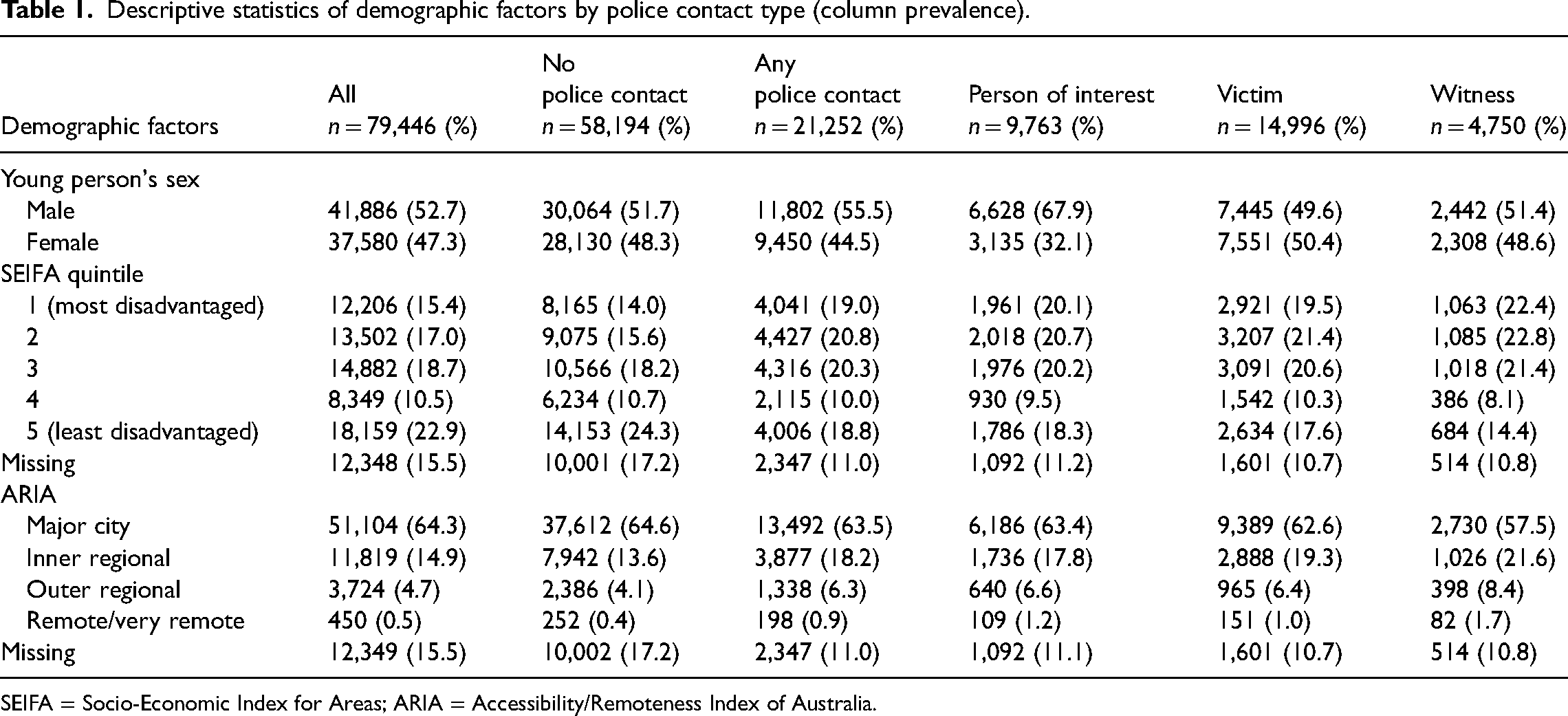
SEIFA = Socio-Economic Index for Areas; ARIA = Accessibility/Remoteness Index of Australia.
Table 2 presents the number of young people, incidents, and events for each police contact type. The 21,252 young people who had any type of contact with police were involved in 97,607 incidents and 84,809 events. Among these young people, 70.6% had contact as a victim, which accounted for 29.0% of all incidents and 31.1% of all events. Almost half of those with a police contact were identified as a person of interest (45.9%); these contacts accounted for most incidents (67.3%) and events (65.9%). A smaller proportion of young people with a police contact were identified as a witness (22.4%), and these contacts corresponded to the fewest incidents (6.4%) and events (6.5%). While slightly more young people involved in crime had contact as a victim (60.8%) than a person of interest (52.5%), the latter group accounted for most criminal incidents (67.3%) and events (66.5%).
Number of young people, incidents, and events for each police contact type (n = 79,446; column prevalence).
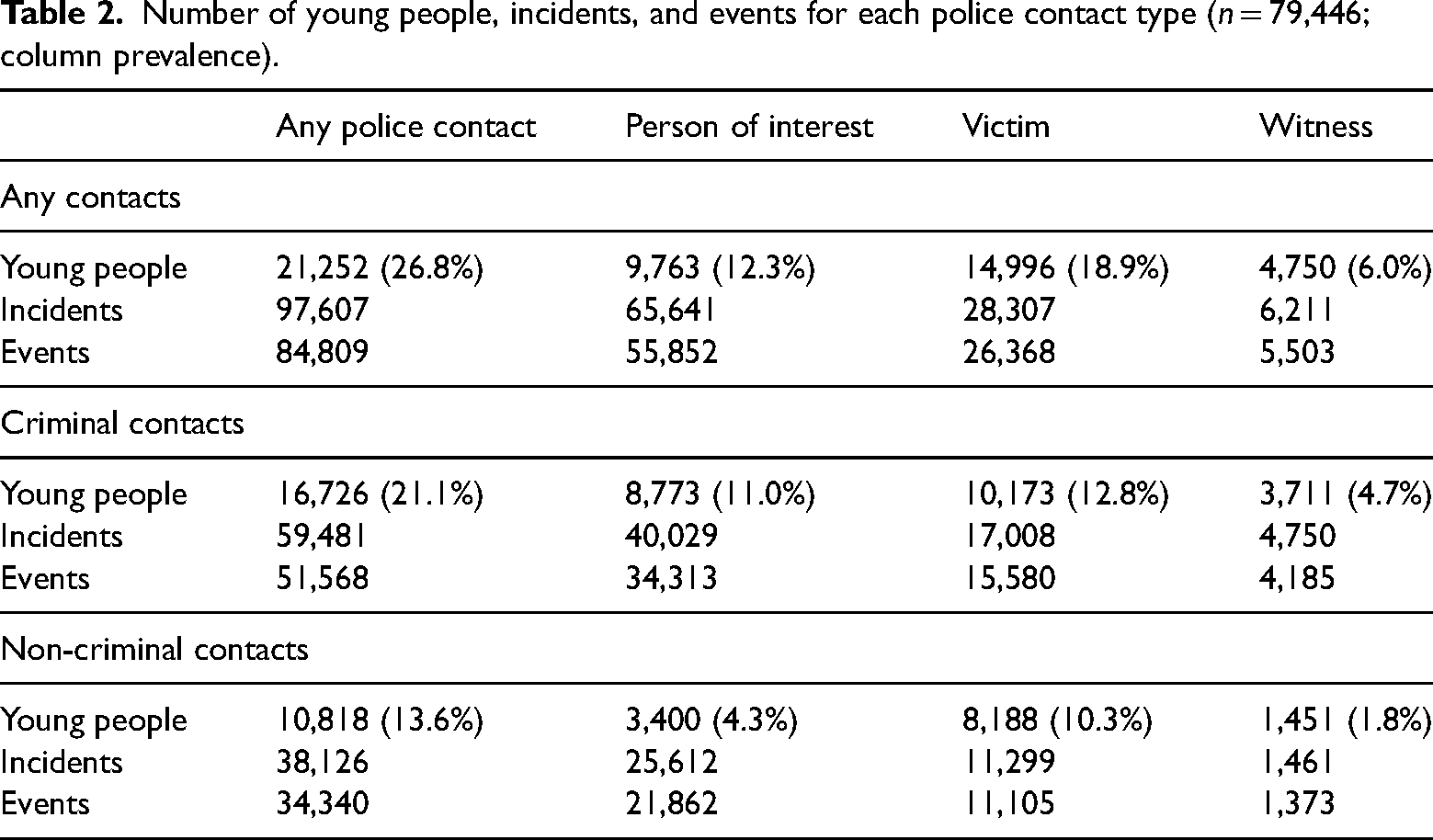
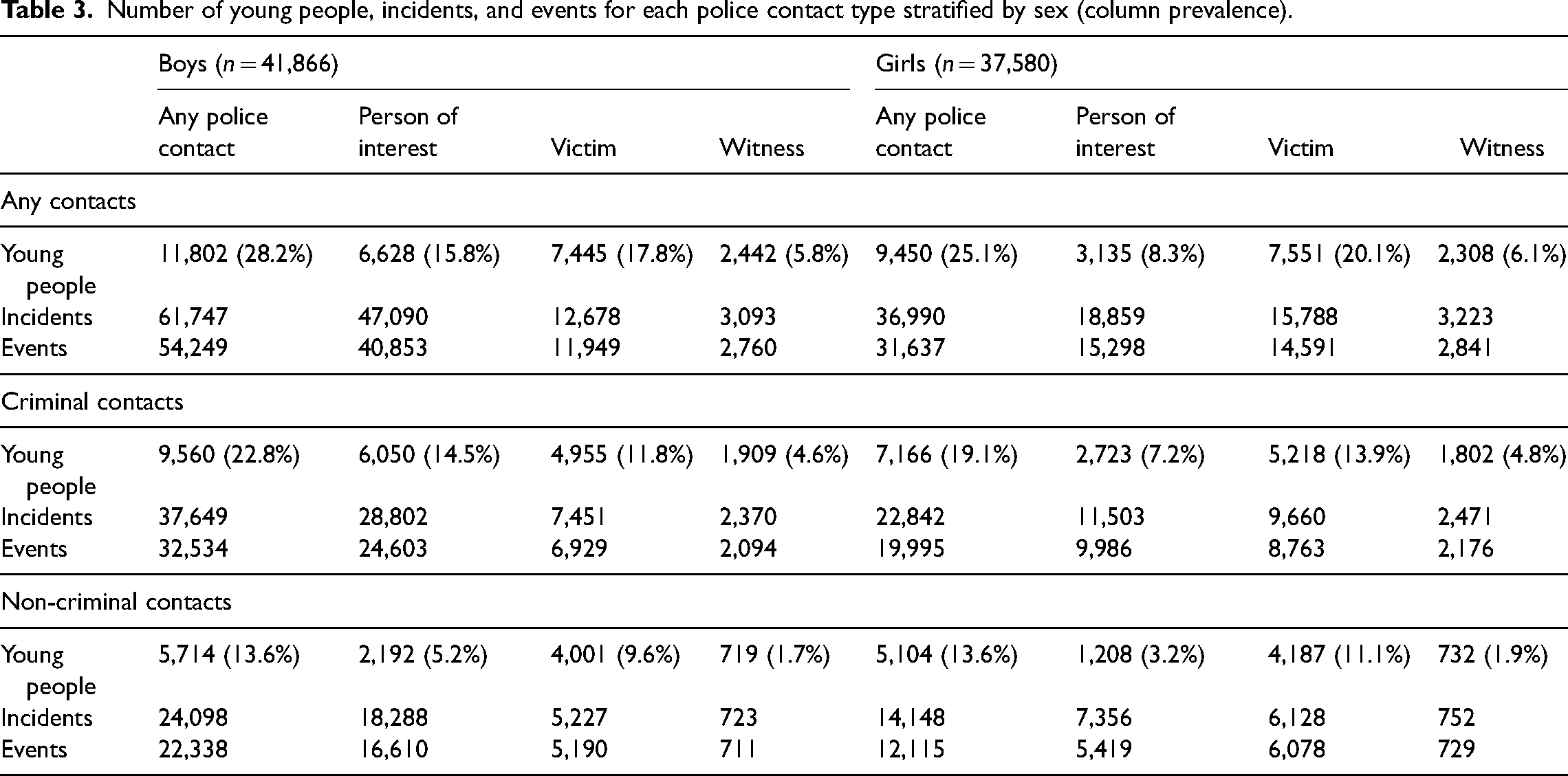
Table 3 presents the number of young people, incidents, and events for each police contact type stratified by sex. Boys were 1.17, 99% CI [1.12–1.22) times more likely than girls to have any contact with police, and 2.07 [1.95–2.19] times more likely to have contact as a person of interest. Girls were 1.16, [1.11–1.22] times more likely than boys to have contact as a victim. Regarding criminal contacts only, boys were 1.26, [1.20–1.31) and 2.16, [2.03–2.30] times more likely than girls to have any police contact and contact as a person of interest, respectively, whereas girls were 1.20, [1.14–1.27] times more likely to have contact as a victim. For non-criminal contacts, boys were 1.66, [1.51–1.83] times more likely to have contact as a person of interest, and girls were 1.19, [1.11–1.27] times more likely to have contact as a victim.
Number of young people, incidents, and events for each police contact type stratified by sex (column prevalence).
Overlap between types of police contact
Figure 1 presents the overlap among types of contact with police (n = 21,252). Around one-third of young people (31.2%) who had contact with police had more than one contact type by their 17th birthday. The most common overlap was between person of interest and victim (16.0%). Figure 2 presents the overlap in police contact types separately for boys (n = 11,802) and girls (n = 9,450). Slightly more boys (32.7%) than girls (29.6%) had multiple contact types. In both groups, the most common overlap was between person of interest and victim (boys 18.2%; girls 13.3%). More girls (51.6%) than boys (33.8%) only ever had contact as a victim, whereas more boys (27.3%) than girls (10.7%) only ever had contact as a person of interest.
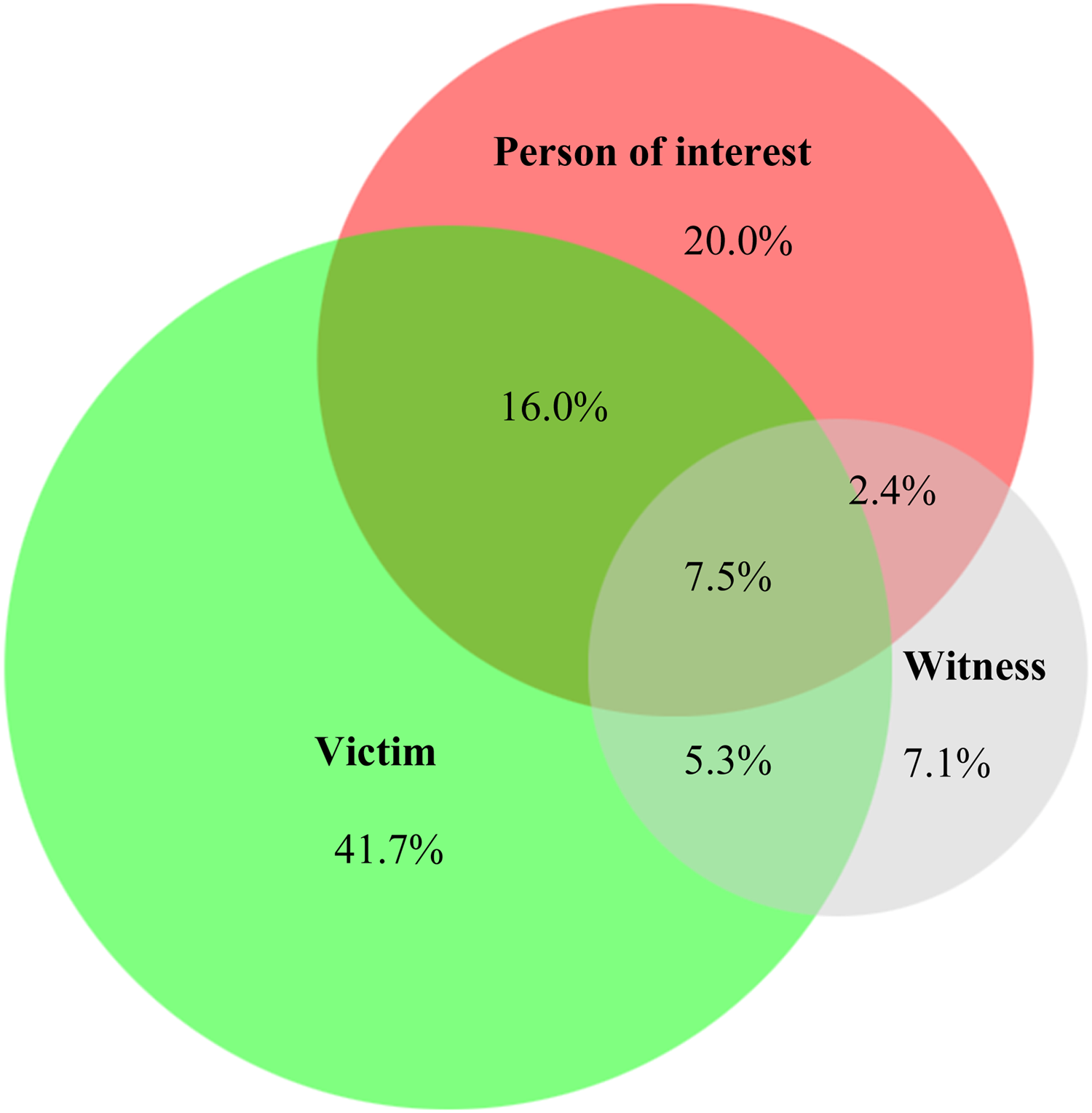
The overlap of young people's police contact type for any incident (n = 21,252).
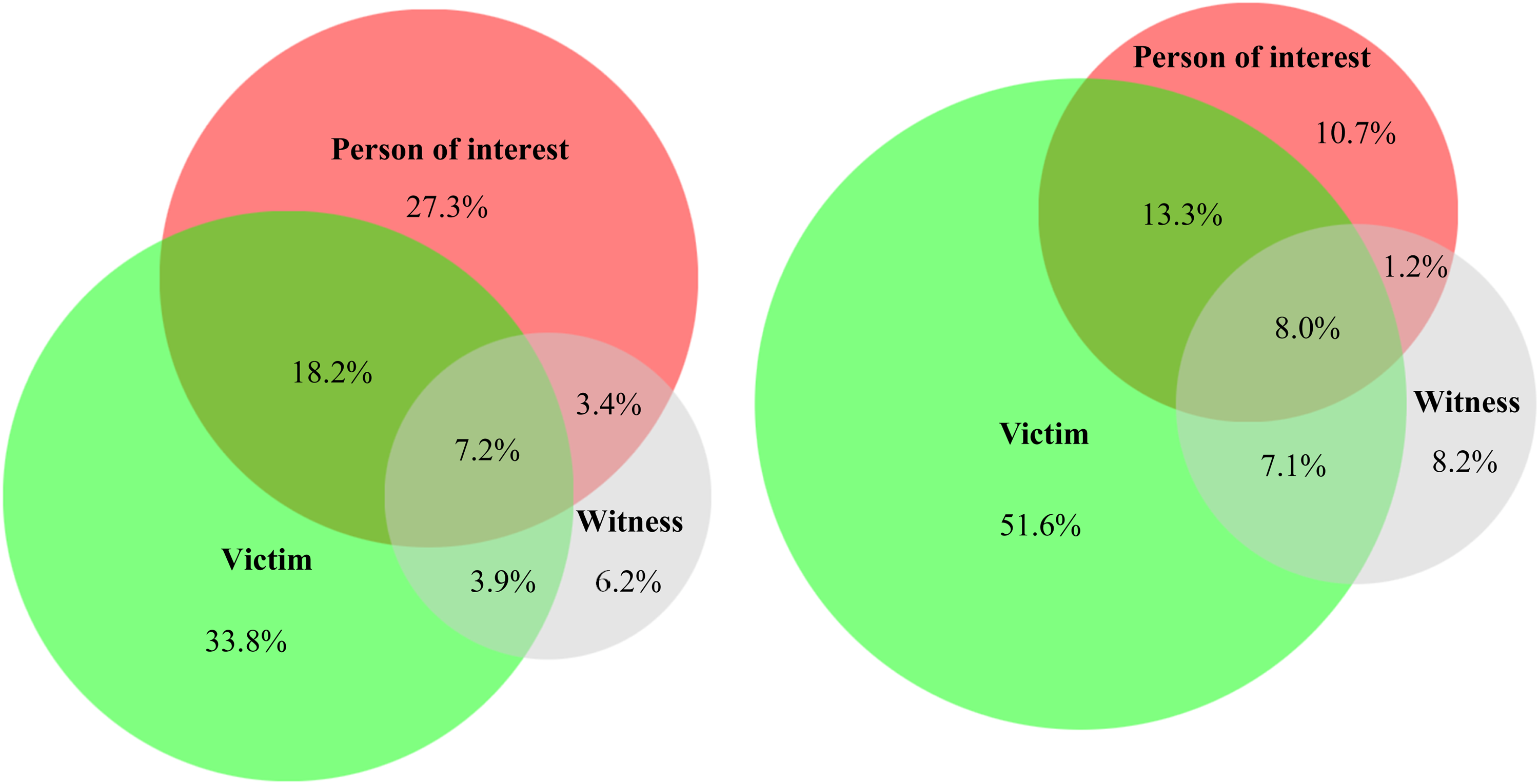
The overlap of boys (n = 11,802) and girls (n = 9,450) police contact type for any incident.
Time to first police contact
The median age at first police contact was 13.42 years for boys and 13.08 years for girls. Figure 3 presents the annual cumulative prevalence of age at first police contact type for any incident between birth and age 16 years. The probability of earlier first contact with police (for any contact type) was 1.19, 99% CI [1.09–1.32] times greater for girls than boys (adjusted for time-varying covariate). This was due to a time-dependent interaction between age of first police contact and sex. Separate analyses indicated that, prior to age 10 years, girls were 1.18, [1.02–1.35] times more likely to have earlier first contact with police, whereas between age 10 and 16 years, boys were 1.20, [1.16–1.24] times more likely to have contact earlier. Boys were twice as likely as girls to have a younger age of first contact as a person of interest (HR = 1.98, [1.87–2.09]), and girls were 1.14 [1.10–1.19] times more likely to have an earlier age of first contact as a victim.
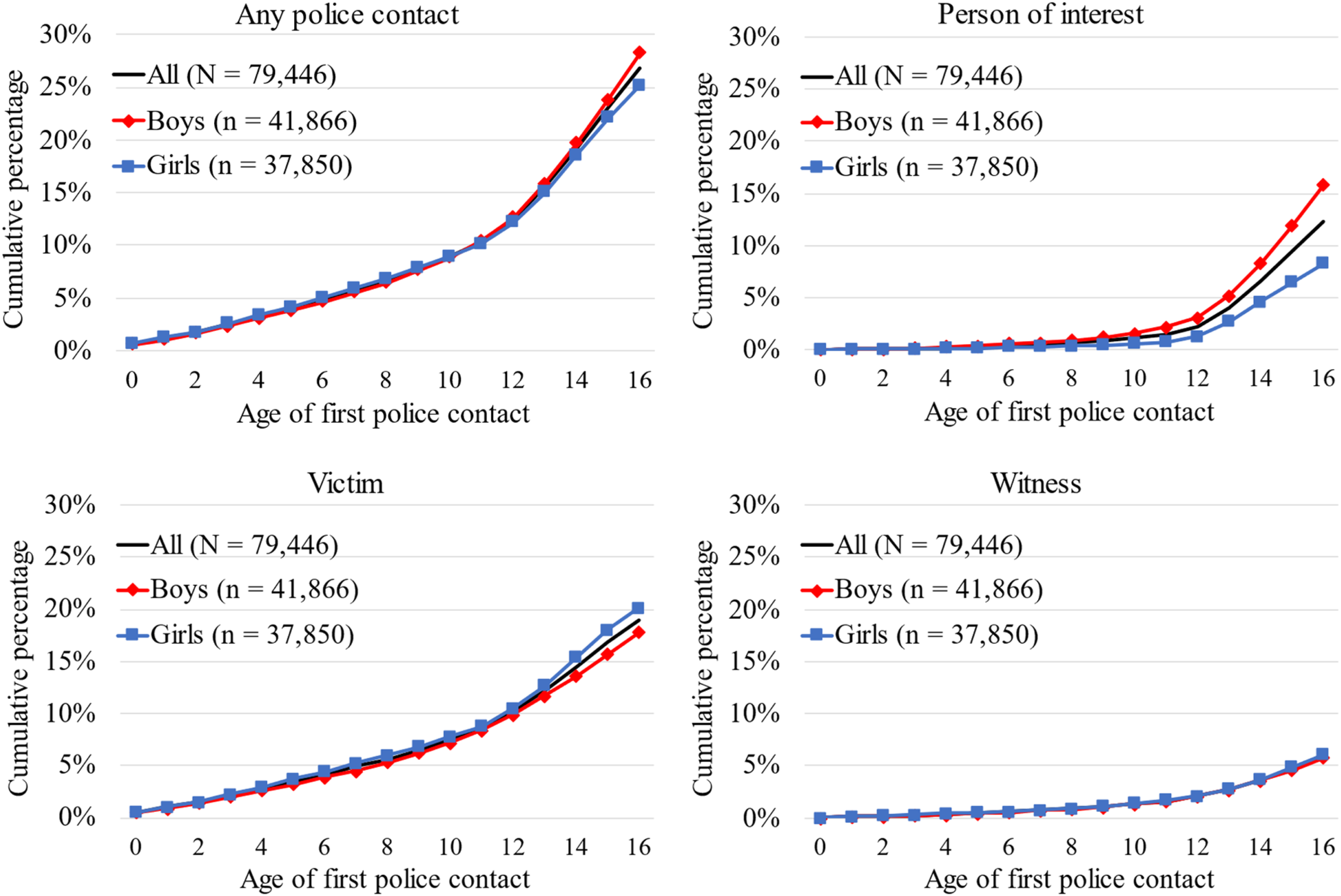
Cumulative prevalence of age at first police contact type for any incident.
Sex differences across criminal and non-criminal incident categories
Table 4 presents the distribution of police contact types across each criminal incident category, stratified by sex. Boys were significantly more likely than girls to be involved in most criminal incident categories, particularly as a person of interest. Boys were also more likely to be a victim of non-sexual assault, robbery, and theft, and were more likely to witness robbery and arson. There were notable sex differences in the contact types for incidents involving sexual assault and harassment. Although boys were more likely to be a person of interest in a sex offence, girls were more likely to be a victim and a witness. Regarding intimidation, stalking, and harassment offences, boys were more likely to be a person of interest and girls were more likely to be a victim. Girls were also more likely than boys to be a victim of a pornography offence.
Descriptive statistics for criminal incident categories stratified by sex (column prevalence).
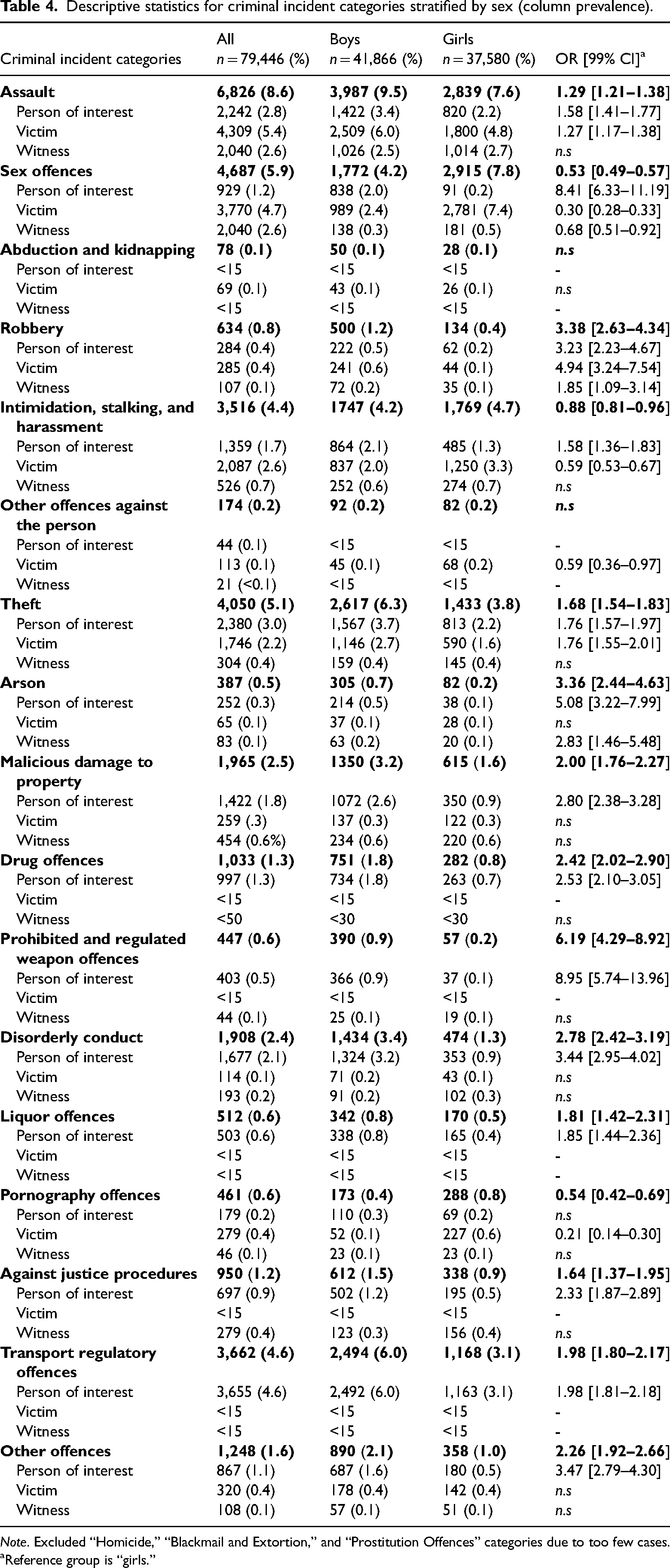
Note. Excluded “Homicide,” “Blackmail and Extortion,” and “Prostitution Offences” categories due to too few cases.
Reference group is “girls.”
Table 5 presents the distribution of police contact types across each non-criminal incident category stratified by sex. Generally, boys were significantly more likely than girls to be a person of interest and a victim in a vehicle crash, and a person of interest involved in a traffic check, criminal justice checks and orders, antisocial behaviour, or miscellaneous incidents. Girls were significantly more likely to be a person of interest in a missing/located persons incident, be a victim and witness to antisocial behaviour, witness a child at risk incident, or be a victim in a miscellaneous incident.
Descriptive statistics for non-criminal incident categories stratified by sex (column prevalence).
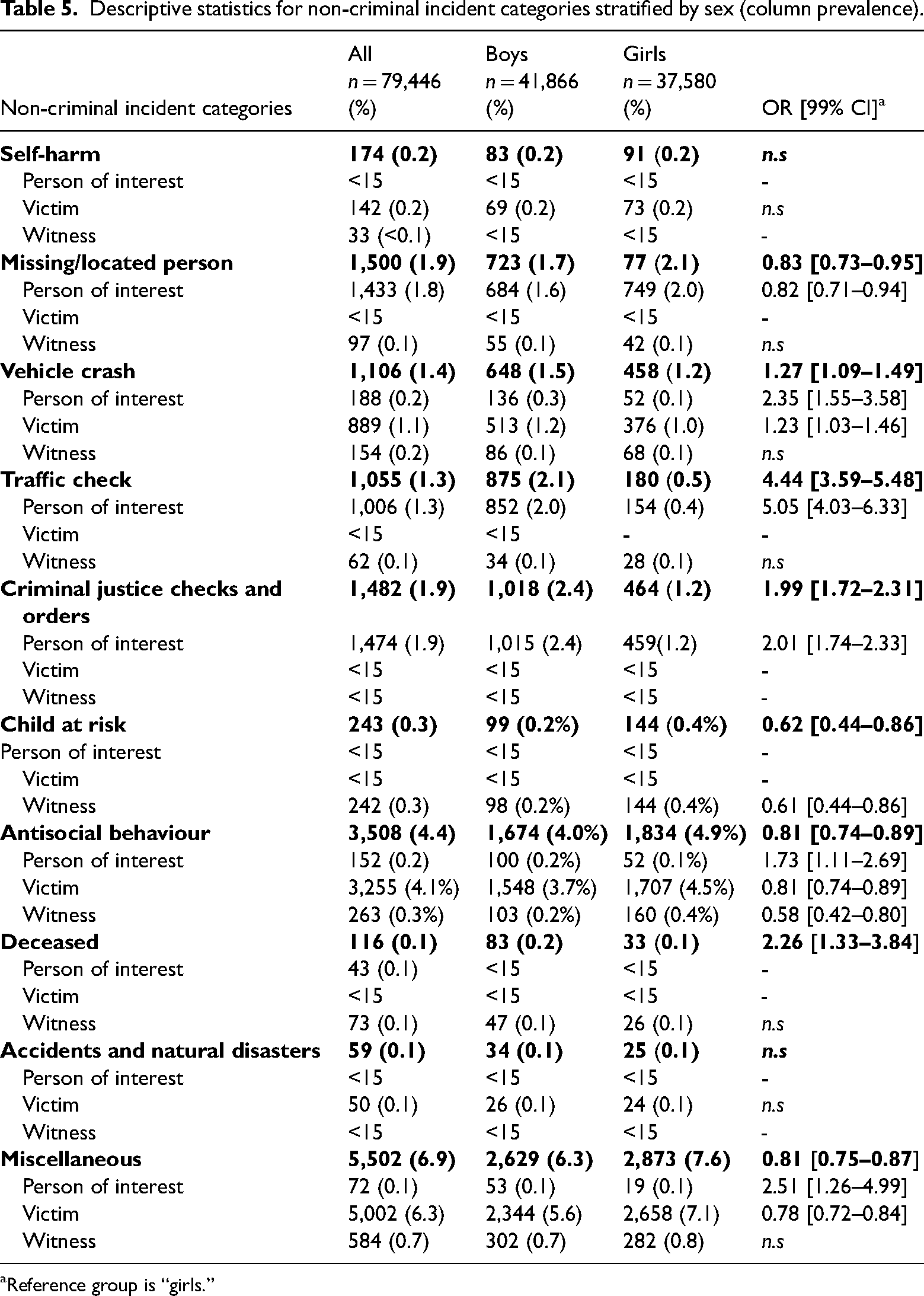
Reference group is “girls.”
Sex differences across location of police contact
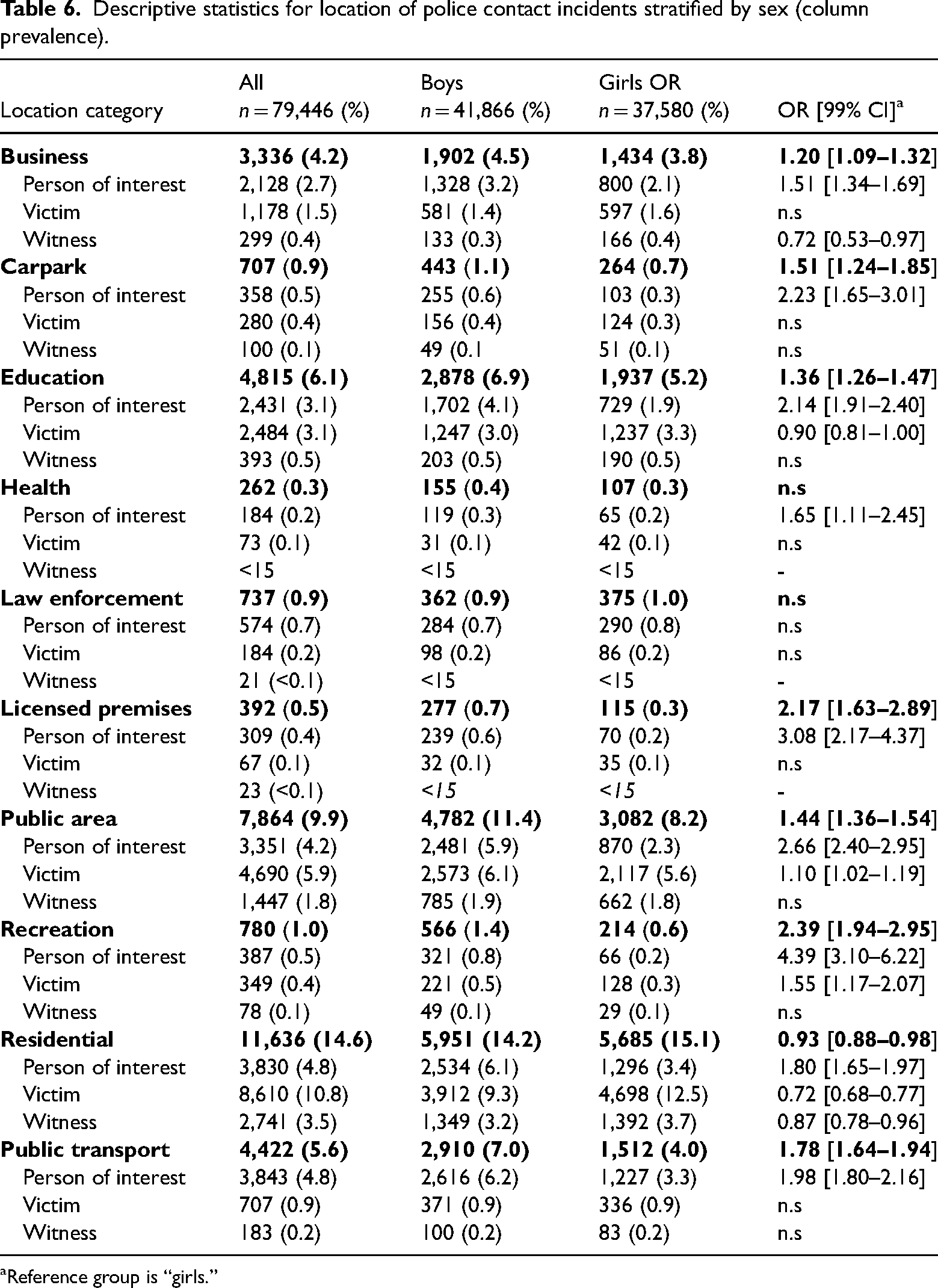
Table 6 presents the distribution of police contact types for all incidents across each location category separately for boys and girls. Boys were more likely than girls to have contact with police across most location categories, including as a person of interest in a licensed venue and carpark, and as both a person of interest and victim in a recreation setting and public area. However, girls were significantly more likely than boys to be a victim in an educational facility, victim and witness in residential premises, and witness in a place of business.
Descriptive statistics for location of police contact incidents stratified by sex (column prevalence).
aReference group is “girls.”
Discussion
This is the first epidemiological evidence from an Australian population-based study to describe sex differences in young people's contact with police. Importantly, this study includes contacts for incidents that were not recorded in court or conviction records, offering a critical point of comparison with other birth cohort studies measuring young people's contact with police. For example, 33% of boys and 14% of girls in the 1958 Philadelphia birth cohort study (Tracy et al., 1985) had contact with police for a criminal offence, compared to 14.5% of boys and 7.2% of girls in the current study. This disparity likely reflects recent declines in global crime rates (Tseloni et al., 2010), shown in two NSW birth cohorts where the prevalence of police contacts for a proven offence by age 17 years dropped from 6.5% and 1.6% for boys and girls born in 1984, to 3.6% and 0.9% for those born in 1994, respectively (Payne & Piquero, 2020). Another cohort study utilising police records found that 21.9% of Brazilian youth born in 1993 were the victim of a crime, with incidence rates of 14.3% for boys and 17.1% for girls per 1,000 person-years (Gallo et al., 2016). This is comparable to our finding that 18.9% of young people had contact with police as a victim for a criminal incident, with incidence rates of 10.5% for boys and 15.1% for girls per 1,000 person-years.
Despite cross-study variation in the prevalence of young people's contact with police, the magnitude and direction of gender differences for police contact types in other studies appear consistent with our findings. This underscores the possible need for tailored intervention strategies in youth–police interactions, particularly for sexual assault and harassment. The prevalence of these offences, along with the pronounced sex differences and high number of criminal victimisation incidents, signal the potential utility of early, sex-sensitive, trauma-informed prevention programmes. This could include school-based initiatives promoting respectful relationships and consent (e.g., Australian Respectful Relationships Education curriculum; Pfitzner et al., 2022), as well as training for police to recognise the needs of young victims and to handle these cases sensitively (e.g., Lathan et al., 2019). Furthermore, referrals by police to community-based support services that facilitate access to mental health care, counselling, and legal assistance may help mitigate the long-term consequences of these traumatic experiences (Wilson et al., 2018).
This study is nested within a large, longitudinal, population-based cohort with reduced risk of sampling and information bias (Green et al., 2024). Linking police records allows for detailed examination of young people's interactions with police across age and involvement type; a feature absent from other Australian population-based studies. Limitations of this study include underreporting and detection biases in criminal incidents reported to police (Finkelhor et al., 2001), exclusion of “at risk of harm” police incidents, and potential coding errors in administrative data not originally collected for research purposes.
Young people's early contact with the criminal justice system may portend further criminal involvement and impact adult wellbeing (Loeber et al., 2008; Moffitt, 2018), emphasising the importance of understanding these patterns at the population level for resource allocation, juvenile delinquency prevention, and policy making. Furthermore, the high number of victim contacts suggests there may be benefit in trauma-informed police responses, especially given the psychosocial adversities faces by this group (Baker et al., 2022). Future research should assess the impact of sex-sensitive, trauma-informed early intervention on young people's involvement in crime.
Footnotes
Acknowledgements
This research used population data owned by the NSW Registry of Births, Deaths and Marriages; the Australian Coordinating Registry (on behalf of Australian Registries of Births, Deaths and Marriages, Australian Coroners and the National Coronial Information System); Australian Bureau of Statistics; NSW Bureau of Crime Statistics and Research; NSW Department of Justice; NSW Ministry of Health and ACT Health; and NSW Police Force. The findings and views reported are those of the authors and should not be attributed to these departments, or the NSW or Australian Governments. Record linkages were conducted by the NSW Centre for Health Record Linkage (CHeReL).
Declaration of conflicting interests
The authors declared no potential conflicts of interest with respect to the research, authorship, and/or publication of this article.
Funding
The authors disclosed receipt of the following financial support for the research, authorship, and/or publication of this article: This work was supported by the Australian Research Council, Department of Health and Aged Care, Australian Government, National Health and Medical Research Council (Grant Nos. DE210100113, FT170100294, APP2006436, APP1148055, and APP1175408).
