




Abstract
We investigate whether the type of crime committed early in an individual's career has a bearing on patterns of subsequent offending (the so-called debut hypothesis) in an Australian setting. Police-recorded crime data from 2008 to 2020 were used and partitioned into cohorts based on the year of the first offence. We computed, for each cohort, the rate at which individuals progressed to established criminal careers conditioned by their first recorded offence. Individuals who commit burglary, vehicle theft, or robbery as their first recorded offence were observed to become chronic offenders at higher rates than those who commit other types of first offences. We also demonstrated that this relationship exists for other dimensions of the criminal career and is time stable. The policy implications of our findings suggest that a combination of opportunity reduction and diversionary policies has the potential to substantially reduce the prospects of chronic criminal careers and their societal impact.
Introduction
Youth crime is a concern for communities around the world. The fact that each criminal justice contact increases the chance of future criminal justice system involvement (Bales & Piquero, 2012; Cullen et al., 2011), combined with the observation that young people are at the highest risk of offending (Dennison, 2011; Farrington, 2003), means there is considerable upside in preventing youth crime. While many “grow out of” and desist from crime, a small number go on to become chronic offenders, accounting for a disproportionate amount of crime. While the overall youth offender rates have been decreasing, several studies have shown chronic youth offending rates have increased (McCarthy, 2019, 2021; Payne et al., 2018; Payne & Piquero, 2020; Weatherburn et al., 2014).
Most youth justice policies and interventions have focused on the individual and/or their interactions with the youth criminal justice system to prevent continuation into chronic offending patterns (Freiberg & Homel, 2011). An alternative (and complementary) approach has been proposed to identify so-called “gateway crimes”, those crimes early in criminal careers that lead to continuing or more serious criminality (Svensson, 2002). The rationale is that rather than trying to prevent all crime youth commit, prioritise preventing or disrupting the types of crimes that are most likely to facilitate extended criminal histories.
This study shows that individuals who commit burglary, vehicle theft, or robbery as their first crime are more likely to become chronic offenders with a longer and/or more prolific criminal career than those who commit other types of debut crimes. Through analysis of Queensland Police Service (QPS) recorded crime data, we found 22% of individuals who committed burglary, vehicle theft, or robbery as a debut offence went on to become chronic offenders, compared to a baseline of 5%. This information provides guidance for targeted early intervention and diversionary approaches. Additionally, our findings suggest that opportunity reduction strategies focused on burglary, vehicle crime, and robbery have the potential to decrease the size of the active offender population and their level of activity and result in sustained crime prevention.
Background
Criminal careers, age–crime curve, and offending trajectories
The criminal career literature concentrates on the patterns and trajectories of criminal behaviour over time (Piquero et al., 2003). This literature is distinguished from others in its focus on the individual offender and their behaviour, rather than on the characteristics of the crime itself (Clarke, 2017) or the social and environmental factors contributing to criminal behaviour (Agnew & Brezina, 2019). Typically, a criminal career is decomposed into several dimensions: onset, duration, seriousness, and offending rate. Each of these has been the subject of considerable empirical research (Piquero et al., 2003).
One of the key findings of the criminal career literature is the age–crime curve (Britt, 2018; Piquero et al., 2003), the observation that criminal behaviour peaks in adolescence and declines in early adulthood. This pattern is observed across different countries, cultures, and historical periods (Hirschi & Gottfredson, 1983) and is thought to be related to changes in brain development, socialisation, and life events during this stage of life (Britt, 2018).
The age–crime curve has led to the classification of individuals’ offending trajectories into adolescence-limited, life-course-persistent, or late-onset offenders (Jolliffe, Farrington, Piquero, Loeber et al., 2017; Jolliffe, Farrington, Piquero, MacLeod et al., 2017; Moffitt, 1993; Zara & Farrington, 2020). Adolescence-limited offenders are individuals who desist from offending as they leave adolescence (more recently defined as the early 20s), while late-onset offenders are individuals that commit their first offence in adulthood (Jolliffe, Farrington, Piquero, Loeber et al., 2017; Jolliffe, Farrington, Piquero, MacLeod et al., 2017; Moffitt, 1993). Life-course-persistent offenders begin offending in adolescence but continue to offend into adulthood and have a longer criminal career than other individuals (Jolliffe, Farrington, Piquero, Loeber et al., 2017; Jolliffe, Farrington, Piquero, MacLeod et al., 2017; Moffitt, 1993).
Early intervention is considered the most effective approach to address the underlying factors that contribute to antisocial behaviour and delinquency, yet differentiating life-course-persistent from adolescent-limited individuals is far from straightforward. On average, life-course-persistent and adolescent-limited individuals had similar ages of onset (Jolliffe, Farrington, Piquero, Loeber et al., 2017) and specific risk factors do not seem to discriminate between life-course-persistent and adolescent-limited individuals (Jolliffe, Farrington, Piquero, MacLeod et al., 2017), although the number and magnitude of the risk factors present were found to differentiate between offender types. The youth justice system and aligned support services need to focus resources on the most high-risk individuals.
Security hypothesis and debut crimes
The security hypothesis suggests that crime reductions throughout the 1990s and 2000s were driven by the widespread security improvements that increased the effort or perceived risk of some acquisitive crimes, such as burglary or vehicle crime (Farrell, 2016; Farrell et al., 2010, 2011, 2015; Van Dijk, 2006). In the United States, these reductions preceded decreases in violent offences with homicide and violent offences following the pattern of motor vehicle thefts with a delay of 1–2 years, suggesting vehicle thefts are a facilitator for other offences (Farrell et al., 2011). For instance, stolen vehicles can serve as a getaway car, a means of transporting stolen goods, or transport to burglary or other crime locations.
Previous studies have suggested that certain debut crimes are associated with future criminal careers (Farrell et al., 2015; Owen & Cooper, 2013; Svensson, 2002). Svensson (2002) analysed recorded convictions in Sweden for four birth cohorts and identified several debut offences with a greater-than-average association with individuals who became repeat (four to eight convictions) or chronic (more than nine convictions) offenders. Svensson deemed these debut offences “strategic” offences, a term discussed by Wikström (1995) referring to offences that occur early in a criminal career that elevate the risk of future prolific or long-lasting engagement in criminal behaviour. Svensson (2002) found that chronic offenders were only 6% of the first birth cohort but accounted for 52% of total recorded crime. Individuals charged with vehicle theft as their first offence were found to have a 55% chance of becoming repeat or chronic offenders (Svensson, 2002). Robbery and non-vehicle theft were the other debut offences associated with a high risk of subsequent serious criminal careers, with roughly one-third of those individuals becoming repeat or chronic offenders (Svensson, 2002). In contrast, debut offences such as shoplifting, drink driving, or other motoring offences had a much lower risk of ongoing criminal behaviour.
Owen and Cooper (2013) replicated these findings using data on recorded offences in England and Wales for cohorts of individuals who first entered the criminal justice system in 2001, 2005, and 2009 (though the 2001 cohort was used for much of the analysis). Of the 2001 cohort, 5% became chronic offenders, but overall accounted for 49% of the recorded re-offences of the cohort, consistent with the ratio found by Svensson (2002). Acquisitive crimes made up approximately one-third of debut offences, and offenders who committed robbery, burglary, or vehicle theft as their debut had the highest probability of becoming chronic offenders across the nine-year follow-up (Owen & Cooper, 2013). The type of debut offence remained a significant predictor of chronic offending even after controlling for age at debut and gender (Owen & Cooper, 2013).
In summary, identifying individuals most at risk of developing extended criminal careers is of considerable research interest and societal benefit. However, the ubiquity of the age–crime curve makes it difficult to distinguish life-course-persistent from adolescent-limited offenders. Some studies suggest that offending choices early in an offending history seem to be indicative of longer-term offending trajectories.
Research questions
Considering the extant literature, the focus of this study is to determine whether there is evidence for the debut crime hypothesis in Queensland, Australia. Our study differs from and extends previous work in several respects. First, previous studies have been limited in the longitudinal treatment of criminality. Svensson (2003) used four cohorts each five years apart and with eight years follow-up. While Owen and Cooper (2013) had three cohorts each four years apart, the analysis relied heavily on the first cohort, which had nine years of follow-up. The analysis here uses eight consecutive cohorts with a range of follow-up periods from 13 to five years. The benefit of consecutive cohorts is that changes in trends can be observed more directly and located more precisely.
The second extension this study brings is an exploration of additional criminal career dimensions. Previous studies have focused on a single dimension: activity level (offending rate). Our analysis explores additional dimensions such as onset and seriousness. Finally, this study increases the number of locations this type of analysis has been conducted and will serve to contribute to the external validity of the debut crime hypothesis.
Our analysis is organised to answer the following three research questions:
Is there a relationship between a first offence and the chance of becoming a chronic offender? Is there a relationship between a first offence and other dimensions of criminal careers? If so, has this relationship changed over time?
Data
Data to answer the research questions were obtained from Social Analytics Lab, which contains QPS-recorded crime data from 2008 to 2021 (inclusive). As we are interested in the offending histories of individual offenders, we drew all crimes with an identified offender linked to a crime event (i.e., all solved detected offences). Offender-level information used included a unique offender-specific identifier to link offending history, gender, and age at the time of any recorded offences. The crime event variables used included crime type, location, date, and time.
Prior to performing any analyses, data cleaning was performed and any cases with missing, incomplete, or data entry errors in key variables were removed (such as offences listed as occurring beyond the date of data extraction). Once cleaning was complete, there were 3,035,090 recorded offences and 815,861 individual offenders in the study sample. Most of the sample were males (71%), with 29% female and <1% non-binary. It should be noted that the data set only included recorded offences in Queensland and, as such, it is possible individuals appearing in the data may have recorded offences (including debuts) in other states of Australia, or other countries, that are not included. The implications of this will be discussed in a later section.
Methodology
Like many police-recorded crime databases, multiple charges can be associated with an individual crime event. For instance, consider the scenario where a police officer observes a car failing to stop at a red light. She pulls the vehicle over and, while verifying identity and ownership, discovers the vehicle is stolen and the driver resists arrest. Here, three charges constitute a single crime event: vehicle theft, motoring offences, and obstructing justice. 1
Svensson (2002) and Owen and Cooper (2013) both use the principal offence when multiple charges exist for a crime event. The principal offence refers to the single charge for which the offender receives the heaviest sentence or the charge for which has the most severe maximum penal penalty. No such equivalent designation exists in our data set. We explored determining this information ourselves but quickly realised this was a major research endeavour (there are a slew of studies in the literature that focus on just this task). As this is not of central importance to this study, we employed a straightforward approach to determine the charge type that best represented the seriousness of each crime event. Our selection was based on factors such as the use of violence, the degree of harm caused, and the type of victim involved. To ensure the robustness of our methodology, we grouped the 230 charge types from our data set using the Australian Standard Offence Classification group-level descriptions. These initial groups were further compiled into 17 cognate categories of offences, which are presented in Table 1. By consolidating the original 230 charge types into 17 offence categories, we not only enhance interpretability but also facilitate more meaningful comparisons.
Offences used in this study.
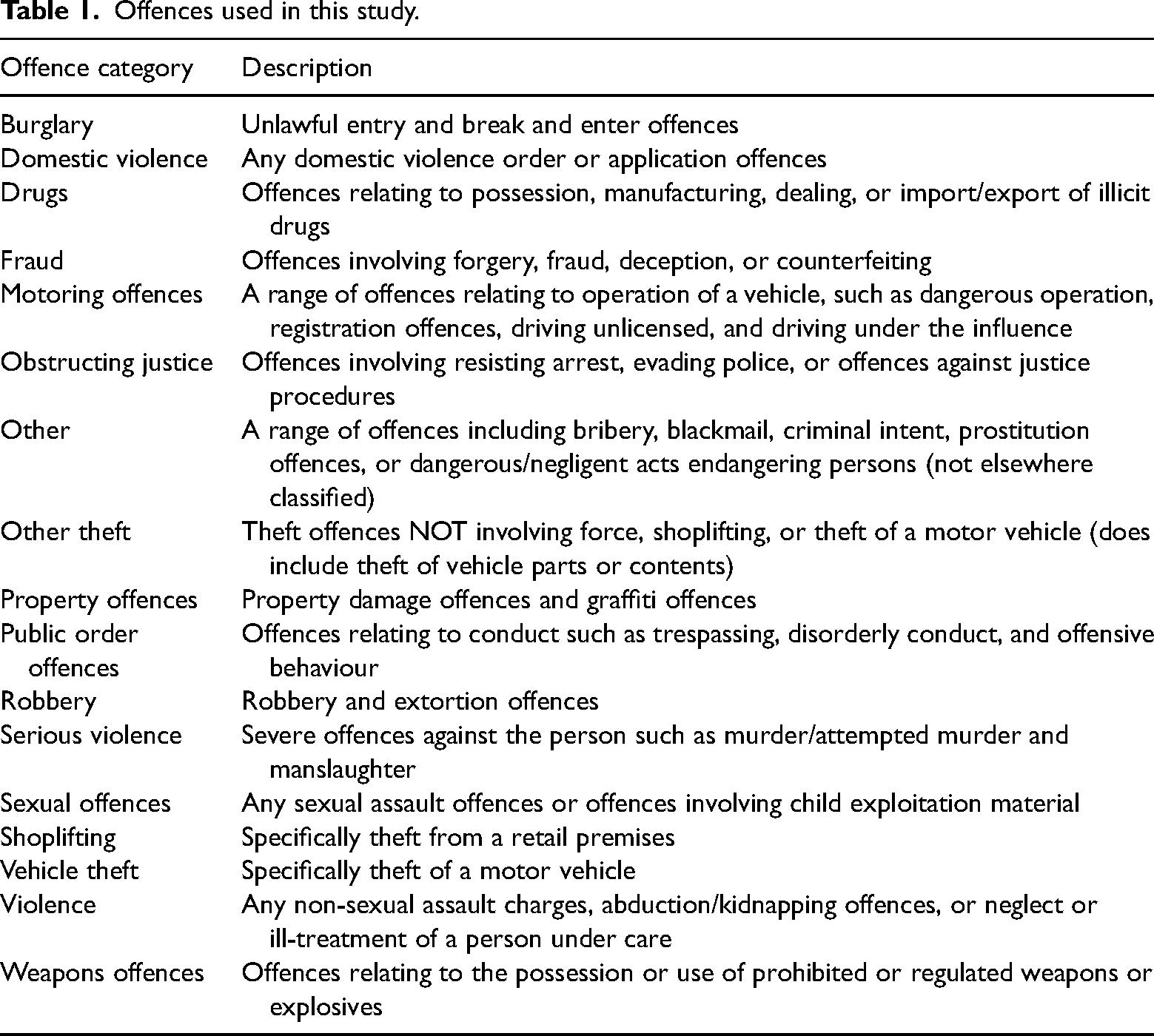
To make comparisons of debut offending over time, the data were split into cohorts based on the calendar year in which each offender's first recorded offence occurred. This provided 13 cohorts for comparison of debut offences; however, due to the different follow-up periods (ranging from one to 13 years), only cohorts from 2008 to 2015 were used for analyses of offending careers.
There is no consensus in the research literature about the definition of prolific or chronic offending, 2 requiring decisions based on local context. For the purposes of this study, offenders were categorised as one-off, occasional, repeat, or chronic offenders. One-off offenders were individuals with only one recorded offence in the data set (45.8%; N = 267,797), while occasional offenders were individuals with two or three total recorded offences (26.5%; N = 155,220). Chronic offenders were classified as any individual with an average of four charges or more per year across their listed career (4.9%; N = 28,790). Repeat offenders were any individuals that did not meet the criteria for the other three categories (22.8%, N = 133,383). The percentages are similar to those reported by Svensson (2002) and Owen and Cooper (2013), despite using different criteria for chronic offending.
Svensson (2002) and Owen and Cooper (2013) both used offence counts to define chronic offenders (more than nine offences and 15+ re-offences, respectively). Svensson (2002, p. 406) compared four cohorts, each five years apart, and subsequent cohorts defined chronic offenders as the “individuals who have accumulated a large number of offences and who are together responsible for 50% of the crimes committed by the cohort”. Owen and Cooper (2013) only compared chronic offenders between their 2001 and 2005 cohorts and retained the same definition of chronic offending but truncated the 2001 cohort to a five-year follow-up to match the 2005 cohort. Rather than percentage-based definitions or creating multiple follow-up periods for comparison to each successive cohort, using a consistent averaged yearly threshold seemed appropriate. Averaged yearly offence numbers were often too low to provide natural divides; as such, average yearly charges were a more suitable metric that allowed distinction between chronic and repeat offending.
Results
Characteristics of debut offenders
As mentioned previously, most of the sample was males (71%). Age at debut ranged from 10 years (the age of criminal responsibility in Queensland) up to 95 years, with a mean of 30.72 years (SD = 13.62). Individuals were charged with an average of 3.7 offences during the study's time window, and the average career duration was 2.3 years. However, the distribution of offending duration was skewed due to ceiling effects in the later cohorts and the influence of one-off offenders. The average offending rate per year was 1.7 offences.
The number of individuals recording a first offence in Queensland decreased by 75% during the study's time window. Figure 1 depicts this change and the subsequent consistent, incremental increase in the average age of debut, from 28.5 years in 2008 to a peak of 32.4 years in 2016. This increase in average age at debut is attributed to large decreases in the number of debut offenders in the mid-to-late teens and early 20s, relative to other debut ages, rather than the presence of outliers.
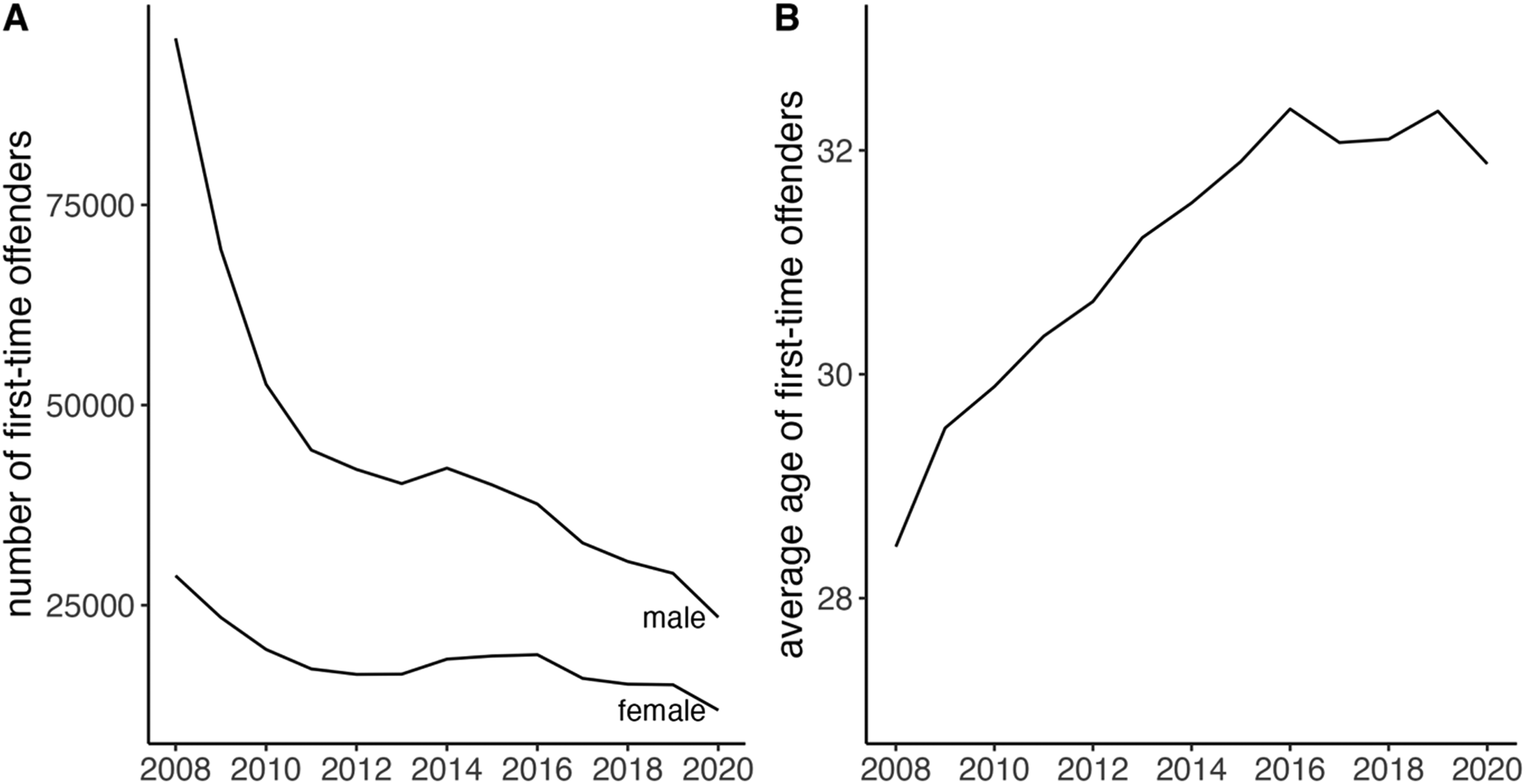
Reported gender (A) and age (B) of first-time offenders per year.
Debut crime hypothesis
Frequency of debut crimes in Queensland
Figure 2 displays the number of debut offences for each offence category. The most common debut offence was motoring offences, with ∼377,000 debuts (46%) across the full sample. This was followed by drug offences with just over 111,000 debuts (14%) and public order offences at a little under 106,000 debuts (13%). The least common debut offences were serious violence, domestic violence, and robbery, each representing <1% of the total recorded debut offences.
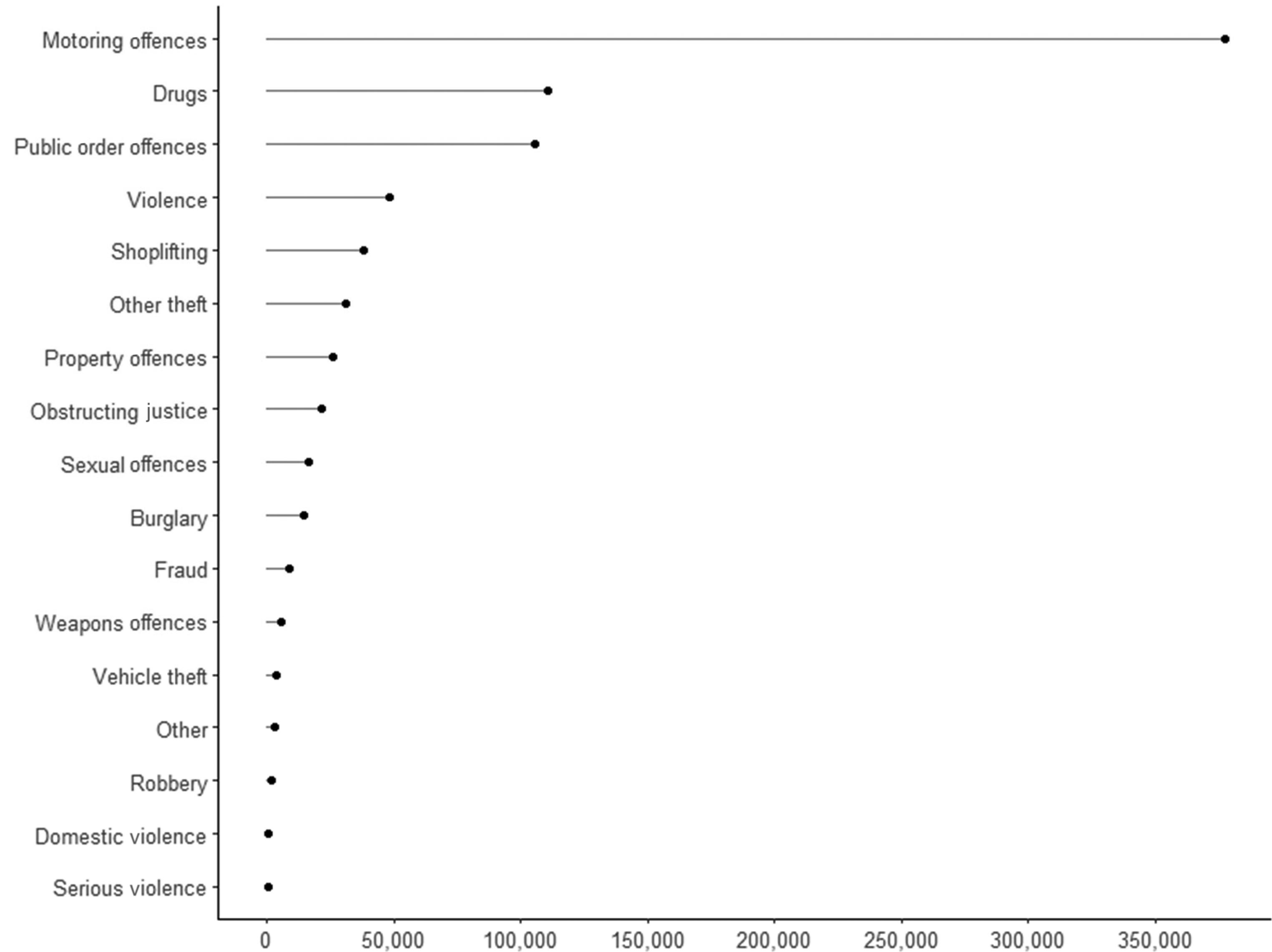
Frequency of debut offence categories recorded by the Queensland Police Service (2008 to 2020).
If the debut hypothesis is supported in Queensland, certain debut offences will have individuals go on to become chronic offenders at a higher rate than others. If it is not supported, however, we would expect that the proportion of chronic offenders would be similar for all debut offences. To measure this, we compute the proportion of offenders who go on to be chronic offenders (defined here as any offenders with an average of four or more charges per year across their offending career).
It should be noted that the following analyses only include debuts that occurred between 2008 and 2015 (inclusive). This ensures that individuals have a follow-up window of at least six years to assess their offending history. This limits the number of debuts to 585,190. Across this sample, there were 28,790 offenders who met the definition of a chronic offender, representing just under 5% of the sample.
Figure 3 displays the percentage of debut offenders who became chronic offenders for each offence type. Of the individuals who committed burglary as their debut offence, 22% went on to have chronic offending careers. Vehicle theft debuts had similar levels of risk, with just under 22% becoming chronic offenders, while robbery was a little lower with 18% becoming chronic offenders. In contrast, the three lowest-risk debut offences were motoring offences, serious violence, and public order offences, all with conversion rates to chronic offending careers below 4%. Recall from Figure 2 that motoring and public order offences were among the most common debut offences.
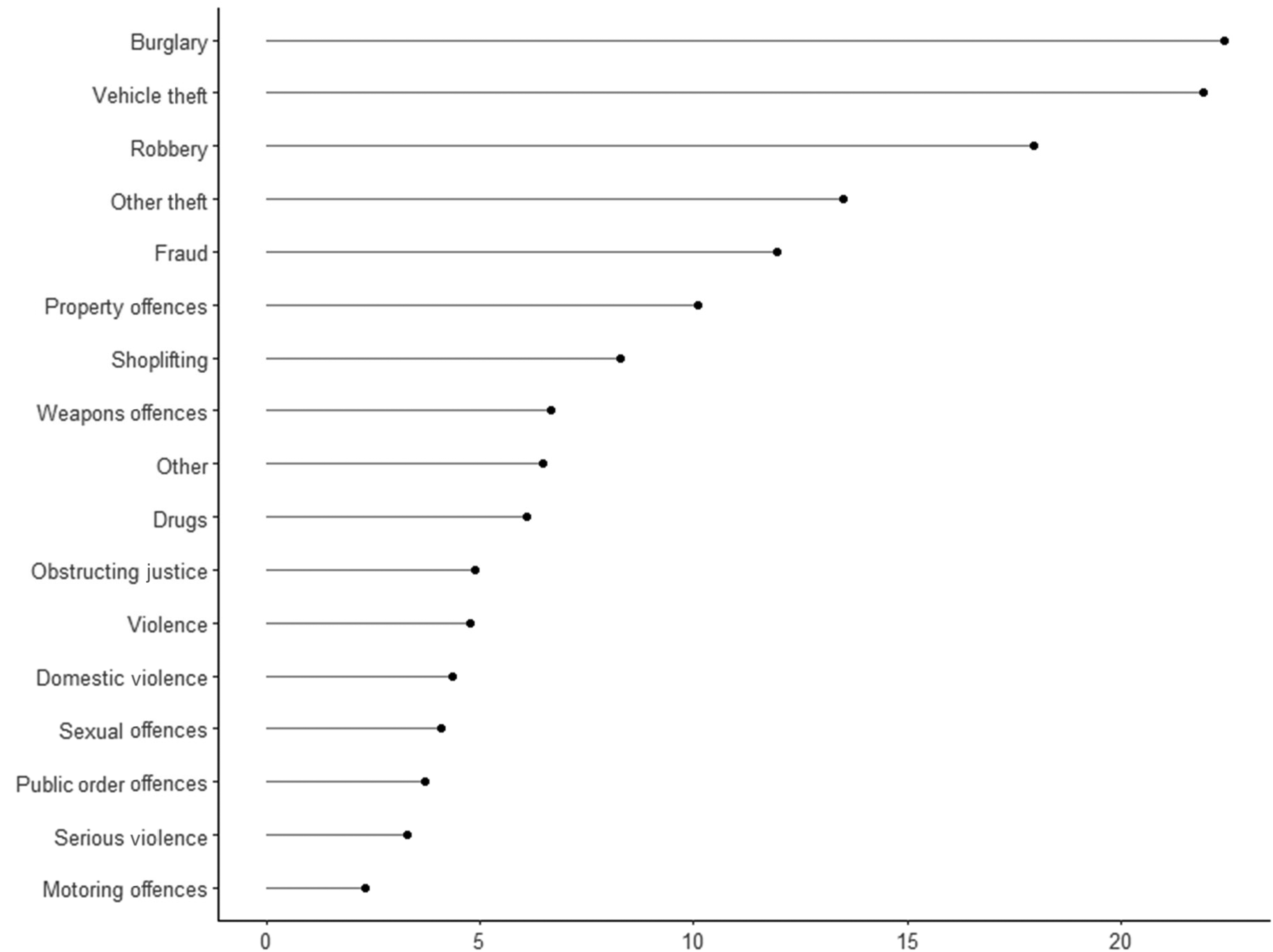
The percentage of debut offenders who become chronic offenders for each crime type.
Having established an association between the first recorded offence and chronic offending, we explore whether additional aspects of criminal careers are associated with debut offences. Several alternate outcome measures were chosen to assess the influence of different debut offences, including the average number of serious offences and the average offending rate of different debut crimes. In the results presented below, one-time offenders were removed as, by definition, their debut offence is the outcome measure.
Additional dimensions of criminal careers
Three dimensions of criminal careers are displayed in Figure 4, each with a dedicated subplot (panels A to C). For each, we display the entire distribution as a univariate scatterplot, that is, the values for each offence type for that criminal career dimension are plotted on the x-axis. These are equivalent to Figures 2 and 3, but the y-axis is collapsed. Every observation is given a small random value on the y-axis to distinguish individual points. Across each subplot, we indicate (and label) burglary, vehicle theft, and robbery offence types with filled circles, and all other offence types are represented with unfilled circles.
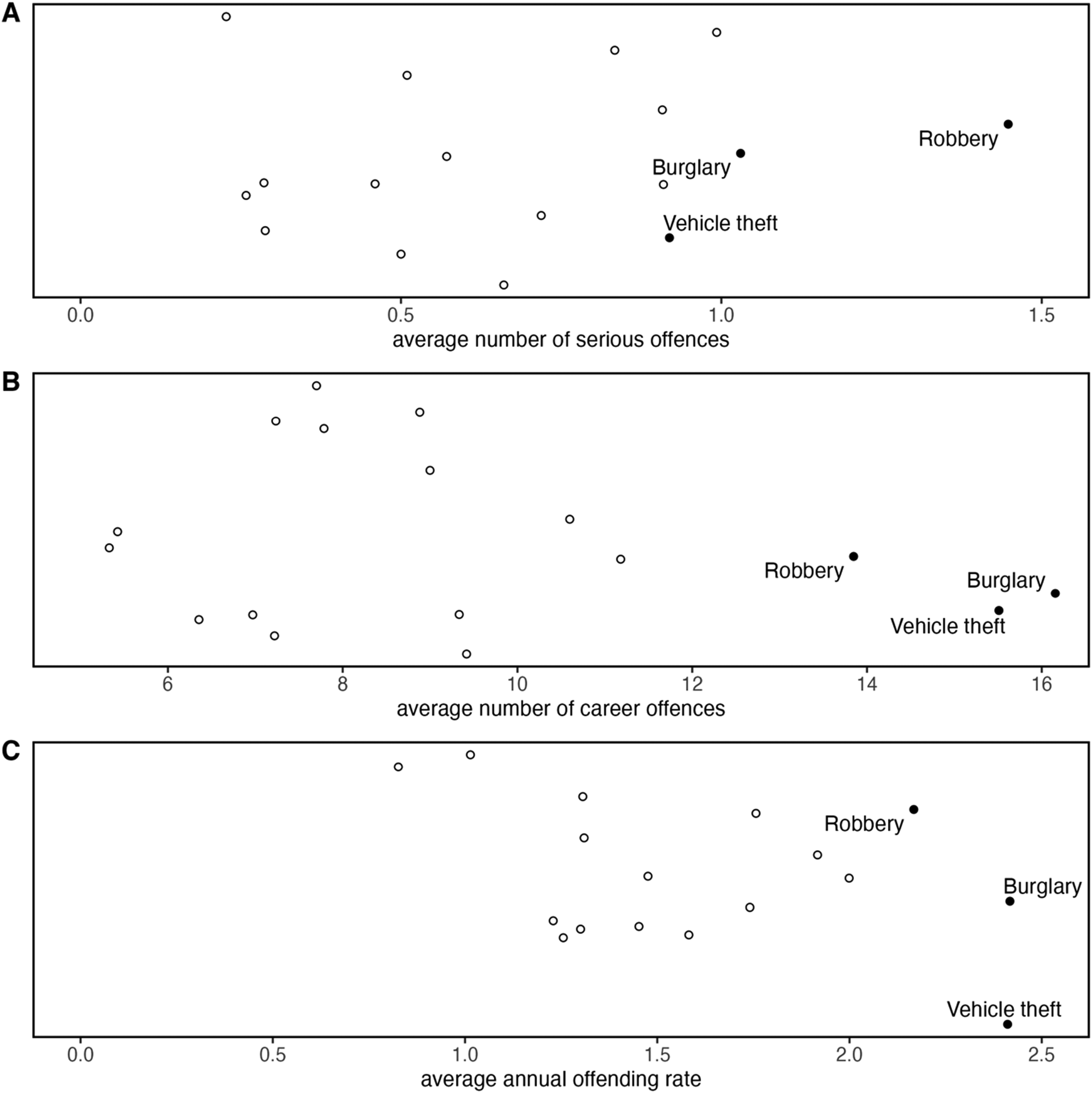
Average number of serious offences by debut offence type (A), average total number of recorded offences per individual per debut offence type (B), and average offending rate per year by debut offence (C).
Average number of serious offences after debut. Serious crimes were those identified as crimes against the person, which include serious violence, violence, sexual offences, robbery, and domestic violence.
The average number of serious offences (excluding the debut offence) by debut offence is displayed in Figure 4A. Debut offences themselves were excluded from this analysis as this would bias the average for any serious debut offences by one. Robbery demonstrates a distinctly higher average (1.45) number of serious offences in their career when compared to the other debut offences. Debut offences with the next highest average number were burglary with 1.03 and sexual offences with 0.99. The debuts with the lowest averages were motoring offences, fraud, drug offences, and domestic violence, all with averages of <0.3 serious offences.
Average total number of offences by debut offence. As shown in Figure 4B, the debut offence types with the highest average number of total offences across the career were burglary (16.2 offences), vehicle theft (15.5 offences), and robbery (13.9 offences). There is a small but clear gap between these three offence types and the next highest offences of other theft and property offences averaging ∼10 to 11 offences. The debut offences associated with the lowest total offences were motoring offences, domestic violence, sexual offences, and public order offences all with averages between five and seven offences.
Average rate of offending. The debut offence types with the highest average rate of offending per year are shown in Figure 4C. Debut offences with the highest average rates were burglary (2.4), vehicle theft (2.4), and robbery (2.2). The offences with the lowest offending rates were domestic violence (0.8), motoring offences (1), and sexual offences (1.2).
In summary, individuals whose first offence was either burglary, vehicle theft, or robbery were consistently shown, across a range of measures of offending propensity and activity, to be among the most criminally active individuals. According to the definition of chronic used here, these three debut crimes proportionally were associated with more chronic offenders than any other offence type. While motoring offences were by far the most common debut offence category, those individuals’ consistently demonstrated low rates of developing into chronic offending. In terms of severity, robbery as a first offence was associated with the highest number of serious offences across the criminal career on average and burglary and vehicle theft were in the group of offences in the next highest group (which included violence, serious violence, and sexual offences).
Based on the results presented here, we infer there is support for the debut crime hypothesis in Queensland and specifically that individuals whose first recorded offence is either burglary, vehicle theft, or robbery are more likely to become chronic offenders compared to all other crime types. In addition, we considered several competing explanations for this inference, but none of these provided a compelling rebuttal. No meaningful differences in the aggregate relationship between the debut recorded offence and future chronic offending were observed by offender gender, police region, or cohort year.
Partitioning offenders into age groups did reveal an interesting observation about risks of chronic offending. Figure 5 displays scatterplots depicting the (logged) number of recorded debuts for each offence type and the per cent of these individuals that had chronic offending careers by age group. To assist with readability, labels are only provided for the debut offences of burglary, vehicle theft, and robbery. Many of the higher volume debut offences (such as motoring offences, drugs, and public order offences) consistently have lower chronic offender percentages across most age groups. The 10 to 14 age group demonstrates the highest risks of chronic offending, with five debut offence types (robbery, vehicle theft, burglary, other theft, and property offences) having chronic offender percentages of 20 or more. Burglary, vehicle theft, and robbery, or some combination of these, consistently stand out as the highest risk debuts for escalation to chronic offending in every age group analysed, relative to the other debut offences. The exception to this is in the 20 to 24 age group in which domestic violence stands out with a particularly high percentage of chronic offenders (33%), though this is largely due to a low incidence (six recorded domestic violence debuts for this age group).
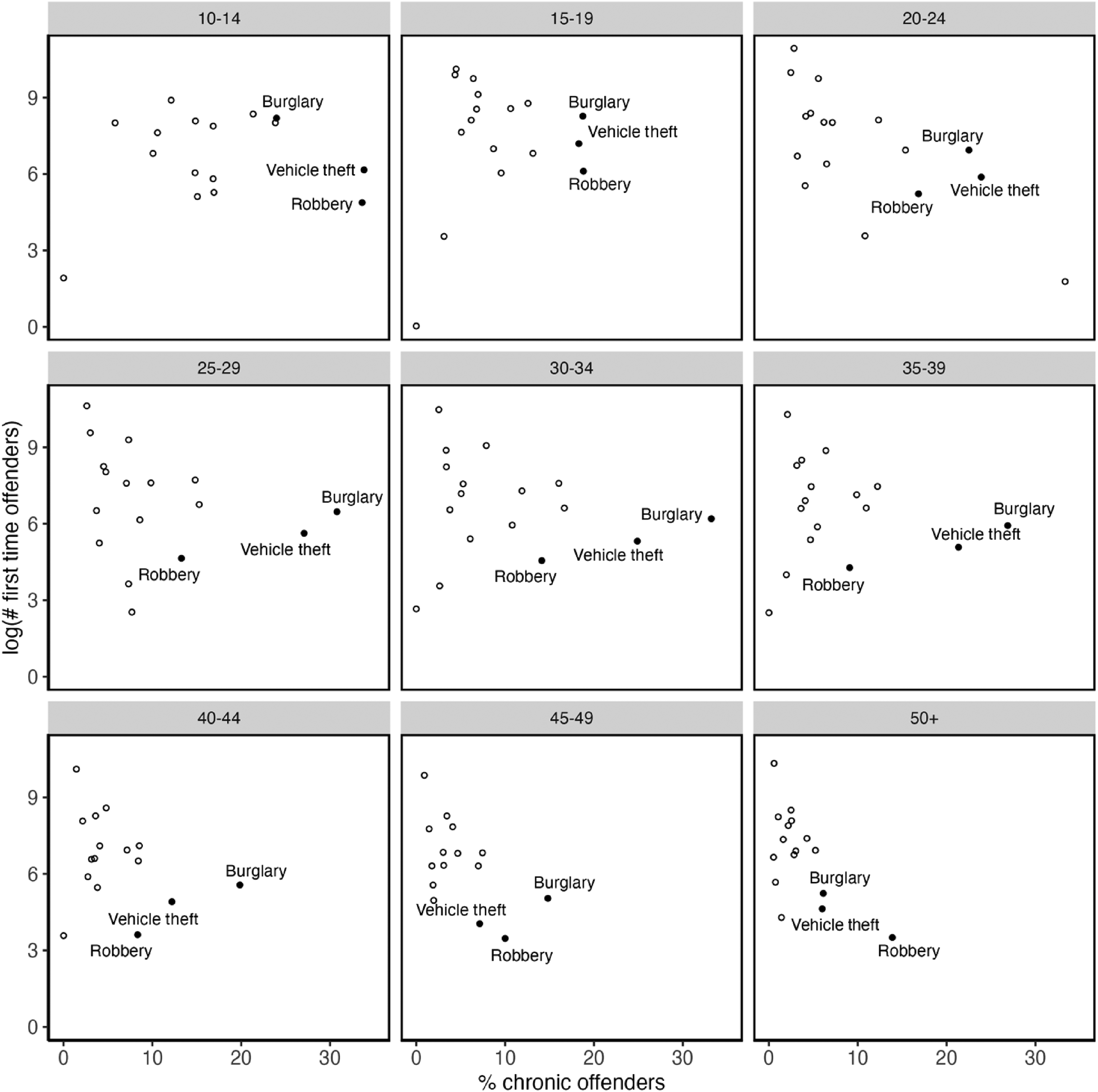
Number of recorded first offenders for each offence type and the percentage that become chronic offenders by age group.
Evidence for the debut hypothesis over time
Figure 6 displays the percentage of chronic offenders for each debut offence by year from 2008 to 2015. While there have been some changes over time, the rank order of high-risk debuts has remained consistent. Vehicle theft, burglary, and robbery make up the three debut offences with the highest per cent of chronic offenders in every year analysed, except in 2015 when other theft (17%) had a slightly higher risk than robbery (16%). The percentage of chronic offenders resulting from other theft debut offences displays an increasing trend from 2010 to 2015, from ∼10% up to 17%. Domestic violence fluctuated in the per cent of chronic offenders across the window; however, this is likely a function of the very low count of debuts making the reliability of comparisons of proportions questionable.
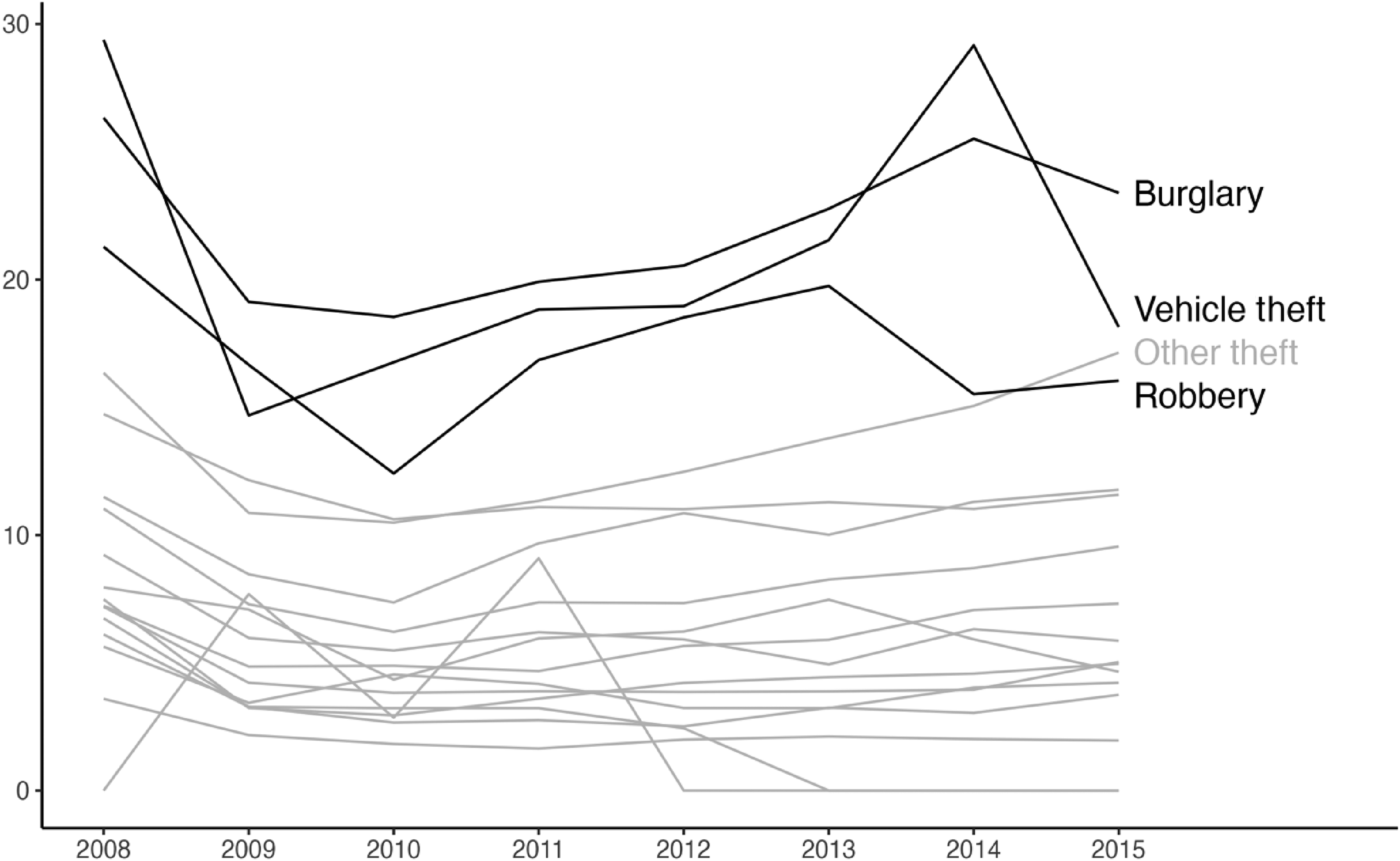
The percentage of debut offenders who become chronic offenders for each crime type by annual cohort.
Discussion
This report details the analysis of recorded debut crimes and subsequent chronic offending careers in Queensland. Following on from work by Svensson (2002) and Owen and Cooper (2013), we sought to determine if the debut crime hypothesis, that particular debut crime types demonstrate a disproportionately high incidence of subsequent chronic offending, was supported in the Australian context. In this section, the implications of these findings for police practices and criminal justice policy are explored as well as directions and recommendations for future research.
Key findings and interpretations
We observed that the debut offences of burglary, vehicle theft, and robbery seem to be gateway crimes that lead to more chronic criminal careers than other debut offences. This is consistent with previous research in Sweden (Svensson, 2002) and England and Wales (Owen & Cooper, 2013) that identified vehicle theft, robbery, and theft (burglary in England and Wales) as debut offences that were associated with high risks of subsequent chronic offending. Not only did debut offences of burglary, vehicle theft, and robbery demonstrate the highest risks of future chronic offending, but they also had the longest average criminal career durations and the highest average offending rate per year.
Even though the frequency of debut offences varies across Queensland, the proportion of individuals who go on to chronic offending careers is consistent regardless of geography. That is, a first-time vehicle thief in a rural community has the same chance of “graduating” to a chronic criminal career as their counterpart in the state's capital. Unsurprisingly, the age of the first offence does seem to influence the chance of becoming a chronic offender; individuals aged 10 to 14 who commit a debut offence (especially vehicle theft and robbery) became chronic offenders at substantially higher rates than other age groups.
While the focus of this study related to identifying whether the debut hypothesis had evidence supporting it in Queensland, it also addressed the broad patterns of debut offending in Queensland and the characteristics of these offenders. Across the study window, there was a substantial and sustained decline in the number of debut offenders per year, particularly between 2008 and 2011 when the number of debut offenders halved. By 2020, the number of debut offenders was just over a quarter of those in 2008. This finding is consistent with the analysis of Payne and Piquero (2020) who compared two New South Wales birth cohorts and the Australian crime drop. They find a full 40% reduction in the aggregate offences committed by the 1994 cohort at age 21, compared to the 1984 cohort at an equivalent age. This reduction was located predominantly among property and other acquisitive offences and a decline in one-off or low-frequency offenders.
The reductions in debut offenders would fit within the broader patterns of the international crime drop and reducing crime levels generally. The security hypothesis is a leading explanation for the crime drop, arguing that improvements in security have made acquisitive crimes more difficult to commit (Farrell, 2016; Farrell et al., 2010, 2011, 2015; Payne et al., 2018; Van Dijk, 2006). This reduction in acquisitive crimes is thought to have had a subsequent impact on several other offence types through two mechanisms. The first is that some of these acquisitive crimes serve as facilitators, so-called “keystone crimes”, for other types of offending (Farrell et al., 2015). Stolen cars can enable other crime types as a means of transportation that does not have direct ties to the offender, and stolen goods from burglaries (or other thefts) increase the cash available for drugs or resources for other crimes. These acquisitive crimes also frequently involve co-offending; if the occurrence of these offences is reduced, then interaction with other offenders may also be reduced.
The second mechanism involves the interplay between the security hypothesis and debut crimes. Acquisitive crimes are typically considered “entry-level” offences that are easy for novices and early career offenders to engage in, with successes here potentially increasing criminal networks, resources, knowledge, and confidence. The results of this report and work by Svensson (2002) and Owen and Cooper (2013) have identified several of these early career acquisitive crimes as having a higher risk of progression to ongoing criminal careers. These debut offences are also the ones most impacted by improved security measures that have made them harder and riskier to commit. By reducing the ability to commit early career offences, this may also prevent individuals from progressing to a criminal career that could otherwise have involved multiple offence types.
In contrast, Weatherburn and Rahman (2021) recently reviewed the leading theories for Australia's multi-decade crime decline and found mixed evidence for the security hypothesis. They argue that reductions in available cash (for individuals, dwellings and businesses) and changes to drug markets are competing explanations for reductions in burglary and robbery offences. Further, they highlight inconsistencies in vehicle theft patterns and increases in car security that make it difficult to argue that the security hypothesis is the only factor in Australia's crime drop.
Identifying offending patterns associated with chronic offending is nevertheless important for crime prevention and both law enforcement and corrections policies and strategies. However, without understanding the reasons why these particular crime types exhibit such high risks, impact may be limited. Owen and Cooper (2013) suggested that burglary, vehicle theft, and robbery share similarities in that they are acquisitive crimes requiring greater levels of confidence than shoplifting or other theft offences. Greater levels of confidence at the onset would suggest that these individuals are less easily deterred and likely at a greater risk of progressing to a chronic offending career. Alternatively, this also suggests that these debut offences are more likely to be committed under the guidance of a more experienced offender that functions as a mentor, showing the debut offender how to select a target and commit the offence.
This study employs administrative data to observe the initiation of criminal activity and reflects the first official police contact. It is likely that the true first offence differs from the recorded debut crime, and as such, precursor behaviour and actions may hold more significant explanatory power than the observed debut crime on prospects for chronic offenders. For instance, proximity to delinquent peers, degree of unsupervised free time, participation in low-level incivilities, and unrecorded cautions are some of the factors that are likely to place an individual in a position to consider criminal opportunities (Wikström et al., 2012).
A further alternative explanation lies within the state-dependent framework. The debut crime that an individual commits may not reflect their inherent propensity for criminal behaviour. Rather, certain types of debut crimes may have a labelling effect associated with them, thus generating a heightened risk of future criminality, lending support to the idea of a labelling effect.
Previous research has found higher rates of co-offending among the offence types of robbery, burglary, vehicle theft, and arson (Andresen & Felson, 2012; Carrington, 2009; Van Mastrigt & Farrington, 2009). This is thought to be an instrumental feature of these offence types, in that co-offenders and the division of labour can make an offence easier to commit (Van Mastrigt & Farrington, 2009). For example, the use of a dedicated driver or lookout can increase the chance of getting away, extra “muscle” can reduce the need for force in a robbery, or additional people committing a burglary can increase the speed with which a building can be searched and the number of items that can be stolen quickly. Co-offending has also been found to be more prevalent among younger offenders, with youths under 18 years of age almost three times more likely to engage in co-offending than adults (Van Mastrigt & Farrington, 2009). This is likely a function of peer and social group influences which are particularly prevalent during teenage years, but it could also represent younger offenders being “inducted” by older members of their social networks. Co-offending has been linked to higher frequency of offending, as well as more serious offending, which could be due to the effects of social network attitudes to crime and peer pressure, increased awareness of offending opportunities, or knowledge sharing among peers (Andresen & Felson, 2012; Carrington, 2009).
The second main finding from this study is the steady reduction in debut offenders from 2008 to 2020. This was predominantly found to have occurred in the number of debut offenders within the late teens to mid-20s age groups, a result consistent with the literature on the international crime drop. The security hypothesis represents one of several plausible explanations for the patterns of crime reductions seen throughout many developed nations around the world. As discussed previously, improved security measures have disproportionately impacted acquisitive crimes, which typically represent the main offence types for young or inexperienced offenders. Improved security measures have reduced the opportunities for these offences, deterring less motivated individuals or those without experienced peers to mentor them. The sustained reduction of debut offenders has been observed by other researchers. While youth offending rates have increased (McCarthy, 2019, 2021; Payne et al., 2018; Weatherburn et al., 2014), this has been coupled with significant decreases in one-off and occasional youth offenders who represent the majority of youth offenders. The one-off or occasional offenders represent individuals most easily deterred from offending, while more chronic offenders are likely to persist or find ways to adapt to security measures.
Limitations
There are several limitations identified with the current study. The use of police-recorded crime data to investigate criminal careers, while commonplace, does impose limits to the representativeness of the findings reported here. Some crime types are recorded to a greater degree than others, whereas some are more “solvable” than others. Each of these influences results in administrative data undercounting criminal careers. For instance, as noted in this discussion section, it is reasonable to assume that the first recorded offence listed is not the true first offence an individual has committed, but merely the first occasion they have been charged. An alternative methodology would be to conduct interviews with offenders about their offending history and their first offence; however, this would be a highly resource-intensive process that would severely restrict the number of cases available for analysis and replace a different set of sampling bias with that present in administrative data.
As the current study used Queensland Police-recorded data, the recorded offences only include those that occurred within the jurisdiction of Queensland Police. It is possible that some individuals may have committed additional offences in other jurisdictions that are not captured here. This likely only affects a small number of the individuals included in this study, but future research could incorporate data from other jurisdictions across Australia to account for this. Another important limitation of this study is our inability to account for the duration of time that some offenders may have been incarcerated following a particular crime. This restricts our ability to disentangle the effects of both the criminal event itself and subsequent periods of incarceration on the subsequent criminal career.
A pervasive limitation present in the criminal career literature is the lack of consistent definitions. Each criminal justice system counts and records offending in distinct ways, which makes establishing baselines and comparators challenging. While the results of the current study are comparable to previous research in Sweden and England and Wales, each of these uses a different definition of a chronic offender which limits comparisons across jurisdictions.
Implications and future directions
Following the findings discussed above, there is a clear practical message for policy. Burglary, vehicle theft, and robbery offences should be a focus for long-term change in both the active offender population and the level of activity of individual offenders. These offences feature in many chronic offenders’ criminal histories, and they appear early in their careers.
Reducing the opportunities for burglary, vehicle theft, and robbery offences has the potential for considerable downstream reductions in criminal careers, both in duration and severity. Chronic offenders are responsible for substantial amounts of recorded crime so any action that truncates their offending career would yield benefits to potential victims, the criminal justice system, local economies, and the individuals (and their family) who otherwise would go on to become chronic offenders. It is difficult to overstate the societal benefits of truncating chronic offenders’ careers.
The security hypothesis is an example of situational crime prevention that has had a substantial and sustained impact in reducing the active offender population. However, as evidenced by Hodgkinson et al. (2022), some offenders find ways to adapt to the measures put in place, highlighting the importance of continual evaluation and revision of crime prevention strategies. It should also be kept in mind that if the improvements to security are responsible for the reductions in debut offending, this has been a diffusion of benefits rather than an intended effect. Strategic targeting of these key high-risk debut offences will rely on a sustainable approach that addresses the methods of offending to be successful, rather than a targeted police operation that suppresses criminal activity temporarily without addressing the underlying criminal opportunity.
In addition to targeting the opportunities for these offences, the presence of these offence types in early career offending should be considered a risk factor for subsequent criminal careers, providing an indicator for early intervention and support provision to the at-risk offender. As speculated earlier, the debut crime type used in this study is a proxy for crime initiation and there may be important precursor behaviours that have more explanatory power than the first recorded offence. Equally, the possibility of a labelling effect has important implications for diversion and youth justice policies.
There are several possible future directions for research in this area. One avenue of interest would be conducting interviews with debut offenders regarding prior government or law enforcement contacts to further understand other early markers or risk factors that may be present. This would effectively represent a reverse longitudinal study specifically targeting other ways of identifying early career offenders at an increased risk of future chronic offending. Crime opportunities vary substantially across environments and locations. The location analyses in the current study did not find notable differences in the high-risk debut crimes; however, a more in-depth analysis may be able to identify differences in the risks present when comparing types of locations, rather than broad geographic regions which may mask variation.
In acknowledging the limitations of our study, it is essential to recognise that our measure of debut offending serves as an approximation for the commencement of a criminal career. It is important to explore alternative means of operationalising career initiation to unravel its intricate nature. For instance, we can examine different facets such as the initial point of contact with the justice system, the first recorded arrest, the occurrence of a caution, or the first conviction. By diligently investigating how these distinct initiation modes influence subsequent criminal trajectories, we can advance our understanding of the justice systems and gain valuable insights into the dynamics underlying criminality.
Footnotes
Acknowledgements
The authors gratefully acknowledge the use of the services and facilities of the Griffith Criminology Institute's Social Analytics Lab at Griffith University. This study was approved by the Griffith University Human Ethics Committee (approval no. 2021/120).
Declaration of conflicting interests
The authors declared no potential conflicts of interest with respect to the research, authorship, and/or publication of this article.
Funding
The authors received no financial support for the research, authorship, and/or publication of this article.
