




Abstract
Despite the prevalence and benefits of extracurricular involvement in sports for youth, few scholars have conceptualized youth mental health and development within the context of sport environments. The aim of this investigation was to create a visual framework of actions, thoughts, and feelings that promote mental health and development for youth athletes. Using a participatory mixed methods approach known as group concept mapping, 37 subject matter experts in youth athlete wellness contributed to a remote brainstorming activity by identifying the actions, thoughts, and feelings needed for youth athletes to maximize their mental health and development. Twenty-five subject matter experts then sorted the brainstormed items and rated their importance to youth mental health and development. Following data collection, the research team performed a hierarchical cluster analysis and multidimensional scaling analysis to create a point-map of items that were organized into five clusters: growth mindset, self-assurance, team culture, socioenvironmental factors, and health behaviors. Once these findings are replicated and validated in further research, parents, coaches, and sport professionals can use them to build a strong foundation for athletes in years to come. In doing so, youth athletes can remain engaged in sport and continue to experience the many benefits of sport across the lifespan.
One of the largest concerns facing society today is the rise in mental health-related concerns, particularly for youth and adolescents (Office of the Surgeon General, 2021). In the United States alone, 49.5% of youth met criteria for a mental disorder, with 27.9% reporting severe impairments resulting from their disorder (Merikangas et al., 2010). Athletes born between the years 1997 and 2012, often referred to as Generation Z, face an ever-growing list of societal issues, including the COVID-19 pandemic, the ubiquitous use and presence of digital media, limited access to mental healthcare, alcohol and drug use, and sociocultural challenges related to income inequality, racism, gun violence, and climate change; these factors can all play a role in the deterioration of their mental health (Office of the Surgeon General, 2021).
Although youth and parents may have little control over some of the societal issues noted above, scholars have identified several preventative factors important to youth mental health concerns (Office of the Surgeon General, 2021). One such factor includes participation in sport (Swann et al., 2018). As recently as 2019, 55.1% of youth ages 6 to 17 reported they “participated on a sports team” or “took sports lessons” either after school or during the weekends (Child and Adolescent Health Measurement Initiative, 2019). Given the large presence of sport involvement for youth, scholars have argued that “the prevention of mental health problems and promotion of mental health should begin in youth sport” (Vella, 2019, p. 231).
Though several theoretical frameworks exist that explain how sport promotes youth well-being at a high level, our field has yet to identify the potential causal mechanisms behind these relationships (Vella, 2019). Moreover, the field has yet to develop such frameworks in an inductive manner. The purpose of the current study was to create a visual framework of actions, thoughts, and feelings that promote mental health and foster development for youth athletes.
Positive Youth Development Frameworks
In contrast to earlier approaches to youth development that took a reactive response (i.e., where a problem was identified and researchers developed interventions to improve the deficit), the field has shifted to a lens known as positive youth development (PYD (Larson, 2000). PYD focuses on youth opportunities to develop and thrive (Cronin & Allen, 2017), rather than focusing on problems that need to be solved. PYD posits that involvement in organized activities leads to optimal development for youth; this involvement provides opportunities to develop life skills and build meaningful relationships, resulting in healthy, satisfying, and productive lives (Holt, 2016). The PYD approach sets a foundation for sport-specific models of youth development, which typically examine individual engagement, social relationships, and physical settings within sport (e.g., Côté et al., 2016; Holt et al., 2017).
Research supports the effectiveness of PYD programs that are informed by the aforementioned frameworks, as well as generalized PYD models such as The five Cs model (Lerner, 2005). In fact, scholars argue that extracurricular activities offer some of the best environments to foster positive development and to support optimal development in youth (Holt et al., 2020; Larson, 2000). Youth programs and extracurricular activities offer a wide variety of positive outcomes for youth, including an investment in the development of youth relationships, a space for youth to reach a common goal, voluntary and youth-initiated tasks, authentic learning opportunities, and a safe space for interest exploration (Boat et al., 2022). For example, youth athletes whose coaches create task-oriented environments, where hard work and the development of skills are emphasized (rather than comparison to others), report higher levels of enjoyment and motivation in their sport (Trbojević & Petrović, 2021).
One well-known model of youth development, titled the personal assets framework (Côté et al., 2016), posits three key ingredients that contribute to competence, confidence, connections, and character for youth athletes: (a) engagement with activities, (b) positive social interactions, and (c) developmentally appropriate competitive settings. Côté and colleagues further state that youth athletes are likely to experience enhanced performance, personal development, and sustained participation over time when the above elements are a part of the youth athlete experience.
The models above, as well as PYD models outside of sport (e.g., Lerner, 2005; Tirrell et al., 2020), are similar in that they generally integrate psychological, behavioral, social, and environmental characteristics. The research on these models varies and reflects the expansive number of constructs that have been introduced to the field of youth wellness and development in recent decades.
Youth Development Research in Sport
Some scholars have focused specifically on determinants of sustained participation in sport. Recognizing that fun is one of the largest predictors of continued engagement in youth sport, Visek et al. (2014) developed a theoretical framework for youth participation in sport that is centered on fun Visek et al., (2014). They identified 11 determinants of fun based on the perspectives of youth soccer players, parents, and coaches: games and practices, learning and improving, trying hard, mental bonuses, positive team dynamics, team friendships, team rituals, swag, game time support, and positive coaching.
Other prominent researchers, such as Dohme et al. (2019), have explored the psychological skills and characteristics necessary for facilitating youth athlete development. Dohme et al. (2019) identified several key psychological skills for youth athletes: goal setting, social support seeking, realistic evaluation, imagery, relaxation, maintaining a sense of balance, (pre)performance routines, self-talk, hard work ethic, emotional control, motivation, interpersonal competencies, focus, positivity, resilience, and independence. Research has also found that children report improvements in teamwork, goal setting, time management, emotional skills, interpersonal communication, social skills, leadership skills, problem solving, and decision-making because of their participation in sport (Barber et al., 2001; Bartko & Eccles, 2003; Cronin & Allen, 2017; Eccles et al., 2003; Hansen et al., 2003).
One prominent figure who plays a large role in promoting PYD of athletes is the coach. Youth athletes report higher levels of self-esteem, positive affect (i.e., pleasurable interaction with their environment), and life satisfaction when they have coaches who allow them to make choices for themselves and support their independence, acknowledge their feelings and perspectives, demonstrate belief in their abilities, and provide constructive feedback (Cronin & Allen, 2018; Fraser-Thomas & Côté, 2009). Furthermore, the opportunity to interact with other individuals allows youth athletes to form meaningful relationships and provides youth athletes with a sense of community (Cronin & Allen, 2018; Fraser-Thomas & Côté, 2009).
A new generation of athletes may also bring new characteristics and challenges to sport. Recently, coaches have described difficulties understanding the challenges that Generation Z athletes face (Gould et al., 2020). Some coaches may not understand how to effectively help their athletes who may be struggling, in part due to generational differences and increased mental health concerns seen within Generation Z.
Despite all of the benefits that come from participation in sport, sport participation can also have a negative impact on youth athletes, leading to perfectionism, athlete burnout, stress, and anxiety (e.g., DiFiori et al., 2014; Fraser-Thomas & Côté, 2009). Coaches can play favorites or demonstrate inappropriate behaviors (Fraser-Thomas & Côté, 2009). Parents may place pressure on the youth athlete to succeed and remain in their sport, leading to higher levels of perfectionism in athletes (Fleming et al., 2023). Additionally, peers’ poor work ethic can hinder the development of their more focused peers, while jealousy and negative feelings toward one another can also surface and impact mental health and development (Fraser-Thomas & Côté, 2009). Additional concerns include unpleasant peer interactions (Hansen et al., 2003), disordered eating (Thompson & Sherman, 2014), and pressure to succeed and perform at one’s highest level (Fraser-Thomas & Côté, 2009).
Gaps in the Research
Past findings suggest many factors converge to affect the mental health and development of youth athletes. However, past research on youth athletes’ mental health and development is lacking in a few respects. First, much of the research has focused on the role that others (e.g., parents and coaches) have on the mental health and development of the youth athlete (e.g., Fraser-Thomas & Côté, 2009). Though it is important to understand external factors that affect youth wellness, it is also important to understand youth wellness at the individual level.
Second, the integration of quantitative and qualitative approaches via mixed methods research is needed. The field has predominantly taken a qualitative approach to understanding the mental health and health promotion of youth athletes. When quantitative research on sport is published, it is often cross-sectional and is done in the context of team environments (with specific sports or genders), which limits the generalizability of findings. Although this research has provided a foundation of knowledge and theory, a mixed methods approach can integrate the perspectives of subject matter experts with quantitative data to demonstrate the importance of various factors underlying youth development in sport.
Third, research is needed to provide a framework specific to this new generation of youth athletes (i.e., Generation Z). As highlighted above, today’s youth athletes face a variety of new challenges (e.g., social media, sociocultural changes), and expectations for success are higher than they have ever been (Gould et al., 2020). Generation Z athletes have faced unprecedented challenges in the wake of the COVID-19 pandemic, resulting in monumental levels of sadness and hopelessness (Office of the Surgeon General, 2021). Thus, today’s youth athletes have nuanced needs that must be understood to a greater level.
Knowledge and understanding of factors that promote youth wellness and development may help parents, coaches, and providers meet youth needs while preventing potential mental health concerns that can arise in such settings. By identifying the factors that promote youth athletes’ mental health and development, our field can develop a model that clearly identifies what actions, thoughts, and feelings optimize youth athlete wellness. This is especially important amidst rising concerns regarding youth mental health (Office of the Surgeon General, 2021) and a growing interest in athlete mental health (e.g., Vella et al., 2021). Increased knowledge in this area can inform the delivery of important prevention and health promotion programs for youth and adolescents in sport settings.
The Present Study
This mixed methods study used group concept mapping (Rosas & Kane, 2012), a technique that combines qualitative and quantitative data, to develop a visual model of actions, thoughts, and feelings needed for the promotion of mental health and development in youth athletes. An exploratory sequential mixed methods design was used to collect qualitative data first, followed by quantitative data, from subject matter experts in youth sport (Creswell & Plano Clark, 2018). This mixed methods process allowed qualitative and quantitative findings to converge to develop an enhanced understanding of youth mental health and development in sport.
Group concept mapping takes a participatory approach to research by actively engaging participants in multiple phases of the research process and gathering qualitative and quantitative information (Rosas & Kane, 2012). The method uses a six-step process with qualitative data (i.e., focus groups) and quantitative data (i.e., multivariate statistical analyses) to visualize and conceptualize phenomena via scatter plots (Rosas & Kane, 2012). Our team chose group concept mapping for this investigation due to its emphasis on participant-centered data and findings, visual outcomes (i.e., maps), and implications for scale development (Rosas & Ridings, 2017). This research method is well-suited for complex topics because it embraces participant perspectives and provides autonomy while also developing a clear structure of information. The point map that results from this research method allows scholars and stakeholders to visualize (a) key components of the model; (b) the levels of similarity between key components; and (c) the relative importance of each component.
Method
Participants
Thirty-seven participants, who were subject matter experts in youth sports, contributed to at least one phase of the current research study (i.e., brainstorming, sorting, rating). Thirty participants contributed to the brainstorming phase and 25 participants contributed to the sorting and rating phases of the research. Participants ranged in age from 24 to 64 (M = 40.47, SD = 10.08). They had an average of 13.21 years of experience working in youth sport (SD = 7.37). Sixty-two percent of participants were female, 35% were male, and 3% were non-binary. Participants identified as White (81.1%), Black (10.8%), Middle Eastern/North African (2.7%), and Hispanic/Latino (5.4%).
Group concept mapping sample sizes are informed by saturation of qualitative data in the brainstorming phase of the research process (Rosas & Ridings, 2017). In a recent systematic review of 23 concept mapping studies, the average number of participants ranged between 27 and 38 (Rosas & Ridings, 2017). When saturation is reached, content begins to reappear, and no themes emerge with the addition of participants. The relatively low sample size is sufficient for this methodology because no effect size is needed in later stages of the analysis.
Group concept mapping scholars encourage researchers to capture a breadth of perspectives in participant samples “to ensure that a wide variety of viewpoints will be considered” (Trochim, 1989, p. 3). In recent years, they have expanded this approach, noting that participant groups should include “a broad group of stakeholders at all levels of involvement with an issue, including representatives across all dimensions of the stakeholder base” (Kane & Trochim, 2007, p. 30). We thus recruited a wide variety of participants. Participant occupations included coaching (59.5%), athletic counselors or sport psychologists (22%), sports medicine physicians (5.4%), directors of youth sport organizations (16.2%), athletic trainers (8.11%), and teachers (5.41%). Participants reported that they had experience working with youth in 26 different sports: alpine ski racing, cross country, cycling, basketball, baseball, dance, fencing, figure skating, football, golf, gymnastics, hockey, lacrosse, mixed martial arts, mountain biking, paddle boarding, rowing, soccer, softball, swimming, tennis, track and field, triathlon, volleyball, weightlifting, and wrestling.
Procedure
After obtaining human subjects’ approval from Solutions IRB to conduct the research, the research team identified subject matter experts in youth sport via purposive sampling. Research team members contacted their coworkers with contracts in high school and college athletic departments, professional teams, youth sport organizations, and a group sport psychology consulting firm. Team members asked their coworkers for the names of professionals in the youth sport industry (i.e., coaches, physical therapists, physicians, sport psychologists, athletic trainers) with 5 years of experience or more and subject matter expertise in the area. The team then secured their contact information and emailed the prospective participants with a description of the research study and an invitation for participation. Participants who expressed interest in participation received information to access an online research portal, GroupWisdom (The Concept System® groupwisdom™, 2022), which supports remote participation of subjects for group concept mapping investigations. Participants logged into the research portal, received and agreed to an informed consent, and proceeded to the steps described below.
After providing consent to participate via the research portal, the research team invited participants to contribute to phase one of the research: brainstorming. Participants received a welcome with instructions for the brainstorming activity. After reading the brainstorming prompt at the top of the screen, participants entered brief responses to the prompt, which were subsequently added to the list of collected statements. They were told they could add as many statements as they wished. During the activity, participants viewed the responses of other participants to create the feeling of a focus group. The prompt read as follows: Please reflect on your experiences in sport and your observations of youth athletes. Consider what thoughts, feelings, and behaviors contribute to optimal mental health and development in youth athletes. These items may contribute to development in sport, social development, character development, and performance development in youth. Next, complete the following sentence: In order for youth athletes to maximize their mental health and development, they should. . .
The brainstorming portal remained open for 1 month, allowing participants to return and add to their list if desired. Upon completion of this stage, the research team exported 110 open-ended responses from the research prompt. Using group concept mapping standards (Kane & Trochim, 2007), the team cleaned the data to ensure that each statement met the following conditions: 1. The statement was a unique idea that did not appear in other responses. 2. The statement reflected a single idea or concept. 3. The statement was relevant to the brainstorming prompt; and 4. Participants would be able to rate the importance of statements on a Likert-type scale. Following the data cleaning stage, 81 responses remained.
The research team then invited participants to return to the research portal to contribute to the next two phases of the research: sorting and rating. Upon logging into the research portal, participants viewed the 81 statements in a column along the left side of the screen. They received instructions to sort each statement into piles by clicking and dragging each statement into the main window of the screen. Participants were asked to create piles with items based on similarity in meaning of content. Next, the participants self-assigned labels to each group of statements. The instructions suggested they create 5 to 20 piles. Participants did not view the solutions or item structures created by others in the study.
Finally, participants rated each of the 81 items based on its importance to mental health, as well as its importance to development using a Likert scale (1 = not at all important to 5 = extremely important). Participants then submitted their responses via the research portal. They did not have access to the ratings and responses of other participants.
Statistical Analysis
To prepare data for statistical analyses, an 81 × 81 similarity matrix was created in a spreadsheet to depict the sorting arrangements for each statement and participant. Each row and column represented one of the 81 statements. A “1” in a cell indicated that the two statements were placed in the same pile by the respective participant. A “0” in a cell indicated that the two statements were placed in different piles for the respective participant. The 25 matrices were then consolidated into a new matrix. For this final similarity matrix, a cell with the number 0 indicated that none of the 25 participants placed those two statements in the same category; a 25 indicated that all participants placed those two statements in the same category.
Using the groupwisdom™ software (The Concept System® groupwisdom™, 2022) to create a similarity matrix, researchers then conducted a multidimensional scaling (MDS) analysis, which is a quantitative statistical technique that depicts similarities between items in a visual point map (see Figure 1; Trochim, 1989). The team then performed a hierarchical cluster analysis (HCA) with GroupWisdom to group items into clusters based on similarity (The Concept System® groupwisdom™, 2022). The research team examined potential solutions for four through eight clusters. This stage is somewhat subjective in that HCA offers more than one solution, leaving the research team to determine the best fitting model. Group concept mapping scholars encourage researchers to select the most parsimonious model that still captures important nuances in the data (Kane & Trochim, 2007). For this investigation, the team selected five clusters, which allowed for parsimony and nuance. The four-cluster model included one cluster with over 30 items, but this cluster more easily interpreted and captured important nuances in mindset when grouped into two distinct clusters (i.e., overall self-esteem and confidence versus growth mindset skills). The six-cluster model separated two clusters that were best interpreted as one cluster, given that one of the clusters only had seven items within it (i.e., communication within teams and overall team culture). The five-cluster map was thus superimposed onto the point map, creating a visual diagram of the 81 statements with their respective categories. The data that support the findings of this study are available from the corresponding author upon request.
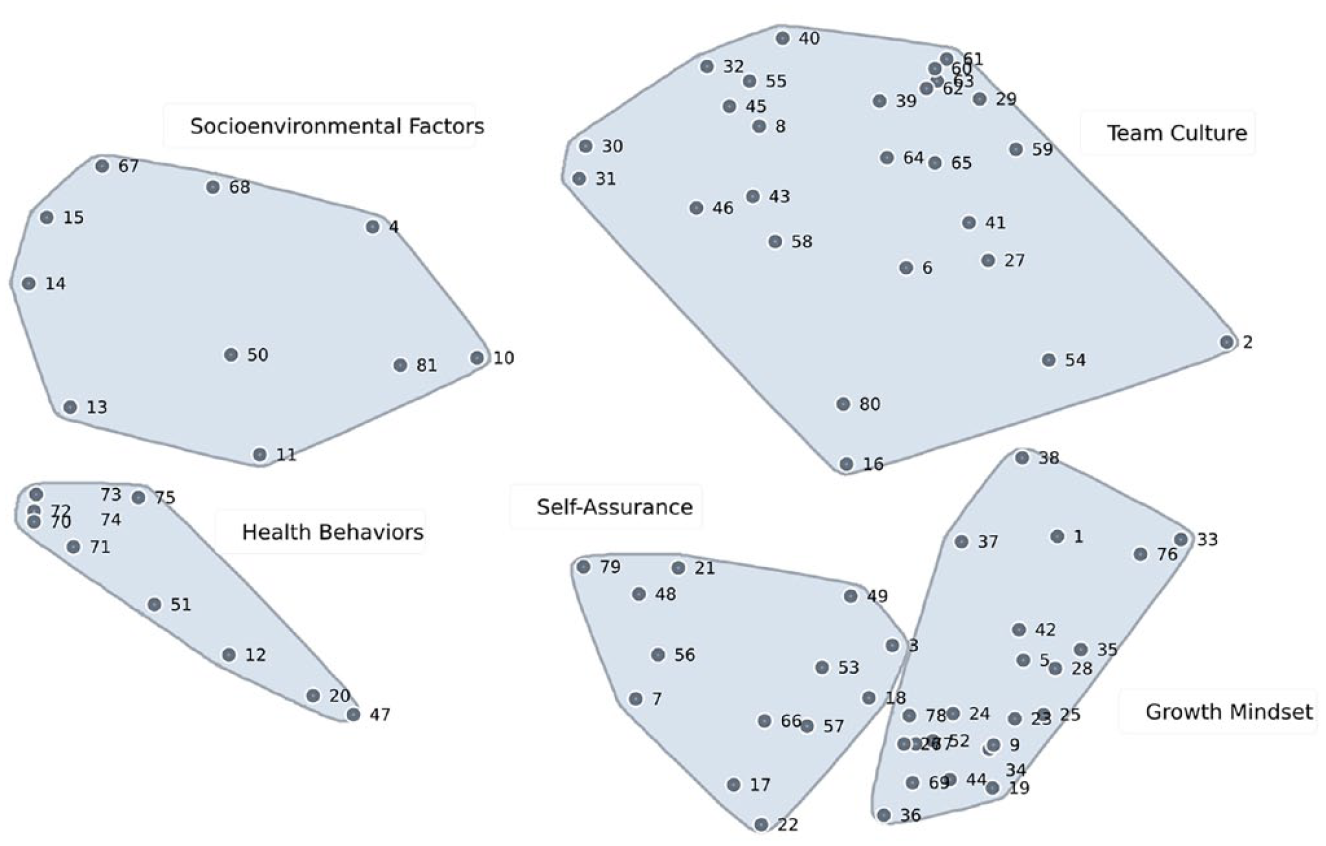
Cluster Model of Factors That Promote Mental Health and Development for Youth Athletes
Results
Figure 1 depicts the five-cluster model for youth athlete wellness and development. To examine the suitability of the model to the data, our team referred to the stress value, which is a statistical coefficient used in group concept mapping studies (Rosas & Kane, 2012). This coefficient assesses the original similarity matrix of MDS analysis. The lower the stress value, the better the fit to the model. Based on previous research, the average stress value for concept mapping studies is .28 (Rosas & Kane, 2012). The stress value for the current investigation was .21, suggesting our data were a good fit for the five-cluster model.
The 81 items from the sorting and rating phase are illustrated in Figure 1. On the concept map, items that are close together were reported to be conceptually alike by participants. For example, the items “build strong relationships with their coaches” (item 60) and “have coaches who build a supportive team culture” (item 63) were placed close to one another on the map and placed in the same cluster. Items that are farther apart on the map were seen as theoretically different from one another, such as “be able to effectively give critical feedback” (item 33) and “have financial means to support their desired involvement in sport” (item 15).
Each cluster in Figure 1 depicts the behaviors, feelings, and thoughts within each theme. The larger the cluster, the broader the items are that contribute to youth athlete mental wellness and development (e.g., team culture). The smaller the cluster (e.g., growth mindset), the more specific and similar the items are to one another. Some items (e.g., 79, 21, 48, 56, 7) may have characteristics that are conceptually similar to multiple clusters (e.g., self-assurance and health behaviors). However, the MDS analysis and HCA indicated that these items were sorted with the self-assurance items more frequently than the health behaviors items. In other words, the placement of each point on the map reflects the sorting patterns of participants, and as such, each item’s respective cluster reflects the statistical analyses and participant sorting behaviors.
Clusters
The 81 items and their corresponding clusters can be found in Table 1. To label the clusters, our research team followed guidelines from the group concept mapping literature. More specifically, we combined three sources of information: (a) the contents of each cluster from the final cluster solution; (b) the suggested labels from participants—particularly those that were used most frequently; and (c) our own understanding of the contents of the map (Kane & Trochim, 2007).
Mental Health and Developmental Behaviors, Mean Importance Ratings, and Quadrants

Quad = quadrant that represents the importance of mental health by importance to performance. Quadrant 1 = moderate importance to mental health and high importance to performance. Quadrant 2 = high importance to mental health and performance. Quadrant 3 = moderate importance to mental health and performance. Quadrant 4 = high importance to mental health and moderate importance to performance.
The first cluster in the model, titled growth mindset, included items such as celebrating signs of progress throughout the season, feeling empowered to try new things, and embracing challenges. This cluster also included the ability to manage uncomfortable situations and to accept critical feedback. The most important behaviors in this cluster included learning skills that encourage growth in everyday life, taking risks, and focusing on the progress made each season instead of the outcome.
The second cluster, self-assurance, reflected an athlete’s self-awareness and willingness to ask for help when needed. This cluster included items such as being willing to ask questions, having a healthy way to deal with pressure from others, loving their sport, and feeling like they are enough just the way they are. The most important behaviors in this cluster consisted of knowing when and how to use healthy coping skills, working hard at practices and competitions, and feeling comfortable saying they are not okay.
Team culture was the third cluster and included feeling valued regardless of one’s performance, playing for a team that focuses on more than wins and losses, and choosing teams that support whole athlete development. Items in this category also included team characteristics that allow athletes to grow and improve. The top-rated items included learning to be a great teammate above all else, becoming friends with teammates, and having positive interactions with parents/family members in the car ride home.
The fourth cluster was titled socioenvironmental factors. This cluster reflected the influence of an athlete’s environment, such as their access to financial resources and their ability to balance their sport, life, and school commitments. Some of the items in this cluster included having financial means to support their desired involvement in their sport and participating in activities because they want to, not because of pressure from friends or family. The items rated with the highest importance in this category included playing multiple sports, having access to training resources (e.g., equipment), and having access to mental health resources when needed.
The research team identified health behaviors as the final cluster. This cluster reflected an athlete’s commitment to behaviors that promote their mental and physical health: filtering social media from toxic influences, getting the recommended amount of sleep, and taking rest days with no training or practice. The highest rated items in the health behaviors cluster were using resources and strategies to heal when injured, managing anxiety with breathing techniques when needed, and journaling about their experiences.
Item Importance Ratings
Figure 2 illustrates the relationships between youth athlete wellness and development at the item level. Each data point reflects one of the 81 behaviors, thoughts, and feelings identified by the youth expert participants in the brainstorming phase. Each data point’s location represents its perceived importance to youth mental wellness and development. The figure is separated into four quadrants.
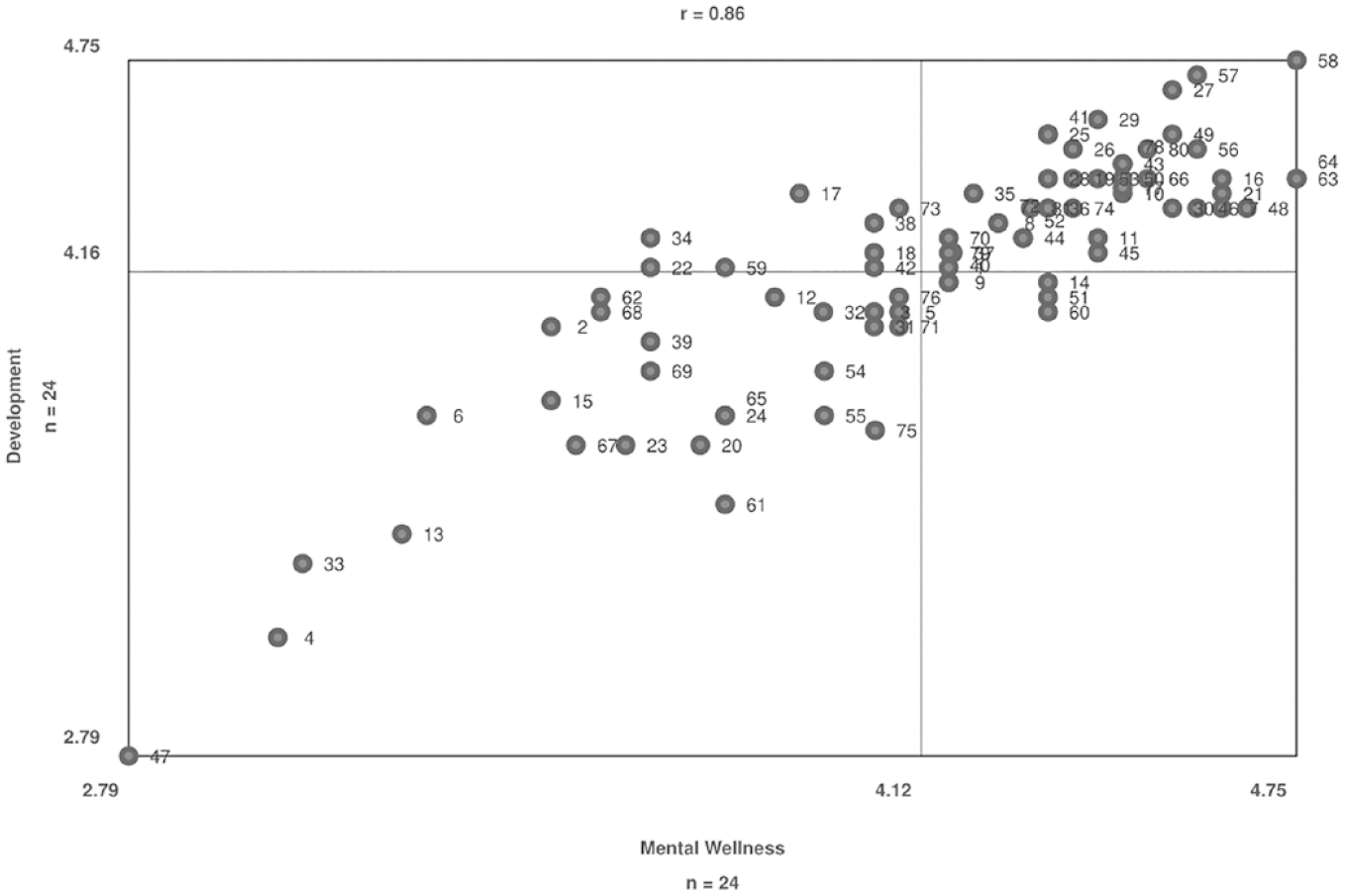
Average Importance Rating for Mental Health and Development Items
The first quadrant (Quadrant 1) includes items seen in the top left corner. This quadrant represents items with moderate importance to mental health and high importance to development and includes items such as, “work hard at practice and games” and “be open to new ideas.” The second quadrant (Quadrant 2) is found in the top right corner. This quadrant includes items with high importance to both mental health and development (e.g., “feel valued,” “develop confidence”). The third quadrant (Quadrant 3) in the bottom left corner includes items that are moderately important to both mental wellness and development. Quadrant 3 included items like “give back to their communities” and “filter social media from toxic influences.” The final quadrant (Quadrant 4) is in the bottom right corner and includes items that have a high importance for athlete mental health and moderate importance for athlete development. This quadrant included items such as “build strong relationships with their coaches,” “have food security for themselves and their family,” and “be willing to participate in therapy and counseling when needed.”
The correlation between item importance ratings was high (r = .86), suggesting that each item’s importance rating was rated as similarly important for mental wellness and development in youth sport. To assess consistency in ratings across subject matter experts, we calculated intraclass correlation estimates and their 95% confidence intervals using IBM SPSS Statistics for Windows (Version 29) based on a 2-way mixed-effects consistency model. The internal consistency of ratings among the participants was high for mental health (r = .956 [95% CI: 0.926, 0.979]) and development (r = .959 [95% CI: 0.931, 980]), indicating strong consistency between participants.
Cluster Ratings
Finally, the research team assessed the average rating of each cluster based on its importance to the athlete’s mental health and development. Figure 3 displays the average rating of each cluster. On the scale of 1 (Not at all important) to 5 (Extremely important), all 5 clusters were rated as moderately important or higher. Self-assurance, team culture, and growth mindset were rated as most important for both mental health and development. Socioenvironmental factors and health behaviors, while still rated as very important, were rated as relatively less important than the others. The correlation between cluster importance ratings was high (r = .97), suggesting that each cluster’s importance rating was perceived by subject matter experts as nearly equally important to mental health and development of youth in sport.
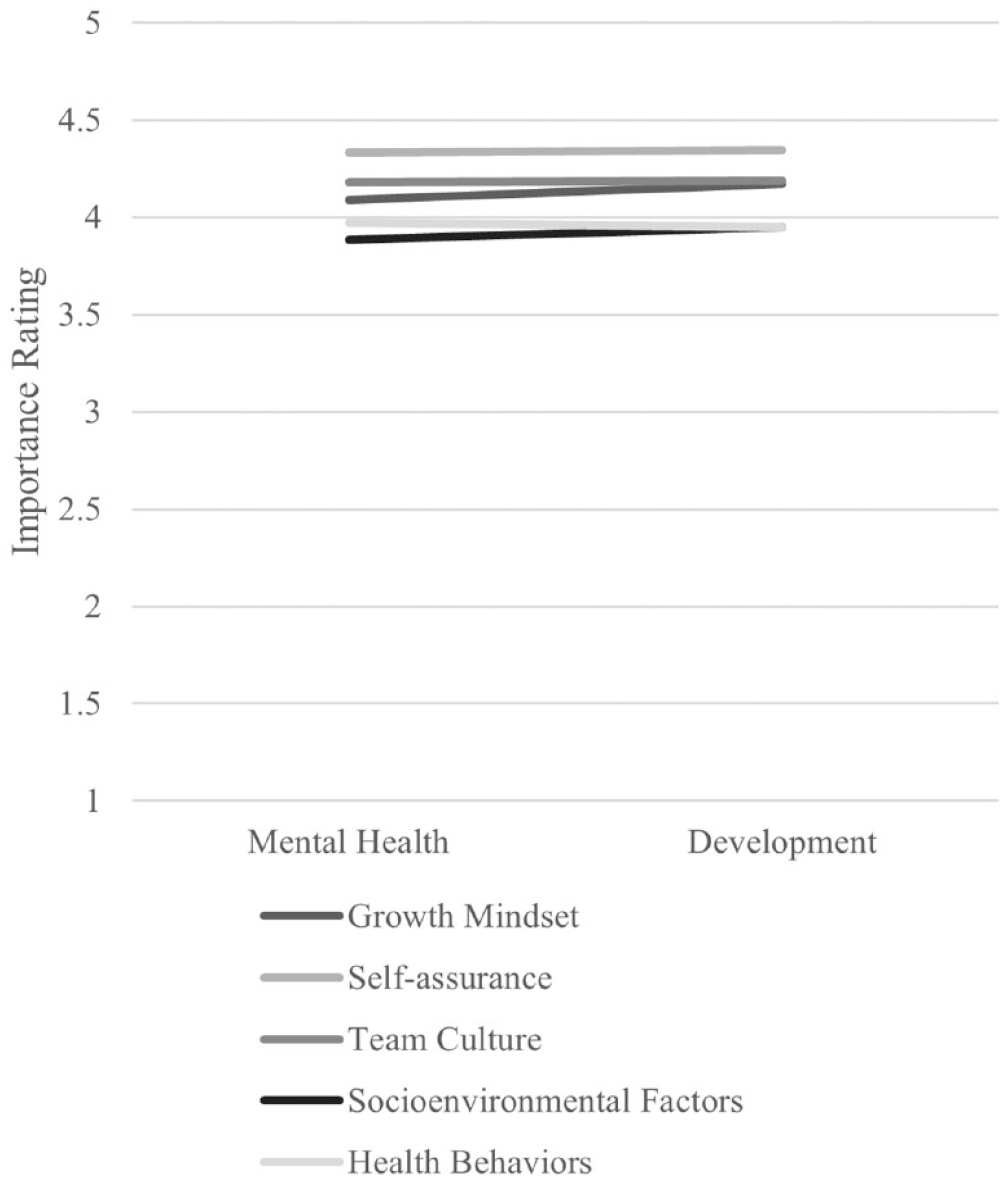
Cluster Ratings for Mental Health Importance and Development Importance
Discussion
The purpose of this study was to create a visual framework of factors that promote youth mental health and development in sport. Our findings identified five core areas of importance: self-assurance, growth mindset, team culture, socioenvironmental factors, and health behaviors. Overall, the five core areas within the conceptual model showcase an approach that incorporates factors from a developmental and psychological perspective. Physiological, psychological, and social factors were included in the model, which is consistent with previous literature regarding youth development in sport (Cronin & Allen, 2017; Pankow et al., 2021).
The five clusters in this model also complement findings from Visek et al. (2014) and Dohme et al. (2019) regarding enjoyment and psychological skills in youth sport. Specifically, the items within team culture and socioenvironmental factors align with Visek et al.’s findings regarding sport environments and external factors (e.g., coaches) that contribute to enjoyment. In line with their findings, our results suggest it is important for youth athletes to feel they have a safe place to fail, a trusted and engaged community, and options to participate in activities they genuinely enjoy. Our other three clusters (i.e., self-assurance, growth mindset, health behaviors) align with Dohme et al.’s (2019) findings regarding the individual psychological skills needed for long-term development. For instance, Dohme’s findings and those in the current investigation both found themes pertaining to positivity, interpersonal competencies, self-confidence, and a hard work ethic.
The meaning and importance of relationships in sport is reflected by items placed in the team culture cluster of the current investigation and mirrors findings from former studies (Fraser-Thomas & Côté, 2009; Warner et al., 2019). Coaches have noted that youth athletes’ ability to face adversity, as well as sociocultural and environmental influences, affect success (Gould et al., 2020), making it encouraging to see these factors highlighted together in our analysis. Previous literature supports a multifaceted perspective to youth wellness in sport and suggests the application of PYD principles can prevent the negative impacts of adversity faced in childhood by cultivating skills such as resilience (Warner et al., 2019). This concept was reflected predominantly in the self-assurance and growth mindset clusters, which included items that contribute to high levels of resilience in youth. As seen in Table 1, these clusters reflect many skills, actions, and beliefs that are central to prevention and health promotion, including the ability to cope with perceived challenges, celebrate and focus on team and individual progress, and experience enjoyment and fun in sport (Bentzen et al., 2021).
Building upon previous research conducted with adults, the present study made a significant contribution by identifying factors that are specifically relevant to youth athletes. By incorporating these youth factors, we can begin to outline an initial developmental trajectory for the factors associated with athletes’ mental health and performance. Previous mixed methods studies, employing an inductive approach to adult athlete wellness, have identified seven core areas: stress management, mental skills, self-awareness, managing setbacks, intentional practice, team relationships, and social support (Ayala et al., 2022). Although mental health remains a crucial factor for athletes across different stages of development and life, the findings from the present study revealed nuanced differences in individual and systemic factors between youth and adult athletes.
Previous research with adults identified four out of the five clusters found in the current study involving youth. The one notable difference was the emergence of a performance mindset cluster as an important component of adult athlete wellness. This cluster emphasizes the application of common sport psychology skills, such as goal setting, imagery, and intentional focus (Ayala et al., 2022). However, this cluster was not observed in our analysis of youth athletes. Instead, a socioenvironmental factors cluster emerged, highlighting the significance of environmental resources and social engagement in sports for fun.
It is widely recognized that a child’s environment and support system play a critical role in their overall development (Larson, 2000). The emergence of the socioenvironmental factors cluster in our study further suggests that this holds true for children involved in sports. Moreover, similar research studies focusing on youth populations, but not adults, have also revealed the importance of socioenvironmental factors (Kinoshita et al., 2023). For youth athletes, having access to resources and spaces for sports and physical activity facilitates their continued participation. In contrast, adults have likely already gone through this phase and have reached a level (e.g., college or professional) where these resources and environments are readily available and integrated into their athletic routines. Therefore, the shift in factors observed from youth to adulthood may partly reflect the resources that youth athletes have at their disposal, with a greater reliance on their environment for support during their developmental years. To comprehensively understand the impact of each cluster on athlete wellness and development across the lifespan, it is essential to replicate and expand this research through longitudinal studies.
Strengths and Limitations
Group concept mapping scholars have noted that the external validity of a concept map is strengthened when participants represent a breadth of perspectives (von Bon-Martens et al., 2014). The interdisciplinary nature of participation in this study provided a large array of perspectives, experiences, and knowledge to be shared by individuals with extensive hands-on experience dedicated to youth sport. The mixed methods approach also served as a strength; it integrated direct insight from subject matter experts into the development of the model, while simultaneously recognizing the similarities between items and relative importance to youth athletes’ mental health and development. Participant demographics were another area of strength for this study. Participant ages ranged from 24 to 64, allowing for perspectives to be integrated across generations regarding youth sport expertise.
A limitation of this study includes the absence of youth perspectives. Despite taking a participatory approach to the project with qualitative research, the research team chose to include adults with five or more years of experience in youth sport. It is thus possible this study missed important factors that may be identified directly from Generation Z athletes. Another limitation pertains to the convenience sampling method. All participants were recruited through professional networks and may thus share similar perspectives and beliefs about sport culture. Finally, participants were able to view other participant responses during the brainstorming phase of the study. Although done intentionally, this approach may have led to a groupthink dynamic, in which participants agreed with what they saw and chose not to add personal insights or additional items to the brainstorming process. Finally, these findings are based on perceptions of the factors that contribute to youth mental health and development in sport; their actual contribution to youth wellness and development cannot be determined from the current data.
Implications for Future Research
Researchers may expand findings from this study by focusing on the five clusters in different contexts, such as levels of youth competition or different sports (e.g., team versus individual). Future researchers may also explore how the clusters change for youth competitors over the course of a season or a career. For example, a youth athlete may transition from a junior varsity role to a varsity role throughout their career or to a youth elite level. The difference in expectations, sleep time, training loads, decrease of “free time,” and perceived social support may impact an athlete’s career trajectory (Bentzen et al., 2021; Stambulova et al., 2015).
We also encourage scholars to explore the nuanced interplay between the constructs of mental health and development for youth athletes. The strong correlation between the importance ratings for mental health and the importance ratings for development suggests stakeholders see a significant amount of overlap between items that contribute to mental health and development for youth in sport. However, these fields are expansive and cover a wide array of issues; one may reason that a nuanced understanding of each construct can only benefit youth athletes in years to come.
Scholars have also called for comprehensive guidelines for the development of youth sport programs (Vella, 2019). Future scholarly initiatives could begin to develop such guidelines by integrating findings from this study with theoretical frameworks such as Côté et al.’s (2016) personal assets framework for sports or Visek et al.’s (2014) fun integration model. Doing so would allow coaches and other stakeholders to approach youth athlete wellness and development in a multidimensional manner by recognizing the context of sport, the roles and responsibilities of parents and coaches, as well as the role of youth in developing important psychological skills such as resilience and emotion-regulation.
Once the clusters from the current investigation are replicated and validated in further research, these items could be used for scale development for youth athlete mental health and development. A self-report assessment for self-assurance, growth mindset, team culture, socioenvironmental factors, and health behaviors would allow youth athletes to work with coaches, sport medicine professionals, sport psychologists, and other staff within organized youth sport to track their wellness throughout the season. Likewise, coaches and other youth sport professionals could use a scale to monitor strengths and areas for improvement for their athletes at an individual and team level. Finally, a youth self-report assessment that measures these five domains could be used as an outcomes measure for youth-specific programming in sport. To assess the integrity of such an assessment, it would be prudent to follow best practice and test the model via a large representative sample, run exploratory and confirmatory factor analyses, assess fit indices for the models, and examine the reliability and validity indicators for the measure (Worthington & Whittaker, 2006).
Finally, there is a great need for robust longitudinal and experimental research in youth sport. Such studies will allow scholars to truly identify and isolate prevention factors and health promotion factors that lead to optimal mental health and development, as well as potential moderators or mediators for positive outcomes (Vella et al., 2021). Without such research, our field will not have the evidenced-based information needed to determine whether characteristics similar to those identified in this study contribute to short-term or long-lasting benefits.
Practice Implications
As sport professionals, family members, and coaches continue to search for ways to facilitate positive development through sport for youth athletes, a focus on these core areas may play a key role in development of youth sport programming. These items emphasized the importance of skills and characteristics that align with life skills that have been identified in previous literature (Cronin & Allen, 2017).
Conclusion
Youth athletes are in a stage in life in which their growth through meaningful relationships, coping strategies, and transferable skills can be fostered through their involvement in sport (Cronin & Allen, 2017; Holt, 2016). To foster optimal development and mental health in youth athletes through sport, coaches, professionals, and family members may encourage youth athletes to focus on self-assurance, growth mindset, team culture, socioenvironmental factors, and health behaviors. By focusing on these factors, coaches and other members of the athletes’ support network will be better suited to support their athletes on an individual and team level.
In addition to highlighting the importance of these skills in youth development, it will be important for professionals to reduce stigma around mental and emotional challenges while reminding youth that they are not alone in their struggles (Fraser-Thomas & Côté, 2009). As noted in the introduction, the field of sport psychology has yet to identify specific individual factors that promote wellness and development, particularly in a mixed methods manner with subject matter experts who work with today’s athletes (i.e., Generation Z). These findings emphasize an approach that captures the importance of youth athlete mental health and development, including specific thoughts, feelings, and behaviors that can facilitate growth and progress. Our findings support previous research on the importance of applying a developmental, strengths-based lens to work with youth populations (Warner et al., 2019), while simultaneously expanding the call to gain a deeper understanding of factors regarding youth mental health. By emphasizing the items in this model, parents, coaches, and sport professionals are likely to build a strong foundation for athletes in years to come, in which youth athletes remain engaged in sport and continue to experience the many benefits of sport across the lifespan.
Footnotes
Declaration of Conflicting Interests
The authors declared no potential conflicts of interest with respect to the research, authorship, and/or publication of this article.
Funding
The authors received no financial support for the research, authorship, and/or publication of this article.
