




Abstract
Women are disproportionately affected by climate change, yet even though mental health and climate change is an emerging field, little research focuses on their mental health. The purpose of this study was to explore young women’s perceptions of climate change, gender, and mental health. A feminist poststructural (FPS) approach guided this research. FPS and discourse analysis were used to explore nine participants’ perceptions of their mental health in relation to the changing climate, and how their experiences were personally, socially, and institutionally constructed. Findings highlight participant relationships to discourses surrounding hopelessness, anxiety, grief and frustration, intersectionality, stereotypes, and gender-based violence (GBV). Study findings supported by broader literature provide recommendations for the discipline of health promotion regarding gender appropriate climate mitigation and adaptation strategies that prioritize and recognize mental health. We urge health promotion to recognize and integrate the fact that climate change amplifies existing inequities into health and climate change policies whenever possible. Climate change and health policies should ensure women are safe and protected before climate driven weather events to prevent instances of GBV. We recommend that health promotion media specialists recognize the dangers and ineffectiveness of fear mongering and attempt to promote climate solutions as opposed to only stories of despair and ecological degradation.
Keywords
Introduction
Climate change is an existential threat to human health (Chiabai et al., 2018; Comeau & Nunes, 2019; Costello et al., 2009; Haines et al., 2021; Howard et al., 2018; Sellers, 2016; Watts et al., 2021). The changing climate has and will continue to impact health by threatening food and water security, exacerbating asthma symptoms, increasing the spread of Lyme disease, and increasing risks of heat stroke and death (Costello et al., 2009; Howard et al., 2018). While the physical health implications of climate change are well documented, the social and mental health impacts are beginning to emerge as a critical area for inquiry (Albrecht et al., 2007; Anastario et al., 2009; Borish et al., 2021; Dodd et al., 2018; Hayes & Poland, 2018; Meyiwa et al., 2014; Stone et al., 2022; Willox, 2012).
The mental health implications of climate change have recently been added to the discussion in large and well-known documents, such as the Lancet Countdown on Health and Climate Change (Romanello et al., 2022; Watts et al., 2021). Studies and health reports are progressively including mental health as a key issue to address when it comes to the impacts of climate change on human health, especially for those living with pre-existing mental health conditions, challenging socioeconomic positions (SEPs), and/or those living in geographically vulnerable areas (Bourque & Willox, 2014; Every-Palmer et al., 2016; Howard et al., 2018; Obradovich et al., 2018; Rice & McIver, 2016). However, this research lacks a distinct gender component, despite overwhelming evidence and understanding that climate change impacts women disproportionately (Government of Canada, 2018; Osman-Elasha, 2022; United Nations, n.d.).
This study employed a feminist poststructural (FPS) methodology to explore young women’s mental health and climate change. We sought to answer the research question: How do young women experience mental health and gender in relation to the changing climate in Nova Scotia, Canada? The study objectives were to (a) understand how young women perceive their mental health in relation to the changing climate and (b) explore how women’s experiences with the changing climate are personally, socially, and institutionally constructed. This second objective is common in studies using FPS, wherein the goal is often to explore how participant experiences are personally, socially, and institutionally constructed through different subject positions (Aston, Price, Hunter et al., 2021; Aston, Price, Paynter et al., 2021; Joy et al., 2020; Ollivier et al., 2021).
Background
Current research on the mental health impacts of climate change focuses largely on direct impacts including extreme weather events, such as floods, wildfires, storms, and heat waves (Ajibade et al., 2013; Anastario et al., 2009; Dodd et al., 2018; Mamun et al., 2019; Thompson et al., 2018; Tyler & Fairbrother, 2013). Mental health impacts also arise from indirect impacts such as increasing variability in weather patterns, sea-level rise, and drought conditions (Beaumier & Ford, 2010; Cunsolo Willox et al., 2015; Dean & Stain, 2010; Durkalec, 2015; Petrasek MacDonald et al., 2015; Willox, 2012). Challenges to mental health are also associated with feelings of fatalism and eco-anxiety related to the knowledge and awareness of climate change and environmental degradation (Albrecht, 2011; Albrecht et al., 2007; Fritze et al., 2008; Hayes & Poland, 2018). However, studies on the gendered aspects of mental health and climate change are scarce, despite evidence that women bear the brunt of the impact of climate change and are leaders in shaping adaptation and mitigation efforts worldwide (Anthony, 2019; Dennis & Bell, 2019; Johnson & Wilkinson, 2020).
The gendered implications of climate change have been well documented over the past 10 years, where we know women experience climate change disproportionately. For example, women are more likely to die during an extreme weather event (Araujo & Quesada-Aguilar, 2007; Demetriades & Esplen, 2009), experience heightened rates of gender-based violence (GBV) after disasters (Anastario et al., 2009; Boetto & McKinnon, 2013), and face danger while collecting resources for their families at more remote and far away locations (Meyiwa et al., 2014). Furthermore, women report sexual harassment while waiting in lines for food and supplies after extreme weather events (Nahar et al., 2014), as well as an increase in domestic labor, causing some to drop out of school (Araujo & Quesada-Aguilar, 2007). Some impacts are more nuanced, for example, women in rural Australia reported that climate change has increased the cost of living, thus making it more difficult for women to leave domestic violence situations (Boetto & McKinnon, 2013). Furthermore, women have limited engagement in climate-related decision-making processes, preventing them from fully participating in climate policy, governance, and leadership (Alston, 2013; Government of Canada, 2018; IUCN, 2015; Sellers, 2016). While we are beginning to understand how the effects of climate change disproportionately affect women, a dearth of knowledge exists about how climate change is associated with women’s mental health.
While one scoping review revealed how women’s mental health is distinctly impacted by climate change (Stone et al., 2022), youth were not a focus of studies reviewed. Yet, youth are progressively active and vocal in advocating for climate action (Johnson & Wilkinson, 2020). Greta Thunberg, Autumn Peltier, and Helena Gualinga are only a small sample of young women across the world making change and advocating for climate and environmental justice (Greta’s Not the Only One, 2019). Many of these young women choose to address climate change because they have been and continue to be impacted by it. For example, Hilda Flavia Nakabuye from Kampala, Uganda was pushed to action because climate change is impacting her grandmother’s ability to grow food (Sommer, 2021). Youth are particularly vulnerable to climate change, especially in terms of heat exposure and exposure to environmental disasters associated with climate change (Majeed & Lee, 2017). The mental health impacts associated with climate change among youth are much less understood than those of adults (Majeed & Lee, 2017).
Although there is reported evidence on the separate topics of mental health and climate change, women and climate change, and youth and climate change, there has yet to be a distinct exploration of climate change, young women, and mental health. To our knowledge, this is the first study to explore how young women’s mental health is impacted by our changing climate. Through using FPS to guide all phases of the research process, we were able to develop a qualitative study that critically explored how the personal experiences of young women were affected by and embedded in socially and institutionally constructed conceptualizations of climate change. The research question was: How do young women experience mental health and gender in relation to the changing climate in Nova Scotia, Canada? The study objectives were to (a) understand how young women perceive their mental health in relation to the changing climate and (b) explore how women’s experiences with the changing climate are personally, socially, and institutionally constructed. Using FPS as the theoretical framework allowed a deep exploration of participant experiences of gender, climate change, and mental health.
Methods
Methodology
An FPS approach was used to guide this research. FPS is a methodology, theory, and philosophy that centers relations of power, subjectivity and agency, and participant experiences, values, practices, and beliefs (Aston, 2016; Butler, 2005; Scott & Butler, 1992; Weedon, 1996). FPS enabled an exploration of how young women’s experiences with the changing climate were socially and institutionally constructed through subject positions such as gender, race, and age. FPS also enabled us to examine how relations of power influenced young women’s experiences with climate change. Discourse analysis is a method of analysis aligned with FPS and was used to analyze participant experiences, values, beliefs, and practices in relation to social and institutional discourses (Aston, 2016). This allowed us to deconstruct the meaning of participant experiences and understand the relations of power that influenced how they perceived mental health in relation to the changing climate.
Power relations, considered by FPS as fluid and dynamic as opposed to something one can have or not have, are relevant to this study because of the ways they relate to the patriarchal norms that create women’s disproportionately negative experiences with climate change (Boetto & McKinnon, 2013; Jost et al., 2016; Mamun et al., 2019; Meyiwa et al., 2014). Exploring opportunities for change is fundamental to the FPS methodology and imperative to this study, as the climate crisis begs for change to sustain human and planetary health. Women’s perceptions of mental health in the changing climate were explored knowing that the FPS approach accommodates the subjectivity of truth, and that truth and reality have been constructed in the patriarchal western society by male domination, serving male interests (Gavey, 1989). Women’s knowledge and experiences in this study are important to uncover to break down what counts as truth, which is normally regulated by those who attempt to maintain privilege (Gavey, 1989). This study explores and challenges power relations by hearing the voices and truths of women on the subject of climate change.
Qualitative research urges research teams to be transparent and reflexive of who they are, consistently acknowledging their subject positions (Braun & Clarke, 2019; Byrne, 2022; Creswell, 2014; Creswell & Poth, 2018). The first author of this research is a young woman, providing useful insight into the study population and potentially addressing a common power dynamic between interviewer and interviewees, enabling participants to relate to the first author and speak freely during data collection. This closeness to the study population also risks interpreting the data to represent how the first author feels about the climate crisis, which could be different from the participants’ feelings and perceptions. This potential bias was mitigated by careful supervision of data analysis by supervisors and constant reflection on personal feelings and perceptions. The two co-supervisors of this research have extensive experience and knowledge in gender and race-related health research; however, neither had experience working climate change. Furthermore, one committee member had extensive experience working in climate change and with the ecological determinants of health. This careful balance of background and expertise helped to mitigate potential biases. The lead researcher is White, one supervisor is White, and one supervisor is African Nova Scotian. Both supervisors have been instrumental in developing, overseeing, and providing feedback for this work. Both committee members are White, and all researchers are non-Indigenous. It is important to acknowledge these different subject positions as they can influence data analysis. For example, a majority of White researchers may have contributed to a limited worldview. To mitigate this, we have read and cited books, articles, and stories written by Black, Indigenous, People of Color (BIPOC) in an attempt to diversify this work and to include diverse voices as much as possible. It is our hope that by citing BIPOC authors, this article is more representative of the actual work being done by diverse peoples.
Participant Recruitment and Data Collection
Ethical approval was obtained through Dalhousie review ethics board. This study was open to all women who resided in Nova Scotia and who were between the ages of 16 and 28, as the Government of Canada (2014) defines youth as 16 to 28 years of age. A recruitment poster was uploaded to various social media platforms and distributed to local community organizations who may have been frequented by diverse populations. We recognize that although not all women have all experiences and interests in common, the category can still exist due to the overlapping oppression, exploitation, discrimination, and exclusion that exist within the group (Garry, 2011). Nine young women were recruited, which is appropriate for studies guided by FPS, where 6 to 10 participants are common (Griscti et al., 2017; MacConnell et al., 2013; Mselle et al., 2017). The concept of data saturation was not used in this study (Braun & Clarke, 2021), but rather, data collection came to a natural conclusion, where around the time we reached the number of intended participants, we saw a decline in potential participants reaching out with interest. Informed consent was obtained verbally before interviews began, where it was made clear to all participants that the study was voluntary, their identities would remain confidential, and that they could stop participating at any time.
Data collection took place between September 2020 and November 2020. Nine participants were interviewed, with two choosing a group interview format and the remainder using the one-on-one interview option. The group interview structure was the same as the one-on-one interviews, where both participants took turns answering the same set of questions. While this may have impacted data collection by potentially allowing one participant to talk over the other or feel that they should share similar things, they may have been inspired by one another’s responses and discussed issues more deeply and fully than if they were alone in the interview (Wilson et al., 2016). All in interviews were conducted by the first author. Interviews align with the FPS approach, as their open-ended nature allows for a deep dive into the experiences and knowledge of the participant (Aston, 2016). Interview questions related to where participants receive their climate information, how they talk about climate change with their peers, their experiences with and feelings about climate change, and their thoughts about gender, mental health, and climate change. Interviews lasted approximately 30 to 50 min, took place over Microsoft Teams, and were audio recorded using IOS software (Apple, Inc.).
Data Analysis
Interviews were transcribed verbatim and then analyzed using Aston (2016)’s five-step guide for using FPS informed by discourse analysis to interpret findings. Analysis started with step one, identifying important issues, and step two, attributing any beliefs, values, and practices that aligned with the quotations. For example, a quotation could contain the belief that climate change is scary, a value of protecting earth, and a practice of discussing fear of climate change with peers. Step three was to describe the social and institutional discourses informing the identified issues, such as the discourses of fear and hopelessness surrounding climate change in media (Aston, 2016). For step four, we wrote about how the discourses relate to the participant and their experiences of power relations. This means unpacking how the discourses affect the participant, if they agree or disagree with the beliefs, values, and practices, and if there are conflicts and/or tensions (Aston, 2016). This step is exemplified in results when participants challenged, accepted, or recognized dominant discourses. For step five, participants’ subjectivity, or how they are positioned in the world (gender, career, student, etc.) was applied, if this information was given in the quote. Often, we also added the participants’ agency, looking at how they “chose” to act in each situation, perhaps by embracing or challenging the discourse in question (Aston, 2016). Using this method of analysis allowed close attention to the way participants tell their stories and an exploration of relations of power.
All transcripts were analyzed with this process separately, as well as together to find common trends. After finding similar results and interpretations, results were divided into two main findings sections: (a) mental health and (b) gender. Each findings section was reviewed iteratively by supervisors and committee members to ensure interpretations were rigorous and grounded in the FPS methodology.
Trustworthiness was established in this study through credibility, confirmability, dependability, authenticity, and transferability (Bradshaw et al., 2017; Creswell & Poth, 2018). Credibility is the confidence in the truth and reality of the study (Connelly, 2016). To ensure this, the lead researcher expressed compassion and empathy during interviews and repeated points back to participants to ensure accuracy in interpreting the meaning of their words (Bradshaw et al., 2017). Furthermore, Aston (2016) noted that participants are experts in their own lived experiences, which allows for credibility as well. Next, confirmability is the degree to which the findings are consistent, for which we described participant demographics as much as possible and used direct quotes from the participants in results (Bradshaw et al., 2017). Dependability is the stability of the data overtime (Connelly, 2016), to which we were transparent about changes to the study and remained consistent throughout the study process and provided a detailed description of all methods (Bradshaw et al., 2017; Creswell & Poth, 2018). Authenticity was maintained by conducting analysis with both supervisors and committee members to ensure theme accuracy (Creswell & Poth, 2018). Finally, transferability was achieved through the in-depth analysis and descriptions of participants’ experiences and perceptions, allowing for transferability of results to a similar context or setting (Bradshaw et al., 2017; Creswell & Poth, 2018).
Participant Context
To provide context to findings, it should be noted that participants varied in age, race, and profession. Specific ages, pronouns, and identities were not asked of participants, leaving this information up to them to share should they have felt it necessary. We did not obtain further demographic details as our criteria for taking part in this study were specific and adding further detail might have led to identifiability. However, we ensured that interview questions permitted discussion of the important contextual elements of subjectivity, which was relevant to feminist poststructuralism and discourse analysis (Aston, 2016) and allowed the following brief context. Throughout interviews, two participants mentioned being from the Caribbean, one mentioned being from the United Kingdom, and one mentioned being Mohawk First Nation. Other participants noted roots in the Atlantic provinces, but details were not fully discussed. Most participants mentioned attending post-secondary education in the past or at the time of the interviews. None declared themselves climate activists, nor did any participants mention being part of an activist group or attending climate-related protests, talks, sit-ins, etc.; although, one participant did state that they worked in the field of climate adaptation. This may have influenced results, as people more engaged in the climate change/justice movement may have answered questions differently and expressed different values, practices, and beliefs based on their experiences as activists.
Results
Findings are reported in two interdependent but separate sections, each with their own subheadings. The mental health section explores hopelessness, anxiety, and grief and frustration, whereas the gender section explores intersectionality, stereotypes, and GBV. All findings are linked through the main issues in this research of gender, mental health, and climate change. A concept map of the findings can be found in Figure 1. Participants were all asked the source of their information about climate change, as this could markedly shape beliefs on the issue. Answers varied from peers and formal education to social media and email newsletters. No participants mentioned a specific news source. Occasionally, participants discussed an article they had read relating to climate change, and how it shaped their feelings and beliefs. This is important context, as findings are dependent on the discourses that are partly constructed by media. All participants exemplified a belief that climate change is a reality caused by humans, of which we are now seeing symptoms.
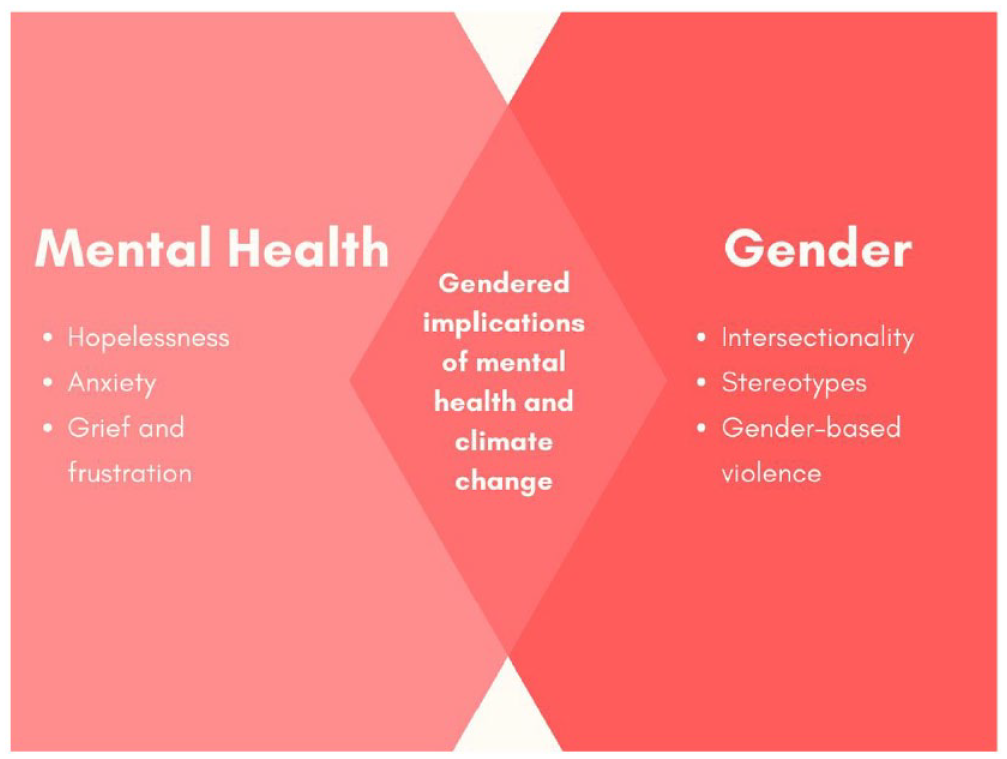
Concept Map
Findings Section 1: Mental Health
Participants discussed how the climate crisis has implications for their and their peer’s mental health. They described the issue as overly hopeless and anxiety inducing. Many participants also discussed their grief for the climate, describing it as “heavy” (P2). This discourse of climate change as something that “weighs” (P9) on participants relates to the discourse of climate change as a burden. Climate change was also described as something that disrupts our connection to nature. The heavy climate burden also meant frustration, where participants felt anger related to a discourse of inaction.
Hopelessness
Discourse concerning the future was hopeless and pessimistic, where participants implied that the future is potentially doomed and doubted the ability of humans to adequately address climate change. For example, P3 noted that “the world is definitely going to end from climate change because we’ve gone too far now.” P1 expressed their concern for adequate action by saying “it’s all downhill from here unless something changes,” indicating doubt that things will change for the better. Another participant reflected on the future and noted that “prospects don’t look good right now and so just, it’s a bit hopeless in a way” (P5). Furthermore, the idea of climate change and the future was so uncomfortable for participants that many discussed their conscious efforts not to think about it: “It’s not something we like thinking about because it’s so devastating” (P4). Similarly, P9 equates the climate crisis to death: “I wouldn’t seek out an article about death, it’s something I don’t want my mind to go to.” These instances represent a discourse of hopelessness about climate change that participants embraced.
Participants also embraced a discourse of limited agency, indicating that they did not know what could be done or what to do themselves to help the climate. For example, P2 admitted thinking about waste a lot but does not know how to solve the problem. They reflect: “that’s how I see climate change as impacting mental health the most is because I literally don’t know what to do,” exhibiting a challenge in uncovering even hypothetical solutions when thinking about climate change on their own. Similarly, P6 stated that they “don’t even know what could be done at this point,” indicating their doubt that adequate solutions even exist to address the sheer scale of the problem, regardless of whether humans act on it or not. These instances provide evidence of the doubt and hopelessness discussed by participants.
Anxiety
Participants displayed anxiety for the health and safety of their loved ones during extreme weather such as storms, flooding, and hurricanes, as well as general shifts in weather patterns such as drought, dust, hotter summers, ice melting, and sea level rise. One participant from The Caribbean grew up experiencing hurricanes and recalled that the year before last, they had hurricanes “back-to-back to back-to-back. Where some of the islands before they could even catch a break there was another one hitting” (P6). P6’s worry came mostly from losing their home and for the safety of their family. Another participant noticed that the United Kingdom summers are much warmer than usual, and there have been more cases of extreme weather, such as “freak snowstorms” (P7). When asked how these changes made them feel, P7 believed they induced worry and stress for the future. Another participant noted sea levels rising and the fear that brings since most of their family lives in Nova Scotia, which is coastal. They also mentioned hearing about ice melting: I heard somewhere and I haven’t even googled if this is true but there’s like all sorts of diseases under the ice, like the Arctic and then the Arctic will melt, and all these diseases will come out. It just kind of seems like, honestly the way I understand, it now is impending apocalypse type thing is how it’s made out to be. (P9)
This participant’s description of an “impending apocalypse” demonstrates their view of climate change as an ultimate threat.
Participants discussed their fear for the future through embracing a discourse of uncertainty, especially for the next generation. The discourse of uncertainty surrounding climate change is constructed by the unknown nature of the phenomenon. For example, we do not know to what extent emissions will be reduced, nor exactly what will happen to humanity. One participant mentioned how anxious they are for generations ahead given this uncertainty: So, I get anxious and scared that there’s not gonna be a good future for future generations, like its already different for me than it was my parents or my grandparents or those generations before. And they’re scared for me. And I am in turn scared for the people ahead because we need to be able to keep sharing these relationships with the natural world and the knowledge that’s embedded within it. (P1)
P1 expressed worry for the knowledge systems held within the relationships with the natural world that have been threatened since the first contact of colonists. The fear for future generations is something that participants discussed with their friends: “we were just talking about how within the next hundred years things are not going to be as liveable on earth and how that was going to affect our kids and grandchildren and kind of how that’s pretty nerve wracking” (P5). This conversation with P5 and their friend’s is described as “nerve wracking,” where the discourse is uncertain, and participants are scared for their potential children and grandchildren.
Through discussing future generations, participants also considered their fears, negotiations, and reservations about the decision to birth children, mostly related to the discourse of uncertainty about leaving a safe and sustainable planet for their children. While no participants declared their decision to not have children because of climate change, it was one of the ways participants discussed climate change as impacting their lives and mental health. One participant, embracing the discourses of hopelessness and uncertainty surrounding the future, mentioned how they believe that always being surrounded by negative climate media has impacted their decision to have kids: Like it doesn’t really make a lot of sense with where the world is going in terms of climate and everything. I feel like if I had children, I’m almost accepting the fact where I’m putting them in a position where they’re not inheriting sustainable world. (P9)
Another participant discussed the popular timeline that suggests humans have 11 years to adequately take action to address climate change in relation to having children now: “I don’t know what type of world it’s going to be in 11 years, that child is only going to be 11, so I feel like that’s going to be pretty impactful on like reproduction” (P8). This quote furthers the discourse of uncertainty for the future, where they note not knowing how the world will look in years to come. Another participant recognized their struggle and tension with the topic: “Well it’s really shitty because I really do want to have kids, but then when you think about it it’s like would that be just completely selfish?” (P3). These inner conflicts surrounding participant value in having children revealed a complex relationship between discourses of uncertainty and hopelessness for participants wishing to someday have a baby.
Grief and Frustration
Participants displayed grief for what is being done to the planet and frustration related to a discourse of inaction. Although most participants said that climate change did not drastically, permanently, or consistently alter their state of well-being, they believed it is something that can weigh on them. For example, P2 noted: “It’s just kind of one of those things that weigh on you a little. . .it can be hard to talk about. . .it just feels super heavy sometimes.” A similar sentiment was discussed with P9, as they believed that although climate change may not be someone’s entire reason for being unwell, it is certainly one of the “weights” that most Generation Z or Millennials have grown up with. This discourse of heaviness may derive from climate change’s ever-present threat, as it is not a problem that has ever or will ever (in near future) simply go away. Another participant told a story from their education, where resource extraction was a “heavy” conversation: There were a few classes we had, and some were climate change and some were just other sort of like other marine issues, and like for example, deep sea mining was a big one actually, and you could see that everyone was like feeling pretty heavy. There was one of my classmates; she actually started crying. (P7)
Describing everyone as feeling “heavy” is an example of the metaphor of climate change weighing on participants. The idea that climate change is a heavy topic exemplifies its impact on mental health.
One participant described how important it is for them to be on the land and take “care of the natural world so, it in turn can like take care of me and my community” (P1), while reflecting that climate change is creating “less connection to the land and the natural world” (P1). For example, P1 described how not only caribou migration has changed, but the seasonal times when deer shed their antlers is different, which has significant cultural implications: “it’s important for me to find antlers that were shed and make things out of it to honor the spirit of the animal, but if you don’t know when the deer shed their antlers you can’t find it.” In this instance, the climate crisis can cut people off from important traditions, potentially leading to a grief for lost practices.
Participants experienced frustration at the burden they carry related to a discourse of inaction. This discourse is in the headings of news articles across the globe, constructed potentially by the impacts of climate change itself. For example, “Leading scientists condemn politician inaction on climate change as Australia literally burns” (Cox, 2019). One participant voiced their frustration related to the discourse of inaction, specifically, with the ultra-rich. They note that people like Jeff Bezos (the CEO of Amazon) have the resources and ability to address climate change but do not do enough: “Jeff Bezos could literally pay for that [reversal of global warming] out of pocket and, you know, make that change, but obviously he’s not doing that” (P5). Another participant mentioned Amazon, remembering reading that, “If you return something to Amazon, they just like throw it out. A large amount of the time it just goes on some huge conveyor belt to a huge trash heap, which was very, very upsetting” (P9). These concerns related to the discourse of inaction furthered the feeling of frustration within participants.
Findings Section 2: Gender
Participants discussed how gender can be relevant to discussions of climate change. They noted how race and income intersect with gender and can impact the experience of climate change, and they spoke about how gender stereotypes, such as women as traditional caretakers and women’s voices as unserious, impacts the way women experience climate change. Finally, participants discussed the ways in which GBV are related to the changing climate.
Intersectionality
Participants reflected on the importance of using an intersectional lens when discussing the impacts of climate change, the origins of climate change, and climate solutions. Participants recognized that not everyone experiences climate change equally, where race, SEP, and gender all play a role in how people are impacted. For example, P1 noted that “Indigenous people bear the burden [of climate change]. And within that, Indigenous women bear the burden.” (P1). Another participant mentioned the inequities Indigenous people face, believing the federal government has “vastly ignored Indigenous communities in Canada and they are experiencing climate change in much different ways than the rest of us” (P8). The same participant mentioned that many Indigenous young women climate and social justice advocates receive less media coverage than Greta Thunberg and even backlash on Facebook for their intersecting identities (young, Indigenous, women).
One participant described their experience visiting New Orleans, where the tour guide described the city as a bowl, telling tourists “not to worry” about the nice homes flooding because “it’s all the ghettos and stuff that are in the middle” (P9) that will be washed away. This is an example of a tour guide using environmental racism discourse, as he perpetuated the disproportionate value of “beautiful homes” versus the “ghetto” homes, inhabited by African Americans. The tour guide embraced the environmental racism discourse and by doing so potentially entrenches racist and classist norms in clients, yet P9 challenged this narrative by labeling it as unacceptable systemic racism. Another participant discussed environmental racism more generally, stating while they “haven’t had to worry about the environment” (P5), they recognized it is different for Indigenous and Black people who have often been pushed to the margins where housing is unstable, and risks are larger during extreme weather.
Participants also discussed SEP and climate change. One participant noted how people with high paying jobs will often hire people who look like them: “let’s say we talk about a cis White man but then the more different you are from that the more challenging employment becomes” (P3). This participant highlighted the systematic and institutional challenges that BIPOC and those who identify as women or outside of the gender binary face in gaining high paying, secure employment. P3 then connects income type to climate change, noting that people earning high income are more likely to fair better throughout the climate crisis. Another participant believed that women-dominated careers are often unstable, which can make climate change more difficult to deal with: “Women tend to have more vulnerable employment and so like when the shit hits the fan with climate change, it’s the vulnerable employment that, you know, it’s less likely to carry on” (P2). This quote demonstrates participant recognition of women’s oppression in employment and income, potentially exacerbated by climate change.
Stereotypes
Participants recognized various stereotypes that women face, such as caretaking responsibilities, familial and birth decision responsibilities, and their voices not being taken seriously. Participants recognized how women have expectations to be caretakers, especially in times of climatic changes. For example, one participant noted that in times of flooding, their community followed strict gender roles where the mothers took care of the children and food while the fathers did the physical labor. This participant recognized that this norm was socially perpetuated and challenged it by saying that “both parties would have been equally capable to do each thing, but it was kind of the way that it was separated” (P8). The discourse of gendered tasks is challenged when their social construction is recognized. These comments led to conversations surrounding reproductive choices.
Participants noted that although all genders may experience a struggle in deciding whether to have children, women often bear the burden of that decision-making. This finding ties in with the larger social discourse of women as caretakers. For example: Women are known for being so family-oriented that when it comes to like them having to make the decision not to have kids or being faced with that decision, it feels like a big decision that is not necessarily, well I think it’s, I think that as women maybe we feel it more. (P2)
While P2 did not explicitly disagree or challenge the notion of women facing disproportionate pressures related to families and reproduction, they recognized that the social discourse of women as family-oriented exists. P3 felt similarly, noting how “it takes two people to make a baby, whatever, but it still does feel like that’s kind of under the woman’s responsibility,” which relates back to women as caretakers. Another participant noted that the decision to have children is increasingly challenging: “it suddenly just feels like a pretty heavy decision to make and a pretty heavy response, you know, and then you have the kid, they’re your kid you have to take care of them, and like the world is going to shit. Am I going to be toting around a child with me?” (P9). Even imagining being responsible for children was daunting for this participant.
Participants discussed their concerns around the social discourse of women’s voices not being taken seriously, especially in the context of advocating for climate action. Participants discussed their specific concerns with women not being taken seriously when speaking about climate change, sometimes mentioning the backlash that Greta Thunberg has received: A lot of male politicians and a lot of male people look down on her [Greta] currently because she’s young but also because she’s a girl, which I think plays into the narrative of how women are affected by climate change. (P8)
Another participant uses Greta’s backlash as an example of what happens “when women try to advocate or fight for something. There’s always men or people who are going to just like say, ‘oh, they’re a woman and don’t know what they’re talking about’” (P9). This quote exemplifies how women’s voices are automatically discredited because of their gender, whereby no matter what they say, they “don’t know what they’re talking about.” Another participant notes that Greta has been “mocked for being a sad little girl, and those types of comments relate to her gender, even though what she’s saying should have absolutely nothing to do with her gender” (P5). This is an example of resistance of a dominant social discourse on women’s voices, stating that the current model is inequitable, and women should be able to speak without the listeners relating their speech to their gender.
Gender-Based Violence
Participants also discussed how climate change relates to GBV, a concept well documented in the literature. One participant examined the relationship between murdered and missing Indigenous women, girls, and Two-Spirit people (MMIWG2S) and climate change. P1 related MMIWG2S and violence against the land, where “the land’s our mother; that’s violence against women and as climate change has intensified so have rates of violence against women especially Indigenous women.” Because Indigenous ways of knowing and understanding the land and climate have been silenced and oppressed within settler culture, this participant is using their knowledge to challenge climate change and settler ways of imparting harm on the Earth.
One participant detailed the situation of many women who flee other countries to arrive in the Caribbean in hope of a better life. These women often face significant challenges, especially in the face of climate change. P6 stated that immigrant women are largely marginalized and live in “run-down homes, like shacks almost, and for them I would say they would probably experience the most anxiety.” Some of these houses are in flood zones, so P6 notes that it is very challenging and stressful to experience hurricane season each year when homes are barely able to stand as is. P6 discussed their mother’s relationship with some of the immigrant women: “I know my mom has had a couple of friends in those communities, and for them, it’s definitely been challenging and especially for a lot of them where they’re single mothers, so there’s anxiety for them.” This comment highlights the intersections between where women live, gender, and SEP.
P9 explained how men have sexualized Greta Thunberg, which could lead women to feel uncomfortable speaking out about climate change considering what Greta has been through: The one that really bothers me is that men always feel a need to sexualize it. I see people sexualizing it. I don’t know how old she is; is she (Greta) like 15 maybe? Yah, and like there were like these badges or stickers that people made that were like her with her braids and she was naked or something. I don’t know it’s just icky. (P9)
This participant is referring to a sticker that depicts Greta in a violent sexual position, for which X-Site Energy Services, an Alberta oil company, took responsibility (Messervey, 2020). This example is an act of sexualized violence that bothered the participant. The fact that Greta has spoken out about climate change and has become known around the world but has been assaulted in this way could be a serious deterrent for young women to speak out about climate change or other issues, with P9 describing it as “icky.” The sexualization of women’s bodies has led to the objectification, harassment, exploitation, and dehumanization of women; norms that reflect rape culture and are particularly disturbing due to the age of the survivor.
Discussion
This research set out to understand how young women experience mental health and gender in relation to the changing climate in Nova Scotia, Canada. Through in-depth interviews, this study was able to delve into the experiences, values, and beliefs of young women during a climate crisis. With FPS informed by discourse analysis, we were able to examine social discourses related to climate change, mental health, and gender that participants recognized, challenged, or accepted. The research objectives were addressed and developed by deconstructing participant experiences and language, as well as by examining how participants negotiated and discussed power. The main study findings are as follows. First, participants embraced the discourse of hopelessness and pessimism surrounding climate change and our future, with the issue seeming too uncertain, grave, and anxiety-inducing to think about. Second, participants believed that subject positions, such as gender, SEP, and race, impact how people experience climate change.
Mental Health
Participants embraced popular discourses of doubt and doom surrounding climate change. This discourse was constructed by the ways in which climate change issues and solutions are framed as complicated and overwhelming, where media captures catastrophes significantly more than solutions (Boykoff & Boykoff, 2007). For example, the language used to describe climate change by the public is often related to fear, using words such as catastrophe, terror, extinction, and danger (Hulme, 2008; Stecula & Merkley, 2019), creating a discourse wherein the problem is too big for humanity to deal with. Wall Kimmerer (Wall Kimmerer, 2013) discussed the fear and despair narrative, whereby we are inundated by information of ecological degradation but know less on how we can nurture it. She noted that with this discourse, environmentalism relates to “powerless feelings” (p. 327). Such feelings were evident in the theme of hopelessness as participants produced discourses of pessimism, where they felt they could never do enough to help. The hopelessness and subsequent avoidance of climate change thought/discussion described by participants in this study can be related to “psychoterratic syndromes,” such as eco-paralysis, eco-anxiety, ecological grief, and solastalgia, which are words used to describe emotional distress related to the awareness and experiences of the climate crisis (Albrecht, 2011; Albrecht et al., 2007; Ellis & Albrecht, 2017).
Eco-paralysis is a symptom derived from the complex feelings that arise when we feel we cannot take enough action to significantly address the climate crisis (Albrecht, 2011; Hayes & Poland, 2018). When climate change is framed using sensational and alarming techniques, some authors argue that denial, paralysis, or apathy are evoked instead of action, exemplified by participants in this study who did not want to think about climate change at all (Khan, 2022). Relatedly, eco-anxiety is a type of anxiety specifically related to a changing and uncertain environment and can be brought about when we are bombarded with threatening facts about climate change (Albrecht, 2011; Hayes & Poland, 2018). With the internet, negative information about what is happening to Earth has increased, sparking feelings of anxiety surrounding the scope and complexity of the problem. For example, participants from this study felt the problem was overwhelming and could not be solved. As climate change continues and our ability to predict the future weakens, concern for children and future generations is intensified (Albrecht, 2011). Finally, solastalgia describes a sadness caused by gradual changes to one’s environment, through recognition that the place you love is going through ecological degradation (Albrecht, 2011). For example, the deep-sea mining and changes to animal and ecosystem patterns described in the theme of grief and frustration are changes that could evoke solastalgia.
Gender
As many Black feminists have contended (The Combahee River Collective, 1983; Crenshaw, 1989; Davis, 1981; Hamilton-Hinch, 2015; Hill Collins & Bilge, 2016; Lorde, 1984), gender, race, sexuality, class, and other identities cannot be separated, as they are inextricably linked and interdependent of one another. In other words, they intersect. Though the word “intersectionality” was not used by all participants, they all discussed the concept, especially when discussing the impacts of climate change. Briefly, intersectionality refers to how multiple forms of oppression, such as racism, sexism, homophobia, and classism, intersect.
Women of color and Indigenous women have long fought against environmental destruction (Dennis & Bell, 2019; Waldron, 2018), yet are not always recognized as climate leaders and activists and are excluded from the White majority led climate movement (Johnson & Wilkinson, 2020; Olson, 2015). Those with the experience and knowledge have been overlooked despite their appropriate position as climate leaders. Furthermore, as participants have discussed, Black and Indigenous women face climate impacts disproportionately, along with people with low incomes or in low-income countries. Climate change amplifies existing inequities, and those closest to climate impacts need to be part of solution development (Hayes & Poland, 2018; Johnson & Wilkinson, 2020).This narrative may have played into participant beliefs that climate experiences are different depending on gender, race, and SEP. Particularly, when participants discussed the ability of women to speak up, be heard, and be taken seriously, a couple mentioned that being heard appropriately can depend on race, where Indigenous women and women of color can experience disproportionate difficulty being heard.
Women’s responsibility as caretakers is repeatedly discussed in the literature around gender inequality and climate change (Ajibade et al., 2013; Alston, 2013; Beaumier & Ford, 2010; Demetriades & Esplen, 2009; Eissler, 2019; Ford et al., 2010; Kevany & Huisingh, 2013). Women have reported skipping meals in times of climate-related food or water scarcity, putting the needs of others before their own, and handling multiple stresses and tasks at once (Alston, 2013; Beaumier & Ford, 2010; Demetriades & Esplen, 2009). Although participants did not discuss experiencing these types of care burdens, they were aware of them, and even hypothesized that someday they may become a reality for them. Participants also recognized the discourse of women as caretakers by reflecting on their stress in deciding whether or not to birth children, a stress they felt was amplified by their positionality as women.
Participant concerns of women’s voices not being taken seriously can be related back to climate science in the mid-19th century. In 1856, Eunice Newton Foote became the first woman in climate science by theorizing changes in carbon dioxide in the atmosphere could affect Earth’s temperature (Johnson & Wilkinson, 2020). Specifically, she found an association between carbon dioxide and planetary warming yet was overlooked until just a few years ago. John Tyndall, who published his article on heat trapping gases three years after Eunice published hers, has been typically regarded and cited as the foundation of climate science (Johnson & Wilkinson, 2020). With the very history of women in climate science beginning with this narrative of women not being listen to or credited, it is fitting that participants discussed not being taken seriously.
The connection between GBV and climate change has been well documented. Both after extreme weather events and during times of climate-related resource scarcity, women face an increase in sexual, domestic, and intimate partner violence (Alston, 2013; Anastario et al., 2009; Boetto & McKinnon, 2013; Meyiwa et al., 2014; Stone et al., 2022). However, participants did not describe GBV associated with climate-related weather changes and events but rather in a variety of other ways. For example, one participant discussed the relationship between climate change and MMIWG2S. This issue demonstrates the interconnectedness of climate change, the resource extraction industry, and GBV, where “man camps” (often set up near resource extraction sites) have been found to significantly increase the risk of MMIWG2S (National Inquiry into Missing and Murdered Indigenous Women and Girls (Canada), 2019).
Implications
Participants may benefit from hearing more positive, hopeful, and empowering news on climate change. For example, Stacey Abrams, Collette Pichon-Battle, Jay Braun, Rhiana Gunn-Wright, Leah Stokes, and Melina Laboucan-Massimo are only a handful of women successfully protecting people and planet, yet we hear about their inspiring work too infrequently. News that demonstrates the strength and successful action of women may help to mitigate feelings of hopelessness, as well as feelings of women not being taken seriously. Health promotion media specialists should understand the dangers and ineffectiveness of fear mongering and attempt to promote climate solutions as opposed to only stories of despair and ecological degradation. Furthermore, Clayton et al. (2017) encouraged mental healthcare providers to help clients foster optimism to help protect against the mental health impacts of climate change.
Mental healthcare providers may also benefit from understanding how young women conceptualize the climate crisis. For example, climate change was described by participants as a heavy subject that weighs on them. They also described the future as hopeless and out of their control. They noted that the topic does not cause significant mental health challenges or mental illness but acts as an added layer of stress. This additional stress, understood with client position, could be further unpacked by mental health providers and integrated into practice. Furthermore, Hayes and Poland (2018) recommended that mental health practitioners communicate about climate change and mental health in a way that allows patients to understand what is relevant and important to them, advocate for reducing greenhouse gas emissions in healthcare facilities, and engage in adaptation measures such as preparing and responding to extreme weather events.
Conversely, Hayes and Poland (2018) discussed how mental health can be positively impacted by climate change-related extreme weather events. If people come together to rebuild, salvage, and heal during this time of a changing climate, they can foster a sense of meaning and personal growth, sometimes referred to as post-traumatic growth (Hayes & Poland, 2018). While extreme weather can cause anxiety, depression, and psychological distress, it can also instill compassion and optimism in coming together to work in climate adaptation and mitigation. This area of research requires further investigation, as, to date, most research focuses on the negative impacts of climate change on mental health (Hayes & Poland, 2018). Relatedly, engaging in climate activism (in any form) has been shown to bolster mental health.
The gender, racial, and class inequality discussed in this work indicates that society would benefit from dismantling such systems, especially in the wake of the climate crisis. Health promotion should continue working to reduce health disparities and to address the social determinants of health while considering climate change implications. For example, health promoters must grapple with how climate change amplifies existing inequities and use this information to inform health and climate change policies. Climate change is a far-reaching, global health problem that can only intensify; thus, health promotors should also advocate for climate mitigation solutions and just economic diversification strategies where no one is left behind (Healy & Barry, 2017). The way we mitigate and adapt to climate change must consider the health and well-being of all people. Health promotors must ensure that the determinants of health, including social and ecological determinants, are integrated into climate solutions to fulfill their goal of promoting health and reducing health inequities (Dempsey et al., 2011; Health Promotion Canada, 2018). Furthermore, the voices of women, especially BIPOC women, must be included in climate action.
The health, safety, and security of women should be integrated into all emergency preparedness and response strategy plans. One participant discussed the impacts that single mothers face in their community during hurricane season. This information is compounded with the abundance of literature suggesting an increase in GBV worldwide during and after extreme weather points to the need to protect women before, during, and after climate emergencies (Anastario et al., 2009; Boetto & McKinnon, 2013; Meyiwa et al., 2014; Stone et al., 2022). In recognizing this disparity, the discipline of health promotion must make the sustainable development goals of the United Nations Development Program a priority, especially the goal of achieving gender equality (UNDP, 2015). This goal notes the importance of considering how women continue to be disproportionately impacted by climate change (UNDP, 2015). Health promotion must work toward ensuring women are safe and well protected before climate-driven weather events. This includes safe and secure housing built to withstand the stronger weather and social safety nets and surveillance that catch and address GBV (Clayton et al., 2017).
Specifically, the NIMMIWG (National Inquiry into Missing and Murdered Indigenous Women and Girls [Canada, 2019]) report provided 231 calls for justice directed at governments, institutions, social service providers, and industries, all of which reach the health promotion discipline. Calls 13.1 to 13.5 specifically target the issues relating to extractive and development industry. Actions include the need for industry to consider the safety of Indigenous women, girls, and people who identify as 2SLGBTQQIA, include input from government to mandate, approve, and evaluate development plans with GBA in mind, and the need to ensure Indigenous women benefit equally from such development projects. Finally, the NIMMIWG (2019) report calls for further research and investigation into the relationship between resource extraction and violence against Indigenous women, girls, and people who identify as 2LGBTQQIA.
Strengths and Limitations
This study was able to explore the experiences, values, practices, and beliefs of nine participants in respect to mental health, gender, and climate change. Through data collection and analysis, it was possible to achieve the two research objectives of this study to: (a) understand how young women perceive their mental health in relation to the changing climate and (b) explore how women’s experiences with the changing climate are personally, socially, and institutionally constructed. This work also provides data on youth who have grown up with the looming threat of climate change, filling a gap in the literature on young people’s mental health in the changing climate. Furthermore, this study provides data on the health implications of climate change, which is within the broader goal of researchers to monitor the impacts of climate change on human health. Finally, this research employed a critical methodology, allowing researchers to analyze data deeply and fully and to provide rich descriptions and interpretations of participants’ experiences.
The lead researcher’s identity as a young woman may have impacted interpretation of results. This bias was mitigated as much as possible by careful supervision of data analysis by supervisors and constant reflection of personal values, beliefs, and practices. Furthermore, most participants in this study presented as White. This may have contributed to results of the study being overwhelmingly from the perspective and point of view of the White lens, especially since the analysis and writing has mostly been done by the lead researcher who is White. Having this limited worldview may have contributed to a skewed version of the stories told, as the environmental movement has not only been dominated by people who identify as White but has been intentionally exclusive of people who identify as Black, Indigenous, and people of color. Furthermore, researchers did not collect demographic data from participants, which limited the extent of participant context provided in this article surrounding race, age, sexual orientation, occupation, and more. The group interview may have impacted findings due to the potential differences in group interviews vs one-on-one interviews.
Conclusion
The current literature revealed a gap, wherein women’s mental health relating to climate change had yet to be fully studied. This study presents a unique contribution to the literature by exploring young women’s mental health in a changing climate. This study also adds to the body of research surrounding the health impacts of climate change. Participants of this study allowed for an in-depth analysis of the ways in which gender interplays with climate change and mental health. Using FPS informed by discourse analysis, participant values, beliefs, practices, and discourses were carefully analyzed to address research objectives. Mental health and gender are inescapable dimensions of the crisis we face that must be part of our response and journey toward sustainability.
Footnotes
Acknowledgements
We would like to acknowledge the instructors at Dalhousie who helped shape this work throughout my master’s degree in health promotion.
Declaration of Conflicting Interests
The authors declared no potential conflicts of interest with respect to the research, authorship, and/or publication of this article.
Funding
The authors disclosed receipt of the following financial support for the research, authorship, and/or publication of this article: This work was funded by Canadian Graduate Scholars and the School of Health and Human Performance, Dalhousie University.
