




Abstract
Background:
Sexual health is influenced by aging, with common issues and stigma widening the treatment gap, thereby reducing the quality of life among older adults. This survey highlights societal and geriatric perspectives on sexual health, aiming to draw the attention of primary care physicians to social attitudes and enhance healthcare outcomes for the elderly.
Methodology:
The cross-sectional descriptive study was conducted in the peripheral regions of Western Maharashtra, India. A total of 88 participants, aged between 60 and 90 years and without any neurological or psychiatric illnesses, were subjected to personal interviews utilizing a semi-structured questionnaire. Their responses were subsequently documented.
Results:
Seventy-eight percent of participants believe that, apart from reproduction and procreation, sexual activity holds greater importance in life. Only 35% of the participants reported being sexually active. Nearly half (55%) expressed concern that their spouse would respond negatively when discussing sexual activity. Furthermore, 69% of participants admitted to feeling embarrassed or reluctant to discuss or seek assistance for sexual problems. Additionally, 63% of participants suggested that medical professionals should initiate conversations regarding sexual health due to concerns about being judged.
Conclusion:
The process of aging does not necessarily necessitate a period of sexual abstinence. Healthcare professionals are urged to dispel misconceptions and stigmas, thereby fostering open discussions on sexual health concerns with elderly patients.
Background
India’s population is presently experiencing a demographic transition, characterized by a shift from a period of high fertility, birth, and mortality rates to a phase with lower average annual growth rates. 1 The geriatric population aged over 60 years has consistently increased from 8.6% in 2011 to 10% in 2020. Notably, the decadal growth rate of the geriatric demographic has risen for the first time since independence. Furthermore, over the past two decades, the total number of elderly women has exceeded that of senior men. 2
India was once characterized by a tradition of joint families, wherein responsibilities, financial benefits, and social obligations were collectively shared among members. However, the swift pace of urbanization and the disintegration of joint family structures, driven by economic and technological advancements over the past 50 years, have significantly altered this dynamic. 3 The prevalence of nuclear families has been increasing rapidly in contemporary times, often leaving elderly individuals in ancestral homes with minimal to no personal, professional, emotional, financial, or social support. Moreover, individuals living in nuclear family setups are more susceptible than those in joint families to experiencing psychological issues, owing to the breakdown of the traditional support system. 4
The inherent human capacity to experience sexual pleasure through the satisfaction of urges and engagement in various activities, whether self-directed or partner-related, is defined as sexuality. 5 Sexual health is characterized as a state of physical, emotional, mental, and social well-being concerning sexuality, and not merely the absence of disease, dysfunction, or infirmity, as per the World Health Organization’s 2006 working definition. The ability to participate in safe, pleasurable sexual experiences free from coercion, prejudice, and violence, alongside maintaining a positive and respectful outlook on sexuality and relationships, is essential for the preservation of good sexual health. The attainment and sustenance of sexual health rely on the respect, protection, and realization of everyone’s sexual rights. 6
Senior individuals desire and deserve healthy sexual relationships akin to those of younger individuals. Nonetheless, the notion that individuals can continue to engage in sexual activity into their 60s and beyond often causes concern among many. It is a prevalent misconception that older adults lose their libido or become incapable of sexual activity. For the majority of elderly couples, sexual activity extends beyond mere physical accomplishment; it functions as a means of expressing love, affection, admiration, and loyalty. Such intimacy aids in establishing a robust sense of self and identity, affirms their physical capabilities, and alleviates anxiety. 7 From a societal perspective, the marriage of elderly couples exemplifies a desire for emotional and sexual intimacy.
Previous studies have investigated the extent of sexual health issues within the geriatric population, rendering this topic an intriguing subject for further research. Positive aging is rooted in the emotionally and socially fulfilling sexual lives of older adults, which support the stability of marriage. 8 In the United States, 73% of individuals aged 55-64 are sexually active; this percentage declines to 53% among those aged 65-74, and further decreases to 26% among individuals aged 75-85. Approximately half of the respondents reporting sexual activity indicated they had experienced at least one challenging sexual ailment. 9 A prevalence study among the geriatric population reveals that males are less likely than females to encounter sexual problems attributable to their health conditions. Any occurrence of sexually transmitted infections compounds sexual pain and lubricant issues in women. Similarly, reduced libido in women is influenced by lower urinary tract syndrome. Conversely, in males, there exists a straightforward association between urinary tract syndrome and erectile dysfunction (ED), as well as a correlation between non-pleasurable sexual experiences and a history of sexually transmitted diseases. 10
The influence of psychobiological elements on sexual health was examined through a comprehensive study. The findings indicated a strong correlation between relationship satisfaction, emotional support, self-esteem, optimism, and life satisfaction with specific aspects of sexual performance, including arousal, contentment, orgasm, and pain, as well as overall sexual functioning. 11 Hence, it was concluded that sexual health in the aging population is affected by the interplay of physical and psychosocial factors.
A significant obstacle to seeking therapy for sexual dysfunction is embarrassment. Older adults regard general practitioners as the primary professional resource for assistance with sexual issues. 12 Largely, older adults are reluctant to seek help for sexual difficulties, despite the substantial impact on their quality of life. In a research study involving adults with ED, 78% reported that they had not discussed the issue with their medical practitioner. Additionally, 82% of geriatric patients anticipated that doctors would address questions related to sexual health to avoid personal embarrassment and hesitancy. 13
Therefore, the overarching significance of sexual health, apart from conception and its complexities, which are frequently overlooked, underscores the necessity of understanding this subject. A more comprehensive understanding may assist in the development of strategies aimed at improving overall geriatric health, an emerging field in medicine. The objective of the current study is to understand the prevalence and patterns of sexual activity, determine the impact of aging on sexual function, explore awareness, attitudes, social perceptions, and beliefs related to sexual health among the elderly, and assess the availability of sexual health services.
Methodology
Study Design
Cross-sectional observational study.
Study Setting
The research was conducted among residents in proximity to a tertiary multi-disciplinary hospital situated in a semi-urban area of Western Maharashtra. Participants were recruited from diverse community settings.
Subject Selection
The participants were directly selected by the principal investigator through purposive and convenience sampling techniques. All individuals aged 60-90 years, regardless of gender, were included in the study. The exclusion criteria comprised individuals diagnosed with dementia, neurological or psychiatric disorders, or those with uncontrolled medical comorbidities.
Data Collection Instruments
Participants were interviewed consecutively to gather information regarding socio-demographic variables and the Questionnaire of Sexual Attitudes and Practices. The socio-demographic proforma encompassed variables such as age, gender, religion, educational level, marital status, and family type. The questionnaire, which was self-developed, focused on topics relevant to perceptions and beliefs regarding various aspects of sexual health, as well as attitudes and beliefs. Subject matter experts validated it following the implementation of a pilot study.
Sampling Methodology
The study was conducted subsequent to obtaining approval from the relevant Institutional Ethics Committee (ECR/ 607/Inst/ MH/ 2014-399). A door-to-door survey was conducted, during which participants were presented with a Patient Information Sheet outlining the purpose and implications of the study. Upon obtaining written informed consent in their native language, participants were interviewed in person using the questionnaire. Responses were recorded on a designated format, with assurances of confidentiality. The study protocol was adhered to, and a total of 88 participants underwent sequential interviews. Participants suffering from any sexual ailments received psychoeducation and were referred to the Psychiatry Outpatient Department of a tertiary care hospital.
Data Analysis
The data were organized and analyzed using Version 17 of the Statistical Package for Social Sciences ([SPSS] Statistics for Windows; Chicago, IL: SPSS Inc.). The dataset primarily consisted of qualitative variables, which were analyzed in terms of percentages, ratios, and frequencies.
Results
The study encompassed 88 participants who underwent comprehensive personal interviews. These participants were recruited over 1 year (August 2022 to June 2023).
Socio-demographic Proforma
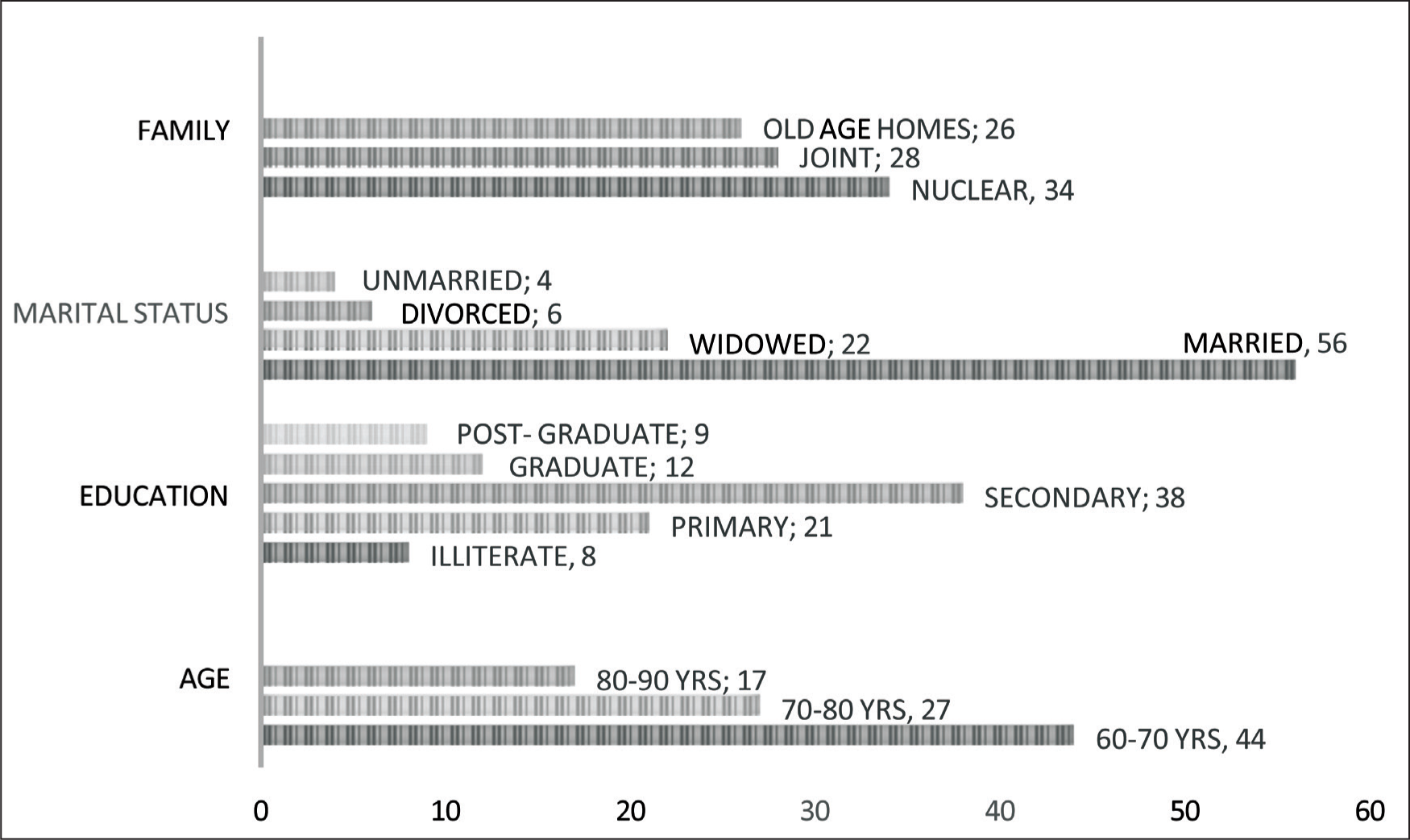
Based on the sample’s interpretation, the majority of the 80 subjects (90.9%) identified as Hindu, while 6 (6.82%) identified as Muslim, and 2 (2.23%) as Christian. The participants exhibited a modest female predominance (49; 55.6%) compared to males (39; 44.3%). The age groups predominantly consisted of individuals aged 60-70 years (44; 50%) and 70-80 years (27; 30.6%), followed by those aged 80-90 years (17; 19.3%), with the remainder comprising the remaining age groups. Participants represented diverse educational backgrounds, including secondary education (38; 43.1%), primary education (21; 23.8%), graduate education (12; 13.6%), postgraduate education (9; 10.2%), and a low rate of illiteracy (8; 9%). A majority of 56 individuals (63.6%) were married; 22 (25%) were widowed, with the remaining 6 (6.8%) divorced and 4 (4.5%) unmarried. Participation was observed across various family structures, including nuclear (34; 38.6%), joint (28; 31.8%), and old-age home residents (26; 29.5%), as illustrated in (Figure 1). Participants were briefed about the interview topic and presented with multiple options for responding to questions. A self-designed, structured questionnaire was used to assess community attitudes, beliefs, and opinions regarding sexual health.
Demographic Details.
Role of Aging on Sexual Health
A significant proportion of the participants, amounting to 72%, reported recent experiences of extreme stress and suffering. Despite these distressing experiences, 46% of respondents regarded an active sexual life as a vital method for alleviating stress and aging healthily. Additionally, 78% of participants expressed that, beyond reproduction and procreation, sex holds greater significance in life. Sexual hygiene is recognized as a crucial aspect of maintaining fair sexual health. Specifically, 71% of the participants considered sexual hygiene to be highly essential, 22% regarded it as somewhat necessary, and 7% believed it to be not significant at all. Moreover, 62% acknowledged that the aging process has progressively impacted their sexual health.
Sexual Practices in the Elderly
Nearly half of the participants (55%) expressed concern that their spouse would respond unfavorably when the subject of sexual activity was raised. Although 81% regarded sex as an essential component of their romantic relationships, 76% of the elderly reported not disclosing their sexual desires, interests, and expected outcomes to their partners. Only 35% of the participants reported being sexually active. Regarding methods used to satisfy sexual desires, 41% engaged in masturbation, 33% participated in sexual intercourse, 14% utilized other modalities such as pornographic videos and texts for personal fulfillment, and 12% denied seeking any means to address sexual needs and cravings.
Sexual Issues in the Geriatric Population
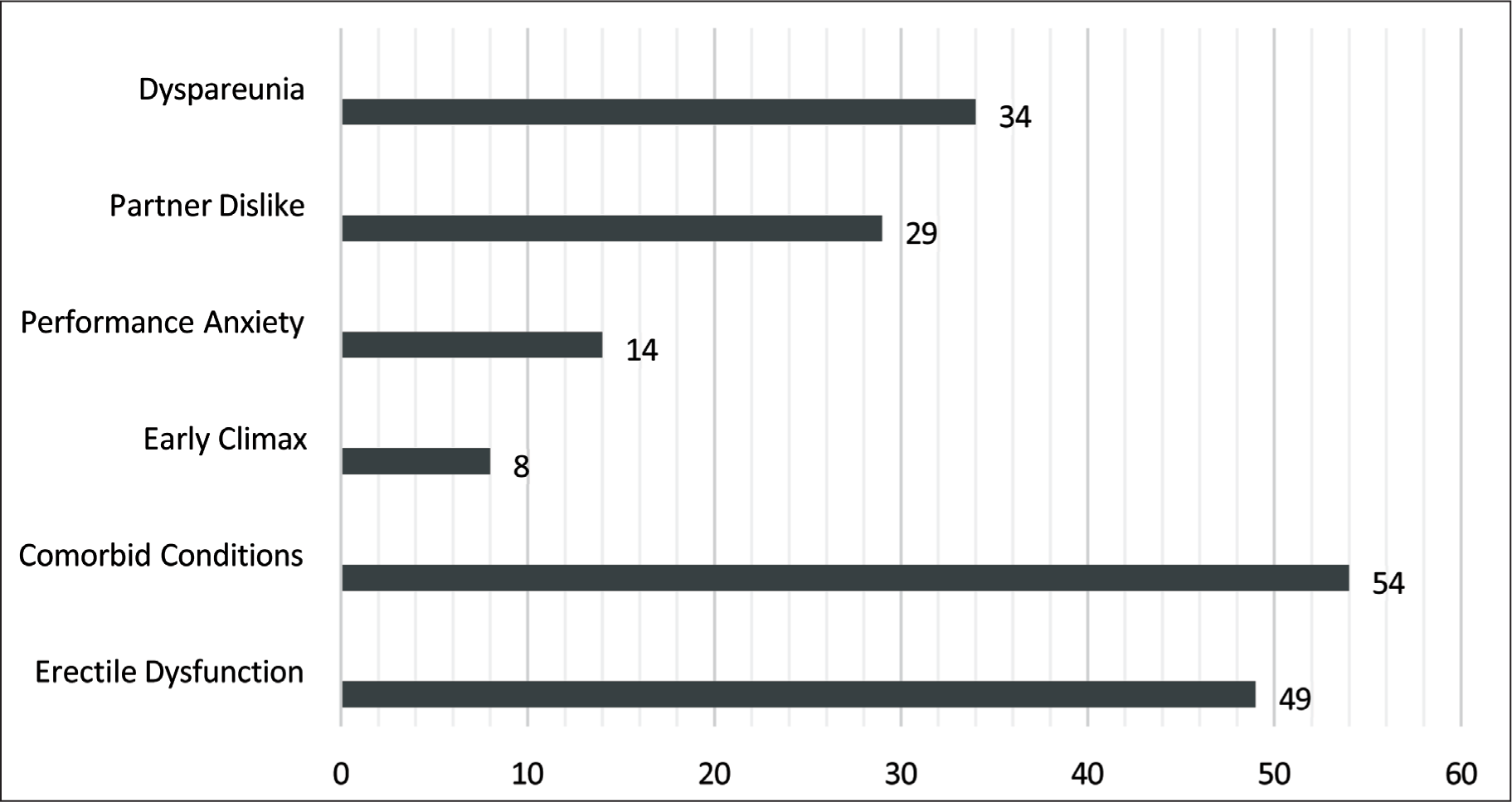
A significant 61% of participants reported experiencing difficulty with sexual intercourse recently, while 84% indicated that they had never taken medication for this issue. Furthermore, 69% expressed embarrassment or reluctance to discuss or seek help for sexual problems. Additionally, 63% felt that physicians should initiate discussions regarding sexual health, fearing judgment from medical professionals. Moreover, 77% of respondents reported never being questioned about their sexual difficulties or having their sexual health concerns related to aging addressed. Participants were asked to enumerate all factors contributing to their sexual problems. The most prevalent causes identified were comorbid illnesses and challenges in maintaining an erection. Other reported reasons for sexual dysfunction included painful intercourse, partner aversion, premature climax, and performance anxiety, listed in decreasing order of frequency (Figure 2).
Prevalence of Sexual Difficulties.
Discussion
India integrates modern and traditional civilizations, undergoing rapid transformation into a progressive society. Issues related to sexual health are frequently associated with shame and discomfort, which are exacerbated by disgust and societal judgments directed toward elderly partners. In this study, 78% of participants recognized sexual health as an integral component of personal well-being, understanding “sex” to encompass more than mere reproduction. An Indian survey involving geriatric couples revealed that 26.7% considered sex to be central to their marriage, while 41.7% believed it played a significant role. 7 Consequently, sexual intimacy is a vital element for ensuring a high quality of life among geriatric couples.
The geriatric stage frequently involves social neglect and loneliness. Many individuals in this demographic reside in nuclear families or senior facilities, thereby increasing social isolation. The National Family Health Survey, comparing data over two decades, indicates that the proportion of elderly individuals living alone has risen from 9% to 10%, reflecting shifts in Indian familial structures. 14 Companionship plays a crucial role in safeguarding against vulnerabilities, enhancing self-esteem, and fostering generativity. Older adults who lack social support are at a higher risk of experiencing mental and physical health issues, including increased anxiety and despair resulting from psychological stress. 15 The current study reports that 72% of participants have recently experienced extreme stress. Although the current study did not examine the psychiatric comorbidities arising from stress, it is worth noting that coexisting mental illnesses may exacerbate sexual health issues, potentially triggering secondary sexual dysfunctions that are likely to be severely underreported. The study underscores that the majority of geriatric patients were not assessed for sexual difficulties by their healthcare providers; however, the responsibility and expectations to initiate conversations regarding sexual health rested with the clinicians. Embarrassment and stigma pose significant barriers to providing comprehensive geriatric healthcare.
Aging constitutes a period characterized by physical and psychological changes, which tend to be exacerbated by stress. During the geriatric stage, a notable presence of comorbid illnesses is observed, accompanied by a decline in physical strength and vigor. A qualitative survey revealed that for 75% of the respondents, sexual activity was less satisfactory than it had been previously. Comparatively, individuals without disease reported a 59% decline, whereas those with disease showed an 84% deterioration in sexual satisfaction.7,16 These findings are corroborated by the current study, which indicated that aging adversely affected sexual health in 62% of the participants. The decline in sexual health is significantly influenced by medical comorbidities and the medications used to manage them. Treating clinicians probably underestimate the side effects of medical illnesses and the impact of various treatment strategies on sexual performance in the elderly. The deterioration of sexual activity negatively impacts the quality of life, which may, in turn, lead to reduced treatment compliance and adversely affect the long-term outcomes of primary medical conditions.
The coexistence of sexual activity during the geriatric phase is often regarded as unusual and unethical. Societal perceptions tend to be less accepting of sexual desires and urges among the elderly. Despite physical changes, sexual interests persist, as sexual instincts are considered fundamental human drives, akin to those for life and death. The findings of the study indicate that, excluding 12% of sexually abstinent individuals, the remaining participants resorted to various techniques to achieve physical satisfaction. A survey conducted in the United States reported that 26% of respondents aged 75-84 were sexually active, which is lower compared to 53% of respondents aged 65-74. 17 In an Indian study based in a metropolitan city, it was observed that an average of 64.5% of participants over the age of 55 engaged in sexual activity. 7 Conversely, the current study revealed that only 35% of participants were sexually active. Differences in socio-demographic and cultural backgrounds may influence sexual behavior patterns. Sexual activity is markedly affected by social circumstances; the necessity for a secure private space and a consenting partner are non-negotiable prerequisites. The study population consisted of individuals living in joint families or old-age homes, where private space, especially for older people, is not adequately prioritized by family members. The societal stigmatization of sexual activity among the elderly exacerbates the underreporting and reduced frequency of sexual activity, despite the presence of desire among the majority of the geriatric population, as reflected in the current study.
Geriatric sexuality cannot be fully comprehended through the perspective of youth, which predominantly emphasizes performance and erectile function while neglecting the psychological and interpersonal factors that influence the quality of the sexual act. 18 Since life expectancy has increased due to medical advancements, it has become increasingly important to address sexuality-related issues within the older population. An epidemiological study conducted in South India revealed that among sexually active male respondents, 43.5% experienced ED, 10.9% experienced premature ejaculation, 0.77% suffered from hypoactive sexual drive disorder (HSSD), and 0.38% experienced anorgasmia. Additionally, it was observed that 28% of female participants experienced arousal disorder, 16% suffered from HSSD, 20% experienced anorgasmia, and 8% encountered dyspareunia. 19 In our current investigation, various causes of sexual difficulties were identified, with ED and comorbid illnesses being the most frequently associated factors contributing to disturbed sexual functions.
The principles of ageism, conventional taboos regarding sexuality, and prejudices concerning senior sexuality are prevalent among medical professionals. When addressing their elderly patients, healthcare providers are less likely to conduct a comprehensive sexual history compared to their approach with middle-aged men. 20 The intimate interactions between parents and grandparents frequently encounter resistance or hostility from staff, residents, and family members. 21 Perspectives on geriatric sexuality are predominantly rooted in stereotypes rather than clinical evidence. 22 Patients experience this discomfort, leading to a cycle of silence, as 69% of study participants reported embarrassment when discussing sexual health issues. Owing to limited research, particularly within India’s cultural context, substantial gaps remain in the understanding of elderly sexuality.
The study effectively addresses the pervasive issues of shame and embarrassment within society. The lack of awareness regarding sexual attitudes and practices fosters misconceptions and myths that require intervention through psychoeducation. The involvement of a psychiatrist is crucial in the treatment of sexual problems among the elderly. The study aims to educate medical professionals about current practices. The therapeutic gap concerning geriatric sexual dysfunctions is significant and must be addressed to reduce the burden of disorders related to sexual health. A comprehensive approach is crucial for promoting overall well-being.
Limitations
This study was conducted on a small subset of the geriatric population, thereby restricting the generalizability of the results to a larger scale. The participants selected were not standardized, which precluded inter-group comparisons based on various variables. Additionally, confounding factors such as medical comorbidities, stress levels, and medical history were not controlled, which may have influenced the outcomes. The research was designed to provide a preliminary and crude overview of the subject, and thus did not adhere to stringent methodological requirements.
Conclusion
Aging does not necessarily entail a period of sexual abstinence. Sexual activity is not merely a physical act of copulation but a means of expression and, fundamentally, a basic human instinct. The concept of aging underscores the normalcy of mental health. The presence of sexual desires and their normalization should be introduced to younger members of the family. Healthcare professionals must rid themselves of misconceptions and stigma, thereby engaging in open discussions about sexual health issues with geriatric patients. The skill of interviewing regarding sexual health issues constitutes good clinical practice; doing so with elderly patients is not discriminatory. Eliminating discrimination will pave the way for comprehensive physical and mental health care.
Footnotes
Acknowledgements
The undergraduate students at the tertiary care hospital where the study was conducted assisted with participant selection and interviews. The subject matter experts under whose guidance the semi-structured questionnaire was developed.
Date and Place of Meeting Where Article was Presented Orally
10th Annual Research Society Conference 2022; Pune; December 6, 2022 54th ACIPSWZB, 2023; Kolhapur; October 14, 2023 75th ANCIPS 2024; Kochi; January 20, 2024
Declaration of Conflicting Interests
The authors declared no potential conflicts of interest concerning the research, authorship, and/or publication of this article.
Ethical Approval
Institutional Ethical Committee MIMER Medical College, Pune. Ethical Approval No: ECR/ 607/ Inst/ MH/ 2014-399
Chairperson- Dr. Pratibha Worlikar.
Funding
The authors received no financial support for the research, authorship, and/or publication of this article.
Patient Consent
Patient Consent is not required for the use and publication of information as the personal socio- demographic details are kept confidential as indicated during the data collection.