




Abstract
This perspective briefly discusses the impact of media and gender-based marketing on the body image and mental health of adolescents. It proposes a multipronged approach combining education, media reforms, supportive environment, regulatory measures, and positive messaging to foster healthy body image and self-esteem among adolescents.
Adolescence is a critical stage of development, where health and developmental trajectories can be significantly influenced, leading to either positive or negative outcomes. It is a crucial period for forming lifelong health-related behaviors, both beneficial and risky. 1 While identity formation is a lifelong developmental task, it is especially prominent during the adolescence. 2 Adolescents experience various physical changes that often lead to increased awareness of their bodies and appearance. This heightened consciousness becomes a central aspect of their lives and plays a significant role in their developing identities. 3
Body image is a multidimensional construct that includes both evaluative aspects (satisfaction or concern with appearance) and its significance to an individual’s identity.4,5 Historically, research has focused on body image as a risk factor for poor mental health, highlighting its role in psychopathology such as eating disorders. 6 Recently, there has been a shift toward exploring positive body image and its relationship to well-being, with increased attention on nonappearance dimensions like functionality and embodiment.7,8
While new perspectives and efforts are underway to use the concept of body image for fostering a positive sense of self and identity, the portrayal of physical appearance in the media and adolescents’ easy access to it pose significant challenges. Media and marketing distorts children’s self-perception and promotes unrealistic and unattainable body standards, 9 effectively setting teenagers up for failure. Figure 1 illustrates a girl who, despite being normal or underweight for her age, perceives herself as obese and experiences distress. While a boy who is well-built and muscular views himself as too lean and unattractive, he may also perceive himself as short. Society’s standards, influenced by media messages, contribute to perceived imperfections among developing adolescents.
Media Influence on Adolescent Body Image Perception.
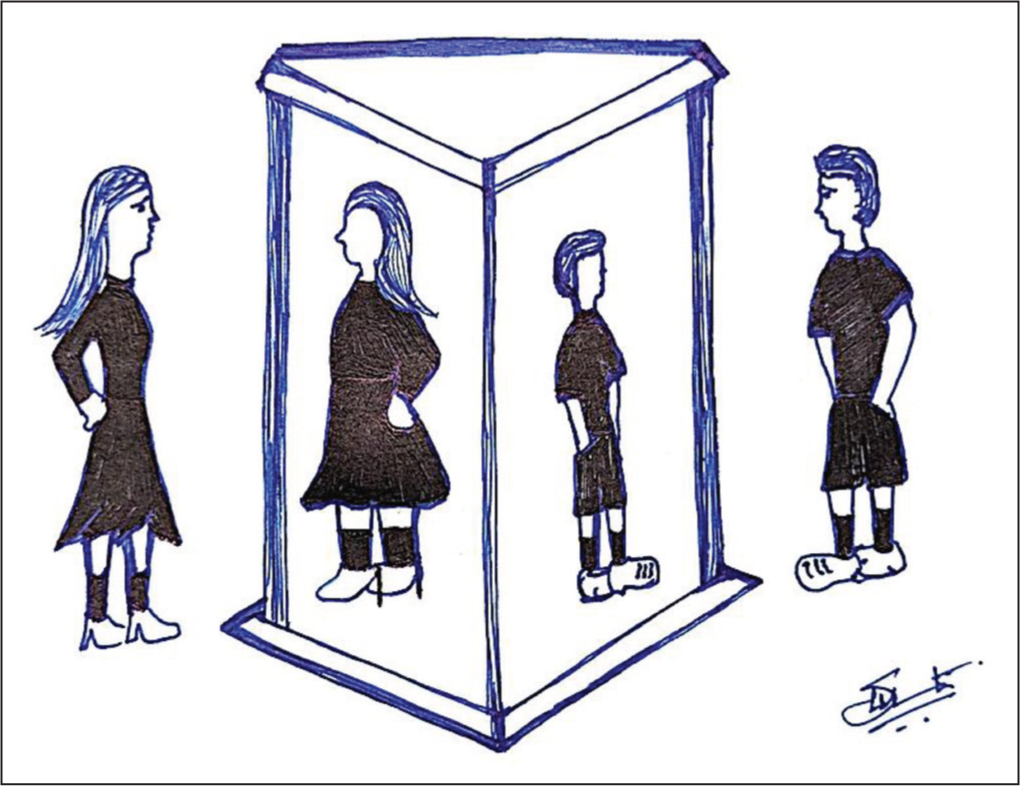
Body-image issues in adolescents can adversely impact their development and mental health with a high risk of depression, anxiety disorders, and eating disorders. Additionally, these issues can affect physical health, as adolescents may engage in harmful behaviors to achieve unrealistic body standards. 10
An effective solution to address the challenges posed by media portrayal of physical appearance and gender-based marketing involves a multipronged approach as illustrated in Figure 2.
Strategies for Promoting Positive Body Image.
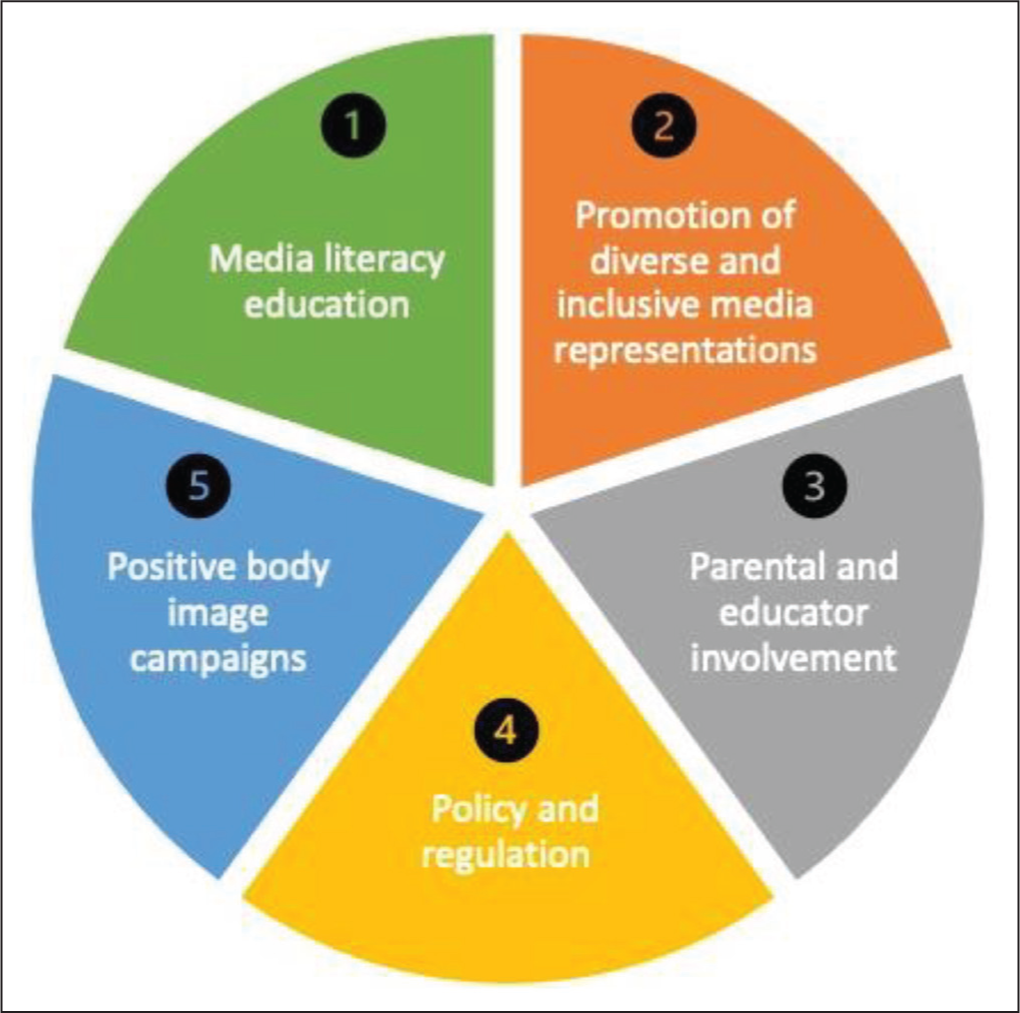
Media literacy education: Implementation of comprehensive media literacy programs in schools that teach adolescents to critically analyze media content, understand its impact on them, and recognize unrealistic and manipulated portrayals of appearance.
Promotion of diverse and inclusive media representations: Encouragement of media outlets to showcase a diverse range of body types. This can help normalize various appearances and reduce the pressure to conform to unrealistic standards.
Parental and educator involvement: Sensitization of parents and educators regarding body image and media influence. This includes promoting positive body talk, challenging stereotypes, and providing support and resources for those struggling with body image concerns.
Policy and regulation: Advocacy for policies that regulate advertising practices, particularly those targeting children and adolescents. This could involve setting standards for realistic and diverse body representation and restricting harmful gender-based marketing.
Positive body image campaigns: Public health campaigns emphasizing the importance of functionality over appearance can promote body positivity and self-acceptance
Conclusion
By combining education, media reform to promote diverse and inclusive media representations, supportive environments, and regulatory measures, we can create a more supportive and realistic environment that fosters healthy body image and self-esteem among adolescents.
Footnotes
Author Contribution
LS conceptualized and prepared the first draft of the manuscript. JVSK reviewed and edited the draft. Both the authors read and approved the final manuscript.
Declaration of Conflicting Interests
The authors declared no potential conflicts of interest with respect to the authorship and/or publication of this article.
Funding
The authors received no financial support for the authorship, and/or publication of this article.