




Abstract
Objectives:
To assess and compare the overall quality of online written information on the treatment of erectile dysfunction (ED) in English and Hindi language webpages. Also, correlates of the quality of online health information were explored.
Methods:
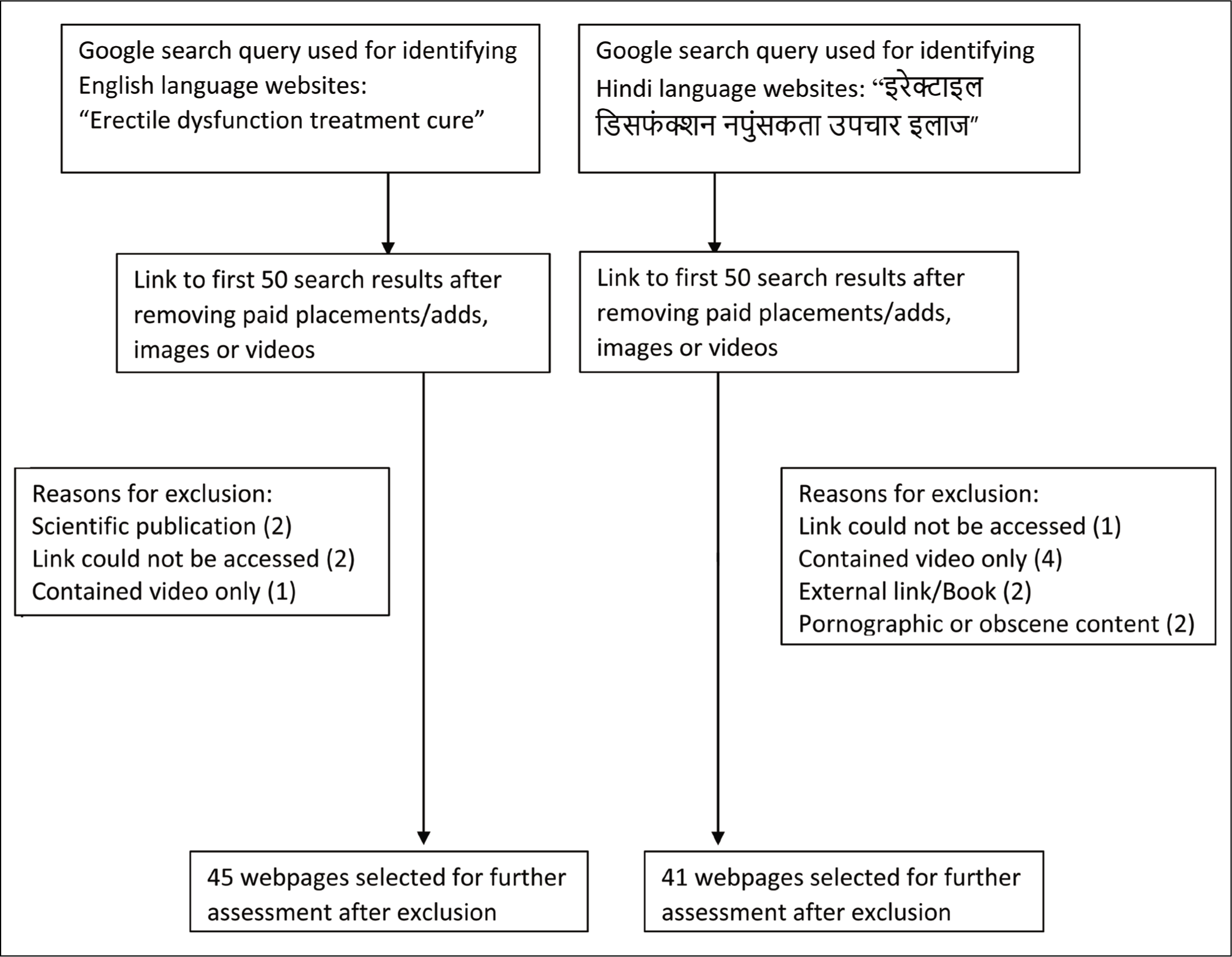
First 50 links obtained on Google search in both English and Hindi language were screened, and a total of 86 (45 English, 41 Hindi) webpages providing patient-oriented information on the treatment of ED were analysed. Content quality and reliability were assessed using the DISCERN scale and the JAMA benchmark criteria respectively. Additionally, aesthetics, interactivity, and readability were evaluated.
Results:
The DISCERN score indicative of content quality was significantly higher for English webpages compared to Hindi webpages. English webpages were more likely to meet disclosure and attribution JAMA criteria for the reliability of medical information. English webpages with HONcode certification were more likely to have better content quality than those without it. However, none of the Hindi web pages analyzed were HONcode certified.
Conclusion:
English language webpages provided better overall quality of information on treatment of ED as compared to Hindi language. HONcode label might be used as a proxy indicator of better content quality for online resources informing on ED treatment by laypersons. There is a need to develop and popularize the usage of HONcode or other similar online health information quality accreditation systems for webpages in non-English languages like Hindi.
Introduction
In this digital era, online health information resources have become the go-to guide for seeking any sort of information including health-related matters. Numerous studies have shown that a large number of people, in particular those aged between 16 and 34 years use the Internet to access information regarding health. 1 The proportion is even greater among those with mental illnesses, sexual problems, or chronic medical illnesses. This could be possibly due to the high stigma or embarrassment associated with many of these health conditions including sexual problems such as erectile dysfunction (ED), poor knowledge or awareness among the general public about the causes and treatment of sexual dysfunctions, and lack of accessible and affordable quality health care services providing patient education and management for these health conditions.2, 3 In view of this, online health information is a boon since an individual can access information about the diagnosis, associated risk factors or causative factors, prognosis and treatment of medical disorder in an anonymous and convenient (with few clicks on the internet while sitting in the privacy of their home) manner. However, the reliability and the quality of online health information available for sexual dysfunctions in general and ED in particular is questionable and remains inadequately assessed till now.
ED is among the most common sexual disorders in males. A recent systemic review concluded the lifetime prevalence ranges between 3% and 76.5% across different studies depending upon study methodology and other factors such as age of participants (i.e., higher risk with increasing age), comorbidities (chronic hypertensive, diabetic, etc.), among others. 4 It is associated with social stigma, people with ED are often reluctant to seek help from a medical professional. One study estimated that less than one-fourth (25%) of the people with ED had consulted an expert. 5 The common reasons contributing towards this reluctance among people to discuss about their sexual problems include privacy concerns, fear of embarrassment, and a common perception that their problem might be dismissed by the physician. This makes searching online about various aspects of their sexual problem an attractive option for many of them. However, inaccurate or confusing online information can put them at increased risk of trying out medicines or treatments that might not have any scientific basis or even worse result in further harm to the health of the person.
Online health information is provided by various govern-ment, non-governmental organizations, charitable foundations, individual blogs and news portals. However, their content quality, reliability and readability remain a poorly researched area till now. There is only one study available till now which has specifically assessed online information on treatment of ED. This previous study was done in 2020, and the researchers assessed only the online information available on the treatment of ED in the English language. 6 Further, this study did not assess interactivity and presentation or aesthetics-related attributes of the web pages. The available literature suggests that aspects of online health information such as the ease of readability, presentation, and interactivity are also likely to play an important role in consumer perception, uptake, and quality evaluation of the health information available on the internet. 7 Thus, assessment of interactivity and presentation or aesthetics-related attributes is also important. DISCERN is a standardized measure designed specifically to assess the quality of online consumer health information and has demonstrated good reliability and validity in previous studies. In view of this, we conducted a comparative assessment of the content and quality of online information available on the treatment of ED in English and Hindi language web pages. Additionally, the reliability, interactivity, and aesthetics of web pages were also evaluated.
Methods
Webpage Selection
To identify webpages providing information on treatment of ED, a keyword search was performed on the most popular general internet search engine (
Flowchart for Selection of Websites in English and Hindi Languages.
Webpage Assessment
Two researchers (both psychiatry residents) independently reviewed and extracted information using a pre-designed assessment tool (developed by authors based on review of available literature and their own professional experience) for selected websites.6, 9
The DISCERN instrument was used for assessment of content quality. Both the researchers followed the DISCERN instrument guide (available online at
The aesthetics and interactivity of the webpage were evaluated using the modified Abbott aesthetic criteria and selected questions, which have also been used in previous studies.9, 13 The aesthetics/presentation assessment consisted of: information being organized into headings and/or subheadings; use of relevant diagrams or graphics; presence of functional hypertext links or hyperlinks for references; and absence of advertisements from outside sources. The interactivity assessment consisted of: availability of an internal site search engine option; presence of audio or video support; satisfaction or knowledge questionnaires for users, supportive spaces (e.g., comments section); and option of sending queries to webmasters or authors. A score of one point was given to the webpage for fulfilling each of these characteristics.
The Journal of the American Medical Association (JAMA) benchmark criteria for online health information were used to assess the reliability of webpage. The following four JAMA criteria were assessed: Authorship (are the affiliations and relevant credentials of authors or contributors displayed); Attribution (are clear references for all sources and copywrites for the online content provided); Disclosure (is webpage’s ownership, sponsorship, funding, and any potential conflicts of interest clearly displayed); and Currency (are the dates of initial posting and last updating for the online content visible). They have been widely used in previous studies both individually and collectively as a sum score of all four criteria as a marker of the authenticity and reliability of an online health information source.6, 14 Additionally, information related to Health on the Net Foundation Code of Conduct (HON code) certification of the webpage was extracted. Health On the Net is an international, non-profit foundation, which aims to promote transparency and credibility in providing health and medical information on the Internet. Also, the ownership of websites (commercial vs. non-commercial), and the date of last revision or updating for online information were noted separately.
Readability was evaluated objectively by calculating the Flesch–Kincaid grade (FKG) level score and the Flesch–Kincaid readability (FKR) index. They are calculated using formulas involving assessment of the overall word length or difficulty and the average sentence length of the webpage. The FKG level score rates the difficulty level for text to the corresponding American school grade a person would need to comprehend the text. A score of 8.0 means that a person with eighth grade or above level of education would be able to comprehend the document. Similarly, the FKR index ranges from 0 to 100, with higher scores suggestive of greater ease of readability. To prevent any human error in calculations, both these scores were calculated using a freely available online readability calculator for English webpages.
Statistical Analysis
Analysis was performed using SPSS software for Windows (version 21.0; IBM Corp, Armonk, NY). Descriptive statistics using mean and standard deviation (SD), or frequency and percentage were used to describe the continuous or categorical attributes of webpages, respectively. Starting from the use of normality tests such as the Kolmogorov-Smirnov and Shapiro-Wilk tests, the data’s distribution was examined. In cases where the data exhibited skewness, median and interquartile range (IQR) were used for better describing the central measure and dispersion characteristics. Approp-riate parametric (Independent t-test) and non-parametric (Spearman correlation, Mann-Whitney U test) inferential statistics were used to compare characteristics between English and Hindi webpages. The Chi-square and Fisher’s Exact test (when expected cell count was less than five) were used to compare proportions between the two groups. Simple linear regression analyses were carried out to explore correlates of content quality (DISCERN score as dependent variable) for both English and Hindi webpages separately. The level of statistical significance was set at a two-tailed P value of < .05 for all the tests.
Results
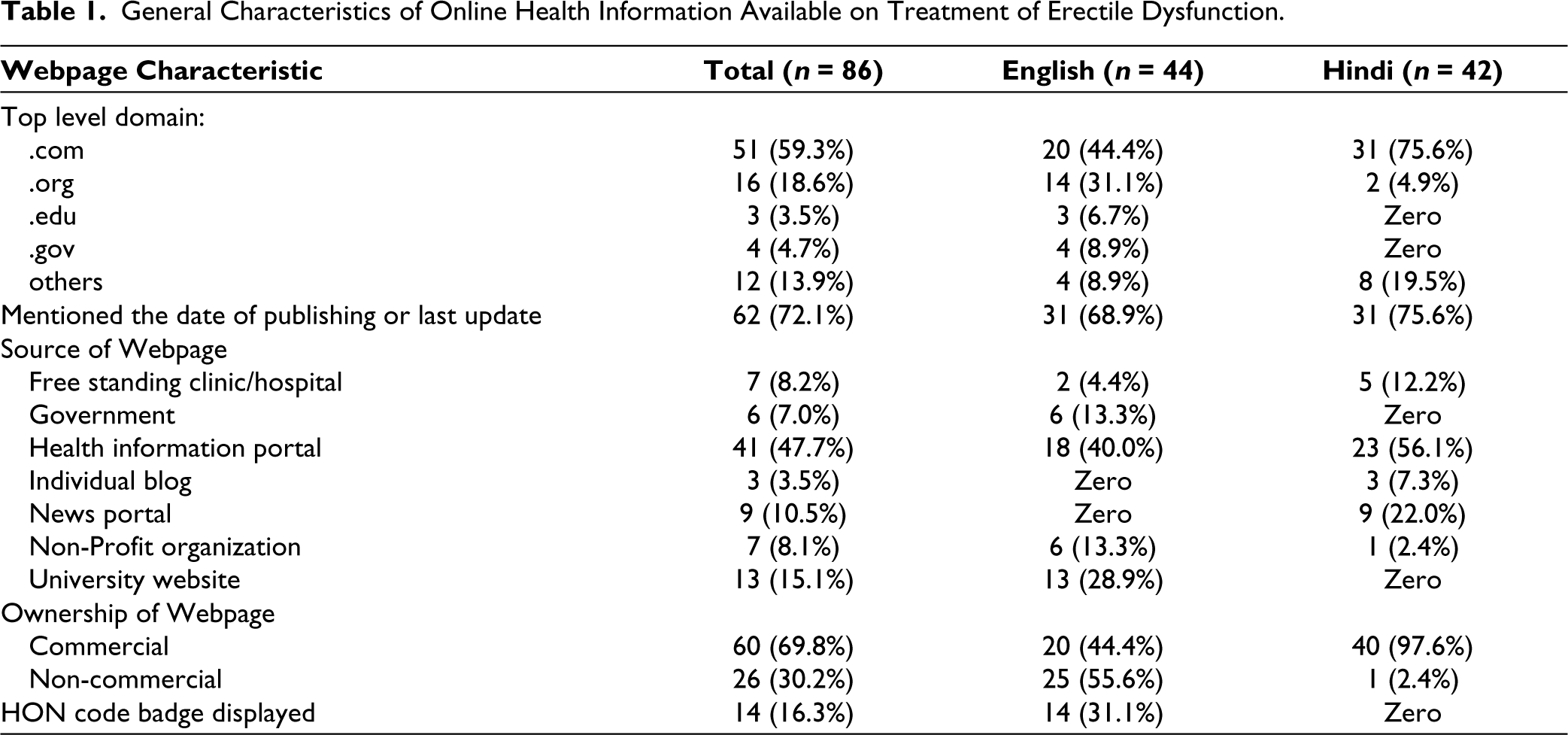
A total of 86 webpages were analyzed in the present study. Table 1 described the general characteristics of the online health information available on treatment of ED. The most common top-level domain for more than half of all webpages was ‘.com’ followed by ‘.org’ for about another one-fifth of them. About three-fourth of all webpages (n = 62) mentioned the date on which it was published or last updated. Out of them, only about one-third (24/62, 35.4%) of them had online health information updated within the past one year at the time of review for the present study; and there was no significant difference between webpages in both languages (English: 13/31 = 41.9% vs. Hindi: 9/31 = 29.0%; χ2 = 1.127, P = .28). The most common source for online health information about treatment of ED was available on the health information websites/platforms. There was a lack of online health information about ED treatment in Hindi language from government or university sources. Majority of webpages were having commercial ownership, with Hindi language ones having a significantly higher number of commercial webpages (English: 20/45, 44.4% vs. Hindi: 40/41, 97.6%; χ2 = 28.697, P < .01). About one-third of the webpages in the English language displayed the HON code badge compared to none for the Hindi webpages (English: 14/45, 31.1% vs. Hindi: Zero; χ2 = 15.236, P < .01).
General Characteristics of Online Health Information Available on Treatment of Erectile Dysfunction.
Treatments Described for ED
Table 2 described the various different treatment options mentioned online in both English and Hindi languages. The median number of treatments listed on a webpage were six (IQR: 4.00–9.00), with significantly greater number of treatments mentioned in English webpages compared to Hindi webpages [9.00 (IQR: 6.50–11.00) vs. 4.00 (IQR: 2.00–5.50); U = 341.50, P < .01]. Treatment of ED using oral phosphodiesterase type-5 inhibitors (PDE5i), vacuum-assisted devices, intra-cavernosal injections, penile prosthesis surgery, psychotherapy, MUSE suppository (single-use transurethral alprostadil), testosterone supplementation, revascularization surgery, and shock wave therapy were more frequently mentioned in the English language webpages. Whereas, treatment of ED using home reme-dies (e.g., Ginseng, Ashwagandha containing capsules, Himalayan herbal medicines etc.) was more commonly mentioned in the Hindi language webpages.
Treatments Described for Erectile Dysfunction on Webpages in English and Hindi Language.
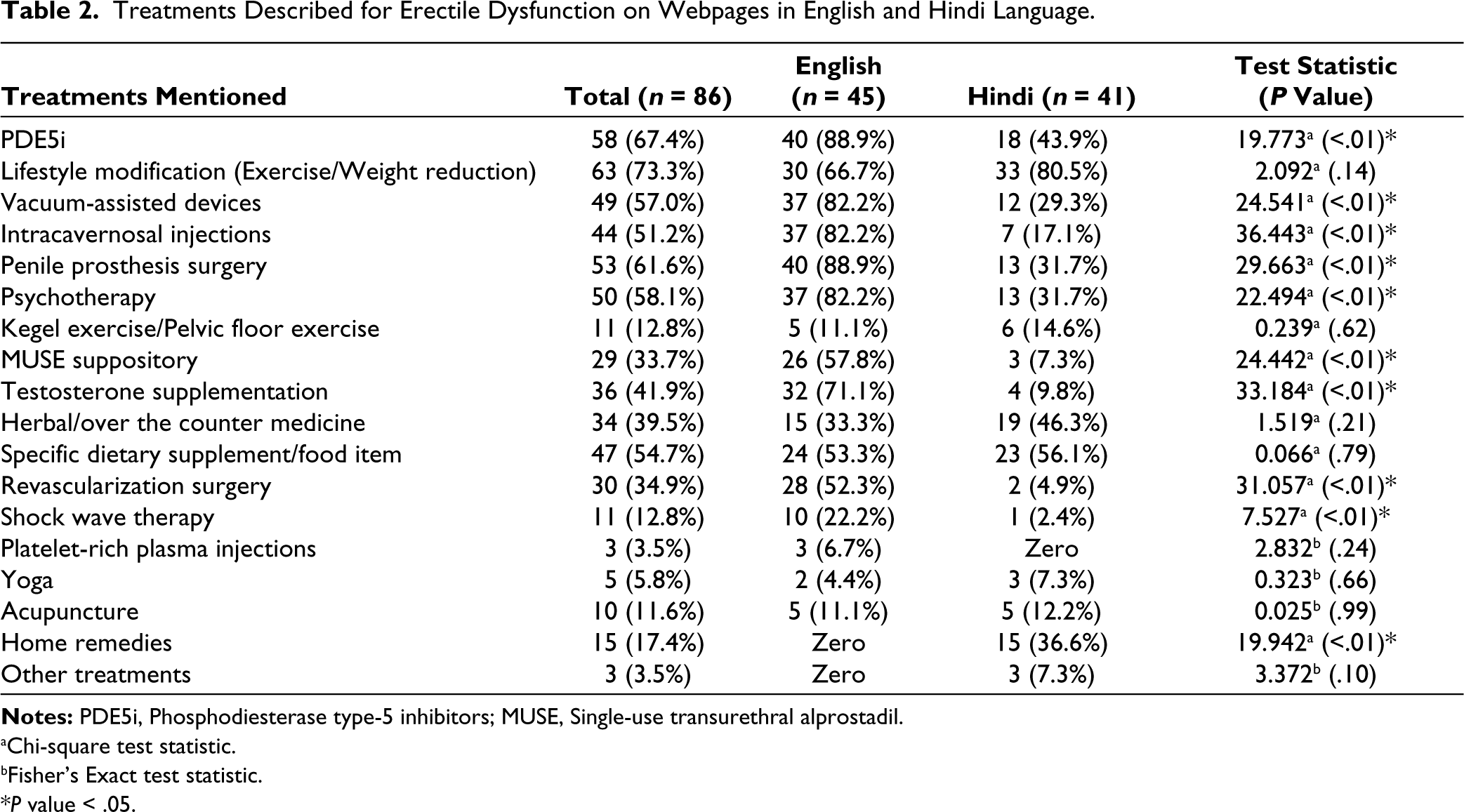
aChi-square test statistic.
bFisher’s Exact test statistic.
*P value < .05.
Presentation of Online Health Information on ED
The median total aesthetics score for the English webpages was significantly higher than the Hindi webpages [2.00 (IQR: 2.00–3.00) vs. 1.00 (1.00–2.00); U = 563.00, P < .01]. Similarly, median total interactivity score for the English webpages was significantly higher than the Hindi webpages [2.00 (IQR: 1.50–3.00) vs. 1.00 (1.00–2.00); U = 639.00, P < .01]. There was significant correlation of content quality (i.e., DISCERN score) with aesthetics (rs = 0.403, P < .01) and interactivity (rs = 0.407, P < .01) scores for English webpages, but not Hindi webpages. Further, the readability assessment of English language websites revealed a mean FKR index of 47.79 (SD: 11.71), with no significant correlation between readability and content quality (rs = –0.088, P = .57). The median readability difficulty grade was 8.25 (IQR: 7.22–9.95), with 6.6% (3/45) and 42.2% (19/45) of English webpages being written at a grade level of up to sixth and eighth standard respectively. Assessing readability for Hindi language webpages was not feasible due to the absence of corresponding measures for readability assessment in Hindi.
Quality of Online Health Information on ED
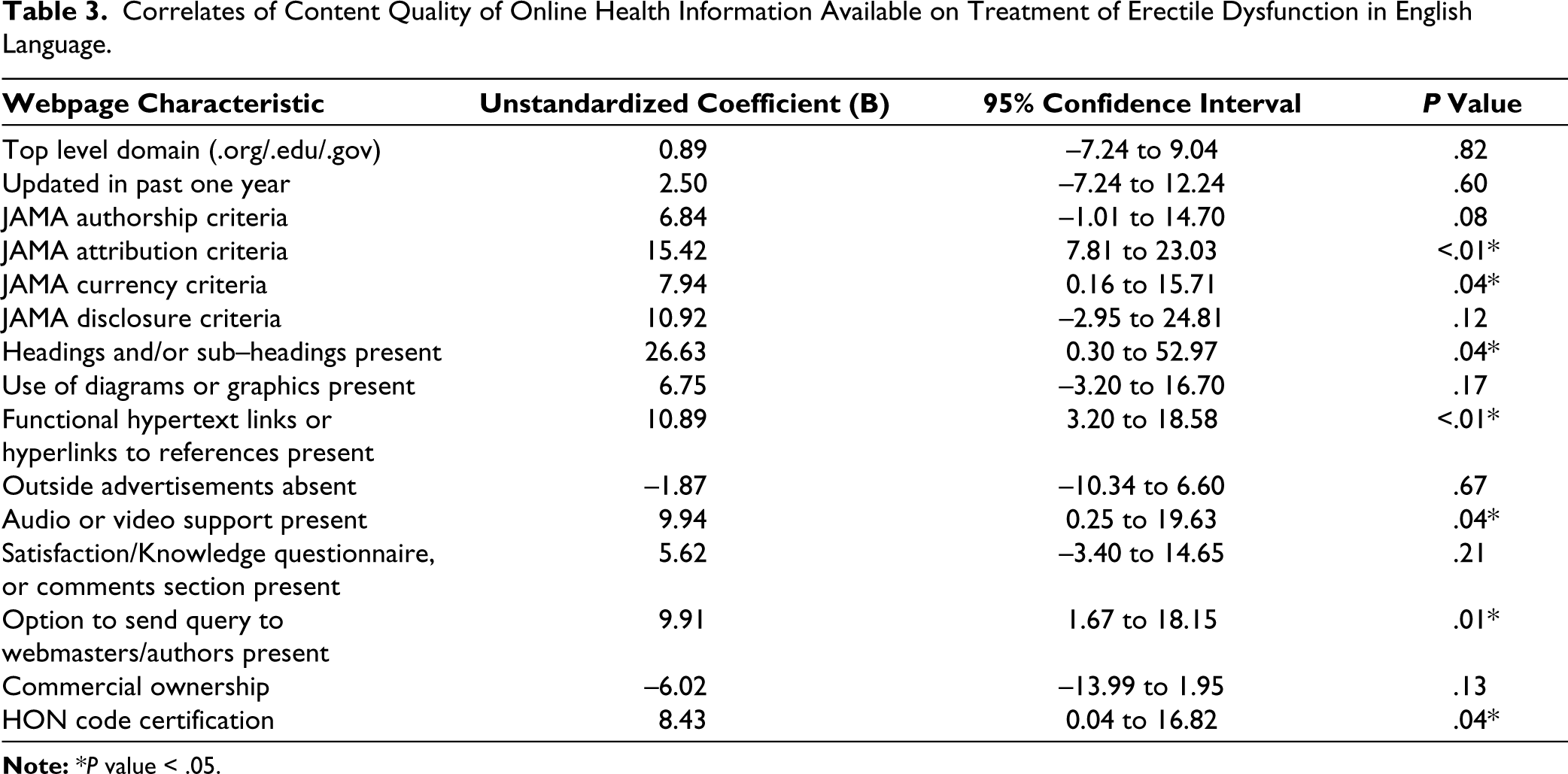
The mean DISCERN score representing the content quality of all webpages was 46.43 (SD: 17.69), with significantly higher mean DISCERN score for the English webpages compared to the Hindi webpages [English: 59.04 (SD: 13.36) vs. Hindi: 32.58 (SD: 9.64); t = 10.59, P < .01]. Similarly, the median DISCERN score of all pages was 44.50 (IQR: 29.95–61.50), with significantly higher scores for English webpages [English: 61.00 (IQR: 50.00–72.00) vs. Hindi: 29.00 (IQR: 27.00–35.00); U = 111.00, P < .01]. The median JAMA criteria met by all webpages was one (IQR: 0.75–2.25), with significantly greater number of criteria being met for English webpages compared to Hindi (U = 551.00, P < .01). The English webpages were significantly more likely to fulfil the attribution and currency criteria than the Hindi webpages. Whereas, the authorship criterion was more frequently fulfilled by the Hindi webpages than the English ones. Tables 3 and 4 described the correlates of the quality of online health information on treatment of ED in English and Hindi language respectively. English webpages that meet the JAMA attribution criteria, JAMA currency criteria, have information organized into headings and sub-headings format, contain functional hypertext links or hyperlinks to references, supplement information with audio-visual aids, have option to send readers’ queries to author or webmaster of webpage, or displayed HON code badge were more likely to have better content quality as compared to those webpages that do not have these characteristics.
Correlates of Content Quality of Online Health Information Available on Treatment of Erectile Dysfunction in English Language.
Correlates of Content Quality of Online Health Information Available on Treatment of Erectile Dysfunction in Hindi Language.
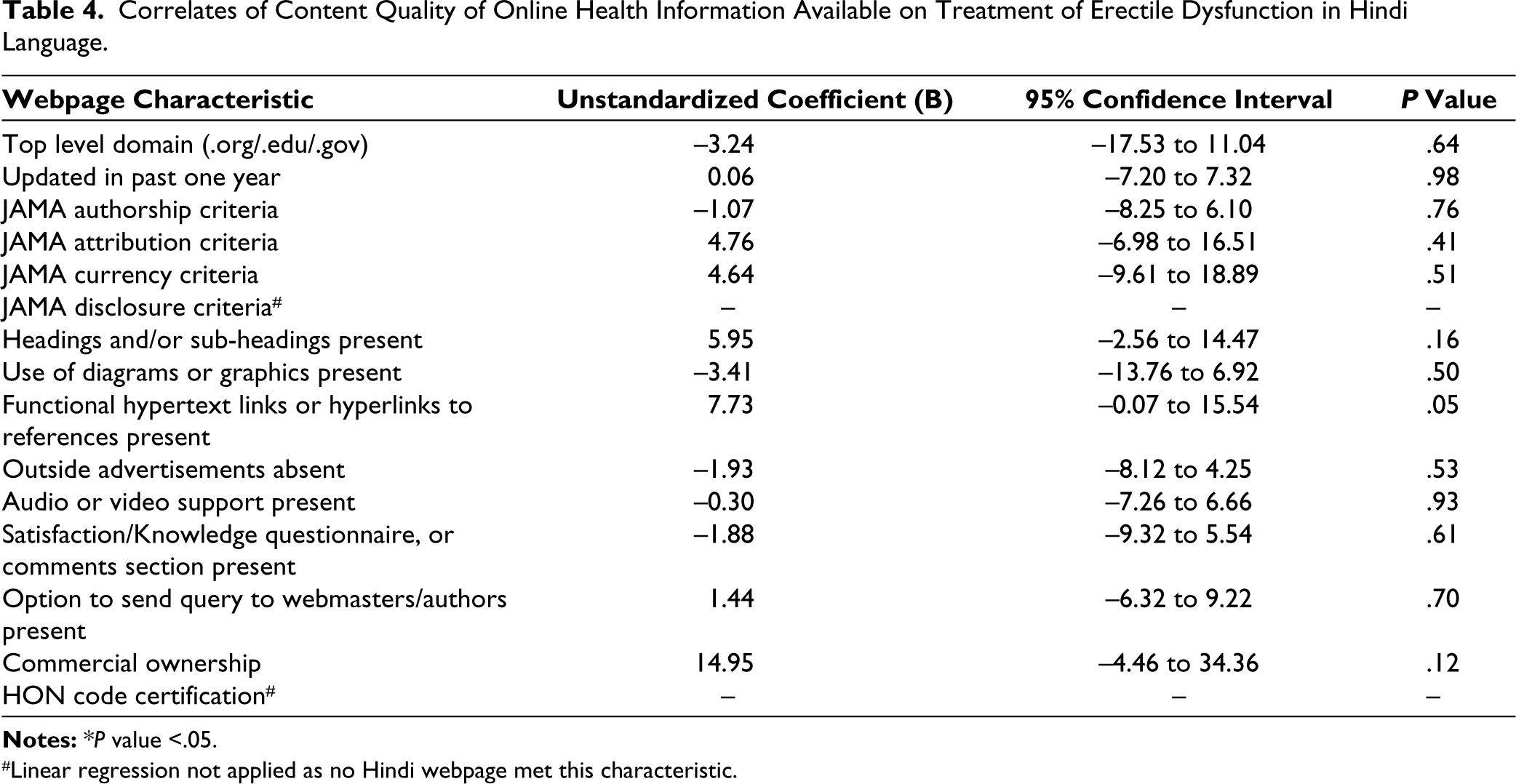
#Linear regression not applied as no Hindi webpage met this characteristic.
Discussion and Conclusion
Discussion
The study examined information quality for treating ED in English and Hindi. Both languages’ webpages commonly mentioned oral PDEi, lifestyle changes, and vacuum devices for ED treatment. Interestingly, herbal remedies were more prevalent in Hindi pages compared to English ones, echoing a trend where herbal treatments, despite unclear effectiveness and dosages, are popular in the eastern world. 15 Variance arose in discussing intracavernosal injections, penile prostheses, and MUSE suppositories, with more English pages covering these treatments than Hindi ones.
In previous studies it has been seen that the more invasive treatment strategies such as those mentioned above are more commonly used by patient with ED in the western world as compared to the Asian region (target population for majority of Hindi language webpages). 16 This is likely due to various factors like higher social stigma of visiting physicians for sexual problems, lack of adequate guidance, poor understanding, and greater reliance on traditional/herbal medicines for treatment of ED. 16
It was seen that ‘.com’ was the most common domain in both Hindi and English webpages. However, it is interesting to note that while one-third of the English webpages had ‘.org’ domain, only two Hindi webpages used the same domain. The ‘.org’ domain has been commonly used by the non-profit foundations, or charitable organisations working for non-commercial purposes and are more likely to create webpages for educating the general public without any hidden agenda of favoring any particular form of treatment(s). This could partly explain the observation of English webpages fulfilling greater number of JAMA benchmark criteria corresponding to the reliability of medical information in the present study. In previous studies, it has been seen that higher JAMA scores were associated with better quality and that webpages designed for educational purposes usually have higher JAMA scores as compared to that from commercial sources.14, 17 In addition, none of the Hindi webpages were HONcode certified which is given by medical experts after thorough auditing based on various parameters such as reliability, transparency, privacy, among others; suggestive of lower overall quality of health information available in Hindi webpages as compared to English webpages. The HONcode certification was found to be significantly associated with the content quality of English webpages in the present study. Similar findings have been reported in other studies, that have demonstrated the utility of HONcode as a proxy indicator of better quality online health information.6, 17 Thus, Hindi webpages should also have information first scrutinized by experts and updated as per the available treatment guidelines to increase their reliability. Interestingly, none of the webpage characteristics scrutinized in the present study were found to correlate with the content quality of health information displayed on Hindi webpages. Thus, there is a need to develop and/or popularize usage of HONcode or other similar online health information quality accreditation systems for webpages in non-English languages like Hindi.
Both mean as well as median DISCREN scores representing the content quality of health information were significantly better for the English webpages as compared to the Hindi webpages. The median score value of 29.00 (IQR: 27.00–35.00) for Hindi webpages in the present study, was indicative of ‘poor’ content quality of online health information in general. 18 In contrast, the median score value of 61.00 (IQR: 50.00–72.00) for English webpages in the present study, was indicative of ‘good’ content quality (i.e., DISCERN score value of more than 40) of online health information. 18 This was better than the median DISCERN score of 35 (IQR 26–44.5) reported in a previous study assessing the quality of information available on treatment of ED in English language webpages. 6 It was seen that DISCREN quality scores were significantly higher for English webpages and were positively co-related with aesthetics and interactivity related webpage characteristics. This can be attributed to various factors such as English webpages were mostly with ‘.com’ and ‘.org’ domain and besides that about 70% webpages were hosted by either government based organizations, non-profit organizations or university websites; whereas, Hindi webpages consisted mostly of individual blogs, webpages of free-standing clinics or some local or regional news portals which usually had a commercial ownership. The information provided in news portal or blog tends to be more of sharing personal experiences or highlighting some commonly used medicines/remedies which may or may not have any scientific basis while the information provided by government and educational institutions are considered to be more evidence driven. They are usually not based on any scientific or medical literature. It was also seen that English webpages more commonly provided functional hypertext links to references backing the health-related information presented on them.
The reliability of online information assessed using four JAMA benchmark criteria found that English webpages met greater criteria than Hindi webpages. However, the Hindi webpages were more likely to fulfil the authorship criteria. But, the authors of these webpages were mostly individuals with non-medical backgrounds and without any professional qualifications displayed on the webpage. Moreover, in less than 10% of the Hindi webpages the date of publishing or last updating the online information was displayed (currency criteria) and references to support the health information provided on the webpage were provided (attribution criteria); and none of the Hindi webpages provided information related to copyrights, potential conflict of interest and about funding source (disclosure criteria). Though JAMA scores were better for English webpages than Hindi, still more than a third of English webpages did not fulfil at least one of the four criteria for reliability. It highlights a major concern about reliability of online health information available, since a significant proportion of people might rely on internet-based resources for seeking information and making decisions about their choice of treatment for a health conditions like ED. In this regard, medical professionals and non-profit organizations ought to develop educational initiatives aimed at empowering everyday internet users to navigate trustworthy sources of health information. 19
Further the readability assessment done for English webpages showed that less than one-tenth (7%) of the webpages had reading level up to the sixth-grade level. While, more than half of webpages (58%) were written at a difficulty level of above eight-grade level. This is higher than the current recommendations for writing patient-oriented health education materials at a reading difficulty of up to sixth to eighth grade level as per most of the professional medical organizations such as the American Medical Association, and Australian State Health Department.20, 21 The previous studies assessing online health information for other medical issues and ED specifically have shown similar results where the online information available was written at senior high school/higher secondary levels.6, 22 Thus, there is a need to simplify the language used in providing online health information for greater ease of understanding by the majority of general population. Further, we did not find any association between readability and the content quality of webpage. This suggests that even websites with good content quality were also usually written in a language which was at a reading grade level that would be difficult to understand for an average lay person. Thus, efforts to improve the readability of online health information on treatment options for ED are also required.
The main strengths of the present study include use of a comprehensive approach in selecting webpages involving treatment options for ED on the most commonly used general search engine. The search strategy involved keywords that were more likely to be used by general public while surfing for same information. Also, structured assessment of content quality, reliability, readability, aesthetics and interactivity related attributes of webpages were assessed in this study unlike most of the previously available studies that would only assess one or some of these features. This is to the best of our knowledge, the first comparative study in which webpages providing patient-oriented information on treatment of ED in both English and Hindi languages were assessed on the parameters of content quality, reliability, interactivity, aesthetics, and readability.
The present study also had some limitations. Given the dynamic nature of online content available, our study findings provided only a cross-sectional assessment of webpages at the time of study assessment. The exclusion of video materials is a potential limitation as many patients seeking information about ED might access videos instead of written materials. Furthermore, the study included input from psychiatrists, yet the perspectives of urologists and andrologists were not considered, potentially impacting the content validity. The use of FKG level score and FKR index (based on American grade system) for evaluating the readability might not reflect actual the difficulty in comprehension of information experienced by non-native English speakers. Also, readability could not be assessed for Hindi language webpages due to lack of availability of corresponding readability assessment measures. Future studies should further confirm the findings of the present study using a more exhaustive online search comprising multiple keywords and search engines. Further, people with ED or general public’s assessment of the quality of online health information on treatment ED using standardized tools such as DISCERN should be evaluated to better characterize the findings of the present study.
Conclusion
English language webpages provided better overall quality of information on treatment of ED as compared to Hindi language. There were significant differences in the likelihood of specific treatments being suggested for ED in English and Hindi language, with herbal home-based remedies (e.g., Ginseng, Ashwagandha containing capsules, etc.) being more commonly mentioned in Hindi webpages. The aspects related to ease of readability, aesthetics, and interactivity of webpages were identified as areas of concern. The need for using simpler language especially for English language webpages while providing online health information to improve its readability has been underscored. HONcode label might be used as proxy indicator of better content quality for online resources informing on ED treatment by laypersons. There is a need to develop and popularize the usage of HONcode or other similar online health information quality accreditation systems for webpages in non-English languages like Hindi. There is a need for having more webpages, particularly in vernacular languages like Hindi by governmental agencies, educational institutions and non-profit organizations that provide more credible information to targeted population. This is important as people with sexual problems often use online resources for seeking information and making choices about various treatment options for their sexual problems.
Practice Implications
The findings from our study have potential implications for those involved in developing online content regarding health information and also for prospective users (e.g., men with ED, their partners, etc.) of this information. The study highlights that proper display of information, such as using appropriate headings/sub-headings, providing audio or video support to supplant text, and possibility of interaction with the authors had a positive association with the content quality. The study findings highlighted important shortcomings related to aesthetics and interactivity of webpages, that could be addressed in the future to enhance engagement levels with the online information among general people. Also, the convention of using HONcode certification badge by the general public for screening health related webpages with better content quality is supported by the present study, especially for English Language.
Footnotes
Declaration of Conflicting Interests
The authors declared no potential conflicts of interest with respect to the research, authorship, and/or publication of this article.
Ethical Approval
Not applicable
Funding
The authors received no financial support for the research, authorship, and/or publication of this article.
Informed Consent
Not applicable