




Abstract
Contrary to the earlier notion that addiction is predominantly a substance dependency, research now suggests that any source or experience capable of stimulating an individual has addictive potential. This has led to a paradigm shift in the psychiatric understanding of behavioural addictions. These can refer to a range of behaviors such as gambling, video gaming, and sexual practices. Hypersexual behavior and pornography addiction come to the fore when the behavior becomes intensive, out of the individual’s control, and persists in that pattern despite harmful consequences and risk of harm to one’s emotional and/or physical health. The ongoing Coronavirus disease 2019 pandemic with its’ social distancing norms has further turned sexual practices to digital platforms with increase in pornography use, and hence addictions and unhealthy use of technology. There are several overlapping lines between these dimensions, and there are both components of compulsivity and impulsivity involved. Substantial evidence of neurobiological and psychological models has been used to conceptualize sex and pornography addictions. However, there is no academic consensus or operational criteria that can aid in diagnosing these conditions or estimating their impact. Moreover, the body of evidence on effective treatments is limited. With this background, this descriptive review looks at the various neurophysiological, genetic, and imaging markers of sex and pornography addictions including their possible evidence-based neuroplastic effects on the brain functioning and sexual behavior, and the neurobiological intersections with substance-abuse disorders, and finally outlines the future directions of related research.
Introduction and Background
Sex is a biological, evolutionary, and instinctual drive. Sex addiction can be described as sexual behavior or drive that is intensive, out of control, and persisting in that pattern despite the knowledge of the negative consequences and risk of harm to one’s emotional and/or physical health. 1 Pornography is written, visual, or spoken material that shows or describes sexual acts or the genitals and is intended to be arousing to the viewer. 2 With the exponential rise of the internet and its easy accessibility and availability, graphic sexual content has become ubiquitous in society. It is this ubiquitousness that results in a setting where the consumption of pornography may become harmful and, in some cases, addictive.
Due to the lack of consensus in their operational definitions and a majority of the studies relying on self-report, the estimation of prevalence of sex and pornography addictions has been historically challenging. A study of 204 inpatients in the psychiatry wards reported the current and lifetime prevalence rate of sexual compulsive behavior as 4.4% and 4.9%, respectively. 3 For online pornography use, an Australian sample of over 20,000 participants revealed that 1.2% of women and 4.4% of men considered themselves addicted to online pornography. 4
The internet provided a means of coping and distractions for people forced to stay at home during the COVID-19 mandated lockdowns around the world. And with it, the pandemic caused a noticeable surge in the traffic on pornography websites. 5 Social distancing and safety measures limited the possibilities for sexual encounters making individuals lean to pornography as the most accessible alternative. Technology-mediated sexual content, according to some, was even normalized, endorsed, and considered a constructive coping behavior to overcome boredom and fear. 6
The current diagnostic criteria lack clarity in the definition of these disorders except that the behavior is associated with distress and impairment in functioning in various spheres of life. This is an updated descriptive review that will attempt to provide the reader detailed information on the neurobiology of sex and pornography addictions as well as the etiopathogenetic overlap with substance use disorders. The management aspects are beyond the scope of this review; the readers are suggested other relevant reads for the same.2, 7, 8
Some authors have defined hypersexual behavior as poorly controlled and excessive sexual behaviors which may include excessive masturbation, multiple partners, sexual activity with consenting adults, telephone sex, strip club visitations, consuming internet pornography, and cybersex. Online pornography is one of the internet-specific behaviors which may have negative financial, legal, occupational, and interpersonal consequences with continued use. Feelings of loss of control and persistent use despite these adverse results constitute online sexual compulsivity or Problematic Online Pornography Use (POPU).9, 10 The lines between sex addiction, hypersexual behavior, and internet sex addiction are poorly defined. At times it is even difficult to distinguish between variations in sexual desire and hypersexual behavior. It is possible that hypersexual behavior is an umbrella term that incorporates the behavioral addictions—sex and pornography addictions.
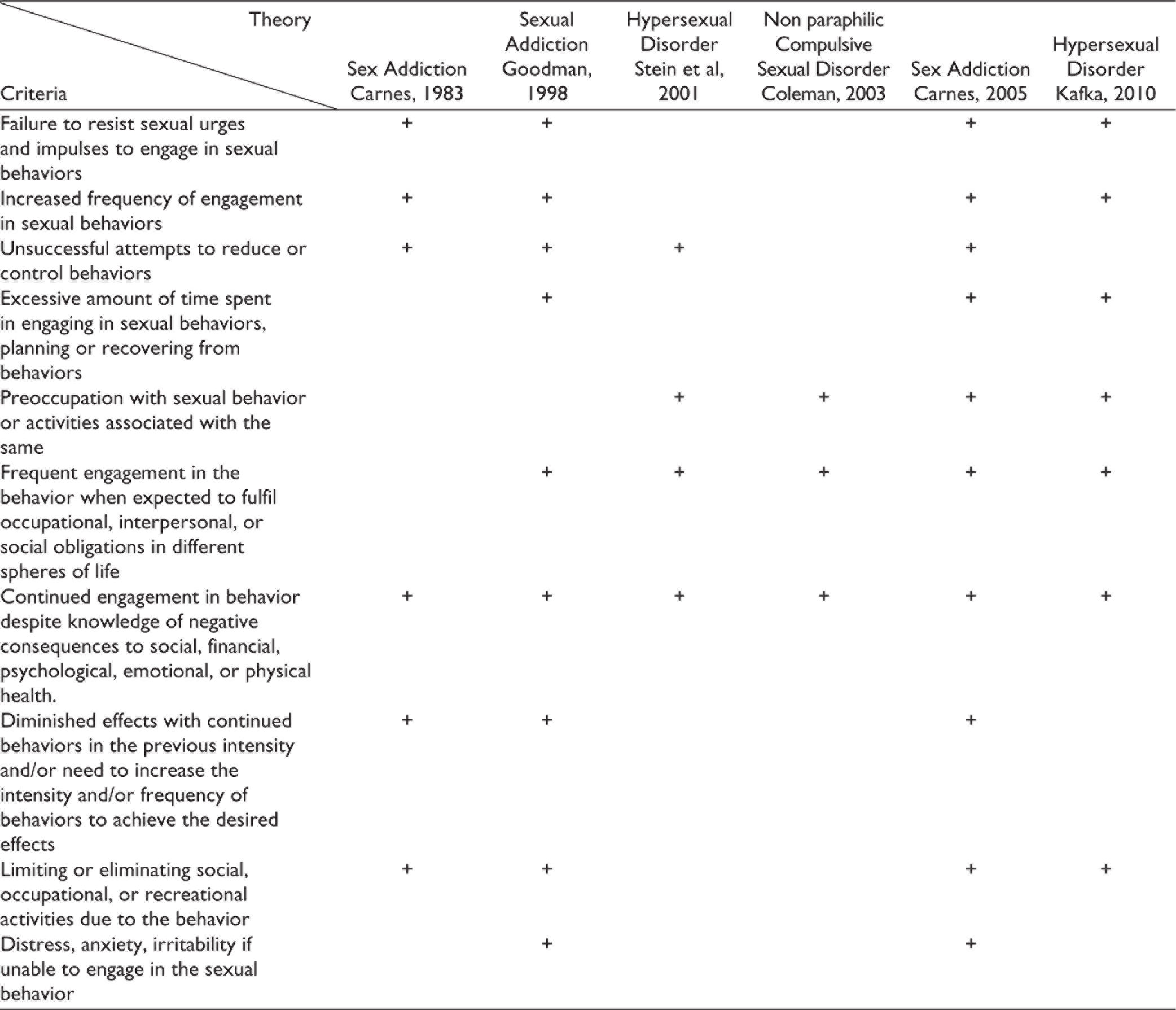
The status of sex and pornography addictions as addictive disorders has been contested in literature over several years. The Diagnostic and Statistical Manual (DSM), 3rd Revised Edition included a category called “Non paraphilic sexual addiction.” Various authors have proposed different schools of thought within which sex and pornography addictions can be included—compulsive, 7 addictive, 11 impulsive, 12 and hypersexual behavior. 13 Some of the theories and models to explain excessive sexual behaviors and problematic use of online pornography have been enlisted in Table 1.
Theories of Sex and Pornography Addiction
With the inclusion of gambling disorder in the chapter on substance use, the modification of the chapter on addictions from “Substance-Related Disorders” in the previous edition to “Substance-Related and Addictive Disorders” and the addition of Internet gaming disorder as a condition for further study, the DSM-5 appears to be based on the developing understanding of the addiction model of behavioral addictions. There are various shared characteristics of behavioral addictions with other addictions, such as tolerance, loss of control, and salience, among others. During the field trials for the development of the DSM-5, problematic pornography use emerged as the most common form of hypersexual behavior. 13 However, due to the need for more research, excessive sexual behavior and pornography use were ultimately not included in the DSM-5. 14
Non-substance related behaviors were not listed in the International Classification of Diseases 10th edition (ICD-10). However, some authors conceptualize the conditions of excessive sexual behavior and problematic use of internet pornography under impulse control disorders or compulsive disorders. Due to the growing knowledge on the impact of compulsive sexual behavior (CSB) on global public health, the Work Group recommended that the ICD-11 includes CSB disorder under “Impulse control disorders”. 15 This inclusion could be the first step towards recognizing the clinical utility and expanding the knowledge on it.
There are pointers towards the rationale of assuming sex and pornography use under the constructs of impulse control and obsessive-compulsive phenomena. 16 However, in contrast to sexual behavior, OCD does not involve a reward. 16 Furthermore, while engaging in compulsions may provide some respite in people with OCD, 8 pornography consumption and hypersexual behaviors is often associated with shame, guilt, and regret. 12 Authors refer to “compulsive sexual behavior” as a disorder characterized by repetitive intrusive and distressing sexual thoughts, urges, and behaviors that negatively impact many aspects of their lives. However, the literature available demonstrates substantial heterogeneity within the disorder, and with the information we have now, there are limited treatment implications of CSB. 17 We may need more research to define the limits and categorization of CSB. Moreover, gaps exist in our knowledge on the relationship between CSB and addictive behaviors. 18
Search Strategy
With the absence of enough literature in this field, we decided to go for a descriptive review. The search terms used were “neurobiology,” “biology,” “biological psychiatry,” “pathogenesis,” “pornography,” “porn,” “porn addiction,” “sex,” “sex addiction,” and “compulsive sexual behavior.” These were used in various combinations in Google Scholar, PSYCHINFO, PubMed, and SCOPUS to yield the search results. Since we aimed at a narrative review, an overinclusive search was conducted. All original studies, treatment trials, and case series/reports that have highlighted neurobiological mechanisms in sex/porn addiction or their pathogenesis or neurobiology-based interventions were included for the review. The search was conducted in March 2022 independently by the authors and then collated. The results are subsequently organized and presented as relevant sections.
Neurobiology of Addiction
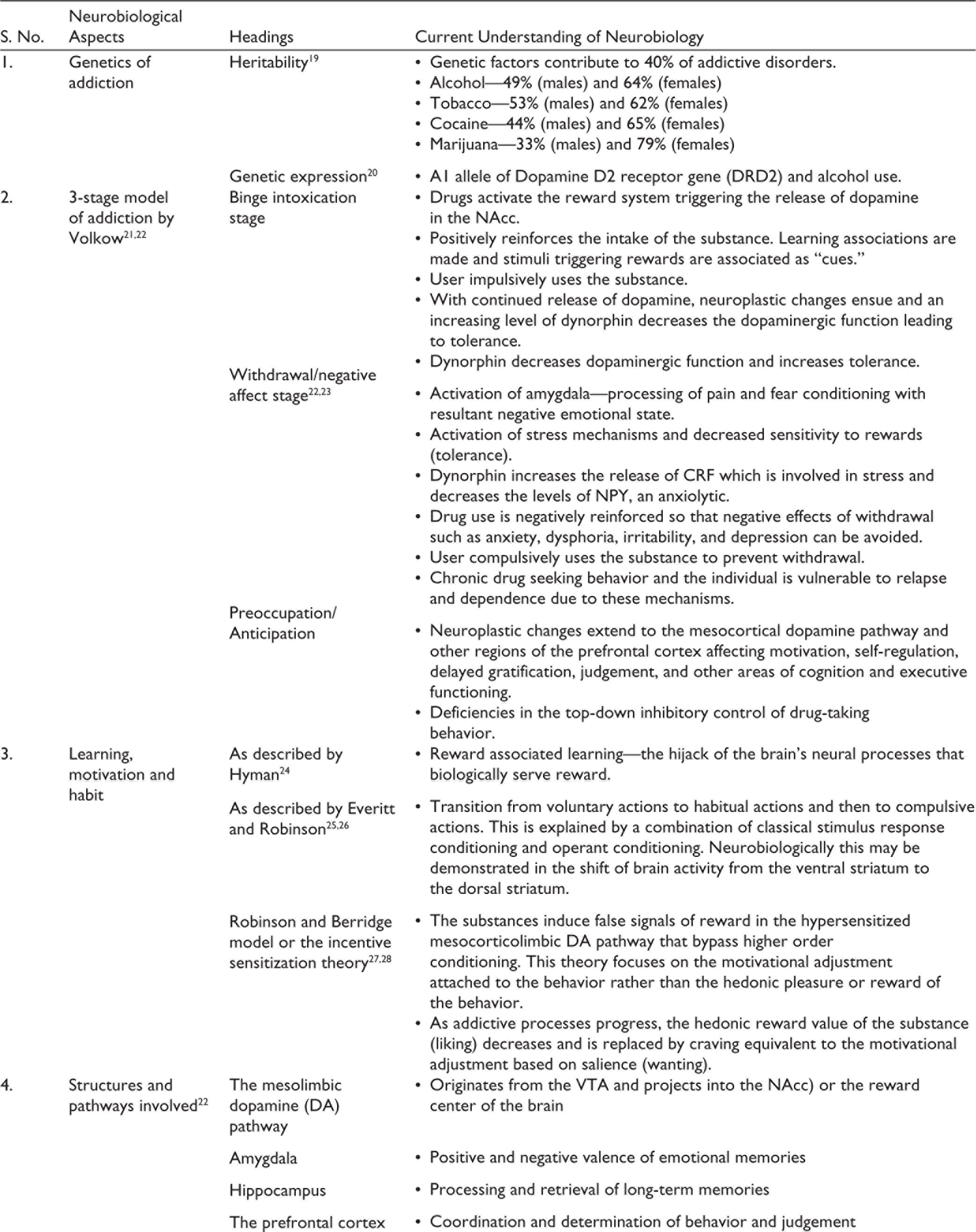
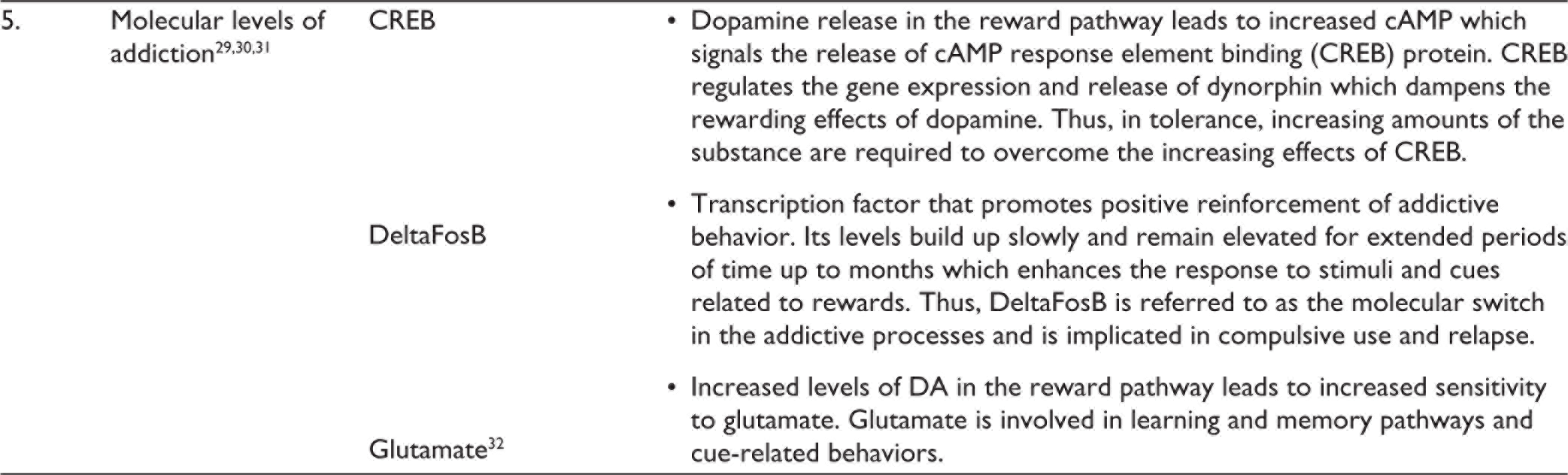
Before we delve into the neurobiological basis of sex and pornography addictions, Table 2 provides an overview of the addiction models and neurobiological processes described for substance use.
Current Understanding of the Neurobiology of Addiction
Neurobiological Correlates of Sex/Pornography Addiction
Behavioral Addictions
Contrary to the earlier notion that addiction is a type of dependency on drugs or chemicals, there is an abundance of literature that now suggests that any experience or behavior that is capable of stimulating an individual may have the potential to be addictive. 33 These can refer to a range of behaviors such as eating, gambling, video gaming, exercise, watching television, and sexual practices among others. The American Society of Addiction Medicine defines addictive behaviors in their long definition of addiction as “behaviors that are commonly rewarding and are a feature in many cases of addiction.” Exposure to these behaviors, just as occurs with exposure to rewarding drugs, is facilitative of the addiction process rather than causative of addiction.
There are obvious differences between behavioral addictions and substance addictions since in the former the individual is addicted to the feeling or consequence of an action and the physical signs of drug addiction are typically absent. But more importantly, there appears to be a shared neurobiological ground between substance use and behavioral addiction leading to significant overlap between these entities.
Phenomenologically, individuals affected with behavioral addictions exhibit a problematic consumption model involving impaired control (e.g., craving, unsuccessful attempts to reduce the behavior), impairment (e.g., narrowing of interests, neglect of other areas of life), and risky use (persisting intake despite awareness of damaging psychological effects).34, 35
Sex and Pornography Addictions
Koob and Le Moal defined “Non drug addictions” 36 wherein the stages underlying the addictive processes described for substances could extend to compulsive gambling, compulsive shopping, compulsive eating, compulsive exercise, and CSB.
Natural rewards like sexual activity may induce neural plasticity in addiction-related circuitry much like substances do. Dopamine levels play an important role in sexual reward processing, as is evident in the adverse effects of prodopaminergic agents used to treat Parkinson’s disease and the symptoms of frontotemporal dementia linked with sexual behavior. 37
Sensitization
Researchers have found functional magnetic resonance imaging (fMRI) evidence of activation of the same circuitry in cocaine users when they were shown drug-related visual images and subsequently erotic images. 38 The addictive processes and neuroplastic changes underlying sexual stimuli may be amplified by the increased novelty and availability of graphic imagery online. 39 Thus, online pornography may serve as a “supranormal stimulus” 40 that may override evolutionarily developed reward systems rendering one’s own sexual fantasy or experience pale in comparison. There may be an added component of tolerance similar to substance addiction due to which the individual progresses to more explicit and graphic pornography to maintain the rewarding effects of the behavior. The first fMRI study on internet pornography addiction reported that compulsive users when compared with controls reported higher desire rating to the sexually explicit videos shown but not the erotic clips. Moreover, the patient group reported higher scores on the liking rating to the erotic content shown but not to the explicit cues. Thus, this demonstrated the dissonance between liking and wanting when watching sexually explicit content online. 41 Dopamine, the major neurotransmitter in reward, largely mediates appetitive pleasures and plays a crucial role in want and motivation.
Another study using fMRI techniques reported neural reactivity towards visual sexual stimuli clips in the nucleus accumbens (NAcc), caudate nucleus, and orbitofrontal cortex in the male subjects studied. Moreover, the strength of the association between neural activity and sexual arousal ratings positively correlated with self-reported symptoms of POPU. 42
An investigation aimed at disentangling cue-related “wanting” from reward-related “liking” among 28 heterosexual males seeking treatment for POPU and 24 controls found fMRI evidence suggestive of POPU subjects having increased activation of ventral striatum for cues predicting erotic images but not cues predicting monetary gains which is a finding similar to the cue anticipating behavior demonstrated in substance addictions and gambling disorder. 43 A similar study reported increased amygdala activity during appetitive conditioning for the neutral stimulus that predicted visual sexual stimuli over a second stimulus which did not. The authors also observed decreased coupling between the ventral striatum and prefrontal cortex in the patients with CSB which was not observed in controls. 44
Desensitization
In the early stages of addiction, the attentional bias to sexual cues is predominant. 45 Electroencephalogram (EEG) studies in pornography users demonstrated a diminished desire for sex with a partner but not for masturbation to pornography. 21 However, repeated exposure leads to a downregulation of reward systems and resultant desensitization.46, 47 The dorsal cingulate plays an important role in the development of habituation to previous stimuli. MRI studies have also explored hours of online viewing with dorsal striatal structure and connectivity in patients with CSB. One study reported that longer duration and more hours per week of use correlated with lower grey matter volume in the right caudate and lower left putamen activity in response to brief, still sexual images which the authors suggested reflect the tolerance due to desensitization. 48 Another fMRI study also emphasized the specific brain responses in the ventral striatum (associated with reward anticipation) to the presentation of preferred pornographic pictures compared to the non-preferred pornographic pictures. 49 Moreover, this study found a relationship between striatal activity and self-reported symptoms of internet pornography addiction.
Hypofrontality
In patients with POPU, there exist neurobiological evidence to suggest a decline in frontal lobe functioning and metabolism along with reduced functional connectivity between amygdala and ventral striatum with the prefrontal cortex.44, 50, 51 This hypo-frontality may explain the inability to control sexual behavior in these patients. Moreover, cue-reactivity,52–54 impulsivity,55, 56 poor decision making,54, 57 interference with working memory, 58 preoccupation with sex, 54 and impairment of the ability to shift the focus from sexual or explicit stimuli 59 have been demonstrated in those affected.
Diffusion Tensor Imaging studies have reported disorders of impulse control to be associated with inferior frontal white matter disorganization evidenced by low fractional anisotrophy (FA) and high mean diffusivity (MD) in these regions. However one study on patients meeting criteria for CSB found no differences between patients and controls in FA and MD in the inferior frontal region. 55
A more recent study that studied prefrontal and limbic volumes in patients with CSB 60 reported that CSB was associated with increased limbic volume on structural MRIs and linked that with motivational salience and emotional processing. Moreover, this study demonstrated reduced functional connectivity between the prefrontal regulatory control in CSB group compared to healthy volunteers.
Neuropsychology
Several studies report an interference of the processing of sexual cues and sexual arousal with executive functioning. Studies using choice reaction time task, 61 rapid target perception, 62 and dot detection tasks 63 reported deficits in visual processing caused by bound attention due to erotic stimuli. A study using modified Iowa Gambling Task that included pornographic images reported that sexual arousal can interfere with feedback processing and decision making. 64 Sexual arousal has also shown to be associated with poorer performance in working memory and task switching.58, 65 Moreover, studies have reported impairments in the ability to inhibit response to stimuli using go-no go tests. 66 One study that employed EEG modalities while the participants performed Tower of Hanoi and Wisconsin Card Sorting Test while showing them neutral and erotic videos showed differential prefrontal coupling and functional adaptations during task performance in the erotic video condition, which did not interfere with overall task performance. 67 One study showed that patients who met the criteria for CSB showed significantly more impulsivity in a behavioral task go-no go procedure which correlated with their self-report measures of impulsivity. 55
A visual probe task was employed in a study to investigate the attentional biases and cue reactivity in internet pornography users. This study reported a gender-independent relationship between the attentional bias and symptom severity of internet pornography use measured using the Internet sex addiction test. 68
Neurophysiology
Studies report an increased P300 amplitude to visual sexual cues when compared to neutral stimuli in addicts. 69 EEG studies comparing the late positive potential amplitude while viewing sexual images and neutral images showed an increased amplitude for both users and controls for the sexual images; however, the increase was smaller for the user group, which may be explained by habituation in the users. Greater ERP amplitudes were seen in response to addiction cues over neutral cues. 70
Stress Mechanisms and Withdrawal
As has been described in the pathology of addiction due to substances, in sex and pornography addictions too there can be craving and withdrawal symptoms such as anxiety, irritability, insomnia, fatigue, and low mood due to malfunctioning stress systems. 71 These patients have also been shown to have a dys-functional stress response mediated through the hypothalamus-pituitary-adrenal axis mirroring the alterations in substance addicts. There is also evidence of higher tumor necrosis factor (TNF) in people with sexual addiction, with a strong correlation between TNF levels and scores in hypersexuality rating scales.72, 73
Genetics
Similar to compulsive gambling, the Taq1A1 allele of the DRD2 gene and homozygosity of the short allelic variant of the 5-HTTLPR gene have been associated with problematic use of the internet and possibly online pornography use.74, 75 Carnes (1997) conducted a study of over 1,000 individuals with sex addiction and the results showed that 25%-45% of the study participants had first degree relatives who had a history of significant alcohol use.
Molecular Underpinnings
A large chunk of the existing literature pointing towards a neurobiological basis for CSB involves DeltaFosB. Animal studies from Syria show an association between hamsters treated to overproduce DeltaFosB and sensitivity to sexual activity.76, 77 Studies have also found elevated levels of this transcription factor in the NAcc of rats after repeated sexual behaviors when compared with controls. 78 DeltaFosB may also be critical in reinforcing the properties of sexual reward and the risk of relapse. 29
Neuroplastic Changes in Sex and Pornography Addictions
DeltasFosB is a molecular transcription switch that mediates neuroplastic changes in neurons. It has been shown to increase dendritic spine density in medium spiny neurons in the NAcc of addicted animals through stimulation of the protein Cdk5 and the Calcium/Calmodulin dependent Protein Kinase II.79–81 This dendritic plasticity through its effects on the mesolimbic reward system is affected in both sexual and drug-related rewards and also in learning and motivation. This neuroplasticity at the cellular level is seen as dendritic arborization and the formation of new synapses in studies on cocaine, amphetamine, and sex.29, 82 In addition, there is also evidence to suggest an alteration in the NMDA-AMPA receptor ratio in addiction processes which also plays a role in synaptic plasticity and learning particularly in the prefrontal cortex and the NAcc.29, 83 Macroscopically these changes may be observed as gyral sculpting. 84
One study involving long-term pornography users found that compulsive porn users reacted to porn cues in the same way that drug users reacted to drug cues. Compulsive users craved porn but did not have higher sexual desire than controls. Over 50% of the subjects with an average age of 25 years had difficulties achieving erections with their partners but did not have these difficulties with pornographic stimuli. 41
The term “Coolidge effect” or habituation describes a phenomenon seen in mammalian species wherein male and female mammals exhibit continuous high sexual performance with the introduction of new receptive partners. Animal studies have shown that while the subject may tire of the intercourse, they get excited at the prospect of a novel stimulus which have been correlated with the levels of dopamine in their brains. The primitive brain is thus primed for novelty which can be found in the infinite artificial scenarios in pornography. Endless sexual novelty and a pathological pursuit leads to violation of expectations and the affective response to anticipating different and newer varieties of pornographic content act as supranormal stimulus for the brain. This hijack of the reward pathways and the imbalance of sensitization and desensitization can overwhelm the brain’s circuitry.
Conclusion: Future Directions
Neurobiological studies have provided us insights into the involvement of addiction-related brain circuits, including the ventral striatum and other parts of frontostriatal loops, in the development and maintenance of sexual behaviors and problematic pornography use. Future studies can be aimed at investigating the effects of hypersexual behavior and pornography longitudinally. Moreover, there is a need to gather evidence to define clear thresholds for the behavior to be classified as a disorder as well as clinical and laboratory biomarkers for early detection and prognostication. Multimodal techniques such as imaging, genetics, neuropsychological, neurophysiological, and biochemical parameters can further elucidate the complex biological intersections that lead to the genesis of sex and pornography addictions. The internet has only complicated the entity of sex addiction and obscured the lines between these behaviors. Future studies can aid in providing the much-needed clarity and specificity in the diagnoses of internet sex addiction, sex addiction, and other behavioral addictions such as internet addiction. Qualitative frameworks to explore the experiences of patients may be beneficial in the assessment of motivations and psychological aspects. Moreover, cross-cultural comparisons need to be conducted to compare their prevalence epidemiologically and assess the experience on an individual and cultural level. Systematic studies and randomized controlled clinical trials on the efficacy of preventive methods and treatment strategies in these disorders are also warranted to explore the enigma of sex and pornography addictions.
Footnotes
Declaration of Conflicting Interests
The authors declared no potential conflicts of interest with respect to the research, authorship, and/or publication of this article.
Funding
The authors received no financial support for the research, authorship, and/or publication of this article.
Ethical Approval
Not applicable.
Informed Consent
Not applicable.