




Abstract
Adolescence is a period of transition from childhood to adulthood, during which the individual undergoes significant biological, psychological, and social changes. The development of sexuality, though begins at conception, gets shaped during this period. The changes occurring differ in males and females not just in terms of biopsychosocial organization but sexual behavior and functioning as well. Adolescent sexuality is although highly acknowledged but is quite complex and needs in-depth understanding. Challenges faced by adolescents include being vulnerable to risky sexual behaviors, unprotected sex, nonconsensual sexual interactions, sexually transmitted infections, stigmatization from society, and so on. In developing countries such as India, adolescents deal with additional challenges with higher risk associated with early marriages, unplanned pregnancies, sexual abuse, patriarchy, and insufficient information regarding sexual behavior and risks. This article is an attempt to review the nuances of adolescent sexuality, particularly in developing countries, to ensure appropriate culturally sensitive yet scientifically sound intervention programs.
Introduction
Adolescence is a critical stage in the human developmental process. It is a period of transition during which an individual undergoes physical, hormonal, and psychological changes. Humans develop formal operational thought processes, abstract thinking, learn to envision consequences of one’s actions, a sense of identity, social involvement, peer interaction, and an awareness of one’s sexuality in this stage. 1 Sexuality cannot be defined purely based on the biological changes an individual undergoes. It is a lifelong process that includes various domains of experience such as emotions, urges, motivation, feelings, forms of attention, aspects of self, biological processes, moral precepts, interpersonal relationships, and social interactions. In this article, we aim to highlight the various aspects of adolescent sexuality including development, gender differences, common sexual behaviors in adolescents, the role that culture, parents, and educators could play, as well as challenges youth face concerning sexuality.
Development of Sexuality in Adolescents
The development of sexuality starts as early as in the womb and continues throughout the lifespan. Adolescence plays a vital role in determining one’s sexuality as it brings profound alteration to hormonal, anatomic, and neuropsychological substrates of sexuality and the interpersonal, familial, and social significance of these changes. 2 The biopsychosocial theory of adolescent sexual development explains the multifaceted growth of the individual during adolescence. Biological changes that determine biological sex also affect psychological sex. Hormonal changes play a significant role in causing the onset of puberty; the secondary sexual characteristics are expressed during this critical period. Psychological factors such as personality or temperament determine the attitude of the individual toward one’s sexuality. Literature suggests that introverts are found to have more difficulty than others in sexual expression. 1 Parenting styles, parental attitude toward sexuality, family environment, peer relationships, and the influence of culture and community are the social substrates that influence the development of an individual’s sexuality.
Freud’s psychosexual development theory explains the genital stage, in which the individual indulges in experimentation to discover one’s sexuality. It is characterized as a transition from self-directed pleasure as in the phallic stage, directed toward heterosexual pleasure. He states that the sexual instinct, which remains quiescent during the latency stage, becomes active in the genital stage. According to him, this need for heterosexual pleasure increases and continues into adulthood. 3
In today’s era of digitalization and globalization, the online platforms provide an important source of sexual behavior modelling. Adolescents may suffer from internalizing ideal standards from inappropriate body image depiction and overambitious sexual activity demonstration, thus resulting in poor self-esteem and socially unacceptable channels of sexual expression and needs. This can thus contribute to appropriate social and sexual withdrawal in anticipation of perceived preformed and unattainable ideal standards, resulting in a vicious cycle.
Understanding Sexuality Through Developmental Lens
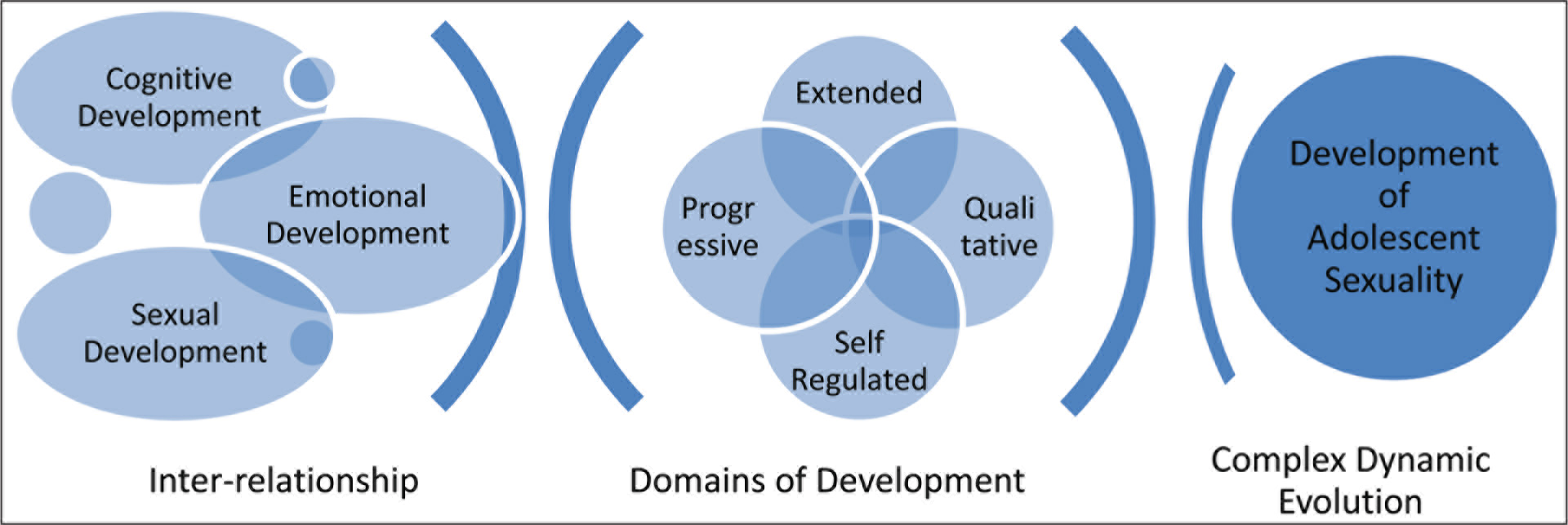
At the basic level of anatomy and physiology, the transition to adolescence occurs when children sexually mature and become capable of reproduction. After a series of early stages of sexual development in childhood, this maturity emerges. However, development beyond childhood is completely different. There are no generally achieved biological or psychological milestones during the teen years, and no scientific or psychological evidence that differentiates a state of maturity as teenagers progress through development into their 20s. Adolescent sexuality development can be seen of as a long-term shift that is self-regulated, qualitative, and progressive rather than simply induced by the environment.
The importance of the interplay between sexual, cognitive, and emotional development is stressed here. The era of curiosity and experimenting is commonly referred to as adolescence. Youth of this age lack the cognitive and emotional development required to make intelligent and healthy sexual decisions, as well as the ability to cope with the consequences of sexual engagement. This is especially terrible because today’s teenagers are sexually active earlier than prior generations. Such experiences, on the other hand, set the groundwork for further romantic and sexual encounters.
Gender Differences
Larsson stated that “what we term healthy and natural sexuality is formed from the society that we live in and depends on our gender.” As this quote indicates, children learn about sexuality through a gendered lens.4,5 Gender is a significant feature of our social environment and is the most visible subdivision within our species. Children use this rather dramatic, categorical way of social grouping to ascribe meaning to their social behavior. Similarly, they learn that sexual behavior is gendered.
The sociological and cultural environment heavily influences sexuality in all of its forms. Despite historical shifts in perceptions of gender roles and expectations, recent research suggests that men and women have different sexual ideals. This hypocritical standard dictates strict expression and experiential norms for women, whereas men are given more freedom in exploring their sexuality in adolescence. Also, the discouragement from peers to have sex is seen highly in females, whereas males face peer pressure to carry out sexual behaviors earlier than females. 5
Gender differences have been seen in the emotions linked with sexual engagement. Boys reported feeling more proud after sex, while female said they felt “dirty” and ashamed. The sexual double standard in the perception of virginity is also highlighted, with women viewing their virginity as a gift to give to a cherished spouse, while more males saw it as a stigma and a lack of sexual opportunities. 5
Objectification occurs in social and cultural frameworks as well as by potential romantic and sexual partners. Sexualized images of women and girls are prevalent in mainstream media and are linked to sexual behavior outcomes. 6 Studies have shown that objectification is associated with increased body dissatisfaction and higher rates of depression among girls with more advanced puberty, and those who are involved in romantic relationships. 6
Considering the sexual behavior among adolescents, boys are generally expected to be more expressive and take proactive roles whereas girls adopt a reactive role in setting the boundaries of sexual interactions. Partnered sexual behaviors gradually become prominent during mid- and late adolescence. Changes in the testosterone levels during early adolescence determine the timing of sexual initiation in males, and increased sexual interest and sexual activity in females. Boys and girls who matured later were slower to report dating and to have sexual intercourse.2,5
Masturbation is one of the most prevalent sexual behaviors in adolescence. Masturbation is more common among male adolescents as compared to females and it persists across the lifespan. 7 Imaging studies show that the cortical subsystems associated with visuospatial perception are more advanced in male adolescents, and are associated with functional polymorphisms in the androgen-receptor gene. This explains the substantial gender difference during adolescence and throughout the sexual life span. 8
Sexual Behaviors and Functioning
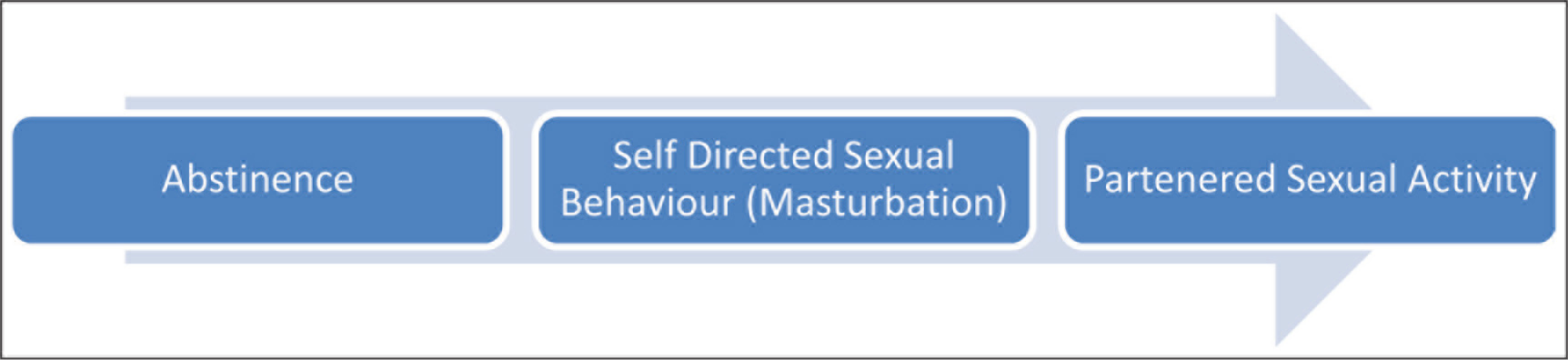
The development of adolescent sexuality consists of 4 domains of the sexual response cycle-sexual desire, sexual arousal, sexual behaviors, and sexual functioning. Sexual behaviors include abstinence, masturbation, and partnered sex.
Abstinence in adolescence is described as refraining from oral, vaginal, or anal partnered sexual behaviors. The view of abstinence among adolescents is distinctive from that among younger children, which is influenced by their developmental experiences in the sociocultural context. The emergence of sexual cognitions, conscious sexual identities, motivations, and desires are hormonally mediated in association with adrenarche and pubarche. 9 Studies have shown that young adolescents consider abstinence as part of a continuum, in which it is considered as a standard to be developmentally ready to make a transition from sexual abstinence to active sexual interactions.
Masturbation is the second-most prevalent adolescent sexual behavior. Though it is widely subjected to stigma and societal condemnation, the medical field holds it to be developmentally normal behavior. 2 The age of onset of masturbation is not well defined in the literature. Retrospective studies stipulate it to be 13 years for men and 15 years for women. 10 Masturbation is associated with other adolescent sexual behaviors. It may provide a means of gaining familiarity and comfort with one’s sexual responses and genitals. Young women who engage in masturbation and noncoital orgasm exhibit high levels of sexual self-awareness, higher effectiveness in attaining sexual satisfaction, and resistance to the sexual double standard.
Partnered sexual behavior includes kissing, touching erotogenic body parts, partner-assisted masturbation, cunnilingus, fellatio, penile-vaginal intercourse, and penile-anal intercourse. Another contemporary behavior that is included in this repertoire is sexual exchange via electronic media, generally known as phone sex or sexting. 7 The essential element of partnered sex is its dyadic nature. This defines the adolescent’s perspectives on social attitudes, motivations, and outcomes of their sexual relations. Partnered, noncoital sexual behaviors comprise the majority of the adolescents’ sexual experience. It does serve as an experiential framework for their first-ever coitus and determine risky sexual interaction with their partners.
The sexual functioning of the individuals can be determined by their subjective experiences during sexual interactions. Pleasure is considered an important motivation for sexual encounters. Studies have suggested that men place more emphasis on pleasure during sex as compared to women. 11 Also, the usage of barrier contraceptives like male and female condoms are perceived to have detrimental effects on sexual activity by many adolescents. Orgasm is the physical and emotional sensation experienced at the height of sexual arousal, typically as a result of sexual organ stimulation. There is a paucity of research on the physiological and psychological correlates of orgasm in teenagers younger than 18 years old. Women experience their first orgasm on average at 15 years of age, while men experience theirs at 13 years. The ability of adolescents to experience orgasms is influenced by traits such as autonomy, general self-esteem, and empathy. 11 Pain, which is connected with the initial penile-vaginal encounter among women, is another crucial feature of subjective experience in partnered sex. Nonetheless, this pain may endure throughout the entirety of a person’s sexual life. Despite the agony, young women continue to engage in sexual activity for a variety of reasons, including being attentive to their partners’ needs and sex as an expression of their femininity.
Sexuality and Sexual-Minority Youth
Sex and gender are two different concepts of one’s sexuality. Sex is determined at the time of birth, whereas gender is how an individual perceives oneself as a sexual being. Some people may not find congruency between these two. Adolescence is a developmental stage during which individual experiments and discovers about self. There is no definitive way suggested in researches that whether same-sex interests and activities in adolescence will or will not persist into adulthood. Hence, the same-sex sexuality is often discounted as insignificant, transitional, and rather just experimental. An undeniable fact is that these youth face various challenges in society for their interests and orientation, as it puts them outside the framework of conventional cultural and social norms on sexuality. They become targets of multiple personal and social scrutiny such as self-victimization, criticism by others, harassment, victimization, stigmatization, lack of public support, and acknowledgement. 12 Sexual minority individuals experience fear of disclosure, shame, guilt, and acceptance of self, while heterosexual individuals experience feelings that indicated acceptance of society.
Sexual health among sexual minority youth is a matter of concern as they lack proper sexuality education, are poorly supported by society, are known to have sexual risk behaviors, and are subject to various negative psychosocial outcomes such as bullying, dating violence, sexual harassment, and mental health concerns like suicide and unprotected sex. 13 It was found that men who have sex with men have a high risk of contracting sexually transmitted infections, substance use, and various mental health issues. Bisexual and homosexual women were more vulnerable to unplanned pregnancies, screening for human papillomavirus, and other infections like genital herpes and bacterial vaginosis.
Culture and Sexuality in Adolescence
Humans being social beings, from the dawn of civilization, have formed and revised a set of norms appropriate to the time and region to abide by for smoother functioning of the society. Culture plays a vital role in an individual’s holistic development. Today, the world is a hub of diverse cultures and they continue to influence us in different areas of our lives, including adolescent sexuality. However, certain attitudes toward sexuality were universal in youth like hygiene and general behavior of the sexual partner were significant factors, use of condoms was considered to be stigmatizing and a sign of lack of trust, penalties and rewards for sex, gender stereotypes determined social expectations which had a detrimental effect on behavior, and communication about sex were some of the common themes found across almost all the cultures. 14
Studies comparing the sexual development of adolescents in collectivist and individualistic societies have revealed disparities in adolescent sexual development. Youth who were raised in collectivist societies as compared to those from individualistic cultures were more conforming and sensitive toward social as well as sexual norms, thus being more conservative about sexual decision-making. Regardless, the ethnic minority in most parts of the world faces similar challenges as the target of social discrimination and at risk of negative sexual health outcomes like early sexual initiation, unprotected intercourse, unplanned pregnancies, and infections. 13
Role of Family and Parents
The parents and family play a significant role in the development of sexuality in the individual. Social sexualization begins as early as late childhood and continues through adolescence, which involves parents, siblings, peers, and significant other adults. Parents are the primary source of information for any child to gain knowledge about sexuality. Some of the components of family sexual culture are gender attitudes, words for genitals, exposure to adult nudity, parents’ dating and sexual behaviors, conversation about sex and reproduction in the family, and norms for a dyadic relationship, which influence adolescent’s knowledge of sexuality. 13 In most conservative societies, the concept of sexuality is not well discussed within the family. Parents hesitate to provide proper sex education to their children for various reasons. It might be due to lack of education in the parents, parent-child relationship, parental negative attitude toward sexuality, anxiety about the safety of their children, or the feelings of awkwardness to discuss sex with their kids. The child-parent relationship is an important aspect that affects the adolescent’s attitude toward sexuality. Studies suggest that youth who have a weak interpersonal relationship and poor hierarchy in the family tend to exhibit a bad attitude toward sexuality. 15 And those who reported having at least 1 parent as warm and supportive were found to delay the onset of sexual intercourse and indulge in sexual activities less frequently.
Role of Peers and Friends
If parents discourage adolescents from engaging in impulsive sexual behavior, it is believed that classmates and friends will have a paradoxical effect. Parents feel that the majority of sexuality related knowledge acquired by adolescents comes from their peers. 15 Peers influence adolescents’ sexuality and sexual behavior by providing either conventional or deviant lifestyle models, by providing models for sexual attitudes and behaviors, by serving as sources of information and sources of social approval and disapproval for certain attitudes and behaviors, and by providing sexual and potential partners. 15 However, for better or worse, gathering sources from the environment is very important. And peers serve as the best source in that way to help adolescents discover themselves as sexual beings.
Role of Educators
Parents are undeniably the primary and significant source of acquiring knowledge about sexuality. But for adolescents, they may not serve as providers of certain factual information and social skills concerning sex education. The role of both parents and educators in sex education influences adolescent behavior, and parents and adolescents’ preferences. Because, during adolescence, the individuals begin to create a new self-identity, build role models, and social values by turning more toward the society rather than the parents. Parents who do not share a cordial relationship or those who have reservations about the concept of sexuality fail to provide sufficient information to the adolescents. Hence, educators need to provide factual and sufficient information, create a supportive environment for the adolescents to express and sort their concerns about sexuality, keeping in mind the social, familial, and religious sensitivities. 15
Adolescent Sexuality in Indian Scenario
Adolescents comprise around 18% of the world population, out of which approximately 88% live in developing countries. India has the largest adolescent population in the world with more than 50% of them living in urban areas. These statistics highlight the significance and relevance of catering to various health needs of this population. 16
India is a collectivistic, conservative society with limitations in freedom to express and experience sexuality in open, or before marriage. With emerging globalization and Western trends, Indian youth are exploring the new options and opportunities in front of them. As adolescence is vulnerable to several health-related concerns, it is important to plan and address their needs. Due to lack of awareness and unpreparedness among health-care professionals and the public, the sexual and reproductive health needs of adolescents are either overlooked or not completely understood in India.16,17
Challenges Faced
Sexuality is seen as a domain that requires maturity to experience and to express, which is assumed to be the characteristic of adulthood. Hence, adolescent sexuality is considered innately dangerous, experimental, and inept.1,2 Aspects such as time of sexual onset, related substance use, contraceptive measures, sexually transmitted infections, unwanted pregnancy in adolescence are in the focus, subsequent to their impact on the global economy, social constructs, cultural norms, and health policies.
Teenagers who are in their early and middle adolescence are generally impulsive and sensitive to social pressure. They tend to have minimal knowledge about sexual interactions and lack confidence and assertiveness in their sexual encounters. 12 Hence, researchers suggest that they are vulnerable to potential risks such as condomless sex, nonconsensual sexual experience, sexually transmitted infections, teenage pregnancy, and multiple sexual partners.
Key Recommendations:
To include psychologists/counsellors/mental health professionals for sexuality education, in addiction to teachers. Create avenues like anonymous platforms for open discussion about sexuality involving parents, teachers, and adolescents. Addressing current gaps in interventions by generating appropriate trained volunteers to support peer-led culturally sensitive interventions.
Conclusion and Future Directions
The development of sexuality begins at conception and is shaped throughout adolescence, not just in terms of biopsychosocial organization, but sexual behavior and functioning as well. Parents act as primary providers of information, but often adolescents rely on peers, media, and educators for factual and necessary information on sexuality. Irrespective of the culture, girls are more restricted about sexuality than boys and sexual minority youth face additional problems around disclosure, associated with guilt and reluctance to accept their sexuality.
In developing countries such as India, challenges for adolescents increase with higher risk associated with early marriages, unplanned pregnancies, sexual abuse, and insufficient information regarding sexual behavior and risks. Parents, teachers, health-care providers, and the general public has a greater responsibility to cater to the needs of adolescent sexual health, as they occupy 18% of the world population. Flexible, religious, and culturally sensitive yet scientifically sound developmentally informed programs are the need of the hour to educate the youth about sexuality.
Footnotes
Declaration of Conflicting Interests
The authors declared no potential conflicts of interest with respect to the research, authorship, and/or publication of this article.
Funding
The authors received no financial support for the research, authorship, and/or publication of this article.