




Abstract
Sexual relations suffered from a drastic change because of the pandemic of the COVID-19 and its controlling measures. We performed a bibliometric review of articles conducted on sexual behavior through this COVID-19 pandemic. We performed a search in the Scopus database on August 14, 2021. The search was carried out by the mentioned search terms: “sex* act*” OR “Sex* Behav*” AND “COVID-19.” A total of 230 published articles was identified in the Scopus database, out of which 130 research works were funded and 23.91% (n = 55) articles had international collaborations. R Stephenson published the highest number of papers (n = 4) whilst SK Kar had the maximum number of citations (n = 39) and the highest number of citations per article (13). Universidade de São Paulo and the University of California were the most productive organizations whilst the USA outnumbered the other countries. Sexually Transmitted Infections (n = 13) and Elsevier (61) published the highest number of papers as a journal and publisher, respectively. It is the first bibliometric review on studies that assessed impact of the COVID-19 pandemic on human sexual activities during which identified that more than half of the articles were funded which is a promising sign for the researchers from this field and for those who are keen to work in this field.
Introduction
The pandemic of COVID-19 has drastically affected people’s social interactions across the globe, due to the imposed restrictions for controlling as well as the fear of transmission of the virus. It created a great panic among the people and the government responded in form of partial or complete lockdown in order to decrease the risk of transmission. For the people staying at home during this lockdown period, it has impacted every aspect of daily life including sexual life. Although the effect of COVID-19 on human sexuality is a complex interaction, sexual relations suffered from a drastic change because of this COVID-19 pandemic and minimized physical contact between couples. 1 The pandemic has not only impacted negatively in terms of emotional changes but also sexual relationships. 2 Reasons which affected sexual relations between cohabitants during COVID-19 are the presence of child(ren) in the same living arrangement continuously as the schools are closed, trouble in finding intimacy, and psychological factors such as definite emotional states that may hinder sexual desire mostly depressive and anxiety disorders.3-5 And for others who have a steady relationship but living apart, having a strong desire for others cannot be satisfied due to the physical distance and the restrictions imposed by the government. 2 According to a study conducted in the 3 countries of South Asia (Bangladesh, India, and Nepal), 45% of the respondents stated that their sex life has been impacted due to lockdown and 72.5% mentioned having sex for 1 to 5 times a week which is a raise of 3.3% sexual acts when contrasted with times prior to the pandemic. 3 Another study reported that 39.9% are sexually active as they were engaging in sexual activity at least once a week and the prevalence of sexual activity increased from 33.5% among people who were isolated for 0 to 5 days to 47% in those who isolated for more than 11 days. 6
Social isolation and the fear of contracting the SARS-CoV-2 virus had a negative impact on the physical and psychological health of individuals, coexisting health problems can be a concern in both mental and sexual health. 7 The individual’s knowledge about COVID-19 and their feeling about susceptibility may also influence their sexual behavior. If they feel that acquiring COVID-19 may lead to serious medical consequences, this may lead to avoiding partnered close contact sexual behavior. 8 Individuals feel empowered to engage in partnered sex if they are well-educated about COVID-19, including transmission and prevention. 8
Bibliometric analysis is an integral part of scientific and applied fields in research evaluation methodology. 9 This method is mostly used when studying various aspects related to science and also in the way institutions are ranked worldwide. 9 It directs to identify the research density, interest, and focus in the subdomain of an area based on the country, region, institution, and researchers. It helps to identify the top-ranked authors, articles, institutions, countries, journals, and publishers. It identifies the potential research gaps and enduring research trends, international collaborations, and funders. In the current article, we performed a bibliometric analysis of articles conducted on sexual behavior through this COVID-19 pandemic that will help to locate the highly cited articles in this field, to present top authors, countries, institutions, journals, and publishers.
Methods
We performed the search in the Scopus database on August 14, 2021 around 16.30 h (Bangladesh Standard time; GMT+6 h). We used the following search terms in combinations: “sex* act*” OR “Sex* Behav*” AND “COVID-19” (TITLE-ABS-KEY (“sex* act*” OR “Sex* Behav*”) AND TITLE-ABS-KEY (“COVID-19”)) AND (EXCLUDE (SRCTYPE, “k”)).
All the papers published from the beginning of COVID-19 to the search date were included in this analysis. We excluded books, book chapters, and conference proceedings. We used Microsoft Excel version 2010 for Windows to extract and analyze the data. We counted the numbered citations based on the extracted Scopus datasheet. We analyzed total number of publications, total number of citations, citations per publication, percentage of publications, international collaborations, and percentage of international collaborations. We identified the international collaborations by manual scrutiny of authors’ affiliations. Subsequently, we identified top-ranked authors, top-ranked institutions, countries with the highest research output, top-published journals and publishers, and top-cited papers.
Result
Distribution of the Articles
A total of 230 published articles was identified in the Scopus database, out of which 130 research works were funded and funding was received from 78 funding agencies. A total of 23.91% (n = 55) articles were published as international collaborative work. The majority of the articles were published in 2021 (58.7%; n = 135), followed by in 2020 (40.86%; n = 94). Only one article was assigned as published in 2022. The majority of the published articles are research article (64.34%; n = 148), followed by correspondences/letter to editors (12.17%; n = 28), and the rest of the articles were review articles (n = 19), concept notes (n = 18), editorials (n = 15), or short surveys (n = 2).
The majority of the research works are published under the subject domain “Medicine” (89.13%; n = 205), followed by “Psychology” (16.08%; n = 37), “Neuroscience” (9.13%; n = 21), ‘Social science” (8.69%, n = 20), and few under other disciplines like Biochemistry, Genetics and Molecular Biology, Environmental Science, Immunology and Microbiology, Arts and Humanities, Nursing, Multidisciplinary, Pharmacology, Toxicology and Pharmaceutics, Health Professions, Agricultural and Biological Sciences, Business, Management and Accounting, and Mathematics.
Top-Ranked Researchers
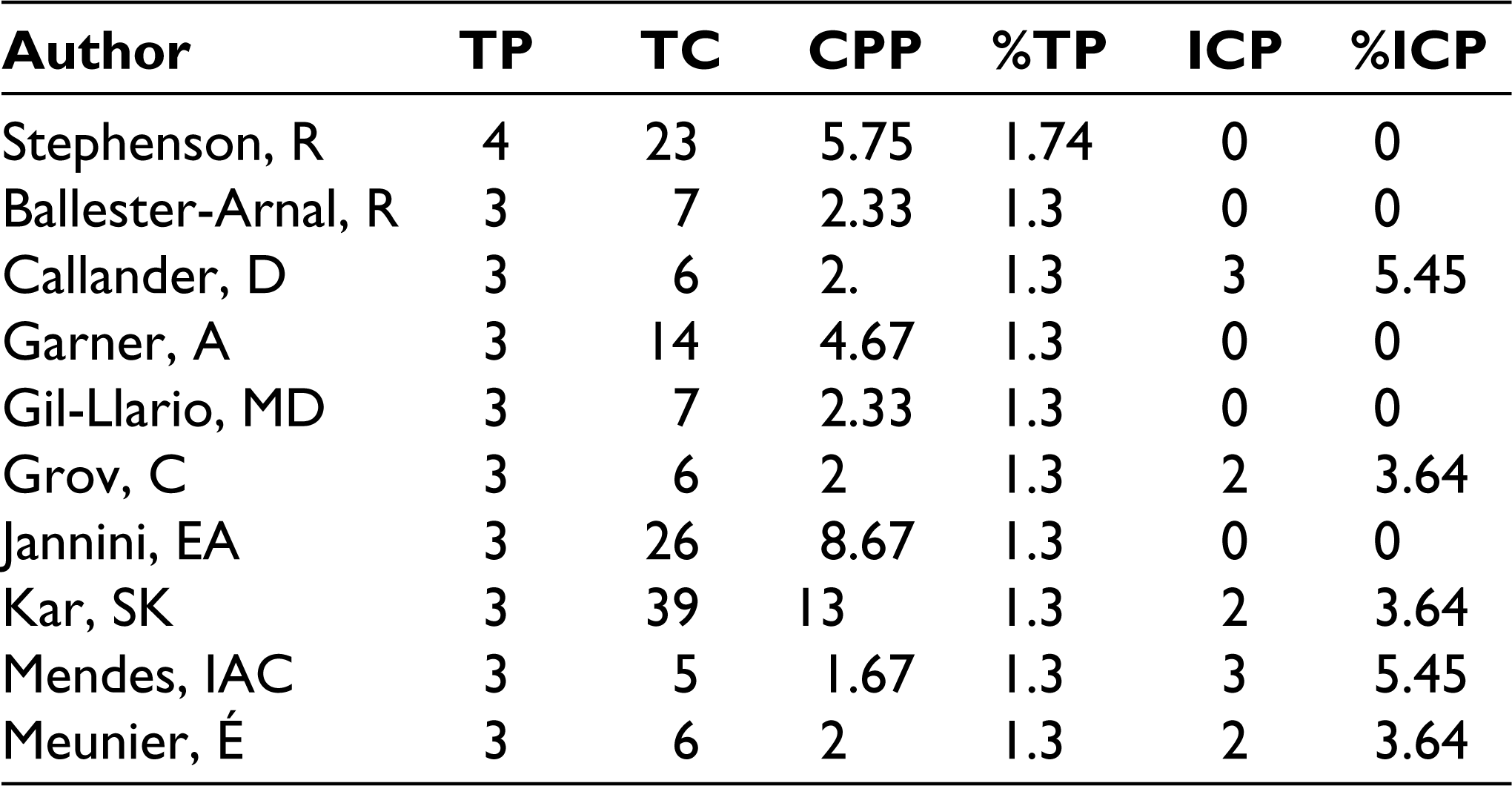
As many as 160 authors were involved in various researches assessing sexual activities through the COVID-19 pandemic. The highest contributing author was R Stephenson (n = 4), followed by other authors including R Ballester-Arnal (n = 3), Callander (3), and Garner (n = 3). The number of papers of the top 10 researchers range between 3 and 4. The maximum number of total citations (n = 39) and citations per article (13) were received for the publications made by SK Kar and the most international collaborative work was done by D Callander and IAC Mendes, (n = 3 each) (Table 1).
The Top 10 Authors on Sexual Behavior During COVID-19 Pandemic (n = 230)
Top-Ranked Organizations
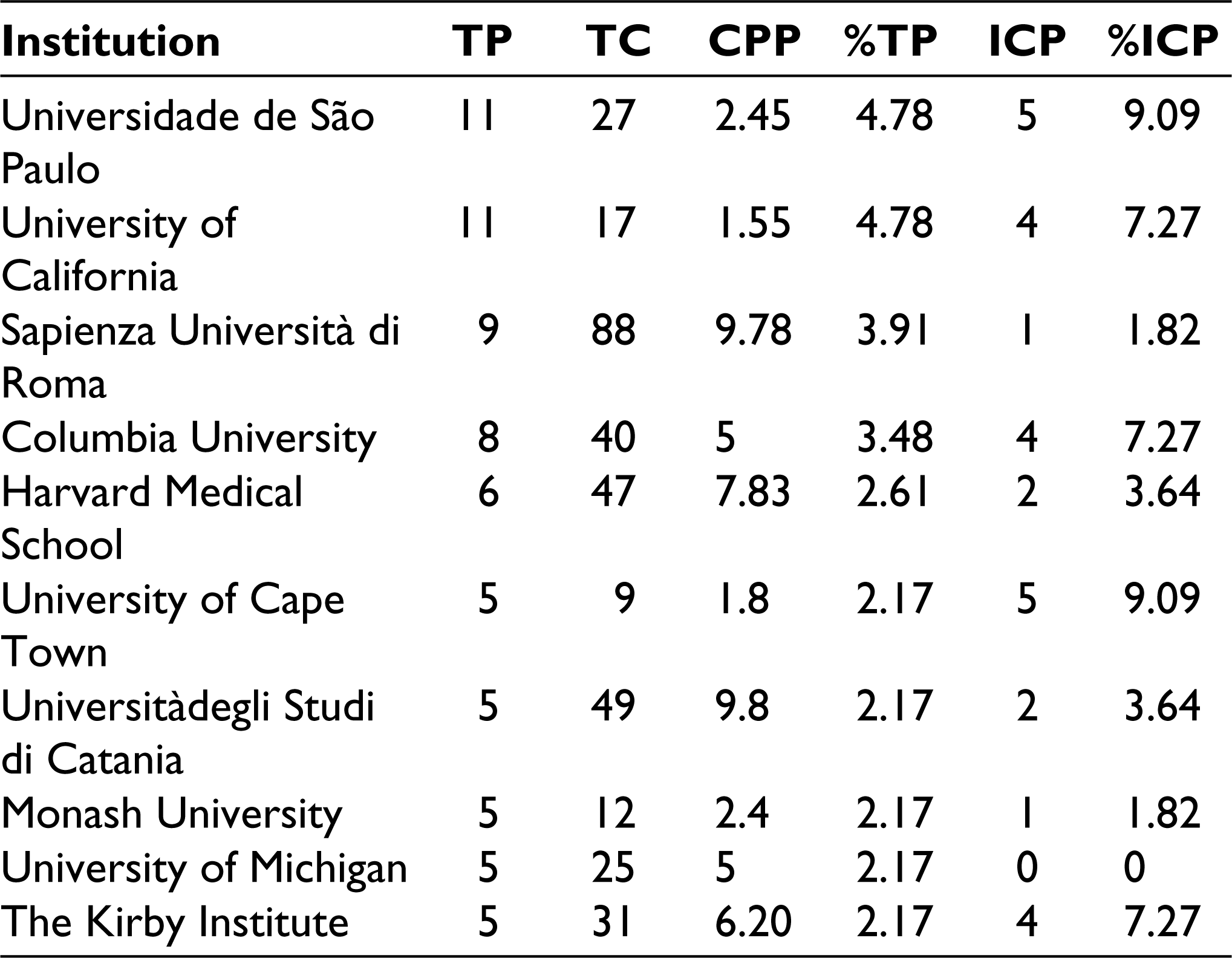
The research on sexual behavior during the COVID-19 pandemic involved as many as 160 institutions. Universidade de São Paulo and the University of California published a total of 11 papers each, followed by Sapienza Università di Roma with 9 papers and Columbia University with 8 papers. The number of publications by the top 10 institutions ranges between 5 and 11. The maximum number of total citations was received by Sapienza Università di Roma (n = 88), followed by Universitàdegli Studi di Catania (n = 49) which also received the maximum number of citations per article (n = 9.8). Universidade de São Paulo and the University of Cape Town have done most of the international collaborative work (n = 5 each) (Table 2).
The Top 10 Institutions on Sexual Behavior During COVID-19 Pandemic (n = 230)
Top-Ranked Countries
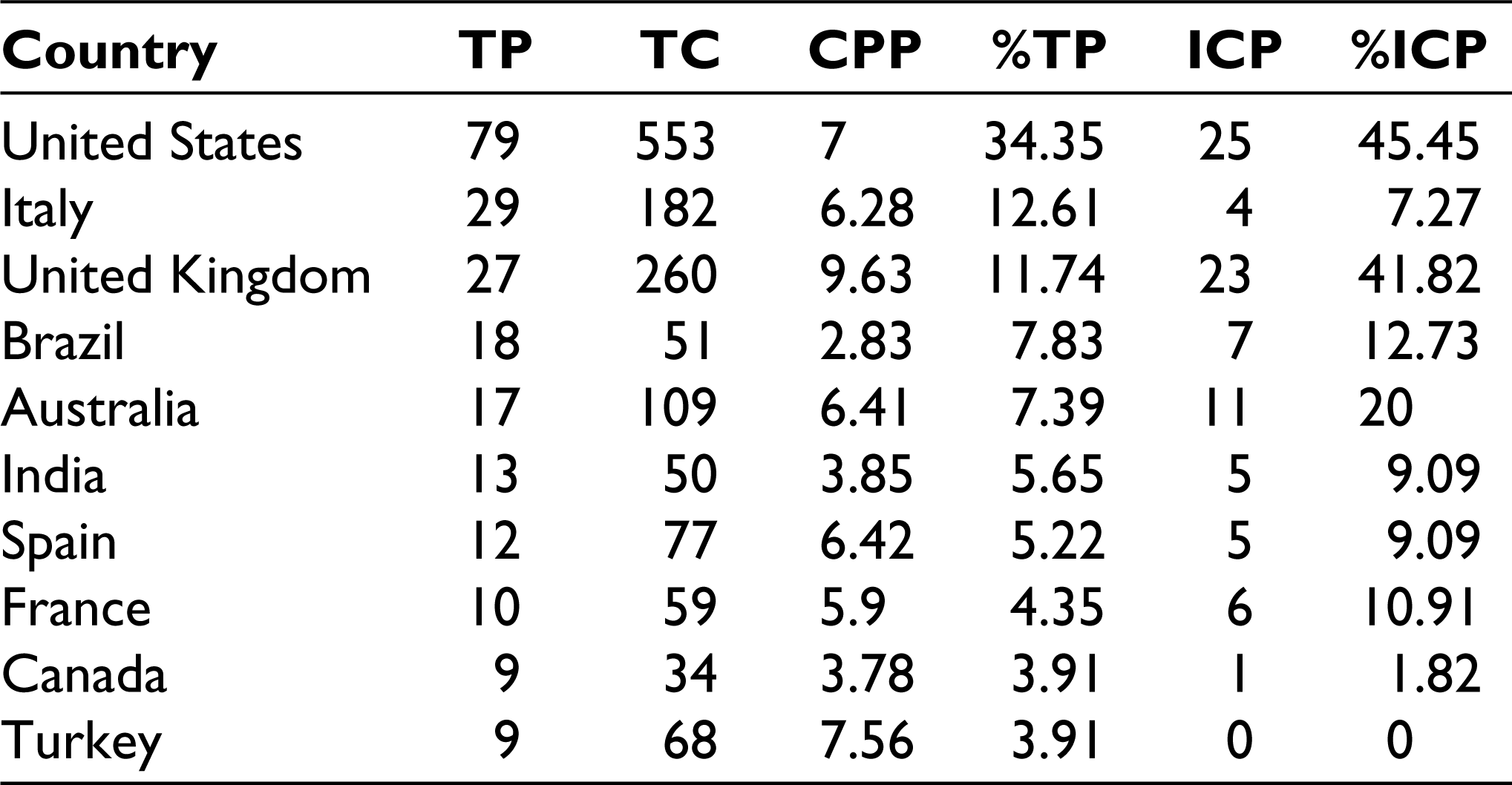
A total of 52 countries contributed to investigate the changes of sexual acts during the pandemic. The number of papers by the top 10 countries ranges between 9 and 79. The maximum number of total papers was identified from the USA (n = 79), followed by Italy (n = 29) and United Kingdom (n = 27). The United States have the top number of total citations (n = 553) while the maximum citations per article was identified from the United Kingdom. The United States has also done the most international collaborative work (n = 25) (Table 3).
The Top 10 Countries on Sexual Behavior During COVID-19 Pandemic (n = 230)
Top-Ranked Journals
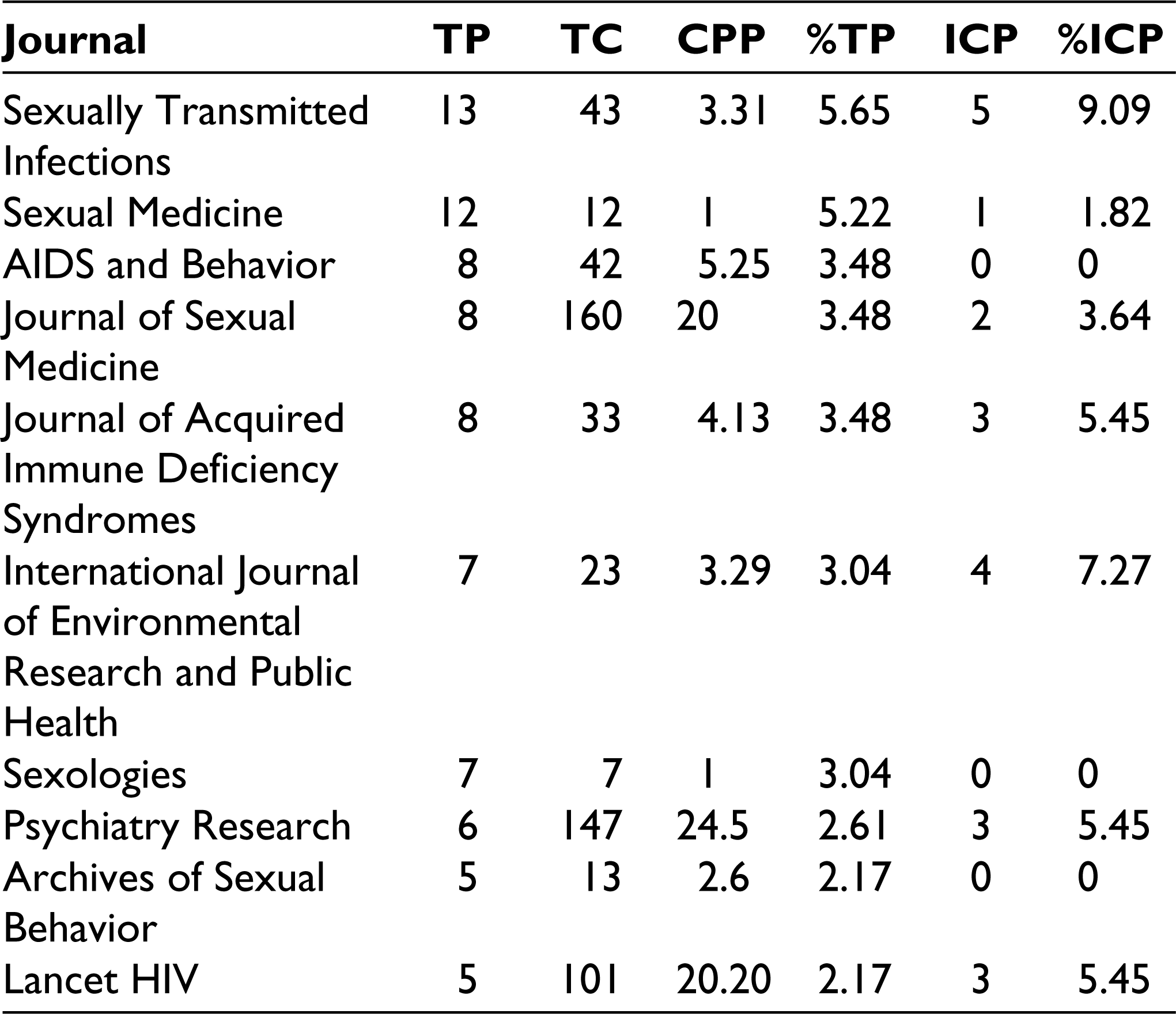
As many as 131 journals are published on sexual behavior during the COVID-19 pandemic. Publications done by top 10 journals range between 5 and 13. Most publications are in the Journal of Sexually Transmitted Infections with total of 13 papers followed by Sexual Medicine (n = 12), AIDS and Behavior, Journal of Sexual Medicine, and Journal of Acquired Immune Deficiency Syndromes (n = 8 each). The maximum of citations was received by the Journal of Sexual Medicine (n = 160) while the top number of citations per article was received by Psychiatry Research. Most international collaborative work was done by the journal of Sexually Transmitted Infections (n = 5) (Table 4).
The Top 10 Journals on Sexual Behavior During COVID-19 Pandemic (n = 230)
Top-Ranked Publishing Houses
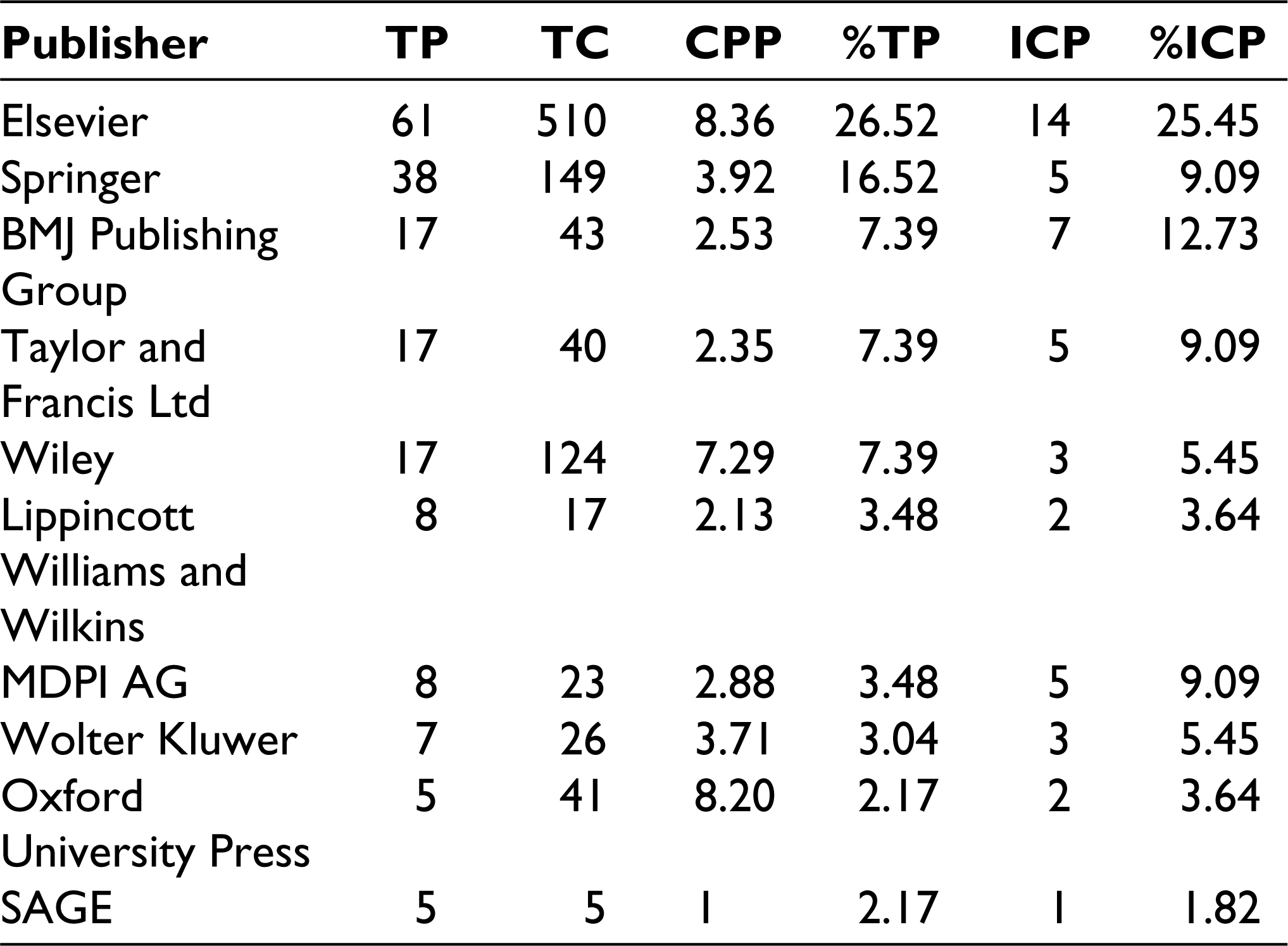
Various publishing houses involved in sexual behavior during COVID-19 research including Elsevier, Springer, BMJ Publishing Group, and Taylor and Francis were noted among the top 10 publishers. The total papers published by the top 10 publishers range between 5 and 61. The maximum number of papers (n = 61) and citations (n = 510) were received by the Elsevier. The Elsevier also received the maximum number of citations per article (8.36) along with most of the international collaborative work (n = 14) (Table 5).
The Top 10 Publishers on Sexual Behavior During COVID-19 Pandemic (n = 230)
Top-Cited Papers
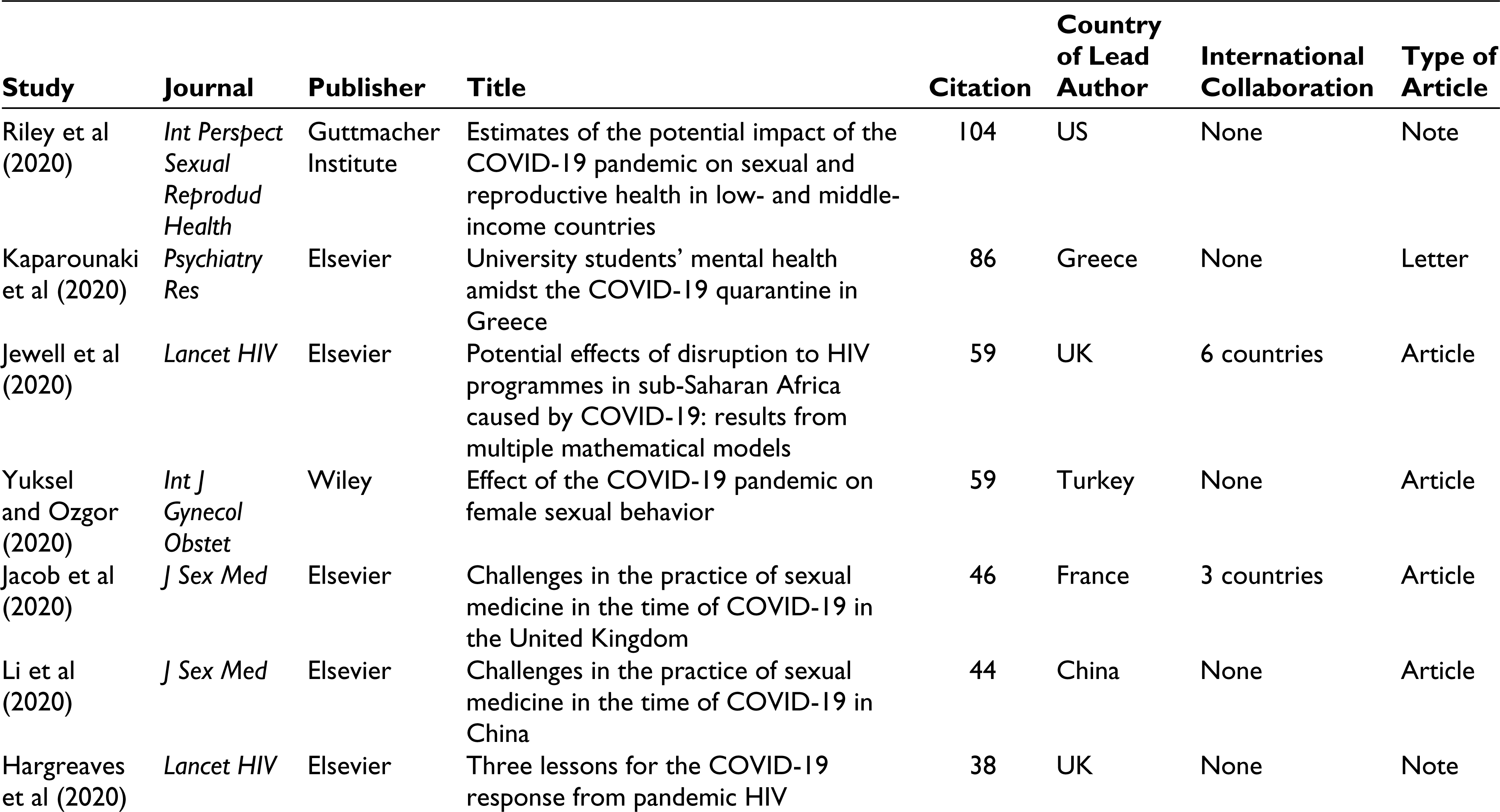
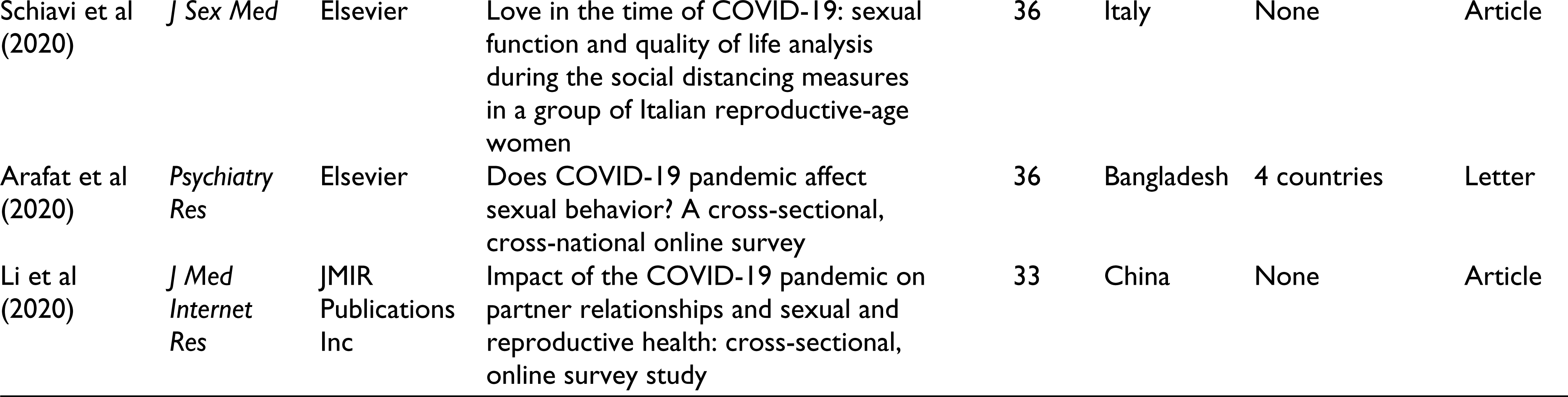
The most cited research is published by Riley et al (2020) that discussed the possible effects of the COVID-19 pandemic on sexuality and reproduction services in the context of low- and middle-income countries. The top 3 most cited papers belonged to the United States (n = 104), Greece (n = 86), United Kingdom, and Turkey (n = 59). Among the top 10 cited publications, 3 publications resulted from international collaborative work. Among the top 10 published research, most were published in the Journal of Sexual Medicine (n = 3). The research works done among the top 10 cited publications followed cross-sectional study design and mostly on healthy participants (Table 6).
Top 10 Cited Papers on Sexual Behavior During COVID-19 Pandemic (n = 230)
Discussion
In the present review, we performed a bibliometric analysis of 230 publications related to sexual activity and functioning through the COVID-19 pandemic. More than half of them were funded research indicating that sexual functioning during COVID-19 is a priority area for funding agencies during the pandemic. Moreover, nearly a quarter of these papers were cross-national collaborative efforts indicating the increasing research focus on this area. Original research constituted more than half of the research output in this area; such research is important to build credible data that can guide management and preventive efforts during a novel event such as the COVID-19 pandemic. Medical sciences were the predominant domain under which the articles were published (89.1%); other major domains were psychology (16.1%) and neuroscience (9.1%).
As many as 160 researchers from 52 countries published the 230 articles; the top 10 most productive authors contributed to 13.5% of the total scholarly output in this area. Likewise, the top 10 ranked institutions published lower than a third (30.4%) of the global publications. In contrast, more than half of the total research output on sexual health and COVID-19 came from 3 countries: United States, Italy, and United Kingdom. These countries were among the worst hit during the pandemic, particularly in the first wave, and this may indicate that the pandemic impacted sexual functioning severely in these countries. However, this is just a hypothesis and needs to be proven by undertaking further systematic research in the area. More countries should also undertake research in the area to provide wider, global perspectives on sexual behavior during the pandemic.
As one might expect, journals with a core focus on sexuality or sexually transmitted diseases were the favored destination for authors working in the field. The maximum number of articles was published in Sexually Transmitted Infections (5.7%) followed by Sexual Medicine (5.2%), AIDS and Behavior (3.5%), and the Journal of Sexual Medicine (3.5%). This may indicate that such journals are fast-tracking publications on sexual health during the pandemic due to paucity of data. Interestingly, citations per paper were maximum for Psychiatry Research (24.5), followed by Lancet HIV (20.2) and Journal of Sexual Medicine (20). Evidently, papers from these journals received more citations, probably indicative of the impact and quality.
Of the top-cited papers on effect on sexual activity due to the COVID-19 pandemic, most papers are related to effect of this COVID-19 pandemic on sexuality and reproduction health services (n = 6) and hurdles in the provision of services of sexual medicine through the pandemic (n = 2). Two papers discussed lessons learnt from the pandemic and trouble to ongoing HIV programs in parts of sub-Saharan Africa. Only 2 of the papers, however, provided cross-national data; clearly, more such collaborative papers are needed to identify cultural differences in patterns of sexual functioning and plan preventive measures. Given that the pandemic is not going away quickly, funding agencies must prioritize collaborative research in this area while governments in nations that are worst hit must formulate clear strategies to prioritize sexual and reproductive health during the pandemic; this will also indirectly limit the impact of the pandemic on mental health.
Strengths and Limitations
This is the first bibliometric analysis to address the changes in sexual activity due to the COVID-19 pandemic. A good number of peer-reviewed research papers are published on this issue and the accumulative findings from the published research papers suggest that there are changes in sexual behavior pattern during pandemic and disaster time. Despite some strengths of the analysis, there are several limitations. Most of the published papers used online data collection methods for retrieving information which means the authors have lack of control over data quality and inappropriateness of data. Although we extracted data from the largest databases (Scopus), there is a good number of papers in other databases. Also, the search term may exclude some proportions of citations.
Conclusion
Assessing sexual behavior of human being is a complex phenomenon and daunting task due to sensitive nature of the issue. Through this analysis, we are attempting to show the domains of research on sexual activity through the COVID-19 pandemic. This study was analyzed so as to there are total 230 publications on sexual behavior and 130 papers are funded which is a promising sign for the researchers from this field and for them who are keen to work in this field. Elsevier and Springer Publications are the top publishers and Sexual Medicine and Sexually Transmitted Infections journals are top journals for publishing sexual behavior during the recent pandemic time. Researchers from the US, UK, and Italy were mostly engaged with this type of research activities and impact on sexual behavior came out as the emergent theme from the research articles.
Footnotes
Declaration of Conflicting Interests
The authors declared no potential conflicts of interest with respect to the research, authorship, and/or publication of this article.
Funding
The authors received no financial support for the research, authorship, and/or publication of this article.