




Abstract
Background:
Whether working at physical workplaces or from the seeming safety of home, women employees continue to be hounded by sexual harassment. During COVID-19, sexual harassment has taken on a cyber avatar and continues to enjoy the protections afforded by ambiguity and inept implementation.
Objectives:
The study explores how media reported cyber sexual harassment (CSH) during a 1-year period after COVID-19 in India. It explores the dominant discourses evident in such media reports, such as the ways in which CSH is manifested, psychosocial factors behind the same, action taken (if any), and organizational practices.
Method:
The present study involved content analysis of electronic print media content (newspapers and magazines) published in India, in the English language, between the period March 2020 and February 2021. A final pool of 24 articles was purposively arrived at through an Internet-based search, which was classified as news story, editorial, opinion piece, interview, column, and other. Content analysis of the articles was carried out to uncover the main themes. Within these themes, the researchers carried out open coding to identify subthemes.
Results:
Six broad themes emerged from the articles: manifestations of CSH, causes of CSH, outcomes of CSH, action taken by the victim, organizational practices, and barriers in seeking redressal. Manifestations included inappropriate behavior by boss/colleagues during meeting (30.6%), social media harassment (22.6%), video calls/meeting/work at odd hours (17.7%), inappropriate attire (14.5%), sexist behavior and comments (8.1%), and inappropriate jokes (6.2%). Some of the causes reported for CSH were blurring of personal and professional boundaries, lack of guidelines regarding virtual workplaces, job uncertainty, and notions of patriarchy. Only 29.2% articles highlighted any action(s) taken by the victim. Some of the barriers in seeking redressal were reported to be lack of awareness and/or clear guidelines, fear about the repercussions, difficulty in proving CSH, daunting appellate process, lack of privacy with family members around, and patriarchal culture.
Conclusion:
The study reiterates the need for clear and consistent communication on CSH, both in organizations and through the media. It is imperative not only to revive and modify the existing policies on CSH but also to implement them effectively. In the “new normal,” organizations need to formulate responses that are multilevel, swift, and coordinated across stakeholders, policymakers, technology specialists, and social scientists.
Introduction
“He wasn’t wearing pants: cyberbullying, sexual harassment in the age of zoom calls and Covid-19.” This is the headline of a news story published online by News Asia 1 on September 26, 2020, illustrating the ordeal of cyber sexual harassment (CSH) experienced by a 38-year-old woman in Kolkata, India during a work call with her boss. As if workplace sexual harassment wasn’t enough, sexual harassment in today’s age of work from home and COVID-19 seems to have shifted online. As harassers took advantage of online work platforms and social media during the pandemic, firms like Cohere Consultants, working on sexual harassment in India, reported a 20% rise in complaints received by them, after the introduction of work from home policies. 2
CSH is defined as the use of the Internet to make uninvited advances, communications, or interactions, such as sexually suggestive material and/or messages with another person or entity. 3 Four types of CSH are prevalent, viz. virtual rape via cyberspace, cyber morphing, cyber pornography, and cyber defamation. 4 While such behaviors can be targeted at anyone; at the workplace CSH can manifest itself in various other forms, such as making sexually suggestive remarks or overtones during work calls or chats, serious repeated offensive remarks related to persons body or appearance, indecent behavior during video calls, lewd calls, messages or emails, offensive comments or jokes, displaying offensive pictures, unwelcome online invitations, flirting, online stalking, and so on. Thus, any misconduct or words with sexual innuendos that affect an employee’s ability to work or creates an uncomfortable atmosphere while working online can be considered CSH.
The first recognition of sexual harassment in the workplace dates back to 1977 in Barnes vs Costle, when it was defined it as females losing their jobs because they rejected sexual overtures from their employers. 5 In India, The Sexual Harassment of Women at Workplace (Prevention, Prohibition and Redressal; PoSH) Act, 2013, defines “sexual harassment” as “unwelcome sexually tinted behaviour, whether directly or by implication,” and goes on to give examples of such behavior. The PoSH Act of 2013 was formulated to safeguard the rights and safety of a woman at the “workplace.” In the era of work from home, it is important to determine the scope of what comprises a “workplace” under the Act. While the “workplace” under subclause (v) includes “any place visited by the employee arising out of or during employment,” it may be extended to remote places, including a dwelling place or a house, provided that the employee is working under the employer’s order. Thus, any act of sexual harassment affected virtually in a home working space can be included in the notional definition of a “workplace.” But is defining a workplace by law enough to prevent CSH? Previous authors 6 have lamented that CSH tends to slip between the cracks of existing laws and policies, which are anyways inadequate.
Workplace sexual harassment remains prevalent worldwide and in India. In the United States, 5.6% of women reported sexual violence by a workplace-related perpetrator. 7 In Europe, women exposed to sexual harassment at work in the past 12 months was reported to be highest in Spain (31%) and lowest in UK (17%). 8 In India, the percentage of women acknowledging sexual harassment as per 5 different studies9–13 ranges from 8%, 15%, 18.75%, 28.8% to 57%, respectively. The difference in the prevalence could be due to varying methodology, industry, region, and perhaps underreporting in some cases.
There is consensus in research literature 14 that sexual harassment is negatively related to job-related outcomes, mental health, and physical health conditions. There is emerging evidence that the impact of CSH may be as devastating or even more as that of workplace sexual harassment. For instance, Biber et al 15 found that the use of nicknames (eg, darling, sweetheart), misogyny, and comments about the dress were seen as significantly more harassing when they occurred online than in person. Further, women experience greater levels of cyber abuse like online stalking, sexual solicitation, and problematic exposure to pornography than men. 16 The consequences of such online harassment can range from insignificant to an ongoing trauma that may be emotional, physical, and psychological. 17 It not only undermines the victims’ autonomy, identity, dignity, and well-being 18 but also has significant and long-lasting psychosexual consequences. A recent meta-analysis 19 reported that victims of cyber stalking and/or harassment experienced a multitude of harmful and detrimental consequences for their mental health, including depression, anxiety, suicidal ideation, and panic attacks. Similarly, experiences of cyber-sexual violence were found to be associated with symptoms of depression, anxiety, stress, and posttraumatic reactions. 20 Even cyber incivility—discourteous treatment via information and communication technologies—at the workplace results in affective and physical distress, 21 and impacts employee health and organizational well-being poorly. 22 CSH can also lead to adverse career-related consequences such as decreased job satisfaction, reduced productivity, absenteeism, unfavorable performance evaluations, loss of job, or promotion opportunities. Unfortunately, it also has other indirect lingering effects, most notably “economic vandalism,” 6 as victims tend to withdraw from online platforms or change the ways of online interaction often at the cost of their profession. Such effects include an inability to maintain a professional online presence, engage in business-related networking, or crowdsource for professional reasons.
The fact that sexual harassment at the workplace impacts women’s well-being makes it a compelling topic of research. CSH adds further complexity to the experiences of victims, adding to their feelings of frustration and powerlessness, largely due to the pervasiveness of social media. 17 While a large body of literature has documented the prevalence of sexual harassment, it’s outcomes, barriers in reporting, and theoretical perspectives, 23 relatively little research attention has been given to the way the media presents sexual harassment. Mainstream news media texts have been noted as critical, yet under-researched, resources for analyzing the dynamics of sexual harassment—how it is constructed, reconstructed, and shaped through popular narratives.24–26 Remarkably, such researches are conspicuously absent in the case of CSH. Studies that illuminate the discourses evident in media reports of CSH in the present-day era of work from home could rarely be found. This article attempts to fill this gap in literature by examining the content of and discourses prevalent in mainstream news media texts reporting CSH in articles published in India during a 1-year period after COVID-19. Our study has 2 objectives. It first explores how media reports CSH in India, thereby highlighting what aspects are considered newsworthy—which themes are brought into the limelight, and which are excluded. Second, the study reveals the dominant discourses evident in media reports of CSH, such as the ways in which CSH is manifested, psychosocial factors behind the same, action taken (if any), and organizational practices. We also highlight the role of individuals, organizations, and the society at large in dealing with this menace.
Method
Systematic Media Selection
The present study involved content analysis of electronic print media content published in India, in the English language, between the period March 2020 and February 2021. Three inclusion criteria were followed. First was the aforementioned time period (IC1) which aligned with the work from home period of the COVID pandemic. Second, only articles pertaining to the Indian context (IC2) were included. Third, only those articles that appeared in newspapers or magazines (IC3) were retained. We included only articles from newspapers and magazines, but excluded articles in blogs as the former present a collective or expert perspective, while blogs present individual perspective. Article selection procedure was as follows (stages depicted in Figure 1).
Internet-based search of articles in English was carried out using the keywords—“online workplace sexual harassment,” “virtual/cyber sexual harassment at work,” “sexual harassment while working from home,” “workplace sexual harassment during COVID-19,” and a combination of the above.
Screening the articles based on date of publication (application of inclusion criteria 1).
Remaining articles were read in their entirety to ensure they pertained to the Indian context (application of inclusion criteria 2).
Sources of included articles were checked to ensure only newspapers and magazines were included (application of inclusion criteria 3).
Articles were read and discussed again by both the authors to remove repetitions, and for reaching consensus about the relevance of articles included in the final selection.
Selection of Media Articles for Analysis Flow Diagram
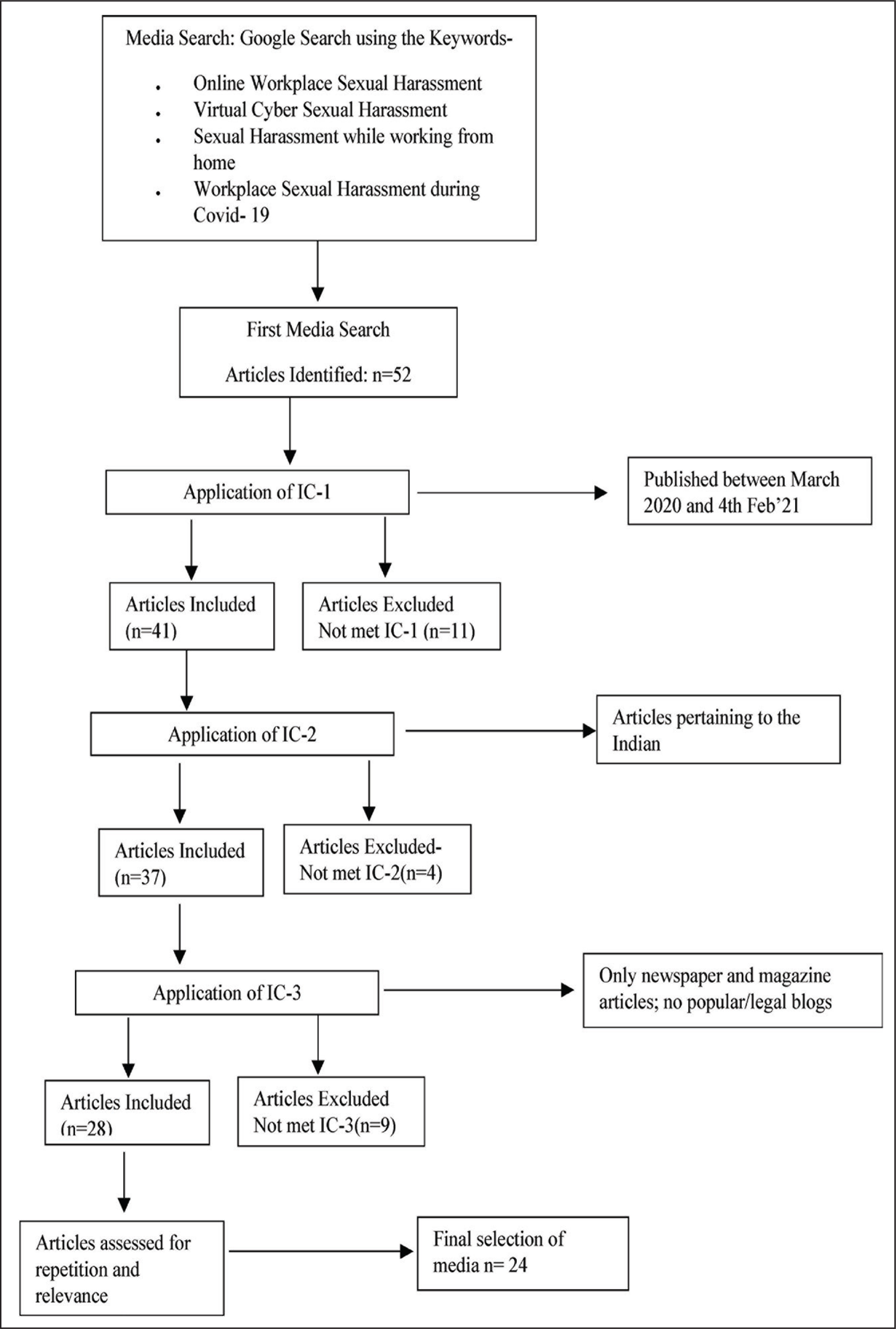
Of the initial 52 articles, only 24 articles were selected after applying all the inclusion criteria. A majority were published in the Times of India, Economic Times, The Indian Express, and the Quint. Two articles each were from Deccan Mirror, Deccan Herald, Live Mint, and Femina. Among business newspapers, Hindu Business and among business magazines, Business Today had 1 article each.
Data Analysis
The finalized pool of 24 articles was analyzed following the procedure for content analysis outlined by Prasad. 27 In the first stage, both the authors independently classified the articles into the categories of news story, editorial, opinion piece, interview, column, and other, in line with previous research. A news story is an objective and factual account of events in which the reporter tries to answer 6 basic questions—who, what, where, when, and how. The editorial projects the view point of the newspaper on a particular policy, program, or event, whereas an opinion piece presents the views solely of the author. Interviews present the perspective of interviewees on preset questions. Columns are typically written by people who have expertise in a particular field. No instance of disagreement in this categorization was found.
The researchers then carried out open coding and identified dimensions along which further analysis would be carried out. A group of 10 undergraduate psychology students were requested to code the data into themes to ensure inter-rater reliability. The initial dimensions identified were definition of CSH, manifestations of CSH, causes of CSH, action taken by the victim, personal outcomes of CSH, organizational outcomes of CSH, legal provisions, organizational practices, and barriers in seeking redressal. Of these, only the dimensions that had complete inter-researcher agreement were finally retained.
For the dimensions of definition, organizational outcomes of CSH and legal provisions, instances were few and the researchers did not reach consensus about the meaning conveyed by the articles. Hence, they were removed. Thereafter, the researchers independently analyzed the content of all 24 articles following an open coding procedure to identify subthemes within the 6 broad thematic areas. The frequency of instances was also documented. The coding sheets of all the researchers were then compared and only the subthemes that had minimum 80% inter-researcher agreement were retained.
In keeping with the standards for judging qualitative data, 28 the credibility and dependability of the data was focused on, in order to ensure rigor. To this end, the researchers ensured that the research objectives were clear and logically linked to the study design, that there were parallels across sources of data, that comparable coding protocols were followed by all 3 researchers, that findings were grounded in the data, rigorously documented to leave a paper trail 29 and consistent in terms of explanations they support.
Results
Of the 24 articles, 4 (16.66%) articles were opinion articles, 8 (33.33%) were news stories, 6 (25%) were columns, 1 (4.16%) was an editorial, 3 (12.5%) were interviews, and 2 (8.33%) were put under the category of others as they could not be classified under the aforementioned types.
Of the 24 articles reviewed, it was found that only 6 made a mention of the industry where incidents of CSH occurred. While 75% had no reference to the industry, 12.5% articles reported incidents in software and information technology industries, followed by multinational corporations (8.33%) and the banking sector (4.1%). With regards to the city/state where harassment was reported, it was seen that 66.67% articles did not mention the location. From among the articles that did, a vast majority (77.78%) mentioned tier 1 cities like Kolkata, Bangalore, New Delhi, Chennai, and Mumbai. Of the finalized articles, 21 (87.5%) authors were female, 2 (8.33%) were news agencies, and 1 (4.17%) was a male author.
Six broad themes emerged from the articles: manifestations of CSH, causes of CSH, action taken by the victim, outcomes of CSH, organizational practices, and barriers in seeking redressal. Frequency tables were created for each broad theme, as reported in the following section.
Theme 1: Manifestations of CSH
Content analysis of the 24 articles under study revealed 62 instances of manifestations of CSH. Six subthemes could be identified under this dimension. These have been presented in Table 1.
Manifestations of Cyber Sexual Harassment
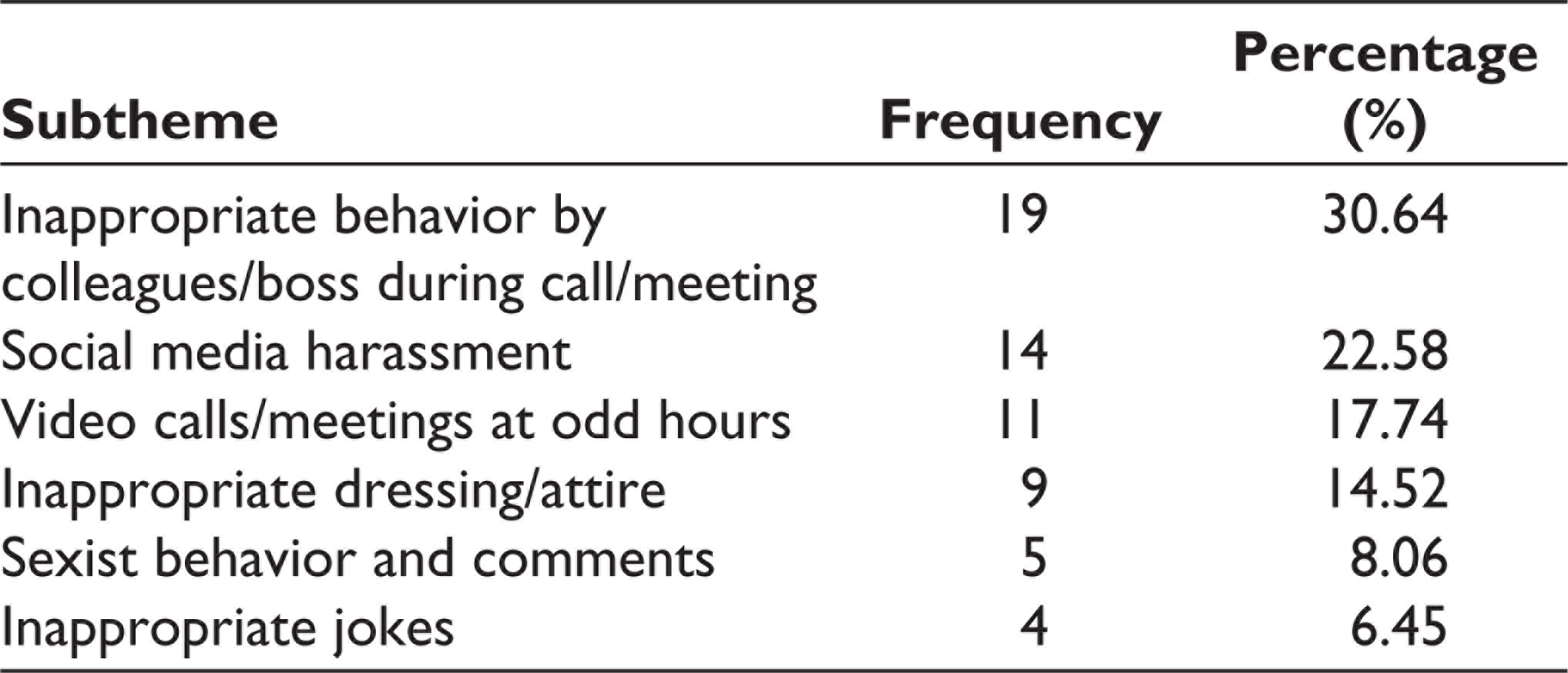
The most frequent manifestation, which was inappropriate behavior during calls, included 7 instances of forcing female employees to keep their videos turned on during meetings. Other forms included talking down to the employee, taking screenshots and recordings of the meeting without consent, touching oneself inappropriately, provocative backgrounds, and being intoxicated during a meeting, as demonstrated by this excerpt:
…an employee takes screenshots of his female colleague, at (another), a manager insists that his colleague, a woman, attend an impromptu 11 pm meeting and insists on her turning her video on and then proceeds to berate her when she refuses. When she finally does, she realizes he is intoxicated.
Social media harassment, which was the second-most common manifestation, was mentioned in 14 articles. An excerpt reads:
We have been getting complaints…concerning objectionable text messages, friend requests on social media, with repeated reminders to accept the same during work-related phone calls; late night texts being received, or calls being made on pretext of work being taken into personal topics, sharing of images of an inappropriate nature…
Other forms of CSH indicate a similar “spilling over” of work lives into the personal life of employees. Eleven mentions of video call requests at odd hours could be seen across the 24 articles. One such excerpt had a female employee reporting “a video call request from her boss at 11 pm for an urgent matter turned out to be for something that on a regular day would have been easily taken care of over an email.” Other forms in which CSH manifested itself was in inappropriate dressing such as “showing up in a vest and boxers.” Sexist comments and inappropriate jokes, which previous research,25, 30, 31 indicated as being quite common, appeared least frequently in the articles, with only 5 and 4 instances, respectively.
Theme 2: Causes of Workplace CSH
Content analysis of the articles under study revealed 29 instances where potential causes were being discussed. Five subthemes under this dimension could be identified, as shown in Table 2.
Causes of Workplace CSH
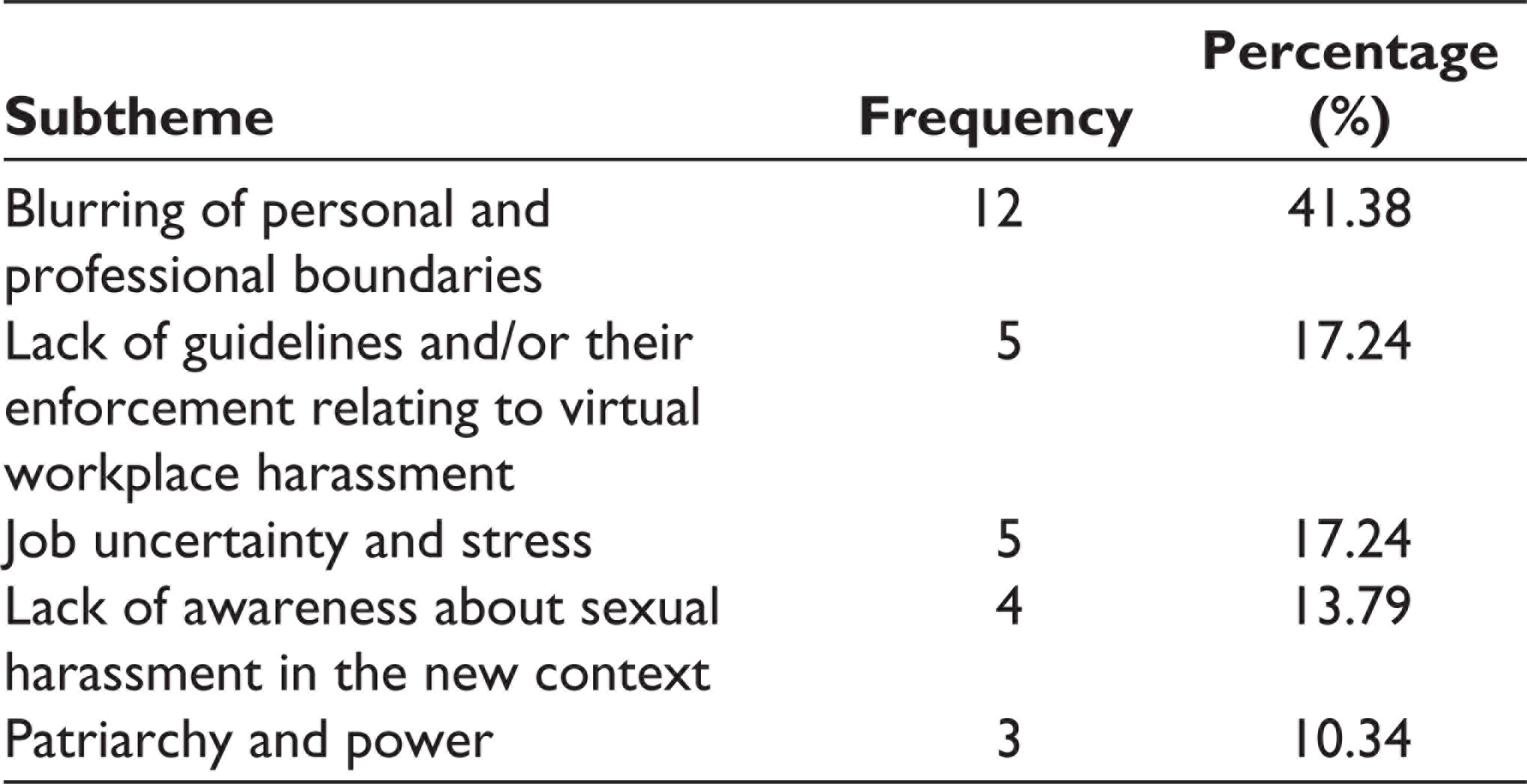
Four of these causes, that is, blurring of personal and professional boundaries, lack of guidelines and/or their enforcement, job uncertainty and stress, and lack of awareness about sexual harassment in the new workplace context are indicative of a unique set of novel circumstances posed by the COVID-19 pandemic and speak to a larger sense of confusion and boundary crossing that is prevailing in cyber workplaces. The blurring of boundaries can be evidenced in this excerpt:
The idea of a workplace has become fluid, and the boundary between our professional versus personal space has blurred. Under the garb of official communication, companies today use multiple social-media platforms to connect, and these provide grounds for harassment as well.
The confusion over what constitutes CSH can be seen here, “Since we have never experienced absolute work from home before, women are always second-guessing if it was harassment, where does one draw the line, how does one define the body language as offensive or indecent.” Another article states, “The bigger problem is that people don’t realize what they are doing is wrong, because for most harassment means physical touch,” highlighting that employee often do not have a clear understanding of what constitutes CSH in the “new workplace.” Three articles also made a reference to patriarchal power dynamics as a potential cause of CSH. One such instance read, “Patriarchy and gender stereotypes are so steeped in our popular culture that we cannot afford to assume everyone understands all nuances of professional and unprofessional conduct.”
Theme 3: Personal Outcomes of CSH
Content analysis of all the articles along the dimension of outcomes revealed that only 1 article made a reference to outcomes of CSH at the organizational level. Classified as a news story, this article highlighted loss of reputation faced by organizations on grounds of inaction in addressing sexual harassment complaints. Five articles (20%) made a mention of the personal outcomes of CSH for the victim, while the rest 19 articles (80%) made no mention of the same. The subthemes within this dimension have been presented in Table 3.
Personal Outcomes of CSH
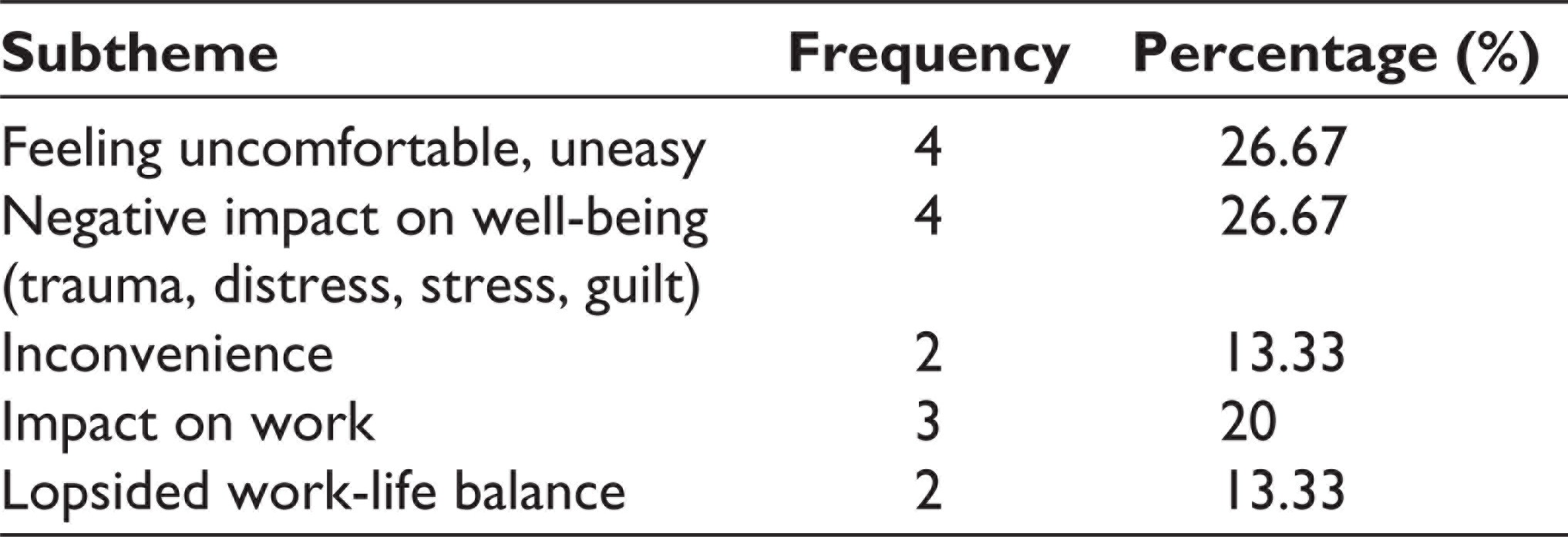
Four articles reported employees feeling uncomfortable and uneasy as a result of being exposed to unpleasant experiences of CSH. For example, citing a real incident, 1 of the articles reported, “Her boss’ demand over a one-on-one video call in June made her uncomfortable. The next week, he asked to switch on an extra light so he could see her properly. She did, feeling uneasy.” Adverse impact on mental well-being of employees resulting in the victims feeling traumatized, distressed, and guilty was reported in 4 articles. One such instance read, “It was traumatizing. I didn’t know how to bring it up but that is not the appropriate attire for a meeting.” Three instances were also reported on impact on the employees’ work, including facing retaliation and gossip. Further, 2 articles reported huge inconvenience as well as a struggle to maintain a healthy work-life balance. One of the victims said, “When everyone is home, people think they can call anytime and schedule meetings at any time. This can take a toll on their work-life balance.”
Theme 4: Action Taken by the Victim
The analysis revealed that 7 articles (29.2%) reported the action taken by the victims, while 17 articles (70.8%) did not mention any action taken by the victim. The action taken by the victim could be categorized into 3 subthemes as depicted in Table 4.
Action Taken by the Victim
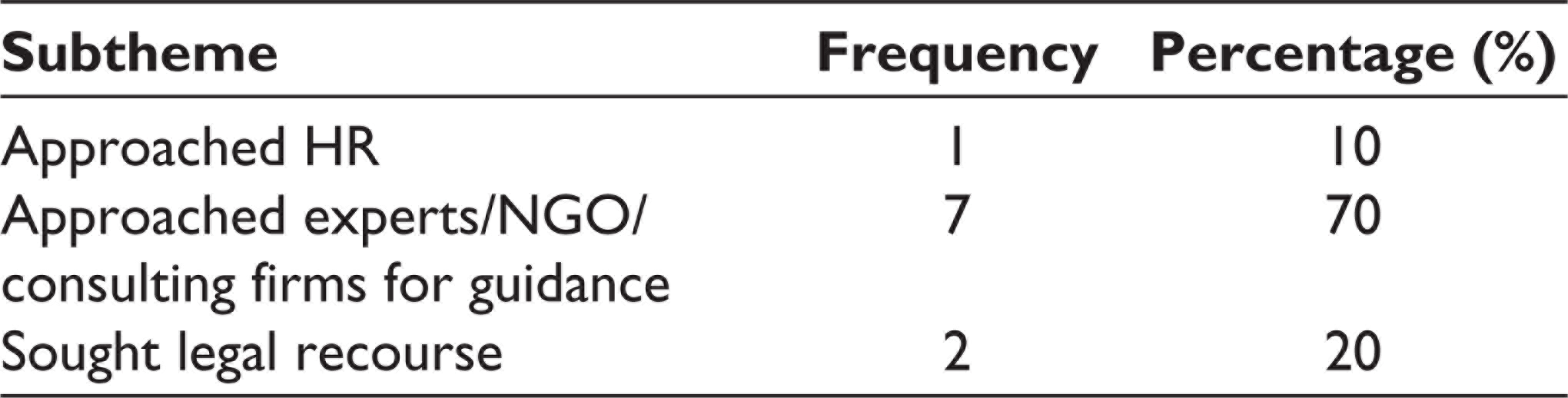
These findings indicate that in the articles analyzed, approaching outside experts, and agencies was reported more frequently than approaching the Human Resources (HR) department of the concerned organization. Seeking legal recourse included actions such as filing a petition with the High Court and approaching the National Commission for Women.
Theme 5: Barriers in Seeking Redressal
Out of the 24 articles reviewed, 13 articles highlighted barriers to reporting and seeking redressal, with 29 instances of barriers mentioned. These are presented in Table 5.
Barriers in Reporting and Seeking Redressal
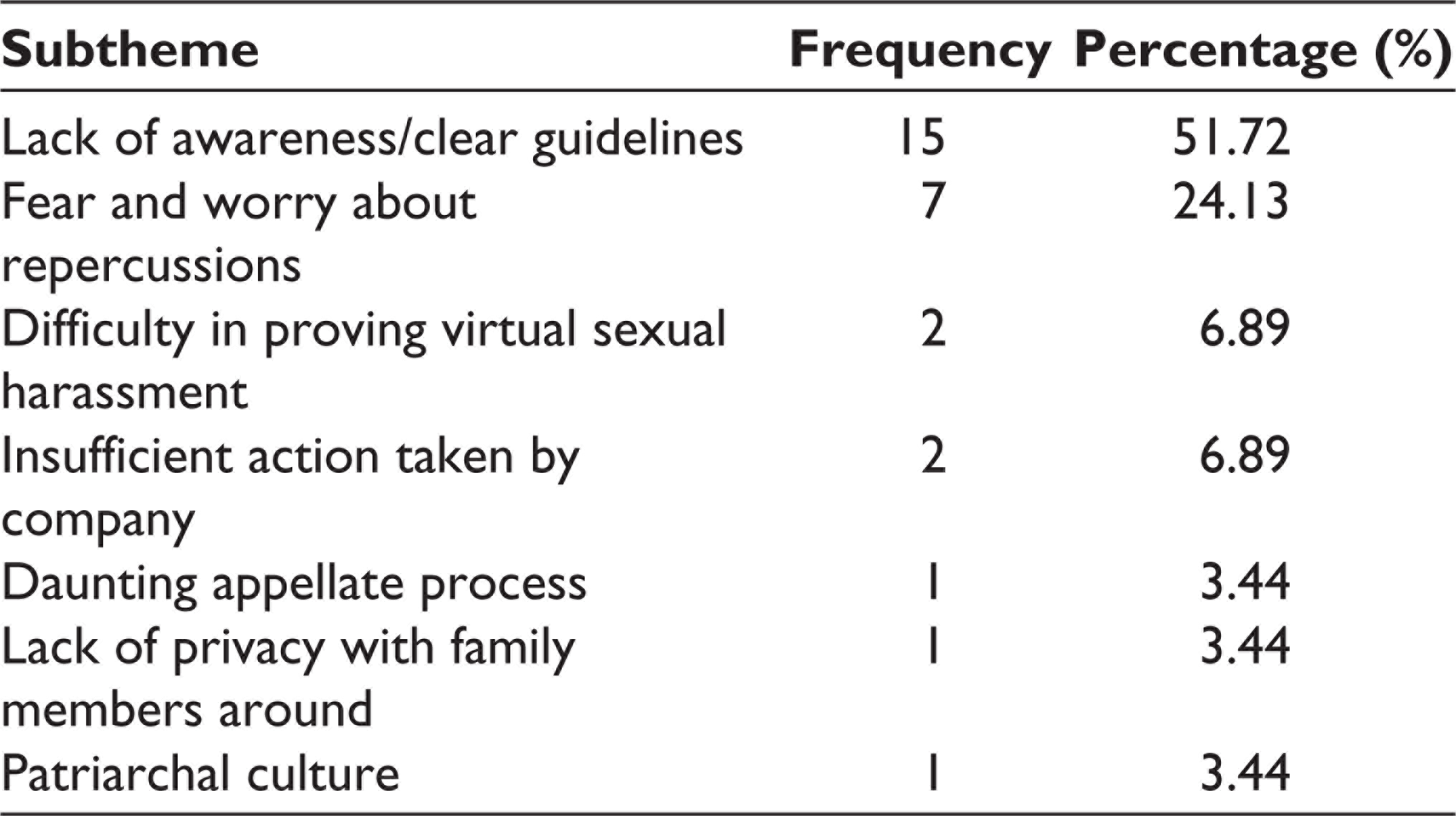
Several subthemes indicating barriers in seeking redressal could be identified in the articles. The most dominant barrier was indicating lack of clarity about what constitutes CSH and/or the guidelines. One instance reads, “There are no clear guidelines from companies on how work from home should function in an organization and that confuses women.” Yet another one states, “Organizations even before COVID-19 have not sensitized employees enough on this subject, because if it had been done, then employees would have been able to at least identify that sexual harassment can happen even while working from home.” At the level of the victim, the fear of repercussions, the onus of proving harassment, the daunting appellate process, and the larger culture being unsupportive were seen to be barriers in seeking redressal. An excerpt indicating some such conundrums reads, “During the lockdown, many women are worried about their job security so they are not sure if they should speak up or not. The women have a constant worry that they should not be seen as troublemakers.”
Theme 6: Organizational Practices
Only 10 articles (41.67%) made a reference to 1 or more workplace practices/policies, with 16 mentions, that have been implemented with an aim to reduce the prevalence of CSH (Refer Table 6).
Organizational Practices to Reduce the Prevalence of CSH
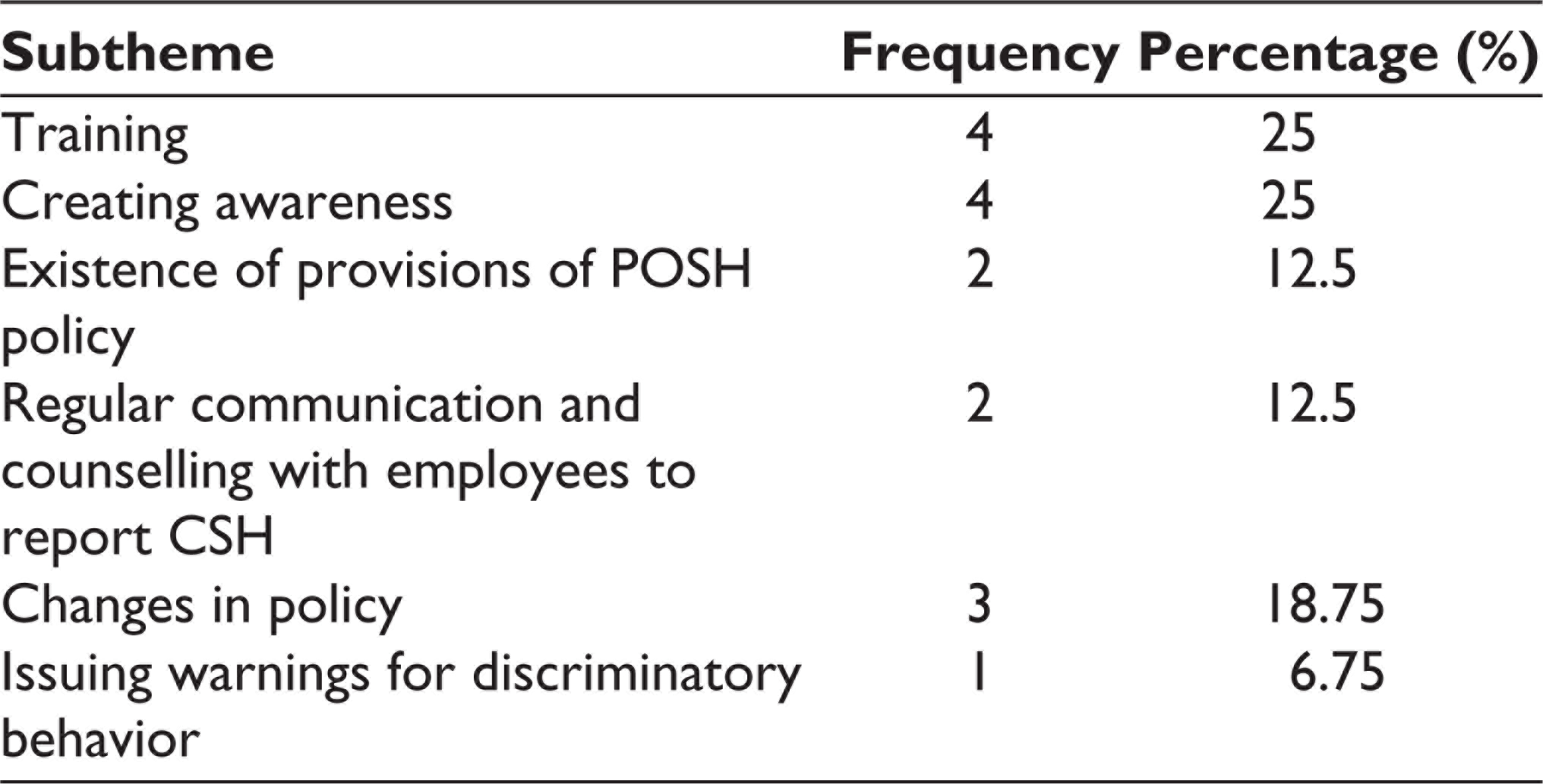
Out of the 16 mentions of organization’s practices/policies in the 10 articles, the most prevalent one was found to be training, contributing 25% to the total count. Four mentions (25%) were also found for the subtheme of creating awareness (25%), through “discussion of proper conduct to support better workplace behavior,” “creating a list of blacklisted behaviors,” and so on. Remaining subthemes were “changes in policy,” for instance, revisiting company policy on conducting face-to-face inquiries instead of online ones, issuing warnings for discriminatory behavior, and mechanisms to identify and report CSH.
Discussion
Although the reporting of CSH in electronic media was fairly scanty at a total of mere 24 articles, the articles illuminated several nuances of this rapidly evolving phenomena. The sample of articles itself had some revealing features. For instance, 21 (87.5%) authors were female, 2 (8.33%) were news agencies, and 1 (4.17%) was a male author. Previous research 32 has indicated a gender bias in story assignment, contending that journalistic spaces tend to assign “sensitive,” gender-related articles to women while “hard news” is allocated to men. This preponderance of female authors in the reportage of CSH may also be reflective of the belief that CSH is a women’s problem, thereby failing to involve men in the discourse. This fact becomes significant when viewed in the light of another finding, that only 1 of the 24 articles discussed organizational outcomes of CSH, relegating CSH to be a “personal” problem of the victim, of little consequence to organizations at large. It is also noteworthy that while in the Western context, consequence of sexual harassment is often viewed in terms of cost to company by way of lawsuit settlements and loss of public image for the organization, the discussion in the Indian context revolves more around the intention to quit and decreased morale to work.10, 33
The analysis of electronic media articles elucidated crucial aspects of CSH—the forms taken by CSH during the pandemic work from home period, the causes, the outcomes, the action taken by victims, and the barriers to redressal. While some findings point to CSH being just an extension of the familiar menace of workplace sexual harassment, others reveal points of novelty and departure.
Analysis of the manifestations of CSH (theme 1) revealed 2 points to note. First, it is evident that the manifestation of inappropriate behavior has changed from physical abuse to harassment using technology-facilitated methods such as forcing “to switch on their video during virtual meetings.” It must also be noted that while alcohol use has been established as a predictor of sexual harassment in the workplace, 34 intoxication in a professional setting by itself is only now being considered sexual misconduct. Second, while previous research indicates gender harassment in sexist/sexually colored remarks and inappropriate jokes to be a predominant manifestation of sexual harassment25, 27, 30, they are least commonly reported forms in the current analysis, with only 4 mentions. This may be due to lack of awareness as one article reads, “women employees may not even be aware that making gender-biased statements, jokes, and remarks can amount to sexual harassment.” A related explanation is the cultural sanction around such jokes in masculine cultures such as India, whereby they are seen as efforts to “lighten the mood” or “build camaraderie,” not to be taken offense at. 35
These identified causes, such as lack of awareness about what constitutes sexual harassment, patriarchal social structures, and power, are consistent with the extant literature.36, 37 The pandemic situation has created a unique combination of workplace intrusion into personal lives, prevailing sense of job insecurity, and lack of clarity about definition, and guidelines regarding CSH, that has further fueled the fire of CSH. Research suggests that employer intrusion into an employee’s personal life threatens the employee’s freedom, dignity, and privacy and may lead to discriminatory practices and sexual harassment in virtual workspaces. 17 Furthermore, workplace laws have not yet caught up with incidents of virtual harassment to define parameters for consideration. 38 Research has also indicated that simply because a policy exists, there is no guarantee employees will actually use or follow it. 39 Sexual harassment policies are ineffective unless employees actually feel comfortable reporting harassment or know that policies will be enforced if they do, 17 a problem that is exacerbated in the current context of ambiguity and job insecurity.
Even from a small pool of articles, the psychosexual impact that CSH has on victims cannot be missed. Consistent with previous literature on workplace sexual harassment, the analysis of articles reports negative outcomes to the overall mental well-being of victims and reports of feeling traumatized, distressed, ill at ease and guilty, cut across the articles analyzed. 40 Galu et al 41 place unwanted sexual attention, including verbal jokes within the ambit of “sexual violence” and highlight the short- and long-term adverse psychosexual and psychosocial consequences of it. It is noteworthy that such acts that are often deemed innocuous can potentially shape sexual choices of women and impact their sexual health.
An important point of contrast comes from previous research on workplace sexual harassment where anger has been found to be a prominent personal outcome experienced by the victims. According to Ahuja et al, 11 anger may help the victims to avoid the stigma and humiliation that accompanies being a victim of sexual harassment. However, anger by the victim was not reported in the articles analyzed in the current study. A possible explanation for this could be that since the victims are largely unaware of whether their experiences amount to sexual harassment in the online medium, confusion, and unease is a more dominant emotion than anger. Just as disengagement from work and career disruption have been reported as outcomes of sexual harassment at physical workplaces, 42 the articles on CSH also indicate impact on work as an outcome of CSH.
It was clear that majority of the articles did not report any action taken by the victim. From amongst the few that did, it was seen that seeking help from outside agencies was most prevalent, while approaching the HR department of the concerned organization was least prevalent. It has been suggested that the mere existence of redressal mechanisms and organizational policies are ineffective if the employees do not trust the HR or find it unapproachable. 11 The perception of employees about the organization’s willingness to stand behind its policy and rules regarding sexual harassment is associated with the extent of sexual harassment. 43 The analysis of the articles shows that while on the one hand company policies such as creating awareness, training, regular communication, and counseling of employees to report CSH and even issuance of warnings on discriminatory behavior have been reported, this is very inadequate as this has been reported by only about 40% of the articles. Reported barriers continue to include inaction by companies, having to prove sexual harassment, unclear guidelines, and a daunting appellate process. Fear and worry about repercussions while being rooted in a patriarchal culture aligned with previous studies on sexual harassment at physical workplaces. 11 However, a new aspect was brought to light in the mention of lack of privacy with family members being around being reported as a barrier in registering a complaint. This finding uncovers the precarious and challenging situation which victims face as they fight to protect themselves from perpetrators online while working with dignity from home.
Limitations
There were certain limitations in the present study that the researchers would like to acknowledge. First, CSH is still a phenomenon in the making, especially in the context of work from home during the COVID-19 pandemic. As such, the coverage is not very extensive and rich. Certain repetitions were found in the articles further reducing the pool of articles. Thus, only a small number of articles reporting CSH issues could be analyzed. Second, coding reliability among researchers could not be carried out using metrics like Cohen’s Kappa as it requires samples that are large enough to meet the requirements of statistical analysis. 29 Lastly, due to language constraints, only English language media could be incorporated. Articles capturing CSH issues at workplace in regional languages were excluded from the study which may have reduced the richness of the data gathered.
Implications
Despite most organizations moving to work from home during the COVID-19 pandemic, and some increase in concerns pertaining to CSH at work, the reporting and coverage of CSH in both print media and electronic media has been quite minimal. Our analysis also highlights the reporting of considerable lack of clarity on the phenomenon of CSH. There is a pressing need for clarifying the definition and scope of CSH and disseminating this information through the media. This is indicative of the need for the media to turn its attention to this phenomenon urgently, so that stringent measures can be formulated to curb such violating behaviors.
The dominant discourse of individualizing of CSH by the media and highlighting outcomes for the victim rather than the organization contributes to challenges in increasing organizations’ understanding of CSH as a serious matter that demands immediate attention. Since WFH norm (or at least a hybrid mode) is here to stay in the foreseeable future, there is a need for organizations to reiterate, review, and revise policy on sexual harassment to incorporate CSH, frame clear and easy mechanisms for redressal, and train and sensitize employees.
Conclusion
This media analysis breaks in the unpleasant realization that whether working at physical workplaces or from the seeming safety of home, women employees continue to be hounded by sexual harassment, even after the PoSH Act (2013) was passed nearly 8 years ago.
The current study reiterates the need for effective and consistent communication of organizational policies on sexual harassment, stricter vigilance, consistent gender sensitization programs, especially for male employees, and strengthening of redressal mechanisms. However, these well-established recommendations need to be revisited to keep pace with the demands of the cyber world of work. Awareness campaigns that inform employees about sexual harassment in the “new normal,” define CSH, clarify organizational mechanisms and legal provisions and provide necessary training, will serve both as a deterrent to potential perpetrators and as a facilitator for the victims to take action. A preventative approach to workplace cyber harassment has also been suggested, emphasizing the need to clarify the boundaries of “workplace” sexual harassment and examining if any protection measures are in place, especially for vulnerable workers such as those who occupy multiple marginalized social positions. 16
Systemic barriers at the organizational level need to be broken down instead of placing the burden of justice seeking upon the victim. Previous literature indicates that the framing of sexual harassment in the media is often of an “individualised problem characterized by the inappropriate workplace conduct of one employee against another.” 24 D’Souza et al 16 have also recommended approaching this issue from a systemic lens, as factors exist across individual, organizational, and societal systemic levels.
Responding to the paradigm shift in the world of work brought on by the pandemic is necessarily going to entail battling with new “variants” and “mutants” of old nemeses. As this media analysis indicates, organizations will need to formulate responses that are multilevel, swift, and coordinated across stakeholders, policymakers, technology specialists, and social scientists.
Footnotes
Acknowledgements
The authors wish to gratefully acknowledge the assistance of Psychology (Hons) batch of 2021, especially for locating and analyzing media articles. We also wish to thank our student Navreet Kaur for painstakingly proofreading the manuscript and formatting the citations.
Declaration of Conflicting Interests
The authors declared no potential conflicts of interest with respect to the research, authorship, and/or publication of this article.
Funding
The authors received no financial support for the research, authorship, and/or publication of this article.