




Abstract
Indian startups have significantly changed the face of India’s job market, given the number of jobs created by Indian startups has risen exponentially. Startups face significant challenges in maintaining organisational culture for long-term success due to several factors inherent in their dynamic environment. Hence, startups must prioritise the establishment of a resilient workforce. In this article, we will be highlighting critical challenges: rapid scaling and talent acquisition, leadership development in a non-hierarchical environment, performance management and retention amidst high turnover rates, learning and growth opportunities, legal compliance and regulatory hurdles, among others. We will also discuss how startups can cultivate a culture of adaptability by empowering employees to excel in the face of uncertainty.
Keywords
Introduction
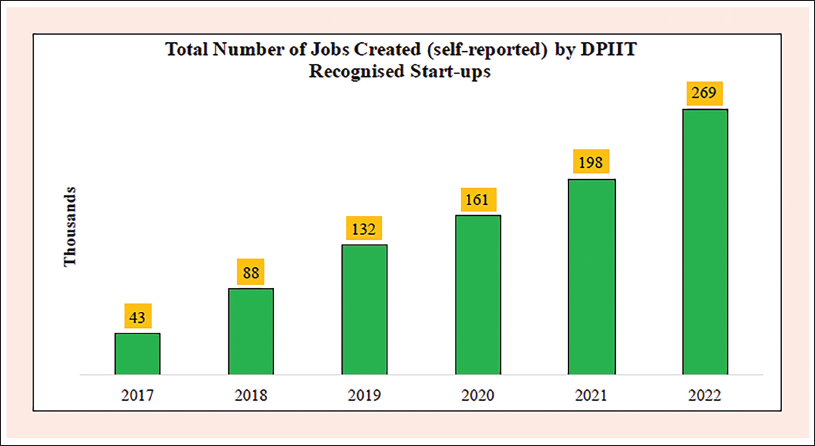
India has emerged as the 3rd largest ecosystem (Startup India) for startups globally and is currently the youngest startup nation in the world. Indian technology landscape itself is experiencing remarkable growth; fostering a fertile ground for innovative startups. With over 4,200 startups contributing to the creation of more than 80,000 jobs (IBEF), the sector is driving substantial employment opportunities. An impressive 900,000+ direct jobs have been created by the Department for Promotion of Industry and Internal Trade (DPIIT) (Invest India) (Figure 1)-recognised startups, marking a notable 64 per cent increase over the past 3 years. According to the Federation of Indian Chambers of Commerce and Industry, early-stage startups will continue to rigorously expand their workforce.
According to Inc42’s (Figure 2) ‘Decoding India’s Unicorn Club Report’, e-commerce, fintech and edtech startups have the highest number of employees (LinkedIn Workplace Learning Report 2019).
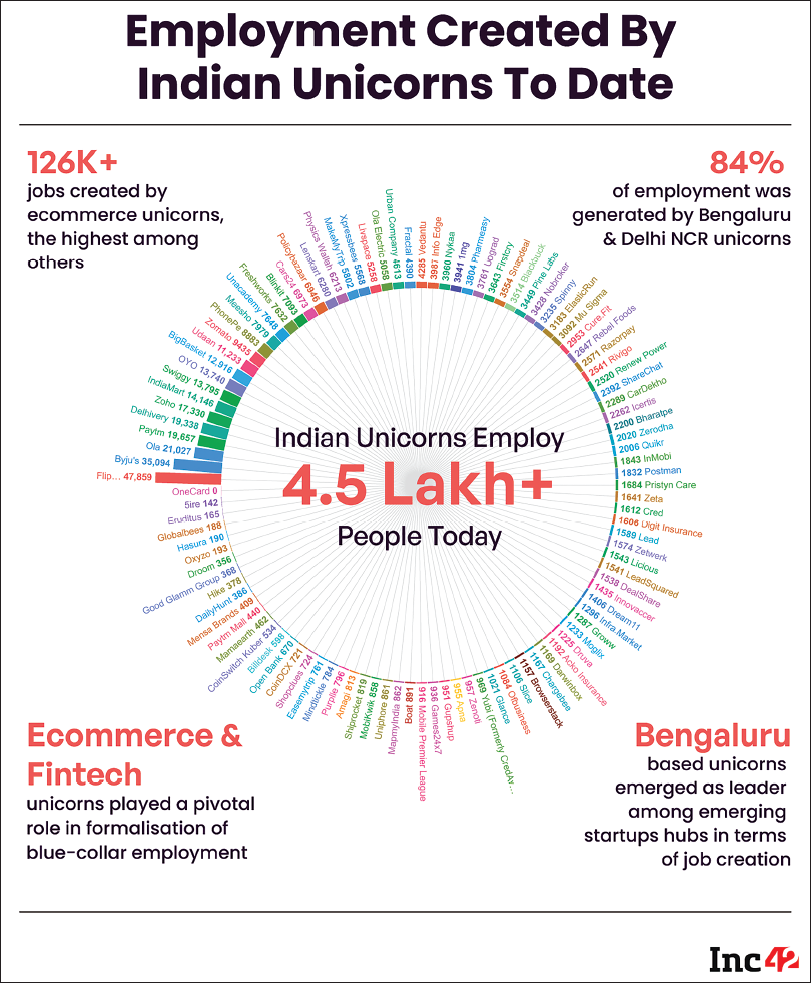
Rapid growth of startups, rise in the number of unicorns every year and a strong inclination of job seekers towards startups have led to heightened complexity in human resources (HR) processes. With the workforce growing over 50 per cent (India Briefing) every year, managing talent effectively becomes a challenge. While initial focus often centres on product development and market entry, organisational maturation necessitates structured HR frameworks to engage key stakeholders. As more startups achieve unicorn status, HR challenges intensify, demanding agile strategies to navigate this evolving landscape.
Let us dive into six critical challenges that every startup must effectively address to cultivate a resilient workforce.
Rapid scaling and talent acquisition struggles
In the fast-paced world of startups, rapid scaling and talent acquisition pose significant challenges. A striking 80 per cent of startups find themselves lacking dedicated hiring teams and often resort to external consultants for support. However, this reliance does not always yield the desired results, as finding individuals who fit both the job requirements and the organisation’s culture proves to be a persistent obstacle. According to a report by CB Insights, 23 per cent of startup failures can be attributed to an inability to attract and retain the right talent.
To address this, startups must embrace unconventional talent acquisition channels, leverage technology and employees’ word of mouth to showcase their unique culture to attract the right candidates. By below-mentioned proactive measures, startups can enhance their ability to attract, onboard and retain top-tier talent, thus strengthening their workforce for sustained growth and success.
Long-term manpower planning aligned with the business plan Decision-makers who can swiftly navigate complexities and make rapid, informed decisions Job descriptions should be continuously updated to reflect evolving roles and responsibilities A standardised hiring process promotes consistency and fairness in recruitment procedures In the absence of a TA team, hiring responsibilities should be divided across team members/leaders
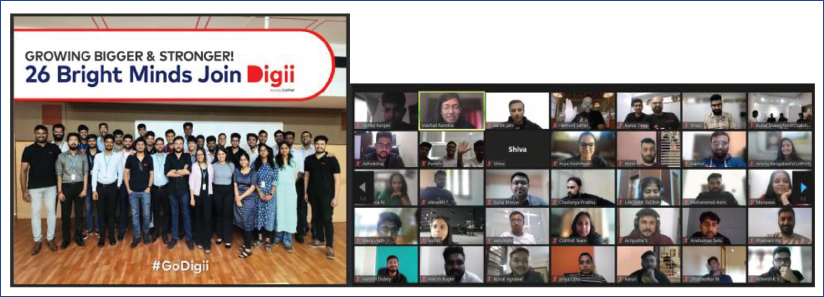
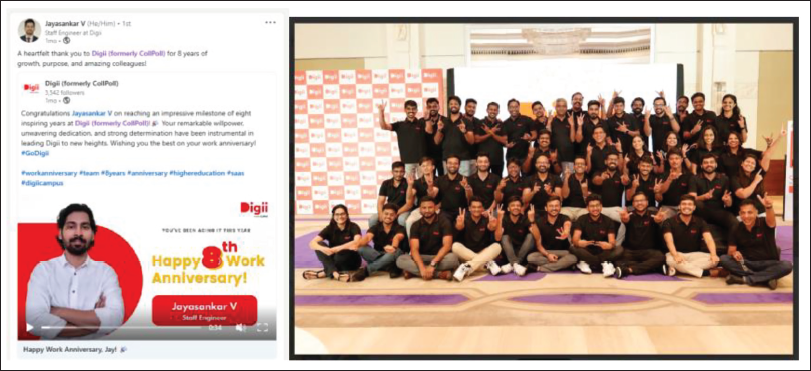
At Digii (Figure 3), we have established a strong referral system that not only ensures job fit but also a great culture fit since the referrals are sent across by existing team members. In the last 2 years, over 60 per cent of team members have joined Digii through referrals. Campus hiring is another approach that has turned quite favourable for us. Moreover, we have ensured every new member feels welcomed into the organisation through special announcements and multiple introduction calls (exhibits).
Leadership development in a non-hierarchical environment
Startups often rely on founders and co-founders for continued direction towards the business goal. However, as the organisation and the workforce grow, it is crucial to build a second layer of leadership that can become a flagbearer of the vision and mission of the organisation. However, developing leadership within startups poses unique challenges, particularly in environments characterised by non-hierarchical structures. A survey conducted by Silicon Valley Bank highlights that 46 per cent of startups identify the acquisition and retention of top leadership talent as a significant hurdle.
Furthermore, the fast-paced and dynamic nature of startup environments adds complexity to leadership development efforts. Leaders must possess not only technical expertise but also the ability to adapt quickly to changing circumstances, inspire innovation and foster a collaborative culture. To address these challenges, startups must implement strategies tailored to their unique organisational contexts.
Identify high-potential employees and train them into leaders Recruit employee-centric leaders Imbibe agility and flexibility to innovate through cross-functional projects/rotate responsibilities Delegate authority and decision-making to emerging leaders Implement training programmes to develop and enhance leadership
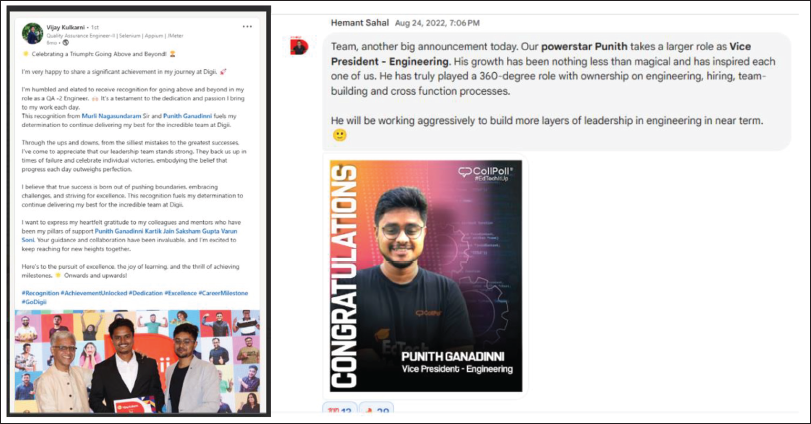
As Digii expanded its team, existing members transitioned into leadership positions (Figure 4) within each function, fostering career advancement opportunities for all team members towards leadership roles. Thus, establishing a strong second layer of leadership, with 50 per cent being direct hire and 50 per cent transitioned from within the organisation.
Performance management and retention amidst high turnovers
Life within a startup, especially one experiencing rapid expansion, is characterised by constant chaos and a perpetual sense of urgency. Talent retention hence becomes a critical concern amidst high turnover rates. Limited resources, high levels of uncertainty, pivoting and lack of formal structures make it challenging for employees to establish stable routines or long-term career trajectories. While this dynamic environment (Figure 5) fosters innovation and creativity, it can also contribute to feelings of instability and a lack of direction among employees. Startups often prioritise aggressive recruiting to fuel growth, yet investing additional attention in retention strategies can yield sustained growth in a stable and resilient workforce.
Establish clear pathways for career progression, with an employee development plan Culture of regular 360-degree feedback and performance check-ins Allocate resources for timely reward, recognition and well-being programmes Compensation and best practices benchmarking with peer organisations
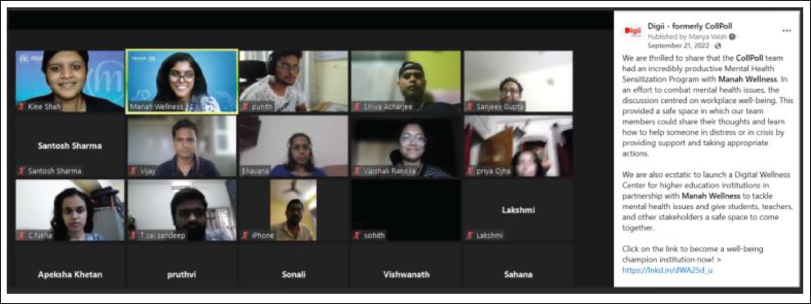
At Digii, a culture of remote work and autonomy thrives, accompanied by attractive incentives, including ESOPs for employees with over 5 years of tenure, as well as referral and retention bonuses. Following the post-COVID era, Digii successfully embraced a hybrid work model, which provides flexible work arrangements. We transitioned to agile performance management, opting for more frequent feedback mechanisms over traditional annual reviews. Additionally, Digii promotes team cohesion with offsites and team gatherings, alongside continuous recognition efforts and wellness workshops in collaboration with Manah Wellness (exhibits).
Learning and growth opportunities
Learning and development (L&D) (Figure 6) stand as a cornerstone in driving growth and a culture of innovation in startups. A report by Deloitte underscores this sentiment, revealing that a staggering 83 per cent of executives within fast-growing companies, frequently startups, regard L&D as indispensable to their success. Over 94 per cent of employees say that they would stay at a company longer if there was an investment in their L&D.
However, limited budgets often constrain startups, forcing them to prioritise spending on immediate operational needs over long-term learning and growth investments. Despite these obstacles, startups can leverage innovative strategies to overcome L&D challenges and foster a culture of continuous learning.
Partner with academic institutions and industry experts to offer access to specialised knowledge and expertise Subscriptions for need-based software and digital learning platforms for remote or distributed teams Encourage peer learning, cross-functional training, soft-skills training and leadership development programme
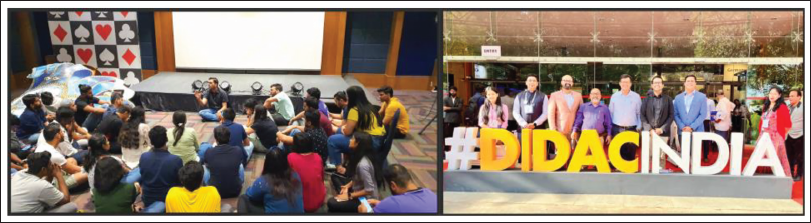
At Digii, a dynamic learning environment thrives through various initiatives. Peer-to-peer learning and regular Ask Me Anything (AMA) sessions by industry experts foster knowledge sharing and open communication. Employees participate in key higher education events (Figure 5) and industry conferences, gaining valuable insights and staying updated on industry trends. Moreover, cross-functional exposure has led to a culture of learning at Digii. There are many instances where team members have transitioned from one function to another. This is the freedom that comes with working at startups (exhibits).
Legal compliance and regulatory hurdles
Ensuring legal compliance poses a significant challenge for startups, constituting a notable weak area within their operational landscape. The regulatory environment for startups, while relatively lenient compared to more established businesses, often lacks a comprehensive framework. Hence, legal and regulatory hurdles require startups to proactively address compliance gaps, establish robust internal controls and stay abreast of legislative changes.
A compliance calendar outlining key deadlines for filings, reports and renewals In-house or outsourced legal expertise to provide guidance and oversight on regulatory matters Periodic internal audits to assess compliance levels/conduct regular compliance audits to identify potential gaps Establish and communicate a code of conduct for employees that will eventually build a culture of compliance
At Digii, we have crafted a very clear action plan that ensures all statutory compliances are done on time. Extended teams are in place that keep a regular check to maintain compliance with all key HR processes, including the IC committee.
Cultivating and sustaining organisational culture for long-term success
Startups often face challenges in maintaining organisational culture for long-term success due to several factors inherent in their dynamic environment. In the early stages of development, startups are typically focused on rapid growth, product innovation and market penetration, often overlooking the importance of nurturing a cohesive culture. However, startups do have a great opportunity, unlike multinational corporations (MNCs), to transform the culture easily while it grows and evolves with the product and the team. It takes the right approach and team to cultivate that completely aligns with the vision.
Cultivate a sense of common goal and belongingness among employees (Figure 7) An ecosystem of experiments A right value system that directs the team dynamics A culture of feedback and open-door policy Make employees your brand ambassadors
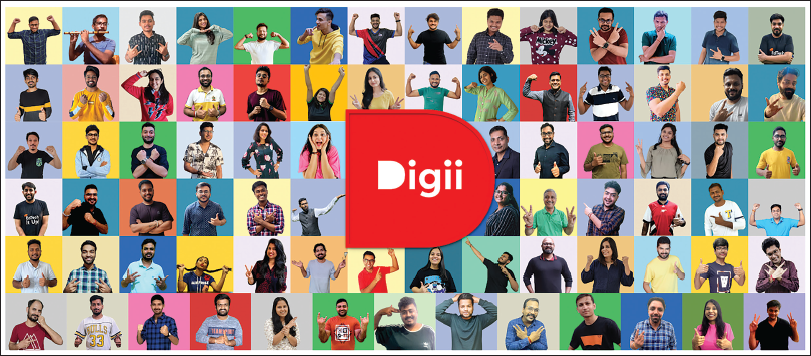
At Digii, we have been very clear about the values that should be sustained to create a non-toxic environment. One of the strategies followed is hosting Ask Me Anything (AMA) sessions with founders and board members. Regular catchups in different cities, approachable leadership, fostering open communication channels frequent celebrations of special days to make each feel valued and cross-functional engagement are some of the many ways we are creating an open and warm culture where team members can continue to thrive (exhibits) (Figure 8).
Conclusion and the Way Forward
Startups must prioritise the establishment of a resilient workforce to effectively navigate the dynamic challenges inherent in the business landscape. By proactively addressing these HR challenges and building effective strategies, startups can cultivate a culture of adaptability, empowering employees to excel in the face of uncertainty. Moreover, it will lead to engaged teams that are committed to the organisation’s goals, scalable HR systems, responsive and agile workforce, employee satisfaction and a positive employer brand. Ultimately, a resilient workforce serves as a cornerstone for sustainable growth and innovation, ensuring long-term success in the fiercely competitive startup environment.
Footnotes
Declaration of Conflicting Interests
The authors declared no potential conflicts of interest with respect to the research, authorship and/or publication of this article.
Funding
The authors received no financial support for the research, authorship and/or publication of this article.