



Abstract
In recent times, the introduction of generative artificial intelligence tools has brought about revolutionary changes in every sector, including higher education. This study aims to investigate the drivers influencing students’ intentions and usage behavior regarding ChatGPT, a renowned generative AI tool, in higher education. We extend the original Technology Acceptance Model with new constructs, including perceived humanness, personal innovativeness, and trust. The collected data from 485 Bangladeshi university students were analyzed using structural equation modeling through SmartPLS-4. The study results reveal that perceived usefulness, ease of use, humanness, personal innovativeness, and trust in ChatGPT all positively influence students’ attitudes toward using ChatGPT in higher education. Furthermore, students’ positive attitudes toward ChatGPT significantly influence their intention. In addition, this positive intention, in turn, positively affects their usage behavior. Moreover, trust in ChatGPT differentially moderates students’ attitudes toward its use, strengthening the influence of perceived ease of use while weakening that of perceived usefulness. This indicates that students who trust ChatGPT are more likely to perceive it as easy and user-friendly. This study offers critical insights for service providers, educators, and policymakers to promote the adoption of and ensure the delivery of efficient, user-centric ChatGPT solutions in higher education.
Keywords
Introduction
Artificial intelligence (AI) has seamlessly permeated nearly every facet of modern life, revolutionizing healthcare, enhancing communication, and transforming sectors such as finance, manufacturing, security, education, software development, and entertainment, thereby fundamentally reshaping the ways we learn, interact, and thrive. AI now represents an advanced computational system that emulates human cognition and functionality, augmented by adaptive algorithms and sensor integration for dynamic responsiveness (Balaskas et al., 2025). Within the domain of AI, the emerging subfield of Generative AI (Gen AI) has introduced transformative capabilities in autonomous content creation, including texts and images (Fui-Hoon Nah et al., 2023; Lo et al., 2024). Gen AI models, which are trained on vast datasets of natural language, images, and various media, can exhibit an exceptional capacity to identify the nuances of human articulation (Bzdok et al., 2024). In contrast to conventional systems that are designed to retrieve user information, Gen AI is dedicated to producing synthetic data that closely resembles real-world content (Balaskas et al., 2025). Driven by the transformative potential of Gen AI, leading tech firms are making substantial financial investments, exemplified by Microsoft's USD 13 billion commitment to OpenAI. The global AI market, projected to surpass USD 1.3 trillion by 2032, underscores its profound economic impact (Grewal et al., 2024).
To enhance students’ academic performance, Gen AI plays a pivotal role by offering personalized learning experiences, automating administrative processes, and delivering data-driven insights to inform educational strategies (Ching et al., 2024; Law, 2024; Luo, 2024). For instance, Gen AI tools like ChatGPT advance educational processes by streamlining the creation of quizzes and assignments while incorporating interactive components tailored to diverse student preferences and individualized learning needs (Luo, 2024). While the integration of Gen AI tools like ChatGPT in higher education offers notable benefits, it also presents significant challenges, particularly regarding academic integrity, as reliance on such tools for assignments may hinder the development of students’ critical thinking and problem-solving skills (Balaskas et al., 2025). In addition, the use of ChatGPT entails the risk of generating biased or inaccurate content, which may not only mislead students but also exacerbate existing educational disparities (Baig & Yadegaridehkordi, 2024). Moreover, excessive reliance on ChatGPT may undermine students’ engagement with complex topics by fostering dependence on AI-generated summaries and solutions (Kim, 2025). Despite inherent challenges, higher education can harness the potential of Gen AI to foster creativity, critical thinking, and personalized learning by integrating it thoughtfully into pedagogy while mitigating risks of misuse (Lo et al., 2024). Therefore, given the growing significance of understanding user adoption behavior (Tiwari et al., 2024), this study investigates the factors shaping tertiary students’ adoption and use of ChatGPT for academic purposes within the context of a developing country, Bangladesh.
Over the years, numerous empirical studies have investigated the adoption of various technologies, employing a range of theoretical frameworks and research methodologies (Granić & Marangunić, 2019). Among these, the Technology Acceptance Model (TAM), founded by Davis (1989), became one of the prime frameworks to grasp technology uptake behavior (Al Darayseh, 2023; Bin-Nashwan et al., 2023). This study adopts this model as a foundation to explore the stimuli influencing users’ attitudes, intentions, and use behavior in the context of ChatGPT in higher education in developing countries like Bangladesh.
This study differentiates itself from prior research for several key reasons. Firstly, despite the widespread attention given to Gen AI tools like ChatGPT, the majority of existing research on their adoption has focused on developed countries (Sallam et al., 2024; Strzelecki, 2023). Consequently, the existing literature on this topic from the perspective of emerging economies, such as Bangladesh, remains nascent and fragmented. Addressing this gap, the present study examines the determinants of both intention and actual usage of ChatGPT among tertiary-level students in a developing country context. For getting a more profound and improved understanding, this study extends the basic TAM model by incorporating three contextual variables: Perceived Humanness (PH), Personal Innovativeness (PI), and trust in ChatGPT (TC). Many previous studies overlook the crucial influence of moderating factors, such as trust, in shaping users’ intentions to adopt AI technologies (Al Darayseh, 2023; Zhang et al., 2023). To the best of our knowledge, this study is among the first to investigate the moderating role of TC in the relationships between perceived usefulness (PU), perceived ease of use (PEOU), PH, PI, and students’ attitudes (AT) toward the use of ChatGPT in higher education. Moreover, Gen AI aspires to emulate human capabilities, including reasoning, natural communication, and creative intelligence (Kim, 2025). For this reason, we incorporate PH in exploring learners’ perceptions toward the acceptance of ChatGPT in academia. Furthermore, students exhibiting higher levels of innovativeness are more intrinsically motivated to adopt new technologies than their peers (Mueller et al., 2024; Strzelecki, 2024). In addition to enriching the existing literature on technology adoption and the TAM model, this study offers meaningful insights for students, educators, AI developers, administrators, marketers, and other professionals working in higher education across developing countries, helping them better understand and support students’ use of ChatGPT.
Literature Review
Technology Acceptance Model
The Technology Acceptance Model (TAM) is a recognized framework for understanding technology acceptance, extensively utilized in academic studies (Davis, 1989). Core constructs, such as PEOU and PU, offer critical insights into students’ acceptance and use of emerging technologies, making the TAM a robust framework for examining ChatGPT adoption. Accordingly, this study employs TAM to investigate the determinants influencing students’ adoption of ChatGPT, given its prominence in technology acceptance research and its emphasis on the key drivers of behavioral intention to use (IU) (Granić & Marangunić, 2019). In addition, it offers greater flexibility and ease of modification or expansion, which has led to its application across various areas of study (Song et al., 2021). Moreover, it has found extensive application across diverse fields and contexts, such as technology adoption in higher education (Qashou, 2021), and more specifically, the adoption of ChatGPT in higher education (Balaskas et al., 2025; Ma et al., 2024; Tiwari et al., 2024). Above all, its wide-ranging application in academic and practical studies highlights its significance in assessing the factors that affect technology adoption and usage (King & He, 2006).
Perceived Humanness, Personal Innovativeness, and Trust in ChatGPT
By extending the TAM model with contextual variables like perceived humanness (PH) and personal innovativeness (PI), this framework can encapsulate the distinctive characteristics of AI-driven conversational technologies such as ChatGPT. PH pertains to the degree to which students regard ChatGPT as capable of human-like interactions, whereas PI denotes a learner's inclination to explore new technologies. Furthermore, integrating trust as a moderating component enhances comprehension of how technological confidence affects the interplay between these factors and total adoption.
Humanness refers to the extent to which a chatbot exhibits human-like characteristics, including the ability to understand natural language, express empathy, and adapt to the context of a conversation (Go & Sundar, 2019). The integration of human-like characteristics into chatbot design has been empirically shown to enhance users’ cognitive and affective evaluations of the system, thereby increasing their likelihood of perceiving the chatbot as a credible and authoritative source of information (Hui et al., 2024; Nass & Moon, 2000). In addition, PH plays a vital role in adopting chatbot-related technology. Existing literature shows that chatbots exhibiting high PH enhance users’ attitudes, augmenting satisfaction and participation levels (Ding & Najaf, 2024). Chatbots that exhibit human-like characteristics improve social presence, facilitating more natural conversations and fostering trust. Users are more likely to accept and intend to use chatbots that demonstrate strong conversational abilities and human-like traits, as these are perceived to enhance trust and engagement (Schuetzler et al., 2020). Moreover, Mueller et al. (2024) noted that the PH of the Chatbot significantly influenced the users’ positive AT toward adopting Chatbot agents, indicating that when ChatGPT mimics the natural and friendly behavioral pattern of a human being, it makes the students more comfortable because they feel they are dealing with a friend who will listen to them.
Furthermore, Agarwal and Karahanna (2000) introduced the concept of PI in the context of information technology to explain users’ readiness to adopt emerging technologies. PI has been extensively studied as a factor influencing individuals’ interaction with technology over time. Research indicates that individuals with higher levels of innovativeness tend to be more receptive to adopting and consistently using new information systems (Sadewo et al., 2025). In addition, PI significantly shapes AT toward chatbots, as highly innovative individuals are more inclined to explore and engage with new tools, driven by their recognition of the potential benefits these technologies offer (Amoroso & Lim, 2015). Moreover, Cheng (2014) highlighted that persons with a high level of PI tend to view technology as both useful and easy to use, driven by their openness to exploration and learning. Furthermore, research indicates that PI plays a crucial role in shaping the behavioral willingness to accept new technologies, including AI chatbots, underscoring its significance in the context of technology adoption (Tian et al., 2024). Therefore, students possessing a high degree of PI are more likely to perceive AI-based technologies, such as ChatGPT, as beneficial tools for enhancing their academic performance, thereby fostering a favorable attitude toward their adoption and continued use in educational settings.
Trust is a complex concept pertinent to various domains, including economics, sociology, management, psychology, and technology (Kim, 2008). Trust is superfluous in the absence of threats. Due to the inability to physically inspect products, online shoppers often encounter heightened uncertainty, which in turn gives rise to perceived risks. In such contexts, trust emerges as a critical mechanism for mitigating uncertainty and reducing the potential risks associated with purchase decisions (Kim et al., 2008). Gefen et al. (2003) emphasized that trust plays a pivotal role in shaping consumers’ belief systems and directly affects their decisions to purchase goods and services. In addition, an individual's confidence in adopting new technology largely depends on their level of knowledge and the extent to which they trust it. When evaluating whether to engage with a new system, trust becomes a key consideration in the decision-making process (Lu et al., 2019). TC is shaped by elements such as reliability, transparency, and accountability. When users perceive these AI technologies as dependable and credible, they are more inclined to engage with and adopt them (Baek & Kim, 2023). As users gain greater awareness of ChatGPT's capabilities, their trust perceptions can either facilitate or impede their sense of ease in using the system, as prior studies have demonstrated that technology awareness plays a critical role in shaping perceptions of both usability and usefulness (Shahzad et al., 2024). TAM-based research highlights trust as a critical determinant of technology adoption, with existing literature consistently affirming its positive influence, particularly in contexts such as digital banking (Bashir & Madhavaiah, 2015).
Based on the aforementioned literature, PH, PI, and trust emerge as pivotal determinants shaping students’ attitudinal dispositions toward the use of ChatGPT in higher education. These contextual variables not only influence the cognitive and affective evaluations of AI-driven conversational agents but also serve as critical antecedents in fostering a favorable orientation toward such technologies. A positive AT, reinforced by these factors, significantly enhances students’ behavioral intention to engage with ChatGPT, thereby facilitating its broader acceptance and integration within academic environments. This underscores the importance of designing AI systems that are perceived as human-like, trustworthy, and innovation-friendly to support sustainable adoption in educational settings.
Research Model and Hypothesis Development
This study proposes a research model incorporating core TAM constructs, PU, and PEOU, alongside relevant extensions, including PH, PI, and TC, as illustrated in Figure 1. The core TAM constructs, PU and PEOU, along with PH, PI, and TC, were hypothesized (H1–H5) to have a direct and positive effect on students’ AT toward ChatGPT usage in higher education. Furthermore, it was hypothesized that a positive attitude toward ChatGPT would enhance students’ intention to use it (H10), which in turn would positively influence their actual usage behavior (H11). Finally, we postulated that TC positively moderates the relationship between PU and AT, PEOU and AT, and PH and AT, and PI and AT (H6, H7, H8, H9).
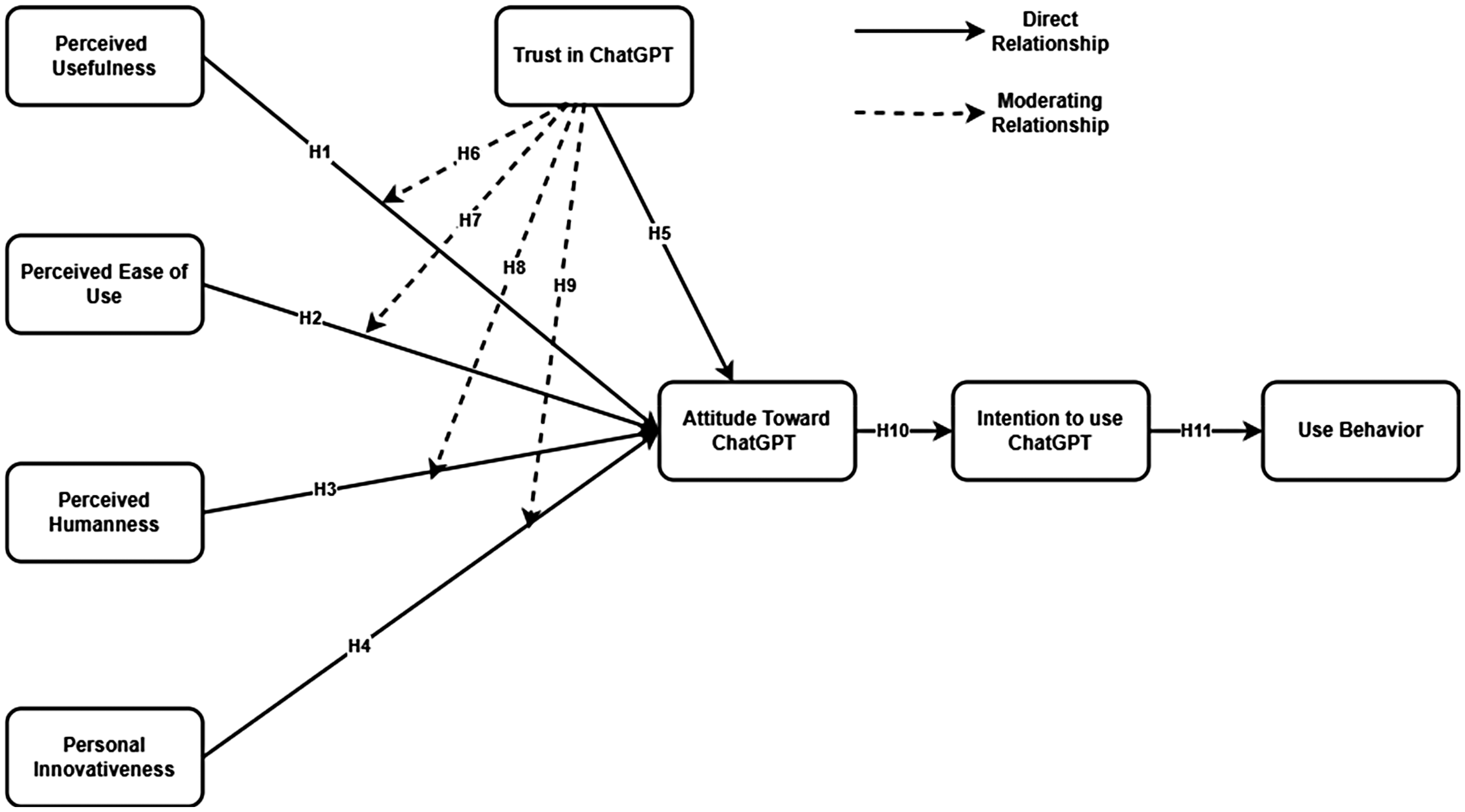
Proposed research framework and hypotheses.
Perceived Usefulness (PU)
PU refers to the degree to which users expect that the use of new technology will improve their productivity and efficiency (Davis, 1989). PU refers to students’ belief that adopting ChatGPT in education enhances their efficiency, effectiveness, and academic outcomes. Abdaljaleel et al. (2024) identified a strong influence of PU on students’ attitudes toward ChatGPT usage across five Arab countries, a finding corroborated by several other studies that consistently link PU with positive user attitudes (Balaskas et al., 2025; Tiwari et al., 2024). Moreover, Balaskas et al. (2025) demonstrated that perceived usefulness directly influences the intention to adopt ChatGPT. Therefore, we posit the following hypothesis:
Perceived Ease of Use (PEOU)
PEOU refers to the extent to which users believe they can comprehend, acquire, and utilize a technology with simplicity (Davis, 1989). This study defines PEOU as the extent to which higher education students see ChatGPT as intuitive, easy to understand, and user-friendly in their higher studies. Previous authors noted that PEOU positively impacts users’ AT toward technology adoption, including e-wallet use (Abdul-Halim et al., 2022), particularly the use of ChatGPT in education (Balaskas et al., 2025). However, Tiwari et al. (2024) reported no significant relationship between PEOU and students’ AT toward ChatGPT usage. Based on the above literature, the following hypothesis has been formulated:
Perceived Humanness (PH)
PH is defined as the degree to which users believe AI tools like chatbots to be human-like in their interactions (Hsieh & Lee, 2024). Here, PH refers to the extent to which students in higher studies subjectively experience the chatbot as exhibiting human-like qualities. Research on AI systems exhibiting human-like traits, such as natural language processing and empathetic responses, demonstrates their significant influence on user AT and engagement (Porra et al., 2020). When students perceive AI-based tools as more human-like, they tend to form favorable AT toward them in educational contexts, as this perception enhances trust, usability, and emotional connection (Wang & Huang, 2025). Xia et al. (2024) noted that AI tools with PH positively drive users’ AI system use intentions in healthcare. Mueller et al. (2024) also emphasized the role of PH in chatbot use expectations. Based on the above discussion, the proposed hypothesis is as follows:
Personal Innovativeness (PI)
PI is a person's ability to embrace and interact with cutting-edge technology (Agarwal & Prasad, 1998). In this study, PI is defined as students’ willingness and ability to adopt ChatGPT to enhance academic performance by exploring, experimenting, and effectively applying it to improve learning outcomes and study processes. Highly innovative individuals are more inclined to adopt AI-driven educational tools, viewing them as opportunities to enhance learning and efficiency (Kumar et al., 2024). Previous studies have demonstrated PI as a major determinant of technology adoption, such as Fintech (Setiawan et al., 2021) in e-learning (Twum et al., 2022), particularly attitudes toward ChatGPT adoption (Kumar et al., 2024). These results suggest that students’ opinions on adopting ChatGPT in their studies may be favorably influenced by their innovativeness. Therefore, we propose the following hypothesis:
Trust in ChatGPT (TC)
Trust significantly influences behavior regarding technology adoption (Van Pinxteren et al., 2019). In this study, TC denotes the level of students’ trust in the content provided by ChatGPT and their willingness to take initiatives based on that trust. While ChatGPT is valued for its human-like responses, excessive reliance may lead to flawed decision-making, whereas distrust can hinder effective use and limit its potential benefits (Choudhury & Shamszare, 2023). Confidence in ChatGPT significantly shapes users’ perceptions and intentions, as both educators and learners must trust its ability to provide accurate, reliable responses and effectively support academic tasks (Shahzad et al., 2024). Previous studies found a positive association between trust and information technology adoption (Choudhury & Shamszare, 2023), emphasizing its significance in shaping students’ intentions and attitudes toward ChatGPT adoption (Balaskas et al., 2025). Moreover, TC moderates the relationship between ChatGPT awareness and PEOU, and awareness and PU (Shahzad et al., 2024), as well as PU and AT, and PEOU and AT (Rahman et al., 2022). Thus, the following hypotheses are proposed:
Attitude (AT) Toward ChatGPT
As emphasized by the Theory of Reasoned Action (TRA) and TAM, attitude is a key determinant of behavioral willingness or intention to accept new technologies (Ajzen, 1991). Users with a positive AT toward educational technology are more likely to exhibit a firm intention for its sustained use (Teo, 2011). In this study, students’ AT toward ChatGPT encompasses their overall perceptions, emotions, and predispositions to engage with the tool either positively or negatively in academic contexts. Rahiman and Kodikal (2024) found that students with favorable perceptions of AI technologies demonstrate greater engagement, trust, and willingness to use them for academic purposes. Prior studies further affirm that behavioral intention to adopt ChatGPT is strongly influenced by a positive AT toward such technologies (Awal & Haque, 2024; Tiwari et al., 2024). Therefore, the following hypothesis has been developed:
Intention to Use (IU) and Use Behavior (UB)
The association between intention and real or actual usage behavior is well-established in technology adoption research (Ajzen, 1991; Venkatesh et al., 2003). In this study, IU reflects students’ willingness to adopt ChatGPT, whereas use behavior captures the frequency and manner of its academic application. Prior research suggests that firm behavioral intention is a key predictor of use behavior, as individuals with favorable intentions are more likely to translate motivation into action (Davis, 1989; Venkatesh & Davis, 2000). Literature indicates that intention acts as a significant mediator between attitudes and UB in the context of technology adoption (Farzin et al., 2021), highlighting the necessity of cultivating positive intentions to enhance engagement with ChatGPT (Dwivedi et al., 2023; Strzelecki, 2023). Based on the discussion, we propose the following hypothesis:
Methodology
Study Participants
We collected primary data from the students of two renowned public universities and one private university in Bangladesh. As the student-to-teacher ratio rises in higher education institutions in developing countries, teachers face challenges to provide individualized support and address the questions of each student (Togunloju & Ajewole, 2025). The lack of individualized support from teachers may result in student dissatisfaction with their overall learning experience, potentially leading to poor academic performance or even dropping out of the academic year (Tepe et al., 2024). Thus, students in many higher educational institutions in developing countries are increasingly relying on Gen AI tools like ChatGPT to support their learning (Faro et al., 2025). In this study, we employed convenience sampling to collect data from university students actively using ChatGPT for academic purposes. We selected educational institutions from diverse domains, including general and science and technology-focused. The justifications for employing the convenience sampling technique for collecting data are as follows. Convenience sampling allows researchers to collect data from respondents who are easily accessible both physically and virtually (Etikan et al., 2016). In addition, it requires less time and cost compared to probability sampling techniques (Stratton, 2021). Moreover, it is adequate when the main objective of the study is to examine relationships, find patterns, or formulate hypotheses rather than generalize to a larger population (Etikan et al., 2016). We distributed the Google Form-based questionnaire among 600 Bangladeshi students. We got responses from 511 students, resulting in an 85% response rate. However, 26 responses were excluded from the analysis due to patterns indicating unengaged, such as similar answers or a standard deviation equal to 0. Earlier studies have used a same method to exclude unengaged responses (Coursaris et al., 2018; North-Samardzic & Jiang, 2015). Finally, 485 valid data were used to analyze both the measurement and structural models in this study.
Measurement Instruments of the Study
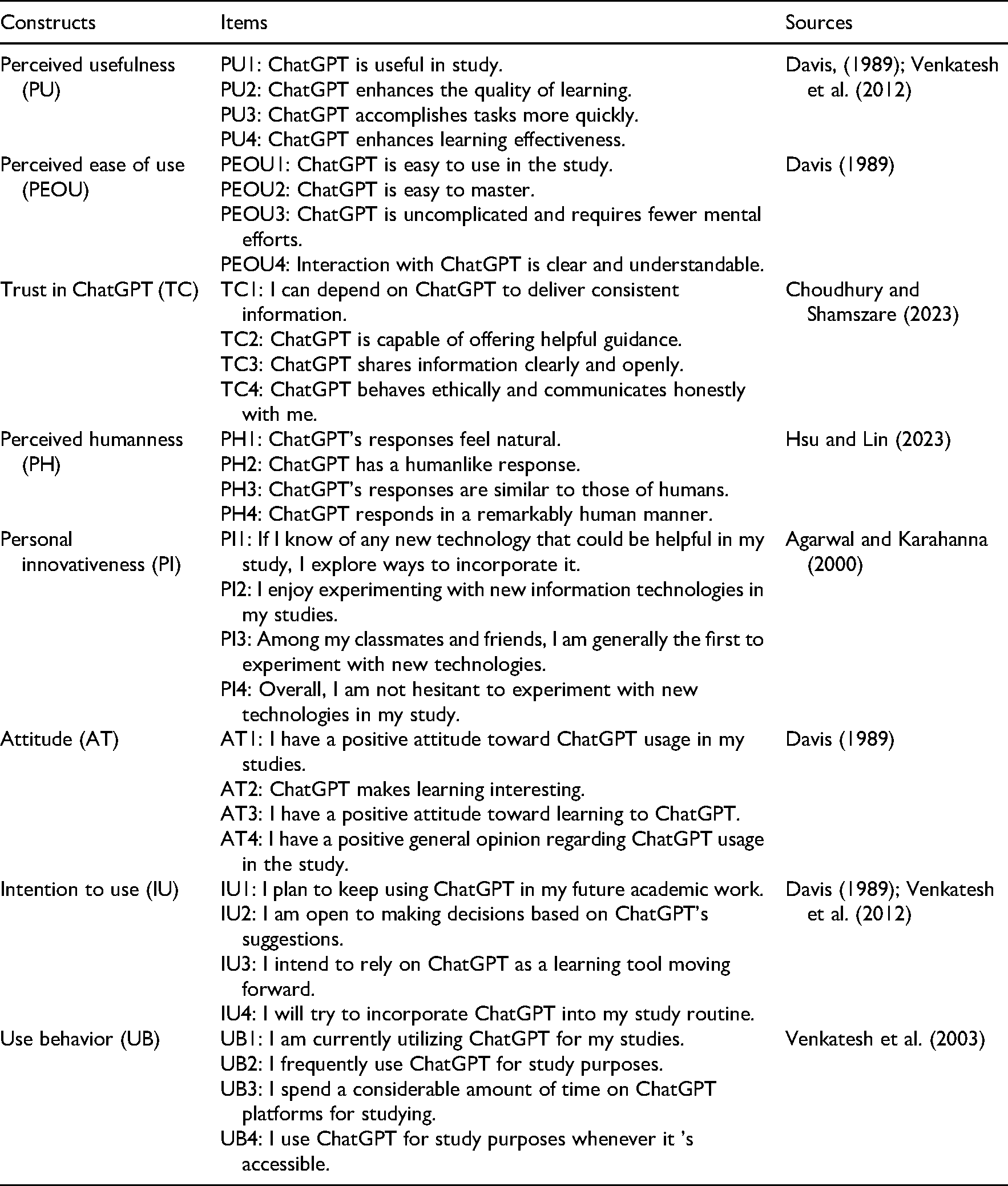
To confirm the validity of the study instruments, measurement items for both exogenous and endogenous variables in the study were adapted from the previous studies after slight modification. For the constructs such as PU, PEOU, TC, PH, PI, AT, IU, and UB, four items were used. In addition, the pretesting was performed to improve understanding and clarity of the questionnaire. Appendix 1 presents details of the questionnaire used in this study.
Questionnaire and Data Collection
The primary data were collected by the Google-based online survey comprising 32 questions. The questionnaire was written in English, and the demographic profile of the respondents included their age, gender, education level, and faculty in the first part. In addition, the following sections of the questionnaire consist of items rated on a 5-point Likert scale, which ranges from (1) “strongly disagree” to (5) “strongly agree”. We conducted pretests and pilot tests to assess the suitability of the questionnaire with three experts. Moreover, a pilot study was carried out with 15 participants who mirrored our intended audience. After the pilot test with minimal changes, the questionnaire was finalized. Finally, we distributed a Google-based questionnaire link among our target respondents through e-mail, Messenger, WhatsApp, and social media platforms. The Google-based questionnaire link was active from March 2024 to May 2024.
Data Analysis
To evaluate the proposed research model, we performed both measurement and structural model analyses using structural equation modeling (SEM). SEM provides advantages over traditional methods like linear regression by allowing the simultaneous assessment of complex relationships among the various constructs (Gefen et al., 2003; Marcoulides & Schumacker, 2013). In addition, SEM generally requires a minimum sample size of 200, with 300 being highly recommended for reliable results (Kline, 2023). A standard guideline is to have at least five, preferably 10, observations per measurement item (Hair et al., 2010). Based on this, the suggested sample size was approximately 320 for our study with 32 measurement items. Moreover, the respondents’ demographic data were analyzed using IBM SPSS Statistics 27, and the measurement and structural models were analyzed using SmartPLS Version 4.00.
Results
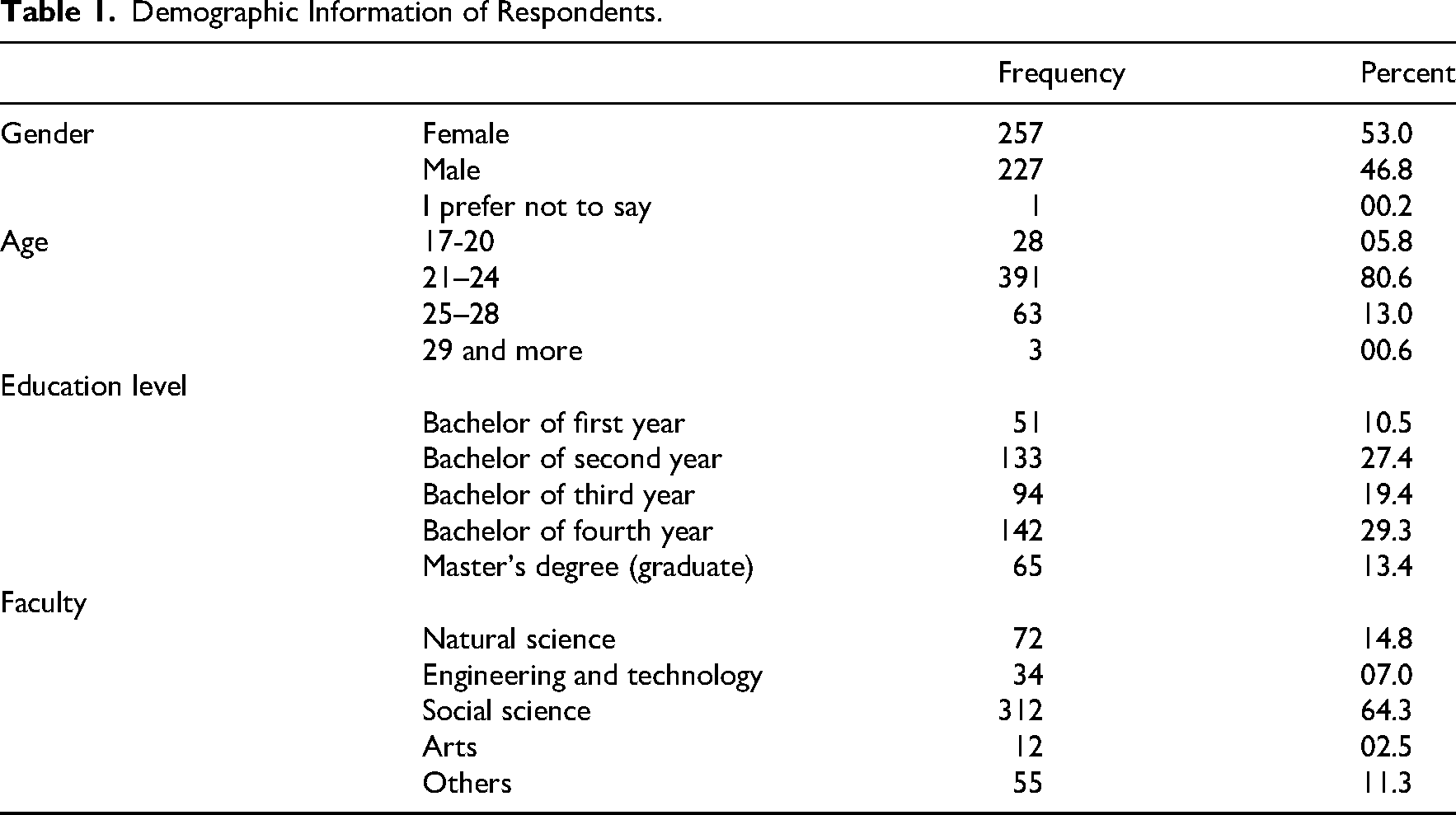
As shown in Table 1, the demographic analysis reveals that the majority of respondents are female (53%), followed by males (46.8%). Most participants (80.6%) fall within the 21–24 age range, with smaller proportions aged 25–28 (13.0%), 17–20 (5.8%), and 29 or older (0.6%). The sample predominantly comprises fourth-year bachelor's students (29.3%), followed by those in their second (27.4%), third (19.4%), and first year (10.5%) of study. In addition, only 13.40% of respondents are enrolled in master's degree programs. Moreover, the sample is predominantly composed of students from the Social Science faculty, accounting for 64.3% of respondents, followed by those from the Natural Sciences (14.8%), Engineering and Technology (7.3%), Arts (2.5%), and other faculties (11.3%).
Demographic Information of Respondents.
Common Method Bias Analysis
Harman's single-factor analysis was employed to assess the common method bias (CMB) in this study. The principal axis factor (PAF) analysis was employed to identify the number of components essential for explaining variance. The result showed that one factor accounted for 40.50% of the total variance, which is less than the recommended threshold of 50% (Podsakoff et al., 2003). Moreover, we also employed the variance inflation factor (VIF) to assess potential CMB. A VIF value under 3.3 is acceptable, signifying no multicollinearity concerns (Kock, 2015). As shown in Table 2, all VIF values for the independent and dependent variables were below the recommended threshold, indicating that the CMB issue is not a concern in this study.
Collinearity Statistics.
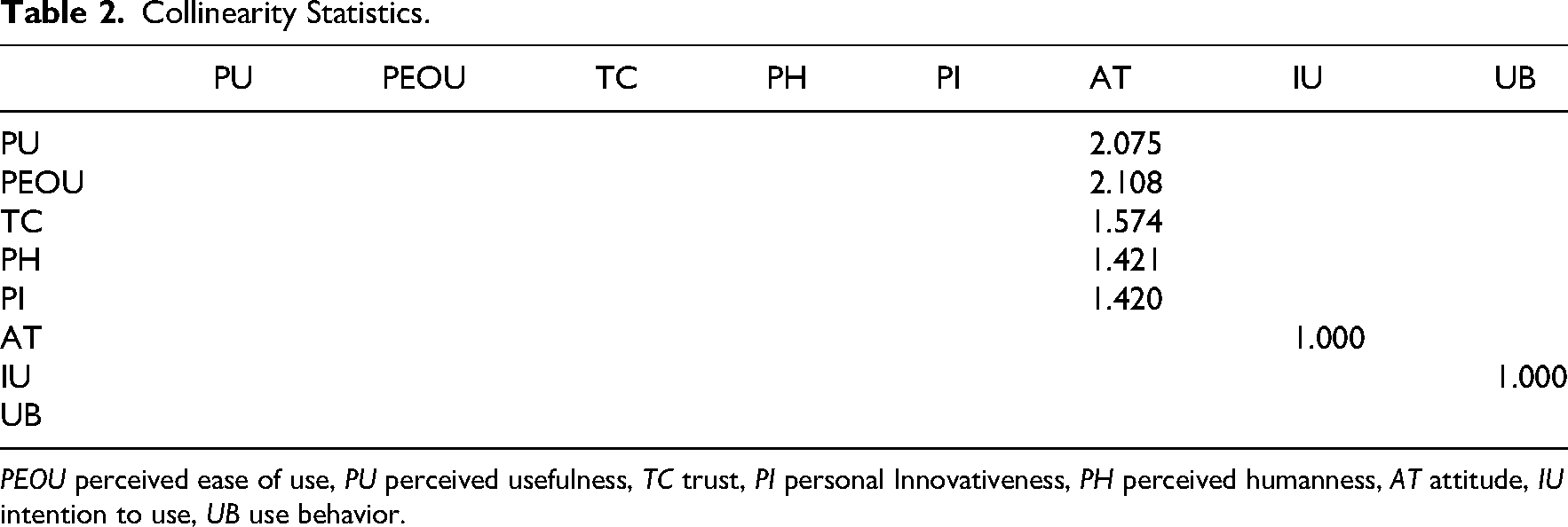
PEOU perceived ease of use, PU perceived usefulness, TC trust, PI personal Innovativeness, PH perceived humanness, AT attitude, IU intention to use, UB use behavior.
Measurement Model
Cronbach's alpha, composite reliability, Average Variance Extracted (AVE), and item loadings are used to test the study model's convergent and discriminant validity. The Heterotrait-Monotrait ratio of correlations (HTMT), the square root of AVE, and the Fornell and Larcker correlation matrix are the techniques used to assess discriminant validity. Cronbach's alpha is frequently used to assess internal consistency and reliability, with Hair et al. (1995) recommending a standard value of 0.7 in social science research. While exploratory research frequently accepts factor loadings of 0.40 or above, optimal factor loadings for each measuring item should be 0.70 or above (Hulland, 1999). In addition, each construct's composite reliability (CR) should ideally be 0.70 or above. According to Bagozzi and Yi (1988), the AVE should preferably be 0.50 or greater. The factor loadings, Cronbach's alpha, rho_A, CR, and AVE are shown in Table 3. Every item has factor loadings greater than 0.7, except PEOU3 and PI3, and each construct has a Cronbach's alpha greater than 0.7. All constructs have AVE values greater than 0.5, showing strong internal consistency and convergent validity. The square roots of AVE are greater than the correlation values with other constructs, as illustrated in Table 4 by the Fornell and Larcker correlation matrix. Furthermore, Table 5 reveals that all HTMT values are below the recommended threshold of 0.85 (Kline, 2023). However, IU and UB have an HTMT ratio of 0.87. Research has indicated that an acceptable HTMT ratio is less than 0.9 (Gold et al., 2001). These findings imply sufficient discriminant validity as a result. Table 6 presents the R2 values for AT, IU, and UB as 0.605, 0.444, and 0.566, respectively, indicating the model's explanatory power. Table 6 also presents the Stone-Geisser Q-square values to show the predictive relevance of the study model. Q-square values for AT, IU, and UB are 0.430, 0.328, and 0.375, which are greater than 0, indicating the model predictive relevance has been established (Maisaroh et al., 2024). Hair et al. (2013) noted that Q-square values of 0.02, 0.15, and 0.35 indicate weak, moderate, and strong levels of predictive relevance, respectively. Therefore, the current study model demonstrates strong, moderate, and strong predictive relevance for AT, IU, and UB. Table 7 displays the fitness values for the assessed model as well as the saturated model. The Standardized Root Mean Square Residual (SRMR) values are 0.053 for the saturated model and 0.087 for the estimated model. In PLS-SEM, SRMR is considered more flexible. According to Hair et al. (2017), SRMR is acceptable up to 0.10, especially in complex models, provided the R-squared values are within their expected thresholds. Thus, the outcomes demonstrate that the model precisely represents the data. The Normed Fit Index (NFI) values are 0.839 and 0.827, slightly lower than 0.90 (Hu & Bentler, 1999). The model fit could be improved, but it still indicates that the suggested relationships are well-fitted.
Measurement Model.
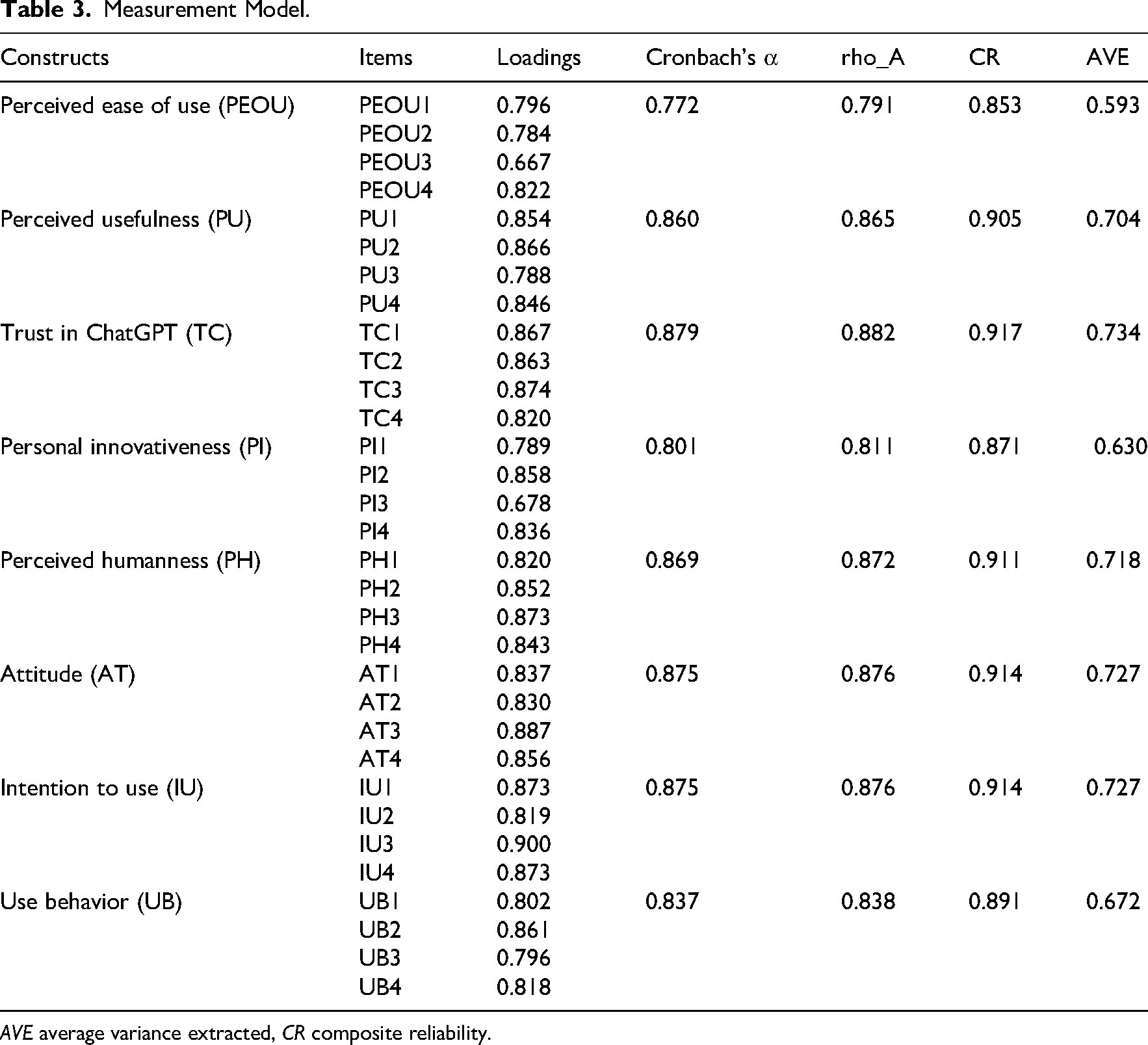
AVE average variance extracted, CR composite reliability.
Fornell-Larcker Criterion.
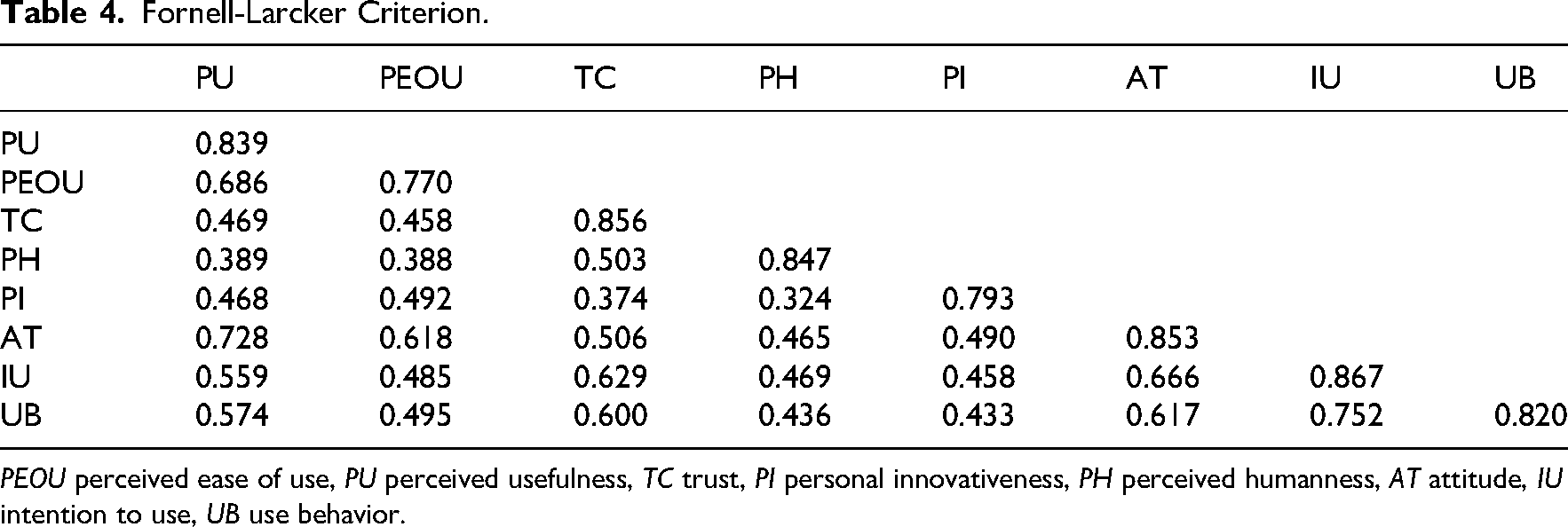
PEOU perceived ease of use, PU perceived usefulness, TC trust, PI personal innovativeness, PH perceived humanness, AT attitude, IU intention to use, UB use behavior.
Heterotrait-Monotrait Ratio (HTMT).
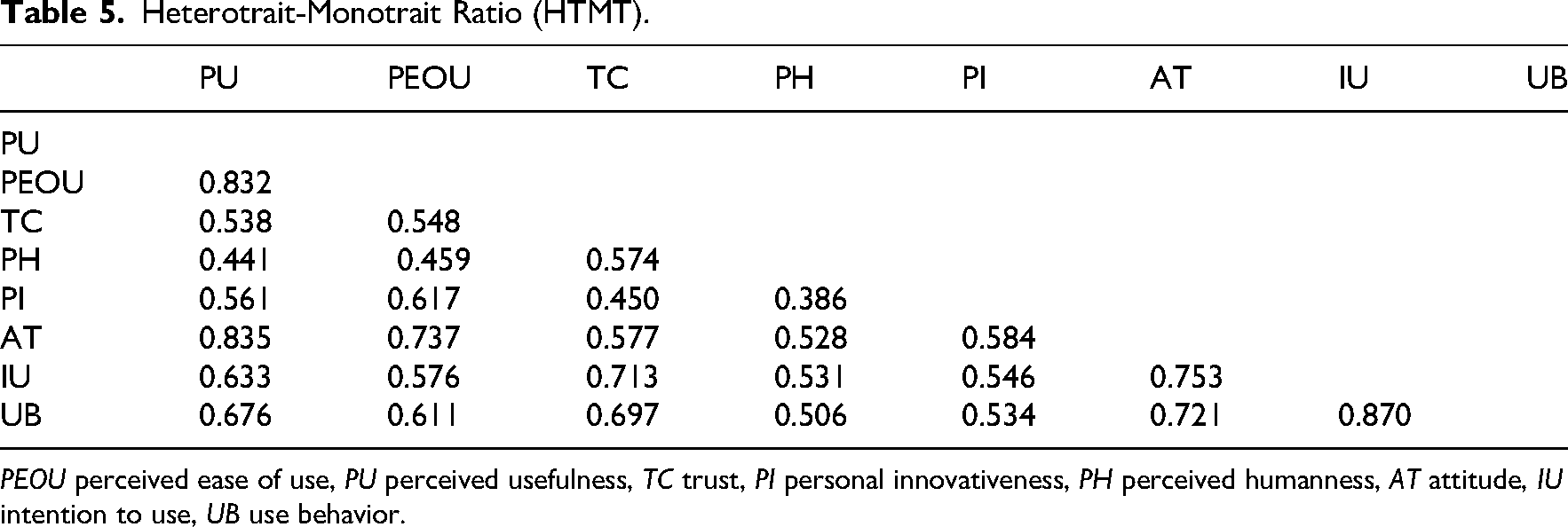
PEOU perceived ease of use, PU perceived usefulness, TC trust, PI personal innovativeness, PH perceived humanness, AT attitude, IU intention to use, UB use behavior.
R-Squared and Q-Squared.

AT attitude, IU intention to use.
Model Fit With Data.

SRMR standardized root mean square residual, NFI normed fit index.
Structural Model
The structural model analysis was conducted using the bootstrapping technique, generating 5,000 resamples from the primary dataset (N = 485) to evaluate the hypotheses at a 5% level of significance. In bootstrapping, model parameters are iteratively determined by randomly selecting subsamples from the original dataset. To evaluate the weight significance, t-values are computed. To assess the link between explanatory and endogenous variables, path coefficients (β), t-statistics, and p-values were examined. Table 8 presents the structural model analysis along with path coefficient (β), t-statistics, p-values, and hypothesis status. Furthermore, the path diagram and loadings with p-values are shown in Figure 2.
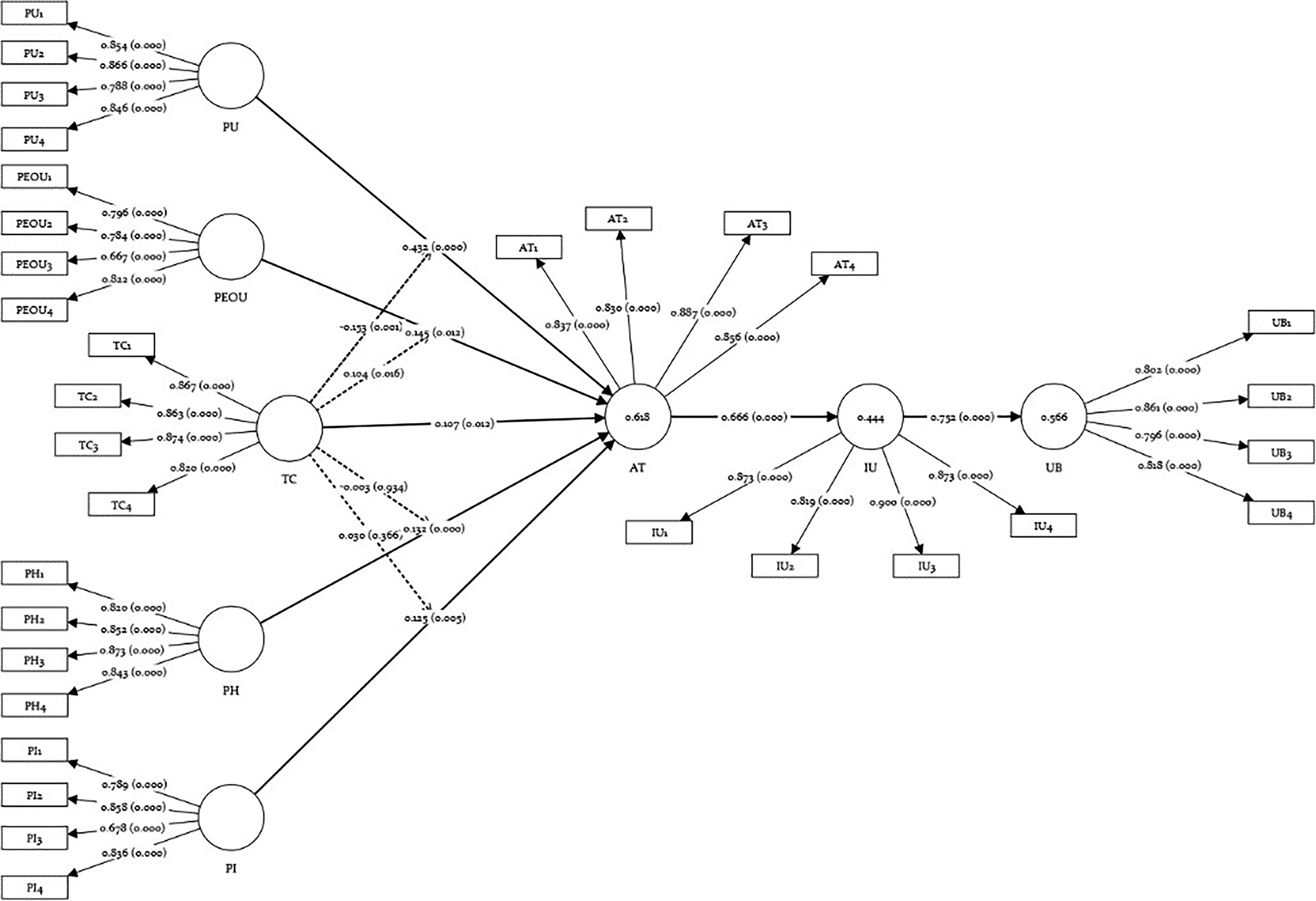
Path diagram and loadings with p-values.
Direct Relationship.
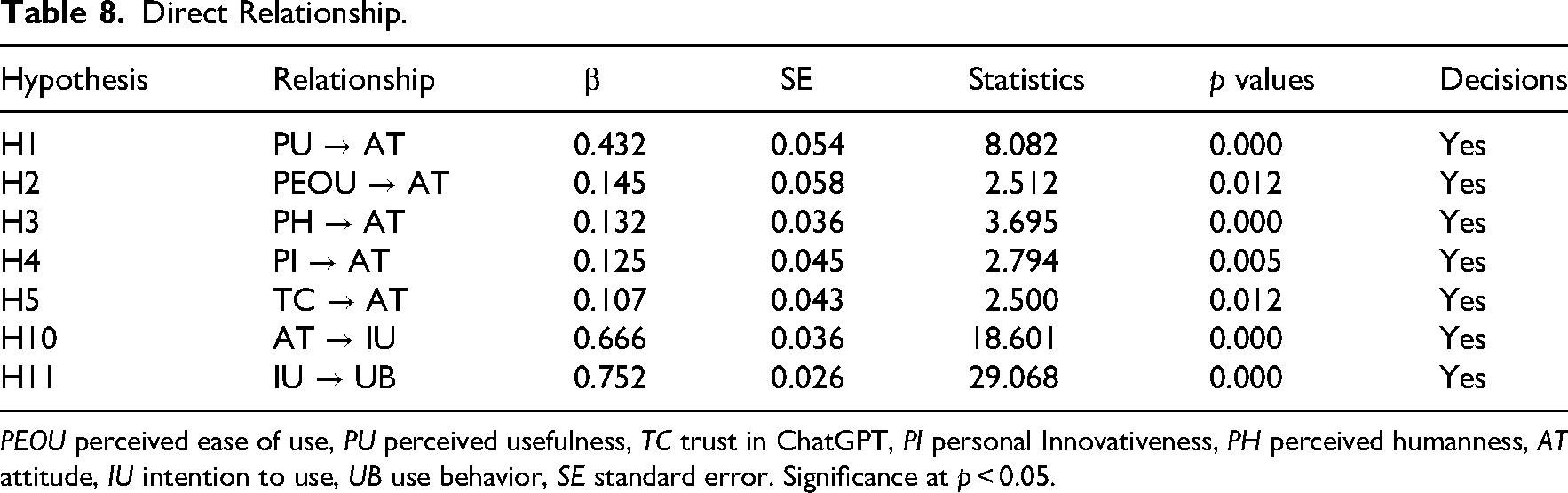
PEOU perceived ease of use, PU perceived usefulness, TC trust in ChatGPT, PI personal Innovativeness, PH perceived humanness, AT attitude, IU intention to use, UB use behavior, SE standard error. Significance at p < 0.05.
In this study, the direct relationships are found between PU and AT (Path Coefficient = 0.432; t-statistics = 8.082.; p < .001), PEOU and AT (Path Coefficient = 0.145; t = 2.512; p < 0.05), PH and AT (Path Coefficient = 0.132; t = 3.695; p < 0.001), PI and AT (Path Coefficient = 0.125; t = 2.794; p < 0.05), TC and AT (Path Coefficient = 0.107; t = 2.500; p < 0.05), AT and UI (Path Coefficient = 0.666; t = 18.601; p < 0.001), and IU and UB (Path Coefficient = 0.752; t = 29.068; p < 0.001). Therefore, all of our direct relationships are supported.
In addition, this study confirms the following moderated relationships: TC*PEOU and AT (Path Coefficient = 0.104; t = 2.413; p < 0.05), TC*PU and AT (Path Coefficient = −0.153; t = 3.300; p < 0.001), TC*PI and AT (Path Coefficient = 0.030; t = 0.904; p > 0.05), TC*PH and AT (Path Coefficient = −0.003; t = 0.083; p > 0.05). So, our hypothesis such as H6 is accepted and H7, H8, and H9 were rejected presented in Table 9 and the moderating relationship illustrated in the moderating curve in Figure 3.
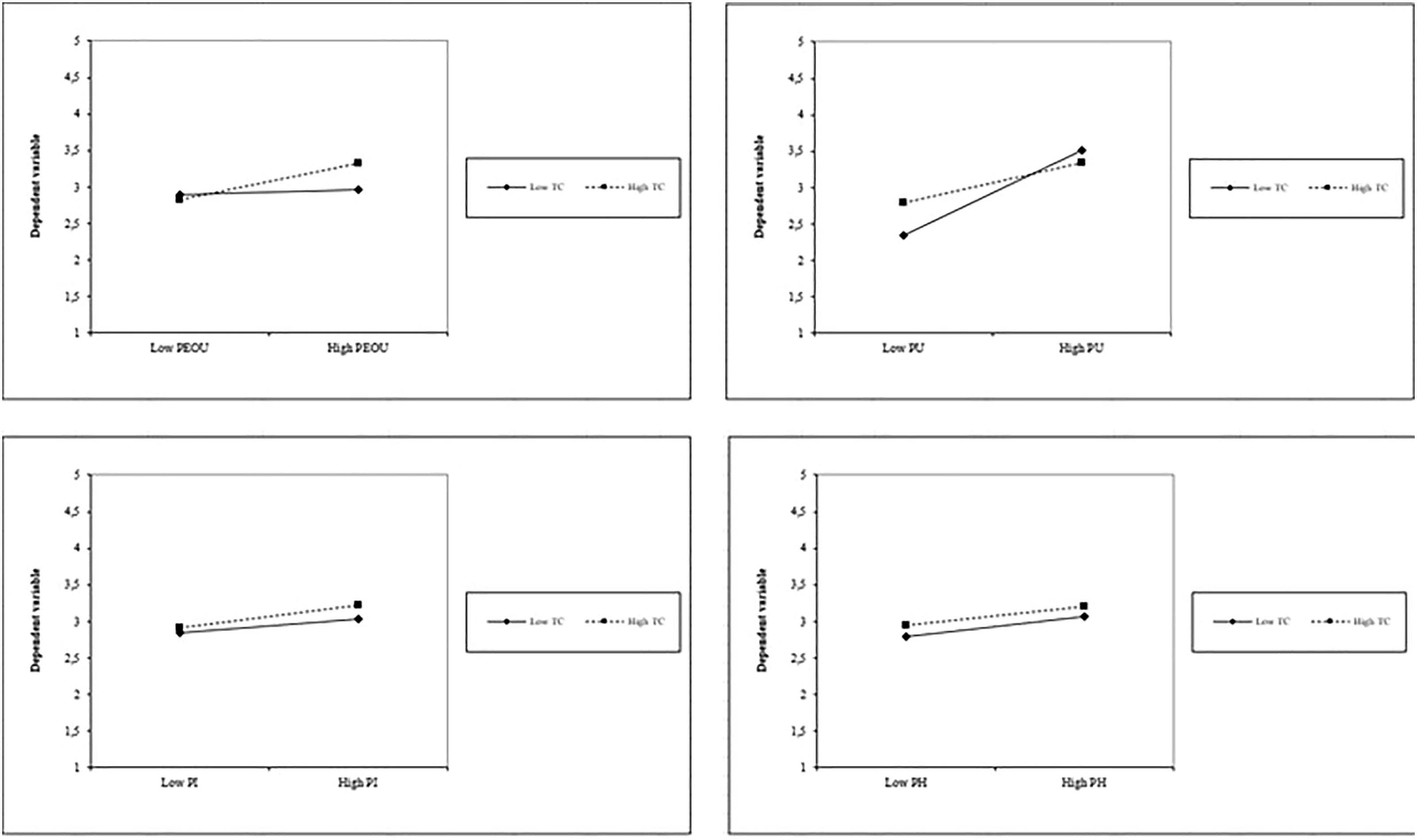
Moderating relationship on the curve.
Moderating Relationship.
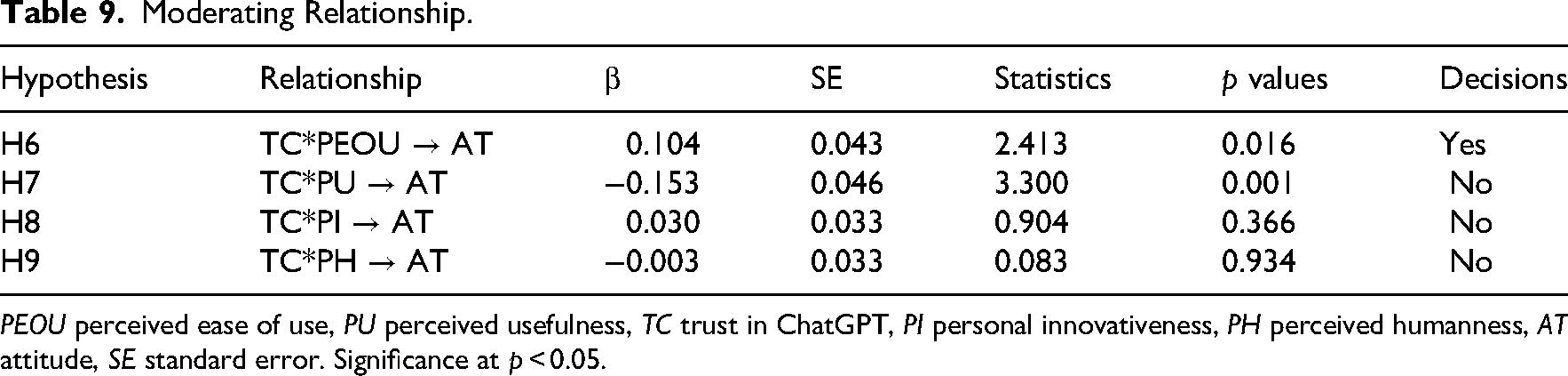
PEOU perceived ease of use, PU perceived usefulness, TC trust in ChatGPT, PI personal innovativeness, PH perceived humanness, AT attitude, SE standard error. Significance at p < 0.05.
Discussion
According to the results of this study, PU positively influences the students’ AT toward ChatGPT usage in studies, which is strongly supported by the study outcome of Rahman et al. (2022) and Tiwari et al. (2024), who found that PU is an important factor that supports forming students’ positive AT and impacts the adoption of ChatGPT in higher studies. This finding also indicates that ChatGPT's exceptional performance in terms of overall responsiveness, convenience, and efficiency in delivering information significantly influences students’ AT.
In addition, this study also reveals that PEOU positively and significantly influences the students’ AT toward using ChatGPT in higher studies, which is consistent with the previous studies performed by Rahman et al. (2022) and Tiwari et al. (2024). This outcome suggests that when students perceive ChatGPT as user-friendly, comprehensible, and aligned with their skill levels, they are likely to exhibit a positive AT toward using ChatGPT in higher studies.
Moreover, the association between PH and the students’ AT toward using ChatGPT in higher studies is significant, which is supported by Mueller et al. (2024), who found that the PH of the Chatbot significantly influenced the users’ positive AT toward adopting Chatbot agents. This outcome indicates that when ChatGPT mimics the natural and friendly behavior of a human, it makes students more comfortable because they feel they are dealing with a friend who will listen to them.
Besides, the results of the study show that PI positively and significantly influences students’ AT toward using ChatGPT in their studies. This result resembles previous studies by Twum et al. (2022), who found that PH significantly influences the adoption of e-learning platforms, and Amoroso and Lim (2015), who asserted that PH has a significant influence on users’ positive AT toward the adoption of mobile technologies. This result suggests that students who are personally innovative are, by nature, more receptive to learning about and using new technology.
Furthermore, this study also reveals that TC positively and significantly influences the students’ AT toward using ChatGPT in studies. This finding is supported by Tiwari et al. (2024), who found that perceived credibility significantly impacts the students’ AT toward using ChatGPT in studies. This outcome highlights that students frequently use ChatGPT in studies for a variety of queries and problem-solving because they perceive it as a dependable and trustworthy resource for education and learning. Students may be assured that the responses provided are secure and genuine and that any information exchanged or queries posed will remain confidential.
This study also presents that the relationship between AT and IU is also significant, indicating that students’ AT has an impact on their IU to ChatGPT in higher studies. This finding is strongly supported by the outcomes of Rahman et al. (2022) and Tiwari et al. (2024), who found that students’ positive AT toward using ChatGPT in studies significantly influences the students’ IU.
The outcomes of this study also reveal that students’ positive IU to ChatGPT in studies positively and significantly influences their UB, which is aligned with the previous studies of (Romero-Rodríguez et al., 2023; Strzelecki, 2024) who found that students’ positive IU to ChatGPT in studies also positively impacted their UB. This outcome indicates that when students have a positive IU to ChatGPT in their studies, they are more likely to use it regularly and effectively in their academic work. It suggests that a favorable mindset toward ChatGPT translates into tangible usage, highlighting the importance of fostering positive AT to encourage the adoption and integration of the tool in educational contexts.
In the case of the moderating effect, TC positively and significantly moderates the relationship between PEOU and students’ AT toward using ChatGPT in studies. This finding suggests that the association between students’ AT toward adopting ChatGPT in their studies and PEOU is strengthened by trust. Students who trust ChatGPT are more likely to perceive how easy and user-friendly it is and, as a result, adopt a more positive AT toward it. In addition, this finding is contrasted by Rahman et al. (2022), who found that TC does not moderate the relationship between PEOU and AT. Moreover, trust does not positively moderate the relationship between PU and AT, which is consistent with Rahman et al. (2022), but interestingly, this study found that TC negatively and significantly moderated the relationship between PU and AT. However, PU has a positive impact on forming the students’ positive AT to use ChatGPT in studies. The possible reason is that when students highly trust ChatGPT but focus on its PU, they might become more critical if the tool does not meet their high expectations. This discrepancy could have an adverse moderating effect, as strong TC magnifies any PU deficiencies and hence reduces the students’ positive AT regarding ChatGPT use.
However, other interactions, such as TC*PH and TC*PI, have no significant moderating effect because these factors have strong intrinsic appeals that independently influence positive AT. Since ChatGPT's interactions are human-like, students are more engaged and satisfied, which reduces the need for trust. Similarly, students with high PI are generally motivated to adopt new technologies out of their curiosity and interest, focusing more on the novelty and potential of ChatGPT rather than their level of trust in it.
Theoretical Contributions
This study makes a significant theoretical contribution to the literature on information systems, especially as it relates to ChatGPT. This study combines two widely recognized TAM model constructs, PU and PEOU, with the two influential constructs, PH and PI, to investigate their impact on the acceptance of ChatGPT in Bangladeshi higher education. Authors such as Mueller et al. (2024) and Strzelecki (2023) employed PH and PI separately. However, in this study, we employed PH and PI together with the existing TAM model. This is the first study in the ChatGPT context to reveal a direct link between PH, PI, and students’ AT toward using ChatGPT in their academic work. In addition, to the best of our knowledge, it is also the first study that integrates TC as a moderating variable in the relationships between perceived PU and AT, PEOU and AT, PH and AT, as well as PI and AT. As a result, this study model aids in the understanding of the behavioral patterns of students who intend to use ChatGPT for learning and studying by researchers and practitioners, which may stimulate additional research to advance this field of study.
Practical Implications
Beyond its theoretical contributions, this study also provides practical implications for policymakers, chatbot service providers, and educational institutions. The outcomes of this study will assist the service providers and policymakers in finding the most influential factors that shape the students’ positive attitudes toward the adoption of ChatGPT in higher studies. In addition, this study presents important practical contributions for enhancing ChatGPT adoption in higher education. For instance, the universities can include ChatGPT in their learning management platform through training sessions and user-friendly interfaces to provide individualized support by increasing its usefulness and perceived ease of use. Motivating tech-savvy students to share their experiences can increase acceptability and innovative use. The study outcomes show that PI positively influences students’ AT to use ChatGPT in higher studies. Chatbot service providers should develop Gen AI tools with features that are easy to use and encourage students to explore them in their studies. They should provide innovative opportunities that inspire creativity among students. In addition, educational institutions may foster an environment of learning that is receptive to new ideas through the use of ChatGPT in the classroom and training sessions to experiment with new technology. Moreover, policymakers can arrange training programs and develop policies that facilitate students’ learning about AI and innovation. The study outcomes also reveal that the PH of ChatGPT positively and significantly impacts students’ positive AT toward ChatGPT use in higher education. Developers and service providers of Chatbots can take more initiatives, such as refining natural language understanding, providing context-aware responses, and adapting communication styles to students’ learning needs to enhance the human-like interaction capability of ChatGPT. Furthermore, the study outcomes indicate that PU and PEOU positively and significantly impact the students’ AT toward ChatGPT usage in studies. Therefore, ChatGPT service-providing authorities should emphasize the advantages and ease of use to attract potential users. Furthermore, to promote ChatGPT, marketers should concentrate on building trust in the technology, as students are more likely to embrace new technologies if they believe they are safe and free from privacy issues.
Limitations and Future Directions
Although the current study makes significant contributions to the existing literature, it has some limitations. Firstly, this study only looked at Bangladeshi higher education students, making up only a small portion of the country's educational sector. Future researchers could extend this study by exploring secondary and higher secondary education settings. In addition, since the research focused solely on universities in Bangladesh, the findings may have limited generalizability to students in other developing countries. To find new insights, future researchers should include a wider variety of colleges and educational institutions in other emerging countries. The study examined actual UB, so the findings may not reflect post-adoption behavior. Future researchers may focus on investigating the users’ post-adoption behavior to gain a deeper understanding of their real actions. Fourthly, the study used TC as the sole moderator; therefore, we suggest incorporating additional variables such as age, gender, and electronic word of mouth as moderators in future research.
Conclusion
This study investigated the factors affecting students’ adoption of ChatGPT within the context of higher education in Bangladesh, utilizing an extended TAM. This study integrated two well-known TAM constructs, PU and PEOU, with new constructs PH, PI, and TC, and revealed that students’ positive AT toward using ChatGPT is particularly fostered when they perceive its usefulness, ease of use, and when it fosters trust. This study also showed that PH and PI positively and significantly impact the students’ AT toward ChatGPT usage in higher studies in Bangladesh. When ChatGPT mimics natural, friendly human behavior, it makes students feel comfortable and engaged, like learning with a friend, and, personally, innovative students are more likely to embrace its advanced features, such as individualized support and quick information retrieval. In addition, this study also discloses that the relationship between AT and IU is significant, indicating that students’ AT have an impact on their intention to use ChatGPT in higher studies. Moreover, it shows that student’ positive IU toward ChatGPT usage in higher studies also significantly impacts their actual UB. Furthermore, TC positively and significantly moderates the relationship between PEOU and students’ AT toward using ChatGPT in studies. Students who trust ChatGPT are more likely to perceive how easy and user-friendly it is and, as a result, adopt a more positive AT toward it. These insights provide direction for educational institutions and developers seeking to optimize ChatGPT integration to improve educational outcomes.
Footnotes
Acknowledgment
We want to express our sincere gratitude to all the individuals and organizations that supported us throughout this project.
Authors’ Contributions
Conception: Md Al Amin, Mijin Noh, and Yang Sok Kim. Methodology: Md Al Amin, Mijin Noh, and Yang Sok Kim. Data collection: Afruza Haque and Rasheda Akter Rupa. Interpretation or analysis of data: Md Al Amin. Preparation of the manuscript: Md Al Amin, Afruza Haque, and Rasheda Akter Rupa. Revision for important intellectual content: Mijin Noh and Yang Sok Kim. Supervision: Yang Sok Kim.
Consent for Publication
Each author has reviewed and approved the final manuscript, indicating collective agreement on the work and findings presented. In addition, the authors give their full consent to publish the manuscript in the Beijing International Review of Education.
Data Availability Statement
The data used in this study cannot be publicly shared due to confidentiality concerns. However, the data can be made available upon reasonable request from the corresponding author.
Declaration of Conflicting Interest
We affirm that no competing interests, financial or otherwise, could be seen as influencing the results or interpretations in this manuscript. The research was conducted without any commercial or financial ties that could be considered a potential conflicts of interest.
Ethical approval and informed consent statements
This study was conducted with the ethical approval of the Ethical Committee of Noakhali Science and Technology University (NSTU), Noakhali, Bangladesh (Ref: NSTU/FBS/EC/2024/02). The ethical approval was issued on 18 March 2024. Informed consent was obtained from all respondents before participation through a structured questionnaire. Participants were fully informed about the purpose of the study, their rights, and the voluntary nature of their involvement. They were also allowed to withdraw from the survey at any stage. The authors confirm that respondents provided consent for their responses to be used exclusively for academic research purposes.
Funding
The authors did not receive any funds from any organization for this study.

Appendix 1
| Constructs | Items | Sources |
|---|---|---|
| Perceived usefulness (PU) | PU1: ChatGPT is useful in study. | Davis, (1989); Venkatesh et al. (2012) |
| PU2: ChatGPT enhances the quality of learning. | ||
| PU3: ChatGPT accomplishes tasks more quickly. | ||
| PU4: ChatGPT enhances learning effectiveness. | ||
| Perceived ease of use (PEOU) | PEOU1: ChatGPT is easy to use in the study. | Davis (1989) |
| PEOU2: ChatGPT is easy to master. | ||
| PEOU3: ChatGPT is uncomplicated and requires fewer mental efforts. | ||
| PEOU4: Interaction with ChatGPT is clear and understandable. | ||
| Trust in ChatGPT (TC) | TC1: I can depend on ChatGPT to deliver consistent information. | Choudhury and Shamszare (2023) |
| TC2: ChatGPT is capable of offering helpful guidance. | ||
| TC3: ChatGPT shares information clearly and openly. | ||
| TC4: ChatGPT behaves ethically and communicates honestly with me. | ||
| Perceived humanness (PH) | PH1: ChatGPT's responses feel natural. | Hsu and Lin (2023) |
| PH2: ChatGPT has a humanlike response. | ||
| PH3: ChatGPT's responses are similar to those of humans. | ||
| PH4: ChatGPT responds in a remarkably human manner. | ||
| Personal innovativeness (PI) | PI1: If I know of any new technology that could be helpful in my study, I explore ways to incorporate it. | Agarwal and Karahanna (2000) |
| PI2: I enjoy experimenting with new information technologies in my studies. | ||
| PI3: Among my classmates and friends, I am generally the first to experiment with new technologies. | ||
| PI4: Overall, I am not hesitant to experiment with new technologies in my study. | ||
| Attitude (AT) | AT1: I have a positive attitude toward ChatGPT usage in my studies. | Davis (1989) |
| AT2: ChatGPT makes learning interesting. | ||
| AT3: I have a positive attitude toward learning to ChatGPT. | ||
| AT4: I have a positive general opinion regarding ChatGPT usage in the study. | ||
| Intention to use (IU) | IU1: I plan to keep using ChatGPT in my future academic work. | Davis (1989); Venkatesh et al. (2012) |
| IU2: I am open to making decisions based on ChatGPT's suggestions. | ||
| IU3: I intend to rely on ChatGPT as a learning tool moving forward. | ||
| IU4: I will try to incorporate ChatGPT into my study routine. | ||
| Use behavior (UB) | UB1: I am currently utilizing ChatGPT for my studies. | Venkatesh et al. (2003) |
| UB2: I frequently use ChatGPT for study purposes. | ||
| UB3: I spend a considerable amount of time on ChatGPT platforms for studying. | ||
| UB4: I use ChatGPT for study purposes whenever it 's accessible. |