




Abstract
Background:
There is strong evidence supporting the effectiveness of photobiomodulation therapy (PBMT) in improving neuronal damage and enhancing neuropsychological activities. However, there is limited research on the effects of this method on cognitive function and mood disorders. This project aimed to evaluate the potential benefits of PBMT in improving cognitive status and mood disorders in patients with dementia.
Methods:
In this randomized, double-blinded, controlled trial, 30 patients with mild-to-moderate dementia participated. The patients were divided into two groups: the first group (n = 15) received standard treatment along with PBMT, whereas the second group (n = 15) received standard treatment along with the use of an off-device on the head. Cognitive function, anxiety, and depression levels were assessed before, immediately after treatment, and 1 month later.
Results:
The comparison of cognitive functional score at baseline, after completing the therapeutic regimen, as well as one later showed no difference between the two groups (Table 1). Similarly, the two groups had similar mean scores for depression and anxiety at baseline and after treatment interventions.
The Mean Change from the Baseline of the MMSE Test, Anxiety Scale, and Cognitive Scale Among the Mild-to-Moderate Patients in the Case and Control Group (at Baseline, After Treatment, and 1 Month After the Treatment Completion) MMSE, Mini-Mental State Examination; PBMT, photobiomodulation therapy.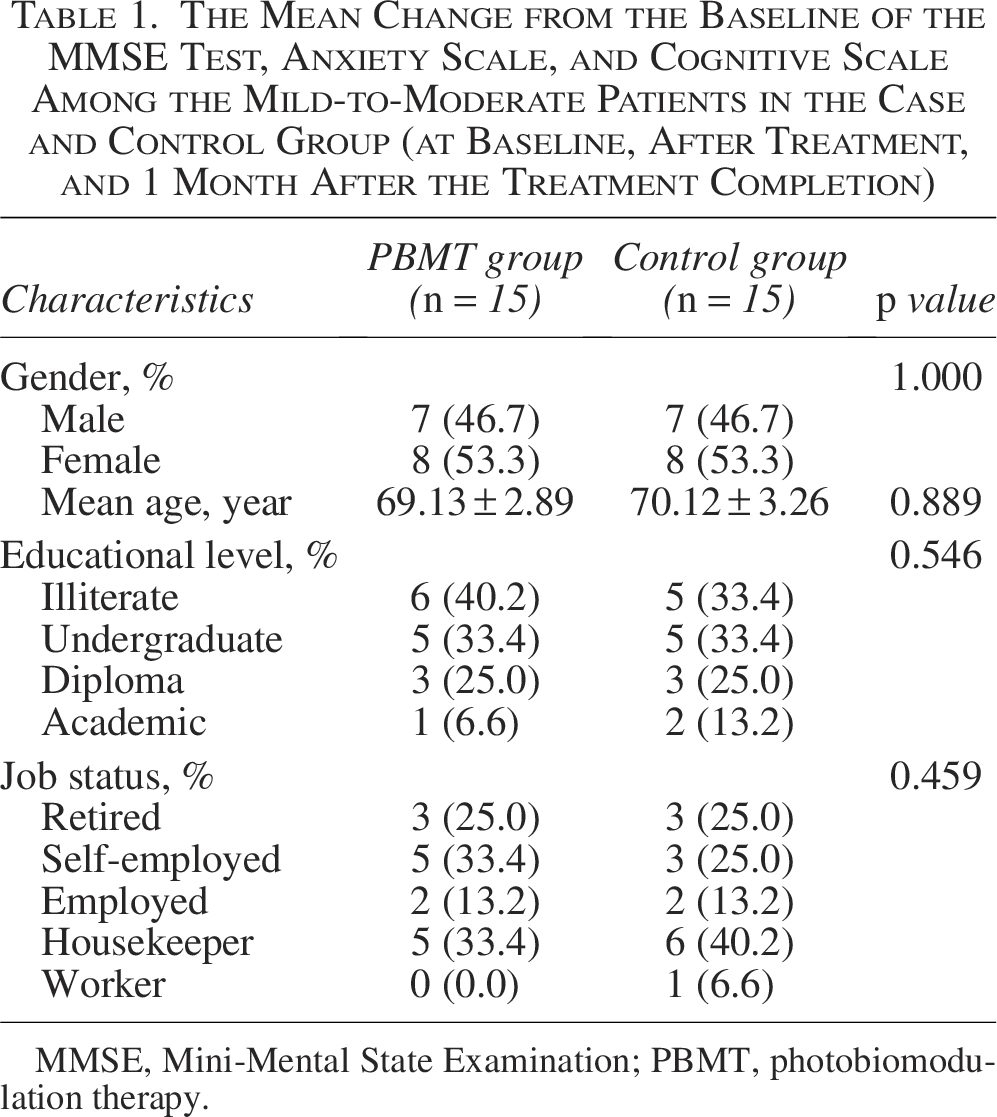
Characteristics
PBMT group (n = 15)
Control group (n = 15)
p value
Gender, %
1.000
Male
7 (46.7)
7 (46.7)
Female
8 (53.3)
8 (53.3)
Mean age, year
69.13 ± 2.89
70.12 ± 3.26
0.889
Educational level, %
0.546
Illiterate
6 (40.2)
5 (33.4)
Undergraduate
5 (33.4)
5 (33.4)
Diploma
3 (25.0)
3 (25.0)
Academic
1 (6.6)
2 (13.2)
Job status, %
0.459
Retired
3 (25.0)
3 (25.0)
Self-employed
5 (33.4)
3 (25.0)
Employed
2 (13.2)
2 (13.2)
Housekeeper
5 (33.4)
6 (40.2)
Worker
0 (0.0)
1 (6.6)
Conclusion:
The treatment likely has no significant impact on improving cognitive status or mood disorders in patients with mild-to-moderate dementia.
Get full access to this article
View all access options for this article.