



Abstract
Sulphide minerals in the Palaeoproterozoic Loch Maree Group at Kerry Road, Gairloch, North-West Scotland, have a near-zero sulphur isotope composition of magmatic origin. New isotopic measurements in the region show a wider range of compositions. Other samples from the Gairloch region have compositions up to 15‰ heavier than the ore samples in the Kerry Road VMS deposit, indicating that there was a source of sulphur additional to magmatic sulphur. Graphitic schists and marbles from several other localities contain pyrite with relatively heavy compositions typical of diagenetic sulphides elsewhere in the North Atlantic region, which suggests that the additional source of sulphur was from the ambient seawater. The magmatic signature is however recorded in South Harris and Scardroy, which combined with the occurrence of rust zones in Palaeoproterozoic successions suggests that the region merits further exploration.
Introduction
Ore deposits occur widely in mid-Proterozoic (2.2–1.8 Ga) sedimentary successions, especially across the northern hemisphere.1–5 The deposits include volcanic massive sulphides, MVT-type sulphides and banded ironstones. In the UK, Paleoproterozoic metasediments occur in several outcrops in north-west Scotland (Figure 1) and represent accretionary plate margin successions.6–8 These rocks include traces of mineralisation (Figure 2),9–13 and one deposit in the Loch Maree Group, Gairloch, which has attracted several phases of exploration for gold and base metals.14,15 The Loch Maree Group is one of the key targets for critical metals in the UK, 16 and it is the focus of a new stage of exploration for copper, cobalt and gold. 17
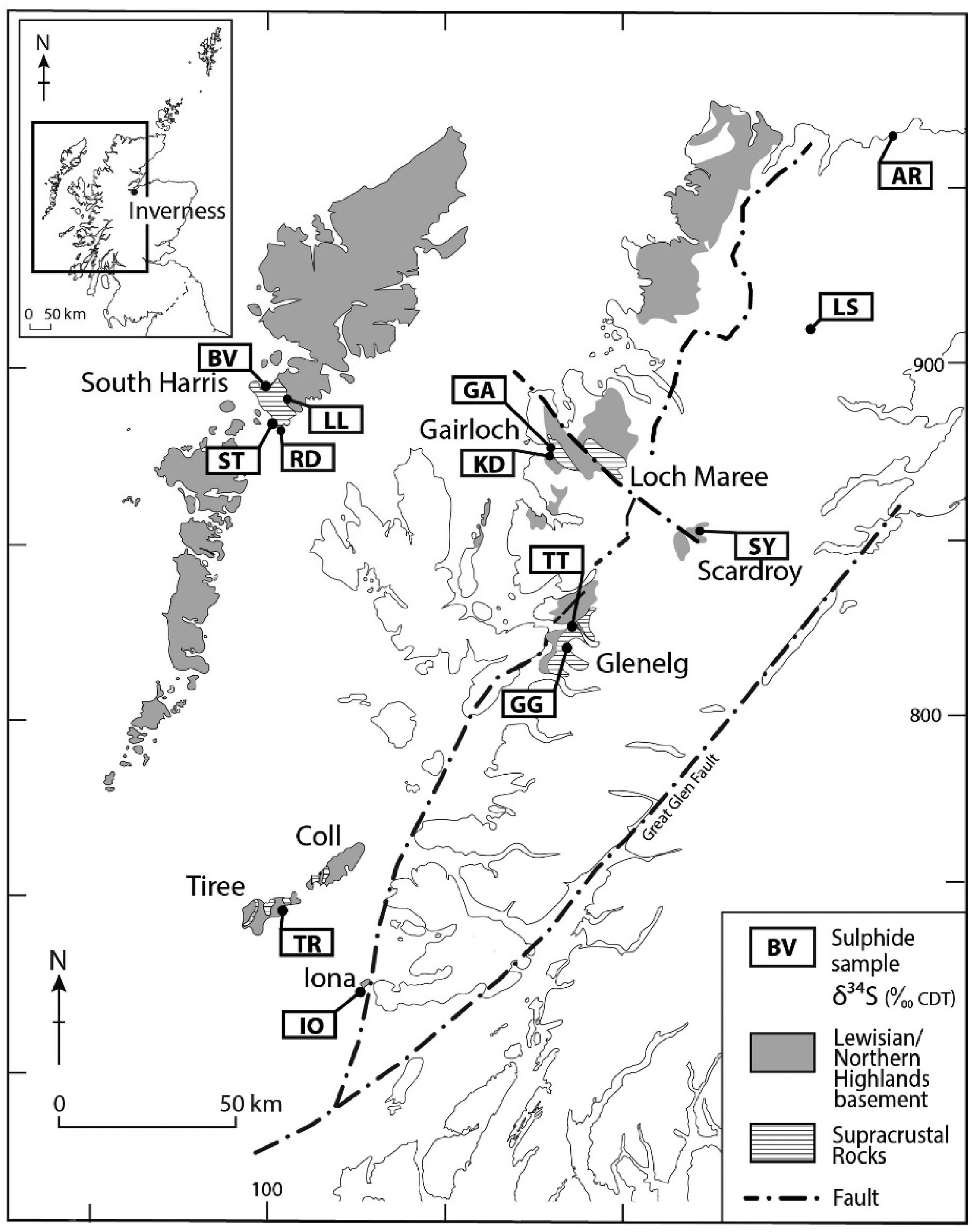
Map of North-west Scotland, showing localities for sulphides in Paleoproterozoic supracrustal rocks. AR: Armadale; BV: Borve; GA: Gairloch; GG: Glenelg; IO: Iona; KD: Kerrysdale; LL: Loch Longavat; LS: Loch Shin; RD: Rodel, Rodelpark; ST: Stuaidh; SY: Scardroy; TR: Gott, Tiree; TT: Totaig. Kerry Road ore deposit occurs in Kerrysdale (KD).
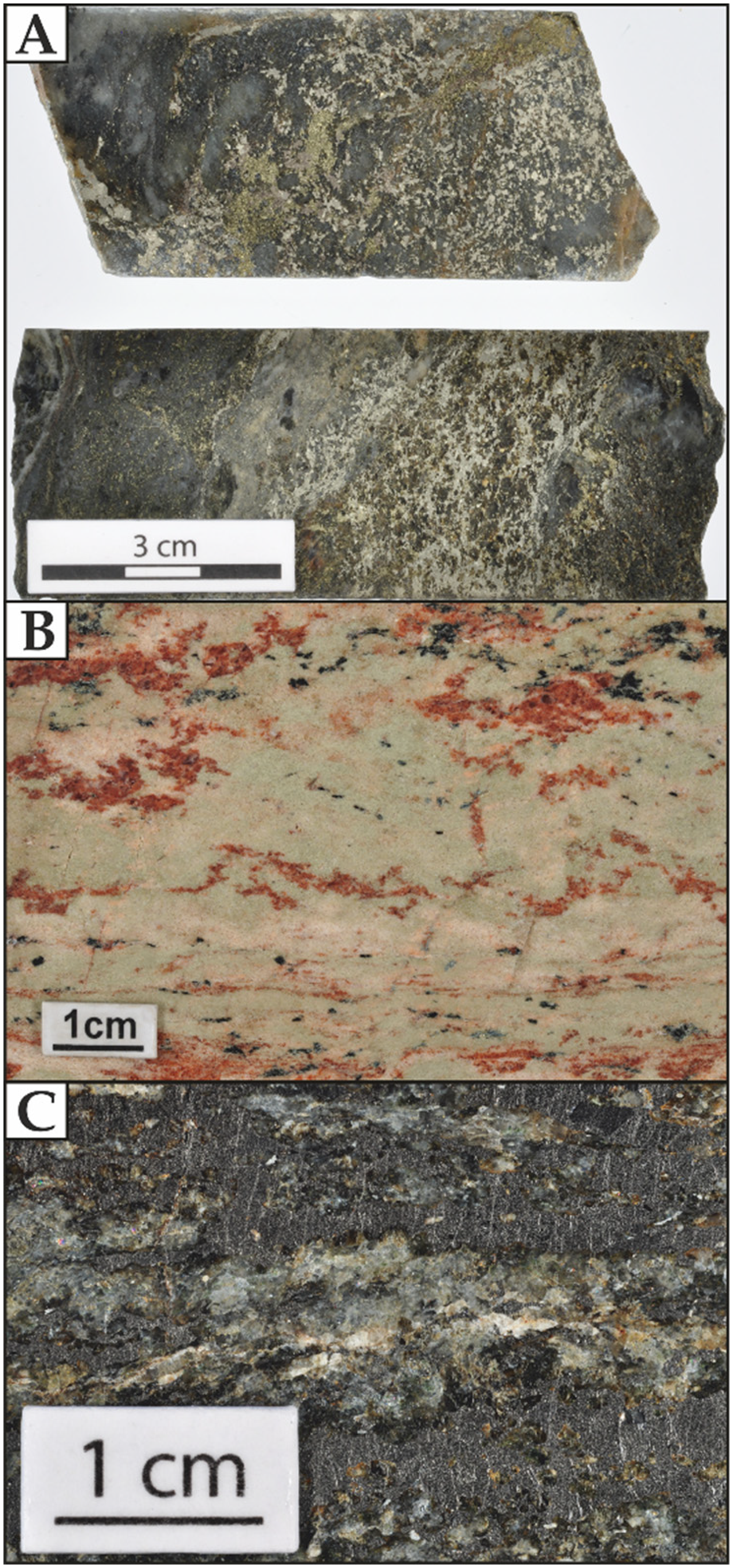
Ore mineralisation in Palaeoproterozoic successions, NW Scotland. (a) Sulphide-rich core GBH-29, Kerry Road deposit, Gairloch district; (b) Manganese oxides (red) in psammite, Glenelg district; (c) Magnetite bands (black) in schist, Loch a’Phuill, Tiree.
Sulphur isotope studies of the ore deposit at Gairloch, widely known as the Kerry Road deposit, conclude that the sulphur has a near-zero δ34S composition of magmatic origin, and the deposit represents a volcanic massive sulphide.14,15 Given the renewed, strategic interest in the Loch Maree Group near Gairloch, further sulphur isotope studies may help to identify the extent of VMS mineralisation or alternative types of deposit. This study reports data from sulphides in Paleoproterozoic successions across north-west Scotland (Figure 1), with the following objectives:
Does all sulphur in the Loch Maree Group around Gairloch have the same near-zero composition as the VMS deposit? Or are there sulphides with a different composition which might have a different origin? Is there evidence of the near-zero signature elsewhere in north-west Scotland, which would be encouraging for exploration in the region? Is there a background diagenetic signature, which in Paleoproterozoic rocks elsewhere in the North Atlantic region has a wide range from 0 to +20‰?
Geological setting
The Lewisian Complex of north-west Scotland consists predominantly of tonalitic gneisses of Archean age, 18 derived from an igneous protolith. However, there are several outliers of Paleoproterozoic supracrustal rocks within the Lewisian Complex (Figure 1), which represent amphibolite or granulite facies metasediments. Where dated, the sequences are aged ∼1.9–2.0 Ga.7,19 The larger supracrustal outliers include carbonaceous (graphitic) pelites and schists, shallow water carbonates represented by marbles, sulphide-rich horizons evident in the field as rust zones (Figure 3) and non-sulphide iron formations. Sulphides in Paleoproterozoic rock were sampled from 14 localities in north-west Scotland (Figure 1). Details of the individual localities are cited in Table 1. Samples were collected in the Laurentian foreland, and in nappes in the Caledonian thrust pile. The basement east of the Moine Thrust Zone was formerly regarded as belonging to the Lewisian Complex of the Northern Highlands Terrane. 27 The eastern basement has now been attributed to terrane in Baltica which was juxtaposed against the Lewisian rocks of Laurentia along with the Grenvillian suture, marked by the Moine Thrust Zone. 28 Notwithstanding this model in which basement rocks from two terranes are now juxtaposed, they both include Paleoproterozoic supracrustal rocks.
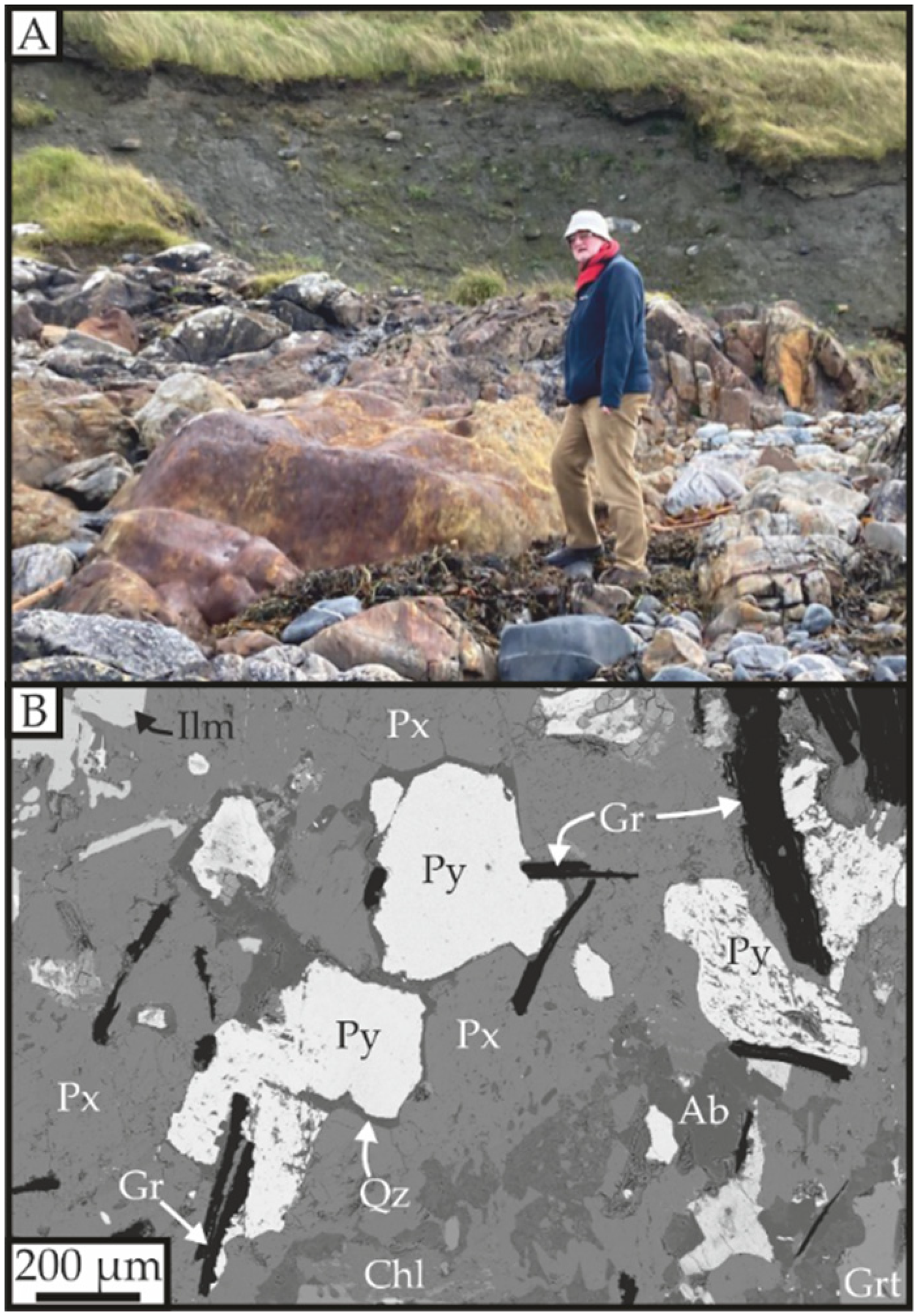
Rust zones in Palaeoproterozoic, Harris. (a) Field image, Northton; (b) Electron micrograph of rust zone, Rodelpark, showing graphite (Gr), pyrite (Py), ilmenite (Ilm), pyroxene (Px), chlorite (Chl), garnet (Grt), quartz (Qz) and albite (Ab). Harris image courtesy of A. Heine-Carmichael.
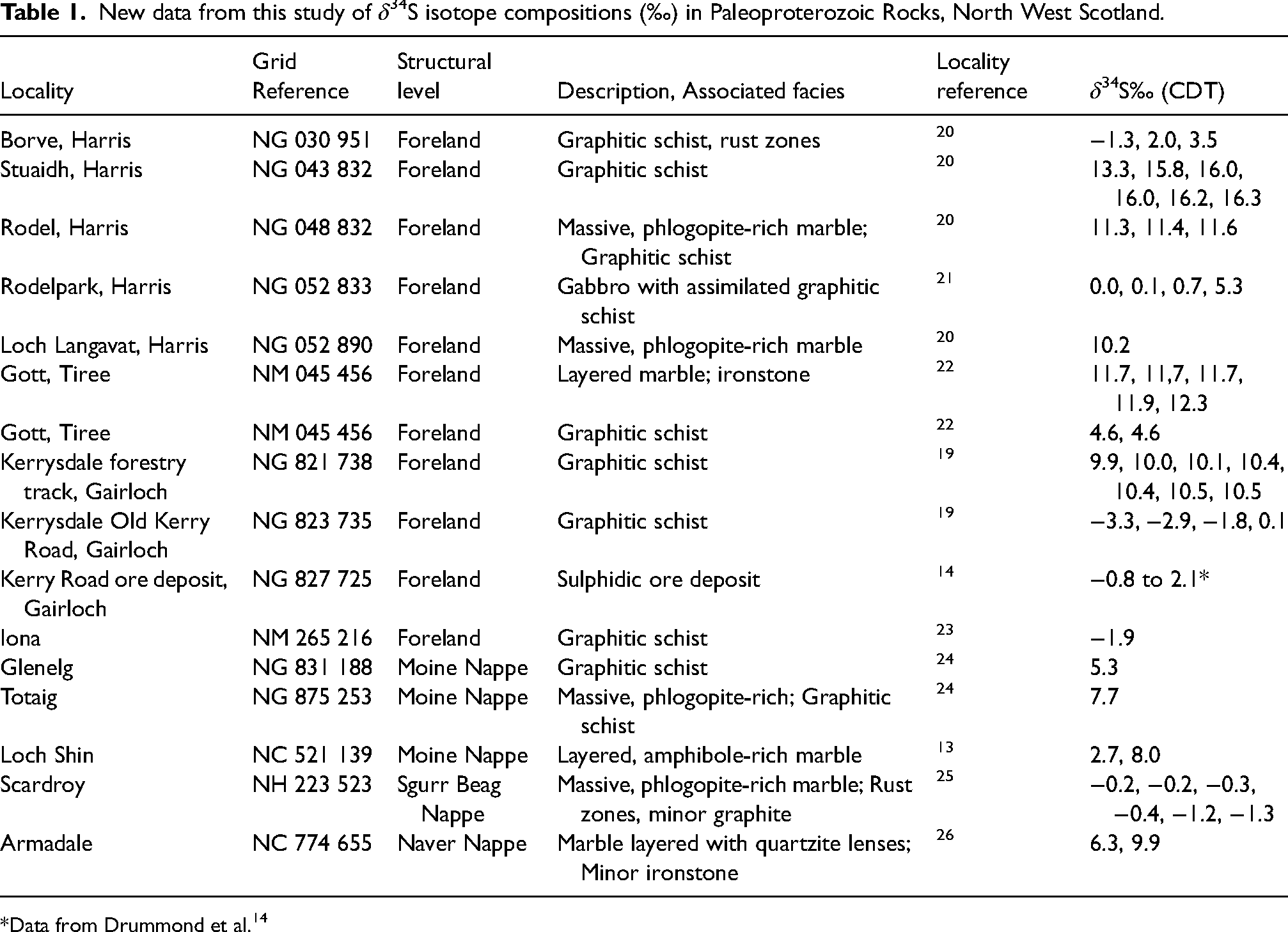
New data from this study of δ34S isotope compositions (‰) in Paleoproterozoic Rocks, North West Scotland.
*Data from Drummond et al. 14
Rust zones, on a scale of metres thickness upwards, rich in disseminated sulphides, occur in each of the main outcrops in the Paleoproterozoic of north-west Scotland. 29 Similar rust zones are reported in the mid-Paleoproterozoic across the North Atlantic region from North America to Greenland and Scandinavia and have typically been encountered during mineral exploration.1,30–33 The rust zones are sulphidic and also carbonaceous to the point where they may be potentially graphite ores. 33 We are not aware of any systematic exploration of the rust zones in north-west Scotland.
Methodology
Samples of sulphide were extracted especially from graphitic schists and marbles in the Paleoproterozoic outcrops. Rust zone rocks were sampled at Borve and Scardroy. Additionally, samples were extracted from gabbro at Rodelpark, Island of Harris (Figure 1) where intrusions into the supracrustal rocks had assimilated graphitic schists. The Rodelpark rocks are described in detail by Armstrong et al. 21
For sulphur isotope analysis, sulphide samples were combusted with excess Cu2O at 1075 °C in order to liberate the SO2 gas under vacuum conditions. Liberated SO2 gases were analysed on a VG Isotech SIRA II mass spectrometer, with standard corrections applied to raw δ66SO2 values to produce true δ34S. The standards employed were the international standard NBS-123, IAEA-S-3 and SUERC standard CP-1.
Scanning electron microscopy (SEM) was conducted in the Aberdeen Centre for Electron Microscopy, Analysis and Characterisation facility at the University of Aberdeen using a Carl Zeiss Gemini SEM 300 VP Field Emission instrument equipped with an Oxford Instruments NanoAnalysis Xmax80 Energy Dispersive Spectroscopy detector and AZtec software suite.
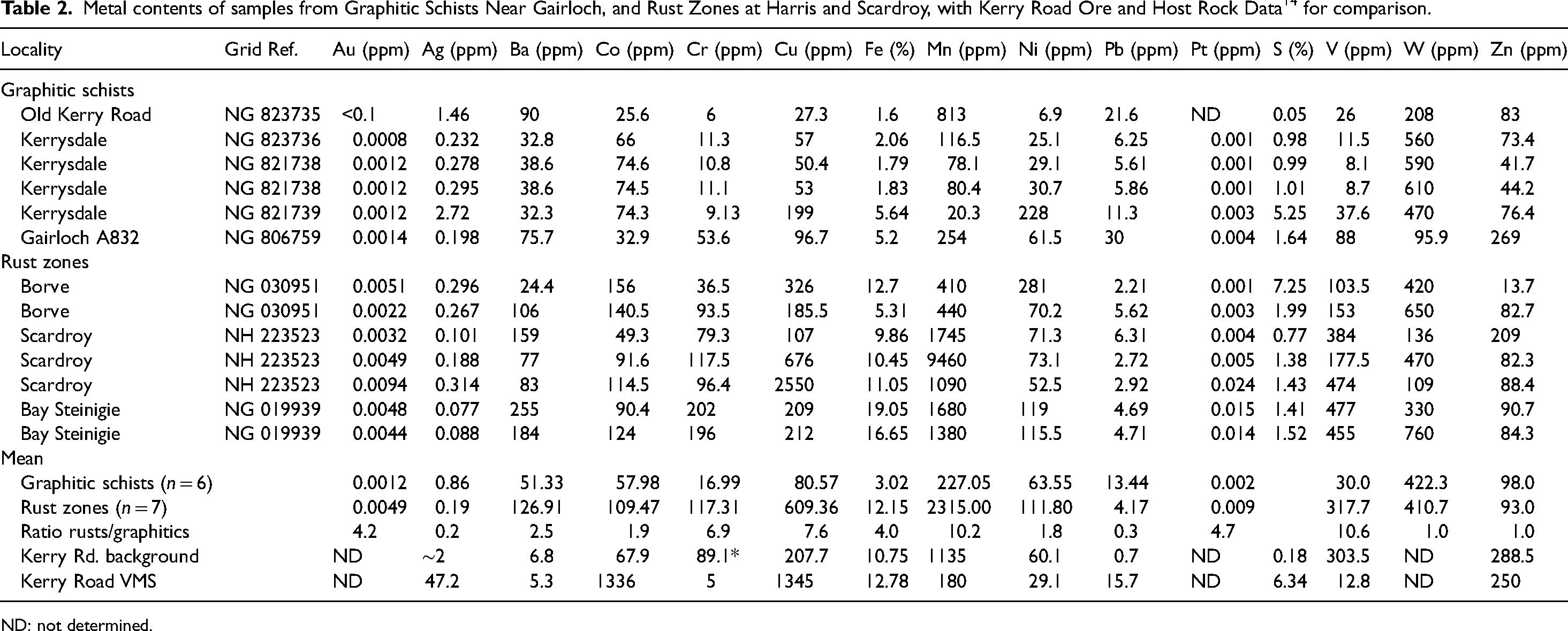
The geochemistry of graphitic schist samples from near Gairloch (Table 2) was compared with measurements for rust zones sampled at Borve and Bay Steinigie, South Harris and Scardroy on the Mainland (Table 2). Trace element contents were measured in samples using inductively coupled plasma-mass spectrometry (ICP-MS) and inductively coupled emission spectroscopy at the ALS Minerals Loughrea Laboratory, Ireland, using method ME-MS61L. Samples of ∼30 g rock were milled and homogenised, and 0.25 g digested with perchloric, nitric, hydrofluoric and hydrochloric acids to near dryness. The residue was topped up with dilute hydrochloric acid and analysed using a Varian 725 instrument. Samples with high concentrations were diluted with hydrochloric acid to make a solution of 12.5 mL, homogenised, then analysed by ICP-MS. Results were corrected for spectral inter-element interferences. The limits of detection/resolution are 0.05 and 10 000 ppm. Geological Certified Reference Materials (CRMs) utilised included MRGeo08 (mid-range multi-element CRM), GBM908-10 (base metal CRM), OGGeo08 (ore grade multi-element CRM) and GEOMS-03 (multi-element CRM). Results for CRM analysis were within the anticipated target range (upper and lower bound) for each metal and standard. Duplicate analysis of samples produced reported values within the acceptable range for laboratory duplicates.
Metal contents of samples from Graphitic Schists Near Gairloch, and Rust Zones at Harris and Scardroy, with Kerry Road Ore and Host Rock Data 14 for comparison.
ND: not determined.
Results
The existing sulphur isotope data base for the Kerry Road ore deposit at Gairloch has a narrow range centred on 0 to 2‰. 14 New data from the mineralised gabbro in South Harris are also near-zero (Table 1).
New isotopic data from the black schists and marbles which are not conspicuously mineralised are more wide-ranging (Figure 4). The ranges extend to heavier compositions than the Kerry Road and gabbro data. The schists have compositions up to 16.2‰, and marbles are as heavy as 12.3‰. A majority of schist compositions (17 of 23 samples) are heavier than 4‰. The modal composition is 10–12‰. The data for marbles also has a modal composition of 10–12‰. Additionally, the marbles from Scardroy have a relatively light composition from −2 to 0‰, comparable to the mineralised samples.
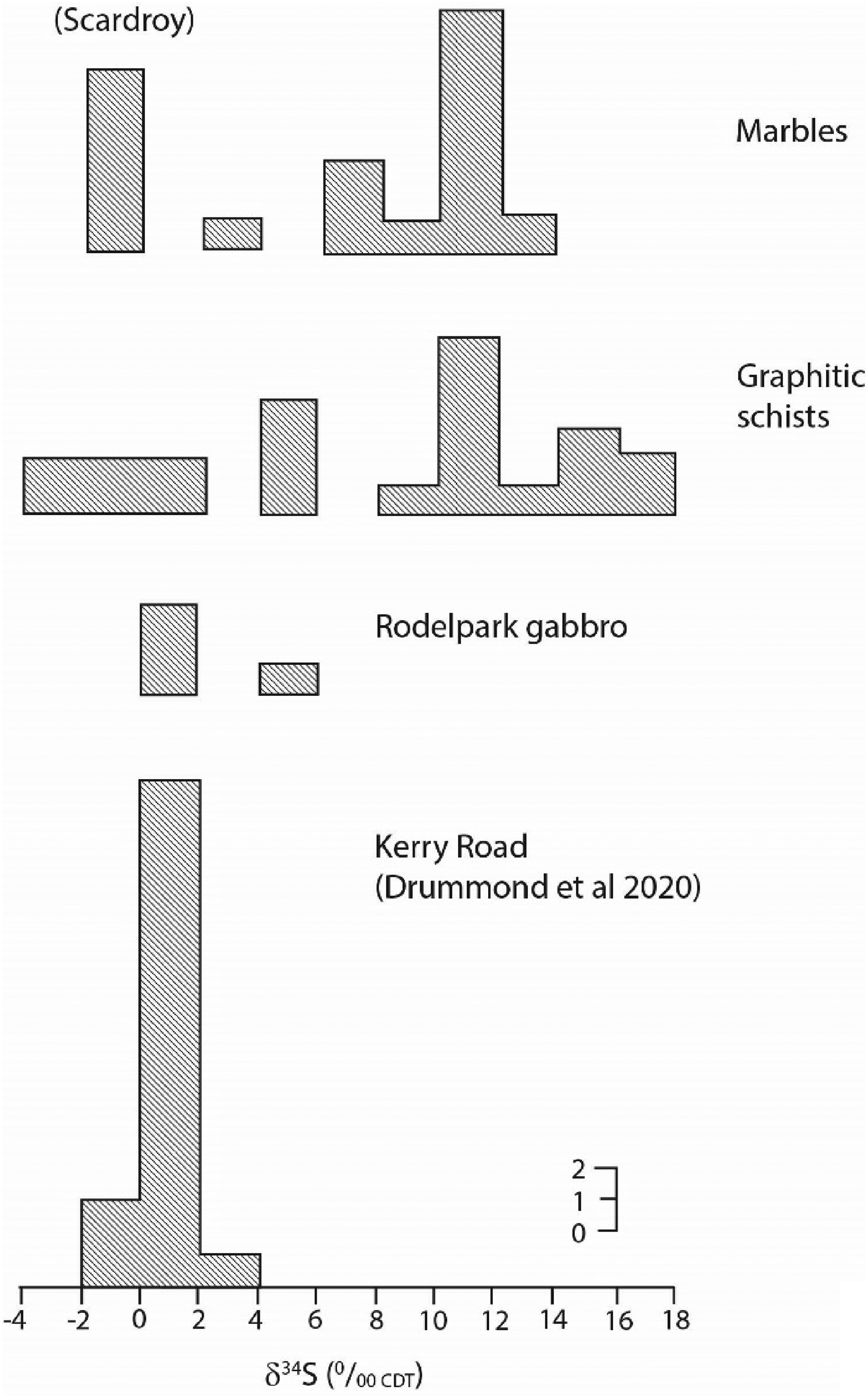
Sulphur isotope compositions for sulphide deposits in north-west Scotland, measured in this study and compared with data for the Kerry Road ore deposit by Drummond et al. 14
Trace element data for seven samples from rust zones and six samples of graphitic schists show a contrast between the two groups (Table 2). The graphitic schists have higher Ag and Pb contents than the rust zones, and W and Zn contents are comparable, but the other elements are higher in the rust zones. Mean contents of Co (110 ppm rust zones; 58 ppm graphitic schists), Cu (609 ppm; 81 ppm) and Pt (0.009 ppm; 0.002 ppm) exemplify a much higher metal content in the rust zones than in the schists.
The rust zone samples do not have the high Cu and Co contents recorded in the Kerry Road ore deposit, but the mafic-associated metals Ni, Cr and V are all in higher concentrations in the rust zones than at Kerry Road (Table 2).
Discussion
The range of sulphur isotope compositions in the Paleoproterozoic of north-west Scotland is greater than had been evident from previous research on the Kerry Road VMS deposit.14,15 This implies that the origin(s) of these sulphides, and the source of the sulphur, was not limited to volcanic massive sulphides like those found at Kerry Road.
Two occurrences of sulphides, in the gabbro and the Scardroy marbles, do have compositions similar to the VMS deposit. The sulphur in the gabbro is probably derived from a mantle source, and it is comparable with sulphur in Recent gabbros. 34 The relatively light sulphur in the Scardroy marbles is distinct from sulphur in other Paleoproterozoic marbles in the region, and it may be a signpost to unrecognised mineralisation, associated with a VMS source. The marbles at Scardroy are accompanied by abundant samples of rust zone rocks, which support the possibility of mineralisation.
The higher contents of trace elements in the rust zones, at Borve and Scardroy, coincide with the lighter (near-zero) sulphur isotope compositions at these localities. This match suggests that the rust zone sites are related to exhalative (VMS-related) activity and similar occurrences could be prospective for mineral exploration, with sulphur isotope analysis used as an exploration tool in comparable Paleoproterozoic settings. The VMS ores at Kerry Road have lower concentrations of magmatic signature elements (specifically nickel, chromium and vanadium) then would be expected from this deposit type. The contents of these elements alone are therefore not a diagnostic exploration guide, which could be important in the exploration for these deposits in rust zones across the North Atlantic region, including North America, Greenland and Scandinavia.
Both the schists and marbles have a modal composition which is heavier than could be explained by a mantle source. The most likely alternative source of sulphur in (meta)sedimentary rocks is from the diagenetic processing of seawater sulphur. The relatively heavy compositions suggest that there was limited isotope fractionation between seawater sulphate and sulphide because the seawater sulphate levels were much lower during the Paleoproterozoic than today.35,36
Several lines of evidence indicate that isotopic systems were not upset during post-Paleoproterozoic events of metamorphism and deformation. Firstly, the previously determined sulphur isotope compositions from Gairloch 14 are a tightly grouped data set of values typical for a magmatic origin for sulphur. Secondly, younger sulphur isotope data from the Mesoproterozoic Stoer Group in the same region are also tightly grouped and undisturbed. 37 Thirdly, titanite dating in Mesoproterozoic marble in the region is undisturbed. 38
The contrast between the near-zero composition of sulphur in mineralised deposits and the heavier and more wide-ranging composition in metasediments is also shown in other Paleoproterozoic rocks in the North Atlantic region (Figure 5). Paleoproterozoic VMS and hydrothermal deposits consistently have compositions from zero to moderately positive (Figure 5). In contrast, Paleoproterozoic shales rich in diagenetic pyrite from Quebec, Ontario and European Russia have a wide range of isotopic compositions, which extend to higher values than the VMS deposits, similar to the new data set from schists in Scotland (Figure 5).
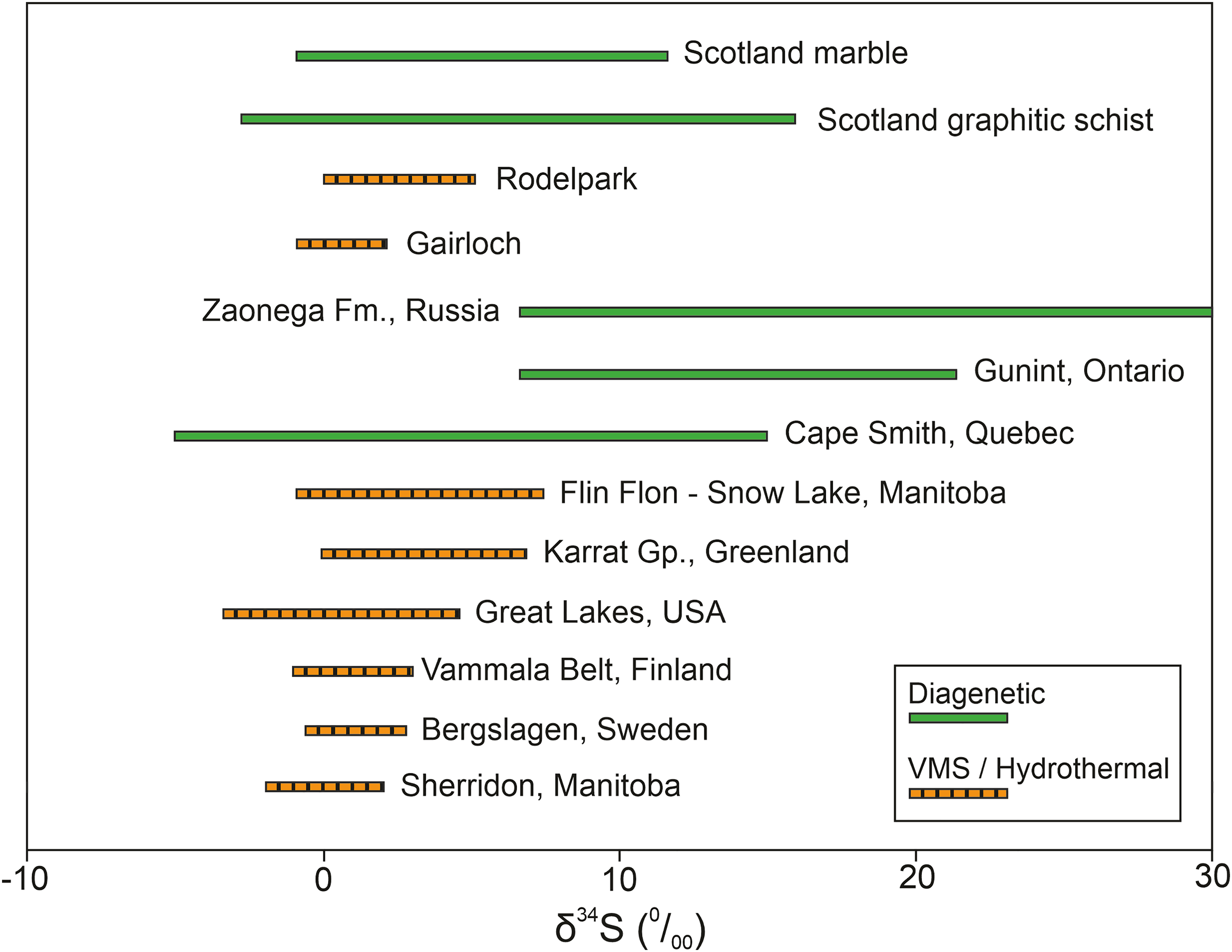
Sulphur isotope compositions of sulphide deposits of mid-paleoproterozoic (1.9 to 1.8 Ga) age, comparing data from North-West Scotland with data from the wider north Atlantic region. Composition of Paleoproterozoic seawater provided for comparison. 39 Data shows dominance of heavy (positive) values. Kerry Road deposit plots near-zero like other VMS deposits. Tiree data plots with other diagenetic pyrite representing seawater sources. Data from Papunen & Mäkelä, 40 Polito et al., 41 Paiste et al., 42 Wagner et al., 43 , Wacey et al., 44 Moleski et al., 45 Motomura et al.,46,47 Drummond et al., 14 Partin et al. 4 and Sangster. 48
Conclusions
New sulphur isotope measurements from sulphides in 14 localities in the Paleoproterozoic supracrustal rocks of north-west Scotland have a much wider range of compositions than previous measurements from the Kerry Road ore deposit at Gairloch. In particular:
Other samples from the Gairloch region have compositions up to 15‰ heavier than the sulphide ore samples in the Kerry Road deposit, indicating that there was a source of sulphur additional to the magmatic sulphur which fed the VMS deposit. The near-zero isotopic composition recorded in the Kerry Road deposit is likewise found in the gabbro at Rodelpark, which was probably mineralised by magmatic sulphur. This composition is also found in marble at Scardroy and the graphitic schists at Borve, which together with evidence of rust zone deposits suggests that further investigation of that Paleoproterozoic succession is merited. The graphitic schists and marbles contain pyrite with relatively heavy compositions typical of diagenetic sulphides elsewhere in the North Atlantic region, which suggests that the additional source of sulphur was from the ambient seawater. The trend to heavy compositions is consistent with the low seawater sulphate concentrations of Paleoproterozoic time.
These findings have implications for exploration and analysis of ancient, mineralised VMS deposits, particularly those in the Paleoproterozoic of the North Atlantic region. Sulphur isotope analysis of Paleoproterozoic ‘rust zones’ could prove to be important in the identification of ore deposits, while conventional whole rock geochemistry may not be a reliable exploration tool in this setting.
Footnotes
Acknowledgements
Skilled technical support was provided by J. Johnston and J. Bowie. Conceptualisation, J.P.; Formal Analysis, J.A., D.D., A.B. and J.P.; Investigation, J.A., D.D., A.B. and J.P.; Data Curation, J.A.; Writing, Review & Editing, J.P. and J.A.; Project Administration, J.P.; Funding Acquisition, J.P.
Declaration of conflicting interests
The authors declared no potential conflicts of interest with respect to the research, authorship, and/or publication of this article.
Funding
The authors disclosed receipt of the following financial support for the research, authorship, and/or publication of this article: Natural Environment Research Council (grant number NE/M010953/1).
