



Abstract
Digital twins are an emerging technology that has been applied across various industries, driven by advancements in Artificial Intelligence, Metaverse, and Internet of Things within the framework of the fifth industrial revolution. Research on the adoption of these technologies remains limited, hence this gap is significant as the sector approaches Industry 5.0. Assessing technological acceptance among mining professionals is therefore essential. This study applies the Technology Acceptance Model 3 to examine factors influencing resistance and future adoption. Partial Least Squares Structural Equation Modelling and SmartPLS 4 are employed as advanced statistical tools. Results reveal high levels of discriminant validity, significance, determination coefficients, and reliability within the model, indicating that the 80 participants are receptive to adopting these technologies. In conclusion, the population perceives the emerging technology as useful but not necessarily easy to use. Finally, it is recommended to clarify how easy the proposed technology can be to use.
Keywords
Introduction
The fifth industrial revolution is considered an upgrade to Industry 4.0 and addresses a major issue: the displacement of humans in industry. The catalysts for this displacement resulted from the introduction of automated machines, where the primary focus was on mass production, which is unsustainable for both the environment and society (Rachakatla and Garrepalli, 2024; Youssef and Mejri, 2023). Industry 5.0 is correcting this by shifting to a new sustainable and collaborative approach between humans and machines, reintegrating the importance of people within companies and combining them with emerging technologies (Mathur et al., 2022; Vadivel, 2024). The mining industry is considered the driving force of many countries’ economies and is not immune to this change. Since mineral extraction practices are inherently risky and, if not conducted sustainably, can have irreversible impacts on the environment and society, it is essential to adopt the new approach offered by Industry 5.0 to maintain a social licence to operate (Laurence, 2011).
The increasing importance of the mining industry in modern times plays a significant role in the global economy (Chen et al., 2024). Due to the rapid development of technology, the mining sector now has the opportunity to transition towards Industry 5.0, becoming crucial for earning the title of ‘smart mining’ (Chen et al., 2024). The World Economic Forum predicts that digital transformation in mining and cement industries are expected to generate over $320 billion in value, reduce CO2 emissions by 610 million tonnes, and save 1000 human lives as worker safety improves (Mielli and Bulanda, 2019). These outcomes will be reflected in energy savings, increased productivity, and enhanced safety, including connected worker systems, remote operations, autonomous operations and robotics, smart sensors, integrated platforms, asset cybersecurity, and advanced analytics and simulation modelling (Mielli and Bulanda, 2019).
To ensure a successful transition to this new industrial revolution, a technological transition analysis is considered necessary. This can be conducted using the technology acceptance model 3 (TAM3), which has proven to be a powerful tool for measuring acceptance of new technologies, identifying areas where efforts can be focused to achieve controlled and successful change (López et al., 2019; Rodríguez-Delgado et al., 2022). Moreover, as TAM3 is a complex model with both dependent and independent variables, advanced statistical methods are required to create a reliable predictive model. For this reason, partial least squares structural equation modelling (PLS-SEM), a statistical method that works with small samples and is represented in SmartPLS 4 software, which can graphically interpret and present results in a user-friendly interface, is considered a robust tool to support the findings (Hair et al., 2022).
The study objectives were to propose and evaluate a technology acceptance model for digital twins (DTs) that are supported by artificial intelligence (AI) in the mining Metaverse (MT) as an emerging technology. It was postulated that the study would determine whether the target population (i.e. current and future mining personnel) is ready for the adoption of mining MT concepts and technologies.
The catalyst for this study was a recent research study (Acosta-Quelopana, 2024) that observed that the pathways toward the adoption of new technologies via hybridisation of existing technologies (e.g. unmanned aerial vehicles [UAVs], mixed reality [MR] and AI) into the mining industry are scarce. This is possibly due to a lack of real intercompany collaboration, and industry research funding models that allow purely exploratory research within mining engineering. The issue of sustainable technology adoption remains an area under exploration, highlighting the importance of exploratory investigations such as the one presented in this article.
Theoretical foundation
Technology acceptance model 3
This version emphasises the role of managers in driving greater acceptance and effective use of emerging technologies among employees. The TAM3 model is especially relevant as it considers how managerial decisions can enhance technology adoption within the workforce and the model has the potential to be applied both pre- and post-implementation, improving overall product acceptance (Venkatesh and Bala, 2008).
However, there is limited information regarding the role of IT acceptance in managerial decision-making. The quantitative and qualitative data gathered through the TAM3 model can provide deeper insights into the factors influencing the acceptance, adoption, and use of emerging technologies.
Human collaboration with robots, also called cobots (collaborative robots), will require increased knowledge, patience, and dedication to new technology acceptance and utilisation. This implies higher costs in hiring and training highly skilled personnel, as well as in the installation and commissioning of new technology (Vadivel, 2024). To bridge the gap between new technologies and their acceptance, the TAM3 was developed to assess and analyse the key predictors: perceived usefulness and perceived ease of use. This model comprehensively integrates individual determinants of IT acceptance that will facilitate future adoption and use (Figure 1).
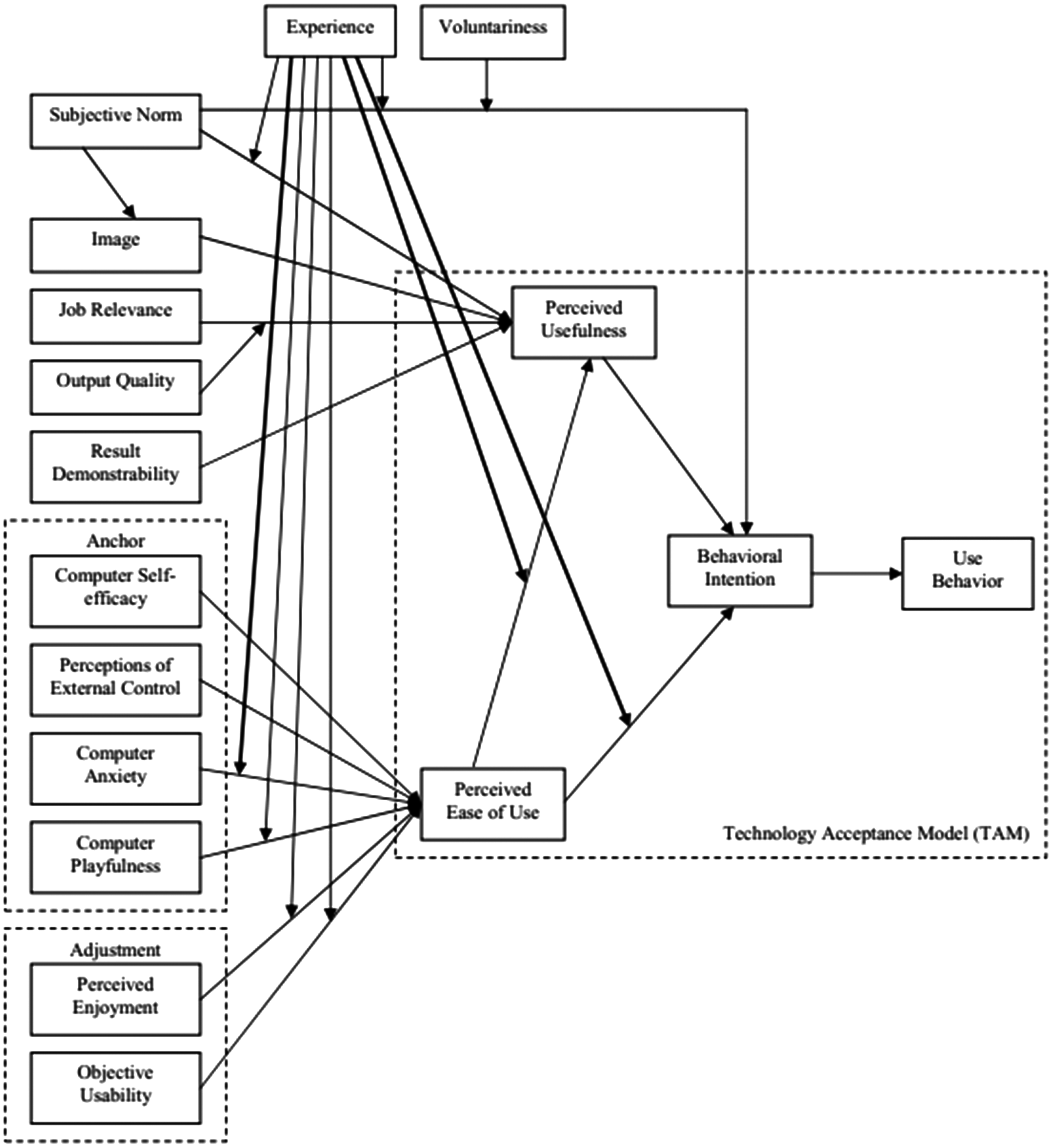
Technology acceptance model 3 (Venkatesh and Bala, 2008).
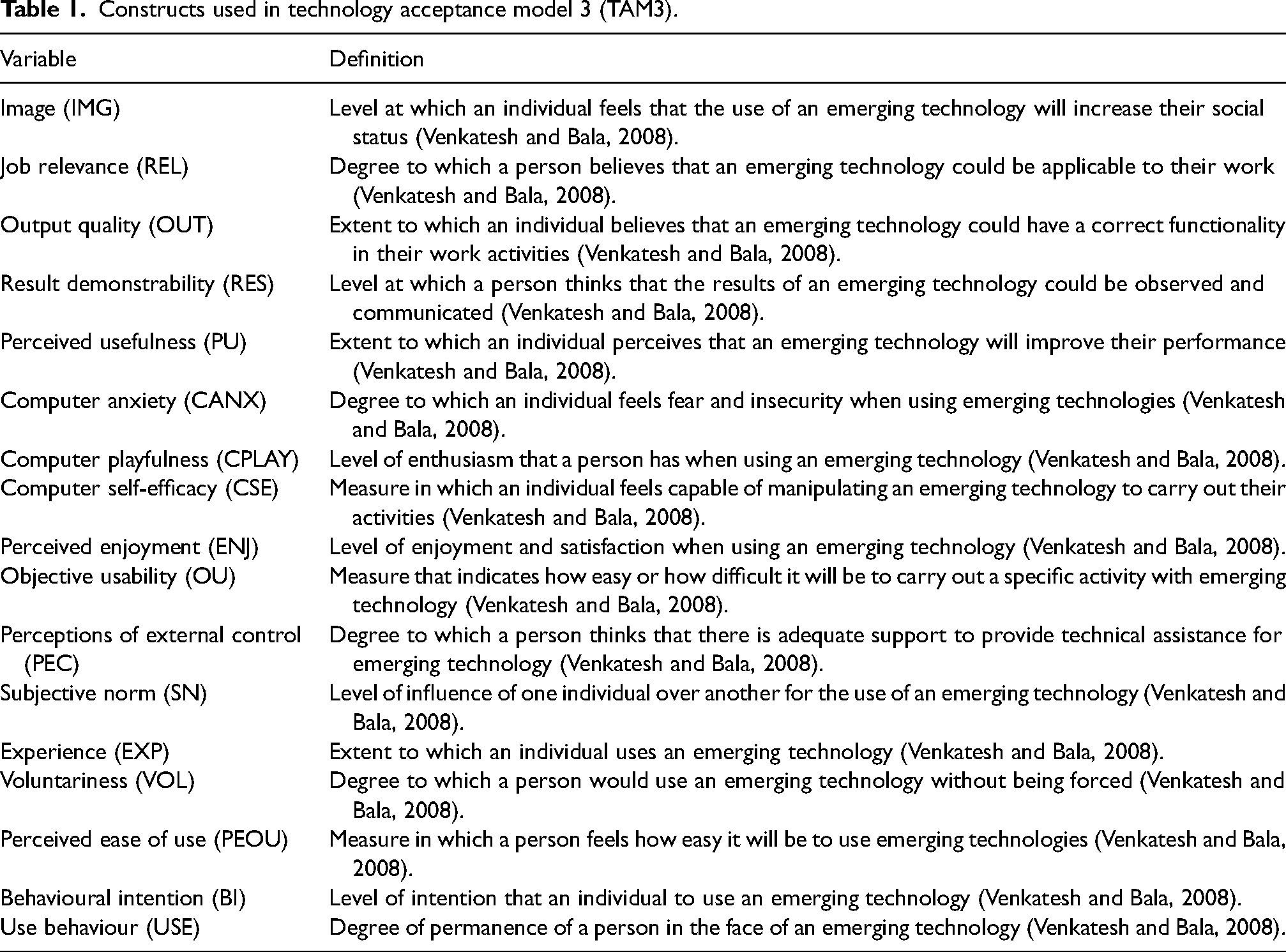
Table 1 shows the definitions of the variables used in TAM3.
Constructs used in technology acceptance model 3 (TAM3).
Mining MT
The MT can be defined as a universal, immersive virtual world that is principally facilitated by virtual reality (VR)/augmented reality (AR)/MR (ISO/IEC JTC1, 2023).
The MT is considered a powerful tool that helps enhance the holistic perception of the mining cycle and how the business is managed, from exploration to mine closure. This includes processes such as exploration, feasibility, planning, design, construction, operations, rehabilitation, decommissioning and closure (Liu et al., 2023; Stothard, 2023; Stothard et al., 2024).
According to Stothard et al. (2024), leveraging emerging technologies such as the MT enables the creation of an ‘always-on’ mine, providing simultaneous access without demographic or time zone barriers to all professionals involved. Moreover, the MT is a complex tool, which makes standardisation and modelling crucial to ensure the project is implemented within quality margins (Standards Australia, Modelling and Simulation—Framework of related standards, 2023).
Currently, the MT is limited to human interaction through text signals, and web search has restrictions on its applicability within the MT (Yang et al., 2024). This technology may be considered a new form of the internet; however, it is still classified as an emerging technology, requiring service quality capable of minimising latency and ensuring high reception and real-time data handling. Therefore, wireless communication and network capabilities must improve simultaneously (Duong et al., 2023). Nevertheless, the application of AI and high-speed networks (6G) can help enhance human-computer interaction (HCI) and ensure a better immersive experience, facilitating communication between the real and virtual worlds in the MT (Bhattacharya et al., 2023; Kreuzer et al., 2024).
Finally, the International Standards Organisation (ISO), Standards Australia, and the Institute of Electrical and Electronics Engineers (IEEE) are working together to develop standards that will facilitate the creation and modelling of MT (Standards Australia, Modelling and Simulation—Framework of related standards 2023; Qu et al., 2024) (Figure 2).
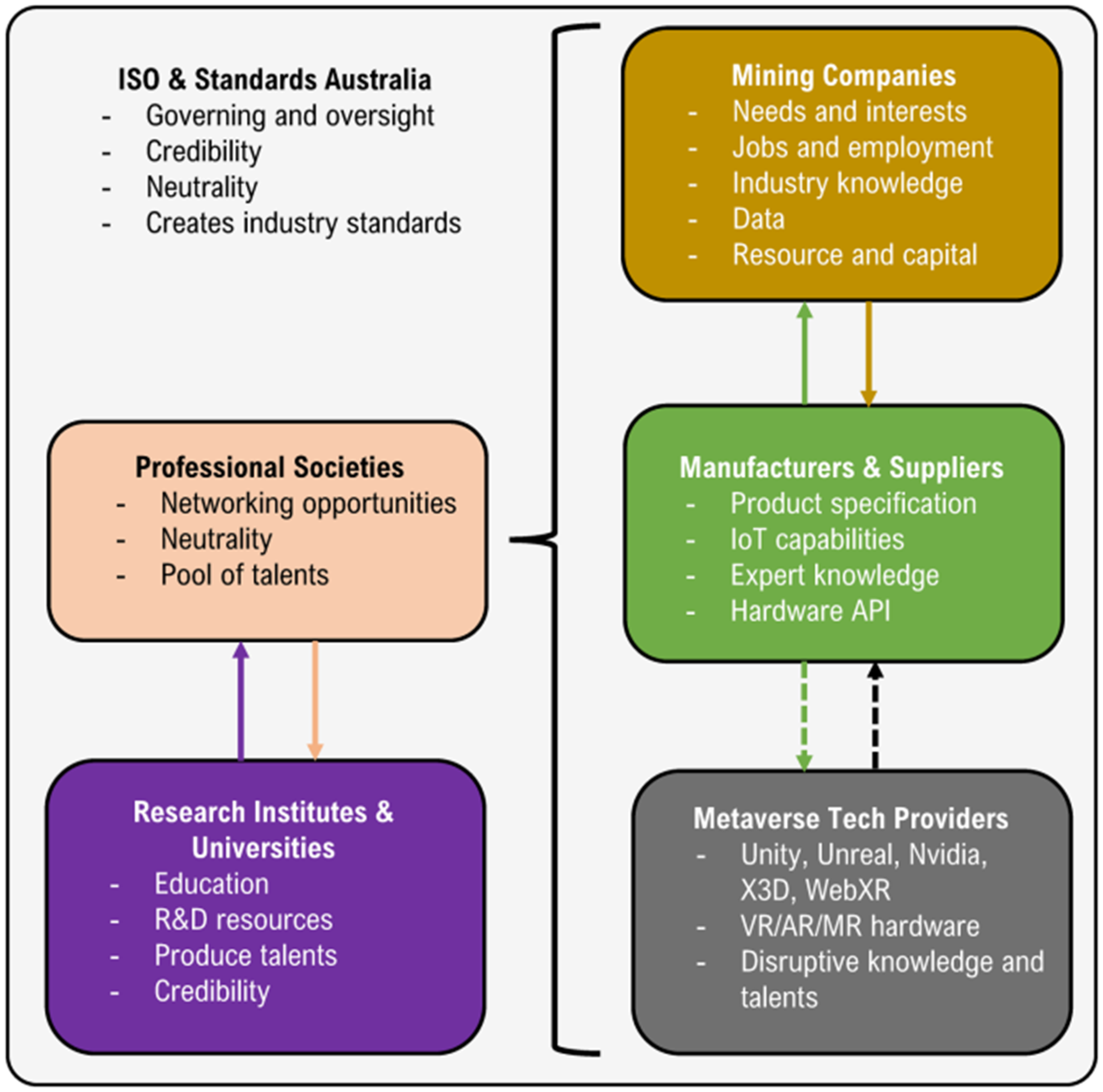
Industry engagement for mining Metaverse (Qu et al., 2024).
According to Qu et al. (2024), an MT cannot be successful without defined working standards, as it requires sufficient security, transparency, accessibility, efficiency and compatibility for future mining projects.
DTs in the mining industry
There are various misconceptions, where some products are mistakenly referred to as DT when they are not (Fuller et al., 2020). Most studies fail to demonstrate a connection between the virtual and physical domains, thus lacking a bi-directional approach. Additionally, only a small portion of studies base DTs on real-time data, establishing a physical-virtual connection. Therefore, the research of a true DT model is necessary, as mentioned by Qu et al. (2023). Figure 3, the evolution and communication between the real world and the physical world can be observed, differentiating the three types of existing digitalisation, which represent the levels of integration (Attaran and Gokhan, 2023; Qu et al., 2024).
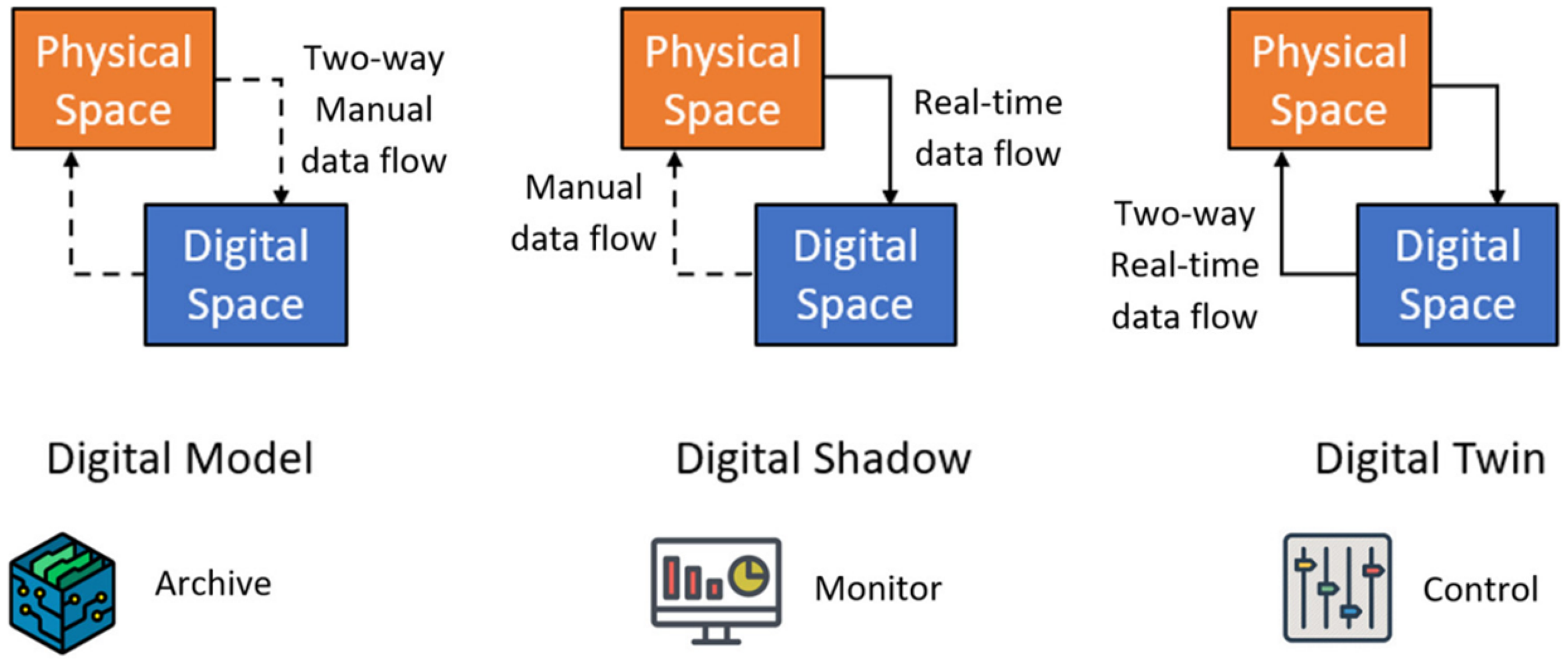
Classification of the data integrations (Qu et al., 2024).
DTs provide immediate responses or adjustments from the digital realm, generating a bidirectional flow of information between the physical and virtual worlds, thereby granting transparency in data processing (Chen et al., 2024). DTs not only bring innovation to companies but also offer a safe and rapid mode of production. The interaction and integration between the two realms – virtual and physical – are evident in the development of DT (Attaran and Gokhan, 2023).
It is worth mentioning that DTs allow for the simulation of the desired task, enabling understanding and optimisation within a secure environment. This process relies on high-precision sensors implemented in the physical world, which can transmit information to the digital realm, creating the desired twin and possessing the potential to significantly improve the industry (Kumar et al., 2024).
Their application exhibits an exponential trend, transforming the way businesses operate. It is estimated that by 2027, over 40% of large-scale companies will utilise DT in their projects, resulting in increased investments in the technology over the coming years (Attaran and Gokhan, 2023). This demonstrates that the study of the emerging technology is growing and gaining interest in both academia and industry; therefore, it must be maintained over time to ensure equitable understanding and to support future research for development (Fuller et al., 2020; Jones et al., 2020).
According to Attaran and Gokhan (2023) and Yusupbekov et al. (2023), predictions based on DT models regarding short- and long-term planning in mining have significantly increased the perceived utility of companies due to enhanced decision-making resulting from the broad overview and ease of use in simulations within DT for process optimisation, equipment improvement, productivity, efficiency and adaptability, resulting in improved efficiency and resource availability in mining (Duarte and Santos Baptista, 2024; Elbazi et al., 2023a, 2023b, 2023c). This also applies to drilling, blasting and mineral extraction. Furthermore, DT is being utilised in training programmes to support human resources in safely learning how to navigate various unsafe scenarios within the high-risk mining sector.
Traditional mining practices will inevitably undergo changes to adapt to DT, which serve as a method for studying complex systems due to their capabilities in data centre management, simulations, analysis and visualisation platforms. This includes cost optimisation, management of environmental gas emissions, production, processing, refining and even recycling, ensuring the sustainability of the process (Ghahramanieisalou and Sattarvand, 2024). Figure 4 shows the details of the relationship between the mine environment (physical twin) and DT.
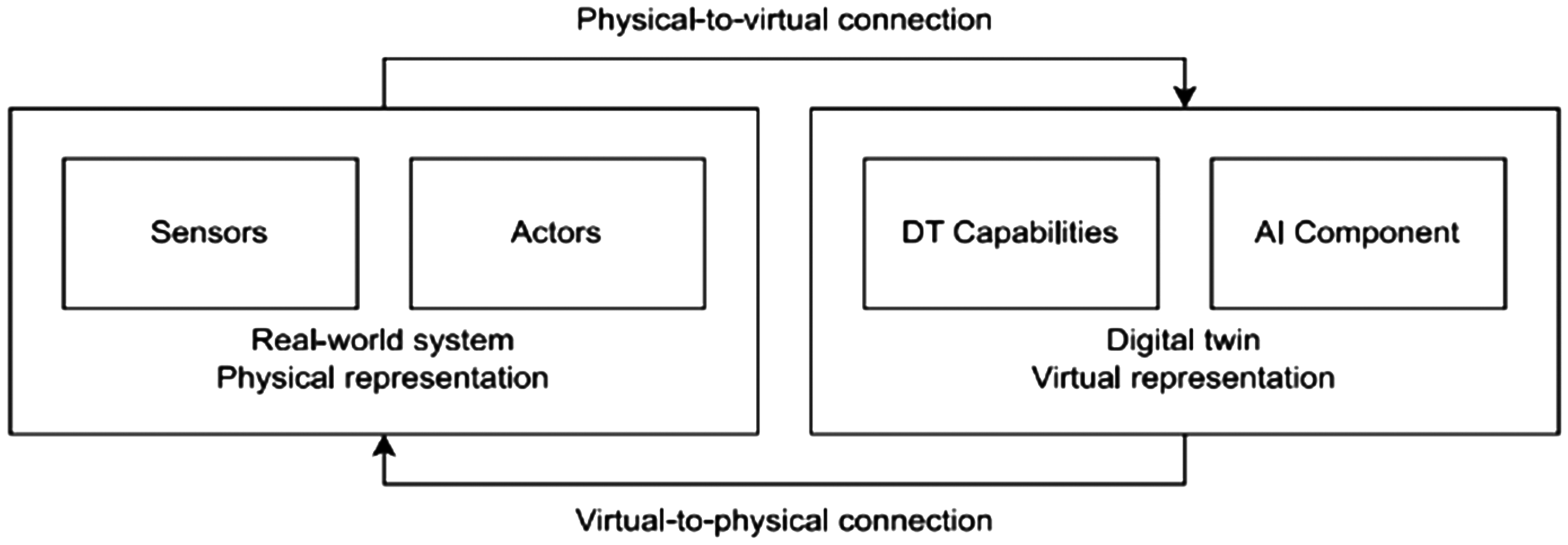
Details of the relationship between physical and digital twins (DT) (Ghahramanieisalou and Sattarvand, 2024).
For this reason, DT is being considered one of the most promising, popular and modern technologies capable of increasing the efficiency and performance of companies, including the mining industry (Elbazi et al., 2023c; Yusupbekov et al., 2023).
The future of mining is being shaped by autonomy and dynamism through DT. Real-time data collection and cognitive decision-making are fundamental aspects of the industry's evolution. AI is the main topic of interest when discussing data analysis, and it can be integrated into DT as a supportive technological combination (Fuller et al., 2020). If DT interactions are complemented with AI, even greater efficiency could be achieved (Hazrathosseini and Afrapoli, 2023). Efficiency will increase, along with ease of use and human-computer communication (Bhattacharya et al., 2023; Hazrathosseini and Afrapoli, 2023; Khanna et al., 2023; Samaei et al., 2024). The use of AI in DT has become increasingly popular over time, as has its applicability in various fields (Kreuzer et al., 2024). Figure 5 shows a model of DT with the AI component.
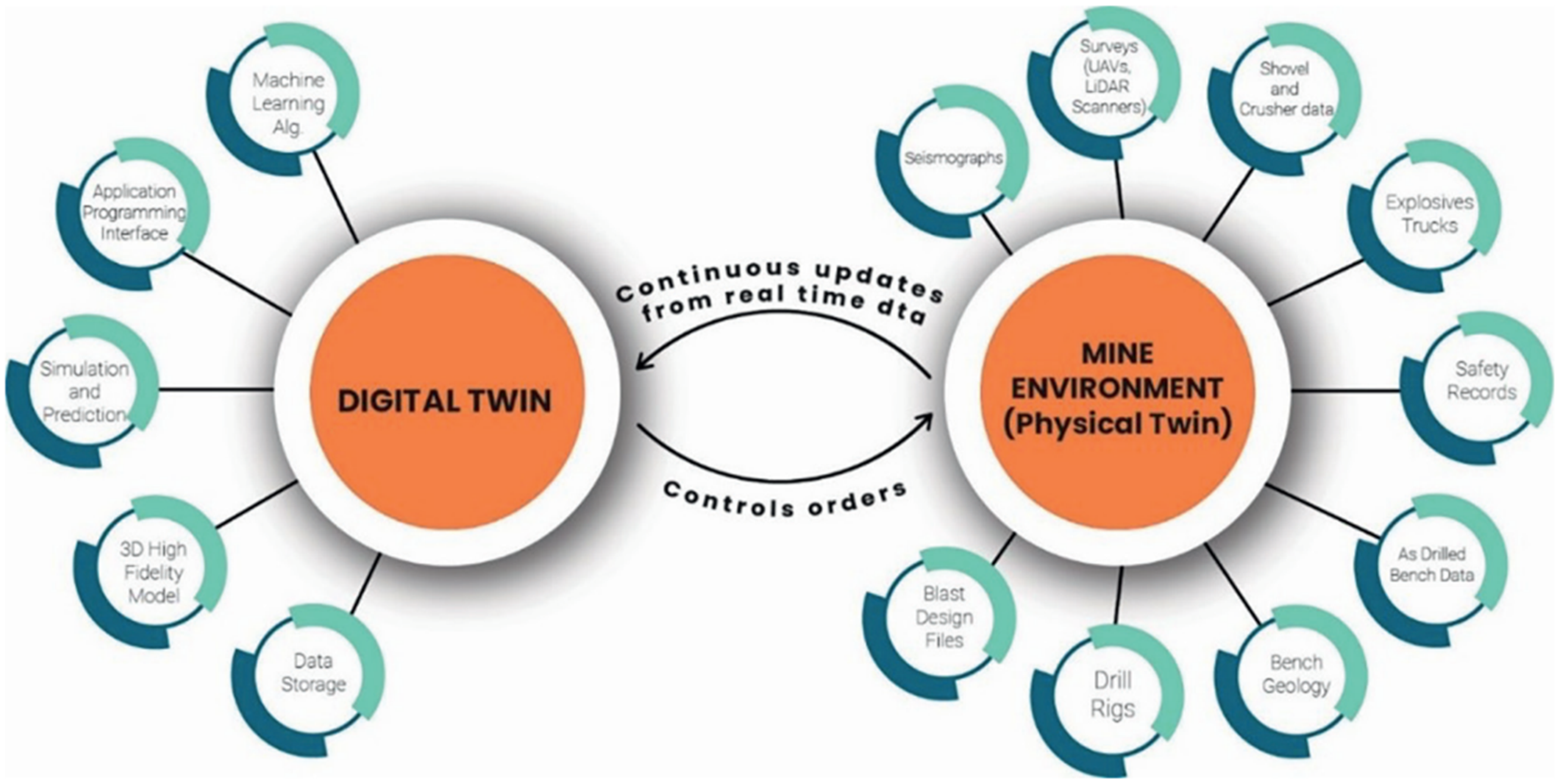
Schematic model of digital twin with an artificial intelligence (AI) component (Kreuzer et al., 2024).
Fifth industrial revolution in mining
The fifth-generation industrial revolution, also known as Industry 5.0, entails more significant changes in socio-economic, technological and cultural realms rather than simply marking a shift in time. Moreover, it completely transforms the way businesses operate, transitioning from artisanal methods to automation, with mass production being a key highlight (Mathur et al., 2022). Industry 5.0 represents the sustainable evolution of its predecessor, Industry 4.0, where the focus was primarily on automation and machine-to-machine communication. In contrast, the fifth generation places greater emphasis on human value, resilience and sustainability (Martínez-Gutiérrez et al., 2024; Youssef and Mejri, 2023).
According to Youssef and Mejri (2023), through a bibliographic analysis identifying 300 studies related to Industry 5.0, it was found that most publications were made between 2020 and the year the research was published (2023). Therefore, it can be concluded that the number of studies on this topic will grow exponentially, as it is increasingly becoming a matter of public interest and is gaining greater relevance over time. This is shown in Table 2.
Annual citations related to Industry 5.0 (Youssef and Mejri, 2023).
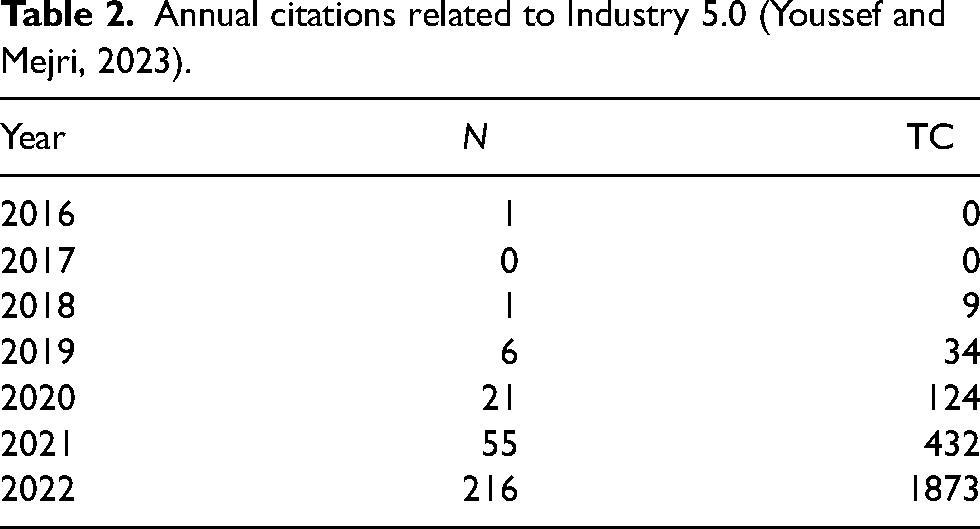
Furthermore, the research (Youssef and Mejri, 2023) presents the following image, which illustrates that Industry 5.0 research has a close relationship with Industry 4.0, as it represents its evolution. The main topics considered as keywords include sustainable development, human-centricity, smart manufacturing and 6G. This is shown in Figure 6.
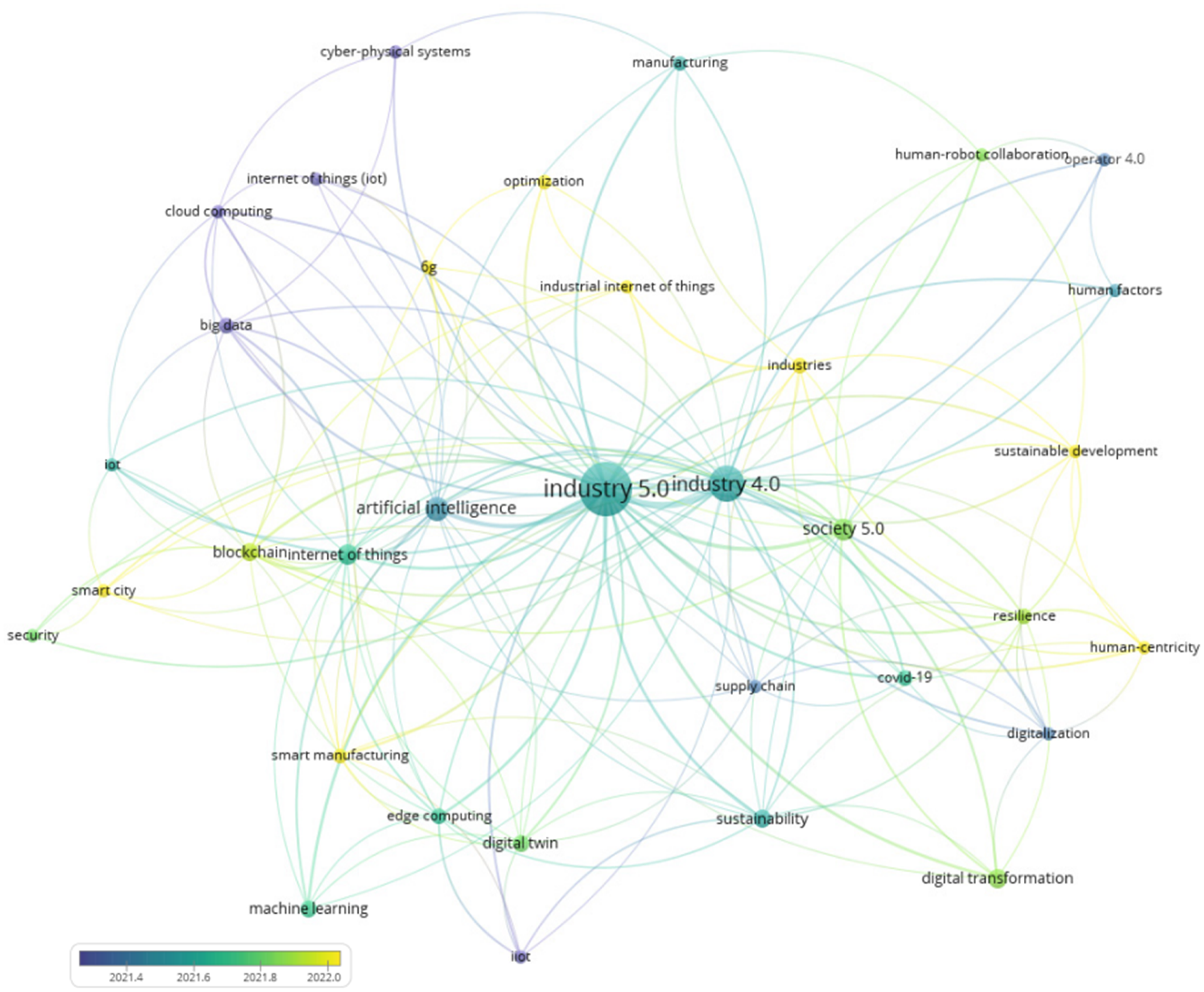
Keyword overlay visualisation (Youssef and Mejri, 2023).
Therefore, the fourth industrial revolution was able to achieve the emergence of smart factories, facilitate mass customisation, and attain greater productivity and efficiency. However, it did not fully develop in terms of cybersecurity, failed to invest in potential changes to infrastructure, overlooked sustainable environmental development, and created a skills gap in the workforce regarding digital competencies. This resulted in an impact and resistance to modernisation due to the massive loss of jobs (Rachakatla and Garrepalli, 2024).
The transition to Mining 5.0 will consist of a gradual shift from existing technology to recent immersive collaborative technology, which is key to boosting mining assets. Its application presents certain challenges, such as bidirectional HCI, data computing and property technologies (Abdellah et al., 2022). Figure 7 shows the key challenges for Industry 5.0 to evolve.
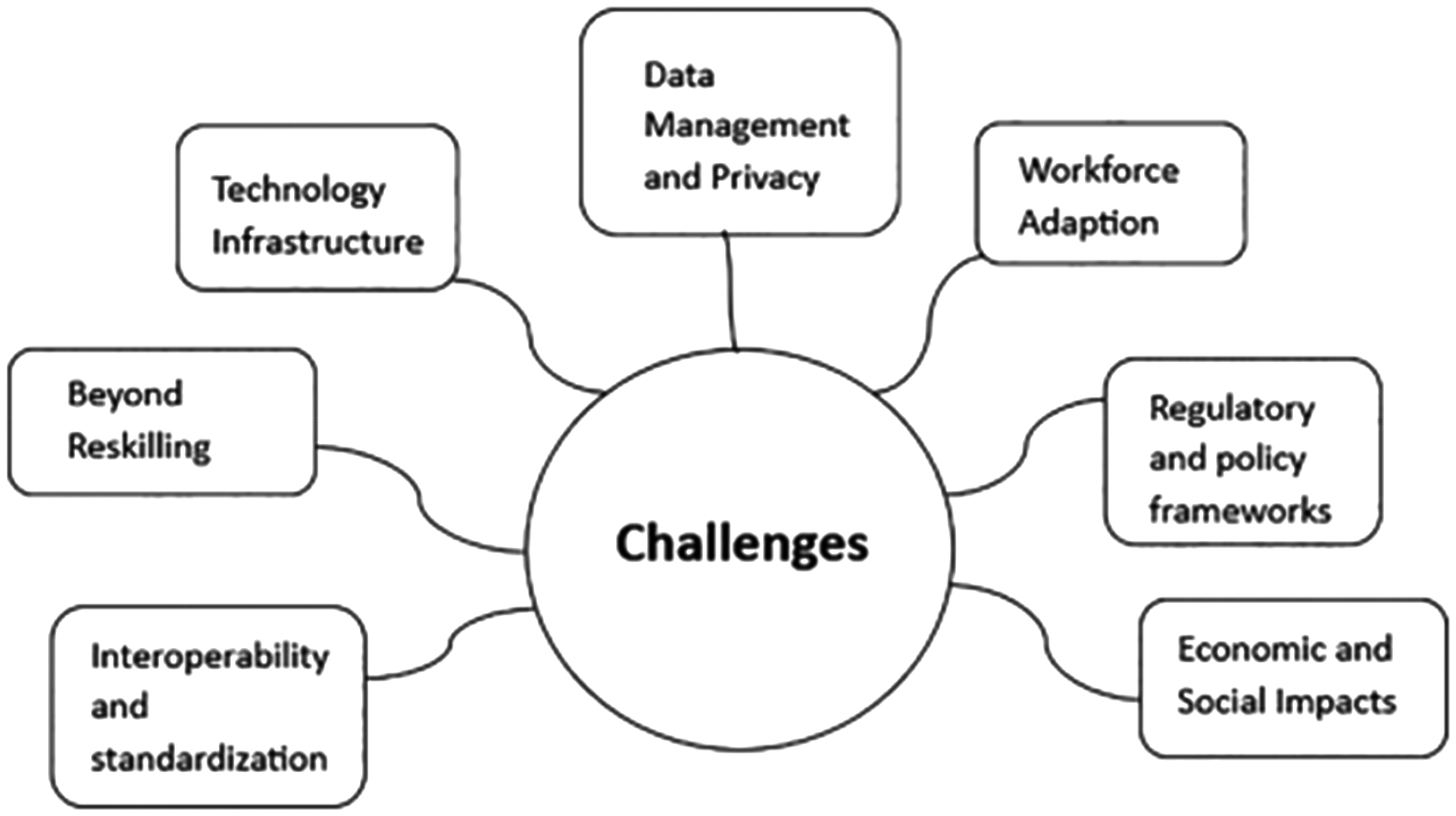
Key challenges impeding Industry 5.0 evolution (Rachakatla and Garrepalli, 2024).
In making this change, it is essential to prepare the work area to facilitate access to new platforms. Additionally, it will depend on the maturity of technology in the mining industry, as well as on policies that can promote the sustainable application and development of these technologies (Abdellah et al., 2022; Zhironkin and Ezdina, 2023).
Advanced AI in the mining Industry 50
AI is defined as ‘computing systems that are able to engage in human-like processes such as learning, adapting, synthesising, self-correction and the use of data for complex processing tasks’ (Crompton and Burke, 2023). Therefore, its application in the mining industry is considered promising, and capable of addressing globally relevant issues such as the mitigation of greenhouse gases and the use of renewable energies in the sector (Corrigan and Svetlana, 2024). Moreover, as a new technology with potential for application in the mining industry, it is deemed necessary to investigate the standards and professional ethics that must be adhered to for sustainable development, which involves society, the economy and the environment (Laurence, 2011).
According to a study published in 2024 (Corrigan and Svetlana, 2024), it is recommended to consider ethical considerations when applying AI in the mining industry, which are currently not being taken into account. This oversight could result in losing the opportunity to transition from fossil fuels to sustainable energy for both humans and the planet. The application of AI can be directed towards environmental decision-making, considering land use, nearby communities, governance and fulfilling a multi-objective mission contributing to sustainable mining over time.
AI in the mining sector has various areas for application, considering the industry's goals and the stages at which it would generate important information for decision-making (Corrigan and Svetlana, 2024). Figure 8 represents the areas where AI would serve as support.
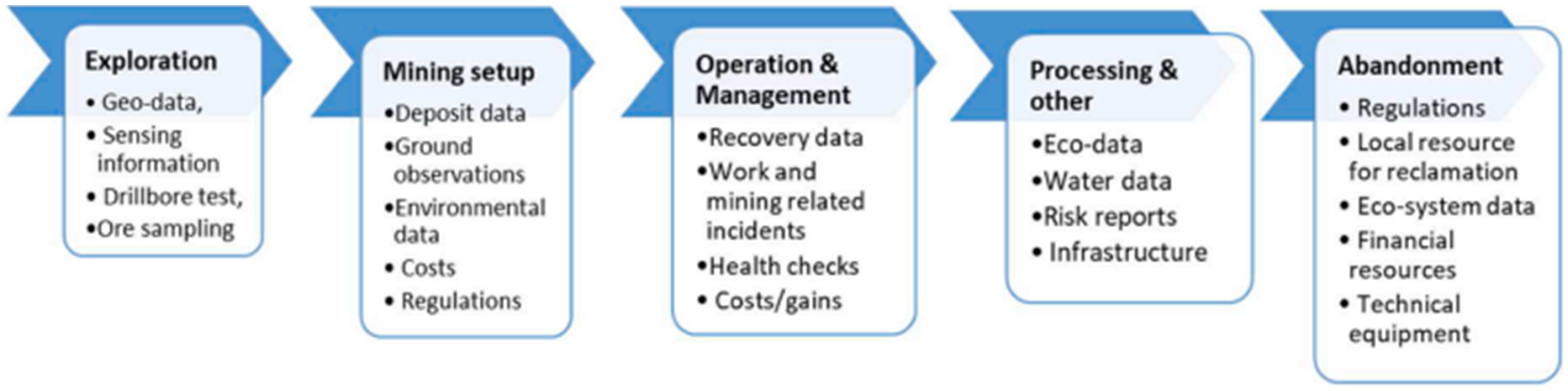
Current and upcoming uses of artificial intelligence (AI) applications in mining (Corrigan and Svetlana, 2024).
Certain challenges have been identified that have yet to be addressed and are proposed as future research topics: Autonomy and Observation, Balance of Rewards, Bias and Justice, Explainability and Acceptance, and Path Forward (Corrigan and Svetlana, 2024).
Finally, alongside the assistance of AI, the emergence of ‘Mine 5.0’ is underway, which aims to enhance six crucial aspects (safety, security, sustainability, sensitivity, service and smartness), evolving even beyond CPS (cyber-physical systems) to CPSS (cyber-physical-social-systems) (Chen et al., 2023; Tao et al., 2019). It is worth highlighting that, specifically in the mining industry, with long working hours, extreme climates and high-risk jobs, AI would provide solutions to create a smart mine (Yang et al., 2023). The development of industry and mining from 1.0 to 5.0 is shown in Figure 9.
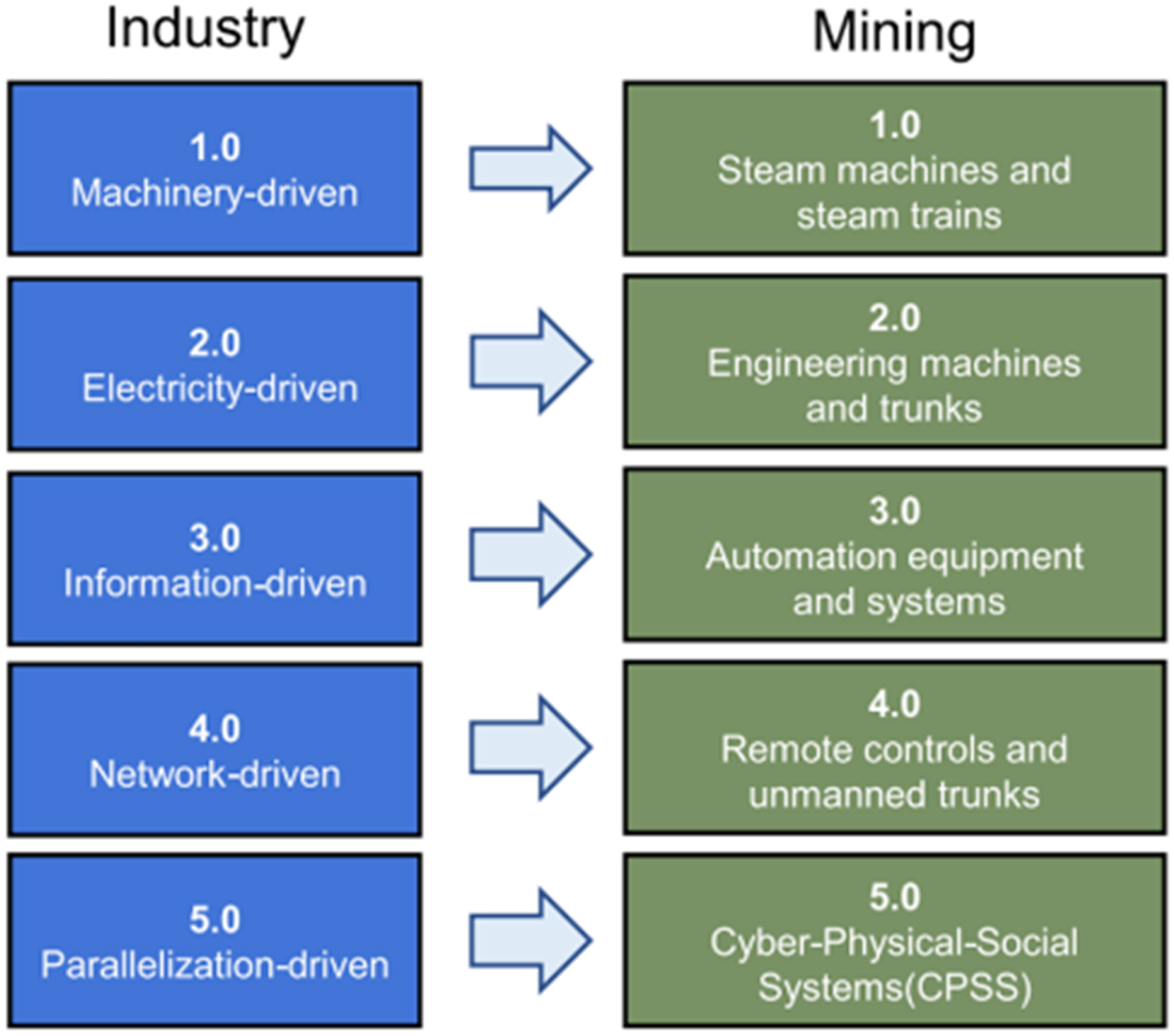
Development of industry and mining from 1.0 to 5.0 (Chen et al., 2023).
Partial least squares structural equation modelling
According to Cheah et al. (2023) and Sarstedt et al. (2024), over time, studies conducted using advanced statistics have been increasing, gaining popularity in the fields of research and industry. The PLS-SEM is a special technique useful in exploratory studies, high complexity, small populations and advanced structural models such as TAM3, unlike other SEM analyses (CB-SEM). It is characterised by the measurement of latent constructs, flexibility in data, reflective and formative models, as well as prediction and explained variance (Hair et al., 2022). The number of PLS-SEM studies has increased is shown in Figure 10.
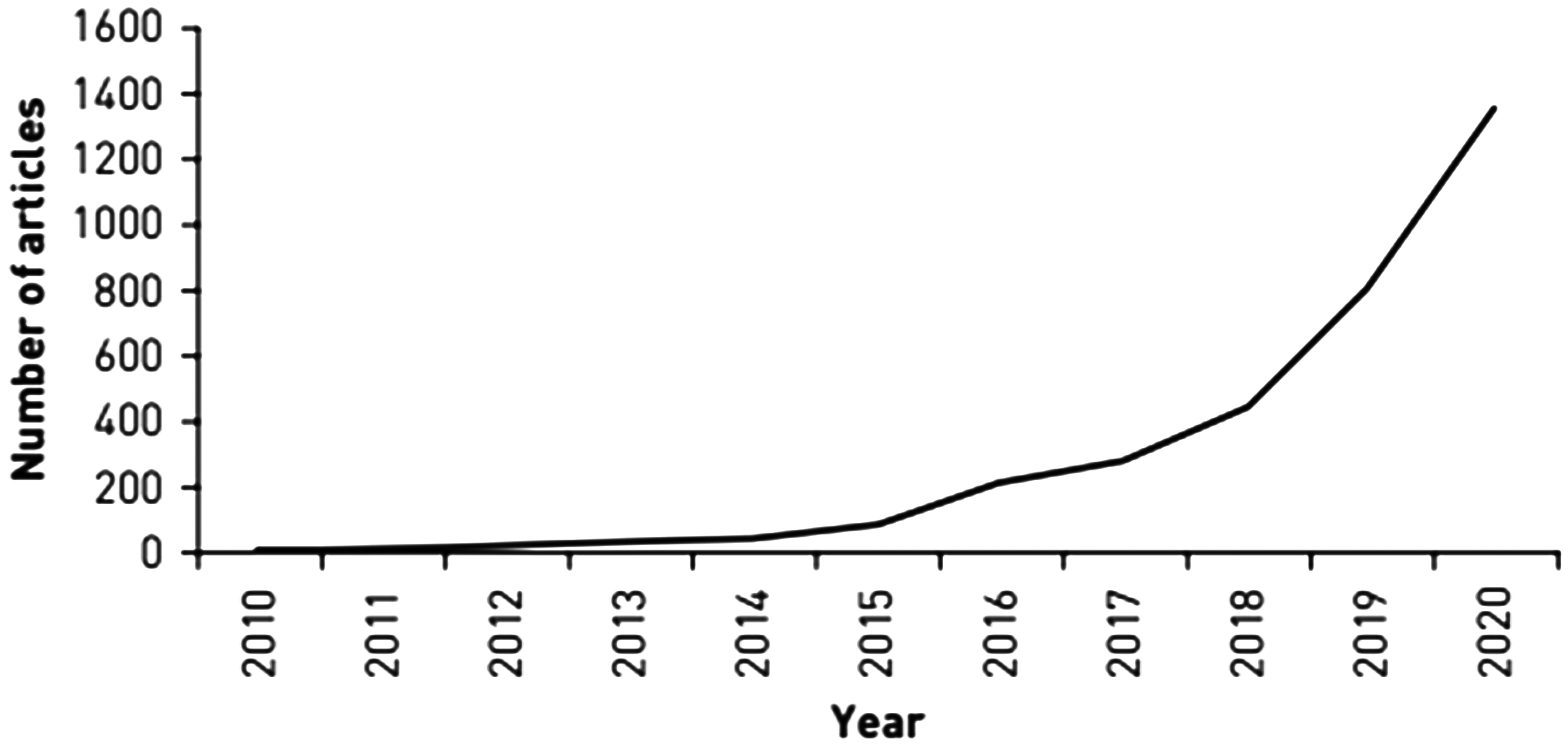
A number of partial least squares structural equation modelling (PLS-SEM) related articles per year (Hair et al., 2022).
The complexity of working with exogenous and endogenous variables makes the PLS-SEM tool capable of establishing relationships within a statistical model and predicting outcomes through the relationships between variables (Russo and Stol, 2021; Sarstedt et al., 2024). The model for abstract PLS-SEM is shown in Figure 11.
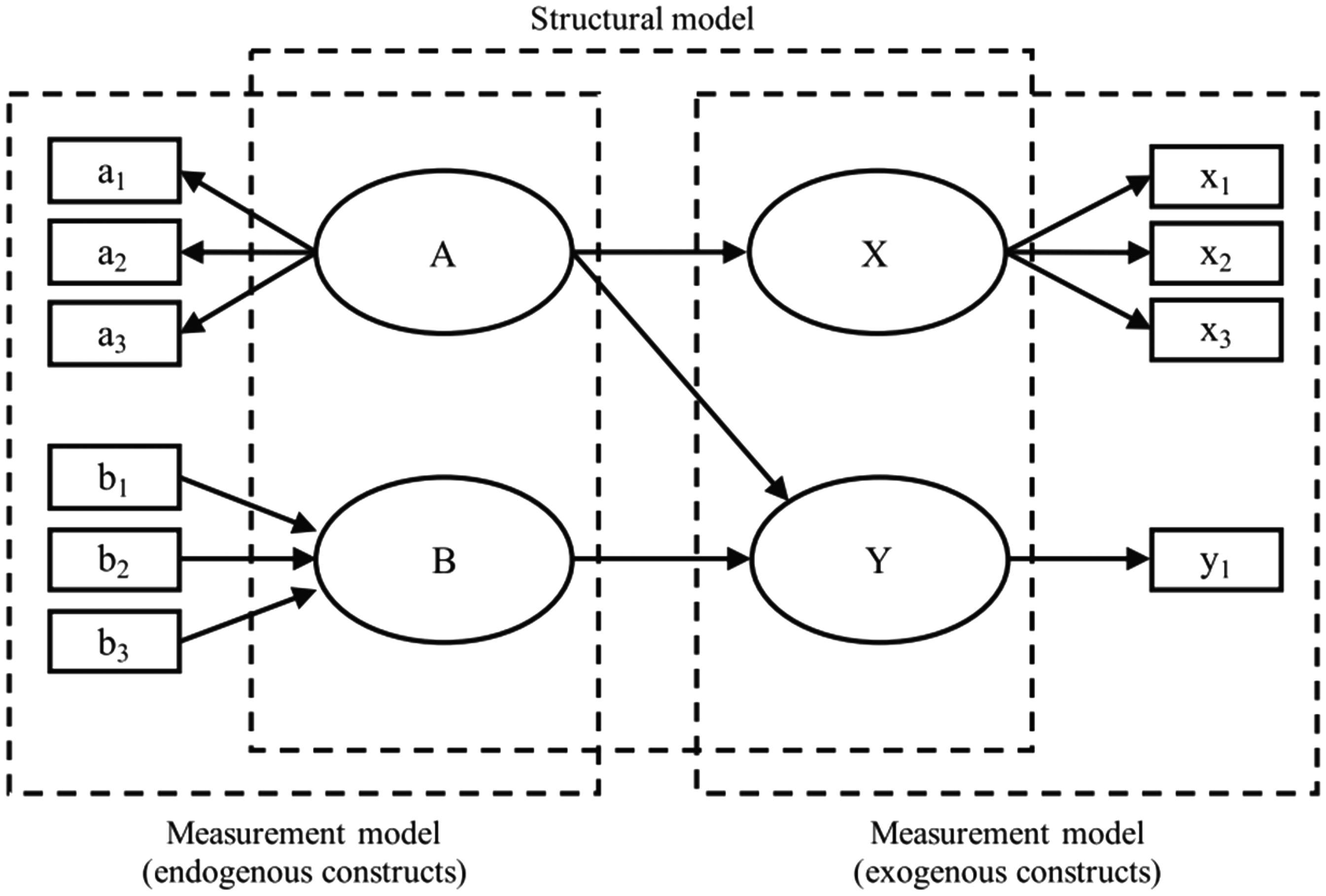
Abstract partial least squares structural equation modelling (PLS-SEM) model example (Russo and Stol, 2021).
The PLS-SEM analysis can be represented by SmartPLS 4 software, which provides advanced statistical information about the model such as variance, standard deviation, significance level (p and t values), discriminant validity – Heterotrait Monotrait ratio (HTMT), coefficient of determination (R2), path coefficient, confidence intervals, Cronbach's alpha and average variance extracted (AVE), which has been used to scientifically validate the research.
Methodology
An initial qualitative assessment has been conducted prior to the transition to Mining 5.0, focusing on exploring technology acceptance through perception via a survey of DTs supported by AI in the mining MT, the question bank applied and the survey were completed in English and Spanish.
Given that this is an emerging technology, it is essential to predict its future usability. Following the application of TAM3, the level of statistical correlation has been quantitatively determined using the PLS-SEM technique to ascertain whether the population is ready for the transition through SmartPLS 4 software. Additionally, the benefits of the application have been evaluated both quantitatively and qualitatively.
Moreover, the survey data was collected via Google Forms, an online tool that provides the necessary versatility for an international survey, following the recommendations provided by the Human Research Ethics Committee.
The survey was conducted on the target population in Australia and Peru (Industry Partners and Universities). University students were considered an important factor since the mining industry will be led in the future by these people. Additionally, combining the future mining population with those already working in the field adds relevance to the study. This approach allowed a comprehensive understanding of whether both new entrants and current professionals in the mining sector are willing to adopt the emerging 5.0 technology, ensuring a smooth transition.
Bibliographic acquisition technique
The necessary bibliography and information have been sourced from formal and internationally recognised databases, such as indexed scientific articles, conference papers and literature reviews available in Web of Science (WOS), ScienceDirect, IEEE, Springer, MDPI and Scopus.
The research explored emerging technologies, including DTs, the MT, AI, and the technology acceptance model in the mining sector, providing a comprehensive overview to serve as a foundation for the study. The systematic literature search was conducted individually, as combining all topics into a single search query yielded no results.
An advanced search was performed using the following code: (“Technology Acceptance Model 3” OR “Technology Acceptance Model” OR “TAM” OR “TAM 3”) AND (“Mining company” OR “Mining Industry” OR “Mining Engineering” OR “Mining”), which revealed limited information related to the specific topic of this investigation, namely the transition to Industry 5.0, incorporating DTs, AI, and the MT in mining. As a result, the search was broadened to include the use of the TAM within the mining industry.
The search was limited to articles published within the last 10 years because working with recent publications guarantees cutting-edge and modern technology. Additionally, only the English language was considered because, the journals with the greatest impact and reach worldwide are in English, since it is known as the lingua franca of scientific research (Ferguson et al., 2011). Finally, medical studies and data mining papers were excluded.
Survey implementation technique
The model proposed by Venkatesh and Bala, TAM3 (Venkatesh and Bala, 2008), was utilised, which develops a network of validated variables to help determine the level of usage behaviour and future adoption of digital twins supported by artificial intelligence in the mining MT. It has been demonstrated to be an effective tool for understanding the intentions of the stakeholders. The a priori application of a technology acceptance model will aid managerial decision-making regarding investment and transition towards a new industrial stage (López et al., 2019; Rodríguez-Delgado et al., 2022).
TAM3 was selected over other technology acceptance models, such as the Unified Theory of Acceptance and Use of Technology 2 (UTAUT2), which was also developed by the same author but incorporates variables such as price, age and gender (Venkatesh et al., 2012). These variables were deemed non-essential for this project, as the cost of implementing the technology will be borne by the company rather than the end-user. Additionally, the mining industry is characterised by a diverse workforce in terms of gender and age, making these variables less relevant for this study. Therefore, by using TAM3 is guaranteed a professional customised approach to the mining industry, detailing the psychology and external factors influencing the adoption of the proposed technology, unlike UTAUT2 which has a customer and sales-based approach.
The survey employed a 7-point Likert scale (Spencer, 2015), a commonly used psychometric tool designed to capture respondents’ attitudes or perceptions through closed-ended responses. This scale ranges from 1 to 7, with 1 representing ‘Strongly Disagree’ and 7 representing ‘Strongly Agree’. Each point on the scale reflects varying degrees of agreement or disagreement, allowing for a more nuanced understanding of respondents’ views. The use of this scale enables the measurement of subjective opinions in a structured and quantifiable manner, providing insights into the intensity of participants’ attitudes toward digital twins supported by artificial intelligence in the mining MT.
For the completion of an important survey, it has been adhered the National Statement on Ethical Conduct in Human Research (National Health and Medical Research Council, 2007), a book formulated by the Australian Government to maintain high ethical and moral standards for handling confidential data.
Statistical data interpretation technique
The PLS-SEM was chosen due to its capability of working with low amounts of data. It is considered a powerful statistical tool. PLS-SEM analyses relationships between variables, both observed (those that can be easily measured quantitatively) and unobserved (subjective and difficult to measure, requiring observed variables for estimation), within a structured model.
Relationships are established using software called SmartPLS 4, which simultaneously executes relationships between variables. It is suitable for exploratory research where the model is specified by defining variables and their relationships.
Subsequently, the model is estimated by calculating correlation coefficients through partial least squares. Additionally, applying the procedure called Bootstrapping allows the sample to be expanded statistically. It is a tool that randomly generates subsamples based on the original data. Finally, the results were evaluated and interpreted.
The questions provided by TAM3 were inputted on the predetermined Likert scale and modelled in Smart-PLS 4 with advanced statistics such as minimum and maximum responses for each variable, standard deviations, correlation coefficient between variables, frequencies, percentages, arithmetic means, path coefficient, Cronbach's alpha, R2, T values, P values, confidence intervals and discriminant validity, using observed variables and estimating unobserved ones (Rodríguez-Delgado et al., 2022).
Results
The results obtained through the PLS-SEM technique demonstrate a robust and reliable model, validating the use of TAM3 to assess the technological acceptance of DTs supported by AI in the mining MT. The analysis reflects clear and satisfactory statistics and demonstrates the quality of the model across all its variables.
Analysed target population
The target population considered for the study included all professionals and students associated with the mining industry. Professionals, with their vast experience, are familiar with the industry and its development over the years, including the technologies currently in use. Students, seen as the future of the mining industry, offer a forward-looking perspective and are poised to adopt both existing and emerging technologies.
The age distribution of the survey participants shows a higher concentration of responses in the 25–30 age range, a result that can be attributed to the predominant participation of universities compared to mining industries. This may reflect the differing focuses of industry and academia. Likewise, the high representation of young professionals and students may suggest a greater interest in and familiarity with advanced technologies, aligning with emerging digitalisation trends in the mining sector.
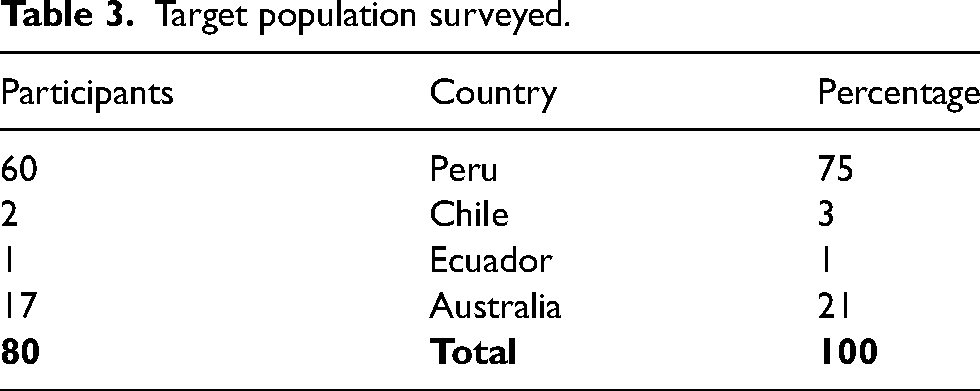
Eighty participants responded to the technology acceptance model, hailing from countries with developed and leading mining industries. Table 3 shows the distribution of participants, with Peru and Australia standing out. Table 3 shows the location of participants.
Target population surveyed.
As can be seen in Figure 12, there is a high variability in ages, ranging from 21 to 76 years.
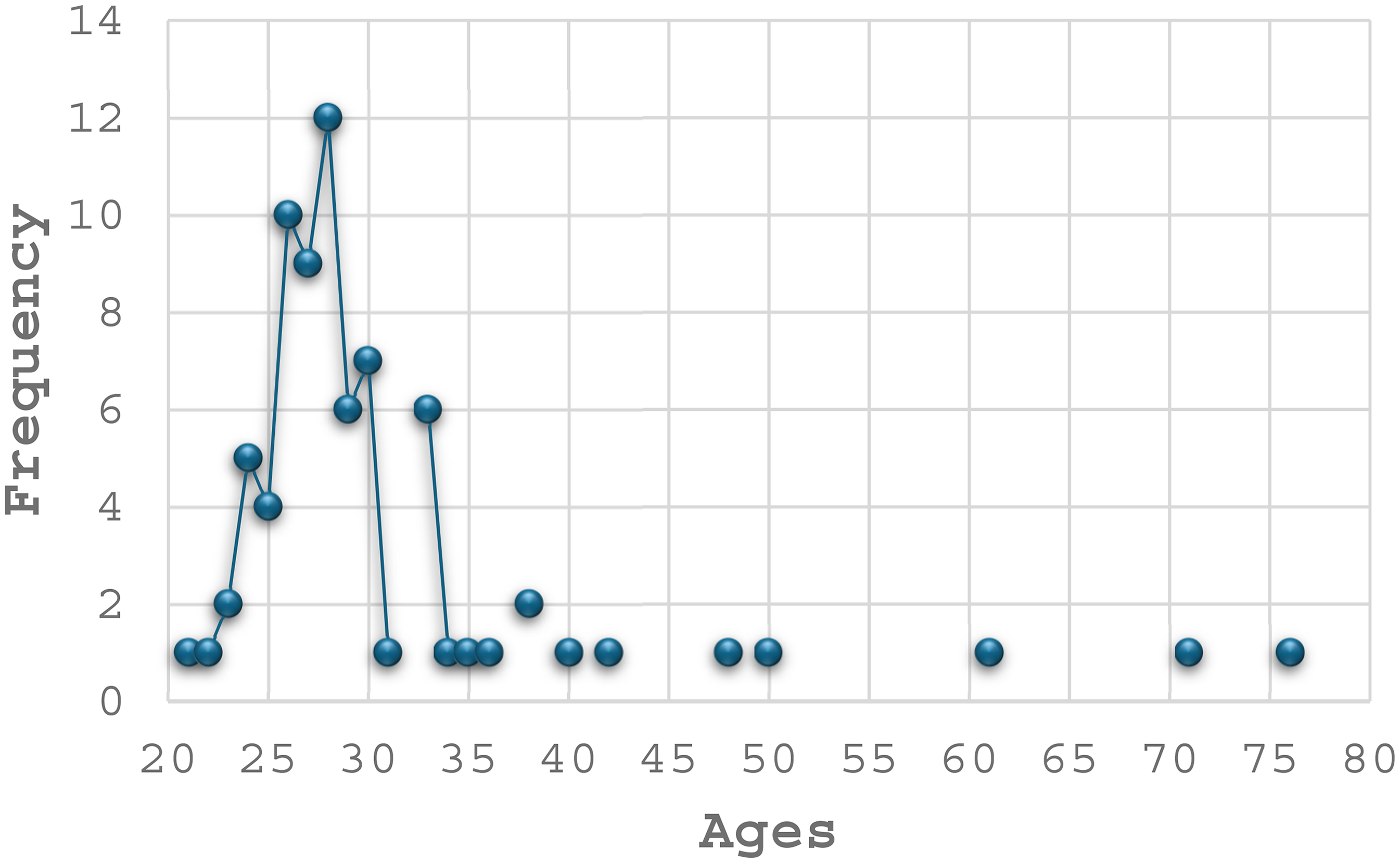
Ages distribution.
Descriptive statistics
As can be seen in Table 4, the results statistically show that the average responses from the surveyed target population exceed the neutral point, which is determined by the number 4 ‘Neither agree nor disagree’, indicating a tendency towards acceptance of the proposed technology. Additionally, 53% of the questions related to TAM3 have a standard deviation of no > 1, indicating the homogeneity of the responses from the 80 participants. It is worth noting that the highest standard deviation is in the PEOU section, ‘Perceived Ease of Use’, which is due to the limited knowledge and experience with emerging technologies.
Descriptive statistics.
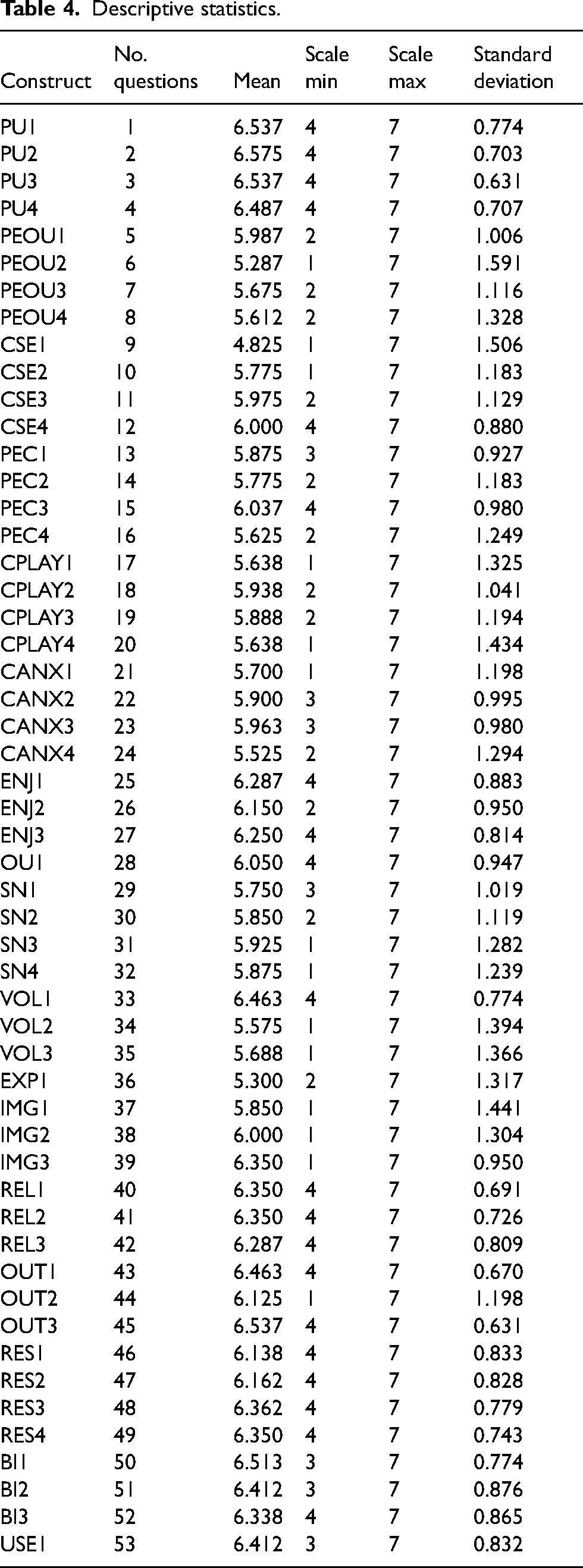
Consequently, since these technologies have not been used before, they may be perceived as somewhat difficult to use. Finally, the core constructs of TAM3 have a standard deviation of < 1 and the highest means, close to 7 ‘Strongly agree’, indicating that the path to acceptance in terms of PU, BI and USE is validated, but work is needed in the PEOU section.
Bootstrapping
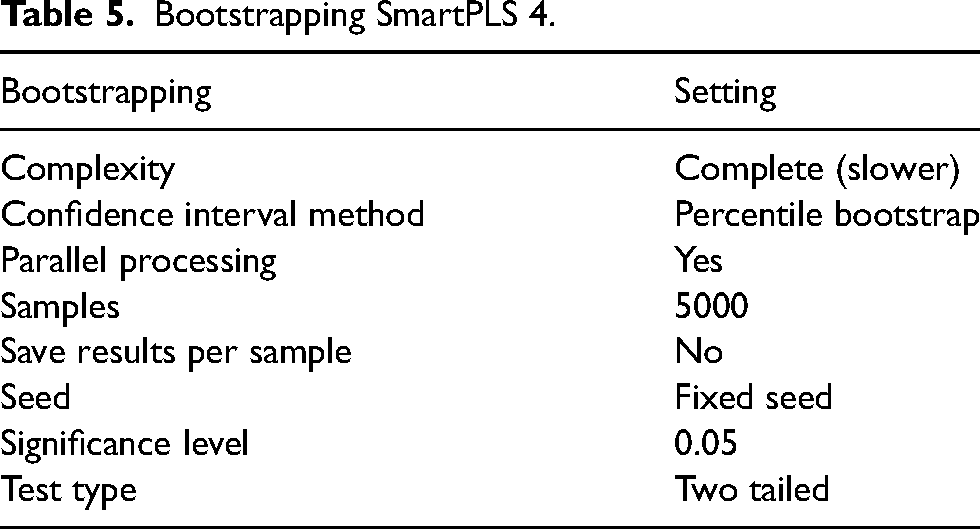
Bootstrapping is a nonparametric procedure that allows testing the statistical significance of various PLS-SEM results by generating multiple random samples from the original data. This method provides a more robust understanding of the results by assessing the stability and reliability of the model (Hair et al., 2022). In this study, bootstrapping was applied using 5000 random samples to evaluate the stability of the TAM3 model. Advanced statistical methods, including the calculation of p-values, t-values, HTMT, AVE and Cronbach's alpha, were employed to assess the quality of the measurement model and structural model. This technique is particularly useful for small sample sizes, as in the case of the present research (Hair et al., 2022). The bootstrapping configuration was set up within SmartPLS 4, as shown in Table 5.
Bootstrapping SmartPLS 4.
Discriminant validity through HTMT
This is a modern and advanced statistical method designed to analyse correlations between variables and detect discriminant validity, which means ensuring that the items analysed are unique and measuring what is intended, avoiding overlaps and hence invalidity in the model. It does not rely solely on linear correlation, as was the case with Pearson, but rather analyses correlation through the average of items from different constructs (Heterotrait) and the average correlation among items within the same construct (Monotrait).
The HTMT, Table 6 represents the analysis of correlations between the items, detecting discriminant validity, which ensures that all analysed variables are distinct and do not overlap, having the ability to predict or demonstrate the intended outcome. As can be observed, after defining the critical threshold between 0.85 and 0.9, any value below this threshold is considered to have discriminant validity, while those that meet or exceed the threshold do not, and thus are not precise.
Correlational analysis – Heterotrait Monotrait ratio (HTMT).
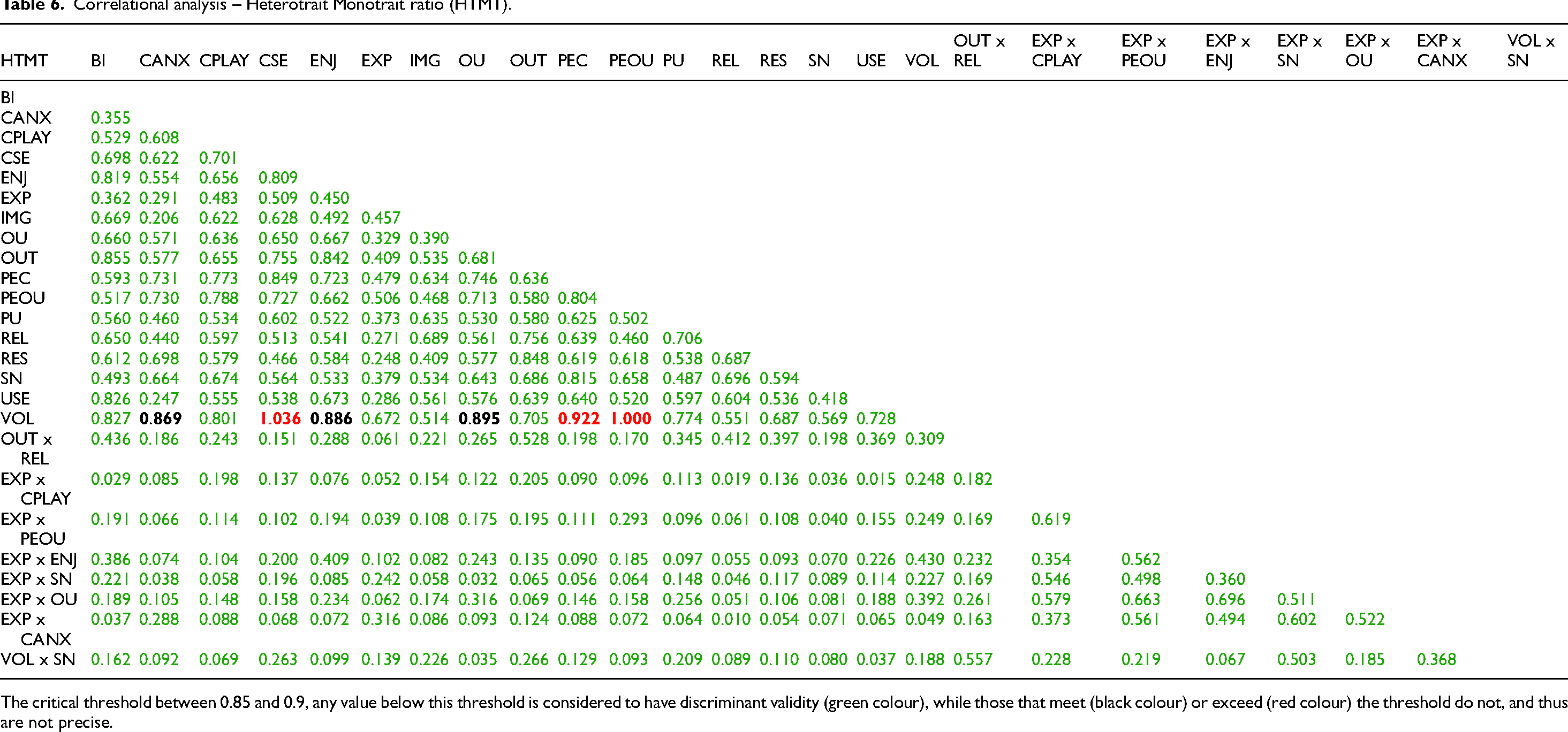
The critical threshold between 0.85 and 0.9, any value below this threshold is considered to have discriminant validity (green colour), while those that meet (black colour) or exceed (red colour) the threshold do not, and thus are not precise.
The numbers highlighted in black shown in Table 6, indicate those within the threshold, while those in red exceed the critical value. Therefore, VOL, which represents voluntariness, defined as the degree to which an individual would use the proposed technology without being required to do so, is the only variable deemed critical. As a result, it is recommended that, in future research regarding the use of TAM3 to measure the adoption of AI-supported Digital Twins in a mining MT, VOL should be redefined to ensure it solely measures the willingness of the target population to use the proposed technology, thereby avoiding item overlap.
Finally, the model demonstrates high validity across all its constructs, ensuring confidence in its robustness and precision.
Average variance extracted
This measures the variance that the items or questions share among themselves and with their latent construct. It evaluates the convergent validity of the analysed construct, taking into consideration the associated items, and an external analysis of the construct that takes the variance of these and their influence on the analysed variable. The higher the AVE, the greater the representation of the items or questions with the construct. It is used to determine if the items or questions are genuinely measuring the construct. If the numerical value is > 0.5, it is considered ideal.
In addition, the AVE was conducted to determine the quality of the statistical analysis, providing reliability and coherence, but this time representing the external factors influencing the variable under analysis. As shown in Table 7, all values are acceptable as they are > 0.5, except for the last variable, VOL, which indicates that the measurement of the extent to which a person would use the emerging technology without being obliged could be reconsidered and explained to the target audience.
Average variance extracted (AVE) analysis (values t, p and confidence intervals).
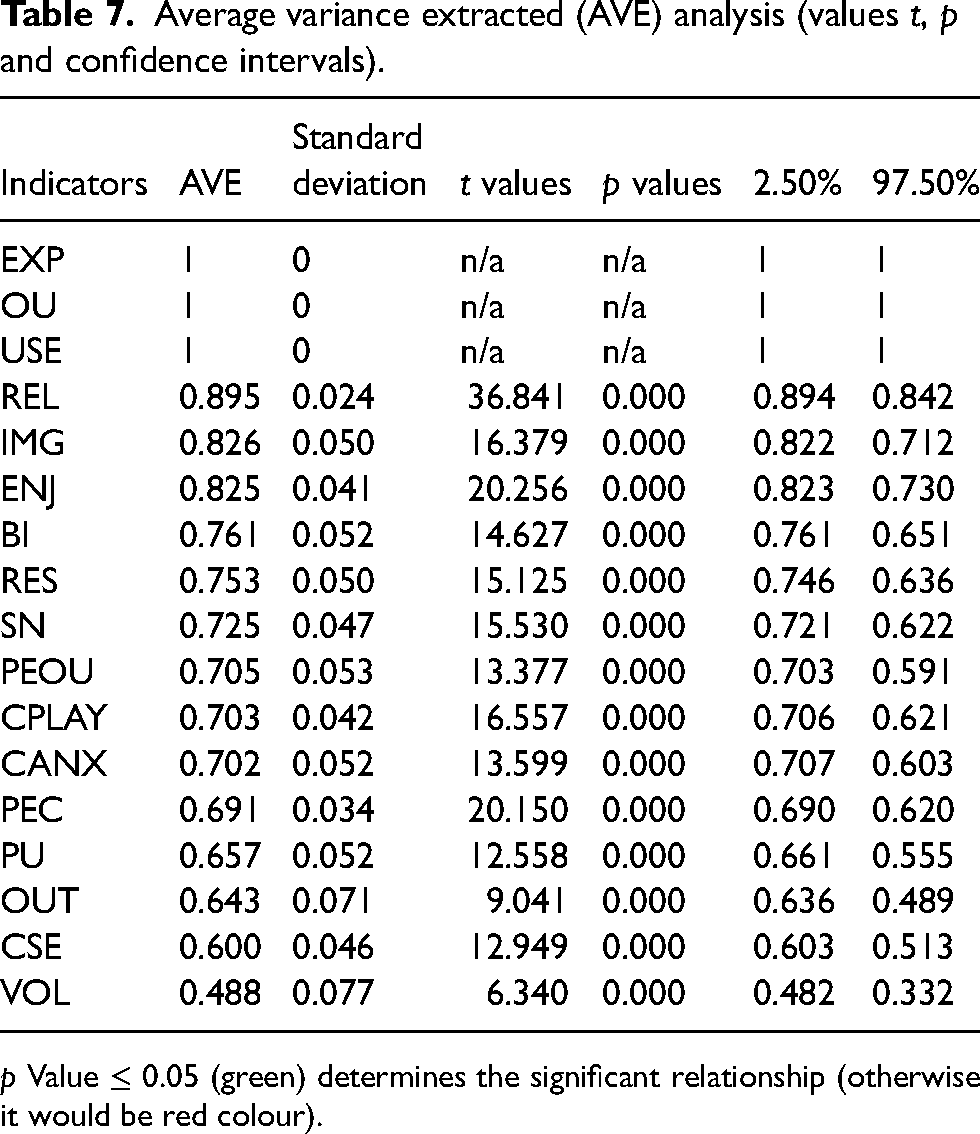
p Value ≤ 0.05 (green) determines the significant relationship (otherwise it would be red colour).
Additionally, the graph below represents AVE as construct reliability and validity issued by SmartPLS4.
Path coefficient
This indicates the strength and direction concerning the relationship between the variables. The range in which it is interpreted is from −1 to 1. When the magnitude is positive, it indicates a positive relationship, while if it is negative, the relationship between the variables will be inverse.
It can be demonstrated that there are high values of significance and path coefficients within the core constructs of the TAM3 model. The strongest relationship is between Behavioural (BI) and Use Behaviour (USE), indicating that if the target population intends to use the product in the future, they will do so once it is implemented. The error in accepting this hypothesis is 0%, with a confidence level of over 95%.
Similarly, the relationship between Subjective Norm (SN) → Image (IMG) and SN → BI highlights the importance of expert opinion or influential individuals in persuading the target population to adopt emerging technology. This, in turn, affects how individuals perceive that using the technology will enhance their social status within the company, as well as their intention to use the system.
On the other hand, Computer Playfulness (CPLAY) and Perceived Ease of Use (PEOU) show a moderate relationship and a high level of confidence, indicating that an individual's enthusiasm for using the new technology influences how easy they perceive it to be.
Regarding the relationship between PEOU and BI, it is not significant, despite both being core constructs of TAM3. This suggests that, as an emerging technology, it is perceived as useful but not necessarily easy to use, likely due to the recent shift towards Industry 5.0. Table 8 shows the path coefficients.
Path coefficient (t, p values and confidence intervals).
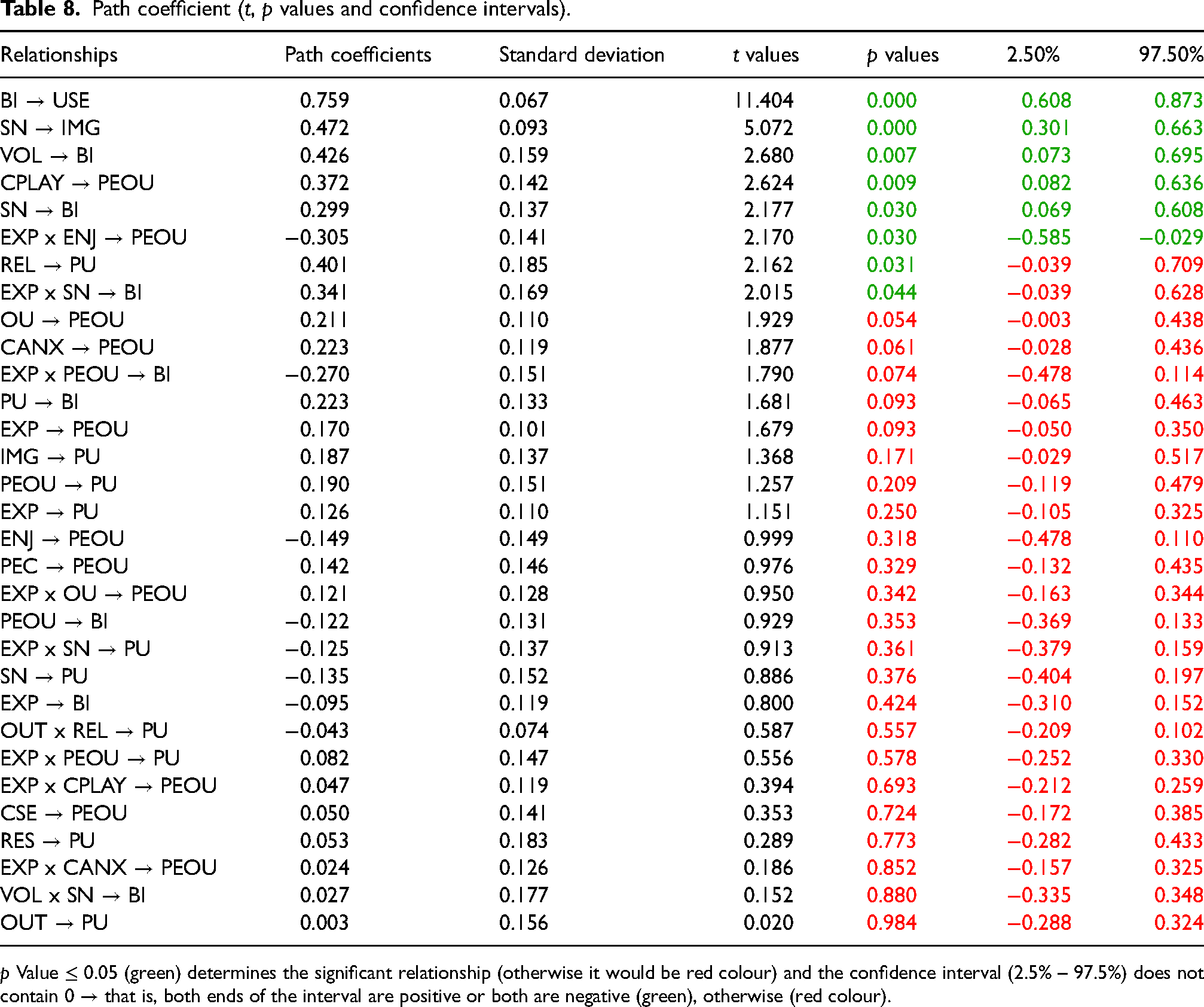
p Value ≤ 0.05 (green) determines the significant relationship (otherwise it would be red colour) and the confidence interval (2.5% – 97.5%) does not contain 0 → that is, both ends of the interval are positive or both are negative (green), otherwise (red colour).
Coefficient of determination R2
This is used to assess the explanatory power of a model, indicating the percentage of variance of the dependent variables that will be explained through the variance of the independent variables. If the responses in the independent variables change, the dependent variable will change percentage-wise based on the result of R².
If the model has an R = 1, it means that the independent variables can explain 100% of the variation of the analysed dependent variable: Conversely, if the value is 0, it does not explain any variation. The closer the value is to one, the greater the model's predictive capacity.
Table 9 presents the coefficient of determination, which pertains to the key variables in the TAM3 model, and is positive, indicating that the items used as independent variables influence the dependent variables in a directly proportional manner, based on the R² values. The level of explainability ranges from high to moderate. Additionally, according to the confidence intervals and standard deviation, the reliability of the R² is over 95% in most cases, and the value obtained after the simulation is accurate.
Coefficient of determination (R2).
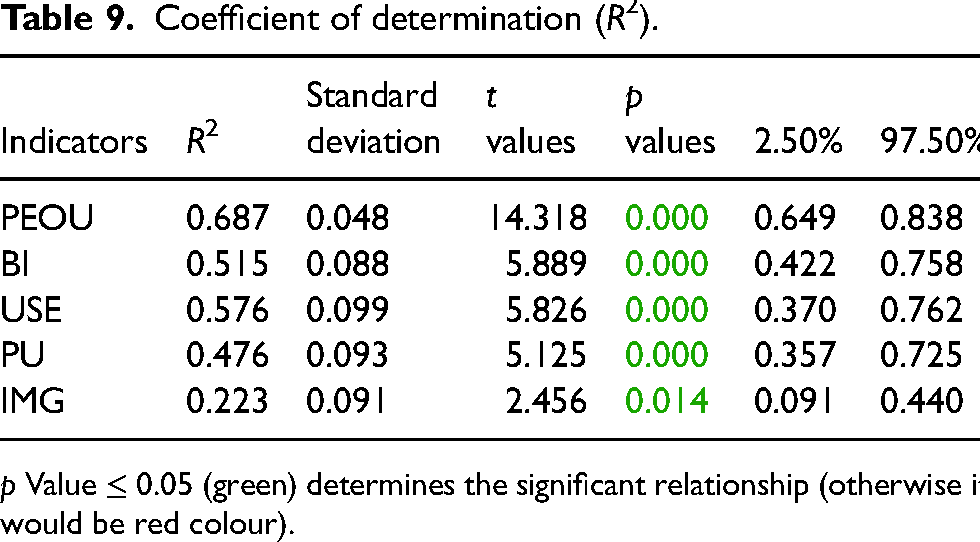
p Value ≤ 0.05 (green) determines the significant relationship (otherwise it would be red colour).
In Figure 13 generated by SmartPLS 4, the behaviour of the coefficient of determination in the involved variables can be observed.
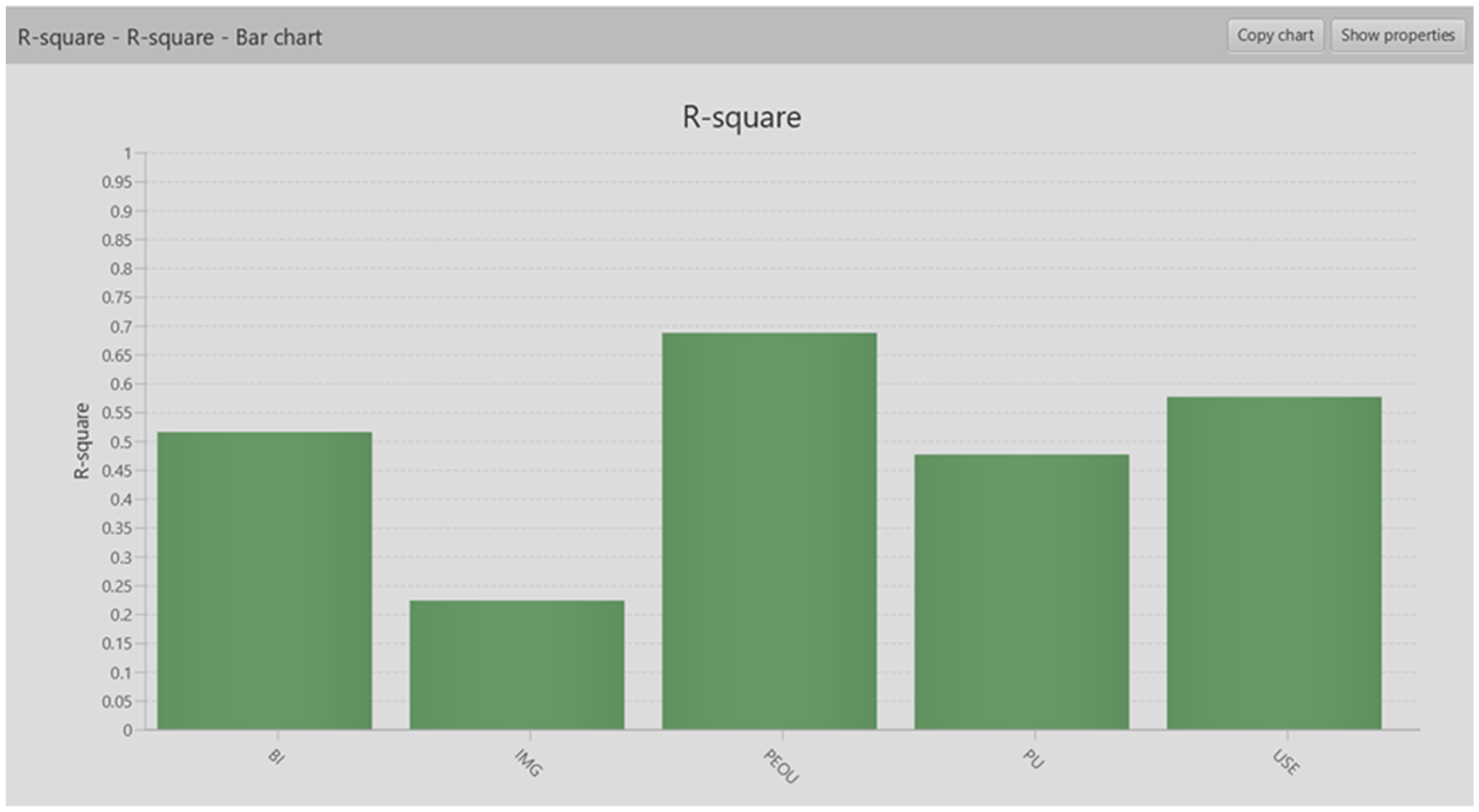
R2 bar chart.
Cronbach's alpha
This coefficient helps determine how reliably the variable is being measured internally by a set of items or questions and how coherent they are with one another in measuring the construct through correlation. The higher the correlation, the higher the Cronbach's alpha. It is measured on a scale from 0 to 1; the closer it is to 1, the greater the consistency of the variable. If it is > 0.9, it is excellent; between 0.9 and 0.8, it indicates good consistency; between 0.8 and 0.7, it is acceptable; between 0.7 and 0.6, it may be questionable; below that, it is considered poor.
Cronbach's alpha was conducted to determine the quality of the statistical analysis, providing reliability and internal consistency of the studied variable. As shown in Table 10, all values fall within acceptable to excellent ranges, except for the last one, VOL, which indicates that measuring the degree to which a person would use the emerging technology voluntarily could be reconsidered and clarified for the target audience. Additionally, it has the highest standard deviation of Cronbach's alpha. It is worth mentioning that EXP, OU, and USE have values of 1 and n/a because only one question was asked per construct according to TAM3.
Cronbach's alpha (values t, p and confidence intervals).
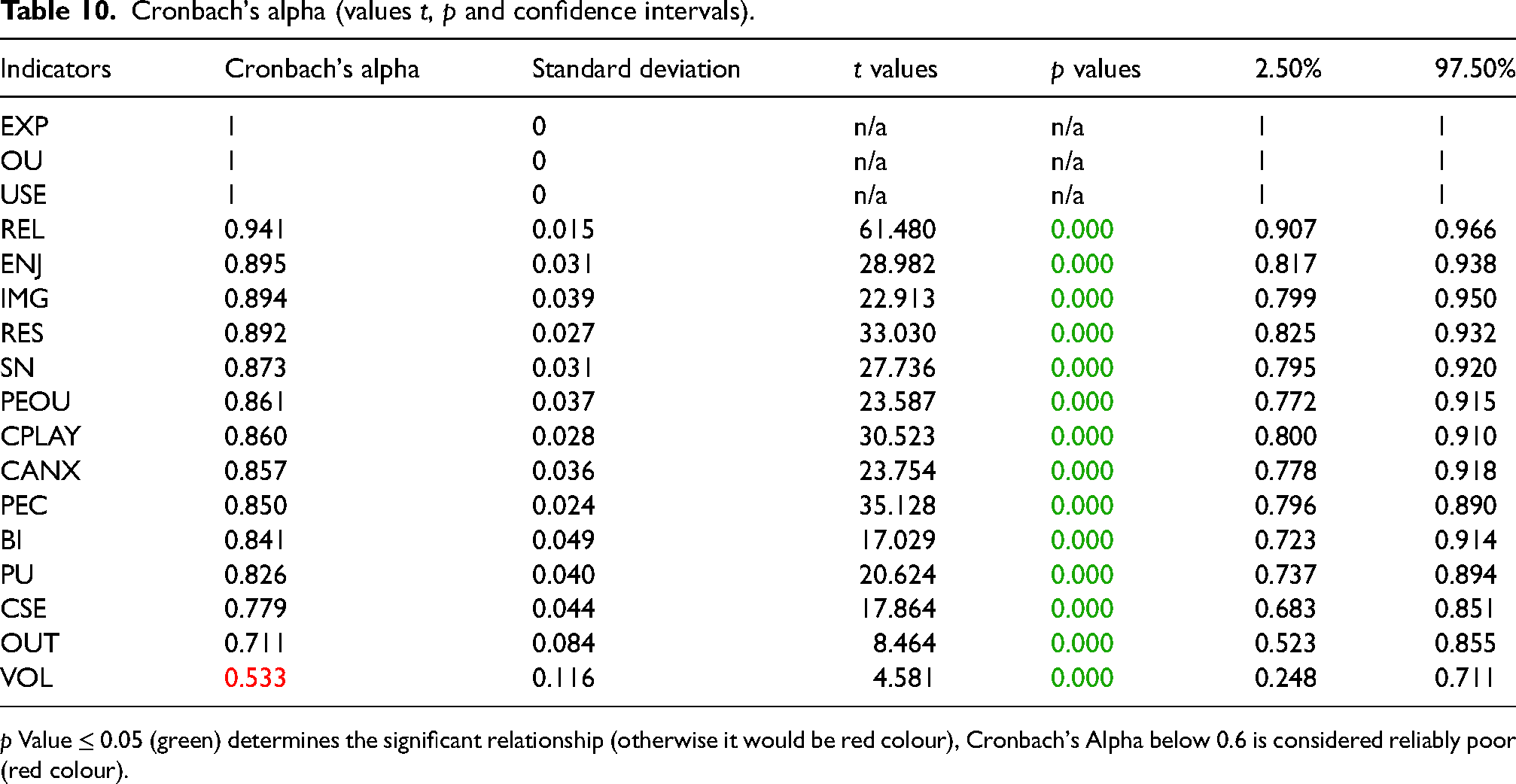
p Value ≤ 0.05 (green) determines the significant relationship (otherwise it would be red colour), Cronbach's Alpha below 0.6 is considered reliably poor (red colour).
Additionally, Figure 14 represents Cronbach's alpha as construct reliability and validity, generated by SmartPLS 4.
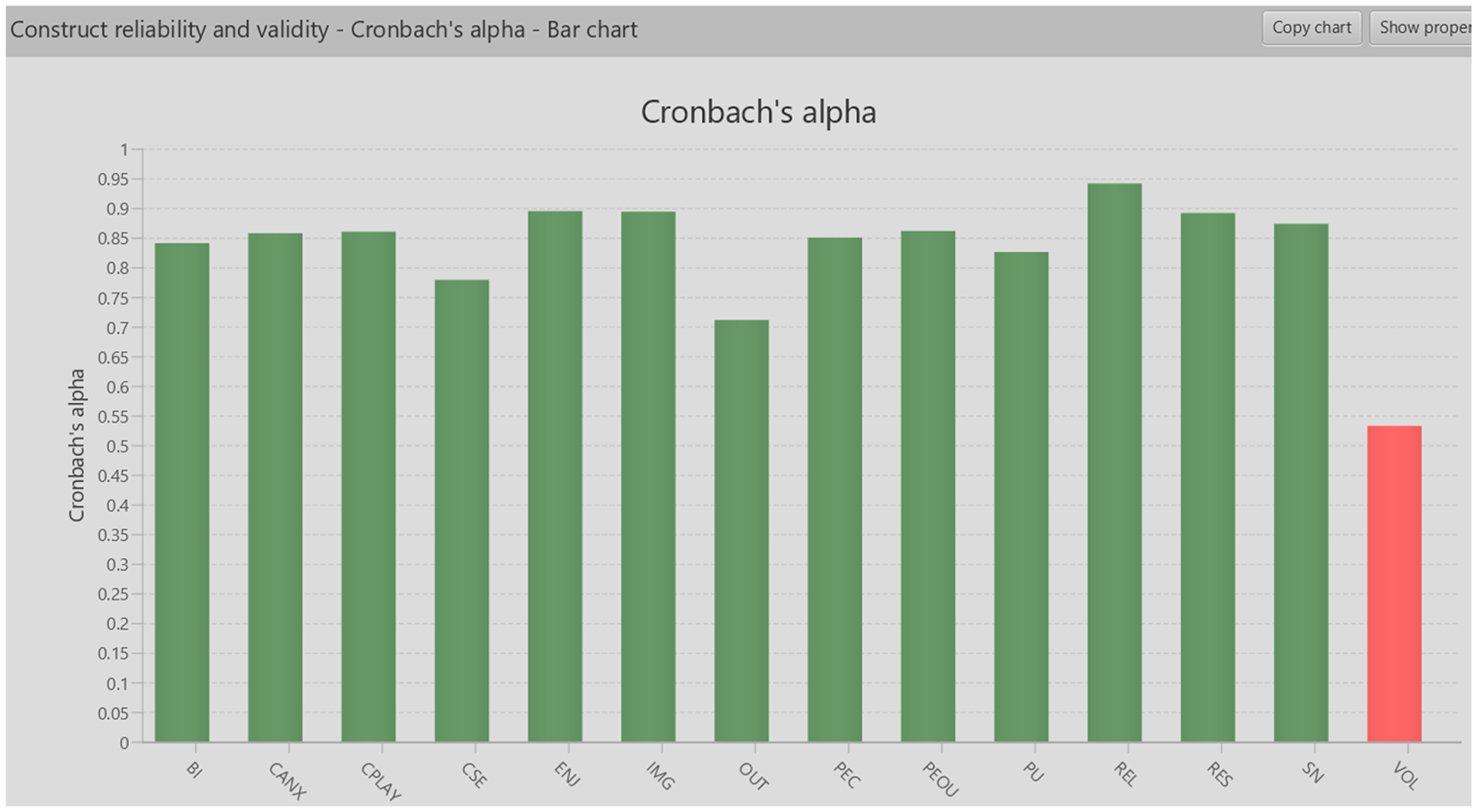
Cronbach’s alpha bar chart.
TAM3 developed
TAM3 is a modification of the original TAM. It was created by Venkatesh and Bala (Venkatesh and Bala, 2008) with the objective of providing an explanation of the factors that affect the acceptance and usage of a specific technology. It combines variables that influence perceived usefulness (PU) and perceived ease of use (PEOU) with computer self-efficacy (CSE), computer anxiety (CANX), perceived enjoyment (ENJ) and experience (EXP). Furthermore, it includes factors like Job relevance (REL), output quality (OUT) and results demonstrability (RES). It applies moderators such as voluntariness (VOL), providing a more comprehensive, complete and robust framework for anticipating use behaviour (USE) regarding the acceptance of technology in different industries.
In order to develop the model, statistics will be applied such as Cronbach's alpha as a reliability variable found within the constructs. The path coefficients are represented as arrows indicating the relationship between variables and their direction. The size of the arrow is directly proportional to the power of influence on the dependent variable. Additionally, the p-values are displayed, enclosed in parentheses next to the path coefficient.
It is worth highlighting that the closer the path coefficient is to 1, the stronger the relationship between the analysed constructs. Meanwhile, the p-values, being closer to 0, lend greater credibility to the model, allowing the hypotheses posed to be validated. Therefore, Figure 15 represents the correlation among the constructs, their relationships and their quality.
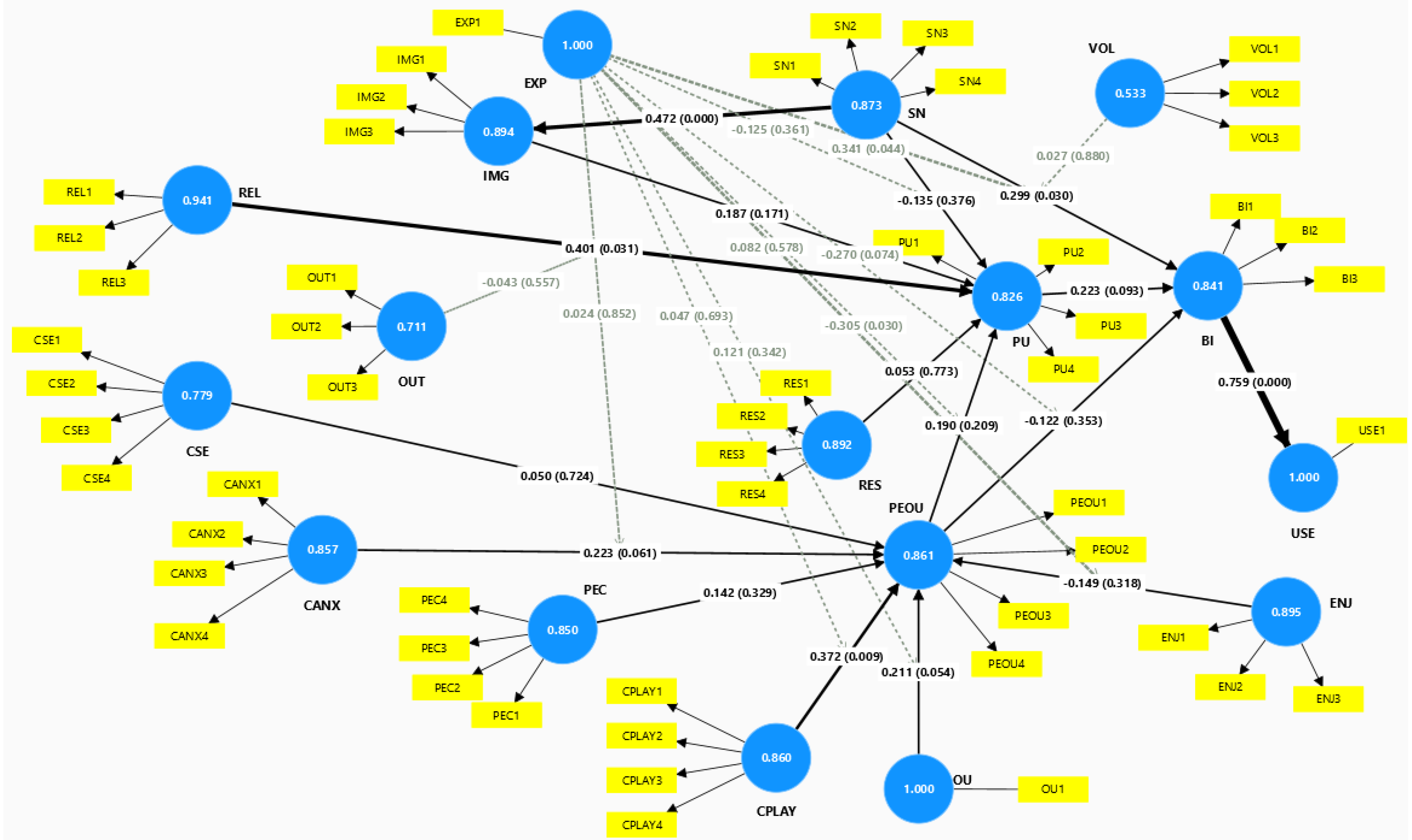
TAM3 a PLS-SEM analysis.
Discussion
There is a substantial amount of research discussing the importance of transitioning to the new fifth-generation industrial revolution (Martínez-Gutiérrez et al., 2024; Rachakatla and Garrepalli, 2024; Youssef and Mejri, 2023), with various technologies being applied in the mining sector as well. Because most digital transformation initiatives fail before they are fully implemented (Mielli and Bulanda, 2019), it is worth emphasising that the significance of conducting a technology acceptance model before implementing a transition is mentioned, as this action may avoid unsuccessful multi-million-dollar investments and ensure a controlled transition for the population intended to use the proposed technology. The results of several significant studies are discussed below.
According to the research conducted, this study contributes to the literature by addressing a critical gap in the application of TAM3 and PLS-SEM in the mining sector to initiate the transition to Mining 5.0. Unlike previous research mentioned, which have primarily focused on other industries, this study offers insights specific to mining, providing evidence that supports the readiness of this sector to adopt emerging technologies, obtaining the necessary knowledge prior to the migration of the intended technology.
In response to the challenges faced by humanity in the form of environmental and social governance, and sustainable mining practices, modern and effective hybrid solutions can be developed. Research (Samaei et al., 2024) identified over 60,000 abandoned mines in Australia that may lead to challenges in achieving environmentally and socially responsible mine closure outcomes that leave no negative legacy to future generations. Emerging technologies such as hybridised UAV–MR–AI systems may help reduce unsustainable mine closure outcomes, for example.
Therefore, the use of emerging mixed technology to mitigate these problems has led to the utilisation of UAVs-AI-MR in the mining industry. Supporting this notion, Stothard et al. (2019) assert that mining simulation through MR will facilitate sustainable development.
A study conducted in open-pit mining (Elbazi et al., 2023a) developed DTs for real-time tracking and monitoring of mining trucks capable of identifying and resolving faults using statistical control algorithms, resulting in a secure monitoring system. This highlights the functionality of DTs in the minerals sector. However, a systematic review was conducted to determine the application of DT in the mining industry.
Twenty-three articles were identified as of 2024, concluding that they express the use of DT when they do not go beyond mere digital models (Duarte and Santos Baptista, 2024). Similarly, Qu et al. (2023) noted that the overuse of the term has caused confusion in defining DT. Additionally, the creation of a digital twin capable of simulating critical scenarios for the stacker machine in open-pit mining has resulted in improvements in safety, reliability and availability (Elbazi et al., 2023b). Similarly, in China (Chen et al., 2021), a DT-based model called the ‘Intelligent Mining Operating System (IMOS)’ was applied to 10 major open-pit mines, resulting in improvements in safety, productivity and efficiency, promoting ecological mining and sustainable industry development.
DTs are considered a broad topic of discussion that still lacks development in areas such as cybersecurity, data quality, energy demand, storage and infrastructure reconstruction (Attaran and Gokhan, 2023). Additionally, 92 studies on DTs over the last 10 years were analysed, identifying gaps in research such as perceived benefits; DT across the product lifecycle; use cases; technical implementations; levels of fidelity; data ownership; and integration between virtual entities (Jones et al., 2020). Similarly, Soori et al. (2023) noted that there are areas encouraged for further research to improve DTs and their interaction with emerging technologies and the new needs of Industry 5.0, such as cybersecurity, collaborative communication with humans, scalability and AI, which, through their combination, will generate an industrial revolution.
On the other hand, regarding technological acceptance, we have the following studies: this is corroborated in the study (Venkatesh et al., 2012), where a literature review of the technology acceptance model was conducted to design a specialised model for Architecture, Engineering, Construction, and Operations (AECO). Furthermore, research was conducted in South America, analysing a group of students to determine the acceptance of the fourth industrial revolution (MR, DT and AI).
Students were chosen as the target audience because they will be the next to use such technologies in the future and are more immersed in them. As a result, this population is prepared for work in Industry 4.0 (Sepasgozar et al., 2021). Similarly, TAM3 was employed to study the acceptance and usability of new virtual technologies among a group of mining engineering students in the safety area. The emerging population of engineers is thus ready to use such technologies in the future (Castillo-Vergara et al., 2022).
Additionally, samples were taken from mines in southern Peru to conduct a TAM3 survey and determine if the target population would be willing to change the way safety inductions are conducted in mining. The results were positive, indicating that the target mine population is willing to adopt a more technologically advanced teaching matrix, considering new technologies as useful for improving learning. The use of these technologies enhances the environment in which the student develops, facilitating learning and producing future mining engineers who are more qualified and knowledgeable about emerging technologies (López et al., 2019).
An example of technological resistance occurred in South Africa (Thwala and Adebesin, 2017), where an application was created to improve the accident reporting system in the mining industry, necessitating a shift from a manual to a digital system. This small transition prompted a TAM analysis to identify areas needing attention for the application to be accepted by mine workers, who initially exhibited some resistance to the proposed technology.
Despite the proposal being deemed relevant to the work, it continued to be underutilised, leading to ongoing investigations to overcome the resistance to the proposed technology (Thwala and Adebesin, 2017). A successful case study was seen in Peru (Ibarra-Cabrera et al., 2024), which evaluated the technological acceptance of a solution for detecting overheating in conveyor belts using IoT within a copper mining operation. It demonstrated successful acceptance, indicating that 91% of the surveyed population perceives it as useful, while 93% consider it to be a user-friendly system. A similar statistical analysis focused on safety within a mining company in Peru was conducted, investigating the option to change the traditional method of safety inductions. Following a PLS-SEM analysis, it was determined that the population is ready for adoption, with a recommendation for a post-application study (Rodríguez-Delgado et al., 2022).
Conclusions
Given that the fifth industrial revolution is currently underway, it was necessary to conduct an evaluation of the TAM of DTs supported by AI in the Mining MT to ensure a successful transition while avoiding resistance from the target population. Therefore, after the statistical analysis based on PLE-SEM conducted using SmartPLS 4, the following were determined:
The 80 participants considered as the target population are prepared for a transition to Industry 5.0 mining. There was a higher response rate in Peru compared to Australia, with the number of participants in the South American country being 3.5 times greater than in Australia. The ages of the participants range from 21 to 76 years, demonstrating the participation of different generations. The median age is 28, representing 17.5% of the total. All responses exceeded the neutral point of the Likert scale (4, neither agree nor disagree), indicating a trend towards acceptance. The CSE section represents the lowest mean, indicating that the target population is not very certain about their ability to use the emerging technology independently, resulting in varied responses with a tendency closer to neutrality (mean = 4.825). PEOU has the highest standard deviation at 1.591, resulting in high dispersion in responses, indicating that the population is not completely confident that the proposed technology will be easy to use. This variable is related to and influenced by CSE, indicating a lack of knowledge on the subject and, therefore, some apprehension regarding usability. According to the correlation analysis using the HTMT technique, the only variable that falls outside the established minimum quality parameters (< 0.9), is VOL in relation to CSE, PEC, and PEOU, indicating potential item overlap, which leads to a lack of discriminant validity and could affect what is intended to be measured. This variable aims to assess participants’ willingness to use the emerging technology. As can be seen in the path coefficient analysis, there is a marked pathway at the top of the model, also represented in Figure 15. It can be stated that the population perceives emerging technology as useful but not necessarily easy to use. BI has a high correlation, showing an almost proportional influence on USE, with the relationship between these two variables represented by a path coefficient of 0.759. Similarly, the relationships between SN → IMG and SN → BI, which are positioned at the top of the model, support this earlier assertion. Additionally, it is demonstrated that an individual's level of enthusiasm directly influences their perception of ease of use (CPLAY → PEOU). The coefficients of determination obtained in the dependent variables within the TAM3 model have validated hypotheses, all of which are significant, as shown by the p and t values. Furthermore, according to the confidence intervals, they possess over 95% credibility in what has been constructed. Finally, the independent variables are related and have a directly proportional influence on the dependent variables. After conducting the quality analysis of the constructs determined by Cronbach's alpha and AVE, it was observed that the VOL variable falls outside permissible quality limits, yielding a Cronbach's alpha of 0.533, not exceeding the threshold of 0.6, while the AVE values stand at 0.488, failing to surpass the 0.5 minimum quality threshold. The VOL construct is a moderator of SN, so its result exerts an indirect influence, which is why it is considered an external variable of the model. Therefore, for experimental reasons, it was decided to continue working with the VOL construct since the results were taken as poor but not null.
On the other hand, based on the conclusions drawn from the quantitative analysis determined by the statistics, it is concluded that the target population is prepared to transition to Industry 5.0 mining, taking into account the application of DTs supported by AI in the mining MT. The population perceives the emerging technology as relevant, thus viewing it as useful, leading to an intention of behaviour for future utilisation of the emerging technology.
Finally, the target population feels enthusiasm about using something new, such as the technology described earlier; however, due to limited participation in emerging technologies, they do not feel sufficiently self-sufficient to use the technology independently, thereby affecting their perception of ease of use and impacting their behavioural intention for future utilisation.
Recommendation
Considering the results obtained from the statistical analysis, the following recommendations can be made from the research:
Future researchers could increase the number of participants to further validate the construct values, making the results applicable to a larger population. Research focused on emerging technologies and mining. It would be beneficial to create an explanatory video beforehand so that participants have a clearer understanding of the topic being discussed. The mining company must explain in detail how easy it can be to use and understand the proposed technology independently. Since the role of AI is intended to make the HCI process more comprehensible and natural, any doubts the user may have could potentially be resolved by the AI, ensuring that the outcome aligns with the user's desires. Future researchers should revisit the formulation of the VOL variable to ensure that the survey items precisely reflect the intended construct, avoiding overlaps with other variables, redesigning the questions to enhance clarity and relevance for the target population. Providing more straightforward and context-specific explanations to participants could improve the accuracy of responses and better capture the essence of voluntariness in the context of technology adoption. The findings are backed by solid predictive statistical support, so the information can be used as a solid starting point for expansion into different populations belonging to the mining sector, serving as an example to follow, and can provide references for future decision-making in the transition to Industry 5.0. Based on the research findings, there is an opportunity to implement advanced technology, such as the one proposed, in the mining sector, recognising it as a safe investment opportunity in training programs to enhance worker readiness fostering collaborative initiatives between technology providers and mining companies, and developing policies that incentivise early adoption of innovative solutions. These efforts could significantly accelerate the transition to Industry 5.0 in the mining sector, reducing environmental pollution, fostering sustainable development, and promoting the responsible use of technology for the benefit of the population, businesses, and the country.
By implementing the recommendations, a better understanding of the target population will be ensured, resulting in a more controlled, rapid, user-friendly and satisfactory transition. It is essential for users to understand that the fifth industrial revolution focuses on integrating humans with new technologies, fostering collaboration and communication between machines and humans to solve problems together as a team. This contrasts with the fourth industrial revolution, which emphasised the application of technologies that displaced humans and limited their participation.
Finally, it is crucial to encourage ongoing research in this area, generating greater interest among researchers to provide more information, thereby increasing the number of readers and educating the population about the imminent future of the new mining industry.
Footnotes
Declaration of conflicting interests
The author(s) declared no potential conflicts of interest with respect to the research, authorship, and/or publication of this article.
Funding
The author(s) received no financial support for the research, authorship, and/or publication of this article.
Ethical approval
This study complies with the guidelines of the National Statement on Ethical Conduct in Human Research and the Human Research Ethics Committee, ensuring participant confidentiality and secure data storage.
