



Abstract
Hexavalent chromium (Cr(VI) is a toxic and persistent pollutant with serious environmental and health impacts. This study evaluated the biosorption potential of locally available Ficus vasta and Ficus sycomorus leaves for Cr(VI) removal via batch adsorption experiments. Cr(VI) concentrations were quantified using flame atomic absorption spectrophotometry. Under optimal conditions – 60 min contact time, 5 mg L−1 initial concentration, 20 g L−1 adsorbent dose and 180 r min−1 agitation – removal efficiencies reached 88.89% for F. vasta at pH 2 and 91.97% for F. sycomorus at pH 3. SEM revealed irregular, porous surfaces, while Brunauer–Emmett–Teller analysis confirmed type II isotherms and surface areas of 16.485 and 16.743 m2 g−1. FTIR identified hydroxyl, carboxyl and carbonyl groups involved in Cr(VI) binding. Adsorption data fit the Langmuir and the Freundlich models, indicating mono-layer coverage with surface heterogeneity. Kinetic analysis aligned with the pseudo-second-order model, suggesting chemisorption. These results highlight Ficus leaves as efficient, low-cost biosorbents for Cr(VI) remediation.
Keywords
Introduction
Chromium (Cr) is among the most abundant elements in the Earth's crust and it commonly exists in three oxidation states: Cr(0), Cr(II) and Cr(III). Of these, Cr(III) is the most stable and naturally prevalent form. However, industrial activities have increasingly contributed to the formation of Cr(0) and the more toxic hexavalent chromium species, Cr(VI). 1 Cr(VI) compounds are classified by the International Agency for Research on Cancer as Group 1 carcinogens due to their high toxicity and strong cancer-causing potential. 2
Chromium exposure arises from both natural and anthropogenic sources. Natural contributors include wind-blown dust, sea spray, volcanic eruptions and forest fires. In contrast, human activities – such as fossil-fuel combustion, sewage sludge disposal, phosphate fertiliser application, mining, chrome plating, pigment production, electroplating, textile processing and alloy manufacturing – are major sources of environmental chromium contamination. 3 Among these, leather tanneries are particularly significant producers of Cr(VI). 2 Due to its cost-effectiveness, rapid processing, vibrant leather colouration and enhanced durability, chromium-based tanning – especially using chromium sulphate (Cr2(SO4)3) – is widely adopted by the tanning industry.2,4 Although approximately 60–80% of the chromium is retained by the leather, 4 the remainder is discharged as wastewater, posing a serious environmental threat. This residual Cr(III) in tannery effluent can oxidise to Cr(VI) under conditions involving manganese dioxide (MnO2), 5 elevated temperatures, ultraviolet irradiation or the presence of dichromate impurities during Cr(III) synthesis.6,7
Cr(VI) is recognised as a potent carcinogen associated with severe health effects including diarrhoea, dermatitis, epigastric pain, gastrointestinal disturbances, nausea, vomiting and skin ulceration. 8 It has also been implicated in pulmonary and respiratory tract cancers 9 and presents a serious threat to aquatic ecosystems.10,11 The high toxicity of Cr(VI) is attributed to its ability to readily penetrate biological membranes and its strong oxidising potential. 12 Once inside cells, Cr(VI) undergoes a series of reductions to form Cr(III), generating reactive intermediates that damage vital organs such as the kidneys, liver and lungs. Its water solubility exacerbates these impacts by enabling systemic distribution. 2
As per the World Health Organization 13 and the United States Environmental Protection Agency, 14 permissible limits for Cr(III) and Cr(VI) in wastewater are set at 5.00 and 0.05 mg L−1, respectively. Exceeding these limits mandates remediation before effluent discharge, presenting a compliance challenge for industries, especially those in metal finishing and mineral processing.
Multiple techniques have been explored to remove Cr(VI) from aqueous media, including chemical precipitation, 15 coagulation, 16 electrodialysis, 17 membrane filtration, 18 ion exchange 19 and adsorption. 20 However, many of these methods are hindered by high-operational costs, excessive sludge generation and dependence on skilled labour. In contrast, adsorption emerges as an efficient, scalable and cost-effective approach capable of removing over 90% of metal ions. 21 Previous studies have demonstrated the potential of diverse agricultural biosorbents such as Acacia albida, 22 untreated coffee husks 23 and sugarcane-derived sawdust and charcoal. 22
To the best of our knowledge, this is the first study to investigate the biosorption potential of Ficus vasta and Ficus sycomorus leaves for the removal of hexavalent chromium [Cr(VI)] from aqueous solutions. While various plant-based materials have been explored for heavy metal remediation – including palm leaf-derived biochar, 24 invasive plant leaves 25 and modified Ficus benghalensis leaves 26 – these two Ficus species have not previously been examined for this purpose. Belonging to the same genus (Ficus) and exhibiting comparable morphological features, 27 both species are abundantly and inexpensively available across Ethiopia, making them attractive biosorbents for local application (Figure S1 in the Supplemental materials). Their local accessibility offers a sustainable and low-cost biosorbent option for communities facing water contamination challenges, thereby enhancing the practical relevance and societal impact of this research.
Beyond introducing these novel biosorbents, our study systematically evaluates the influence of key operational parameters – including pH, adsorbent dose, contact time, initial Cr(VI) concentration and agitation speed – on Cr(VI) removal efficiency. We further apply adsorption isotherms and kinetic models to elucidate the underlying mechanisms, providing a comprehensive understanding of their adsorption behaviour. This dual focus on novel material selection and mechanistic insight distinguishes our work from prior studies and contributes meaningfully to the field of environmental nanotechnology and biosorption. By bridging material innovation with practical applicability, the study underscores the noble potential of indigenous plant resources in addressing pressing environmental challenges.
Experimental part
Materials and chemicals
Potassium dichromate (K2Cr2O7, 99.9%), sodium acetate (CH3COONa), acetic acid (CH3COOH), hydrochloric acid (HCl) and sodium hydroxide (NaOH) were used for solution preparation and pH adjustment. pH measurements were recorded using a Model 300 pH meter (OHAUS, Zhengzhou, China). Biosorption experiments were conducted with continuous agitation using an HZ-300 rotary mechanical shaker (China), and particle size uniformity was maintained by passing the adsorbent through a 0.5 mm mesh sieve. All chemicals were of analytical reagent grade and sourced from BDH Chemicals (Mumbai, India). Distilled water was used throughout all experimental procedures to ensure consistency and purity.
We performed quantitative analysis of hexavalent chromium (Cr(VI)) concentrations using a BUCK Scientific 210VGP Flame Atomic Absorption Spectrometer (FAAS; USA). The instrument was equipped with an air-acetylene flame and operated at a wavelength of 357.9 nm, corresponding to the resonance absorption line specific to chromium.
Functional group analysis was conducted using a PerkinElmer Spectrum 65™ FT-IR spectrophotometer to identify chemical moieties involved in Cr(VI) binding. Surface morphology and microstructural features of the biosorbents prior to Cr(VI) adsorption were examined using a LEO 1525 Scanning Electron Microscope (SEM). Specific surface area and porosity characteristics were evaluated through Brunauer–Emmett–Teller (BET) analysis using a Quantachrome TouchWin™ surface area analyzer (Quantachrome Instruments, USA).
Adsorbent selection, collection and preparation
The selection of F. vasta and F. sycomorus was based on their local availability and ecological relevance. Although both species belong to the same genus, they differ in leaf texture, colour and observable morphology, which may influence adsorption behaviour. This study aimed to explore interspecies variability in Cr(VI) removal efficiency as a basis for future optimisation.
Leaves of F. vasta and F. sycomorus were collected from a university campus in East Africa. To remove surface impurities and adhering particulates, the biomass was thoroughly rinsed with tap water followed by distilled water. The cleaned leaves were sun-dried for 10 days, manually fragmented and ground using a mortar and pestle. The resulting powder was passed through a 0.5 mm mesh sieve to ensure uniform particle size and then stored in sealed glass bottles under dry conditions until further use in experimental procedures.
Preparation of solutions
An acetate buffer solution (1.0 M, pH 4.75) was prepared by mixing 50.0 mL of 5.0 M acetic acid with 83.33 mL of 3.0 M sodium acetate in a 500 mL volumetric flask, followed by dilution to the mark with distilled water. A standard stock solution of Cr(VI) (1000 mg L−1) was prepared by dissolving 2.28 g of potassium dichromate (K2Cr2O7), equivalent to 1.0 g of Cr(VI), in distilled water and diluting to 1000 mL in a volumetric flask. An intermediate solution containing 100 mg L−1 Cr(VI) was subsequently prepared by diluting 50 mL of the stock solution to 500 mL with distilled water in a separate volumetric flask.
Standard solutions and measurements
Working standard solutions of Cr(VI) at concentrations of 0.5, 1.0, 2.0, 4.0, 6.0, 8.0 and 10 mg L−1 were prepared for method calibration (Figure 1). Batch adsorption experiments were carried out in 100 mL volumetric flasks to evaluate the effects of pH, contact time, initial metal ion concentration and adsorbent dosage. Each Cr(VI) solution was mixed with a pre-determined mass of F. vasta or F. sycomorus adsorbent and agitated at 180 r min−1 using a mechanical shaker. After the biosorption process, the suspensions were filtered through Whatman no. 42 filter paper, and the residual Cr(VI) concentrations in the filtrates were quantified using flame atomic absorption spectroscopy. The percentage removal of Cr(VI) was calculated using the below equation
28
:


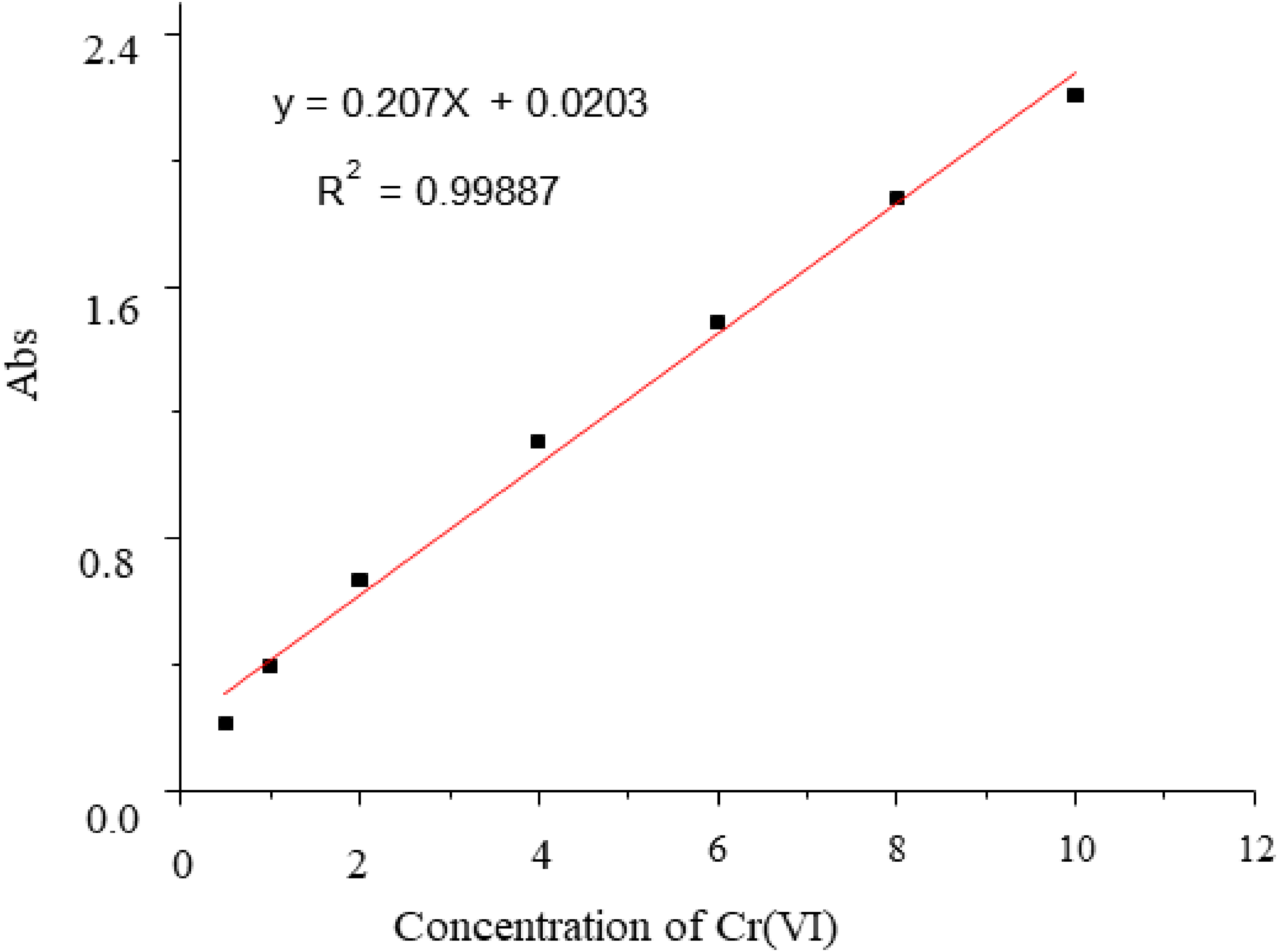
Calibration curve of Cr(VI).
Fourier transform infrared spectral analysis
Fourier transform infrared (FTIR) spectra were recorded using a PerkinElmer Spectrum 65™ FT-IR spectrophotometer over the range of 400–4000 cm−1. The analysis was performed to identify and compare functional groups present in F. vasta and F. sycomorus leaf-based biosorbents before and after Cr(VI) adsorption. FTIR spectroscopy enabled the elucidation of surface chemical modifications and highlighted the potential involvement of specific functional groups – such as hydroxyl, carboxyl and amine moieties – in Cr(VI) binding interactions.
SEM analysis
The LEO 1525 SEM, equipped with a field emission gun and Gemini lens system, was utilised for high-resolution imaging and microstructural analysis. Imaging was conducted at an accelerating voltage of 15 kV, achieving a resolution of up to 1.5 nm, suitable for detailed surface morphology characterisation.
BET analysis
BET surface area analysis was performed using a Quantachrome TouchWin™ surface area analyzer (Quantachrome Instruments, USA), employing nitrogen adsorption at 77 K. Prior to analysis, samples were degassed under vacuum by heating to 150 °C at a rate of 10 °C min−1, followed by a 240-min hold to ensure complete removal of surface contaminants. Surface area was calculated using the standard multi-point BET method.
Batch adsorption experiments
The chromium concentration of the raw F. vasta and F. sycomorus leaf powders was not analysed prior to use. This decision was based on the fact that both species were collected from uncontaminated regions with no known industrial or anthropogenic chromium sources. Our primary objective was to evaluate their intrinsic biosorption capacity under controlled laboratory conditions, rather than assess pre-existing metal content.
Batch adsorption experiments were conducted at room temperature to evaluate the performance of F. vasta and F. sycomorus leaf-based biosorbents under varying operational conditions. Key parameters assessed included adsorbent dosage, solution pH, contact time, initial Cr(VI) concentration and agitation speed.
pH is a critical factor influencing the adsorption capacity of biosorbents for Cr(VI) removal from aqueous solutions. 30 To investigate its effect, the solution pH was systematically adjusted to 2, 3, 5, 7, 9 and 11. The impact of contact time on adsorption efficiency was examined by varying the duration from 10 to 120 min (10, 20, 40, 60, 80, 100 and 120 min), while keeping other parameters constant.
To assess the influence of initial Cr(VI) concentration, solutions were prepared with concentrations ranging from 5 to 30 mg L−1 in 5 mg L−1 increments. The effect of adsorbent dosage was evaluated by varying the mass from 1.5 to 4.0 g under constant experimental conditions. Additionally, the agitation speed of the mechanical shaker was optimised for both biosorbents to ensure uniform mixing and enhance mass transfer during the adsorption process.
Adsorption isotherms
To elucidate the interaction mechanisms and surface behaviour of the biosorbents during Cr(VI) removal, adsorption isotherm models were applied to equilibrium data obtained across a range of initial Cr(VI) concentrations. The Langmuir isotherm was used to assess mono-layer adsorption on a homogeneous surface, while the Freundlich isotherm provided insights into adsorption on heterogeneous surfaces. These models enabled the characterisation of adsorption capacity, intensity and site distribution, thereby revealing the nature of biosorbent–metal interactions and surface heterogeneity.
Langmuir isotherm
The Langmuir isotherm model assumes mono-layer adsorption on a homogeneously distributed surface with uniform adsorption energies, where each adsorption site accommodates only one molecule of adsorbate. This model is based on the premise that once a site is occupied, no further adsorption can occur at that location and there are no interactions between adsorbed species. It is widely used to describe ideal adsorption behaviour in systems with well-defined surface properties. 31
The linearised form of the Langmuir equation is expressed as:

Values of KL and qmax are determined from the slope and intercept of the Langmuir plot of 1/qe versus 1/Ce.28,33
Freundlich isotherm
The Freundlich isotherm model describes adsorption on heterogeneous surfaces, where multi-layer formation and site–site interactions are possible. Unlike the Langmuir model, which assumes uniform adsorption energies, the Freundlich model accounts for surface heterogeneity and variable affinities across adsorption sites. This empirical model is particularly suitable for systems where the adsorbent surface exhibits a non-uniform distribution of active sites, making it widely applicable in environmental remediation studies involving biosorbents. 34
The linearised form of the Freundlich equation is expressed as:

Constants 1/n and KF are extracted from the slope and intercept of the log–log plot of log qe versus log Ce.33,35
Adsorption kinetics
Adsorption kinetics explains the solute's rate of adsorption and the adsorbates’ residence period on the solid–liquid interface. 35 It also provides the performance of the adsorbent used and the mass transfer mechanisms. When designing adsorption systems, it is helpful to understand the adsorption kinetics. 35 There are three steps in the adsorption mass transfer kinetic. The first step is the external diffusion which the adsorbate moves through the liquid layer and surrounding the adsorbent surface. The external diffusion is driven by the concentration difference between the adsorbent surface and the bulk solution. The second step is the internal diffusion which the adsorbate's diffusion takes place within the adsorbent's pores is referred to as internal diffusion. The third step is the adsorption of the adsorbate's in the adsorbent's active sites. 35
Pseudo-first-order and pseudo-second-order are two basic kinetic models that were used to assess the kinetic parameters of the adsorption process from variations in constant time. Equation (5) shows the expression for the pseudo-first-order rate
11
:

The adsorption kinetics rate equation for pseudo-second-order is expressed in the below equation
11
:

The plot of t/qt versus t gives a relationship whose rate constant k2 (g mg−1 min−1) and equilibrium adsorption capacity qe (mg g−1) can be calculated from the intercept and slope of the plot, respectively.
Results and discussion
FTIR spectra analysis of adsorbents
Figure 2 presents the FTIR spectra of F. vasta and F. sycomorus leaves before and after Cr(VI) adsorption, highlighting functional groups involved in biosorption. While no new peaks were observed in the 300–700 cm−1 region typically associated with metal–oxygen (M–O) linkages, subtle shifts and intensity variations in key bands suggest interaction with oxygen-containing moieties.
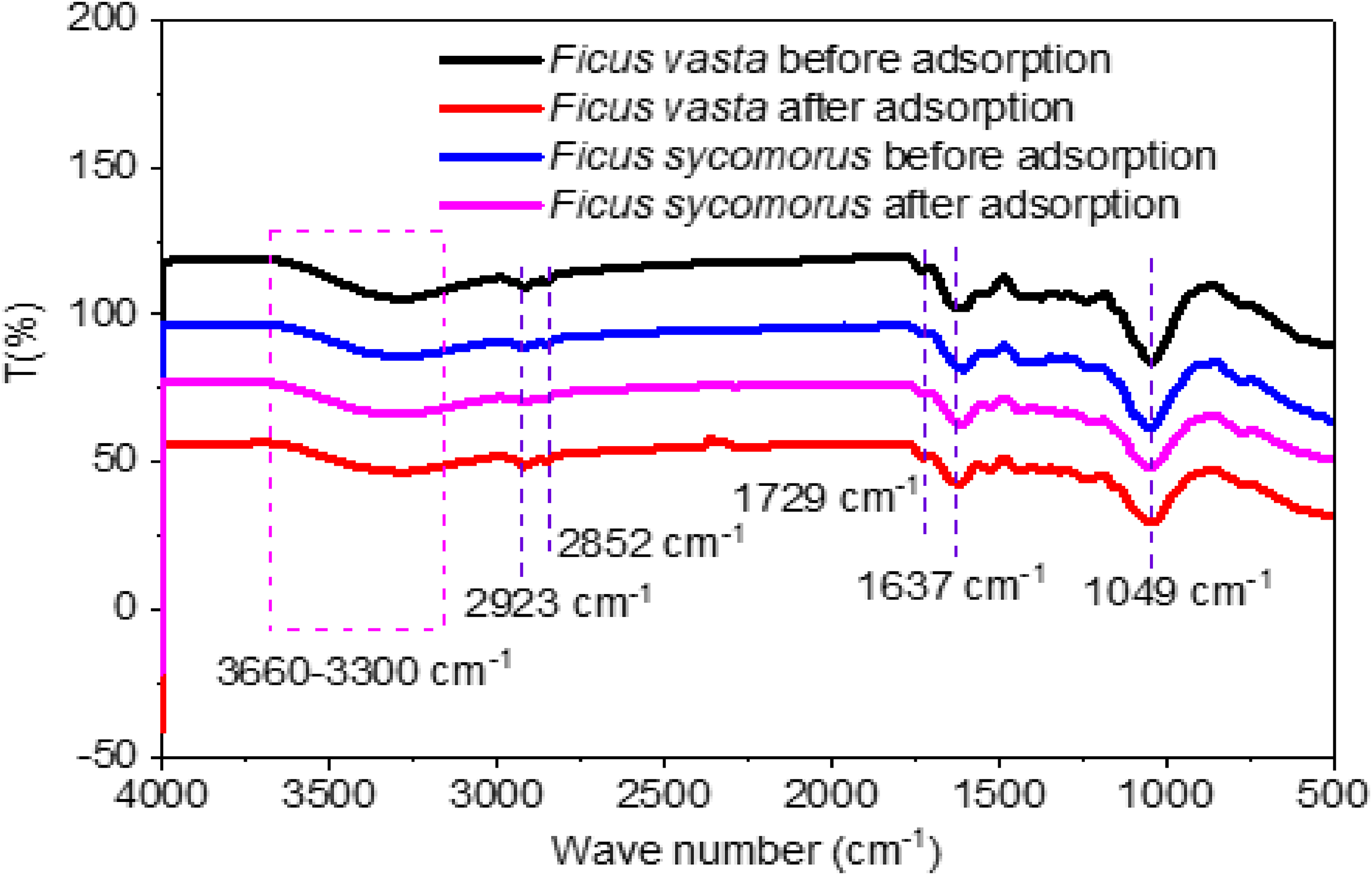
FTIR spectra of Ficus vasta and Ficus sycomorus leaves before and after adsorption.
Before adsorption: The spectra exhibit prominent bands corresponding to hydroxyl (–OH), carboxyl (–COOH) and carbonyl (C=O) groups, characteristic of lignocellulosic biosorbents.28,36,37
After adsorption: Post-adsorption spectra show minor shifts in –OH and C=O stretching regions, indicating hydrogen bonding and possible coordination with Cr(VI) or its reduced form, Cr(III).30,38 The absence of distinct M–O peaks suggests that biosorption is primarily governed by physisorption and ion exchange rather than strong covalent bonding. 30 39–41
These findings align with previous studies on natural biosorbents, where Cr(VI) reduction and subsequent binding to oxygen-rich sites occur without pronounced M–O spectral signatures.
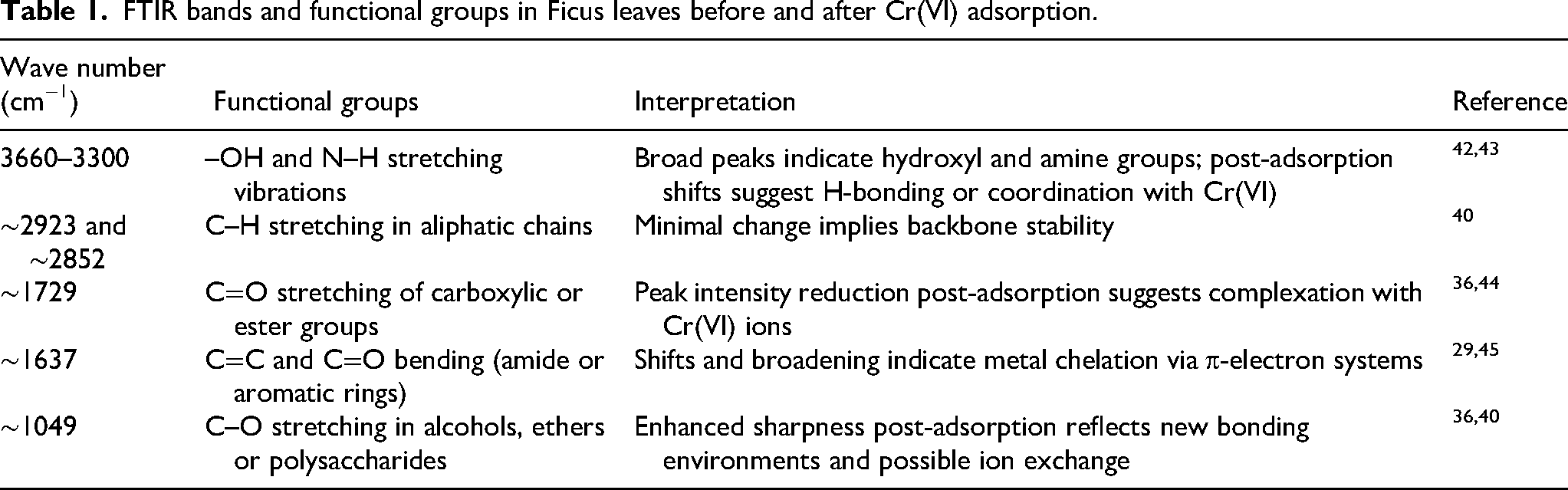
Key FTIR absorption bands and their functional group assignments for F. vasta and F. sycomorus leaves before and after Cr(VI) adsorption, along with mechanistic interpretations are summarised in Table 1.
FTIR bands and functional groups in Ficus leaves before and after Cr(VI) adsorption.
Surface area and morphology analysis
Figure 3 presents SEM micrographs of F. vasta (a) and F. sycomorus (b) leaf surfaces prior to Cr(VI) adsorption, alongside their corresponding BET isotherm profiles (c, d). Both samples exhibit irregular, textured morphologies with visible surface cavities and roughness, indicative of heterogeneous adsorption sites. These features are consistent with the BET surface area measurements, which revealed modest porosity for F. vasta (16.485 m2 g−1) and slightly higher surface area for F. sycomorus (16.743 m2 g−1), both displaying type II nitrogen adsorption isotherms characteristic of multi-layer adsorption on macro-porous surfaces. 46 Similar surface traits have been reported in activated carbon derived from Ficus carica leaves, where SEM confirmed enhanced porosity and adsorption potential following surface modification. Likewise, powdered Ficus drupacea leaves have shown comparable biosorption behaviour, 47 with SEM revealing heterogeneous structures favourable for Cr(VI) removal from aqueous media. 48
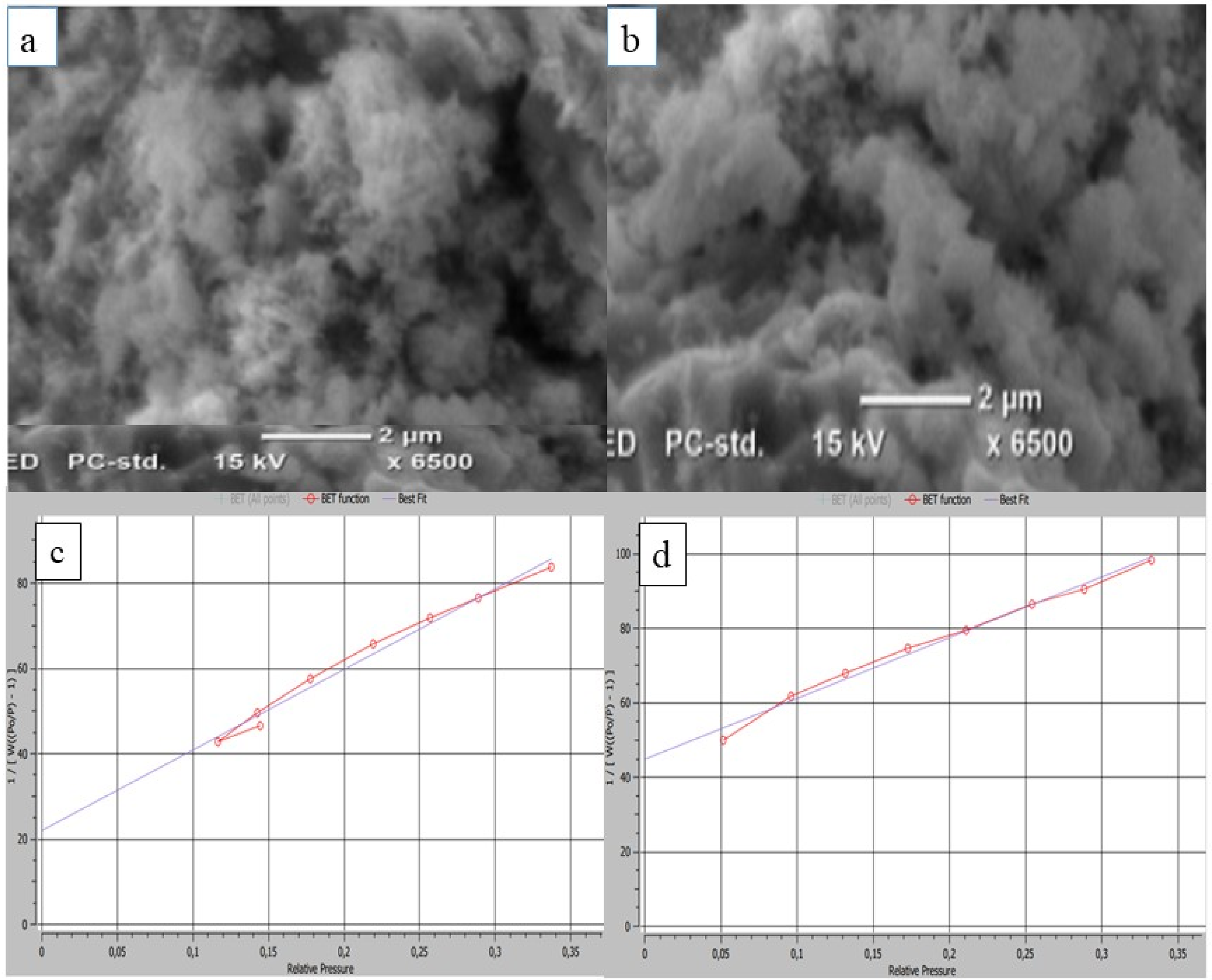
Surface characterisation of Ficus vasta and Ficus sycomorus leaves: SEM micrographs of leaf surfaces prior to Cr(VI) adsorption (a, b) and corresponding BET surface area and nitrogen adsorption isotherm profiles (c, d). BET: Brunauer–Emmett–Teller.
Effects of dosage on adsorption
In this experiment, the dosages of both F. vasta and F. sycomorus adsorbents were systematically varied from 1.5 to 4.0 g in 100 mL solution, corresponding to 15, 20, 25, 30, 35 and 40 g L−1. Although this dosage range may appear high relative to the initial Cr(VI) concentration (5.0 mg L−1), it was intentionally selected to ensure rapid equilibrium and to explore saturation behaviour across a wide sorbent-to-sorbate ratio. The elevated dosage facilitated swift adsorption kinetics – typically reaching equilibrium within 60 min – by maximising the availability of active binding sites. The initial Cr(VI) concentration (5.0 mg L−1), agitation speed (180 r min−1) and contact time (60 min) were maintained constant throughout all trials. The initial pH of the solution was recorded as 5.8 for both F. vasta and F. sycomorus adsorbents.
As shown in Figure 4, the Cr(VI) removal efficiency increased markedly with adsorbent dosage – from 57.32 to 82.14% for F. vasta and from 54.52 to 82.64% for F. sycomorus – when the concentration was raised from 15 to 20 g L−1. This enhancement is attributed to the greater availability of active binding sites resulting from the increased surface area of the adsorbents.49,50 The per cent removal increment is then very slow as the dosage further increases from 20 to 40 g L−1, which can be attributed to the adsorbent–adsorbent interaction caused by the large adsorbent dose increment that decreases the available binding sites. 51 On the other hand, surface loading – that is, the ratio of adsorbed Cr(VI) to adsorbent dose – decreases. This can be explained by the active sites on the surface overlapping as the amount of adsorbent rises, which reduces the area available for binding Cr(VI) ions. Similar findings are also reported in Marques et al. and Bermúdez et al.52,53 The more active sites that cause HCrO4− ions to be adsorbed on adsorption sites, the more efficient the adsorption becomes. Thus, highest surface loading was observed at 2.0 g (20 g L−1) for both adsorbents. Therefore, 20 g L−1 dose was selected for further investigation.
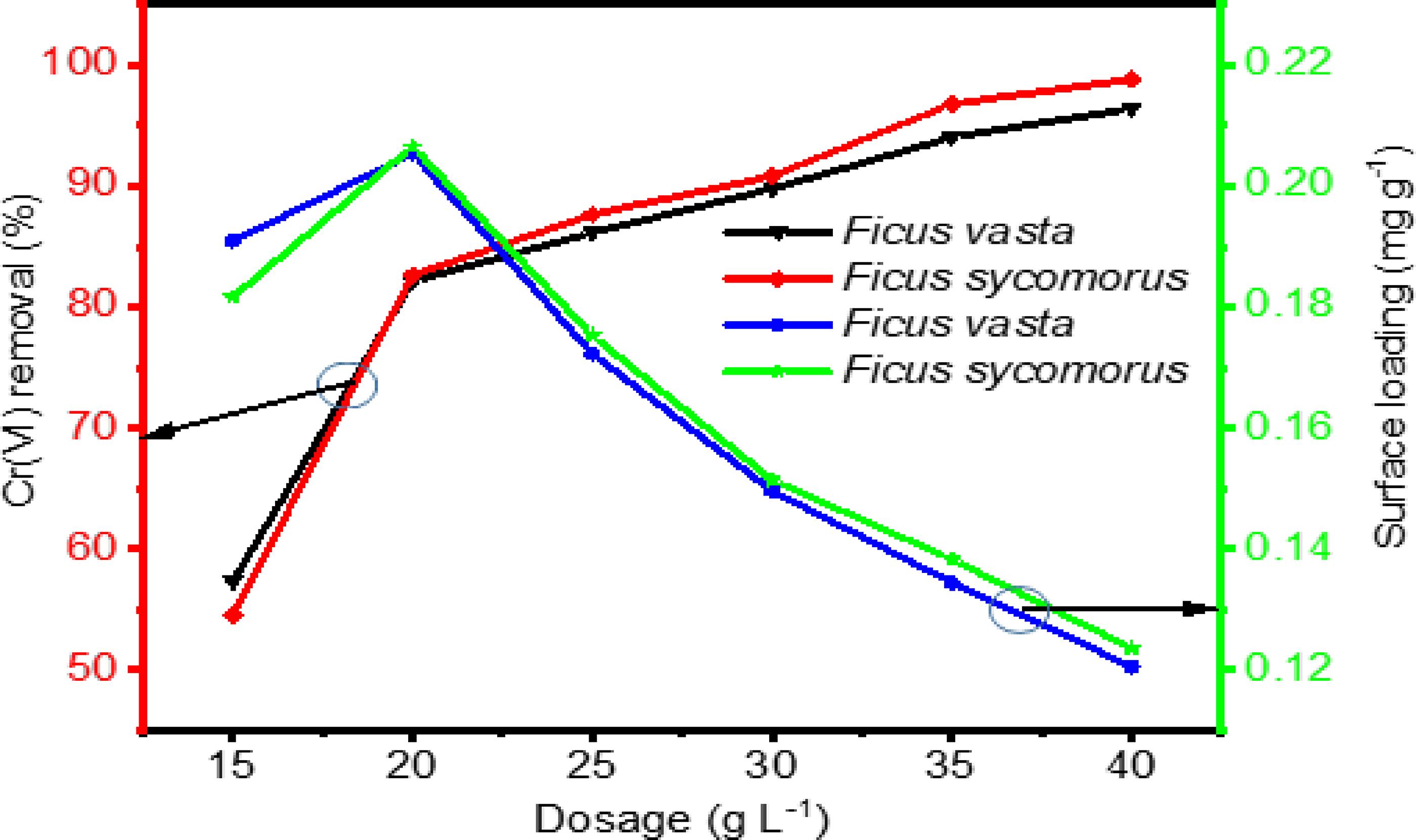
Effect of adsorbents dosage on removal of Cr (VI). Original pH 5.8, contact time (60 min), initial concentration 5.0 mg L−1, agitation speed (180 rpm).
Effect of pH
As displayed in Figure 5, the effect of pH was evaluated while keeping the other parameters – contact time, starting concentration, adsorbent dosage and agitation speed – constant at each pH value (2, 3, 5, 7, 9 and 11). The prepared acetate buffer was utilised for pH adjustment, and 0.1 M solutions of HCl and NaOH were employed to reach the desired pH level. The per cent removal of Cr(VI) ion was highest at pH 2 (88.99%) and pH 3 (91.97%) for F. vasta and F. sycomorus, respectively, and declined significantly as pH increased up to 11. These findings show that both adsorbents are most effective at lower pH values.
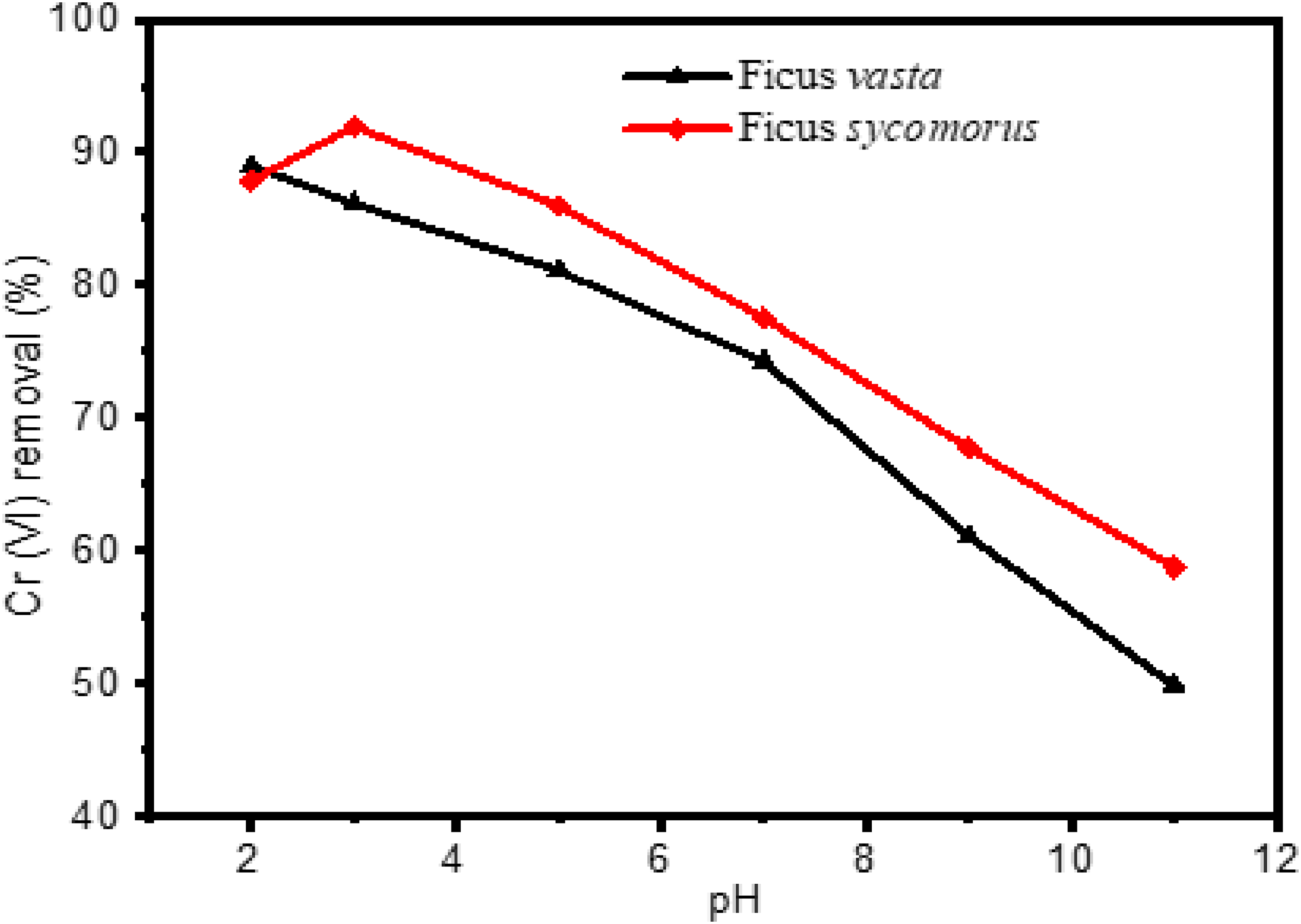
Effect of pH on removal of Cr (VI). Dose (20 g L−1), contact time (60 min), initial concentration (5 mg L−1) and agitation speed (180 rpm).
In aqueous solutions, chromium(VI) can appear as chromate (CrO42−), dichromate (Cr2O72−), hydrogen chromate (HCrO4−), hydrogen dichromate (HCr2O7−), chromic acid (H2CrO4) and dichromic acid (H2Cr2O7), depending on the pH and redox potential of the medium.54,55 HCrO4− is predominantly present at pH levels below 6, while H2CrO4 dominates below pH 1. 54 Therefore, when the pH of the solution becomes very low (pH ≤ 1), adsorption is expected to decrease due to the decline in electrostatic attraction between the positively charged adsorbent surface and the predominant neutral species of chromium (H2CrO4). 54 CrO42− becomes the predominant species at pH levels above 7.28,54 When the pH increases to higher levels (e.g. pH 11), the surface of the adsorbent acquires a net negative charge, resulting in reduced Cr(VI) adsorption due to electrostatic repulsion.
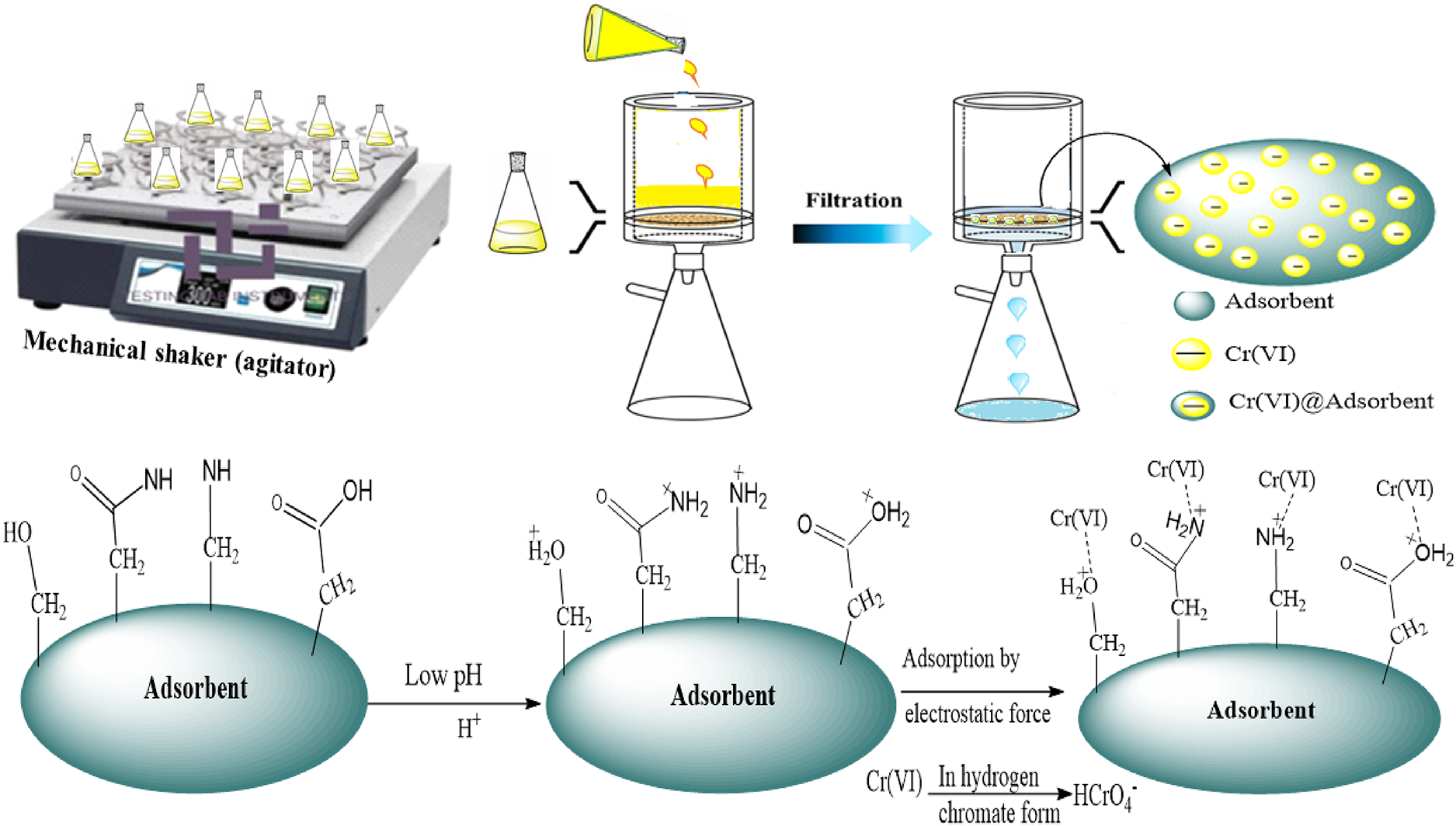
Similar results were obtained by Kebede et al. 54 using biowastes for the removal of Cr(VI) from aqueous solution. In aqueous media, hydrolysis of Cr2O72− occurs via the reaction: Cr2O72− + H2O ↔ 2HCrO4−. 56 In this study, a synthetic solution of K2Cr2O7 was used as the Cr(VI) source. HCrO4− is more abundant at pH values below 6 and is the most commonly adsorbed form of Cr(VI) under acidic conditions. At low pH, the adsorbent surface becomes positively charged due to protonation with H+ ions, facilitated by functional groups such as amino, aromatic nitro, amide, carboxyl, carbonyl and hydroxyl. This promotes the binding of negatively charged HCrO4− ions, resulting in high Cr(VI) uptake. 57
Therefore, pH 2 and 3 were selected as the optimum values for F. vasta and F. sycomorus leaves, respectively. Interestingly, both adsorbents showed removal efficiencies of 82.14 and 82.64% at their original pH values, which increased to 88.89 and 91.97% when the pH was adjusted to 2 and 3. This confirms that pH has a major impact on the uptake of Cr(VI).
Effect of contact time
The influence of contact time between the adsorbent (leaf powder) and the adsorbate (metal ion), which is one of the factors influencing the proportion of the metal ion being adsorbed 28 is indicated in Figure 6. Having this in our mind, the contact time was varied from 10 to 120 min in 20 min interval keeping the other variables constant for each setting. The pH was adjusted to 2 and 3 for F. vasta and F. sycomorus leaves, respectively. As shown in Figure 6, both adsorbents experience quick initial adsorption. This is because there are more adsorbing active sites available than there are metal ions.58–60 The maximum per cent removals were recorded at 80 min (90.08%) for F. vasta and at 60 min (91.98%) for F. sycomorus. After the optimum times, the per cent removals are negligible and almost remain the same with longer contact times for both adsorbents, this is because the available active sites getting smaller and smaller with time. However, the removal percentages for F. vasta leaves at 60 min (88.89%) and 80 min (90.08%) do not differ substantially so 60 min was selected as the optimal contact time for both adsorbents.
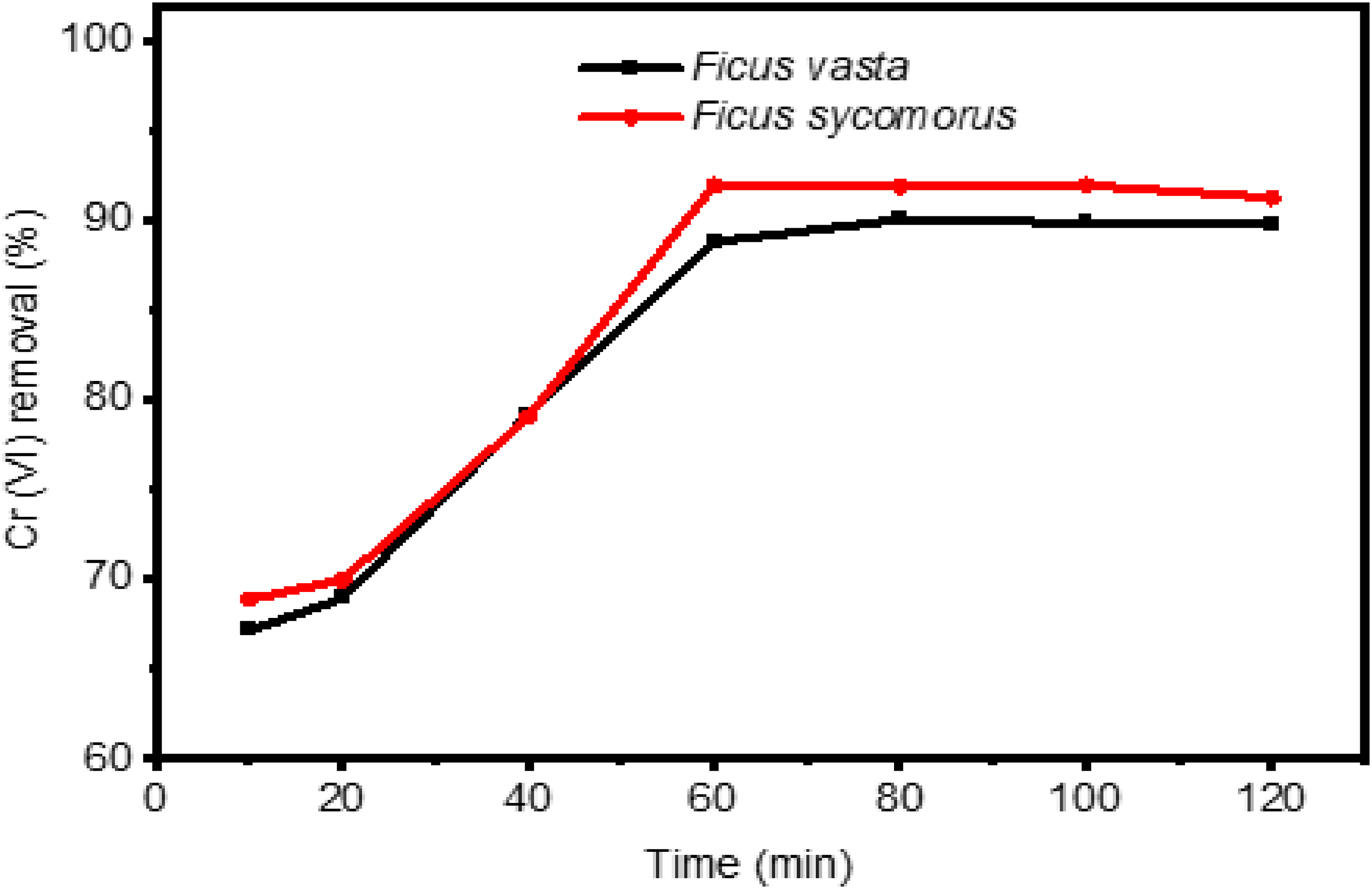
Effect contact time on Cr (VI) removal. Dose (20 g L−1), pH 2 and 3 for Ficus vasta and Ficus sycomorus leaves, initial concentration (5 mg L−1), agitation speed (180 rpm).
Effect of initial concentration on adsorption
The effect of initial concentrations on the removal of Cr(VI) is displayed in Figure 7. The initial Cr(VI) concentration in the experiment ranged from 5.0 to 30 mg L−1 with 5 mg L−1 intervals keeping the other parameters constant for both adsorbents in each initial concentration setting. The pH was adjusted at 2 and 3 for F. vasta and F. sycomorus, respectively. For both adsorbents, comparable adsorption capacity and similar phenomena have been seen. Highest per cent removals were observed at lower initial concentrations in both adsorbents. When the initial concentration of Cr(VI) increased to higher concentrations (to 30 mg L−1 in this case), the percentage removal of F. vasta decreased from 88.89 to 73.03% and that of F. sycomorus decreased from 91.97 to 71.27%. The accessibility of the highest ratio of adsorbing active sites to the quantity of Cr(VI) ions in the solution accounts for the higher per cent removal seen at lower concentrations. 61 The saturation of the sorption sites on adsorbents is the reason of the declining per cent removal. The ratio of adsorption active sites to the total amount of Cr(VI) ions in the solution may be relatively low because of the high escalation of starting concentration (high concentration interval). Since the amount of adsorbent is fixed while the initial concentration is rapidly rising, the per cent removal decreases as predicted by equation (1). However, the uptake of Cr(VI) (adsorption capacity, qe) amount per unit mass of adsorbent is increasing with increasing initial concentration of Cr(VI).
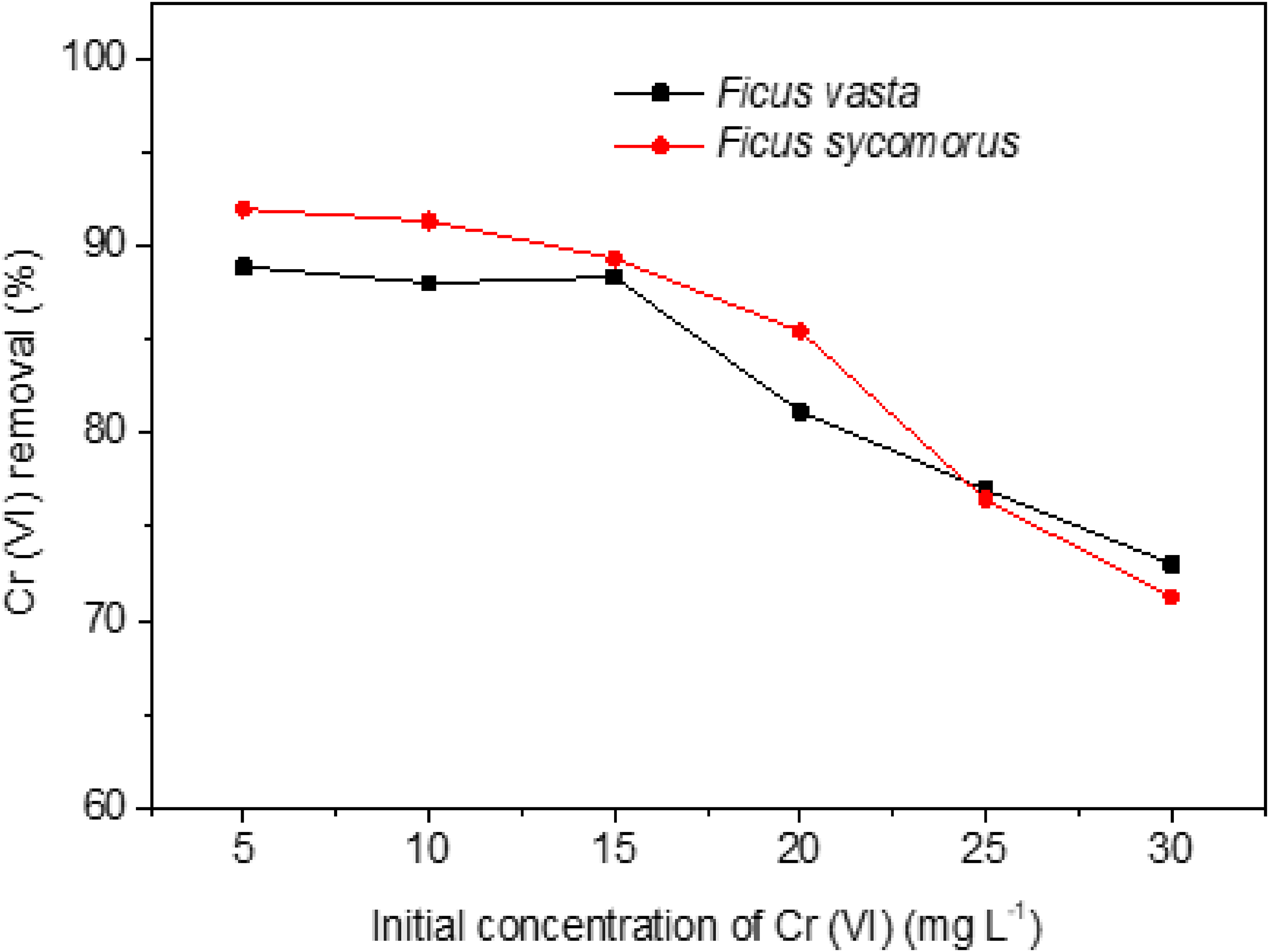
Effect of initial concentration on Cr(VI) removal. Dose (20 g L−1), pH 2 and 3 for Ficus vasta and Ficus sycomorus leaves, contact time 80 and 60 min for F. vasta and F. sycomorus, and agitation speed (180 r min−1).
Although this study was conducted using Cr(VI) concentrations typical of contaminated groundwater (5.0 mg L−1), we recognise that industrial effluents often contain significantly higher levels, which can range from 250 to 1000 mg L−1. 62 The adsorption performance of F. vasta and F. sycomorus leaves under such elevated concentrations remains to be evaluated. While the current findings demonstrate promising removal efficiency at low concentrations, extrapolation to industrial scenarios requires further investigation.
Adsorption isotherms
Figure S2 in the Supplemental materials illustrates Langmuir (a, b) and Freundlich (c, d) isotherm fits for F. vasta and F. sycomorus leaves at a fixed adsorbent dosage (20 g L−1) and varying Cr(VI) concentrations. The high regression coefficients (R2 > 0.98) indicate strong model agreement, with Langmuir fitting slightly better – suggesting mono-layer adsorption on homogeneous surfaces. This aligns with SEM observations (Figure 3), where both leaves exhibited porous, cavity-rich morphologies conducive to uniform site-specific Cr(VI) uptake. Notably, F. vasta showed comparable fits for both models, hinting at surface heterogeneity and multi-layer adsorption potential. These findings are consistent with recent studies on F. drupacea and Ficus carica leaves, which demonstrated similar biosorption behaviour and surface characteristics for Cr(VI) removal from aqueous media.47,48
The isotherm parameters for Cr(VI) adsorption onto F. vasta and F. sycomorus are summarised in Table 2. Model fitting was evaluated using regression coefficients derived from the Langmuir and Freundlich equations (equations (3) and (4)). While both adsorbents exhibited strong conformity to the Langmuir model – suggesting mono-layer adsorption on homogeneous surfaces – the SEM micrographs revealed porous, irregular morphologies indicative of surface heterogeneity. This structural complexity, particularly in F. vasta, is further supported by its comparable fit to the Freundlich model, implying the presence of diverse active sites and potential for multi-layer adsorption.
Isotherm models and parameter values.

Taken together with the kinetic results, which showed excellent agreement with the pseudo-second-order model (R2 = 0.99398 for F. vasta and R2 = 0.99924 for F. sycomorus), the adsorption mechanism can be described as chemisorption occurring on structurally heterogeneous surfaces. The pseudo-second-order model suggests that the rate-limiting step involves electron sharing or exchange between Cr(VI) ions and functional groups on the biosorbent surface. The dual isotherm fit – Langmuir for uniform site interaction and Freundlich for multi-layer adsorption – further supports a hybrid mechanism involving both specific chemical bonding and physisorption across varied active sites. This mechanistic insight is corroborated by FTIR analysis, which identified hydroxyl, carboxyl and carbonyl groups as key contributors to Cr(VI) binding.
Adsorption kinetics
Two kinetic models – the pseudo-first order and pseudo-second order – were used for the analysis of the adsorption process's kinetic parameters, which were examined from variations in constant time (5, 10, 15, 20 and 25 min). The linear fitting plots of the kinetic models are shown in Figure S3 in the Supplemental materials. The kinetics parameters for F. vasta and F. sycomorus were calculated using the pseudo-first-order rate expression, as shown in equation (5). 11 The plot of log(qe − qt) against time (t) gives a straight line. The qe on the left side of the equation (log(qe − qt)) is known from batch adsorption experiment hence denoted qe, exp while qe on the right side of the equation (log qe)can be calculated from the intercept hence denoted qe, cal. The rate constant (k1) and equilibrium adsorption capacity (qe, cal) were determined using the plot's slope and intercept, respectively.
Using equation (6) and the linear plot of t/qt versus t, the pseudo-second-order kinetics parameters were determined. 11 The intercept and slope of the curve were used to compute the pseudo-second-order rate constant (k2) and equilibrium adsorption capacity (qe), respectively. The pseudo-first-order correlation values (R2 = 0.94873, R2 = 0.89194) were obtained for F. vasta and F. sycomorus, respectively, and the pseudo-second-order correlation values (R2 = 0.99398, R2 = 0.99924) for those two adsorbents, respectively. The kinetic models and the respective parameter values are summarised in Table 3. Based on the regression coefficient values, the equilibrium data best fits to the pseudo-second-order model. Moreover, the calculated qe (qe, cal) and the experimental qe (qe, exp) values are close to each other, suggesting that the chemisorption process determines the rate of Cr(VI) ion adsorption in both the F. vasta and F. sycomorus adsorbents.63,64 From the results, it can be inferred that the pseudo-second-order rate equation provides the best fitting for the data.
Kinetic models and parameter values.

Conclusion and recommendation
F. vasta and F. sycomorus leaves demonstrated effective biosorption performance for Cr(VI) removal under controlled laboratory conditions. The adsorption process was strongly pH-dependent and followed chemisorption kinetics, as evidenced by the high correlation with the pseudo-second-order model. Adsorption data fit well to both Langmuir and Freundlich isotherm models, indicating heterogeneous surface interactions with partial multi-layer adsorption behaviour rather than strict mono-layer coverage. Surface characterisation via SEM revealed irregular, porous morphologies with abundant cavities, while BET analysis confirmed type II nitrogen adsorption isotherms, consistent with multi-layer adsorption on macro-porous surfaces. FTIR spectroscopy identified hydroxyl, carboxyl and carbonyl functional groups involved in Cr(VI) binding, with notable spectral shifts indicating direct interaction.
Given their natural abundance, low cost and high removal efficiency, these leaf-based biosorbents offer a promising and sustainable alternative for scalable water purification technologies. However, while affordability is a key advantage, the long-term cost-effectiveness of the process depends on the reusability of the biosorbents. Future studies should incorporate regeneration and multi-cycle adsorption experiments to evaluate the stability, recovery potential and performance retention of F. vasta and F. sycomorus leaves over repeated use. Such investigations will be critical for assessing operational feasibility and economic viability in real-world applications.
Although the chromium content of the raw F. vasta and F. sycomorus leaf powders was not analysed – given their collection from uncontaminated regions – future studies are encouraged to include elemental profiling to confirm biosorbent purity and strengthen adsorption reliability. To further elucidate the sorption mechanism and validate surface interactions, advanced characterisation techniques such as X-ray photoelectron spectroscopy, energy-dispersive X-ray spectroscopy and zeta-potential analysis are recommended.
Supplemental Material
sj-docx-1-mpe-10.1177_25726641251398248 - Supplemental material for Locally accessible Ficus vasta and Ficus sycomorus leaves for adsorption of Cr(VI) from aqueous solution
Supplemental material, sj-docx-1-mpe-10.1177_25726641251398248 for Locally accessible Ficus vasta and Ficus sycomorus leaves for adsorption of Cr(VI) from aqueous solution by Endazenaw Bizuneh Chemere, Mapula Lucey Mavhungu and Washington Mhike in Mineral Processing and Extractive Metallurgy
Footnotes
Acknowledgements
The authors would like to acknowledge the Tshwane University of Technology, South Africa, Department of Chemical, Metallurgical and Materials Engineering, and Dilla University, Department of Chemistry, Ethiopia, for allowing them to access necessary materials and laboratory rooms.
Author contributions
EB Chemere carried out formal analysis, writing – first draft and editing, conceptualisation and designing. ML Mavhungu involved in conceptualisation and designing of the methodology. W Mhike carried out data curation, editing and offering resources. All authors gave final approval for publication and agreed to be held accountable for the work performed herein.
Funding
The authors received no financial support for the research, authorship and/or publication of this article.
Declaration of conflicting interests
The authors declared no potential conflicts of interest with respect to the research, authorship and/or publication of this article.

Supplemental material
Supplemental material for this article is available online.
References
Supplementary Material
Please find the following supplemental material available below.
For Open Access articles published under a Creative Commons License, all supplemental material carries the same license as the article it is associated with.
For non-Open Access articles published, all supplemental material carries a non-exclusive license, and permission requests for re-use of supplemental material or any part of supplemental material shall be sent directly to the copyright owner as specified in the copyright notice associated with the article.
