



Abstract
This exploratory study addresses the existing gaps on the public perceptions of child sexual offending committed by women. Using thematic analysis, the study extracted, coded and analysed the comments (N = 1,651) made by the general public to nine Daily Mail online newspaper articles published from 2018 to 2019, reporting the sentencing decisions of female sex offenders, who have been charged and found guilty with the offence of sexual activity with a child. From those comments, 170 coded themes were identified, and this amounted to 3,394 coded incidences. Unlike previous research, this study cross-examines public responses to different typologies of offending behaviour; teachers, mothers, same sex offenders, co-offenders and finally those who offended for financial gain. The impact of these typologies was analysed through key descriptive case variables, which were quantitively evaluated against the prominent themes that emerged. It found that while people demand equal sentencing decisions between male and female child sex offenders, this is limited by public perception when the abuser is an attractive female and, as a result, perceived as less harmful to the child, who is not seen no longer as a victim but as a ‘Lucky Boy’. Such preconceptions fuel shame, social stigma and stereotyping towards sexual exposure and prevents victims to disclose their abuse and achieve closure and justice.
Introduction
The number of studies examining ‘real-world’ human responses to controversial issues such as female child sexual abuse and the perception of harm caused to child victims, is still a relatively neglected area of scholarship. The aim of this research is to identify public perceptions towards the female offenders reported in the nine articles and to understand the extent to which the mass media may frame and influence the responses of readers and their perception of deviancy and harmfulness. One of the most restated assumptions concerning child sexual abuse contends that men carry out the vast majority of, though not all, abuse. Furthermore, the cultural taboo surrounding sexual abuse by women would make it more unlikely that children would report such crimes. 1 This taboo is integrated by childcare professionals who considered that ‘whilst child sexual abuse perpetrated by females … [was] a serious issue warranting investigation, a number advocated decisions [that] suggested they did not consider female-perpetrated abuse to be as serious as male-perpetrated abuse’. 2
With such a small percentage of child sexual abuse cases being attributed to women, it is assumed that women are less likely to commit this crime against children. Many ascribe this to women’s instinctive feminine protectiveness. In more recent years, female sexual offending is no longer a hidden social taboo that can be ignored and the media have certainly contributed to unmasking such crime. Stories of women who sexually offend against children often make the front pages of British newspapers with sensationalizing and titillating headlines such as ‘…sex sessions with 15-year-old boy’, ‘…insanely perky boobs’ and ‘What boy would turn down such an attractive offer?’ These headlines are supported by images which either reflect young attractive women extracted from their selfies published on Facebook or Instagram, or worse for wear unattractive images taken by press photographers outside the court. Both types of portrayal sell papers that can be seen in the popularity of search engine results with 52,100,000 hits for Female sex offender on Google alone.
There has been a substantial amount of research conducted into the phenomenon of online commenting in relation to news articles. 3 However, an area of research which is lacking attention is the analysis into audience response to media messages relating to female sexual offending and how these responses are shaped by the media itself. It is one of the aims of this paper to fill those gaps.
Overall, crime and its relationship with the media receives a large degree of attention, as our world becomes ever more immersed online. The omnipresence of mass media reaches out to everyone, of any age, through multiple digital platforms, shaping the way we view crime and those who commit it. 4 Erving Goffman 5 in his influential work in media studies argues that individuals rely on interpretative schemas which he defines as ‘primary frameworks’. He believes that these primary frameworks are socially constructed systems that serve as important tools for information processing amongst citizens. 6 The way in which a news piece is presented to the audience and how people respond to that news piece, through comments that are in the public domain, influences the choice people make about how to process that information. 7
The purpose of this research is to explore how the general public respond to British media tabloid coverage of women who sexually offend against children. It focuses specifically on the language readers attributed to the female offending behaviours in their comments to online newspaper articles. This is an exploratory study which seeks to identify the relationship between ‘language’ and ‘human responses’ to such sensitive crime, which will assist in elucidating how people react, process, internalize, interpret and explain female sexual offending against children and the harm that it causes.
Background and Context
The existing literature on public perceptions of female sex offenders, often focuses on teachers who sexually offend against their adolescent pupils. 8 Findings reveal there to be a perceived double standard in the sentencing of female sex offenders in comparison with their male counterparts and that the general public express a desire for greater punitive responses towards women who sexually offend against children, indicating a greater desire for equality in sentencing decisions. 9 This was found in a recent study conducted by Zack et al. 10 who explored public perceptions of child sexual abuse cases committed female sex offenders, who were all teachers, by examining 900 online comments made by readers of the liberal news source The Huffington Post. Other studies have also reported that male victims are often regarded as being ‘lucky’, when older women engage in sexual activity, and experience less harm, regardless of whether the male victim is a child. 11
While these studies reveal a public desire for greater equality between the sexes, there is, however, very little comparison between male and female offenders. It can be argued, if studies represented both sexes, then the results may differ with readers expressing a desire for even greater punitive sentencing decisions for male offenders. This can be seen in a study conducted by Howell et al., 12 who examined a reverse double standard in the perception of teacher and student sexual relationships and found that when participants were presented with individual cases, men were judged more punitively.
Limitations can be drawn from the work of Howell et al. in comparison to that produced by Zack et al. 13 The study by Howell et al. 14 reflects a controlled response under experimental conditions, whereas the research by Zack et al. captures the responses of individuals who willingly commented on both the articles and the views of other readers. It is worth noting that what all commentators had in common was the ability to be able to comment freely and openly online, without inhibitions or fear of face-to-face confrontation by others. This process may be linked to the online disinhibition effect, which is a theoretical explanation of how online social interactions and behaviours may differ from those in real life. 15
Online Disinhibition and Online Commenting
The online disinhibition effect theory was coined by John Suler 16 after he noticed changes in people’s behaviour when online. After several years immersed in online communities, he found that some users disclose inner truths about themselves more freely, as they are less restrained by judgement and can demonstrate great acts of kindness and generosity towards those they have never met: a positive behaviour. This process is defined by Suler as benign disinhibition. This form of disinhibition can be indicative of a desire to better understand oneself, explore one’s own identity further in a process of ‘working through’ oneself as defined in psychodynamic theory.
On the other end of the scale, there is toxic disinhibition, where some people demonstrate aggressive, threatening online behaviours, such as cyber bullying, abusive rhetoric, visiting the Dark Web and viewing child abuse images. Acts that they would never, or have never, committed in the real world which are facilitated by the liberty that anonymity provides. It can be viewed as a cathartic process, in which the individual does not seek an element of personal growth, rather a desire to act out unsavoury needs or wants in a blindly compulsive manner, achieved through a disassociation between oneself online and the ‘real world self’. 17
Fredheim et al. 18 explored the relationship between anonymity and online commenting by extracting 42 million comments from 55,000 Huffington Post articles that existed before and after a stipulation, in 2013, where commenters had to identify themselves through their Facebook accounts. The purpose was to understand how identity disclosure impacted upon the nature of the comments made by readers. Research conducted prior to this study found that anonymity increased the number of aggressive responses, 19 and the removal of anonymity shortened and reduced the number of comments made. Furthermore, it emerged that when the identities of the commenters hinted identity cues such as Mother_of_Three_32 the quality of the discussed was rated more highly than the comments made by those who chose to remain anonymous. To understand why audiences react in such a way to articles with emotive topics, it is vital to understand the relationship the media has with crime.
Crime, the Media and Female Sex Offending
Mass media has a powerful influence in shaping public opinion, 20 especially towards crimes involving sexual offending against children. 21 With decades of literature and media coverage focusing on male offenders as the protagonists of sexual crimes, only recently, has the concept of women as child sex offenders been acknowledged within western societies and academic literature. 22 A plausible explanation for academic disinterest could be due to the minimal number of female sex offenders identified, at an international rate of 5% of all sex offenders. 23 This figure is questionable as they do not reflect the difficulties in identifying criminal behaviour potentially hidden through the guise of motherly care. 24
A second explanation could be that society is incapable of viewing women as sexual aggressors 25 due to the fact that they are deemed physiologically incapable of committing acts of rape and therefore their sexual behaviour is viewed as being less harmful, 26 or due to the social scripts and schemas that prevail within our society that depict women as gentle nurturing creatures all of which are reinforced by the mass media at every turn. 27 Acknowledging that women commit sexual crimes against children violates traditional gender scripts 28 yet by upholding these antiquated ideologies of women, we are marginalizing and silencing the victims that we endeavour to protect. 29
Journalism has used traditional scripts of women to their advantage with many reporting cases of female sexual offending against children, using sensationalizing and eye-catching headlines that focus on titillating western readers rather than presenting a factual account including context. 30 The product of this is to provoke reactions of an emerging social problem: a moral panic. 31 A paedophile is a concept which is embedded with stereotypes, the loner, the local ‘weirdo’ and the old man that hangs around in parks. These stereotypes allow us to place a sex offender outside of our protected notion of our society. 32 These stereotypes have been cemented by the media who have plastered the British tabloids with the pictures of convicted male sex offenders, labelled with words like ‘SICKO’, ‘EVIL’, ‘PERVERTED’ and ‘DEPRAVED’.
It is by our ability to define these offenders as separate from ourselves that prevents us from acknowledging the sex offender that predominantly offends within their own family, a much greater occurrence than the loner living in the locality. 33 It also prevents us from understanding and accepting the fact that women also sexually offend. While the role of the media can open our eyes to issues by exposing rising problems, they also have the capacity to edit and even ignore integral parts of the problem. The media has the power to not only build ideas but also maintain pre-existing stereotypes, distribute images of offenders in an iconic promotion of the image they are trying to sell, omit evidence relating to a case which results in a public outcry for vilification and revenge. 34
Methodology
Data Collection
The nature of this research is exploratory and focuses upon public responses to the online Daily Mail newspaper articles, reporting the sentencing decisions for nine female offenders found guilty of ‘sexual activity with a child’ under the Sexual Offences Act, 2003, Section 10 or the Sexual Offences Act 2003, Section 9. To address some of the limitations and research gaps in existing literature, this study will include female offenders who were not just teachers (those in a position of trust), but also single mothers, co-offenders, same sex offenders and those who offended for the purpose of financial gain, thus enabling the ability to explore whether the type of offending behaviour produces an impact upon both the reporting and the subsequence public response.
In addition to this, all of the cases used in this study were for sentences imparted between 2015 and 2018 to ensure a closeness in social attitudes. The ages of the offenders ranged from 15 (at the time the offence was committed) to 45. The victims’ ages ranged from 9 years to 15 years of age. The offenders were not chosen based on stereotypical Western interpretations, unlike the study by Zack et al., 35 due to the significant volume of literature on attractiveness and judicial decision making that already exists. Attractiveness was not ignored as a variable within the study, rather it was not a primary focus. The nine articles were downloaded off The Daily Mail’s webpage and uploaded onto the online thematic analysis tool Dedoose. Each article was uploaded separately and identified by the unique descriptors of the offenders, so that future analysis of the relationship between descriptor variables and language could be identified. For the second phase, the same articles identified in the first phase were again used, but instead of the content of the article being downloaded, the comments made by the online readers were extracted. The comments were automatically ordered from most liked (the comments awarded the greatest number of LIKE button clicks from online fellow article readers) to least. However, this did not play a significant role in the analysis process as readers are more likely to LIKE the first few comments they read rather than read over 1000 comments and review them all.
Comments were uploaded into separate files and again defined by the descriptor variables of the offenders so that future analysis of descriptor variables and public perceptions can be explored further. The Daily Mail was chosen as a source for this study to provide a contrasting piece to existing studies, such as that produced by Zack et al. 36 and Fredheim et al., 37 who focused on a liberal source, The Huffington Post.
A total of 1,651 comments were extracted from nine Daily Mail articles covering the sentencing of nine women between 2018 and 2019, and analysed. From those comments, 170 coded themes were identified, and this amounted to 3,394 coded incidences. From those, it was possible to group common coded themes together into overarching or ‘parent’ themes which merited discussion.
Ethical Considerations
Ethical permission to conduct this research was sought from the Ethics Committee of the School of Law at Middlesex University and from the Daily Mail, who confirmed that the copyright of each statement utilized in this research, belong to the original (unanimous) poster and not to the Daily Mail. All possible identifying details of commentators, victims or named offenders were deleted and removed from the dataset before analysis.
Data Analysis
In order to examine public perceptions of female offending, the data, in the form of comments, was collected from the online website of the Daily Mail, a conservative and second biggest selling newspaper in the UK. Due to the conservative, right-wing, attitude of the tabloid newspaper, it is predicted that the responses made within the comments section will reflect a right-wing, more punitive, zero tolerance perception of sexual offending behaviour. The data was then thematically analysed using the programme Dedoose for identifiable themes, which were then cross-examined with the female offenders’ descriptors of both offending behaviour, sentencing details and the victims.
The Daily Mail is now the only newspaper (tabloid or broadsheet) to permit comments under their articles. The comments from these articles were extracted and analysed to identify themes, which were then coded. These coded themes were then clustered into the overarching themes of justice focused, defendant focused, victim focused and media focused. Conversation threads between readers were not included, as they were regarded as being a reaction of the responses of another reader and not the content of the media article. Finally, all the themes were analysed to identify how they were related to the descriptor variables of age range of the offender, position of trust, number of victims, sentence length, gender of victim/s and the age of the youngest victim/s.
To ensure the confidentiality, all of the nine female offenders whose cases were used within this study were anonymized, as were the identities of the commenters.
Results
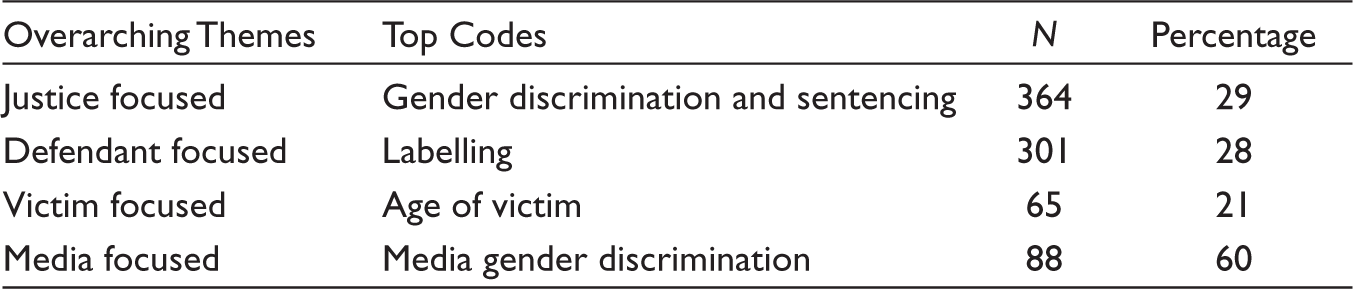
The overarching themes that emerged from the analysis were: justice focused; defendant focused; victim focused and media focused. Due to the extensive volume of results, tables were created to capture the relationship between the overarching themes and the characteristics of the offenders, their crimes and the victims that were specific to the nine cases identified. Table 1 highlights the top codes that have been identified:
Top Three Codes for Each Overarching Theme
Justice Focused
Under the theme of justice focused, all the coded instances were related to readers’ reactions towards the sentencing decision awarded to the defendant. Examples of such codes are insufficient sentencing; life in prison; capital punishment and the law. When the coded themes were grouped together, the most common occurrence by a significant margin was for the theme gender discrimination in sentencing. Table 2 illustrates the descriptor variables most prevalent for this code.
Gender Discrimination and Sentencing Descriptor
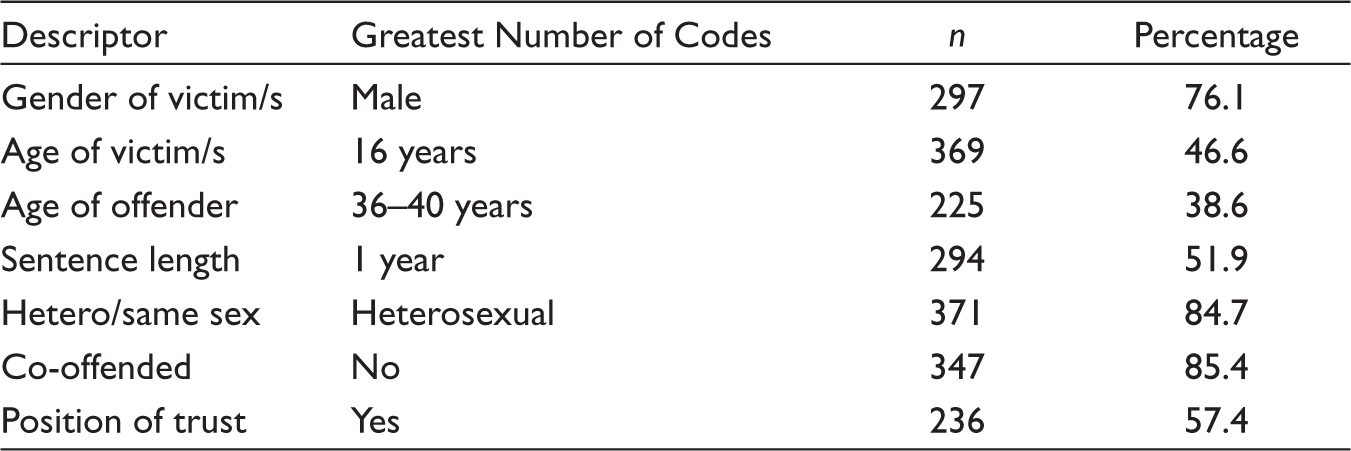
Further examination of the codes relating to the descriptor variable of the offenders and their victims revealed that commenters felt that there was the greatest degree of discrimination when the victim was male (N = 297 at 76.4%), when the victim was 16 years of age (N = 369 at 46.6%) and when the offender was a teacher and in a position of trust (N = 236 at 57.4%). This indicates that commenters felt strongly that female offenders, who were teachers, received a sentence that was too lenient for the crime that they committed regardless of whether the child was over the age of consent. This was demonstrated in their comments:
Guaranteed that if a 27-year-old male teacher, did the same thing with a 16-year-old girl, then he would’ve got a lot longer than 12 months!
Under this theme, readers’ comments were predominantly of disgust in response to the custodial sentences the female offenders received.
And what message does such a lenient sentence send? If you’re a woman, child abuse is not so serious?
And,
She got ONE year, but a male teacher in similar circumstances would have got FIVE years. I see that gender equality still has to find its way into the English legal system and judges’ minds.
From the data analysis, it emerged that the great majority of female sex offenders received a minimum of one year (N = 294, at 51.9%). Most commentators felt that these sentences were unfairly imparted because the offender was female, with a significant volume of instances referring to the Adam Johnson case (a footballer given almost seven years for sexually touching a 15-year-old):
A teacher who’s in a position of trust has a 6-month affair and numerous sexual encounters with a boy and gets 1 year in prison. Adam Johnson gets 6 years for texting and meeting a girl. Don’t get me wrong both have done wrong the justice system is disgusting. I thought women wanted to have equality?
Defendant Focused
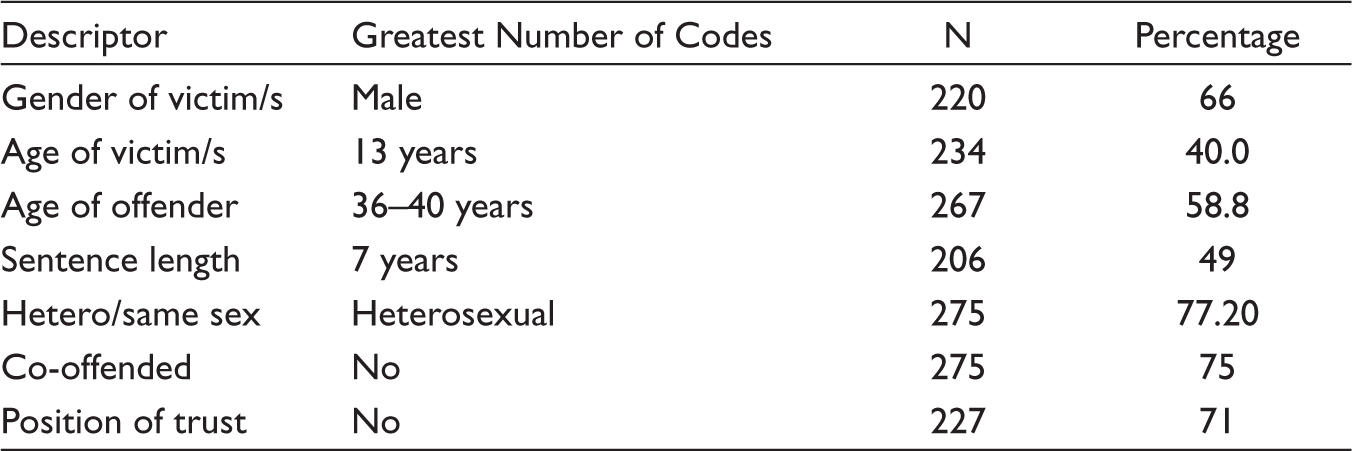
Under the theme of defendant focused, all the coded instances were related to the reader’s reactions towards the defendant and their behaviour. This category consisted of the largest collection of codes within the whole study. The most common code, by a significant margin, was for the theme ‘Labelling’, by which we mean the way in which the reader catagorized the offender in relation to their role within society, such as teacher or mother, the way in which the defendant’s behaviour was defined, such as animalistic or evil, appearance or gender of the defendant. Table 3 illustrates the descriptor variables most prevalent for this code.
Further examination of the codes relating to the descriptor variable of the offenders and their victims revealed that commenters discussed the theme of labelling most commonly for male victims at 66% (N = 220), when the victim was 13-years-old at 40% (N = 234), the offender was in the older age bracket of 36–40 at 58.8% (N = 267) and the offender received more, lengthier sentences of 7 years at 49% (N = 206).
Labelling Descriptor
When evaluating these figures, it is important to acknowledge that there were two different commenter standpoints, from which this labelling occurred. There were those who challenged the portrayal of the offender by the newspaper in its inaccuracy to correctly label the offender and the other was their personal opinion of the offender’s label. Some commenters felt that the newspaper did not refer to the offender accurately enough to depict the nature of the offending behaviour or the severity due to the gender of the offender. The label most commonly used to define the offender found within the comments was paedophile:
May I humbly enquire why I could not find the word ‘paedophile’ anywhere in the article? Had she been a man I wouldn’t have to ask, would I?
As well as,
In this circumstances a man would be called a rapist or a pahedophile a woman is just sex mad. (translates to naughty) Let’s see how this creature is treated and then compare it with similar cases were the predators were male. Equal rights and all that….
Personal opinion labels occurred through descriptive terminology such as Animal, Evil, Prostitute and Monster. The use of such aggressive language was embedded in people’s inability to understand the sexual behaviour by a woman, more specifically, attractive women:
When I see a beautiful woman commit I crime like this it makes ask ‘what’s really in it for you?’ She could’ve gone out and found a man to scratch her itch but she picked out one of her 16 year old pupils!
The significant presence of so many comments all emphasising an inability, by the readers, to comprehend that women are capable of committing such offences when they are good looking, mothers or teachers, indicates that appearance and historical perspective of women as maternal caregivers is a prevalent and significant factor determining how people view motivations to commit such offences. Despite the demand for equality in sentencing decisions, people still clearly harbour, possibly subconsciously, that it isn’t a female crime. What we do know is that readers, and reporters, are motivated to classify sex offenders as being identifiably different,
38
the purpose being, to establish a sense of comfort in their otherness.
39
A desire to distance themselves from the offenders and a means of explaining their behaviour that has gone against the social norms of women as carers and nurturers
40
;
Women by instinct are supposed to be maternal, what happened here. At least she’ll be in a prison full of maternal women some damaged by abuse!
And,
Seems even more evil when it’s a woman who does something like this! 7 years is not long enough she should get life without parole!
Such comments were most commonly directed towards the offenders being charged with the greatest number of offences, were the oldest offenders at 36–40 years (58.8%, N = 267) and were also the women depicted, by the newspaper, using less attractive images. Whilst attractiveness and the way an offender is portrayed is not the primary focus of this study, it does feature as a significant influence in public responses:
I don’t even want to see that face. I feel sick that beasts like this are among decent people. Two more words … DEATH PENALTY.
Victim Focused
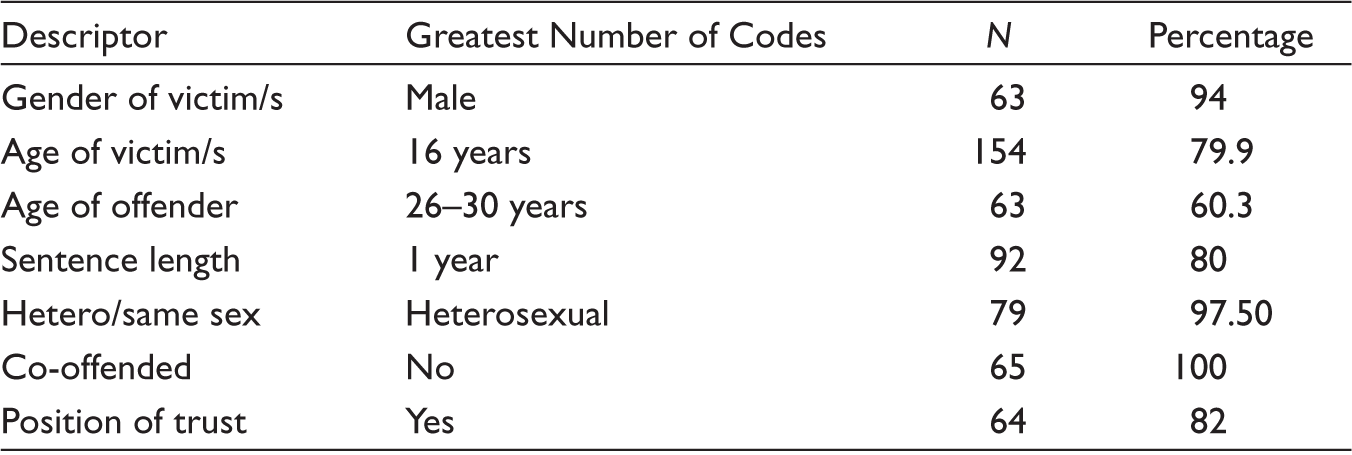
For the theme of victim focused, the coded themes focused on how the commenters viewed and discussed the victim. The focus here is on whether they viewed the child as a victim at all, which inevitably impacts upon the perceived level of harm experienced by the victim. Out of all the themes identified, the emerging one was the age of the victim, at nearly 80%.
Under the theme of Age of Victim/s commentators discussed the victim’s age in a variety of different ways: either acknowledging the fact that the child was a victim by referring to the child’s young age and subsequent vulnerability, or by discounting the child as a victim on the basis of age for being either side of the line for age of consent. The age of the victim was most prevalently discussed for male victims at a significant 94% (N = 63).
It is important to acknowledge that those victims over the age of consent were victims of offenders who were in a legally recognised position of trust, and therefore, victims through a power imbalance. As can been seen in Table 4, the greatest number of comments debating the status of whether the child should be regarded as a victim were for those aged 16-years (N = 154 at 79.9%), where the offender was a teacher at a prevalence of 82% (N = 64). The inability to recognize those at either side of the age of consent line as victims is reflected in the comments made by the article readers as commenters viewed the child as a ‘Lucky Boy’ on the basis of the teacher’s attractiveness from the image portrayed in the article and the opportunity for sexual encounters with an older and attractive women, as being a positive experience over a harmful one.
Lucky boy, my teachers were bombastic old hags.
Age of Victim/s Descriptor
And,
Boys don’t get traumatised by having sex with a female as teenagers. So the impact on the victim is minimal. Fact! Drugs and alcohol bad, nookie—That’s a bit of luck.
These comments suggest that there is a great lack of understanding of what constitutes abuse and the impact it may have on male young victims. Likewise, those children who are unaware of what is sexual abuse and their rights within the legal system are less likely to report their abuse to parents or carers. Boys particularly struggle reporting abuse to the authorities because of sex-role stereotyping, 41 and this struggle will continue if members of society still believe that it is ‘lucky’ to be abused by older attractive women and unmanly to ask for help. 42 La Fontaine 43 suggests that a large percentage of child sexual abuse goes unreported, because of an enforced silence around the topic. It is therefore important that we understand the matter of silence, as it relates to the issues that arise when a moral panic occurs.
These findings are contrary to controlled simulated studies using questionnaires and vignettes, which have found attractive women to be viewed more punitively.
44
Yet, this is not found in online environments, where anonymity and freedom of expression is less regulated and inhibited by consequence.
45
A possible reason for this could be that studies in controlled environments are more likely than not to produce controlled responses that are less reflective of genuine feeling. When responding to the articles, commenters also questioned the morality of the behaviour over any criminality when the offence occurred between a teacher and pupil:
Whatever the morality of the situation. And in the past she would have been dismissed. The ‘boy’ was sixteen years of age. He is of the age to get married. I notice that they now include 17 year olds as ‘minors’. This is total nonsense. Sack her by all means but why send her to gaol when violent criminals are routinely let off with a caution?
In contrast to the Lucky Boy perspective, some commenters did recognize the importance of the power imbalance and the position of teachers in role of Loco Parentis in which parents place their trust in another. As highlighted by this commentator:
The number ‘16’ seems to stop people in their tracks, as if its a protective wall that is legal. The issue here are A) Grooming B) holding a position of protection & trust C) promising to put the best interests of the student/child in your trust 1st. If your nearly 16 year old child went into hospital and the staff started having sex with them, would you be happy? There is an imbalance of trust and self interest here of an adult and a vunerable young person and that is why it is unlawful.
Media Focused
The final theme of media focused examined readers’ perspectives on how the media reported the cases involving the female offenders and their victims. Within which, the code with the greatest number of coded instances was for media gender discrimination.
Table 5 highlights the most prevalent descriptor variables for the theme of Media Gender Discrimination. For this theme, the participants focused on how the newspaper reported the sexual offending behaviour, the nature of the abuse, the labelling of the offender and the victims. Comments relating to the portrayal of offending behaviour criticized the language used by the newspaper to depict child abuse images. Challenging the notion that it should be regarded as pornography, which is a legal, sexual media production involving consenting adults not children. 46
DM there is no such thing as child porn, it is abusive images and videos. Child porn is not possible.
Media Gender Discrimination Descriptor
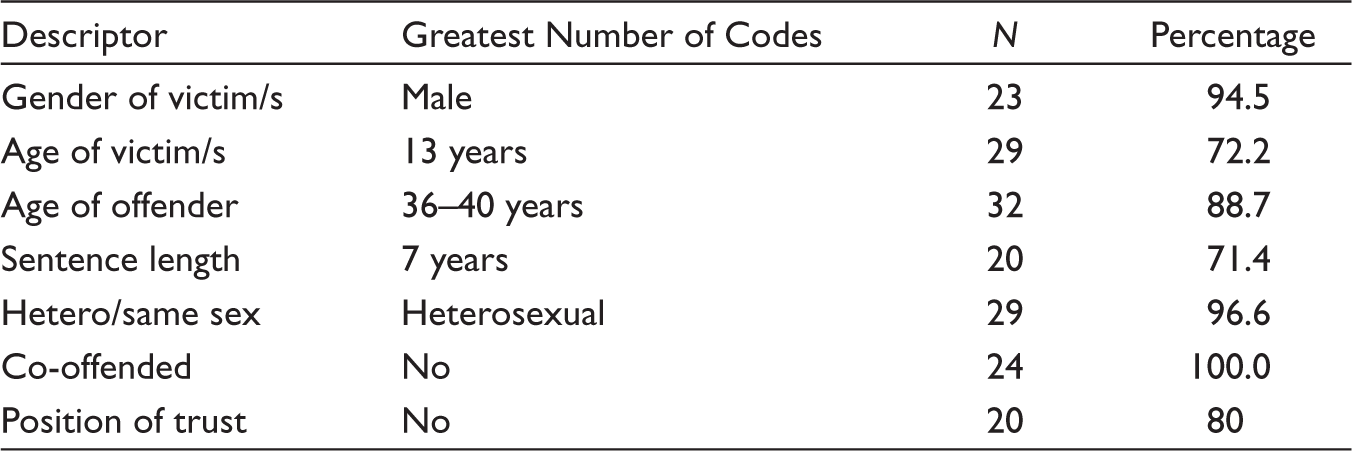
Commenters referred most commonly to the number of times the newspaper incorrectly labelled the female sex offender and challenged them on why more references to the offender being categorised as a paedophile were not used, with the explanation of double standards being the underlying cause:
May I humbly enquire why I could not find the word ‘paedophile’ anywhere in the article? Had she been a man I wouldn’t have to ask, would I?
Also,
What a disgraceful headline and so gender biased. She was not sex mad, she was a Paedophile and what she did was sexual abuse bordering on rape. Why is it only men are branded as Paedophiles?
The extent to which the newspapers influence readers through the language it uses needs to be considered as multiple comments acknowledged inappropriate labelling of the offenders:
‘Gifted’ ‘teacher’ ‘daughter’ ‘perky’…. DM calling her everything but a pedo….
Labelling the offenders as ‘beasts’ and ‘monsters’, by commenters, could be a product of deliberate image choice and language featured within the article. For the teachers, ‘sexy’ social media images were used, and for less attractive offenders, the images chosen by the newspaper were of the offenders caught off-guard and were deliberately less flattering. Here, the newspaper purposely frames the offenders in a way that predefines them and narrows contextualization. The influence of images on perception, recently defined as ‘image psychology’, 47 needs to be explored further in this case as less attractive images of the older offenders were chosen by The Daily Mail and there was a clear distinction in the ‘packaging’ of offenders.
From the reader’s comments, visual portrayals clearly influence public responses. Here, the news reader is not a passive observer. With the advent of mobile technology and internet-based media delivery, the reader is now an active user who creates content, expresses opinions, influences those of others and interacts with the system. 48
Discussion
Even before being exposed by any media influence, there are many people who struggle to believe that women are capable of carrying out child sexual abuse. One of the most restated assumptions concerning child sexual abuse contends that men, though not all, carry out the vast majority of abuse. Indeed, sexual abuse of children by women is a crime that seems unnatural and against any moral instincts, causing the issue to be represented inaccurately by the media and interpreted wrongly by society in general.
With such a small percentage of child sexual abuse cases being attributed to women in comparison to men, it is assumed that women are less likely to commit this crime against children. 49 Even in the year 2021, women are less suspicious, because their role is that of working mothers, nurturers, who provide the main care to their children. It has always been problematic to perceive women as those who not only harm but initiate any abuse. 50 However, what clearly emerges from this article is that women are, like men, capable of sexually abusing children, and like men, they take advantage of their position of trust to groom children for the purpose of sexually abuse them. 51
Interestingly, what this research reveals is that whilst reader’s comments indicate that there are extreme feelings towards the need for the criminal justice to be fairer in their sentencing decisions, this lies in juxtaposition within the reader’s inability to understand why women behave this way when they are attractive or defined by the newspaper, as being in a position of care, such as mothers or teachers. 52 Generally, the reader struggled less to provide a reason to justify the behaviour when the women were older or depicted by the newspapers as being less attractive, than when the cases involved violence, co-offending or financial gain. Whilst this study did not explore the relationship between the representation of these female offenders by the newspaper, in relation to the responses by the readers, there were several significant factors that are worthy of consideration.
Firstly, the way in which the newspaper represented the female offenders in regard to images differed significantly. If the women were less than 30 and attractive, the images used were ‘sexy’ selfies taken from the offender’s social media accounts. If the women were older and less attractive, then the images used were of photos taken of the offenders caught off guard and were very unflattering. In addition to this, the language used to describe the cases of attractive female offenders and their offending behaviour was almost erotic in its description. In contrast to this, harder, more aggressive terminology was used to define the cases of women who were less attractive and older. It is clear that the choice of the image selected by the media to represent the abuser to describe the story not only tells the audience what to think about but also how to think about that issue. 53
Another factor influencing readers was the motivation behind the sexual offending behaviour. Readers perceived that behaviour as being less harmful if the there was a relationship element to the abuse. Unfortunately, this was often the case for the offenders who were teachers, and this was emphasised to a greater degree if the victim was a boy. This creates a dichotomy where young boys who experience sexual acts with attractive younger teachers are deemed as lucky and are not harmed, whereas boys who experience sexual acts with older ‘monsters’ are victims, harmed by those committing the sexual acts against them.
Commentators did not deny the plausibility of a women being capable of sexually abusing children, as historic research has shown, 54 in fact, quite the contrary. 55 However, they struggled to place a social explanation as to why it was happening. A possible explanation for this could be the heightened media coverage this form of offending now receives 56 and that the data in this study indicate that people are not solely focused upon attributing internal unstable causes but also external unstable causes that are features of a 21st century society. This can be seen in their comments that this is a growing problem problem in our society. However, it is not a growing problem, rather a problem in which academic light is being cast on a crime which has failed to gain the attention of the criminal justice system. 57
As argued by Cain and Anderson, 58 traditional gender roles, sex scripts and the way female sex offenders are portrayed in the media may lead to confusion and misconceptions that women are also capable to commit sexual offenses. Furthermore, the impact that this abuse has on the lives of child sexual abuse victims is immeasurably damaging, regardless of whether the abuser is male or female. 59 There is compelling evidence to suggest that the experience of those victims who have been abused by women is equally, if not more traumatic, than those who have experienced male sexual abuse. 60
Because child sexual abuse from women is not fully discussed, expected and, in some cases, glamorized (and the victims, if boys, are perceived as ‘lucky’), the result is that of a more prolonged and silenced abuse, causing victims to feel more stigmatized and betrayed. Therefore, if those inaccurate media representations are not challenged, then children will continue to feel compelled to keep sexual abuse a secret and suffer greater psychic distress than victims who disclose the secret and receive assistance and support.
Conclusion
The call for equality and fairness in sentencing decisions is a complex one as it would require women to be treated fairly and equally socially, economically and politically. To date, we have still not achieved this. What this means for victims is that we are unable to guarantee an indiscriminate response to the crimes they endure at the hands of women.
This is reflected in the double standards of commenters regard for attractive, young female offenders as being more palatable and less harmful, than older and less attractive women or indeed of men. News reporting mediums are partly to blame for the way in which they depict women who commit such crimes, and this warrants much further scholarly attention in order to explore the relationship between the two.
The greatest concern that emerged from this study is the fluctuating consideration and regard, by the general public, of the child as a male victim, especially if the ‘Lucky Boy’ is abused by an attractive female perpetrator who he trusts. Such prejudices limit the capacity for disclosure through fuelling a social stigma towards sexual exposure, as a rite of passage inappropriately acceptable for some and not for others. The continuation of the perceived ‘Lucky Boy’ victim needs to be explored further in order to establish the cause of its prevalence within our society and its relationship between this misconstrued perception and the media.
By choosing nine women that were of different ages, sexual preferences, marital status, parental status, occupation, attractiveness (as per conventional western standard) and that utilized different modus operandi to groom and abuse their victims, we were able to go beyond existing literature and examine perceptions of female sex offenders on a much broader level. We were able to determine that perceptions of harm towards victims abused by women were greatly affected by the characteristics of the offender. This approach proved to be an important contribution to the development of the field of study, as it would yield significant results for future research.
This study showed that while people desire to have equal sentencing decisions between male and female child sex offenders, this is limited by public perception when the abuser is an attractive female and, as a result, perceived as less harmful to the child. The fuel behind such a societal double standard in 2021 is unknown and warrants further research. The acknowledgement of women as child sexual offenders is limited by this factor. However, the fact that readers are recognizing that the newspaper reports the cases inappropriately and sexualized in either an erotic or sensationalized manner, indicates that some progress has being made.
Indeed, female involvement in sexual offences against children is more common than is generally thought and has serious implications for the long-term emotional and psychological well-being of victims. The implications have been well-reported by a recent BBC documentary (BBC Radio 4, 2021), 61 which explores female-perpetrated child sexual abuse, and the shame, stigma and stereotyping that still prevents victims achieving closure and justice. The documentary interviews adult survivors who describe decades of trauma and shame caused by their female abusers, as well as the difficulties they faced in reporting the crime. This research highlights that until the general public stops viewing some forms of sexual abuse by female offenders as being less harmful than others, we will be incapable of removing the social barriers that prevent victims coming forward and speaking out against their abusers.
Limitations
There are limitations to this study, which have an important impact on the findings. While the Daily Mail permitted the entry of readers’ comments, unlike any other online British newspaper, the comments made were monitored by the newspaper and filtered for inappropriate content. What the Daily Mail classify as being inappropriate content is not known and therefore the more extreme comments made towards the offenders and on the cases were unavailable for analysis.
Another limitation of this study is the ability to generalize the views of the readers, as the news outlet The Daily Mail is a right-wing news source which reflects the socio-political viewpoints from a section of society and is not representative of the UK as a whole. It is important to acknowledge that this was a deliberate choice, as it is the first study to not examine a liberal source. A final limitation is related to the offenders that were used in this study as they were all white women therefore not truly representative of society. The comments analysed in this study were from anonymous online readers therefore there was no deliberate choice in their ethnicity and is more likely to be representative of the demographic of The Daily Mail readers. In addition to this, and unlike other studies, the female offenders were not chosen for their adherence to western beauty standards and occupations, but for their offending behaviour.
Footnotes
Declaration of Conflicting Interests
The authors declared no potential conflicts of interest with respect to the research, authorship and/or publication of this article.
Funding
The authors received no financial support for the research, authorship and/or publication of this article.