



Abstract
A comprehensive analysis of ‘Mission Shakti: Transformative Power of Women’s Collectives in Rural Empowerment’ has been made about India and its role in the collective empowerment among rural women in Odisha, India. (Mission Shakti, 2001). It established a vibrant system of systematic entrepreneurship for women by combining women’s self-help groups (WSHGs) to enable social and economic empowerment. The analysis also indicated the extent to which the initiative worked towards mobilizing 6 lakh groups of about 70 lakh women in the state’s blocks and urban local bodies. Some point out that the strategies needed to help already established WSHGs and the likely creation of new groups include regular support and supervision, linkage to market opportunities and access to credit. In addition, the case study examines two new departments that were set up to institutionalize and scale up the SHG movement in Odisha: a Department of Mission Shakti in June 2021 and a separate Directorate of Mission Shakti in April 2017. An examination of the process and achievements of Mission Shakti thus offers convincing proof of how women’s collectives can transform rural power structures, clearly demonstrated in this case (which is only a modest portrayal compared to actual progress in Odisha). The case study may be used by students aspiring to take courses in development economics, women’s studies, policymaking, management and social entrepreneurship. This article explores the revolutionary transitional changes due to community-driven projects in rural areas and collective work focused on advancing women economically.
Keywords
Background
Established by the Odisha government in 2001, Mission Shakti has significantly empowered rural women nationwide and initially focused on understanding their challenges, such as financial limitations, difficulties in expanding market reach, and societal barriers restricting their participation in decision-making. These issues led to the social and economic exclusion of women. In response to these problems, the Odisha government launched Mission Shakti, a programme meant to empower rural women via collective action. The deliberate debut of the campaign on 8 March, International Women’s Day, was done to highlight the organization’s dedication to women’s empowerment and to align with the global push towards gender parity.
The primary strategy employed by Mission Shakti was to promote women’s self-help groups (WSHGs), which provide a forum for women to get together, share experiences and support one another in their entrepreneurial pursuits (Dash & Das, 2024a). To develop as company owners, locate customers for their products, and generate financing, Mission Shakti assisted women in starting WSHGs. The initiative’s primary goal was to use capacity-building seminars to educate women about business, finance and networking. Women who participated in these programmes acquired the information and skills necessary to run successful companies and the self-assurance to take on leadership roles in their communities and organizations.
Mission Shakti worked with banks and other financial institutions to support WSHGs, giving women the financing they needed to start and expand their businesses to end the cycle of poverty and dependency. With the aid of Mission Shakti, more than 70 lakh women from all state blocks and metropolitan areas have established 6 lakh organizations. Women participated in local politics and business endeavours at a higher rate, which boosted their sense of social empowerment. Due to Mission Shakti’s success, the Odisha government made it one of its primary projects, setting a precedent for women’s empowerment programmes nationwide. The initiative has shown how women’s collectives may empower rural regions by enhancing individual women’s lives and their communities’ general well-being.
The conversation on development has centred on women’s participation in social and economic development processes in recent years. According to the Sustainable Development Goals and the Millennium Development Goals, gender equality in a nation determines its development. It begs the question of why gender parity matters so much. Feminism started as an aggressive movement to give women equal rights in the early twentieth century. However, it was in the 1970s that women were seen as essential allies in the struggle against poverty, especially in developing countries. Traditional approaches to poverty alleviation centred on industrialization and providing basic amenities such as health, nutrition and water (Wignaraja, 1990). These strategies were primarily embedded in the economic framework and social welfare approach. However, poverty was realized as a multifaceted issue responding poorly to a linear or one-way approach. It was essential to have other strategies that called for a change in social and cultural structures and institutions to influence poverty levels because poverty has its roots deeply ingrained in countries’ cultural and social makeup. Two key hypotheses that helped reform poverty alleviation programmes in developing nations are suggested by Ponna Wignaraja’s groundbreaking study from South Asia, sub-Saharan Africa and Latin America. According to the data, ‘the conceptual framework and the institutional framework within which the problem is looked at are inadequate’, which means that ‘the poor are left out’.1 His research also showed that conventional anti-poverty initiatives failed to acknowledge the contribution of women to development and failed to examine the barriers that kept women from reaping the rewards of progress. In the beginning, his research revealed that women, and impoverished women in particular, bear two burdens associated with poverty: the burden of being poor and the burden of being subjected to gender norms, cultural practices and unfair social systems through traditional structures and institutions that not only limit their participation in the process of social change but also are disempowering in nature. Given that women’s poverty could only be alleviated by their actions, that is, by organizing into groups to influence positive social change, the solution to poverty had to be multifaceted and consider how to address women’s poverty.
Overview of SHGs
The impact of self-help groups (SHGs) and the collective development of impoverished communities has been extensively documented in the literature (Banerjee, 2009; Desai & Joshi, 2013; Narasaiah, 2008; Sinha, 2008; Sreeramulu, 2006). Nevertheless, prior research has yet to look into the economic benefits that the State of Odisha received from Mission Shakti (Dash & Das, 2024b). Thus, this study’s primary goal is to analyse the Mission Shakti group’s impact on women’s development in Odisha. We examine the effects of these groups on women’s development using the Gender Development Index (GDI), which focuses on the disparities between men and women in terms of life expectancy, knowledge and economic advancement.
Most individuals in Odisha, particularly those at the bottom of the economic pyramid—primarily women, the impoverished and those living in remote and rural areas—do not have access to formal financial services. There is much exclusion among states, communities, regions and sectors. It is impossible to attain social fairness through development that excludes. Without a commitment to equal opportunity and giving everyone an equal chance to benefit from growth, the growth strategies will fail. A quiet revolution that is upending long-standing gender norms and changing the socio-economic fabric of communities is taking place in the rural heartlands of Odisha. The women of Mission Shakti are leading the charge in this revolution; their combined tenacity and fortitude are changing not only their own lives but also the lives of future generations. The Odisha government unveiled Mission Shakti, an initiative that promotes women-led businesses and the formation of SHGs to empower women. Mission Shakti is unique in that it strongly emphasizes group effort, holding that women can overcome any obstacle given enough support.
A woman in a Mission Shakti Self-Help Group transforms from a silent observer into an active decision-maker, influencing her future, family and community. Empowered with knowledge and support, she gains the confidence to take charge of her life and contribute meaningfully to social and economic development. Frequently attending seminars and conferences provides her with valuable business, leadership and financial management expertise, supporting her pursuit of financial independence and social progress. The goals of Mission Shakti include social and economic change. Gender, caste and class boundaries are broken as they bring women together to support one another and share their stories (Shivalingappa & Nagaraj, 2011). Once underprivileged women rise to important positions, they positively impact their communities and inspire others to follow in their footsteps.
Research suggests that women participating in SHGs tend to invest more in their children’s education and healthcare, resulting in improved family welfare. Through job creation and economic activities, SHGs significantly strengthen local economies. Mission Shakti has emerged as more than just a government initiative; it represents a dynamic movement that harnesses the collective strength of women to drive rural transformation. It exemplifies the resilience and determination of women, proving that when given the right opportunities, they can bring about profound societal change. The upcoming sections will delve into the inspiring stories of these women, their challenges, achievements and relentless pursuit of a brighter future.
Mission Shakti
Experiential evidence from numerous nations indicates that impoverished women make prudent investments and generate profits (Torraco & Swanson, 1995). However, the amount of money coming in to help them needed to be more, if any, to help them escape poverty. It was strongly argued that a grassroots organizational foundation must be established for women to join, analyse their challenges and problems, and meet their demands. Empirical data indicate that several efficacious ‘group-based participatory programmes’ have markedly enhanced the living circumstances of economically disadvantaged women. After Bangladeshi professor Muhammad Yunus started experimenting with microcredit and WSHGs in 1976, the idea of SHGs gained traction.
The tactic achieved a subtle revolution in Bangladesh’s fight against poverty. The fundamental tenet of Mission Shakti is that social transformation can only occur when people are empowered economically. Mission Shakti gives women access to capital, training and market connections to launch and grow their businesses. It improves their financial situation and offers them a say in household and community decision-making. The bottom-up methodology of Mission Shakti, which enables women to recognize their own needs and priorities and take group action to meet them, is one of its main advantages. Women gain essential leadership, entrepreneurship and money management skills through regular meetings and training. These abilities help them run their SHGs and make business decisions with confidence.
Mission Shakti’s emphasis on merging with other government initiatives is another creative feature. Mission Shakti can reach more women and have a more significant impact by making use of the infrastructure and resources that are currently in place. This strategy has been incredibly effective in agriculture, where women are given access to loans and markets and training in contemporary farming methods. The lives of the women Mission Shakti has impacted bear witness to its impact. Previously restricted to their homes, women now manage prosperous enterprises, send their kids to education, and actively participate in community development initiatives. Mission Shakti is changing lives individually and fostering a more inclusive and equitable society by empowering women.
Small, loosely structured groups, or SHGs, aimed to enable their members to benefit financially from each other’s help, encouragement and pooled resources. Benefits include pursuing group enterprise and mobilizing savings and credit facilities. According to Shylendra (1998), a group-based approach facilitates the poor’s ability to obtain formal credit facilities and build capital through modest savings. The impoverished can escape the clutches of moneylenders using these groupings’ everyday accountability, solving the collateral security issue.
The joint liability makes it easier for group members to obtain credit, but it also produces peer monitoring systems that improve loan recoveries (Stiglitz, 1993). In addition, some SHG fundamentals, such as small membership numbers and homogeneous compositions, foster group cohesion and effective member participation in the organization’s operations. In general, SHGs established along the operations above have successfully reached the impoverished, particularly women, and assisted them in gaining simple access to resources like loans and savings, empowering them (Sen, 2001).
Transforming Financial Inclusion: The Impact of Mission Shakti’s Micro-financing Model
Economic growth and poverty reduction depend heavily on financial inclusion or the availability of cheap financial services and products. Nevertheless, underprivileged people frequently remain outside the reach of regular financial systems, especially in rural areas. With the ability to offer small loans and financial services to people without access to regular banking, microfinance has become a potent instrument for closing this gap. One example of how microfinance has transformed financial inclusion, especially for women, is Mission Shakti in Odisha, India.
Amplifying the Transformative Impact: Mission Shakti’s 5T Model
Mission Shakti is an innovative initiative in Odisha that has significantly empowered rural areas and yielded impressive outcomes. The project’s cornerstones are time, technology, transparency, change and partnership. When combined, these elements greatly enhance the ability of women’s groups and rural communities to spearhead sustainable development.
Teamwork: One of Mission Shakti’s core beliefs is ensuring responsible and inclusive decisions. Women who actively engage in SHG governance foster an environment of transparency and confidence. Since ethical and transparent business practices build trust among stakeholders inside and outside the organization, they are essential to long-term success.
Transparency: Mission Shakti promotes responsible, inclusive decision-making. Women create an environment of openness and confidence by actively participating in SHG governance. Since ethical and transparent business practices build trust among stakeholders inside and outside the organization, they are essential to long-term success.
Technology: Mission Shakti likewise heavily relies on technology. Women are better able to access markets and information by utilizing digital platforms. Technology breaks down geographical barriers and expands company potential by streamlining the loan application process, assisting with product sales, and enabling customer connection.
Time: Empowering women requires time and effort. As a token of gratitude, Mission Shakti provides women with continuous assistance in capacity development, mentoring and training. Many women are acquiring the skills and confidence required to start successful enterprises that improve their social and economic communities.
Transformation: The ultimate goal of Mission Shakti’s 5T method is to bring about transformative transformation in the lives of rural women. Through advancing women’s economic and social empowerment, Mission Shakti improves women’s well-being and sparks more significant social change. Women become catalysts of change, inspiring others and disseminating empowerment across entire societies.
Community Structures of Mission Shakti
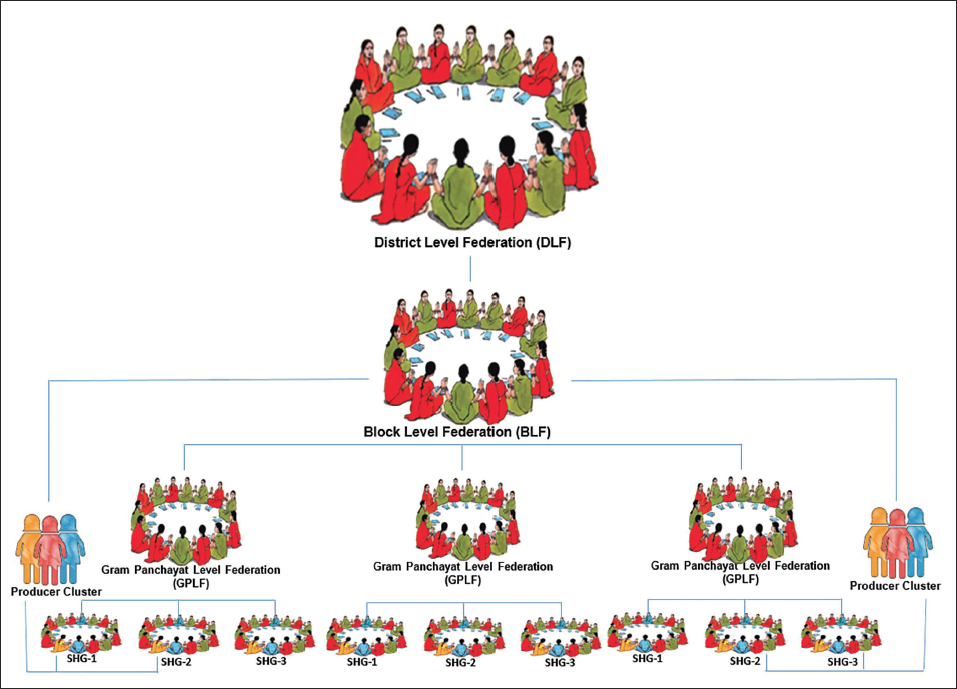
Mission Shakti’s community structure is essential to maximize the transformational impact of women’s groups in rural empowerment. Through facilitating the formation of SHGs and providing a forum for collaboration and support, Mission Shakti lays the groundwork for social and economic advancement.
The community structure of Mission Shakti is based on participation and diversity. Women feel more powerful when they actively participate in decision-making and can ensure their needs and opinions are considered. By creating a sense of solidarity among women, this cooperative technique motivates them to collaborate towards common goals (please see Figure 1).
Mission Shakti: An Initiative
Mission Shakti is a revolutionary project that uses community involvement and SHGs to empower women in rural areas. The main objective is to give women the instruments, assets and assistance required to enhance their living standards, achieve financial autonomy, and take active decision-making roles.
Strength of Group Approach in Mission Shakti
Sharing a long-term objective
Collaborating to find solutions to issues
Cooperation and trust
Involvement of every individual in group activities
Confined by affinities, standards and rules
Need of Mission Shakti
Social security
Create and fortify relationships
Self-control
Self-observance
Solace and moral support
Considering one another
Reactivity
Cooperative efforts
Empowerment financially
Applicability of Mission Shakti
To increase members’ self-assurance and competence
To raise public awareness of various government initiatives and local entities
To plan and carry out village development initiatives
To ease access to loans to fulfil members’ loan requirements
To raise knowledge about resource mobilization and optimal utilization
To encourage one another as fellow group members
To lower the village’s poverty rate
To get more knowledgeable about the newest technology
To create connections and a network with other organizations
Mission Shakti Formation Process
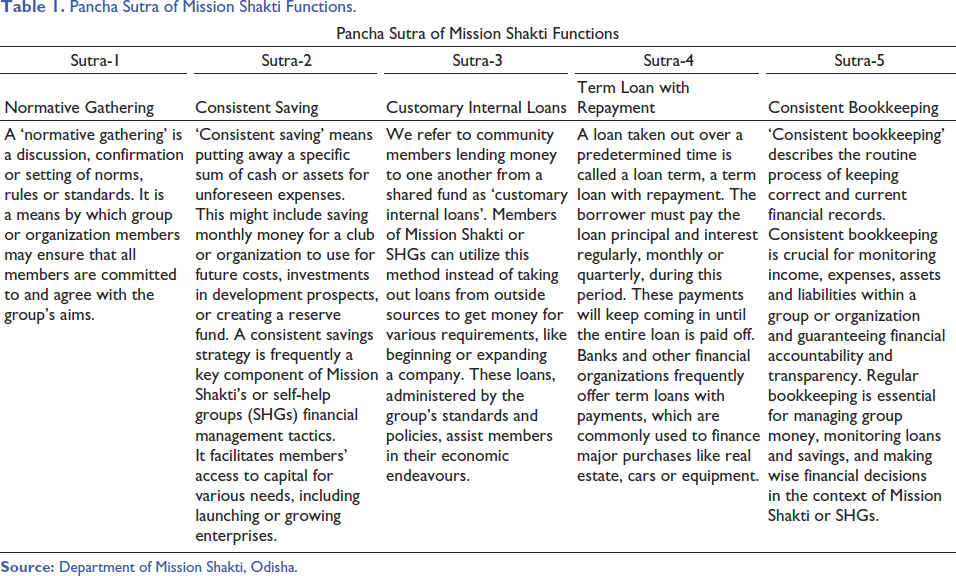
Table 1 shows the process of Mission Shakti formation and Pancha Sutra.
Arranging a meeting for the women in the village: With support and help, a meeting for all the women in the town can be planned for a specific time, location and day. The ladies attending the meeting might get education regarding the concept, goals and functions of SHGs, the necessity and significance of SHGs, and their varied activities such as promoting items, holding regular meetings, saving money and credit.
Identification of potential members: As previously noted, the women in the village may be asked to identify possible group members and suggest starting a group with 10–15 people.
Preserving homogeneity: To the greatest extent possible, the group’s membership should share similar interests and be homogenous in terms of age, marital status, social standing, income and location of residence.
Choosing a name for the group: Each group’s prospective members select a name that will be used to identify it by consensus.
Formulation of norms: The process of creating norms and rules involves all prospective members of an organization coming up with guidelines for things like meeting attendance, membership, savings, loans and fines.
Selection of leaders/office-bearers: A group’s membership fee will be decided upon by all prospective members in unanimity. All group members unanimously choose a President, Secretary and Treasurer based on predetermined criteria to manage the group’s activities.
Creation of a savings bank account: The President and Secretary will work with the group to create a savings bank account in the group’s name.
Pancha Sutra of Mission Shakti Functions.
Success Stories of Mission Shakti: Rural Empowerment
It has been assigned to Balangir BLF, Khaprakhol, to oversee the first Mission Shakti Panthanivas of Balangir. Situated near the famous Harishankar temple on the southern slope of the Gandhamardan hills, the state-owned Panthanivas boasts five VIP suites, a 24-hour multi-cuisine restaurant and a cafe. At SIHM, Balangir, the members have received significant training in hospitality and other techno-managerial areas. Beginning on 4 April 2022, the Panthanivas will be accessible to devotees, guests and the general public. Online reservations will be available soon.
Due to its eco-friendliness, coir is the best illustration of ‘waste to wealth’, which offers a sustainable solution. That is precisely what 30 women entrepreneurs from the Cuttack District have created with the assistance of Mission Shakti. Founded as the Maa Tarini SHG with an initial investment of ₹20,000, the Tarini Producer Group represents these women. Production was initially restricted to one quintal of coir product every month. By providing members with cutting-edge technological inputs, the Department of Mission Shakti, in collaboration with ORMAS, assisted members in growing their businesses. With sales of about 50 quintals of coir products per month, the group currently has an annual turnover of ₹34 lakh. They partner with 30 hardware stores in Cuttack City to offer doormats and ropes, and sell their goods at exhibitions. The members intend to grow their coir business further through integration on other platforms.
Mission Shakthi SHGs all over the state have shown themselves to be effective business owners by providing a variety of dairy products, including curd, cheese, paneer, khoa, traditional dairy desserts and beverages, in addition to cultivating dairy products. Prativa PG, composed of 35 people from Narendrapur, Ganjam, has been involved in dairy farming, nursery management and the seasonal production of mushrooms. The group sells milk and other items at retail in neighbourhood markets, bringing in ₹150,000,000 a year while making a profit of ₹24,000,000. The firm, which currently supplies around 1,000 L of milk daily, launched a dairy unit in Berhampur City on 11 April to make itself more easily accessible to clients. In the future, the group intends to establish a milk processing factory.
Maa Mangala SHG from Khordha is renowned for her vibrant and daring appliqué work. The members skilfully create symmetrical and vibrant patterns with embroidery work by expertly stitching classic motifs like elephants, peacocks and flowers on umbrellas, canopies, lamp shades and wall hangings on cloth backgrounds. Their yearly turnover is 10 lakh.
Challenges and Shortcomings of Mission Shakti
Mission Shakti has been incredibly successful in empowering women and encouraging business, but several obstacles prevent it from reaching its full potential. Operational inefficiency is one of the main problems, as SHGs face challenges due to uneven implementation across areas and bureaucratic delays in budget delivery. Because rural women entrepreneurs frequently lack the infrastructure, financial literacy and business networks needed to expand their businesses outside local marketplaces, many SHGs also have limited market access. This limitation lowers their competitiveness in more significant markets and limits their profitability. Sustainability is also a major issue because many SHGs rely on government assistance rather than becoming independent commercial enterprises. Once outside financing is cut or eliminated, these organizations could find it difficult to exist without sufficient financial independence.
In addition to operational and financial difficulties, societal and cultural constraints limit Mission Shakti’s efficacy. Women’s decision-making authority is still restricted by conventional gender conventions in many rural communities, which makes it challenging for them to take charge of their economic endeavours fully. Women are frequently deterred from actively engaging in income-generating endeavours by opposition from family or community members, which eventually reduces the programme’s long-term effects. Furthermore, many SHG members cannot acquire the fundamental business management, marketing and digital skills needed to scale their firms due to training and capacity-building gaps. Even while Mission Shakti has changed the lives of millions of women, its long-term viability and success depend on resolving these issues via focused policy interventions, improved market connections, and more substantial capacity-building initiatives.
Mission Shakti SHG Models: A Comparative Insight
Mission Shakti has substantially contributed to women’s empowerment in Odisha by facilitating financial inclusion and promoting SHGs. A more comprehensive grasp of best practices and potential areas for development may be obtained, therefore, by contrasting it with other SHG-based models in different Indian states and outside. Kudumbashree in Kerala is one of India’s most successful SHG projects. It has successfully incorporated SHGs into local administration, guaranteeing their long-term viability and the active involvement of women in decision-making. This strategy has improved women’s economic and social empowerment by directly connecting them to grassroots development projects (Devika & Thampi, 2007). Similarly, Andhra Pradesh’s Velugu (Society for Elimination of Rural Poverty (SERP)) programme has prioritized livelihood diversification and financial inclusion by giving SHGs access to loans, in-depth training and chances to grow their businesses (Livelihoods India Summit report 2025). Through the programme’s effective integration of SHG members into official financial systems, they can develop their enterprises and provide steady revenue streams (Aruna & Jyothirmayi, 2011; Srinivasan, 2018).
The Mahalir Thittam programme in Tamil Nadu is a notable SHG-based programme that has significantly advanced women’s financial independence. With an emphasis on skill development, capacity building and credit linkage, this programme enables women entrepreneurs to get microloans and training in various revenue-generating ventures (National Institute of Rural Development and Panchayati Raj (NIRDPR), 2016). The Tejaswini Rural Women Empowerment Programme in Madhya Pradesh has also been instrumental in bolstering SHG networks by offering organized training, leadership training and financial resources, all of which guarantee lasting livelihood prospects (Deshpande & Ray, 2017). A cluster-based business model has been effectively implemented by Rajasthan’s Rajeevika (Rajasthan Grameen Aajeevika Vikas Parishad (RGAVP)), which connects SHGs with bigger producer groups, cooperatives and market networks to expand their market reach and financial sustainability (Kothiyal, 2018).
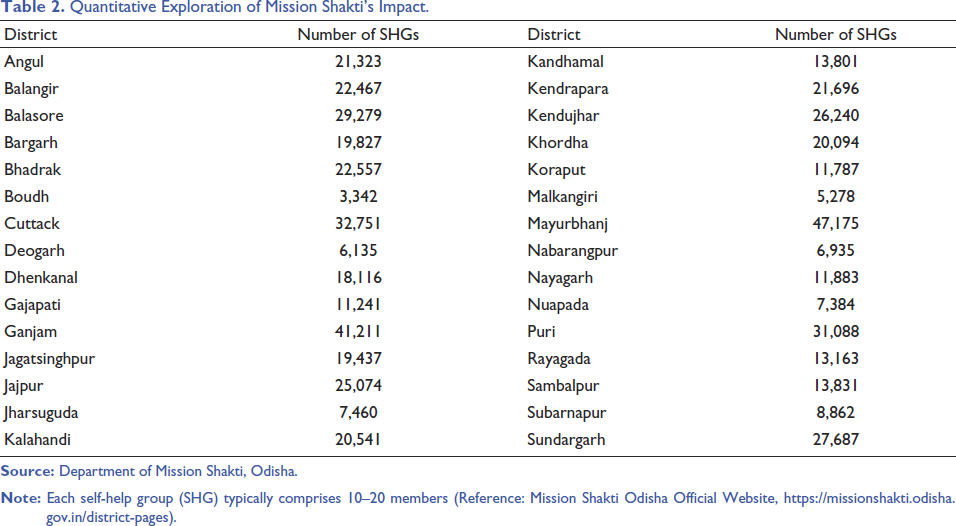
Several SHG and microfinance models offer helpful comparisons on a global scale. A well-known example is Bangladesh’s Grameen Bank model, which provides rural women entrepreneurs with microloans without collateral. However, other international programmes have also shown successful tactics. Mission Shakti in India might take inspiration from Kenya’s Table Banking system, which ensures financial stability and lessens reliance on outside loans by allowing women’s groups to pool their funds and offer rotating credit access. Through financial literacy, mentorship and entrepreneurship training, the Philippines’ Project SERDEF (Small Enterprises Research and Development Foundation) has helped women-led SHGs grow and maintain their enterprises. Through community savings clubs, Mujeres Ahorradoras en Acción (Women Savers in Action) in Colombia has empowered low-income women by connecting them with financial institutions and skill-building initiatives to improve their economic resilience. With UN assistance, Ethiopia’s Rural Women’s Economic Empowerment (RWEE) Programme has combined microfinance with agriculture-based SHG models to give women farmers access to markets and financial resources (Chowdhury & Rahman, 2020; Smith & Patel, 2019). In contrast, Mission Shakti has effectively organized women into SHGs and offered substantial government-backed financial support; yet, issues including restricted market access, dependence on subsidies, a lack of digital financial literacy, and insufficient training for entrepreneurship still exist. Table 2 illustrates the quantitative exploration of Mission Shakti’s impact.
Quantitative Exploration of Mission Shakti’s Impact.
Discussion Questions
Q1. How did the rural socio-economic situations affect the demand for women’s collectives like SHGs, and what historical, social and economic elements led to the founding of Mission Shakti in Odisha?
Q2. How do the key goals of Mission Shakti align with global best practices for women’s economic empowerment?
Q3. What significant projects and activities did these SHGs take on to support women’s empowerment and socio-economic development?
Q4. What are the ‘Pancha Sutra’ of Mission Shakti’s functions, and how do they guide women’s empowerment in rural Odisha through SHGs?
Q5. How can the SHG model be adapted for urban women entrepreneurs facing different socio-economic challenges?
Q6. What advice can be given to guarantee the long-term viability and influence of SHGs under Mission Shakti, including how the lessons learned can be applied to comparable projects in other areas or nations, and how sustainable is the model of women’s collectives established by Mission Shakti?
Q7. What are the most inspiring examples of women’s empowerment and socio-economic development in rural Odisha due to Mission Shakti’s initiatives?
Q8. Do the Mission Shakti success stories encourage and inspire others to participate in programmes to empower women and develop rural areas?
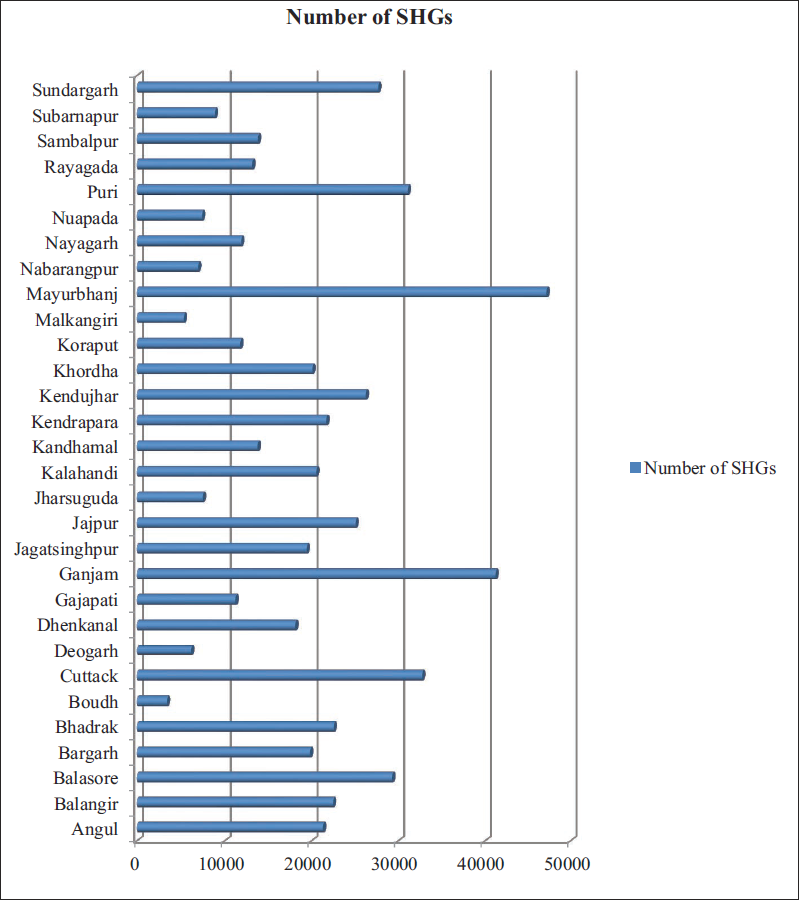
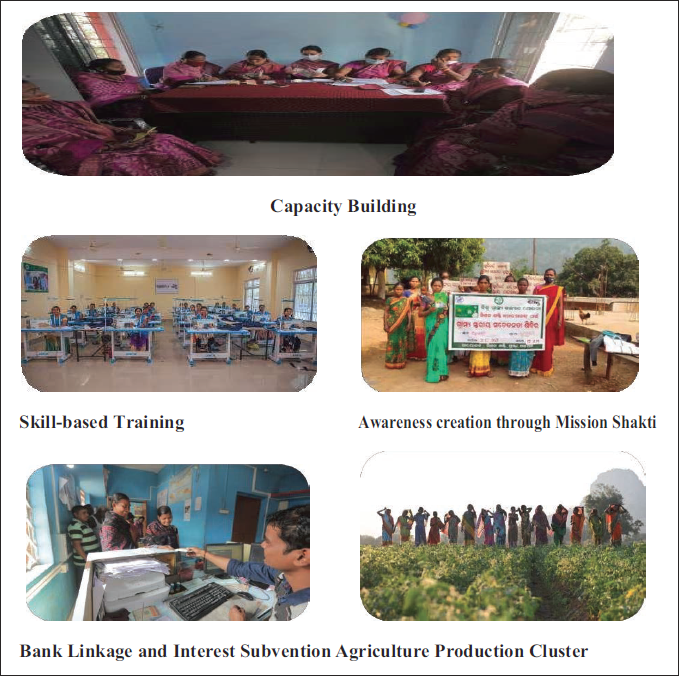
Figure 2 captures the quantitative impact of Mission Shakti and Figure 3 shows the visual images of empowering women’s through Mission Shakti.
Footnotes
Declaration of Conflicting Interests
The authors declared no potential conflicts of interest with respect to the research, authorship and/or publication of this article.
Funding
The authors received no financial support for the research, authorship and/or publication of this article.
