



Abstract
Maestro Pizza, established in 2013, significantly impacted the pizza industry in Saudi Arabia. The founder and CEO, Khalid Al Omran, identified an opportunity to enter the market with a low-price strategy by acquiring a small pizza outlet in Riyadh and rebranding it as ‘Maestro’. Maestro Pizza became a success story in no time and expanded to over 150 stores. Initially, the big players in the pizza industry ignored Maestro, with the impression that their business strategy was different, which helped Maestro Pizza remain under the radar. However, as soon as Maestro started opening just next to these branded outlets, depriving them of customer traffic, Pizza Hut shut down everywhere in Saudi Arabia except ‘Jeddah’, and Domino’s started reducing its prices massively to compete with Maestro. Many other regional pizza outlets started following the same strategy, which increased the competition and reduced the prices, further shifting the competition to pure price-based. Furthermore, to make matters worse, coronavirus disease-2019 disrupted Maestro’s supply chains, which impacted quality control. What can Maestro do to maintain its competitive edge in the market?
Introduction
Khalid Al Omran established Maestro Pizza in 2013 by acquiring a small pizza outlet in Riyadh. Within a remarkably short period, Maestro Pizza quickly achieved impressive success, transforming into an exceptional and awe-inspiring tale of triumph and driving its expansion to an astonishing number of over 150 branches across the Kingdom. Initially, well-established entities in the pizza industry ignored Maestro, believing their business models were different. This allowed Maestro to operate under the radar. However, competition in the pizza industry grew as rivals imitated Maestro’s low-price approach. The competition became ruthless, focusing solely on price-based factors.
Furthermore, as if this constant and relentless competition were not enough, the unforeseen and highly disruptive outbreak of the coronavirus disease-2019 (COVID-19) pandemic further worsened matters for Mr. Khalid. The supply chains on which the smooth and efficient functioning of Maestro Pizza relied were severely interrupted and thrown into chaos, hindering the organization’s ability to exercise complete quality control over its products. These unfortunate events presented significant challenges for Khalid, requiring developing and implementing practical and adaptable strategies to uphold its hard-fought competitive advantage within the market. Consequently, the urgent question now arises: What actions and steps can Khalid undertake to maintain Maestro’s admirable competitive edge in the market?
Saudi Arabia
The Kingdom of Saudi Arabia is in the furthermost part of southwestern Asia and is one of the Gulf region’s most extensive and populous countries. The country has a total population of 34.8 million, including a whopping 13 million expatriate workers (World Population Review, 2024). In terms of area, it is a little bigger than Mexico or nearly four times the size of Metropolitan France. The country is home to two of the holiest cities in Islam (Mecca and Medina). Saudi Arabia controls the second-largest oil and fourth-largest gas reserves globally, making it the second-largest oil producer (after the US) (Annual Statistical Bulletin, 2024). However, recently, the government launched the ambitious Vision 2030, which mainly focused on diversifying the Kingdom’s economy. Vision 2030, a long-term vision to strengthen the nation’s economic situation and diversify its economy in a world of reduced oil prices, is the centrepiece of Saudi Arabia’s ambitious reform programme (Saudi Vision 2030, 2016). The plan allows foreign businesses to invest in the nation, notably in its non-oil sectors. These changes have opened up new opportunities for local and international firms in all sectors of the economy.
About the Company
Established in 2013, Maestro Pizza is a Quick Serve Restaurant chain that has experienced rapid growth in Saudi Arabia, showcasing its international professional competence. The word ‘Maestro’ originates from Italy and has a history of 300 years, signifying a master in a particular craft who possesses an immense passion for their work (Maestro Pizza KSA Help Centre, 2023). Maestro Pizza has garnered widespread acceptance and appreciation from consumers due to its uncomplicated approach, exceptional service standards, and prompt delivery commitment, all of which have made it the leading authority on Pizza in Saudi Arabia.
However, not many people know that the story of Maestro does not start in Saudi Arabia but in Spain as a master’s thesis project for Khalid. Khalid, the company founder, returned to Saudi Arabia in 2012 after completing his MBA and was eager to test his idea for a pizza business. Taking a cue from the suggestions of his family business expertise, Khalid did not go for a Greenfield investment but acquired a small local pizza outlet (Raqtan, 2020). The primary rationale behind this acquisition was that Khalid felt that starting from scratch would take a lot of time since he firmly believed that the local pizza outlet had a good product but needed help to industrialize the business.
Maestro Business Model
Maestro used a cost leadership strategy. The primary rationale for using a cost leadership strategy was that Khalid realized that the Pizzerias comprised just around 3%–4% of the total fast-food market in Saudi Arabia, and most customers preferred international brands (Raqtan, 2020). This low market share meant low competition, and as per Khalid, Maestro can make inroads into this market by selling pizzas at a lower price point than that of international competitors. To make a cost leadership strategy successful, the most critical aspect was to decrease the overall cost of making a pizza. Therefore, to reduce the overall cost of production, Khalid understood that he needed to produce chilled pizzas mass-produced. However, there was a catch, and that was the shelf life of a chilled pizza. The average shelf life of a chilled pizza is around 6 hours, which is a significant barrier to making a good quality pizza. To solve this problem, Khalid hired professionals from the US, Italy, and Germany who ran a series of experiments with the help of cutthroat technology to optimize production and try out new recipes. Finally, after a series of experiments, Maestro could extend the life of chilled Pizza from 6 hours to 3 months (Casadesus-Masanell & Khrais, 2022). This was a breakthrough that helped Maestro in the overall implementation of a low-cost strategy.
Khalid, through his research, came to know that one of the significant reasons why Pizzerias had a low market share back in 2010–2012 was the customer perception of the high prices of pizza. Generally, customers in Saudi Arabia assumed that the prices of pizza were much higher than they were actually. This misconception primarily stemmed from the complexity of menus at most pizza outlets, which led customers to associate higher prices with pizzas. Almost all pizza outlets had a complicated menu, and because of that, customers associated higher prices with pizzas. For example, some studies have shown that there are around 180 different price combinations. Taking a cue from the pricing of MacDonald’s 1, 2 and 3 campaign (1 SR = Ice cream, 2 = burger and 3 = cheese burger), Khalid launched a 10, 20 and 30 scheme implying that 10 SR for small, 20 for medium and 30 for a large pizza.
Almost all international brands operating in Saudi Arabia are based on a franchise model. This means they do not have the autonomy or the flexibility to alter the menu to suit the local taste. Based on his personal experience and customer feedback, Khalid learned that people in Saudi Arabia like moist food. Therefore, Maestro developed some custom-made toppings from Spain to appeal to local customers’ tastes. Khalid took the feedback from the customers and altered his menu from time to time by introducing some local desserts. This customization element and aggressive pricing helped Maestro make inroads into the local pizza market. This is also evident from a recent study on brand perception among Saudi residents. When asked if they thought the brand offered excellent or poor value for money, Arab residents (Saudi and Arab Expats) gave Maestro Pizza 13.0 points, which was +6.6 points better than Pizza Hut’s Value score of 6.4 among the same demographic. Pizza Hut received a score of 19.4 when compared to Maestro’s 15.6 Value score when other expats (Western, Asian and other expats) were included (Zawya, 2019). This is a +3.8 difference between the two brands.
Back in 2010-2012, one of the other major problems associated with fast food was the poor service, with an average 5-minute wait time to order a pizza over the phone and a delivery time of up to an hour and a half. Maestro uses innovative machine-learning technology from Amazon Web Services (AWS) to develop a way to use machine-learning to ensure that every pizza that leaves its oven is baked to perfection. Maestro understood that this rapid expansion would only continue if every one of the 100,000 pizzas it produces each day exceeded the high standards of its patrons. Therefore, to help staff learn how to streamline the assembly process, cameras were deployed in branches to watch over the operation. Unfortunately, 13 full-time employees were required to watch the video feed and hand complete checklists about employee performance and branch operations while putting in more than 10 hours of labour. Maestro intended to automate this process and use the information to teach it how to produce the tastiest pizzas constantly. In 2017, Maestro moved its primary workloads to AWS (AWS, 2021). Later, it sought assistance from AWS to automate its infrastructure duties.
AWS alerts Maestro to discounts, new offerings, or efficiency improvements that could reduce costs while fostering creativity and finding solutions to operational problems. AWS suggested using Amazon SageMaker’s machine-learning features to help Maestro maintain the high calibre of its pizzas. AWS and Maestro created a ground-breaking method to enhance the quality-control procedure at all pizza maker locations (AWS, 2021).
Competitive Landscape of the Pizza Market in Saudi Arabia
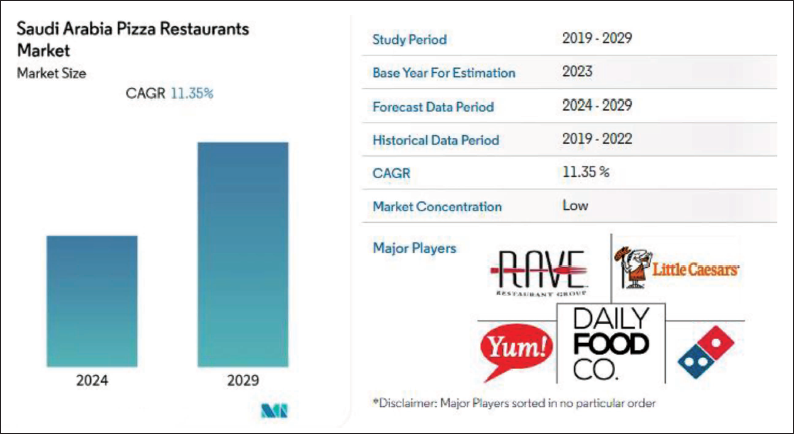
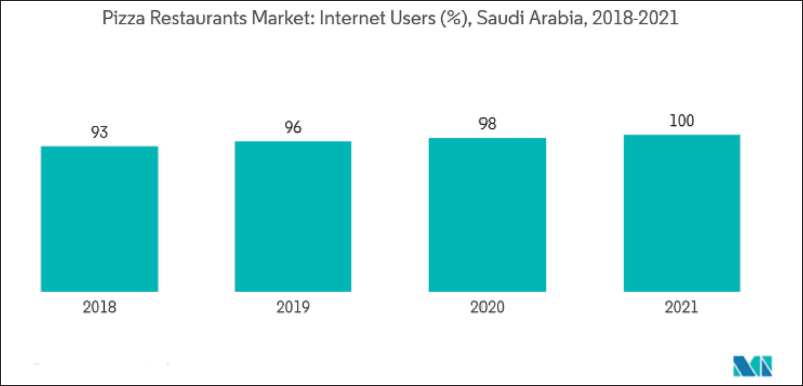
The market for pizza restaurants in Saudi Arabia is projected to grow at a compound annual growth rate (CAGR) of 11.35% over the forecast period (2020–2025) (Mordor Intelligence, 2019). Figure 1 provides a snapshot. The rising demand for pizza delivery to homes, fuelled by rising internet connectivity and consumer expenditure, is anticipated to significantly fuel industry expansion (Figure 2). Furthermore, the growing popularity of Pizza in Saudi Arabia is aided by the considerable impact of Western culture, particularly in the culinary industry.
Domino’s Pizza
As of January 2, 2022, Domino has operated two unique service models within its restaurants, with considerable business in delivery and carryout. Domino’s is the largest pizza company in the world, with more than 18,800 outlets in more than 90 markets worldwide (Dominos, 2021). Domino’s began as a handy pizza delivery service in 1960, but carryout consumers also account for a sizable portion of their retail revenue. Domino’s is a well-known international brand that prioritizes value while catering to local communities through its extensive global network of franchise owners and US Company-owned shops.
Domino’s expanded to Saudi Arabia in 1992 with a franchise agreement with Alamar Foods Co., which operates Domino’s Pizza across the Middle East, North Africa, and Pakistan (Arab News, 2022). In July 2022, the company went public with the initial public offering of a 42% interest. The offering’s final offer price (the ‘Final Offer Price’) has been established at SAR 115 per share, reflecting a market capitalization of SAR 2.933 billion at the time of listing (US$782 million). The initial public offer (IPO) order book was 47.5% oversubscribed (Zawya, 2022).
Pizza Hut
Pizza Hut is an American multinational restaurant chain founded in 1958 in Wichita, Kansas, by two brothers, Dan and Frank Carney. As of 2020, the brand’s headquarters in Plano, Texas, had 17,639 restaurants globally, making it the largest pizza chain in terms of the number of establishments (Statista, 2023). It is owned by Yum Brands, Inc., one of the world’s largest restaurant companies. The pizza brand entered the Saudi pizza industry in 1987 after Awni Shaker bought a Pizza Hut franchise in the western Saudi city of ‘Jeddah’ (Mousa, 2016). Pizza hut positioning is different from that of Domino’s. Domino’s focuses more on fast delivery, while Pizza Hut targets families. This is evident from the design structure of the restaurants, as they provide a convenient seating area in each branch, a salad bar, and a playing room for kids. They know that each family carries a variety of tastes and preferences, so they provide a highly varying product portfolio. Pizza Hut offers more than just pizza. There are also kinds of pasta, wings, drinks, desserts, souses, etc.
Interestingly, Pizza Hut has closed most of its restaurants within the Kingdom of Saudi Arabia. There are many reasons why Pizza Hut has yet to be successful beyond Jeddah. However, the three main reasons are high operating costs, which usually result in higher consumer prices. Second, they must align their menu with the local tastes and preferences. Third, failure of delivery: they have always been slow to deliver as they ‘Positioned themselves’ to be a family-friendly sit-down restaurant, so they launched the new concept ‘Pizza Hut Delivery’ in response to Domino’s Pizza’s success in delivery. However, taking a cue from the growth of the pizza business in Saudi Arabia, Pizza Hut is planning a comeback through a franchise agreement between Americana restaurants and Yum. The company plans to open 30 Pizza Hut locations by early 2023 and about 100 branches over the next 3 years (Saudi Gazette, 2022).
Challenges
Khalid has had enormous success quickly, from being a single store in Riyadh to having more than 150 stores. The expansion was happening at such a high pace that at one point in time, they grew from 20 stores to 70 stores in less than 6 months. However, in the last 10 years, many things have changed in the fast-food industry, and Khalid needs to make significant changes to Maestro’s business model to remain competitive.
First, one of the main ingredients of their success over the years has been the low-cost strategy coupled with aggressive social media marketing. When Khalid first entered the market, the pizza category of the food/restaurant industry only represented between 3% and 4% of the food industry/market, and now the pizza industry has grown to over 11% (Maestro Pizza KSA Help Centre, 2023). This means that the demand for Pizzerias has increased threefold. Still, at the same time, due to aggressive pricing by Maestro and Dominos, the competition is purely price-based, which has made the profit margins razor thin, benefitting mainly the customers.
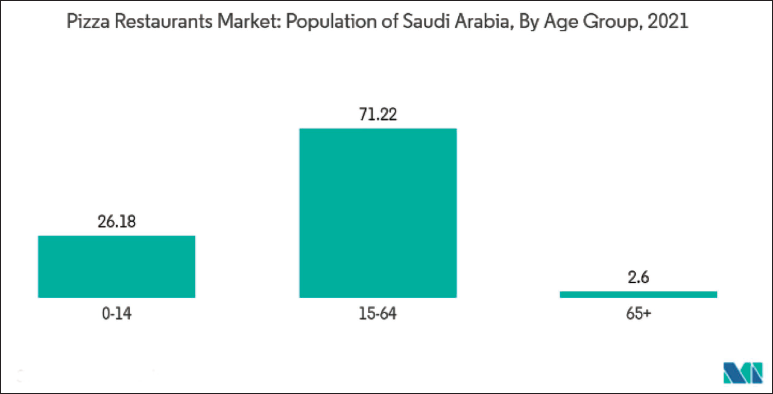
Second, as young Saudis have started to develop an appetite for pizza over the years, resulting in the increased market share of Pizzerias, many new local pizza outlets have opened up all over Saudi Arabia (Figure 3). Taking a cue from the success of Maestro, the majority of these new outlets have imitated Maestro’s low-cost strategy, which has resulted in more competition and lower profit margins for major players in the industry. COVID-19 was a big problem for every business across industries, but the pizza market was among the worst-hit markets. At the beginning of Covid, they lost 20%–25% of their sales. Then, when the curfew/quarantine started, Maestro lost 85% of their sales. Further, COVID-19 disrupted their supply chain, which forced the company to use lower-quality ingredients.
They made some changes in the business model to minimize the impact of COVID-19, and one notable change was introducing a breakfast menu because, during the curfew, there were no working hours after 5 pm. Next, they introduced cook-at-home pizza to counter the growing demand for people who want to eat pizza for dinner. Furthermore, partnerships with third-party delivery apps have helped recover during and post-COVID.
Additionally, one of the other significant dilemmas, COVID-19, has been the expansion of the fast-food industry. Many businesses in the fast-food industry in Saudi Arabia have used third-party food delivery services such as hunger station and Jahez for expansion. Businesses feel that having a physical location is unnecessary, as these online food aggregators have taken the industry by storm during COVID-19. Moreover, the data indicates that the overall expenditure encompassing all the costs of commencing a pizza establishment in Saudi Arabia amounts to 1,125,000 Saudi Riyals. Conversely, a solely delivery-focused model that excludes on-site dining necessitates a comparatively reduced initial capital injection of 450,000 Riyals. Therefore, Khalid must rethink its strategy and see if continuous expansion through physical outlets still makes sense or if it should follow the competition and expand online through aggregators or in-house delivery services. However, despite all these changes, the question remains: where will Maestro go from here? Will Maestro die a hero, or has it lived long enough to become a villain?
Footnotes
Declaration of Conflicting Interests
The authors declared no potential conflicts of interest with respect to the research, authorship and/or publication of this article.
Funding
The authors received no financial support for the research, authorship and/or publication of this article.
