



Abstract
In January 2022, Siddharth Pande, the founder and owner of DIBS*, a new creative branding studio providing design solutions based in Delhi, was trying to identify an appropriate strategic position for his business in an overcrowded market. Digital spaces have turned business outcomes significantly, especially after the outbreak of the COVID-19 pandemic and the resultant mobility restrictions. Digital agencies experienced plenty of new opportunities as all traditional and new-age businesses were competing to improve their online presence and humanize their brands to connect with their customers. This also gave birth to a plethora of digital brand consulting agencies which offered differentiated services at varying price points. In the design industry that relied on a star system where agencies struggled to make any headway, how could DIBS* craft a treasured niche?
Introduction
In January 2022, Siddharth Pande, the founder and owner of DIBS*, a new creative branding studio providing design solutions based in Delhi, was trying to identify an appropriate strategic position for his business in an overcrowded market. Digital spaces have turned business outcomes significantly, especially after the outbreak of the COVID-19 pandemic and the resultant mobility restrictions. Digital agencies experienced plenty of new opportunities as all traditional and new-age businesses were competing to improve their online presence and humanize their brands to connect with their customers. This also gave birth to a plethora of digital brand consulting agencies, which offered differentiated services at varying price points.
In this context, Siddharth wondered where DIBS* should position itself, with new-age businesses looking for energetic designs from the birth of their brands or traditional businesses looking to reintroduce their businesses with changing market tastes. However, working with both types of businesses had its own challenges. In the design industry that relied on a star system where agencies struggled to make any headway, how could DIBS* craft a treasured niche?
Industry and Competition
The design industry in India was highly scattered and stretched across multiple domains including architecture, interiors, animation, new media and fashion design. With the changed economic, technological and social environment, design domains such as graphic design, industrial design and human–computer interaction were changing the game.
The design industry in India was growing at the rate of 25 per cent annually, with a global industry size of $522 billion (Statista, 2023a) and is expected to grow to $835.82 billion by 2026. Most design agencies offer solutions under one roof for crafting a unique experience from branding to rebranding, launch strategy, creative communication and storytelling. Naming the brand, logo design, brand book/brochure/banner/flex design, invite design, signage board design, packaging design, brand colours, brand font, interior design, website design, virtual presence design, campaigns, content and other design-related extensions were among the plethora of services made available by design agencies.
In the digital world, businesses had realized that design could help them gain a competitive advantage. Companies had started to rethink their processes, strategies and culture to include storytelling to engage with their customers (KPMG, 2019, pp. 12–14). Businesses that were embracing creativity have experienced high revenues. Although the design industry was attractive, but it was equally challenging (Sheppard et al., 2018).
Siddharth mentioned, ‘Designers needed to be free to explore ideas, but usually, over the laptop’s mouse, there was a creative designer’s hand and over it was a heavier client hand’. This ended in unsatisfactory results and re-runs of a series of edits, which albatross the designer in terms of time and efforts that are not compensated cordially. Furthermore, subscription rates for website hosting/domain names and art templates have been increasing over the years. 1 Nonetheless, with Canva, Abode Spark, Krita, Design Wizard and so on, many small businesses and young start-ups managed their designs on board.
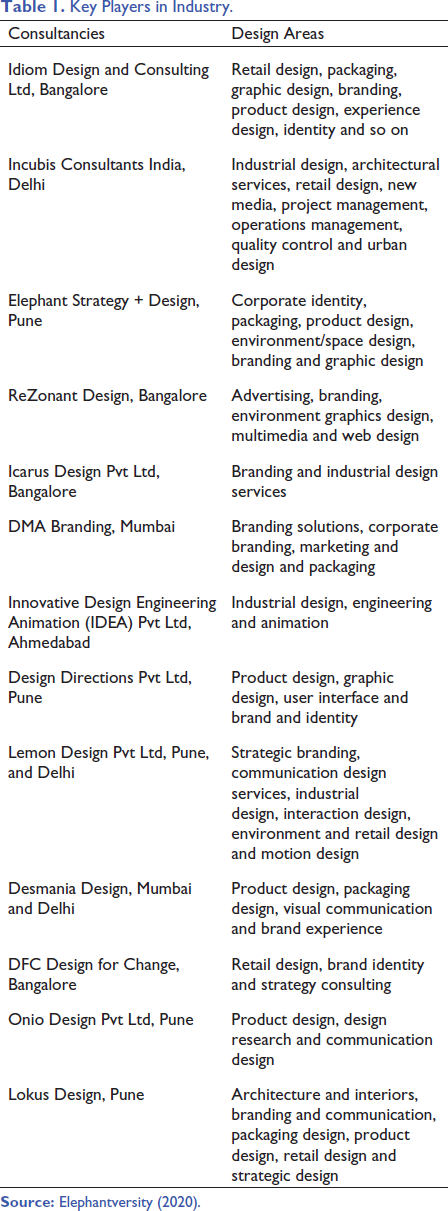
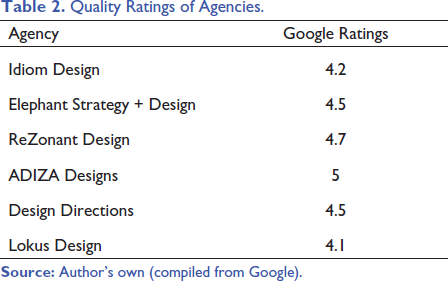
With a deluge of design agencies in 2022, the market had turned overcrowded with no customer loyalty. Customers were price sensitive and the only differentiating factor was how well-acclaimed the agency was in the market—how big a star you were! Design services were offered at varying price points depending on the scope, nature and type of work. The players in this industry included nascent freelancers on social media platforms, trusted and influential agencies like Elephant India with an (average) estimated annual revenue of $13.5 million per year, who have worked for Paper Boat and Kurkure (Growjo, 2023); Idiom Designs with a turnover of ₹100 crores who have worked for Commonwealth Games, Ciso, Levis and Wipro (Tofler, 2023); DY Designs who have worked for Playboy and Bacardi, among other big brands; and eminent independent designers (such as ADIZA Designs by Phukela, who have worked for B Praak, Kanwar Grewal, Chicking India, Ministry of Beer, celebrity weddings of Rahul Narain Kanal, Manan Vohra; and Itchha Talreja Designs, who have worked for Anayah, Himalayan Salt and celebrity weddings—Raghav Chadha and Parineeti Chopra) among others (see Table 1 for the key players in this industry and Table 2 for quality ratings of these agencies).
Key Players in Industry.
Quality Ratings of Agencies.
While all these creative houses offered a host of similar services, they specialized in only one service dominantly. For instance, some agencies had either mastered the art of brand identity, some championed interior design, social media, public relations (PR) and influencer management, campaigns and launch or other combinations. Most importantly, some chose their clients strategically and worked only with corporate, banking institutions, retail, start-ups, new product lines or where their creative expertise lay and created a space in the hearts of their clients for long-lasting business relations. Most of these agencies worked with national and international clients and had undertaken strategic alliances. For instance, Elephant Strategy + Design had entered a partnership with npk Industrial Design in the Netherlands and Design Continuum in the United States (Elephantversity, 2020, p. 20).
Further, many big businesses, for instance, TATA Elxsi, TATA Interactive Systems, Maruti Suzuki, Infosys, Mind Tree, Mahindra, LG, Philips and many others had their in-house design departments. 2 This reflected not only that these giants did not require to outsource their needs to design agencies, and thus were self-sufficient, but also the significance of design in the post-COVID-19 business world.
In this background, DIBS* needed to identify an appropriate strategic position to compete in an already cramped market.
The Company: DIBS*
The Founders
After completing his MBA in 2017, Siddharth worked at a production house for 4 years, where he initially contributed as a photographer and business manager and later, as the head of business and operations, helped the employers establish a full-service creative agency. The organization would design monthly creatives for clients, but the demand was seasonal, peaking during festivals. These creatives took considerable energy to design but had a short life. This was rather dissatisfying to both Siddharth and his colleague Disha Kapoor, who wondered if they could launch their own company offering design services with long-lasting meaning. While Siddharth was left-brained, that is, very analytical and methodical in his approach and possessed leadership and negotiation skills, Disha was the right-brained, creative and artistic partner. They started brainstorming about their future venture. As start-ups demand that the founders be masters of all business aspects, Siddharth focused on business networking, marketing, promotion and client relationships, while Disha managed the finance and design.
Naming the Start-up
The founders decided to use a name as an abbreviation that was unique, attractive and fitted the new-age hip culture. They played around with acronyms with the words Designs, Consulting, Interiors, Studio, Branding and Agency, ultimately forging the best combination, DIBS—Designing, Interior and Branding Studio, and on social handle added the word ‘on us’ to create an instant connection with clients. That is how the company found its name: DIBS* and was launched in August 2021. While creating the visual identity, they longed for a minimalistic appeal with a touch of style, sophistication and sharpness. Thus, for DIBS, they decided to use ‘/’ instead of ‘I’ and added a ‘*’ asterisk to capture attention (see Figure 1).

Initial Days of Operations
They started their operations from their residences and co-working spaces in Gurgaon and applied for a Goods and Services Tax (GST) number immediately. The business was started with a nominal capital contribution of ₹25,000 by each partner. The immediate one-time expenses incurred included ₹2,000 for purchasing the website domain, ₹6,000 spent on the Editor X platform to create the website, ₹11,000 to purchase a solid-state drive (SSD) and ₹1,000 to register the partnership deed. The monthly recurring expenses included (a) ₹150 per account for subscription to Google Cloud, with four business accounts, (b) ₹3,834 as rent for the virtual office, 3 (c) ₹4,000 for their business promotion on social media, (d) ₹2,500 for subscription to Adobe Suite and (e) ₹3,000 on miscellaneous items such as expenses on collaborative workplaces. Laptops and Wi-Fi costs were not included in the business account. The business did not have any investors and was bootstrapped using earnings from its services. Later, the business started running ads on Google, Instagram, Facebook and Twitter with a monthly expense of ₹1,000–4,000. There was no other employee in the organization apart from the two founders, though there were plans to hire interns for digital media handling and design soon.
Clients
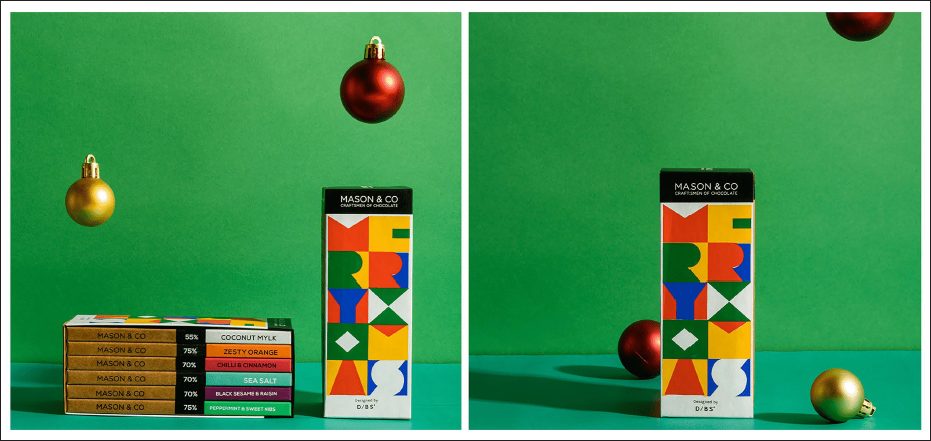
In September 2021, they got their first assignment with Jiwan Paints—to transform the visual communication strategy for a low consumer engagement brand to be more friendly and relatable to a modern-day consumer. DIBS* partnered with the client to develop a re-launch strategy and art direction for their product and lifestyle shoot. Their second assignment was to design the product packaging for Mason & Co’s limited-edition Christmas chocolates. The final design included the DIBS* logo on the front cover (see Figure 2). Siddharth mentioned, ‘New into the business, I needed to create visibility for my budding brand’. He bought a few boxes of these chocolates and sent them to entrepreneurs working in the fashion, F&B, hospitality and lifestyle industries to spread the word about DIBS*’s creative potential. For Catalyst Brewery, a new home-brewed beer company, DIBS* designed the brand name, visual identity, packaging design and brand interior. For Torogo, DIBS* did the interior project remotely for two bike and accessories stores in Nicaragua, making use of the limited space and to keep the stores organized, experiential and mostly sporty. With revenues of ₹4 lakhs in the first 4 months of operations, Siddharth felt this was just the speed of the first gear.
Service Portfolio
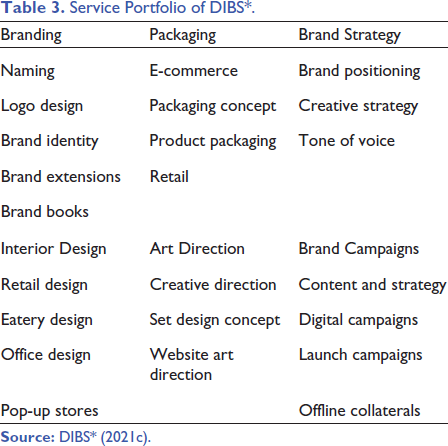
DIBS* offered a wide range of services; a brand could enter at any stage of the value chain to explore creative revamps. It offered all design-related solutions from (a) creation of a brand, which included guidance on a brand name, logo design, brand identity, brand book and brand extension, (b) package design, (c) brand aesthetics, which included colour, theme and tone, (d) interior design, (e) art direction, which included a website and studio sets and (f) digital campaigns, which included creatives for launch and promotions (see Table 3). For a newly found start-up, it envisioned becoming a one-stop shop for young, fresh and new-age concepts for all business design answers.
Service Portfolio of DIBS*.
Options Considered and Their Pros and Cons
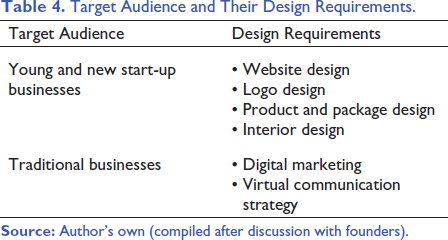
Siddharth thought that DIBS* would do well with clients who were young entrepreneurs of D2C brands looking for hip, bold and interesting designs for their ventures early on their journeys, so that DIBS* could craft their creative communication strategies from the birth of the business and hence offer a whole menu of services. Siddharth rationed that the future would be all about aesthetics; he mentioned, ‘These young geniuses relish creative content and would be the decision-makers of the future; if we were on their side, we would be on the right path’. Young entrepreneurs were most willing and flexible to experiment with their brand, which gave them more creative freedom to diverge and come up with original content. This would introduce them to innovative collaborations, new ways of learning and active energy exchange. These young, innovative start-ups in India hold a huge market size of approximately 92,683 start-ups (Statista, 2023b). However, working with these young entrepreneurs had its challenges. First, regarding the financial aspects, these start-ups were unable to reward art; payments were either delayed, unsatisfactory or sometimes even made in kind, which may not be the best practice for sustainability. On the other hand, as the market had many traditional/old and small businesses (MSMEs) contributing to 26 per cent of gross domestic product (GDP) of India (Statista, 2023c), which were looking for a rejuvenated look to reconnect with their customers, this provided umpteen untapped opportunities. These businesses had significant resources and networks with no onboard design team; however, it was challenging to change their old ways of communicating with customers.
In this context, Siddharth had to decide which type of clientele he should target for his business (see Table 4). He knew that the key to success lay in cutting through the noise, finding unique edges and telling the brand story, but how was he to carve the way forward for DIBS* and craft a niche in an overcrowded market?
Target Audience and Their Design Requirements.
Footnotes
Declaration of Conflicting Interests
The authors declared no potential conflicts of interest with respect to the research, authorship and/or publication of this article.
Funding
The authors received no financial support for the research, authorship and/or publication of this article.
