




Abstract
The year 2021 had drawn to a close. OYO, the India-based hotel start-up that had witnessed a pandemic-induced descent in business, appeared to have ticked the right boxes and was on a resurgence path. Founded in 2013, OYO grew rapidly in its initial years and had operations in 800 cities in 80 countries in 2019, just prior to the onset of COVID-19. It was the ‘fastest growing’ hotel chain in the world. Burgeoning losses at the time compelled OYO to make a strategic shift from aggressive growth to an accretive growth strategy. In the mid of its course correction endeavour, OYO’s business plunged in wake of COVID-19. OYO exhibited resilience and strived for resurgence even though it remained in the red. What were the resource-based and position-based sources of competitive advantage that propelled OYO’s meteoric rise initially and enabled it to remain resolute in the COVID-19 crisis? Can OYO be termed as successful in light of the Balanced Scorecard framework? What strategic options are available to OYO to maintain its growth trajectory in the post-pandemic phase?
Introduction
Ritesh Agarwal founded Oravel Stays Private Limited (OYO) in 2013. OYO started operations with the overarching objective of organizing budget hotels in India. The challenges notwithstanding, OYO’s story was all about rapid growth till 2019. OYO, the hotel aggregator, ventured into co-living spaces with OYO Life and co-working segment with OYO Workspaces. It forayed into the organized wedding marketplace through the acquisition of Weddingz.in. OYO grew rapidly in India, and then ventured overseas with equal zeal and zest. The hotel start-up had operations in 800 cities in 80 countries in 2019. OYO changed tack from aggressive growth to an accretive growth strategy as losses widened. In the mid of its course correction endeavour, OYO’s business plunged in wake of COVID-19. The tourist visits in India shrunk by more than 70% in 2020. OYO witnessed a pandemic-led dip of 70% in revenue during the Financial Year ended 31 March 2021 (Oravel Stays Limited, 2021). The hotel start-up demonstrated enormous resilience to come back on the resurgence path, albeit it did not turn profitable. What led to OYO’s initial rise and enabled it to remain steadfast during COVID-19 crisis? Can OYO, with increasing properties under operations and lofty valuations, but with burgeoning losses even in the pre-pandemic phase, be termed as successful? How can OYO maintain its growth trajectory in the post-pandemic phase?
Travel and Tourism Industry in India
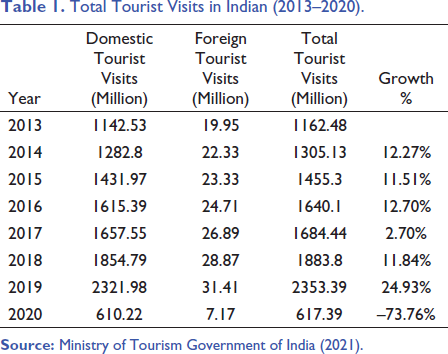
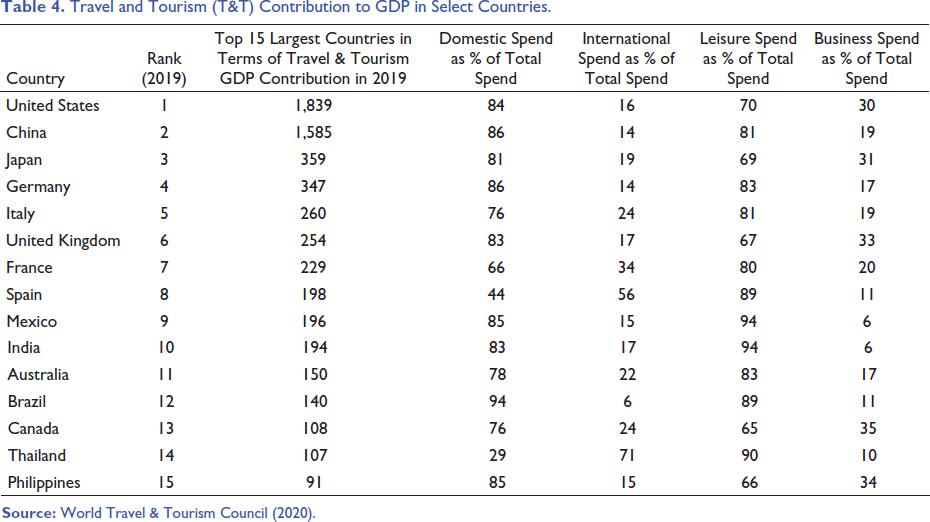
In 2019, Travel and Tourism (T&T) contributed $194 billion (₹14.61 trillion 1 ) to the Gross Domestic Product (GDP) of India. Leisure spends and business spends accounted for 94% and 6% of the total T&T spend, respectively. Domestic spend and international spend accounted for 83% and 17% of the T&T spend, respectively. In 2019, the T&T GDP growth in India was 4.9% as against a global average of 3.5%. Globally, India ranked 10th in terms of the absolute amount of T&T contribution to GDP (World Travel & Tourism Council, 2020). The number of total tourist visits in India had grown from 1162.48 million in 2013 to 2353.38 million in 2019. However, tourist visits dipped drastically to 617.39 million in 2020 (Table 1).
Total Tourist Visits in Indian (2013–2020).
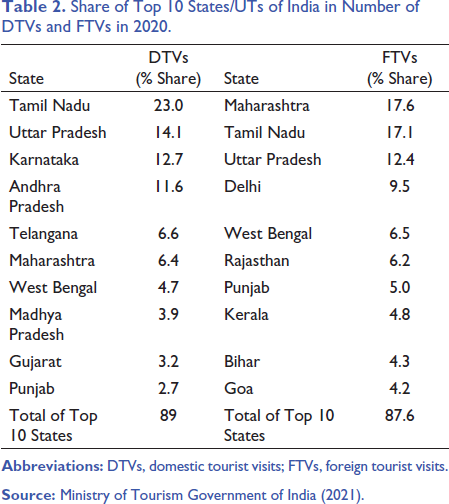
The top three source countries for foreign tourist arrivals (FTAs) in India in 2019 were Bangladesh, the United States and United Kingdom (UK). These top three source countries remained unchanged in 2020 and accounted for 20.1%, 14.36% and 10.63% of FTAs in the country (Ministry of Tourism Government of India, 2021). Ten states accounted for 89% and 87.6% of domestic tourist visits (DTVs) and foreign tourist visits (FTVs) in India in 2020 (Table 2).
Share of Top 10 States/UTs of India in Number of DTVs and FTVs in 2020.
The highly fragmented hotel industry in India catered to the accommodation related needs of domestic and international travellers. The branded hotel chains, independent non-chain hotels and alternate accommodations constituted the Indian hotel industry (Business Wire, 2021). The total room inventory in India was estimated to be 2.64 million rooms. Hotels chains accounted for 11% of the supply. The non-chain hotels, which were dominated by small players, especially in the unorganized sector, accounted for the bulk of the supply. Hotels were categorized as upscale, mid-segment and economy hotels based on the level of service provided by them. Economy hotels contributed 70% of the total room inventory. Upscale hotels and mid-segment hotels contributed 5% and 25% of the total room inventory, respectively (RedSeer, 2018). To begin with, OYO focused on branding economy hotels.
Dynamics of Unorganized Hotel Business
Many of the hotel owners in the unorganized sector operated single properties. In the absence of access to capital and trained personnel, achieving scale was a herculean task for such hotels. Standardization was conspicuous by its absence. These hotels were characterized by low staff-to-guest ratio. Instances of poor performance on the customer experience metric abound in such hotels. It was difficult for customers to gauge the service quality of these hotels and prefigure their stay experience. Decent hotels in the unorganized sector could not attract guests due to a lack of resources. Some of them, located in nondescript places, did not get enough footfalls in the area. Price and location remained the only recourse to attract guests. The crux of the matter was that customers scouted for quality living spaces but did not find them. The hotel establishments offered quality living spaces but did not have the wherewithal to stand apart and get noticed. Such incongruity in the marketplace represents an opportunity to innovate (Drucker, 1985). OYO identified the incongruity in the budget hotel marketplace and provided a solution. OYO was not a platform merely to find hotels. It was a platform to find and book hotels that would have the OYO promise; spic and span rooms, hygienic toilets, unsoiled linen, comfortable stay, Wi-Fi access and digital payment options. OYO devised an acceptance criterion and upgraded the hotel before making it available for customers through its network.
OYO’s Value Proposition: Discoverability and Predictability
OYO’s value proposition had both the vital ingredients of a good business idea; a scalable business that addressed customer needs (Molinsky, 2016). OYO’s ‘Technology’ and ‘Talent’ fixed the demand-supply mismatch in the highly fragmented and largely unorganized budget hotel segment and provided a platform for buyers and sellers to connect. It provided the ‘discoverability’ and ‘predictability’ of hotels. OYO strived for standardization of services (Pithwala, 2017) and charged reasonable prices for accommodations (Kaushik, 2020c). 2
OYO recognized the opportunity beyond the aggregator model. It backed itself with its ‘full-stack fulfilment led’ capabilities including a refined onboarding process, refurbishment of properties and increased operational efficiency (Fox, 2019) and thus branded the budget hotels. The guest feedback was analysed with the assistance of Artificial Intelligence (AI) enabled tools in order to finalize the hotels’ design (PR Speak, 2019b). OYO developed Optimus, a transformation app that provided renovation details, cost estimates, task assignment and tracking of activities to concerned stakeholders. OYO set the benchmark of renovating properties in 3–14 days as against the industry average of 90 days.
OYO partner hotels benefitted from its cutting-edge technology. They used the OYO Operating System (OYO OS) for efficient operations (PR Speak, 2019b). The dynamic pricing model, use of Machine Learning and AI to predict occupancy, determine rates and reduce the cost of operations facilitated day-to-day business. OYO’s pitch to potential partner hotels included benefits of greater visibility, higher revenue per available room (RevPar) as well as higher daily occupancy. 3
On average, OYO made 60,000,000 price changes daily (Hashmi, 2019k). The dynamic pricing model enabled partner hotels to increase RevPar. OYO acquired Danamica, a Europe based-data science company to bolster dynamic pricing capabilities (Hashmi, 2019k) and acquired AblePlus to strengthen its IoT capabilities. OYO Lite, a trimmed-down version of the OYO app, was launched specifically for use in areas with low connectivity and network issues (PR Speak, 2019b). OYO had more than 20 proprietary technology-based applications to facilitate different stakeholders.
OYO’S Expansion
OYO commenced business operations to address the needs of budget travellers. Thereafter, it expanded its portfolio to target different customer segments. The mid-market boutique hotels branded as OYO TownHouse 4 (OTH), corporate apartments branded as Capital O, Edition O and Silverkey, 5 millennial housing branded as OYO Life, 6 upmarket resorts branded as Pallette 7 and vacation rentals branded as OYO Homes (Kavirkut, 2017) 8 became part of OYO’s comprehensive market offering. OYO diversified beyond organized living into OYO Workspaces (PR Speak, 2019a) and WeddingZ (Kashyap, 2018).
OYO Hotels and Homes
OYO’s flagship venture was OYO Hotels and Homes. By September 2019, OYO had opened its doors in more than 500 cities in 28 states and 9 Union Territories in India. OYO continued to strengthen its presence in smaller cities. The speed at which OYO expanded rendered the growth of competitors such as Treebo, FabHotelsZenrooms, Vista Rooms and RedDoorz 9 appear miniscule.
OYO Life
OYO ventured into the co-living marketplace in October 2018 with OYO Life. It aimed to provide hassle-free accommodation to millennials (JLL & FICCI, 2019), young professionals and students. The millennial workforce was a major driver of demand for co-living spaces. In 2018, people aged between 18 and 35 years constituted 42% of the workforce in top 7 cities of India. In total, 2.6 million of the 4.1 million working millennials who stayed in rented accommodations opted for shared living spaces. The co-living market in India was expected to grow at a compounded annual growth rate (CAGR) of 17% and become a one trillion market by 2023 (Table 3).
Estimated Demand for Organized Co-Living (Million).a
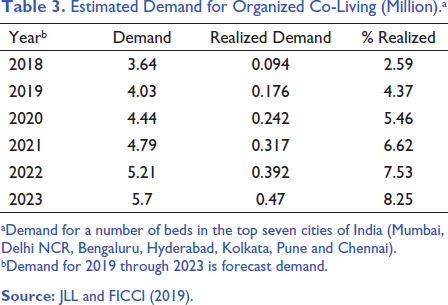
aDemand for a number of beds in the top seven cities of India (Mumbai, Delhi NCR, Bengaluru, Hyderabad, Kolkata, Pune and Chennai).
bDemand for 2019 through 2023 is forecast demand.
Although OYO Life was a late entrant in the segment, the market potential was huge. Zolo Stays and Nestaway were other major players in the co-living segment.
OYO Workspaces
Co-working businesses in India witnessed a massive spurt between 2017 and 2019. Gross working revenues doubled to ₹34 billion during this period (Money Control, 2020). Demand for co-working spaces was concentrated in big cities with Bengaluru and National Capital Region in the forefront. The price per seat ranged from ₹6,999 to ₹8,000 (PR Speak, 2019a).
Weddingz.in
OYO acquired Weddingz.in in August 2018 (Kashyap, 2018). The entity provided hassle-free weddings related services for clients. Weddingz.in’s revenue spiked 480% while the number of bookings rose by an astounding 636% in the first year of joint operations with OYO (Hashmi, 2019b).
OYO: Member of the Three-Comma Club
In 2013, Ritesh Agarwal was chosen for the Thiel Fellowship and was awarded a grant of $100,000 for his travel site Oravel.com (Bergen, 2013). The grant and guidance offered under the Thiel Fellowship set the ball rolling and Oravel.com morphed into OYO. Venture capitalists reposed faith in OYO’s business model, and periodically infused cash in the Indian start-up. The hefty valuations enabled OYO to become a member of the coveted three-comma club. In 2018, OYO, the unicorn was valued at $5 billion. In 2019, OYO was valued at $10 billion. By March 2020, OYO had raised more than $3 billion during the preceding five years (Kaushik, 2020b). In 2021, OYO secured debt financing to the tune of $660 million (The Economic Times, 2021). Microsoft Corporation infused $5 million in OYO in the same year (PTI, 2021b).
COVID-19 had led to a fall in OYO’s valuation by 20% to $8 billion in 2020. Nonetheless, this fall was relatively lower than the drop in valuation of other leading hotel chains (Dash, 2020 August). As the markets opened gradually OYO’s valuation inched upwards. OYO was valued at $9 billion in 2021 (Majumdar, 2021).
OYO: The Globetrotter
OYO began its international journey when it entered Malaysia in 2016. It took the company another 16 months to enter its second international market in Nepal. Thereafter, it upped the ante on international expansion and literally became a globe trotter. Oyo segregated its international business into a separate vertical to increase focus. OYO set foot in China in 2017. OYO invested heavily to bolster its Chinese operations. OYO promised guaranteed income to Chinese hoteliers and grew rapidly. By June 2019, OYO became the second largest hotel chain in China. With a focus on customer service and system improvement, OYO ventured into Tier 2 to Tier 6 cities in the country. The company had invested close to $100 million out of the commitment of $600 million in China. 10
Entry into UK in September 2018 marked OYO’s first foray outside Asia. An investment of $55.7 million 11 was earmarked for UK operations (Hashmi, 2018b). In October 2018, OYO entered Indonesia. OYO planned to invest $100 million in the country that attracted 500,000 Indian tourists in 2017 (Hashmi, 2018a).
OYO’s international expansion spree continued its momentum in 2019. It entered the Philippines, another popular tourist destination. OYO also opened its doors in Saudi Arabia, a popular destination for meetings, incentives, conferences and events (MICE). OYO signed a Memorandum of Understanding (MoU) Saudi Arabian General Investment Authority (SAGIA). As part of the MoU, OYO was to invest $1 billion 12 and develop a hospitality ecosystem in the country (Hashmi, 2019j). OYO ventured into Japan with OYO Life and within days, unveiled OYO Hotels in the country. OYO Life had a mouth-watering opportunity as 90% of the Japanese lived in cities and were open to the concept of ‘sharing’ (Hashmi, 2019d).
The year 2019 also witnessed OYO’s entry into the United States. Within three months of operations, OYO operated more than 100 hotels in the country (Kelleher, 2019). OYO forayed into the European vacation rental market in 2019 by acquiring @Leisure for $415 million (Lunden, 2019). The acquisition enabled OYO to make inroads in 300 cities spread in 13 European countries and provided access to 115,000 home units. By March 2020, OYO managed 130,000 homes in 50 different countries (Gulati, 2020). 13
OYO ventured into Thailand, a country that played host to two million Indian tourists. OYO Thailand had 250 hotels within a few months of operations. OYO planned to operate 2 million rooms in Southeast Asia by 2025 (Hashmi, 2019f).
Some of the countries, such as United States, China, Japan, UK, Thailand and Philippines, in addition to OYO’s home market India, were among the top 15 nations with highest T&T contribution to the GDP (Table 4).
Travel and Tourism (T&T) Contribution to GDP in Select Countries.
OYO: Challenges and Corrective Action
Entrepreneurial success does not necessarily lead to equitable distribution of rewards to all stakeholders. It may increase the well-being of some stakeholders and at the same time prove detrimental to the interest of other stakeholders (Dew & Sarasvathy, 2007).
OYO confronted situations wherein all the stakeholders were not satisfied. Room rent remained a moot point. The customers were happy with the lowered-down prices of OYO. Partner hotels however rued that they could not survive with drastic reduction in room fares.
Entrepreneurs should set a price that covers all costs and results in positive cash flows. Additional benefits offered to the customer should lead to a price increase that customers are willing to pay. Prices must be appropriate so that the break-even point does not move upward (Cannon, 2006). OYO’s pricing did not deliver on the aforementioned aspects.
In addition to raising the issue of cut down of room rents, hotel owners also complained of substantial, imposition of arbitrary fines and non-payment of their dues (Kaushik, 2020a).
Fingers were also pointed at OYO for offering rooms of unlicensed hotels. At times, OYO inflated its room count and did not remove hotels that left the online platform (Goel & Singh, 2020). Service, quality and safety issues emerged as major cause of concern. Contravention of contract terms was also cited by partner hotels (Kondalamahanty, 2019). Meanwhile, refurbishment of hotels led to tremendous cash burn for OYO.
OYO addressed these issues. It launched the OYO Partner Engagement Network (OPEN) with the objective of empowering partner hotels. OYO promised transparent payment procedures and reconciliations, financial support, multiple touch points to connect, marketing excellence, technology innovation and assistance with regulatory compliance were promised under OPEN. OPEN also unveiled a dedicated microsite to strengthen the community of OYO partner hotels (Hashmi, 2019a).
OYO also launched the Cash in Bank (CiB) facility whereby partner hotels could avail credit without collateral security (Hashmi, 2019e). OYO introduced a referral program O-Rewards for partners (OYO Voice, 2019). 14 The Co-OYO app enabled partner hotels assess their performance, payment-related information and customer reviews (Hashmi, 2019a).
OYO launched the 3C evaluation program based on three criteria; constant availability of rooms, customer feedback and compatible rooms. 15 Partners were encouraged to improve their 3C scores (Hashmi, 2019g).
OYO initiated the club Red Program whereby partner hotels that improved performance on parameters such as hassle-free check-in and business contribution were rewarded. Cluster managers were entrusted with the task of providing matchless experience to customers. Each cluster manager was responsible for auditing 30 hotels assigned to them. As part of the audit, a 160-item checklist was maintained by the cluster manager every day. The cluster manager could also initiate the process of a 15-day hospitality training program for hotel staff, if required (OYO, 2016). OYO developed app Krypton and migrated from a physical audit of the property to a mobile-based audit with the objective of enhancing customer experience (PR Speak, 2019b).
OYO Wizard, the customer membership program was unveiled in August 2018. In May 2020, OYO Wizard membership had grown to 7.5 million subscribers. A phenomenal rise in OYO Wizard membership was witnessed in 2020 (Hashmi, 2020c). OYO’s efforts were rewarded by way of increase in NPS (Net Promoter Score) 16 to 51.4% in 2018, an increase of 4.4% over December 2017 NPS score (Gupta, 2019). With numerous initiatives, OYO’s partner NPS recorded an improvement of 35% in Q32020 (Saxena, 2021).
OYO addressed the safety concerns by providing the in-app SOS feature. When used, the SOS feature would press the hotel staff and the OYO Safety Response Team (SRT), which functioned round the clock, into action. In order to thwart unwanted comments targeted at women, OYO unveiled an Online Relationship Management (ORM) initiative. OYO thwarted trolls targeted at women by publicly schooling them.
Course Correction and Business Rethink
OYO was an awe-inspiring growth story. The increasing losses however led to course correction and business rethink.
Status in 2019
By end of 2019, OYO was the ‘fasting growing’ and the ‘world’s second-largest’ hotel chain (Hashmi, 2019i). OYO registered 2.7X increase in booking in 2019 vis-à-vis 2018 (Hashmi, 2019c). OYO Wizard had a subscriber base of 5 million in 2019. Close to 49% of OYO bookings were made by OYO Wizard subscribers. More than 9,200 partner hotels were enrolled with OYO Wizard (Hashmi, 2019h). In Q4 CY 2019, OYO derived 73% of its demand from repeat customers (Gupta, 2020a). 17 Direct channels accounted for 90% of demand leading to low cost of customer acquisition (Kumar, 2020). A loyal customer base served OYO well. OYO reaped the benefits of position-based advantages in addition to resource-based advantages. 18 The former advantages accrue to firms that engage in downstream innovation and gain customer trust. Such firms enjoy network effects and accumulative advantage. An early entry in the marketplace and scale economies further augments position-based advantages (Boudreau, 2017; Dawar, 2013). 19 For OYO, this made a case for augmenting its base of partner hotels and focusing more on customer acquisition and retention.
Growth over Profits
OYO had not been able to juxtapose its growth initiatives and profit discipline. OYO’s revenue increased 4.5 times to ₹63.3 billion but losses widened 6.4 times to ₹23.65 billion in 2019. India and China drove OYO’s revenue growth. Indian business operations accounted for 63.5% of the total revenue earned by OYO in FY 2019. International markets accounted for 75% of losses at OYO (Gupta, 2020a). Heavy investments made in newer markets had dented gross margins. OYO needed a course correction and so it embarked on the accretive growth strategy.
‘As We Enter 2020’
On 30 January 2020, Ritesh Agarwal sent a message titled ‘As We Enter 2020’ to the stakeholders. The message highlighted OYO’s accomplishments, mentioned future opportunities, underscored the need to build capabilities and also drew attention to the company’s intent of rationalizing investments. In order to stage a turnaround, OYO initiated a restructuring process. Tough decisions included layoffs. Little did OYO know that it would face an unprecedented challenge; COVID-19. By March 2020, COVID-19 had spread its tentacles leading to travel restrictions in many countries (OYO Team Speak, 2020). The hospitality industry was among the worst hit. It led to a massive business plunge for OYO (Tuli, 2020a). 20
Resilience and Resurgence
Entrepreneurial competencies include, among others, opportunity recognition, innovation and adaptive execution (McGrath & MacMillan, 2000; Matthews & Brueggemann, 2015). These competencies stood in good stead for OYO during the pandemic. COVID-19 was an unprecedented situation. There was no playbook. OYO demonstrated resilience, focussed on ‘Care, Cash, and Evolution’ (Majumdar, 2021) as it strived to find the path to resurgence. A bright spot for OYO was the hefty cash that it had on its balance sheet (Kaushik, 2020b). OYO ensured that the interests of different stakeholders were met and its business model remained relevant.
The CEO took a cent per cent cut in salary for the year. Others in the C-suite took up to 50% pay cut (Choudhary, 2020). OYO leveraged massively on technology and deployed it as an antidote. The company’s investment in engineering functions increased by 60% between 2019 and 2021 (Kumar, 2020). OYO appointed a Chief Product Officer (Interim) in January 2021 who was supported by two CXOsto increase its traction in the marketplace through superlative product management (CEO Speak, 2021b). By July 2020, OYO had migrated 98% of its properties worldwide to the revenue-sharing model. The revenue-sharing model was definitely more sustainable.
Stakeholder Management
During COVID-19 phase, OYO teamed with Apollo Hospitals to provide isolation and quarantine facilities (Hashmi, 2020d). It provided free accommodation and quarantine facilities under the OYO Care initiative (OYO, 2021b). Stranded international tourists and expatriates brought back into India were offered secure accommodation.
OYO is geared up to provide sanitized stays with minimal touch experience in the post-lockdown phase. It teamed up with Unilever to leverage the latter’s scientific expertise and its trusted home care and personal care brands for cleaning and sanitizing properties and thus provide its customers with stress-free, sanitized stays. Floor markings for social distancing and mandatory thermal screenings of customers, employees and staff at partner hotels were also carried out (CEO Speak, 2021a).
The sanitized stays were extended to OYO Life properties as well (Tuli, 2020b). OYO offered a discount of 20% on monthly rent from the fourth month of stay for OYO Life customers. Tie up with PickyMyLaundry, DhobiLocker and Ohmywash facilitated OYO Life customers in their daily chores, and pact with YULU bikes in Bengaluru and Pune facilitated commuting (Tuli, 2020b). OYO put the ‘Wz Safe’ tag on venues that adhered to a 20-point checklist on COVID-19 protocols (PR Speak, 2021a). These venues were promoted on the company’s website and app. OYO organized virtual venue visits to facilitate bookings.
OYO strengthened its booking platforms during the pandemic time. It launched ‘Yo! Help’, a chatbot to facilitate customers with end-to-end experience beginning from asking directions of the hotel to checkout timings (Hashmi, 2020a). Yo! Help recorded an Average Handling Time (ATH) of queries of one minute vis-à-vis an ATH of eight minutes at OYO’s call centre. Yo! Help not only improved customer experience but also reduced the cost of operations (Business Standard, 2020).
Under ‘Project Hello’, OYOpreneuers spoke one-on-one to customers to understand their travel-related apprehensions and expectations (Bansal, 2021). OYO crowd-sourced audit of its properties under the OYO Audit initiative. It received 15,000 audits covering 60% of its partner hotels. The initiative was adjudged the Best Customer Service Initiative at the Customer Fest Show 2021 (CEO Speak, 2021b).
OYO added travel-related assistance section on its app, which facilitated the consumers’ decision-making process. It also inked pacts with SRL Diagnostics, Indus Health Plus and 1mg for COVID-19 testing and encouraging safe travel (PR Speak, 2020e). VaccinAID initiative, which displayed the vaccination status of staff at partner hotels, provided an assurance to the customers.
OYO modified its pricing algorithm, initiated a referral campaign and optimized its marketing spends (Choudhary, 2020). OYO’s extended its technological prowess by using data-backed predictive analysis to identify tourist hotspots (PR Speak, 2020f).
It also offered mid-term loans, fee waivers and new deals to asset partners (Saxena, 2020). OYO introduced Smart Pricing Manager, which empowered partner hotels to alter the price and provided round-the-clock support (Gupta, 2020b). It waived certain charges of partner hotels and offered retention-linked discounts (PR Speak, 2020a). OYO launched the Equal Partner Policy (EPP) with the objective of building a collaborative ecosystem for the benefit of partner hotels. OYO recorded higher partner satisfaction levels in 2020 (OYO, 2021a).
Co-OYO app was developed for partner hotels. By January 2021, 70% of partner hotels used Co-OYO to connect with the company. The app provided, among others, support material as well as real-time monitoring of query resolution status (OYO, 2021a). OYO Sambandh, the partner outreach and engagement program was launched (Saxena, 2020). Discussions on maintaining hygiene standards, revenue strategy and business trends were held during webinars (OYO, 2021a).
OYO introduced a prepaid wallet OYO Secure, which served as a payment reconciliation system (OYO, 2021a) leading to more than 95% of partner hotels in India to opt for it (CEO Speak, 2021b). Under the second edition of the OYO Club Red initiative, partner hotels were recognized and rewarded. The Kryton app was made available in 12 languages. The multilingual support facilitates partner hotels in Tier-2 and Tier-3 towns to increase on-ground efficiency and expedite the audit of facilities in the pandemic phase (Business Standard, 2020).
‘Sanitized Stays’ compliant partners witnessed 50% higher occupancy rates vis-a-vis non-compliant partners (Kumar, 2020). OYO imparted training and supported venue partners of Weddingz.in in implementing COVID-19 appropriate procedures. It launched tech-based WZ Prime, a banquet management system, to buoy the business of venue partners.
Entrepreneurial ventures nurture human capital (Zahra & Dess, 2001). OYO initiated the Employee Well-being & Assistance Program (EWAP). It adopted a hybrid workplace model giving flexibility to employees to work from anywhere. The wellness programs included free annual health check-ups and round-the-clock counselling services for OYO employees and their families. OYO widened the scope of its parental leave policy under the #RiseEqually program. A slew of measures including an increase in the duration of paternity leave, work-from-home and additional weeks on half pay were introduced. The second coronavirus wave in India peaked in March–April, 2021. Keeping in mind the prevailing situation, OYO offered bereavement support to its employees. Under the #MyWednesday initiative, the company declared four Wednesdays, from 12 May 2021 through 2 June 2021 as company holidays. Employees could take, no questions asked, paid leave under #Flexioff.
OyoVersity, an online learning management system was launched to up-skill employees (Hashmi, 2020b). To ensure employee connection and engagement, Virtual Family Day was organized. The CEO-Club was launched to enable employees have virtual sessions with the management. OYO believed in the vast potential of data mining and using it to achieve business growth. It set up a Data Science Academy (DSA) to upskill workers.
Marketing and Promotions
Social media marketing enabled OYO’s customers engage with the brand. OYO launched #CheckInForLove a week before Valentine’s Day in 2020. The company reported 284% increase in sentiment as the social media campaign rode on the popularity of cult art and pop culture. Bookings during the campaign period increased 90.57% (PR Speak, 2020b).
As India initiated a staggered unlock approach, OYO rolled out ‘Fir Badhega India’ campaign. The campaign urged the Indians to move forward with hope and resilience. This was followed by ‘Road Trippin’ campaign that urged customers to come to OYO properties. OYO unveiled the ‘Contactless Check-in’ campaign across online and offline media channels. It depicted how check-in at OYO was completely contactless. Celebrity Sonu Sood was roped in as the brand ambassador and featured in the ‘Sanitized Before Your Eyes’ (SBYE) initiative. The tagline ‘Pehle Spray Fir Stay’ (PR Speak, 2020c) reinforced OYO’s adherence to COVID-19 appropriate behaviour. OYO unveiled the ‘Long-term relationship with OYO’ campaign. It had four digital films and its launch emerged from the insight that women played a key role in the travel-related decision.
OYO launched 5-day #OYOLove campaign. Unveiled during Valentine’s week of 2021, the cricket-themed campaign engaged the target market and lent excitement to the employees as well as hotel owners. The customer engagement initiative led to an increase in walk-ins, revenue, as well as NPS (Saxena, 2021).
OYO rolled out innovative sales promotion schemes in order to maintain cash inflows. OYO Wowcher and BOGO were two such products. Wowcher allowed users to redeem twice the value of payment made while Bogo allowed 100% flexibility and enabled users to plan future travels. Flexible packages with the option to reschedule the event free of cost were given to the customers. Wedding solutions were devised for smaller gatherings.
Serpentine Path to Resurgence
Amid the grim pandemic situation, OYO achieved the milestone of 50 million app downloads (PR Speak, 2020d). By September 2020, OYO managed to attain 30% of pre-COVID occupancy levels. Indian operations were EBITDA positive by December 2020 (PTI, 2021a). Weddingsz.in played its part in solemnizing more than 15,000 weddings during the year. December 2020 alone accounted for two-fifth of the weddings held since unlocking in June 2020 (PR Speak, 2021c). The ‘big fat’ weddings had made way for the ‘small and intimate’ weddings.
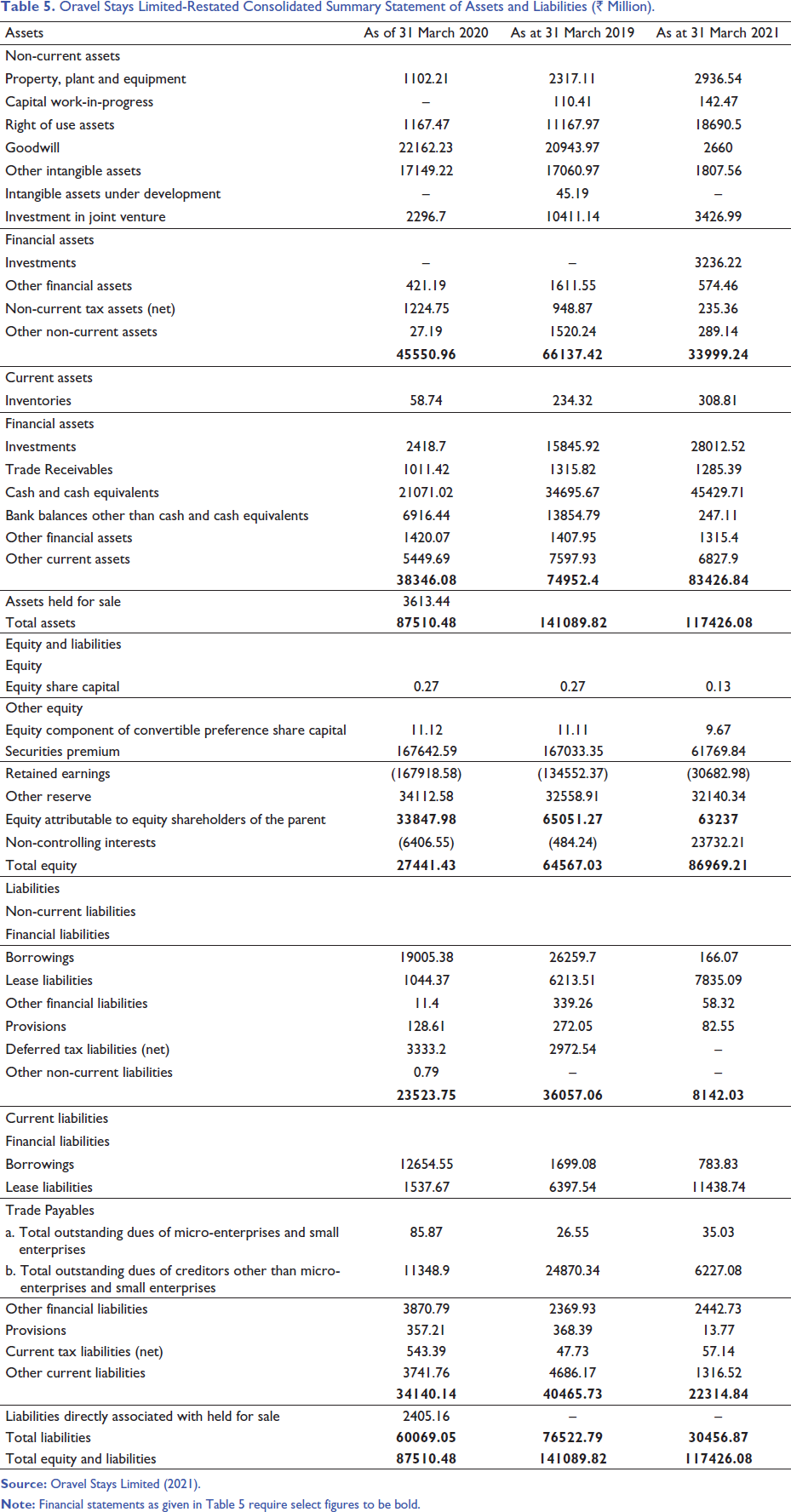
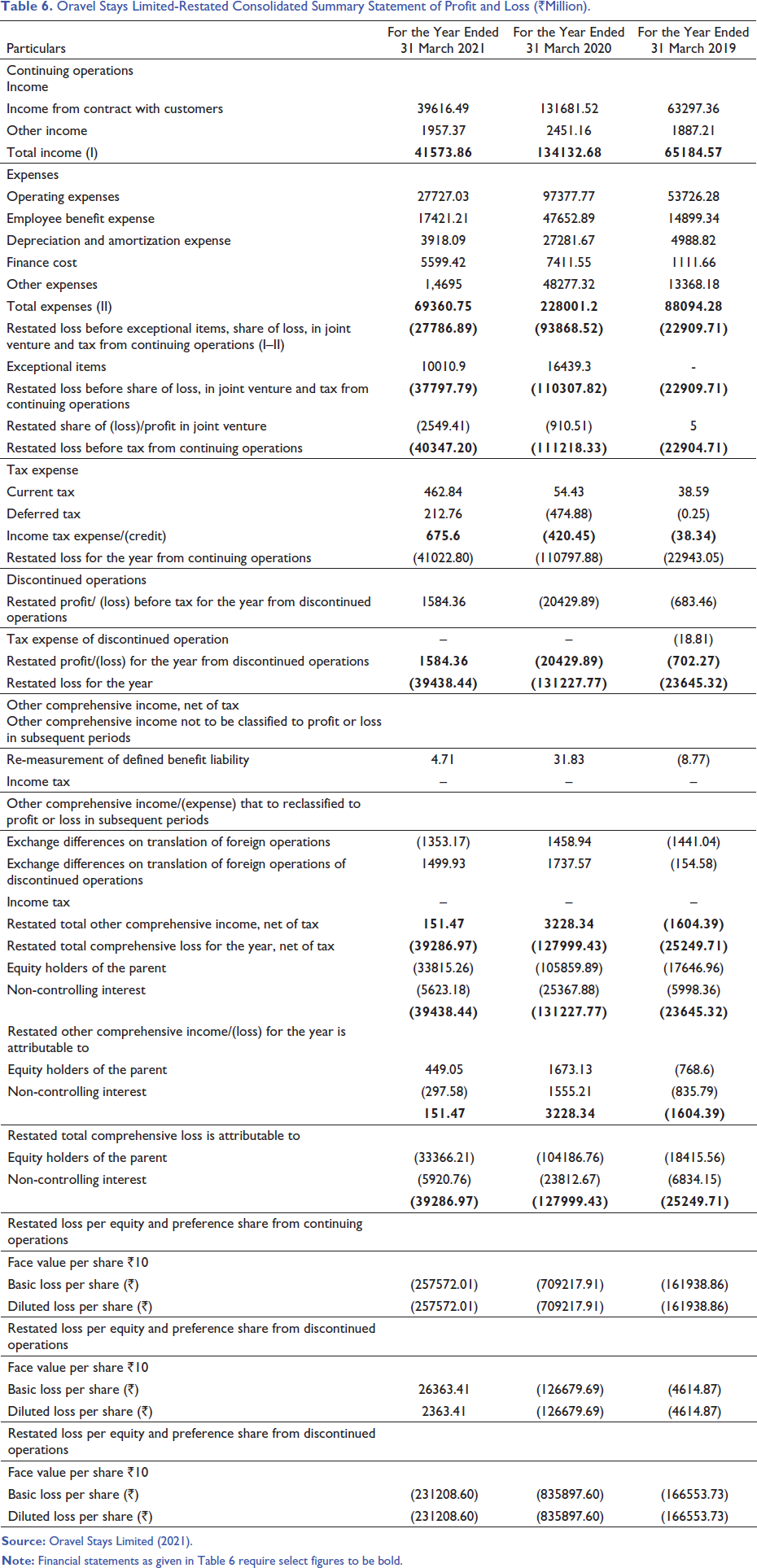
OYO reported a significant increase in demand for leisure travel between October 2020 and December 2020 (PR Speak, 2021b). A deadlier second Coronavirus wave rocked India in April–May 2021 (Biswas, 2021) and spoiled OYO’s applecart. The coronavirus waves and business recovery were inversely and strongly linked. OYO recorded revenue of ₹39.62 billion in FY 2021, down from ₹131.68 billion in FY 2020. The silver lining for OYO was that it managed to curtail losses significantly in FY21 (Tables 5 and 6).
Oravel Stays Limited-Restated Consolidated Summary Statement of Assets and Liabilities (₹ Million).
Oravel Stays Limited-Restated Consolidated Summary Statement of Profit and Loss (₹Million).
COVID was challenging but transformative for OYO (CEO Speak, 2021b). Trends indicated that ‘staycations’ and ‘work from anywhere’ were in vogue (Majumdar, 2021). OYO believed that demand for co-working places would increase after companies call their full workforce, post lockdowns. Moreover, small- and medium-scale enterprises considered co-working spaces as a flexible, cost-effective and viable option instead of entering into a high-cost long-term lease. OYO was in collaboration with some companies to develop ‘work-from-home’ units. Analysts had expected demand for co-living spaces to bounce back by December 2021 (Chengappa, 2021).
OYO initiated various measures to improve its financial position. OYO altered its business model by shelving the minimum guarantees that it offered to partner hotels. New contracts with partner hotels did not require any capital expenditure to be incurred on part of OYO. Going forward, OYO planned to focus on core markets such as India and South East Asia (Business Standard, 2021). Doubling down on technology and rationalizing the organizational structure led to a significant reduction in operating expenses and thereby reduced pressure on profitability. OYO inked a multi-year partnership with Microsoft corporation to leverage the latter’s capabilities in AI and cloud computing. The alliance was to develop leading-edge travel products and technologies such as Smart Room experiences for OYO clients. The pact would also assist OYO partner hotels in remote locations and lead to enhanced operational efficiency (Patra, 2021). OYO also planned to float an Initial Public Offering (IPO) to raise ₹84,300 million (Business Desk, 2021). 21 The company planned to use the proceeds from the IPO to prepay earlier borrowings and fund its future growth plans.
International Operations
OYO’s RevPar in North America fell by 40% during the pandemic. The decrease was lower than the average decline of 75% in the industry (Sinha, 2020). After the COVID-19 related hiccups, OYO witnessed recovery in the United States. It managed to achieve 130% or pre-COVID RevPAR level in the United States in the last quarter of 2020. It also added 10 new hotels at the beginning of 2021 (Hospitality Net, 2021).
OYO partner hotels had to ride the ‘Coronacoaster’ in the UK. Nonetheless OYO augmented its UK portfolio with 1,200 rooms between April 2020 and December 2020. OYO properties registered higher occupancy and RevPar levels vis-à-vis the industry average (Gupta, 2020b).
OYO Vacation Homes (OVH) benefitted as customers preferred to spend the vacation in a ‘private environment’ during the pandemic. The company managed to add more than 3,400 homeowners in Europe alone during the tough 2020 business environment (OYO Vacation Homes, 2020a). OYO also completed the acquisition of TUI Ferienhaus, which was announced at the beginning of 2020 augmenting its portfolio of 140,000 vacation homes substantially. The acquisition specifically increased OVH’s traction in Austria, France, Germany and Italy (OYO Vacation Homes, 2020b). OYO Europe Homes turned profitable by December 2020 (Press Trust of India, 2021). OYO reorganized its business into OYO INSEA, OYO Europe and OYO International. Various appointments were made and employees were promoted to support the new organizational structure.
Conclusion
The OYO juggernaut rolled on from 2013 to 2019 with its mission to provide ‘great quality living spaces’. Its business plunged thereafter as COVID-19 brought the hospitality industry to a screeching halt. It was a classic example of how unforeseen circumstances in the business environment can derail a growth organization. The intended strategy cannot be completed and implemented under such situations. Managers must therefore devise emergent strategies to mitigate the impact of unfavourable conditions. During the pandemic phase, OYO initiated various measures to rein in cost and offset the adverse impact on its bottom line. The company operated as a responsible corporate citizen and provided support to different stakeholders. It upped the ante on technology-based operations illustrating the importance of building capabilities to remain relevant in the marketplace and stay ahead of competitors. OYO rolled out innovative products and initiated numerous measures to safeguard the health of its guests. This enabled the company to win the consumers’ trust and cement its position based advantages.
The coronavirus had been around for nearly 2 years. The world was at a ‘perilous point’ in the pandemic. Many countries in the western world aimed at normalcy while some Asian countries were besieged with COVID crisis. Hope hinged on early and comprehensive vaccination. WHO stated that there was ‘shocking inequity in vaccination’ (VOA News, 2021).
The threat of a third COVID wave loomed large in OYO’s biggest market; India. The situation depicted how entrepreneurs have to take decisions under uncertainty. It was evident that all countries where OYO had business would not provide an opportune environment to survive or grow in future. Likewise, going forward, all the hospitality segments that OYO operated in might not show healthy growth trends. OYO had to determine which markets and hospitality segments to focus on and thus rationalize its investments. In addition to dealing with the uncertain external business environment, OYO had to put its own house in order. Partner hotel grievances had to be resolved and customer safety had to be ensured. The financial health of the company needed special attention. Investors had reposed faith, but profits had remained elusive for OYO since its inception. It was time for OYO to add to shareholders’ value.
What could OYO do? A change of tack from growth to stability would mean playing the waiting game. Retrenching businesses would mean giving up on earlier gains. Moving ahead with growth strategies was fraught with risks but would mean emerging as a stronger organization post-pandemic. OYO had always claimed; ‘It is Still Day 0 at OYO’ (Soni, 2019). It was time for OYO to demonstrate that it was indeed a learning organization.
Disclaimer
The authors developed this case study as a management teaching case. They do not intend to illustrate either effective or ineffective handling of a managerial situation. The opinions expressed in this article are those of the authors. They do not purport to reflect the opinions or views of the organizations they work with. This case has been developed on the basis of published sources only. Consequently, the perspectives and interpretations in the case are not necessarily those of the company (OYO) or any of its employees.
Footnotes
Declaration of Conflicting Interests
The authors declared no potential conflicts of interest with respect to the research, authorship and/or publication of this article.
Funding
The authors received no financial support for the research, authorship and/or publication of this article.
