




Abstract
Clarion Education and Skills Private Limited Patna, is a start-up promoted to address the school stationery demand–supply gap in the rural elementary education delivery system and cater to the needs of the rural school children in the states of Bihar, Jharkhand and West Bengal. This case documents the way Clarion pursued disrupting the school notebooks market, with a goal of making a notebook affordable at one-sixth the existing cost of a notebook in the marketplace in 2016. Clarion was promoted by The Better World Foundation (BWF), Patna, a social enterprise working in the area of rural elementary education in Bihar. BWF was of the view that the challenges of school stationery supply chain need to be addressed through a commercial enterprise only, so as to drive changes in the sector, so that BWF could focus on its core objective of creating and developing meaningful elementary educational institutions in the remote rural villages in Bihar, India.
This case study details the strategy of Clarion in developing a business model to break the shackles of high-priced branded notebooks by linking the advertising of social marketing campaigns with insertions in the notebook covers, and thus converting the notebook into an advertising medium, and meticulously campaigning for supply of affordable notebooks through various governmental and non-governmental institutions. Clarion challenged the competitive forces on one side and pursued building a cost leadership position for itself through cost-value trade-off initiatives on the other.
Keywords
Synopsis
Clarion Education and Skills Private Limited, Patna, is a start-up promoted to address the school stationery demand–supply gap in the rural elementary education delivery system and cater to the needs of the rural school children in the states of Bihar, Jharkhand and West Bengal. This case documents the way Clarion pursued disrupting the school notebooks market, with a goal of making a notebook affordable at one-sixth the existing cost of a notebook in the marketplace in 2016. Clarion was promoted by The Better World Foundation (BWF), Patna, a social enterprise working in the area of rural elementary education in Bihar. BWF was of the view that the challenges pertaining to school stationery supply chain need to be addressed through a commercial enterprise only, so as to drive changes in the sector, so that BWF could focus on its core objective of creating and developing meaningful elementary educational institutions in the remote rural villages in Bihar, India.
This case study details the strategy of Clarion in developing a business model to break the shackles of high-priced branded notebooks by linking the advertising of social marketing campaigns with insertions in the notebook covers, and thus converting the notebook as an advertising medium, and meticulously campaigning for supply of affordable notebooks through various governmental and non-governmental institutions. Clarion challenged the competitive forces on one side and pursued building a cost leadership position for itself through cost-value trade-off initiatives on the other.
Background
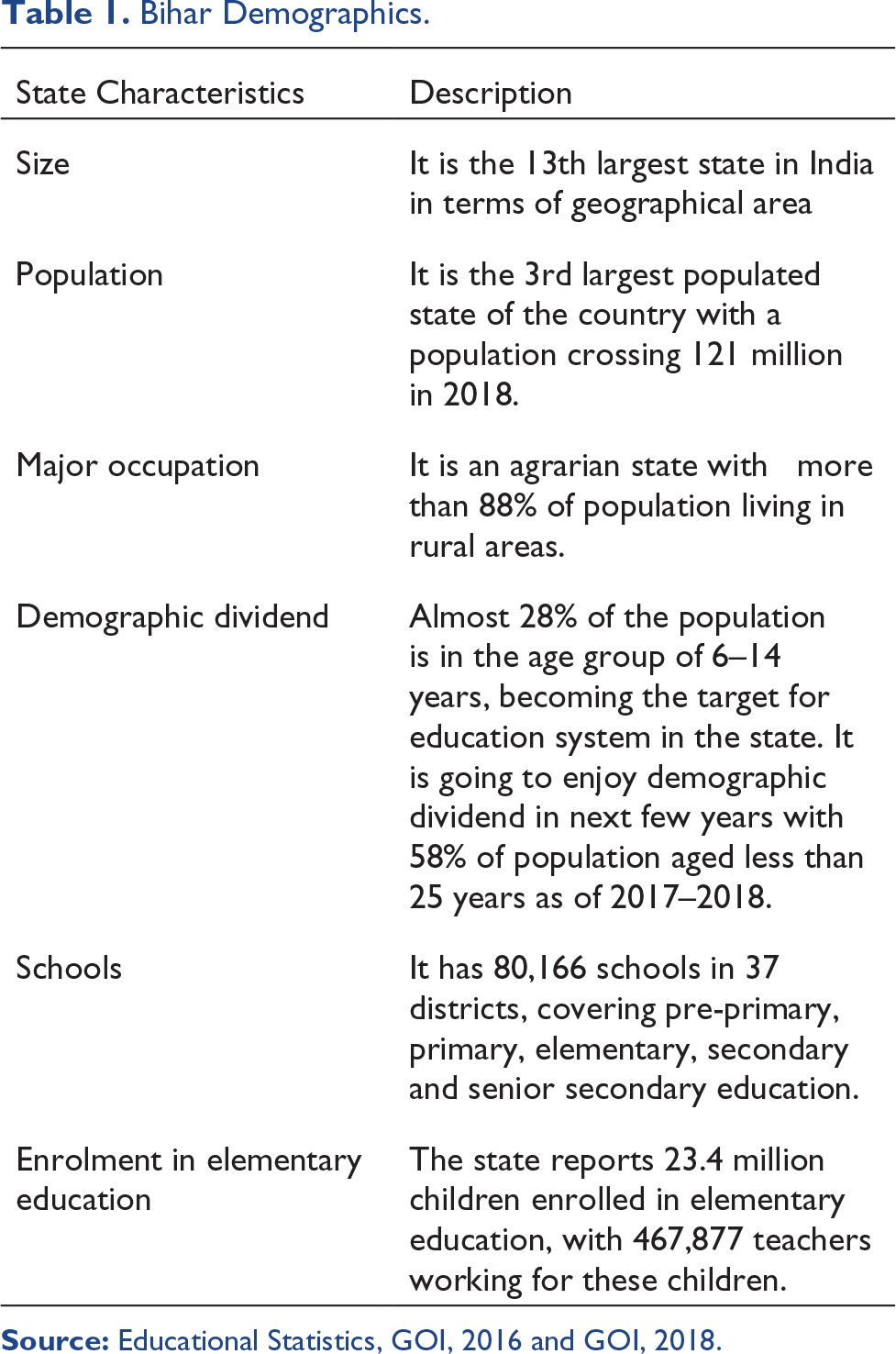
Bihar is known as one among the least developed states in the country; however, the state is striving hard to move over that scenario, with state government, corporate enterprises and non-governmental organizations (NGOs) working in the direction of economic and social development, supplementing and complementing each other’s efforts. The state also signals the slowly emerging demographic dividend in the next few years (Table 1).
Bihar Demographics.
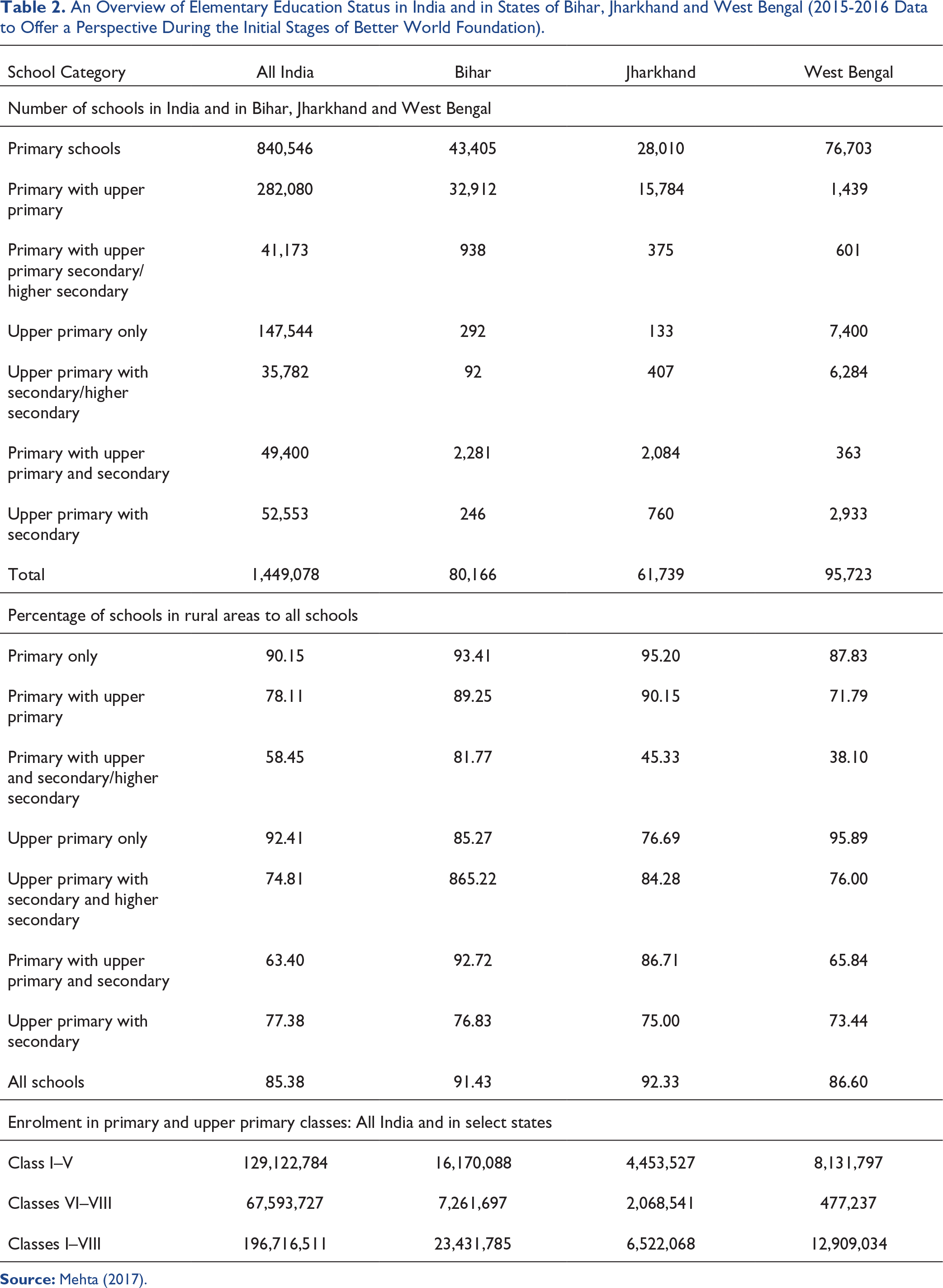
A majority of schools of Bihar are in rural areas (91.43%) and of the 23.43 million children in schools, 16.1 million are enrolled in classes I–V (Mehta, 2012). Out of all the children who go through their primary and secondary education bracing several economic hurdles, one of the untold challenges revolves around availability, accessibility and availability of school notebooks. The country, across all states runs a mission for education, called Sarva Shiksha Abhiyan (Mission for Education for all, launched by Government of India, covering all states and union territories of the country), addressing the needs of school going children and promoting education to all. The mission offers free education, free clothing and free textbooks to all children (Mehta, 2017). The block education officers (BEOs), under state education department, have conducted inspections in primary schools to ensure that all the primary school students who had received funds under government schemes have access to class textbooks. The data collected across the state suggest that around 91% of the school students received textbooks (Rumi, 2019).
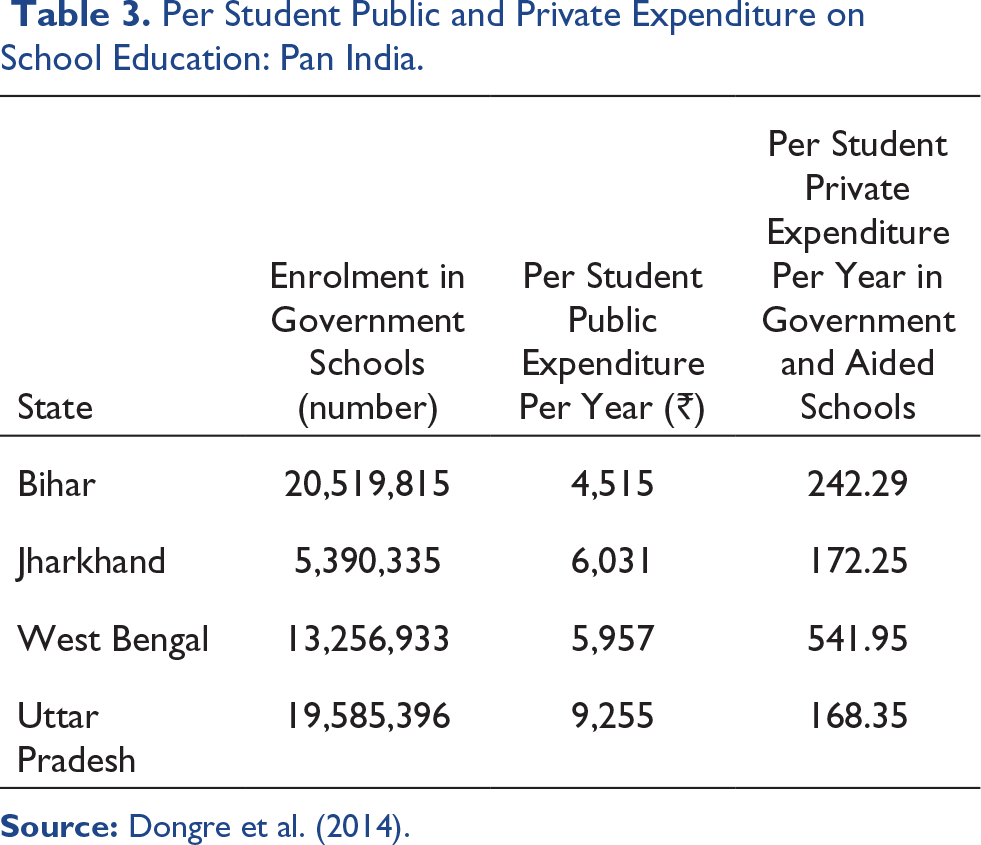
The government schemes leave out one of the seemingly fringe inputs, that is, the school notebooks, offering the commercial market a window of ₹100 billion a year across the country. The cost of notebooks and other stationery requirements is one of the reasons for children dropping out of the schools. This article attempts to provide a brief overview of data pertaining to states of Bihar, Jharkhand and West Bengal’s elementary education and the per child expenditure that the government and parents meet per year on education (Tables 2 and 3). Bihar is one among the lowest in these statistics, and they represent some of the critical challenges Bihar continues to face (Aiyer et al., 2015; Dongre et al., 2014). 1
An Overview of Elementary Education Status in India and in States of Bihar, Jharkhand and West Bengal (2015-2016 Data to Offer a Perspective During the Initial Stages of Better World Foundation).
It is in this context that a team of young and motivated professionals, set upon addressing this gauntlet, worked to improve upon the elementary education scenarios in the state, by setting up a social enterprise named BWF. They also supported it with a related start-up in the commercial domain, that is, Clarion Education and Skills Private Limited (Clarion), to offer affordable school notebooks to school going children. The commercial start-up Clarion has tasted success in its initial endeavour, and the founders, on the one hand, contemplate how best to scale up and maintain the goal of offering the notebooks to all school children of the state at ₹5 each and, on the other hand, satisfy the demands placed on BWF by the larger society and the stakeholders of BWF. One of the founders also pondered over whether these two businesses are needed to chart out their own independent business strategies, despite acknowledging that they are complimentary and supplementary to each other.
Brief Profile of the Better World Foundation
Manoj Prabhakar, a rural management professional, set up BWF, Patna, in mid-2016 along with two of his friends. It was set up as a social enterprise to provide sustainable solutions to the multiple challenges faced by the rural poor of Bihar. Mr. Alok Kumar and Mr. Abhishek Raman, his friends and colleagues from his earlier workplace Amul joined hands with him and turn those ideas into action at BWF. Each of them is equally equipped with the skills and competencies required for rural development challenges and each, having a decade of experience in addressing the criticalities of rural India, decided to build a formidable strategy to address the challenges that are persisting in rural India.
Initially, the team focused on creating a network of working elementary education schools in these remote villages and delivering basic learning elements in those schools. They started to identify the most remote schools of the state, visited them and spent time to involve in teaching, offered co-curricular learning resources and supported the teachers by providing access to information and educational tools (
Slowly, Manoj realized that besides these three domains of activities, it is also necessary to address the factors that are making education expensive and unaffordable. The team identified soon that one of the factors that was responsible for making education expensive and unaffordable was the critical costs of school notebooks. Even as BWF worked on getting timely supplies for the government schools and its own schools, the cost of notebooks was simply unaffordable to a majority of parents.
Establishing Clarion Education and Skills Private Limited
To address the challenge, BWF promoted Clarion Education and Skills Private Limited as a ‘for-profit enterprise’ and to act as an exclusive supplier for BWF by printing and publishing school notebooks and other learning resources. Clarion decided to focus on the production and supply of school notebooks and bring efficiencies in the costs and distribution of school notebooks. It started finding ways and means of manufacturing and supplying the notebooks at the lowest possible cost and at a price that rural families and school children will find easy to bear.
India’s School Stationery Industry
The stationery market in the country is categorized into two specific segments—school stationery and office stationery—and these two segments are handled differently by marketers. As of 2008, India’s stationery market was reported to be approximately ₹100 billion, of which school notebooks alone accounted for ₹40 billion. Pens and writing instruments accounted for ₹26 billion and supplementary stationery items such as geometry boxes and art boxes accounted for another ₹20 billion. The industry was known to be highly competitive, and few large players wriggle for around 25% market share and a large contingent of regional and small players account for the rest of the 75%. In 2012, it was estimated that the prospects of the growth of industry were very high, ranging from a growth rate of 10% to 15% per annum, which, in 2017 remained at 10.5%, which appears to confirm initial forecasts (Table 3) (Kathirvelu, 2011). 2
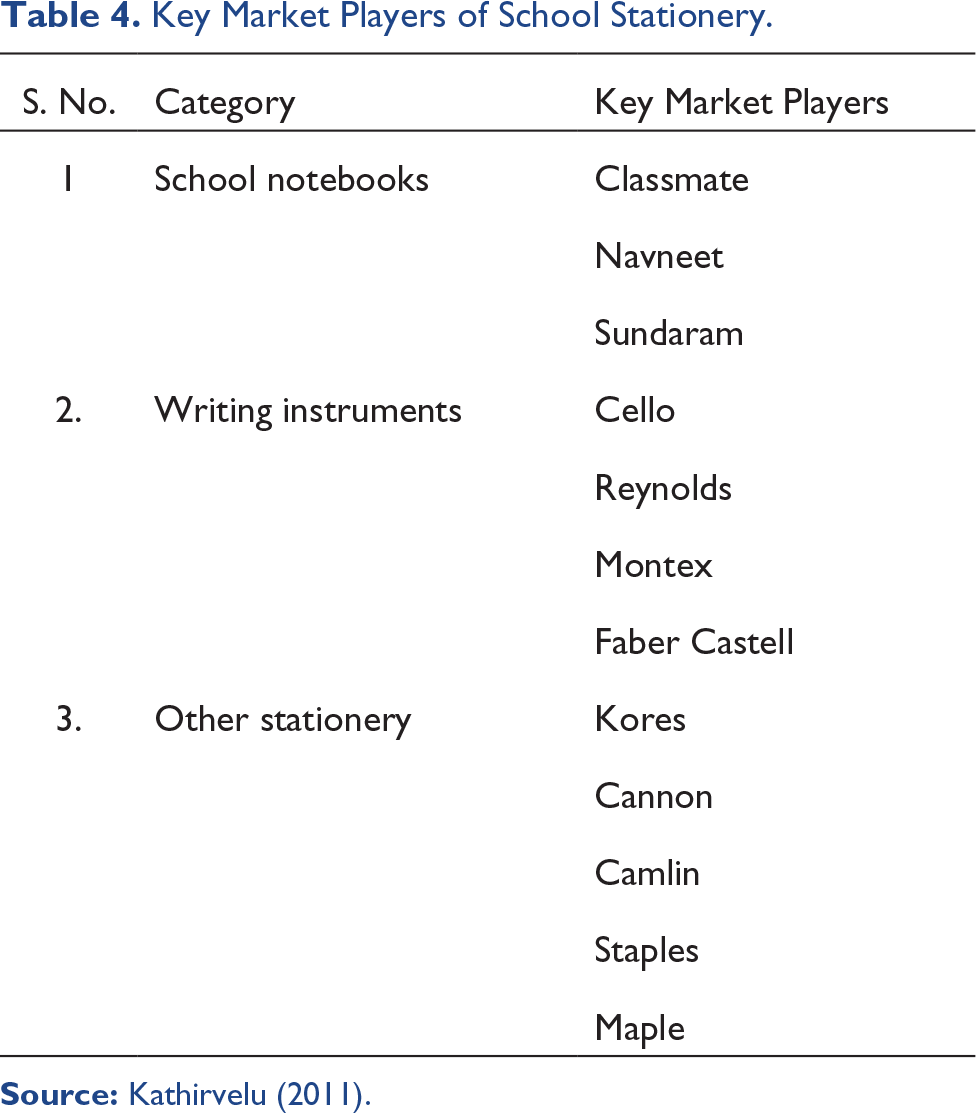
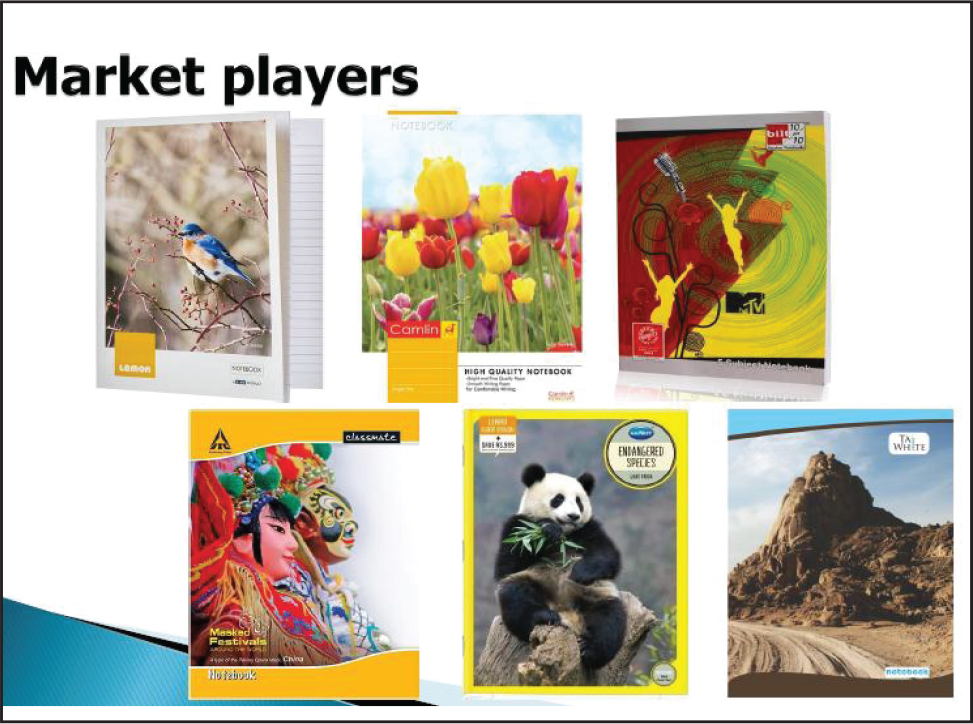
The Indian school stationery market is led by ITC, Navneet, Sundaram and Camlin, and in addition to them, few global branded players are also attempting to make a foothold in the Indian market (Table 4). ITC, with its twin brands, Classmate and Paper Craft, is aiming to secure the leadership position by striving for ‘A high share of the school bag’ (Figure 1).
Per Student Public and Private Expenditure on School Education: Pan India.
Key Market Players of School Stationery.
Comparative Prices of Brands for a 120/132-page Single Ruled Notebook.
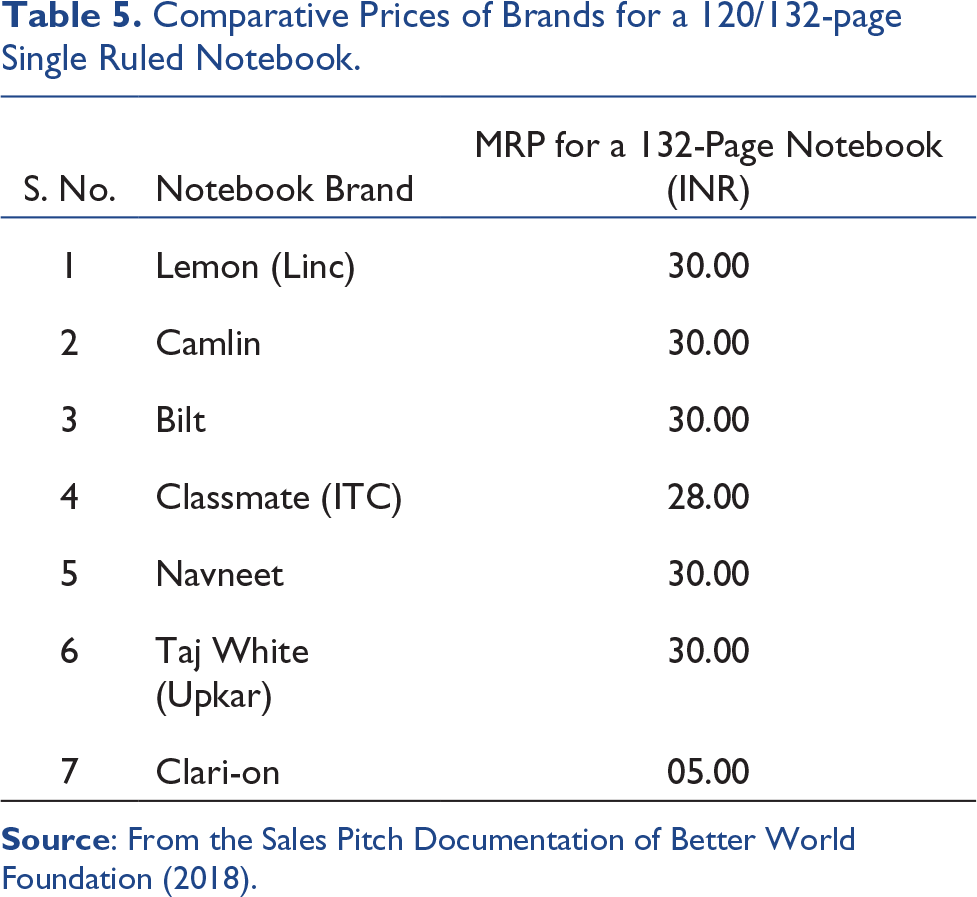
The influence of the top four players in the market on the rest of the industry appears to be very strong, with local players playing safe and ambitiously following the trends created by the market leaders; they maintain a status quo ante on prices and show little sensitivity to the needs of the end customers, especially, rural school children/ parents (Table 5). 3 However, due to the vast spread of the country and the remoteness of several schools, none of the large players were in a position to build last mile delivery channels to offer notebooks round the year and maintain supply of affordable notebooks round the year (Prabhakar, 2018).
Creating a Twin-Pronged Strategy
Clarion set upon the task of addressing the value chain of school notebooks business at two levels: at the first, identifying the cost drivers of the manufacture of notebooks and then identifying how one minimizes costs at the local manufacturer level. It contemplated whether it can leverage the production costs by creating a revenue in flow opportunity and make it operational and felt that it might become a game-changing strategy. Secondly, it recognized the role of the district administration network and thought that developing a new distribution channel for the school notebooks by engaging with them will help Clarion reach and serve every school in the area; it could address both the issues of efficiency and responsiveness. Clarion hoped that the twin-pronged strategy would result in successful serving of multiple clientele groups—school children, school administration and district administrative authorities. The notebook makers and suppliers desire timely supply, affordable price and assured payments for the stationary supplied, and if all these parties can be satisfied by pursuing the goal of providing a good-quality school notebook at a nominal price, Clarion would be an all-round winner. Clarion set the target of selling a notebook to a school kid for ₹5, instead of the existing price range of ₹25–30.
Building the Business of Clarion Education and Skills Private Limited
Manoj Prabhakar, Alok and Abhishek attempted to handle three distinct functions of Clarion to achieve a faster breakthrough. Manoj worked on the design of notebook, its cover and contents. His expertise in creative strategy helped him make sample runs of notebooks and offer them to different prospective clients.
Alok Kumar, a Fellow of Prime Minister’s Rural Development Programme, built on, liaising with almost every government department and rural development agency in Bihar, Jharkhand and other neighbouring states, on promoting the idea of affordable notebooks across the region and started building orders from them for seamless supply to every school in their jurisdiction.
Abhishek Raman focused on the operations and market intelligence, on procurement of right quality raw materials, on finding and working with printing presses to print the notebooks on one side and on monitoring the market dynamics of existing players, their pricing and distribution strategies as well as supplies.
The Trigger for Clari-ON Notebooks Project
Manoj was recalling an incident, on 19 December 2016, when he visited the house of a school student, a child of a carpenter in Ramgarh village of Shiekhpura, Bihar. He visited them to inquire about a brilliant student, Raunak Kumar. Raunak, who was in standard 1 in the school, appeared to be struggling to cope up with studies for no significant reason, and Manoj wanted to probe a bit deeper as the boy was a brilliant student and his parents were also committed about his studies. Raunak’s parents, Pawan and Sunita Darma, both, engaged in rural carpentry and earning a meagre amount of a ₹1,000 a month, shared their difficulties in buying required notebooks as each notebook costs ₹30. To spend around ₹200 every 2 months on replenishing with new notebooks was challenging, and they averred further that they end up using poor quality books which could not be used throughout an academic year. When Raunak showed his notebooks, he noticed that they were already tearing away, the pencil writings were not even legible and many pages were waning off. Later, examining a couple of other students’ notebooks in the school, Manoj soon realized that this was not just one student’s problem, but it was a problem faced by almost every child and his/her parents. That is when Manoj decided to enter the business and offer low priced, reasonable quality notebooks.
To address the challenge, the trio—Alok, Abhishek and Manoj—brainstormed what they could do, and came out with the thought that they should address the task of creating a supply base for notebooks themselves. Thus, they promoted Clarion Education and Skills Private Limited as a ‘for-profit enterprise’ and an exclusive supplier for BWF, functioning as publisher and printer of school notebooks. Manoj further elaborated that Clarion would focus on building efficiencies in production and effectiveness in distribution, in short, hinting a revamp of the entire supply chain for school notebooks. It started finding ways and means of manufacturing and supplying the notebooks at the lowest possible cost and a price that rural families and school children will find easy to bear.
Thus, the mission of Clarion Education as an organization was shaped, and in less than 2 years, that is, from December 2016 to mid-2018, Clarion Education silently revolutionized the Indian school notebook industry, bringing a 128- or 132-page (most selling SKU) single ruled notebook in the hands of a school kid at ₹5 against what is available in market for ₹27–30 each, producing and supplying almost 0.2 million notebooks by August 2018.
Early Breakthroughs
In the initial stages of Clarion journey, the team met various leaders of Bihar government, including the Governor of Bihar, to enlist support for the notebooks mission, to get Clarion enlisted by as many schools to get their notebook supply orders, building on their commitment to the motto of minimizing the costs of education at the hands of a parent.
As Manoj Prabhakar pitches his sales campaign, he states‘...“Right to Education” (RTE) mandates free and compulsory education for (all children of) age group 6–14 years, and ‘Sarva Shiksha Abhiyan’ (SSA) is providing textbooks and school dress free of cost, leaving the fringe cost to be borne by the students’. In many cases, the child finds it difficult to continue his/her education, and in some cases, he/she opts for cheap but poor quality of notebooks; Clarion offers a better alternative, by giving a good notebook at ₹5.
Manoj was successful in getting the initial orders from the Ministry of Rural Development, Ministry of Social Justice and Empowerment, Ministry of Health and Family Welfare and Swachh Bharat Abhiyan and few others that helped him to start making notebooks from few private printing presses. However, he was afraid that moving from these nominal orders to handle larger quantities of notebooks and spreading the supplies to a larger number of schools will trigger the competitive forces into operating for/against. He reaffirmed that they are ready to face competitive dynamics.
Launch of Clari-ON Brand Notebooks
Clarion Education struggled to drive the costs and achieve their target of a notebook for ₹5, as the key raw material for notebooks remains to be paper, and the suppliers happen to be large players, who hold vertical integrated business models to their advantage. Small notebook makers, dependent on paper from paper mills, play safe in their pricing, and they affirm that there is very little wriggling space for them in producing and distributing the notebooks at any sweeter range.
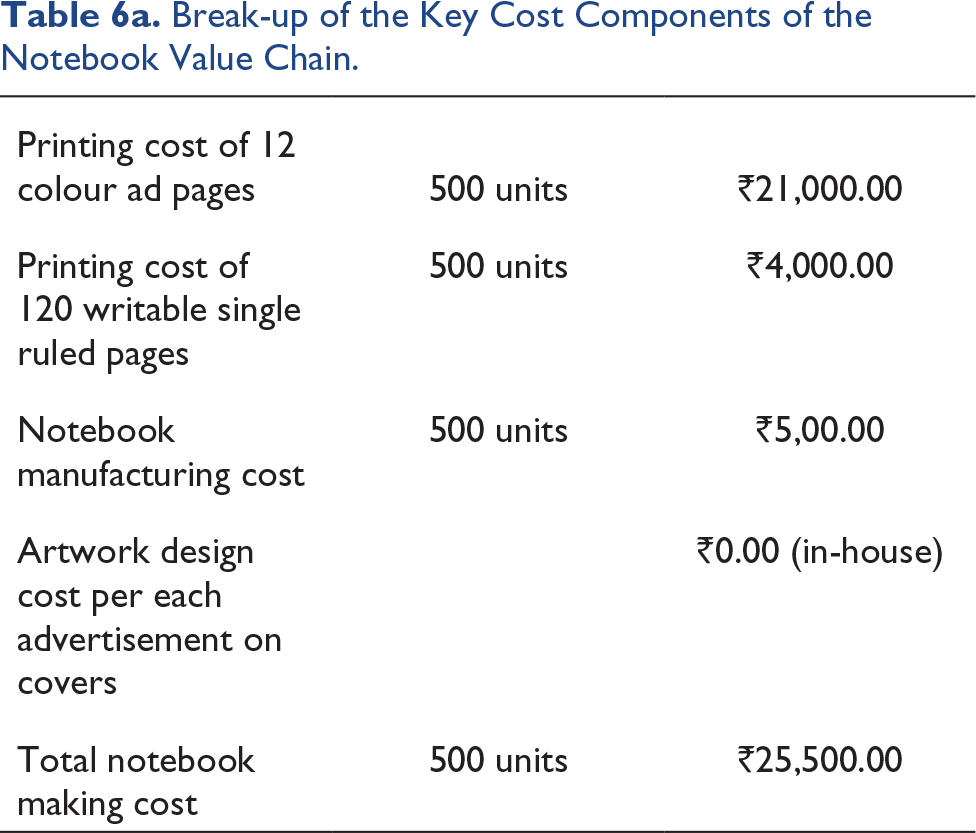
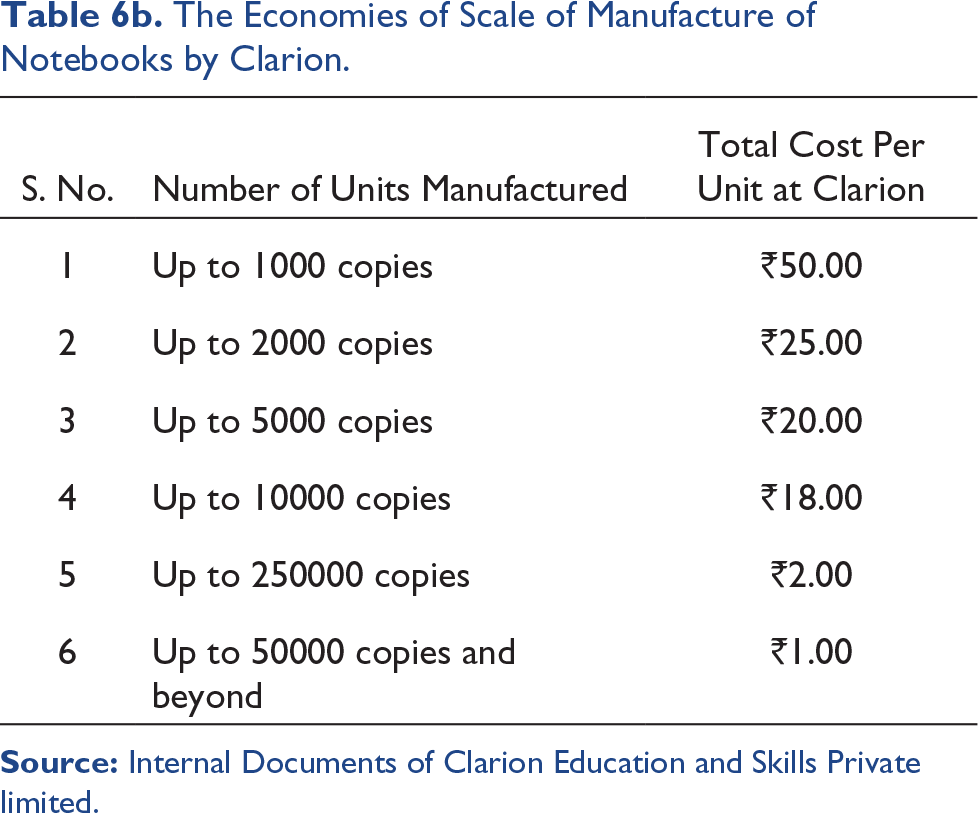
Manoj and his team attempted to study the notebook manufacturers, existing competition, supply chains and printing industry as well as retail stationery industry. Using a custom hired printing press, they printed the first sample of 500 copies of a 132-page, single ruled notebook in June 2017, which costed them ₹25,500, and the cost of each notebook was worked out to ₹51. The breakup of key cost components and economies of notebook making are provided in Tables 6a and 6b. Commenting on the scenario and reaffirming his resolve, Manoj Prabhakar stated that they would like to hone to achieve economies of operations to make ‘Clari-On, the Five Rupee Notebook’ a profitable notebook venture, and not just a successful social enterprise. Clarion is the start-up and Clari-on is the brand name given to their notebook. Searching for alternatives to the cost elements and value chain of notebook publishing business, Manoj and his team brainstormed and tried to find solutions from industries outside school stationery business.
Break-up of the Key Cost Components of the Notebook Value Chain.
The Economies of Scale of Manufacture of Notebooks by Clarion.
Clari-On: Innovating a Revenue Model
During one of his trips to interior villages, Manoj stopped by a roadside restaurant and picked up a newspaper from the news vendor. While he paid ₹3 for his newspaper, he realized that it is a 16-page, fully printed newspaper sold at a retailer for a paltry amount. He quickly noticed that the entire newspaper supply chain, starting from the publisher to the roadside vendor thrive and run a profitable business each. It dawned on him that the newspaper industry has far-reaching linkages with advertising and the advertisers meet majority of the costs of publishing the newspaper; a news reader pays partially for the news but mainly for the advertisements that one consumes along with. Building on this thought, Manoj took the help of one his mentors, Mr Sanjay Sinha, and studied the newspaper business model in depth; he even visited few large media firms, including Hindustan Times to understand how the newspaper industry operates and stays commercially viable and successful.
Learning from the publishing industry, the trio tinkered with and finalized the business model of Clarion. Manoj articulated the idea and made a fervent sales pitch for seeking advertisements on a notebook. As Manoj states,
We believe, it is possible to dedicate some space of notebook for the advertisement to bring the costs down and making it affordable for many deserving students. This would help the advertisers to reach the target audience in simple and cost effective way. The messages they convey to the students will be of value, relevance and impactful, and be seen as learning elements as well. Our aim is to provide good quality notebook to the maximum number of school children at a very affordable price. When you advertise and spread social and cause based messages through our notebook, besides the intended reach and value proposition for your communication, you can also be proudly associated with a larger social cause of helping poor students by subsidizing their cost of education.
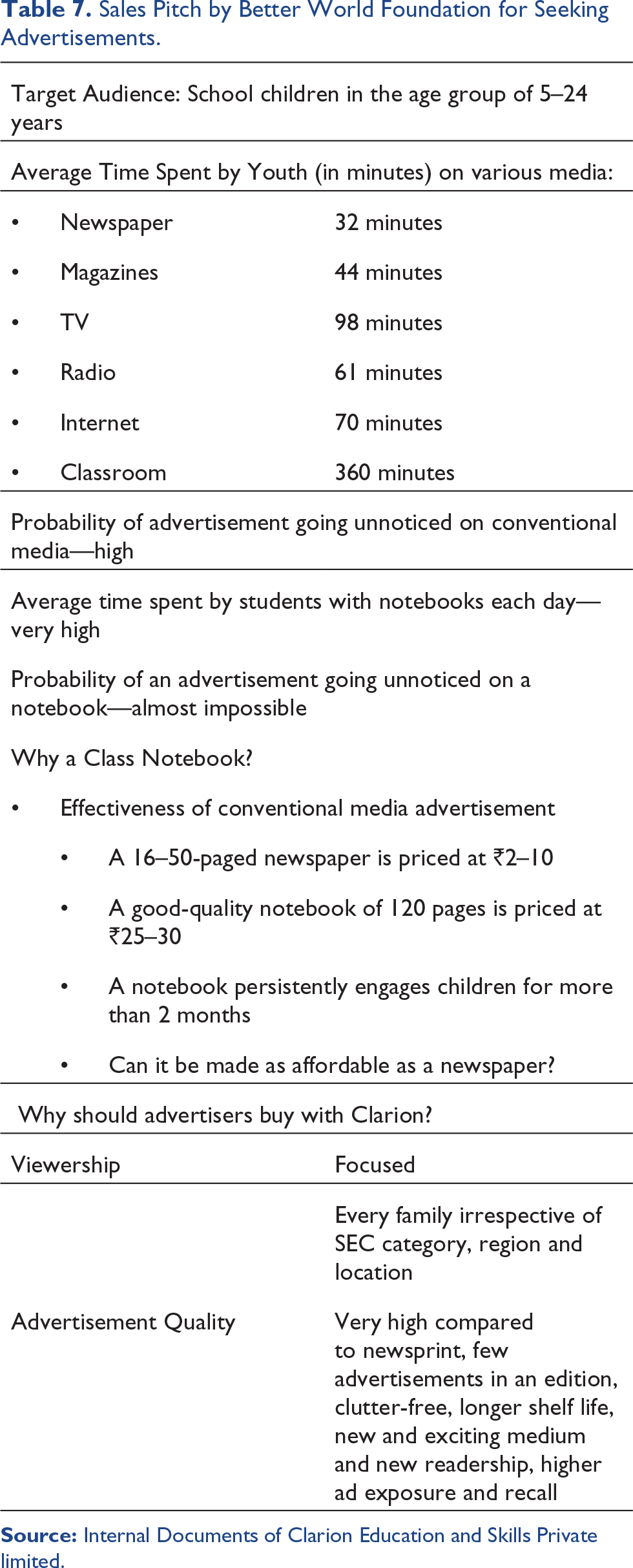
A professional sales pitch was made by Clarion Education to elicit advertisements on notebooks (Table 7). Manoj kept mailing the concept note and sample notebooks to many prospective clients, ranging from Amul to Hindustan Unilever, Colgate, Pidilite, Britannia, Hero Cycles, Godrej, Dabur, d.light Solar, etc.
Sales Pitch by Better World Foundation for Seeking Advertisements.
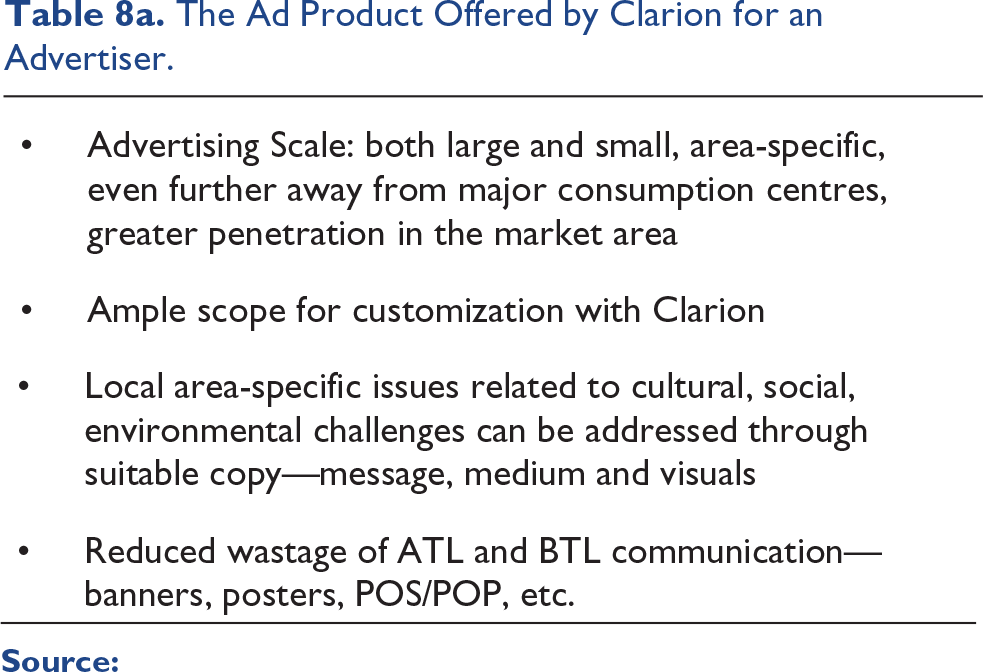
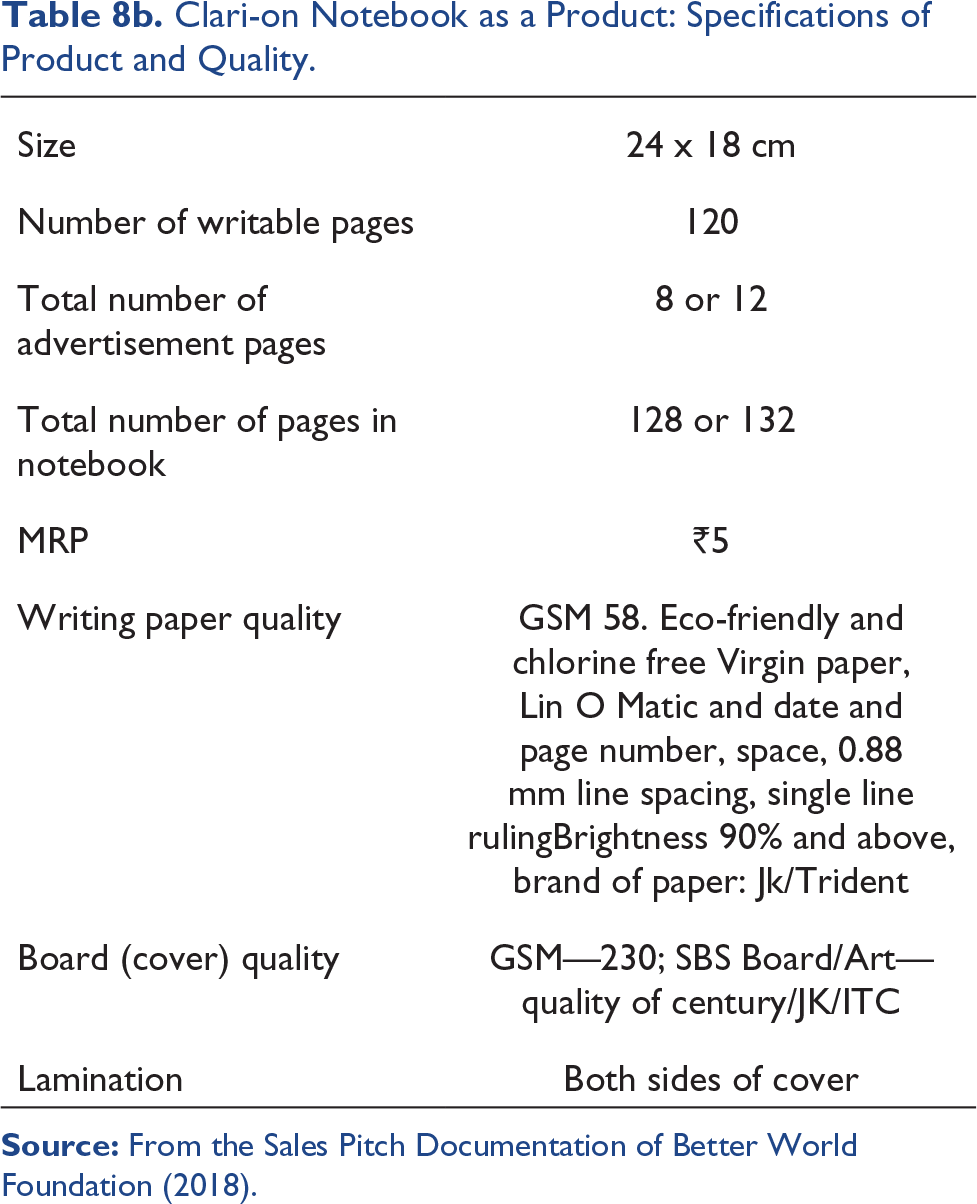
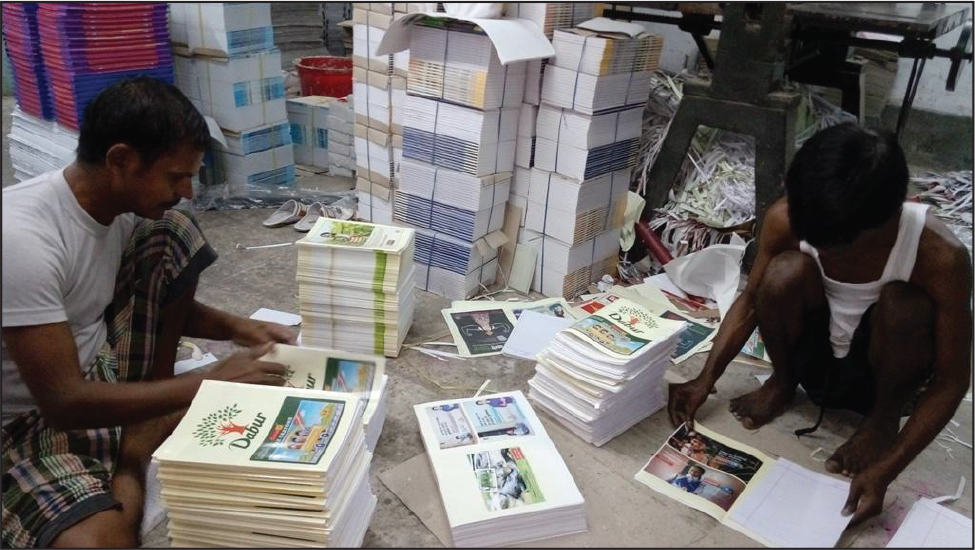
They continued approaching many agencies involved in primary and secondary education in the country for obtaining orders for supply of notebooks. The prospective clients included several central government departments, Indian Railways, India Post, state government departments, district administration authorities of Bihar, Jharkhand, Orissa and West Bengal. Table 8 provides the details of the product that Clarion team goes about marketing to corporates, government agencies and development organizations and to the advertisers on the notebooks. Figure 2 shows a local printing press of Patna (M/s Ramnarayan Badridass) outsourced to print the notebooks.
The Ad Product Offered by Clarion for an Advertiser.
Clari-on Notebook as a Product: Specifications of Product and Quality.
Manoj, Abhishek and Alok together went on refining the costs and developed a highly thoughtful price structure for the advertisements that they would like to obtain, so as to meet the costs of the notebook from every print order they receive. The advertising tariffs developed for soliciting the advertisements for the notebooks were kept competitive (Figure 3).
The First Break and Recognition
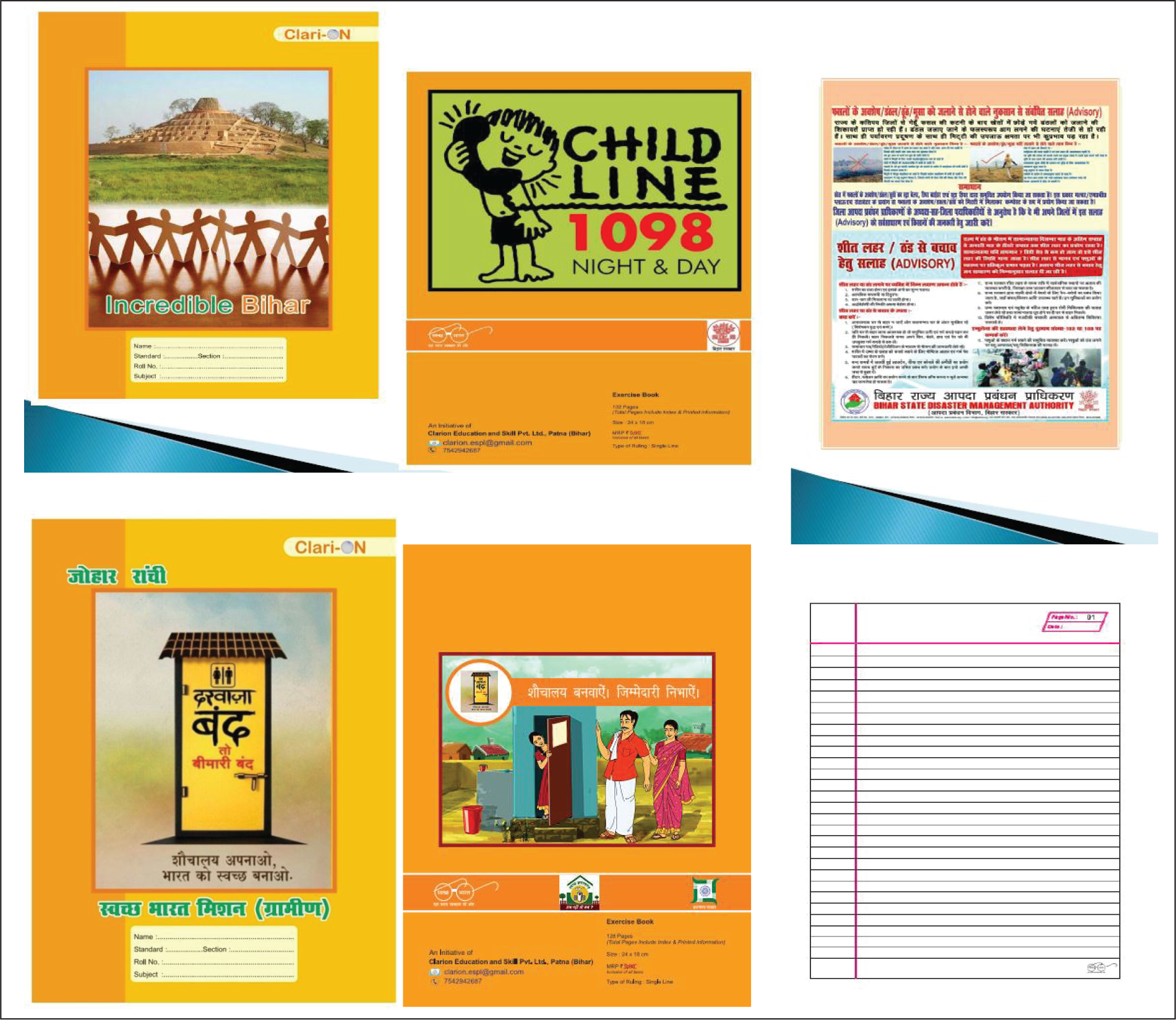
The sales pitch on both fronts worked slowly; both notebook buyers and advertisers came forward to order copies of notebooks and to sponsor an advertisement. The first break for Clari-On came from Mr Manjunath Bhajantri, District Collector, Simdega District, Jharkhand state, who was impressed by the commitment of Alok Kumar, who convinced him to place the first order for supply of 10,000 copies of notebooks. The District Collector planned to distribute them to school children in the presence of the Chief Minister of the state, where, in a surprise development, the Chief Minister of Jharkhand at the time, Mr Raghubar Das lauded the initiative and personally distributed the first 500 notebooks by his hand. It became the most memorable and path-breaking launch moment for Clari-On as well. A month later, on receiving good feedback from every school where the notebooks were supplied, Simdega district ordered for another 15,000 copies to be supplied to their schools. The word spread and response started coming from other districts of Jharkhand and also from Bihar. By the time 2017 came to an end, Clarion Education and Skills Private Limited, under the aegis of BWF, printed and distributed 50,000 units in both the states. The sample copy of the notebook, its outer and inner covers and the writing pages were designed thoughtfully (Figure 4).
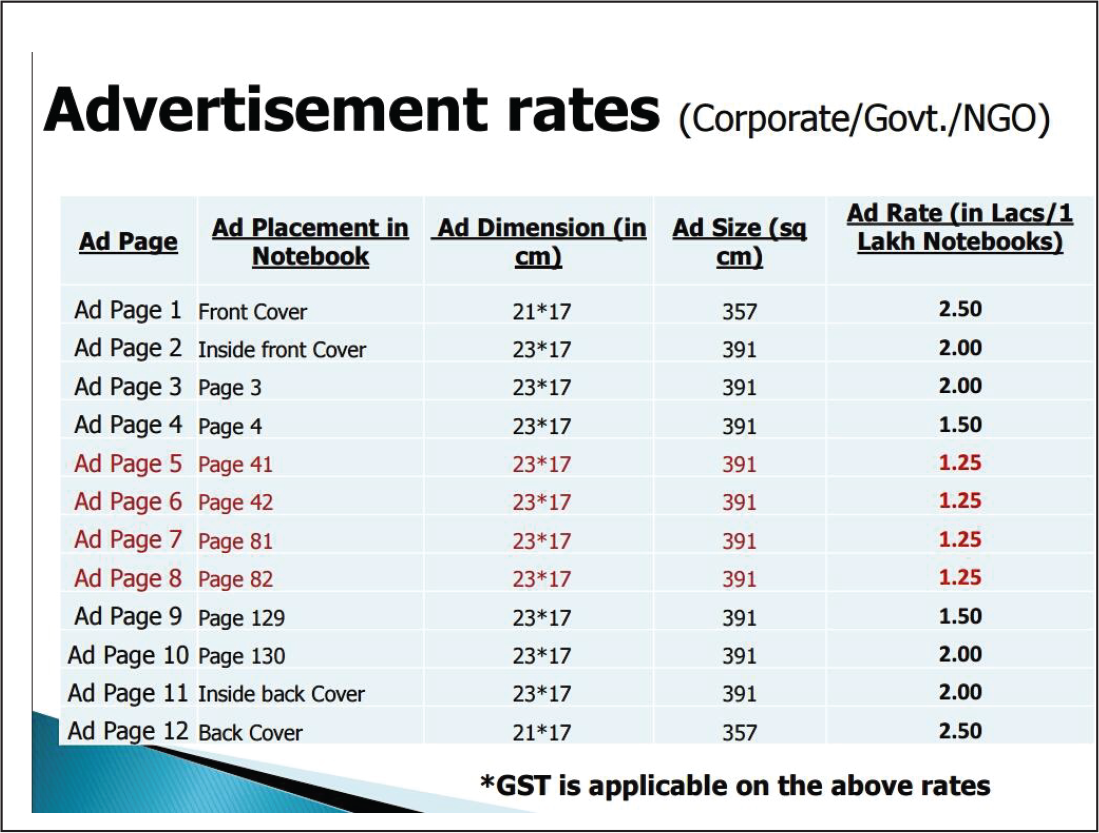
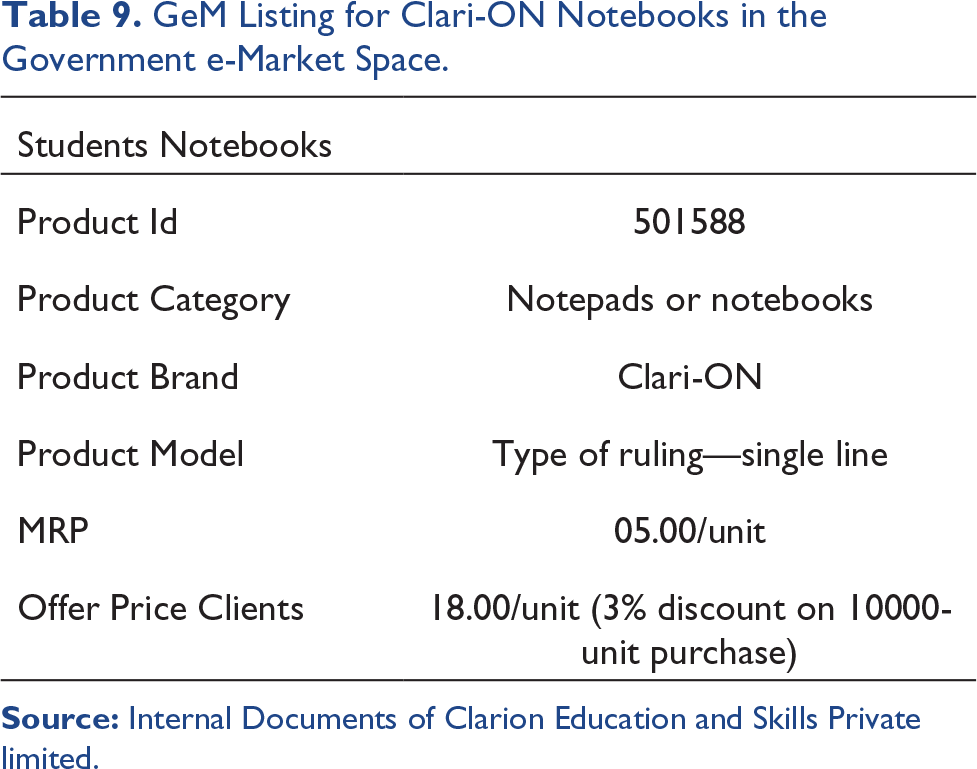
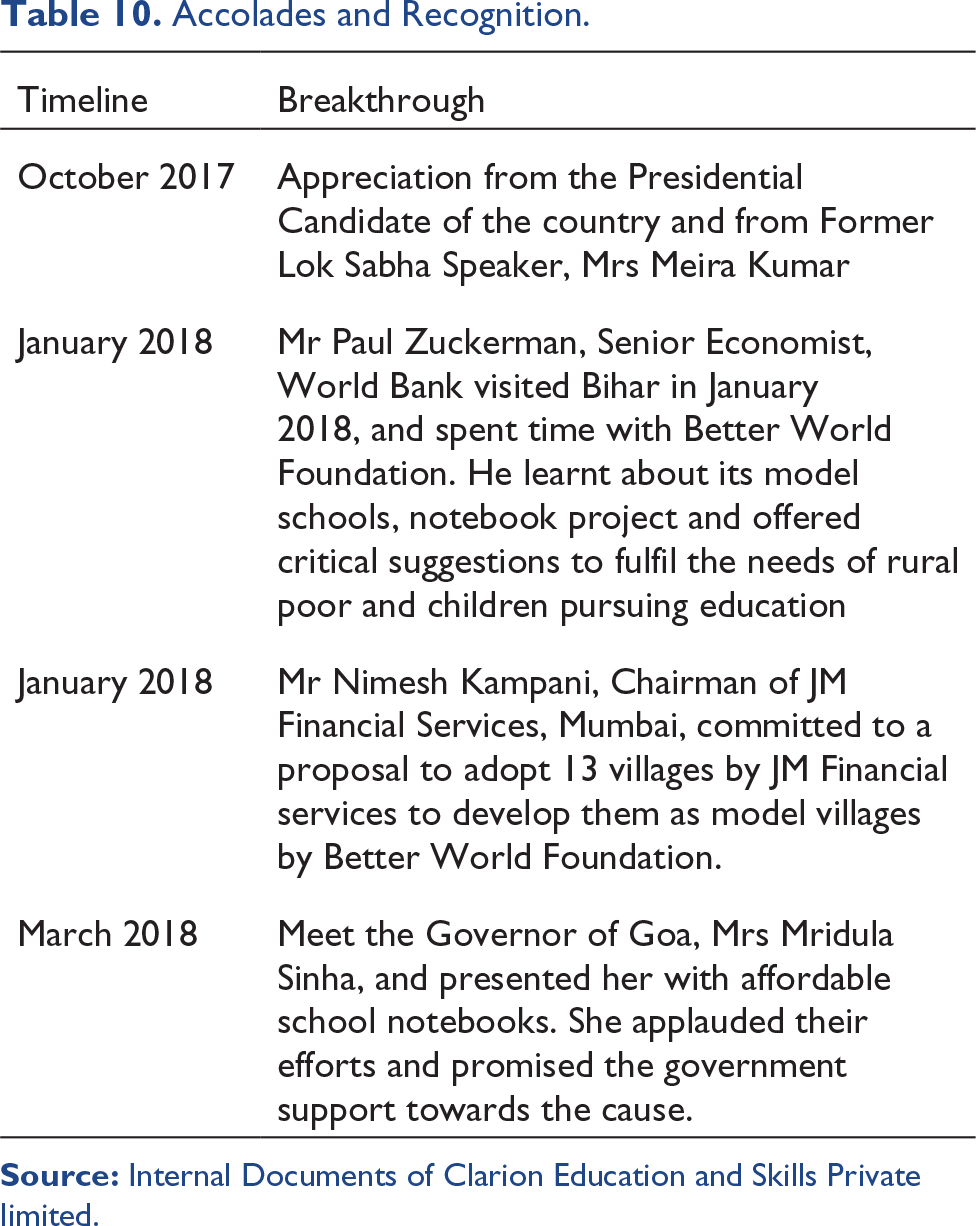
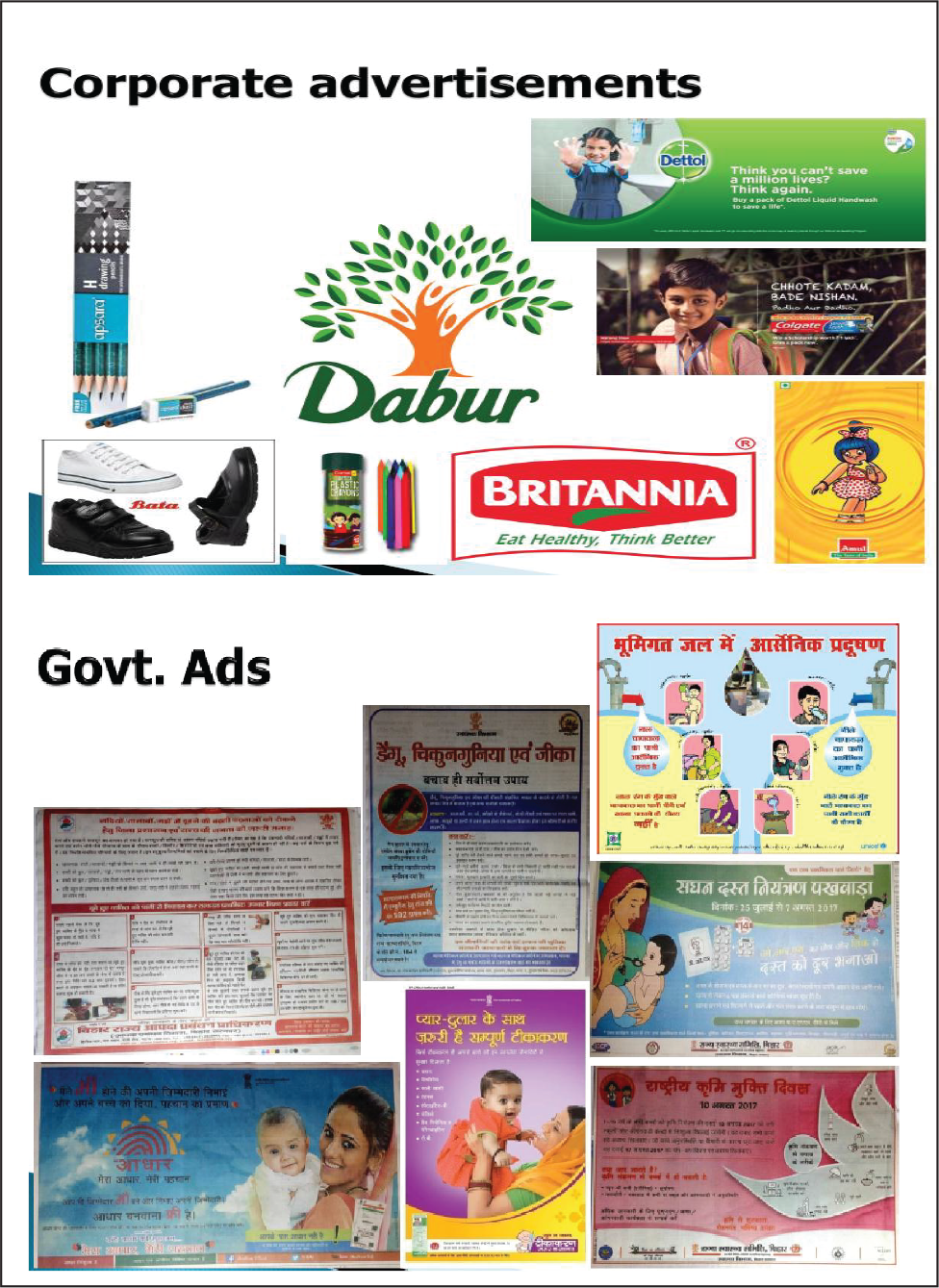
As the orders for the book went on growing, the pitch for advertisements too grew, as it was realized that the more the advertisements, the more would the number of notebooks printed be at the target price, else, the business model will not yield results. Each advertiser was sold the advertising space for a minimum print run of 10,000 copies and in multiples thereof. Advertisers ranging from corporates such as Dabur and Dettol; government agencies such as Swachh Bharat Abhiyan, Bihar Tourism Department, Ministry of Social Justice and Empowerment, Ministry of Education and Ministry of Rural Development; and NGOs such as CRY, CSR organizations like Aditya Birla Group who came forward to sponsor the publishing of the notebooks with their social messages, made it possible to make a print run of 50,000 copies in the first year, moving along to 200,000 notebooks by the second year. Both the corporate and government advertisements gave the initial success to the notebook project (Figure 5). As Clarion Education went ahead with scouting for advertisers and advertising messages, the parent organization, BWF went on identifying the schools and children to whom the notebooks need to be made available. The care taken by Clarion as well as BWF helped build the goodwill to find a place in government e-marketplace (GeM) and reach to larger clientele base for notebooks in Bihar and Jharkhand. (Table 9). As the operations started to grow and more orders were received, BWF started getting attention from public servants, policymakers, corporate investors, development organizations and international development agencies (Table 10).
GeM Listing for Clari-ON Notebooks in the Government e-Market Space.
Accolades and Recognition.
Building a Sync for Sustainability
Better World Foundation was contemplating to reach at least 10% of the 80,000 schools of the Bihar, say, to meet the needs of 2.5 million students with affordable school notebooks. In other words, a minimum of 10 million notebooks were to be published and distributed in the states of Bihar, Jharkhand and West Bengal during the next 12 months. Manoj wanted to aggressively pursue the state and central government departments, PSEs, NGOs, social enterprises and corporate houses to join him and support him in making school notebooks truly affordable and accessible in every village school.
Dilemma: Growth by Volumes or by Pursuing a Cause
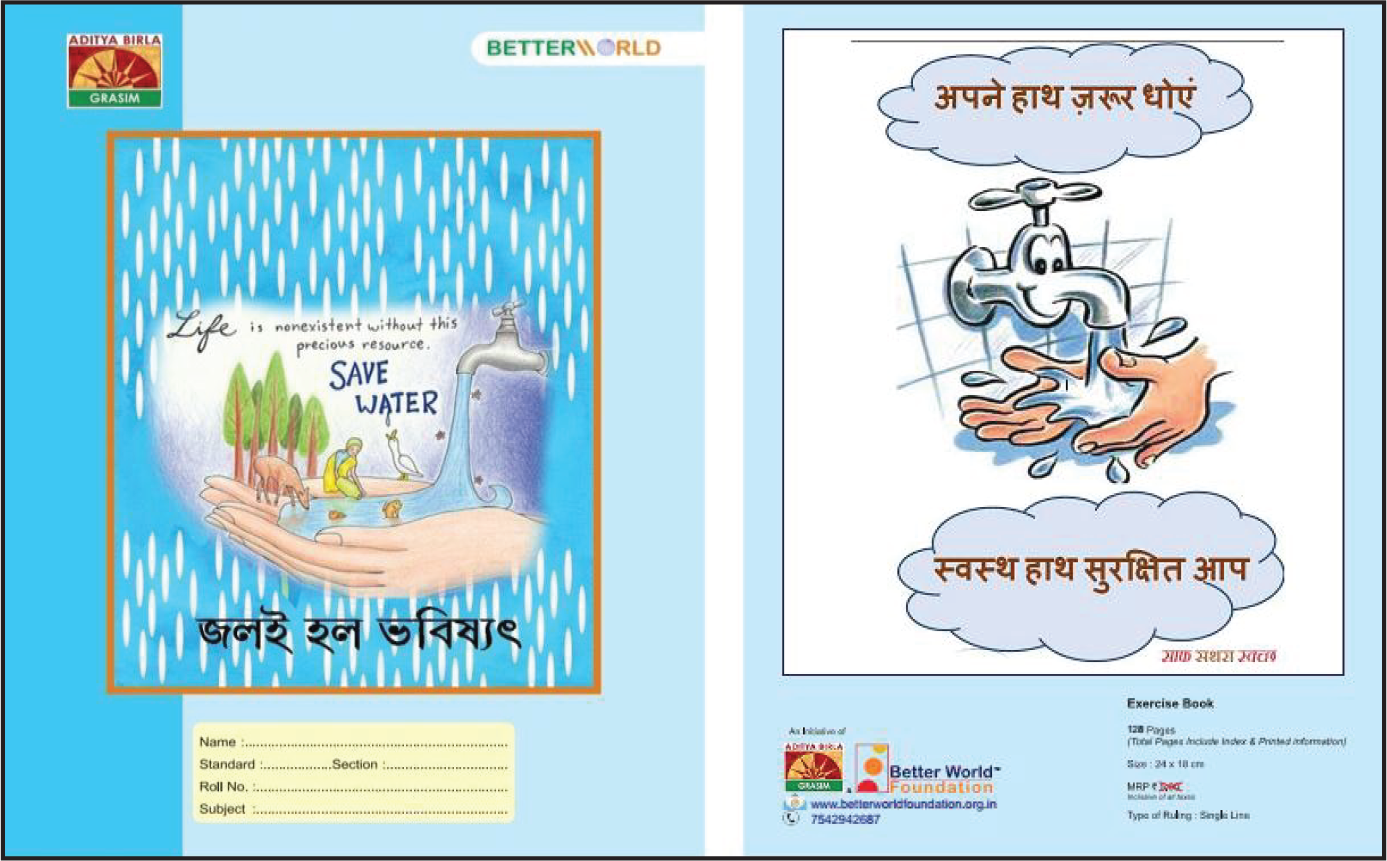
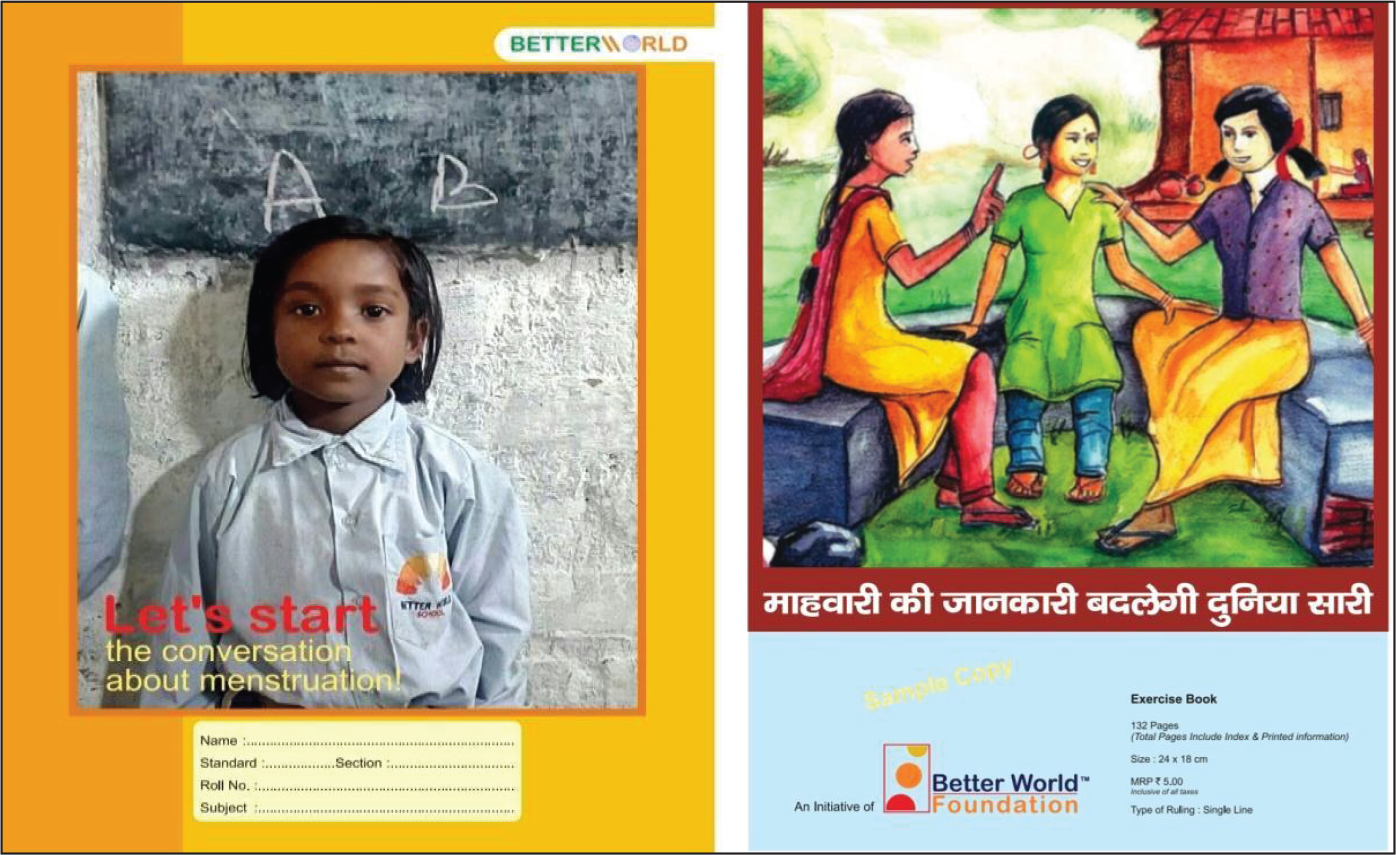
While the primary focus of Clarion was to enlist different social development agencies and organizations in Bihar to bring affordable education within reach to every rural kid in Bihar, the response from the two neighbouring states, Jharkhand and West Bengal, continued to increase. The first foray into Bengal’s schools was made in early 2018, as the Aditya Birla Group sponsored its advertising messages and placed an order for 5,000 copies to distribute in the schools in Bengal. The Foundation of Aditya Birla Group wanted to scale up the initiative to more schools in its operational area in Bengal. Clarion published notebooks with messages in Bengali for the client (Figures 6 and 7).
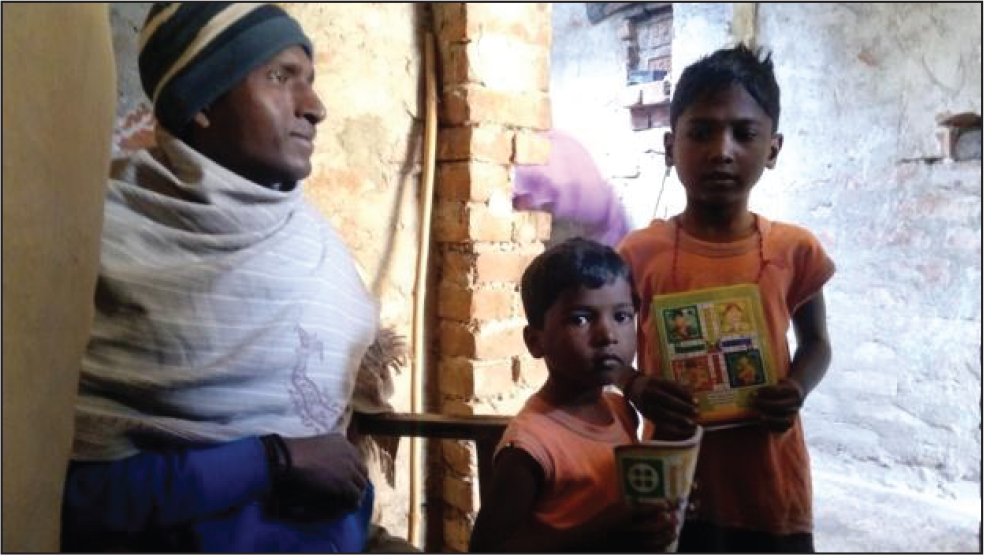
The founder trio wanted to scale up the operations, steer clear of market competition and stay with the unique business model nurtured (Kim & Mauborgne, 2004). They wanted to demonstrate that the idea is scalable, works over a diverse geographic area and meets the diverse needs of all stakeholders. They would like to see Raunak’s happy face in every child and parent they work with. Manoj can never forget the beaming Raunak and his parents when they presented him with Clari-On notebooks a year after they met him first (Figure 8). Manoj, now, clearly has two professional organizations working in tandem, one, making a footprint in offering quality education to children of rural poor, and the other, bringing out affordable notebooks for every school child. How should he devote time to address and balance these challenges and make both the social enterprise and the business enterprise succeed?
He was silent in his thoughts, how would the competitive forces respond, how would they address a large market demand and how would they cope up with the growing demands of the organization, as one of the founders’ hinted at his plans to leave BWF and Clarion to pursue other career opportunities. Undeterred of the trio breaking away, Manoj would like to build on the foundations created for Clarion and strive to keep the business away from competition but meet the market demands, and he may not even contemplate building a business empire, even though the prospects exist. These thoughts were broken by a phone call from his mentor, and Manoj decided to convey the next steps for BWF and Clarion to his mentor on the other side of the phone and seek his support.
Declaration Regarding Access to Data/Information
All data, facts and figures provided with regard to the two organizations under study are available from the records of the primary organization, BWF, Patna, and they may be obtained from any one of the co-authors of the manuscript or by visiting the organization’s website or its social media pages.
