




Abstract
The Indian Society of Agribusiness Professionals (ISAP) was a non-government, non-profit organization that had been working for sustainable livelihood in rural India. Indian farmers had several challenges: Poverty, illiteracy, small land holdings, inadequate access to clean water and hygiene, lack of quality seeds and fertilizers, inefficient marketing channels and corrupt middle-men, and little exposure to modern methods of farming, technology and communication. ISAP created a network of agricultural scientists, farmers, producers and government agencies, to facilitate an exchange of knowledge and resources. It ran skill development programs, entrepreneurship programs and used mobile apps, community radio to generate awareness in the farmers and provide them the necessary support through its network to help the agripreneurs in their innovations. The case showcases some innovations by these agripreneurs and how ISAP helped them achieve their objectives.
Introduction
It was the month of October, in 2018, just before the festival of Diwali, when all the homes would light earthen lamps; special prayers would be invoked for Lakshmi, the goddess of wealth; and people in India would wear their best clothes, visit friends and relatives and exchange sweets and gifts. The team of Indian Society of Agribusiness Professionals (ISAP) was especially happy, as they would be celebrating Diwali in their new office premises in the heart of the capital city, Delhi. The organization was incorporated in 2001, and they would be 17 years old by October 2018. While most of the office furnishings were in place, some of the blinds and curtains were still being put up in readiness for the new occupants. The October sun was never so harsh in his childhood however, reflected Sudarshan Suryawanshi, the CEO and co-founder of ISAP, gazing at the sunlight streaming in through the glass windows. Each year seemed to just get warmer, in fact. The change in climate was happening much faster than you could change the Indian farmers’ habits, thought Sudarshan wryly. He wondered, in the wake of this rapid climate change, what kind of interventions would improve the livelihood of farmers whose main occupation—agriculture—was highly dependent on the climate.
Indian Society of Agribusiness Professionals : Background
ISAP was a non-government, non-profit organization, headquartered in New Delhi, the capital city of India. It was ISAP’s mission to ‘enhance the livelihood opportunities’ in rural India ‘through sustainable intensification of agriculture, skill development and market integration’ in the field. ISAP activities had spread to 15 out of India’s 29 states, integrating more than a million farm households into the agriculture marketing system, through a network of producer organizations. ISAP had till date completed entrepreneurship development training for 5,111 graduates, of whom 1,783 were running their own rural enterprises successfully. Where ISAP was still to make a dent, however, were some of the traditional farming practices, and in making farmers transition to rural practices that were suited to a changing and uncertain climate. One common practice among farmers just outside the capital city of Delhi, for example, was to burn the residues of the rice crop every winter after harvesting. Similarly, the wheat crop residues would be burnt every April after the harvest. A road trip outside the capital city of Delhi at the end October, Sudarshan knew, would present the sight of agricultural fields in various shades of grey, and black, and a few fresh embers. This practice raised the level of smoke and suspended particles in the Delhi air, posing a health hazard to its citizens (Anand, 2016). However, the farmers refused to change the practice. They pointed, instead, towards urban automobile emission levels as the likely culprits. The farmers blamed also the frequent droughts, floods, storms and unseasonal rain, which left them with huge losses and no room for taking risks with novel farm practices.
India’s population of 1.3 billion was headed for shortages in cereals, pulses, edible oils and sugar. It was a multi-crop country, with all major climate types present, and 33 per cent of the rural population was illiterate (‘Adult Education’, 2016). Nearly 90 per cent of India’s farmers had landholdings of less than 2 ha, or 20,000 sq. m. The average farm household made an income of ₹6,500 from all sources, and over half of these families were in debt to bankers and private moneylenders (Rukmini, 2015).
Sudarshan Suryawanshi had completed his undergraduate as well as postgraduate education with agricultural engineering as a major, and he then worked in the field for 25 years across Asia and Africa. He and his team of founder members, familiar with the issues in the domain, had started ISAP with a vision ‘to improve the quality of life for socially and economically disadvantaged men and women’. They had grown ISAP to a 300 strong workforce of dedicated professionals across 25 field offices in 18 states of India. Together, they wished to form a bridge between the rural communities and the stakeholders in the corporate sector and government. They knew they had a humungous task laid out. But what worried Sudarshan most was the pace of climate changes in India and across the world. ‘We have to make the farmer understand climate smart agriculture. We have to teach him to survive, and even excel, given these changes’, he said. Agricultural practices in India had to simultaneously increase productivity, as well as become resilient to uncertain changes in climate, and reduce greenhouse gas emissions. How should the ISAP team go about initiating all these changes on the ground and how should they make the pace of change fast enough? Should they focus on the farmers’ sustainable livelihood? Should they focus on changing mindsets so that farmers adopted new practices, which were more productive, and climate-smart in the long run, though not so appealing in the short run?
Agribusiness in India
Agribusiness in India consisted of five main types of activities: (a) agricultural inputs which included seeds, fertilizers, pesticides, insecticides, livestock feed, organic manure and compost, planting material, electricity and diesel, repair and maintenance services; (b). agricultural production which included fruits and vegetables, pulses, edible seeds, nuts and oils, grain milling products, dairy products, meat, fish and poultry, beverages, tobacco and leather products; (c) agricultural processing which included dehydration, canning, packaging, processing of herbal and medicinal plants, dairy products, poultry products, livestock, food processing—for example, cereals for starch and feed, or millets for malt, drying, bleaching and processing for spices, condiments, dry fruits and savouries, mills for sugar and textiles; (d) creating and maintaining agribusiness infrastructure like irrigation facilities, cold storage and warehousing, specialized packaging and transport, agri-clinics and service centres; and also harvesters, tractors, tools, implements and farm machinery; and (e). trading, management and marketing, which included contract farming, soil mapping, weather sensing, retailing, supply chain management, technical training and seminars, consulting and capacity building, financing and insurance. Altogether, a large population of over 58 per cent of rural households in India were dependent on agriculture as their primary source of income (India Brand Equity Foundation, 2019).
Challenges for Agribusiness in India
Traditionally, intermediaries in the marketing chain of agri-products in the Indian agribusiness scenario had garnered huge profits, to the detriment of farmers and end-customers. Now, with the emergence of modern organized retail outlets, these traditional traders and vendor groups were up in arms. They had been threatening and protesting, sometimes violently. The changes towards modern retail stores had to be managed smoothly to protect the interests of farmers and of consumers, who would benefit from lower costs, wider range, higher quality and better services. Direct procurement was also expected to help the farmer by giving them a better knowledge of what needed to be produced when, through access to credit, and through exposure to a regulated environment (Organized agri-food retailing in India, 2011). The organized global players were expected to bring advanced technologies and better management processes. It was feared that they could, however, add to local issues in procurement, dumping, lobbying and controls, due to the advantage they had of their size and strength of investments. There were also concerns that advantages of lower costs and aggregated demand may not be passed on appropriately to users and farmers. The small and marginalized farmers, in particular, may suffer due to a low bargaining power.
Opportunities for Agribusiness in India
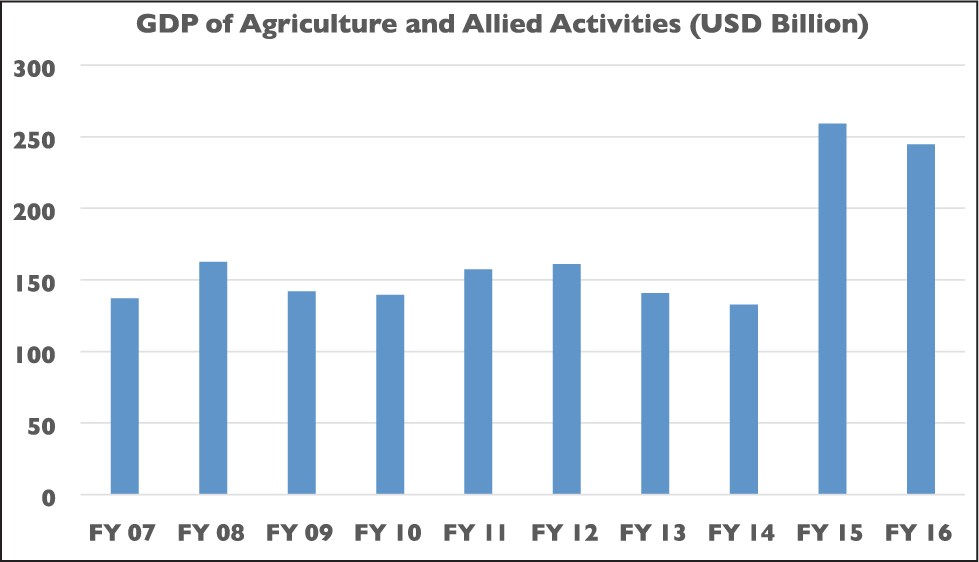
Agriculture in terms of domestic product in India was expected to grow by 4.1 per cent (See Figure 1), and India’s gross domestic product was expected to grow by 7.1 per cent to US$1,640 billion in the financial year 2016–2017. The agricultural sector was one of the largest contributors to India’s gross domestic product at about 17 per cent. There had been a greater investment in agribusiness by the private sector, and a cumulative foreign direct investment (FDI) of US$2,299.83 million during the period 2000–2016. Further in the Budget 2017–2018, the total allocation to rural, agricultural and allied sectors was increased by 24 per cent (India Brand Equity Foundation Archives, 2017). With better-organized supply chains, and retail stores, this sector would provide employment to a larger number of the population. The greater focus on agribusiness rather than agriculture was expected to influence positively not only production but also processing, marketing, distribution and trade. It was hoped that this would lead to innovation and entrepreneurship by organizations working in this domain, to help the small farmer deal with problems of size and scale. Capital formation in agriculture was vital to sustain innovation and entrepreneurship in agriculture (Rostow, 1956). It was realized that one needed to track public sector investment in agriculture separately, as it behaved like an enabler for private sector investment (State of Indian Agriculture, 2016). However, care and attention were required to oversee: were there improvements being brought about in the life of the marginal farmer? Was there altogether an increase in employment generated?
Indian Society of Agribusiness Professionals interventions
The ISAP interventions for rural livelihoods were focused on sustainability and capability building for the most disadvantaged. They included the redressal of the climate change problem. Overall, the objective of all interventions was how to increase the output from the existing land so that farmers were able to do sustainable farming. They fell under four broad categories:
Sustainable intensification of agriculture: This consisted of (a) integrated farming systems, which were organic, holistic systems that used several systems of cultivation to obtain continuous and sustainable improvements on land usage, especially for small landholdings; (b) farmer producer organizations, which mobilized farmers into member-owned producer organizations, so that they got the necessary support and access to resources; (c) agribusiness village resource centres that gave access to tele-medicine, tele-education and service linkages for other agribusiness purchasers and suppliers; (d) custom hiring centres that offered expensive farm equipment on hire to farmers, on a need basis; (e) value chains and market linkages required to bring the farm product to the end consumer; and (f) use of information and communications and technology (ICT) for agri-extension. ISAP developed and used call centres and community radio stations. They prepared animation clips and disseminated information through mobiles, tablets and computers to the rural community. It was hoped that some of these steps would help the farmers in being more climate resilient.
Natural resource management: This consisted mainly of (a) safe drinking water initiatives to improve and augment present sources, to have better security and access to groundwater, surface water and rainwater harvesting methods; (b) watershed management, to improve the water supply, collection, survey, water quality, drainage and the laying down of water usage rights in areas of acute shortage; (c) and use of solar and biogas energy, to reduce the emission of greenhouse gases while offering a commercially viable clean fuel for cooking, lighting and power for farm equipment.
Women empowerment: This consisted of: (a) women’s self-help groups (SHG), local groups of 15–20 rural women, formed to promote savings, credit and income generation activities, as well as social change initiatives; (b) rural enterprises for women that increased participation of women in micro-enterprises as well as in the labor force; and (c) SHG federations formed of 10–20 self-help groups, to support them with relevant information, training, processes, monitoring and evaluation, audits, ideas and funds.
Skill development: The two kinds of activity ISAP arranged were: (a) vocational training and (b) entrepreneurship development programmes (EDPs). ISAP had to date trained more than 10,000 rural youth belonging to the segment below the poverty line and placed them in companies, banks, schools, cooperatives and dairy and retail stores. The EDPs, on the other hand, covered business skills, soft skills, support for getting funding and mentoring and guidance afterwards in running the business. ISAP has held the programme for more than 6,100 students so far and mentored 2,458 successful ventures out of the group. As Sudarshan Suryawanshi remarked with pride, ‘Our programs are for enhancing livelihood opportunities for the poorest of the poor in rural India’.
The Risks: Climate Uncertainties and Agribusiness
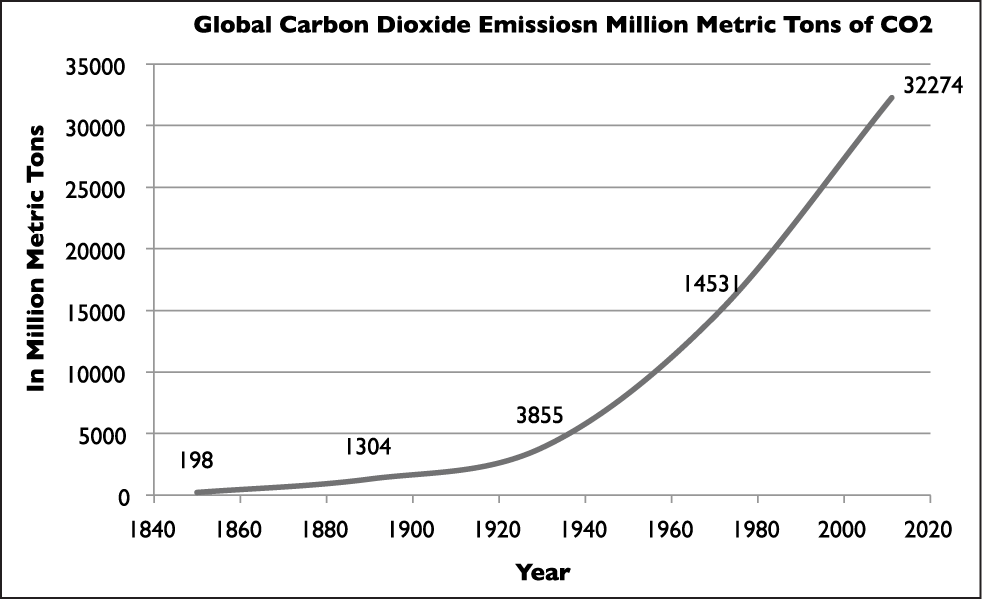
The dependence of agriculture on fossil fuels and the clearing of forests and grasslands for farming to feed the increasing population of the world have added to global levels of carbon dioxide emission. The present chemical inputs–dependent methods of farming had increased the levels of all three major greenhouse gases: carbon dioxide, nitrous oxide and methane. The use of fossil fuels, the manufacturing of fertilizers, industrial livestock operations and all features of modern agribusiness focused on immediate gain were culprits in driving climate change. ‘Scientific evidence for warming of the climate system is unequivocal’, as per the inter-governmental panel on climate change (Climate change, 2019). Global sea levels rose by 17 cm in the last century. In the year 2015, the global average temperature was 1°C more than the 1880–1899 average. The oceans absorbed much of this heat, and the Greenland and Antarctic ice sheets decreased in mass. Glaciers retreated around the world, and the spring snow melted earlier. The acidity of ocean waters had increased by about 30 per cent since the Industrial Revolution, as a result of increased carbon dioxide emissions (Figure 2).
‘The biggest challenge areas for us are uncertainties in climate change, and lack of resources’, said Sudarshan, ‘We have to take them as givens and manage both’. ‘There are three things we are focusing on, in our initiatives’ he continued, ‘first thing, we need to do some simple projects that show the way forward…and show success…we have already been able to complete a few projects in the states of Rajasthan, and in Karnataka, and launched farmer-producer organizations. The second thing, we are trying to involve all stakeholders, from the corporate, governments, the farmers and residents, the community must be involved…Thirdly, we need to communicate through our own centers, and through communication and technology, to spread the word…..to spread the stories of innovation and enterprise, to spread stories of success, and also to prepare them for change…. we have to spread the stories of adaptation, of resilience’.
Sudarshan explained that they have been teaching farmers the concept of integrated farming system. He said that the farmer must not only concentrate on farm production, he must also have other sources of income. The farmer should concentrate on livestock, agricultural forestry, fodder, horticulture, and ISAP wanted to increase the farmer’s income. So that even if one crop failed, or there were failures in the entire region, the farmer would survive, along with some livestock. Sudarshan mentioned that they were seeing successes on the ground. Farmers were picking up on poultry and dairy activities, and increasing their income. Sudarshan said that they now needed to multiply these success stories to hundreds and thousands of farmers.
The integrated systems solved some other problems too. ‘This is a protein deficient country’, Sudarshan remarked, ‘The food habits are such that people take more of carbohydrates and sugar. If the farmers start commercial goateries and poultry businesses, they themselves will have access to healthier food. When the farmers are healthier, and they are earning better, they will change some of their other habits too. Right now, the farmer does not even keep sufficient pulses for consumption of his own family. He wants to sell the maximum possible’.
The Opportunities: Stories of Innovation, Incubated by Indian Society of Agribusiness Professionals
In order to fight with climate change, and provide sustainable livelihood opportunities to the agripreneurs, ISAP made several interventions. It used technology as a mainstay across all such interventions. It successfully changed lives of several ‘agripreneurs’ across the country. It has also given farmers innovation awards. A few stories of success (Agri-clinics and agribusiness centers, 2014):
Rishi Ram Parashar went through ISAP’s ‘Agripreneurship development program’ in 2009. He was an agricultural graduate and had been working with a pharmaceutical company for 15 years. He wanted to work as an agribusiness entrepreneur in his hometown of Karnal, in the state of Haryana, in north India. During the training, he learnt about beekeeping and also visited an x. Impressed by his experience, he prepared a project report for a honey production unit for ₹1 million. ISAP not only mentored Rishi Ram for the know-how of the apiary but also in commercializing it. Rishi Ram got a bank loan initially for half the amount, and he invested his own savings for the rest. He was operational in 2010 with 100 beehives, and he made a small profit at the end of the year. However, in the year 2011, floods in the town of Karnal damaged 270 bee colonies, including Rishi Ram’s. With advice and mentoring from ISAP, Rishi Ram took on the challenge. ‘Beekeeping is mainly based on natural elements such as flowers, climate and bees per unit area. It is a migratory business’, he said. Rishi Ram learnt to track the flowering season and climate in areas around Karnal and relocated his beehives in the neighbouring states. ‘Honey is a real commodity, can be easily stored and doesn’t get spoiled immediately after harvest, thus making transportation and selling almost effortless’, he said. Rishi Ram has been using his pharmaceutical experience too to make and sell medicated honey for therapeutic purpose. ISAP also helped with the facilities and logistics so that Rishi Ram could train fellow farmers in the business. He has to date trained 50 farmers who have started their own full-time beekeeping business, and he has also recruited and trained 8 full-time workers to start production of processed honey products like jelly and wax.
Chandrabanu, from the state of Karnataka, in South India, realized the importance of greenhouse technology in regulating the microclimate of a unit. A postgraduate in agricultural sciences, he wanted to become an agripreneur, as well as contribute towards agri-technologies. With training by the ‘agri-clinic (AC centres) and agribusiness centres (AB centres)’, managed by ISAP, he learnt to construct poly-houses and shade-nets for cultivation of high-value flowers, fruits and vegetables. The poly-houses not only helped in controlling the microclimate, some of the vagaries of seasonality were also removed.
Chandrabanu started in 2008, and within 5 years, by 2013, his annual income rose from ₹0.5 million to ₹2 million. In the 5 years, he completed construction of poly-houses and shade nets over 100 acres or about 0.4 sq. km of land. He also employed 60 people and trained them in poly-house construction. He helped them with a market network for their produce, with help from ISAP’s AC & AB centres. ISAP had since popularized the technology of poly-houses with information bulletins and videos (Figure 3).
Suresh Kumar from the city of Vijayawada had developed a technology for aerobic fermentation of poultry litter with a microbial culture, to form organic compost. ‘A kilogram of compost culture requires a ton of poultry litter. The poultry compost application has had an added benefit of reducing the use of chemical fertilizers by more than 25%’, he said. There was another bonus benefit. ‘The microbial culture, when tried in poultry litter’, added a poultry consultant, ‘has effectively reduced one of the major problems of bad odour of litter in layer-bird-sheds’. Suresh has also experimented and developed a technology for keratin protein extraction for farm use. Made from human hair and bird feathers, this organic protein formulation has been successfully tried out in cotton, chilies and paddy crops. It was found to have improved farm yield as well as plant metabolism. Suresh Kumar’s efforts have saved the municipal authorities from some of the problems of waste disposal, as well as provided environment-friendly solutions.
Vikramjeet Singh was a graduate from Punjab University, but he was unemployed. He came to know through some friends about ISAP’s AC and AB centres, and visited the ISAP Amritsar centre in 2014. He was very keen to start a venture on his own, but he had no support from his family members. ISAP gave him training about seed cultivation techniques; knowledge about activities suited to the local climate and soil; and boosted his morale by connecting him to other cultivators. Vikramjeet was able to raise an initial amount through friends and the ISAP network, and he was able to start cultivation of ’Basmati rice’ seeds. Within a year, he was making small profits and had employed six farmers to work with him. He had diversified to cultivation of vegetables like cauliflower and spinach. ‘I like helping people’, said Vikramjeet simply, ‘so I provide the knowledge of the vegetable and seed cultivation to farmers who come to me’.
Gundappa was a small farmer growing green gram in Pattan village, north Karnataka. Green gram was one of the main pulse crops in India, and it was popular because of its protein-rich seeds. It was a warm weather crop and was grown in several states of North as well as South India. It was a volatile crop, and it was suitable for growing as an inter-crop after rice cultivation. Gundappa came to know about ISAP’s integrated farming system, at one of its information centres and underwent training. He had been growing other vegetables as well as raising cattle on the same farm. This had allowed Gundappa to protect himself from uncertainties of climate, as he now had several revenue streams. If one crop failed, he would previously be thrown into debt and disaster.
Also, this way, Gundappa’s family could now keep some of the green gram for their own consumption, said Sudarshan. It was the cheapest source of protein for the family. Previously, the family was tempted to sell all the green gram produce as it was the only source of income for them (Figure 4).


ISAP used its community radios, newsletters and AC & AB centres across the country, to spread such success stories across the country. This had resulted in recognition for the innovators, and lead-farmers, as well as led to the effective commercialization of their products and a large number of follower users. ISAP made high-definition animation and SlideShare videos of tools and technologies accessible to marginal farmers, at its centres, to disseminate information.
The Future: Challenges for Indian Society of Agribusiness Professionals
What were the biggest challenges for ISAP? The ISAP team said they faced two main constraints: the first was capital. While ISAP had tapped international and national organizations, the state and central government departments (Figure 5), the enormity of the task required more financial outlay. The second challenge was the right national focus. In a large complex populated country like India, there were a whole host of problems of national importance at any given time. Governments, corporates and agencies shifted their attention accordingly. If in one year the focus was on water and sanitation, the next year it could be immunization for children or availability of quality seeds. While the related plans for any focus area had benefits for all citizens, the funds and attention for agriculture suffered when the focus shifted to other equally urgent areas. To meet these challenges, ‘We reach out to as many agencies as possible’, said Sudarshan, ‘We participate in bilateral projects. We are able to utilize the experience gained and integrate it for our own projects. We also use a lot of technology for communication, and dissemination of information, including mobile applications’.
The Indian Society of Agribusiness Professionals Approach
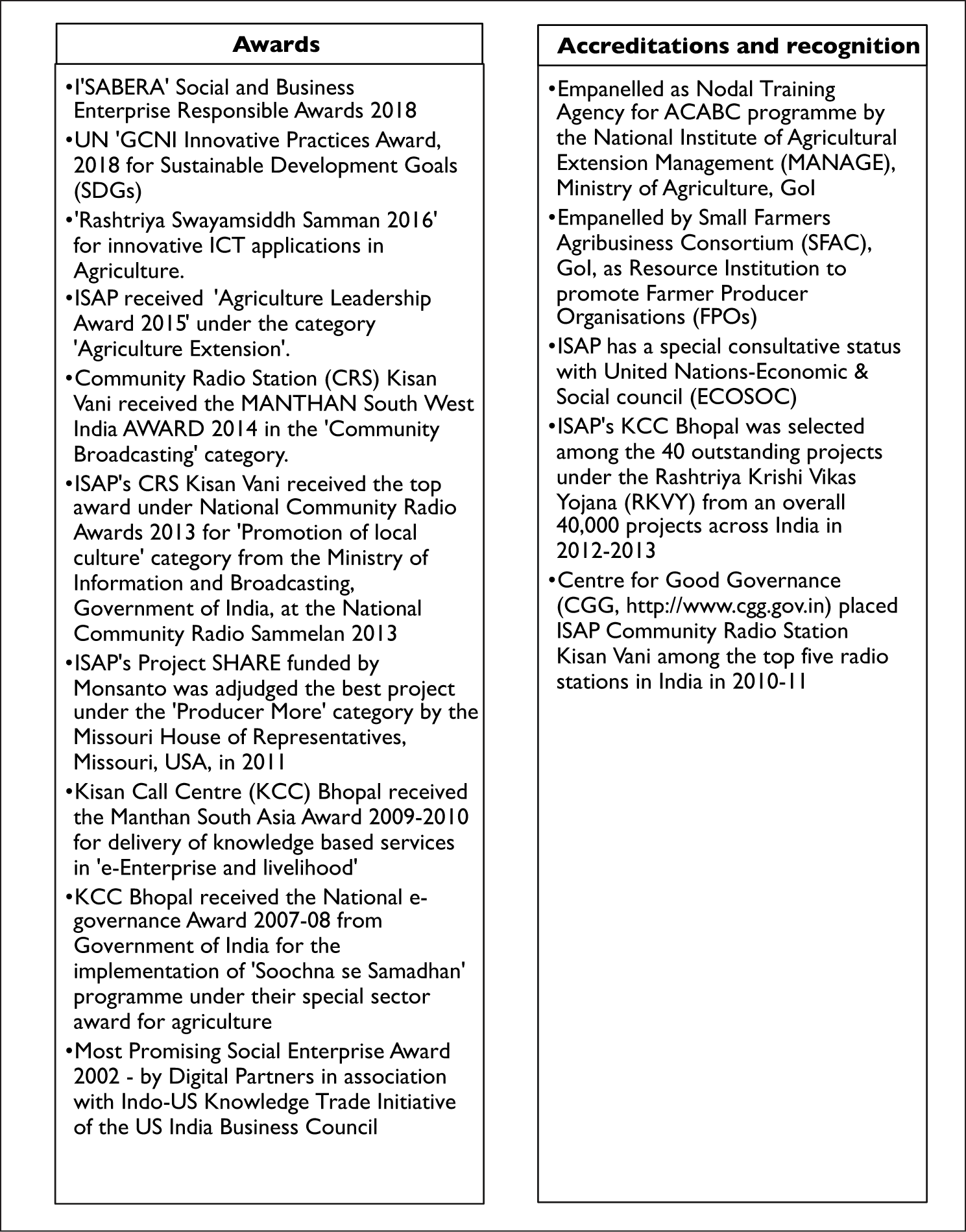
‘Our work is at the intersection of the development and market paradigms’, said a member of the ISAP team. ‘We focus on rural enterprise development, increasing efficiency in the value chain, and socio-economic benefits to the community (Figure 6)’. ISAP had won several awards (Figure 7) for innovative use of ICT for managing climate change. Because of the large number of crops and their varying calendars of sowing and reaping; different climate conditions of temperature, precipitation and humidity; types of soil; and local economic impact, the assessment of a given crop output in a given area was a complex exercise. ISAP has partnered with professional bodies for doing this and used its ICT tools to answer farmers’ queries, broadcast information through community radios, as well as spread knowledge through its field centres. ISAP had used these methods to spread positive stories about innovative achievements in the farming community and spreading a solution-minded approach. It reached over a million rural families, across 5,000 villages in 18 states of India. ISAP partnered farmers in producing innovative products, as well as supported them with implementation, publicity and marketing support, reward and recognition.
The Road Ahead
ISAP found from its long experience that different practices were required to prepare for, adapt to and mitigate the effects of climate change for the farmer. Also, these depended on the size of the farm holding, the type of crops and the mix of activities the farmer was able to handle. While one farmer had to be advised a change in irrigation practices, another required different crop varieties in preparation for drought or floods. Yet another required advice on sequencing the cropping pattern or the grazing pattern differently. One farmer required help with better quality seeds and farm inputs. Yet another farmer required help with technology applications and expertise. While farmers could be equipped with know-how and networking, the solutions had to come from them. Could different kinds of agribusiness raise farm incomes and lift farmers from loans and unhealthy living? Overall, 70 per cent of India’s poor, or 770 million people, lived in rural areas (India: Issues and priorities, 2012). Should the focus be on increasing their incomes or on productivity and food security? Indian agricultural growth had slowed down, especially for cereals and pulses, the staple diet of most citizens. Should the focus be therefore on modern irrigation and drainage methods and high-yield farm inputs?
Given the scope and complexity of these problems, ISAP had over time succeeded in creating the largest network of agribusiness professionals in India, and it had brought all the stakeholders together. ‘Lead farmers’ identified by ISAP were first trained in integrated farming systems, cropping techniques, horticulture, poultry and other activities, and they were then used to train other farmers (Figure 8). Government agencies, multinational development organizations, corporate social responsibility divisions of private firms, agribusiness professionals, entrepreneurs and business owners had been involved in the ISAP network (Figure 9). All of them were also connected through communication technologies and social media interventions by ISAP.


However, the biggest uncertainty looming large over the agricultural community was that posed by uncertainties arising out of climate change. How should ISAP best contribute in improving the livelihood of the most disadvantaged farmer, while at the same time, preparing for uncertainties? How should ISAP help the farmer battle conventional problems of small landholdings along with the modern challenge of rapid climate change and technology requirements? How should they help raise productivity and help in ensuring food security? Innovation was the key, they knew. How should they quicken the pace of, and the diffusion of, innovative practices, to best help the Indian farmers thrive and grow?


Footnotes
Declaration of Conflicting Interests
The authors declared no potential conflicts of interest with respect to the research, authorship and/or publication of this article.
Funding
The authors received no financial support for the research, authorship and/or publication of this article.
