



Abstract
The article critiques the graduation approach, a poverty alleviation strategy implemented by the United Nations High Commissioner for Refugees (UNHCR) and its partners in low-income refugee-receiving countries. This article reports on a qualitative study conducted in 2020 in Zimbabwe’s Tongogara refugee camp with 47 participants through face-to-face interviews. We apply the lens of Amartya Sen’s development as freedom to demonstrate how multiple unfreedoms in the refugee camps context curtail the sustainability of the graduation approach’s six sequential stages. We find that in Tongogara, restrictions on refugees’ freedom of movement and other institutional limitations undercut the approach’s chance of viability. We conclude that unless structural concessions are made towards enhancing refugees’ agency, camp-based income-generating activities will remain at the subsistence level. We recommend that the six graduation stages be treated as indivisible and cumulative and that a stage-based evaluation be employed to guarantee the requisite freedoms at each stage.
Keywords
Introduction
Human displacement continues to rise, and by the end of 2022, the number of forcibly displaced persons worldwide had reached 108.4 million (United Nations High Commissioner for Refugees (UNHCR), 2023). As these numbers increase, so do the poverty levels experienced by the displaced. Displacement often leads to the abrupt loss of both material and human capital that sustain livelihoods, leaving many of the affected without the resources to initiate and participate in livelihood activities, resulting in extreme poverty (Cazabat, 2018; UNHCR, 2021). Displaced persons received by countries with encampment policies face an additional and peculiar loss of agency and freedoms of movement and association, which further undermines livelihoods. The 1951 Geneva Convention and its 1967 Protocol do little to address this issue, especially in the context of unprecedented rates of forced migration. Non-refoulement is the only ‘effective right’ guaranteed by the Convention, with no ‘positive obligation to assist’, leading to a restriction in freedoms as receiving countries become increasingly unwelcoming (Cole, 2015, p. 2; Taruvinga et al., 2021). The UNHCR (2025) also notes that, legally, the Geneva Convention and the 1967 Protocol are not constitutionally self-executing; they must be incorporated into national law to be enforceable domestically. Their limitations become apparent when nations are unwilling to make the necessary legal arrangements for full adoption. In such cases, countries may lodge reservations on critical provisions of the Convention, including those related to civil freedoms and economic participation. Similarly, the 1969 Convention Governing the Specific Aspects of Refugee Problems in Africa imposes barriers to movement, expression and association (OAU, 1969). Zimbabwe, with its only refugee camp, Tongogara, is a case in point.
To restore livelihood activities for the refugees, the UNHCR and its partners, including the government of Zimbabwe and selected non-governmental organisations (NGOs) operating in the camp, implement what is termed the graduation approach (UNHCR, 2014). This approach is an income generation-based poverty alleviation strategy that involves six sequenced intervention stages with the goal to ‘move … [participants] out of extreme poverty with a combination of social protection, livelihoods and microfinance’ (UNHCR, 2014, p. 1). The UNHCR envisages that participants in the graduation approach will cease to depend on the already strained UNHCR assistance and become self-reliant to finance their own access to critical rights like health, housing, education and food (UNHCR, 2014). However, the strategy of time-bound staged interventions is inadequate given the economic, political and social limitations of living and conducting livelihood activities in a refugee camp.
Encampment, in essence, means identity-based discrimination, geographical isolation and displacement-induced fragility; these are key factors that significantly reduce choices and opportunities for development (Masoom, 2016). In this article, we draw on Sen’s (1999) work to argue that systematic deprivation of certain freedoms, agency and civil liberties through encampment undermines the graduation approach’s goal of sustainable livelihoods. The political motivations for encamping refugees and the resultant income generation arrangements contravene the requisite conditions for sustainable livelihoods. Although the UNHCR and its partners in Zimbabwe have made arrangements to mitigate the effects of encampment on refugee income generation, these improvisations have brought less than satisfactory results for the ‘graduation’ agenda.
Camp-based administration of refugee affairs is restrictive with physical confinement, limited freedom of association and livelihood options. This makes the UNHCR’s planned leap from extreme poverty to sustainable livelihoods even more impractical. Zimbabwe’s camp-based refugee context presents an apt opportunity to explore some of the challenges faced by the UNHCR’s graduation approach. Camps are places inhabited by the chronically poor, people whom Barrientos and Hulme (2008) describe as those who have never recovered from severe shocks such as disability, illness or forced migration. Yet, Obi (2021) states that although the probability of camp-based refugees living below the national abject poverty line of the receiving country is 36%, studies looking at refugees’ quality of life in camps are few. Based on an analysis of data from the Tongogara camp, we argue that Zimbabwe’s graduation approach is constrained by insurmountable structural, policy and procedural limitations, which restrict refugees’ social and economic freedom. The goal of this article is to closely examine these institutional limitations that obstruct the pathway for refugees out of poverty.
The article begins with a brief contextual appraisal of the graduation approach in Tongogara; its steps, procedures and goals. An outline of the research methodology follows, and then a discussion of study findings on the socio-economic, political, procedural and policy contexts of the Tongogara camp that affect the viability of the sequential stages of the graduation approach. Lastly, we offer recommendations for development, social and human service professionals on how to best address the unique nature of camp-based refugee poverty and how to foster more responsive policy and practice adjustments.
Understanding the Graduation Approach in the Tongogara Refugee Camp
Since 2014, Zimbabwe has been one of the eight low-income countries where the UNHCR has supported the implementation of the graduation approach with refugees (UNHCR et al., 2016). Following the recognition that the number of refugees worldwide is increasing and that many live in grinding poverty, refugees’ material welfare in Zimbabwe has gained the support of the government, UNHCR and partnering NGOs. In collaboration with the government, a consortium of NGOs—primarily funded by the UNHCR under what is termed the poverty alleviation coalition (PAC)—focuses on expanding and diversifying income-generating activities to increase the economic resilience of camp-based refugees (Poverty Alleviation Coalition, 2019). As of 2022, a total of 844 households were engaged in camp-based livelihood activities (Mutingwande, 2022). Hashemi and Montesquiou (2011, p. 3) state that the graduation approach is deliberately targeted at the extremely poor and includes asset-building and management for sustainable economic activity with ‘graduation out of extreme poverty and into sustainable livelihoods as the end goal’. The UNHCR (2014) describes the approach as an enabler of self-reliance through engagement in livelihoods, the main goal of which is to decrease refugees’ need for support from UNHCR and others. The graduation approach has six sequential building blocks, namely targeting, consumption support, savings, skills training, asset transfer and social integration (Banerjee et al., 2021; Development Asia, 2019; Hashemi & Montesquiou, 2011; UNHCR, 2021).
Targeting is the beginning phase, which encompasses the deliberate targeting of the extremely poor as potential beneficiaries. The community concerned fully participates in the formulation of the criteria to determine what will be regarded as extreme poverty. Based on agreed-upon household characteristics, surveys and verifications are conducted until there is consensus on who the extremely poor are. In Tongogara, a selection committee composed of government and NGO staff as well as refugee representatives serves to evaluate the eligibility of prospective beneficiaries. More vulnerable groups like refugees with disabilities, women and households with high dependence ratios are ideally given targeting preference.
Consumption support entails time-bound support to meet basic household needs, such as food packages or cash, until beneficiaries start earning income from the productive asset(s) they receive as part of the programme. One of the premises of the graduation approach is that food insecurity causes prohibitive stress for poor households, which in turn reduces people’s capacity to utilise opportunities and plan ahead. Therefore, temporary support to meet basic needs is offered until it is no longer required. The government of Zimbabwe and UNHCR alternate between providing food baskets and monthly cash payouts in the Tongogara camp. The government and its partners also cover basic household needs like free education and health care services for refugees.
Savings involves equipping beneficiaries with financial literacy and budget management skills. It is meant to help the poor manage risks, build resilience and reduce the likelihood of having to sell assets when faced with a shock. Beneficiaries are expected to open savings accounts of their own despite the fact that a lack of formal financial services is cited as a problem in camps where there are such high levels of chronic and abject poverty. In Tongogara, income generation ventures include pre-implementation business and entrepreneurial skills training, requiring refugees to take mandatory classes on business and asset management. The end goal for this stage is instilling the know-how of saving for asset accumulation.
Skills training refers to imparting the requisite technical/practical skills to ensure refugee productivity. Income generation in Tongogara is based on the sale of goods and services. The trades run by refugees include agro-based projects like poultry, piggery and cropping. There is also small-scale manufacturing like soap making, carpentry and dressmaking, among others. Specialised services include motor mechanics and electronics repairs. These are specialised crafts that require professional training. Implementing agencies hire specialists in respective crafts to train refugees in their chosen fields. For agricultural projects, the government of Zimbabwe offers technical know-how and advice through the agriculture ministry personnel.
Asset transfer means programme staff and beneficiaries discuss the range of income-generation activity (IGA) options and assess the assets most suitable to assist beneficiaries in earning a living. Identified assets will then be transferred to jump-start a sustainable economic activity. In Zimbabwe, these assets are disbursed in two main categories, namely natural and physical assets. Natural assets, such as land, water and timber, are allocated by the government, while physical assets, like trade machinery and tools/equipment, are provided by NGOs. These asset packages are referred to as ‘start-up kits’ and are given to refugees at the beginning of their respective income-generation activities.
Social integration, finally, entails organising activities to foster social relationships between households and the community. Beneficiaries are encouraged to participate in interacting with peers to gain essential business and livelihood skills. Income generation training and implementation in Tongogara is designed to foster social relations with Zimbabwean communities surrounding the camp. Citizen beneficiaries are selected to fill a quota and undertake aided IGAs alongside refugees. Local Zimbabweans are also allowed into the Tongogara camp to buy refugee products as well as sell their own in a bid to strengthen business and social relationships between the refugee and surrounding communities.
In sum, the graduation approach is a set of sequenced services and assistance centred on poverty alleviation, thereby taking a developmental approach to human welfare. Moser (1996) argues that increasing the economic productivity of the poor requires a comprehensive, holistic social development approach that recognises the importance of inclusion and empowerment. Moreover, developmental social welfare, as a ‘productivist approach to social welfare’ (Patel, 2015, p. 89) and grounded in social development theory, is designed as a community rather than an individualistic practice model. Importantly,
…the point of departure of the social development approach is that social welfare users of services and those who seek help are not passive recipients of services but are active partners in solving problems in human relations and social conditions which impede people’s functioning. (Patel, 2015, p. 98)
Nel (2015, p. 511) concurs, stating that ‘development interventions based on sustainable livelihoods… attempt to strengthen how people are already able to cope and strengthen their potential with the aim to make livelihoods sustainable’. The essence and aspiration of the graduation approach lie in the agency and empowerment of targeted beneficiaries, which distinguishes it from a humanitarian approach to welfare. In the following sections, we will argue that although development is the intention of the approach, its application in Tongogara is neither holistic nor comprehensive enough, as it lacks a balance of social and economic assets for poverty reduction, thereby restricting its effect to a survivalist level. We argue that limitations in the graduation stages are fundamentally caused by a lack of crucial freedoms necessary for human development. The five distinct freedoms are political freedom, and freedoms of economic facilities, social opportunities, transparency guarantees and protective security (Sen, 1999).
Research Methodology
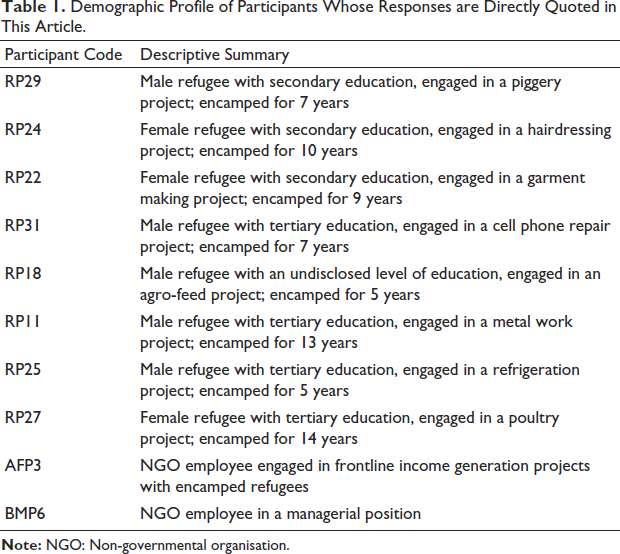
The study utilised a qualitative research approach because the nature of inquiry required in-depth views of participants’ subjective realities (Rahman, 2016). The intention was to contribute to specific and localised solutions for policy and programme problems (Baimyrzaeva, 2018); in this case, it was reconsidering the aid framework for refugees primarily funded by the UNHCR and its partners and guided by the graduation approach. As Tongogara is the only refugee camp in Zimbabwe, its income generation processes are very context-specific, and the intrinsic case study design (Denzin & Lincoln, 2005) was an appropriate choice for the study. To gather diverse perspectives from stakeholders with different positions in the graduation process, the study employed a triangulation approach, selecting three purposively sampled participant groups: eight managerial service providers, four frontline service providers and 35 refugees, resulting in a total sample size of 47. Brief descriptive details of participants whose quotations were selected for this article are presented in Table 1.
Demographic Profile of Participants Whose Responses are Directly Quoted in This Article.
The first sample group comprised managerial members of staff from four organisations currently active at the Tongogara refugee camp, namely the Government of Zimbabwe, GOAL Zimbabwe, the UNHCR and the Jesuit Refugee Service. The respective organisations, based on the criteria for inclusion, presented the researcher with potential participants who met the desired demographic characteristics for the study. Participants in the first sample group occupied managerial positions and were involved in refugee welfare policy formulation. The second group consisted of frontline service providers or workers, who were selected from the only organisations with extant projects in IGAs in the camp, that is, the Jesuit Refugee Service and GOAL Zimbabwe. These officers are in direct contact with refugees in the camp; they had knowledge of grassroots programme formulation and implementation at the camp. The final sample group included refugees undertaking various IGAs.
With all participants, data were collected using semi-structured face-to-face interviews. Thematic analysis was conducted following the five-phase process outlined by Creswell and Poth (2018, p. 187), which involved managing and organising the data, reading and memoing emergent ideas, describing and classifying codes into themes, developing and accessing interpretations and representing the data.
This study’s ethical clearance (protocol number: HUM012/1219) was granted by the University of Pretoria. The participants gave written informed consent to participate in the study, fully understanding the ethical considerations. After each interview, debriefings were held with the refugee participants. None expressed a need for or interest in being referred to the chaplain for distress counselling, although they were informed that the service was available if required.
Findings and Discussion: The Six Stages of the Graduation Approach in the Tongogara Refugee Camp
Findings on the implementation of the six stages show that they face structural, policy and procedural impediments, which affect their effectiveness and consequently, renders the ‘graduation’ of refugees to social and economic freedom inviable under the prevailing circumstances. This section therefore offers an evidenced critique of why the pursuit of the graduation agenda in Tongogara has been largely futile.
In the targeting stage, participants revealed that for accountability purposes, there was a Beneficiary Selection Committee in the Tongogara camp, which was composed of representative members of the participating NGOs, the UNHCR, government staff and refugee leaders. Beneficiary selection by consensus is a key principle of the first stage of the graduation approach, and in Tongogara, the selection procedure was in alignment with this dictate. Adherence to both accountability and consensus principles meant that, in Tongogara, beneficiaries were in fact selected with the agreement of all stakeholders involved. The primary goal at this stage is to select the poorest and most deserving among potential beneficiaries. Indeed, findings revealed that the Tongogara selection committee focussed on income fragile population groups like single mothers, the elderly, persons with disabilities and the youth. This again is a commendable practical realisation of what the graduation approach sets out to achieve in its first stage. The main problem that emerged in findings regarding the implementation of this stage in Tongogara was a lack of consistency in the selection procedure. It came to light during interviews with refugees and frontline NGO staff that vulnerability was not the sole basis for targeting. Findings showed that some beneficiaries were invited to participate in projects on the basis of perceived capacity to be productive in the IGA in question. Moreover, in some cases, where vacancies for IGA implementation were limited, refugees were selected by project officers based on their performance during pre-implementation training examinations for particular IGAs. As one selecting officer noted,
We select those who are doing well, like the teacher, he or she will show us that this one, this one, and this one they did very well. Like in a class of maybe thirty something people we just select maybe twelve people to start the business (AFP3).
Some participants also alluded to the cases where only literate refugees were targeted for participation in training exercises. Their observations seem to be consistent with the conspicuous lack of Mozambican refugees in Tongogara’s IGAs due to their relatively low literacy. If targeting is meant to be a deliberate selection of the most vulnerable, worthiness for aid should be determined by need, not merit or literacy. If those considered most needy lack the required level of literacy, time and resources must be invested in their education for participation purposes. This is an ethical issue in view of Sen’s (1999) observation that development must focus on enhancing social opportunities, which means freedom from deprivations such as illiteracy and innumeracy. This stage thus provides the opportunity to develop refugee capabilities. As Sen (1999) argues, social opportunities in the form of education and training equip people with productive capabilities, which in turn lead to freedom of choice on lifestyle options. Any criteria besides need are exclusionary and set the graduation approach as a poverty alleviation intervention onto a faulty start.
After the targeting process is finalised, beneficiaries receive consumption support, which is the next stage of the graduation approach. In the Tongogara camp, one of the primary challenges to the intended goal of consumption support was that it was indiscriminate. Findings show that all refugees were eligible for food and cash assistance, whether they were selected to participate in IGAs or not. However, the graduation approach’s design intends for this support to be time-bound; it should be withdrawn once IGAs realise profits and marks a ‘graduation’ from UNHCR support. Despite this intention, in Tongogara, consumption support is not withdrawn after such a specified period. It is unrealistic to expect refugees to voluntarily quit consumption support even if they realise ‘sustainable profits’ in the respective IGAs. This problem is compounded by the fact that in Tongogara camp, the profit mark at which refugees are supposed to be cut off from consumption support remains unspecified. Additionally, the indiscriminate disbursal of consumption support to all refugees frames it as a right for all refugees in the camp, and refugees participating in the graduation approach viewed it as such. Refugees expressed awareness of this goal but explicitly stated that they considered the UNHCR’s $13 consumption support amount to be a right they were unwilling to give it up regardless of their participation in IGAs:
I can’t stop the $13 because it is my right as refugee (RP27). Even if I make lots of money, whatever, I won’t stop getting that $13, it’s like my right (RP25).
The inadequacy of the support package also undermines the essence of its provision. The $13 consumption support amount is unilaterally determined by the UNHCR without any beneficiary consultations regarding its adequacy. However, experience shows that the UNHCR can substitute/alternate cash disbursals with a food basket equivalent. Refugees lamented that the support package was hardly enough to sustain household needs without having to prematurely use IGA income (before it becomes sustainable) for household survival. This is an infringement of freedom for protective security, which Sen (1999) refers to as institutional arrangements for the provision of safety nets such as adequate income supplements or food aid to persons in circumstances of adversity to guard against severe human suffering. Protective security is necessary for development (Sen, 1999), which is a human right (OHCHR, 1986), and hence also a democratic freedom. Given that savings are the next stage of the graduation approach, it would be appropriate at this point to note that inadequate consumption support undermines refugees’ ability to save. Overall, once the level of refugees’ vulnerabilities, capabilities and their obvious lack—from the onset—of the requisite ‘assets’ are taken into consideration, it appears impractical for consumption support to be ‘time-bound’.
Savings, the third stage in the sequence of implementation, are meant to prepare refugees prior to commencing business. It is envisaged that when refugees start generating income and acquiring assets, savings skills will serve to reduce the likelihood of refugees having to sell assets in the face of shocks. However, data overwhelmingly reflected a lack of savings among refugees on the ground, with one participant summing up the collective state of refugee savings in Tongogara as follows:
We don’t have savings because the little we get, we eat (RP11).
The first problem at this stage is exclusionary selection, which is carried over from the first stage. Refugees who lack savings due to their low literacy are ironically excluded from savings training due to their low literacy. The formal classroom setting training in budget and financial literacy excludes illiterate refugees, a problematic start highlighted earlier. Equipping all refugees with savings knowledge before they start generating income is necessary to the sustainable livelihood effort.
Second, savings are difficult to maintain in Tongogara due to exclusionary government policy on access to financial services: The Zimbabwean government does not permit refugees or their enterprises to open bank accounts for their savings. Participation and free access to economic facilities is an important freedom for purposes of productivity and commercial transactions (Sen, 1999). Due to the deprivation of commercial liberties, refugees, who often conduct IGAs within groups, must select a group member to act as treasurer and cash custodian for the savings. This was noted to be problematic due to the very high level of mistrust among refugees fuelled by their ethnic and personal differences. Consequently, participants reported that refugees often resolved to share profits as soon as they were made, which minimised the likelihood of savings. Alternatively, some refugees resorted to giving their savings to NGO staff for safekeeping; however, some participant refugees made accusations of embezzlement of such funds and reported staff members either failing to avail the funds to refugees on request or relocating from the camp without returning those funds they had been entrusted with. Findings showed that in such instances, refugees lacked the political freedom to demand transparency and accountability. Such a social arrangement of low trust shows a lack of transparency guarantee (Sen, 1999). Sen (1999) argues that compromising this freedom leads to violations of trust, corruption and financial irresponsibility, which impede development efforts. In addition to the unreliability of savings arrangements in Tongogara, we argue that there can be no substantial ‘self-reliance’ when refugees are unable to manage their own savings.
Finally, refugee savings tend to be eroded by the hyperinflation in Zimbabwe, where the annual inflation rate in 2022 was 104.71% (Macrotrends, 2023). However, despite these challenges around savings, some refugee participants expressed how they managed to acquire assets like livestock and household appliances due to savings and narrated how savings helped them to maintain those assets in the face of daily family expenses. Overall, we contend that under conditions of encampment, savings as a stage is minimally impactful because outside formal financial systems, they do not appreciate and with limited investment options, refugees remain permanently at risk of disposing both savings and assets.
Skills training comes after savings. In 2018, an internal report on skills development compiled by one of the implementing NGOs showed that many refugees in the Tongogara camp had received training in at least one trade craft. This study found that key limitations to skills training in Tongogara were relevance, quality and integrity. For example, given the restrictions in movement and the remote location of Tongogara, some trades such as motor mechanics, in which refugees received training, were not immediately utilisable in camp setting. A trade lacking in local relevance simply cannot generate a sustainable turnover. Implementing agency staff attested to this challenge, stating that some skills were meant to make refugees employable once they left the camp. This admission by a frontline staff participant contravenes the graduation goal for beneficiaries who are affected by poverty:
…usually it is just to empower them for the future if they get opportunities somewhere (AFP3).
In terms of the quality and integrity of the training process, refugees revealed that they had challenges with training stopping abruptly midway, with no explanation offered by officials. There were reports of some training courses only lasting 3 days, following which the instructors stopped coming for classes. Refugees alleged that:
…after a while the teacher did not come. So, we stopped like that…(RP18).
Such disruptions were due to implementing NGOs failing to pay hired instructors, who then quit. Skills markets are highly competitive, and such failings in Tongogara’s refugee skills training programme, whatever their cause, reduced the competitiveness of refugee abilities in their respective trades. Related challenges also included a lack of advanced training, especially in tech-related trades, which rendered refugee services and products less competitive on the market. One refugee participant stated that:
I need more training for the phones [repairs]; I want to know more about android phones (RP31).
It also came to light that some training programmes offered to refugees were not recognised by national higher education regulatory bodies, which affected participants’ accreditation. Staff presence for constant coaching and mentorship on project sites was also reported to be rare, with intervals between staff visits as long as 6 months. Skills training credibility is one of the underlying problems of this stage. It is compounded by a lack of accountability around how participating NGOs manage the funds dedicated to these training programmes, which in turn compromises the integrity of the training process and quality of skills acquired by refugees. Participants in this study reported that these problems manifested further down the line, including reduced customer confidence in refugee skills especially in technical trades such as motor mechanics and production of edible goods. Both the UNHCR and management staff of implementing agencies, who are not based in the camp, seemed oblivious to on-the-ground inadequacies regarding training.
After refugees complete their skills training, NGOs dispense relevant physical and natural capital assets to respective IGAs to ‘start-up’ economic productivity. This stage is referred to as asset transfer. Natural capital assets are made up of environment-based resources such as land, water, timber and reeds. Physical capital assets are usually mechanical, such as sewing machines, grinding machines, welding machines and soap-making machines. In the Tongogara camp, these were referred to as ‘start-up kits’. UNHCR staff in charge of livelihoods in the camp described asset transfer as the most resource-intensive stage and, thus, the most vulnerable stage in terms of budget constraints. Findings revealed that the UNHCR funding model operates on a principle known as ‘committed funds.’ This means that the agency commits to disburse a certain amount towards refugee IGAs, but the full amount is not availed at once; instead, disbursement is staggered. As a UNHCR officer designated for Tongogara IGAs explained:
…if you look at the funding model for UNHCR, they talk of committed funds…what it means is you do a budget, once they approve, they tell you, fine we have approved this budget, but we don’t have all the funding at the moment. It’s a commitment that we will give you the amount (BMP6).
This challenge has been attributed to the UNHCR’s need to reprioritise funds towards emergency refugee situations across the globe. Tongogara is not an emergency camp; it is more of a transitional camp with protracted cases. This means that unless the Zimbabwean government and/or other NGO partners step in to take over some of the financial responsibilities previously carried by the UNHCR, funding for IGA and other essential refugee supports may be dwindling in the face of recent and numerous emerging refugee crises elsewhere. Participants in this study have corroborated how this has affected the process of asset transfer, with reports of refugees self-managing asset shortages by appropriating machinery previously used for skills training. Refugees also lamented defunct equipment, on account of empty batteries or faulty grinding machines, which wore off quickly as refugees shared limited amounts of equipment. Two refugee participants reported that:
Like machines, they refused, they said they can’t give us machines; we have to sell something so that we buy for ourselves (RP22). …some of the properties [trade equipment] are now broken, they are getting old… (RP24).
‘Start-up kits’ shared in this way are also prone to misuse, with anecdotes told in this study of isolated but believable instances, where IGA group members sold assets before fleeing the camp. Several alleged that implementing agencies, too, contributed to shortages by redirecting and misusing funds received from their respective head offices for asset transfer. Overall, however, the growing mismatch between refugee numbers and available assets emerged as the biggest challenge of this stage. Available funding, relative to beneficiary numbers, is simply too inadequate to finance a ‘start-up’ that can become sustainable.
Social integration is the final stage of the graduation approach. The accrual of social capital through human interactions depends heavily on free human movement. Unfortunately, the Zimbabwean government maintains reservations to Articles 17 and 26 of the 1951 UN Convention on the Rights and Status of Refugees, which means freedom of movement is restricted for refugees living in Zimbabwe. Encampment in Tongogara is a prime example of Sen’s (1999) depiction of how restricted human agency and initiative curtail development. Income generation without free movement of goods, business ideas and services renders IGA sustainability near-impractical. Refugees cannot graduate to ‘self-reliance’ when policy and legislation deny the development of one of the critical assets, that is, social capital. IGA programme managers acknowledged this reality but argued that by arranging out-of-camp trips and visits for refugees to interact with the business community in their respective IGAs, they had devised ways to mitigate encampment restrictions in order to facilitate relationships for refugees. Government officials also argued that in practice, interaction with adjacent Zimbabwean villages was not tightly restricted, and sufficient business and social interaction between refugees and locals took place. Yet, refugees rebuffed those claims, arguing that the current state of social interaction was grossly inadequate. Refugees described their social seclusion using words like ‘jail’ and ‘cage’ in reference to the camp. One said:
It’s like a cage here, it is called a camp, meeting the same people today and tomorrow every time the same people… We have to go and work outside but we have no option (RP29).
Expressing his desire for his living arrangements in Zimbabwe, another participant stated that:
To be free, because we have some talents, we have to show it with other Zimbabweans. So what I know I can share, and you can also share with me, like human beings; that is normal (RP31).
The current arrangement of controlled interaction is antithetical to the natural formation of human relationships for both personal and business purposes. In addition, refugees cannot be economically self-reliant if their capacity to form social relationships remains dependent on staff facilitation and government permission.
On the opposite end of the integration agenda, some staff thought there was a need to keep locals and refugees separate as a cultural preservation measure. Separation for the avoidance of ‘acculturation’ was not a widely expressed sentiment among participants, but it is worth mentioning here given its complete divergence from the essence and purpose of this stage of the graduation approach. Some management staff justified encampment as a protective measure for refugees against possible hostile treatment by local populations. They argued that the reaction of local residents, should refugees be allowed to integrate freely, is unpredictable, making encampment a necessary preventive security measure. Indeed, mass migration has been reported to lead to tensions between refugees and host communities (Agblorti & Grant, 2020; Agier, 2008; Butale, 2015). While this has been observed in specific refugee receiving regions, there is no evidence suggesting that such tensions arise for refugees in Tongogara. In the long term, especially in protracted refugee situations like Tongogara, hindering social integration to prevent potential hostility may have more harmful effects on refugee wellbeing.
Despite the above-noted mistrust among refugees, findings also revealed that income generation activities have fostered intra-camp social integration: Relationships have been established and strengthened between refugees of diverse nationalities and ethnicities, customers and members of frontline staff. However, there is consensus among the majority of both refugee and staff participants that refugees and Zimbabweans are missing out on the vast wealth of business knowledge and social relationships they could share beyond the confines of the camp.
Conclusions and Recommendations
Findings show that the graduation approach has potential as a poverty reduction strategy in the camp. BRAC (2023) notes that since its inception in Bangladesh in 2002 and its subsequent adoption in other countries, the graduation approach has significantly reduced poverty in beneficiary households. Several other trials by economists and development institutes concur on the effectiveness of the approach (Poverty Alleviation Coalition, 2019). In light of its evidenced capacity to reduce poverty, we argue that there is nothing intrinsically ineffectual about the strategy; instead, the procedural and contextual circumstances of its application in the Tongogara camp have compromised its main goal of enabling refugee self-sustenance, which is key to poverty reduction. Unless fundamental freedoms are granted in the implementation of the graduation approach, UNHCR aid will remain on a humanitarian level, and efforts for sustainable livelihoods will continue to fail.
To the extent that the graduation approach’s success lies in its cumulative but indivisible stages, strengthening each of these building blocks will improve livelihood outcomes and, in turn, lead to reduced poverty and increased sustainability in Tongogara. To achieve this outcome, implementors should conduct a stage-based evaluation before proceeding to the next stage of the graduation process.
Thus, inasmuch as there were structures in place to ensure transparency in the targeting stage, we found inconsistent application of the ‘most vulnerable’ principle as the guiding criteria for selection. It stands true that all refugees can be regarded as vulnerable on the basis of forced displacement; however, there is general agreement between stakeholders that there are special groups experiencing aggravated vulnerability, such as single mothers, people with disabilities and youths. To ensure consistency in maintaining the principle of ‘consensus on the most vulnerable’, once an agreement is reached, the representative selection committee should give priority to these groups. Selection should be based on need and not on perceived capacity, especially after skills training when beneficiaries are selected for asset transfer. Rather than simply selecting top performers in training examinations, more resources should be invested in improving IGA competence and adapting financial literacy training programmes to better accommodate refugees with low educational levels. This approach aligns with Sen’s (1999) concept of extending social opportunities to all, especially the most vulnerable.
Consumption support was commendable in the Tongogara camp. Ideally, the graduation approach prescribes that this support be time-bound. In Tongogara, it was not time-bound, and we found this to be a positive diversion from the graduation approach given the unsustainability of refugee IGAs. It would be detrimental to wellbeing in the camp if it were withdrawn from refugees undertaking IGAs. Despite the positivity of this arrangement, it is marred by insufficiency challenges, and there is a need to consult refugees regarding food baskets and their cash alternatives for a more informed delimitation of what would constitute adequate consumption support. Minimal support does not adequately provide the envisaged cushion against shocks and cannot ensure capacity to accrue savings and assets. Thus, with the current consumption support package in Tongogara, refugees remain at risk of depleting savings or selling assets to sustain basic household needs.
We found that in the Tongogara camp, the savings stage excluded the most vulnerable, who needed it the most. There was inaccessibility of both requisite financial institutions and the educational component of the stage on account of nationality and literacy, respectively. Savings are the promotion of financial self-determination, and the essence of ‘graduation’ is self-reliance (UNHCR, 2014). Improvisations like having members of staff keep savings on behalf of refugees deny refugees control over their own savings. Having micro financial structures or service providers specifically for refugees (if the state maintains its separatist policy) could be a feasible compromise. UNHCR staff in Tongogara cited how progressive refugee camps on the continent such as in Zambia have come up with this strategy, which can be harnessed in the Tongogara camp. This would protect refugees from being defrauded of their savings while providing a facility for the savings to appreciate. As a quicker interim solution, the UNHCR and its partners in the camp could establish a refugee savings office—to ensure the safety of deposits, accountability and provide financial advice. However, granting refugees full economic freedom and access to economic facilities (Sen, 1999) remains the most effective path for sustainable savings accumulation.
Competitive and competent skills training is key to the graduation approach. Participants in this study reported abrupt cessation of training with no explanations offered, inapplicable skills and trainer availability. Inconsistencies caused by low accountability are indicative of a general lack of open, lateral and transparent communication between agencies and refugees, suggesting a need for UNHCR and other funders’ oversight over training programmes in camps. Resources for this stage could focus solely on appropriate skills for income generation within the Tongogara camp. It is noble to train refugees in skills relevant for use only once they leave the camp but under conditions of resource scarcity, refugees need dignified livelihoods during their protracted stay in the camp, which can exceed a decade.
Asset transfer is the most resource-intensive stage. In comparison to other stages, it is the most affected by resource constraints—the main determinant of the graduation approach’s contribution to sustainable livelihoods. While it would be ideal to simply recommend an increase in budget allocation from the UNHCR and its partners, the increasing number of migration crises globally requiring UNHCR support does not make that recommendation feasible for an established camp like Tongogara. In light of these financial realities, refugee beneficiaries per programme cycle could be reduced to allow intensive rather than extensive financial support. Rather than having large refugee numbers share limited resources, sharing negligible profits and wearing out project equipment, we argue that it would be better to support fewer beneficiaries adequately, thereby giving the activities a viable chance for sustainability.
Finally, encampment causes lack of access to markets, financial services and social capital. It is at the root of IGA challenges in Tongogara. Due to the encampment’s cross-cutting effects on all stages, the graduation approach, at best, can only somewhat reduce poverty in Tongogara—but substantial alleviation and thriving requires a lift on all nationality-based restrictions. There is a need for reform in refugee legislation and refugee welfare policy in Zimbabwe. Regarding legislation, the most detrimental restrictions to refugee welfare are those on mobility and access to employment. The 1951 Convention, its 1967 Protocol and the 1969 African Convention provide only weak protection of freedoms, allowing countries like Zimbabwe to impose reservations on refugee movements and access to employment. Development, human and social service professionals, as well as the UNHCR, must place at the top of their agenda constant engagement with governments to bring politicians and policymakers in touch with the human cost of restricting refugee rights. We therefore draw collective lessons by noting that the viability of the graduation approach for camp-based poverty reduction critically depends on advocacy at both the practice and policy levels, promoting ideals of pluralism, compassion and the protection of political freedoms, including civil liberties (such as freedom of movement and association), as essential requisites for development (Sen, 1999).
Freedom is the principal determinant of ‘agency aspect’ (Sen, 1999, p. 19), meaning people’s ability to help themselves, which is the goal of the graduation approach. Sen’s concept of unfreedoms provided the lens through which the graduation process was examined, enabling the authors to argue that the intended goal of UNHCR is not effectively fostering the independence they aim for. The conclusions drawn from Sen’s interpretation of freedoms form the core critique of the graduation approach and UNHCR’s work. This critique sends a clear message that UNHCR must revise its approach if they envision migrants to become financially independent as a pathway to sustainable livelihoods. We concur with Sen (1999) that the five freedoms do not only contribute to development in terms of increased income, but they are also a direct good in themselves. They afford people the opportunity to pursue a way of life they have reason to value. In this article, we have demonstrated how deprivation of any of these interconnected and causal freedoms undermines individual stages and the graduation process.
Footnotes
Declaration of Conflicting Interests
The authors declared no potential conflicts of interest with respect to the research, authorship and/or publication of this article.
Funding
The authors received no financial support for the research, authorship and/or publication of this article.
