



Abstract
This article aims to reflect on culminating crises by analysing the impact of the COVID-19 pandemic, natural disasters, wars and conflicts and political-economy and discuss how these crises have affected sustainable development efforts with a view to suggesting some strategies. Drawing mainly from the secondary data and the author’s reflections, each of the four crises is analysed in terms of its negative and positive consequences. Then how these crises have affected sustainable development efforts, particularly the achievement of the sustainable development goals, is discussed. In the final section, seven strategies are suggested to culminate these crises.
Keywords
Introduction
The main aim of this article is to: analyse the consequences of the COVID-19 pandemic, climate change and natural disasters, wars and conflicts and how these together have impacted the political economy and how governments have responded to them. It will also discuss the impact of these crises on the sustainable development goals and suggest strategies to culminate the crises. Like the International Consortium for Social Development (ICSD) Asia Pacific (AP) branch, this year several conferences, seminars, symposiums and lectures are or being organised in different parts of the world to discuss and deliberate the crises we have recently experienced and are experiencing even now and to consider policies and programmes to deal with crises and their consequences (International Labour Organisation [ILO], 2022a; UNDESA, 2022). For example, our own ICSD Africa branch is planning to organise an inaugural colloquium on the theme entitled ‘When Crises Collide—social development responses to intersecting crises in Africa, and the ICSD is planning to organise the 23rd biennial global conference on the theme ‘Social development in times of crisis: challenges and responses’. It is critical that we all come together and discuss about crises to learn from them, to deal with them and to stop and prevent them, if possible.
Generally, a crisis happens once in a while, and people, communities and institutions immediately respond to help those who are most affected. When a crisis continues for a long time and when one crisis leads to or happens after another and all crises together spread all over, making the very survival difficult, is it feasible to do anything about sustainability? How can we put in our efforts for sustainable development? What is the state of the sustainable development goals (SDGs) during the crises? Naturally, we are all focusing on the nature and consequences of the crises and providing support to some impacted people. Beyond this, we need to equally focus on ending some of these crises that are within our reach. Therefore, the title of this article is ‘culminating crises’ so that we can once again focus on sustainable development efforts.
First, a vicious cycle of four crises in terms of the occurrence of overlapping events is presented, and then each crisis in terms of its negative and positive consequences is discussed, though not in a binary sense as some might have experienced other consequences. Second, the impact of these crises on the progress of the sustainable development goals (SDGs) is analysed. Finally, emphasising the role of social work, welfare and social and community development professionals, some strategies are contemplated to culminate these crises so that we can return our attention to sustainable development.
Vicious Cycle of Crises and Their Impact on the World
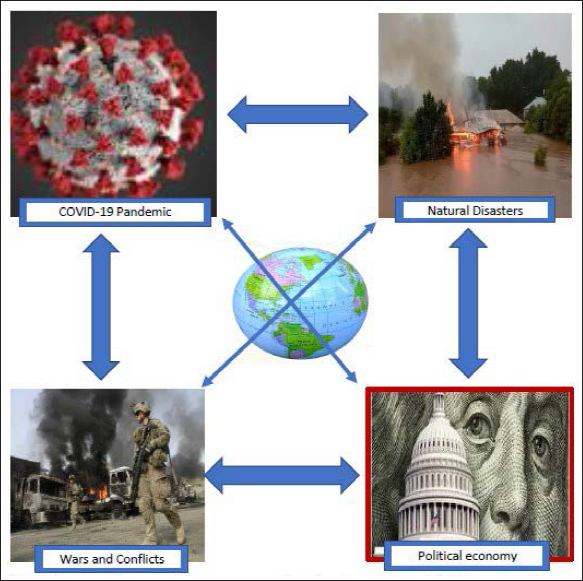
Although different organisations and thinkers construct and order crises differently (for example, Bremmer, 2022; International Rescue Committee, 2022; World Bank, 2022; World Vision, 2022) and there are several connected sub-crises, in my view, we are experiencing a cycle of four mega-crises in the world today and they further manifest into varied crises at different levels (individual, family, groups, communities, villages, towns, provinces/states, organisations/institutions, nation–states and the world). As presented in Figure 1, these are coronavirus or COVID-19 pandemic, climate change and natural disasters, wars and conflicts and political-economy. These four disasters together are causing the crises and immense human misery we are seeing today.
These and similar crises are discussed by employing Anthropocene, Capitalocene, Plantationocene and Chthulucene perspectives (Braidotti, 2019; Demos, 2017; Haraway, 2015; Moore, 2015, 2017; Tsing, 2021).
Moving material semiotic generativity around the world for capital accumulation and profit—the rapid displacement and reformulation of germ plasm, genomes, cuttings, and all other names and forms of part organisms and of deracinated plants, animals, and people—is one defining operation of the Plantationocene, Capitalocene, and Anthropocene taken together (Haraway, 2015, p. 162).
Haraway (2015, p. 160) clarifies “Chthulucene as past, present and to come”, tracing the origin “from the Greek khthôn, the chthonic ones, and the “now” of kainos” (Demos, 2017, p. 87) — which suggests “myriad temporalities and spatialities and myriad intra-active entities-in-assemblages, including the more-than-human, other-than-human, inhuman, and human-as-humus” (Haraway, 2015, p. 160). Complementing the above interpretations/ideas, these crises may also be usefully analysed through modernism, postmodernism, Marxism, capitalism and complex system theories, but that is beyond the objectives and scope of this article. However, the political economy of nation-states in colonial and neo-colonial forms and related institutions is at the centre of all these crises.
In the absence of appropriate policy measures, these crises may lead to an increase in inequality, trigger social unrest and reduce future output (Sedik & Xu, 2020). But it is also critical to see silver linings of hope or new developments in these crises that can and need to be used for the betterment of humanity and to sustaining ecological systems. The following analysis will show major negative and positive consequences in each of these crises, though it is not, and should not be viewed as a dualistic or binary approach to analysis. These consequences may be viewed from the ‘Chthulucene’ lenses.
From the epistemological, ontological and methodological point of view, this analysis is limited to relevant secondary sources of information (Pawar, 2004; Stewart & Kamins, 1993) and my observations and experiences of crises and reflections on them (Freshwater, 2011; Jasper, 2011; Liamputtong, 2013).
Corona Virus Crisis and the Impact
The Main Impact of Corona Virus Crisis.
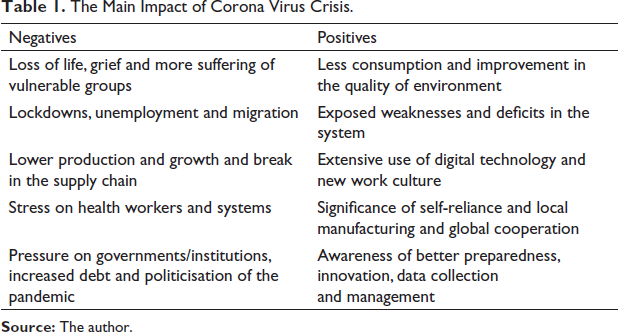
To curb the spread of the pandemic and to protect lives, the immediate lockdown measures introduced and implemented by governments and law enforcement agencies have shocked and isolated people in their homes, leading to significant psycho-social issues, whether it is loneliness, domestic violence or mental health and parenting and teaching children, at least for some people (Henrickson, 2020; O’Sullivan et al., 2020; Pawar, 2020; Rambaree & Nassen, 2020; Sanfelici, 2020; Walter-McCabe, 2020). Brutal implementation processes made people suddenly abandon their jobs and walk hundreds of kilometres to return to their point of origin under difficult circumstances. Particularly, labourers in the unorganised sector, workers in the hospitality sector and especially women, have suffered the most (ILO, 2021; Pawar, 2021; Sengupta & Jha, 2020). ILO’s (2022b) analysis suggests that globally, the job recovery process has been slow, as it has an estimated deficit of 112 million full-time jobs. As manufacturing, production and transport were impacted, there was a break in the supply chain and a gap in the demand and supply of services. Overall, it has resulted in lower production and growth rate. The IMF (2022) has forecast a global growth, from 6% in 2021 to 3.2% in 2022 and 2.7% in 2023. The pandemic may not be the sole reason for this, but it is a contributing factor.
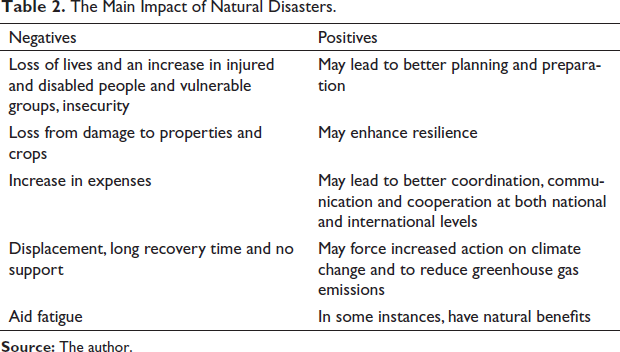
The Main Impact of Natural Disasters.
The pandemic has significantly impacted the courageous and selfless health workers, who have lived with a lot of stress and often worked overtime without protective health gear and in inadequate and stretched health infrastructure, whether it is intensive care units, hospital beds or medicine (Bhatia, 2020).
The pandemic has impacted the governance by the government systems and institutions, which have struggled to balance the interest of a diverse range of stakeholders in uncertain times. Globally, the government responses to the pandemic significantly vary, failing to strike a balance between valuing lives and the economy and failing to adequately protect their citizens, particularly vulnerable groups. Some governments have increased their debt to support unemployed people and other vulnerable groups and introduced special benefit provisions. For example, to support jobs and promote growth, the World Bank committed US$150 billion (World Bank, 2022). “In 2020, global government debt increased by 13 percentage points of GDP to a new record of 97% of GDP. In advanced economies, it was up by 16 percentage points to 120% of GDP and in emerging market and developing economies (EMDEs), by 9 percentage points to 63% of GDP. In low-income countries (LICs), government debt rose by 7 percentage points to 66% of GDP, in 2020’ (Kose et al., 2021, p. 1). As higher debt poses the risk of a financial crisis, appropriate policy measures are needed. In addition to increased debt levels, the pandemic was significantly politicised, disregarding the science and available evidence. Generally, left-oriented democracies supported measures to control the pandemic, and right-conservative politics attempted to undo it, which has confused the common people, at least in some countries.
The pause and the pain caused by the pandemic have led to some positive outcomes. The main ones are stated in Table 1. During the pandemic, as there was less consumption of fossil fuels and less use of transport systems, some people experienced less pollution in their environment and more quality time with their families. Urban areas filled with smoke that caused blurred vision had cleared up. Certain weaknesses in the health systems and infrastructure and poor health outcomes for historically discriminated and deprived groups, were exposed (Walter-McCabe, 2020). Such aspects have been neglected for a long time, but their exposure through the pandemic called for immediate attention and action. To what extent the action has followed is a matter for further investigation.
The strict lockdown resulted in the extensive and creative use of digital technology to work from homes in some sectors. This trend has continued even after the pandemic, and many organisations have introduced flexible work arrangements and accessed the talents needed for the organisation (Peek, 2022; PWC, 2022; The Economist, 2021). Most such employees were able to show better productivity, have a better quality of life and contributed less to air pollution by not driving to offices. Further, it has saved the cost of running the office and prevented the spread of the virus (Australian Government Productivity Commission, 2021; Peek, 2022; PWC, 2022).
The pandemic has helped people realise how some countries are dependent on other countries to meet their essential needs relating to protective gear, medications, vaccines and related products and how they can become vulnerable if such products are not timely supplied. It has helped to think about the significance of self-reliance in certain matters and how to initiate local manufacturing to prevent any vulnerability in such emergency situations. It also has helped to realise the significance of multinational cooperation.
Another positive aspect of the pandemic is that it has raised awareness of health and hygiene and improved preparedness for emergencies. It has also led to innovations, whether it is inventing new vaccines, working with limited resources or delivering welfare services. It has also helped mobilise a large number of volunteers and communities to support each other. It is important to think about how all this has contributed or not contributed to our sustainable efforts.
The Impact of Natural Disasters
Natural disasters have contributed to contemporary crises and impacted sustainable development efforts. But natural disasters are not new. Many of us have experienced and observed droughts, floods, earthquakes, fires, cyclones, tsunamis, volcanoes, hurricanes and rising sea levels. But what is new is their frequency, intensity and overlap with other crises such as the pandemic and wars and conflicts. When we talk of disasters, immediately images of floods in India, Pakistan and Bangladesh, the earthquake in Afghanistan, storms in the US, floods and mudslides in the Philippines, drought, food insecurity and starvation in a few countries in Africa come to mind. This cycle and overlap of crises have made the world complex and challenging, particularly for the vulnerable groups. The intensity and frequency of disasters should not surprise us because the Intergovernmental Panel on Climate Change (Intergovernmental Panel on Climate Change [IPCC], 2022a, 2022b) alerted us several times in their reports that this will occur if necessary steps are not taken to reduce global warming and limit it to 1.5°C. Recent natural disaster events are confirming the IPCC’s predictions. Natural disasters are warnings of the lack of or inadequate efforts towards sustainable development.
As per the data analysed by the Centre for Research on the Epidemiology of Disasters (Centre for Research on the Epidemiology of Disasters [CRED], 2022), in first half of 2022, 187 disasters from natural hazards were recorded from 79 countries. The impact included 6,347 deaths, 50 million people affected and damage estimates of over 40 billion dollars. Compared to other regions, the Asian region experienced more disaster occurrences, deaths and affected people; and relative to other disasters, floods occurred more frequently, caused more deaths and affected more people (CRED, 2022). In addition to lost lives and human misery, every disaster increases expenses incurred by governments and other stakeholders, who contribute to rescue and relief operations. As many low- and middle-income countries do not have adequate resources, pressure is created on aid agencies and high-income countries. Depending on the nature of the disaster, recovery takes a long time, and often many people do not receive the needed support for their proper and full rehabilitation. Often, the elderly, women and children remain more vulnerable (Pawar, 2008, 2016). Frequent disasters may also lead to aid fatigue as not enough resources may be available to support.
It is hard to imagine and argue any positive impact of disasters (see Table 2). As a consequence of disasters and their negative impact, reactive planning and preparation may begin to reduce the negative impact of disasters. Better planning and preparation, nearly accurate predictions and early warnings help reduce the loss of lives, injuries to people and damage to property. Such training and preparation give people confidence and enhance their resilience to cope with the disaster’s social, psychological and economic consequences. Learning from disaster experiences, better coordination, communication and cooperation mechanisms at national and international levels can be developed. As low- and middle-income countries often need help to manage major disasters, such well-developed mechanisms can be skilfully and effectively used to deal with the disasters. Most importantly, an increasing number of disasters may create pressure on governments, institutions and greenhouse gas emitting agencies to contribute to reducing global warming. Such actions resulting in reduced global warming may lead to disasters less frequently. Some scholars have noted the ecological benefits of disasters in terms of fertile soil from volcanos and floods, biodiversity, nutrients and access to water in drought-affected areas (Bolton, 2022; Davidson, 2020; Donald, 2019).
The Main Impact of Wars and Conflicts
Armed Conflict Locations and Events and Estimates of Fatalities in 2021.
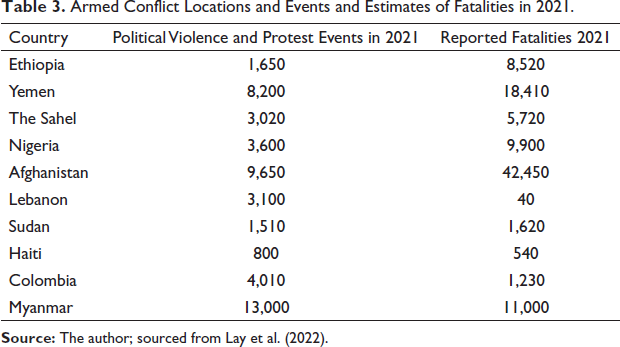
Wars and armed conflicts cause avoidable loss of lives, injuries, long-term psychological trauma and destruction to property and public infrastructure. They cause fear, insecurity and instability. They also cause millions of people being displaced internally and internationally and thus more demand for humanitarian aid. And the elderly, women, children and disabled suffer the most. They also unfortunately promote the war industry by creating opportunities for developed countries to manufacture and sell more arms and ammunition to middle- and low-income countries (Pawar, 2022; Sorensen, 2020; Wittner, 2021). The data show that an increase in internationalised internal conflicts results in more conflicts (International Rescue Committee, 2022).
The war in Ukraine, to some extent overlapping with the impact of the pandemic, has caused energy crisis, food crisis and inflation (a rise in prices) beyond Europe. Severe sanctions against Russia are expected to make life difficult for the people in that country. Gas, oil and food prices have significantly increased, and most of the world is bearing the cost of and paying for this war as we consume these goods and pay for it. It has also created more instability and tension in the region as historically neutral and peaceful countries such as Sweden and Finland have expressed interest in joining the North Atlantic Treaty Organisation (NATO), which is helping Ukraine fight the war. The supply of arms and ammunition and humanitarian aid by NATO members runs into billions of dollars. Actions by international institutions (e.g. UN Security Council, NATO) appear to have had little impact on ending the war, so far. Whether the global crisis created by wars and conflicts stimulates or stalls sustainable development efforts is anybody’s guess.
The Impact on and of Politics, Economy and Market
The Impact on and of the Politics, Economy and the Market.
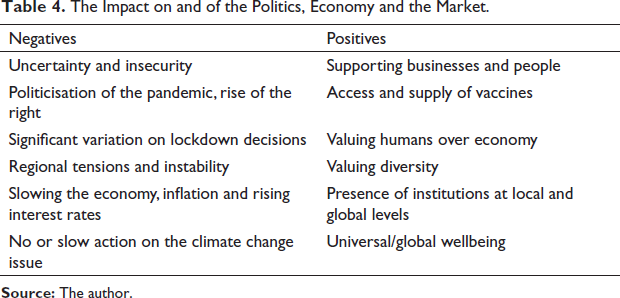
In the pandemic-struck upended world, uncertainty and insecurity became the norm as everyone’s existence was threatened. Some advised not to watch death scores on television; it was not a cricket match. Uncertainty, insecurity, fear and isolation can easily depress anyone. Under those shutdown conditions, governments and institutions had to take bold decisions. To keep the economy going, interest rates had to be reduced and additional benefits in cash and kind were provided to citizens and businesses to support their employees, where possible. But unfortunately, the pandemic was politicised in some nation-states and provinces. Generally, right-oriented conservative parties did not support lockdowns, mask wearing and vaccines, at least initially. This created confusion among the masses and resulted in great variation in rules internationally and within the nation-states. Gradually, many diluted the zero COVID policy, but China continued it. Despite these variations and inconsistencies, there is enough evidence to argue that many states valued human life over economy. But some states diluted that stand quickly and shifted the focus on the economy with a hope that newly invented vaccines would rescue the pandemic situation. Although many governments tried to access and supply vaccines, take-up rates significantly varied globally. Global North and South divide was apparent in vaccine supply, vaccinating and protecting people. This discrepancy gives scope for reappearance of the pandemic.
The three crises together—the pandemic, wars and conflicts and disasters—have created an economic situation of low growth, breaks in the supply chain, energy crisis and high inflation, which is hurting almost all consumers. Under these conditions, what is the role of governments, financial institutions, market and multilateral organisations? Governments have supplied more arms and ammunition, conducted more defence drills, tested short- and long-range missiles, formed new alliances and created more regional tension and insecurity (Pawar, 2022). Financial institutions suddenly and consecutively increased interest rates with a hope to bring down inflation at the risk of bringing one-third of the developed world under recession. Oil companies have declared profits in billions of dollars. But there is no or slow action on the climate change, despite the threat of climate disasters. In a way, the politics, institutions and market also have contributed to fourth overlapping disaster on top of the three. The International Rescue Committee (2022) calls it a ‘system failure’ in regard to 20 of the countries on its watchlist. The editorial in The Age, ‘Architecture of peace needs solid foundation’, aptly observes:
War is always a failure of systems, with irreparable costs in human life, whether it occurs in Ukraine or Myanmar, Yemen or Libya. As it stands, the system has failed Ukrainians, and we are now trying to minimise the damage. But we must also ask, what can be done to prevent failures like this in future? (The Age, 2022, p. 16).
Demos (2017, p. 17) argues that
Anthropocene rhetoric—joining images and texts—frequently acts as a mechanism of universalization, albeit complexly mediated and distributed among various agents, which enables the military-state-corporate apparatus to disavow responsibility for the differentiated impacts of climate change, effectively obscuring the accountability behind the mounting eco-catastrophe and inadvertently making us all complicit in its destructive project. (see also Braidotti, 2019; Haraway, 2015; Moore, 2015, 2017).
It is the common people, vulnerable people and poor people both in the developed and developing worlds who will suffer the most. Can these decisions and conditions contribute to sustainable development efforts?
Fortunately, our democratic institutions, both at local and global levels, are still strong, our belief in the value of diversity, including ecological, is strengthening, and the social development goal of universal/global well-being is not shaken. But more work is needed to retain and further strengthen them, as there are minor signs of corrosion and make them work for the benefit of all. Sustainable efforts should also include sustaining these political economy institutions that are responsible and accountable. Before we turn our attention to those efforts, it is important to look at how these crises have reversed the development achieved so far.
The Impact of Crises on Sustainable Development Efforts
There is clear evidence that these cascading crises have impacted development efforts. For example, the 2021–2022 Human Development Report shows that in 2020, 87 countries and in 2021, 51 countries recorded drops in their Human Development Index values (UNDP, 2022a). That means most of the countries experienced declines in long and healthy life, knowledge and decent standard of living. More people are feeling insecure and not able to trust others (UNDP, 2022b). According to the Sustainable Development Goals Report 2022 (United Nations, 2022),
The confluence of crises, dominated by COVID-19, climate change, and conflicts, are creating spin-off impacts on food and nutrition, health, education, the environment, and peace and security, and affecting all the Sustainable Development Goals (SDGs).
In particular, the number of people living in poverty has increased, wiping out the progress made over the last 4 years. Extreme poverty has increased from 8.3% to 9.2%, pushing an additional 93 million people into extreme poverty. Workers living in extreme poverty increased from 6.7% in 2019 to 7.2% in 2020, adding 8 million workers into poverty. The report further states that ‘Rising food prices and the broader impacts of the war in Ukraine could push that number even higher, to 95 million, leaving the world even further from meeting the target of ending extreme poverty by 2030’ (United Nations, 2022, p. 26). About 2.3 billion people were moderately or severely food insecure in 2021. This is about 10% of the world population, which includes nearly 350 million people since the beginning of the pandemic (United Nations, 2022).
The annual rate of reducing stunted children needs to be increased from 2.1% to 3.9% per year to achieve the target of 50% reduction by 2030. But increasing food insecurity, hunger issues and displacement of people due to war and conflicts can stall these efforts. Increasing food prices further add to this problem. The SDGs report shows that over one-fourth of countries had abnormally high food prices globally. Compared to the other regions, over 27% of countries in sub-Saharan Africa and over 31% of countries in Latin America and the Caribbean had abnormally high food prices (United Nations, 2022).
These crises have significantly impacted the progress of the SDG 3, good health and well-being, in terms of 15 million deaths, 25% increase in anxiety and depression, increase in deaths from TB and Malaria, drop in immunisation coverage and making the universal health coverage difficult. By the end of 2021, the pandemic had interrupted essential health services in 92% of 129 countries. About 22.7 million children missed out on essential vaccinations in 2020 (United Nations, 2022).
Due to the pandemic, the quality of education was significantly impacted. Pre-pandemic, 17% of children and youth globally were out of primary and secondary school, but in 2000, 26% were out of school. About 24 million learners (from the pre-primary to university levels) are at risk of not returning to school (UNESCO, 2020). Overall, inequality in education has increased, impacting marginalised people the most. Measured against many variables (time spent on unpaid care and domestic work, decision making regarding sexual and reproductive health and gender responsive budgeting, legal rights), the goal of achieving gender equality by 2030 is not on track. The crises can further contribute to worsening it. Fourfold increase in access to clean water and sanitation is needed, as two billion people do not have such access. Although there is some progress regarding affordable and clean energy, the SDGs report states that ‘Due to economic pressures imposed by the pandemic, up to 90 million people connected to electricity in Africa and developing countries in Asia could not afford to have an extended bundle of services that year’ (United Nations, 2022, p. 40). These crises may impact the already decreasing international public financing for renewable energy (United Nations, 2022).
These crises have impacted the economic growth of many countries, particularly the least developed. Projected per capita GDP in 2022 has been reduced from 3% to 2.1%. About 10% of children were engaged in child labour, and these crises pose further risk to this problem. Jobs lost during the pandemic in the manufacturing sector have not returned to normal job gains, and manufacturing has also not recovered in LDCs (see United Nations, 2022).
Gains made in reducing income inequality have been reversed. Instead of the expected fall of 2.6% between-country inequality, it rose by 1.2% during 2017–2021. The SDGs report states that ‘The spread of COVID-19 has intensified structural and systemic discrimination and pervasive inequalities, which harm millions of people and hold back every society’ (United Nations, 2022, p. 47). About 20% of people experienced discrimination, women more than men (United Nations, 2022).
Despite these crises, global consumption and production have not declined. Instead, our dependence on natural resources has increased. In the last 20 years, domestic material consumption has increased by 65%, and most of the increase was found in the Eastern and South-Eastern Asia region (31% in 2000 to 43% in 2019). Globally, about 13.3% of food is lost before reaching retail outlets, mostly in developing countries, and 17% of total food available to consumers is wasted, mostly in developed countries. Preventing this food waste and loss can help rescuing food insecurity (United Nations, 2022).
As stated earlier, the pandemic helped reduce emissions by 5.2% in 2020, but this gain was quickly wiped out in 2021 as emissions increased by 6%. About one-fourth of the global population was living in war- and conflict-affected countries in 2022, and 100 million people had been forcibly displaced globally. It appears that in 2021, the pandemic crisis has led to an increase in official development assistance amounting to 177.6 billion, which is 3.3% more in real terms than in 2020. But it constitutes only 0.33% of donors’ gross national income (GNI), against the expected norm of 0.7%. Of this, nearly 12 billion dollars are related to COVID-19 expenses, and 6 billion are related to COVID-19 vaccines (United Nations, 2022). These data make it clear that the overlapping crises have significantly impacted the achievement and progress of the SDGs.
Strategies for Sustainable Development
In the following seven suggested strategies, among others, multidisciplinary professionals such as social and welfare workers, community organisers and social development practitioners can play a critical role as their values, knowledge and skills are pertinent in implementing them.
Participation
In these difficult times and with social and economic pressures, it is easy to become overwhelmed and despondent. However, we should use all the ways and means to ensure the continued participation of individuals, communities, civil society and the corporate sector in coordination and cooperation. Without participation of people and their communities and organisations, sustainable development cannot occur. The significance of participation may also need to be noted, and it needs to be genuinely practised (Pawar, 2021a), as many have observed the phenomenon of backsliding of democracy’. If that phenomenon continues, you can imagine the danger to society. What happened on 6 January 2020 in the US Capitol Building? We need to think about how we can encourage participation of people and organisations, particularly those who tend to participate the least (marginalised and minority groups, elderly, disabled and poor). People, communities and organisations at local, national and international levels must participate and cooperate in achieving the SDGs.
Responsible Politics at the Local and Global Levels
To ensure sustainable development, our politics needs to be responsible and accountable at both local and global levels. First, responsible politics requires honesty, integrity and inclusivity. It is not a few resourceful people, corporates or organisations coming together and dominating and controlling the world, directly or indirectly. Second, responsible politics requires re-examining who donates to political parties and why. Consider how this unhealthy practice can be stopped. Third, it also calls for identifying and correcting errors that have occurred in the operation of democracy. In irresponsible politics, democracy is manipulated to exert influence and gain advantage. So, responsible politics should ensure that democracy is not manipulated. It also means not doing undemocratic things in the name of democracy. Responsible politics also calls for moving from myopic national interests to broader global interests—our planet and our global ecological systems.
Strengthening Accountable Institutions
Sustainable development also calls for strengthening accountable institutions. In some countries, there is a total system failure (International Rescue Committee, 2022). What is the role of international institutions in such situations? When people are experiencing rising prices, growing interest rates and related economic pressures, what is the role of institutions that make monetary and fiscal policies. They need to be held accountable for their actions and the consequences of those actions. In the context of these crises, both national and international institutions need to be impartial, non-threatening, enabling and empowering common people and not suppressing them or making them suffer more. Sustainable development calls for holding institutions accountable.
Focus on Building and Maintaining Peace
Sustainable development and peace go hand in hand. Without peace, development and sustainable development are not possible. As stated earlier, about one-fourth of the global population lives in conflict-affected areas. Peace building requires not instigating by deploying or by threatening to deploy arms and ammunitions or by conducting drills or missile tests or forming news alliances that crate more regional tension and take away the peace. Peace building also calls for reducing expenditure on defence and arms manufacturing and selling or donating and allocating the same resource for sustainable development purpose. We tend to focus more on wars and conflicts. We need to focus more on peace-building negotiations and agreements. The data shows that higher peace-building agreements result in less wars and conflicts (IRC, 2022). We need to feed peace, not war.
Continue and Expand Universal Targeted Support
The Corona virus pandemic has clearly demonstrated how government welfare benefits, both in cash and in kind, can help save lives. But not all people in all countries received such benefits, and in the post-pandemic time, some have been withdrawn. It is critical to garner both national and international resources for universal targeted support so as to cover all the poor, unemployed, disabled and similar groups wherever they live.
Regarding vaccinating the whole global population, the United Nations has recommended that
For everyone’s health, it is imperative that all countries and relevant manufacturers suspend patents, prioritize vaccine supply to COVAX, and create the conditions necessary for the local production of tests, vaccines and treatments (United Nations, 2022, p. 30).
We should support this recommendation as a strategy, as it gives hope that we can end the pandemic. Otherwise, different variants and waves of the pandemic will be revisiting us.
Reduce Inequality and Discrimination
Sustainable development calls for reducing inequality and discrimination, which is also one of the SDGs. The growing inequality needs to be reduced within the country and between countries. Despite high growth rates and relative cash flow, inequality is increasing in the world. These crises may further increase inequality. That is why targeted support is so crucial, so that people will not feel insecure and alienated. Equally important is tackling discrimination. It is concerning that 20% of the world’s population feels discriminated. More awareness, psychosocial support and training are needed to end discrimination. People’s beliefs and attitudes need to be addressed.
Focus on Innovation and Adaptation to Sustaining the Environment
Climate change crisis and natural disasters call for innovative approaches, adaptation and mitigation strategies to sustain the environment and ecosystems. Digital technology should be effectively used to achieve this purpose, including addressing digital divide issues. Climate compensation for developing countries is a sort of acknowledgement of past actions and inactions, and it will help as a small step, but it has come too late, and it only tends to treat symptoms, not causes. It is important to prioritise activities that reduce greenhouse gas emissions and increase clean energy resources. Many governments are making efforts in this direction, but it needs accelerated efforts at the individual and organisational levels. We all can contribute to it by consuming less, raising awareness and joining and supporting environmental movements.
Conclusion
Writing this article has given me an opportunity to reflect on and learn from the consecutive crises that have upended the world and affected our lives in one or the other way. The title of this article, ‘culminating crises’ is optimistic and may appear daunting in the current circumstances. However, it is critical to contemplate in that direction, as everyone is keen to get out of these crises, and the world would be a much better place without them. Toward that end, each of the four crises was presented in terms of its positive and negative impact on society. Of course, the discussion on wars and conflicts did not include any positive impacts, as in my view, everyone loses in them. Further, the analysis showed how these crises together have impacted sustainable development efforts and, in many cases, have reversed the progress made over decades. Based on my own reflections and available evidence, I have suggested seven strategies to end these crises, but they are not the only strategies, and others may have additional ideas. It is critical to emphasise that helping professions, including social work, welfare, community organisation/development and social development, need to play their roles in implementing the suggested strategies. The nature and scope of the subject are so vast that one cannot do justice to these important issues in a small article such as this. Further, it is also limited to my own reflections and learnings, though I have drawn on relevant secondary data that needs to be heeded. Other researchers may use case study designs by focusing on select countries or the region. The article also lacks a clear theoretical framework. Future research may analyse the crises by employing complex systems and similar theories. Overall, I hope, the thoughts presented here will generate further debate, discussion, awareness and action to culminate the crises.
Footnotes
Acknowledgement
An earlier version of this article was delivered as a keynote address at the nineth International Consortium for Social Development, Asia-Pacific branch international conference, ‘Sustainable Development Efforts in Times of Crises’, organised by the School of Global Studies, Thammasat University, Bangkok, Thailand, 29 November–1 December 2022. I would like to thank peer reviewers for their helpful comments and suggestions.
Declaration of Conflicting Interests
The author declared no potential conflicts of interest with respect to the research, authorship and/or publication of this article.
Funding
The author received no financial support for the research, authorship and/or publication of this article.
