




Abstract
All around the world the COVID-19 pandemic is having an enormous impact on people’s lives. Contrary to many other countries, Sweden has opted against lockdown. The Swedish Government has put trust in its people and has advised them to be responsible and follow the recommendations and guidelines of the Public Health Agency of Sweden. Using the Interest Theory of Rights, this article discusses the impact of the Swedish response to COVID-19 on three different Swedish communities, and considers the implications of such a strategy on social development. Data was collected from different national and international media sources as well as from Swedish authorities’ websites. A qualitative content analysis was used to analyse the data with the help of ATLAS-ti.8.4. The findings section discusses how three community groups in Sweden—the elderly, immigrants from marginalised areas and prisoners—are having their rights altered during this pandemic period. It also outlines different social development approaches being used in Sweden for tackling the challenges relating to the COVID-19 pandemic. This article concludes that a strong democratic state is vital in managing a pandemic such as COVID-19. It also argues that the strength of a state largely depends on its citizens’ willpower to take ownership of responsibilities—both individually and collectively.
Introduction
Around the world human beings are currently going through very difficult times due to the COVID-19 pandemic. Globally, millions of people are infected, with hundreds of thousands of them having lost their lives due to the virus. Across the planet, countries’ borders are closed. Local, national and international businesses are suffering, with a growing number of them going out of business altogether. In many parts of the world, healthcare systems and healthcare workers are under mounting pressure. Millions of people across every continent are suffering from food shortages, with supermarket shelves completely depleted. In many countries, schools at all levels have been closed indefinitely and public transport systems reduced to skeletal resources (if not completely stopped). Depending on the country in question, people have been forced into partial or complete lockdown.
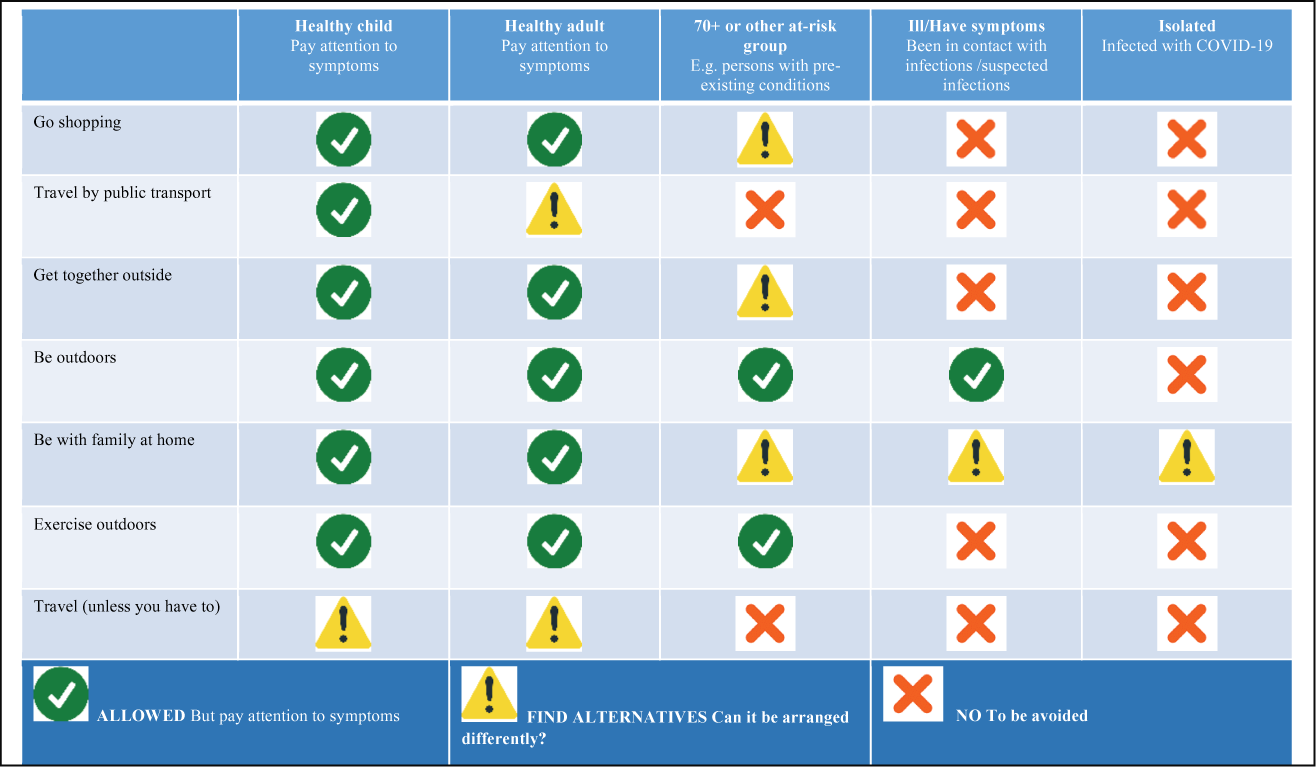
In contrast to most other countries, Sweden has opted for a noticeably different strategy in response to the COVID-19 pandemic. The Swedish strategy to COVID-19 has largely been based on efforts and decisions from the Swedish Government to: (a) limit the spread of infection in the country, (b) ensure that health and medical care resources are available, (c) limit the impact on critical services, (d) minimise the impact on both people and businesses (e) alleviate general concern (f) implement the right measures at the right time (Government Offices of Sweden, 2020a). The COVID-19 strategy of Sweden is managed by the Public Health Agency (PHA). According to the national Constitution of Sweden, Swedish public agencies are independent of the government and ministers cannot have influence in agency decision-making (Edwards, 2020). Rather than implementing strict rules and lockdown regulations, the Swedish Government has chosen to simply advise its citizens to apply common sense and follow the PHA’s recommendations and guidelines. The PHA’s COVID-19 strategy is mainly based on recommendations and citizen’s responsibility and not on restrictions. The PHA’s recommendations and guidelines are summarised as shown in Figure 1.
The majority of Swedes appear to support their government’s approach to dealing with the COVID-19 pandemic (Anderson, 2020; Kim, 2020). However, one of the daily Swedish newspapers Dagens Nyheter (Rosen, 2020), highlights a survey report that shows fewer and fewer of the people interviewed were in favour of abiding with the PHA’s recommendations. Consequently, the Swedish ‘soft/relaxed’ response to COVID-19 has been widely reported as being a risky strategy in various media reports (BBC, 2020; Cwejman, 2020; EEnfeldt, 2020; Sveriges Television SVT, 2020; TV4 Nyheterna, 2020). The Government of Sweden and its representatives, however, argue it is incorrect to label the Swedish approach as soft/relaxed. They stand firm that the Swedish authorities are allocating all of their efforts to doing the best possible in protecting its population (Embassy of Sweden, 2020). Still, most media reports are highlighting that Sweden’s COVID-19 death rate (per capita) is currently the highest in the world. In particular, some local and international scientists have raised concerns over the impact that such a strategy has had on vulnerable and marginalised communities and this issue has been a dominant theme in both local and international media (Keyton, 2020; Orange, 2020; Rothschild, 2020; Savage, 2020)
Vulnerable and marginalised communities require special attention within the context of social development. Social development is predominantly about dealing with complexities and ever-changing relationships between people and the environment in which they live and work (Feng, 1996). It can be seen as a process of planned social change, which offers an effective response to current social problems and is designed to promote the well-being of the population as a whole within the context of a dynamic multi-faceted development process (Midgley, 2014). One of the central goals in social development is the well-being of all people within society. Sweden is world-renowned for promoting the well-being of its people through its strong rights-based welfare state.
This article applies the Interest Theory of Rights (ITR) as a framework to assess the notion of ‘rights’, specifically within the context of the Swedish response to COVID-19, and the impact that it has had on different communities. This article subsequently assesses the implications of such a strategy for social development. The ITR was initially developed by Jeremy Bentham (1748–1832) and has since been strengthened by thinkers such as Joseph Raz and Matthew Kramer. The ITR is based on the argument that a key pre-requisite for a ‘right’ is that others have duties to protect that right. Raz (2010) states that a right exists only if an interest of the right-holder (related to his/her/their wellbeing) is of sufficient importance to hold others to be under a duty. For instance, the main purpose of human rights is traditionally defined as the protection of individuals’/communities’ basic interests, based on humanity. However, Raz (as cited in Zanghellini, 2017, p.26) argues that human rights cannot be associated to rights that people have in virtue of their humanity alone. According to ITR, ‘A party holds a right correlative to a duty only if that party stands to undergo a development that is typically detrimental if the duty is breached’ (Kurki, 2018). According to Raz (2010, as cited in Zanghellini, 2017, p.26), rights are grounds for duties, duties being peremptory reasons for action. However, rights are also guaranteed in action when conditions permit to hold such rights; for instance, when obligations, duties and responsibilities are fulfilled and trust between the guarantor and protector is maintained.
Within the context of the COVID-19 crisis, ITR is an essential theoretical perspective and approach in understanding the rights that individuals/communities have, particularly in regards to the government’s intervention aimed at defending the interests of its people. In particular, the ITR framework has been applied in an attempt to understand the complex power dynamic between rights and responsibilities in relation to the most vulnerable and marginalised groups of society. Such groups include ethnic minorities, the elderly (persons 70 years and older), prisoners as well as people living in marginalised geographic areas. This article answers the following research questions: (a) Which communities are vulnerable and marginalised, (b) how has the Swedish strategy to COVID-19 impacted them and (c) what are the implications of such a strategy for social development?
Method
Data for this study was gathered in an electronic format from 29 national and international traditional media sources (excluding social media) that are publicly available online. The media sources for this study were chosen on a convenience basis (those that we available using Google search engine), 11 local and 12 international newspapers/magazines, and four local and two international radio/television channels included. Google search engine was used from 28 April to 25 May 2020 to search for information on the subject matter of the research. Keyword phrases such as ‘Sweden and COVID-19’ and ‘Sweden Coronavirus’ were used to look for analysis material. Media reports published in both English and Swedish were searched for analysis. The selection criteria was based on coverage related to Swedish COVID-19 strategy that included information on (a) guidelines and recommendations from the PHA and the government offices of Sweden and (b) vulnerable and marginalised communities. Articles that appeared in more than one source were included and coded in the analysis. In addition to the media sources, materials on Swedish COVID-19 strategy from the websites of the PHA (
The gathered data was assigned to ATLAS-ti8.4 software for a qualitative content analysis (QCA) method. QCA is described as a systematic method for analysing written, verbal and visual materials obtained during the data gathering process (Bengtsson, 2016; Elo & Kyngäs, 2008; Graneheim & Lundman, 2004;). In this study, the gathered materials were analysed using the deductive approach, where a coding frame using ITR was designed and assigned to the ‘List Coding’ feature in ATLAS-ti software. List Coding allows researchers to identify segments of the qualitative data (quotations) in the gathered materials that could be grouped under predetermined codes based on the chosen theory for data analysis. In the data analysis process, the researchers applied manifest deductive QCA to discuss the impact of the Swedish strategy to COVID-19 on different vulnerable and marginalised communities. In manifest QCA using a deductive, researchers look for easily observable and obvious contents related to the research questions and the theoretical frame (coding list; Graneheim & Lundman, 2004; Kleinheksel et al., 2020).Latent deductive QCA was applied to consider the implications of the Swedish COVID-19 strategy for social development. In latent deductive QCA, researchers interpret the hidden meanings in the gathered data by actively using conceptual lenses, theories, and theory-based codes (Hsieh & Shannon, 2005; Kleinheksel et al., 2020). With such a process, the use of analytical memos (researchers’ collections of interpretations based on empirical data with reference to the chosen conceptual/theoretical frame) is of particular importance in creating in-depth analytical discussions.
Findings: Impact on Vulnerable and Marginalised Communities
Elderly
Around mid-March 2020—when the COVID-19 pandemic was declared by the World Health Organization (2020)—Sweden had a shortage of intensive care beds to cope with a spike in COVID-19 cases in the country (The Local, 2020). In order to deal with the situation, the Swedish Government and the PHA declared to the nation that the interests of elders (as at-risk population) will be protected. At first, the government urged the whole nation including the elderly to follow their recommendations and guidelines and act responsibly. On 16 March 2020, the PHA (Folkhälsomyndigheten, 2020b) recommended the elderly community to not meet family and friends, not meet other elderly people indoors, exercise every day and eat healthy diets to prevent other health problems.
By the end of March 2020, media reports suggested that the Swedish authorities failed to adequately protect the elderly (Sveriges Television SVT, 2020). The number of deaths from COVID-19 among the elderly population in Sweden became the most dominant theme in the media. As an example, The Guardian highlighted: ‘Anger in Sweden as elderly pay price for coronavirus strategy’ (Orange, 2020). Indeed, according to the figures from the Swedish National Board of Health and Welfare, on 28 April 2020, about 90 per cent of COVID-19-related deaths in Sweden were amongst people 70 years or older—representing 1,877 deaths (SVT News, 2020). This number confirms that the Swedish strategy on COVID-19 did not manage to protect the elderly community. This has led to a growing uncertainty about the government’s ability to deliver on its duty to protect the elderly community.
The Swedish Government itself has been surprised by this high COVID-19 death rate amongst the elderly in Sweden (Marmorstein & Shaftoe, 2020). The Swedish prime minister Stefan Löfven (S) stated: ‘It is obvious that we have failed to protect those who live in special housing’ (Marmorstein & Shaftoe, 2020). Anders Tegnell, state epidemiologist, also confirms that the Swedish approach has failed the elderly (BBC, 2020). In fact, by the end of March 2020, 55 per cent of nursing homes in greater Stockholm (the epicentre of Sweden’s virus spread) had confirmed COVID-19 cases (SVT News, 2020). As of 1 April 2020, the government banned all visits to homes designed for the elderly in Sweden and advised people not to have close contact with people over the age of 70 unless absolutely necessary (Folkhälsomyndigheten, 2020c).
In general, elderly people have been identified as especially vulnerable to COVID-19, leading them to feel ostracised and alienated in their community. Some elderly across Sweden have spoken out in the news describing how they have been marked ‘ancient’, ‘useless’ and ‘a burden for the society’, and scared to leave their homes due to the negative reactions of other people (Larsson, 2020; SPF Seniorerna, 2020). Despite there being a rather diverse spectrum of people within the elderly community, the COVID-19 pandemic has led to a propensity to view the elderly as one homogenous group (Larsson, 2020). The COVID-19 guidelines stipulated by the Swedish Government have essentially adopted a one-size-fits-all approach to the elderly. For this reason, no other age group in Sweden has had their right to free movement so drastically compromised as the elderly population.
In addition, a research conducted at the University of Lund aimed to increase the understanding of loneliness and the importance of activities among elderly living in care homes (Seth, 2016). The results indicated that if the elderly feel there is a negative view of them in society, it creates a greater dependency, as well as stronger feelings of loneliness among older people (Seth, 2016). Even before the COVID-19 pandemic, 65 per cent of elderly people living in care homes in Sweden often felt that they were disturbed by loneliness (Socialstyrelsen, 2010). Social isolation and loneliness can trigger other forms of loneliness, such as existential loneliness, loneliness intertwined with anxiety and feelings of meaninglessness. Existential loneliness among the elderly is described through feelings and emotions such as: ‘to no longer be someone to count on’, ‘to be limited and end up in total dependency’, ‘to be forced to deal with difficult situations all by yourself’, ‘to begin to long for death, as the purpose of living diminishes’ (SPF Seniorerna, 2020).
Moreover, around 69,000 (or approximately 5%) of Swedish people aged 70 years or over, live in so-called ‘multi-generation’ housing (SCB, 2020a) meaning they share households with someone younger than 40 years of age. Such a housing type can have many benefits, but with such a pandemic it can prove to be problematic. The recommendation for people above 70 years of age is to self-isolate. According to Orange (2020), many elderly living in multi-generation housing have thus been forced to move to a home of their own, or move into a care home. One key impact being that the financial expenses for the elderly has increased (Orange 2020).
Although all age groups are at risk of contracting COVID-19, older persons are significantly more vulnerable in terms of mortality following infection, with those over 80 years old dying at five times the average rate (United Nations, 2020). Noticeably, the life expectancy in Sweden is currently 82 years old and more than half of the Swedish deaths due to COVID-19 are among those people who are over the age of 86 (SCB, 2020b). This could explain the high rate of deaths due to COVID-19 among the elderly Swedish population. However, it is important to note that countries such as Italy and Japan also have high percentage of elderly population and still seem to have managed well in protecting their elderly communities.
As mentioned earlier, fundamental to ITR, rights are closely related to duties. Given that the Swedish Government had assured its citizens that healthcare services would be prioritised in order to protect the interest of the risky groups (such as the elderly community), according to ITR, this implies that the elderly community has a right to protection. By contrast, the Swedish approach to COVID-19 seems to indicate that the Swedish state (through its authorities) is shifting its responsibilities and duties onto the citizens (including the elderly community). The international human rights law (IHRL), stipulates that only the state can meddle with the basic human rights of individuals or communities living within a sovereign state (European Union Agency for Fundamental Rights, 2020). By way of delegating responsibilities to its citizens, the Swedish Government has—in part—contravened this IHRL stipulation. By the same token, the Swedish state has also compromised its ability to guarantee the rights of protection for the elderly as the responsibilities and duties for such rights are now shared with its citizens.
Immigrants from Marginalised Areas
The PHA recently conducted a
Whilst COVID-19 does not discriminate its victims on such things as origin, culture or language, WHO (2020) has from the very beginning indicated that the virus is easier to catch if there are underlying interacting socio-economic and cultural factors. The PHA was quick to admit its lacuna in getting COVID-19 news and information to Swedish citizens in different languages. It was found that immigrants in the vulnerable and marginalised areas of Greater Stockholm did not understand most of the Swedish news regarding COVID-19. By not gaining access to relevant COVID-19-related information (more specifically in their language) from the Government authorities, immigrants in particular from the marginalised areas of Sweden have been denied their rights. The immigrants in marginalised areas of Sweden have been more at risk to COVID-19 as well as increasing the risk of them infecting others. For instance, Gustavsson (2020) reports that, the failure to protect the elderly in the Swedish nursing homes is being explained with reference to ‘asylum seekers’ and ‘refugees’ (mostly immigrants from marginalised areas) on the staff, who ‘may not always be understanding the information’ being given by the Swedish authorities.
In addition, immigrants in Sweden often have more challenges in the labour market than the natives. Even before COVID-19, immigrants were over-represented in the unemployment figures (Rothschild, 2020). Of the immigrants who work, a relatively large proportion of them were in the service sector, particularly in the health departments. Immigrants are also over-represented in the small-to-medium enterprise (SME) sector (Swedish Public Employment Service, 2020). By way of example, immigrants are nearly three times more likely to run a small business than domestic-born Swedes—including pizzerias and personal services such as cleaning and hairdressing (Swedish Public Employment Service, 2020). With this in mind, the Swedish prime minister urged the population to order takeaway lunch from a local restaurant as support for local businesses (Blomdahl, 2020). At the level of the Government, a series of supportive measures targeting small enterprises have been put in place (Government Offices of Sweden, 2020b).
One could argue that the Swedish state has failed to respect the rights of the marginalised immigrants to gain information, in direct contravention of the concept of rights within the ITR. It could also be argued that the Swedish Government has prioritised the interests and livelihood of small business owners. The right to information has been sanctioned by The Swedish Government in Article 19 of the Universal Declaration of Human Rights (1948) and incorporated in the United Nations’ (UN) Sustainable Development Goals No. 16 (Government Offices of Sweden, 2020c). By this token, the Swedish Government has inherently declared it as their duty to also assure the dissemination of information amongst minority groups in Sweden. Sweden is a country that is also globally well-known for promoting the right to information. In the early stages of the COVID-19 response however, daily press conferences and public debates on the media remained monolingual—ignoring the fact that the society is multicultural and multilingual. As Malloy (2020, p. 1) an expert in law, puts it:
The right to information is one of the core human rights in the fight against the spread of COVID-19…It is the right of all affected groups in society to have access to timely and relevant information in a language they understand. </Centre align >
The Swedish approach to COVID-19 also demands active participation of the communities. Several community-based and non-government organisations are playing a vital collaborative role in tackling various social problems through community participation across Sweden during the COVID-19 pandemic. It is imperative to have the participation of all in the combat against the virus. Community participation is a vital component among the foundations of social development (Kleinheksel et al., 2020). It promotes people and communities’ rights to have a say and be part of the process of social development. Despite the physical distancing requirement, community-based organisations are finding creative ways to connect and support people—especially the most vulnerable members of community—all across the country. Local inhabitants from these vulnerable communities are working with local municipalities to hand out information flyers on COVID-19 and PHA’s recommendations in different languages to local people (Rosen, 2020). The Swedish Government is in strong support of such initiatives. For instance, community-based organisation from a vulnerable and marginalised area of Greater Stockholm have now setup a local network to map and limit the spread of COVID-19 in the area (Rosen, 2020).
Prisoners
Prisoners are another most vulnerable community to COVID-19. The relationship between prisoners and human rights is quite a complex matter. One may believe that if you violate society’s rules by committing a crime, then you forfeit your rights to society’s protections. That is however anything but the truth. On the contrary, the Swedish Prison and Probation Service (2020) clearly states that whilst some prisoners’ rights may be forfeited, they still possess many rights in society—one of which is their right to protection. In its attempt to protect its inmates and staff from COVID-19, the Swedish Prison and Probation Service (2020) has implemented a number of regulations, which have resulted in significant changes to the normal rights of the inmates. The most significant of these being that visits and permit rights have been suspended across Swedish prisons and similar institutions. This decision is based—in part—due to the social distancing norms, but mostly due to the fact that inmates are considered a vulnerable group in society, with a higher propensity to suffer from underlying physical health problems (European Union Agency for Fundamental Rights, 2020; Swedish Prison and Probation Service, 2020).
According to United Nations (2005), the human rights concerning prisoner entails the right to the highest standard of physical health and protection from circumstances that potentially compromise their physical health. One may therefore suggest that the Swedish Prison and Probation Service has protected human rights by hindering permits and visitations in jails and prisons in Sweden. At the Gävle prison facility however, inmates are disappointed with the news that the prison stopped all visits and permits at Sweden’s prisons to limit the new coronavirus (Svensen, 2020). According to Maria Löfgren, criminal care manager at the Gävle prison facility (2020, as cited in Svensen, 2020), the mental health among inmates has worsened during this particular period at the Gävle prison facility due to the lack of contact with family and there is a growing frustration that their rights have been stolen from them. Interestingly, the Swedish Prison and Probation Service (2020) clarifies that visitation and permits has never been a right, but rather a way of preparing prisoners for their return into society.
According to the ITR, the function of moral and legal rights is to protect relevant interests. These new COVID-19 regulations—as applied to prison inmates—seem to be contradictive to many, not least of which the prison inmates themselves. In March 2020, 29 inmates at the Skennäs prison facility outside of Norrköping started a riot. The chief of Skenäs prison facility, Lars Widholn, referred to it as a mass action where the inmates began to destroy furniture and attack the staff (Holmqvist, 2020). Three inmates escaped from the facility. The police later regained control of the situation (Holmqvist, 2020). Skenäs prison is a class 3 institution (being the lowest security level in Sweden). Its inmates were very accustomed to regular leave permits, as well as frequent contact and visits from family and friends (Swedish Prison Probation Service, 2020). The staff at the prison and the probation service says that the reason for anger among the inmates was that their right to see their family had been taken away from them (Holmqvist, 2020).
Family and friends of inmates have also raised their concerns about the new regulations prohibiting them from having contact with their family in prisons. In accordance with the UN Declaration of Human Rights to prisoners (2005), ‘All prisoners shall have the right to communicate with the outside world, especially with their families.’ How that right of communication transpires, however is determined by the legal rules and regulations that are enforced. Non-governmental organisations in Sweden such as Bufff, Solrosen and Erikshjälpen, are taking action to draw attention to children who have one (or more) parents in an institution or detention (Aftonbladet, 2020). They are pushing for the prison and probation service to offer such children the opportunity for video calls with their incarcerated family members. The prevailing visit stop means that the children are no longer able to have close contact with incarcerated parents. This is a right they had previously grown accustomed to—which also happens to be a right bestowed upon them by the Convention on the Rights of the Child. Madeleine Kattel, Bufff’s operations manager says, ‘It’s about getting a hug, sitting close and being with your parent’ (Kattel, as cited in Aftonbladet, 2020, p.1). The possibility of video calls with inmates already exists in several EU countries, including the UK and Poland. To date, in Sweden only regular telephone calls are allowed (Aftonbladet, 2020). Each year, approximately 8,000 Swedish children have at least one parent in prison (Socialstyrelsen, 2018). If recreational care (criminal care in the community) is included in this calculation, it is estimated that more than 30,000 children are currently being deprived of this fundamental right that they have as a child. The best interests of the children should always be the starting point when it comes to contact with the custodial parent (United Nation, 2005). Children have the right to have contact with and meet their custodial parents, but the child may also have the right to say no to this (United Nation, 2005).
Implications for Social Development
According to Midgley (1995), social development can be categorised into three main approaches: (a) the individualist approach—with the belief that welfare of the whole society is enhanced when individuals strive to promote their own welfare, (b) the communitarian approach—with the belief that people and communities have inherent capacity to organise themselves to ensure that their basic needs are met, their problems are solved and opportunities for advancement are created and (c) the statist approach—with the belief that the state embodies the interest of society as a whole and that it has a responsibility to promote the well-being of all citizens. Sweden as a nation can be characterised as having two opposing tendencies: one towards individualism and the other towards collectivism (Daun, 2010). Among others Sweden is globally well-known for promoting individual’s liberty and freedom (individualist), as well as for its strong welfare-state (collectivist). Based on the findings of this article, one could deduce that the Sweden’s response to COVID-19 is also based on a mixed of individualist and statist approaches to social development.
Throughout the COVID-19 pandemic, the PHA has encouraged people of all ages in Sweden to go out and keep themselves fit through walks or runs, as long as they do not have any cold- or flu-like symptoms and respect recommendations on ‘social distancing’ (SVT News, 2020). The Swedish forests and the urban nature has been found to be vital in promoting people’s health during the COVID-19 period (Arslanovic & Flygt, 2020; Samuel et al., 2020). Mentally and physically fit individuals make a healthy society. Therefore, strategies and mechanisms for individual’s health promotion and maintenance, which are a vital component of right to health within social development, need to be carefully planned and implemented during pandemics. The COVID-19 pandemic has serious implications for the physical and mental health of all Swedish people, through exposure to heightened levels to non-communicable diseases, anxiety, fear and stress.
It could also be argued that the Swedish ‘laissez-faire’ strategy relies quite heavily on the individualist approach (Midgley, 1995), recommending even the vulnerable communities/groups to protect their own interests by following the PHA’s recommendations, as well as expecting the rest of the society to act correspondingly. From the individualist perspective, rights to protection from COVID-19 in Sweden could therefore be seen to be conditional on individuals taking active responsibility in promoting their own welfare and assuming the duty to keep themselves and others protected and healthy. In this sense, Raz (2010) uses the ITR to points out:
…the right of one person limits the freedom of other people; and, people have a duty not to violate the rights of others. Each right establishes a set of duties, and identifies a set of people who are subject to the various duties.
Such conditions attached to rights could be interpreted as an impingement of individual’s liberty. Individuals can be seen as having liberty rights, such as freedom to move and meet friends and relatives. The individualist approach to social development promotes individual choice, freedom and personal rights, where individuals are responsible for their own destiny and capable of acting independently to promote their own well-being (Midgley, 1995). Within individualist approach to social development, the state (through its authorities) has to ensure a balance between claim rights and liberty rights. According to ITR, it is important to make a distinction between claim rights and liberty rights. Claim rights are conditional to duties and obligations on other parties, whereas a liberty right is a right which does not entail obligations on other parties but rather only freedom or permission for the right-holder. Claiming protection rights from COVID-19 could therefore be conditional to individuals being duty-bound and responsible. As Midgley (1995) points out a fundamental aspect of Western individualist ideology is that social welfare can best be promoted when individuals independently pursue their own self-interests (and thus their own welfare).
Sweden projects itself as a democratic and strong welfare state in promoting the well-being of all citizens. From the statist perspective, government is therefore collectively owned by its citizens and represents their interests (Midgley, 1995). The Swedish strategy to COVID-19 is a clear example of a government—representative of its people—sharing its obligations and duties with those people, in its intention to protect the interests of those people, especially the most vulnerable ones in the society. This is perhaps the best way to develop the reciprocity that has become the hallmark of a high-trust society, based on mutual trust between citizens, and between the citizens and the state (Trägårdh & Özkırımlı, 2020).
The COVID-19 pandemic has thusly shed new light on the concepts of rights, duties and responsibilities, with particular reference to health. It shows that right to heath is clearly connected to correlative duty and collective responsibility of the state and its citizens. Sweden is often described as one of the strongest, most stable and high compliance tax states in the world (Nistotskaya & D’Arcy, 2018), which is a vital element in a statist approach to social development. Most Swedish citizens perform their civic duties with pride and in return there is a high expectation that the state fulfils the rights of the citizens—such as right to healthcare. Under the COVID-19 situation, individuals/communities who lack access to citizen’s rights might well blame the state for their hardships and negatively reciprocate by ignoring their civic duties (Ronconi, 2019). This can have negative consequences for the Swedish welfare state. Although no one has a duty to secure a feeling of physical well-being for another (which is the intrinsic value of health), the state and its citizens (as a third party) have a duty to secure people the opportunity to have a fulfilling life (the instrumental value of health; Raz, 2010). ITR emphasises on the importance of a third party to ensure that the entitlement of an individual or group to have a fulfilling life is met. In this regard, the Swedish statist approach to COVID-19 demands active participation and collective corroboration amongst the Swedish citizens as representatives of the state.
Conclusion
It is currently too early to determine with certainty what is the most accurate and effective response to such a pandemic as COVID-19. One thing however that is certain is that more lessons will be learnt, owing to Sweden’s distinctive response. The Swedish strategy to COVID-19 provides the world with a uniquely alternative model for global comparison. Epidemiologists will upgrade their knowledge of how fast viruses spread in an integrated world and what is truly ‘the right action at the right time’. Economists will be able to assess which stimulus and rescue packages helped to mitigate the effects of the crisis, which were ineffective or even detrimental. Medical ethics are given more evidence of how to prioritise between people when care is overloaded and some patients have to be left to die. Communicators can gain new knowledge on how to reach out with messages about restrictions that are not primarily about protecting oneself but about protecting others. Care workers will be more understanding of their own importance and the concept of not being able to help everyone. Politicians will learn more about which experts to listen to in various situations as well as the level of autonomy they should be afforded. The experiences and perspectives from all the key actors of society will represent a new knowledge base for post-pandemic social development. When the COVID-19 pandemic finally ends, there will be much reflection on Sweden’s response to—and priorities throughout—the crisis. Time might tell if Sweden did well or not. But it is known that a strong democratic state was, is and will likely remain the central figure in social development. Having said that, the strength of a state largely depends on its citizens’ willpower to take ownership of responsibilities—both individually and collectively.
Footnotes
Acknowledgement
We would like to thank Cedric Amoyal for reading and commenting on this article.
Declaration of Conflicting Interests
The authors declared no potential conflicts of interest with respect to the research, authorship and/or publication of this article.
Funding
The authors received no financial support for the research, authorship and/or publication of this article.
