




Abstract
Supply chain is the most critical lifeline of all business/non-business operations and processes in today’s world. The outbreak of the COVID-19 epidemic has a serious impact on organizations and society at large. Due to this pandemic spread, food supply chains are facing two unique unraveling emerging supply chain challenges: (a) supply shocks and (b) demand shocks. Stocking of consumer staples under such uncertain situations gives rise to uncertain peak demands of staple food, and hence striking bullwhip effect. The present study focuses on the staple food distribution among tier-A cities of India, namely Bangalore, Hyderabad, Chennai, Pune, Kolkata, Mumbai, and Ahmedabad. Using the software anyLogistix PLE edition, greenfield analysis was conducted to find the number of distribution centers required by these cities for food distribution and to reduce the transportation cost between the cities. Two key insights emerge from the analysis: (a) we need six potential areas to locate distribution centers (DCs)/ regional sites instead of a single DC; (b) transportation cost is reduced from US$21,327 to US$2,375. The major observation from the Green Field Analysis (GFA) reveals there is a need to reinforce and repair the operational efficiencies of DCs so as to reach the needy end consumers.
Keywords
Introduction
The outbreak of COVID-19 has resulted to long-term severe global disruptions which immensely affects the viability (Ivanov, 2018b) of supply chain ecosystem (Ivanov, 2020). In recent times, these supply chain (SC) disruptions (Chesbrough, 2020; Choi, 2020; Currie et al., 2020; Ivanov, 2020a; Ivanov & Das, 2020; Ivanov & Dolgui, 2020b; Kinra et al., 2020; Madhavan & Kaushika 2020; Sarkis et al., 2020) have affected all the elements of economy and society (Ivanov, 2020) and raised a serious concern for a sustainable supply chain management (Islam et al., 2020). Unlikely, the virus has posed critical challenges during the lockdown period since March 25, 2020 in India, and the entire food supply chain has witnessed a big hit in terms of loss of revenue. Therefore, in order to align various supply chain practices such as inventory management, purchase management, and strategic supplier relationship (Chong et al., 2011; Dubey & Ali, 2015; Langerak et al., 2004; Li et al., 2006; Truong et al., 2017) with the demands of surviving in a changing environment, viable system model by Beer (1985) and ecology modeling angles (Aubin, 1991) can be followed. However, these SC practices vary from one manufacturing environment to another (Brun & Castelli, 2008; Trkman & McCormack, 2009), and an urgent need arises to focus on total quality management (TQM) and supply chain management (SCM) (Duarte et al., 2011; Narasimhan et al., 2005; Sharma & Modgil, 2019). This will act as an instigator to improve the financial performance of these manufacturing firms and SC viability in the current scenario (Ivanov, 2020).
In the current context of COVID-19 outbreak where supply chains are facing higher risk of disruptions, one relevant question that rises is: how can cost savings be created by reducing warehousing cost. Therefore, today’s supply chain leaders go for warehouses and distribution centers (DCs) to meet the dynamic demand of customers during this disruption Bhasin (2019). Though COVID-19 pandemic has revealed a series of novel challenges for retail SC including insufficient logistics infrastructure and ‘dilution’ of transportation problem (Stošić Mihajlović & Trajković, 2017). Hence, in order to improvise the current situation, DC in combination of warehouses plays an important and significant role (Baker, 2008). This combat will solve the problem of distribution and storage of staple food to various physical locations. Hence, warehouses store the staple food and DCs help in the rapid movement of staple food from one location to another. Therefore, to deal with the present circumstances, DCs need to be more responsive to volatile markets (Maltz & DeHoratius, 2004) and variances in the overall volume of goods (van Hoek, 2001) to meet the present SC’s agile requirements (Baker, 2008).
The current scenario also demands the same kind of approach from government food distribution agencies like Food Corporation of India (FCI), which collected all the staple food (grains, millets, sugar, oil, etc.) directly from farmers and was responsible for further food distribution in supply chain. FCI was further relying on Indian Railways and road transport and supplied almost 8 million tons of food grain to different regions of the nation with the help of various distributors and local government bodies. In addition to this, ‘Lifeline Udaan’ flights mission was also carried out, in lieu of this pandemic disease where private and government aircraft fleets transported the essential commodities to remote parts of our nation. During this mission, they distributed 863 tonnes of food to the primarily affected regions (Iyer, 2020). Even under the current COVID-19 scenario, the government-managed ‘Licensed Fair Price Shops Network’ ensures availability of the available goods under the public distribution system (PDS), round the year. FCI supplied 0.193 million metric tonnes of grain in just 2 days during the lockdown period. Furthermore, these efforts became more fruitful and worthy with the help of NGOs, grocery stores, e-commerce players, and thousands of truck drivers.
Despite of all these efforts made by our nation’s warriors, the nation, in terms of food supply chain, is still facing something completely random in nature, that is, demand shocks and supply shocks. Demand shocks simply mean sudden stocking of consumer staple food in lieu of some restrictions or closure of market area, whereas supply shocks were because of the supply chain disruptions due to the unavailability of goods sourced from China. This situation left the companies struggling to climb up the production and meet the unexpected demand of consumers.
Next, the bullwhip effect which also strikes the companies in this uncertain situation also plays an important role. The unanticipated increase of staple food demand at the consumer level exerts a lot of pressure on food manufacturers and distributors. This may further lead to unwanted increase of inventory or storage of food. This increase in inventory level made the role of upstream and downstream actors of supply chain more acute and complex.
Following this, many companies now want to move some part of their supply chain locally following the theme local is vocal instead of importing. This would lead to increased investment in India’s local industries and a window of opportunity for the economy in this critical phase. All the above is to bring India at par with international standards, push and drive ‘Make In India’ campaign successful, thereby making India an internationally attractive destination for FDI.
The present scenario of imbalance between demand and supply acted as an eye-opener for Indian industries to develop their own local markets and sourcing units. These imbalances were responsible for the abrupt disruptions in the manufacturing of mainly foods and medicines, which indirectly hit hard the supply chain operations. Both the inbound and outbound movement of supplies remain uncertain. So in this case the movement of all modes of transportation have come to a halt with no passenger movement, making it more difficult for businesses to operate, leading to uncertainty all across the globe, and making it difficult for all sectors of the economy to survive. But it is just a matter of time before the entire world emerges out of this situation and normality returns. However, these SC disruptions became an opportunity to strengthen the weaker links of the chain.
COVID-19 has taught various entities of supply chain to closely monitor short-term and long-term demands of the market and customers. Similarly, the distributors kept an eye on the heap of inventory (food grains, pulses, etc.) to accommodate production loss due to interrupted movement of food staples during this critical phase. This also made them aware about the number of DCs required in each state and metropolitan city for the distribution of food supplies. These changes made supply chains more responsive, resilient, and reconfigurable as per the need of time and situation. This pandemic disease in fact turned out to be an urgent wake-up call for Indian industries to realize the need of shaping up the alternative strategies for reducing the dependency on China and to build up their own local sourcing units.
Therefore in order to control the supply chain cost at this time of disruption multiple questions come in front of supply chain operation managers while fixing the DCs in supply chain network such as:
What is the optimal number of DCs required for a typical supply chain? Where should the DCs be located? How much is the transportation cost by demand/region?
Hence to get the answers of all the above-mentioned questions, ‘greenfield analysis’ is relatively a robust and easy way to determine optimal locations for a given SC network. An important factor about greenfield analysis experiment is to help in locating potential DCs or regional sites, localizing the supplier base, and assessing upstream and downstream sector of supply chain. For the present study, supplier base needs to be stronger and localized so as to better understand the need of hotspot areas. Another concern area is that the right kind of warehousing is arranged at the right location for staple food (agro-based products). For this, the only factor that is getting incorporated is the transportation cost where distance is a major cost driver in transportation. Simultaneously, greenfield analysis does not incorporate other costs such as facility or plant equipment costs, labor costs or availability, and geographical uncertainties. Hence, the new greenfield locations can be an excellent starting point for finding potential locations and redesigning long-term supply chain network (Singh, K. (2016)).
The remainder section of the article consists of review of literature of supply chain operations and role of DCs during global virus breakout. The third section represents the research methodology adopted followed by the experimental results and analysis in the fourth section. The fifth section consists of the result discussions including implications for theory and managerial insights. The sixth part includes the conclusion of the study, which is further followed by limitations and future scope of the study in last section of this article.
Review of Literature
The concept of supply chain operations has been evolving continuously over time due to flexi approach at different time intervals. Although traditional supply chains always kept a track on achieving cost efficiency and SC surplus, with passage of time, DCs have also tended to play an active role in supply chain network.
Today, DCs have turned out to be a long-term asset and are designed to meet the agile requirements of supply chain operations (Baker, 2008). Hence, the main function of DCs is to accumulate and consolidate products from different producers within single or several firms (Frazelle, 2002) for further transshipment or cross-dock of products (De Koster et al., 2007).
In addition to this, Frazelle (2002) and Ballou (2004) refer to DCs as storage spaces where various products and consignments of large and small sizes are accumulated from various manufacturers within a single unit. These shipments are combined and delivered and transported to multiple customers from the same terminal. Similarly, the smaller lots in which they arrive at the DC are assembled and configured according to customers and then forwarded. This helps them to cater to the bulk of customers with varying demands and helps in cost saving. Nevertheless, all the DCs now function as a docking center where the primary emphasis is not on the storage of the goods but the flow of the goods.
Higginson and Bookbinder (2005) also mentioned that certain supply chain trends which have a major effect on the role of DCs are:
Lesser number of storage points; more focus on the quicker movement of goods than the storage of goods; and increase in the outsourcing of warehouses and distribution facilities.
Hence, a DC carries out highly repetitive and easily monitored activities that challenge quantitative measures. All the upstream and downstream functions of supply chain also become more flexible and make the distribution network more viable to environmental changes. Downstream transshipment of goods in supply chain makes the task of retailers also easy. The supply chain is designed in such a way that stores are built in clusters closer to DCs to facilitate frequent replenishment at its retail stores in a cost-effective manner. Retailers also can buy the product in small quantities.
The supply chain leaders have an important role to play in identifying the potential risk areas, back up various entities of supply chain, and then also thoroughly optimizing the supply chain operations in a way that mitigates the risk. Organizations will also have to avoid single points of potential risk and failure, be it supplier/s, manufacturing site/s, or DCs. Also, organizations need daily planning, given the deep disruption of supply chains during this lockdown period. Suppliers also took advantage of this opportunity to consolidate their distribution network, going for fewer bigger and more capable distributors. Caring calls and business calls were making sense not only to grow the network but also to strengthen the bond with the distributors.
Another challenge after setting and strengthening distribution channel is to move the inventory of finished goods further up the chain either to warehouses or to their own company-operated centers instead of stocking with distributors. On the contrary, suppliers need to be prepared for a bullwhip effect to impact their business models due to high volatility.
Therefore, retailers need to regularly reassess market demand based on new demand driven by supply constrictions (narrower/tightening) and also review supply constraints, that is, logistics, transportation options, and active warehousing capacities, on a timely basis. Hence, in order to trade off between new demand and supply pattern and bullwhip effect caused due to current scenario, there is an urgent need to integrate demand and supply plan with existing warehousing capacity. This will not only lead to reduced bullwhip effect but will also focus on cost optimization. This will enable full visibility of demand to trusted suppliers.
Following suit, in these past few weeks of lockdown, retailers need to reassess the demand of consumers because of supply constrictions due to COVID-19. In fact, there is a need to create an effective prioritization framework to review supply obstacles and improve product availability.
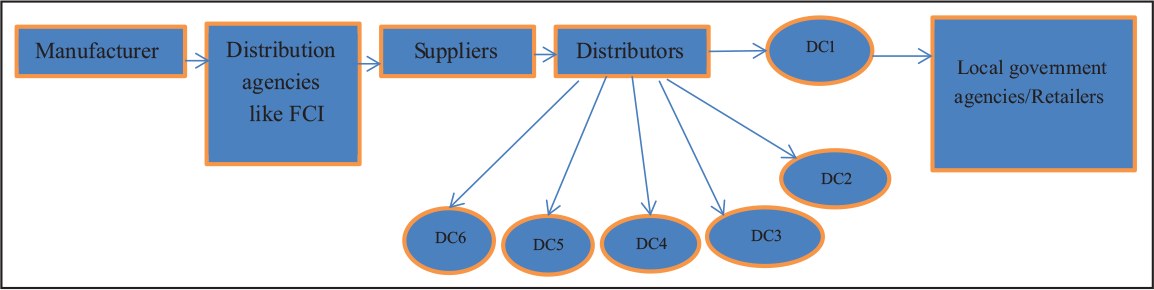
The review of literature indicates that in the current COVID-19 disruptions, there is a substantial gap in stint of challenges faced by suppliers and DCs whilst reaching out all probable hotspot places in tier-A cities. Hence, our present study focuses on emerging food supply challenges faced by distributors and suppliers amid COVID-19 (Figure 1). Surprising rise in demand of food commodities and restricted supply challenges were the two immediate challenges faced by government and distributing agencies. Several pragmatic steps were taken to help companies respond to distribution of products and adapt to the new normal. Meanwhile, in the current scenario, various government agencies like FCI were completely relying on containerization via railways and road transportation. Under this, grains were stored closer to high demand hotspot areas, so that, within a short period of time, local government could have access to grains and other staple food items for procurement and distribution. DCs played a very effective role in making the distribution of staple food items more efficient. Therefore, in the present study, we tried to locate DCs and for this purpose, tier-A cities of India were selected. Also, while locating DCs, transportation cost was kept in view so as to reduce it and achieve cost optimization. For locating DCs, green field analysis method was performed by anyLogistix PLE edition software.
Research Framework
Recent literature has recognized that the facilities are being built to significant warehouse capacity and with higher shipping door ratio (Planeta, 2001). This type of facility, however, may not be suitable if the product flow rate is too high and the product demand is too fluctuating. This make supply chain operations too complex and dynamic to handle customer demand. But in recent years, there was a noticeable demand for warehouses and DCs because there was a sudden shift from bulk customer orders to small customers’ orders and other attractive services being carried out by modern DCs. Hence, today, DCs play an important role in optimizing the supply chain operations and satisfying urgent needs of end consumers. DCs ultimately pave the way for product localization and the localization of supplier base so as to depict the needs and characteristics of market and customers (Higginson & Bookbinder, 2005). For our analysis part, we utilize the greenfield analysis experiment. Our experiment was carried out and solved using anyLogistix GFA experiment toolkit (Network strategy part 1). ‘GFA Experiment’ has been validated for the correctness of the results and the scalability (Ivanov, 2020). However, conduct of the experiment and presenting different scenarios is beyond the limit of this article. Therefore, no additional validation tests for this study are required. In addition to this, we compute GFA experiment subject to certain parameters in a given scenario such as time period, number of sites, product measurement unit, distance measurement unit, transportation cost per DC, and product type for a disruption-free scenario.
The present research study aims
To identify potential locations for supply of staple food through various DCs in tier-A cities across India. The study focuses on achieving the cost optimization by reducing the transportation cost.
Mainly, tier-A cities of India are included in analysis part for locating different DCs for food distribution, namely Delhi, Bangalore, Hyderabad, Chennai, Pune, Kolkata, Mumbai, and Ahmedabad. The time period selected for our study is March 25, 2020–to May 30, 2020. Staple food basically includes pearl millet, wheat, rice, lentils, pulses, oil, and sugar, which will be the part of our food supply chain.
Experimental Results and Analysis
As per the observations, both the inbound and outbound movement of supplies remain uncertain. So is the case of movement of all modes of transportation having come to a halt with no passenger movement, making business operations more difficult, leading to uncertainty all across the globe, and making it difficult for all sectors of the economy to survive. But it is just a matter of time before the entire world emerges out of this situation and normality returns. These business models needs to conduct their business in different geographies of the country that too at right time, place, with right product.
New Site (DC) Locations
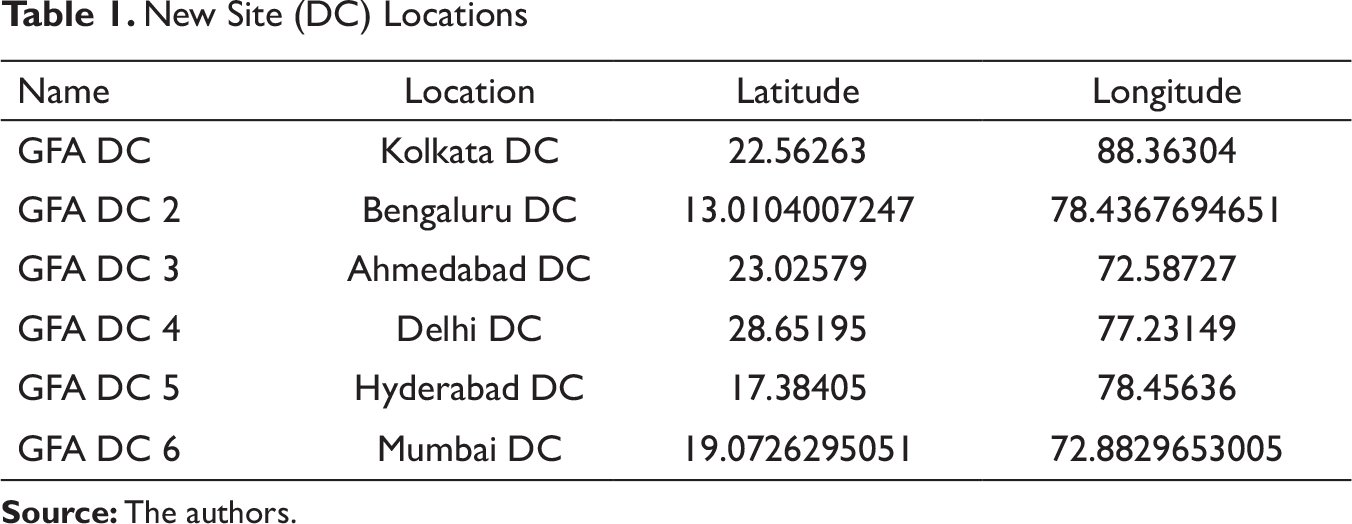
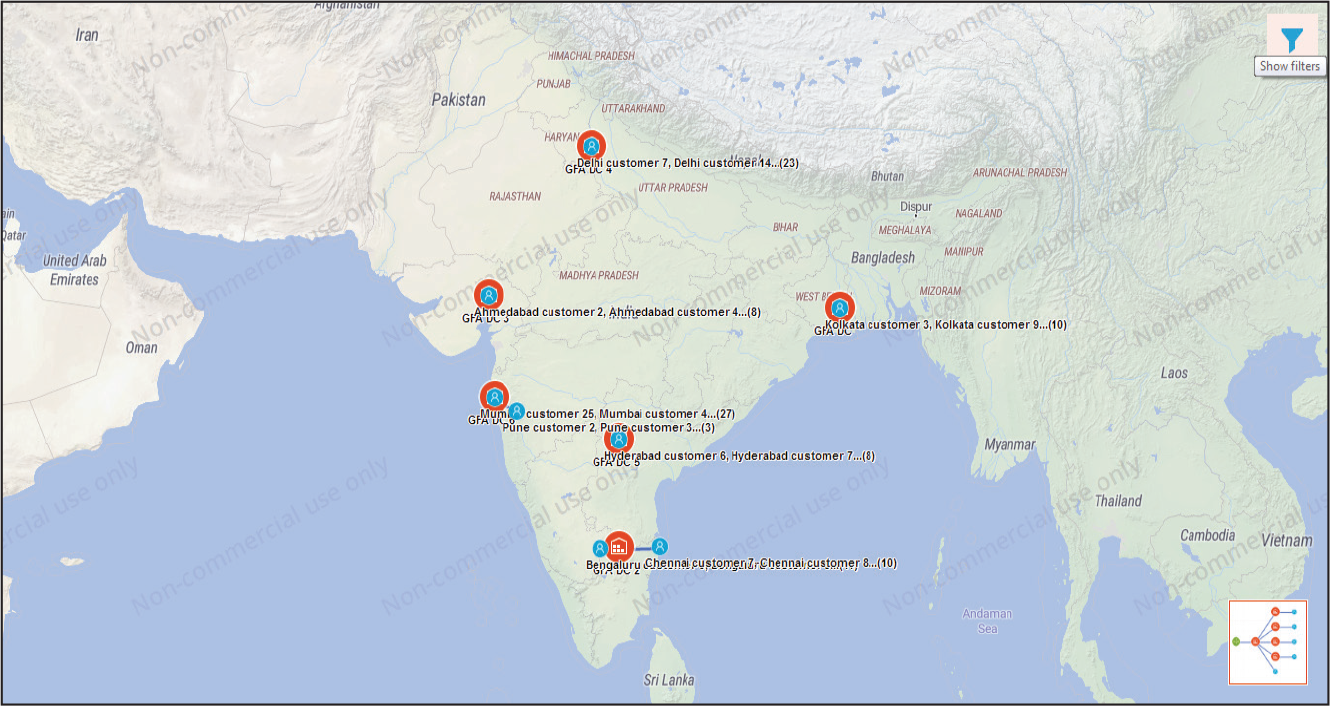
The information in Figure 2 shows that government/distribution agencies need to install six DCs instead of eight DCs. This would result in transportation cost reduction from US$21327 in the case with one DC to US$2375 in case with six DCs. With the help of Green Field Analysis (GFA), we can see a sharp decline in transportation cost, making the suggested supply chain network more suitable for implementation. As a result, we need six potential areas to locate DCs/regional sites. The maximum service distance covered by the software is 300 km.
Therefore, location of potential regions helps in attaining cost optimization and reduces number of DCs, which helps in reducing the transportation cost. In the given scenario, Bengaluru and Chennai shared the same DC of FCI and Mumbai and Pune shared the same DC for food distribution. Therefore, it is an optimal model which government distribution agencies and other local governments can imply to manage the uncertain supply chain operations.
Discussion
Implications for Theory
The main role of DC during this pandemic crisis is to respond to the volatile market (Maltz & DeHoratius, 2004) in order to trade off the series of novel challenges (Stošić Mihajlović & Trajković, 2017). In lieu of this crisis, DCs need to manage the customers’ basic demand and deliver the goods within the given time constraint. In the meanwhile, the localization of supplier’s base needs to be more flexible and strong in order to reach out the target hotspot area and customers. Hence, the supply chain manager requires to locate more number of warehouses in various parts of cities to assure the reachability of products and services on time. Adding to this, the below-mentioned flowchart (Figure 3) simply describes the proper functioning of warehouses which is possible only when the transportation system is excellent. Transportation further helps to make this kind of supply chain model more successful and revenue-focused. Any compromise made in transportation facility will append more cost and risk in supply of goods to various DCs. Hence to reach out the target customers, both the transportation system and DCs require to combat together to increase the SC surplus and reduce cost.
This further helps to manage the variances in the volumes of individual stock-keeping unit (SKU) level at various DCs located near hotspot regions (van Hoek, 2001). Following this, DCs will be able to respond to the agile requirements of supply chain. Therefore, both the upstream and downstream functions of food supply chain will not get adversely effected, whilst, sidelining the bullwhip effect by unnecessary buffering of stock. Again, this will bring more agility at the DC’s operational level (Baker, 2008).
Managerial Insights
Due to COVID-19 contagion, the impact on supply chain was soon felt around the world. As Chinese companies play a central role in the supply chains of many MNCs, the impact was too huge on the performance and value of SC. Indeed, there was a direct impact on consumer demand, goods and services, and storage and delivery which altogether forced to rethink on the warehousing and distribution strategies.
The current supply chain disruptions are impacting consumer demand, labor, materials, storage and delivery, thereby forcing to build more of the warehouses and distribution centers across the world in their native countries. Even the warehousing segment acted as a boon to the government and local bodies by establishing DCs in the heart of cities from e-commerce players.

For creating more spaces for storage across the country, the unsold/idle inventory, old manufacturing units, and shopping centers can be converted into warehousing space. This improves the supply chain operations and helps to access the local retailers and distributors available for staple food supply. Suppliers cater to essential as well as non-essential services and made huge efforts to mitigate the challenges. Another necessary step is to shift the inventory of finished goods to a flow-through model higher up the distribution chain—either to warehouses or DCs—instead of keeping stocks with distributors or local retailers or resellers.
The six DCs identified while running a GFA experiment will make the distribution of staple food items smoother and cost saving. Local retailers which are quite distant can be replenished via DCs through containerization via road transportation network. This provides nearby the DCs with shorter deliveries to retail stores, adding advantage to supply chain surplus. This also brings economies of scale through bigger vehicles and higher loading factors.
Another factor which has emerged and is a learning of all countries is to become self-reliant in certain sectors and not depend on imports as the current situation has jeopardized the operations, and many countries were on a standstill without external help. Many visionaries and intellectuals had forecasted that the virus outbreaks will be the most difficult thing to control in the globalized world and the countries need to be prepared for these contingencies; this outbreak is very different from the 1918 virus outbreak when the world was not cross connected as it is today.
The best contingency planning was seen in a small European country of Finland, where they had stockpiled not only all medical personal protective gear like surgical masks but essentials like food grains, oil, tools, and raw materials for manufacturing. The country has been stockpiling these stocks since the Second World War which came in handy during the COVID-19 outbreak. Besides, nations need to develop domestic supply chains from end to end without any dependence on the external entities, which will provide them self-reliance as well as better preparedness at the time of contingency.
Also, with sudden changes in sources of revenue for transport operators, it became very important for them to achieve cost optimization with many unexpected shortfalls in their expenses. Therefore, another factor which was achieved in the present study was reduced transportation cost. This helps the distribution agencies to move the food supply to remote areas and bring more stabilization to supply chain operations amid COVID-19.
Conclusion
This article has explored six potential regions for staple food distribution among tier-A cities of India. The study also revealed that DCs plays a more active role than the warehousing segments. Also, sharing of DC resources by various regions helps to achieve cost optimization. Maltz and DeHoratius (2004) also mentioned that DCs have been changing in order to respond to volatile market demands and research done to understand the agility at DC operational level has been very limited to date.
Hence, the study reveals that supply chain operations can by carried out with a smooth flow without disruptions by building up more DCs near market areas. During this period of crisis, DCs turned out to be the assets of long-term nature and therefore, a solution to real challenge of operationalizing supply chain agility (Baker, 2008). The results also reveal that by identifying the potential locations, the transport cost can be reduced during this pandemic period.
Perhaps long-term revenue sources can be re-planned and re-prioritized for transportation system in light of decrease in revenue. In the meanwhile, many companies have built and implemented strategies to deal with supply chain risk management and business continuity strategies. They have diversified distribution channels from a geographic perspective to reduce the supply side risk from any region.
Limitations and Future Scope of Study
Although the study has certain limitations, it has tried to expose the vulnerabilities of the existing supply chain models and also the level of preparedness and contingency planning required in extreme situations. This may pave the way for further research into the supply chain models during contingencies like covid-19. As for limitations of this study, we tried to reduce the superfluous technical details to make the managerial insights more depictive and clear (Higginson & Bookbinder, 2005). Another limitation is missing of detailed information at the time of writing this article as it is a time-bounded study.
Future Scope of the Study
The results of this research can be used by decision-makers to predict the dynamics of supply chain operations and the long-term impact of epidemic outbreaks on the future SCs, and accordingly, one should develop pandemic warehousing and distribution plans. In addition, the issues of SC survivability (Ivanov, 2020) and sustainability (Islam et al., 2020) have not been studied vigorously but were taken as the most important topics following the supply chain disruptions due to COVID-19 (Choi, 2020; Haren & Simichi-Levi, 2020; Ivanov, 2020a, b; Ivanov & Das, 2020; Ivanov & Dolgiu, 2020a; Ni et al., 2020). Unlikely, the mobile service operation (MSO) business model by Choi (2020), a similar kind of model, can be adopted by locating the DCs near end customer residential location so as to reduce their worries and keep them safe during this pandemic. Thereof, in future, the emergence of new technologies like artificial intelligence (AI), machine learning (ML), and advanced analytics enhance the ability of the supply chain leaders to make more informed decisions and at the same time save vital costs. These technology-oriented solutions will further help to reduce the operational risk (Aras et al., 2020; Chiu & Choi, 2016; Choi et al., 2008; Xue et al., 2016; Zhang et al., 2020b).
Footnotes
Declaration of Conflicting Interests
The authors declared no potential conflicts of interest with respect to the research, authorship, and/or publication of this article.
Funding
The authors received no financial support for the research, authorship, and/or publication of this article.