




Abstract
This scoping review aimed to explore the qualitative research on the educational experiences of youth in care. The initial search yielded 9913 sources. Following multiple exclusion steps, 18 sources remained, half of which were unpublished theses with eight journal articles and one report. There were 397 participants included in this review, most of whom were young women from the same female-only public charter school for court-involved youth in the United States. Participant characteristics were inconsistently reported, particularly race/ethnicity which was unknown for 45% of participants. One-off interviews and focus groups were the predominant data collection methods used in the qualitative research. None of the 18 studies utilised participatory or co-design methods. The poor demographic reporting and traditional research methods make it difficult to determine whose experiences the research is capturing, and produce doubt that the experiences of those most impacted by the care system are being understood in meaningful ways.
Despite the United Nations Convention on the Rights of the Child (UNCROC), youth in care encounter inequitable educational experiences and outcomes, including poorer numeracy and literacy skills (Rees, 2013; Townsend, 2011), lower graduation rates (Cage et al., 2022; Gypen et al., 2017) and higher levels of truancy, school suspensions and expulsions (Oranga Tamariki Voices of Children and Young People Team, 2019). These inequities exist across countries (Lund & Stokes, 2020) and have been known for decades (Forsman & Vinnerljung, 2012).
Youth in care are a heterogeneous group, so it is difficult to assess the impact of care on their educational outcomes. Systematic literature reviews have reported weak associations between environmental and personal factors and noted the poor quality of the research conducted (O’Higgins et al., 2017). Quantitative studies have highlighted factors that impact the educational success of youth in care, with differences in educational outcomes between those in and those not in care, revealing the systems and environments that fail to meet the needs of this vulnerable group. Researchers have proffered several possible explanations for these disparate outcomes, including gender, the impact of racist systems, special education settings, changes in school and home placements, and teacher and caregiver attitudes. Many studies show a link between gender and academic outcomes among care-experienced youth (Kirk et al., 2012; Pecora et al., 2003; Schiff & Benbenishty, 2006), with males being particularly vulnerable to educational inequities. One study (Oranga Tamariki Voices of Children and Young People Team, 2019) found that while truancy rates were equal across genders, male care-experienced youth were much more likely to have been stood down, suspended, or be in alternative education than their female peers. No gender differences were found in school disengagement for those not in care. Conversely, an earlier study (Griffith et al., 2009) found similarities in school suspension between male and female students in residential care, but male students had lower grade point averages when leaving residence and more than twice as many school referrals for problem behaviour.
Due to the current and ongoing impact of colonial and racist histories, Indigenous and ethnic minority youth are disproportionally involved in child welfare systems (Oranga Tamariki Voices of Children and Young People Team, 2019; Tilbury, 2009; Yi et al., 2020) and are thus disproportionately impacted by its effects. O'Higgins et al. (2017) conducted a systematic review of factors influencing the educational success of care-experienced youth and found that those identified as ethnic minorities experienced poorer educational outcomes. In contrast, Kennedy et al. (2022) conducted a meta-regression of racial disparities in the well-being of care-experienced individuals and found no educational differences among different racial groups in care.
Youth in care are also overrepresented in special education settings (Scherr, 2007) posing a risk to educational success (O’Higgins et al., 2017). Studies have found that children in care with special education needs have more inequitable educational outcomes than both those without special education needs and those with special education needs not in care (Geenen & Powers, 2006; Turpel-Lafond, 2007). These two vulnerabilities interplay, causing poorer educational outcomes.
The instability of home and school placements may explain some of the educational disparities among youth in care, because they are more likely to have multiple school changes than those not in care (Fries et al., 2016; Oranga Tamariki Voices of Children and Young People Team, 2019). Many of these school changes are due to changes in home placement (Clemens, Klopfenstein, et al., 2017). Several studies have documented the negative educational impacts of school and placement changes (Clemens et al., 2018; Gypen et al., 2022; Sebba et al., 2015). School changes require youth to adapt to unfamiliar academic and social environments where curriculum, teaching style, or expectations differ, and social supports may be lost (Mehana & Reynolds, 2004). A change in home or school placement may result in feelings of stress and trauma and require youth to engage in new routines and build new relationships (Berger et al., 2015; Melinder et al., 2013). Both negatively impact young people’s ability to learn and engage in school. Other researchers have discussed the positive impacts of changes in school placement, which may result in youth moving to a higher performing or better resourced school. The move also allows youth to hide their care status from fellow students, thereby reducing stigma (Fawley-King et al., 2017; Fries et al., 2016).
Teacher expectations and attitudes may also affect the educational outcomes of youth in care (Clemens, Helm, et al., 2017; Dann, 2011; Moyer & Goldberg, 2020; Rios & Rocco, 2014). While exploring the experiences of youth in care in the United States, McGuire et al. (2021) found that the perceived social support of teachers was positively associated with their grades and behavioural health. The importance of teachers to the success of youth in care is pertinent to understand because research has suggested that teachers and school staff have relatively little training or understanding of the complexities of working with youth who have experienced trauma such as those that often lead to child welfare involvement (Clemens, Helm, et al., 2017; Moyer & Goldberg, 2020; West et al., 2014).
Similarly, caregiver expectations and attitudes toward education can impact the academic achievement of youth in care (Cheung et al., 2011; Tessier et al., 2018). Parents and caregivers are similarly under-resourced to navigate sometimes complex and confusing educational environments, particularly in special education settings (Goldberg et al., 2017). Foster parents report stigma from those in broader community environments, including the education system (Blythe et al., 2012) and have noted feeling disrespected by schools and school staff (Moyer & Goldberg, 2020).
Inequities in educational outcomes are essential to address, because education is an important protective factor for the well-being of all youth, particularly those in care. Engagement in education can act as a mitigator for the adverse outcomes of care, including unemployment (Harland, 2014) offending (Lambie et al., 2022) and the risks of premature death (Almquist et al., 2018). Increasingly, it is being recognised that we need to elicit the voices of care-experienced youth to understand the meaning behind these findings and address the issues they raise. Maxwell (2012) argues that causal claims in educational settings require a detailed understanding of context and meaning, highlighting the desperate need to use qualitative methods within educational research. Clemens, Helm et al. (2017) conducted interviews and focus groups with former foster care youth to obtain their perspectives on these educational inequities. The youth highlighted the emotional impact of the care experience and its challenges on their ability to learn. They also reported frequent school changes and the attitudes and pressure of teachers, caregivers and caseworkers as critical reasons for difficulties in school.
Townsend et al. (2020) systematically reviewed the qualitative and mixed-method literature on the educational experiences of care-experienced youth to understand the factors that help and hinder educational success. They suggested school can be a safe and stable place for youth in care. Relationships with teachers and peers, adverse effects of the care experience and mental health challenges, the importance of youth agency and being highly motivated to succeed were also important factors influencing educational experiences. Goding et al. (2022) conducted a similar systematic review and found that across the literature, care-experienced youth reported difficulties associated with current and prior care experiences, including instability, stigma and the need to be self-reliant. They, too, identified the importance of supportive and safe relationships and tangible individualised support from those who trust and value their agency in their learning journey.
While both systematic reviews have provided a thematic analysis of various studies, both focussed on a small sub-population of those in care. Townsend et al. (2020) included youth no longer in care and only those in mainstream educational settings. Goding et al. (2022) also included youth who were no longer in care and focussed only on research conducted in the United Kingdom, in mainstream or pupil referral units (PRU). Thus, these reviews excluded experiences of youth in special education, residential education and those not in school. While these reviews provide an analysis of youth experiences, neither review aimed to understand the voices that are being elevated in the research nor the methods used to achieve this. A scoping review allows for mapping diverse and heterogeneous research and can help understand complex issues (Arksey & O’Malley, 2005). The present study utilises a scoping review to understand how the educational experiences of youth in care are explored in the qualitative literature, specifically: (1) Whose educational experiences are being captured by the research and (2) What methods are being used to capture these?
Methods
Data sources
The PRISMA methodology guided the search strategy (Tricco et al., 2018), and databases were selected with the help of an experienced librarian to capture the breadth of literature. Searches were completed between December 2022 and January 2023 in electronic journals Scopus, ERIC, ProQuest Social Sciences, ProQuest Psychology, ProQuest Dissertation and Theses. Standalone searching of New Zealand Theses and Oranga Tamariki – Ministry for Children Research websites were completed. The Child and Youth Services Review journal and bibliographies of previous relevant systematic reviews were also hand-searched.
Searches included research from the years 2000-present, and only in English as this was the only language spoken by the research team, (and any attempts to translate from other languages would likely lose or minimise the complexity of the experiences). Books and review articles were excluded. Search terms considered a variety of differing care contexts and countries. Databases were searched with the following search terms: child* OR kids OR “young people*” OR student* OR adolescen* OR pupil* OR youth AND “in care” OR “foster care” OR “looked after” OR “out of home care” OR “state care” OR “child protection” OR welfare OR “public care” OR “care experience*” AND education* OR school* OR academic OR classroom AND experience* OR perspective*. For the New Zealand Theses database and the Oranga Tamariki website, keywords were used when searching.
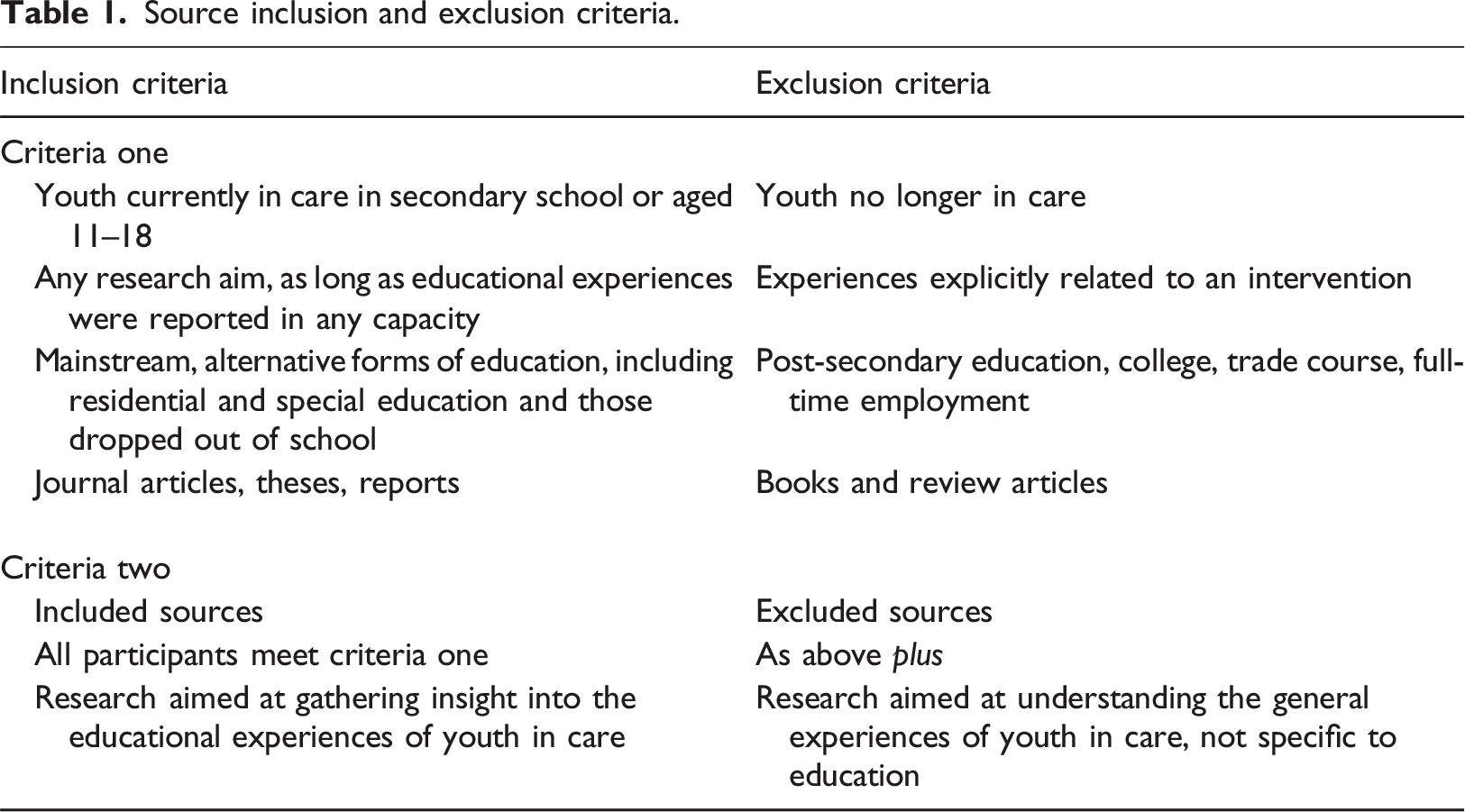
Inclusion criteria
Source inclusion and exclusion criteria.
Search strategy
Tasks were completed by the first author unless otherwise specified. Following the creation of inclusion criteria one, items yielded were exported into Zotero, and duplicates were removed. The remaining sources were screened based on title and abstract. The second and third authors screened 5% of these. The remaining sources were screened by full article, and the second author screened 5%. Front and back citation chasing of the included journal articles was then completed. This search left 75 articles, which the research team felt was too many. The team introduced inclusion Criteria Two, and the first, second and third authors screened each of the 75 articles against the updated criteria. All authors agreed upon the selection of the remaining articles.
Data extraction
Data were extracted for the 18 identified sources using a Microsoft Excel spreadsheet. Extracted data included source and demographic information (author, year of publication, title, source type, country, gender, ethnicity, education and care setting, research aims), research designs and methods and any limitations identified by the authors.
Results
-As seen in Figure 1, the search strategy yielded 9913 sources. Following the removal of 1586 duplicates, 8309 references were screened based on title and abstract. Of these, 8126 were excluded, because the participants were of the wrong age, care status or the source did not include school experiences. The remaining 181 sources were screened by full article, with 139 excluded, leaving 42 sources. Another 23 were included following front and back citation chasing. After the introduction of Criteria Two, 47 of these sources were excluded, leaving 18 sources that met the final criteria. PRISMA flowchart showing the selection process.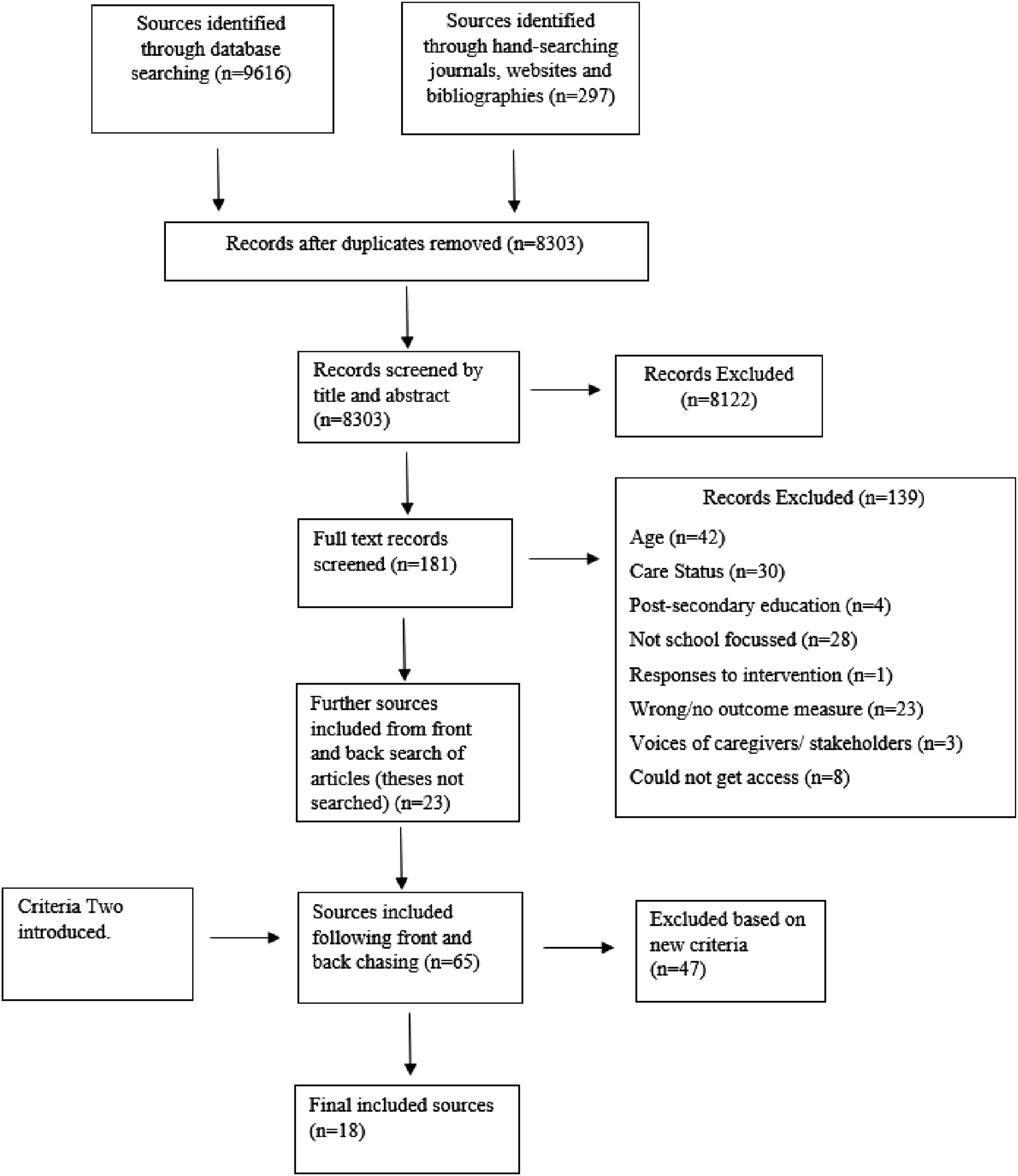
General study characteristics
Figure 2 gives an overview of the year and type of source. Of the 18 sources, nine were theses, eight were journal articles, and one was a report. Studies were conducted more recently (Figure 2), with over 50% of the research conducted in the last five years. Studies were primarily conducted in the United States (six) and the United Kingdom (six). The remaining countries each had one source: Australia, New Zealand, Canada, Sweden, Belgium and Croatia. Sources by year and type.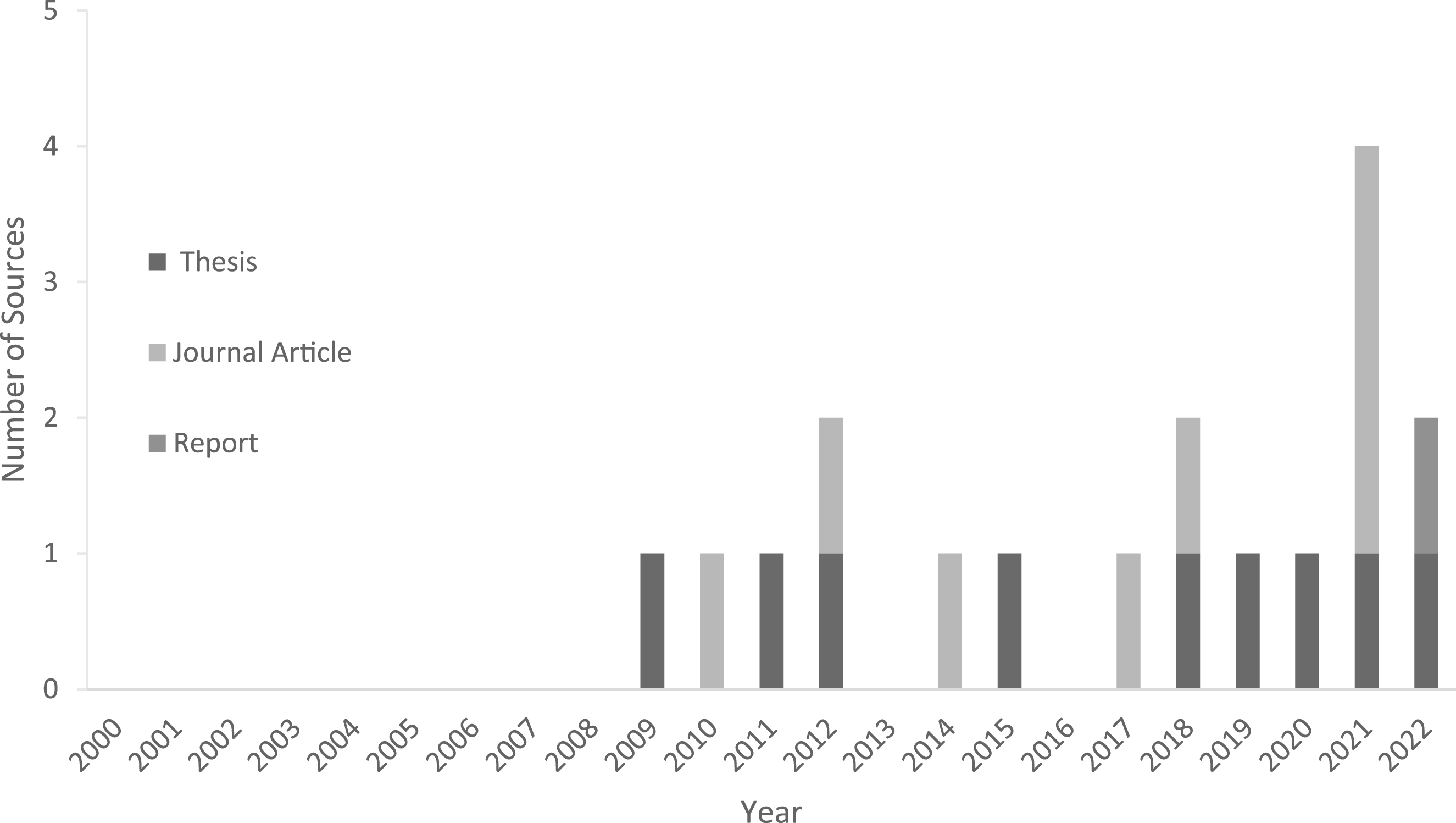
Demographic characteristics
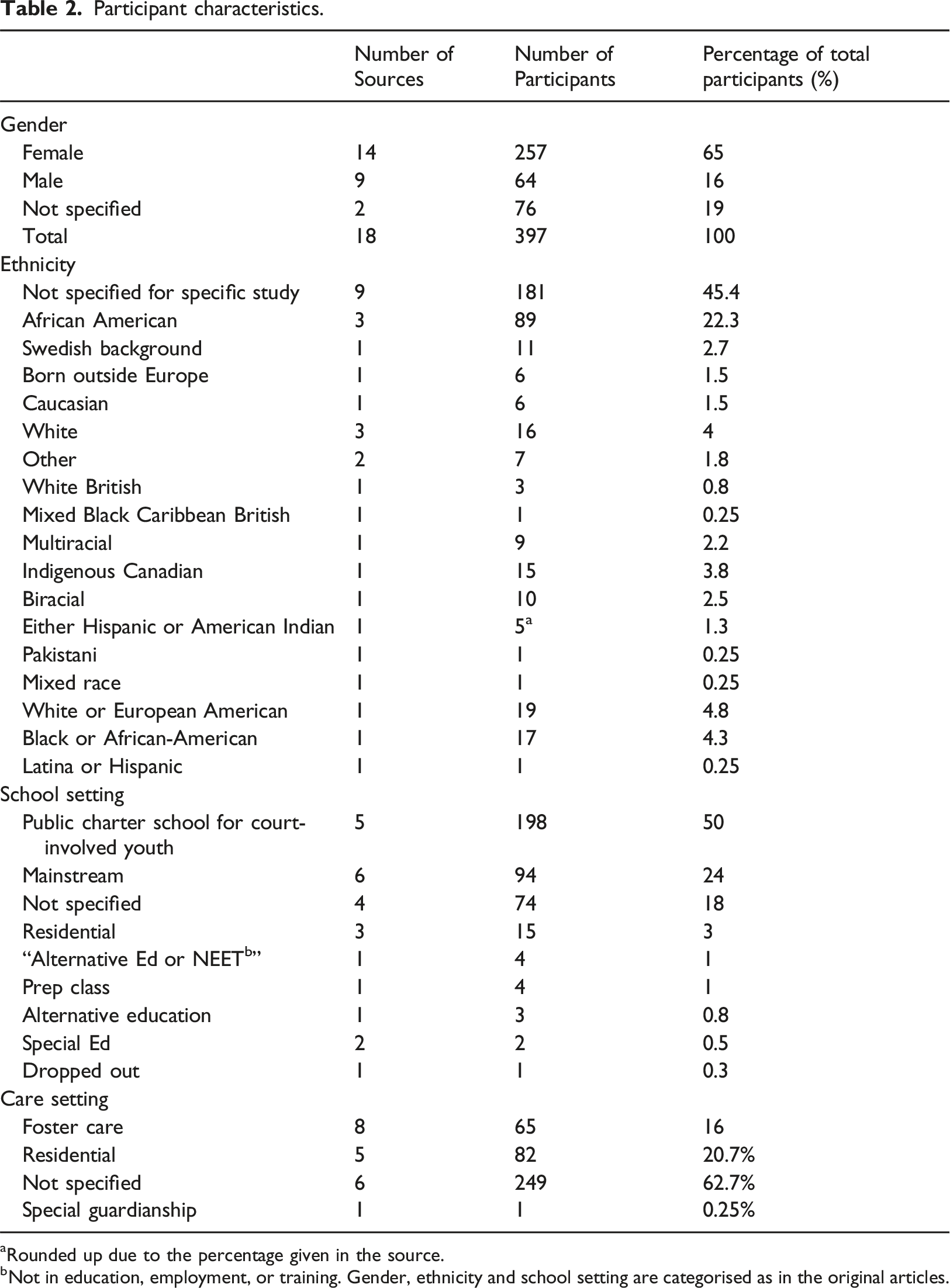
Participant characteristics.
aRounded up due to the percentage given in the source.
bNot in education, employment, or training. Gender, ethnicity and school setting are categorised as in the original articles.
Only Fleming et al. (2022) stated that participants self-identified gender, but when presented, the data were reported as sex. Similarly, how the researchers obtained participant ethnicity or race data was largely unclear. Four studies (Crumé, 2022; Day et al., 2017; Quest et al., 2012; Townsend, 2011) reported data were obtained through educational or social worker records; one study specified the self-report of ethnicity, allowing for multiple identities (Fleming et al., 2022) and two studies (Somers et al., 2018, 2021) reported participants “identified as” when discussing ethnic demographics, suggesting self-reporting.
Five studies were conducted at the same female-only public charter school for court-involved youth (Crumé, 2022; Day et al., 2017; Somers et al., 2018, 2021; West et al., 2014). The inclusion of these studies has led to a considerable skewing of demographic data, with at least 65% of all participants identified as female and half of all participants engaged in this specific public charter schooling.
Studies largely failed to include the care setting of the participants. However, two studies comprising 84 participants reported that 86% of the whole school population was in residential care and 14% in the community (Day et al., 2017; West et al., 2014). It can therefore be assumed that many more participants than specified were in residential care.
Methods of data collection
Procedures used across studies.
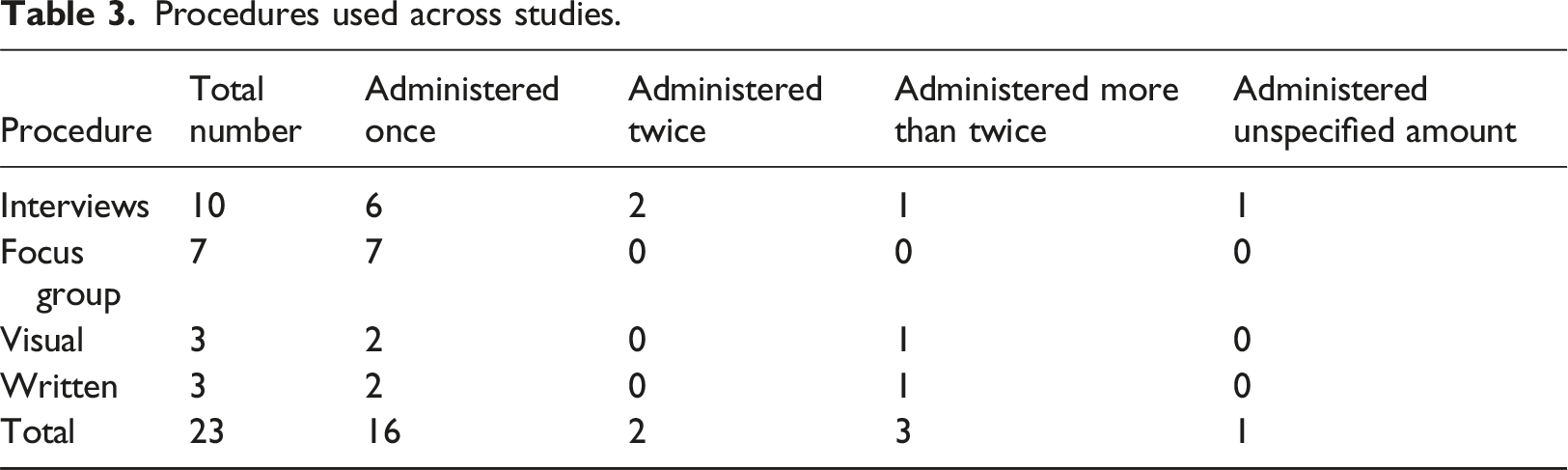
Twenty percent of studies reported difficulty recruiting participants, and 31% reported potential biases within their sample. Biases included a requirement for participants to be in a stable placement, and teachers choosing the participants (thereby potentially only including those with positive school or classroom experiences).
Discussion
Summary of recommendations for future educational research with care-experienced youth.
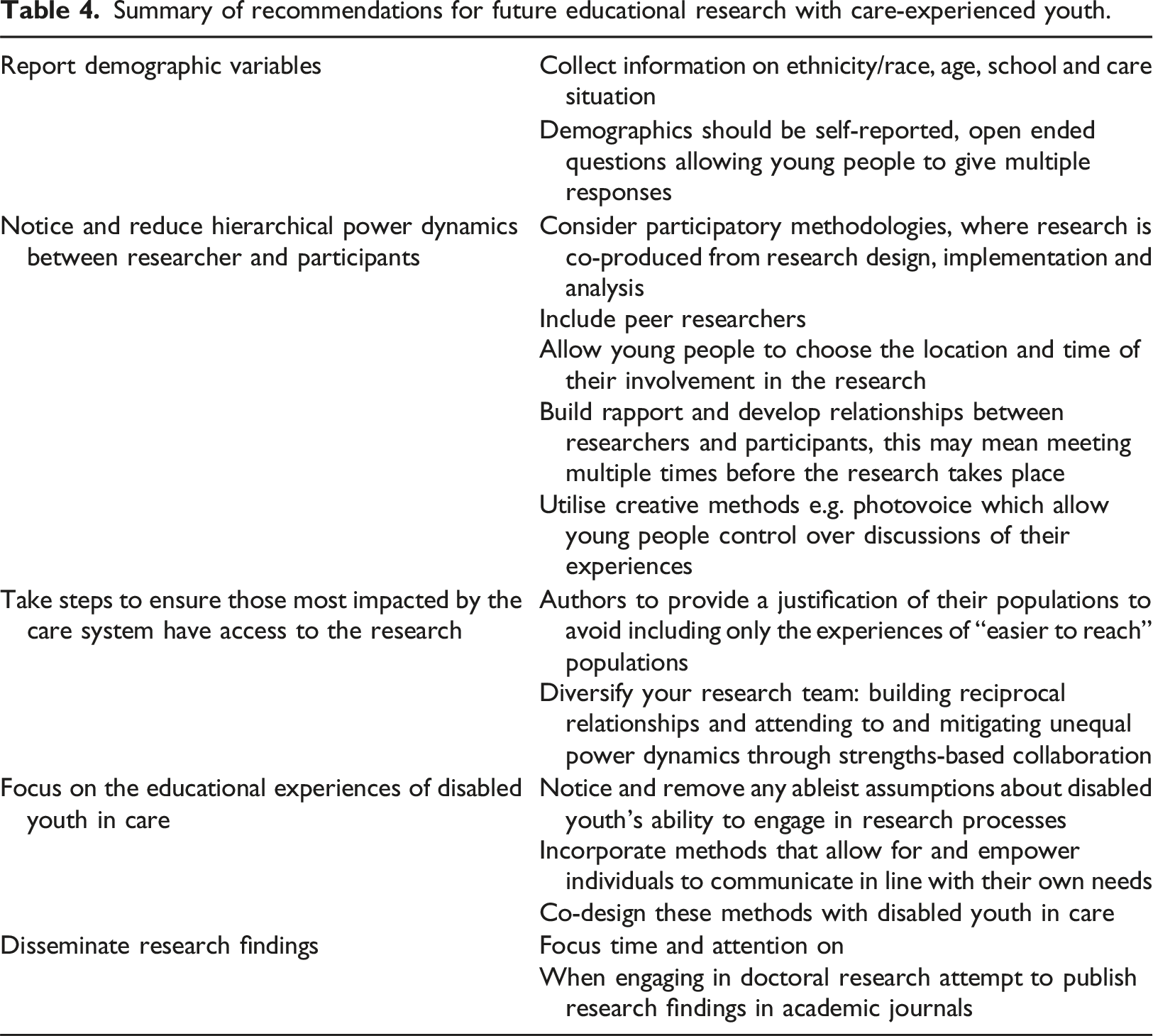
Participation of youth in care
Numerous calls have been made to increase research on the life experiences of those in care (Holland, 2009; Simmel, 2012; Unrau, 2007). The UNCROC (United Nations, 1989) requires the voices of children and young people to be listened to and obligates adults and government agencies to ensure that opportunities are given to children to express their views freely. There has been a move away from professional doubt regarding the appropriateness and trustworthiness of youth voices (Holland, 2001) and a shift to understanding youth as experts in their worlds. As such, there has been an increase in qualitative research concerned with elucidating the voices of those in care. This review provides evidence for this increase, with most of the included studies being published in the last five years.
Despite the push for increased participation of youth in care in research, several studies in this review highlighted the difficulties of recruiting from this population, because recruitment was often reliant upon child welfare professionals and teachers. Research with youth involved in child protection often employs gatekeepers to decide on their behalf who can engage in the research process without re-traumatisation (Kiili & Moilanen, 2019). This selection process leads to a population bias, where only the voices of those “doing well” are heard. Several studies noted this bias, excluding youth in unstable living environments or with significant behavioural or mental health challenges. Eriksson and Näsman (2012) argue that researchers view child protection and participation as incongruent; child participation rights and protection should be combined when vulnerable children offer their voices.
A strong relationship between the researcher and the young person allows for a safe context for vulnerable youth to participate (Kiili & Moilanen, 2019). Adolescents have often described needing a sense of constancy to feel secure in disclosing their thoughts and experiences (Everall & Paulson, 2002). Due to personal experiences of abuse and violations of trust, youth in care may find it more difficult to build trusting relationships with adults and professionals (Pinkney, 2013). In this review, studies predominantly used one-off one-hour interviews to elicit the voices of youth in care on their educational experiences, despite such interview procedures being known to limit the ability of youth to express and articulate their experiences (Nelson & Quintana, 2005). Power dynamics are inherent within the research with youth, particularly those in care, as professionals often make decisions about their lives that render youth feeling powerless (McLeod, 2001). McLeod (2007) describes that youth in care may attempt to regain power within interviews with professionals by withholding information or changing the subject. Future research should consider ways in which these power dynamics can be reduced to produce a richer understanding of youth experiences.
Creative procedures may be a bridge to reduce power dynamics and allow youth the space to openly give and have their voice heard (Lomax, 2012). Rice et al. (2014) described a photo-elicitation technique that allowed youth to lead conversations about what matters to them, allowing others to see the world through their lens, requiring less verbal articulation. Similarly, Fenge et al. (2011) described various participatory methods for at-risk youth, such as visual methods, blogs and Twitter scripts. Peer interviews could be another way to mitigate these power imbalances, with youth in care reporting they preferred to be interviewed by other care-experienced youth than by adults (Dixon et al., 2019). These methods create accessible strategies for youth experiences to be shared and understood.
Given the benefits of such methods, it is unfortunate that very few of the studies in the current review employed creative techniques. Chisholm (2015) used a standard interview and a diamond ranking activity. They reported that the interviews were a poor tool for eliciting youth voices, and the activity-based procedure yielded better results. Future research would be wise to incorporate creative methodological tools to reduce the power imbalance between youth and researcher and provide safe spaces in which youth in care can express their voices.
Participatory and co-designed methodology
While the inclusion of youth in care as participants is positive, there has been little meaningful shift towards youth in care as partners in research or policy design. No study in this review utilised a participatory or co-design methodology. Dixon et al. (2019, p. 2) describe that “whilst care-experienced youth are arguably asked more than any other child to voice their own stories over and over again to professionals and carers, paradoxically they have tended to be denied a voice when it comes to making decisions about their lives”. Participatory Action Research (PAR) is a collaborative, democratic approach to research with researchers and community members. It assumes lived experiences represent knowledge (Bergold & Thomas, 2012). The input of all research team members is respected, and group collaboration allows for creative and meaningful solutions to problems facing specific communities (Jacobs, 2016). Research has recently applied PAR methods with youth and youth in care. Daly (2009) described participatory research with care-experienced youth, where they co-created research on what makes a good care. Youth tested the appropriateness of the research, and methods were co-produced. PAR with youth has resulted in positive outcomes, including raising community awareness and advocating for policy changes (Kim, 2016; Shamrova & Cummings, 2017). Further research on the educational experiences of youth in care should include youth as active agents across all elements of the research-conceptualisation, methodology and analyses of results and stray away from including youth merely as subjects.
Institutional barriers such as ethics review boards, time and cost may impede researchers’ capacity to engage in participatory research. Participatory approaches often require more time and money than standard research methods, because building genuine and non-hierarchical relationships takes time (Raynor, 2019). The naivety of ethics review boards about participatory methods may cause further delays (Onakomaiya et al., 2023). In an increasingly neoliberal academic sphere where efficient outcomes are often prioritised over processes, many researchers may avoid these participatory methods in favour of traditional, more easily resourced research (Millar et al., 2024). Despite these difficulties, we encourage researchers to engage meaningfully with care-experienced youth in participatory research. Researchers should prioritize creative and participatory methodologies that disrupt deeply embedded academic power dynamics, in favour of privileging the voices and experiences of care-experienced youth.
Academic research outputs
Researchers must attend to research outputs when engaging in participatory research with youth in care. Youth in care are dubious of giving professionals their lived experiences in research, and they report wanting to see meaningful results, ensuring their participation is not wasted (Te Rōpū Arotahi, 2022). Within this review, half of all included studies were unpublished theses, with two-thirds of them being doctorates of Educational Psychology or related professional programmes. Evans et al. (2018) examined the peer-reviewed publication outcomes of psychology doctoral dissertations in the United States. They found that only a quarter of theses went on to be published in academic journals. Across disciplines, educational psychology dissertations were the third lowest published, with a 19% publication rate. There are several issues with the high number of unpublished theses in the research. Firstly, researchers may duplicate research that has already, unknowingly been completed (Evans et al., 2018). Second, participants have given their time, often voluntarily (Roberts et al., 2015), to research that has not been adequately disseminated. Finally, systematic reviews may draw biased conclusions based on the often purposeful exclusion of unpublished theses. With the large number of unpublished theses that have used the voices of youth in care as data sources and failed to disseminate these, it is not surprising that youth in care are sceptical of researchers and their intentions. Research done with youth in care must be published, and doctoral programmes should provide a pathway to ensure that the voices of youth in care are respected, and result in meaningful change within the systems that affect their communities.
Participant demographics
The studies included in this review inconsistently reported participant demographic information, with only five consistently reporting participant demographic information across age, ethnicity, gender, care and education setting. Poorly reported demographics are of concern, because it becomes unclear whose educational experiences are being captured by the research.
Ethnicity and race demographics
Several sources poorly reported ethnicity and race demographics, with some converging race and ethnicity, and many not including a measure for either. While race and ethnicity are socially constructed, the use of race may inappropriately imply ideas of biological determinism (Morning, 2011). In contrast, ethnicity incorporates cultural aspects, such as values, social practices and day-to-day behaviours (Durie, 2005). While there is no consistent recommendation for whether ethnicity or race should be used, research guidelines highlight the importance of consistently including these demographics (Flanagin et al., 2021).
Only one study in this review (Fleming et al., 2022) specified that participants could self-report their ethnicity and identify with multiple ethnicities. Roberts et al. (2020) suggest that ethnicity and race should be self-reported based on open-ended questions rather than requiring participants to check a single box. This method highlights the social construction of race and ethnicity and allows participants agency over their identification.
In education research, poor reporting of ethnicity and race demographics has been of concern since the 1980s (Smith et al., 1984). Despite calls for better documentation, reporting of race and ethnicity in education research remains inconsistent. A 2018 review of special education research found that only half of the studies reported race or ethnicity (Sinclair et al., 2018). In 2020, Gaias et al. completed a systematic review of research on educational interventions in the United States and found 62.5% of studies included complete race/ethnicity data and only 8% of meta-analyses. As evidenced in the current review, theses were less likely to report race and ethnicity data. In the psychology literature, reporting of race and ethnicity is even more concerning. DeJesus et al. (2019) found that across more than 1,000 articles in 11 psychological journals, 73% failed to include the race/ethnicity of their participants.
Due to colonialism and racist discrimination, ethnic minority youth are vastly overrepresented in the care system (Cénat et al., 2021; Gatwiri et al., 2019; Oranga Tamariki Voices of Children and Young People Team, 2019). One could therefore argue that issues regarding youth in care are intrinsically linked to those of ethnic minority status. With unclear ethnic or racial data on the participants included in this scoping review, it is unclear whether the extant research adequately represents these voices.
In line with Roberts et al.'s (2020) suggestions, future research should consistently report participants' self-identified ethnicity and race demographics. Furthermore, increased action should be taken to include an ethnically and racially diverse range of participants, with authors considering a justification of their population samples to avoid recruiting from easier-to-reach populations. Sample diversification may require research team diversification, which in turn requires the highlighting and attempted mitigation of power imbalances through strengths-based collaboration (Buchanan et al., 2021). By taking these steps, the heterogenic educational experiences of those from diverse ethnic and racial groups and in care can be captured and explored.
Disabled youth in care
It is estimated that just under a third of youth in care have a disability (Slayter, 2016), with youth in care being overrepresented in special education (Scherr, 2007) and alternative education settings (Social Wellbeing Agency, 2023). Despite this, the current review found very little research on the experiences of youth in care within these school settings. Understanding the educational experiences of these youth in care is increasingly important as they experience further educational inequities (O’Higgins et al., 2017).
The voices of disabled youth are largely unfeatured in qualitative research (Njelesani et al., 2022). This exclusion increases for disabled youth with communication difficulties (Franklin & Sloper, 2009). Stafford (2017) discusses that ableist assumptions about the capacity of disabled youth to engage with the research process result in barriers to their engagement. Future research must specifically focus on the voices of disabled youth and those in special and alternative schooling to ensure they are not further marginalised. Inclusive and accessible research processes should align with individual means of communication (Teachman & Gibson, 2013). Participatory and co-design methods should be utilised to ensure that disabled youth in care are genuinely participating in research design and production and their voices are heard (Raman & French, 2022).
Gender demographics
Most participants included in this review were from a charter school for court-involved young women, leading to a predominance of female participants within the same school represented in this review. This overrepresentation of a small subsector of youth in care resulted in the potential biasing of outcomes as the experiences of few speak for the experiences of many. This biasing leads to difficulty in generalising recommendations to other in-care populations. It also obscures the voice of male youth in care, who are particularly vulnerable to poorer educational outcomes (O’Higgins et al., 2017). Research conducted outside of this public charter school was relatively evenly split between male and female participants. Of note is that no research reported gender-diverse participation. While scarce, research suggests gender non-conforming and trans youth are overrepresented in the care system (Irvine & Canfield, 2016). Gender-diverse individuals likely experience added challenges with school systems, resulting in further inequitable outcomes and more complex educational experiences (Jones et al., 2016). Further research needs to feature the educational experiences of this group.
Failing to include the voices of those most impacted by care, or failure to specify whose voices are being heard by the research, may result in ineffective recommendations that do not benefit groups with the highest educational needs. At best, this means those who are the most marginalised by the care and education systems receive no positive intervention and the status quo remains; at worst, this silencing results in the further oppression and marginalisation of these young people, further entrenching cis-hetero, ableist, racist and colonial norms.
Strengths and limitations
To the authors’ knowledge, this is the first scoping review analysing current qualitative literature on the educational experiences of youth in care. The inclusion of all school and care settings and grey literature allowed for a broad literature review.
The scoping review had a few limitations. Firstly, it is difficult to know whether the search terms yielded all possible results. While we included a range of terms to encompass sources from various care systems and countries, there will no doubt have been terms that we could have included. Given that several studies were set in residential facilities, including the keyword residential may be a suitable addition to future research. Secondly, the failure to include sources in languages other than English has undoubtedly resulted in the loss of many relevant studies, which could have added to the overall picture of the current research landscape.
Conclusions
While there has been increased value placed on the voices of youth in care in research, poor reporting of participant demographics makes it difficult to ascertain whose voices are being heard. When participant demographics are reported, it is clear that voices are missing. Of particular concern is that the missing voices are often from those overrepresented in the care system, such as ethnic and racial minorities and those in special education. The existing literature explores the voices of youth in care in monotonous ways, with youth included as passive participants rather than partners in the research process. Further research must address these gaps, utilising creative and co-produced research that focuses on including the diverse voices of youth in care with the aim of eliminating disparate educational outcomes for this group.
Footnotes
Declaration of conflicting interests
The author(s) declared no potential conflicts of interest with respect to the research, authorship, and/or publication of this article.
Funding
The author(s) disclosed receipt of the following financial support for the research, authorship, and/or publication of this article: this work was supported by the University of Auckland.
