




Abstract
Only a limited number of studies have investigated the association between positive peer influence and youth prosocial behavior in child welfare. None of such studies has been completed in group home setting for youth. This study aimed to examine if positive peer influence is associated with (or predicts) youth prosocial behavior. The Ontario Looking After Children (OnLAC) database was used for analysis. There were 875 participants (males and females) aged 10 to 17 who were surveyed in group homes in 2010–2011. A full regression analysis found strong association between positive peer influence and youth prosocial behavior. The main predictive effect of gender was observed to be modestly associated with youths’ prosocial behavior as demonstrated by the adjusted and unadjusted main predictive effects (OR = .67 and .63). There was a significant positive peer influence by group home size interaction and its moderating effect was such that positive peer influence significantly predicted youths’ prosocial behaviors in small homes (incremental ORs of 2.00 and 4.49), but not in large homes. Findings show that positive peer influence informs youth prosocial behaviors in group homes.
Existing studies about youth’s behavior in group homes are replete with negative descriptives such as risky, challenging, delinquent, and antisocial to mention a few. While critiques consider such characterization as youth labeling or blaming (risk factor approach; Loeber, 1990), it may not be inaccurate to indicate that youth in foster care, especially those in group home care, more frequently engage in delinquent to antisocial behaviors than otherwise similar youths who are not in care (Li et al., 2019; Ramsey-Irving, 2015). Practice wisdom shows that youth placed in group home care spend majority of their time with peers in the home. Their interaction and influence (positive or negative) on each other is crucial as it could have varied implications on intervention outcomes (Sonderman et al., 2020).
Youth delinquent to antisocial behaviors in group homes arguably remain one of the main challenges child welfare systems in North America grapple with ongoing basis (Pecora et al., 2013; Ramsey-Irving, 2015). Youth sometimes blame their challenging behaviors on their placement (group homes) which they see as “gateways to jail” (Contenta et al., 2015). Group homes have been criticized for failing to help prevent youth delinquent to antisocial behaviors, and for not having any positive impact on youth behaviors while in care (Gharabaghi et al., 2016; Ramsey-Irving, 2015).
Peer influence is one of the most recent perspectives (models) being used to explain youth antisocial behavior in natural settings and it is seen mainly as negative influence by deviant youth on their vulnerable peers (Dishion & Tipsord, 2011). Negative peer influence often starts and continues when youth are congregated at natural settings such as schools, juvenile detention centers, boot camps, mental health clinics, or even youth recreational centers (Dishion & Tipsord, 2011; Dodge et al., 2006; Mahoney et al., 2001; McCord, 1992). There have been increasing concerns about youth delinquent to antisocial behaviors in group homes, and there are ongoing debates and discussions about how the problem can be prevented; if not stopped (Lee et al., 2011; Pecora et al., 2013).
Preliminary studies suggested that negative peer influence informs youth antisocial behaviors in group homes (Osei, 2021). What is still unknown is if positive peer influence could set youth on the path of positive or prosocial behavior in group homes. Youth with prosocial behaviors who share with others are mindful of their feelings, considerate, empathetic, and helpful (Eisenberg et al., 2015; Farrell et al., 2017). It has been contended that the closer and more frequent a peer’s positive interactions are the more he or she influences friends’ prosocial behavior development and actions (Busching & Krahé, 2020).
Extant studies contentiously suggested that girls and young women attach more importance to some prosocial behaviors and actions than do boys and young men (Beutel & Johnson, 2004). A preliminary study found that Hispanic boys behave less prosocially than others. Also, white boys, it is argued, seemed to attach less importance to prosocial ideas and behaviors than white girls or black boys or girls (Eisenberg & Fabes, 1998). Some have contended that both boys and girls tend to behave in prosocial manner except the generally accepted definition of prosocial behavior may be biased toward what girls more typically do (Eagly, 2009). Essentially, nothing is yet known about any such gender divides in child welfare practice generally or in group home care specifically. This paper explored that.
Positive Peer Culture has been a popular treatment model used to treat youth with behavior challenges in North America and some European countries since the 1970s. The purpose for its development was to assist in addressing negative peer influence (Vorrath & Brendtro, 1985). It targets youth in care and focuses on group of youth six to eight per group. The model’s main premise is that natural settings play vital role in youth’s psychological and behavioral development and actions. It attempts to challenge and change negative peer influences to positive ones (Laursen, 2010). The model uses a number of methods including prosocial attitude development to inculcate positive behavior skills in youth. It is assumed that changing the psychosocial mentality of youth can help them transform negative behaviors to positive ones. Research shows that positive changes were made in youth antisocial behaviors and there were development of prosocial skills after the model was used to treat them (Nas et al., 2005). Peer influence (positive or negative) in group homes is still considered a crucial potent factor impacting youth behavioral change, placement and treatment outcomes (Sonderman et al., 2020).
Impact of context on peer influence and prosocial behavior
Behavioral learning and social development theorists contended that children grow in contexts (e. g., group or family homes) that influence their development and behavior in varied ways. Children learn patterns of behavior (prosocial or antisocial) from their primary socializing agents in the settings where they grow. When these socializing processes are consistent, a social attachment develops between the individual and the socializing agent. Once strongly established, the socializing agent has power to influence behavior negatively or positively. Prosocial behavior results when a youth is attached to immediate socializing agent that holds prosocial values (Catalano & Hawkins, 1996).
Children who are connected to prosocial activities on regular basis and are committed to such activities may most likely not engage in deviant behaviors and activities. The prosocial perceptions and beliefs of people often direct and stop them from committing crimes. Many children/youth do not become delinquents because they develop prosocial beliefs and values through association with and attachment to institutions, people or friends/peers who have prosocial characteristics and tendencies and, therefore, teach them prosocial behaviors. It is argued that behaviorally challenged youth either lack positive/prosocial bonds or they get bonded with antisocial activities and deviant peers that influence them to become delinquents and or to act antisocially (Catalano & Hawkins, 1996; Zhu et al., 2020).
Human development and behavior is always influenced by contextual factors. Studies show that contextual influences are some of the most robust influences on youth behavior and development (Beyers et al., 2003). It has been recommended that broad comprehensive investigations across intersecting contexts (group homes, peers, families, and neighborhoods) are needed to most effectively care for and support youths in child welfare or related placements (Leon et al., 2008). Thus, the current study investigated how youths’ peer environment influences their behavior positively and how group home size moderates these peer-youth behavior relationships.
Group home setting
Group homes have often been misconstrued as residential treatment centers (James, 2011). Lack of clear definition of foster care options in the research literature has led to group home care often being confounded with other care options: kinship care, family-based treatment, residential treatment, and therapeutic foster care/home (Curtis et al., 2001; James, 2011). Group homes are a type of foster care placement for youth who cannot stay in their biological homes, traditional foster homes, or kinship homes due to abuse or youths’ challenging behaviors. One known challenge which all group homes contend with to date, even though group homes have evolved over time, is youth risky and concerning behaviors (Gerard et al., 2019; Gharabaghi et al., 2016; Martín et al., 2018; Pecora et al., 2013; Ramsey-Irving, 2015).
Originally, all group homes were publicly owned and family operated. However, private group homes using staff model have developed and multiplied in the past couple of decades. As of January 2016, for example, there were 223 private group home and 207 public group homes in Ontario (Gharabaghi et al., 2016). Preliminary evidence suggested that regardless of model group, homes may not provide either welcoming or therapeutic environments for youth. Some youth lamented that they contracted their first criminal charge soon after being placed in a group home where workers are fond of reporting trivial issues (e.g., breaking a plate or a cup) involving youth to the police and criminalizing them (Contenta et al., 2015).
Children’s behavior during adolescent and teenage ages is not solely due to how they were brought up when they were younger. Children’s behavior is influenced more by their peers at adolescent or teenage ages (Lam et al., 2014). Youth in group home care face prevalent psychosocial, behavioral, and peer influence challenges making it imperative that foster parents, social workers, and allied professionals facilitate their development of resilient skills to help fight challenges including negative peer influence. Quality care together with secure attachment to trustworthy caregivers and possible positive peer influence have been suggested as main protective factors that could facilitate such development (DuMont et al., 2007; Legault et al., 2006).
A recent overview of systematic reviews found that smaller group homes may be protective. The study suggested that small group homes, that is fewer youths per home, possibly better resourced group homes have greater preventive impacts than large, less well-resourced homes (Osei et al., 2016). The meta-analysis showed that small group homes prevented a third of the criminal acts that might otherwise have been committed had youths been living in large group homes. This synthesis of generally USA findings also suggested that positive peer influences may promote prosocial behaviors in group homes with fewer residents (Osei et al., 2016).
In group homes as elsewhere, youth influence each other negatively (Osei, 2021). It is the respective weight of the opposing interpersonal forces of their positive and negative influences that remain little known in many contexts and not well known at all in group home contexts. This study aimed to observe the association between positive peer influence and youth prosocial behavior in group homes. It responded to the question, does positive peer influence predict prosocial behavior development among youth in group home care?
Hypothesis It is hypothesized that positive peer influence will predict youth prosocial behaviors in group homes, and it will be moderated by group home size.
Method
Data source and sampling
The Ontario provincial data source, Ontario Looking After Children (OnLAC), was used for analysis. The sample consisted of 875 youth aged 10–17 years, a virtual provincial census of youth in group home care (2010–2011) from various ethnic and racial backgrounds. The OnLAC project, initiated in 2000, was the brainchild of Robert Flynn and his research team in the University of Ottawa’s School of Psychology at the Center for Research on Education and Community Services (Flynn et al., 2004). The project is a study of children, youth, and young adults in Ontario’s child welfare care between birth and 21 years. Its aim was to develop and implement an annual province-wide, valid, and practically useful and different assessment processes to ensure the best treatment of children and youth in care (Flynn et al., 2004). Effective 2006, all the 53 Children’s Aid Societies in Ontario were charged by the Ministry of Children and Youth Services (MCYS) to collect data for OnLAC. Data are collected from all children in care who are less than 18 years of old.
Different general fields including social and demographic; social and emotional development; conduct and behavioral fields, ranging from risky or antisocial to prosocial are assessed using the Assessment Action Record (AAR), the instrument used for data collection. It was originally developed in Britain (Parker et al., 1991; Ward, 1995). For it to be conveniently used in Canada and to assist its general Canadian population conformity, most of the AAR’s individual items and summary scales are exact replicates or close modification of those used in the Ontario Child Health Study (OCHS) or the National Longitudinal Survey of Children and Youth (NLSCY; Byles et al., 1988; Statistics Canada & Human Resources Development Canada, 1999). In 2010, the second Canadian edition of the AAR, a more dependable form of the instrument, was developed (Flynn et al., 2011). The AAR is administered annually to youths who are 10 years old and above in group home care and to their group home workers, by specially trained child welfare workers in one to four face-to-face interviews (Flynn & Ghazal, 2001).
The OnLAC data are placed in the joint custody of OACAS and the University of Ottawa. As joint custodians, both institutions ensure that in deciding to provide access to the data by a third party, the data are made confidential and anonymous, such that no child in care, worker, foster parents, or agency can be identified. OnLAC research has been cleared by not less than 10 independent institutional or research ethics boards (REB). This writer is aware that over its 20-year life, the database has been used often for secondary analytic research and has produced more than 25 dissertations, theses or peer-reviewed articles in professional or scientific journals.
Measures
The applicable study variables (dependent, independent, and moderator variables) were selected from OnLAC codebook. Information about the measure’s validity and reliability has been noted. Common, standardized multi-item measures have internal reliability coefficients in the good to excellent range with Cronbach’s alphas mostly between .80 and .90. Their construct validity is shown by the fact that they are significantly associated with theoretically relevant constructs. The most hypothetically relevant and valid variables that were the main focus of this study are presented below.
Dependent/outcome variables
Items and summary scores of the Prosocial Behavior Scale.
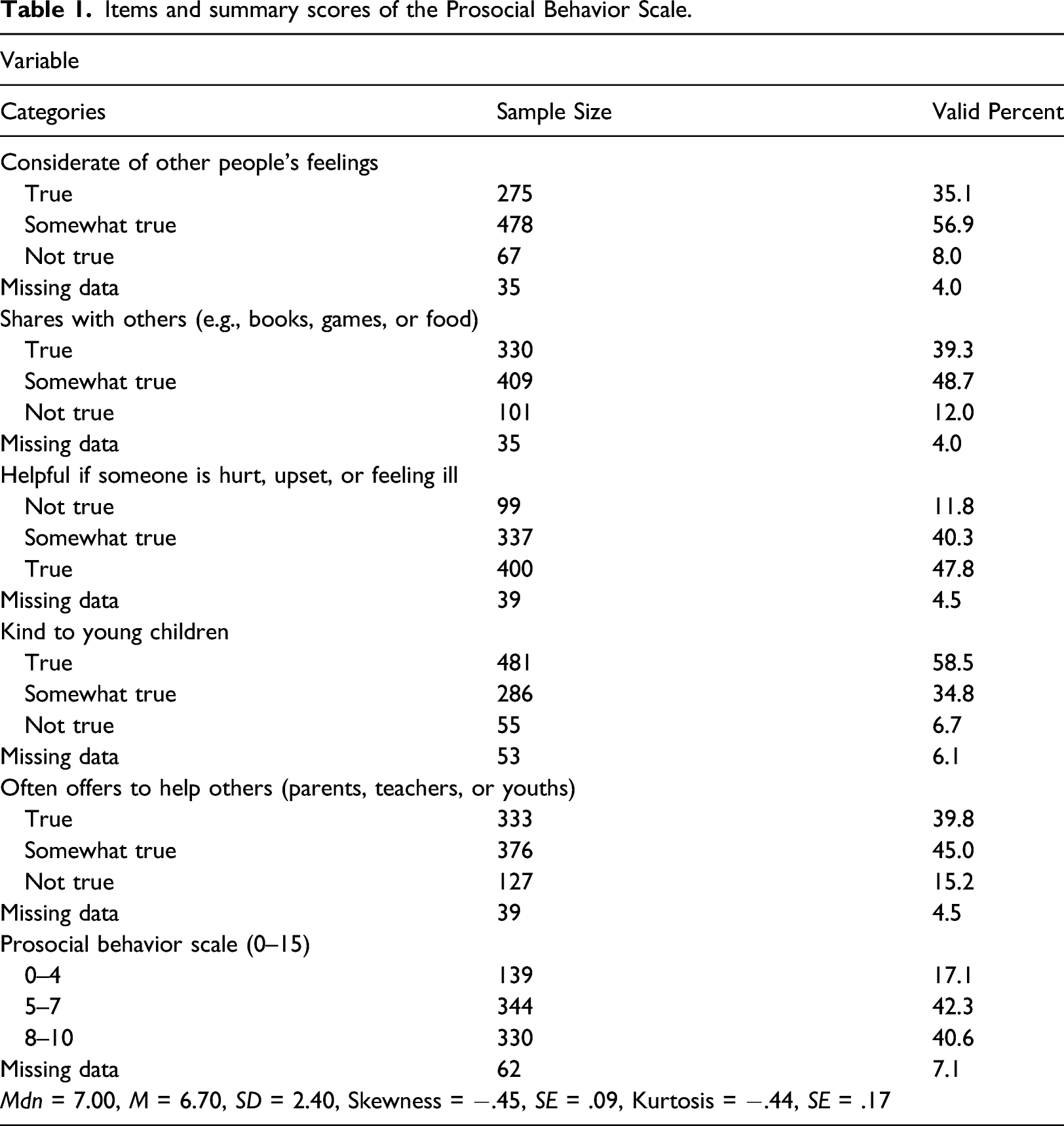
The standard is that binary criterion or dependent variables are used in logistic regression models with the idea that the rarer the outcome, the closer the odd ratio estimates, the relative risk or preventive fraction. Although there is no generally accepted definition of “rare,” a median break of such an outcome at the 50th percentile, for instance, would be the commonest worst choice. After trials with various quantile recodes ranging from tertiles to quintiles and comparing this concern with having enough end-points in the consequent subsample (statistical power), the Prosocial Behavior Scale was recoded into tertiles and then divided into two, comparing the upper third who scored higher on the scale with the combined lower two-thirds (baseline) who scored lower. The categorical thresholds for this variable, and for identified confounds, moderators, and predictors were chosen to balance practical significance with statistical power, while maximizing predictive validity of the study’s analytic models (Osei & Gorey, 2019).
Independent/predictor variables
The study’s key predictor was Positive Peer Influence. It was measured with the Positive Peer Influence Scale, rated by group home workers and measured by five items with three response options. The positive peer influence variable has both good face validity and ample reliability with Cronbach alpha of .67 or .68. Among this study’s sample, the alpha was .78 (Flynn et al., 2006). Its construct/criterion validity is confirmed by the fact that it has been used in different studies to predict youths’ prosocial behaviors (Spinrad et al., 2006). Positive Peer Influence measure/scale asked questions such as youth “has at least one good friend,” youth “generally liked by other youth,” and the questions were responded to by group home workers.
The second predictor variable (for exploratory purposes) was negative peer influence. It was rated by youth and measured with 5-item scale—Marijuana, Other Drug, Alcohol, Cigarette Use, and Criminal Behavior. Youths’ friends’ drug, cigarette, and alcohol use, including commitment of crime was assessed with the AAR by youth responding to the background questions: “how many close friends do you have”? Followed by “how many of your close friends do the following: (a) smoke cigarettes? (b) Drink alcohol? (c) Break the law by stealing, hurting someone, or damaging property? (d) Have tried marijuana? (e) Have tried drugs other than marijuana? Each of the above questions had four response options of “None, A few, Most, All.” The variable has good face validity and ample reliability with Cronbach alpha of .78 among this study’s sample as indicated by the dataset used (Flynn et al., 2006). Its construct validity is confirmed by the fact that it has been used in different surveys to predict youths’ behaviors (Farrell et al., 2017; Latimer et al., 2003).
Moderator variable: group home size
The number of youth staying in a group home in Ontario at any particular time varies “from a low of six to a high of 10, but can at times be as low as four and as high as 12.” By MCYS standards, group home “occupancy [could] range from a low of three to a high of 20” in Ontario (Gharabaghi et al., 2016, p. 40). Group home size, that is, the number of youth in a group home at any given time has been identified as an important moderating variable and was used as face valid substitute for group home resourcefulness in a recent study (Osei & Gorey, 2019). It is used in this study as the central moderating variable. It is conjectured that the fewer the number of youth in a group home the better it may be for them in all circumstances, including care provision and peer influence. The same criteria used in my recent study, where a group home of eight or more youth was considered a large home versus small group homes of six or less youth was used. Group home size selection and identification has been underscored by existing studies and by predictive plausibility of the selected size (Osei & Gorey, 2019).
Analytic plan
All study variables, including discrete and continuous variables, and their mean, medians, ranges, standard deviations, and their standard errors were fully investigated in order to help guide external validity estimation and to assist analytic decision making. Furthermore, the bivariate relationships of all youths’ descriptors (social, demographic, health, and mental health) with predictors (including moderators) and outcomes variables were tested with standard nonparametric and parametric statistics depending upon their levels of measurement (χ2, t-test or Pearson’s r) so as to aid analytic diagnoses and interpretations. Any descriptor that was significantly associated with an outcome and a predictor was identified as a potential confound and treated as such in the analysis. Note that race variables (Black, White, Hispanic, and Indigenous) were tested and none was significant and so did not confound the analysis, and so were some other variables including number of placement changes and group home worker experience.
Participants’ placement experiences.
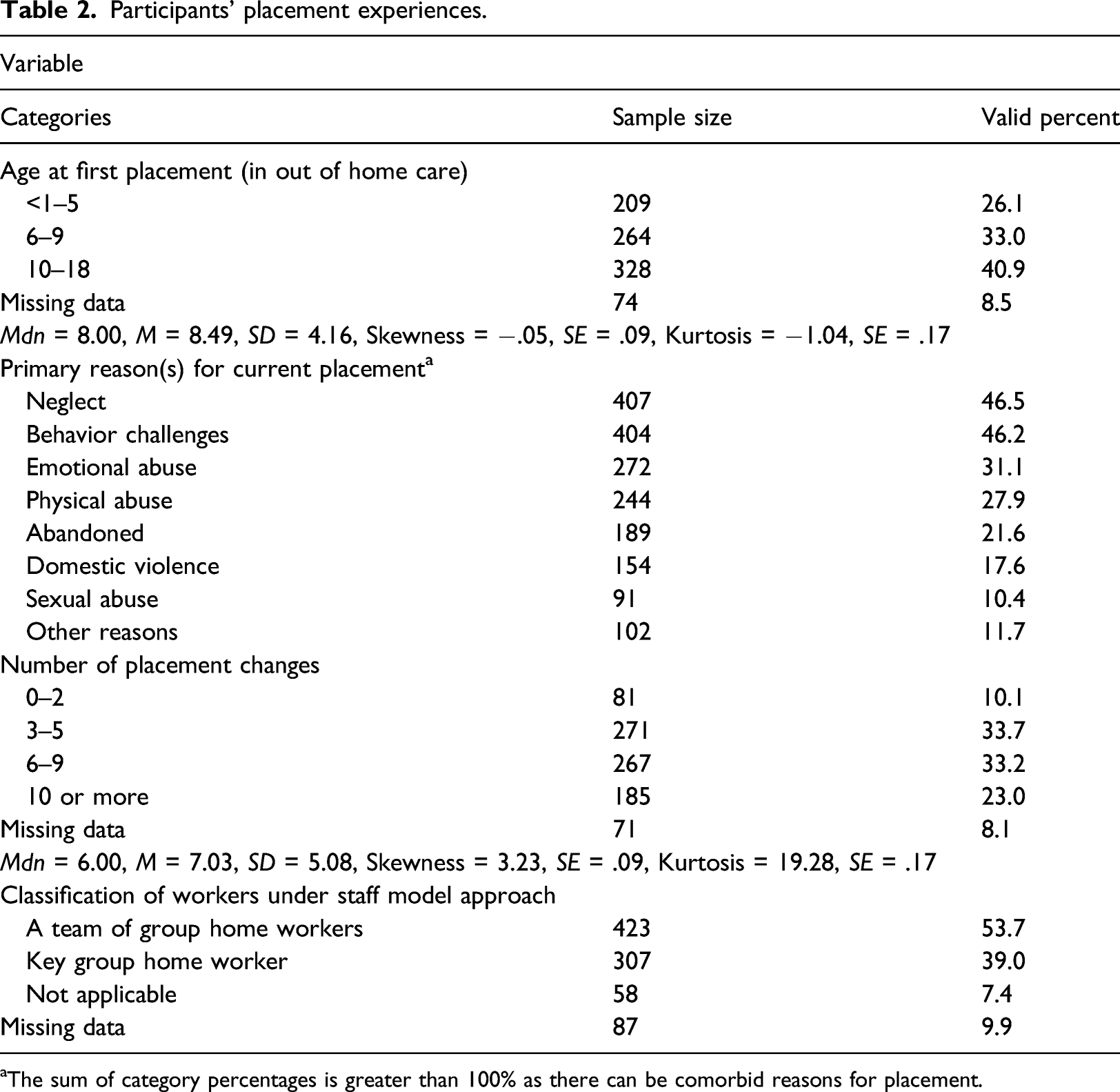
aThe sum of category percentages is greater than 100% as there can be comorbid reasons for placement.
The analysis contained full regression models for prediction of prosocial behaviors. For order of entry, first, separate models explored the unadjusted associations of each predictor, moderator, and with the outcome. Then a model was run in which all of the main effects were adjusted for each other. Then interactions were entered. Any significant interaction was depicted to better demonstrate its meaning. For example, where a significant positive peer influence by group home size interaction on youths’ prosocial behaviors was observed, the effect of positive peers was reported within each group home strata. Missing data of about 5% or less did not significantly confound the analysis (Vincent et al., 2016). Missing data were at random (Little’s MCAR χ2 test was not significant).
Result
Descriptive statistics
Basic descriptive characteristics of the sample (N = 875) in percentages.
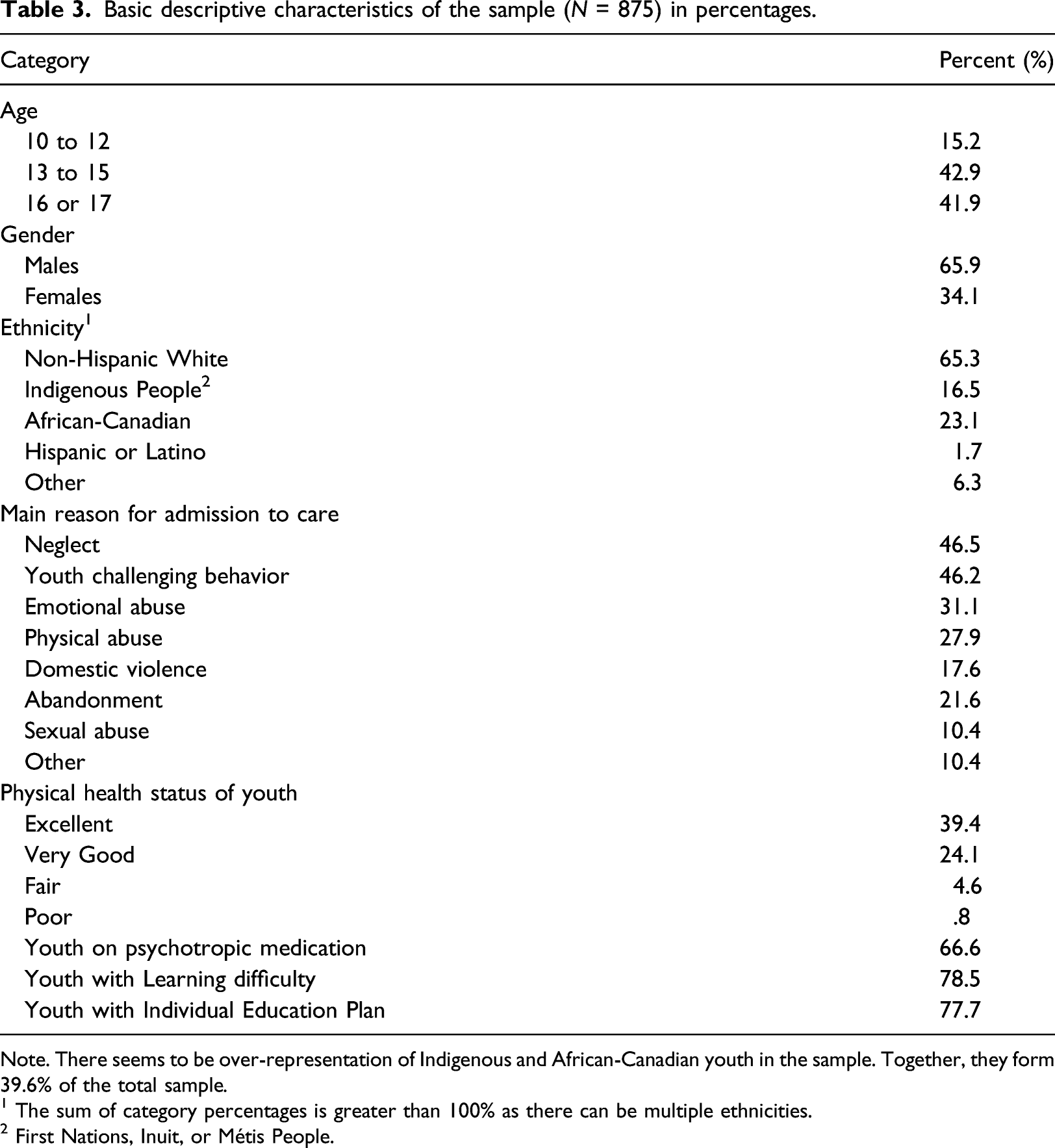
Note. There seems to be over-representation of Indigenous and African-Canadian youth in the sample. Together, they form 39.6% of the total sample.
1 The sum of category percentages is greater than 100% as there can be multiple ethnicities.
2 First Nations, Inuit, or Métis People.
Main analysis
Full logistic regression of cross-sectional positive and negative peer influences, group home size, and gender on the prosocial behavior of scored high on the prosocial behavior scale among 875 youths 10–18 years old in group homes in Ontario, 2010–2011
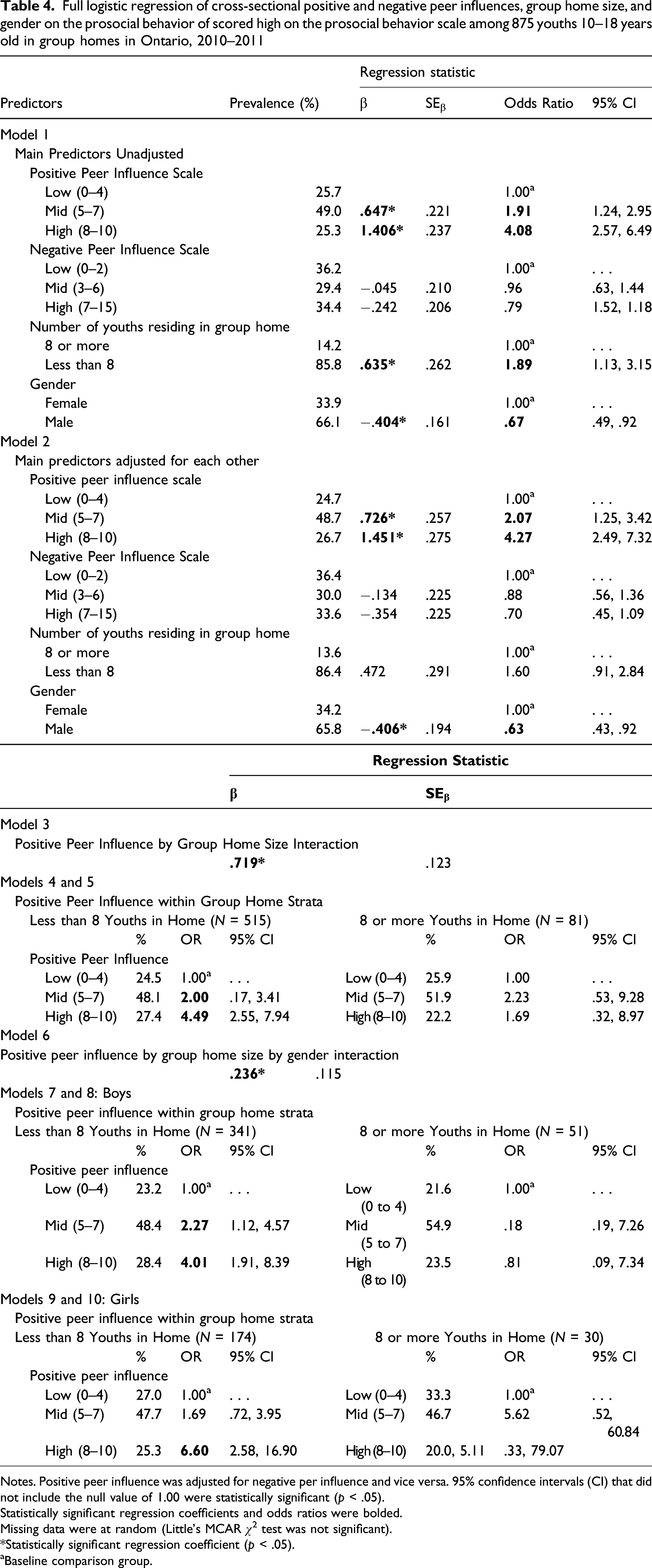
Notes. Positive peer influence was adjusted for negative per influence and vice versa. 95% confidence intervals (CI) that did not include the null value of 1.00 were statistically significant (p < .05).
Statistically significant regression coefficients and odds ratios were bolded.
Missing data were at random (Little’s MCAR χ2 test was not significant).
*Statistically significant regression coefficient (p < .05).
aBaseline comparison group.
The main predictive effect of gender was observed to be significant and modestly associated with youth’s prosocial behavior where males were 33% and 37% less likely to have prosocial behaviors compared to females as demonstrated by the adjusted and unadjusted main predictive effects (OR = .67, 95% CI .49, .92, and .63, CI 95% .43, .92; Table 4).
Also, the main predictive effect of group home size was found to be significant, (practically and statistically) and associated with youth’s prosocial behaviors (OR = 1.89, 95% CI 1.13, 3.15). There were protective effects of positive peers in small homes but not in large ones. The odd ratio or resilient association in small homes was (OR = 4.49, 95% CI 2.55, 7.94). Furthermore, there were multiplicative protections associated with positive peers for males and females. There was a significant positive peer influence by group home size interaction (β = .719, SE = .123, p < .05) and its moderating effect was such that positive peers significantly, directly and substantially predicted youths’ prosocial behaviors in smaller homes (incremental ORs of 2.00 and 4.49), but not at all in larger homes. Again, a significant 3-way interaction that included gender was observed (β = .236, SE = .115, p < .05) and its effect was such that positive peer influences in small homes were greater for girls (OR = 6.60) than boys (OR = 4.01; Table 4). A significant negative peer influence by group home size (and by gender) interaction were not found.
Discussion
Past studies observed that negative peer influence occurs when teenagers are together in naturally occurring groups such as school, mental health clinics/hospitals, juvenile detention centers, boot camps, and even youth recreational centers, and it often leads to youth antisocial behaviors (Dishion & Tipsord, 2011; Dodge et al., 2006; Mahoney et al., 2001; McCord, 1992, 2003; Schofield et al., 2015). Although preliminary studies suggested that positive peer influence could lead to prosocial behaviors, such studies are limited and none has been completed in group homes for youth. The current study sought to determine if positive peer influence is associated with youth prosocial behavior in group home care. Specifically, it sought to find out and add to existing understanding of the contention that positive peer influence could predict or lead to youth prosocial behaviors. Findings generally suggested that positive peer influence predicts youth prosocial behaviors in group homes and that youth who have higher number of peers who influence them positively have increased chances of developing prosocial behaviors. Significant positive peer influence by group home size interaction demonstrated larger of such chances in small homes. A supplemental analysis found another positive peer group home interaction highly predictive of prosocial behaviors among youth in small homes but not in large homes. The inference that positive peers were more protective in smaller homes was supported. There were multiplicative protections associated with positive peers and small group homes. The odd ratio or resilient association in small homes was 4.49 while in large homes it was 1.69. Findings demonstrated that positively influential peers were extraordinarily protective or contributed to youth prosocial behavior. As hypothesized, a positive peer influence by group home size interaction was observed and positive peer influence-prosocial based behavior was greatest in small group homes. Overall, study findings demonstrated that having positively influential peers, and residing in small group homes contributed to youth prosocial behavior and possibly reduced youth’s risk to antisocial behavior. It is contended that the fewer the number of youths living in a group home the more resourceful it probably is in terms of its youth to group home worker/staff ratio and the consequent amount of time, personal, or professional that may be spent with each youth (Friman et al., 1997).
The analyses and depictions of the significant interaction effects observed by this study demonstrated quite clearly that group home size and gender are crucial factors in youth-positive peer behavior relationship when they are placed in group homes. Current findings are consistent with findings of previous studies that noted gender differences in prosocial behaviors among youth (males and females). Findings of this study suggested the same gender divide in relation to prosocial behaviors among youth in group homes. For example, girls are observed to be more prosocial (OR = 6.60) in smaller homes than boys (OR = 4.01). Until this study, less or nothing was empirically known about any such gender divide in relation to foster care children’s prosocial behavior generally or about youth prosocial behavior in group home care specifically.
The results further supported preliminary studies’ findings (mainly in the US) that suggested that positive peer influence is possible among teenagers in residential care (Huefner & Ringle, 2012; Lee et al., 2011). The current findings extended this knowledge by demonstrating that positive peer influence is not only possible among congregated youth but it predicts prosocial behaviors among youth in group homes and it is potentiated by group home size.
Findings of the study supported the argument that youth who develop prosocial values through associating with prosocial people and institutions on a regular basis may often behave prosocially as their prosocial beliefs and perceptions may prevent them from engaging in unacceptable behaviors (Catalano & Hawkins, 1996).
Study implications
The study’s findings may serve as a caveat to child welfare workers that, in placing youth in group homes, a serious consideration must be given to what may be called behavioral or case-mix where youth with less behavioral challenges are mixed (placed together) with seriously behavioral challenged peers and where possible youth with less behavioral challenges should outnumber those with serious behavioral challenges in their placement. Studies observed that the number of delinquent or otherwise behaviorally challenged peers in a group determine, in part, the probability of interpersonal interactions and so the possibilities of peers influencing each other, positively or negatively (Dodge et al., 2006).
Recommendations made about children in group home care or child welfare care can have long lasting impact on the children, their families and potentially on every fiber of community/society. It is, therefore, pertinent that clinicians, social workers, child protection agencies, and allied professionals strive to understand different aspects of youths’ behavior while they are in group home foster care to enable them make policy decisions that may be in the best interest of such children. This study presented an important finding about youths’ behavior in group homes—an aspect of youth’s behaviors that hitherto has not been sufficiently explored in child welfare literature. To this effect, findings of the study may have a number of strategic policy actions and decision making implications: Findings may, for example, help service providers in understanding resiliencies youth have while in group home care (e. g., they can potentially influence each other positively), and it may help them move beyond solely labeling or blaming youth (for their challenging behaviors) to exploring and developing any resilient assets they may have and using same to assist them.
Another potential significance of the findings both scholarly and practically (clinical and policy) is underpinned not only by the profound potential vulnerability but also resilience of youths in group homes. Youth in this study descriptively have challenges ranging from academic/learning problems, peer influences (positive and negative) to behaviors ranging from very prosocial to antisocial—interestingly, as a group they do not only have clear problems and limitations but strengths and resiliencies.
Strengths and limitations of the study
The dataset used for analysis can be qualified as highly representative of children in care as it is collected from majority (not less than 90%) of the target population. It is also very rich on certain scores, and bias in relation to the data is reduced to the minimum due to the fact that it is collected from multiple sources. The data, however, lacks information about youths’ families of origin. I would suggest adding such a section routinely to OnLAC, otherwise researchers must consider adding such an additional sub-questionnaire to future original analysis.
Conclusion
Studies about children placed in child welfare care suggested that youth in group homes are at higher risk of becoming delinquents (Goldstein et al., 2013). The hypothesis of this study was tested and supported by the findings. Findings demonstrated that positive peer influence occurs among youth placed in group homes and could potentially make such youth develop prosocial behaviors. Youth who are connected to prosocial activities and practices and are committed to them may most likely not develop and or engage in antisocial to criminal behaviors or activities. Findings suggested that youth who develop prosocial beliefs and values through associating with peers who influence them positively may have diminished risks of engaging in antisocial behaviors.
Footnotes
Declaration of conflicting interests
The author(s) declared no potential conflicts of interest with respect to the research, authorship, and/or publication of this article.
Funding
The author(s) received no financial support for the research, authorship, and/or publication of this article.
