




Abstract
This scoping review was undertaken to provide an overview of peer-reviewed empirical evidence concerning the undertaking of Life Story Work (LSW) with children and young people with care experience (CYPCE). Our search identified 1,336 potentially relevant publications. Of these, 24 empirical studies met our inclusion criteria and examined a wide range of practices in different countries. Using a thematic approach, key findings and characteristics related to current conceptualizations of LSW are explored and knowledge gaps identified. Our review shows that predominantly small-scale qualitative studies have been undertaken. These studies typically reported participants’ experiences and perspectives on pre-existing LSW practices (17 articles), or evaluations of innovative practices (7 articles). However, both lacked efficacy data. We identified numerous LSW practices that were consistently identified as providing “high-quality” experiences: young person-led approaches; consistent support to access and process personal information, including chronological facts, reasons for care entry and beyond; the use of artifacts; and assistance/training for carers supporting LSW. The included studies also identified practices that undermined LSW: rushed, incomplete accounts, using insensitive language that failed to include different voices from a young person’s past. The discussion appraises the findings through a critical lens and concludes that LSW is a clear priority for all and represents an intervention that has potential to help the unaddressed mental health needs of CYPCE. Unfortunately, without better evidence on how this intervention works best, for whom, over what period, and at what cost, practice cannot move forward. This paper challenges all stakeholders to realize this potential.
Introduction
Children and young people with experience of living in state care are consistently reported to have higher mental health needs than their peers in the general population (Ford et al., 2007). Potential causal factors are extremely complex and varied. The unaddressed mental health needs of Children and Young People with Care Experience (CYPCE) are a primary driver of poor lifelong outcomes (Jones et al., 2011), meaning that improving the mental health, and mental health support, for this group is a health, social care and educational priority. Despite this, evidence indicates that the mental health needs of this population remain underreported and undertreated (National Institute for Health and Care Excellence (NICE), 2017).
In the United Kingdom (UK) there are over 90,000 children and young people looked after by the state annually (DfE, 2019). Interventions that aim to improve the mental health of CYPCE do exist (Luke et al., 2014). However, when framed by the hierarchy of evidence for therapeutic studies (CEBM, 2009), the majority are costly and viewed as having a “low quality” evidence base (Luke et al., 2014; NICE, 2017). This has led the National Institute for Health and Care Excellence (NICE) to identify the need to increase the evidence base for effective mental health interventions for CYPCE as an “urgent research priority” (NICE, 2017).
CYPCE are a heterogeneous group (Luke et al., 2014; Sinclair et al., 2007). Many will have complex histories and needs, meaning it is unlikely that an intervention with a single focus will address all of these needs (Luke et al., 2014). A “complex” intervention, composed of several interacting components (Craig et al., 2008), capable of being delivered in a timely fashion, and flexible enough to match the changing needs of CYPCE may be more effective.
Life story work (LSW) may be framed as such a complex intervention. Although commonly understood as helping CYPCE create a record of their experiences, it may also be understood as a mental health intervention focusing on relationships, identity and externalizing behaviors (Luke et al., 2014). Hence, while not often framed as a “mental health” intervention LSW, evidence indicates that LSW may have the potential to be an effective, and cost-effective, way to support the mental health needs of, and improve the mental health support available to, CYCPE (Bazalgette et al., 2015). This potential arises because LSW is flexible, broad in focus and widely used, illustrated via legislation underpinning its usage (Adoption and Children Act 2002; Children Act 1989; The Fostering Services (England) Regulations 2011). In the UK, LSW tends to be undertaken by a social worker or trained specialist worker, taking place over a specified number of sessions and time period (NSPCC, 2020). It may or may not involve the CYPCE’s current and/or previous carer(s) (foster carers, adoptive families and residential workers) and, where appropriate, birth family member(s).
Despite being widely reported by CYPCE, carers, and professionals as valuable (Baynes, 2008; Hooley et al., 2016; NSPCC, 2020; Ryan & Walker, 2007; Willis & Holland, 2009), LSW appears to be poorly evidenced, lacking standardized guidance, labor-intensive and inconsistently implemented (Gallagher & Green, 2012; Hammond & Cooper, 2013; Hooley et al., 2016; Luke et al., 2014; NICE, 2017). Reasons for the lack of standardized guidance are contested (Baynes, 2008; Willis & Holland, 2009), however, even specialist LSW experts, who have been applying approaches developed over many years, have expressed concerns about the quality of LSW undertaken and the numbers of CYPCE missing out (Baynes, 2008). This means there is an urgent need to optimize pre-existing LSW practice via better guidance, beginning with a mapping of what is already known in the area (Arksey & O’Malley, 2005).
It was therefore necessary to review the currently available evidence on the potential value and effectiveness of LSW to synthesize findings and clarify knowledge gaps. In this paper, we report the results of a scoping review addressing this need.
Aim
“To examine and map the range of peer-reviewed empirical evidence available on outcomes and stakeholder experiences of life story work with children and young people who have experience of living in state care or who have been adopted from care.” The results of this scoping review are intended to map available evidence and inform future research directions by identifying and analyzing knowledge gaps.
Method
Scoping reviews are used to examine a broad area of research from disparate sources and report on the types of evidence available in a topic area, clarifying key terminology, definitions, concepts and identifying gaps in the evidence. The methods of this review draw on the processes outlined by Levac et al. (2010) and The Joanna Briggs Institute (2015) and are reported following PRISMA statement extension for scoping reviews (Tricco et al., 2018) (Additional file 1). This involved (1) clarifying the research question, key terms for the search strategy and inclusion/exclusion criteria, aided by expert consultation; (2) searching for potentially relevant studies using key terms and selected databases; (3) using an iterative team approach to selecting studies, with regular discussion and refinement of the research question and inclusion/exclusion criteria; (4) charting the data with a numerical summary and qualitative thematic analysis; and (5) collating, summarizing and reporting the results.
The research question utilized in this review is; “What is the range of peer-reviewed empirical evidence available on outcomes and stakeholder experiences of life story work with children and young people with care experience?”
Search strategy
The scoping review aimed to identify and include articles reporting a wide range of research. To build the search terms for the search strategy the first two authors made use of their expert knowledge gained from over two decades of research experience with CYPCE and sought assistance from the 3rd author, an information specialist and review methodologist.
For the first step, we consulted with a range of stakeholders, comprising people with lived care experience and a multidisciplinary group of professionals with differing roles of supporting CYPCE. This process involved undertaking workshops with these groups during which it was recognized that there was no commonly agreed terminology for, or definition of, LSW, and that different activities falling under the LSW umbrella may be used across contexts and time periods. Following these workshops and for the purposes of this review, it was decided that the conceptualization used should be that commonly presented in the UK within official guidance and policy, where LSW is seen as a professionally-led intervention carried out in social care with CYPCE, with the aim of helping them to make sense of, and begin to accept, their early life experiences, reasons for entering care and family relationships (Bazalgette et al., 2015; NSPCC, 2020).
For the second step, we tested and refined a broad range of search terms. The final search strategy included a varied range of “intervention” search terms related to the above definition (“Life story work” OR “Life history work” OR “life story book*” OR “life history book*” OR “Life story resource*” OR “Life history resource*” OR “Life story tool*” OR “life history tool*” OR identity OR “self-concept” OR “personal history” OR biograph* OR autobiograph*). These were combined with two comprehensive sets of different “population” search terms, one set relating to age (teen* OR youth* OR adolescen* OR juvenile* OR young* OR child* OR girl OR girls OR boy OR boys) and the other relating to care-experience (“looked after” OR “looked-after” OR “in care” OR “foster care” OR fostered OR “social care” OR “public care” OR “state care” OR “local authority care” OR “residential care” OR “institutional care” OR “permanent care” OR “kinship care*” OR “relative care*” OR “substitute care” OR “out of home care” OR “out-of-home care” OR “group home” OR “shelter care” OR “special guardian*” OR “surrogate care” OR “care leaver*” OR “leaving care” OR “care experienced” Or “care-experienced” OR “child welfare” OR adopted OR adoption or adoptive OR adoptee*).
No date, language or study type restrictions were applied. However, to exclude a large volume of literature focused on irrelevant populations, some exclusion terms were included (e.g. Dementia, Alzheimer*, “older adults,” elder*, ageing, terminal, illness, cancer).
Practical issues related to time and access to resources (the searching was completed with COVID-19 social contact restrictions in place) meant that only material available electronically was included. Only studies found in peer-reviewed journals and accessible in English were included. To ensure that the scoping review was as comprehensive as possible, five major health and social science databases were searched: MEDLINE, ASSIA, PsycINFO, Social Care Online, and Child Development and Adolescent Studies. Searches were also undertaken in Google Scholar, with the first 5 pages of results screened. Citations were followed up from the reference lists of retrieved articles. Searching was undertaken in June/July2020.
Eligibility criteria
The third step of the review began with authors using an iterative team approach to select studies, with regular discussion and refinement of the research question and inclusion/exclusion criteria. Articles were included if they reported research that applied a qualitative or quantitative research methodology to explore situations where some form of LSW had been, or was being, experienced by CYPCE. Due to the focus on empirical research studies, only peer-reviewed articles were included. A prolific range of advice, books and guidance aimed at practitioners is available on LSW. However, the scope of this review was to seek evidence that could begin to address the “low quality” evidence base (CEBM, 2009) by mapping types of evidence and informing future research directions through identifying and analyzing knowledge gaps.
To ensure that varied, unusual or innovative forms of LSW across contexts and time periods were included, it was held that a range of activities with CYPCE or adults could fall under this definition. As such, a minimum requirement of our scoping review was that the activity involved the recording, exploring or eliciting an account(s) of a care experienced person’s life or personal history, in order to have an impact on the individual’s understanding of themselves and their identity (Bazalgette et al., 2015). References that were not empirical studies, including descriptions of policy, practice guidance, practitioner reflection or theory around identity and LSW, and reviews of new publications, were excluded.
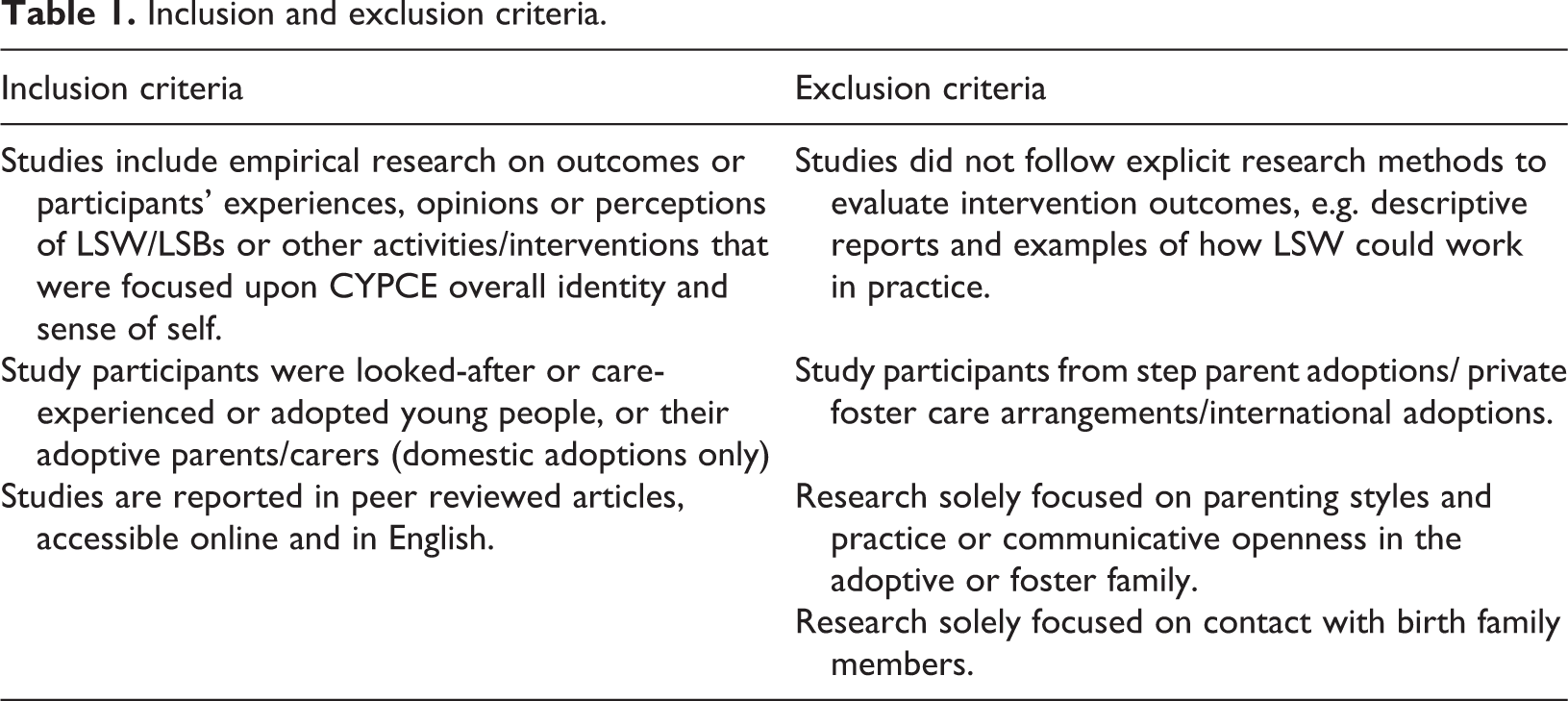
It was recognized that LSW activities could be undertaken by a professional and/or a carer with/for a CYPCE. Although we recognized that other activities were strongly related to the identify needs of CYPCE, research focused solely on parenting styles, communicative openness in foster or adoptive families, and contact with birth family members was excluded from this review. The final inclusion and exclusion criteria are illustrated in Table 1.
Inclusion and exclusion criteria.
The second author undertook searching and screening, with regular discussions with the first author and information specialist. A team discussion was initiated whenever there were any uncertainties in decision-making. A reliability check was undertaken, whereby 10% of the references generated from the searches were screened in duplicate (with 96% initial agreement, and 100% agreement after discussion). The literature was organized and screened using Endnote X9 (Clarivate Analytics, Philadelphia, PA, USA) and Rayyan (Qatar Computing Research Institute, Data Analytics, Doha, Qatar). Screening was first undertaken based on titles and abstracts and then full text.
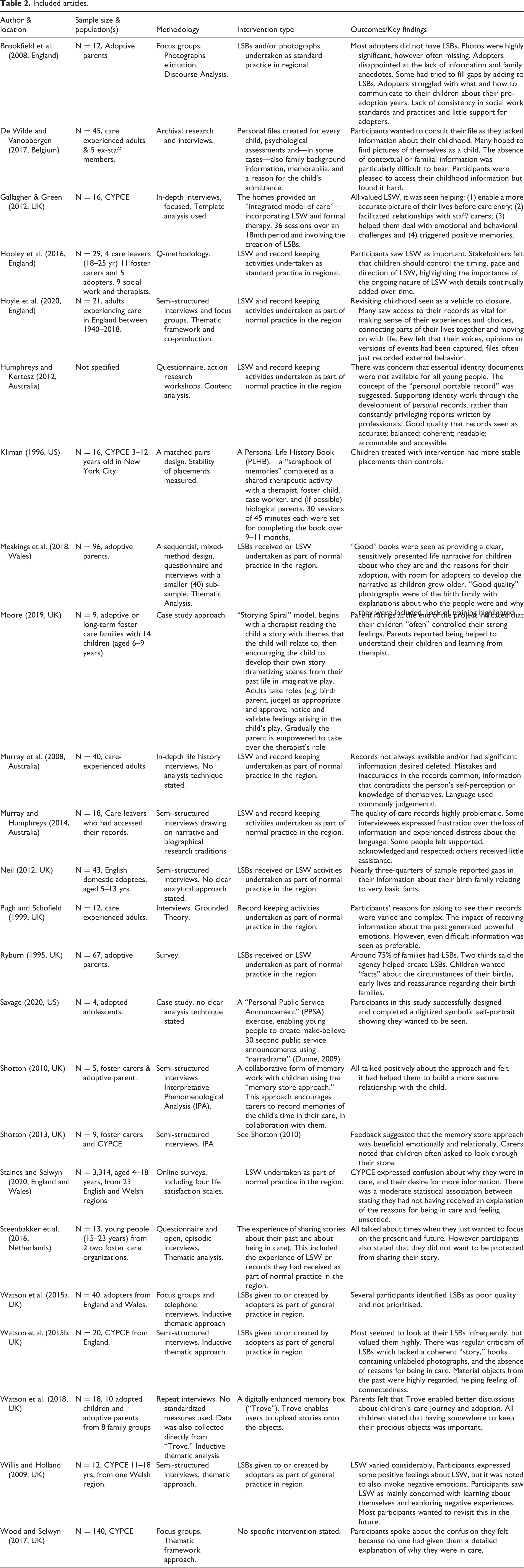
For the fourth step of the review (charting data with a numerical summary and qualitative thematic analysis) we charted data by developing an extraction tool to systematically record pertinent information extracted from included studies. Categories included in the data extraction tool and spreadsheet were as follows: type and number of participants, study design and methods, type of LSW/intervention and a summary of key findings (see Table 2). Drawing on a thematic approach (Braun & Clarke, 2006), the lead and second author analyzed the data, reported the results, and applied meaning to these results.
Included articles.
The fifth step of the review saw the team collate, summarize, and report the findings. This involved team members identifying the implications of the review findings for policy, practice or research. For the sixth and final step (consultation) we presented and discussed our findings with an existing multidisciplinary research network, comprising stakeholders with lived care experience, academics, and professionals with differing roles of supporting and advocating for CYPCE.
Results and discussion
Flow of literature through the review
The details of the study identification and selection process are shown in a PRISMA flow chart (Moher et al., 2009) (Figure 1). The database searches retrieved a total of 1,336 citations after duplicates, books and theses were removed. From initial screening of titles and abstracts using the inclusion and exclusion criteria, (see Table 1) 118 articles were considered potentially eligible. A further 12 were identified via citation follow ups. Altogether, 130 articles were read in full text, and following this detailed reading and team discussions, 24 articles were included in the review. Rejected articles were excluded as they were descriptive reports or theoretical accounts of LSW, did not include a specific LSW activity or intervention or were focused solely on parenting styles, communicative openness in foster or adoptive families, and contact with birth family members. An additional Google Scholar search and screening identified no additional new texts. The quality studies were not assessed as this was not viewed as relevant to this scoping review’s objectives (Tricco et al., 2018).
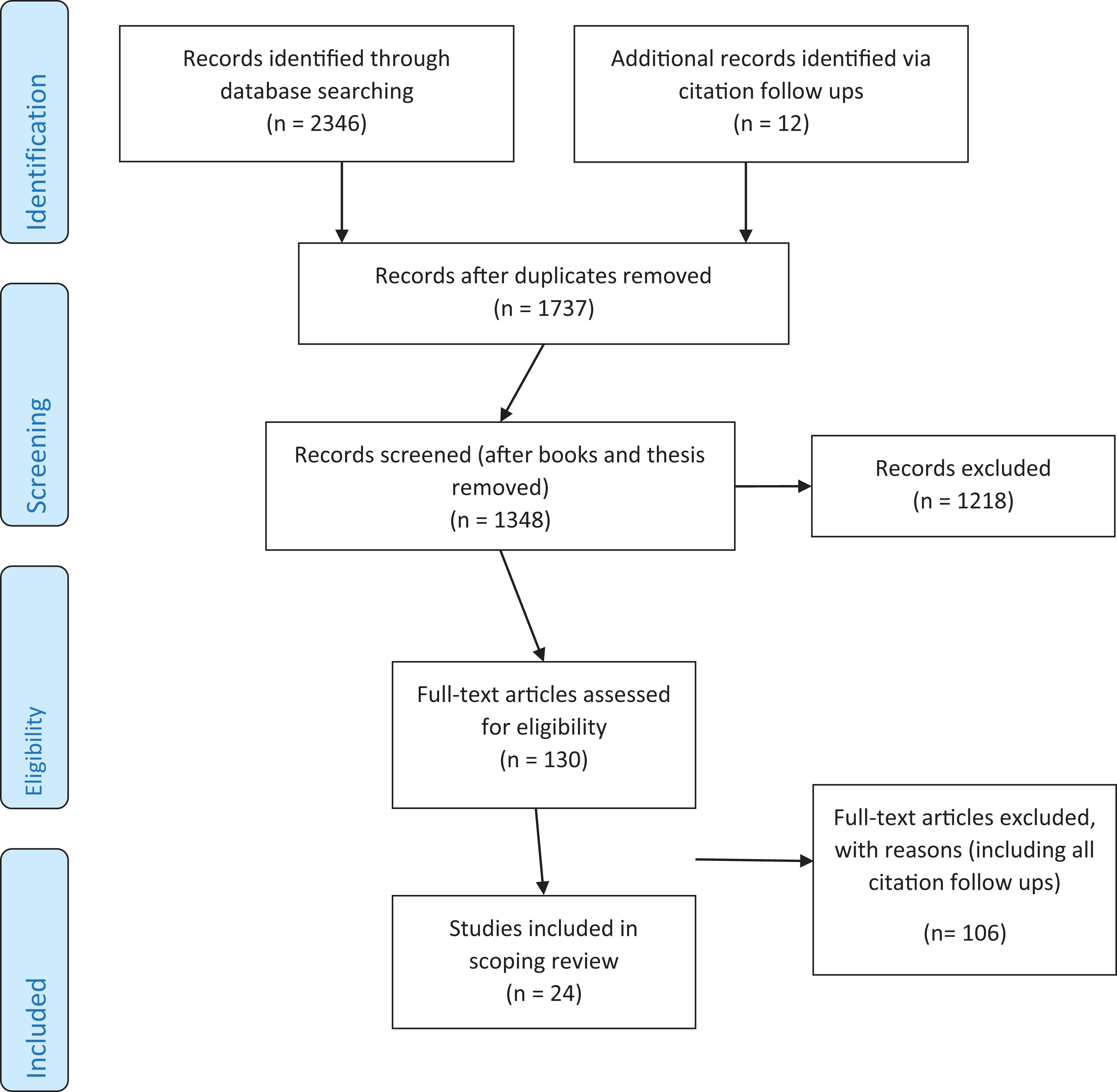
Adapted from Moher et al. (2009). For more information, visit www.prisma-statement.org.
General characteristics of included studies
Seventeen of the included studies had been conducted in the UK, three in Australia, two in the United States and one each in the Netherlands and Belgium. The earliest included study was published in 1995, however, apart from three studies in the late 1990’s, all other research papers were produced in the last 12 years (from 2008).
All but one study involved a qualitative methodology, exploring stakeholder views and experiences using in-depth interviews, focus groups, surveys or, in one case, Q methodology. Fifteen studies included the views of children/young people/care leavers (aged from 4 years old to adulthood) and six of parents/carers, with two studies incorporating views from both of these groups (Hooley et al., 2016; Watson et al., 2018). One quantitative study (Kilman, 1996) looked at the impact of a LSW approach on placement stability. One mixed-method study (Staines & Selwyn, 2020) included quantitative data on the association between children stating they had not received an explanation of the reasons for being in care and feeling unsettled in their placements. All but one study quoted a sample size ranging from 4–140 participants, with one of the surveys (Staines & Selwyn, 2020) recruiting 3314 participants. Sixty-three percent of studies involved a sample fewer than 22 participants, and 79% fewer than 50. One study was not able to state a precise number of participants overall, although 22 young people participated in the questionnaire element of the mixed-method study (Humphreys & Kertesz, 2012).
Drawing on a thematically informed analysis we drew out key findings from the research, based around the following four overriding themes of (1) types of LSW; (2) features and benefits of “good quality” LSW; (3) features and impacts of “poor quality” life story work and (4) conceptualizations of LSW.
The articles were identified as falling into two distinct groups. The majority (17/24) reported on evaluations of LSW that was, or had been, part of the standard care received by CYPCE or adults in their localities. Seven articles reported on evaluations of specific, specialist or innovative LSW interventions. These two categories of studies are reported separately below.
Types of life story evaluated
Life story work as “standard care”
Seventeen articles (Brookfield et al., 2008; De Wilde & Vanobbergen, 2017; Hooley et al., 2016; Hoyle et al., 2020; Humphreys & Kertesz, 2012; Meakings et al., 2018; Murray & Humphreys, 2014; Murray et al., 2008; Neil, 2012; Pugh & Schofield, 1999; Ryburn, 1995; Steenbakker et al., 2016; Staines & Selwyn, 2020; Watson et al., 2015a, 2015b; Wilis & Holland, 2009; Wood & Selwyn, 2017) report evaluations of a range of LSW activity that was standard practice in the region or institution(s) with the populations studied during their time in care.
Six studies (Brookfield et al., 2008; Meakings et al., 2018; Neil, 2012; Ryburn, 1995; Watson et al., 2015a, 2015b) investigated perspectives of adoptive parents or adopted children and young people on the life story books (LSBs) that were passed onto families as part of normal practice in the regions of study. LSBs are a common part of LSW that can take a variety of forms, from a short book chronicling a child’s history before care, to in-depth individual therapeutic work. The six studies that examined perspectives on LSBs took place within England or Wales, both countries with a statutory requirement to create LSBs for adopted children. Two other UK studies (Hooley et al., 2016; Willis & Holland, 2009) looked at views of LSW undertaken with CYPCE living in statutory care. The latter involved the perspectives of CYPCE who had experienced a range of provision; as for adopted children, a LSB was generally created as part of the LSW activity. Hooley et al.’s article reports on a Q methodology study that examined a variety of stakeholder’s views on important features of successful LSW.
Six articles (De Wilde & Vanobbergen, 2017; Hoyle et al., 2020; Humphreys & Kertesz, 2012; Murray & Humphreys, 2014; Murray et al., 2008; Pugh & Schofield, 1999), reported the views of adult care leavers on record keeping activity throughout their time in care, and their access to this information. These records had often been held in safe keeping until CYPCE came of age, although some participants also received LSW or access to this information during their time in care.
The final three articles in this category (Staines & Selwyn, 2020; Steenbakker et al., 2016; Wood & Selwyn, 2017), did not refer specifically to activity labeled as “LSW” or “LSB.” However, the care experienced participants in these studies recollected professional (in addition to non-professional) discussion on their life history and having (or not having) information about their family background and reasons for their entry into care.
The 17 articles described above present a picture of wide ranging practice quality and provision, both across and within individual studies. There were examples of CYPCE reporting no or very little understanding of why they had entered care, while others in the same sample referred to helpful and positive LSW. This was the case in even very recent research. Many reported having no photographs of themselves as babies and missing essential identity documents. They also described LSW activity as rushed and unsatisfactory, leaving gaps in their knowledge. There was explicit reference in some studies to the lack of consistent professional standards and practice around LSW.
In the six studies of adoptive families, some families highly valued their LSBs, but in other cases LSBs had not been received despite frequent requests to social work staff (e.g. Meakings et al., 2018; Ryburn, 1995), or were deemed to be of poor quality. Some families received only unlabeled photographs with no narrative provided around the CYPCE’s entry to care (e.g. Brookfield et al., 2008; Watson et al., 2015b). Overall, our review indicates that although LSW is considered, and for adoptive CYPCE legislatively dictated, as the “standard care,” there is no accepted standard for its delivery. Where it is delivered, it tends to focus on younger children and is not revisited during adolescence or prior to CYPCE leaving care.
LSW as innovative practice
The seven articles in this category (Gallagher & Green, 2012; Kilman, 1996; Moore, 2019; Savage, 2020; Shotton, 2010; Shotton, 2013; Watson et al., 2018) reported evaluations of specific, specialist or innovative forms of LSW. All but one (Kilman, 1996) used qualitative methodology, including small samples of 4 to 16 CYPCE or adopted children and/or young people, or their parents/carers. Two involved utilizing digital technologies: video making (Savage, 2020) or audio recordings (Watson et al., 2018). Four interventions were high-intensity sessions led by a therapist (Gallagher & Green, 2012; Kilman, 1996; Moore, 2019; Savage, 2020). Three articles reported on two different low-intensity forms of LSW facilitated by a carer following brief training (Shotton, 2010, 2013; Watson et al., 2018).
Two of the four high-intensity models of LSW involved a program of a set period of sessions taking place over a number of weeks, led by a skilled therapist (Moore, 2019; Savage, 2020). The other two high-intensity models of LSW involved the creation of LSBs with support of a therapist. One, provided within a small therapeutic children’s residential home, was described as part of a therapeutic “integrated form of care” (Gallagher & Green, 2012). The LSW was incorporated into formal therapy (based on play/expressive arts) and therapeutic parenting, and took a “deeper, richer, more detailed approach” than conventional LSW. Kilman’s (1996) LSW involved a therapist, case worker and (if possible) birth parents working in collaboration with the child/young person in regular sessions over several months to create a “scrapbook of memories” covering all aspects of a child’s/young person’s past, present and future life.
The final three articles in this category evaluate LSW that can be facilitated by carers or adoptive parents following initial training. Two articles by Shotton (2010, 2013) describe separate evaluations of a process that encouraged carers to record memories of the child’s/young person’s time in their care, in collaboration with them. Watson et al.’s (2018) article reports a small trial of a digitally enhanced memory storage box (“Trove”) for children’s precious objects, involving six family groups.
The features and benefits of “good quality” life story work
Findings from research evaluating LSW and record keeping delivered as part of standard practice were consistent in identifying those elements that represented “good quality.” All highlighted the importance of sensitive, complete and accurate LSW for care-experienced people throughout their youth and beyond. Despite this, LSW was not implemented in a longitudinal manner. Most papers noted participants’ strong desire for good quality, clearly and accurately labeled photographs of the care-experienced individual across different stages of their childhood and of significant people from their past. Physical objects were also seen by many participants to be of significant importance, as were records of milestones and happy memories, and accurate (even if difficult) facts and details.
Having consistent support to access and process information from the past was regularly highlighted as important. Support was deemed to be important for carers/parents working with their children as well as CYPCE themselves. There were also strong feelings that recipients should control the timing, pace and direction of LSW. There was frequent reference to the importance of a coherent and meaningful narrative of CYPCE experiences in addition to “facts.” This was reported to be important in helping people to remember, connect different parts of their lives together, and understand their childhood when attempting to reconcile past experiences.
Shared information about a child’s past and reasons for their care outside of their birth family was reported by participants as vital. Access to this information was essential not only to satisfy natural curiosity but also to establish a more “complete” identity, fostering trust and strengthening relationships in care (e.g. Steenbakker, 2016), stabilizing placement and improving overall life satisfaction (Staines & Selwyn, 2020).
The evaluations of innovative, specialist LSW included in this review were limited to small samples, but participants expressed that they had been beneficial. Participants in Gallagher and Green’s (2012) evaluation all felt LSW had been helpful in providing them with meaningful picture of their lives before entering care, facilitating relationships, and helping them deal with emotional and behavioral challenges. In Moore’s (2019) study, carer/parent ratings at the end of the project indicated that their CYPCE were more often able to control strong feelings, and carers/parents felt they had improved their own understanding of, and engagement with, their CYPCE. The quantitative work of Kilman (1996) found that children who engaged with the high-intensity LSW intervention had more stable placements than matched controls (p = .01), measured by not moving to a different foster home.
Low-intensity LSW was also reported to be successful. All carers participating in Shotton’s (2010, 2013) evaluations talked positively about the approach. Participants also reported that this intervention provided opportunities to develop their child’s identity and emotional self-regulation. Similarly, participants in Watson et al.’s (2018) evaluation stated that the “Trove” intervention enabled better discussions with their children/young people about their time in care and the reasons for adoption.
The features and impacts of “poor quality” life story work
Evaluations of LSW as part of “standard” practice presented consistent messages for improvement. All studies included evidence of inadequacy, poor quality, and a lack of priority given to LSW. CYPCE were left distressed over lost information leading to significant gaps, erroneous details, use of insensitive language and a failure to include different perspectives. Some CYPCE reported feeling “rootless” and/or “incomplete,” due to a lack of LSW throughout their childhood. Feeling that an adult had not explained why they were in state care had a negative impact on life satisfaction scales in the large survey of CYPCE (Staines et al., 2020). Dissatisfaction was also expressed around inappropriate timing of LSW, and a lack of continuity and updates in LSW over time.
It was common for participants to share how LSW could invoke strong, negative emotions. However, there was agreement that LSW should not be stopped if difficult feelings came up, as these were usually outweighed by significant longer term benefits. There was little evidence of negative feedback on the innovative and specialist forms of LSW evaluated in the second category of articles described above.
Conceptualizations of life story work (LSW)
The research included within this review that focused on standard LSW practice revealed a range of practice with regard to completion and quality of the work. There seemed to be little variability in relation to the principal elements of the LSW activity, but as described elsewhere, substantial variability in implementation.
Although much research noted a desire for CYPCE to control the pace and direction of LSW this was rarely evident. Only one model specifically referred to the inclusion of birth relatives in the LSW activity (Kliman, 1996).
LSW outputs received by CYPCE were typically word processed with tangible objects rare. LSW for adopted children/young people also generally involved a collection of photographs, or a LSB passed to adoptive families at the time of placement. The seven articles that focused on innovative and specific forms of LSW showed more variability in models of LSW and there implementation. However, only two involved utilizing digital technologies: video making (Savage, 2020) or audio recordings (Watson et al., 2018). A LSB or printed material seemed to be a dominant output of the work in the other studies.
There was little sign that any LSW with CYPCE had continued over their care journey, with many stakeholders reporting LSW as something “done” in childhood (Neil, 2012; Ryburn, 1995; Staines & Selwyn, 2020; Watson et al., 2015a). Furthermore, across both the standard and innovative studies, there appeared to be an age-related limitation in terms of how LSW was understood and/or implemented. Most participants in “standard” LSW studies were reporting retrospective accounts of LSW from their younger lives, with innovative studies recruiting younger, as opposed to older, children.
Four of the seven articles reporting innovative and specific forms of LSW described models that encourage ongoing involvement of foster/adoptive parents (Moore, 2019; Shotton, 2010, 2013; Watson et al., 2018). The other models were delivered in a set number of sessions over weeks or months. Despite theoretical, empirical and practice understandings of the processing of our past and identity construction as an on-going fluid process (McAdams & McLean, 2013), the dominant conceptualization of LSW remains one of a time-limited period of activity, undertaken in younger childhood, rarely updated/ongoing, and using traditional forms of printed material.
Discussion
Knowledge gaps: messages to inform policymaking and research
Most studies included in this review focused on LSW as “standard” practice in different localities. Study designs ranged from in-depth interviews with small samples to a larger survey study. Empirical evaluations focused upon innovative and specific types of LSW were more limited. The evaluations of “standard” LSW undertaken as part of usual practice for CYPCE show little variation in the form of LSW offered, but wide variation in implementation.
This review demonstrates that the elements of LSW that are considered to be beneficial are consistent across a range of CYPCE/carer populations. Overall, the process of (good quality) LSW is viewed as positive across the lifespan. This is important, as adolescence is a key time to target positive identity and mental health in CYPCE, due to the increased likelihood of reunification with family members, impacts of care re-entry following unsuccessful reunification and the importance of forming and maintaining close pro-social relationships before transitions from the care system occur (Hammond et al., 2018; Neil et al., 2020).
LSW is perceived by stakeholders to impact significantly on identity and mental health. Limited quantitative data also indicates benefits for stability. However, no robust implementation, efficacy or cost-effectiveness data is available. Being unable to answer vital questions such as what interventions work best, how, for whom, over what period and at what cost is highly problematic. This review indicates that although LSW is considered to be “standard care,” there is no accepted standard for its delivery.
While researching in social care, particularly with CYPCE, is difficult (Dixon et al., 2014), developing, implementing and evaluating complex intervention packages in this area is possible (Midgley et al., 2019). If the sector is going to improve mental health and mental health support for CYPCE, change is needed. High quality research capable of informing policy change is required, as is a commitment to investing in children’s social care research. With numerous stakeholders consistently outlining the need for a better evidence base in this area, multidisciplinary teams comprising academic, professional and lay stakeholders are best placed to seek the level of funding required to undertake this work. All stakeholders must acknowledge the lack of research infrastructure in social care, and especially children’s social care, and levels of funds must match ambition.
Optimizing pre-existing practices: Messages to inform practice
This review highlighted the importance of “good quality” LSW. This review illustrated some key features of LSW viewed as “good quality,” including therapeutic alliance (relationship with a sensitive, consistently available, trusted adult(s) capable of facilitating positive mental health via the creation of a coherent narrative), certain behaviors (age-appropriate therapeutic activities which can be led by, and/or empower, the CYPCE), procedures (prompts to action and training to support carers) and products (materials or artifacts that could be safely stored and help the development of an accurate/informative narrative for care entry).
The results of the included studies show that many CYPCE in receipt of standard LSW have been left dissatisfied with, or perceived gaps in, the LSW they received in childhood. Key issues include missing LSBs, photos or information, inaccuracy, a lack of narrative, or reasons given for the child’s entry to care, lack of updated information and limited options for young people to control the pace and direction of LSW. Such issues were reported by CYPCE to have long lasting effects on identity and mental health.
The lack of empirical research demonstrating LSW that utilizes the potential of digital technologies is disappointing. Digital media is increasingly used by children and young people to communicate with each other and those around them, and is therefore likely to increase feelings of empowerment during LSW (Grasso et al., 2013; Gray et al., 2020; Hammond & Cooper, 2013). There is some indication that using digital technologies to deliver LSW may offer new ways to address the need to work with older CYPCE and enable a more longitudinal method of undertaking LSW (Hammond & Cooper, 2013). However, this work, not included in this review due to its quality limitations, relied upon small scale qualitative data and lacks efficacy or implementation data.
Strength and limitations
The primary strength of this scoping review is that it is the first of its nature in this field. The review forms the first step in beginning to address the NICE “urgent research priority” (NICE, 2017) to increase the evidence base for effective mental health interventions for CYPCE. It does so by examining an existing, widely used complex intervention (LSW) and identifying evidence gaps, clarifying key concepts, and reporting on existing evidence and informing research directions.
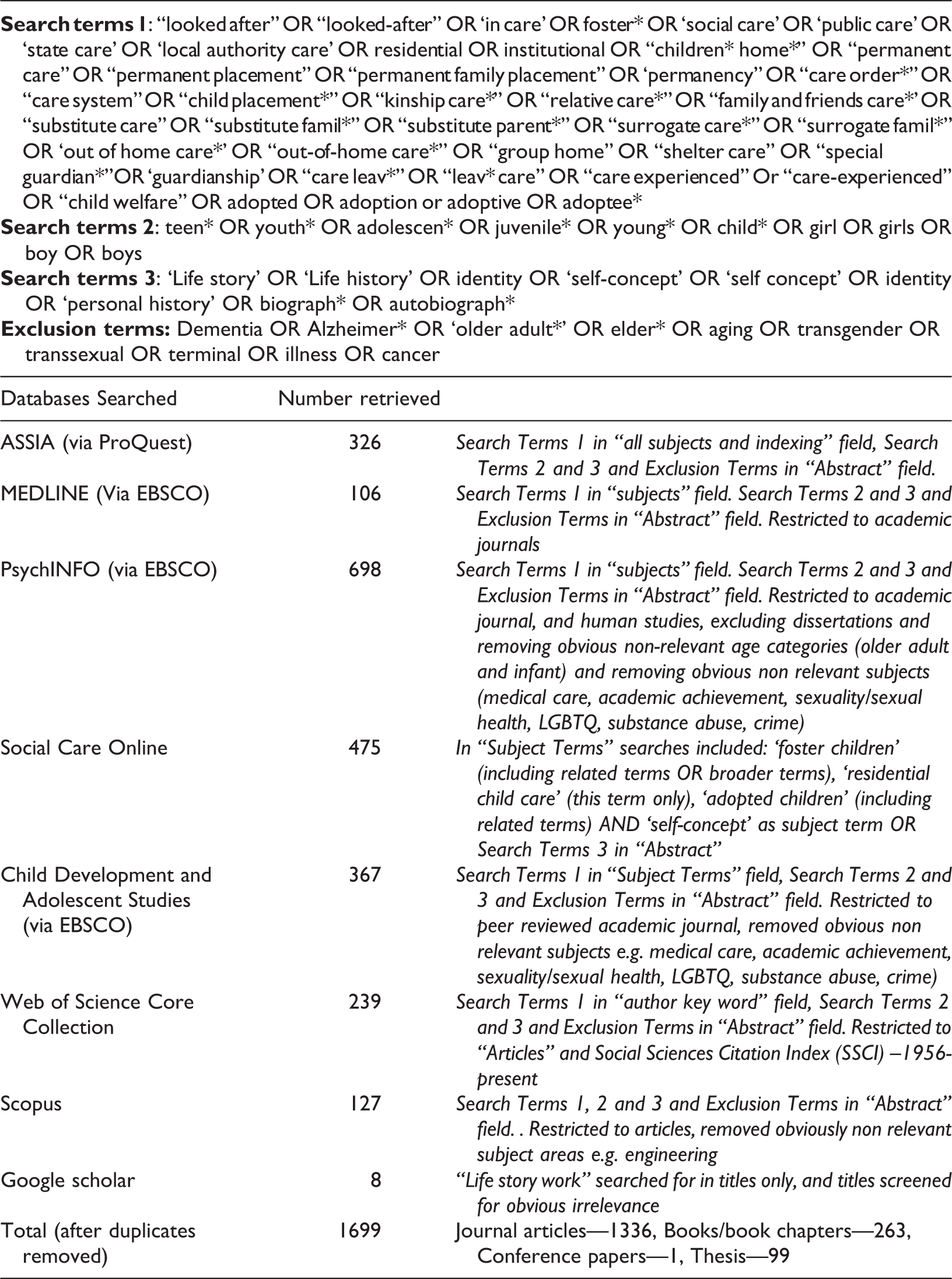
To ensure that the search process was both reliable and extensive, it was carried out with an information specialist and review methodologist and covered multiple databases. Search terms were chosen to include a wide range of possible terminology and these were reported accurately to ensure repeatability (see Appendix A). The second author worked independently to select the papers, but the selection process and ambiguous cases were discussed with the team, and a 10% reliability check was undertaken, which enhanced the reliability of the data.
The papers included in this review were initially chosen based on their titles and abstracts, and, as a result, it is possible that some studies may have been left out where abstracts were not representative of full-texts. Grey literature, books and theses were excluded, which may have contained relevant material for the review. The authors acknowledge the long standing, wide ranging, and in some cases extremely valued, practitioner guidance for LSW, and vast volume of non-empirical work in this area. However, due to its aims, such work was outside of the remit of this review.
Conclusions
Intervention is crucial for increasing the availability of mental health support for CYPCE. An important finding from this scoping review is that LSW represents a clear priority for CYPCE and those who support them, and is an intervention with the potential to help the unaddressed mental health needs of CYPCE. The potential of lower-intensity standardized LSW approaches that are capable of being implemented and maintained throughout, and potentially beyond, a CYPCE’s care journey is appealing. However, such interventions need to be fully evaluated. Unfortunately, without better evidence on what works best, how, for whom, over what period, and at what cost we cannot move forward. This paper challenges all stakeholders to realize this potential.
Supplemental material
Supplemental Material, sj-pdf-1-dcw-10.1177_2516103220985872 - Life story work for children and young people with care experience: A scoping review
Supplemental Material, sj-pdf-1-dcw-10.1177_2516103220985872 for Life story work for children and young people with care experience: A scoping review by Simon P. Hammond, Julie Young and Claire Duddy in Developmental Child Welfare
Supplemental material
Supplemental Material, sj-pdf-2-dcw-10.1177_2516103220985872 - Life story work for children and young people with care experience: A scoping review
Supplemental Material, sj-pdf-2-dcw-10.1177_2516103220985872 for Life story work for children and young people with care experience: A scoping review by Simon P. Hammond, Julie Young and Claire Duddy in Developmental Child Welfare
Footnotes
Declaration of conflicting interests
The author(s) declared the following potential conflicts of interest with respect to the research, authorship, and/or publication of this article: Simon P Hammond offers consultancy services in social media and Digital Life Story Work via  . The remaining authors, Julie Young and Claire Duddy, declare that they have no known competing financial interests or personal relationships that could have appeared to influence the work reported in this paper.
Funding
The author(s) disclosed receipt of the following financial support for the research, authorship, and/or publication of this article: This work was supported by funding from the University of East Anglia Health and Social Care Partners (UEAHSCP). CRediT authorship contributions statementSimon P Hammond: Conceptualization; Formal analysis; Funding acquisition; Investigation; Methodology; Resources; Supervision; Validation; Visualization; Writing original draft; Writing - review & editing. Julie Young: Data curation; Formal analysis; Investigation; Project administration; Resources; Software; Validation; Visualization; Writing - original draft; reviewing & editing. Claire Duddy: Methodology; Resources; Software; Validation; Writing - review & editing.Acknowledgements We would like to thank the anonymous peer-reviewers for reviewing this paper, the UEAHSCP for funding the work and Looked-after Children’s Mental Health Research Network (LANTERN) and its members for their time, input and constructive comments.
Supplemental material
Supplemental material for this article is available online.
Appendix A: Summary of search results
|
|
||
| Databases Searched | Number retrieved | |
| ASSIA (via ProQuest) | 326 | Search Terms 1 in “all subjects and indexing” field, Search Terms 2 and 3 and Exclusion Terms in “Abstract” field. |
| MEDLINE (Via EBSCO) | 106 | Search Terms 1 in “subjects” field. Search Terms 2 and 3 and Exclusion Terms in “Abstract” field. Restricted to academic journals |
| PsychINFO (via EBSCO) | 698 | Search Terms 1 in “subjects” field. Search Terms 2 and 3 and Exclusion Terms in “Abstract” field. Restricted to academic journal, and human studies, excluding dissertations and removing obvious non-relevant age categories (older adult and infant) and removing obvious non relevant subjects (medical care, academic achievement, sexuality/sexual health, LGBTQ, substance abuse, crime) |
| Social Care Online | 475 | In “Subject Terms” searches included: ‘foster children’ (including related terms OR broader terms), ‘residential child care’ (this term only), ‘adopted children’ (including related terms) AND ‘self-concept’ as subject term OR Search Terms 3 in “Abstract” |
| Child Development and Adolescent Studies (via EBSCO) | 367 | Search Terms 1 in “Subject Terms” field, Search Terms 2 and 3 and Exclusion Terms in “Abstract” field. Restricted to peer reviewed academic journal, removed obvious non relevant subjects e.g. medical care, academic achievement, sexuality/sexual health, LGBTQ, substance abuse, crime) |
| Web of Science Core Collection | 239 | Search Terms 1 in “author key word” field, Search Terms 2 and 3 and Exclusion Terms in “Abstract” field. Restricted to “Articles” and Social Sciences Citation Index (SSCI) --1956-present |
| Scopus | 127 | Search Terms 1, 2 and 3 and Exclusion Terms in “Abstract” field. . Restricted to articles, removed obviously non relevant subject areas e.g. engineering |
| Google scholar | 8 | “Life story work” searched for in titles only, and titles screened for obvious irrelevance |
| Total (after duplicates removed) | 1699 | Journal articles—1336, Books/book chapters—263, Conference papers—1, Thesis—99 |
References
Supplementary Material
Please find the following supplemental material available below.
For Open Access articles published under a Creative Commons License, all supplemental material carries the same license as the article it is associated with.
For non-Open Access articles published, all supplemental material carries a non-exclusive license, and permission requests for re-use of supplemental material or any part of supplemental material shall be sent directly to the copyright owner as specified in the copyright notice associated with the article.
