



Abstract
There has been accumulating interest in the application of medicinal plants as alternative medicine to treat various diseases and/or to develop modern medicines. Vitex negundo is one of such medicinal plants that has been of interest to many researchers and has been of use in traditional medicine. V. negundo is found in Sri Lanka, Madagascar, Malaysia, India, China, The Philippines and East Africa. Therapeutic properties of V. negundo have previously been reviewed. Different parts, preparations and bioactive components of V. negundo possess potential protective and therapeutic effects against cardiovascular disease and related conditions as demonstrated in previous studies. We review the present state of scientific knowledge on the potential use of V. negundo and some of its bioactive components in protecting against cardiovascular diseases and related pathologies. Previous studies in animal and non-animal experimental models, although limited in number and vary in design, seem to support the cardioprotective effect of V. negundo and some of its active components. However, there is need for further preclinical and clinical studies to validate the use of V. negundo and its active constituents in protection and treatment of cardiovascular diseases. Additionally, since only a few V. negundo compounds have been evaluated, specific cardioprotective effects or mechanisms and possible side effects of other V. negundo compounds need to be extensively evaluated.
Introduction
Natural medicinal plants have been extensively used to develop modern medicines and increasing attention is now focused into developing novel therapies against various diseases using medicinal plants due to their low cost, less side effects and wide availability. 1 Due to the vast advantages of herbal medicine, there is need to educate, both the public and the scientific community, that the evidence is increasingly becoming more solid regarding the important contribution of alternative medicine in evidence-based medical practice especially in the management and treatment of cardiovascular diseases (CVDs), which collectively, are the leading cause of death and disability globally. 2 Many patients, for example suffering from hypertension, do not respond to conventional cardioprotective medicine which also have an effect on heart rhythm disturbances hence prompting the need to shift to plant based treatments. 3 These herbal medicines act through various mechanisms to combat CVDs. For example, it has been reported that medicinal plants and nutraceuticals have the potential to prevent dyslipidemia and CVDs by decreasing β-hydroxy β-methylglutaryl-CoA reductase (HMGCoAR) activity which is key in the etiopathogenesis of CVDs. 4 Garlic, a common medicinal plant, and many of its bioactive compounds has been demonstrated to exert antihypertensive effects.5,6 Also, some medicinal plants have been shown to exert anti-atherosclerotic effects by inhibiting inflammation-induced atherogenic phenotype of vascular smooth muscle cells (VSMCs) in atherosclerosis 7 and inhibiting phenotypic switch of vascular smooth muscle cells from a contractile phenotype to a synthetic phenotype which mostly possess high proliferative and migratory capacities. 8 Other herbs such as Curcuma longa L have curcumin as the main component which have antiplatelet activity that is useful for treating atherothrombosis, thromboembolism and inflammatory diseases. 9 The cardioprotective effect of curcumin has also been demonstrated by protecting against myocardial ischemia-reperfusion injury in coronary heart disease. 10
V. negundo is a small slender hardy tree or shrub found in Sri Lanka, Madagascar, Afghanistan, Thailand, Malaysia, India, Pakistan, The Philippines and Eastern Africa and belongs to the family Verbenaceae.1,11 In Sri Lanka it is commonly called Nika in Sinhalese while in Tamil it is called Nirgundi. 12 V. negundo is mostly found along the stream edges, in humid places and in mixed open forests. 13 It has bluish purple flowers 14 and it flowers throughout the year. 15 It has a typical five foliated leaf pattern; the smaller and nearly sessile lower ones while the rest are long stalked, 7.5–10 cm long. 13 Figures 1 and 2 below show the leaves and branches of Vitex negundo at flowering stages respectively.

Vitex negundo leaves.
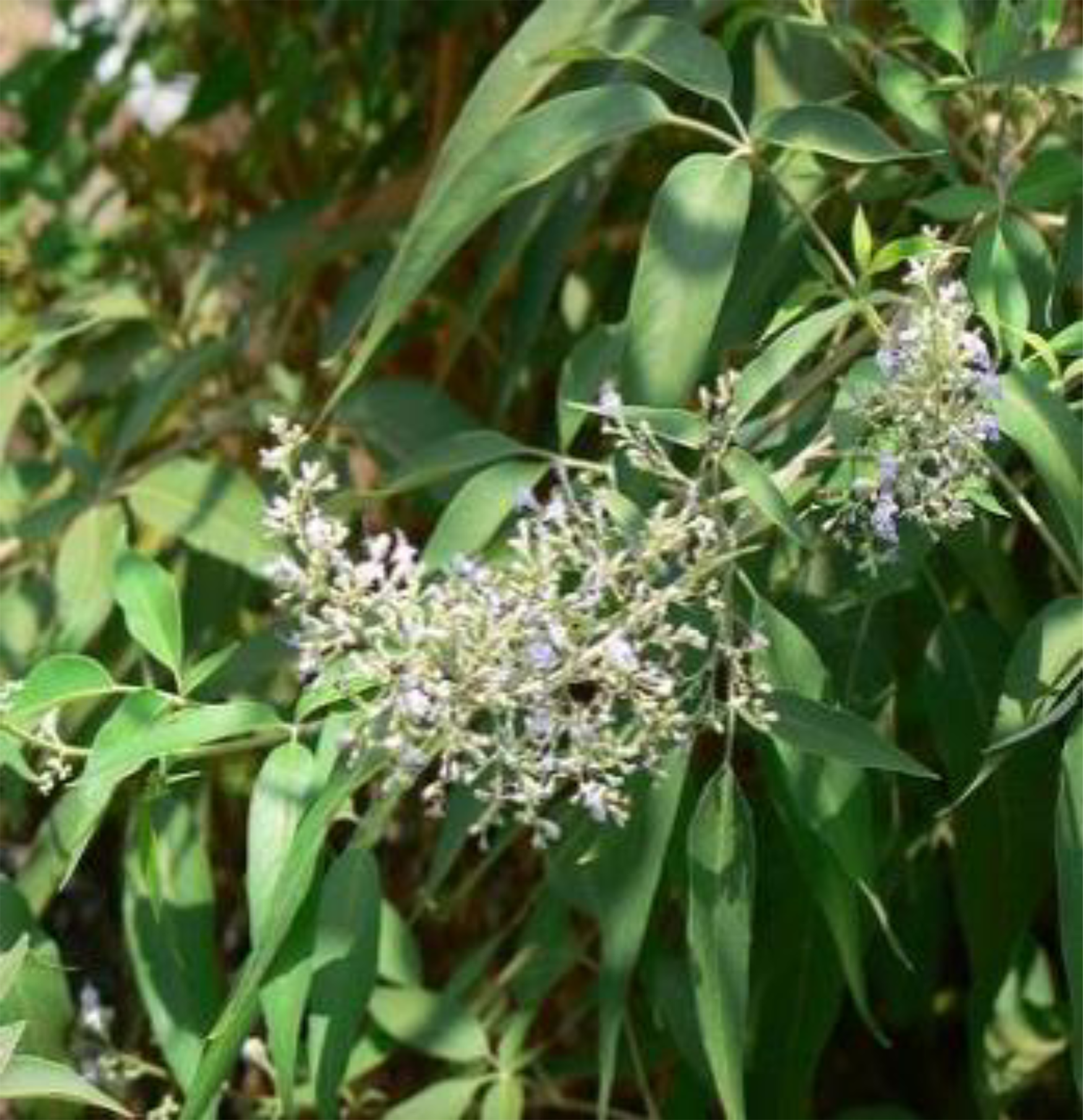
Leaves and branches of Vitex negundo at flowering stages. 16
Medicinal properties of V. negundo have been intensively investigated and it has been credited for possessing anti-inflammatory, analgesic, anti-oxidant, anti-convulsive, anti-bacterial, anti-fungal, cardio-protective, anti-tumor, anti-allergic and hepatoprotective activities among many other medicinal properties.14,15,17–20 The anti-oxidant activity of ethanolic leaf extracts of V. negundo have been found to protect against experimental nephrotoxicity. 21 Also, some bioactive compounds of this plant have been shown to have therapeutic effects against Chronic Obstructive Pulmonary Disease (COPD) 22 and its leaves have been shown to exert anti-plasmodial effects against chloroquine resistant Plasmodium falciparum. 23 As a traditional plant, its various leaf preparations have been used internally and externally in the indigenous and Ayuverdic medical systems in Sri Lanka to treat various diseases such as asthma, rheumatoid arthritis, gastritis, snake bites, sinusitis among many other diseases. 13 The medicinal properties of this plant are found in all its parts, most of which have been validated in scientific experiments. However, the roots and the leaves are the most used parts. 18
Some of the major phytochemical constituents of V. negundo which have medicinal properties include betulinic acid, ursolic acid, nishindaside, protocatechuic acid, mussaenosidic acids, vitedoin, vitexin, oleanolic acid, isovitexin, casticin, negundin-A, negundin-B, chryso-splenol, Chrysophenol D, nishindine and hydrocotyle.17,24 Figure 3 depicts the structures of some V. negundo bioactive compounds.

Chemical structures of some of the active components of Vitex negundo.25–36 A) Ursolic acid. B) Oleanolic acid. C) Corosolic acid. D) Casticin. E) 5,7-dihydroxy-6,4'dimethoxy flavanone. F) Betulinic acid. G) Protocatechuic acid. H) Mussaenosidic acid. I) Vitexin. J) Negundin A. K) Negundin B. L) Isovitexin.
Despite this plant having potent medicinal value, some studies have in the past delved into assessing its potential toxicity. Previous in vivo studies on toxicological evaluation of V. negundo, including assessment of its acute and sub-chronic toxicity, neurotoxicity, nephrotoxicity, behavioral toxicity and effects of vital organs such as lungs, liver, kidneys, spleen, stomach, blood vessels and muscles, have all found that the plant doesn’t exhibit any toxicity or adverse biological effects.37–39
There is a huge burden of cardiovascular diseases (CVDs) that require serious attention. Although there has been a number of reviews addressing the medicinal value of V. negundo on various diseases and conditions,16–18,40–44 there has been no review article published specifically focusing on the cardioprotective effects of V. negundo or its active compounds. As a commonly available local medicinal plant, V. negundo holds great protective and therapeutic against CVDs.
This review aims to provide current information on the potential of V. negundo and some of its bioactive compounds to protect against CVDs and CVD related conditions such as inflammation, oxidative stress, hyperlipidemia, hypertension, atherosclerosis and myocardial infarction.
Methodology
We did an extensive literature search on PubMed, Science Direct, Google Scholar and Google Patent databases. Articles published between January 2000 and January 2023 were retrieved although a few studies and articles beyond this period were included in the review. The search was conducted using “Vitex negundo”, “ursolic acid”, “betulinic acid”, “vitexin”, “corosolic acid”, “protocatechuic acid”, “oleanolic acid”, “casticin”, “chryso-splenol” or “chrysophenol D” as the key words. Articles related to cardioprotective effects of V. negundo plant extracts or V. negundo. Its active components were selected and reviewed thoroughly. Both original research articles and review articles were selected for this review. We used the Endnote X9 software (Thomson Reuters, Carlsbad, CA 92011, USA) to filter articles.
Studies that reported cardioprotective effects of V. negundo extracts or selected bioactive compounds were included but those on different areas such as antidiabetic, antimicrobial and anticancer effects of V. negundo and those not written in English were excluded from this review.
Review
In vivo and in vitro studies demonstrate therapeutic potential of V. negundo and some of its bioactive compounds against cardiovascular diseases. The findings of this review have been summarized in the table below and subsequent subheadings (Table 1).
Cardioprotective Effects of Vitex negundo and its Bioactive Compounds.
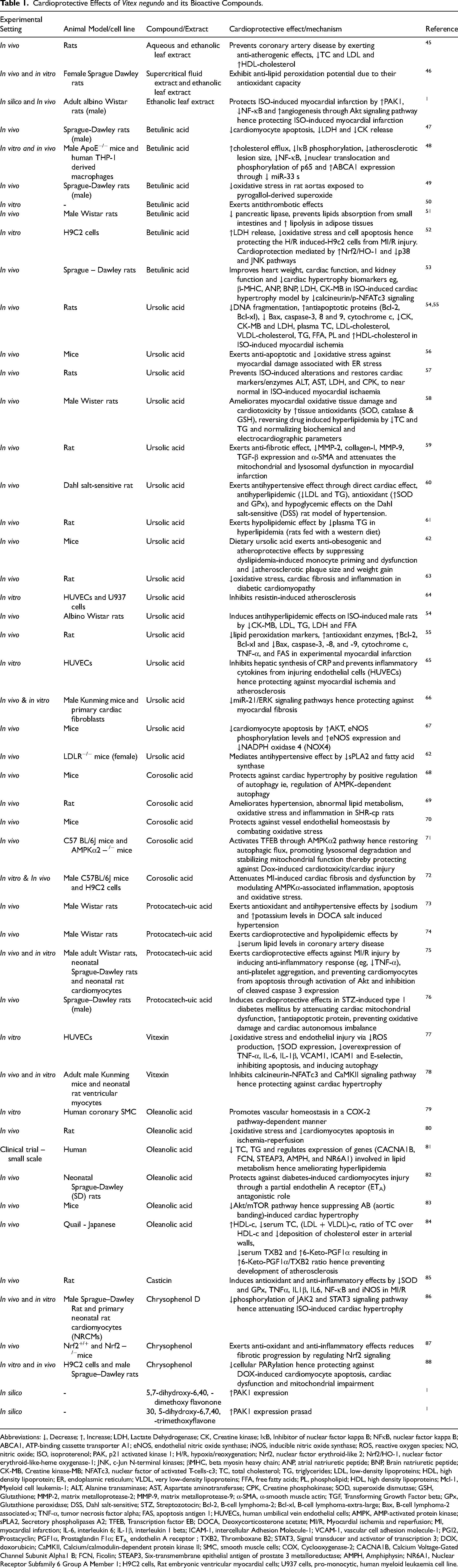
Abbreviations: ↓, Decrease; ↑, Increase; LDH, Lactate Dehydrogenase; CK, Creatine kinase; IκB, Inhibitor of nuclear factor kappa B; NFκB, nuclear factor kappa B; ABCA1, ATP-binding cassette transporter A1; eNOS, endothelial nitric oxide synthase; iNOS, inducible nitric oxide synthase; ROS, reactive oxygen species; NO, nitric oxide; ISO, isoproterenol; PAK, p21 activated kinase 1; H/R, hypoxia/reoxygenation; Nrf2, nuclear factor erythroid-like 2; Nrf2/HO-1, nuclear factor erythroid-like-heme oxygenase-1; JNK, c-Jun N-terminal kinases; βMHC, beta myosin heavy chain; ANP, atrial natriuretic peptide; BNP, Brain natriuretic peptide; CK-MB, Creatine kinase-MB; NFATc3, nuclear factor of activated T-cells-c3; TC, total cholesterol; TG, triglycerides; LDL, low-density lipoproteins; HDL, high density lipoprotein; ER, endoplasmic reticulum; VLDL, very low-density lipoproteins; FFA, free fatty acids; PL, phospholipid; HDL, high density lipoproteins; Mcl-1, Myeloid cell leukemia-1; ALT, Alanine transaminase; AST, Aspartate aminotransferase; CPK, Creatine phosphokinase; SOD, superoxide dismutase; GSH, Glutathione; MMP-2, matrix metalloprotease-2; MMP-9, matrix metalloprotease-9; α-SMA, α-smooth muscle actin; TGF, Transforming Growth Factor beta; GPx, Glutathione peroxidase; DSS, Dahl salt-sensitive; STZ, Streptozotocin; Bcl-2, B-cell lymphoma-2; Bcl-xl, B-cell lymphoma-extra-large; Bax, B-cell lymphoma-2 associated-x; TNF-α, tumor necrosis factor alpha; FAS, apoptosis antigen 1; HUVECs, human umbilical vein endothelial cells; AMPK, AMP-activated protein kinase; sPLA2, Secretory phospholipases A2; TFEB, Transcription factor EB; DOCA, Deoxycorticosterone acetate; MI/R, Myocardial ischemia and reperfusion; MI, myocardial infarction; IL-6, interleukin 6; IL-1β, interleukin 1 beta; ICAM-1, intercellular Adhesion Molecule-1; VCAM-1, vascular cell adhesion molecule-1; PGI2, Prostacyclin; PGF1α, Prostaglandin F1α; ETA, endothelin A receptor ; TXB2, Thromboxane B2; STAT3, Signal transducer and activator of transcription 3; DOX, doxorubicin; CaMKII, Calcium/calmodulin-dependent protein kinase II; SMC, smooth muscle cells; COX, Cyclooxygenase-2; CACNA1B, Calcium Voltage-Gated Channel Subunit Alpha1 B; FCN, Ficolin; STEAP3, Six-transmembrane epithelial antigen of prostate 3 metalloreductase; AMPH, Amphiphysin; NR6A1, Nuclear Receptor Subfamily 6 Group A Member 1; H9C2 cells, Rat embryonic ventricular myocardial cells; U937 cells, pro-monocytic, human myeloid leukaemia cell line.
Anti-Inflammatory Effects
Inflammation plays a central role in the pathogenesis of many CVDs. Therapeutic strategies which target to limit inflammation may be promising in protecting and treating CVDs. Cardiovascular inflammation involves cells such as cardiomyocytes, macrophages, endothelial cells and fibroblasts and mediators such as acute phase reactants, soluble adhesion molecules, pro-inflammatory cytokines and transcription factors such as nuclear factor erythroid-like 2 (Nrf2) and nuclear factor kappa B (NF-kB).89–92 C-reactive protein (CRP) is as example of acute phase protein which is increased in many CVDs including hypertension. CRP impacts endothelial vasodilation by down regulating eNOS expression through various mechanisms hence reducing NO bioavailability and upregulating vascular NADPH oxidase activation leading to increased ROS formation.93,94 Figure 4 shows the mechanisms mediated by CRP to promote eNOS inhibition and eventually endothelial dysfunction.

CRP-mediated mechanisms of eNOS inhibition and vascular dysfunction. Firstly, CRP upregulates NADPH oxidase. This leads to superoxide production and not NO. Secondly, CRP downregulates GTPCH1 enzyme activity leading to reduced levels of Tetrahydrobiopterin (BH4). The eNOS uncoupling (as demonstrated by reduced dimer: monomer ratio) leads to an alteration in the phosphorylation of Ser1177 (Phospho-eNOS) and Thr 495 hence downregulating the eNOS functional activity. Downregulation of eNOS leads to reduced NO bioavailability. Also, upregulation of vascular NADPH oxidase increases ROS formation and eventually upregulation of NF-κB, AP1 and Nrf2 which are involved in exacerbating inflammation. Reduced NO bioavailability and activated NF-κB, AP1 and Nrf2 transcription factors promote endothelial dysfunction which is a characteristic of many cardiovascular pathologies.
A variety of medicinal plants or components such as genistein 95 crocin 96 and Chinese herbal medicine 97 exert anti-inflammatory effects hence protecting against cardiovascular diseases. Majority of the herbal plants have flavonoids which induce anti-inflammatory effects that are useful in exerting cardioprotection. 98 Previous studies have demonstrated cardioprotective effects of V. negundo and its bioactive compounds through limiting inflammation. Corosolic acid, a component of V. negundo has been shown in mouse BMDMs to regulate interleukin receptor associated kinase (IRAK)-2 phosphorylation through NF-κB signaling. 99 This positions corosolic acid as a potential pharmacologic agent that can prevent inflammation. Chrysophenol has been demonstrated to reduce cardiac fibrosis by exerting anti-inflammatory effects through Nrf2 regulation. 87 Another V. negundo bioactive compound, Tris (2,4-di-tert-butylphenyl) phosphate (TDTBPP), has been shown to exert anti-inflammatory activity in a Carrageenan induced rat paw edema model. 100
Different leaf preparations of V. negundo possess many anti-inflammatory activities including the capacity to being used as adjuvants to anti-inflammatory medicines.15,101–103 The anti-inflammatory effects, for example in an ISO-induced myocardial infarction model, are through downregulation of NF-κB and NF-κB-regulated cytokines like IL-1β. 1 Mature fresh leaves of V. negundo have previously demonstrated to exhibit anti-inflammatory properties mainly through anti-oxidant activities, membrane stabilization, anti-histamine activities and inhibition of production of prostaglandin, IL-6 and TNF-α.12,15,103 Prostaglandin synthesis inhibition as a mechanism by which ethanolic leaf extracts of V. negundo exerts anti-inflammatory activity has been confirmed previously. 14 V. negundo also mediates anti-inflammatory effects by inhibiting COX-2 pathway possibly through the inhibition of prostaglandin (PGH2).104,105 Figure 5 shows some of the cardioprotective mechanisms of V. negundo leaves.
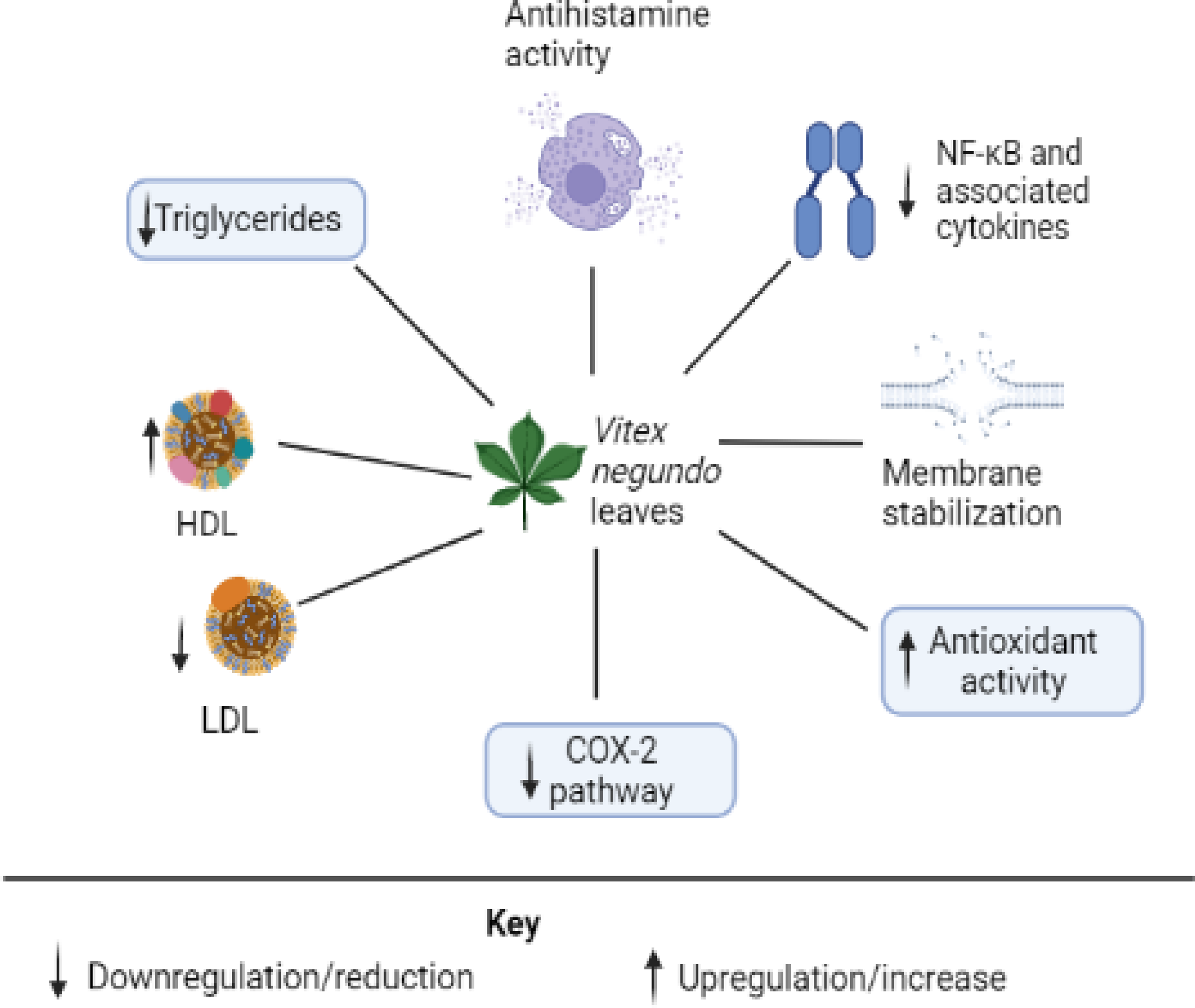
Cardioprotective mechanisms of Vitex negundo leaves (Created with BioRender.com).
Anti-Oxidative Effects
Oxidative stress is a deleterious state due to the disproportionate imbalance between oxidative species and antioxidants in the body. Reactive oxidative species (ROS) production is mainly initiated through the activation of NADPH oxidase and is critical in promoting CVDs. For example, oxidative stress associated damage such as vascular/endothelial dysfunction promotes progression of hypertension. 106
Nitric oxide (NO) contributes in maintaining the health of the vascular endothelium and as a result, NO synthesis has been observed to be decreased in some CVDs. 107 Therefore, therapeutic agents that aim to inhibit ROS production or to increase NO bioavailability may be important and reliable in the development of novel therapies against hypertension and other CVDs. Medicinal plants or components reduce oxidative stress in endothelial cells. 108 For example, genistein inhibit ROS hence contributing to the control of CVDs. 95
V. negundo also has strong antioxidant activity.109,110 Betulinic acid was shown to reduce oxidative stress by inhibiting ROSs production and increasing NO, SOD activity and eNOS activity in rat aortas induced by pyrogallol-derived superoxide production. 49 In myocardial oxidative tissue damage and cardio-toxicity induced by cyclophosphamide treatment in Wistar rats, ursolic acid has been demonstrated to increase tissue antioxidants (SOD, catalase & GSH). 58 In experimental hypertension, ursolic acid has also been shown to exert antioxidant effects by increasing SOD and GPx. 60 Vitexin, a component of V. negundo and a flavonoid, inhibits ox-LDL–induced oxidative stress by downregulating malondialdehyde (MDA) and ROSs production and promoting SOD expression. Vitexin inhibits overexpression of proinflammatory cytokines and cell adhesion molecules induced by ox-LDL. 77 Chrysophenol reduces cardiac fibrosis by exerting anti-inflammatory and anti-oxidant effects through Nrf2 regulation. 87
Protocatechuic acid also exerts antioxidant effects in DOCA salt induced hypertension in male Wistar rats by reducing sodium and elevating potassium levels. 73 Cardio-protective effects of protocatechuic acid through preventing oxidative damage, increasing antiapoptotic protein and attenuating cardiac mitochondrial dysfunction has also been reported hence attenuating diabetes-induced cardiac dysfunction. 76
The antioxidant capacity of V. negundo extracts has been demonstrated in various studies.15,101,111,112 Reduction of lipid peroxidation is one major mechanism by which V. negundo exerts its anti-oxidant activity.19,101,112 Another anti-oxidant mechanism of V. negundo is by inhibition of xanthine oxidase.40,113 Polar fractions of V. negundo also exhibit anti-oxidant properties through free radical scavenging and metal chelation which also down regulate the free radical mediated inflammatory pathways. 114 There are limited studies that demonstrate anti-oxidant capacity of V. negundo in the context of in vivo or in vitro models of many cardio-vascular diseases. Therefore, it is needed to validate the anti-oxidant effect of V. negundo and its components in vivo or in vitro models of many CVDs.
Anti-Hyperlipidemic Effects
Hyperlipidemia refers to high levels of plasma cholesterol, plasma lipoproteins and triglycerides. 115 Elevated low-density lipoprotein (LDL)-cholesterol levels is associated with hyperlipidemia-related pathological conditions which include CVDs while high density lipoprotein (HDL)-cholesterol mediates reverse cholesterol transport which is the elimination of excess cholesterol from body cells through the liver. 116 The LDL effects on endothelial function have been extensively reviewed previously. 117 Also, therapies aimed at increasing HDL-cholesterol levels in the body have been reviewed 116 such as those targeting to lower LDL-cholesterol levels in plasma. 118 Many medicinal plants have been reported to inhibit dyslipidemia. 119 For example, garlic has been shown to decrease hypercholesterolemia. 6 Curcumin, an active component of Curcuma longa L, has been reported to have anti-hyperlipidemic effects. 120 Other reviews have explored the cardioprotective potential of certain medicinal plants, nutraceuticals and omega-3 fatty acids by reducing small dense low-dense lipoprotein (sdLDL) levels, LDL particle numbers or increasing LDL particle size hence preventing or managing the risk of CVDs. 121
Studies on V. negundo and some of its bioactive compounds have demonstrated antihyperlipidemic potential. Betulinic acid, a component of V. negundo exerts anti-obesity effects through direct inhibition of pancreatic lipase hence preventing lipids absorption from the small intestine. Betulinic acid also enhances lipolysis in adipose tissues hence further accelerating fat mobilization. 51
Ursolic acid, another derivative of V. negundo has been shown to reverse drug induced hyperlipidemia by reducing total cholesterol (TC) and triglycerides (TG) in Wistar rats treated by Cyclophosphamide 58 and to exhibit antihyperlipidemic effects by decreasing LDL-cholesterol and TG on Dahl salt-sensitive (DSS) hypertensive rat model. 60 Ursolic acid also exerts antihyperlipidemic effect in hyperlipidemic rats by reducing plasma triglycerides, suppressing dyslipidemia-induced monocyte priming, reducing lactase dehydrogenase (LDH), TG, TC, LDL-cholesterol, VLDL-cholesterol, free fatty acids (FFA), HDL-cholesterol and phospholipids54,61,62 Protocatechuic acid exerts antihyperlipidemic effects by reducing hepatic TC, TG and serum lipid levels in coronary artery disease induced in rat models. 74 Oleanolic Acid ameliorates hyperlipidemia by reducing TC and TG. 81 Aqueous and ethanolic leaf extracts of V. negundo lower plasma TC and LDL-cholesterol and increase HDL-cholesterol hence preventing coronary artery disease. 122
Vitexin, a V. negundo bioactive constituent, exerts anti-apoptotic effects in ox-LDL-treated HUVECs and inhibits ox-LDL-induced overexpression of proinflammatory cytokines and cell adhesion molecules. It also ameliorates endothelial injury induced by ox-LDL, through induction of autophagy via AMPK signaling. 77 Corosolic acid is another V. negundo compound which has been shown to ameliorate abnormal lipid metabolism in vivo in SHR-cp rats. 69
Anti-Hypertensive Effects
Hypertension, commonly referred to as high blood pressure, is a persistent elevated blood pressure (BP) of equal to or greater than 140/80 mm Hg. 123 It is a major CVD which contributes to around 16.5% of annual deaths globally and a major cause for disability such as kidney damage, dementia, or blindness. 2 Inflammation and oxidative stress are central mechanisms that trigger endothelial dysfunction in hypertension as described previously.124,125
In the recent past, there has been a significant rise in the exploration of plant-based medicine to treat CVDs such as hypertension.126,127 For example, the antihypertensive effects of garlic and many of its bioactive compounds has been reported in previous studies5,6 Salvia fruticosa has also been experimentally demonstrated to exert its traditionally known antihypertensive effects by inducing endothelium-dependent vasorelaxation through the PI3 K/Akt/eNOS/NO/sGC/cGMP signaling pathway. 128 Rhus coriaria L. (sumac) as well as Origanum majorana, commonly referred to as marjoram, have been shown to have antihypertensive effects by inducing endothelium-dependent vasorelaxation.129,130 Many medicinal herbs have flavonoids which exert antihypertensive effects by increasing nitric oxide (NO) bioavailability, reducing oxidative stress in endothelial cells and modulating vascular ion channel activity. 108 The antihypertensive effects of some less commonly consumed herbs have also been extensively reviewed previously.119,131 The mechanisms of action of most of these medicinal plants include exerting antioxidant, vasorelaxant, anti-inflammatory, antiproliferative and diuretic activity as well as upregulation of NO secretion, downregulation of ROS production and inhibition of dyslipidemia leading to normalization of blood pressure. 119
Some studies have demonstrated the antihypertensive effects of certain components of V. negundo including some systematic studies such as one by Wang et al 132 For example, ursolic acid has been shown to have antihypertensive effect in DSS hypertensive rat model by inducing antihyperlipidemic, antioxidant and hypo-glycemic effects. 60 Ursolic acid has also been shown to mediate antihypertensive effects by reducing blood lipids, 133 downregulating fatty acid synthase, 134 inhibiting angiotensin-1 converting enzyme (ACE) 135 and secretory phospholipase A2 (sPLA2). 62 In addition, ursolic acid reduces hypertension by causing vasodilation through activation of both NO/cGMP and H2S/KATP pathways. 136 Corosolic acid ameliorates hypertension by exerting anti-oxidant and anti-inflammatory effects in SHR-cp rats. 69 Protocatechuic acid exerts antihypertensive effects in DOCA salt induced hypertensive male Wistar rats by decreasing sodium levels and elevating potassium levels. 73 Oleanolic acid has been shown to prevent dexamethasone-induced hypertension and controlling hypertension in spontaneously hypertensive rats by inhibiting ACE.135,137 The anti-hypertensive effect oleanolic acid is also possibly attributed to its antioxidant effect and NO release. Being a fat-soluble molecule, when NO is produced in the vascular endothelial cells, it quickly permeates through the cell membrane and relaxes the smooth muscle cells while dilating the blood vessels hence lowering the blood pressure, 138 Also, by exerting diuretic and nephroprotective effects, oleanolic acid has been demonstrated to ameliorate hypertension in L-NAME hypertensive rats. 139
There is need for more in-depth research to uncover the mechanisms by which V. negundo and its bioactive compounds exert antihypertensive effects in preclinical and clinical models.
Anti-Atherosclerotic Effects
Anti-atherosclerotic and anti-thrombotic effects of V. negundo and its compounds have been studied previously. Betulinic acid has been shown to modulate vascular inflammation and protect against atherosclerosis by promoting cholesterol efflux, suppressing IκB phosphorylation, downregulating NF-κB activation, reducing atherosclerotic lesion size, suppressing nuclear translocation and phosphorylation of p65 and increasing expression of ATP-binding cassette transporter A1 (ABCA1) via miR-33 s down-regulation. 48 ABCA1 is important in promoting cholesterol efflux from macrophages hence exerting anti-atherosclerotic role. 48 Betulinic acid also exhibits anti-thrombotic effects by exerting antiplatelet activities. 50 However, further investigations need to be done to validate this effect.
Dietary ursolic acid has shown to have atheroprotective effects by reducing atherosclerotic plaque size in atherosclerosis-prone mice. 62 Ursolic acid also inhibits resistin-induced atherosclerosis 64 and inhibits hepatic synthesis of CRP hence protecting endothelial cells from being injured by CRP. By this, UA has been demonstrated to prevent atherosclerosis. 65 Oleanolic Acid prevents development of atherosclerosis by decreasing TC, LDL and VLDL cholesterol, elevating HDL cholesterol and reducing cholesterol ester deposition in arterial walls of Japanese quails. 84
Effects on Myocardial Infarction and Ischemia
During myocardial infarction (MI), ROS and other proinflammatory molecules, are elevated hence causing deleterious effects to the heart function which include cardiac injury to the myocardium. 140 Conversely, p21 activated kinase 1 (PAK1) has been seen to be downregulated in MI. 1 PAK1 contributes to cardiovascular inflammation and regulates genes and molecules involved in cardiac excitability and contraction hence its important role in MI. 1 Certain medicinal plants such as Curcuma longa L have been previously reported to protect against myo-cardial ischemia-reperfusion injury in coronary heart disease. 10
V. negundo extracts and its extracts have been seen to exhibit protective effects against myocardial related injuries. Betulinic acid, a component of V. negundo suppresses cardiomyocyte apoptosis by inhibiting LDH and creatine kinase (CK) release hence alleviating the extent of myocardial ischemia/reperfusion injury in in vivo mouse and rat models. 47 This protection has been attributed to a number of mechanisms. In one study, cardioprotective effects of betulinic acid were shown by protecting against H/R induced H9c2 ischemia/reperfusion injury model by suppressing oxidative stress, decreasing LDH release and inhibiting cell apoptosis. Betulinic acid mediates cardioprotective effects by inhibiting LDH and CK release hence suppressing cardiomyocyte apoptosis.47,52 In ISO-induced model of cardiac hypertrophy, betulinic acid has been shown to ameliorate cardiac fibrosis and to improve heart weight, cardiac function and kidney function. Betulinic acid also reduces cardiac hypertrophy biomarkers by inhibiting calcineurin/p-NFATc3 signaling. 53
Ursolic acid upregulates anti-apoptotic proteins and anti-oxidants while decreasing DNA fragmentation in a MI model 55 and is reported to normalize the cardiac markers or enzymes. 57 Elsewhere, antiapoptotic effects of ursolic acid in ISO-induced MI rat models were found through upregulating antiapoptotic proteins and downregulating proapoptotic proteins. 55 Similar antiapoptotic and antioxidative effects of ursolic acid were seen in endoplasmic reticulum stress associated myocardial damage 56 and in in vivo myocardial oxidative tissue damage. 58 Ursolic acid also exerts anti-fibrotic effects in a MI model by modulating α-SMA, MMPs, collagen-1 and TGF-β expression as well as attenuating mitochondrial and lysosomal dysfunction. 59 Ursolic acid also provides protection against myocardial infarction by reducing CRP synthesis from the liver hence preventing endothelial cells (HUVECs) injury. 65 Protection against myocardial fibrosis has been shown to be mediated by miR-21/ERK signaling pathways inhibition. 66 In diabetic cardiomyopathy, ursolic acid improves cardiac structure by exerting anti-oxidative, antifibrotic and anti-inflammatory effects. 63
Corosolic acid, another derivative of V. negundo, exerts cardioprotective effects in myocardial infarction-induced cardiac fibrosis and dysfunction by modulating oxidative stress, apoptosis and inflammation. 72 Oleanolic acid inhibits oxidative stress and cardiomyocyte apoptosis hence protecting against ischemia-reperfusion in STZ-diabetic rats. 80 Protocatechuic acid influences TNF-α reduction, anti-platelet aggregation and anti-cardiomyocyte apoptosis in myocardial ischaemia reperfusion injury via Akt activation and inhibition of cleaved caspase 3 expression. 75 Chrysophenol suppresses cellular PARylation hence protecting against cardiac dysfunction, cardiomyocyte apoptosis and mitochondrial dysfunction. 88
Ethanolic leaf extracts of V. negundo protects against MI through upregulation of PAK1, downregulation of NF-κB expression and NF-κB regulated cytokines while promoting angiogenesis through Akt signaling pathway. PAK1 is reduced during myocardial infarction and is a potential therapeutic target for MI treatment. 1
Two more phytoconstituents of V. negundo, 30, 5-dihydroxy-6,7,40, -trimethoxyflavone and 5,7-dihydroxy-6, 40, - dimethoxy flavonone have been shown in in silico models to protect against MI through modulation of PAK1 expression and signaling. 1
Figure 6 shows the cardiac signaling cascade in ISO-induced MI and the possible MI protective mechanisms of VNE pretreatment in the MI model.

Pathways of isoproterenol (ISO) and Vitex negundo ethanolic leaf extract (VNE) in cardiac cell signaling in ISO-induced myocardial infarction. (A) Cardiac cell signaling cascade in ISO-induced MI in Wistar rats. Upon ISO-induction in Wistar rats, NF-κB is upregulated (1) leading to increased expression of IL-1β, TNF-α and IL-6 thereby increasing inflammation (2) which eventually exacerbates myocardial necrosis. Additionally, ISO induction downregulates p21 activated kinase 1 (PAK1) which causes decreased cell survival, cell proliferation and cytoskeleton remodeling (3) leading to increased myocardial infarction or necrosis. (B) Protective effect of VNE in ISO-induced MI. Pretreatment of VNE protects against myocardial infarction by downregulating NF-κB expression in cardiac cell signaling (4), which leads to reduced IL-1β, IL-6 and TNF-α hence inhibiting inflammation (5). Pretreatment with VNE also upregulates p21 activated kinase 1 (PAK1) that eventually protects against myocardial necrosis by increasing cell survival, cell proliferation and cytoskeleton remodeling (6). Therefore, VNE regulates PAK1 and NF-κB signaling pathways hence offering protection against MI. (Created with BioRender.com).
Commercial Products or Drugs
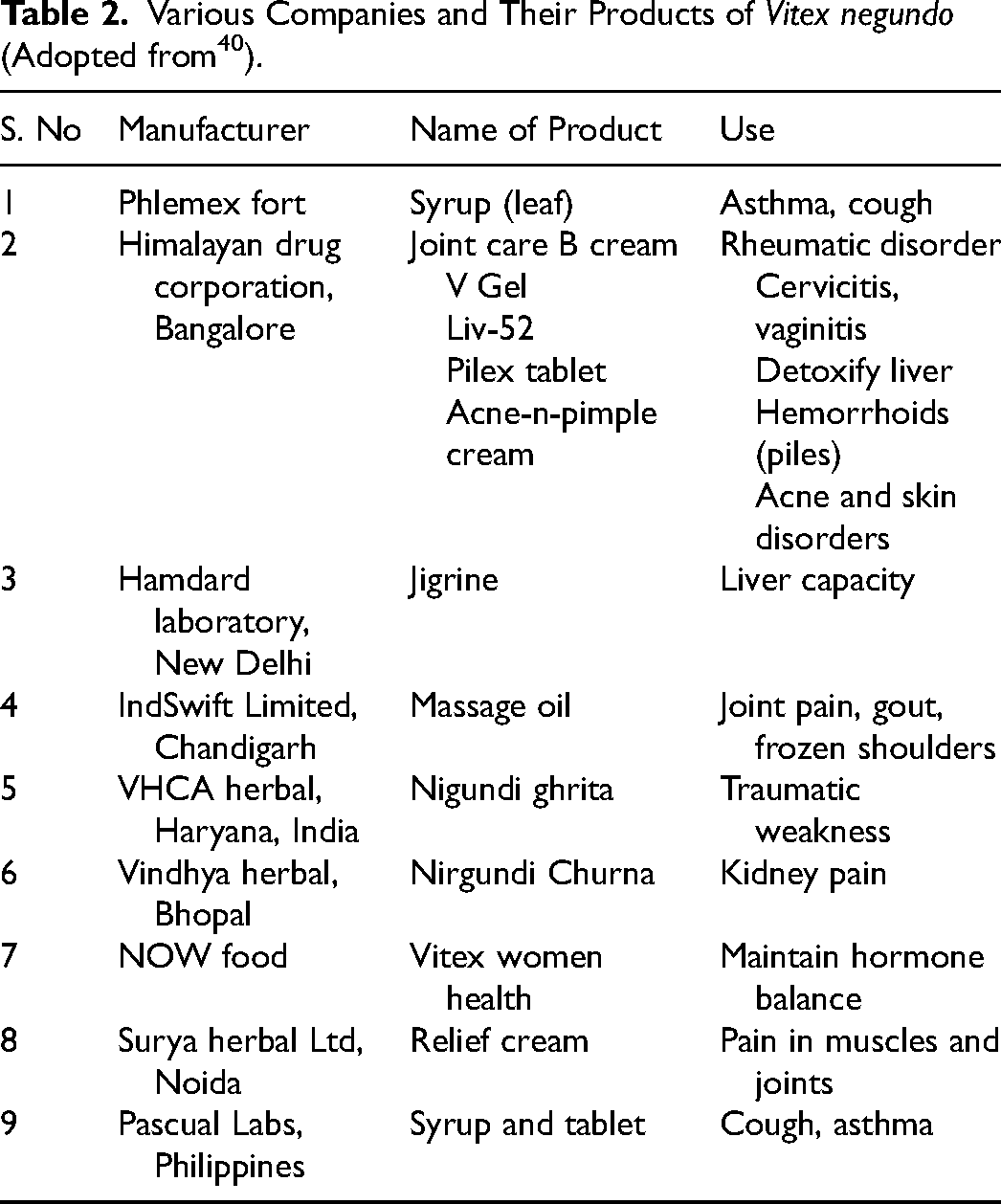
Some constituents of V. negundo have been commercialized. However, cardioprotective effects of V. negundo compounds have not been clinically tested up to date. Table 2 shows the list of medicinal products and their respective companies using V. negundo and/or its bioactive compounds as active component or as an adjuvant to other molecules to manufacturer medicinal products.
Various Companies and Their Products of Vitex negundo (Adopted from 40 ).
Conclusion
There is accumulating evidence on the potential of V. negundo as a potential protective and therapeutic agent against cardiovascular disease and cardiovascular disease related pathologies such as inflammation, oxidative stress, hyperlipidemia, hypertension, atherosclerosis and myocardial infarction. Aqueous and ethanolic leaf extracts are the most widely studied extracts of V. negundo while ursolic acid, betulinic acid, corosolic acid, protocatechuic acid and oleanolic acid are the V. negundo's bioactive compounds that have mostly been studied in respect to cardiovascular protection. Future studies need to explore the therapeutic effects of other V. negundo compounds. Additionally, there is still a huge research need for preclinical, clinical and pharmacokinetic studies to justify the use of V. negundo or any of its compounds as a therapeutic agent against CVDs and to evaluate the cardioprotective effects of V. negundo and its active compounds.
Footnotes
List of Abbreviations
Author Contributions
BMN, SH and NF conceptualized this review. BMN, SH, SP, RdeS, DR, NF performed the literature searches and identified studies for inclusion. BMN wrote the first draft. All authors have read and approved the final version of the manuscript for submission.
Declaration of Conflicting Interests
The author(s) declared no potential conflicts of interest with respect to the research, authorship, and/or publication of this article.
Ethical Approval
Not applicable.
Funding
The author(s) disclosed receipt of the following financial support for the research, authorship, and/or publication of this article: BMN is funded by the Association of Commonwealth Universities (ACU), Queen Elizabeth Commonwealth Scholarship number FE-2019-192.
