




Abstract
An extensive study has been made to identify, document, and investigate the ethnomedicinal plants used by Rakhine ethnic minorities in Patuakhali and Barguna District of southern Bangladesh for the term of April 2018 to June 2019. In this article, we have focused on the Rakhine population trends, management concerns, and some actions for conserving the Rakhine population diversity in the study area. In this study, we have identified the locations where Rakhine population lives in Patuakhali and Barguna districts. A total of 86 plant species belonging to 71 genera and 43 families were reported to be used for treating more than 57 various physical ailments under 14 illness categories from the study area. For each of the species, the botanic name, common name, Rakhine name, family, habit, parts used and traditional medicinal uses of the plant species have been presented. The maximum numbers of ethnomedicinal plant species were utilized to treat gastrointestinal complaints (43) taken after by the treatment of dermatological issues (36). The highly cited (75.60%) plant species were found to be Ananas comosus and Aegle marmelos used for gastro-intestinal (Stomach pain, indigestion, and dysentery) digestive disorders and subsequently followed by Colocasia esculenta (70.73%) used for cut, bleeding and wound healing. The results of this study have shown that Rakhine indigenous communities still depend on conventional plant-based medication to remedy various diseases and therapeutic purposes in the study area. Our findings have also shown that despite there have adequate phytodiversity in the natural habitat of the study area but the number of Rakhine population has been declining significantly day-by-day. As an ultimate result, we have lost the plant-based traditional medicinal knowledge of Rakhine indigenous communities in Bangladesh. As a rich source of traditional knowledge and cultural diversity, it calls for urgent initiatives to conserve the cultural heritage of the Rakhine community as well as the diversity of Rakhine ethnic group.
Keywords
Introduction
Medicinal plants make a significant contribution to the primary health care needed by individuals around the world. In recent years, the world populations have focused their attention on therapeutic plants and plant-based products due to the side impacts of a number of artificial drugs as well as the improvement of sedate resistance to irresistible maladies. As a result, the demand for therapeutic plants has been expanding drastically day-by-day in both developing and developed countries for the utilize in traditional medicine (TM) and contemporary and alternative medicine (CAM). 1
On a report of World Health Organization, over 80% of the global population relies on herbal medicines for its essential healthcare necessities, and approximately 21,000 plant species seem possibly be utilized as therapeutic plants. 2 More than 6000 plant species occur in Bangladesh, of which about 500 species are recognized as having medicinal or curative properties. 3 A total of 85% of the people in Bangladesh reside in countryside areas and most of them rely on therapeutic plants for their essential healthcare needs. 4 Bangladesh can be considered as a wealthy country in terms of ethnic diversity. Although the Government of Bangladesh has officially recognized a total of 27 ethnic groups (1.8% of the country’s total population), various rights groups have claimed that there may be more than 45 minorities living in different parts of the country. 5,6 Ethnic communities are supposed to be a rich source of ethno-medicinal information because of their indigenous traditional knowledge regarding the therapeutic uses of plants. Indigenous communities have utilized plants as a source of a medicine from the past based upon centuries-long conviction and perceptions throughout the world. Ethnic communities are mostly dependent on plants in most cases to fulfill their daily food supplies and daily health care treatments. Tribal populations mostly live in remote areas far from the mainland which remained to be detached from the mainland of the country. Thus, they have less access to modern medicinal facilities. This is probably because of why they still are dependent on plants for their daily medicinal use and dietary supplements. Other than that of these plants and plant products are more accessible and available in their area. The healing practices of indigenous communities have been recognized socially during all stages of anthropological culture and environmental evolution. 7 Rakhine ethnic communities have a long history and diverse cultural backgrounds dating several thousands of years old and they practice their own traditional ethno-medicinal knowledge for primary healthcare reasons. The Rakhines are a minor ethnic group dwelling in the coastline areas of Patuakhali, Borguna, and Cox’s Bazaar. Before the establishment of these 2 present-day countries, Rakhines are migrated to Bangladesh from Arakan in Myanmar in the late 18th century and settled in Patuakhali and Barguna districts in the 19th century. 3,8 Several researchers, 9– 23 in Bangladesh have earlier been working regarding on the ethno-medicinal study of therapeutic plants utilized by the different ethnic communities in different parts of the country. Unfortunately, there has been very limited information and written documents of indigenous knowledge regarding the uses of therapeutic plants by the Rakhine ethnic community in the Patuakhali and Barguna district of Bangladesh. Although some researchers, 24– 26 have worked on the study of the ethno-medicinal plant used by the Rakhine community of Cox’s Bazar, Chittagong, and Patuakhali. However, this study is extremely rare and inadequate. There has no compelling evidence about the complete ethno-botanical investigation earlier done in these present investigated study areas. Thus, the current exploration is the first ever complete ethno-medicinal work in the documentation of therapeutic plants utilized by the Rakhine ethnic minorities in the Patuakhali and Barguna district of Bangladesh. The plant-based indigenous knowledge is particularly oral and has been transferred from one generation to the next through verbal communication. 27 Moreover, indigenous knowledge is confined to elder members of the community and the younger generations have little or no knowledge in this particular aspect. On the other hand, the number of Rakhine population in Patuakhali and Barguna District of Bangladesh is decreasing day by day. 28– 30 That’s why; indigenous knowledge may have disappeared due to a lack of proper written documentation. There are many reasons for the extinction of the indigenous knowledge, including the passings of tribal older without exchanging the conventional aptitudes to the other individuals of the family, the migration of individuals due to social issues, urbanization, and modernization, and the impact of advanced medication and exotic cultures are common. 31 We are hypothesizing that, even in this modernized civilization, Rakhine indigenous community still relies on traditional plant-based medicine to cure various diseases and therapeutic purposes. We further speculate that the number of Rakhine in the study area is decreasing day by day and as a result, traditional plant-based knowledge is also being lost. We hypothesized that long-term and well-conducted studies based on local healers and residents of the Rakhine people using traditional therapeutic healing practices in Patuakhali and Barguna districts could enhance our knowledge of the subject and helping to develop better policies for control and exploitation of plant resources. Toward testing our hypothesis, investigations were carried out among the Rakhine indigenous communities in Patuakhali and Barguna district of southern Bangladesh.
In this manner, the general investigate objective of this study is to gather, identify, and report therapeutic plants and to collate the related indigenous information of the Rakhine community with respects to how they treat different human health complaints within the think about ranges of Patuakhali and Barguna locale of Bangladesh.
This investigation was also conducted with taking the underneath mentioned particular objectives: (1) to elucidate the diversity of medicinal plant use and utilization by the Rakhine community for health care reasons in the study area, and (2) to assess the cultural significance of each species of medicinal plants.
Materials and Methods
Study Areas
The study was conducted in different residing locations of the Rakhine community in Patuakhali and Barguna Districts under the Barisal Division of southern Bangladesh. Patuakhali and Barguna are 2 coastal districts of Bangladesh situated at the fringe of the Bay of Bengal. The coastal region of Bangladesh covers an area of about 47,201 km2 and its coastline is 710 km long and there live about 130 million people. 32
The 2 study areas were subsequently divided into smaller study sites (S-1, S-2, S-3, S-4, S-5, S-6, S-7), where most of the Rakhine people live (Figure 1 and Table 1). The survey was performed in different locations of Kalapara Upazila (Patuakhali district) and Amtali Upazila (Barguna district). Survey areas were selected according to the maximum existence of Rakhine population in the areas. Kalapara Upazila is a local administrative region of Patuakhali district covering 483.08 km2 areas and lies in between 21°48’ and 22°05’ north latitudes and in between 90°05’ and 90°20’ east longitudes. Kalapara Upazila is demarcated and delimited by Amtali Upazila on the north, the Bay of Bengal on the south, Rabnabad Channel, Galachipa Upazila on the east, and Amtali Upazila on the west. 33,34

Detailed study area map showing the locations covered the fieldwork.
Location of the Study Areas Where Rakhaine People Live.

* Para: The bunch of houses is termed as Para, part of a village; it is a Bengali word.
On the other hand, Amtali Upazila is a local administrative region of Barguna district covering 720.76 km2 areas and located in between 21°51’ and 22°18’ north latitudes and in between 90°00’ and 90°23’ east longitudes. It is bounded by Patuakhali sadar Upazila on the north, Bay of Bengal on the south, Galachipa and Kalapara Upazila on the east, Barguna sadar and Mirzaganj Upazila (Patuakhali) on the west. 33,34
The study areas enjoy a tropical maritime climate characterized by high rain during monsoon. The study areas are characterized by calcareous alluvium, gray floodplain and grey piedmont soils. These types of soils are containing acid phosphate and are saline and the PH values are neutral to slightly alkaline. 35 The study areas consist of coastal mangrove and wetland ecosystems and include both subtropical mixed evergreen and mangrove forests. Therefore, an abundance of mixed evergreen and mangrove plants can be seen throughout the study area. The most commonly found mangrove plants of this region are Barringtonia asiatica, Erythrina variegata L., Nypa fruticans, Sonneratia apetala, S. caselaoris, Avicennia officinalis, Excoecaria agallocha and Bruguiera gymnorrhiza e.t.c. Moreover, few representations of Heritiera fomes and Ceriops decandra were also noticed in the areas. In addition to the mixed evergreen plants like Albizia lebbeck, Cassia fistula L., Acacia nilotica, Borassus flabellifer L., Calotropis procera, e.t.c. are commonly found in the areas.
Sampling of Informants
During the study period from April 2018 to June 2019 in separate seasons such as summer, monsoon, winter and spring, several repeated field trips were conducted to search for ethno-medicinal information from the Rakhine community in the study area. The investigation was done by adopting random interviews among the male and female informant members of the Rakhine community. Elderly Rakhine informants with age ranging from 45 years old to above were selected due to their vast traditional knowledge about the use of plant and plant products in their daily lives. The educational background and expertise in the use of traditional medicinal plants of the informants were also taken into consideration and priority was given to senior members of the family.
A total of 41 individuals were interviewed in this study. They were mainly made up of elderly people from Rakhine tribes including the Traditional Health Practitioners (THPs) among the Rakhine community (Figure 2). The senior family members of the Rakhine community were asked to mention which plants they used and how they use it in curing diseases in daily lives. They were asked through field interviews, group interview guided field walks by receiving open-ended and semi-structured questionnaire (see Supplementary file) techniques according to Martin. 36 To facilitate better communication and understanding, Bengali and Arakanese language were used which is made possible by the help of a local native language translator guide.

Data collection and field interview with A) General Rakhine and B) Traditional Health Practitioners (THPs).
Data Collection and Identification
For data collection in the survey areas, we first sought permission from the administrative authorities and later from the tribal chiefs of the Rakhine community. At first, it was clearly explained to the Rakhine informants about the objectives of the investigations because they did not want to disclose the information. The following information was collected by asking them according to the prepared questionnaire such as—(1) Rakhaine name of the plant (2) Habit (3) Plant parts used (4) Name of ailments (5) Mode of preparation e.t.c. They were shown photography of plants instantly downloaded from the internet using smartphones for local identification. The collected information and specimens were recognized, confirmed, and depicted up to species using different standard literature books 37– 39 such as the Encyclopedia of Flora and Fauna of Bangladesh published by Asiatic Society of Bangladesh. 40,41 The plant species were identified further by consulting Prof. Dr. AHM Mahbubur Rahman, a taxonomist at the Department of Botany, Rajshahi University, Bangladesh. The plant scientific names have been checked with the different websites of plant database such as the International Plant Names Index, http://www.theplantlist.org, https://www.mpbd.info. The samples collected, voucher specimens were prepared and more preserved at the Herbarium of Department of Botany, University of Barishal.
Data Analysis
All types of primary field data of the bio-resources were analyzed and computed to determine the informant consensus factor (ICF), citation frequency (Cf) as well as preparing graphs, charts, etc. using Microsoft Excel spreadsheets following the mentioned statistical equations.

Where Nur denotes the number of useful reports in each ailment category and Ntaxa is the number of species used for this ailment category. 42

Where, n is the number of people interviewed citing species and N is the total number of people interviewed. 43
Results
Rakhine Locations in Patuakhali and Barguna District
In the present study, we investigate the locations in Patuakhali and Barguna district where Rakhine peoples live (Tables 1 and 2). Mainly, Rakhine peoples live in Kalapara / Khepupara and Galacipa Upazila (Sub-District) under Patuakhali District. They also live in Amtali, Taltali and Barguna Sadar Upazila under Barguna District of Bangladesh. In Kalapara / Khepupara and Galachipa Upazilla under Patuakhali district has 4 localities (3 in Kalapara and 1 in Galachipa) namely Kuakata (Latacapli), Baliatali/boultali, Tiakhali and Baro Baisdia (Moudubi), while Barguna Sadar, Amtali and Taltali upazilla under Barguna district has 2 localities namely Baro Bagi and Baro Baliatali where Rakhine peoples live in comprising with some Para (The bunch of houses is termed as Para, part of a village; it is a Bengali word). The names of the Para are mentioned details in Table 1. According to the latest population census report conducted by Bangladesh Bureau of Statistics in 2011, a total of 1310 Rakhine ethnic minorities live in the whole of Patuakhali district, and 1201 of them exists in Kalapara Upazila. The highest concentration is found in Lata Chapli Union of Kalapara Upazila, where 483 people reside in. On the other hand, the total Rakhine population of Barguna district has valued in 1059; and 1000 of them live in Amtali Upazila. The highest concentration is found in Baro Bagi Union of Amtali Upazila where 635 tribal Rakhine people reside (Table 2).
Distributions of Rakhine Population in the Study Area.

* Union: The smallest rural administrative and local government units in Bangladesh.
* Data Source: Population & Housing Census, 2011; Bangladesh Bureau of Statistics (BBS).
Demographic Data of the Informants
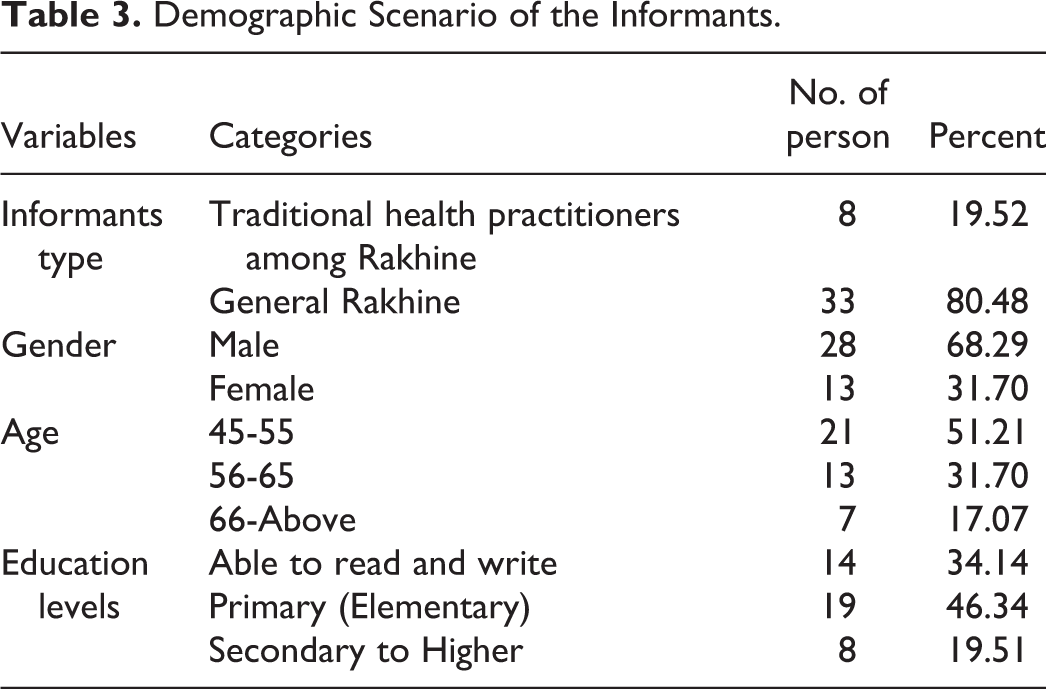
Among the interviewed 41 Rakhine peoples, 8 people of which are THPs and at the same time medical health professional practitioners and the remaining 33 people are general Rakhine people. Most of the informants were Male (68.29%) and high percentages (51.21%) of informants were around 45-55 years old (Table 3) and nearly half (46.34%) were educated up to Primary (Elementary) level.
Demographic Scenario of the Informants.
Medicinal Plants Recorded in the Study Area
In the present study, we conducted our survey at 15 Para of 5 Upazila in Patuakhali and Barguna district of Bangladesh. We have documented a total of 86 plant species belonging to 43 plant families with medicinal values (Table 4). These are also used by Rakhine indigenous communities for 14 illness categories (Table 5) with different formularies in the study area. The recorded plant species were put in order to their botanic name, family, common name (English name), vernacular name (Rakhine name), local name (Bengali name), habit, parts used, ailments and mode of uses (Table 4). Among the reported 86 plant species, 39% herbs, 36% are trees, 18% shrubs and 7% are climbers identified based upon their habit-wise obtainability in the survey area (Figure 3). Among the families studied, Fabaceae was noticed to be the topmost described family with regard to the number of plant species containing 11 plant species, followed by 6 plant species containing Lamiaceae ranked the second and 5 species consisting Zingiberaceae family placed third. Moreover, Arecaceae, Myrtaceae, and Solanaceae families each have 4 species and Apocynaceae, Combretaceae, Malvaceae, Piperaceae families are each consists of 3 plant species. Rutaceae, Myrtaceae, Menispermaceae, Cucurbitaceae, and Apocynaceae belong to each 2 plant species. Besides this, other of the remaining families is represented by 1 species (Figure 4).
List of Plant Species Used as Medicinal Purposes by Rakhine People in the Study Area.

* IUCN Red List Categories (2017) Version 2017-1.
NE, not evaluated; DD, data deficient; LC, least concern; NT, near threatened; VU, vulnerable; EN, endangered; CR, critically endangered; EW, extinct in the wild; EX, extinct.
Ailment Categories and Informant Concensus Factor (ICF).

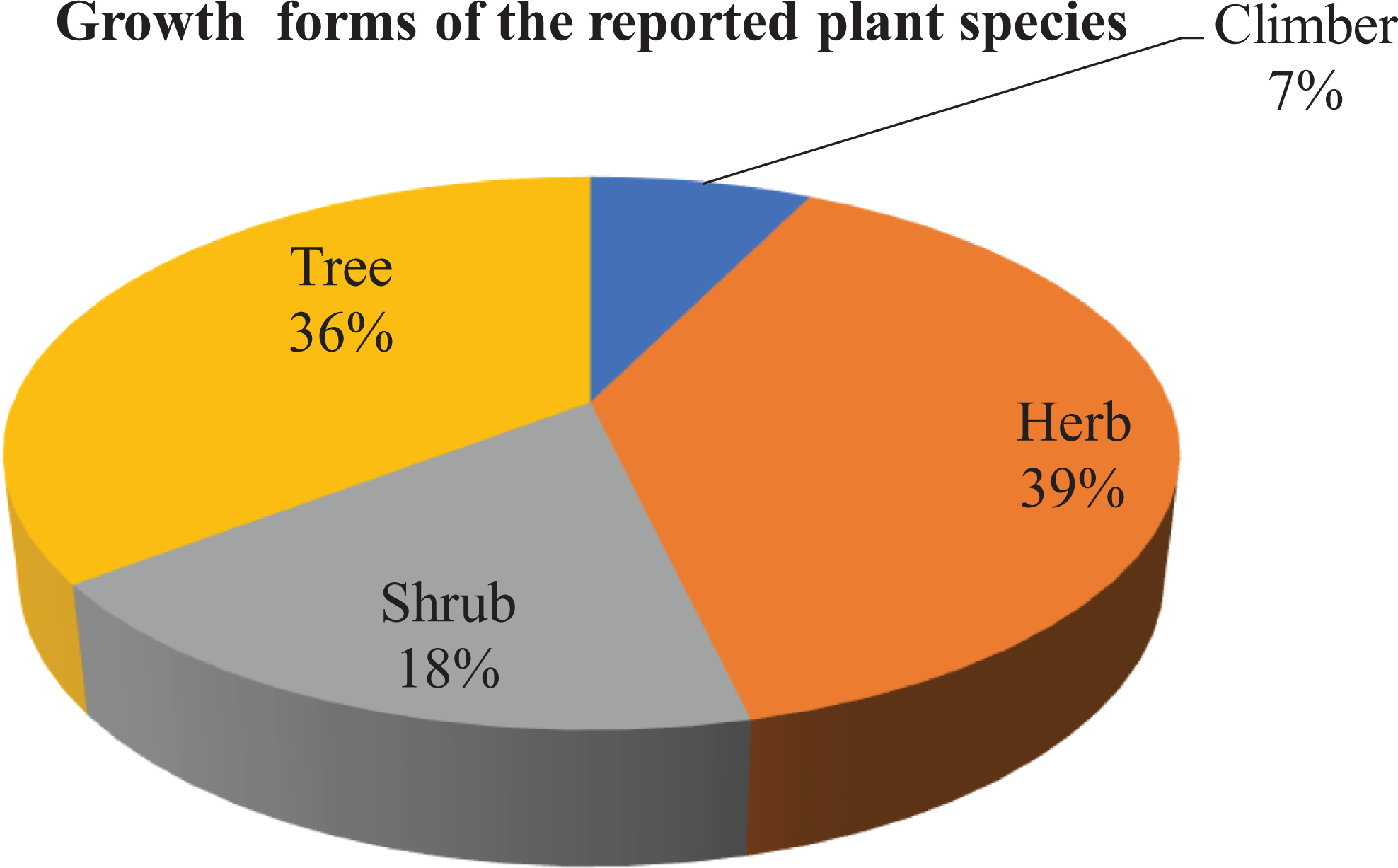
Habit-wise analysis of therapeutic plant species utilized by Rakhine people in the study area.

Family-wise distribution of medicinal plant species in the study area.
Medicinal Ailments and Uses of the Reported Species
Traditional medicinal uses of plant species reported by the informants from the Rakhine community living in the research area were investigated (Table 4). The Rakhine community uses a varied collection of plants as medicine to treat a multiplicity of ailments. A add up to 86 plant species beneath 71 genera of 43 families have been archived which are utilized for the treatment of 57 different physical sicknesses beneath 14 sickness categories (Table 5) with distinctive formularies. The maximum numbers of ethno-medicinal plant species were utilized to treat gastrointestinal complaints (43) followed by the treatment of dermatological problems (36). Only 2 species were documented for the treatment of urinary diseases such as meho (endocrinological disorders).
We have noticed that the Rakhine community has used multiple plants and plant parts to prepare medicines for the treatment of a single disease. The most commonly used part of the plant for the preparation of medicine is the leaf, as well as other plant parts such as root; rhizome and bulb (16%), stem and young shoots, fruit, bark, seed, flower, and inflorescence are also used as active ingredients for preparing raw materials of medicine (Figure 5).

Plant parts used of studied medicinal plants species by the Rakhine community in the study area.
Modes of Preparation and Administration
The most notable methods of preparation are juice (extract or sap of any plant part), paste and decoction (boiling plant parts) and powder; mixtures (soaking plant parts in water) and shower also utilized once in a while. Ingredients prepared as pastes, juices or decoctions are blended with a variety of spices, honey, milk, oils or other pharmacological agents. Medications that are prescribed orally are mainly used for cough and cold, fever, diarrhea, dysentery, gastric, abdominal pain, indigestion and digestive disorders. In addition, leaf juice and paste are used directly on skin lesions in cases of wounds and dermatitis. And in the case of painful diseases, the paste of the leaves is massaged at the place of pain.
1Informant Consensus Factor (ICF)
Informant consensus factor was analyzed and estimated for evaluating the homogeneity of the use of the medicinal plants and determining the plants which are particularly attractive in the detection of organic functional compounds. Table 5 showed the ICF values achieved for the classified ailment. The ICF values were fluctuated from 0.14 to 0.78 in this study. The highest ICF value was found in the ailments categories are gastrointestinal complaints (0.78) and subsequently followed by a cut, wound and bleeding (0.76), diabetics (0.71), and inflammation and pain (0.70) while the lowest ICF value was 0.14 for liver disease (jaundice).
Citation Frequency (Cf)
The highly cited (75.60%) species were Ananas comosus and Aegle marmelos and used for gastro-intestinal digestive disorders. Rakhine people commonly use these plants in large quantities to cure stomach pain, indigestion, dysentery, vomiting, etc. In addition, Colocasia esculenta (70.73%), Lawsonia inermis (68.29%), Momordica charantia(65.85%), Mikania micrantha (65.85%), Piper betle (65.85%), Cynodon dactylon (60.97%) all of these plants have been cited most frequently for cut, bleeding and wound healing. Besides, Ocimum basilicum, Barringtonia asiatica, Zingiber officinale were cited maximum times for colds and coughs whereas Cissus quadrangularis cited maximum for fractured bones. Frequency of citation was ranged from 17.07 to 75.60 in the investigated medicinal plant species (Table 4).
Conservation Status of the Reported Species
Conservation status of the species reported in this study has been assessed according to the IUCN Red List of Threatened Species (Table 4). According to the IUCN Red List Categories and Criteria (https://www.iucnredlist.org), the plants reported in this study include 4 plant species Data Deficient (DD), 22 Plant species Least Concern (LC), 1 plant namely Pterocarpus santalinus L.f. Near Threatened (NT) and rest of the plant species are included in the Not Evaluated (NE) category (Figure 6).We also evaluate the current availability status of the medicinal plants reported in this study in their natural habitat. This was noticed through visual observation based on our plot inventories (density of living trees and stumps) and interviews with forest rangers and local people during the field investigation. Observed conservation status of the listed medicinal plants at the local level was measured following the IUCN Red List Categories and Criteria, version 2020-2. 44 The documented species in the study were categorized into 5 types (Critically Endangered (CR), Endangered (EN), Vulnerable (VU), Near Threatened (NT) and Least Concern (LC)) depending upon their current conservation rank in the environment.

Conservation status of the reported plant species according to IUCN red list categories and criteria.
It is to be very promising and encouraging news that, none of the reported 86 plant species under 71 genera of 43 families have faced any critically endangered and endangered status. However, 7 species namely Garcinia cowa Roxb., Syzygium jambos L., Nypa fruticans Wurmb., Dillenia indica L., Bombax ceiba L., Terminalia arjuna (Roxb. ex DC.) Wight & Arn., and Pterocarpus santalinus L.f. are not so common in the study area and might be in a vulnerable status (Figure 7). In addition, rest of the plant species have been found in sufficient numbers in their natural habitat. The accessible species were also found as wild and cultivated in the natural habitat.
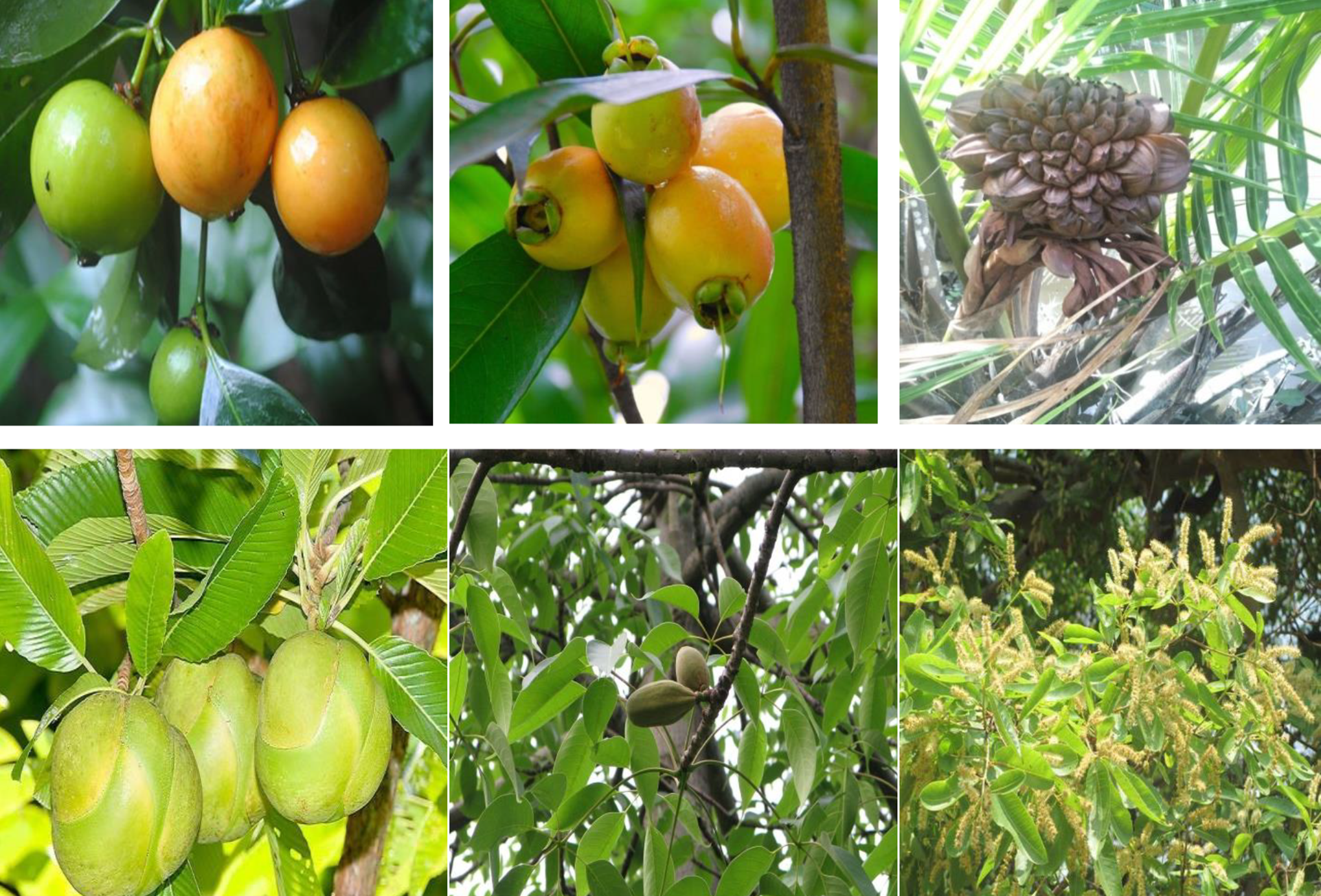
Photos of the vulnerable medicinal plant species in the study area. (A) Garcinia cowa, (B) Syzygium jambos, (C) Nypa fruticans, (D) Dillenia indica, (E) Bombax ceiba, (F) Terminalia arjuna.
Discussion
The Present Status and Trends of Rakhine Indigenous Population in the Study Area
Several researchers 24– 26 have worked on the ethno-botanical use of the Rakhine community in Patuakhali and Cox’s Bazar, but none of them has shed light on the whereabouts and location of Rakhine whereas we did it. The localities of the Rakhine community that we identified in the study area are very similar to the BBS (2011) Population and Housing Census report, except for 1 locality. Our study found the existence of several Rakhine families in Taltoli Upazila of Barguna district but according to the BBS (2011) report, no Rakhine population was present in Taltoli Upazila. While this study does show the existence of Rakhine people in the study areas but they are minor in numbers in terms of population. According to several reports published in a number of renowned national dailies 30,45 of Bangladesh, the number of population of the Rakhine community in Patuakhali and Barguna districts is declining day by day 46 . These reports say the community had around 100,000 people more than a few decades ago, but currently there has only around 2,500 Rakhine peoples in 2015 and it was reported 144 Paras in Barguna and 93 Paras in Patuakhali in 1948, but at present days this number has concluded to 26 and 13 correspondingly. The Population and Housing Census 2001 report conducted by the Bangladesh Bureau of Statistics 33 stated that a total of 526 tribal Rakhine members live in the entire Patuakhali district and out of the maximum 474 people live in kalapara Upazila. On the other hand, 667 Rakhines were found in Barguna district, out of which a maximum 460 live in Amtali Upazila. However, according to the latest population census report of 2011, the number of Rakhine population in the study areas has increased slightly. In that report, the total number of Rakhine population in Patuakhali region was 1310 whereas 1059 was the total number of Rakhine population in Barguna region. 34 Decline in the number of Rakhine population has been attributed due to oppression and land grabbing by local powerful people in the areas of Patuakhali and Barguna district. In these 2 districts, about 95% of the Rakhine population declined in the last 100 years, whereas 81% of the Rakhine reimbursements were unlawfully grabbed. 19 Buddhist temples had existed in the areas but now remaining only 1 since 2015. The 150-years-old Rakhine cemetery placed in Taltali Upazila of Barguna District has been forcibly occupied by local land grabbers. Rakhine land in Patuakhali district has been occupied by politicians. 28,30,47
Demographic Data of the Informants
The informants in this study mostly ranged from 45 to 55 years old (51.21%), 56 to 65 years old is 31.70%, and remaining 17.07% of the aged 66 to above. It reflects the older profile of this community’s knowledge base on the use of medicinal plants. 10 It is, however, of great concern that the Rakhines are slowly losing their earlier glorious heritage of plant-based knowledge about the medicinal uses of plants. The younger generation, on the other hand, is showing no interest in or even neglecting toward conventional medication system and is looking to add a new dimension to modern therapy. 19– 21 They always prefer to go to health centers or doctors than their parents. The current generation has lost interest in continuing their parents’ profession because it does not contribute adequate financial aid. Most of the young generation is becoming dependent on modern and synthetic medicine. Due to the deforestation and destruction of plant habitats as a result of various anthropogenic activities, there has a shortage of plant resources required for fulfilling the present necessities for the preparation of medicines. Our observations coincide with those reported by several other, 9,10,13,19,20,21 researchers.
Medicinal Plants Recorded in the Study Area
In our study we identified and documented 86 plant species belonging to 43 families from the studied area whereas Hanif et al, 24 identified 34 plant species belonging to 24 families by studying on the Rakhine tribe dwelling in the Chittagong Hill Tracts of Bangladesh. In addition, Uddin and his colleagues conducted an ethnomedicinal study on the Rakhine ethnic community in the Cox’s bazar district of Bangladesh, describing the ethnomedicinal use of a total of 72 plants belonging to 51 families. Moreover, Joy et al., 26 described 15 plant species belonging to 12 families by studying from 2 areas of Rakhine tribal communities in the Patuakhali district. Rahman et al, 35 identified and documented a total of 265 plant species belonging to 75 families and 204 genera from Kuakata National park of Patuakhali district in Bangladesh. It was also found in this study that Fabaceae family is the most commonly used medicinal plant by the Rakhaine community. Many researcher from home 9– 21 and abroad 27,31 reported similar findings that, Fabaceae family consists a big number plant species. The dominance of this family can be explained by the predominance of the higher global number of species (19,400 species) included in this family worldwild, 48,49 and of course the higher diversity of plants belonging to this family and the presence of maximum number of species in the current study area. Rahman et al., 35 in his study at Kuakata National Park, presented exactly the same picture of the plant abundance of Fabaceae family. The most commonly used medicinal plants in our study were herbs (39%) and trees (36%). This is probably due to the fact that, this geographical area naturally has an abundance of trees and herbs. And this is very easy accessible to the Rakhine community as well as traditional healers. Similar results were observed with other studies conducted in different regions of Bangladesh. 9– 22
Medicinal Ailments, Uses and Administration of the Reported Species
The results show that Rakhine ethnic groups of Patuakhali and Barguna districts still depends on plant-based medicinal treatment for both common and complicated diseases. It was observed that Rakhines are used different plant and plant parts for the medication of different diseases and illnesses as remedy in daily life. The maximum commonly treated disease/illness are gastro-intestinal tract disorders (GIT) and respiratory problems such as Diarrhea, Dysentery, Gastric, Stomach pain, Indigestion, Digestive disorders, Constipation, Cholera, Ulcer, Cough and Cold, Asthma, Bronchitis, Influenza e.t.c. Moreover, dermatological ailments like Leprosy, Ringworm, Eczema, Skin disease, Scabies, Scurvy and general weakness with burning and headache (GBH); fever; jaundice; menstrual problem; vomiting; insomnia; leucorrhoea and high blood pressure (HBP), toothache, inflammation and pain, urinary diseases are also treated by various medicinal plants. The results from this study are consistent with other researchers, 9,10,11,13 where they reported that the maximum number of plants is used to treat gastrointestinal complaints. In addition, in the case of Informant consensus factor (ICF) value, our findings demonstrate harmony with several other researchers 9,10,18 who have worked on different ethnic communities in different parts of the country and found that gastrointestinal digestive disorders had the highest ICF values. In a quantitative ethnobotanical study in the Barisal district of Bangladesh, Hossain and Rahman, 50 reported the highest ICF value was found in the cut, wound, and bleeding (0.951) and these results are often in similar with our findings, which reinforce the findings of the original research.
Our research shows that people in the Rakhine community choose to use the leaves of plants in most of the time as for medicine. This is probably due to the cheap availability of leaves and the fact that the leaves can be easily collected, preserved, processed, and handled. Exactly the same kind of observation as our observation has been mentioned by previous researchers 51– 55 in their research. It is much easier to collect leaves than roots, stems, flowers and fruits and it can be used very easily as medicine. 55,56 “The leaves are the main photosynthetic organs containing photosynthates that might be responsible for medicinal values.” 57,58 Another reason for using leaves could be concerning the conservation of the plants as excessive use of roots, seeds, flowers, fruits, and even sometimes the whole plant might be the cause of death of the plant or make hindrance in regeneration and putting the species in a vulnerable condition. 50,58
The maximum number of applications of medicine is orally administered. It is also called an internal application. That means, Rakhine community preferred to take medicine by orally. Like other ethnic communities, Rakhine peoples believe that taking medicine internally into the body is most effective. Comparative discoveries were also reported by other researchers. 24– 26 Topical or close applications of plants as medicines are also largely favorable to them in additional cases.
Conservation Status of the Reported Species
Of the 86 medicinal plant species reported in this study, all but 7 were found to be adequate in their natural and cultivated habitat, and 7 plants were shown to have Vulnerable (VU) observed status. Of these, 1 plant namely Pterocarpus santalinus L.f. has been described as Near Threatened (NT) in the IUCN (2017) Red List category 59 and Syzygium jambos, Nypa fruticans, Dillenia indica and Bombax ceiba plants have been described as List Concern (LC). In a study conducted of wild edible minor fruits used by local people in the Barisal region of Bangladesh, Islam and his co-researchers 23 reported the Garcinia cowa Roxb. plant as a vulnerable and Syzygium jambos L. plant as an endangered species. As these plants are wild and are being used indiscriminately by humans for their needs, as a result, their numbers in natural habitats are declining day by day. For example, the leaves of the Nipa plant are widely used by the local peoples for roofing and fencing, resulting in a shortage of Nypa fruticans plants in the area.
Limitations of the Study
In this study, we have tried to uncover the information about what plants are use and how to use (method of usage of herbal preparations) these plants by Rakhine indigenous community to cure their disease in daily life, but most of the cases, we have had very little success; because Rakhine traditional healers believe that if they disclose the knowledge to us particularly to urban people it might diminish the effect of medicinal properties of the plants. Similar observations were also reported earlier by other researchers. 9,10,13,20,21,60 Most of the THPs we interviewed confess that they protect plant knowledge from the public and each other with care for professional aims. We have seen that knowledge here is passed on orally from one generation to the next. The transfer of knowledge outside the family was possible only in the case of adequate payment. This kind of privacy ensured one’s strength and importance in the local society. Also, strict privacy prohibits the general public from using therapeutic plants arbitrarily. However, they shared part of their knowledge with us.
Conclusion
This research focuses on the listed documentation of plant species and traditional herbal uses by the Rakhine tribal communities in Patuakhali and Barguna districts of southern Bangladesh. This study also depicts the diversity of ethnic plant species in the area as well as the present-day obtainability status of the species. The study draws more attention to the alarming and vulnerable present status of Rakhine tribal communities in the study areas. Rakhine ethnic groups are important and valuable anthropological human resources for their traditional ethno-medicinal knowledge in Bangladesh. The Rakhine community plays an important role in the conservation of medicinal plants by planting in the vicinity of their dwelling places for medicinal and cultural purposes. However, it has been observed that despite the considerable plant diversity in the study area, the number of Rakhine is declining day by day due to oppression and land grabbing by local influential.
As an ultimate result, we lost plant-based traditional medicinal knowledge of Rakhine indigenous communities in Bangladesh. But their traditional knowledge about plants could be an important source of information for searching for new drug discoveries. The present-day status of Rakhine tribal community in the research areas demands urgent attention for research and development efforts to preserve their traditional ethno-medicinal knowledge. So, further research suggested might be the searching way of conservation techniques of Rakhine people and their traditional ethno-medicinal knowledge. We suggested proper take care of Rakhine indigenous communities as well as preserve their conventional knowledge about plants in the research area.
Therefore, immediate action should be needed from the government side to conserve the Rakhine ethnic groups’ diversity in the study areas. And this is essential for the conservation of Rakhine ethnic diversity and heritage in study area. In addition, successful conservation strategies should be developed and priority given to sustainable harvesting of the plants which include proper steps for the propagation and conservation of the medicinal plants including the vulnerable species.
Supplemental Material
Supplemental Material, IMG20190526121102 - Ethnobotany of Medicinal Plants Used by Rakhine Indigenous Communities in Patuakhali and Barguna District of Southern Bangladesh
Supplemental Material, IMG20190526121102 for Ethnobotany of Medicinal Plants Used by Rakhine Indigenous Communities in Patuakhali and Barguna District of Southern Bangladesh by A. T. M. Rafiqul Islam, Mahadiy Hasan, Tahidul Islam, Ashikur Rahman, Shawon Mitra and Subroto K. Das in Journal of Evidence-Based Integrative Medicine
Supplemental Material
Supplemental Material, IMG20190526125136 - Ethnobotany of Medicinal Plants Used by Rakhine Indigenous Communities in Patuakhali and Barguna District of Southern Bangladesh
Supplemental Material, IMG20190526125136 for Ethnobotany of Medicinal Plants Used by Rakhine Indigenous Communities in Patuakhali and Barguna District of Southern Bangladesh by A. T. M. Rafiqul Islam, Mahadiy Hasan, Tahidul Islam, Ashikur Rahman, Shawon Mitra and Subroto K. Das in Journal of Evidence-Based Integrative Medicine
Supplemental Material
Supplemental Material, IMG20190526155928 - Ethnobotany of Medicinal Plants Used by Rakhine Indigenous Communities in Patuakhali and Barguna District of Southern Bangladesh
Supplemental Material, IMG20190526155928 for Ethnobotany of Medicinal Plants Used by Rakhine Indigenous Communities in Patuakhali and Barguna District of Southern Bangladesh by A. T. M. Rafiqul Islam, Mahadiy Hasan, Tahidul Islam, Ashikur Rahman, Shawon Mitra and Subroto K. Das in Journal of Evidence-Based Integrative Medicine
Supplemental Material
Supplemental Material, IMG20190527102638 - Ethnobotany of Medicinal Plants Used by Rakhine Indigenous Communities in Patuakhali and Barguna District of Southern Bangladesh
Supplemental Material, IMG20190527102638 for Ethnobotany of Medicinal Plants Used by Rakhine Indigenous Communities in Patuakhali and Barguna District of Southern Bangladesh by A. T. M. Rafiqul Islam, Mahadiy Hasan, Tahidul Islam, Ashikur Rahman, Shawon Mitra and Subroto K. Das in Journal of Evidence-Based Integrative Medicine
Supplemental Material
Supplemental Material, IMG20190527110549 - Ethnobotany of Medicinal Plants Used by Rakhine Indigenous Communities in Patuakhali and Barguna District of Southern Bangladesh
Supplemental Material, IMG20190527110549 for Ethnobotany of Medicinal Plants Used by Rakhine Indigenous Communities in Patuakhali and Barguna District of Southern Bangladesh by A. T. M. Rafiqul Islam, Mahadiy Hasan, Tahidul Islam, Ashikur Rahman, Shawon Mitra and Subroto K. Das in Journal of Evidence-Based Integrative Medicine
Supplemental Material
Supplemental Material, IMG20190527115955 - Ethnobotany of Medicinal Plants Used by Rakhine Indigenous Communities in Patuakhali and Barguna District of Southern Bangladesh
Supplemental Material, IMG20190527115955 for Ethnobotany of Medicinal Plants Used by Rakhine Indigenous Communities in Patuakhali and Barguna District of Southern Bangladesh by A. T. M. Rafiqul Islam, Mahadiy Hasan, Tahidul Islam, Ashikur Rahman, Shawon Mitra and Subroto K. Das in Journal of Evidence-Based Integrative Medicine
Supplemental Material
Supplemental Material, Plant_List - Ethnobotany of Medicinal Plants Used by Rakhine Indigenous Communities in Patuakhali and Barguna District of Southern Bangladesh
Supplemental Material, Plant_List for Ethnobotany of Medicinal Plants Used by Rakhine Indigenous Communities in Patuakhali and Barguna District of Southern Bangladesh by A. T. M. Rafiqul Islam, Mahadiy Hasan, Tahidul Islam, Ashikur Rahman, Shawon Mitra and Subroto K. Das in Journal of Evidence-Based Integrative Medicine
Supplemental Material
Supplemental Material, Questionnaire_Form_for_Data_Collection - Ethnobotany of Medicinal Plants Used by Rakhine Indigenous Communities in Patuakhali and Barguna District of Southern Bangladesh
Supplemental Material, Questionnaire_Form_for_Data_Collection for Ethnobotany of Medicinal Plants Used by Rakhine Indigenous Communities in Patuakhali and Barguna District of Southern Bangladesh by A. T. M. Rafiqul Islam, Mahadiy Hasan, Tahidul Islam, Ashikur Rahman, Shawon Mitra and Subroto K. Das in Journal of Evidence-Based Integrative Medicine
Supplemental Material
Supplemental Material, received_1302055226641354 - Ethnobotany of Medicinal Plants Used by Rakhine Indigenous Communities in Patuakhali and Barguna District of Southern Bangladesh
Supplemental Material, received_1302055226641354 for Ethnobotany of Medicinal Plants Used by Rakhine Indigenous Communities in Patuakhali and Barguna District of Southern Bangladesh by A. T. M. Rafiqul Islam, Mahadiy Hasan, Tahidul Islam, Ashikur Rahman, Shawon Mitra and Subroto K. Das in Journal of Evidence-Based Integrative Medicine
Supplemental Material
Supplemental Material, received_2470782146467725 - Ethnobotany of Medicinal Plants Used by Rakhine Indigenous Communities in Patuakhali and Barguna District of Southern Bangladesh
Supplemental Material, received_2470782146467725 for Ethnobotany of Medicinal Plants Used by Rakhine Indigenous Communities in Patuakhali and Barguna District of Southern Bangladesh by A. T. M. Rafiqul Islam, Mahadiy Hasan, Tahidul Islam, Ashikur Rahman, Shawon Mitra and Subroto K. Das in Journal of Evidence-Based Integrative Medicine
Supplemental Material
Supplemental Material, received_2576348992641848 - Ethnobotany of Medicinal Plants Used by Rakhine Indigenous Communities in Patuakhali and Barguna District of Southern Bangladesh
Supplemental Material, received_2576348992641848 for Ethnobotany of Medicinal Plants Used by Rakhine Indigenous Communities in Patuakhali and Barguna District of Southern Bangladesh by A. T. M. Rafiqul Islam, Mahadiy Hasan, Tahidul Islam, Ashikur Rahman, Shawon Mitra and Subroto K. Das in Journal of Evidence-Based Integrative Medicine
Supplemental Material
Supplemental Material, received_2791054140946855 - Ethnobotany of Medicinal Plants Used by Rakhine Indigenous Communities in Patuakhali and Barguna District of Southern Bangladesh
Supplemental Material, received_2791054140946855 for Ethnobotany of Medicinal Plants Used by Rakhine Indigenous Communities in Patuakhali and Barguna District of Southern Bangladesh by A. T. M. Rafiqul Islam, Mahadiy Hasan, Tahidul Islam, Ashikur Rahman, Shawon Mitra and Subroto K. Das in Journal of Evidence-Based Integrative Medicine
Supplemental Material
Supplemental Material, received_441393080133839 - Ethnobotany of Medicinal Plants Used by Rakhine Indigenous Communities in Patuakhali and Barguna District of Southern Bangladesh
Supplemental Material, received_441393080133839 for Ethnobotany of Medicinal Plants Used by Rakhine Indigenous Communities in Patuakhali and Barguna District of Southern Bangladesh by A. T. M. Rafiqul Islam, Mahadiy Hasan, Tahidul Islam, Ashikur Rahman, Shawon Mitra and Subroto K. Das in Journal of Evidence-Based Integrative Medicine
Supplemental Material
Supplemental Material, received_465431494115475 - Ethnobotany of Medicinal Plants Used by Rakhine Indigenous Communities in Patuakhali and Barguna District of Southern Bangladesh
Supplemental Material, received_465431494115475 for Ethnobotany of Medicinal Plants Used by Rakhine Indigenous Communities in Patuakhali and Barguna District of Southern Bangladesh by A. T. M. Rafiqul Islam, Mahadiy Hasan, Tahidul Islam, Ashikur Rahman, Shawon Mitra and Subroto K. Das in Journal of Evidence-Based Integrative Medicine
Supplemental Material
Supplemental Material, received_539050583368911 - Ethnobotany of Medicinal Plants Used by Rakhine Indigenous Communities in Patuakhali and Barguna District of Southern Bangladesh
Supplemental Material, received_539050583368911 for Ethnobotany of Medicinal Plants Used by Rakhine Indigenous Communities in Patuakhali and Barguna District of Southern Bangladesh by A. T. M. Rafiqul Islam, Mahadiy Hasan, Tahidul Islam, Ashikur Rahman, Shawon Mitra and Subroto K. Das in Journal of Evidence-Based Integrative Medicine
Supplemental Material
Supplemental Material, received_568836683683887 - Ethnobotany of Medicinal Plants Used by Rakhine Indigenous Communities in Patuakhali and Barguna District of Southern Bangladesh
Supplemental Material, received_568836683683887 for Ethnobotany of Medicinal Plants Used by Rakhine Indigenous Communities in Patuakhali and Barguna District of Southern Bangladesh by A. T. M. Rafiqul Islam, Mahadiy Hasan, Tahidul Islam, Ashikur Rahman, Shawon Mitra and Subroto K. Das in Journal of Evidence-Based Integrative Medicine
Supplemental Material
Supplemental Material, received_733472527174397 - Ethnobotany of Medicinal Plants Used by Rakhine Indigenous Communities in Patuakhali and Barguna District of Southern Bangladesh
Supplemental Material, received_733472527174397 for Ethnobotany of Medicinal Plants Used by Rakhine Indigenous Communities in Patuakhali and Barguna District of Southern Bangladesh by A. T. M. Rafiqul Islam, Mahadiy Hasan, Tahidul Islam, Ashikur Rahman, Shawon Mitra and Subroto K. Das in Journal of Evidence-Based Integrative Medicine
Footnotes
Authors’ Note
Ethical approval was taken from the Research and Ethics Committee, Department of Botany, University of Barishal. We also sought permission from the administrative authorities of Patuakhali and Barguna district and later from the tribal chiefs of the Rakhine community in the study area. ATMRI was the principal investigator of the research project. He generated the idea, drafted the proposal, carried out all field surveys, collected the plant materials, and wrote the final manuscript for publication. MH, TI, and AR were assistants of the principal investigator and assists during the field study. SM and SKD were involved in the preparation of the manuscript to be submitted. All authors have read and agreed to the manuscript.
Acknowledgments
The first author acknowledges financial support from the University of Barisal for this study. The authors are grateful to Rakhine people for providing information on the ethnomedicinal uses of the plants. The authors are also thankful to the local administrations of the study area for their permission and cooperation during the field study.
Declaration of Conflicting Interests
The author(s) declared no potential conflicts of interest with respect to the research, authorship, and/or publication of this article.
Funding
The author(s) disclosed receipt of the following financial support for the research, authorship, and/or publication of this article: The research was funded by the research grants of the University Grants Commission (UGC), Bangladesh to the University of Barisal according to the letter No. BU/REGI/RESEARCH (ACADEMIC)/2018-19/424/1527(25) in the 2018-19 Fiscal year.

Supplemental Material
Supplemental material for this article is available online.
References
Supplementary Material
Please find the following supplemental material available below.
For Open Access articles published under a Creative Commons License, all supplemental material carries the same license as the article it is associated with.
For non-Open Access articles published, all supplemental material carries a non-exclusive license, and permission requests for re-use of supplemental material or any part of supplemental material shall be sent directly to the copyright owner as specified in the copyright notice associated with the article.


