



Abstract
This study explores how an Educational Design Research (EDR) approach can enhance the development of experiential Educational Escape Games (EEGs) that aim to increase engagement and foster entrepreneurship knowledge, skills, and attitudes (KSAs) among students aged 14–16. Although EEGs represent an innovative teaching method, they have not been systematically designed nor analyzed within the context of secondary entrepreneurship education (EE). This research gap has led to a limited understanding of how to design these games effectively. The study develops EEGs that are aligned with specific learning objectives through iterative EDR cycles, utilizing data from questionnaires, observations, expert panels, and debriefings, applying reflexive thematic analysis to the qualitative data. The EDR approach effectively connects theory to practice in curriculum design. Enhancements, such as an integrated AI chatbot and a hint system, provide targeted support during the game, fostering student autonomy and motivation. Reflective debriefing sessions help to strengthen the connection between game experience and learning objectives. Carefully designed EEGs are valuable tools for EE, as they make abstract concepts more tangible, engage students actively, and align with contemporary educational approaches, such as game-based and experiential learning. This study provides practical guidance for teachers and contributes to the existing literature on innovative EE.
Keywords
Introduction
Entrepreneurship is increasingly recognized as an important competence and is gaining prominence in education worldwide, including in secondary education (SE) (Hadley, 2023). The focus has shifted from merely encouraging entrepreneurship as a career choice to promoting a broader entrepreneurial mindset that stimulates lifelong learning and adaptability. This shift is in line with the ongoing call for educational reforms to equip students with valuable entrepreneurial KSAs (Hadley, 2025), so that they are prepared for complex social, societal, and professional challenges (Hadley, 2025; Neck & Corbett, 2018).
This vision of EE calls for new curricular and pedagogical approaches that emphasize active, student-centered, and experiential learning. These methods aim to develop KSAs essential for entrepreneurship in SE (Grepperud, 2025; Hadley, 2025; Moberg, 2014). One form of experiential learning is educational escape rooms (EERs), an innovative method successfully used in higher and SE (Grepperud, 2025; Nicholson & Cable, 2020). Such escape rooms contain various EEGs which are narrative-based puzzles (Fotaris & Mastoras, 2022). They represent a form of game-based learning (GBL) (Seguí-Mas et al., 2024; Veldkamp et al., 2020). EERs are often used for skill development, for example in STEM and health care education (Veldkamp et al., 2020). A reason for their growing popularity is their positive impact on student motivation (Fotaris & Mastoras, 2022; Martina & Göksen, 2022), peer collaboration (Veldkamp et al., 2020) and that teachers can use these activities to facilitate curriculum instruction and help students develop key competences and 21st-century skills (Grepperud, 2025; Taraldsen et al., 2022). It aligns with Kolb’s model of experiential learning and serves as an effective pedagogical intervention for EE in secondary schools.
Despite the increased use of educational escape rooms (EERs) with EEGs, their application in secondary EE remains scarce (Fotaris & Mastoras, 2019; Grepperud, 2025; Seguí-Mas et al., 2024; Taraldsen et al., 2022; Veldkamp et al., 2020). This limitation partly arises from uncertainty about how EEGs can effectively promote the development of entrepreneurship-related KSAs. Additionally, there is a lack of systematic design explicitly tailored for secondary school students. Other challenges in implementing EEGs include limited resources, such as insufficient time, inadequate teaching hours, large class sizes, and a lack of teacher expertise, as well as a failure to align these activities with the existing curriculum (Grepperud, 2025). To address these challenges, this paper investigates how EEGs can enhance the development of entrepreneurial KSAs in secondary education. This study draws on established theories such as experiential learning (Kolb & Fry, 1975) and GBL (La Guardia et al., 2014; Neck & Corbett, 2018) to explore how learners can experience learning through play, leading to individualized learning experiences, improved cognition, and experiential EE. Therefore, the central research question of this study is: Which design principles can be derived from theory and practice for the development of EEGs aimed at fostering engagement, entrepreneurial KSAs and intentions among upper secondary school students (aged 14–16)?
This study employs the EDR which offers a practical and scientifically grounded framework for the systematic development and evaluation of educational interventions in real world settings (McKenney & Reeves, 2014). This methodology has guided the iterative design and refinement of EEGs, drawing on established design principles from the literature and incorporating feedback from experts, teachers, and students. The goal is to create interactive and hands-on learning environments that promote student engagement, autonomy, and the development of entrepreneurial KSAs. Additionally, the study’s methodology may offer the foundation for more effectively incorporating GBL into secondary EE curricula.
This article follows the three phases of the Generic Model for EDR (McKenney & Reeves, 2014): (1) analysis and exploration, (2) design and construction, and (3) evaluation and reflection. In the first phase, the needs and context of the target group (students aged 14–16 years in VMBO-TL) were examined from literature review and practice for the initial design principles. In the second phase, the EEGs were developed based on key pedagogical and practical design elements identified in the literature (e.g., Makri, 2021; Veldkamp et al., 2020, 2022) including learning objectives, narrative puzzle structures, team size, and the integration of digital tools. In the third phase, the EEGs were tested in educational practice, focusing on their feasibility, effectiveness and impact on students’ entrepreneurial development.
This study’s findings contribute both to theory and educational practice. Theoretically, they enhance our understanding of how GBL environments can promote entrepreneurial competences. Practically, they offer insights into the classroom implementation of EEGs, including recommendations for design and application. In conclusion, the study reflects on the implications of using EEGs in EE and offers suggestions for future research and practical applications.
Methodology and Research Questions
EDR is a practice-based approach that aims to strengthen the quality and effectiveness of educational practice. This approach involves the iterative design and development of solutions to complex educational problems, usually in close collaboration with actors in the field (Bakker, 2019). According to McKenney and Reeves (2021), EDR systematically connects scientific research with developing and implementing educational interventions within authentic learning environments. While EDR offers significant benefits for practice-based educational research, it also has some disadvantages. For instance, establishing causal relationships can be complex because multiple variables often influence educational contexts (Dede, 2004; Shavelson et al., 2003). Additionally, balancing insider and outsider perspectives can strain the credibility of research findings (Bronkhorst & de Kleijn, 2016). In this study, the EDR approach is applied to developing and evaluating EEGs within secondary schools targeting students aged 14–16 years. The intervention promotes entrepreneurial KSAs. This uses the generic model of McKenney and Reeves (2014), as shown in Figure 1. Generic model for educational design research (McKenney and Reeves, 2014)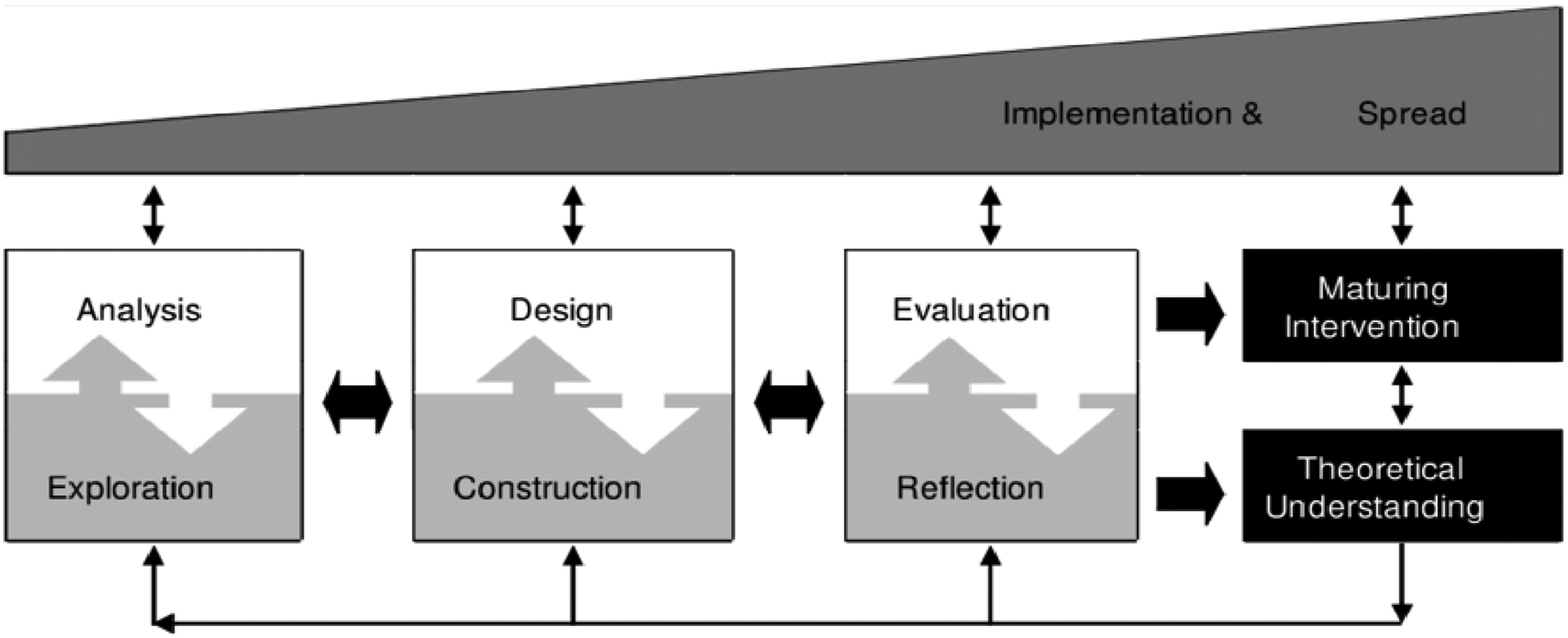
The EDR model proposed by McKenney and Reeves (2014) consists of three phases: (1) analysis and exploration, (2) design and construction, and (3) evaluation and reflection. In the first phase, analysis and exploration, we investigated the educational context and identified specific problems through a literature review and practical analysis. This groundwork informed the development of initial design principles for the EEGs. In the second phase, design and construction, the EEGs were developed based on design categories identified in the literature, particularly those described by Makri (2021) and Veldkamp et al. (2020; 2022). These include pedagogical and practical elements. The pedagogical elements include learning objectives, delimited learning environments, active participation, and narrative. Practical design aspects involve puzzle types, team size, enable fast and easy handling, sustainable materials, time constraints, and the integration of digital tools. These dimensions were used to structure and guide the development of EEG components aimed at fostering entrepreneurial KSAs in students. In the third phase, evaluation/reflection, we refined the design characteristics and educational materials through an iterative design, evaluation, and revision cycle.
We examined the following research questions in the analysis and exploration phase: (1) What are the key educational challenges and needs within EE in Dutch higher secondary vocational education (VMBO-TL)? (2) Which design principles can be derived from theory and practice to guide the development of EEGs that promote entrepreneurial KSAs?
The evaluation-oriented phase was led by the research questions: (3) How do teachers and students evaluate the feasibility and usability of EEGs in the context of EE, and what improvements do they believe are necessary to optimize their design? (4) To what extent do teachers and students find the learning objectives related to entrepreneurial KSAs to be recognizable, meaningful, relevant, and engaging?
Phase 1: Analysis and Exploration
Context
The secondary education system in the Netherlands is divided into three types. The first is lower general and pre-vocational education, known as VMBO. It consists of four levels: two basic levels (VMBO BK) and two advanced levels (VMBO GT). This section aims to prepare students for upper secondary vocational education (MBO), corresponding to levels 3 and 4 according to the International Standard Classification of Education (ISCED). The second type is general secondary education (HAVO), a five-year program that prepares students for higher professional education (HBO) at ISCED level 5. The third type is pre-university education (VWO), a six-year program that prepares students for academic education (WO), aligning with ISCED level 6 (De Bruijn et al., 2017; Nuffic, 2015).
This study focuses on the highest level of VMBO, known as VMBO-TL. Until the 2024-2025 school year, entrepreneurship was not explicitly included in the final exam subjects for economics or any electives at this level. However, in the 2023-2024 school year, plans were developed by SLO, the Netherlands Institute for Curriculum Development, to supplement education for VMBO-TL with several practice-oriented programs (PGP), including entrepreneurship. PGPs are educational programs designed to bridge the gap between theory and practice by offering students practical experiences aimed at developing specific vocational skills and competences. This addition aims to better match the needs of MBO and the labor market 1 . Starting in the 2024-2025 school year, schools can offer one or more practice-oriented programs, including entrepreneurship. Schools that have applied for government subsidies began implementing the entrepreneurship program in that school year. Nonetheless, there is still a lack of corresponding teaching materials, programs, and projects.
Additionally, the PGP assignments require a new approach to pedagogy. In the literature, EE is typically categorized into three pedagogical approaches: education “for” entrepreneurship, education “through” entrepreneurship, and education “about” entrepreneurship (Fayolle & Gailly, 2008; Lackéus, 2015; Moberg, 2014). Research conducted by Moberg (2014), Lackéus (2015), and Baggen et al. (2022) indicate that education “through” entrepreneurship in primary and secondary schools positively impacts students’ entrepreneurial skills. Students learn best by actively participating in real-world entrepreneurial activities. This approach aligns with experiential learning theory, as conceptualized in Kolb and Fry’s (1974) experiential learning cycle, which conceptualizes learning as a dynamic process involving concrete experience, reflective observation, abstract conceptualization, and active experimentation. Experiential learning theory emphasizes that students learn most effectively when engaged in meaningful real-world contexts. Kolb et al. (2014) frame this as a cyclical process of experience and reflection rather than passive instruction a view echoed by others who highlight the value of contextual and personally relevant learning experiences (Baggen et al., 2022; Bergsteiner et al., 2010; Boud et al., 1993). In light of this, there are doubts about the effectiveness of traditional classroom EE because the necessary skills and competences—such as taking calculated risks, forming effective teams, organizing resources, and recognizing opportunities—were developed primarily through active engagement and experience in dynamic, uncertain situations (Bliemel, 2014; Kolb et al., 2014; Neck & Corbett, 2018).
Based on these scientific insights, a shift towards more experiential pedagogies within EE can be seen, instead of traditional EE, with an emphasis on conventional methods such as preparing business plans and promoting economic value creation in particular (Göksen-Olgun et al., 2022). At the same time, despite growing interest, research shows that the application of these experiential approaches is still limited in educational practice, partly due to rigid curricula, a lack of teacher preparation, and an education system that is heavily focused on knowledge assessment rather than competence development (Göksen-Olgun et al., 2022; Grepperud, 2025; Moberg, 2014). In this complex relationship, EEGs, which are a component of experiential learning theory, are a promising learning tool because they can supplement restrictive school structures and foster elements that are often underexposed in traditional education, such as motivation, collaboration and active learning (Grepperud, 2025). This approach aligns with the social constructivist perspective, a theoretical framework established by Vygotsky (1978). Vygotsky argued that children’s cognitive development and learning capabilities are enhanced through social interactions (Bodrova & Leong, 2008; Eunah et al., 2024), enabling them to construct their understanding and knowledge through discovery and experimentation. A key concept in this theory is the zone of proximal development, which refers to the idea that students can grasp cultural values, beliefs, and problem-solving strategies with the guidance of a teacher through various forms of interaction (Schreiber & Valle, 2013).
This perspective aligns closely with the rise of EEGs, which are becoming increasingly popular because of their ability to foster collaborative problem-solving, activate entrepreneurial skills, and support structured reflection (Lynch et al., 2025; Martina & Göksen, 2022). Despite the increasing use of EEGs in education, little is known about the scientific knowledge regarding their didactic effectiveness and implementation in primary and SE (Grepperud, 2025). Besides that, Makri (2021) note that most existing studies focus mainly on motivation and engagement, and very little on learning, in the form of learning outcomes or long-term knowledge retention. This one-sided focus translates into a limited understanding of the didactic effectiveness of EEGs, particularly the link between game design and specific learning goals, target groups, and educational contexts often lacking (Makri, 2021; Veldkamp et al., 2022).
This addresses the first research question, which focuses on the primary educational challenges and needs in EE within Dutch VMBO-TL. The key issues identified include a lack of practice-oriented programs and suitable teaching materials and the need for a pedagogical shift toward experiential learning. While there is an increasing interest in experiential pedagogy, its implementation in classroom practice is often constrained by rigid curricula, insufficient teacher training, and an education system that primarily emphasizes knowledge assessment over competence development (Göksen Olgun et al., 2022; Grepperud, 2025; Moberg, 2014). In this context, EEGs present a promising tool that can operate within these restrictive frameworks and enhance learning processes often overlooked in traditional education, such as motivation, collaboration, and active learning. However, scientific evidence remains scarce regarding their didactic effectiveness, particularly concerning learning outcomes, knowledge retention, and the relationship between game design and learning objectives (Makri, 2021; Veldkamp et al., 2022).
Input for the Design Principles of EEGs
This section describes the design features of EEGs. These features are selected based on insights from the relevant scientific literature, considering both substantive dimensions of EE and fundamental aspects of game design. An important starting point in this analysis is the concept of design principles, as introduced by van den Akker (1999). He defines design principles as context-sensitive, guiding heuristics that guide EDR. In this study, these design principles are applied to systematically underpin the development of EEGs and link them to pedagogical goals. In the following sections, the content principles of EE with the corresponding design principles are described, followed by an elaboration of relevant game design elements, including design principles.
Design Principles EE
The current situation of EE in the Netherlands was mapped in two previous studies (Göksen-Olgun et al., 2022, 2024). They analyzed existing entrepreneurship programs in the Netherlands based on design principles aimed at broad EE (Baggen et al., 2022). Through a Delphi study, they investigated entrepreneurship attainment levels in SE due to the existing lack of consensus and clarity on assessment levels (Fayolle et al., 2016; Göksen-Olgun et al., 2022; Hadley, 2023; Sánchez, 2013).
The findings from these studies, together with existing literature and theoretical frameworks in EE (Bacigalupo et al., 2016; Lackéus, 2015; Lans et al., 2014; Mitchelmore & Rowley, 2010; Tittel & Terzidis, 2020), led to the identification of essential components of EE. In particular, these components emphasize critical thinking and problem-solving skills (Lackéus, 2020; Moberg, 2014), recognizing opportunities, and creating multiple forms of value (Bacigalupo et al., 2016; Neck & Corbett, 2018). In addition, financial and economic literacy (Lusardi & Mitchell, 2014; Oosterbeek et al., 2010) and marketing skills (Bacigalupo et al., 2016; Göksen-Olgun et al., 2024; Lackéus, 2020; Neck & Corbett, 2018) are also highlighted as crucial components.
The literature highlights the importance of problem-solving, critical thinking, opportunity recognition, and creativity as essential cognitive and metacognitive skills (Lackéus, 2015; Moberg, 2014). These skills are also recognized as key competences for entrepreneurship within the EntreComp framework (Bacigalupo et al., 2016) and the attainment targets of the Dutch curriculum, in Dutch: SLO - Netherlands Institute for Curriculum Development (2024). Furthermore, these concepts are interrelated: recognizing opportunities depends on students’ ability to critically assess their environment and develop constructive solutions (Hadley, 2023; Lackéus, 2020; Neck & Corbett, 2018). In addition, self-awareness and self-efficacy are equally important, as they enable students to recognize their capabilities and act with greater confidence. Finally, motivation and perseverance empower students to tackle challenging tasks and achieve deeper learning outcomes (Lackéus, 2020).
Financial and economic literacy is a crucial component of entrepreneurship and is recognized within the EntreComp framework as an essential skill for success (Bacigalupo et al., 2016). In practice, however, this skill is often viewed through a traditional business economics lens, focusing on topics such as accounting and preparing a business plan, and on marketing (Göksen-Olgun et al., 2022). Marketing is also recognized in the entrepreneurship literature as an essential domain of knowledge, as it contributes to the development of competences such as value proposition, customer orientation, and market understanding (Bacigalupo et al., 2016; Göksen-Olgun et al., 2024; Lackéus, 2015). While these topics are explicitly addressed, research indicates that financial literacy is frequently neglected, particularly in a specific sense. Skills like budgeting, managing money, and making informed financial decisions do not receive sufficient attention despite their importance in especially the lower general and pre-vocational education (VMBO) in the Netherlands (Amagir et al., 2022). As in all other crucial entrepreneurship components, it should be about KSA in different contexts, where we consider a holistic, transferable, and widely applicable approach essential (Amagir et al., 2019; van Gelderen, 2020).
This vision aligns closely with the concept of multiple value creation, which focuses not only on economic but also on social and environmental value and is anchored in the design principles of Baggen et al. (2022) and the EntreComp framework. This approach enhances the social relevance of EE and strengthens student engagement. It involves developing a broad entrepreneurial mindset beyond profit maximization and focusing on sustainable impact (Bacigalupo et al., 2016; Lackéus, 2015).
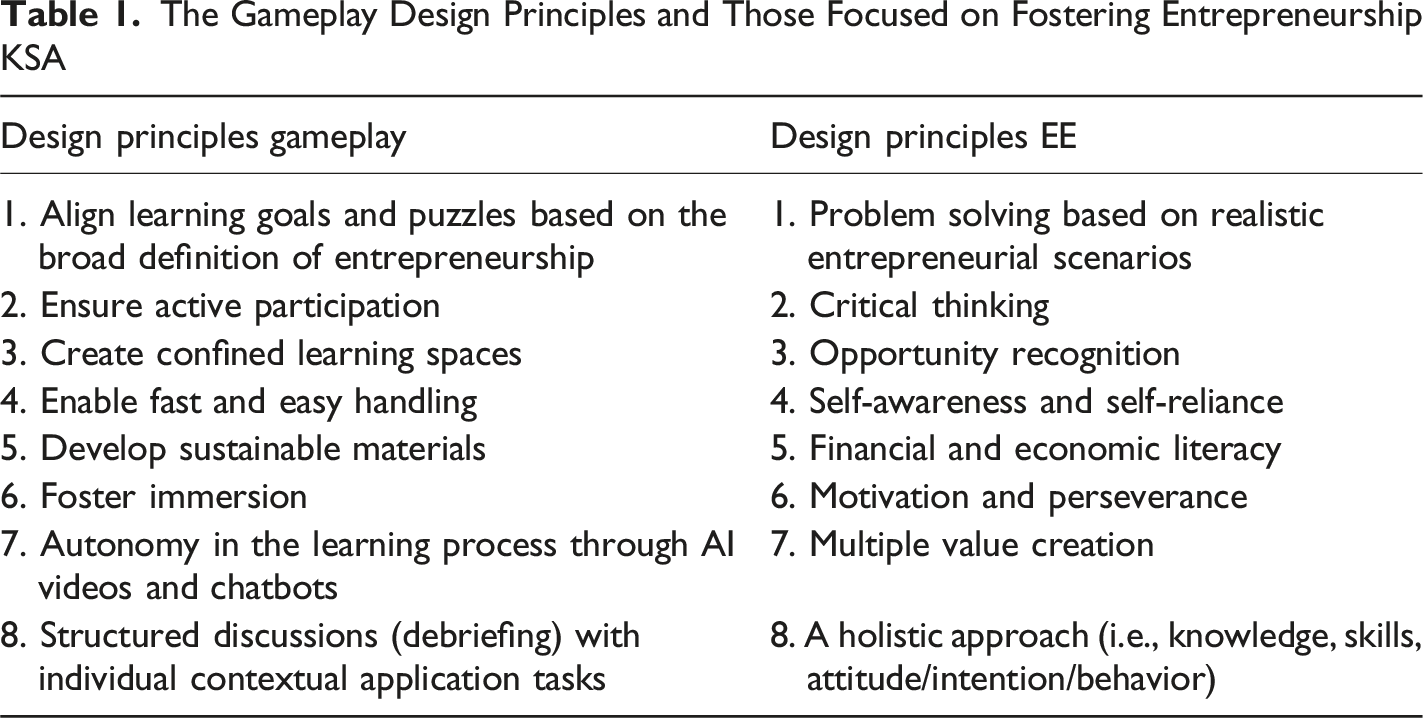
In line with this holistic view, this study uses the following design principles for shaping EE: problem-solving skills, critical thinking, opportunity recognition, self-awareness and self-reliance, motivation and perseverance, financial and economic literacy, multiple value creation, and a holistic approach. At the content level, these principles form the foundation for developing EEGs within SE.
Design principles Gameplay
EEGs are increasingly used at all educational levels to increase engagement and promote the development of subject-specific knowledge and broader skills such as problem-solving, collaboration, and critical thinking (Taraldsen et al., 2022; Veldkamp et al., 2020). In SE, Grepperud (2025) identifies four primary forms of EEGs: pop-up escape rooms (temporary classroom games), puzzle boxes (mobile, reusable escape boxes), digital escape games (online formats for blended or distance learning), and stationary escape rooms (permanent, themed spaces). The most flexible form is EEGs in puzzle boxes, also known as Nicholson’s and Cable (2020) breakout boxes, because of their mobility and reusability (Nicholson & Cable, 2020). Because contextual factors such as time, group size, and available resources are of additional importance for SE, we chose the form of Puzzle Boxes. These boxes are compact, adaptable to smaller groups, require relatively few resources, and typically have shorter playtimes, making them particularly suitable for implementation in secondary classrooms (Grepperud, 2025).
Veldkamp et al. (2020, 2022) distinguish between linear and hybrid puzzle structures in EEGs. On the one hand, linear structures consist of sequential tasks, particularly for beginners, scenarios with limited teaching time, or highly directed learning objectives. On the other hand, hybrid structures combine linear and parallel puzzle solutions, allowing for greater complexity and collaborative opportunities. Since this innovative teaching approach is relatively new for high school students, we chose linear puzzle solutions for our EEGs. Also, Makri (2021) argues that a linear puzzle structure helps orient students toward learning goals and facilitates the organization and evaluation of games. These games contain sequential tasks, where solving one puzzle gives access to the next. Each group completes the same set of puzzles, the sequence in which they encounter them varies, resulting in differentiated game trajectories.
Makri (2021) recommends a group size of three to six participants for EEGs because this size promotes active engagement and collaboration. Keeping teams intentionally small helps reduce free riding and encourages equal participation (Veldkamp et al., 2020). Therefore, we chose groups of three students with a session duration of 15 minutes. This approach is consistent with the findings of Makri (2021), that suggest that a structured time frame increases engagement and creates a sense of urgency, and reflects the design principle of confined learning spaces in educational escape rooms (Veldkamp et al., 2020). Moreover, this duration aligns with typical attention spans of high school students and the commonly used 50-minute lesson structure in schools.
Furthermore, according to Makri (2021), the role of the teacher is crucial in facilitating both the play process and its connection to learning objectives. Veldkamp et al. (2022) emphasize the importance of effective transitions in and out of play and position teachers as a bridge between the play experience and reflective learning. Their guidance aims to support learning without being overly influential. An essential component of experiential learning environments is that students exercise autonomy during play. To enhance this autonomy, we implemented a hint management system in which the facilitator, usually the teacher, provides hints to help students with challenges. However, the literature shows facilitators often find this task demanding, as they must simultaneously observe students, monitor their progress, and intervene when necessary (Martina & Goksen, 2022).
Artificial intelligence (AI) in education offers a possible solution. A widely used AI tool in educational environments is the chatbot system (Clarizia et al., 2018; Gokcearslan et al., 2024), which acts as a conversational agent that provides immediate, real-time responses to users. A notable example is Khanmigo, an AI-powered educational assistant specifically designed to provide rapid feedback and facilitate complex learning interactions through personalized guidance and support. AI chatbots increase student autonomy and encourage more active and independent learning experiences. With customized content, real-time feedback, and interactive assistance, students can take control of their educational journey (Fotaris & Mastoras, 2022; Guckian et al., 2020). In addition to the use of chatbots, AI-generated video messages from entrepreneurs were incorporated to enhance the learning experience and foster immersion, consistent with the design principle of fostering immersion in educational escape rooms (Veldkamp et al., 2020).
Each EEG ends with a structured debriefing, which explicitly links to the learning objectives for developing higher-order thinking skills (Makri, 2021). This is necessary to ensure students do not view the escape room as a fun activity without sustainable learning outcomes (Veldkamp et al., 2022). This structured debriefing connects the game to the curriculum. It promotes the transfer of learning to other contexts (Kneppers et al., 2012), which aligns with van Gelderen (2020), who argues that practical assignments in EE are only effective if they are integrated into a cyclical learning process, where reflection leads to behavior change and mindset development. With this perspective in mind, in addition to structured debriefings for each EEG, we designed processing assignments to help students gain experience within their context.
The Gameplay Design Principles and Those Focused on Fostering Entrepreneurship KSA
Phase 2: Design and Construction
This section outlines the EEGs designed based on design principles grounded in theoretical insights and contextual analysis. These design principles are derived from experiential learning theory (Kolb et al., 2014), which emphasizes active learning, reflection, and the practical application of knowledge. The first version of the EEGs (Prototype I) includes an overall description, associated learning objectives, and the content elements of each game.
Table 1 summarizes the design principles, distinguishing between gameplay-related and content-related principles in the context of entrepreneurship. Table 2 illustrates how each principle has been applied in the design of the individual EEGs. The rows represent various design principles, while the columns demonstrate how each principle has been integrated into the EEGs. Table 2 can be found in Appendix 1.
Structure of the EEGs
Each EEG is built around the concept of a puzzle box, emphasizing mobility and reusability, and follows a linear puzzle structure (Nicholson, 2015; Veldkamp et al., 2020). Students begin with a relatively simple game designed to facilitate quick initial success. Each closed game requires players to crack a three-digit code on a case that contains the next challenge needed to advance.
The second game, which is accessed after cracking the first case, involves an open assignment where students provide advice to an entrepreneur. The teacher evaluates this assignment not on its accuracy but instead on the level of effort and elaboration demonstrated by the student. If a student shows sufficient effort, they receive “the teacher’s hint,” leading to a final challenge that opens access to the third and last game: another closed game that also requires cracking a three-digit code to unlock the final case.
Upon completing this final assignment, students engaged in individual reflection during the second and last case, allowing them to prepare for a plenary debriefing. Meanwhile, other groups can continue finishing the game if they still have time. Once time is up, a class debriefing takes place, followed by an individual contextual application task. This task aims to help students apply the KSA gained during the EE experience to real-world situations in their own environments. The program is called Escape Games in EE, with each game named after the entrepreneur it represents. Table 3 outlines the storyline, learning objectives, and the individual contextual application task for each game. This table provides insight into how each EEG was tailored to support specific entrepreneurial competences within a narrative framework, and can be found in Appendix 2.
Phase 3: Evaluation and Reflection
The purpose of this evaluation phase is to gain insight into the usability, applicability, and preliminary effectiveness of the developed EEGs in an educational environment for students aged 14–16 enrolled in the theoretical learning pathway of preparatory vocational education in the Netherlands. The process of design, development, testing, and evaluation consists of multiple cycles. Within the framework of EDR, this phase is crucial for assessing the extent to which the developed prototype (Prototype I) aligns with the previously established design principles and learning objectives (Mafumiko, 2006; McKenney & Reeves, 2021).
“Prototypes” refer to products that were developed before the final product is fully implemented (Nieveen, 1999). When creating escape games for EE, a series of prototypes were developed according to the process described by Mafumiko (2006), which has proven effective in previous educational research (Amagir et al., 2019; Kirwan et al., 2022; Nguru, 2023).
Teachers implemented these prototypes as EEGs and provided feedback on their usability and alignment with the learning objectives. Students participated in classroom field tests, while experts offered their insights through professional development workshops (PDW), online questionnaires, and interviews. During this phase, we carried out four consecutive rounds of evaluation and reflection. The first round involved a teacher evaluation. Next, we conducted a classroom try-out involving two schools, each with a class of approximately 25 students, followed by a teacher evaluation. In the third round, we organized a panel session with experts and conducted an expert evaluation. Finally, we conducted a second classroom try-out involving six schools, each with a class averaging 22 students, and again completed an evaluation by the involved teachers (Mafumiko, 2006). During each phase, we made adjustments and improvements based on empirical evidence gathered through observations, digital questionnaires, panel discussions, and interviews with students, teachers, and experts. We assessed effectiveness through classroom observations, student questionnaires, and the analyses of debriefing recordings. Feasibility was evaluated using teacher questionnaires and expert reflections on usability and instructional fit. Figure 2 and the following paragraphs provide a detailed description of the four rounds of evaluation and reflection. The development process of prototypes (based on Mafumiko, 2006)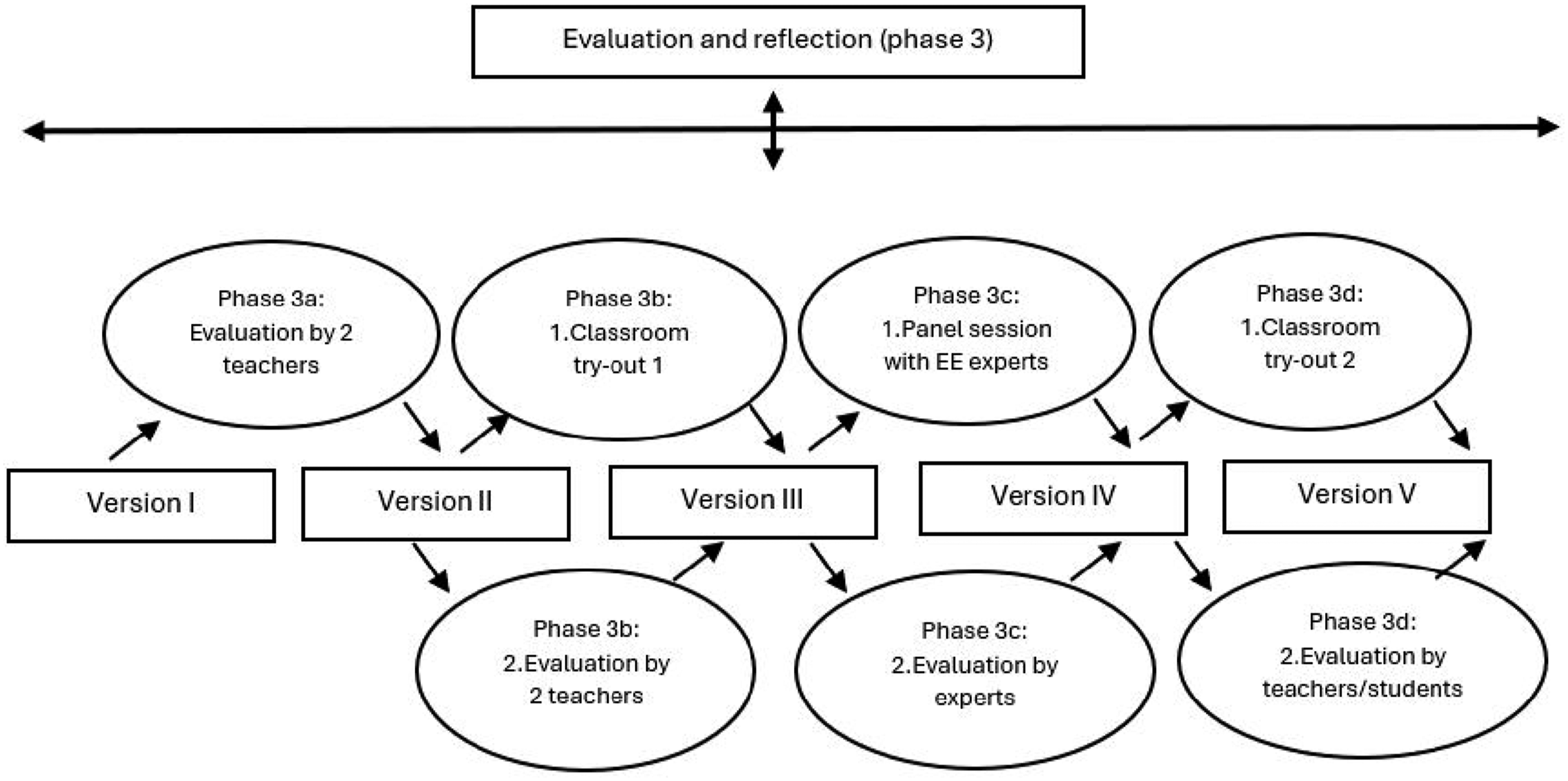
Phase 3a: Evaluation by Teachers
Several experienced teachers evaluated the first version of the escape games (Version I), with an average of two teachers per game, who provided feedback through a questionnaire in Qualtrics or by mail or phone (Appendix 3). These evaluators had diverse areas of expertise, including research in entrepreneurship, games, and artificial intelligence, as well as practical teaching experience in games and entrepreneurship. They provided feedback on several aspects of the EEG: the accuracy and relevance of the content, its alignment with the curriculum, its feasibility within a lesson hour, and the clarity of the game instructions. This feedback resulted in content and instructional adjustments for Version II.
Phase 3b: Classroom Try-Out 1 & Evaluation by Teachers
The EEGs were tested at two different high schools in the Netherlands. The first school primarily consisted of native-born students with no migration background. In contrast, the second school in Amsterdam had a predominantly non-Western Dutch student population. This selection of schools was intentional, ensuring that the language level of the EEGs aligned with the students’ language proficiency, regardless of their background.
The teachers who tested the EEGs were experienced economics teachers, each with over ten years of teaching experience. The teachers observed how students interacted with the game, focusing on aspects such as collaboration, handling of equipment and materials, and the debriefing process. They also evaluated the students’ responses to the lesson, focusing on content, alignment with the curriculum, requirements, and overall feasibility.
The data collected included an observation form filled in by the first author, who attended all the tests and brief debriefings with the students, as well as the same evaluation form (Appendix 3), offering valuable practical insights from real classroom settings. This feedback led to improvements in the pacing of the game, textual adjustments, content simplifications, and modifications to the debriefing instructions, resulting in Version III of the game.
Phase 3c: Panel Session with EE Experts & Evaluation by Experts
In this phase, we discussed Version III during a Professional Development Workshop (PDW) at an international educational conference.
During the PDW, we played an escape game titled “Escape Sabrina.” After the game, we gathered feedback from participants through an evaluation that focused on the effectiveness of the escape game, entrepreneurial competences, and the use of games as a didactic method for teaching entrepreneurship. This feedback was gathered through four structured reflection questions, referred to as “tips and tops,” detailed in Appendix 4. A group discussion was held at the end of the session. The suggestions and recommendations from this feedback were incorporated into all subsequent games, leading to the development of Version IV.
We also gathered specific feedback from various teacher (researcher) experts: one expert in financial literacy, two with expertise in artificial intelligence in education, one who specializes in EEGs for secondary economics education, and two experts in EE. Based on their input, we modified several game elements.
Phase 3d: Classroom Try-Out 2 & Evaluation by Teachers
Version IV was presented to various teachers and teacher-training students, who provided feedback on the game using the same questionnaire as included in Appendix 3. The six games were tested in classroom environments at six different schools across the Netherlands. The selected schools varied in geographic location, including both urban and rural areas, as well as in student demographics, encompassing different cultural and socioeconomic backgrounds. This diverse selection aimed to explore how the games perform in various classroom settings. Six teachers were involved in the second try-out: two were enrolled in a bachelor-level teacher education program, two in a master’s program for teacher education, and two were experienced teachers with over ten years of classroom experience.
We examined the following key areas: the use of new materials (suitcases with locks), refining the game content, simplifying the language and reducing the amount of text, ensuring that teachers could effectively follow the instructions provided (using instructional videos, PowerPoint presentations, etc.), improving gameplay, and evaluating the effectiveness of debriefings and processing assignments on learning outcomes. For the latter, in addition to observations, audio clips from the debriefing sessions were also collected. The collected data led to the development of version V, which is considered the final prototype in this cycle.
Data Collection & Analyses
Data collection involved several iterative cycles, during which the prototype was refined into its final version. This process included (digital) questionnaires for both teachers and students, observations, panel sessions with experts, and audio recordings of the debriefing sessions. The qualitative data collected were analyzed using thematic analysis as outlined by Braun and Clarke (2006). This analysis followed a series of systematic steps: (1) becoming familiar with the data, (2) generating initial codes, (3) searching for themes, (4) reviewing themes, (5) defining and naming themes, and (6) reporting the results. The first author, who is a former secondary school teacher, a lecturer and researcher in EE, conducted inductive coding and thematic analysis using MAXQDA. This analysis focused on identifying recurring patterns and significant concepts within the data. The process involved both open and axial coding to organize meaningful data segments into themes and subthemes. In the next stage, the identified patterns were interpreted through the lens of the design principles for EEGs, paying particular attention to their alignment with entrepreneurial learning objectives and game mechanics. To ensure objectivity and minimize interpretative bias, the preliminary codes and themes were discussed and collaboratively analyzed by the entire research team. This collaborative effort was aimed to reach consensus on the interpretation and naming of the themes. This approach aligns with the principles of reflexive thematic analysis, emphasizing transparency and joint reflection, thereby strengthening the credibility of the findings.
As the research involved underage students, the research design was reviewed and approved by the institutional ethics review board of (university, country) on 19 September 2024 with approval number ERCIC_602_27_08_2024. Additionally, active, informed consent was obtained from parents for the collection of all data through letters that required their signatures and returns. Participant data was anonymized and handled confidentially. Below, we detail each instrument used in the study.
Questionnaires for teachers and students: We conducted digital evaluation sessions with both teachers and students using separate questionnaires. The teacher questionnaire is included in Appendix 3. The responses from teachers were transcribed and analyzed using MAXQDA.
During the tryouts, questionnaires were also administered to students. Since we cannot draw reliable conclusions about the development of KSA in entrepreneurship based on a single gaming experience, the questionnaires primarily served as exploratory tools. They were designed to assess students’ perceptions of the EEGs, their use of the chatbot, and their attitudes toward entrepreneurship. We further explored notable responses through discussions with both teachers and students conducted individually and in groups.
Observations: During the tryouts, the first author made observations to gain insights into both the content and gameplay elements, as well as the pedagogy and practical feasibility of the EEGs in the classroom. The observer recorded notable events, behaviors, interactions, success factors, and obstacles in a logbook during the EEGs and the debriefing.
The observations primarily focused on the design principles of the games, including aspects of both content and gameplay (phase 2), as well as factors such as student engagement, the clarity of the texts, the functionality of materials (locks, chatbot, clues), task division within groups, group size, and interactions during the debriefing.
Panel Sessions with Experts: One of the EEGs, specifically the “Escape Game Sabrina,” was evaluated during a professional development workshop (PDW) at the 2024 3E conference, where participants played through the entire EEG. The collected data included anonymized notes on Post-It and insights shared during plenary reflection sessions. These reflections were guided by four open-ended questions and can be found in Appendix 4.
Audio clips: In the final try-out, audio recordings were made of the debriefing sessions for the EEGs. These audio clips were transcribed and coded to enhance the manual regarding debriefing support. In addition, two expert interviews were recorded, transcribed, and analyzed using the same coding procedure.
Chatbot: Data was collected anonymously through the chatbot, which students accessed via unique links without any login requirement. All interactions were automatically recorded and exported in Excel format. The data was subsequently transcribed, imported into MAXQDA, and inductively coded to identify emerging categories and patterns in student prompts. An overview of the coding categories and examples of coded segments can be found in Appendix 5.
Results
Table 4 provides an overview of the developmental iterations of the EEGs, highlighting both game-based and content-related components, and can be found in Appendix 6. The table summarizes the key modifications made at each stage of the design process, along with the corresponding feedback that informed these changes. This includes adjustments to the narrative structure, challenge design, instructional clarity, integration of learning objectives, and the implementation of digital scaffolding tools, such as the chatbot. Each iteration was guided by feedback from classroom trials, teacher evaluations, and expert consultations, ensuring a continuous alignment between pedagogical goals and game dynamics within the EDR framework.
This section has addressed the final two questions of the evaluation phase, where both teachers and students expressed their interest in the feasibility and usefulness of EEGs in the context of EE. Participants found the approach to be innovative and appreciated the variety it provided. They demonstrated a high level of engagement and offered several suggestions for improving the design of the EEGs, which are summarized in Table 4. Specifically, to support the development of entrepreneurial KSA, they identified opportunities to use the EEGs as preparation for final exams, to develop content for practice-oriented programs in SE, and to serve as adequate preparation for further education.
Discussion
This design study addresses gaps in the literature by developing a concrete, reproducible design specifically aimed at enhancing entrepreneurial KSAs in SE. The design is based on the principles of EE and incorporates game elements, developed using the EDR approach. The EDR approach is an effective method for developing educational programs because it systematically connects scientific theory with practical application, leading to innovative and practice-oriented curricula. This method employs iterative cycles and collects data from various sources, allowing for triangulation and providing valuable insights in the development of the EEGs. This approach also ensured that we aligned our work with contextual factors and design principles established in the literature.
Pedagogical Implications of EEGs
While the literature often highlights the use of games to boost motivation (Fotaris & Mastoras, 2019; Martina & Göksen, 2022), EEGs are particularly beneficial when there is a clear connection to the learning objectives focused on developing KSAs in the context of EE (Martina & Göksen, 2022; Veldkamp et al., 2020).
Consequently, we included one open-ended question per game, in addition to the usual closed-ended questions in EEGs, to strengthen the link to the learning objectives, particularly for developing higher-order thinking skills (Makri, 2021). In line with Veldkamp et al. (2022), who demonstrate that important learning outcomes from escape rooms often emerge in this phase, where experiences are linked to underlying concepts, we explicitly analyzed this component during the debriefing. Furthermore, we incorporated visible intermediate steps within the games themselves, consistent with the concept of supporting the zone of proximal development (ZPD) introduced by Vygotsky (1978). This approach may support students in developing a more gradual understanding of complex concepts and financial challenges. Furthermore, we linked each game to relatable, entrepreneurial characters who connect with students’ backgrounds, inspiring them to act entrepreneurially in the face of the challenges posed by the entrepreneurs (Baggen et al., 2022; Naia et al., 2014).
Theoretical Contributions to Entrepreneurship Education and Educational Design Research
In addition to its practical value, this study advances our understanding of EE and EDR by refining how experiential learning is conceptualized and operationalized in secondary education. Next to descriptive, substantive and declarative theoretical knowledge (McKenney & Reeves, 2013), EDR also produces prescriptive knowledge that facilitates a design with specific goals (Euler, 2017). A frequently mentioned gap in the literature is the lack of understanding of how theories translate into pedagogical frameworks (Collins et al., 2016). This study addresses this gap by drawing on Kolb’s experiential learning theory (1974). Our derived design principles not only connect entrepreneurial KSAs, such as problem-solving, critical thinking, and opportunity recognition, to game-based interventions but also clarify how these principles extend and specify existing pedagogical frameworks. In this way, our findings provide targeted empirical feedback that sharpens the translation of experiential learning theory into actionable, classroom-ready guidelines for EE. As such, we show how theory can effectively be translated to practical designs for both educators and students (Bennett et al., 2007). Finally, this study directly responds to the two key implementation barriers identified in the introduction. First, the escape game was designed to function within the practical constraints of regular secondary education, requiring no specialist knowledge and remaining feasible despite limited teaching time and large class sizes. Second, the intervention was explicitly aligned with existing curriculum goals, addressing the concern that EE activities often fail to connect with the broader educational program (Grepperud, 2025). Together, these design choices demonstrate that the barriers outlined in the introduction are not inherent to experiential EE, but can be systematically addressed through deliberate, principle-driven design.
Implementation Challenges
The EEGs demonstrated potential to increase engagement and develop entrepreneurial KSAs. However, their implementation revealed several challenges, particularly during debriefing sessions. These sessions posed challenges for both teachers and students, especially when it came to connecting the gaming experience to educational objectives. However, these structured debriefings are crucial for linking the game to the curriculum and facilitating the transfer of learning to other contexts (Kneppers et al., 2012; Veldkamp et al., 2020). Initially, teachers faced challenges in conducting these debriefings due to their lack of experience and classroom management issues. After an intensive gaming session, students also encountered difficulties; they found it hard to listen to the teacher, particularly when the teacher seemed uncertain, which made it challenging for them to connect the learning outcomes to the KSAs, as indicated by individual homework assignments. Despite these obstacles, both teachers and students acknowledged the importance of these structured debriefings.
It is essential to recognize that the effectiveness of this pedagogical approach largely hinges on the quality of the debriefing itself. Teachers must adeptly guide reflection, ask thought-provoking questions, explicitly connect experiences to KSAs, and motivate students to engage in their individual contextual application tasks. This approach aligns with Kolb’s reflective observation phase, in which meaningful learning occurs only when experiences are thoroughly analyzed. Therefore, effective debriefing serves as a crucial link between experiential play and learning outcomes (Veldkamp et al., 2022; Tercanli et al., 2021; Kolb et al., 1974). The successful implementation of reflective practices requires careful planning and targeted professional support, enabling teachers to take on a coaching role and effectively guide students in analyzing and deepening their experiences.
Technological Innovation
Technology is essential for improving immersion, interaction, and learning outcomes in educational escape rooms, as noted by Makri (2021). In this intervention, technology included AI-generated introductory videos and an AI chatbot that assisted students during the gameplay. These tools offered new opportunities for narrative immersion and for managing hints, but they also posed specific challenges. Many students and teachers were first introduced to AI support in education during this intervention, which led to a range of reactions and varying levels of enthusiasm. While students were initially optimistic, it soon became clear that they had difficulty formulating practical questions for the chatbot. This struggle was caused by language barriers, such as lengthy texts and complex concepts, uncertainty about how to interact with the chatbot, or even simple typographical errors. These challenges highlight the need for guidance in using AI tools, as some students found the interactions to be less meaningful or supportive. Although there are few studies on the use of chatbots in SE, recent research has explored their application in higher education (Clarizia et al., 2018; Gokcearslan et al., 2024). When integrated into educational settings, chatbots can promote student autonomy, support learning, and reduce teachers’ workload. This work contributes to the ongoing discussion about the meaningful integration of AI tools in education (Hwang & Chang, 2021; Okonkwo & Ade-Ibijola, 2021; Zhang & Aslan, 2021).
Conclusion
In conclusion, EEGs offer significant benefits for SE by increasing student motivation and supporting the development of entrepreneurial KSAs. They offer an innovative pedagogical strategy that can be easily integrated into traditional learning environments, making them a valuable resource for educators teaching entrepreneurship in SE. The practical effectiveness of EEGs not only enriches the learning experience but also contributes to the existing literature on experiential and game-based learning. Ultimately, these findings provide educators with a practical, ready-to-use tool that combines game-based learning with the development of entrepreneurial KSAs.
Limitations
As a design study, the findings are specific to the (Dutch) context and may not be directly applicable to other international educational settings. Because of the exploratory and qualitative nature of this study, our findings are intended to offer analytical insights with the potential for transferability rather than making generalizable claims, in accordance with established qualitative research principles (Tracy, 2010). Consistent with McKenney and Reeves’ (2013) observation that stakeholder variability is intrinsic to EDR, differences in expert knowledge and experience in this study may have influenced feedback processes and, in turn, the refinement of the EEGs. The evaluation focused mainly on qualitative indicators of feasibility and perceived effectiveness, rather than on measured learning gains. While this approach aligns with the objectives of Educational Design Research (EDR), it limits our ability to determine student learning outcomes.
Further Research
To address among others the limitations noted above, further research is needed to evaluate the actual impact of EE on students’ KSAs. Future studies should also explore how teacher education programs can better prepare teachers to implement experiential and game-based learning pedagogies, particularly in the design and facilitation of effective debriefing sessions. Additionally, it should be examined how these programs can enhance the quality of AI tools that support gameplay and reflection.
Supplemental Material
Supplemental Material - Developing and Implementing Educational Escape Games on Entrepreneurship in Secondary Education
Supplemental Material for Developing and Implementing Educational Escape Games on Entrepreneurship in Secondary Education by Sultan Göksen-Olgun, Wim Groot, Ingrid Wakkee, Richard A. Martina in Entrepreneurship Education and Pedagogy
Footnotes
Acknowledgments
The authors would like to express their gratitude to the participating schools, teachers, experts, and students for their cooperation in the research and in the development of educational escape games for entrepreneurship in secondary schools. Their valuable feedback has contributed significantly to refining and enhancing these educational escape games.

Ethical Approval
This study received approval from the Ethics Review Board of Maastricht University, Maastricht, The Netherlands, on 19 September 2024 (approval number: ERCIC_602_27_08_2024).
Consent to Participate
Prior to data collection, written informed consent was obtained from the parents of all participating students.
Funding
This study received support from the Netherlands Organization for Scientific Research (Grant No. 023.015.011).
Declaration of Conflicting Interests
The authors declared no potential conflicts of interest with respect to the research, authorship, and/or publication of this article.
Data Availability Statement
The data that support the findings of this study are available from the corresponding author upon request.
Use of Artificial Intelligence (AI)– assisted technologies
The authors used ChatGPT 4.0 (OpenAI) to support the development of individual contextual application tasks embedded in each game and to refine the manuscript’s language and clarity. All AI-generated suggestions were critically reviewed, adapted, and finalized by the authors to ensure pedagogical relevance, accuracy, and alignment with the learning objectives.
Supplemental Material
Supplemental material for this article is available online.
Note
References
Supplementary Material
Please find the following supplemental material available below.
For Open Access articles published under a Creative Commons License, all supplemental material carries the same license as the article it is associated with.
For non-Open Access articles published, all supplemental material carries a non-exclusive license, and permission requests for re-use of supplemental material or any part of supplemental material shall be sent directly to the copyright owner as specified in the copyright notice associated with the article.
