



Abstract
Physical innovation spaces foster students’ entrepreneurial mindset by leveraging the synergy of co-locating entrepreneurship education, (in)formal student activities, and external events. However, academic research remains inconclusive on whether students’ design requirements for these spaces are universal or context-specific. Seizing the opportunity presented by the opening of a new university mixed-use entrepreneurial space, an action research study was initiated following the participatory double diamond process of design thinking. The first phase (2022–2023) involved nine focus groups (N = 253), while the second phase (2023–2024) consisted of twelve prototyping and testing sessions (N = 99). A subsequent comparison of students’ design requirements with features of other innovation spaces (N = 10) as well as findings from an extensive post-empirical literature review indicated that—contrary to the content and pedagogy of entrepreneurship education—students’ needs regarding entrepreneurial space appear essentially similar, with only their relative importance exhibiting some contextual variation. Further research is needed to validate the consistency of these requirements and to explore how contextual factors, such as culture, economy, and organizational structure, influence their prioritization.
Keywords
Introduction
In recent years, there has been an accelerating trend toward the construction of dedicated infrastructure to enhance entrepreneurship education at universities (Pittaway et al., 2017). Following trends in entrepreneurship pedagogy, universities and business schools now seem to have a genuine desire to provide dedicated physical space for entrepreneurial learning (Belitski & Heron, 2017). These creative, uniquely adaptable learning environments provide tools and materials, which can be physical and/or virtual, giving students the opportunity to explore, design, play, tinker, collaborate, inquire, experiment, solve problems and invent (Loertscher et al., 2013). Innovation spaces are expected to stimulate students’ entrepreneurial competences through synergy effects of co-locating entrepreneurship education, entrepreneurial (in)formal student activities, and events from relevant external parties (Oksanen & Ståhle, 2013). As illustrated in the European EntreComp framework, these competences are considered as highly necessary for all members of a knowledge-based society (see Bacigalupo et al., 2016), contributing overall economic development through increased entrepreneurial behavior (Bosma et al., 2021).
Previous studies provide various generic design requirements that enhance the success of innovation and entrepreneurship spaces in terms of traction, under categories such as facilitating collaboration, social interaction and community-building, ownership of learning, and inspiring creativity (Caccamo, 2020; Mersand, 2021; Oksanen & Ståhle, 2013; Richardson & Mishra, 2018). However, the literature does not render univocal direction. Research on the physical infrastructure for entrepreneurship is notably scarce (Christensen et al., 2023; Mersand, 2021), with limited research on the performance of those spaces (Pittaway et al., 2020). Moreover, some studies argue that an adequate comprehensive design, in terms of both physical facilities and educational content, requires accurate customization to the user needs to be optimally effective (Oksanen & Ståhle, 2013; Santos et al., 2021).
When the Utrecht University Centre for Entrepreneurship (UtrechtCE) initiated the development of a university-wide innovation space, known as Playground, the authors leveraged this opportunity to conduct an action research project structured around the phases of design thinking (Rösch et al., 2023). The research question driven this action research was: “From the students’ perspective, what are the design requirements for the new university innovation and pre-incubation space?” Following an inductive qualitative approach (Creswell & Poth, 2018), a comprehensive literature review was conducted posterior to the collection and analysis of empirical data, to enhance openness to emergent criteria and avoid potential biases stemming from pre-existing theoretical frameworks. This comparison yielded valuable insights that advance the ongoing discourse surrounding the unresolved question of whether the design principles governing mixed-use entrepreneurial spaces possess a degree of universality or are inherently shaped by specific contextual factors.
Hereafter, the literature framework positions the study within the field of entrepreneurship education, and elaborates the debate surrounding the uniformity versus context-specificity of design criteria for mixed-use entrepreneurial spaces. Afterward, the methodological approach and results are presented. The discussion connects these results to prior research, leading to an answer to the central research question. The paper concludes with a summary of key insights, study limitations, practical implications, and potential directions for future research.
Literature Framework
Tailored Entrepreneurship Education
Over the past two decades, entrepreneurship education has moved well beyond the topics of new venture creation and enterprise understanding for business (economics) and engineering students (Jones & Matlay, 2011), to incorporate now as well a focus on broader forms of entrepreneurial life skills, and stimulating an entrepreneurial mindset among students in any discipline or profession (Hytti & O’Gorman, 2004; Neck & Corbett, 2018; Ramsgaard & Blenker, 2021). At the same time, universities across the globe have become more entrepreneurial in their own right by continuously exploring new and innovative ways to provide students with opportunities to discover their own entrepreneurial potential and motivation. These advancements have led to the creation of more student-centered and experiential learning environments; sometimes part of academic courses and curricula, sometimes non-curricular, such as student clubs or innovation spaces offering pitch competitions or networking events (Winkler et al., 2018).
Scholars have increasingly recognized the imperative of tailoring entrepreneurship education to individual students’ needs, skills, and preferences. Students display diverse learning styles, varying levels of prior experience and domain knowledge, and distinctive resource networks (Vanevenhoven, 2013). This diversity needs to be considered in didactic approaches and pedagogical strategies to foster meaningful and impactful learning outcomes (Blenker et al., 2012). Entrepreneurial learning is supported by a range of stakeholders within the entrepreneurship education ecosystem, an environment that is inherently institution-specific and continuously shaped by evolving needs and available resources (Torrance & Rauch, 2013). As a result, the context in which this ecosystem operates plays a pivotal role in shaping how students understand and engage with entrepreneurial learning (Herholdt-Lomholdt et al., 2024).
In sum, the prevailing consensus is that entrepreneurship education should not adhere to a “one-size-fits-all” approach (Winkler et al., 2018). Physical spaces designed to foster students’ entrepreneurial mindsets are a common non-curricular component of broader entrepreneurship education. This raises the question of to what extent the physical environment in which entrepreneurial learning occurs should also be tailored to meet the diverse needs of learners.
Tailored Spaces for Entrepreneurship Education?
Previous studies identify several key design principles that enhance the effectiveness of mixed-use entrepreneurship spaces, particularly in fostering engagement and traction. One of the most critical factors is facilitating collaboration, as innovation often emerges from fortuitous and interdisciplinary interactions (Caccamo, 2020; Oksanen & Ståhle, 2013). Oksanen and Ståhle (2013) emphasize the role of open layouts and shared workspaces in enabling spontaneous exchanges, while Caccamo (2020) highlights the importance of flexible seating arrangements and access to collaborative tools and resources to support dynamic teamwork. Beyond collaboration, research suggests that environments that foster social interaction and peer support significantly enhance engagement and knowledge sharing (Mersand, 2021; Oksanen & Ståhle, 2013). Entrepreneurial community-building is reinforced through strategically designed interaction zones, such as informal meeting areas and communal lounges, which facilitate networking and relationship development. Furthermore, studies emphasize the need for spaces that support self-regulation and ownership of learning (Caccamo, 2020; Mersand, 2021). This can be achieved through modular workstations that allow users to customize their work environments and comprehensive learning repositories that enable autonomous exploration and skill development. Finally, stimulating physical design plays a crucial role in inspiring student creativity (Richardson & Mishra, 2018). Oksanen and Ståhle (2013) suggest that elements such as natural light, vibrant colors, and interactive materials can foster a more innovative and cognitively stimulating environment, encouraging creative problem-solving and ideation.
However, these common design requirements do not constitute a definitive framework. This is, in part, due to the limited body of research on the physical infrastructure of entrepreneurship education (Christensen et al., 2023; Mersand, 2021), which makes it difficult to draw conclusive insights regarding the relative effectiveness of different spatial arrangements (Pittaway et al., 2020). Moreover, as previous studies have demonstrated that entrepreneurial pedagogy must be tailored to the specific needs, skills, and networks of learners, it stands to reason that spatial configurations may also yield varied effects depending on students’ idiosyncratic backgrounds. Indeed, some studies explicitly argue that comprehensive design—encompassing both physical facilities and educational content—is highly context-dependent, requiring careful customization to user needs in order to achieve optimal effectiveness (Santos et al., 2021). For instance, Oksanen and Ståhle (2013) emphasize that for innovation spaces to be truly effective, they must visibly align with the unique value frameworks of their intended users and the broader organizational context. This alignment ensures that the physical environment resonates with users’ values and reflects the culture of the organization, thereby fostering a sense of ownership and engagement among participants. By integrating these idiosyncratic values, the space not only supports the specific needs of its users but also strengthens their commitment to the innovation processes occurring within it.
In summary, the question of whether design principles for mixed-use entrepreneurial spaces are universally applicable or inherently context-dependent remains unresolved. In light of this ambiguity, action research emerged as a suitable methodological approach, anticipated to generate additional insights and practical value. The rationale and structure of this approach are detailed in the following section.
Methodology
Study Paradigm and Approach
This study falls under the pragmatic paradigm of action research (Dewey, 1938; Lewin, 1946), where knowledge is considered as interconnected with the one that knows, and thus can be gained through examination of reality through a reflective circle of action and belief (Morgan, 2014; Revans, 1982; Schön, 2017). As such, the paper responds to a previous invitation to do more action research in the context of entrepreneurship education (Winkler et al., 2018). Action consisted of interaction with students in focus groups. Without limitations from an established theory or predefined interpretation framework, in this case a comprehensive list of design criteria, an open and inductive qualitative method was adopted to code data (Creswell & Poth, 2018). Following a reflection moment on what insights were gained, new assumptions (such as “students primarily want to work on their own ideas”) emerged from patterns in the qualitative data, and were iteratively tested in interaction with the users in subsequent rounds. In line with Zawadzki et al. (2020), the study combined elements of pragmatic action research (Coghlan, 2019), that is a focus on dialog, cooperation, and experimentation to reach consensus regarding solutions, with elements of critical action research, that is a participatory development of knowledge and bottom-up development of solutions contributing to the democratization of entrepreneurship education (Johansson & Lindhult, 2008).
The study followed the double diamond process of design thinking, which explicitly challenges early assumptions of the designer about user needs through engagement and empathy with the users (Rösch et al., 2023). The first diamond consists of the discovery phase to collect a wide array of insights related to the preliminary problem definition, and a define phase wherein the problem definition is refined. For this study, data was collected in the academic year 2022–2023 on components that would make the proposed space most likely attractive to students. Subsequently, the second diamond includes a develop phase for finding potential solutions to the refined question, and a deliver phase that results in selection and implementation of a solution after multiple small-scale, iterative tests. For this study, data was collected in the academic year 2023–2024 through the small-scale testing of various prototypes for content and form of the proposed space. As such, the approach can be typified as action research, involving an interactive inquiry process that is both collaborative and data driven (Reason & Bradbury, 2001), to elaborate and re-evaluate insights as they unfold (Creswell & Poth, 2018). This study was conducted in accordance with the Declaration of Helsinki. All student information was de-identified and student consent was not required. Student data is not to be shared with third parties. As such, the study received approval from the Faculty Ethics Committee of the Faculty of Law, Economics, and Governance, Utrecht University, the Netherlands, on August 6, 2024 (approval no. 24-028).
Action Research Project
Utrecht University, a public university in the Netherlands, aims to encourage “the entrepreneurial spirit, innovation and creativity, along with other related skills, among students and employees” (Utrecht University Strategic Plan 2025, n.d). The Utrecht University Centre for Entrepreneurship was founded in 2008 to strengthen the university’s entrepreneurship education ecosystem, operating separately alongside the university business startup incubator (UtrechtInc) and the patent office (Utrecht Holdings). The UtrechtCE adopts a broad perspective on entrepreneurship, where entrepreneurship is about spotting opportunities and daring to act on them in order to create something new that has value for others (Utrecht University Centre for Entrepreneurship, n.d). At the time of data collection, the UtrechtCE activities for students were mainly virtual, realized through its digital communication channels. Low turnover rates between students taking entrepreneurial education to students participating in extracurricular startup programs, in combination with a mission to spread the entrepreneurial mindset throughout the university, triggered the ambition to create a physical entrepreneurial space. In 2022, the UtrechtCE received funding from the university board to implement this, and the future space was to be named “Playground.”
Data Collection
Diamond One: Discovery and Define—Focus Groups
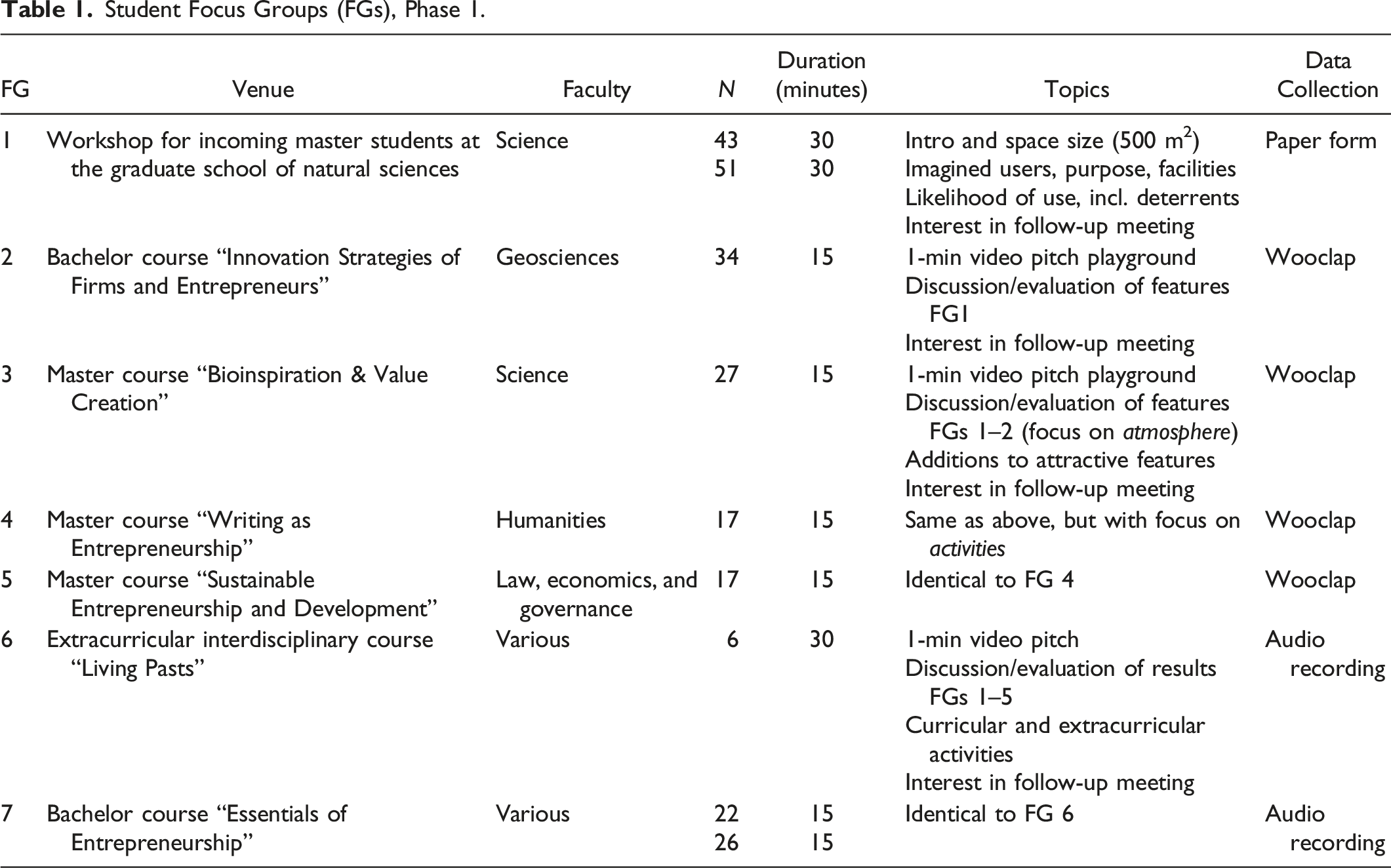
Student Focus Groups (FGs), Phase 1.
Diamond Two: Develop and Deliver—Prototype-Test Sessions
To explore how the desired components could be realized in the actual space, invitations with a Google sign-up form were sent to the 87 participants from the first seven focus groups who had indicated their interest in a follow-up meeting. Additionally, the invitation was distributed to personal contacts of UtrechtCE staff via Instagram and WhatsApp. This way, the invitation was distributed as widely as possible to compensate for “no-shows” (Bryman, 2016). Two one-hour focus groups were organized inside the space designated to become Playground. Participants in the first focus group (N = 6) were asked to individually create a visual prototype with the requirements collected so far, by adding images of atmosphere, decoration, furniture, and people from the internet to Pinterest.com boards, with a digital note to each image motivating their choice. This engaged participants in parallel prototyping, leading to multiple design concepts (Camburn et al., 2017). Participants of the second focus group (N = 4) were asked to individually assess each image in the combined visual prototype of the previous focus group, taking notes of their choices. They could also add images. In the second half of both focus groups, participants verbally motivated their reasoning in a 2-min pitch, and collectively discussed similarities and differences in their arguments. One of the researchers as well as a staff member of UtrechtCE were present to take field notes, and compare these afterward.
To explore and test content for Playground and its effect on community-building of like-minded students, twelve exploratory sessions were organized in 2023–2024. Simultaneously, as a digital place for the Playground-community to stay connected, a WhatsApp group (community platform), was initiated at the beginning of 2023. The sessions and the community platform were promoted via the UtrechtCE website, university student website, information screens across campus, UtrechtCE and university Instagram accounts, entrepreneurship educators, study associations and student organizations.
There were three types of exploratory sessions: content-oriented workshops, inspirational events, and social gatherings. First, the content-oriented workshops each focused on a specific entrepreneurial skill, such as effectual thinking or fundraising, lasted 1.5-h, and aimed to provide students with an active learning opportunity. Second, the inspirational events involved entrepreneurial guest speakers, lasted 3-h and aimed to inspire students with real-life examples of entrepreneurship. Third, the social events included food and beverages, lasted 2-h and aimed for entrepreneurial students to connect in-person. After the workshops, participants were asked to anonymously provide their feedback via post-its on likes and improvement suggestions. At the inspirational and social events, the researcher collected oral feedback of the participants and took field notes while observing the participants.
The community platform was used to share the sessions and to involve students in the design of the sessions. The growth of the Playground-community was measured in terms of member growth of the WhatsApp group. Per new member, the following data was collected (January to December 2023): joining date, name, faculty, and reason to join the WhatsApp group.
Benchmark Data: Observations External Innovation Spaces
To compare design requirements obtained from UU students with those applied elsewhere, benchmarking data of a sample of nine Dutch and one Swiss university innovation spaces were collected (Phillippi & Lauderdale, 2018). In the first diamond, each website of the sampled innovation spaces was scanned with regards to the activities that they provide. In the second diamond, three spaces (i.e., TU/e innoSpace, Twente DesignLab, and ETH SPH) were visited by the researcher in-person. At each space, field notes were taken during the tour and conversations with operational staff and student members of the space. Benchmarking spaces were selected by means of purposive snowball sampling (Bryman, 2016), following suggestions of university spaces with similar functions from UtrechtCE employees and members of its network. The Swiss innovation space was specifically included to allow a consideration of the potential effect of national differences on components that made the innovation space attractive to their students.
Data Analyses
Focus Groups: Thematic Content Analysis
The data collected from the focus groups was subjected to thematic content analysis. This systematic classification process of coding and identifying themes or patterns is an appropriate research method for the subjective interpretation of the content of text data (Hsieh & Shannon, 2005). Adapted from methodological indications (Moretti et al., 2011; Vaismoradi et al., 2016), the data herein was analyzed from the expression of participants in text and word through a first level of open coding summarized in a mind-map indicating frequencies through references to individual paper forms. This resulted in a table of codes with frequencies that were subsequently grouped into sub-categories (second level of the coding process) and categories (third level of the coding process). Themes, then, emerged from the identified categories (fourth level of the coding process). This process was iterated after each focus group. Several actions were taken to ensure reliability and validity of the coding process. First, there were regular, reflective debriefings between the researcher collecting the data and the researcher revising data at a distance. Similarly, the emerging code book was reviewed twice at different levels of data integration, once by the researcher at a distance and once by a staff member of UtrechtCE, with qualitative research experience. Feedback on the codes and their categorization was integrated in updated code book versions. When categories and themes had remained unchanged for three subsequent rounds of data collection and analysis, data saturation was established (Glaser & Strauss, 1967).
Prototype-Test Sessions: Thematic Content Analysis and Descriptive Statistics
The text data collected from workshop participants was subjected to thematic content analysis, albeit in a reduced form given the limited amount of text data. The field notes collected at the inspirational and social events were used as descriptive additions to the behavior and perception of the event by participants. Descriptive statistics collected on the members of the WhatsApp group (community platform), excluding UtrechtCE employees and students who exited, was analyzed and visualized with Microsoft Excel.
Observations External Innovation Spaces: Field Note Comparison
The benchmarking material was analyzed per diamond through comparison to the findings obtained from the respective focus groups with UU students. In case of one Dutch innovation space (TU/e innoSpace), the researcher’s field notes were compared with the field notes of UtrechtCE colleagues that had also been present at the respective visit.
Research Process and Results
First Diamond: Identifying Design Requirements for Physical Features and Activities
FG 1—The inaugural focus group aimed to gauge students’ initial reactions and needs. Feedback from 94 participants resulted in a first code book, identifying 238 open codes, leading to 40 sub-categories and 11 categories. Three central themes emerged: “purpose,” “requirements,” and “reasons for failure.” The theme “purpose” delved into participants’ motivation to use the space for learning, connecting, inspiration, exploring ideas, and recharging.
FG 2—Building upon the insights from the first focus group, the second group added 23 new open codes to the code book. Notably, participants expressed a strong desire for specific activities such as “learning from experienced people” (73%), “working on own projects” (65%), and “networking” (62%). Also preferences for a “good atmosphere” (88%) and the particular importance of whiteboards (81%) and screens/monitors (65%) were highlighted.
FG 3—The third focus group expressed a preference for “working” (78%) over “learning” (30%) and “connecting” (57%). Sub-categories in the “expertise” and “atmosphere” categories were further explored. This led to an expansion of the codebook (Figure 1). Again, the importance of the right atmosphere (illustrated in Figure 2) was underscored, as participants indicated an unfavorable working (67%) or social (50%) atmosphere as significant deterrents. Visual extract of the final codebook. The ideal atmosphere at playground (FG3).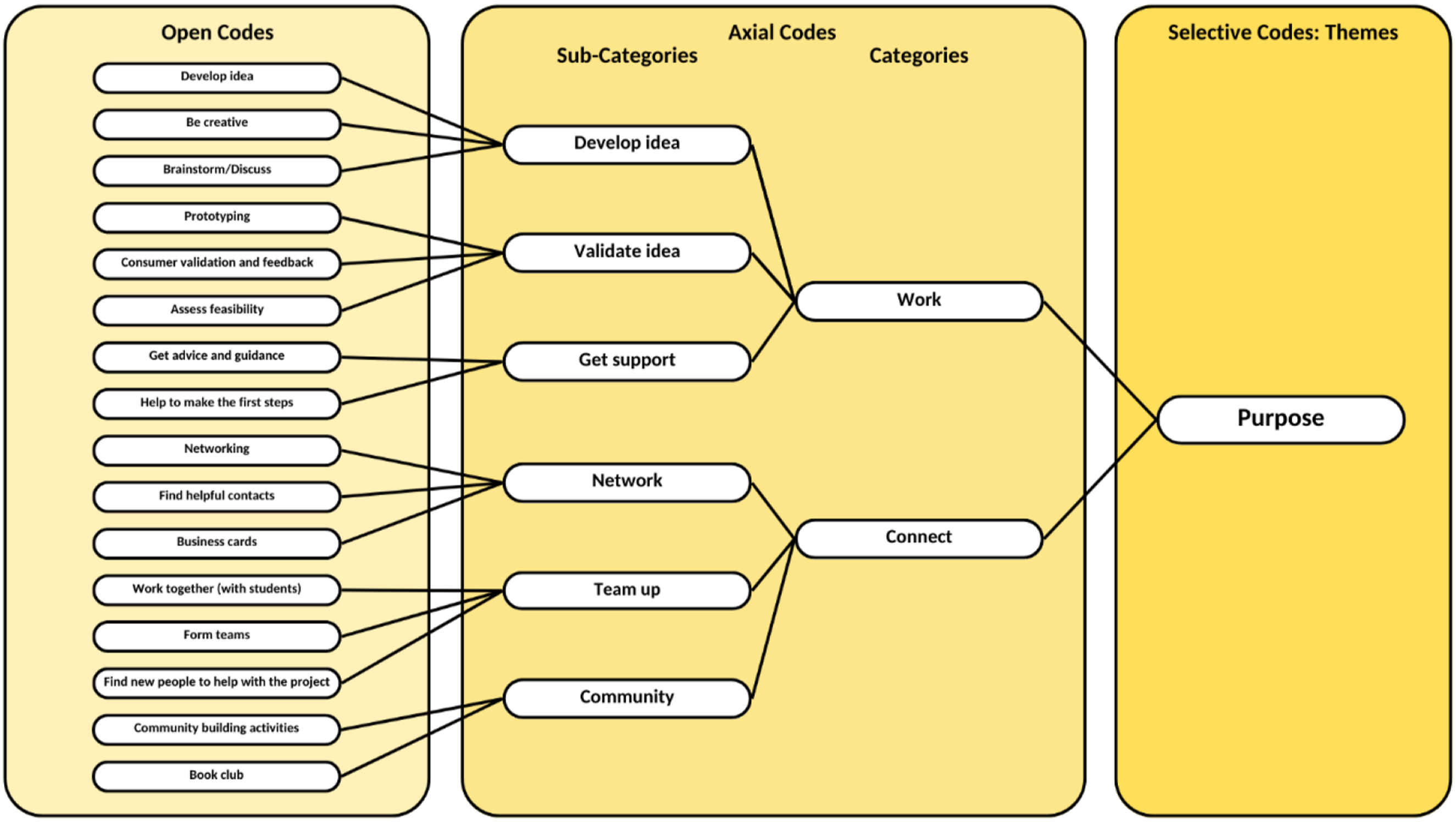

FG 4—The fourth focus group aimed to compare preferences between humanities and science students. Humanities students exhibited significantly less interest. Reasons for not using the space included lack of motivation (62%) and not perceiving added value in their disciplines (38%).
FG 5—The fifth focus group applied an identical questionnaire to the third focus group. Established preferences were confirmed, with most participants wanting to work (78%) and attend workshops. Reasons for not using the space included not feeling ready and an unfavorable atmosphere.
FG 6—The sixth focus group delved into the most prevalent category in the “purpose” theme: “work.” Participants emphasized the dynamic nature of working together on projects, involving group discussions, individual tasks, and collective feedback. Spatial division for group work was highlighted.
FG —The seventh focus group aimed to test insights from the sixth group. Overlapping insights were found, with participants emphasizing group discussion and individual work on defined tasks as equally prevalent work modes, confirming the importance of a good atmosphere and spatial division.
Benchmarking—The Dutch (N = 9) and Swiss (N = 1) innovation spaces visited, offered varied activities such as co-working, coaching, prototyping, workshops, and events. The focus in these spaces aligned mainly with the “work” and “connect” categories identified in the focus groups (Figure 3). “Learning” was not a primary purpose for using these spaces, while this was explicitly highlighted in the UU focus groups. Instead, “getting funding” did emerge as an important aspect, and was subsequently facilitated in several innovation spaces, while not among the design criteria from UU students. The community aspect of like-minded individuals, on the other hand, was a common thread across all innovation spaces. Visual summary of findings, FGs 1–7 (phase 1).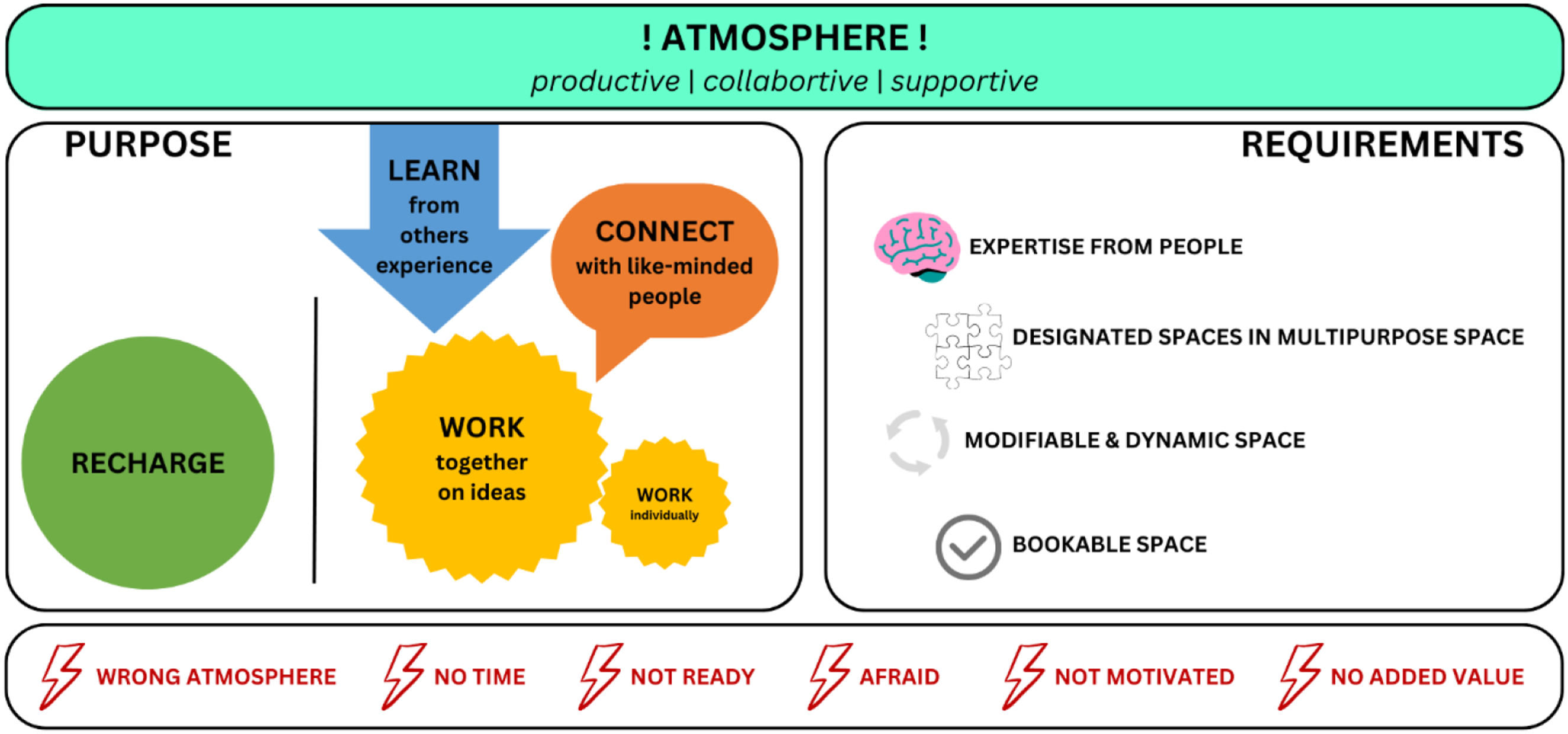
In sum, the findings showed that students mainly wanted to come to the space to work together on ideas, connect with like-minded people, learn by doing with input from others’ experience, and take breaks in a distinct “recharge” space (Figure 3). To do so, they required, amongst others, expertise from people and designated areas within the multipurpose space. Most importantly, the atmosphere had to reflect a combination of productivity, collaboration, and support; otherwise it would be the main reason for students not to make use of the space.
Second Diamond: Building and Testing Prototypes for Physical Features and Activities
Physical Features
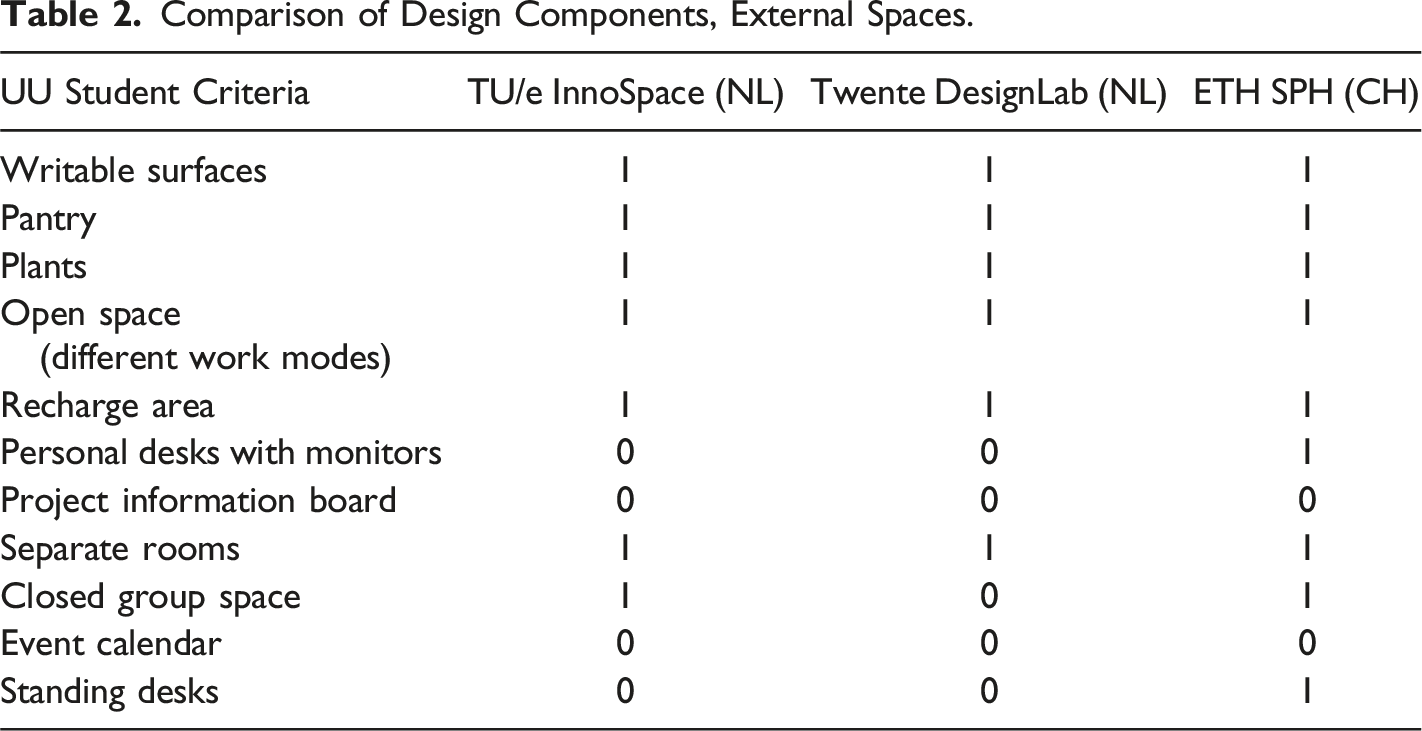
FG 8—Six Pinterest boards were generated, each representing a participant’s vision. Components identified in the images included writable surfaces, pantries or coffee areas, plants, open spaces with various seating formations, opportunities for recharging, personal desks with monitors, stage elements, infrastructure for building products, project information boards, movable furniture, separate meeting rooms, elements of movement, storage shelves, product shops, and the use of warm light. Participants highlighted the importance of spatial division between work and work breaks, and the ability to connect and have conversations was identified as a primary reason for visiting the space. The design needed to feel different from other university spaces, reflecting a shared mindset and values.
FG 9—The 78 compiled images from the prototyping group were presented to a testing group on Miro. The four participants provided their feedback to the provided images on Miro virtually (agree, neutral, and disagree): appreciating components, such as designated (audio-visually separate) working spaces, collaborative areas, recharging opportunities, the availability of coffee/tea, an event space, information boards, and weekly planners. With regards to most important features, high priority was given to personal desks and monitors for group work, and writable surfaces. Additionally, three out of four confirmed the use of recharging (relaxation) areas, separate rooms for different purposes (incl closed groupwork space), and an event calendar.
Comparison of Design Components, External Spaces.
Activities
Prototyped Activities.
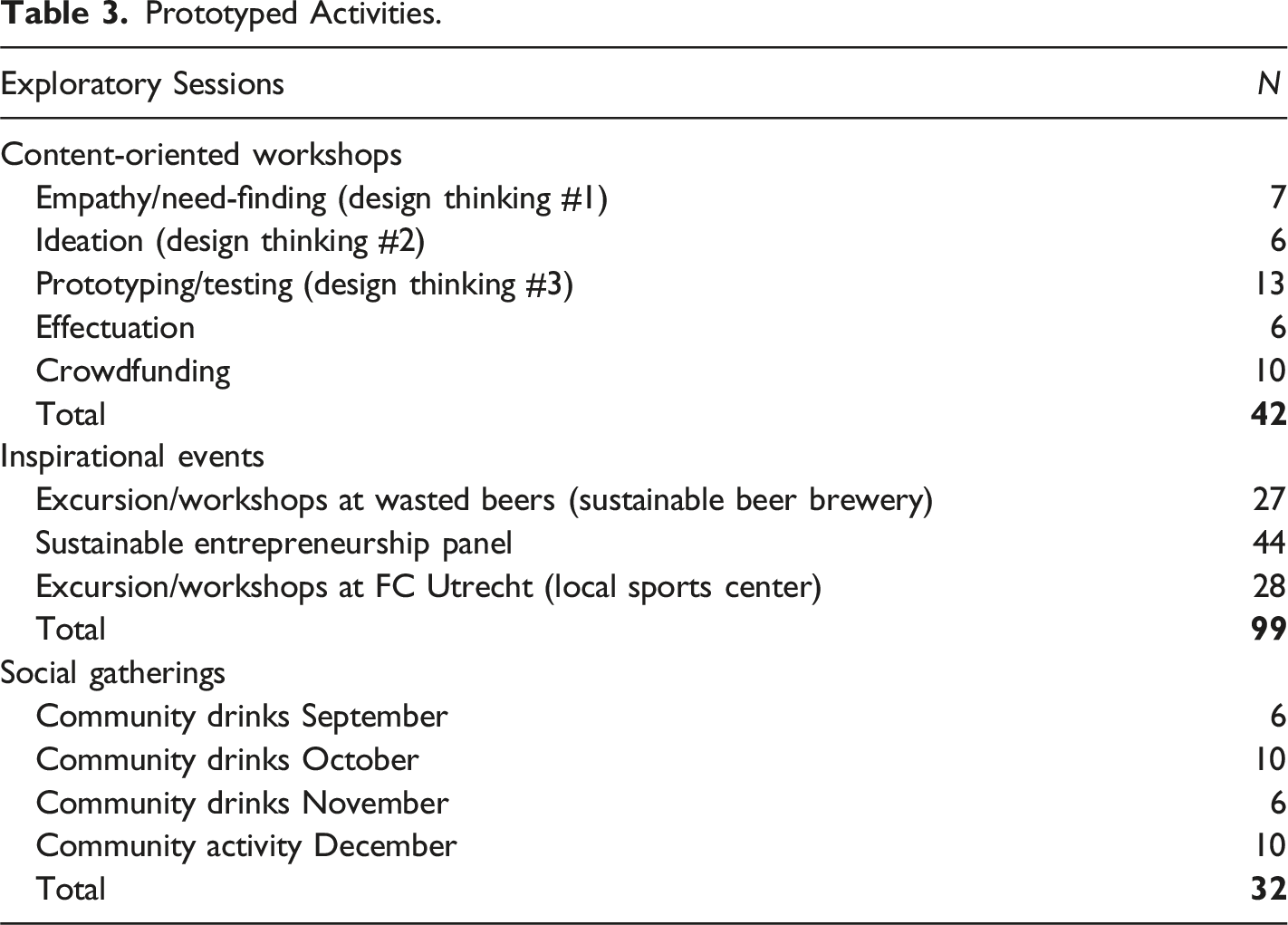
Content-oriented workshops—The cumulative participation rate across the five workshops amounted to 42 individuals. Feedback data, gathered via post-it notes following each workshop, underwent thematic analysis. The majority of the feedback was positive, with 96 commendations, and 44 suggestions for improvement that centered on a desire for additional content and more similar activities.
Inspirational events—The total number of participants across the three events was 99. The researchers noted that a warm welcome typically transformed initial unease into a comfortable atmosphere, more so when done by a dedicated team of students. The majority of participants stayed until the end. In individual conversations, participants cited self-development as their primary motivation for attending, and expressed overall satisfaction, specifically with the location and interactive elements. During these conversations, some attendees, who found the event somewhat broad, realized its connection to entrepreneurship after learning about UtrechtCE’s broad definition of “being entrepreneurial” as opposed to “starting up a business venture.”
Social gatherings—In total, the participation rate across the four gatherings was 32. Participants engaged freely in conversations with one another and actively sought information from one of the researchers that was hosting the events about the role of UtrechtCE and other entrepreneurial ecosystem-related topics. During the final social event, students explicitly expressed that they felt part of a new, growing community of like-minded peers. As a community member wrote: “Your efforts provide us not only skills, but also a platform to connect, share and gain valuable insights.”
The WhatsApp group showed steady growth, with a pause over summer (Figure 4). At the end of the year, the group had reached 97 members. The majority joined the community platform because of an UtrechtCE event (44%). Others joined on invite by UtrechtCE (19%), because they found it online and were interested (13%), because of another student (4%), or on recommendation by a teacher (1%). For the remaining 19%, this information was not available. Furthermore, turnover rate, from participating in an event to joining to the online community, was 38%. This was higher among participants who attended more than one event (100%) then among one time attendees (31%). These attendance and conversion rates indicate that a combination of content-oriented, inspirational, and social events were effective in stimulating the formation of an entrepreneurial student community. Accumulated community membership (2023).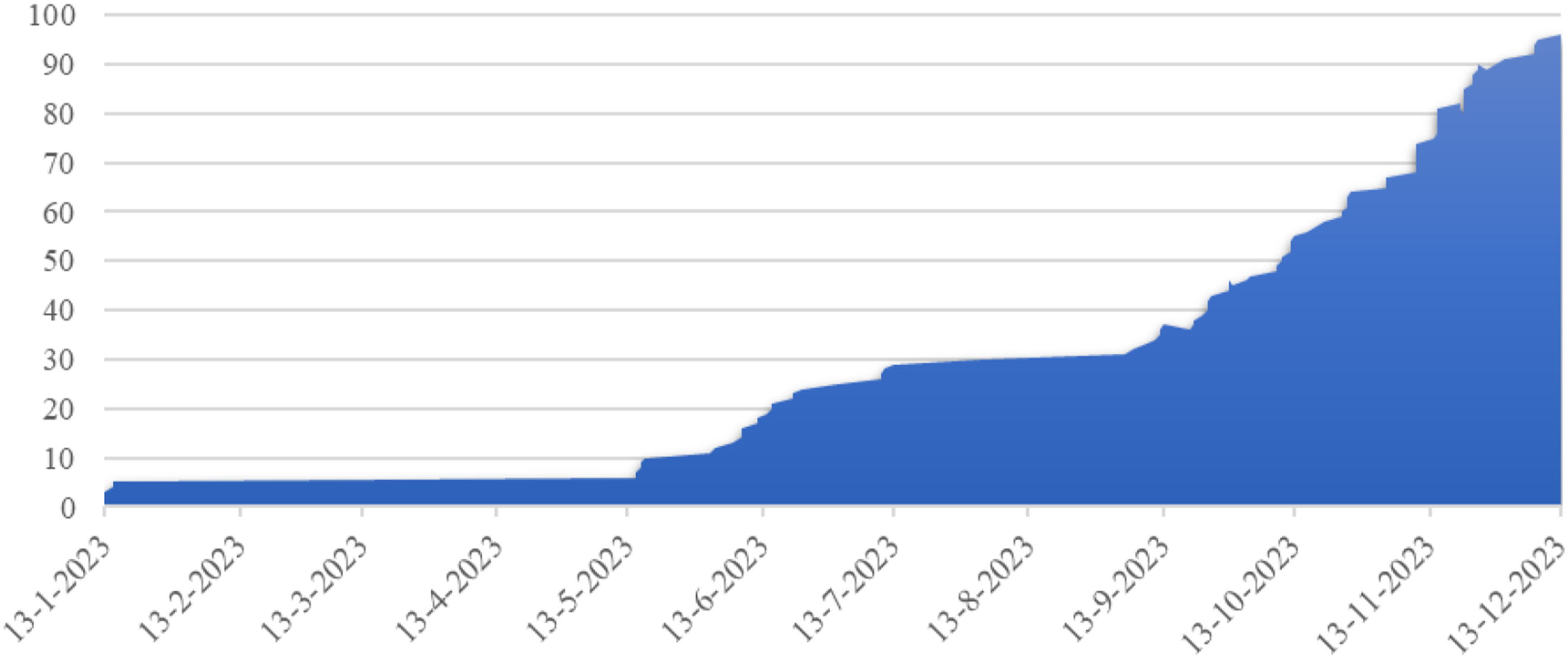
Discussion
The action research revealed that students’ design criteria for Playground centered on three central themes: purpose, activities, and physical features. Following the principles of an inductive approach (Creswell & Poth, 2018), a comprehensive literature review was conducted after the empirical phase, to facilitate a comparison between the emergent design criteria and design criteria promoted in existing studies regarding spaces that support creativity, innovation, and entrepreneurial activity. This comparative process yielded insights that contribute to an initial understanding of whether design principles for mixed-use entrepreneurial spaces are universally applicable or shaped by contextual factors. The findings from the comparison are presented below.
First, with respect to needs for purpose, students generally indicated that the space should both support entrepreneurial activities (such as idea development, idea validation, and obtaining support) and facilitate connections (including networking, team formation, collaboration, and fostering a sense of community). Unsurprisingly, then, when asked about the desired use of the space, students showed a strong interest in both formal content (access to expertise, such as workshops or expert mentoring) and informal content (such as inspirational or social gatherings) in both the discovery and develop phase. This strong and explicit dual desire is in contrast to the empirical finding by Pittaway et al. (2020), that single objectives were four times more frequent than multiple objectives in their survey of 57 university spaces for entrepreneurship in the United States.
The majority of other studies, however, highlight how universities need to, want to and/or in practice fulfill multiple functions. For example, Etzkowitz (2003) describes how universities provide spaces with both the formal and the informal infrastructure to bring nascent technologies to market: for instance by brokering the investment or sale process as well as multi-disciplinary collaborations. Other studies also outline a multitude of objectives, ranging from hard to soft skills and resources: for example enhancing university-industry-government collaborations (Belitski & Heron, 2017), building collaborative capability through knowledge sharing and the fostering of collective creativity (Castilho & Quandt, 2017), stimulating new idea development (Lackéus & Williams Middleton, 2015), developing an entrepreneurial culture (van Burg et al., 2008) or sense of community (Kolb & Kolb, 2005).
Returning to the study by Pittaway et al. (2020), then, the pre-incubation space envisioned by the students themselves can be typified as an integrative space. As such, the students’ dual desire is not context-specific, but matches a new trend for mixed-use facilities that seek to bring together all processes of innovation: cognitive, social, and material (Pittaway et al., 2020). As Oksanen and Ståhle (2013) argue, spatially facilitating innovative and entrepreneurial behavior in such a broad manner fits the moral shift in our understanding of innovation, from maximizing profit to solving wicked problems and positively effecting society as a whole (Chesbrough, 2003; Von Hippel, 2005).
Second, regarding physical features, students expressed a desire for a multi-functional and modifiable space (combining group collaboration areas with designated personal audio-visually separate workspaces), an event calendar or information board, and a separate recharging area with coffee and tea. A review of the literature reveals that these criteria have been frequently cited in previous studies. For example, Oksanen and Ståhle (2013) investigated innovative university spaces in six different countries. They established that the communicative and human-centered process of innovation is best supported by spaces that enable collaboration and communication, incorporate modifiable elements to facilitate individual focus, and are attractive in terms of comfort and aesthetics, including facilities that promote wellbeing.
Furthermore, in their exploration of the impact of collaborative space on cross-functional and open innovation, Ungureanu et al. (2021) found that plasticity—characterized by an easily transformable layout—and informality—marked by comfortable, bright furnishings that encourage non-hierarchical, spontaneous interactions—were distinct spatial features with a positive effect. After reviewing studies on successful organizational creative spaces, Santos et al. (2021) highlight several key elements that university spaces for entrepreneurship should provide. First, individual retreat zones where individuals can engage in deep work, including intense research, reading, writing, or ideation activities (Katja Thoring & Badke-Schaub, 2018). Second, areas to facilitate spontaneous interaction, catalyzing serendipity, a vital element in the process of entrepreneurial discovery and exploitation (Martello, 1994). Third, modifiable furniture and comfort which may lead to more intense sharing of ideas and increased engagement among students (Magadley & Birdi, 2009). Finally, Pittaway et al. (2020) present a comprehensive overview of the elements of innovation space. Among the cognitive elements they identify are biophilia, which includes natural light and materials, and acoustics. Among the social elements, they present modifiability and sociopetal designs, which facilitate both specified and unspecified cooperation.
In conclusion, the combination of separate zones for group work, quiet spaces for individual work, a comfortable area for informal social interaction, biophilia, and the possibility to modify spaces, is not a context-specific requirement, as this combination is often repeated in studies on (university) spaces for innovation and entrepreneurship (education).
Third, students explicitly emphasized the importance of an authentic look and feel that sets the space apart from other (educational) spaces at UU, reflecting a shared mindset and values of Playground users (though without further specifics). While this highlights a desire for uniqueness, the need for such distinctiveness is not itself unique; it is often highlighted in previous literature. Oksanen and Ståhle (2013) explain how spaces have a wider psychosocial influence on users, when symbols provide a message or a story about the organization that continue one’s own identity and shape the meaning attributed to the space. In continuation, Pittaway et al. (2020) highlight the importance of clarity of values, which manifests in construction, interior design, and symbols. While Santos et al. (2021) provide theoretical support for the use of tangible, physical artifacts to create an entrepreneurial culture among students and nurture the process of design and new product development.
In that sense, the students’ desires confirm the need for a careful study of the cultural context and users’ needs and values (Oksanen & Ståhle, 2013) as opposed to just spreading Google-like spaces across campuses (Pittaway et al., 2020). Notably, the relevance of value frameworks seems limited to the esthetic design, not influencing the functional distribution outlined in the previous paragraph.
Curiously, there were other features frequently mentioned in previous literature that were scarcely addressed by the UU students: location and facilities. Regarding location, Ungureanu et al. (2021) found that centrality was among the key spatial features contributing to the success of interdisciplinary innovation. Users perceived this as valuable both practically and symbolically. In addition, Pittaway et al. (2020) emphasize the importance of a central location on campus, as entrepreneurship is increasingly embraced as a university-wide theme and the location should communicate the space’s intent to encourage cross-disciplinarity (Belitski & Heron, 2017). The reason that students in this case study did not mention this aspect is likely that the location was already fixed and could not be changed. Furthermore, the chosen location was probably sufficiently close to most students, as the majority of the university’s faculties are housed on that particular campus.
Concerning facilities, multiple studies emphasize the importance of innovation space amenities. For instance, Oksanen and Ståhle (2013) indicate that a space for innovation is typically intellectual (naturally linked to key technologies, i.e., “smart”) and serviceable (offering basic office infrastructure, such as an internet connection, or specific services, such as dedicated space for further developed projects). While the sampled students did express interest in designated workspaces, as opposed to exclusively flexible seating, the need for basic services such as internet was scarcely explicitly mentioned. This may be attributed to students in the sample being from developed countries, where stable internet access is typically taken for granted. In contrast, this is not assured in developing contexts (Li et al., 2023), where reliable internet access is likely a more prominent consideration in the design criteria for innovation and entrepreneurship spaces in those regions.
Moreover, Pittaway et al. (2020) add prototyping as a distinctive innovative process that a mixed-use space for innovation and entrepreneurship needs to support. During prototyping, ideas are engendered, transformed, and elaborated by materializing them via diagrammatic, visual, and tangible objects. While prototyping is integral to entrepreneurial activity (Camburn et al., 2017), its relevance varied among different student groups in this study depending on their discipline. For instance, economics students displayed less interest in creating a physical prototype than science students. None of the students prioritized advanced facilities, such as 3D printers or augmented reality spaces. This could be due to UtrechtCE’s emphasis on early-stage interdisciplinary collaboration in innovation, where low-fidelity prototyping (Camburn et al., 2017) is often sufficient. Additionally, science students might have been aware of “Lili’s Proto Lab,” a fabrication laboratory (Soomro et al., 2022) that opened in 2023 on the premises of the science faculty, offering a wide array of more advanced tools for prototyping, from 3D printing and laser cutting to microfluidics and robotics.
In summary, the post-empirical comprehensive literature search indicated that none of the design requirements formulated by the students were novel. Regarding the unresolved question of whether students’ design principles for mixed-use entrepreneurial spaces are universal or context-specific, the discussion leans toward universality. Unlike entrepreneurial content and pedagogy, a “one-size-fits-all” approach does appear to apply to entrepreneurial space. However, the students’ emphasis on certain aspects while overlooking others highlighted in previous literature suggests that the relative importance of each aspect varies depending on contextual factors, such as economic conditions or the structure of the university’s entrepreneurial ecosystem.
Conclusion: Practical Advice and Future Research Directions
This action research, structured with design thinking as participatory action-reflection-learning framework, focused on students’ design requirements for a mixed-use entrepreneurial space. The post-empirical comparison of the findings with previous studies revealed that—unlike the content and pedagogy of entrepreneurship education (Blenker et al., 2012; Herholdt-Lomholdt et al., 2024; Vanevenhoven, 2013; Winkler et al., 2018)—students’ needs regarding the physical environment for entrepreneurial learning appear to be universal rather than context-dependent: one size fits all.
In terms of activities, mixed-use facilities—Playground included—integrate the cognitive, social, and material dimensions of innovation (Pittaway et al., 2020) to facilitate entrepreneurial behavior broadly. This multifocal approach aligns with a normative shift in the understanding of entrepreneurship: from a focus on profit maximization toward addressing wicked problems and generating positive societal impact (Chesbrough, 2003; Oksanen & Ståhle, 2013; Von Hippel, 2005). Furthermore, physical features should be (1) well-equipped, (2) centrally located, (3) modifiable, (4) providing distinct zones for planned and spontaneous group work, for focused and individual tasks, and for informal social interaction, and (5) with pleasing aesthetics that are aligned with local culture (Katja Thoring & Badke-Schaub, 2018; Magadley & Birdi, 2009; Martello, 1994; Oksanen & Ståhle, 2013; Pittaway et al., 2020; Santos et al., 2021; Ungureanu et al., 2021).
The UU students’ emphasis on certain features over others suggests that the relative importance of previously identified elements of successful entrepreneurial spaces varies according to contextual factors, such as economic conditions and the structure of the university’s entrepreneurial ecosystem. In light of these findings, it is advisable that practitioners—such as designers and current or prospective managers involved in the (re)development of a university pre-incubation space—optimize resource allocation by minimizing the time, cost, and effort spent on extensively mapping students’ needs. Instead, these resources may be more effectively directed toward involving students at a later stage in refining a generic design that already incorporates the core elements identified here.
The findings of this study give rise to multiple directions for future research that merit further exploration. First, while peripheral comparisons with nearby entrepreneurial spaces were included, they do not fully offset the limitations inherent in conducting a single-case study. Although case-specific analysis is a common feature of action research, more studies on the infrastructure of entrepreneurship education are needed to validate these findings and assess their broader applicability. Second, future studies could further investigate the relative influence of various contextual factors on the prioritization of design requirements for universities’ mixed-use entrepreneurial spaces. This could be achieved through comparative case studies across diverse geographical, social, and economic settings, involving student populations and design purposes that are at times similar and at other times markedly different. Third, future research could focus more closely on the impact of spatial design elements on the development of particular entrepreneurial competencies, such as those articulated in the European Union’s EntreComp framework (Bacigalupo et al., 2016). This line of inquiry could involve testing multiple spatial prototypes in real-world environments, ideally employing quasi-experimental designs. A systematic assessment of the outcomes would offer deeper insights into the relationship between spatial design and specific entrepreneurial learning outcomes, further advancing the field.
Lastly, it is important to acknowledge the study’s limitation regarding its longitudinal scope. The research focused on the design process of the new pre-incubation space and naturally concluded after prototyping its physical features and activities. While these design criteria align with findings from previous studies on successful innovation and entrepreneurship facilities, which have been operational for an extended period, actual user behavior may differ, particularly among early adopters of new spaces. Prior research by Bilandzic and Foth (2013) suggests that the formation of new connections and the utilization of facilities remain contingent upon the experiences of initial users. Moreover, the infrastructure provided by an organization to support its members in navigating innovation challenges may ultimately constrain outcomes if user expectations diverge from actual experiences (Ungureanu et al., 2021). This potential disconnect is particularly pronounced when participatory design processes, such as the one applied in this case study, evoke elevated user expectations. Consequently, a final recommendation for managers of entrepreneurial spaces is to develop explicit strategies for managing (new) user expectations and to emphasize the users’ own role and responsibility in contributing to the success of the space.
Footnotes
Acknowledgments
The authors would like to thank Rianne Poot of the Utrecht University Centre for Entrepreneurship for granting approval to use the data collected for the design of Playground in this academic publication. For any queries regarding Playground, please contact Bianca Meyer at
Author Contributions
Bianca Meyer conceived and conducted the action research under the supervision of Anne van Ewijk. Bianca Meyer also drafted the initial empirical findings. Anne van Ewijk framed the study, elaborated the literature review, drafted the manuscript, managed the submission process, corresponded with the editors, and incorporated reviewer feedback. Bianca Meyer contributed to the revisions.
Declaration of Conflicting Interests
The author(s) declared no potential conflicts of interest with respect to the research, authorship, and/or publication of this article.
Funding
The author(s) received no financial support for the research, authorship, and/or publication of this article.
Ethical Statement

Data Availability Statement
The data generated and analyzed for the current study are available from the corresponding author upon reasonable request.