




Abstract
At the turn of the twentieth century, Northeast Brazil suffered some of the most severe droughts ever recorded, popularly known as the Terrible Years. Displaced families from the inlands were forced to seek refuge by relocating to the coastal and capital cities of the region. These drought refugees were called flagelados (flagellated in Portuguese), a demeaning term used strategically to reinforce their status as poor and landless individuals. In response to this crisis, local and national governments constructed temporary concentration camps in 1915 and again in 1932, which mobilized and sheltered more than 150,000 people. These camps operated not only as sites of aid but also as mechanisms for organizing and controlling labor power. This strategy was officially established by the Brazilian government to manage refugee populations in need, while simultaneously advancing ideals of modernization, progress, and national development. Once the droughts ended, the camps were dismantled, but the long-lasting effects of these physical and social structures remain present in the everyday lives of the Nordestinos, the people from Northeast Brazil. This paper argues that urban modernization in Northeast Brazil is deeply entangled with the legacy of these drought concentration camps and the resettlement of rural flagelados. The camps reflect histories of care, control, and exploitation that connect directly to ongoing injustices today. Drawing on archival material, medical surveys, and reports from the Brazilian national agency combating droughts (DNOCS), and engaging with the emerging theoretical framework of “camp studies,” this paper sheds new light on a core episode of Brazilian history. Within this framework, it examines the role of the built environment in shaping social and political order, while contributing to broader discussions on the construction and consequences of environments for climate refugees.
Prologue
After taking the overnight bus from the capital city of Fortaleza to the smaller city of Crato in Ceará's Cariri region in Northeast Brazil, I was introduced to James, my local guide. James was born and raised in Crato and held the city's history close to his heart. He showed me the house he grew up in and explained that his home, located in a neighborhood now called Muriti, was near the site of the former Buriti concentration camp. Originally, the area was called Buriti—like the camp—referring to the abundance of Buriti palm trees in the region. But due to the neighborhood's desire to distance itself from the camp and its contested past, Buriti renamed itself as Muriti, retaining almost no memory of what was once a refugee center for 70,000 people seeking relief from the drought between 1932–1933 (Comissão Médica Report, 1936 [1933]: 136).
James drove us further down the hill. He pointed to a field in an empty lot and stopped the car. “This is it,” he said. “This area here was the cemetery; the dead were buried in common trenches, as the numbers were so high.” We stayed for some time, and I took a picture of the space. “You are taking a photo of nothing,” James said ironically, “where it used to gather a crowd of no-ones.” 1
Introduction
Starting in the late 1870s until the early 1930s, Northeast Brazil witnessed some of the most severe drought periods ever registered, popularly known as the Terrible Years (1877, 1915, 1932). Groups of displaced families coming from the inlands, the sertanejos, who worked as stock growers and farmers, were forced to relocate to the coastal and capital cities of the region. Not all landowners in the Northeast agreed with the massive exodus of their workers to other states; nevertheless, the workers have decided to leave, and their influx in the form of drought refugees to Fortaleza, the capital city of Ceará State, was unforeseen. The “drought” was certainly an environmental issue, but it also had profound social, political, and cultural implications. The state and municipal governmental authorities had few tools at their disposal to overcome the dry period, and instead turned their attention to controlling the circulation of the refugees escaping it within a single location: the concentration camp. Isolating the “undesirables” from the city for their support and relief, was, however, only a mask for further actions of surveillance, domination, and labor exploitation.
The complicated journeys of these early twentieth-century drought refugees, popularly known as flagelados in Northeast Brazil, have been broadly exposed and explored, especially in the fields of literature and the arts. 2 Nevertheless, the governmental set-up of camps and transitory spaces where these groups stayed for long periods of time is less discussed. This paper examines the ephemeral facilities established for drought refugees, such as the concentration camps of 1915 and 1932, as the protagonists of a broader and continuous history of displacement in Ceará. Camps, I argue in this paper, have a defining role and impact on the people who resided in them and on the region in which they were located. In recognizing the impact of the infrastructure of the Brazilian Northeastern camps, we can better understand the direct role architecture and the built environment play as part of the coloniality of climate change in Brazil and its broader history. The Brazilian camps illustrate how climate emergencies should be perceived not only as a scientific or environmental issue, but also as a political and social one rooted in systems of domination, exploitation, and inequality. Space and architecture, here, are used as the tools to recognize it. Furthermore, despite the camps’ ephemeral character, it is possible to this day to recognize the prevailing and enduring urban and social dynamics established by the past relations of power and exclusion in and around these spaces.
Originally set as temporary spaces built to segregate and manage specific populations, the principles of the potential urbanization of these camps were incorporated as a planning strategy, shaping the conceptualization of the Brazilian modern space. Camps, in this paper, are understood as experimental spaces of urban knowledge and planning strategies, in addition to being sites supporting the biophysical needs of those concentrated in them. Ceará's camps, this paper shows, were used as early instruments of modern urbanization and territorialization. Camps were mechanisms to both isolate and control unwanted groups of refugees, and at the same time they created landmarks of expanded territorial control of the Brazilian inlands by certain social and political groups. Similar to the “humanitarian and relief” strategy Aidan Forth (2017: 5) described in his reflection on British colonial famine camps, Brazil's drought strategy also served a much larger project for social control, taking advantage of vulnerable and desperate people. This discussion of Ceará's concentration camp’ history and the flagelados’ displacement engages with growing interdisciplinary debates within architectural history and political geography regarding the topics of camp studies, refugee studies, and climate-related camps and migration. In doing so, the paper brings to the fore the stories of the “crowds-of-no-ones,” in the words of James in my prologue, those thousands of displaced people whose work and experience helped to shape the modern Brazilian state.
Methodology
The primary methods of archival research and field visits used for this study were challenged by the camps’ lack of physical traces and the absence of significant documentation about the space. Studying camps is often a labor of “chasing architectural ghosts,” as Irit Katz (2022: 18) puts it, considering the temporary nature of these types of spaces with their enduring social, political, and spatial influence. Partnerships with local institutions, local scholars, and independent researchers have helped address these limitations by guiding my work and putting me in contact with people and resources otherwise unavailable to me.
In addition, the paper relies on secondary sources drawn from literature within Brazilian studies, including studies about sanitation, geopolitics, and architecture (Hochman, 1998; Miranda and Hochman, 2021; Lima, 2023), geography and climate within Brazilian territory (Ab'Saber, 1999), politics of drought and development (Buckley, 2017; Brito, 2013) discussions about the creation of urban hazardscapes (Coates and Nygren, 2020) and research about the Brazilian Northeast's history and its population (Albuquerque Jr, 1999; Girão, 1997; Jucá Neto, 2012; Teofilo, 1890; Campbell, 2022) as well as work on the histories of Ceará's concentration camps specifically (Neves, 1995, 2000, 2001; Rios, 2014b). Building on this literature, the paper provides a spatial perspective to the history of the Brazilian camps, with attention to their social and political meaning.
While it is possible to visit and analyze the locations of the Brazilian concentration camps, out of the seven facilities created in 1932, only one camp remains partially standing. It is located in the city of Senador Pompeu, approximately three hundred kilometers from the capital city of Fortaleza, and was recently granted the status of a heritage site. 3 The few accessible historical materials and images that can help us imagine and reconstruct how camp facilities once were, usually come from medical reports from the early 1930s, or brief articles and references from local newspapers. 4 The fact that medical reports are the only few documents available indicates how planning principles were highly reliant on hygienist approaches. Since former users and inhabitants of the camps are now deceased, my interviews were with second—and third—generation residents of areas where the camps were located, who were often unaware of the past of their neighborhood. This reveals how the long-term effects of the camps’ physical and social structures have been incorporated into the urban life of their locations.
This paper highlights a major role of the built environment in Ceará's history: it demonstrates how camp spaces were crucial sites within the histories of climate-displaced populations, as well as their role in the broader national plan for building Brazilian modern infrastructure. It begins with a theoretical discussion on camps and their spatial, social, and political implications, and then focuses on the history of the Brazilian context. It contextualizes Brazil's political conditions in the first half of the twentieth century, showing how camps were part of nation-building projects of infrastructure construction and a source for utilizing climate refugees as a labor force in Northeast Brazil. The paper then analyzes the implementation of the seven concentration camp facilities of 1932, including the examination of their dismantlement. The paper concludes by highlighting the importance of the legacy left by Ceará's concentration camps in building a national infrastructure and modernization of the country. It stresses that it is possible to identify some of the lasting effects and unintended consequences of these efforts even when there are no physical traces of the camps themselves.
Camp studies
Camps have long been a source of climate management strategies for refugees, often mediating rural-urban dynamics. The Brazilian camps discussed in this paper, contribute to global literature on the camp by offering a South American example that highlights the relationship between environmental aspects, the city, and the camp. They also reveal how drought refugees played a role in national modern urbanization plans, both shaping and being shaped by the practices of their time (Mitchell, 2002; Spivak, 1988).
Camp's agency
The Brazilian camps were originally set as temporary sites, built to segregate and manage specific populations. Despite their provisional condition, camps also worked as an urbanization tool, shaping the infrastructural thinking of modern space in Brazil. The very origin of the camp as a modern institution comes from colonial spatial regimes, working as experimental “laboratories of modernity” for the new (bio)political technologies of control and exploitation while also being a product of modernization and modern architectural technologies, together building a biopolitical machine of ordering (Arendt, 1968; Katz, 2016: 146; Katz, 2022b; Minca, 2015: 75; Netz, 2004). The early twentieth-century camps in Brazil were created in a moment of deep political and economic shifts. Beyond the “Terrible Years” of droughts, the country had just abolished enslavement (1888), as well as shifted from a monarchy after the deposition of Emperor Pedro II into the establishment of the First Brazilian Republican regime (1889). This brief transitory moment was soon followed by President Getúlio Vargas’ coup d’état (1930) and early modern authoritarian regime. Given this period of instability, the Brazilian camps were masked as climate emergency control, in which the management of urban disasters created state-made “hazardspaces” built by clientelist governance (Coates and Nygren, 2020). The camps were created in response to these new and emerging forms of governance and the need to manage both the population and the territory. This built both forms of exclusion and, at the same time, fostered inter-territorial expansion and created new sources of cheap labor—or as Irit Katz (2016: 151) puts it, the “human filling”—aimed at the modernization of the country as envisioned by planners and political leaders.
The Brazilian camps were officially portrayed by the Brazilian government as temporary spaces of transit as well as spaces of aid and hospitality for local drought refugees. They were organized in a similar fashion to today's institutional refugee camps, built with temporary structures that can also be easily dismantled, leaving no traces of their existence, and managed by humanitarian organizations that viewed the interned populations as both victims and threats. Those accommodated in them were therefore objects of both repression and compassion, and an example of how being “at risk” and “a risk” makes a thin political line (Fassin, 2005: 376; Stoler, 2012). The Brazilian camps from the early 1900s were created as a response to the local drought periods, a “state of emergency” that justified building sites of care for the displaced through their containment. Yet, Ceará's camps were also used as early instruments of modern urbanization and as a tool in helping the “emergence of the state” (Katz, 2022: 15), a mechanism to both isolate and control unwanted groups of refugees, and at the same time create landmarks of expanded territorial control within the Brazilian inlands by certain social and political groups.
While set to provide humanitarian assistance, this “humanitarian and relief” strategy in Brazil also served a much larger project for social control, taking advantage of vulnerable and desperate people. The Brazilian case can be situated within a broader global history of camps, such as late-nineteenth-century famine camps in British colonies (Chhabria, 2019; Chopra, 2011; Forth, 2017); early-twentieth century Mexican migrant sugar beet housing in Colorado (Perez, 2017); ethnically divided ma’abarot immigrant transit camps for Jewish settlement colonizing frontier territories in the Israeli state's borders in the early 1950s (Katz, 2016); as well as spaces created for Gaza's refugees occupation and resettlement in the 1960s (Abreek-Zubiedat and Nitzan-Shiftan, 2020), to name a few. As Michel Agier emphasized, “there is no care without control” (Agier, 2011: 04), and the act of isolating the “undesirables” for their assistance and relief masked surveillance, domination, and discipline. “Aid” would also often be translated here into racial differentiation, at the intersection between migration, race, labor, and the built environment; the Brazilian camps were an example of this (Nemser, 2017; Weinstein, 2015; Gilroy, 2004). Similarly to what Diana Martin et al. (2020) describe for the camps in the colonies, Brazilian camps were also utilized mainly as a form of labor exploitation, dominating the subjugated populations while protecting the political status quo and affirming the new regime in practice. As such, these camps were social technologies that disciplined space and the movement of people. They are devices of power that serve as both the product and the effect of sovereign nation-states, which depend on the control of the movement of people and, more precisely in this and similar contexts, the movement of labor-power (Malkki, 2002: 353).
The camp and the city
I analyze the Brazilian camps in direct relation to their association with the formation of cities. Existing approaches using the “urban” as an analytical framework for discussing “camps” consider camps either as “potential cities,” discussing the urbanity within the camp's premises and the rise of new forms of citizenship within their boundaries (Agier, 2011; Martin, 2015), or as part of cities—as “urban camps.” The latter considers how, today, most displaced populations (“urban refugees,” as framed by Romola Sanyal, 2011) live in urban areas rather than being confined within a specific location (Katz et al., 2018: 61; Martin, 2015: 10).
Regardless of camps’ connection to or within the formation of cities, the camp holds a status of a “space of exception” (Agamben, 1998) that can also be understood as a technology of power—a “standard resource” of the modern socio-political landscape. The suspension of the normal juridical order in the camp, and its denial to the encamped population highlights how these types of spaces can often actively produce questions of citizenship, racial categorization, and socio-political identity (Katz, 2022; Malkki, 2002: 355). Once these types of temporary settlements are no longer needed or are no longer in use, their spaces can vanish without any notice. Their prevailing logic of exclusion, however, which builds on both the camps’ juridical meaning and spatial temporariness as environments that leave no physical traces after their existence, nevertheless often leave permanent social and mental traces on those who lived in them.
According to Irit Katz (2016), camps are instruments that evolve in relation to changing territorial and political needs. Beyond being used and understood only during a state of emergency, the consequences and long-lasting effects of the camps on national and local scales can also establish and shift certain geopolitical orders by managing and controlling the population, as well as the territory, outside the normal rule of law (Katz, 2016, 2022). Camps enable the conquest of territories as temporary spaces that both contain mobility and reconfigure and reallocate borders (Martin et al., 2020). But even after camp spaces are dismantled, the logic of exception prevails (Agamben, 1998: 170), and bare life (zoe)—a life stripped of any right, value, and political existence (bios)—continues through different forms: from the lack of rights of the encamped (or formerly encamped) people, to the lack of remembrance of their past paths.
For Giorgio Agamben (1998), the camp and not the polis is the prevailing model in our late modernity in terms of our social and political organization, which necessitates the exception in order to establish the norm. Didier Fassin does not see Agamben's dichotomy between the camp and the polis as a simple contrast between idealized and marginalized spaces in the biopolitical paradigm of the West, but argues that we should look at the tensions between the two spaces. Once removed and alienated from the polis, and confined to the camp, as Fassin explains, those excluded were both “of” and “at” biopolitical risk, confined to the outskirts of the nation, while at the same time within its very network of security and surveillance (Fassin, 2005: 381). Once spatially confined, those in the camp remain excluded from the polis while being subjected to its various forms of violence—violence that will have no legal consequences. Therefore, considering that the polis was already in itself an arrangement of political segregation, the camp spaces that are part of it only exacerbate this pattern of exclusion, both physically and in forms of control and management. The state (and space) of exception, “which was essentially a temporary suspension of the juridico-political order,” according to Agamben, “now becomes a new and stable spatial arrangement inhabited by the bare life” (1998: 175). At the same time, as Huq and Miraftab (2020) argue, camps and informal settlements are converging spaces of displacement which relate to one another in a variety of geopolitical, historical, and spatial ways. Therefore, by looking at and studying the camps, even those that are no longer active, I am examining the enduring spaces of power built by the logics of exception and exclusion within and in relation to the city.
The Brazilian Camps
Modern Fortaleza: From the Abarracamentos to concentration camps
Ongoing forms of exclusion
Throughout the years of the nineteenth century, several attempts had been made by local and national governments to deal with the droughts in Nordeste (Northeast Region in Brazil) and their impact on resident families. Often, the inland people known as sertanejos survived by migrating to rural areas in other states. In Ceará State, however, the majority of the population of flagelados during the 1877 drought remained in the state, yet moved—by foot or by train—towards the coast and capital cities. The drought of 1877 marked an important moment in Ceará's history. This was the first time that masses of displaced populations were being directed towards the cities instead of other rural inland areas. As historian Frederico de Castro Neves (2000: 50) reflects, “Migration by 1877 was not anymore about the movement between dry lands and humid areas, but between the countryside and the cities.” Governmental authorities had a few tools at their disposal to overcome the dry period, yet instead turned their attention to controlling the circulation of the drought refugees, particularly in Fortaleza, Ceará's capital.
The conception of the concentration camps in Ceará is directly related to Fortaleza's spatial formation at the end of the nineteenth century, and how the capital city would conform to certain modern ordering logics guiding its urban growth. This would be particularly evident during drought periods, with the arrival of masses of migrants coming from the hinterlands, rapidly increasing the population numbers. According to Neves, the 1877 drought was a period in which “the city was invaded and occupied by backcountry people (sertanejos) in a way that outnumbered the original population of Fortaleza” (1995: 94). Precisely during that time, modern ideals of urbanity were reaching the tropics from Europe. Fortaleza's bourgeoisie played an important and influential role within the local government, shaping decisions related to how the city was being built and administered. 5 While the local bourgeoisie was never a fully coherent or unified group, they all agreed that the ragged and undisciplined waves of flagelados posed a significant risk to the established order, viewing them as a mass of people ripe for crime, violence, and radicalization. Cities like Fortaleza began to mirror Baron George-Eugène Haussmann's reforms in Paris (1853–1870), following beautification, hygienist, and sanitation principles into what became known as a tabula rasa (clean slate) planning of the city—both physically and socially. The strategies adopted to control and support the newcomers followed similar values of order. Besides acting as an aid policy helping the drought refugees, concentrating flagelados in specific locations within the premises of the city was seen as a solution similar to what is today considered a zoning method, a formula used to control settlement, sanitation, and disease.
In 1863, engineer and architect Adolfo Herbster was commissioned to design and implement a master plan (Expansion and Growth Plan of Fortaleza) called “Plano Herbster”, imposing an orthogonal logic on the existing urban fabric that continues to be in use today (Castro, 1994) Land values were changing significantly, as the city was growing due to enslaved labor and cotton exporting businesses that were expanding and gaining commercial attention internationally, especially after the market disruptions caused by the Civil War in the United States. Not only that, but after Brazil's independence (1822), Fortaleza became one of the main political-administrative centers in the country (Andrade, 2012: 87). The need for modernization came together with the implementation of basic infrastructure for commercial and administrative purposes. Herbster's plan was refined throughout the years and incorporated additional measures related to the imposition of sanitation and order.
The technocrats’ sanitation mindset intensified with the 1877 drought, as inland migrants would not only represent an increase in the urban population of Fortaleza, but also contribute to the largest smallpox epidemics the state had experienced up to that point in time (Andrade, 2012: 131). Overcrowding gave way to epidemics and their effects on both the newcomers and the ones who were already living in the cities. Health (or disease) is one of the greatest examples of the problems of human interdependence, with epidemics and its effects being a public concern that equally involve all members of society (Hochman, 1998: 29). This “socialist dimension” to viruses and microbes called the political and intellectual attention of the elites, leading to the discussions about sanitary reform movements. 6 The policy of building camps or isolated spaces for the newcomers was part of these sanitary efforts, working as a cordon sanitaire to try to isolate and quarantine the affected ones outside of the urban boundaries.
By 1878, a series of thirteen “abarracamentos” (shack concentrations) were implemented by the government within the city of Fortaleza's boundaries, sheltering and isolating over 114,000 refugees in predetermined areas. At the same time, the government created new public works (such as dams, construction projects, public sanitation, etc.) in order to allocate those refugees in need and provide them with the means for survival (Andrade, 2012: 132). The establishment of these public works in the capital city and its surroundings served two purposes: first, it provided much-needed employment to the flagelados, however low the wages (paid via food rations); and second, it justified directing public money towards aid distribution that would not only appear charitable but also contribute to local improvements and modernization efforts (Neves, 2000). Another important characteristic of the abarracamentos had to do with controlling a newly proletarianized population. By keeping a close eye on the internal drought refugees, authorities would prevent rebellions and curtail crime and “immoral” activities (Azevedo, 2011: 11). Historian Kênia de Sousa Rios argues that control of the flagelados and the development of the city were deeply entangled processes; urban renewal projects produced public benefits while providing an opportunity to subject drought refugees to a regime of labor discipline (Rios, 2014a: 46).
In the early 1900s a series of social and technological improvements were implemented in Fortaleza, such as the construction of the theater “Teatro José de Alencar” (1910), the arrival of sewage and sanitation systems (1908), automobiles (1909), electric trams (1913) and electric lighting in public and private spaces (1913), contributing to a series of transformations in urban life (Andrade, 2012). By 1915 another devastating drought reached the Brazilian Northeast region and once again Fortaleza faced the sudden arrival of masses of refugees seeking help in the capital city (Albano, 1918). Former abarracamentos arrangements began to be reconsidered by Governor Colonel Benjamin Barroso (1914–1916), yet this time, he decided to concentrate refugees within one single and isolated location in the capital: the Alagadiço camp.
The displaced populations of the 1877 drought were placed in multiple locations around town, and, in Colonel Barroso's words, were “spreading their bodies contaminated with diseases of various kinds, […] this poor population that blended with citizens from Fortaleza, invading their homes with their pleas, exposing everyone to their illnesses” (Neves, 1995: 96). In contrast, the 1915 drought refugees were fixed to one space. According to Colonel Barroso, these measurements would facilitate distribution of aid and would allow better and more humane treatment for the refugees, who would also be fed, sheltered and receive public services. The influx of the refugees, however, was higher than expected, eventually resulting in overcrowded shelters.
The 1915 camp was located within the urban premises of Fortaleza, and followed similar organizational logic as its precursors, the Abarracamentos—a vast space with provisional structures, providing shelter for a large number of retirantes (dispossessed evacuees), along with some assistance in the form of food distribution and work opportunities for those in need—but now sheltering even larger numbers of flagelados. Overcrowding was the main issue that rendered such spaces unsuccessful and thus unable to satisfy Colonel Barroso's initial expectations. Both the abarracamentos and the 1915 concentration camp in Fortaleza lacked the most basic hygienic conditions, clustering large groups of people in fragile, ephemeral constructions made of sticks and straw or under the shade of cashew and mango trees. 7 Despite the presence of some medical aid, the lack of sanitation, insufficient food rations, and proliferation of diseases resulted in precarious conditions and increased deaths (Neves, 1995, 2000).
The shift between using multiple abarracamentos to sheltering refugees in a single concentration camp was a way to further limit the access of the flagelados to the city's premises. The abarracamentos, while isolated, were less restrictive, and were still located within the urbanized areas of Fortaleza. The Alagadiço camp, by contrast, was placed on the outskirts of the city near the Alagadiço train station, where the so-called “invaders” would have little to no contact with the rest of the population. Governor Colonel Benjamin Barroso's goal of building the camp was to avoid scenes of mendicancy, crime, and prostitution in the city center that had recurred during earlier drought crises. Due to lack of documentation, it is difficult to estimate the size and other physical characteristics of the Alagadiço camp, yet one article published in the periodical Correio da Manhã (RJ) on December 8th, 1915, estimated that the Alagadiço Camp was housing approximately 6500 people. 8 The focus of the 1915 camp was to isolate and surveil newcomers, while placing them in labor-intensive projects was considered an important but secondary endeavor (Morales, 2002: 142).
Despite the issues faced with the 1915 camp experience, it strategy was promptly reconsidered when next significant drought period arrived in 1932; seven concentration camps were built across Ceará's territory: two in Fortaleza (Pirambú/Urubú Camp and Octavio Bomfim/ Matadouro Camp) and five across the state (Buriti camp, Patú camp, Ipú camp, Quixeramobim camp and Cariús camp). These new enclosures were now set to directly implement “regular work and rigorous routine” (Neves, 1995: 105). Kênia de Sousa Rios demonstrates that while mobilizing the flagelados’ labor for infrastructure had started in 1877, these practices gained traction over the next half-century and were finally consolidated as state and local policy during the drought of 1932 (Rios, 2014a: 48). Once again, the fear and pressure from the elites of Fortaleza—hoping to avoid the arrival of masses of miserable drought refugees into the capital city—were backed and gained force with the support of politicians, only this time on a national level. The consolidation of the 1932 camps came under the auspices of a new political regime, under the authoritarian president Getúlio Vargas. The Brazilian Revolution of 1930, also known as the 1930 Coup d’état, ended the period called “Old Republic” (1889–1930), and made Getúlio Vargas the president of an authoritarian and centralized regime that lasted until 1945. Vargas financially backed the 1932 concentration camps, viewing these spaces as work fronts—understood as productive and useful towards the progress of the nation (Morales, 2002: 139).
While Ceará's concentration camps were the official response for aiding and supporting flagelados, it is important to acknowledge that not all drought-displaced populations from the inlands would move towards Fortaleza as a means of survival, despite this being the most common migratory influx of people and most well-known form of assistance. Since the 1877 drought, thousands of affected families had started moving towards the northern territories in the Amazon region to work in latex extraction. Others decided to move to southern industrial areas of the country, such as São Paulo and Rio de Janeiro. There are many reports from that period describing increased theft and looting as a means of survival by those who were not encamped (Neves, 2000). Besides the camps, there were also alternative spaces of refuge for the few newcomers who were aware of them, such as the self-governed socio-political-religious community of Caldeirão de Santa Cruz do Deserto, in the Cariri region, recognized as a state heritage site in 2005 (SECULT Ceará). The community housed over 500 families and doubled in size with newcomers during the 1932 drought, but was considered a threat to Vargas’ regime and was eradicated in 1937 (Lopes, 1991).
President Vargas’ authoritarian government invested in the 1932 camps as a form of mobilization and control of a labor force for public works in the North and Northeastern regions of Brazil, relying on his Minister of Road and Public Works, José Américo de Almeida (Silva, 2015). Vargas emphasized Nordestinos as important potential contributors to accelerating Brazil's productivity, shifting the focus from Brazil's Southern and Midwest regions to its northern territories. The emphasis on the role of Nordestinos was part of this effort to modernize the national economy and its production, especially due to regional disputes. While the southern region was a more industrialized area, the northern territories were less populated. Due to racial and class prejudice, the area was considered culturally backward (Buckley, 2017: 127). Vargas stated that, in order to advance as an industrial nation, the sparsely populated country needed the productive capacity of all citizens (Buckley, 2017: 131). The regional divide was particularly compelling for Vargas’ administration and their discourse, helping justify Nordestinos not as “culturally backward,” but as important potential contributors to the national economy and guardians of traditional Brazilian values (Buckley, 2017: 128). Needless to say, these cultural disputes were also permeated by questions of race.
Vargas considered Nordestinos as quintessential Brazilians because of their mixed ancestry—descended from Portuguese colonists, escaped Black slaves and native Indigenous people—with this mixed heritage being seen as an opportunity. His Departamento de Imprensa e Propaganda (Department of Press and Propaganda) portrayed flagelados as “non-white, non-black, non-rebellious, capable and educable” (Blake, 2001: 334), and thus ideal contributors to the country's development projects. Furthermore, Vargas portrayed the recurring droughts in the Northeast as evidence of the Nordestinos’ resilience and adaptability, positioning them as ideal candidates for labor-intensive work. At the same time, Vargas and his ministers convinced themselves that initiatives such as the work fronts and the concentration camps in Nordeste were effectively becoming labor and education sites for sertanejo drought refugees, “saving” these people by disciplining them.
In order to centralize all services related to flagelados’ assistance, Minister Américo directed the support received by the National Government in 1932 to IFOCS (Federal Superintendence of Drought Works, today's DNOCS, National Department of Drought Works). 9 It is worth mentioning that while this national agency was designed as an effort to better aid and support the population in need, DNOCS was also, in many ways, bound to the local coronelismo practices of the so-called “drought industry,” 10 serving the landowners who dominated provincial and local politics in the Nordeste—people known as “coroneis” colonels (Davis, 2001: 89; Leal, 1949). Infrastructural works built by DNOCS were instrumental in solidifying long-standing social dynamics in the sertão, prioritizing the local elite's agendas. Roads, dams, and irrigation canals intensified landowners’ control over natural resources and increased landless workers’ dependency on their bosses, thereby reinforcing existing lines of social fracture (Buckley, 2017: 13).
Federal investments in the Northeast during the 1932 drought corresponded for about 10% of the national budget that year—compared to just 1% in previous years. 11 Nevertheless, as 1932 was seen as a crisis period, once the drought ended, expenditures in Ceará State ceased as well. Still, by the mid-1930s, the significant improvements in access and infrastructure in Ceará were all due to the state-mobilized labor of the flagelados.
The Camps of 1932: Camp planning and development
The Ministry of Road and Public Works established two main criteria for the installation of the 1932 camps. First, the camps were to be distributed throughout the state of Ceará to limit access to the capital city of Fortaleza and other densely populated urban centers, thereby ensuring a more even territorial dispersion of the displaced population. Second, each camp had to be located near a major public works site—particularly large-scale infrastructure projects (Neves, 1995: 108). As outlined in a DNOCS medical report from 1933: Obeying the plan and criteria of the Inspectorate (IFOCS), the Government has assisted these suffering populations, not only using them in the public works such as building dams, opening roads, and planting new reforestation camps, but also, with these kinds of achievements, trying to predict and avoid future malaise. Even though sheltering these people in concentration camps was the least recommended measure (Comissão Médica, 1936 [1933]: 68. Translation by the author).
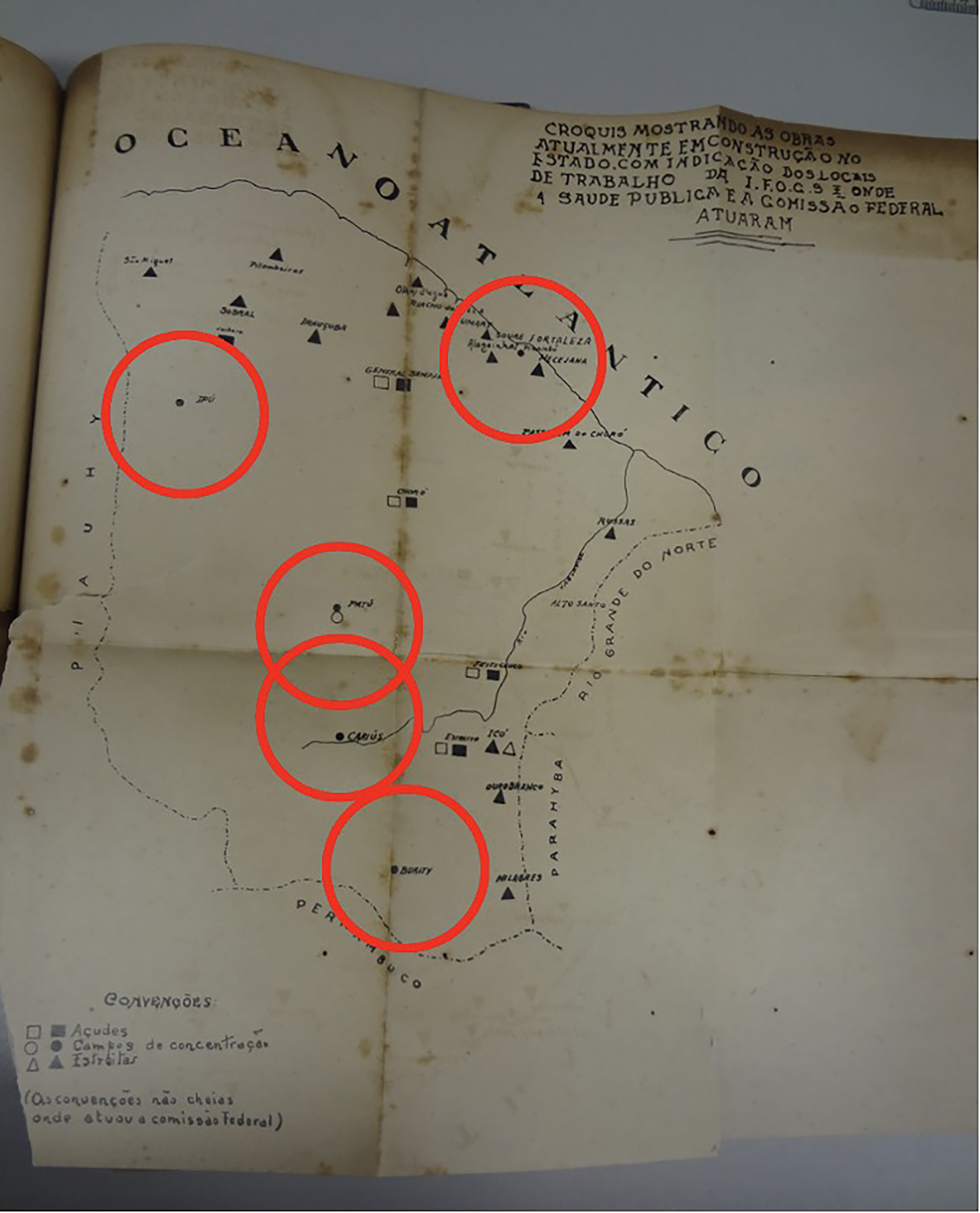
“Sketch showing construction works currently being built in the State [of Ceará], indicating the work fronts from IFOCS, and where the Public Health committee and the Federal Agency operated.” The red circles highlight the location of the 1932 concentration camps. On the original subtitles, squares represent dams, circles represent concentration camps, and triangles represent “estreitas” or road works. Source: Relatório da Comissão Médica de Assistência e Profilaxia aos Flagelados do Nordeste apresentado ao Sr. Diretor Geral do Departamento Nacional de Saúde Pública em 30 de Agosto de 1933 pelo Dr. J. Bonifacio P da Costa- Chefe da Comissão. Rio de Janeiro: Heitor Ribeiro & Cia. 1936/Acervo DNOCS, n.p.
The “migration geography” of drought refugees largely followed the rail lines, as trains facilitated migrants’ journeys (Rios, 2014a: 20). Even with the suspension of ticket distribution, refugees continued to arrive in Fortaleza in 1932 from farther regions (Rios, 2014a: 20). Therefore, it was precisely by the “pontos de trem” (train stops) that the government chose to install the concentration camps as an effort to control the flow of refugees more rigorously. Once established in these locations, the camps received large numbers of drought refugees. Official documents from medical expeditions in 1932–1933 report that 70,000 men, women, and children sought refuge or assistance at camps that year, though it is likely that twice that number passed through during the 1932 drought, with Buriti Camp alone housing that total number of flagelados (Comissão Médica report, 1936 [1933]).
The design and administration of the camps reveal the state's concern for the moral and physical discipline of sertanejos as part of the larger nation-building project. The facilities and infrastructure of the 1932 camps were not much different from earlier iterations. Camp spaces consisted of large fenced or walled areas and were subject to overcrowding. Usually planned to host two to five thousand people, Buriti camp, for example, ended up receiving 70,000 flagelados. While designed and built with proper medical and hospital care, designated spaces for the kitchen and for sanitation such as cesspit latrines and sometimes even showering stations, extreme overcrowding automatically meant an unhealthy environment.
Besides sharing similar principles of use and spatial organization, each Camp in 1932 had different sizes, characteristics and rules. Most of the camps consisted of large temporary sheds made out of timber or larger wood sticks, where families would take refuge from the sun and heat (Figure 1). Flagelado's sleeping arrangements varied from camp to camp. Usually, common provisional shacks made of sticks and straw or with zinc covers served as shaded areas for people to sleep in, using hammocks or resting on the floor. Access to drinkable water was also a determining factor for the government to choose the location of the camps. This water came either from the local dam, where refugees would also be working, from a local pond, or from being pumped or collected with a draw-well from underground (Figure 2).
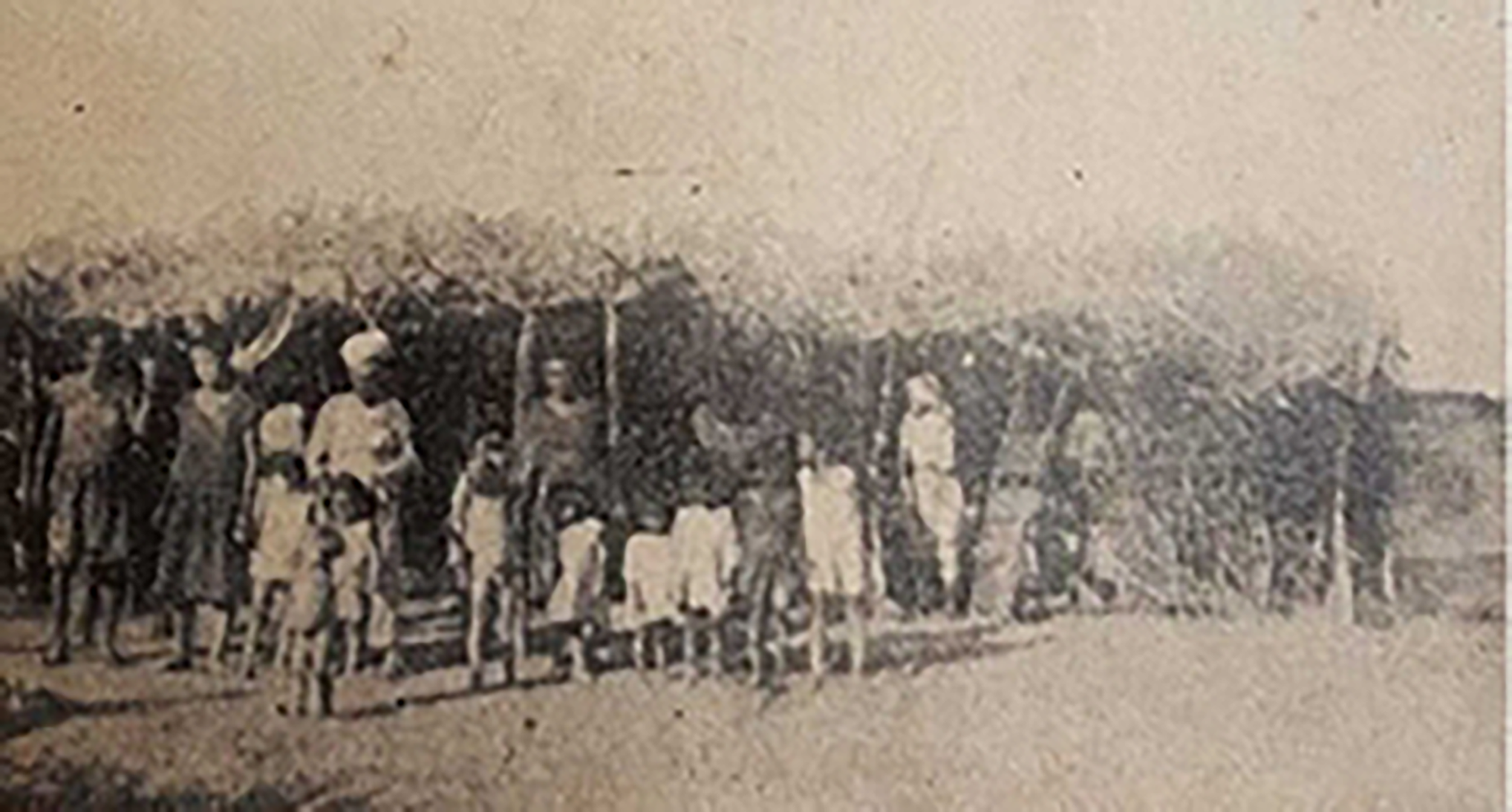
Buriti concentration Camp, 1932. Source: Comissão Médica, 1936 [1933], no page.
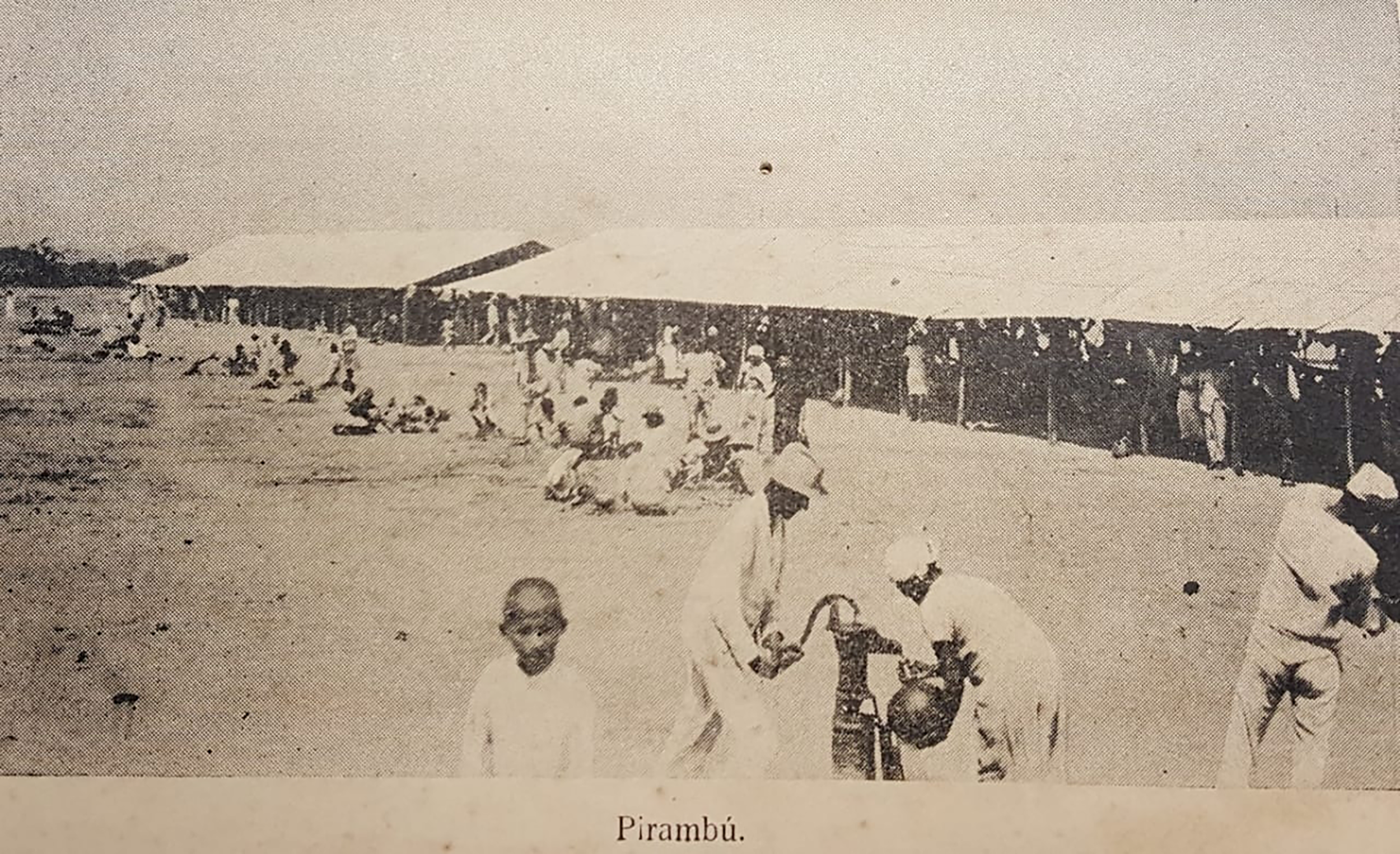
Pirambu concentration Camp in Fortaleza, 1932. Source: Comissão Médica, 1936 [1933], no page.
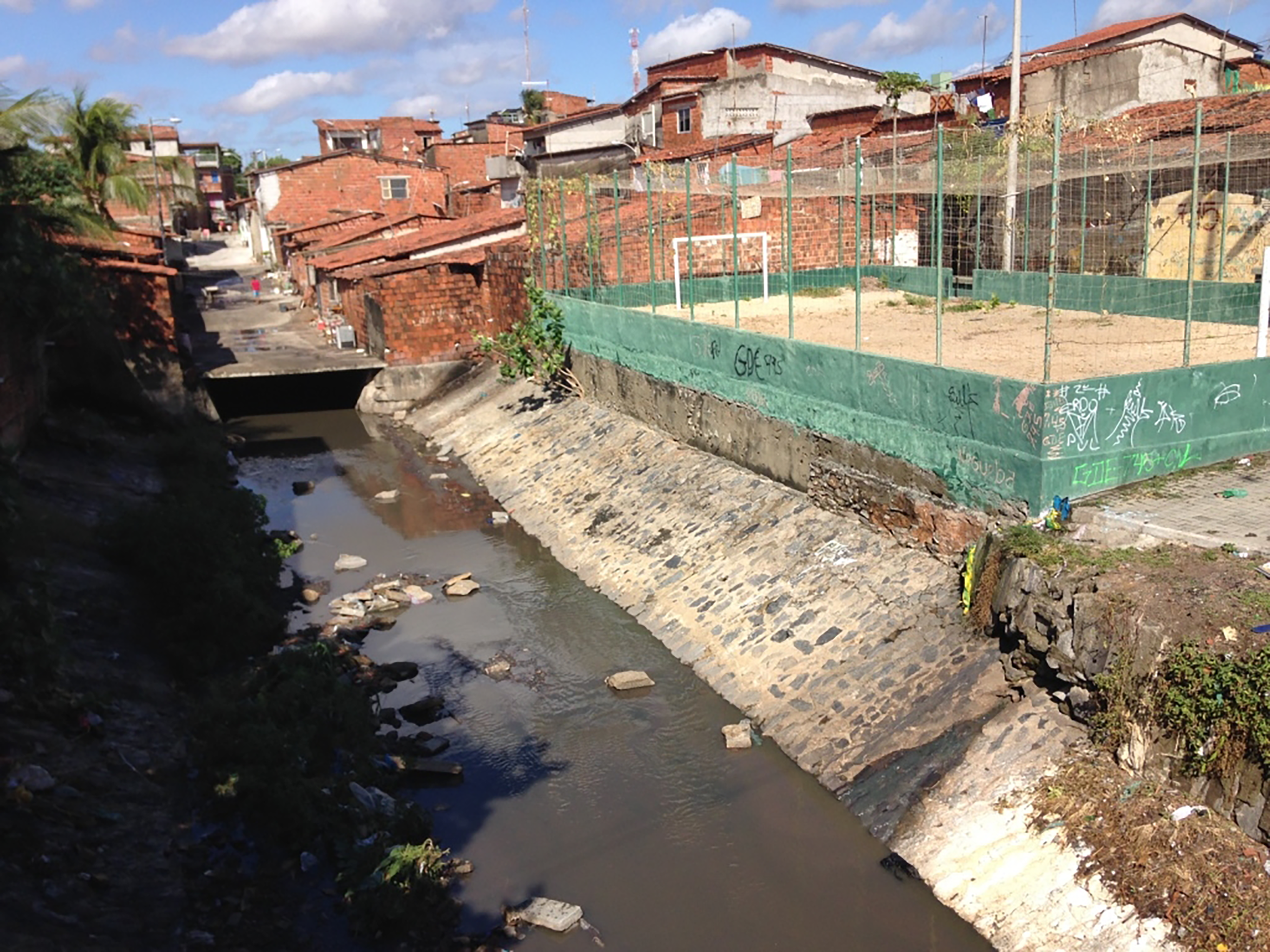
Pirambu community in Fortaleza. June, 2018. Source: Photo by author.
It is worth highlighting that the two camp facilities located in Fortaleza were significantly smaller than those in the countryside, each with a population of around two thousand people. This is likely due to the efficiency of the other camps in retaining drought refugees before they got closer to the capital, as initially planned. Independently, Pirambú (Urubú) and Otávio Bonfim (Matadouro) were considered models for the other facilities in terms of discipline and efficiency and were used as showcases, displaying an exemplary modern and hygienist project to visitors and potential donors. 12
The 1932 camps were walled, with tight control over all entrances and exits for the flagelados. Those who arrived at the camp had no permission to leave unless they were allocated to work within the city, at a dam, or on a road/railroad, leaving the camp premises by truck and always chaperoned by vigilantes. Camp facilities were constantly watched over by guards, who oftentimes were former flagelados themselves. Those who attempted to escape or violated the rules of good behavior were punished. Each camp had different methods and rules for punishing. Control of the flagelados also meant discipline over people's bodies. Within the camps, hygiene, sanitation, and order were top priorities. The most important constructions within the camp premises were bathrooms and medical care facilities, which were often segregated by gender. Changing people's cleaning and living habits– including the introduction of modern sanitation facilities such as latrines—was challenging, and these activities often faced resistance and insubordination from the flagelados. 13
The issue of keeping moral standards was also approached through faith. Similar to the role of the medical team in enforcing modern hygiene and sanitation norms, the Church also played an important part as an instrument of domination and influence on the camps, helping to build Getúlio Vargas’ national identity. Every camp had a chapel and a vicar, who would celebrate baptisms, weddings and communions weekly to keep Catholic ethics in place. Most of the drought refugees came from remote locations where there was no parish, and no official marital status, nor formal or orthodox religious rituals. While most flagelados consider themselves as Catholics, their connection to the Catholic faith was primarily cultural, passed down through oral histories and maintained through home oratories. Therefore, the camp was an opportunity for the Church to reinstate its position among these groups and to reinforce particular moral concerns, such as the idea of sin, including adultery and promiscuity.
All camps were facilities oriented towards labor. Able-bodied flagelados in all camps were necessarily put to work, as idleness was seen as immoral. If one was deemed fit, there were not only external jobs available—such as on roads and dams—but also internal roles within the concentration camps. The overcrowding of camp spaces meant that medical facilities and food distribution were particularly complicated. In Patú camp, about twenty hospital beds served an estimated 20,000 residents, and there were insufficient provisions for the retirantes, who were mostly provided food only once a day. 14 The kitchen and food distribution facilities were two of the most intense and conflict-prone areas in the camps, where fights and riots were very common (Rios, 2014a: 119). With these dire conditions, a high death toll was inevitable. Ipu camp, for example, registered six to seven deaths daily at the height of the drought (Rios, 2014a: 100). Buriti, the largest camp facility, had about 500 corpses buried in common trenches monthly, as reported in a 1933 DNOCS medical report. 15 Despite their terrible conditions, everyday life at the camps also included loose moments of distraction. Former flagelados reported music and dance at night, and even some games and sports.
When the rain comes
All camps and their activities officially ended before mid-1933, when the first rains of the season ended the drought. The bourgeoisie of Fortaleza began to adapt their discourse of “aid towards the refugees,” now emphasizing President Vargas’ national project of progress. Indeed, the distribution of jobs for public works and for the construction of dams and roads always had political and economic intentions, masked as humanitarian aid. As Rios explains, “The control of the retirantes and the development of the city were not practices that excluded one another. Quite the opposite: the progress of urban improvement projects was one of the forms of disciplining flagelados” (2014a: 46). The Minister of Road and Public Works, José Américo de Almeida, described in his 1934 report O Ciclo Revolucionário do Ministério da Viação (The Revolutionary Cycle of the Ministry of Transport) how it was precisely “in order to use the flagelados’ workforce that different kinds of services were promoted by the Superintendence of Drought Works, such as the implementation of infrastructure for the use of the telegraph, the stabilization of sand dunes, development works for a canal […]” (Almeida, 1934: 183). Once the drought ended, federal aid ceased—both in the camps and beyond.
Since flagelados could no longer stay in the camps, the distribution of transportation tickets and farming seeds was a strategy to encourage people to return either to their places of origin or to other states. This strategy served both to ease the social conflicts occurring in the capital and to help rural landowners take advantage of the surplus labor power returning to the countryside. At the same time, local elites insisted that those allocated to work on public works and urban improvements in Fortaleza should not cease their production (Rios, 2014a: 78). Regardless, the temporary spatial construction of the concentration camps helped materialize existing dynamics of local urban and rural powers in Ceará.
Looking at Fortaleza today, the historical aspects of the city's growth and formation, and its connections to the consequences of the drought periods, are still very present through recognizable traces of the former systems of social control and segregation imposed on the refugees. The impact of the abarracamentos and the concentration camps persists in many ways, with the city's layout and its growth reflecting these long-lasting unequal urban and social policies and their resulting excluded spaces.
Grande Pirambú, for example, is a community and neighborhood that developed precisely in an area adjacent to where the Pirambú (also known as Urubú) camp was once located (Monteiro, 2018). The Pirambú camp was established near the train tracks, between the Pirambú neighborhood and the port (Neves, 1995: 108): “The chosen location [of the camp] by the beach, not so close to the ocean, right by the workshops of R.V.C. (Rede de Viação Cearense/Railroad Network), in Urubú. The main lodging had its construction initiated last Saturday, considering the proximity of a large pond of potable water, also known as the Honey Pond” (O Povo, April 11th, 1932). Pirambu was originally a region of dunes and difficult to access. Despite its favorable location by the ocean, the unstable terrain and its windward position were two key reasons why Fortaleza did not expand in that direction. Used for various quarantine facilities to isolate and treat people with leprosy since 1856, the area was neglected for decades, while Fortaleza's sewage system was directed to this zone, where it was discharged into the ocean starting in 1927 (Monteiro, 2018: 36).
Pirambú was also known as the first industrial zone of Fortaleza. Industrial activity began in the 1930s with the arrival of mechanical facilities for the state's rail company (RVC), known as the Urubú workshop (Brasil and Cavalcanti, 2015: 7). This was also a major factor attracting migrants to the area. Besides the drought refugees placed in the camp, many newcomers settled nearby, gradually contributing to the urban sprawl of the neighborhood. Despite its rapid growth, Grande Pirambú remained spatially limited and isolated from the rest of the city. According to the 2010 Brazilian Census, Grande Pirambu has at least 42.6 thousand inhabitants and over 11 thousand households, making it the greatest favela (slum) of Fortaleza and the seventh largest favela in the country, comprising three different neighboring communities. “In this process” reflects Rios (2014a: 31), “the dispossessed evacuees [retirantes] stopped being flagelados, and became favelados [slum dwellers].”
This transition from flagelado to favelado clearly demonstrates how drought refugees were treated differently depending on climatic conditions—whether temporarily supported through aid and shelter in the camp, or later neglected and left to live as part of the urban poor—while maintaining their exclusion within Fortaleza's urban fabric. As Huq and Miraftab (2020) maintain, there are many connections between camps and informal settlements for displaced populations globally, and the transition from Pirambú camp to Grande Pirambú favela illustrates this point well. The shift from “camp” to “favela” in Pirambú reflects a broader transformation: when government aid completely ceased, displaced populations were no longer part of any formal planning efforts, yet they remained structurally excluded from the city nevertheless (Figure 3).
Conclusion: Drought (im)mobilities
In this paper, I presented the history of the concentration camps of the 1930s in the Brazilian state of Ceará, built by the local and national governments as aid spaces for drought refugees. While ephemeral, I argue that these camp spaces had long-lasting consequences: from influencing the formation of Fortaleza's expansion and the organization of its rural-urban relations, to broader spatial, societal, and political effects—such as playing key roles as mechanisms used to consolidate patterns of power, control, and exclusion by the state and local elites, as part of a project of nation-building and an effort to discipline a rural proletariat on the move.
By engaging in a spatial analysis of the Brazilian concentration camps, I have highlighted the role of the built environment as an active agent in shaping the dynamics of care, control, and exploitation of local climate-dispossessed refugees. As such, the paper shows how population movements prompted by climatic emergencies—and the responses to them in the form of environments of aid and shelter—might create urban changes that persist for years, and even decades, after the crisis has passed.
Highlights
Brings to light the history of Brazilian concentration camps for Northeastern climate refugees in the early twentieth Century and places it within a comparative body of scholarship on refugee encampments worldwide.
Highlights the 1915/1932 Brazilian concentration camps as mechanisms of care and control aiming to incorporate encompassing ideals of modernization and progress.
Provides evidence for the significant role of the built environment in these camps.
Places the concentration camps within the ongoing discourse about climate, labor and migratory histories in Brazil and beyond.
Footnotes
Acknowledgments
Special thank you to Irit Katz and Fatina Abreek-Zubiedat.
Declaration of conflicting interests
The author declared no potential conflicts of interest with respect to the research, authorship, and/or publication of this article.
Funding
The author received no financial support for the research, authorship, and/or publication of this article.
