




Abstract
There are numerous anecdotal examples of drought terminations documented throughout the historical record on most continents. The end of a drought is the critical time during which water resource managers urgently require information on the replenishment of supplies. Yet this phase has been relatively neglected by the academic community, with much of the existing body of research on drought termination assessing the likelihood of droughts ending rather than its temporal profile. In particular, there has been little effort to characterise drought termination events themselves. This is partly explained by existing definitions of drought termination as a specific point in time when drought is considered to have finished, rather than a more holistic consideration based on approaches developed within biological sciences. There is also a lack of understanding about how drought termination propagates through the hydrological cycle. This paper specifically examines and reviews available research on drought termination, highlighting limitations associated with current definitions and offering suggestions for characterising the temporal stages of drought. An alternative definition of drought termination is proposed: a period between the maximum negative anomaly and a return to above-average conditions. Once this phase has been delineated, the duration, rate and seasonality of drought termination can be derived. The utility of these metrics is illustrated through a case study of the 2010–2012 drought in the UK, and the propagation of drought termination between river flows and groundwater levels.
Keywords
I Introduction
Drought is a well-studied phenomenon and has been given substantial attention in the literature. Its multi-faceted nature has confounded a universal definition and hundreds of indices have been developed to characterise drought with a wide range of applications in mind (Lloyd-Hughes, 2014). The multiple factors that should be considered when defining drought (e.g. the type of data, and the spatial and temporal scales) have been discussed extensively (e.g. Dracup et al., 1980; Tallaksen and Van Lanen, 2004).
Drought termination is a characteristic of a drought event that describes its end. Drought terminations are often abrupt and disruptive (Dettinger, 2013; Rulinda et al., 2012), and their association with high-flow events can have substantial impacts on the water quality of rivers (Whitehead et al., 2009). Just as droughts are an international phenomenon, so too are drought terminations. Examples in the literature of notable drought terminations and their impacts, reported from every continent except Antarctica, are outlined in Table 1.
Examples of notable drought terminations internationally.
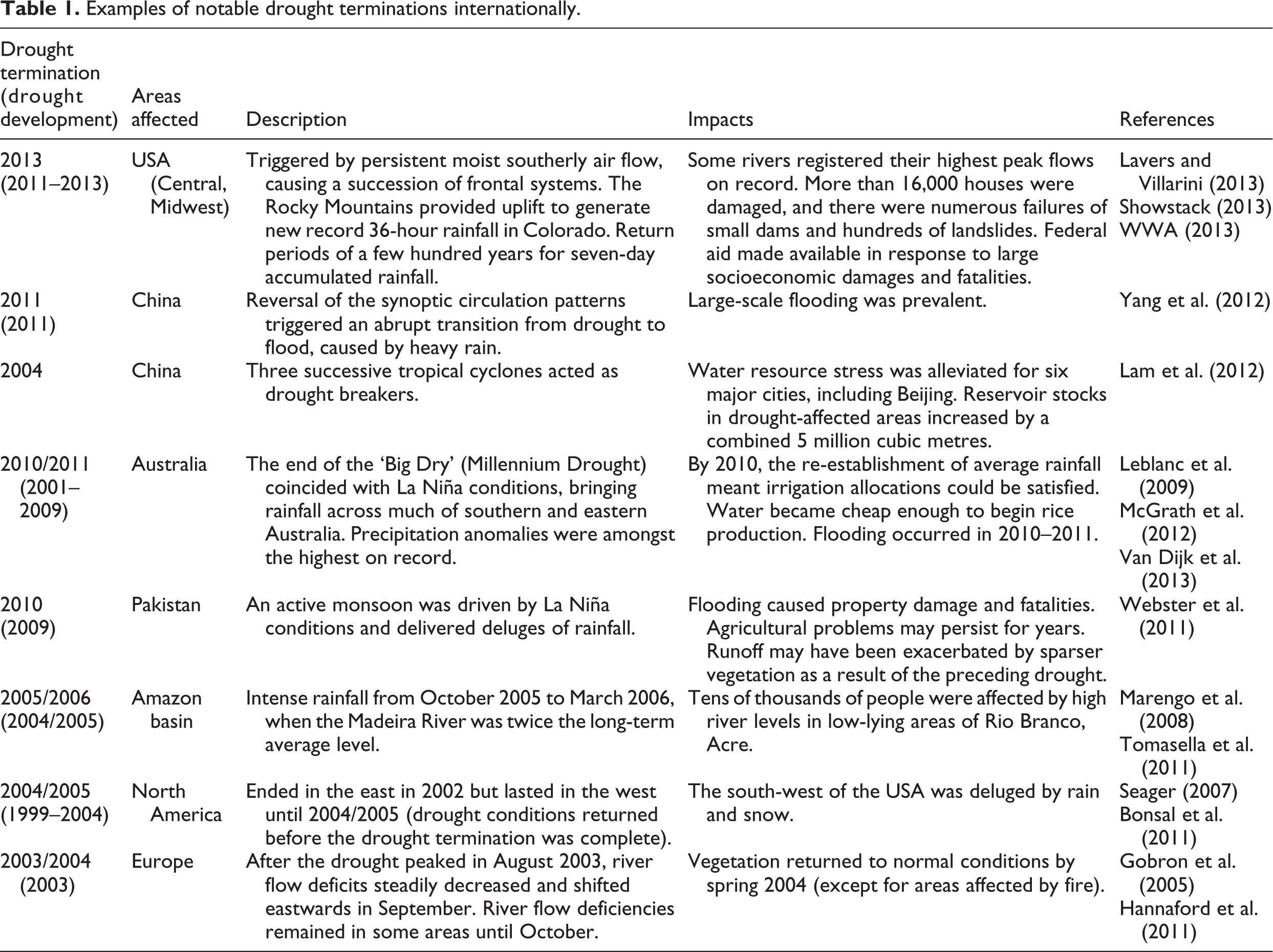
In addition to being associated with notable hydrometeorological events, it could also be argued that the end of a drought is its most critical phase. The consequences of continued drought can be far reaching, such as impacting food security and even the global economy (McNutt, 2014). Improved knowledge of the likelihood of when, why and how a drought might terminate would be useful for decision-makers in managing the transition from drought to replenished water supplies (Hannaford et al., 2011; Patterson et al., 2013). To date, this phase has been neglected in the literature relative to other facets, such as drought severity (e.g. Sharma, 1997) or onset (e.g. Yuan and Wood, 2013).
Propagation of drought termination through the hydrological cycle and associated ecosystems is currently not fully understood, but an improved understanding of the underlying physical processes could lead to better monitoring and forecasting capability. Drought monitoring and early warning systems must address the challenge of appropriately defining the end of a drought throughout the different elements of the hydrological cycle (rather than just meteorological; Shukla et al., 2011). However, at present early warning systems are hindered by existing drought indices which do not adequately characterise or identify drought termination (Heim Jr. and Brewer, 2012). The lack of appropriate methods for forecasting drought termination has also been identified as a major challenge (Panu and Sharma, 2002).
The drivers and physical processes of drought termination are poorly understood for historical and contemporary events, and it has been suggested that drought termination of severe droughts may be increasingly difficult in future. Increasing temperatures and evapotranspiration may inhibit drought termination, with subsequent drought events superimposed on incomplete drought terminations (Gutzler and Robbins, 2011). If the typical timeframe between droughts becomes shorter than the duration of replenishment for water resource infrastructure, the outlook for society will be challenging (Patterson et al., 2013), and the superimposition of the next drought upon below-normal water availability could have serious implications for water resource management (Thomas et al., 2014).
The phrase ‘drought recovery’ implies a longer-term focus on the impacts of a drought in terms of water quality and ecology, amongst others. The review material and improved approach introduced in this study discusses ‘drought termination’, which is more focused on the return of river flows to ‘normal’ conditions. Whilst it is acknowledged that cumulative deficit approaches are relevant and important for some studies on the recovery from drought (such as those on the concept of resilience, for example), the focus on river flow dynamics herein does not require the replenishment of an accumulated deficit volume. Such approaches are, therefore, beyond the scope of the review material. Drought termination will be used throughout with the exception of the part of the literature review which draws insights from ecological research, in which the notion of longer-term recovery is well established.
The following section examines the scientific literature, outlining key limitations of current approaches for defining the drought termination and suggesting possible improvements. An alternative definition of drought termination and its associated metrics are then outlined. The utility of these metrics in characterising drought termination is demonstrated with reference to a case study of the 2010–2012 drought in the UK. Finally, some perspectives are presented on outstanding knowledge gaps in the field of drought termination research.
II Drought termination: A review
1 Quantification of drought termination
The number of indices dedicated specifically to quantifying drought termination is relatively limited. Indicators that have been used in analyses of the end of a drought are briefly evaluated in Table 2. Some assess the likelihood of a return to ‘normal’ conditions according to climatological probability (Byun and Wilhite, 1999), applying indices such as the Palmer Drought Severity Index (PDSI), the Standardised Precipitation Index (SPI) or rainfall deciles. Using the decreasing steepness of river flow recessions following successive rainfall events during termination, Kienzle (2006) estimated the return of the baseflow component of the hydrograph by applying a recession index. Composite indicators have been applied by Hao and AghaKouchak (2013) and Naumann et al. (2014), coupling meteorological and soil moisture indices in order to provide a better representation of drought termination across a broader range of hydrometeorological systems. The Multivariate Standardised Drought Index (MSDI; Hao and AghaKouchak, 2013) combines a meteorological index that potentially improves detection of onset (because a rainfall deficit is the principle driver of drought) with a soil moisture index that better represents drought persistence, and, therefore, drought termination (because the replenishment of soil moisture is a prerequisite for further propagation of drought termination into river flows or groundwater levels). Naumann et al. (2014) also combined meteorological and soil moisture indicators and found evidence of spatial variability in drought termination in the historical record for four major river basins across Africa. There was concurrence across drought indices in the timing of drought termination but the area over which this occurred varied (Naumann et al., 2014), suggesting that the area over which drought termination occurred differed depending on the element of the hydrological cycle under consideration (i.e. rainfall or soil moisture). In the UK, ratios relating average hydrological conditions during the 2010–2012 drought with those during the drought termination were calculated for river flows, soil moisture and reservoir stocks by Parry et al. (2013). However, the timeframes were arbitrarily chosen and, therefore, cannot be used to place the 2012 drought termination in its full historical context. Byun and Wilhite (1999) asserted that existing drought indices do not adequately address the drought termination phase, and fail to consider propagation through surface and subsurface elements of the hydrological cycle.
Examples of indices in the academic literature used to assess drought termination.
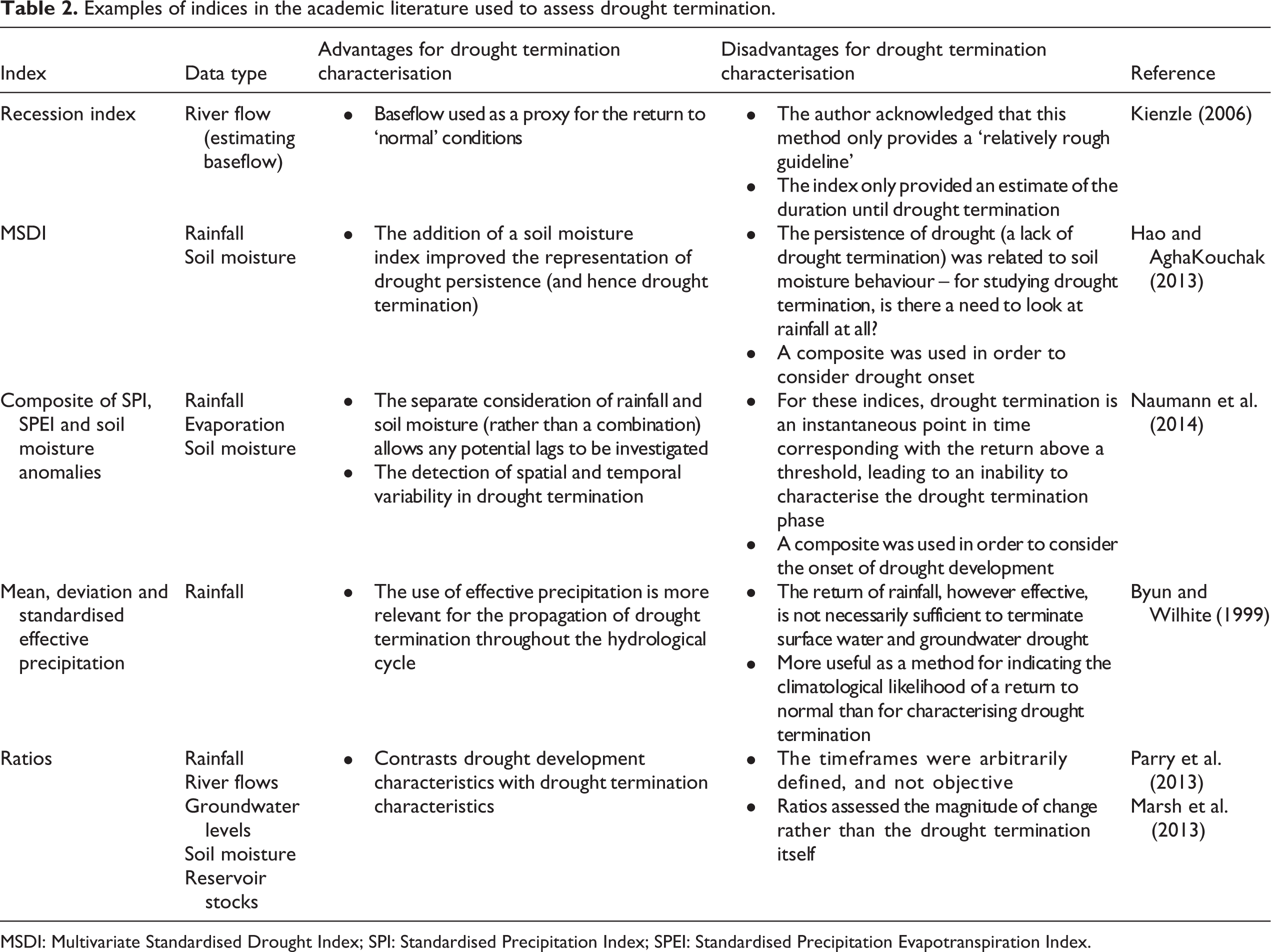
MSDI: Multivariate Standardised Drought Index; SPI: Standardised Precipitation Index; SPEI: Standardised Precipitation Evapotranspiration Index.
2 From catchment to synoptic scale
At the local scale, drought termination has received some attention through catchment water balance studies. For example, Lange and Haensler (2012) analysed the partitioning of runoff from nine post-drought events, and reported that event rainfall dominated initial peak flows but subsurface water gained importance with each subsequent rainfall event. Re-wetting of the soil profile from lower to upper horizons during drought termination events (Miller et al., 1997) may account for this delayed subsurface response, as well as potential lags between wet weather and increased river flows (Mitchell et al., 2012). Conversely, the complexity of the drought termination process within the soil column is illustrated by Sridhar et al. (2008), who found that surface layers re-wetted during the cropping season whilst lower horizons continued in deficit through the remainder of the year. The prolonged nature of flow increases at the end of droughts relative to recessions following floods has been established for both soil moisture (Brubaker and Entekhabi, 1996) and groundwater borehole levels in aquifers (Eltahir and Yeh, 1999). Thiery et al. (1993) tested the hypothesis that average rainfall over a given period of time was sufficient to terminate groundwater drought in an aquifer in Burkina Faso, and found that levels could take a decade to return to normal under such a scenario.
The aspect of drought termination that has perhaps received greatest attention in the literature is the larger, synoptic scale factors that act as drivers. Given that much of the existing research has been conducted in North America, the emphasis has been on understanding the influence of tropical cyclones on drought termination. Kam et al. (2013) compared runs of a land surface hydrological model driven by rainfall series which include and exclude the precipitation delivered by tropical cyclones. These low-pressure systems were found to trigger earlier drought termination, playing a crucial role in reducing the impact of drought in coastal areas of the USA, a potentially undervalued benefit of tropical storms (Lam et al., 2012). Across the period 1895–2011, Maxwell et al. (2013) detected an increase in the number of hurricanes that terminate drought events in the south-eastern USA, and an increase in the area experiencing drought relief from these storms along the Gulf Coast. Patterson et al. (2013) found that short-duration hydrological droughts tended to terminate throughout the summer half-year, most likely during the hurricane season in Atlantic parts of the USA, while long droughts generally terminated in the late spring or early summer, and were least likely to end during winter. For the west coast of the USA, Dettinger (2013) found that atmospheric rivers (pathways of water vapour transport in the upper atmosphere) terminated between 33% and 74% of all droughts over the period 1950–2010. In addition, the importance of surface–atmosphere interactions was underlined by Roundy et al. (2013), who found that a change in coupling mechanism between the wet season and the dry season in the south-eastern USA meant that drought termination was less likely once the wet season had ended.
3 Monitoring and forecasting drought termination
There have been a number of studies on the monitoring of fluxes of terrestrial water storage (TWS) which capitalise on the latest developments in remote sensing technology. Such approaches provide data on and allow analysis of drought development and drought termination (amongst other phenomena) on a spatial scale not previously possible. The Gravity Recovery and Climate Experiment (GRACE) method has been particularly useful for identifying changes in quantities of water over large spatial scales. In Australia, GRACE data demonstrated the lagged hydrological drought termination in 2009 despite the return of rainfall over the Murray–Darling basin in 2007 (Leblanc et al., 2009). An increase in TWS in the Okavango and Zambezi basins was attributed to a transition to a wetter phase following drought (Ahmed et al., 2014). In addition, GRACE data for the Amazon basin detected a change in TWS from a new minimum to a new maximum value over a six-month period in 2005/2006 (Chen et al., 2009), representing the termination of the most severe drought in more than 100 years in this region. In contrast to the lags detected in Australia by Leblanc et al. (2009), the Amazon study by Chen et al. (2009) suggested there was little lag between meteorological, soil moisture and hydrological drought terminations in 2005/2006. In China, GRACE data tracked drought termination in 2009/2010, but this was interrupted by the onset of the next episode (Tang et al., 2014). Wang et al. (2012) found that gains in TWS over the first decade of the 21st century could be explained by the drought termination in the Canadian Prairies in 1999–2005. Houborg et al. (2012) explored the integration of GRACE-based drought indicators with North American drought monitors, whilst Heim Jr. and Brewer (2012) underlined the importance of including drought termination within any monitoring framework. Global Positioning System (GPS) vertical position anomalies (measured at stations across the High Plains region of central USA) were used as an appropriate substitute for absent GRACE data, and demonstrated that soil moisture drought termination lagged three to six months behind the meteorological drought termination in the USA in 2012/2013 (Chew and Small, 2014). GPS vertical position anomalies were also shown to detect both uplift and reloading of the Earth’s crust in the western USA in response to drought and wet conditions, respectively (Borsa et al., 2014). Remote sensing instruments have also been used to assess the return to normal of vegetation, for example during the 2003 drought in Europe (Gobron et al., 2005).
Forecasting drought termination is regarded as more problematic (Byun and Wilhite, 1999) than drought onset (Mo, 2011). This is because existing indices are not sufficiently precise to identify the end of a drought, and no adequate solutions have been found that solve problems associated with the predictability of drought termination (Byun and Wilhite, 1999). Hunt (2009) explored the potential use of the El Niño Southern Oscillation (ENSO) in predicting drought characteristics, but found that properties (including drought termination) are essentially random, with stochastic forcings suggesting little predictability. Seager (2007) reached a similar conclusion in a study of North American drought events. In this case, an ensemble of climate model simulations failed to capture the delayed drought termination in regions of the USA, leading to the conclusion that spatial variability in drought termination was not predictable from oceanic forcings. However, some studies have demonstrated more promising results: Sigaroodi et al. (2014) forecasted rainfall events that provide drought relief with moderate accuracy, although the magnitude of rainfall was poorly predicted; Hannaford et al. (2011) found that there was some ability to forecast drought termination using statistical relationships of the spatial coherence of drought across European regions; and Shukla et al. (2011) hindcasted historical droughts in Washington State, USA, using meteorological, hydrological and soil moisture drought indices, and suggested that drought termination was predictable up to four months in advance of official announcements.
The question of how much rainfall is required to terminate a given drought is of paramount importance to the forecasting of drought termination, often in response to both public interest (Byun and Wilhite, 1999) and water resource management. One of the earliest dedicated studies used the PDSI to calculate the amount of rainfall required for drought termination over a range of timeframes (Karl et al., 1987). The climatological probabilities of receiving those amounts of rainfall were quantified using a gamma distribution, and results varied spatially and temporally. Antofie et al. (2014) applied the PDSI in a similar way to the Carpathian region of Europe, and found that the areas with the largest quantities of rainfall required for drought termination had the lowest climatological probability of receiving such totals. The local controls on the relationship between rainfall deficit and likelihood of drought termination are important in determining spatial variations in the characteristics of drought termination. More recently, sophisticated gridded soil moisture and hydrological models were used to address the same question (e.g. Bell et al., 2013; Pan et al., 2013). The models were able to assess the amount of rainfall required to replenish subsurface water storage at a spatial resolution of ∼15 km (0.125°; Pan et al., 2013) down to 1 km (Bell et al., 2013), but these studies departed from Karl et al. (1987) in their application of ensembles of rainfall forecasts to indicate the likelihood of drought termination. Others have used the maximum and average rates of change in storage applied to the deficit at the current time step to calculate the minimum and average time for drought termination (Thomas et al., 2014). Whilst these studies addressed important questions, they only focused on drought termination in soil moisture and subsurface stores. However, there is a need to extend these analyses to hydrogeological drought termination to inform wider water resource management.
4 Insights on drought termination from ecological research
Whilst drought termination has been relatively neglected in the hydrological literature, greater attention has been given to post-drought ‘recovery’ in the field of ecology, suggestive of a more holistic transition at the end of a drought. Ecologists are often more interested in the recovery from drought than the impacts of the drought itself. For example, Holmes (1999) focused predominantly on the 1993–1995 period when studying the effects of the 1988–1992 drought on streams draining the Chalk of southern England. Variation in the resilience of different communities was found, with some systems returning to predicted states whilst elsewhere pre- and post-drought conditions were notably different.
Ecosystem structure and function change as the system becomes progressively stressed during drought, but recovery does not necessarily restore the system to the same state (Lake, 2011). There are an unknown number of possible recovery trajectories; determining the extent to which recovery is ‘complete’ is difficult in the absence of long-term datasets, particularly when recovery proceeds towards an alternative state. It is perhaps more appropriate to define recovery as the ‘restored capacity to withstand natural disturbances’ (Bond et al., 2008), allowing ecosystems to reconfigure in ways that maintain functionality (Ledger et al., 2013). According to this definition, it is not important what form the recovered ecosystem takes; the most relevant aspect of the post-drought ecosystem is the restoration of resilience to future stresses (drought or otherwise).
In hydrometeorological studies of drought development and drought termination, amounts of water fluctuate between high and low, either rising or falling, but always moving in one of two directions. In ecology, the behaviour is much more complex reflecting different life cycle lengths and habitat preferences. The development of ecological indices of recovery is hindered by some of the same issues that affect hydrological drought termination metrics. Intermittent rainfall and pulses of high flows may temporarily ease drought conditions, yet are insufficient to lead to complete recovery (‘ramp’ response of Lake, 2000).
Considerations of the different rates of recovery are familiar to ecologists. Although ecological recovery can be rapid, many species tend to recover slowly (Cowx et al., 1984; Stubbington et al., 2009), particularly when considering taxa with long life cycles and slow growth rates. The duration of the recovery phase can often exceed that of the drought itself. This creates a potential problem when distinguishing between drought development and drought termination phases. Ecosystems may not fully recover from a previous drought before becoming stressed by a subsequent event and the interruption of a recovery phase by a subsequent drought can have a substantial impact on species richness (Lake, 2011). For instance, ecological studies in the 1990s in the UK observed the impacts of the 1995–1997 drought superimposed upon partial recovery from the 1988–1992 drought (Westwood et al., 2006). A systematic assessment of hydrological drought terminations is required before conclusions can be drawn on the prevalence of interrupted recovery in hydrometeorological terms. It has also been suggested that the completion of drought termination before the next occurrence of drought may become less likely in the future due to increasing temperatures and evapotranspiration (Gutzler and Robbins, 2011).
Flora and fauna are generally slower to respond to rainfall at the end of a drought because an additional lag is introduced whilst hydrological conditions recover in rivers, lakes and groundwater. Nevertheless, there is evidence to suggest that recoveries extending up to two years represent the upper limit for most macrophytes and invertebrates in temperate environments, regardless of how prolonged or severe the preceding hydrometeorological drought (Holmes, 1999; Wood and Armitage, 2004). The recovery of fish populations may take longer, typically up to three to five years (Lake, 2011), and potentially even longer for some iconic species such as sea-trout and salmon (Elliott et al., 1997). The restoration of habitats is not sufficient to trigger immediate recovery because there may be additional lags associated with long-term migratory factors. Successive drought and recovery phases may also impact the phenology and hence community structure of aquatic species via water temperature effects linked to variations in river flow (Everall et al., 2014).
Drought recovery in temperate ecosystems is more likely to occur during the wettest season (Holmes, 1999; Wright et al., 2002). The increased effectiveness of rainfall is a factor that influences hydrogeological and ecological drought terminations. The extent of drought termination or recovery under moderately wet conditions through the summer half-year has not been adequately addressed in either hydrology or ecology. The rate and magnitude of ecological recovery is partly determined by the season in which drought termination occurs (Holmes, 1999), and this is superimposed upon annual cycles of growth and reproduction (Wright and Symes, 1999). The variation in seasonal response may also exist in hydrology due to variations in the ‘effectiveness’ of rainfall – the extent to which the impact of rainfall on river flows and groundwater levels is negated by the reduction of soil moisture due to evapotranspiration. Similarly, drought characteristics influence the distribution of species and refugia (Lake, 2011), and these represent the antecedent conditions from which recovery begins. In this ecological sense, the characteristics of drought have an important impact on the subsequent recovery (Wood and Petts, 1999).
To summarise, there appears to be a greater appreciation in ecological studies that the return of rainfall is not necessarily sufficient for full ecosystem recovery. Recovery can be complex and long-lasting, often influenced by the characteristics of the preceding drought, and propagates at different rates through hydrometeorological systems and ecosystems. The return to ‘normal’ conditions is considered by ecologists to be a phenomenon worthy of study in its own right.
5 Toward new ways of defining drought termination
Many of the studies outlined above draw conclusions about the end of droughts based on an inadequate definition of drought termination. This is because drought indices usually include a termination criterion (such as a pre-determined period of time above a given threshold) to indicate cessation of drought conditions; drought periods are, therefore, treated as occasional deficits from ‘normal’ conditions (Figure 1). However, drought termination is often associated with wet conditions and can result in severe flooding, diverging from the common concept of drought as a dry period. Moreover, an instantaneous transition from deficit to ‘normal’ conditions ignores the fact that water will be replenished over a period of time. Characterising the duration of drought termination would enable the differentiation of hydrometeorological conditions leading to drought development (dry) or drought termination (wet).
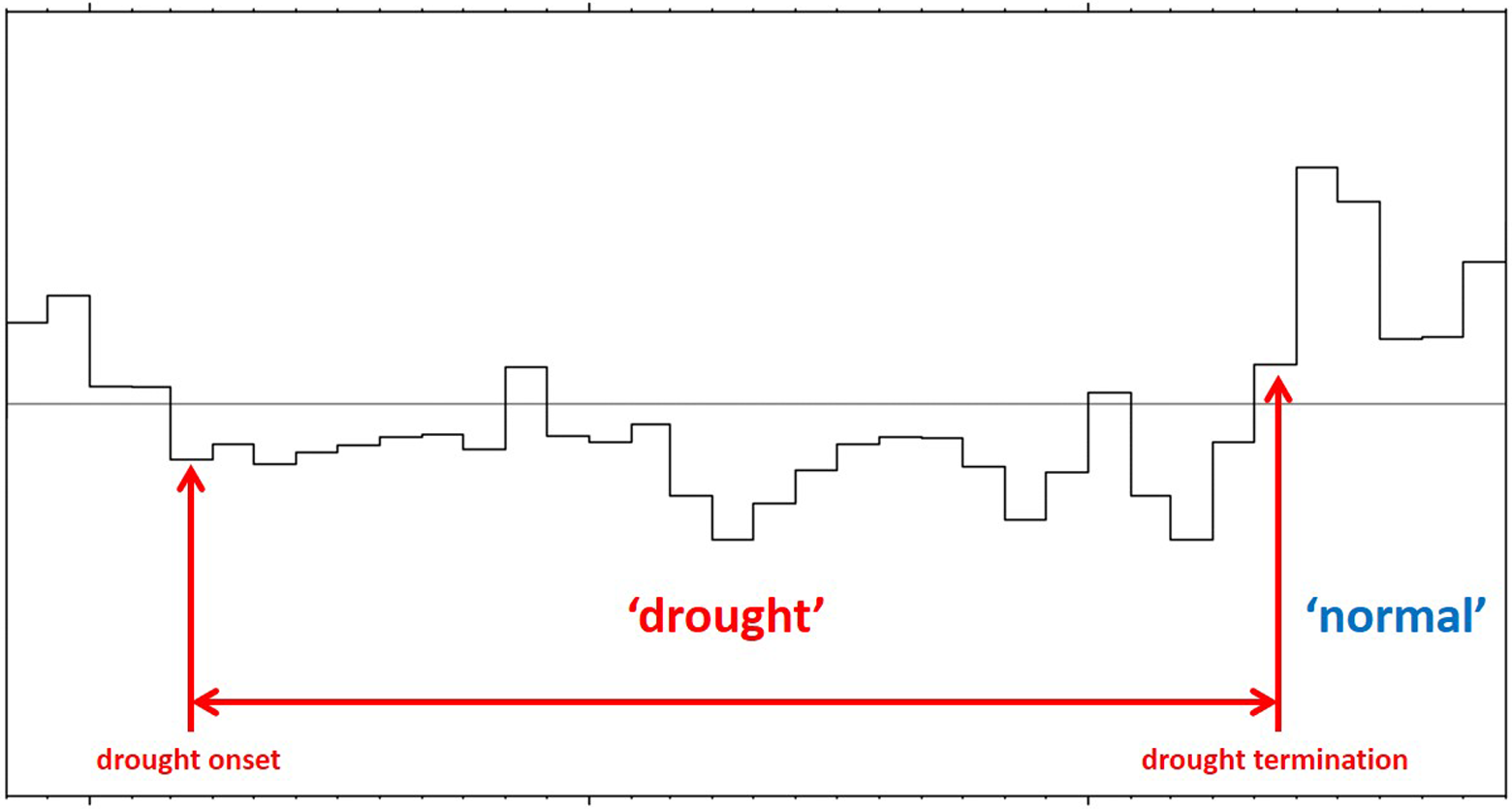
Conceptual diagram of existing definitions of drought termination. The grey line represents the long-term average (LTA) value for each time step and the black line represents positive and negative anomalies (%) from the LTA.
A small number of studies have attempted to characterise the drought termination phase. For example, Mo (2011) outlined a transition period at the end of a drought which can last for one month to one season, and underlined that the duration was much shorter for drought termination than for drought development. Bonsal et al. (2011) delineated six different periods within a drought (‘Onset’, ‘Growth’, ‘Persistence’, ‘Peak’, ‘Retreat’ and ‘Termination’). The ‘Termination’ represents the end point of the drought, whereas the ‘Retreat’ phase most closely aligns with a period of drought termination. Although Bonsal et al. (2011) went further than most studies in characterising the spatio-temporal evolution of drought termination, the sub-divisions were defined using thresholds of spatial extent. The ‘Retreat’ phase was assigned after the ‘Peak’ for months in which between 50% and 10% of the study area was under severe drought or worse, according to thresholds of the SPI and the PDSI. Given the variability of spatial and temporal signatures of droughts (Parry et al., 2012), this might not always be the most appropriate way to categorise drought periods, because a drought may intensify in time whilst decreasing in spatial extent. Nkemdirim and Weber (1999) quantified the rate of return to normal conditions based on increases in PDSI units per year, which gives an indication of the magnitude of change during drought termination.
III Defining drought termination and deriving metrics
1 An improved definition of drought termination
Studies in the ecological literature demonstrate that the return to normal conditions at the end of a drought can often be protracted and complex. It is important that drought termination is associated with a duration over which conditions return to ‘normal’, in order to characterise other properties of drought termination. Here, an improved way of conceptualising drought termination is proposed (Figure 2), with a novel combination of drought termination metrics illustrated in Figure 3. A drought period can be sub-divided at the point of the maximum negative anomaly (e.g. Bravar and Kavvas, 1991) into phases of ‘drought development’ and ‘drought termination’, allowing a duration for each of these phases to be derived. The drought termination rate can be calculated as the magnitude of change over the drought termination duration, and the drought termination seasonality is the season(s) encompassed by the drought termination duration.
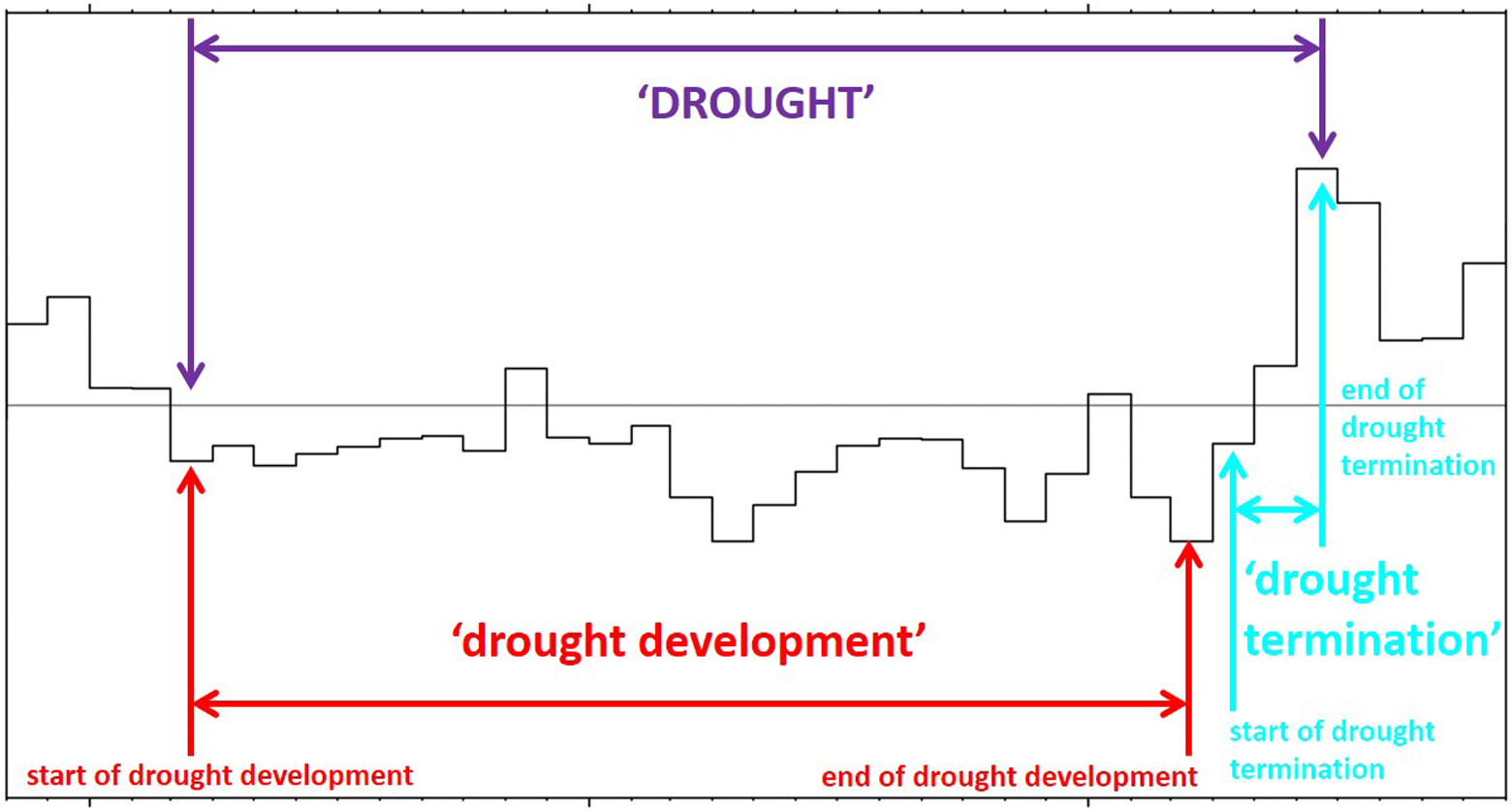
Conceptual diagram of an alternative definition of drought termination. The grey line represents the long-term average (LTA) value for each time step and the black line represents positive and negative anomalies (%) from the LTA.
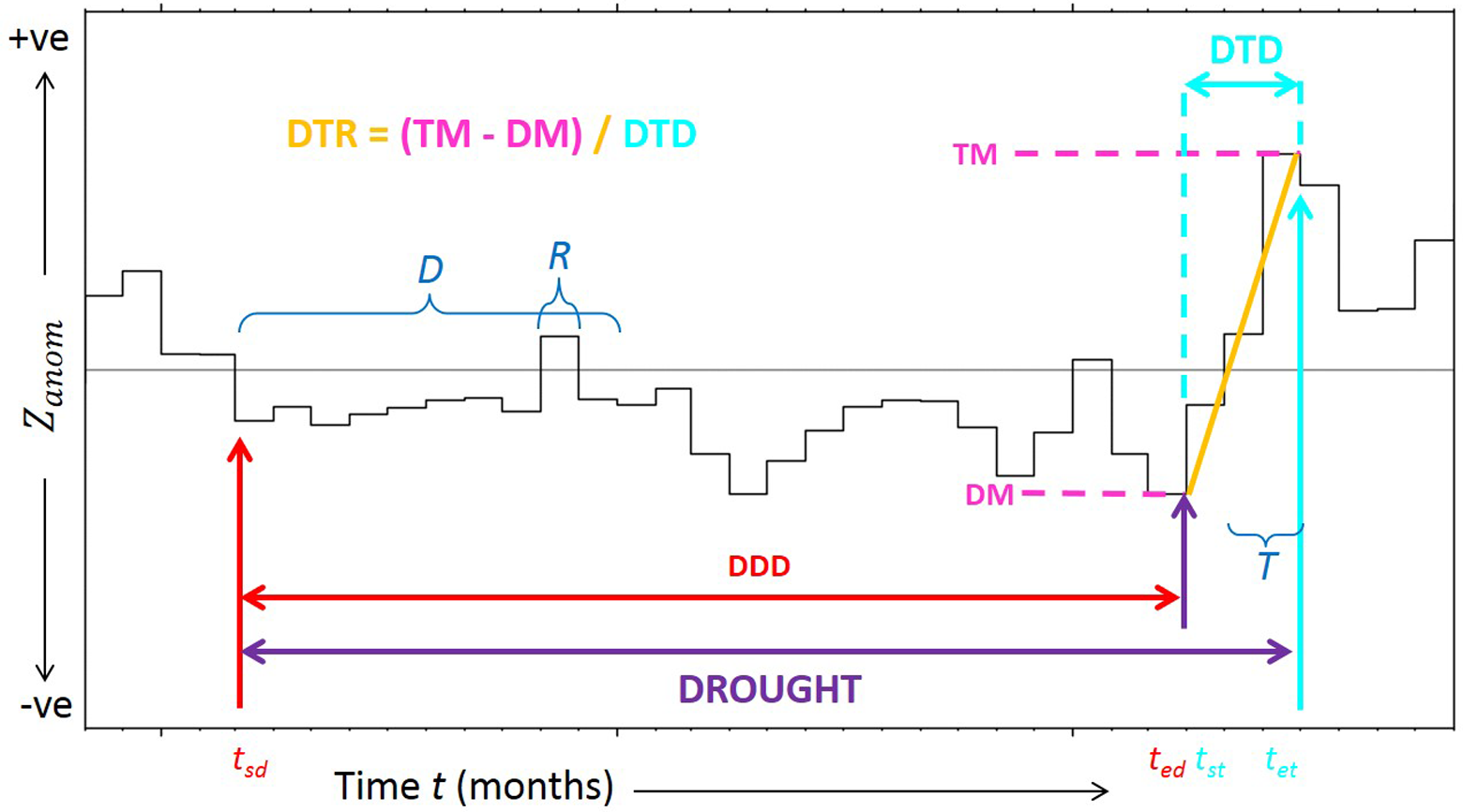
Conceptual diagram of the new drought termination metrics. The three parameters are as follows: D is the number of below-average time steps required for the drought development phase to begin; R is the number of intermittent above-average time steps permitted within D; and T is the number of above-average time steps required for the end of drought termination. tsd is the start of drought development, ted is the end of drought development, tst is the start of drought termination and tet is the end of drought termination. The grey line represents the long-term average (LTA) value for each time step and the black line represents positive and negative anomalies (%) from the LTA.
2 Data pre-processing
The method of identifying drought termination and associated properties is applicable to data series that are ‘continuous’ and integrative (e.g. river flows or groundwater levels) and not ‘discrete’ (e.g. rainfall totals). Data for a range of time steps (e.g. daily or monthly) can be used. Ideally, time series should be complete, but if data are aperiodic or missing, averaging over longer time steps to counter the irregularity of data is recommended. Where small gaps of up to a few time steps exist, interpolating using equipercentile approaches (e.g. Harvey et al., 2012) or infilling for less responsive variables (such as some slowly responding groundwater levels) may be appropriate. Infilling should be performed where possible at the highest temporal resolution before any aggregation to longer time steps.
Data must be transformed into percentage departure from the long-term average (LTA) calculated at each time step (equation (1)) to enable comparison between different locations. A standard reference period is recommended (such as 1971-2000) although for shorter records it may be necessary to take the average of all data.

where i is the time step index, Z%anom i is the percentage anomaly at i (Figure 3), Zobs i is the observed value at i and ZLTA i is the LTA at i. Note that the derived Z%anom i series may be sensitive to the reference period over which the LTAs are calculated.
3 Identifying drought development and drought termination
3.1 Start of drought development
A drought begins (tsd; Figure 3) when Z%anom i is negative for a specified minimum number of time steps (D; Figure 3). Within this number of time steps (D), a specified number of time steps (R; Figure 3) when Z%anom i is positive allows for extreme wet events punctuating a period of sustained deficit conditions.
3.2 End of drought termination and drought termination magnitude
Drought termination ends (tet; Figure 3) when Z%anom i is positive for a specified number of consecutive time steps (T; Figure 3). The drought termination magnitude (TM; Figure 3) is Z%anom i at tet.
3.3 Drought magnitude, end of drought development and start of drought termination
The drought development phase ends (ted; Figure 3) at the time step of maximum negative Z%anom i (DM; Figure 3) between tsd and tet. Drought termination starts at the next time step (tst; Figure 3).
3.4 Drought development duration and drought termination duration
The durations of the drought development (DDD; Figure 3) and drought termination (DTD; Figure 3) phases are calculated by equation (2) and equation (3), respectively.


3.5 Drought termination rate
The drought termination rate (DTR; Figure 3) is defined as the magnitude of change from the maximum negative anomaly at ted (DM) to the positive anomaly at tet (TM), over the time taken to make this transition (DTD). This calculation is illustrated in equation (4).

3.6 Drought termination seasonality
The drought termination seasonality is assigned as sequences of seasons (spring, summer, autumn or winter) between tst and tet. For example, if tst falls in spring and tet falls in autumn, the drought termination seasonality is ‘SSA’, referring to a drought termination lasting through spring, summer and autumn.
IV Exemplar application to the UK drought of 2010–2012
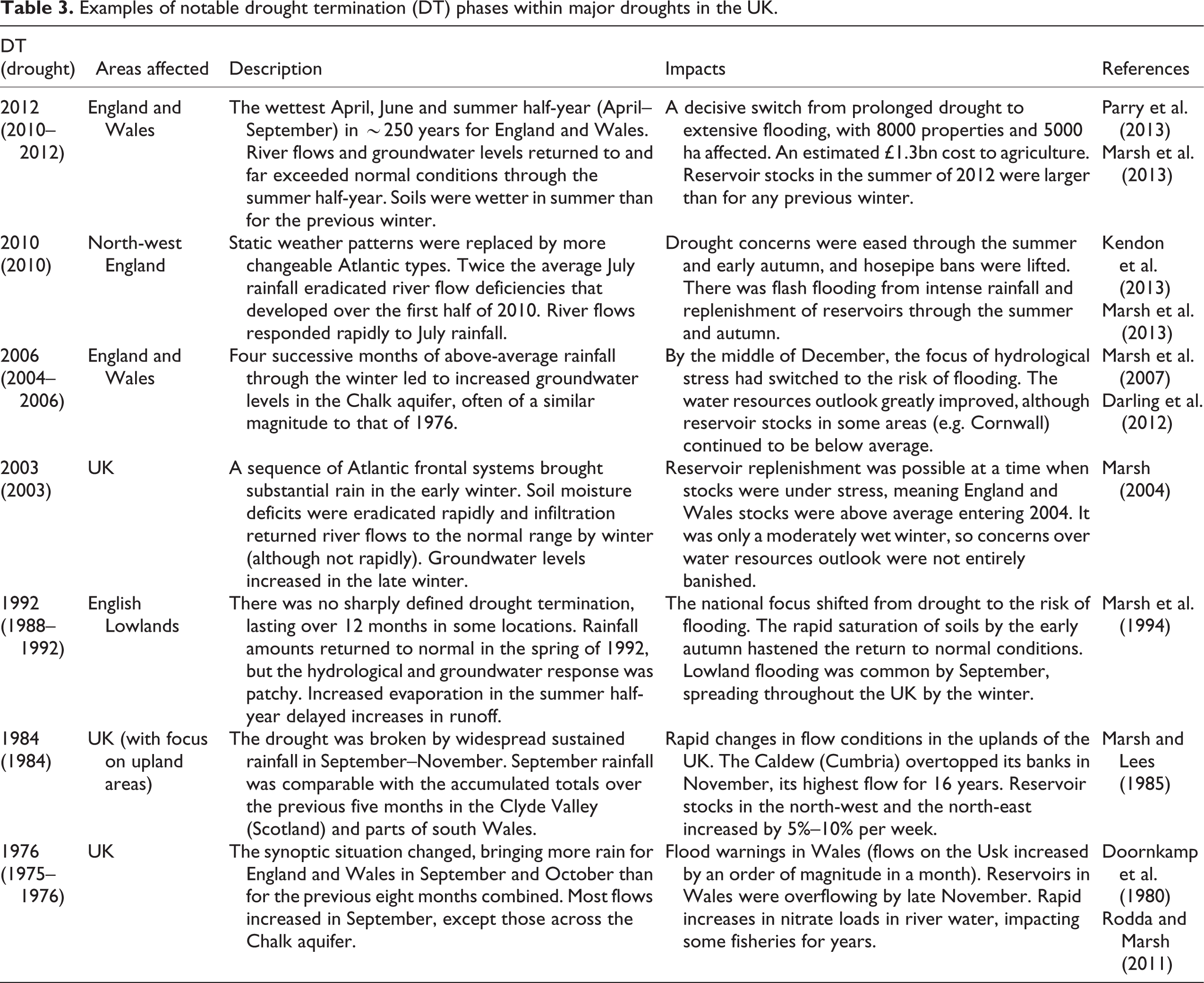
Around a dozen severe droughts in the UK in the last 150 years have been identified (Kendon et al., 2013; Marsh et al., 2007; Wilby et al., 2015), although how and why the droughts have ended has received relatively little attention. One exception is the drought termination in 2012 (Parry et al., 2013; although other notable drought terminations have been reported for 1922, 1929, 1959, 1963, 1976, 1989 and 1992). Table 3 highlights a number of recent UK droughts, briefly describing their drought terminations and the associated impacts. Although the drought termination in the UK through the summer half-year in 2012 is without modern parallel (Parry et al., 2013), dramatic drought terminations cannot generally be viewed as rare or restricted to recent history.
Examples of notable drought termination (DT) phases within major droughts in the UK.
The 2010–2012 drought was selected as a case study to demonstrate the alternative concept and metrics outlined in the previous section. The methodology was applied to time series of monthly data from January 2010 to December 2012 (or to December 2013 for groundwater levels). For river flow data, monthly average discharges for 18 catchments were used. For groundwater data, monthly average levels for 18 boreholes were used. All data were obtained from the National River Flow Archive and the National Groundwater Level Archive. The locations of the river flow catchments and groundwater level boreholes are shown in Figure 4.
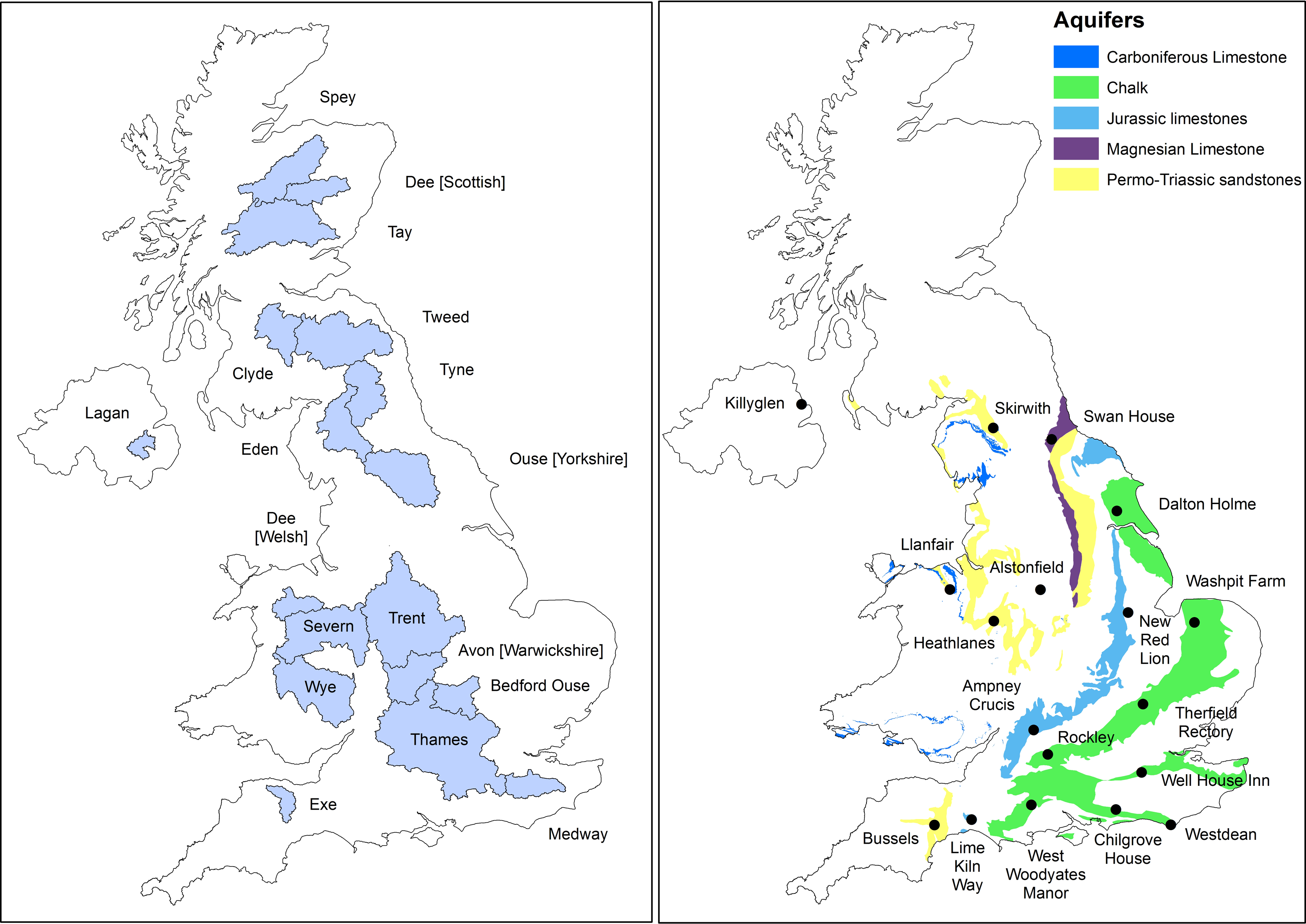
Sites used in the case study for the 2012 drought termination in the UK: 18 river flow catchments (left panel) and 18 groundwater level boreholes (right panel).
The parameter values chosen were based on empirical analysis of the hydrometeorological data. For hydrological and groundwater drought termination, the same parameters have been applied to all catchments and boreholes: D = 7; R = 1; T = 2. Note that these parameters are specific to the 2010–2012 event and might not be appropriate for other locations, data types or droughts within the historical record. The drought termination duration, drought termination rate and drought termination seasonality metrics (Figure 3) have been derived for the 2012 drought termination in the UK, illustrated in Figure 5 and discussed below. Where regions are shaded white, a drought was not identified in 2010–2012 according to the drought identification parameters (D and R).
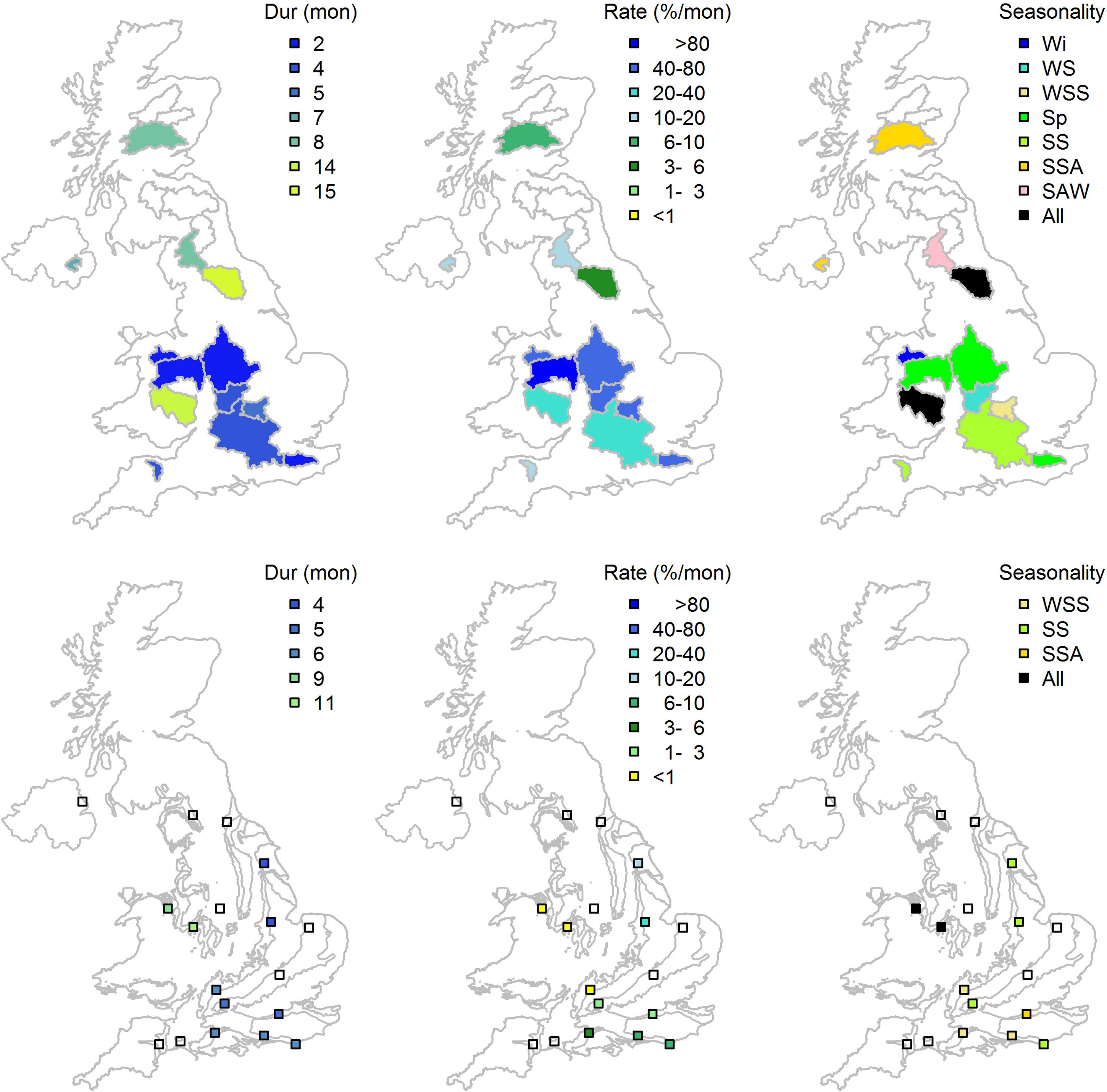
Drought termination metrics applied to the 2012 drought termination in the UK. Top: Hydrological drought termination. Bottom: Groundwater drought termination. Left: Drought termination duration (months). Centre: Drought termination rate (% per month). Right: Drought termination seasonality.
1 Hydrological drought termination
The patterns of drought termination are heterogeneous for hydrological drought because catchments act to modulate spatially coherent meteorological inputs through differing geology and land use. The majority of catchments in Scotland did not satisfy the drought identification parameters D and R, and, therefore, have no drought termination characteristics (Figure 5). Almost all studied catchments in southern Britain experienced rapid drought terminations of two to five months. Positive rainfall anomalies across a wide area were most exceptional over the period April–July 2012, when soils rapidly saturated and allowed river flows to rebound sharply in many cases (Parry et al., 2013). Short drought termination durations are reflected in the high termination rates for many catchments. When examining southern Britain more closely, there appears to be a north-east to south-west gradient, with termination rate increasing with distance north and east into the English Midlands. The slowly responding groundwater-influenced tributaries in the Thames catchment resulted in a more attenuated response to rainfall. Two of the largest catchments in the UK, the Severn and Trent, terminated rapidly in spring in response to the record rainfall in April 2012.
2 Groundwater drought termination
The groundwater drought termination metrics are as spatially heterogeneous as the hydrological metrics due to variations within and between aquifers in terms of permeability and response to rainfall inputs. The drought termination was most rapid (four to six months) in the Chalk of north-eastern and central southern England. However, in the English Midlands, drought termination extended into the middle of 2013 for the slowly responding Permo-Triassic sandstone boreholes. The drought termination rate in some boreholes (e.g. New Red Lion, a responsive borehole in the Lincolnshire Limestone) was as abrupt as some of the surface water catchments. Note that drought termination occurred through the summer half-year in 2012 for many boreholes, a season that is usually associated with high evaporative demand during which soil moisture deficits typically limit infiltration and groundwater recharge (Marsh et al., 2013).
3 Propagation of drought termination
One of the strengths of the approach used herein for characterising drought termination is the flexibility to apply it to different elements of the hydrological cycle. This enables an assessment of the propagation of drought termination through the hydrological cycle, which has important implications for water resources management at the end of drought, for example, by allowing temporary water use restrictions to be lifted (e.g. Parry et al., 2013). The drought termination seasonality (Figure 5) suggests that hydrological and groundwater drought generally terminated simultaneously through the summer half-year of 2012. Single-season drought terminations were rare in 2012, reflecting the severity of the deficiencies associated with a notable multi-year drought. River flows in some catchments were the only element of the hydrological cycle able to respond in a single season, over two months in winter (Welsh Dee) or spring (Severn, Trent and Medway). The responsiveness of river flows compared to groundwater levels is reflected in the drought termination rates for 2012, which were much higher for hydrological drought termination (Figure 5).
V Open research questions about drought termination
The literature review has highlighted a number of questions and knowledge gaps regarding drought termination that remain unanswered. These are listed in Table 4, grouped into broad topics and discussed further below. It is anticipated that the drought termination methodology presented in this study will help to address some of these questions, and illustrative examples are given below.
Open questions for drought termination research.
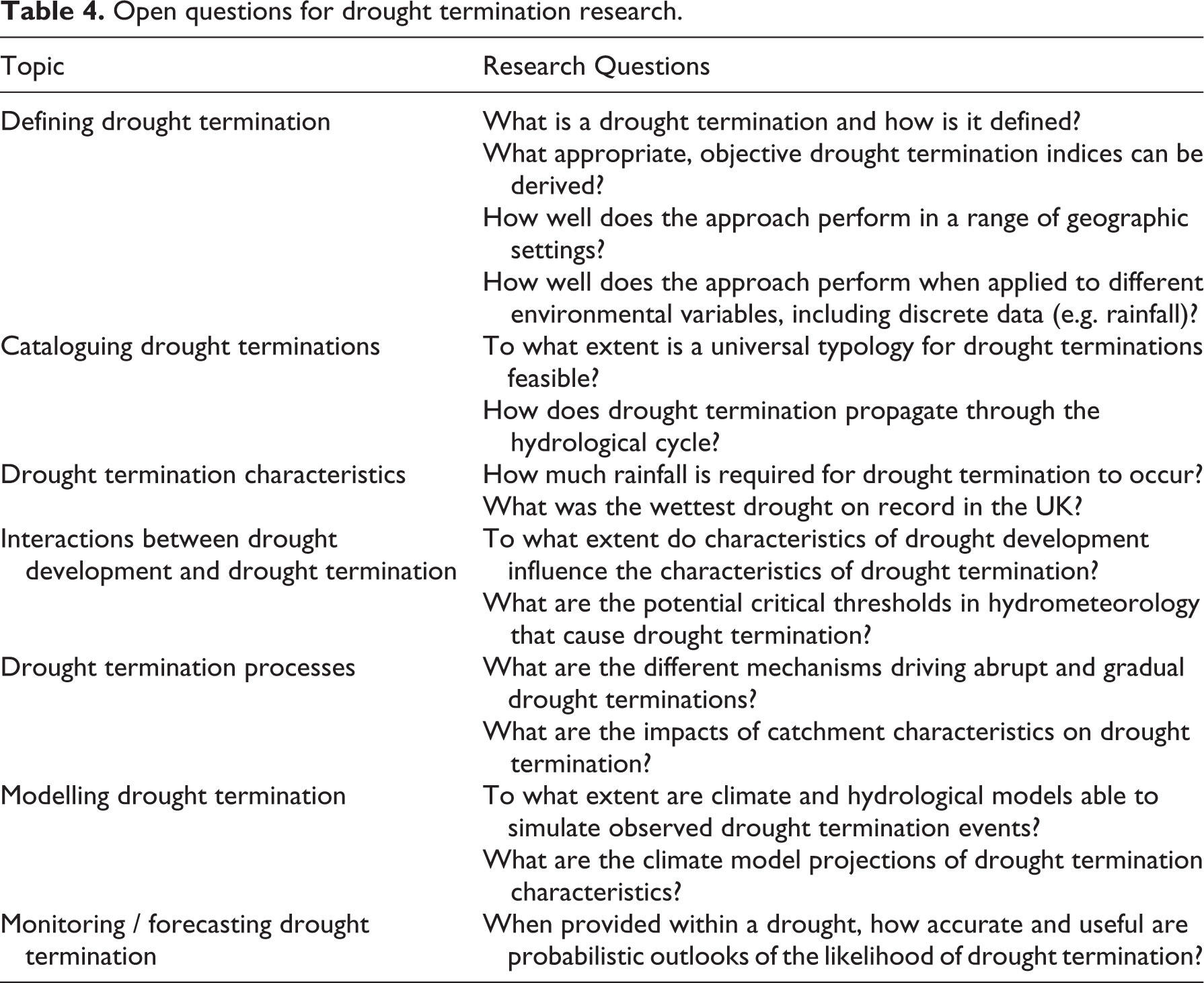
The likelihood of drought termination is of particular interest to water resource managers. This prompts questions about how much rainfall is required for drought termination or to what extent a given rainfall total ameliorates drought conditions. A more complete understanding of the answers to these two questions would make a vital contribution to monitoring programmes by assessing in near real-time the extent to which drought termination has progressed in different elements of the hydrological cycle. For example, by monitoring river flows and groundwater levels, it would be possible to detect lags in drought termination through the hydrological cycle, which may have important ramifications for water resource management. River flows are integrative in space and time, so drought termination as defined here could occur without fully compensating for the deficit accumulated during drought development. As such, the approach applied herein could be used to estimate the amount of rainfall required to increase river flows from the maximum negative anomaly (the drought magnitude) to above-normal conditions. The flexibility of the approach has been presented in this study for river flows and groundwater levels. When also applied to rainfall, soil moisture and reservoir data, this would provide a useful framework for investigating the propagation of drought termination through a range of different elements of the hydrological cycle. An assessment of the ‘wettest droughts on record’ could also provide valuable information on how the seasonal partitioning of rainfall is important in determining drought development and drought termination.
Knowledge of the characteristics of drought termination in the historical record is incomplete (Marsh et al., 2013). Drought termination is a complex and sometimes protracted phenomenon that is not necessarily complete once rainfall returns, a lesson learned particularly from the ecological literature. A systematic analysis of past drought terminations is a necessary first step towards understanding its historical variability and improving our understanding of the physical processes. Capitalising on long hydrometric records will be most useful in identifying the largest possible range of scenarios for drought termination. Forthcoming work will apply the methodology presented in this study systematically to river flow and groundwater level data, including to very long hydrometric records in the UK (Parry et al., 2015), to produce chronologies of drought termination and thereby provide greater insight into its historical variability. Once a large sample size of observed drought terminations has been delineated, classifying episodes into a typology may help to assess potential similarities in drivers and impacts. A larger catalogue of drought termination episodes would also improve the robustness of subjectively defined parameters in the methodology (D, R and T).
Assessments of the drivers of drought termination have usually been conducted on an event basis (such as the influence of the Atlantic Multidecadal Oscillation on the 2012 drought termination in the UK; Sutton and Dong, 2012). Where multiple events have been considered, the link has usually been made to a single driving mechanism (e.g. landfalling hurricanes in the USA; Maxwell et al., 2013). There is a need for a more robust analysis of the drivers of drought termination, which will be made possible by the systematic identification of drought termination events in the historical record. The approach presented in this study, which identifies a duration over which drought termination occurs, is of critical importance because climatic indices can be analysed over a period of time that has been omitted from existing definitions of drought termination. Seasonal forecasts of large-scale synoptic conditions (e.g. the North Atlantic Oscillation or the ENSO) could contribute to improved outlooks for drought development and the transition to and completion of drought termination (e.g. Wedgbrow et al., 2002).
Given that an assessment of historical variability is a necessary precursor to understanding future change, even less research has been devoted to future projections of drought termination characteristics. Climate change projections for the UK suggest that, on average, winters could become wetter and summers could become drier (Jenkins et al., 2009), implying shorter, more punctuated droughts in future. Droughts are also projected to increase in severity at a variety of spatial scales (Burke et al., 2010; Prudhomme et al., 2014). Additionally, there is evidence that a higher proportion of rainfall is falling in more intense events (Jones et al., 2013), and that summer rainfall is projected to become more intense in future (Kendon et al., 2014). Research is needed to translate these hypotheses into potential changes in drought termination characteristics. The methodology introduced in this study could be applied to synthetic data or future projections for a range of hydrometeorological variables, and the flexibility of the approach in application to a range of time steps may be useful where daily or only monthly data are available for future scenarios.
In order to project future drought termination characteristics, climate model information will be required. Prior to this, there is a need to assess the extent to which a range of lumped catchment and distributed models are able to reproduce drought terminations observed in the historical record. It is recommended that a systematic analysis of drought termination in observed hydrometeorological records would provide the baseline for any such assessment of model performance. Models would also be an essential component of any monitoring and forecasting tool. For example, seasonal rainfall forecasts could drive hydrological and aquifer models to provide outlooks of river flows and groundwater levels, respectively. Applying the methodology and metrics presented herein to these outlooks could provide likelihoods of drought termination over seasonal timescales.
It is unclear to what extent characteristics of drought development (as initial conditions) influence those of drought termination. Land–atmosphere feedbacks have been shown to influence drought conditions (e.g. Bagley et al., 2014; Roundy et al., 2013), as well as the location of storm tracks (Pal and Eltahir, 2003) which may subsequently impact spatial variations in drought termination. One potential feedback mechanism between drought development and drought termination has been suggested for the Amazon: during intense drought, the increased occurrence of natural fires ejects aerosols into the atmosphere which have the potential to influence the timing and magnitude of rainfall (Marengo et al., 2008).
The 1975–1976 and 2010–2012 droughts were two of the most severe droughts on record in the UK (Marsh et al., 2013), and it has been suggested that both events terminated abruptly (Doornkamp et al., 1980; Parry et al., 2013). The relationships between drought termination rate and drought development duration or drought magnitude have yet to be explored systematically, potentially providing information on the existence of critical thresholds for atmospheric or terrestrial conditions. The delineation of drought development and drought termination periods provides an appropriate framework for investigating the extent to which the characteristics of drought development and drought termination are related.
The methodology outlined in this paper has been tested using river flow and groundwater level data from the UK. However, it is envisaged that the approach could be applied to other hydroclimatic regions, catchment types (e.g. differing hydrogeological setting or land use) or environmental variables (e.g. rainfall, reservoir, lake level or water quality data). For example, in regions that receive substantial snowfall, lags between meteorological and hydrological drought terminations are likely (Van Loon et al., 2014). It is envisaged that the methodology would be useful in characterising the propagation of drought termination through the hydrological cycle from rainfall to soil moisture, river flows and groundwater, but the transferability of the method requires further development and testing, particularly when applying the approach to discrete data such as rainfall. The assignment of parameter values may require sensitivity analyses to be performed.
Even following a multi-year period of below-average river flows, a single month of above-average flows may cause substantial flooding and replenish water resources. In such circumstances, it is not necessary to account for an accumulated deficit volume before drought termination is complete. The approach adopted herein has been developed with a focus on the dynamics of river flows (which are already naturally integrative) and to identify and characterise drought termination rather than its long-term impacts. Nevertheless, it is acknowledged that cumulative deficit volume approaches make an important contribution to other studies on the recovery from drought, particularly those associated with the concept of resilience.
VI Concluding remarks
This review has sought to summarise the breadth of existing literature on drought termination and to recommend an alternative approach that identifies drought termination as a period of a drought with characteristics of duration, rate and seasonality. The case study material on the 2010–2012 drought in the UK provides an illustration of the utility of the approach, although a more comprehensive analysis of the spatial and temporal variability in the characteristics and propagation of drought termination is required. The review concludes with an assessment of key knowledge gaps in relation to drought termination and it is hoped that the approach advocated here is capable of addressing some of these research questions.
It is envisaged that answers to the questions outlined in Table 4 and discussed above could inform the development of monitoring and forecasting capabilities for drought termination. Improved knowledge of how catchments and aquifers respond spatially and temporally to rainfall during a drought may benefit water resource decisions and public awareness campaigns. Additionally, this information could potentially mitigate against some of the negative impacts of transitions from water deficit to normal conditions or water surplus. Information on the progression of drought termination in space and time and through the hydrological cycle would be particularly helpful in water resource zones underlain by aquifers with differing response times to rainfall (such as the Thames catchment, the largest in the UK, which has substantial water demands). A monitoring and forecasting tool could be combined with seasonal rainfall forecasts to produce probabilistic outlooks of the likelihood and characteristics of drought termination. The approach presented in this study has many desirable properties that can begin to provide answers to some of these important unresolved questions surrounding drought termination.
Footnotes
Acknowledgements
Data for the UK case study were provided through the National Hydrological Monitoring Programme (NHMP), a collaboration between the Centre for Ecology & Hydrology (CEH), the British Geological Survey (BGS) and the Met Office (MO). River flow and groundwater level data were sourced from the National River Flow Archive (at CEH) and the National Groundwater Level Archive (at BGS). Two anonymous reviewers, Shaun Harrigan (CEH) and Professor Nicholas Clifford (PPG Editor) provided useful comments to improve the manuscript.
Declaration of conflicting interests
The author(s) declared no potential conflicts of interest with respect to the research, authorship, and/or publication of this article.
Funding
The author(s) disclosed receipt of the following financial support for the research, authorship, and/or publication of this article: This research was funded through the Learning & Development programme at the NERC Centre for Ecology & Hydrology.