




Abstract
This paper examines the impact of climate change on the mobilities of Brazil's Enseada da Baleia community, particularly their relationship with fish, specifically manjuba (sardines). Facing relocation due to drastic geographical alterations on Cardoso Island, the study, grounded in eight months of ethnographic research and utilizing frameworks from mobility studies and relational ontologies, emphasizes the community's entanglement with fish in overcoming climate change challenges and remaking their world. The article introduces the ‘Mobile Kinship’ concept to explore human-nonhuman relationships in determining mobility patterns after climate impact. As such, this work advocates for integrating a relational perspective into the climate mobility framework, focusing on understanding, and addressing the climate-induced mobilities of non-Western communities.
Keywords
Introduction
“Fishing, the way we make dried fish, (…) Majuba is connected to our way of life.”
Sofia, 1 a woman artisan
Translate from Portuguese Interview, 2 November 2019.
In the context of climate change, understanding the dynamics of relocation requires a deeper exploration of kinship beyond traditional human-centered concepts. For Indigenous communities, kinship is not solely defined by bloodlines but by profound, relational connections with nonhuman beings—land, fish, animals, and the environment. Kinship thinking within Indigenous ontologies recognizes that relationships with nonhumans are fundamental to community identity, resilience, and survival. This paper argues that mobile kinship provides an essential framework for understanding climate-related planned relocations. 3
Unlike static notions of kinship, mobile kinship emphasizes the fluidity and continuity of relationships across space and time, especially as communities are forced to relocate due to environmental pressures. The concept of mobile kinship is shaped by the entanglement between humans and nonhumans, where kinship is continually redefined and adapted in response to environmental and climate, political, and social changes.
Mobile kinship, as I explore in this paper, involves not just physical relocation but the preservation and re-establishment of intimate, relational ties that are central to the cultural and spiritual identities of the communities involved. Drawing from Whyte’s (2021) work on the restoration of relationships and Zoe Todd's (2014, 2018) reflections on human-fish relations, mobile kinship provides a decolonial framework for addressing the mobility of Indigenous and traditional communities in the face of climate change. It provides a means to resist the erasure of traditional lifeways and reaffirms the importance of self-determination, even as communities are displaced. The engagement with fish, as an example of mobile kinship, exemplifies the relational entanglements that allow communities like Enseada to rebuild, adapt, and persist in the face of adversity.
The community of Enseada da Baleia (Enseada 4 ), located on Cardoso Island in Brazil, has always engaged with fish, particularly the harvesting of manjuba (sardine fish), plays a central role in their identity and way of life. Enseada is a Caiçara community, whose members are descended from Indigenous, African, and European peoples. Their relationship with fish through artisanal fishing practices, has shaped their culture and identity for generations. Cardoso Island (see Figure 1) is on the southeastern Brazilian coastline, between the State of São Paulo and Paraná, bounded by the Atlantic Ocean to the east and the Ararapira Channel to the west.
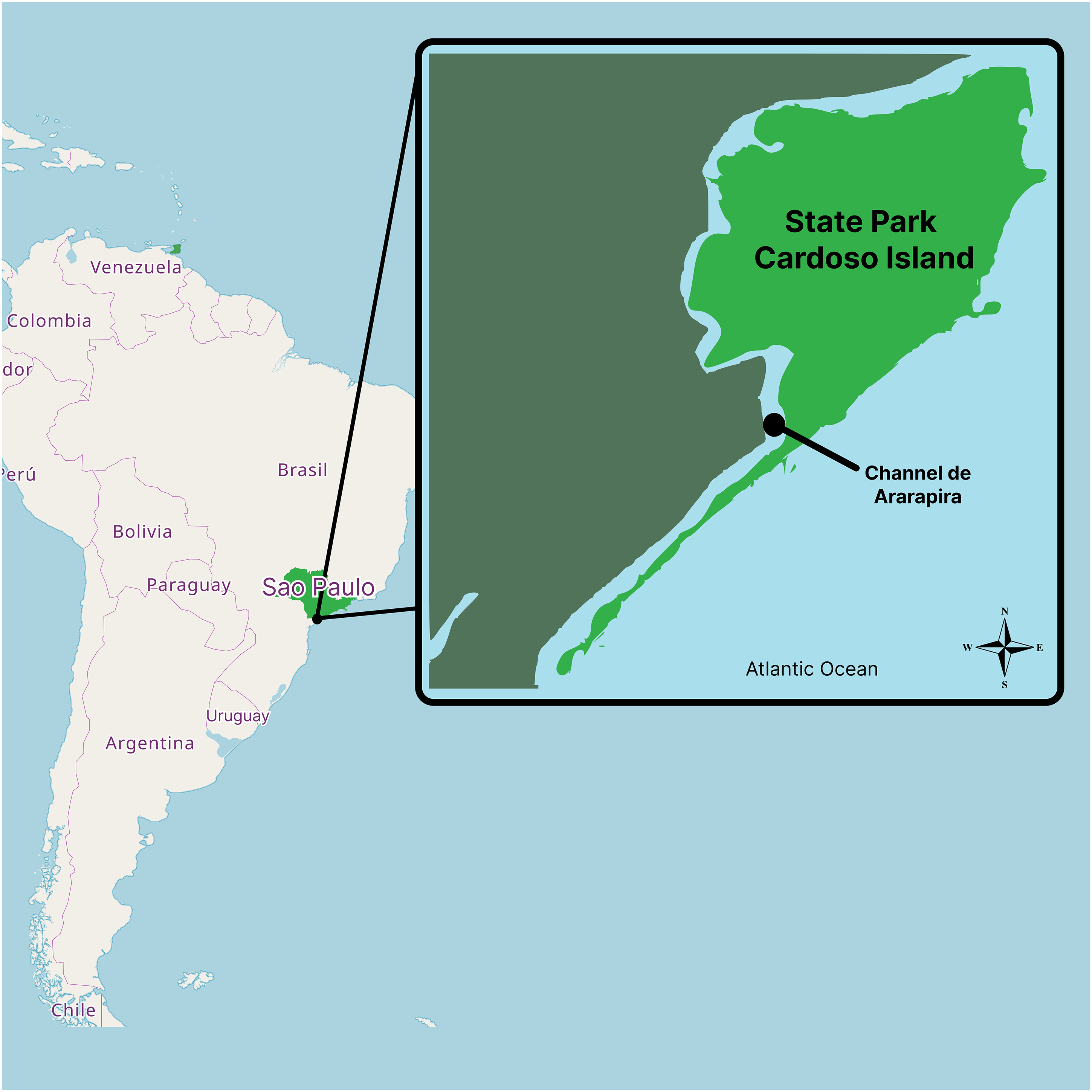
Map of Brazil locating the Cardoso Island. Source: Author's own.
In October 2016, a cyclone reduced the sand spit where Enseada was located from 12 meters to just 2 meters overnight, prompting a climate-related planned relocation within Cardoso Island due to the limited remaining land and the imminent risk of flooding. By 2018, the last remaining land between the ocean and the Ararapira Channel was flooded, an event I refer to as “the breaking,” which physically divided the island in two. In response to this crisis, the community of Enseada fought to stay on the island, asserting their right to self-determination in choosing the site for their relocation. Enseada's exercise of self-determination through mobile kinship shows how Indigenous ontologies influence adaptation pathways in relocations.
This paper examines how the community of Enseada navigated the relocation process through mobile kinship, focusing on their relationships with nonhuman agents, particularly the manjuba. I explore how these relationships influenced relocation decisions and practices, emphasizing the community's cultural continuity despite environmental pressures. By introducing the concept of mobile kinship, I argue that nonhuman agents like fish are key to adaptation strategies, embodying deep cultural, spiritual, and material ties that foster resilience and self-determination in the face of climate change.
During an 8-month ethnography conducted in 2019 and 2020, fish and fishing practices were persistent themes in conversations with the members of Enseada. For example, when I asked Nica, a woman artisan and fisher, why she agreed to move to a new location, she explained: “I got used to the community, the life we lead, of fishing… the fish is. Fishing. It has always been a part, even when I lived with my parents. I already lived from fishing. Fish was part of everything, right?” (Interview, November 2019).
Mobile kinship emphasizes the importance of relationships in facing climate change challenges. In this context, relocation amid environmental change broadens the scope to include the more-than-human (MTH) sphere. While this paper focuses on Enseada, the concept is also applicable to other cases where nonhuman entanglements influence relocation and migration. For example, in Guet Ndar, Senegal, the adage “the fish migrate, and so must we” illustrates this (Zickgraf, 2018, 2022), as do pastoralist movements in West Africa (Boas, 2022) and Pacific mobilities involving MTH agents like the sea, stars, and sand (Kothari and Arnall, 2019; Suliman et al., 2019; Yee et al., 2022).
In Enseada, kinship is built through activities like fishing, drying fish, storytelling, and eating fish, which are integral to daily life. Fish are simultaneously food, sentient beings, companions, teachers, and political actors. Enseada's engagement with fish, which also mediates relations with other nonhuman agents, is part of a process of partial recuperation to rebuild their world after the violence of relocation. I use ‘recuperation’ instead of ‘recovery’ or ‘restoration’ as it reflects histories, local possibilities, and relationships often overlooked by hegemonic narratives, offering a path to decolonization (Rose, 2004).
In this paper, I draw on relational ontologies, which assert that no agent is fully isolated or autonomous, but instead, they become together (Querejazu, 2016), and on mobilities research that views movement as inherent in social life (Sheller and Urry, 2006). Using these frameworks, I examine Enseada's relocation after a climate disaster, contributing to the emerging climate mobilities framework (Boas et al., 2022) and expanding the conceptual debate.
First, I outline the theoretical framework guiding my analysis of Enseada's relocation choice, emphasizing the mobilities research framework (Sheller and Urry, 2006, 2016) as a platform for decolonizing mobility experiences related to climate change. The paper then provides an overview of Enseada's history, followed by an exploration of their fish-related engagements, through which resistance and partial recuperation processes are pursued to rebuild broken worlds. I illustrate how mobile kinship emerged from daily practices with the fish manjuba. I conclude that if relocation focuses solely on physical movement, it risks overlooking community safety, dignity, and cultural continuities, especially those rooted in Indigenous ontologies. To address this, I propose ‘mobile kinship,’ a concept that emphasizes MTH relationships amid climate mobilities.
Mobile kinship: theoretical framework
To understand mobile kinship in the context of climate-related planned relocation, it is essential to begin with Indigenous kinship thinking and onto-epistemologies, which recognize the entanglement of humans with all other non-human beings (de la Cadena, 2010). Kinship encompasses relationship between individuals (human and non-humans), based on mutual responsibility that build upon bonds of mutual caretaking and guardianship (Tallbear 2019; Whyte, 2021). Kinship is not limited to human relationships but extends to nonhumans—land, fish, animals, and other elements of the environment, each contributing to the sustenance and continuity of life (Escobar, 2019, 2018). Responsibility as a kinship relationship must have attached qualities such as behaviours, ethics, and practices that makes each of the society's members perform their roles (Whyte, 2023). The caretaking is performing trough a sense of duty and obligation or entitlement but by carefully listening, observing, and adjusting to the changing needs of kin (Ibid). As such, kinship serves to reciprocally support each other's safety, well-being, and self-determination.
However, colonialism trough dispossession and the objectification and commodification of more-than-human beings as resources to be owned, disrupt and cut these bonds of between kin (Tallbear, 2019). The strongest the bonds the higher the level of interdependency among the members of the society, and as such these bonds shape the responsiveness in the face of changes in their relationship caused by any disruption including climate change impacts. These bonds construct an order of the universe. So, when these bonds break, the sense of order weakens. Kinship relations are essential to be established or restored, in case of lost, to be possible to imaging safe futures where indigenous people are safety, in well-being, and asserting their self-determination's right. Restoration is about reviving ancestral relationships, which becomes possible only when the entire community is actively involved in processes that rebuild these bonds. This collective engagement not only strengthens familial ties but also helps restore balance within the broader ecological and cultural system (Holtgren et al., 2014).
Mobile kinship refers to how these kinship relations are maintained, adapted, and re-established during times of mobility, particularly in the face of climate change. The act of fishing in Enseada, for instance, is not merely a subsistence practice; it is deeply cultural and spiritual. Fishing is an act of relational resistance, where each interaction with fish, water, and the land embodies kinship and a shared history. These practices are not confined to a particular place; they are mobile, adapting to environmental and climate changes and ensuring continuity. Mobile kinship transcends the physical engagements with fish to encompass the continuation of cultural identity and community.
The framework of mobile kinship draws from Kyle Whyte's (2020, 2021) work on restoring relationships and Zoe Todd's (2014, 2018) exploration of human-fish relations. It provides a decolonizing lens through which to view community adaptation to climate change, emphasizing the resilience and determination of communities like Enseada in maintaining their relational bonds despite environmental upheaval. This approach foregrounds the importance of relational entanglements in a mobile world—where humans and nonhumans are co-constituted through interactions that shape their worlds and identities (Barad, 2007; Querejazu, 2016; Tynan, 2021). Mobilities is approach from a distinct analytical perspective with theoretical and methodological implications (Hannam et al., 2006; Sheller and Urry, 2006, 2016). Here, mobilities are relational, involving various agents and their interactions. Mobilities occur within ‘regimes,’ meaning they are shaped by asymmetrical power relations that determine who can move, where, and under what conditions (Sheller, 2018). This framework portrays relational worlds where agents’ movements are co-constituted by the actions and meanings of diverse entities, forming assemblages of mobilities (Sheller and Urry, 2006). Therefore, mobile kinship enables a deeper understanding of climate-related relocation by considering not just the movement of people, but the movement of relationships across space and time, adapting to new contexts and maintaining vital connections.
Methodology
In undertaking this research, I employed participatory, feminist, and decolonial approaches to qualitative methodology, combining ethnography, semi-structured interviews, film screenings, group conversations, and textual analysis of letters, conducted from November 2019 to June 2020. These methods facilitated participatory, feminist, and decolonial approaches, embracing the community's knowledge systems and forms of representation. I arrived in the community in August 2019 to present the research. After a communal discussion, Enseada invited me to conduct the study. 5
Participatory, feminist, and decolonial methodologies recognize stories as valuable tools for shaping social realities (de Nooijer and Sol Cueva, 2022; Rose, 1997). These approaches seek to address historical injustices, empowering collaboration in knowledge production (Caretta and Riaño, 2016), while challenging colonial practices of epistemic authority (Tuhiwai Smith, 2012). A decolonial approach also involves ontological restoration and the repatriation of Indigenous life and land (Tuck and Yang, 2021), questioning the core concepts of mobility, kinship and climate change while critiquing colonial power dynamics in knowledge production (Bhambra et al., 2020). Decolonization is an ongoing process of unlearning and relearning, producing change through both minor and major actions (Sultana, 2023). I position myself and my research as part of a broader effort to amplify Indigenous knowledge and to develop spaces and methods that align with their decolonial approaches and practices.
Throughout the research, I reflected on power dynamics and engaged in dialogue, feedback, and permission-seeking with Enseada members to ensure respect in the use and reproduction of their stories. I remained open to their suggestions, adapting the research methods and shifting toward a more collaborative approach. Over eight months in Enseada, I worked on establishing a research relationship, given my position as an outsider—a PhD student from Paraguay but residing in London. As a woman with brown skin and dark hair, I could easily be mistaken for one of the Caiçara by other outsiders. During this time, I focused on experiences of violence, suffering, and resistance, which could only be understood through ethnography. This approach revealed how larger forces—climate change, colonialism, and capitalism—shape both human and more-than-human life. Ethnography serves as a method for examining these relationships, integrating MTH into an analytical framework (Bastian et al., 2017; Kohn, 2013).
Over those eight months, I conducted two rounds of semi-structured interviews with community members, recorded in Portuguese. The first round (November–December 2019) was more formal, while the second (April–May 2020) was relaxed due to our growing relation. These interviews revealed personal histories, survival stories, and deep emotions. In between the rounds of interviews, Enseada members suggested collaborative methods for data creation, including group conversations, film screenings, and letter writing. These methods allowed diverse perspectives to emerge (Strang, 2006). Group conversations were key to how the community represented itself, sharing emotions and experiences in daily life settings. We also watched documentaries about Enseada's relocation journey, which sparked emotional discussions. To deepen this engagement, I introduced a “temporal map of feelings,” where participants shared their thoughts on each film. This co-created emotional map highlighted the value of creative, non-hierarchical methods in building collective knowledge.
Women in the community wrote letters expressing their emotions, an idea proposed during casual gatherings. These letters, scanned and emailed to me, reflected their agency in self-definition (Letherby and Zdrodowski, 1995). This collaboration prompted me to reflect on my positionality and the community's instrumental role in shaping the research to express their perspectives.
Data was analysed thematically, drawing from mobilities and relational ontology (Helms Mills et al., 2010). I adopted a more fluid academic writing style to align with feminist and decolonial principles, emphasizing the community's methods of knowledge-sharing (McKittrick, 2021). By using extensive quotes from the community, I aimed to amplify their voices and perspectives, viewing writing as a political act that goes beyond inclusion to amplify the community's knowledge production (Tuhiwai Smith, 2012).
Enseada da Baleia's process of relocation and brief history
This section explores how climate and environmental change, settler-colonial conservation policies, and the Caiçara community's experiences have shaped Enseada's struggle for self-determination. It examines how these changes impact the community's relationship with their land, non-human agents, and each other, particularly during their relocation to Casa Preta (New Enseada). These dynamics highlight broader issues of climate mobilities, resistance, and the erasure of Indigenous knowledge in dominant conservation and climate adaptation regimes.
Cardoso Island is located in southeastern Brazil, between the São Paulo and Paraná states, bordered by the Atlantic Ocean to the east and the Ararapira Channel to the west (see Figures 1 and 2). The channel side features mangroves rich in crabs, while the eastern side has white beaches battered by Atlantic waves. Surrounding islands form the Vale do Ribeira, home to a significant portion of Brazil's Atlantic Forest.
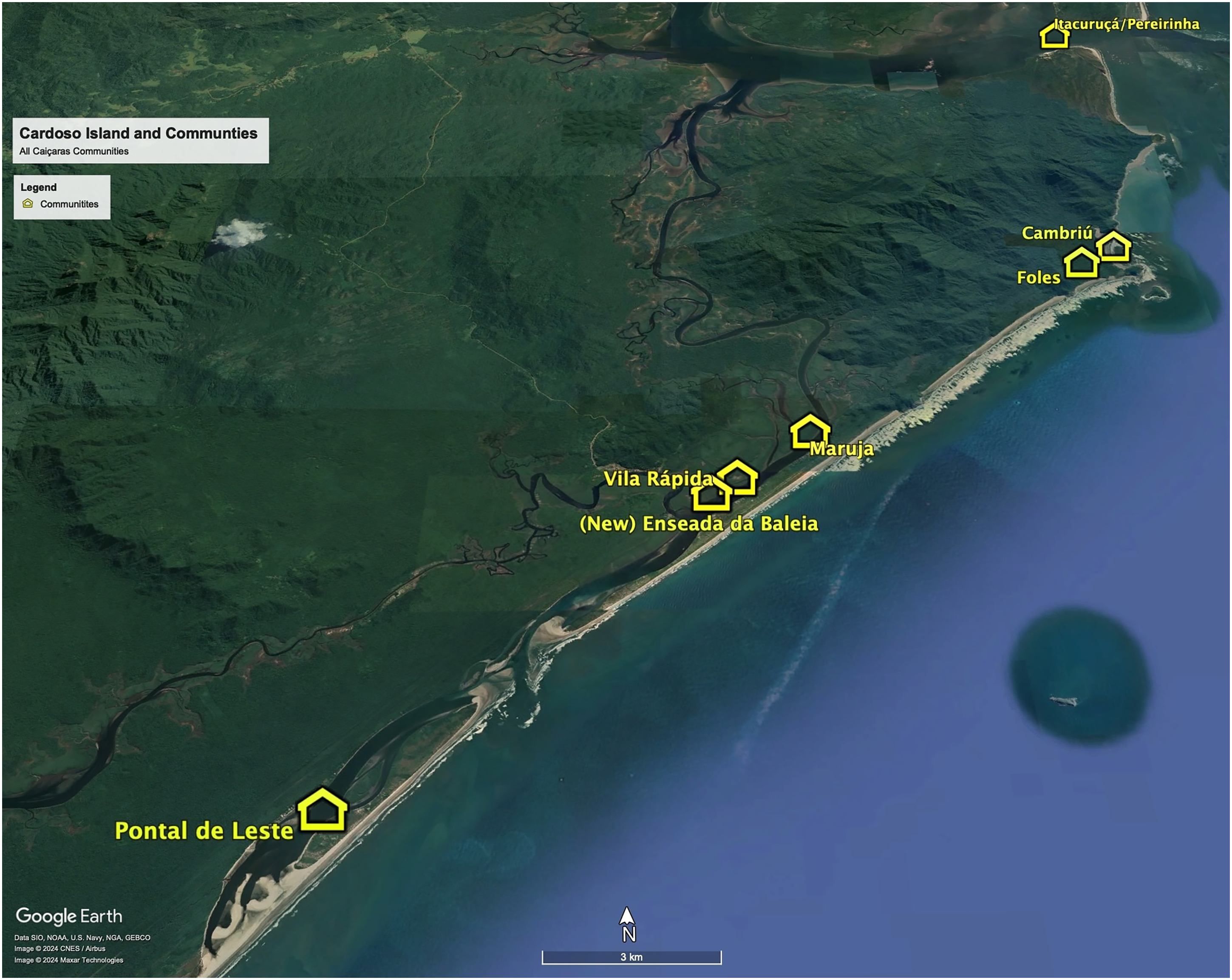
Cardoso island and caiçaras communities. Source: Author's own.
Enseada was established in 1845, main activities were artisanal fishing and fish drying. In 1962, the Brazilian government designated Cardoso Island as the State Park Cardoso Island (PEIC), a Conservation Unit (CU). Since the 1960s, regulations affecting the island's inhabitants, particularly the Caiçara and Indigenous communities, have led to hostility. The population has dwindled from about 500 families in 27 communities in the early 1960s (Carvalho and Schmitt, 2012) to eight Caiçara communities, five independent families, and one Indigenous village, Mbÿa Guarani Ypaumi Ivyty. Cardoso Island is a dynamic place, shaped by policies, legislation, and the relationships between the inhabitants and non-human agents, as mentioned in a conversation: “Before it became a Conservation Unit, there was a different relationship with the land, because the people were free to interact with nature as they wished. Afterward, that freedom was gone; restrictions on nature were imposed. The Caiçara people knew what they could do in that area. They were free. They knew what they could take, what could be hunted, what would thrive. Then the State comes along and says they can’t do anything!” Transcript and translation of group conversation, March 2020.
Additionally, the dynamics between non-human agents and their relationships with each other and humans are constantly changing. These changes occur throughout the year, but climate change has amplified and accelerated their impacts, as noted by Enseada inhabitants: “It's expected, right, because of changes in the winter, the climate, and the weather, that the tides will be higher. And with the changes in the sandbar here, which we’re experiencing, the tide used to have a pause between the shift from low to high tide. But now, it doesn’t.” Transcript and translation of group conversation, May 2020.
Enseada is located on a sand spit separating the Ararapira Channel from the Atlantic Ocean (see Figure 3). The community is made up of nine interrelated families descended from the late leaders Malaquias and Erci, both of whom passed away before the community's relocation was completed. Malaquias’ relocation efforts were consistently rejected by the PEIC's authorities, as members of Enseada explained, due to the park's conservation principles, which did not allow relocation within the island. The story of Enseada's relocation, especially marked by Malaquias’ death in 2010, symbolizes the struggle for a safe place and the resulting uncertainty and hardship. These challenges are common in abandoned places affected by environmental racism (Povinelli, 2011; Pulido, 2017).
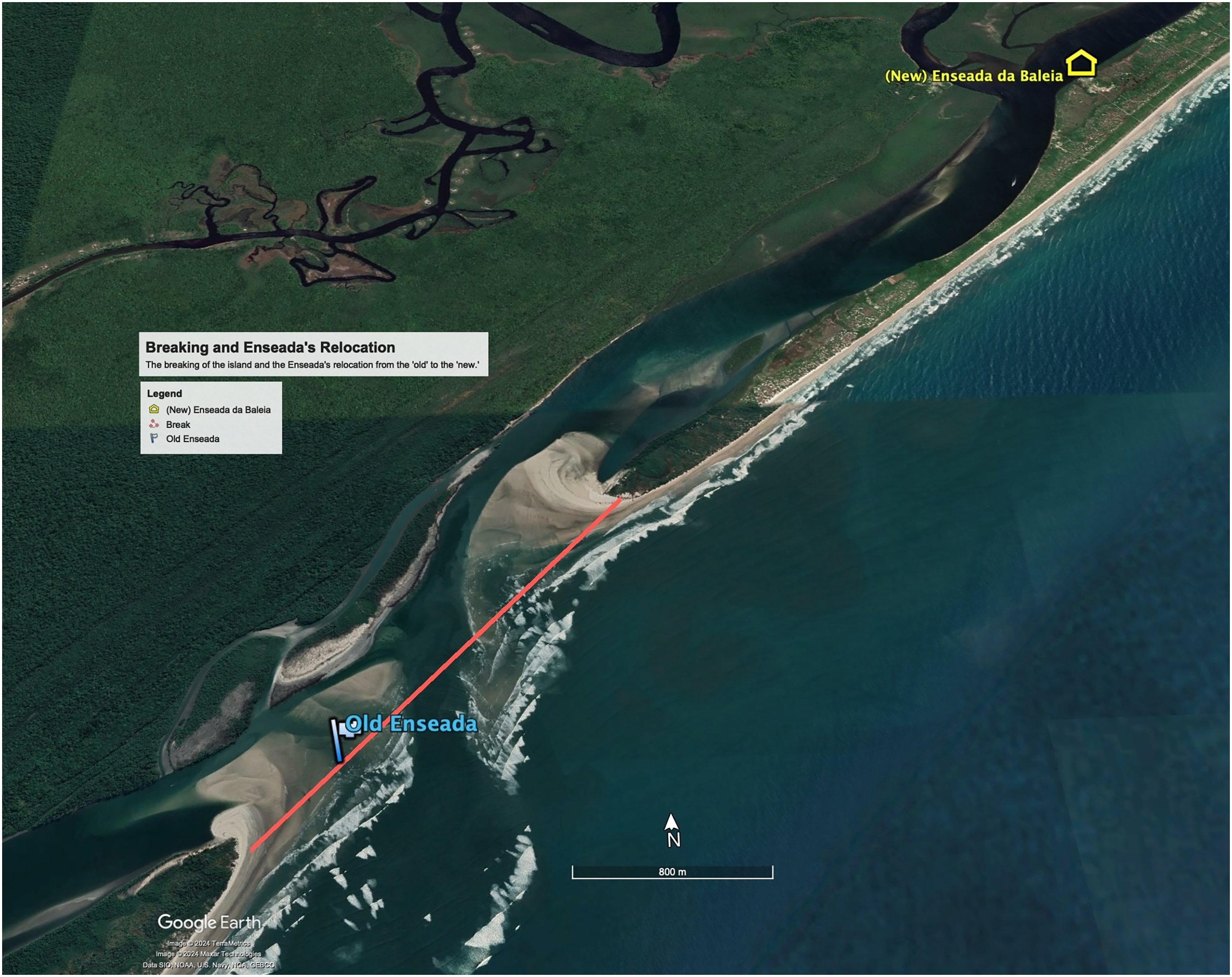
Breaking of the cardoso island and enseada's relocation. Source: Author's own.
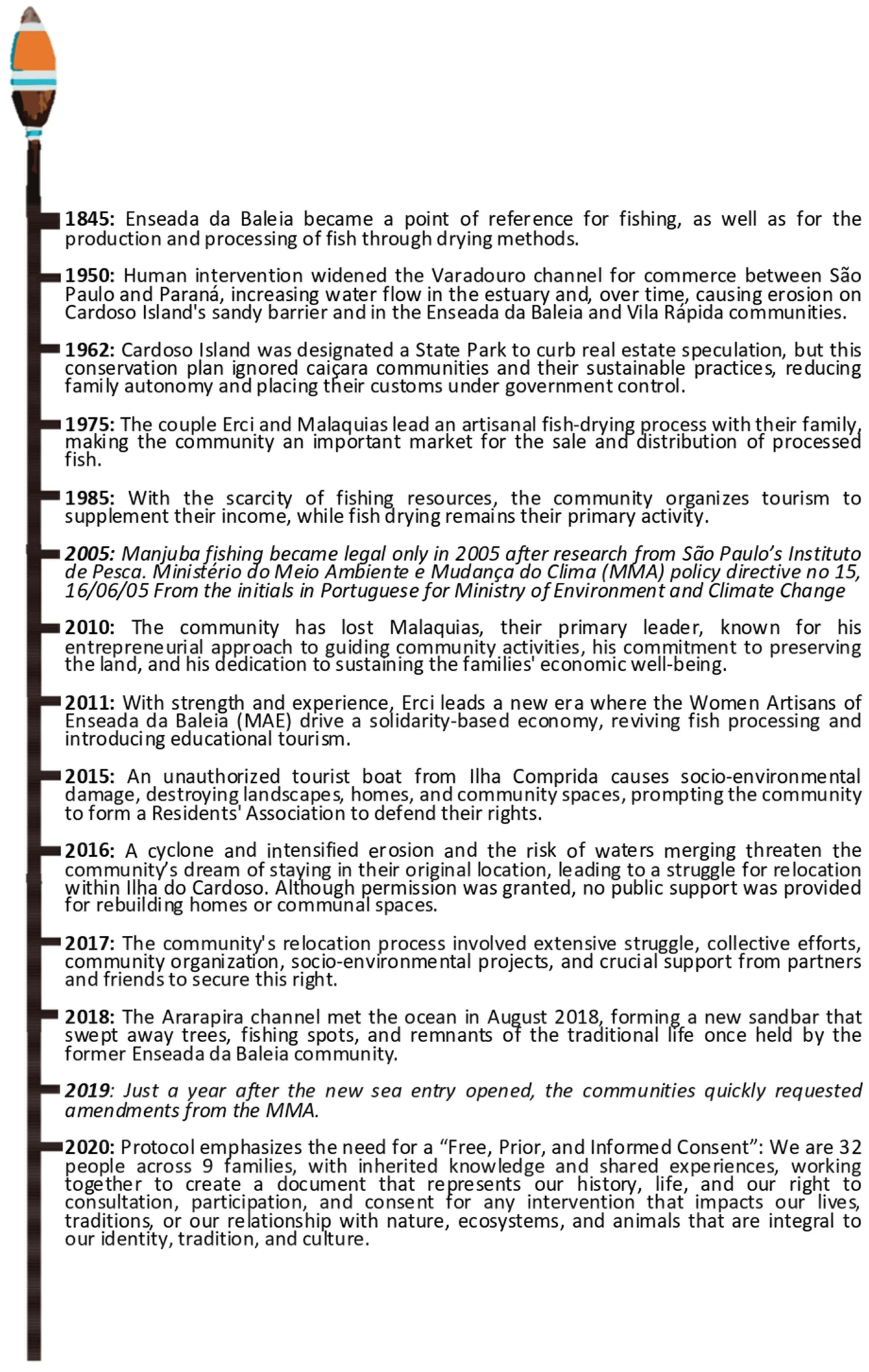
Timeline of significant events impacting the community Enseada da Baleia. Source: Adapted from Observatório de Direitos Socioambientais, 2021.
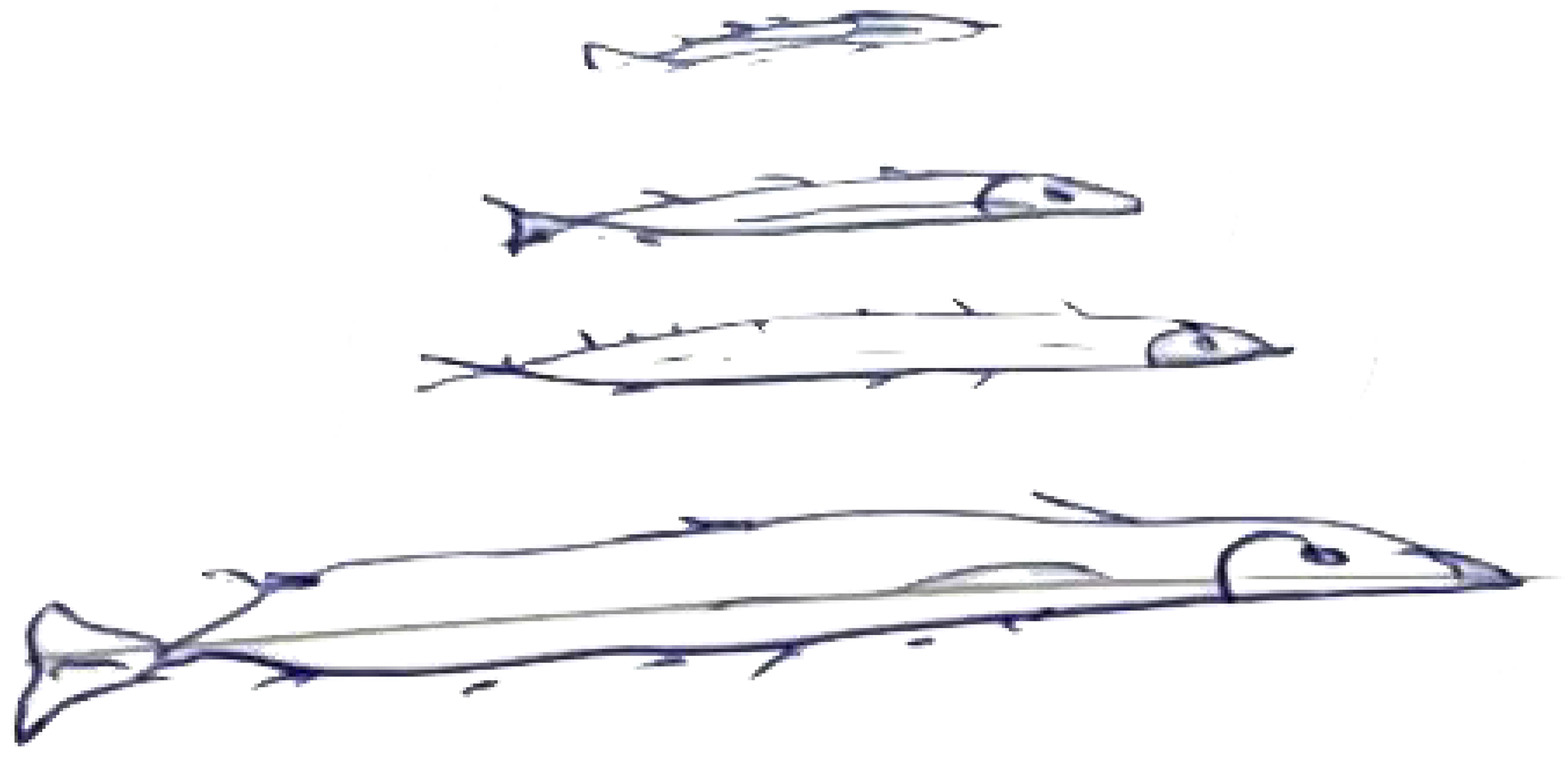
Manjubas’ sizes. Source: Jose drawings March 2020.
In October 2016, a cyclone reduced the sand spit between the Ararapira Channel and the Atlantic Ocean from 12 to 2 meters, prompting Enseada to seek relocation within Cardoso Island. The main obstacle was securing permission to relocate, compounded by the PEIC's authority refusal to consider Enseada's preferences. The authorities proposed two options: integration into a neighbouring community or migration to Cananéia City. Both were rejected by Enseada, as they would disrupt their social structure, lifestyle, and traditions.
Over several meetings, Erci persuaded the community to relocate collectively and remain united. The disintegration of the Nautambu Community in the Solomon Islands (Albert et al., 2018) after climate-related relocation underscores the challenges of maintaining unity without financial, legal, and institutional support. Deka, an artisan, recalls Erci's defiance: “She told them [PEIC personnel], ‘Is this what you want? That the sea takes my children, my grandchildren and kills them?’” (Translated from Portuguese Interview, November 2019). This memory highlights Erci's struggle for a voice in choosing the relocation site, where ‘death’, symbolized by drowning, represents the loss of a world tied to specific relationships with the land, fish, and trees. These stories expose the violence of capitalist-imperialist forces, now exacerbated by climate change. Yet, there is also resistance against imposed divisions and the capitalist-imperialist logic of borders (Boas et al., 2024) and the myth of separating nature from culture (Diegues, 1996).
The right to self-determination is crucial in climate-related relocation to prevent ‘death’ and reordering after sea turbulence. For Erci, Casa Preta, now New Enseada, located five kilometres north of Old Enseada, was the ideal site (see Figure 3). Casa Preta, meaning “Black House,” was named after the original house that was black. Erci recalls fishing and cooking there for passing fishers when she was young, remembering fertile land, good fishing spots, and tree fruits—all essential for rebuilding their world. Casa Preta is a place of encounter, where diverse agents engage in meaningful, entangled relations. Returning to Casa Preta symbolizes the potential for the recuperation of lost relationships and remake their worlds.
A group of researchers from NUPAUB-USP, 6 confirmed Casa Preta's suitability by adopting a holistic approach, ensuring it met the community's physical, cultural, and ecological needs. They assessed geological safety, geomorphological features, and biotic richness, along with a socio-anthropological evaluation linking Casa Preta to the community's history and traditions (NUPAUB, 2016). The NUPAUB-USP report used concepts aligned with climate adaptation frameworks, valuing Caiçara traditional knowledge and demonstrating Casa Preta's geological stability, resilience, and cultural significance. This report resonated with climate resilience narratives recognized by institutional bodies like PEIC but also operated within dominant conservation frameworks that have been critiqued for silencing Indigenous knowledge systems. As noted by Mayblin and Turner (2021) and Sultana (2022), these epistemologies reinforce coloniality by displacing alternative ways of knowing and extending control over marginalized communities.
The PEIC's authorities approved the land concession but provided no financial support. The authorization required mandatory reforestation of the vacated site, intended to restore the area ecologically, despite the irony that the land is now submerged. This highlights the focus on conservation outcomes rather than community needs during the relocation process. Members of Enseada saw the lack of financial aid as an attempt to “kill without killing,” because, according to them, no one expected them to succeed in relocating. The community overcame this challenge through creativity and solidarity (Gini et al., 2021). However, the relocation placed significant financial, physical, and emotional burdens on the members of Enseada, with Erci passing away in 2017, about a month after the land concession.
The community of Enseada has faced pressures from environmental and climate change, conservationist restrictions, and systemic neglect, leading to their relocation. Their agency in navigating these challenges and resisting the erasure of their traditional ways of life is central to the case. The coloniality within dominant conservation and climate adaptation frameworks is evident, as they often overlook the needs of affected communities. The Caiçara community's struggle serves as both a localized instance of climate mobility and a critique of exclusionary environmental governance (Figure 4).
Mobile Kinship: MTH entanglement for partial recuperation
We – _Nica, Neco, Tonino and I – sat on the wooden pier, watching the water lap against the shore to the rhythm of small conversations. After contemplating the water, Neco and Tonino decide to fish manjuba. Neco is Nica's husband and Tonino's brother. Manjuba is a very special fish for Enseada, and only a few people, 70 in total, on Cardoso Island fish it. Tonino and Neco picked the canoe. They stand over the canoe and start rowing calmly but synchronously (Figure 5).
While Tonino and Neco are going to fish, Nica tells me that in the old Enseada, she used to fish iriko with Neco. She stopped with the relocation and missed it - “Nossa! 7 ” she says. She stopped fishing manjuba because sand was on the channel side in front of the old Enseada, making it easier to push out the net. Here in the new Enseada are mangrove trees, the roots of which wind into the water, making it more difficult and unpleasant to fish. Therefore, now she likes to watch other people fishing.
Author’s Fieldnotes - March 2020
This fieldnote highlights the deep connection the Enseada community has with their MTH companions. Sitting on the pier with Nica, Neco, and Tonino, I watched as Neco and Tonino, skilled in Enseada's fishing technique, set out to fish manjuba. Their synchronized rowing reflects the intertwining of material and immaterial worlds in their relationships with MTH agents. Nica, however, nostalgically recalls her fishing days in old Enseada. Relocation has changed her role from active fisher to observer, as the sandy channel of the old site was ideal for fishing, while the mangrove-laden waters at the new site are more challenging. Nica's changed role reflects a broader experience of mobile kinship, where family roles and traditions adapt to climate change. This fieldnote illustrates how mobile kinship involves emotional and cultural adjustments that maintain bonds between humans and non-humans.
This section explores mobile kinship through Enseada's relationship with Manjuba. I examine how engagement with fish helps recuperate lost worlds and how fish and humans become entangled in resistance to pressures that threaten to wash them away. Following the island's rupture, rising salinity and strict regulations on community-fish interactions contrast with the community's desire to exercise their right to self-determination. The efforts of Enseada and three other Caiçara fishing communities (Villa Rápida, Pontal de Leste, and Maruja Sur) to preserve their practices show that fishing is not just a livelihood, but a political act. By continuing to fish, they resist a politically hostile and environmentally changing world, moving with kin. When an entire world is forced to move, their relationships must follow to remake their world. Mobile kinship facilitates the partial recuperation of MTH relations, combining material and immaterial spheres to rebuild broken worlds.
Mobile kinship for partial recuperation
This section explores how mobile kinship is realized through the entanglements between the community of Enseada and the manjuba fish. By examining fishing practices, it becomes clear how these material and immaterial interactions help partially recuperate worlds disrupted by climate change, settler-colonial policies, and relocation. Recuperation, as seen in Nica's case (illustrated in the field notes at the beginning of the section), is partial. Even though she can no longer fish, she still enjoys engaging with Manjuba by watching and predicting the best fishing spots.
In the community, fish are seen in many ways: as food, products, sentient beings, holders of stories, protagonists of dreams, and as mediators for engagement with both human and non-human agents. Similar to Todd’s (2014) argument, fish are plural. In their plurality, they symbolize resistance and ways to recuperate, partially remaking broken worlds. Inspired by Todd's perspective, I approached my research with an awareness of this plurality in understanding fish and fishing practices within Enseada. While Todd's argument arises from a different context, her view provided a valuable lens for exploring how fish embody meanings tied to resilience and cultural renewal in Enseada.
Enseada's fishery activities are mostly artisanal, small-scale fishing using small canoes or boats, sometimes powered only by oars. Fishing occurs primarily in the channel, sheltered from sea waves, or on the beach. This engagement with fish answers the question of why Enseada chose Casa Preta to rebuild their world. During fieldwork, several community members emphasized the importance of fish for the future and continuity of Enseada. For example, Teka, an artisan and fisher, said, “(…) because it's something we’ve experienced since we were little, right? (…) It can’t end, I think. It has to continue, yes” (Interview, November 2019). These conversations reveal how deeply embedded fishing is in the community's identity. For the people of Enseada, fishing is not just a means of subsistence but a core element of their personal histories and communal continuity. This illustrates how fish symbolize both resilience and cultural identity, reinforcing that fishing practices are inseparable from their sense of belonging. For Enseada to relocate involves becoming with fish while remaking both the material and immaterial worlds torn apart by turbulent waters carrying histories of capitalist-imperial colonial violence.
Records in the memories of the Caiçara people suggest that manjuba fishing began in Enseada in 1845. However, it became legal only in 2005, following research by São Paulo's Instituto de Pesca (Fishery Institute), requested by Enseada and other communities involved in manjuba fishing. The report found that the manjuba production process (fishing, boiling, and drying it under the sun for two to three days, depending on quantity) does not harm the environment or threaten the species’ survival (Cardoso and Nordi, 2006). Since the establishment of PEIC in 1962, relations between the Caiçara people and the island's non-human inhabitants, like the manjuba, have been separated into nature-culture realms, divided by bureaucracy, measurement, and assessments of preservation and conservation. As illustrated in the following extract from a conversation: “It became a Conservation Unit [correction], and now we can’t extract resources from nature. So, things like palmito (heart of palm), araçá, hunting, and coivara farming, which were traditional practices, are no longer allowed. As a result, the amount we can take from nature, is much less than before, because of the Conservation Unit… because of the model that was created. In the past, we were much more dependent on nature. Today, we are somewhat dependent on the markets, partly because of the restrictions.” Transcript and translation of group conversation, March 2020.
The speaker critiques the “model that was created,” which prioritizes a preservationist approach, often framed within bureaucratic conservation measures, over the community's ancestral knowledge and sustainable practices. A bureaucracy structures and materializes what Kyle Whyte (2018: 134) might call an “ecology of settler-colonial domination” on the island, shaping the relationships between humans and non-humans. The settler-colonial state's management of these relations flattens ancestral connections with fish and other MTH agents, turning the Indigenous people into enemies of their kin and threatening to fracture their world by criminalizing their relationships, kinship, practices, and traditions. The regulation of artisanal fishing is not only a material division imposed by the settler-colonial state (Stanley, 2019) but also an epistemological one, controlling perceptions of “good” or “bad” relationships between Indigenous communities and non-humans on the island. This division is sometimes enforced by force; when rangers catch fishers outside regulated areas, the fish and nets are confiscated, and fines are imposed. By falling under these regulatory frameworks, fish and the relationship with fish become colonial subjects, dominated by settler-colonial logics of commodification and consumption (Belcourt, 2015).
The relationship between Caiçaras and manjuba is regulated by Ministério do Meio Ambiente e Mudança do Clima (MMA) policy directive no. 15, 16/06/05, which emerged from the 2005 research (Cardoso and Nordi, 2006) and authorizes manjuba fishing from Barra do Ararapira to one and a half kilometers north of the Channel do Varadouro's river mouth. Through these regulations, settler-colonial law inscribes itself into the bodies, land, and water of Indigenous worlds and MTH kinship (Evans, 2022), governing the caiçaras’ encounter with the manjuba, including where and how these relations unfold.
In 2018, following the breaking of the island, increased salinity and stronger currents forced the manjuba to relocate to new waters, populating the northern Ararapira Channel in search of fresher streams and moving away from the river mouth of Channel do Varadouro. By relocating, the manjuba exercise their agency, choosing their preferred waters. From a non-anthropocentric perspective, the long-standing, multi-generational mobility of animals is disrupted or lost due to climate change (Hodgetts and Lorimer, 2020). The manjuba's relocation created challenges for the continuity of fishing practices and the relationship with other island communities, as the new location fell outside the range specified in MMA policy directive no. 15, 16/06/05. “…this type of fishing, manjuba, only happens here, which has about 10 km of the area where fishing was allowed. But 7 of these 10 km were lost. So, this 7 km will have to be fought to be recovered elsewhere… [Manjuba is] migrating too because they are not used to pure water [with more salt]. Then with this sea opening comes pure water, then they [manjuba] start running until they get used to it… So many fish here have already run upstream, where freshwater and such… went up. And when going up, [brief interruption] when going up, he… That this food is also food for other fish. He goes… Other fish go…” Jose, Fishermen. Transcript and translated from Portuguese Interview, November 2019.
Mobile kinship challenges static regulations and policies, calling for more flexible approaches and the development of legal and institutional frameworks suited to rapidly changing worlds, especially given the accelerating effects of climate change. Humans and fish become entangled in constellations of mobilities, disrupting sedentary epistemologies and questioning systems that depict the static human relationship with nature as “timeless icons of an eternal truth” (Lien, 2005: 670). The risk faced by communities is tied to both the impacts of climate change and a regulatory system, with its administration through labour and paperwork, that struggles to adapt to the dynamic challenges posed by climate change worldwide.
Despite this, the Caiçaras are determined to partially recuperate these relationships through daily observation and reflection on the water, as described at the beginning of the section with Nica, Neco, and Tonino on the wooden pier. They are relearning how fish, water, and wind movements are intertwined in the new Enseada. These daily practices are crucial in cultivating mobile kinship, enabling them to resist, adapt, and move together in ever-changing worlds.
The communities that fish manjuba asked the MMA for an update on policy directive no. 15, 16/06/05. Enseada, along with the other three communities (Vila Rápida, Pontal de Leste, and Maruja, see locations in figure 2), called for an intercommunal meeting in November 2019, which I attended with members of Enseada.
In the meeting, the communities emphasized the importance of limiting the fishing area. This restraint serves two purposes: preventing outsiders from fishing for manjuba and protecting its reproductive sites. The Caiçaras’ approach reflects an ethical relationality (Todd, 2018), where they prioritize nurturing interpersonal connections and their relationship with the environment. This involves ensuring the sustainable existence of both the fish and the Caiçara populations. As Todd (2014) observes, fishing is not just an activity but a constellation of relational actions across times and species. In these dynamics, multiple agents—water, wind, tide, moon, fish, canoe, oars, arms, knowledge, memories, dreams, skills, and humans—come together making kin and continuously reshaping worlds.
Listening to the fishers discuss distance, reproduction, and temporalities, it became clear that through fishing, the material (water, nets, fish, arms, and boats) and immaterial (knowledge) are entangled (as described by Gombay, 2005). This engagement allows both material and immaterial worlds to thrive. Materiality takes on different meanings when not coupled with fishing knowledge and traditions. For instance, as noted in the field notes at the beginning of the section, while I enjoyed the view of the water and mangroves from the wooden pier, Neco and Tonino were focused on spotting fish. I observed the birds in motion and the fish leaping out of the water, while they analysed these signs during the early fishing stages. The juxtaposition of material and immaterial elements creates narratives of a different world. This world is partially recuperated when the immaterial is intertwined with the material through relationships and connections across temporalities, restoring kinship ties, as exemplified in the interaction with Manjuba.
Engaging with manjuba reflects an awareness of the island's dynamic environment and the assemblages of MTH agents in which Enseada is situated, allowing the community to become with others. The points raised during the meeting reflect a principle of ethical relationality, guiding a reciprocal practice of care between the caiçaras and the manjuba. The attention given to breeding sites and fishing limits demonstrates care within kinship politics (Lien, 2005; Nash, 2020; Whyte, 2021). Understanding the relationships between the communities and the manjuba (or fish more generally) as a kinship relation amplifies processes of self-determination and self-representation for Enseada and the other caiçara communities. This understanding also shapes how Enseada navigates climate mobilities—how they move, where, and with whom. These movements are corporeal, sensitive, and foundational to the perception of belonging and being entangled with others (both humans and non-humans).
In 2019, the communities requested amendments from the MMA, just a year after the breaking of the island. However, as of the end of 2023, the MMA's normative instruction has yet to be updated. Fishers are still awaiting legal assurance to continue and rebuild their world, involving encounters with the manjuba, nets, water, and boats.
Fishing practices centred around the manjuba fish are not just economic activities but acts of kinship-making that intertwine the material and immaterial aspects of the community. Enseada sustains its bonds through care, responsibility and reciprocity with fish, water, and other MTH agents, creating a mobile kinship of resistance to climate change, settler-colonial regulations that impose static frameworks on dynamic. By emphasizing mobile kinship, this section shows how the community adapts its relationships to sustain cultural identity and self-determination in the face of climate change and restrictive conservation policies. Mobile Kinship acts as a strategy for survival, solidarity, and the partial recuperation of broken worlds.
This section delves into how resistance is enacted through Enseada's deep entanglement with manjuba fishing. By exploring both the material and immaterial dimensions of fishing, I argue that it serves as a cultural practice and a form of political resistance. Through fishing, the community reaffirms its identity, rebuilds broken worlds, and navigates the precarity imposed by climate change and settler-colonial regulations. The intimate, collective act of fishing strengthens kinship ties among humans and non-humans, fostering a sense of belonging that sustains cultural identity and continuity after relocation. This section illustrates how mobile kinship resists erasure and supports collective survival amidst climate change and socio-political challenges.
During the relocation many members of Enseada went without a salary for nearly two years. Ana, the granddaughter of Erci and Malaquias, explained that during a crisis, the community becomes even more tightly bound together: “When we go through difficulties, we get together often here, right? (…) One person needs the other, the community is always closer. Ana, a women artisan Transcript and translate from Portuguese Interview, April 2020.
José told me that the identity and culture of the Caiçara people are deeply connected to fish, saying, “We never stop fighting for fishing. We fight every day” (Conversation translated from Portuguese, April 2020). Over the months of ethnography, I came to understand how vital engagement with fish is for maintaining strong roots. “We preserve the fishing methods, so they are sustained; they have not been lost. We’ve evolved over the years, but that's part of us, and we don’t give up,” said Sofia (Translated from Portuguese Interview, November 2019, emphasis added). Engagement with fish reconnects them with their cultural identity, helping to rebuild their world and persevere in precarious times. Community members often speak of ‘creating’ the community, emphasizing its integral connection to them. This way of speaking highlights the uncertainty they face and the need to actively build their community; their circumstances demand self-reliance and realization.
In the engagement with fish, each body brings a set of encounters—silenced stories of racial capitalism, colonialism, pollution, exploitation, memories, hopes, sadness, and dreams. Fishing is a plural, affective, collective, and cultural event (Bull, 2011). Although the fish does not voluntarily engage with humans, there is awareness and respect for the fish's agency. The fisher must recognize and understand the behaviour and agency of the fish in order to fish (Todd, 2014). Even the act of killing and eating the fish follows an ethical relationality that affirms the becoming together in MTH entanglements (Thomas, 2015). MTH relations are non-innocent (i.e., killing); however, bonds of respect, responsibility and cooperation form the basis of kinship (Haraway, 2007). The fish exists within a communal life system, leaving no room for the notion of private property—both the fish and the fishing practice are valued as community resources and activities (Ingold, 1987). Thus, the outcome of the relationship between fisher and fish, the killing of the fish, is primarily for collective survival, not for generating exchange value.
Engagement with fish is an intimate and collective moment that raises awareness of self, others, and togetherness. The intertwining of fish and human bodies with stories and places creates an attachment to ways of being and becoming. This engagement with fish also fosters a specific form of resistance in the context of climate-related relocation: moving together with kin. Resisting is staying together, remaining attached to the relationships that shape their place, their world, and their identity. As Nica tells me, “I grew up being a caiçara. I don’t want to change from being a caiçara” (Translated from Portuguese Interview, November 2019).
Manjuba fishing requires two people, two oars, one canoe, and one net, typically performed along the mangrove's edge on the island. As discussed earlier, fishing requires a combination of knowledge, water, net, canoe, wind, sun, humans, and fish. Fishing partners are often family members—brothers like Neco and Tonino, husband and wife, father and son, or close friends. I sat with Neco and Tonino, contemplating the water, as described in the ethnographic note at the beginning of this section. Eventually, they decided to fish for manjuba using the lanço de puxado technique. Fishing techniques are not static but constantly adapt to changes in the behaviour of shoals, influenced by climate change and other environmental factors such as water temperature, current strength, winds, rain, overfishing, pollution, and predation.
In this technique, after spotting a school of fish, the fishers surround it. One person disembarks and remains on the channel's coast, holding one end of the net. The other paddles around the shoal, releasing the net to form a perimeter. As the canoe returns to the partner, the net gradually enters the water, forming a U shape around the school. The fishers then pull the net, narrowing the fish's escape route. The net, called ‘filó,’ has small holes and measures approximately thirty meters in length and three and a half meters in height. Pulling the net requires significant effort as it becomes heavy with water, evident in the strain on the fishers’ arms. Their tanned shoulders and arms, worn from years of resistance, are ready to persevere as long as there is determination.
Their arms strain against turbulent waters, holding the weight of historical capitalist-imperial colonial violence and climate change. This fishing technique symbolizes the coming together with kin to resist being washed away, with the fishers, communities, and fish enduring together. The fishers sustain their relationship when their arms persevere, entangling with the fish, net, water, and wind.
The strength of their arms extends across kin, preserving tradition, history, and family bonds. By pulling the net, they recover broken worlds and re-establish kinship. Fishing is a kinship practice of becoming with others. If arms resist, they are wilful. When history is not over, arms pull. The act of pulling is a testament to ways of making worlds and becoming with others, making kin after climate catastrophe. Both fish and humans are witnesses to violence but also accomplices in resistance. Their stubbornness in maintaining this relationship is their resistance against forces that push them toward oblivion.
Resistance for the Enseada community is rooted in their engagement with manjuba fishing—a practice intertwining material and immaterial elements, such as knowledge, labour, tradition, and collective identity. By adapting their techniques to environmental and climate changes, the fishers embody resilience and challenge the static frameworks imposed by regulatory systems. Fishing becomes an act of making kin, where relationships between humans and fish are re-established, creating new worlds in the aftermath of climate events. This relational resistance underscores the community's attachment to their caiçara identity and their refusal to sever ties with their cultural traditions and MTH relationships.
Focusing on manjuba fishing, mobile kinship serves as a means of survival and resistance. Relational practices counteract the erasure of Indigenous and traditional ways of life, emphasizing the importance of adaptive, entangled mobile kinship in navigating broken worlds. In this context, resistance is not just about enduring but about actively recuperating worlds in solidarity with humans and non-humans alike.
Conclusion: mobile kinship for climate change-related relocations
This paper examines how mobile kinship offers a framework for understanding climate change-related planned relocations. It argues that relocation processes should address not only physical movement but also the intimate, material, and immaterial relationships between humans and nonhumans that shape cultural identity and resilience. Mobile kinship enables communities to partially recuperate broken worlds, resist the erasure of their lifeways, and engage in self-determined rebuilding strategies. By foregrounding relational entanglements, the paper demonstrates how adaptive strategies rooted in Indigenous cosmologies, like mobile kinship, offer pathways for decolonizing adaptation strategies while resisting the homogenizing tendencies of technocratic frameworks.
As climate change impacts intensify globally, the need for relocation becomes urgent, particularly for communities whose places, rich in history and identity, are at risk of disappearing. While relocation is often a last resort, it becomes necessary when on-site mitigation measures are inadequate. However, focusing solely on physical movement risks undermining the safety and continuity of displaced communities, particularly when their cosmologies differ from dominant climate change and adaptation strategies. Mobile kinship addresses this challenge by acknowledging the role of nonhumans in cultural continuation and offering a relational framework to guide relocation in ways that respect community choices and minimize the damage caused by climate change.
Mobile kinship broadens the understanding of planned relocation by emphasizing the entangled relationships between humans and nonhumans. It ensures that cultural identities, knowledge, and familial bonds are preserved, while offering pathways for partial recuperation in the face of the climate crisis. By embracing Indigenous worldviews and the right to self-determination, mobile kinship supports adaptation strategies that respect communities’ decisions on when, with whom, and where to relocate.
The case of Enseada exemplifies the challenges faced by marginalized communities historically subjected to dispossession and settler-colonial violence. Regulatory frameworks governing relocation often undermine kinship relations, including those with nonhuman agents. Enseada's experience underscores the need for relocation processes that value both material and immaterial aspects, including MTH relations, to avoid irreparable damage to their worlds.
Through this ethnographic study, I have shown how mobile kinship plays a crucial role in guiding Enseada's community-led relocation. By navigating the complex entanglement of humans, fish, water, and the environment, the community has developed a resilience that challenges static, human-centered models of climate change adaptation. Their decision to relocate to Casa Preta is intrinsically linked to their engagement with fish, which embodies sustenance, culture, and resilience. Mobile kinship in this context is not just about survival but about actively rebuilding relationships and worlds, ensuring the continuity of identity and cultural practices despite environmental challenges.
In conclusion, mobile kinship provides a framework for understanding climate-related planned relocations. It challenges dominant mobility paradigms, emphasizing the importance of Indigenous ontologies, self-determination, and the relational dynamics between humans and nonhumans. By embracing these perspectives, we can ensure that the needs and values of displaced communities are prioritized, fostering resilience and adaptation in the face of climate change.
Highlights
Integrating traditional and Indigenous perspectives into climate-related planned relocation processes necessitates a relational approach to mobility.
The role of nonhumans is crucial in orienting climate-related planned relocation initiatives.
The ‘Mobile Kinship’ concept is pivotal for understanding and analysing community preferences regarding relocation sites.
Mobile kinship allows partial recuperation in broken worlds by restoring MTH relations at the base of cultural identity.
Footnotes
Acknowledgements
I would like to express my sincere gratitude to the Community of Enseada da Baleia for their invaluable time and keen interest in my research. My heartfelt thanks also go to my mentors, Marcia Vera Espinoza and Kerry Holden, for their insightful feedback and guidance. Additionally, I am grateful to Jamie Lorimer for his constructive comments. Lastly, I extend my appreciation to Friedrich Nikolaus Neu, Hannah Fair, and Annah E. Piggott-McKellar for their support.
Declaration of conflicting interests
The authors declared no potential conflicts of interest with respect to the research, authorship, and/or publication of this article.
Funding
The author disclosed receipt of the following financial support for the research, authorship, and publication of this article: This work was supported by the ESRC Postdoctoral Research Fellowship, The Leverhulme Trust Doctoral Scholarship Grant with Queen Mary University of London, and the Society for Latin America Studies Research Support Grand.
