




Abstract
In the midst of increasing human-wildlife interactions and conflicts globally, the critical social sciences are arising to the challenge of articulating new possibilities for more just, responsible and sustainable multispecies relations. In this article, we build on the blossoming literature of a more-than-human political ecology to explore and make sense of conflictual dynamics of cohabitation with wolves in Tuscany, Italy. We contribute to an explicit conceptualisation of animals’ mobilities as enmeshed in and emerging through wider political economies. Based on a twelve-month multispecies ethnography—involving local farming and hunting communities, as well as observations of guardian dog, sheep and wolf behaviour—we focus on how ongoing processes of agrarian change in Tuscany may be affecting wolves not only materially but sensorially, exacerbating local conflict levels. Wolves’ altered experience and navigation of landscapes of fear, landscapes of bonding, sound-scapes and smell-scapes in contexts of agrarian change are shaping the conditions for greater conflict to emerge. In highlighting these aspects, we complement current politicised understandings of human-wildlife conflict, advancing a link between political economy and the how of conflict (in addition to previous links drawn between political economy and the where and why of conflict). Wolves can become particulalry problematic in certain environmental and social contexts, fundamentally requiring systemic change for improved human-predator relations. We encourage further research to engage critically with animals’ mobilities, to address human-wildlife conflict.
Keywords
Animal farms and lupine threats
In a sudden twist of events, after over three decades of strict legal protection of grey wolves, in May 2025 the European parliament voted to downgrade the protected status of this predator in European nature laws (EP, 2025). This reclassification affords member states greater discretion in the lethal control of wolf populations, particularly in response to reported conflicts with livestock and rural livelihoods.
For several environmental organisations and wolf scientists, this policy shift came as a shock—interpreted not as a move grounded in scientific evidence, but rather as a politically motivated concession to rural discontent and anti-predator sentiment (e.g., LCIE, 2024; WWF, 2025). Some scholars have described European decision-making on wolf management as being driven more by prejudice and populism than science (Ordiz et al., 2024; also see Darimont et al., 2018).
How are we to make sense of this changing policy scenery? Is the wolf merely a scapegoat in broader conflicts over rural identities and cultural struggles (Krange and Skogen, 2011; Petridou and Kati, 2025; Salvatori et al., 2021; Zscheischler and Friedrich, 2022)? While this study does not claim to resolve these complex questions in full, it aims to contribute to the debate by foregrounding the lived realities of coexisting with wolves. Through a situated and grounded inquiry, we explore how human-wolf relations are experienced and negotiated on the ground, seeking to illuminate the fabrics of multispecies cohabitation.
Human-wolf conflict is a particulalry salient manifestation of a much wider set of conflicts, generally known as human-wildlife conflict (IUCN, 2023). These conflicts, which are on the rise globally (Ma et al., 2024), are considered one of the most pressing conservation and social issues of contemporary times (König et al., 2020). An influential distinction that has characterised the study of human-wildlife conflict in the last decade has been between human-wildlife impacts (i.e., “impacts that deal with the direct interactions between humans and other species”) and human-human or social conflicts (i.e., “conflicts that centre on human interactions between those seeking to conserve species and those with other goals”) (Redpath et al., 2013: 100). A possible side effect of this dual categorisation, however, has been that the study of human-wildlife impacts has been largely relegated or left to the realm of the natural sciences (Pooley et al., 2021). Wildlife impacts on human activities have mostly been conceived as an ecological problem (as opposed to the social issue of human-human conflicts). This approach has resulted in a management of wildlife impacts that has been mainly focused on practical, technical solutions, such as the use of protective fences and other non-lethal preventive measures like guardian animals (van Eeden et al., 2018). Meanwhile, the political dimension of wildlife impacts and how they emerge has remained largely overlooked.
A nascent literature in the critical social sciences, including drawing on environmental geography and political ecology, is increasingly stressing the need to politicise current discussions of human-wildlife interactions, such as by situating them within particular sociocultural (Pooley et al., 2017) and political-economic (Fletcher and Toncheva, 2021) contexts. These studies emphasise that wildlife impacts do not happen in a political vacuum but are deeply shaped by systemic issues, such as capitalist economies and (neo)colonial land management regimes (e.g., Evans and Adams, 2018; Fletcher and Toncheva, 2021). This politicisation of wildlife impacts is central towards promoting greater “responsibility, equity, justice, and inclusion” in the management of human-wildlife conflict (Harris et al., 2023; also see McInturff et al., 2021).
There has been limited exploration of these aspects in the European context of human-wolf conflict. Recent investigations have shed light on how the onset of capitalism in Europe in the previous centuries has been directly implicated in the historical decline (in Italy: Donfrancesco, 2024a; and Finland: Komi and Kröger, 2023) and extinction (in Ireland: Sands, 2022) of European wolf populations. This partly involved shifts in land use and the impoverishment of local human communities, shaping the conditions for more conflictual human-wolf interactions. The recent return of wolves in European contexts (Di Bernardi et al., 2025) has similarly been described in relation to shifting capitalist regimes that favoured farmland abandonment, afforestation, and economic changes towards the rise of tertiary activities like ecotourism (Donfrancesco, 2024a)—the reader is referred to the section on ‘ENTANGLED HUMAN AND WOLF HISTORIES IN ITALY’.
Critical explorations of contemporary human-wolf interactions have highlighted how wolf conservation can impinge additional costs and often uneven burdens on local communities, which are already struggling both economically and socially (e.g., Drenthen, 2015; Marino et al., 2022: Pettersson et al., 2021). Meanwhile, less attention has been paid to how social and political-economic dynamics might be embroiled in the coproduction of particular wolves’ mobilities and impacts. Furthering these analyses is important to better unpack, understand and address conflict.
This is where the present investigation comes in. Through an ethnographic approach—including participant observation and the use of camera-traps—and interviews, we explore contemporary dynamics of human-wolf relations in Tuscany, Italy, a hotspot of human-wolf interactions in European contexts (Gervasi et al., 2022). In exploring this issue, we bring together a geographical focus on animals’ mobilities (Hodgetts and Lorimer, 2020) with the political ecology of agrarian change in Europe, contributing to the emerging approach of a more-than-human political ecology (the reader is referred to the next section). We adopt a focus on wolves’ experience of ongoing social and ecological changes in Tuscany, to develop a nuanced and politicised account of conflictual human-wolf interactions, informing current analyses, discussions, and policy focuses.
Weaving animals’ mobilities through agrarian political economies
In the recent years, the critical geography scholarship has seen a surge of interests in decentring the human subject in current accounts of environmental change, such as by addressing greater focus on non-humans and their experiences (Buller, 2014; Gibbs, 2020; Hovorka, 2018; Lorimer and Hodgetts, 2024). This partly emerged from concerns that the lack of a focus on non-humans could provide only limited understanding of socioecological change and how to address it. There are ethico-political implications of a greater focus on non-humans, wherein greater attention to their needs, capacities and agency can shape different, more attentive kinds of relationships with them (Choi, 2016; Srinivasan and Kasturirangan, 2016). The increasing interest in non-humans in critical literature is reflected in the emergence of concepts such as multispecies justice, which seeks to emphasise entangled human and non-human needs in the pursuit of more equitable, fair and sustainable futures (Celermajer et al., 2021; Chao et al., 2022; Winter, 2022).
An emerging focus in geography has been on animals’ mobilities (Hodgetts and Lorimer, 2020). These have been conceptualised as the embodied experiences of how non-humans use and move across different landscapes (Hodgetts and Lorimer, 2020). Aspects shaping animals’ mobilities include the multisensorial and emotional capacities of non-humans, as well as the broader social and ecological relations within which non-humans are embedded. For example, animals may experience shifts in temperatures, illumination, smell-scapes (e.g., odours) and sound-scapes (e.g., sounds), in navigating local territories (Luo et al., 2015). Similarly, there can be particular trophic relations shaping animals’ mobilities, such as ecologies of fear, which predators can exert on their prey and that humans can exert on both predators and other wildlife (Gaynor et al., 2021).
Animals’ mobilities can be explored from different critical and epistemological angles. On the one hand, particular focus has been placed on exploring how animals’ mobilities can be actively governed, relating to concepts of governmentality and biopower that have been widely explored in geography (Cresswell, 2010; Hodgetts and Lorimer, 2020; Holloway, 2007).
On the other hand, animals’ mobilities can be explored as entangled with wider political economies. There has been less conceptualisation and exploration of this latter aspect, compared to the former poststructuralist focus on governmentality. This has recently led scholars to call for an exploration of this aspect. As Hodgetts and Lorimer (2020: 7) observe, studies of animals’ mobilities have “arguably been more strongly influenced by engagements with the work of Michel Foucault and Gilles Deleuze” than with other, more structuralist or political-economic accounts of socioecological change.
In contexts of human-wildlife conflict, the emerging approach of more-than-human political ecology has sought an initial integration of animals’ mobilities and political economy. While the focus on mobilities has not always been explicitly articulated, studies adopting this approach have looked at how structural processes such as agrarian change are affecting the geographies of human-wildlife encounters. A particular focus of more-than-human political ecology has been on how international market dynamics and economic policies have resulted in material impacts not only on humans but also non-humans—who can respond in undisciplined or unexpected ways—exacerbating conflict.
For example, structural processes of agricultural intensification and expansion in Sri Lanka and Costa Rica have resulted in habitat destruction and the marginalisation of local livelihoods, shaping more conflictual human-elephant and human-jaguar interactions, respectively (de Silva and Srinivasan, 2019; Fletcher and Toncheva, 2021). Similarly, other studies have emphasised how European agricultural policies are shaping a structural vulnerability of farms to carnivore depredations (Donfrancesco, 2024a; Marino and Fry, 2025). This includes the promotion of larger farms for economies of scale, incentivised by the need to be competitive in free markets—whereby a larger number of livestock undermines their effective supervision by farmers and exposes farms to greater depredation risk (Donfrancesco, 2024a; Marino and Fry, 2025). In India, tiger depredations affected more expensive livestock that was kept closer to people's home, following local changes in land-use and farming practices (Margulies and Karanth, 2018). This affected both the perception and the economic importance of tiger impacts, exacerbating conflict levels (Margulies and Karanth, 2018).
These studies have adopted mainly a focus on material shifts in local environments and geographies of human-wildlife encounter, as linked to broader political economies, in elucidating their role in shaping wildlife impacts and conflict. Another complementary angle that could be advanced in support of these studies, is on related sensorial shifts in animals’ experiences of local landscapes. This is a central aspect of a focus on animals’ mobilities that remains under-conceptualised in relation to structural processes (Hodgetts and Lorimer, 2020). For example, de Silva and Srinivasan (2019) mention how elephants in Sri Lanka may be drawn to the scent of new crop types introduced through market-driven changes in agriculture, as an emerging dynamic of human-elephant conflict (also see Barua, 2014a). These more-than-material fabrics of human-wildlife interactions could be further explored, providing more integrative and nuanced understanding of animals’ mobilities.
Moreover, there is an opportunity to further explore how wider aspects of locally shifting social and ecological circumstances may be affecting animals’ mobilities, in ways that are conducive to conflict. So far these dynamics have been identified in aspects such as deforestation, farm size, location of human-wildlife encounter, and local economic capacities to afford livestock losses. Expanding understanding of these aspects can shed light on novel dynamics of conflict.
We explore these knowledge gaps, investigating wolves’ experience of shifting socioecological contexts in Tuscany, as conditioned by structural processes of agrarian change. Part of our intention is to contribute to a more explicit and integrated account of animals’ mobilities in contexts of human-wildlife conflict. We conceive this study as widening the emerging scholarship on more-than-human political ecology, emphasising the importance of attending to non-humans’ experiences, capacities and needs in critical analyses of environmental change and human-wildlife conflict (e.g., Barua, 2014b; de Silva and Srinivasan, 2019; Donfrancesco, 2024a; Evans and Adams, 2018; Margulies and Karanth, 2018).
Entangled human and wolf histories in Italy
Following the intensive persecution of wolves in the previous centuries, wolves have made their return across Italy in the last few decades (Gervasi et al., 2022). Wolves are a protected species under the Bern Convention and European Union's (EU) Habitats Directive, and are strictly protected under Italian law, involving a national ban on wolf culls. Today, there are over three thousand wolves dwelling in the Italian peninsula (Gervasi et al., 2022)
The history of wolf persecution and conservation in Italy is deeply entangled with agrarian political economy (Donfrancesco, 2024a). Wolves started to significantly decline in the country around the 1800s, continuing their decline until a point of near extinction in the 1970s, when only a few hundred individuals were left in the country (Galaverni et al., 2016). Wolf persecution needs to be situated within political-economic and related social and ecological changes in Italy, at the time. Human-wolf relations have possibly never been entirely ‘harmonious’ or free from any sort of conflict—reflecting emerging understanding of conflict as inherent to dynamics of human-wildlife relations (Bhatia, 2021; Hill, 2021). However, human-wolf conflict in Italy have become particularly acute following the rise of capitalist relations of production in the nineteenth century, which entailed shifts in agrarian practices towards greater productivism (e.g., intensification and rationalisation of practices) and related land-use changes (e.g., deforestation, decline of wild prey) (Donfrancesco, 2024a). This led to habitat degradation for wolves and greater clashes with local farming activities (for a detailed description, see: Donfrancesco, 2024a; for similar critical historical accounts in other European and Canadian contexts, see: Komi and Kröger, 2023; Rutherford, 2022; Sands, 2022).
The return of the wolves in Italy was partly underpinned by political-economic shifts in the closing decades of the twentieth century, marked by the rise of neoliberal capitalism (Donfrancesco, 2024a). This included the liberalisation or deregulation of markets, shaped by the rise of global institutions like the World Trade Organisation and by changes in the EU's Common Agricultural Policy (CAP) (McMichael, 2009). Market deregulation involved a retreat of European states from productivism, such as through the phasing out of price supports in agriculture (Matthews, 2013). This strategy was partly based on ideas to modernise and make more efficient—or ‘de-peasantisise’ (van der Ploeg, 2018)—European farming. It was directly functional towards decreasing overall budget expenditures at the European level. Decoupled subsidies were instead introduced, redesigned around farms’ delivery of environmental services, rather than production, such as the setting aside of fallow land (Matthews, 2013). These subsidies were essential to avoid a collapse of European agriculture in the face of global market competition (Choplin et al., 2010). In practice, however, these subsidies have favoured larger farms. In 2018, for example, just 2% of farms received over 28% of all CAP direct payments, reinforcing structural inequalities in rural Europe (Pe’er and Lakner, 2020).
These political-economic dynamics during the last half a century have fostered farmland abandonment across the continent (EC, 2018), promoting a concentration of farms into fewer but bigger businesses, including in Italy (ISTAT, 2022). This has promoted afforestation and the return of wild herbivores such as roe deer and wild boar in Europe, supporting the return of wolves, too (Cimatti et al., 2021; Falcucci et al., 2007). Wolves, in the closing decades of the twentieth century, were granted legal protection, under growing public pressure. Within this context, the return or ‘passive rewilding’ (Perino et al., 2019) of the wolf—as no official reintroductions have occurred—was conceived as an opportunity to engender new revenue-generating processes, through activities such as ecotourism, and economically revitalise declining rural contexts (Donfrancesco, 2024a; also see Marino and Fry, 2025). Benefits from ecotourism, however, have rarely reached local farming communities equitably (Donfrancesco and Sandbrook, 2025; Jordan et al., 2020).
As the wolves have gradually returned and spread across the Italian peninsula over the last fifty years, there has been some but limited institutional support for coexistence with local communities. This has mainly entailed the establishment of a compensation scheme for depredations, with limited success in promoting greater local tolerance for this predator (Bautista et al., 2019). Meanwhile, significant management emphasis has been placed on education and multistakeholder collaboration, to improve wolf perception and management (Marino et al., 2021; Salvatori et al., 2020a). Despite these interventions, coexistence with wolves continues to be a highly polarising topic in Italy, as well as in other parts of Europe, especially along rural-urban gradients (Zscheischler and Friedrich, 2022).
Exploring predators’ mobilities in Tuscany: Study location
Tuscany is a region in central Italy characterised by hills and plains, forming a mosaic of woodlands, croplands and pastures across large part of its territory (Figures 1 and 2). In Tuscany, the agricultural sector is a central aspect of the regional economy, with many farmers relying on their farming activities for their livelihood (Salvatori et al., 2020a). The dominant farm type is ovine livestock, for which Tuscany is among the most productive regions in Italy (Pulina et al., 2018). Husbandry practices in Tuscany are generally based on extensive models, including free-ranging practices that are often considered of high nature value for the biodiversity that they help sustain on grazed pastures (Lazzerini et al., 2015; Figure 2).
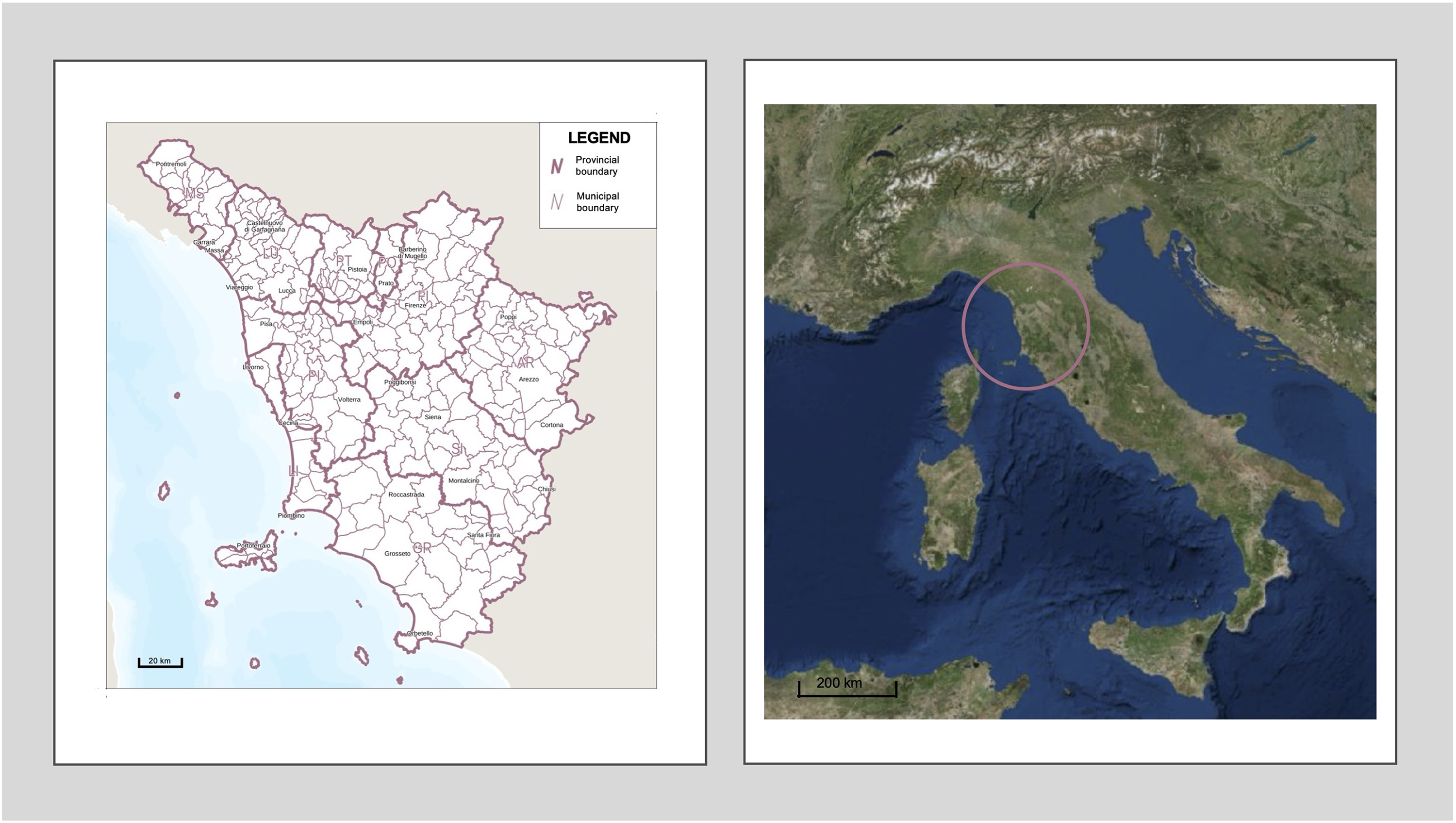
Illustration of the study area in Tuscany, Italy. The administrative border of the province of Grossetto, which is the specific research area, is illustrated in the image on the left, under the initials GR (the most southern province). Sources: Regione Toscana—SITA: Cartoteca; Ministero Ambiente—Geoportale Nazionale.
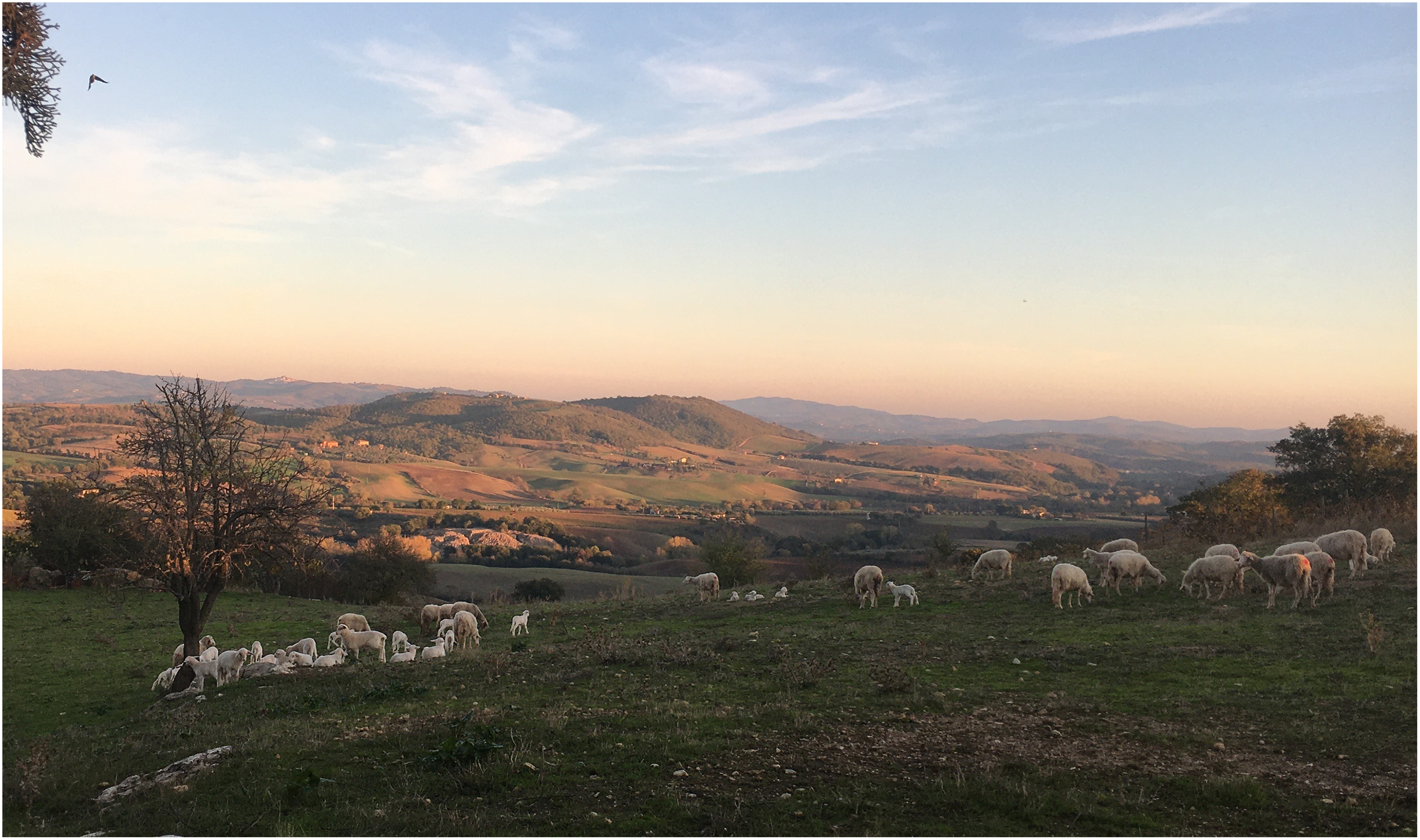
Free-ranging sheep grazing on a pasture field in the province of Grosseto, Tuscany. Source: lead author.
The agricultural sector in Tuscany is facing significant socioeconomic hardships, with the majority of farmers experiencing low income from their activities, which is an aspect contributing to farmland abandonment in the region (ISTAT, 2022). The number of sheep farms in Tuscany has more than halved in the last two decades, with small farms being the most affected (BDN, 2022; ISTAT, 2022; Pasqual, 2012).
The return of wolves in Tuscany needs to be situated within this political-economic and social context. Similar to other parts of Italy, in the last half a century, wolves have returned across Tuscany (La Morgia et al., 2022). Tuscany holds the greatest wolf population of any other region in Italy, counting at least 282–328 wolves according to estimates from 2016 (Galaverni et al., 2016). This return and expansion of wolves has led to rising livestock depredations in the recent decades, with sheep particular affected—hundreds of sheep are predated yearly by wolves in the region (Gervasi et al., 2022).
Exploring predators’ mobilities in Tuscany: Methods
To explore wolves’ mobilities and related human-wolf interactions in Tuscany, the lead author engaged in a twelve-month multispecies ethnography (Kirksey and Helmreich, 2010). Multispecies ethnography is an emerging approach that lacks a strictly defined set of methods. Rather, the multispecies component of the ethnography entails an epistemological openness to exploring the entanglement of humans and non-humans in the coproduction of socioecological change (Kirksey and Helmreich, 2010). This research involved working with and shadowing local farming and hunting communities. Specifically, the lead author engaged in participant observation (Moser and Korstjens, 2018), to learn about and observe unfolding dynamics of human-wolf relations.
Part of this investigation entailed conducting ethnographies of local hunts (pheasant and turtle dove hunting), as well as participating in other activities (e.g., group dinners, social gatherings) during which aspects of the hunts were discussed. Another aspect of this research involved herding sheep with local famers. The lead author actively participated in the daily life of farmers, from their routines (e.g., cleaning the pens, taking out the sheep) to different types of occurrences (e.g., sheep shearing; depredations), to get a fuller understanding of the local farming context. This activity included direct observation of the behaviour of the sheep and guardian dogs (Kirksey and Helmreich, 2010).
These ethnographic aspects were complemented with semi-structured interviews with the same farmers during the final months of fieldwork (Longhurst, 2003). This research involved forty-one local farmers of different genders, ages, and managing farms of different sizes. The names given to the farmers in this article do not match their real names, to protect anonymity.
In working with elusive wildlife, multispecies ethnographic accounts have relied on the vernacular knowledge of local communities who share their quotidian lives with the non-humans in question (e.g., Bathla, 2024). Our specific focus on local farming and hunting communities is based on two aspects: (i) our prioritisation of investing limited time and resources in cultivating strong relationships with these communities; and (ii) our attending to growing calls for pluralism in conservation, entailing promoting greater inclusivity and integration of local knowledges into ecological understanding (Pascual et al., 2021). Within this context, the traditional knowledges of local farming and hunting communities remain underexplored and relatively unacknowledged compared to scientific understandings of wildlife, which is a key reason underpinning social conflicts in conservation (Redpath et al., 2013; Von Essen, 2017). We follow other authors in focusing on rural communities to expand understanding of animal behaviour and multispecies coexistence (Toncheva and Fletcher, 2022).
We note how the communities that we collaborated with were very knowledgeable about the wolves. These are people who have often spent their whole life in the local area, and have witnessed first-hand the gradual return and expansion of the wolves in the recent decades. Their capacities to spot subtle wolf tracks, such as by pointing out to the lead author wolf footprints on dry soil that were barely visible, while driving a tractor, are comparable to the skills of trained ecologists with whom we have worked in other occasions. Local knowledge of wolf movements in the nearby area was highly accurate, and led to the successful positioning of camera-traps to document wolf activity. It was these knowledges and know-hows that we sought to explore through this research.
In leading the ethnographic work, the lead author listened carefully to the farmers’ and hunters’ recollections of their encounters with wolves, of how the wolves behaved, and how these behaviours were shaped by shifting social and environmental circumstances. The camera-trap footage, along with photographs, were used to visually complement these understandings, rather than as stand-alone measures to understand animal behaviour. Two camera-traps were located in different areas of local farms, with the consent and assistance of farmers (for the ethics of camera-trap use, see Sandbrook et al., 2018). They were moved occasionally to different parts of the farm, according to the farmers’ knowledge of wolf activity. The camera-traps were also used to monitor specific dynamics, such as wolf behaviour at depredation sites following livestock attacks.
Throughout the article, similar to the approach of other authors (e.g., Morizot, 2022), we have linked the descriptions and accounts of the local communities to the scientific literature.
Ethics approval was received from the University of Cambridge, before the start of this research.
Landscapes of fear
Humans can exert a landscape of fear on wolves, shaping the way wolves experience and navigate the local territory. Despite wolves being legally protected, illicit wolf killings still occur in Italy, including in Tuscany (Galaverni et al., 2016). These can occur for several reasons, from livestock protection to forms of resistance against a felt imposition of wolf conservation on local realities (von Essen et al., 2014).
Living in densely human-populated landscapes in rural Tuscany, wolves have capably learnt to largely avoid people, becoming most active when human activities slow down, and adjusting around local farmers’ rhythms (Figure 3). This adaptation of wolves to people is not only temporal but spatial. Aside from sporadic sightings by local people, wolves were described as mostly elusive and eluding direct observation, tending to avoid farmlands.
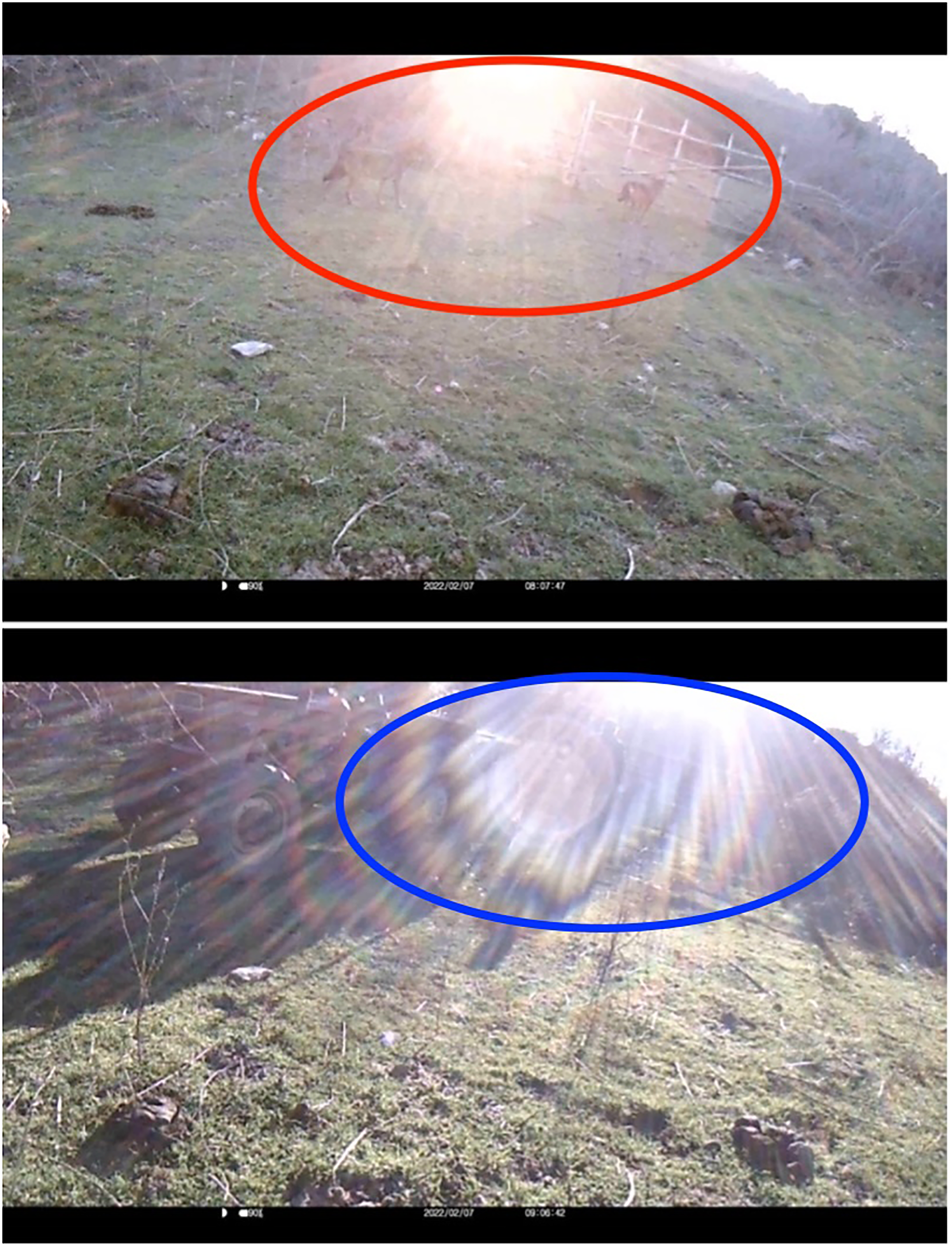
Temporal adaptation of wolves to local farmers’ rhythms. Top camera-trap photo depicts wolves (red circle) in the same location as the farmer (blue circle) in the bottom image. The two photos were taken an hour apart (8am-9am). Source: lead author.
The ongoing farmland abandonment in the region, which as discussed earlier is linked to agrarian political economies, is providing wolves with new opportunities to navigate landscapes of fear and hunt livestock. For several decades now, vegetation cover in Tuscany has been expanding at an average rate of 3500 hectares per year, involving the growth of conifer and broadleaved forests (Piras et al., 2021). This mostly concerns abandoned farmlands (Piras et al., 2021). While wolves are well adapted for cursorial predation (Mech and Boitani, 2003), these landscape shifts are providing them with opportunities to adjust their hunting strategies and develop greater ambush skills and capacities, increasing their consumption of livestock through stealthy attacks.
Wolves are using the increasing scrubs to ambush livestock (Figure 4). The extent to which this predation dynamic was emerging locally, meant that when some local farmers brought their sheep on the pastures, the sheep would actively avoid grazing near the edge of the fields bordered by scrub. Upon hearing any noise from the scrub, including that of passing roe deer or other animals, the sheep would get startled, triggering a chain reaction across the entire flock that would quickly rush back from the pasture to the pen site. This also comes with extra costs to farmers, who have to spend additional time persuading the sheep to return grazing.
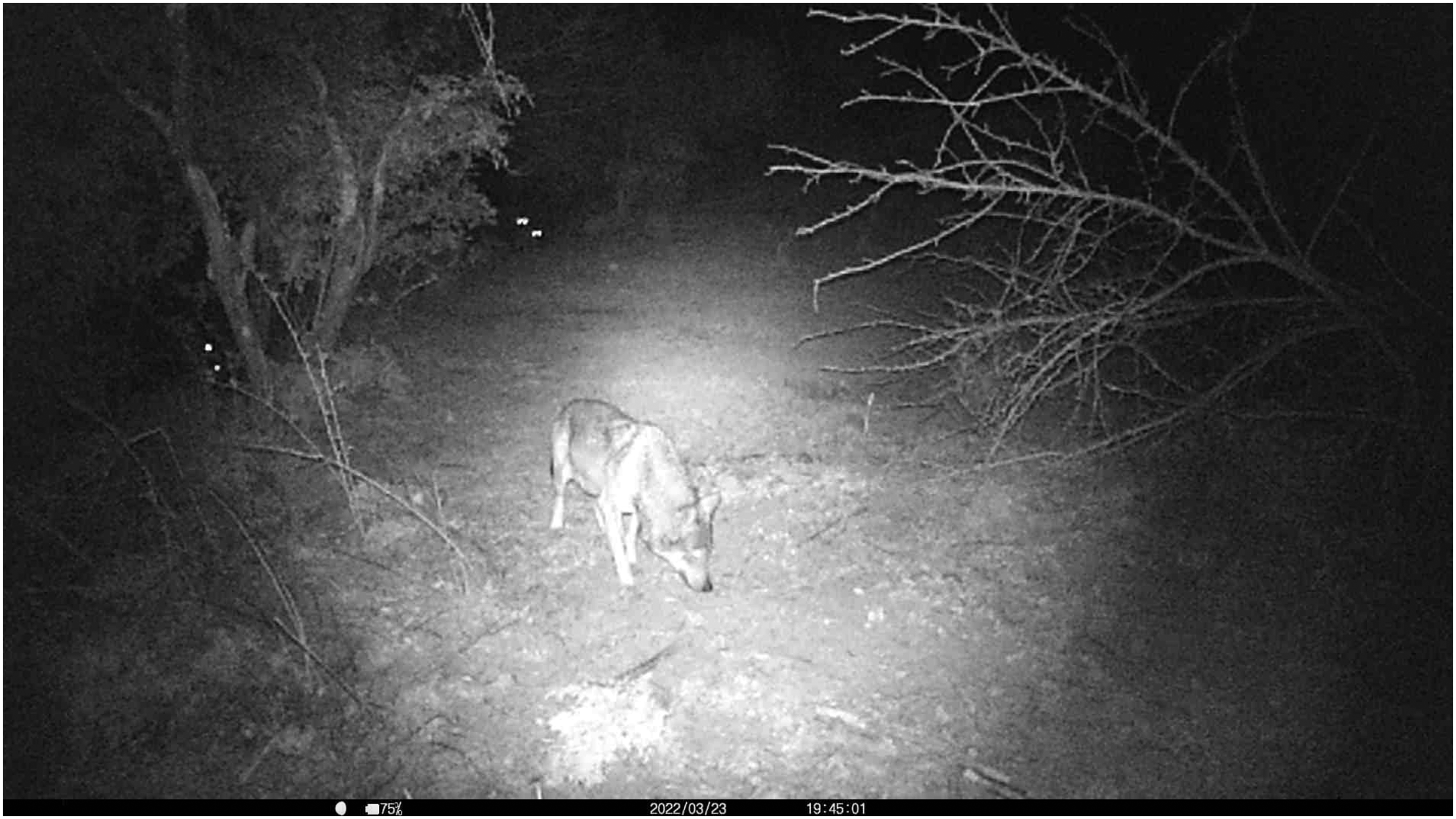
Camera-trap footage portraying one instance of wolves using the scrub as a hiding place, in the study area. Local wolf pack returns to site of recent depredation, looking for carcass remains that had been recently disposed. Four wolves (eyes in the bushes, visible through the infrared flash on the camera-trap) are hiding in the scrub, which is used as cover, while one of the wolves cautiously investigates the scene of the attack. Source: lead author.
A similar dynamic concerns overgrown ditches, often bordering pastures and dividing adjacent fields. These ditches are increasingly consisting of scrub, as these were usually cleared by the livestock of farmers who are now no longer active. Some farmers are noticing that wolves are increasingly using these ditches to hide, including after local wild boar hunts that can scare the wolves in the area. Various farmers found that the morning following these hunts their farm was more exposed to wolf attacks. Specifically, they shared the view that the wolves were using the overgrown ditches in the local area as refuge, and that their closer proximity to livestock in these instances facilitated depredation events.
Alongside these shifts in vegetation infrastructure (Barua, 2021), which wolves are using to navigate landscapes of fear and predate livestock, another significant shift in the context of the study area is the recent uptake of livestock guardian dogs by farms. These dogs are adopted to protect livestock from wolves, and they can exert their own landscape of fear on wolves. In one instance, the lead author was with Aurelio, a local sheep farmer, when his guardian dogs jumped into action and disappeared into the woods. Noticing this behaviour, the lead author sought explanation from Aurelio, who replied that the dogs possibly went after a wolf that was roaming in the area. It is not unusual for guardian dogs to not only scare but kill wolves, he said.
While guardian dogs may provide protection to sheep flocks in one area, however, they may also redirect wolves’ mobilities towards impacting other farms that may not afford the use of these dogs. For example, in the contexts of this study, in the same area, while some farmers using guardian dogs reported few depredations, others who did not use them said they were particularly affected by attacks. If, on the one hand, this dynamic attests to a degree of efficacy of guardian dogs in deterring wolves, on the other it also highlights possible concerns with an acritical promotion of this livestock protection measure in agrarian contexts, considering how farms in different socioeconomic conditions may be unevenly affected by this.
Rather than simply reducing their reliance on livestock when it becomes harder to access, wolves can shift their predatory attacks on the most exposed farms. This concerns not only the use of guardian dogs, but also broader trends of farmland abandonment. “In the 1980s, even here in [location removed], everyone had a little flock of sheep. Now there are only four or five big farms that’ve got all the sheep. […] Neighbouring my farm, until last year, there was the farm of [name removed]. His son no longer wished to work with sheep, therefore he stopped the activities of sheep farming. Since his sheep are no longer there, now the wolf is more oriented towards here.” (Luca, local sheep farmer, smallholder)
The adoption of guardian dogs reflects the socioeconomic conditions of farmers, tied to the hardships in the agricultural sector introduced above. The most marginal farms, with older farmers and fewer economic resources, are the ones least able to afford the use of these dogs, which is not subsidised regionally. Dogs are expensive to feed and care for, as well as coming with additional responsibilities and duties, as the dogs can cause problems with neighbours and tourists (Linnell and Lescureux, 2015). These aspects, underpinning the feasibly of using these dogs, are shaping uneven landscapes of fear in the local territories. The most structurally disadvantaged farms, for whom guardian dogs are too costly, become even more exposed to depredations.
This intersection of wolves’ mobilities, landscapes of fear and agrarian political economy is reinforcing existing inequalities locally, exacerbating conflict.
Landscapes of bonding
Dogs may not only be entangled in landscapes of fear with wolves. Wolves’ experience of the local landscapes is increasingly charactered by an easier access to breeding mates, because of the greater local presence of guardian dogs. In particular instances, such as when female wolves are in oestrus, guardian dogs can turn from foes to mates, shaping the emergence of ‘landscapes of bonding’, wherein guardian dogs and wolves meet for interbreeding encounters. Tuscany's landscapes provide a notable example of the extent to which this dynamic is occurring. Tuscany represents a region with possibly one of highest rates of wolf-dog hybridisation in Europe, with around half of the local wolves genetically identified as hybrids (Salvatori et al., 2019).
Landscapes of bonding are co-shaped by wider socioeconomic dynamics that are undermining an effective supervision of guardian dogs. Guardian dogs are already difficult to manage. Local farmers using them have made it clear that a key issue of having these dogs is that you do not have full control over them. As a local sheep farmer who used these dogs noted, “it's not like you can tell them [guardian dogs] to stay with the flock, they’re animals and ultimately they do what they want”. Close supervision of the dogs could facilitate their management. However, this is hardly ever an option to farmers.
On the one hand, farms are increasingly large, to respond to market pressures and economies of scale (ISTAT, 2022). This is requiring an increasingly bigger number of dogs on the farm premises, to protect ever more numerous flocks. Some of the local farms kept over forty guardian dogs, increasing the difficulties of their effective supervision. On the other hand, hardships in farming are undermining local capacities in overseeing the dogs. While farmers are not always opposed to the idea of spending more time on the pastures with the sheep and the dogs, this possibility is significantly limited by the need to engage in additional economic activities. Farmers can have second jobs, such as part-time employment in the industry in nearby towns, to supplement low incomes. They are also often engaged in different agricultural practices, such as raising different types of livestock or keeping vineyards, alongside sheepherding. In these challenging socioeconomic circumstances, the hiring and employment of shepherds is rarely an option.
An unintended consequence of socioeconomic hardships in the livestock sector is that the guardian dogs, rather than sticking with the flocks, can roam around significantly more (Figure 5; also see Zingaro et al., 2018). “It's not easy to get a guardian dog and make it stay with the sheep to supervise them. Ninety-nine percent of the times, when the dogs are being used, the sheep are in one place and the dogs in another, roaming around and causing damages in other places. This happens to eight out of ten sheep flocks that have dogs. There are very few farms that have dogs that [stay with the sheep at all times]. (Vincenzo, local sheep farmer, smallholder)
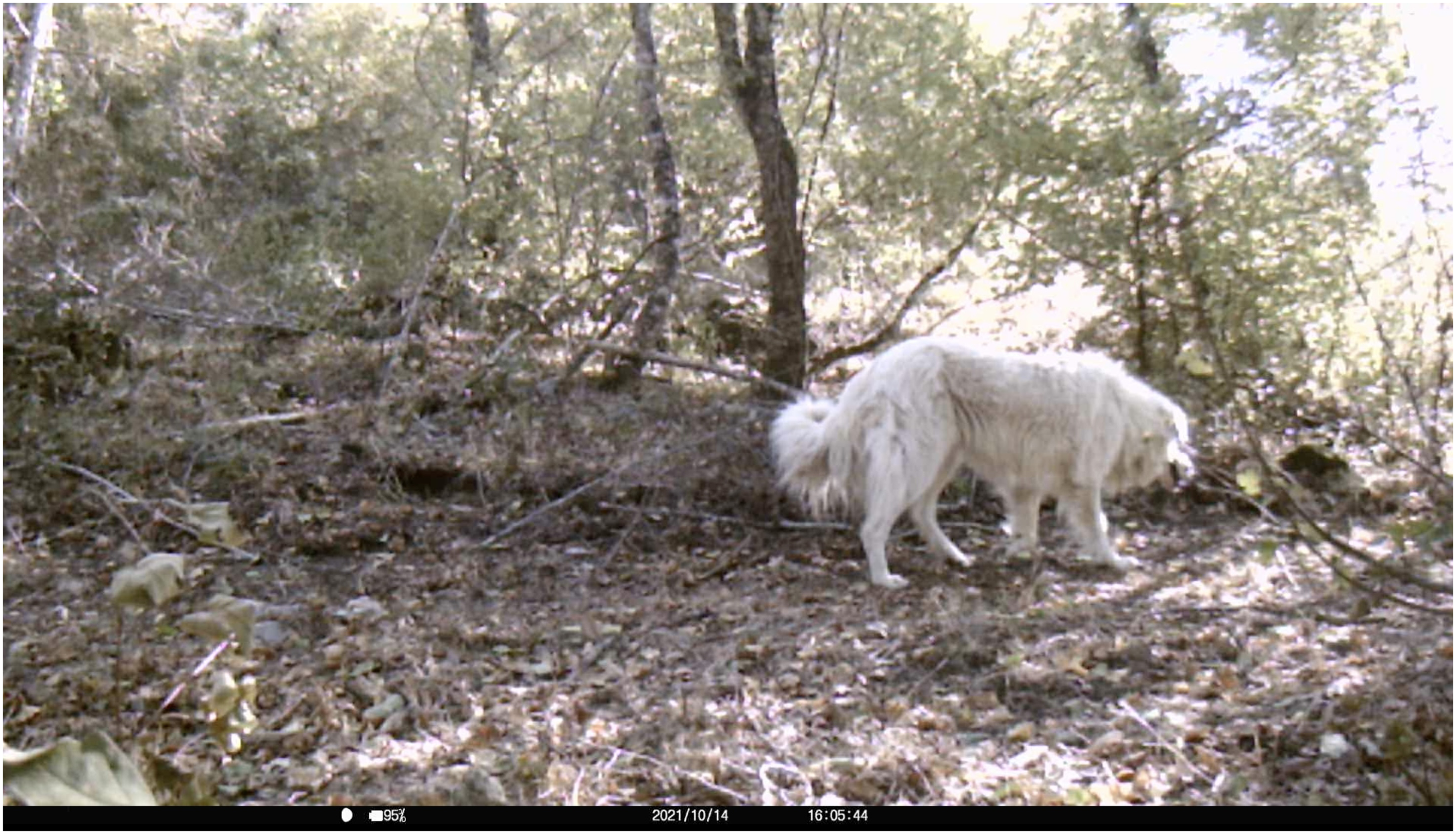
Camera-trap footage of a guardian dog roaming in the surrounding area of a local pasture. In this case, the dog was in the field of a neighbouring landowner. Source: lead author.
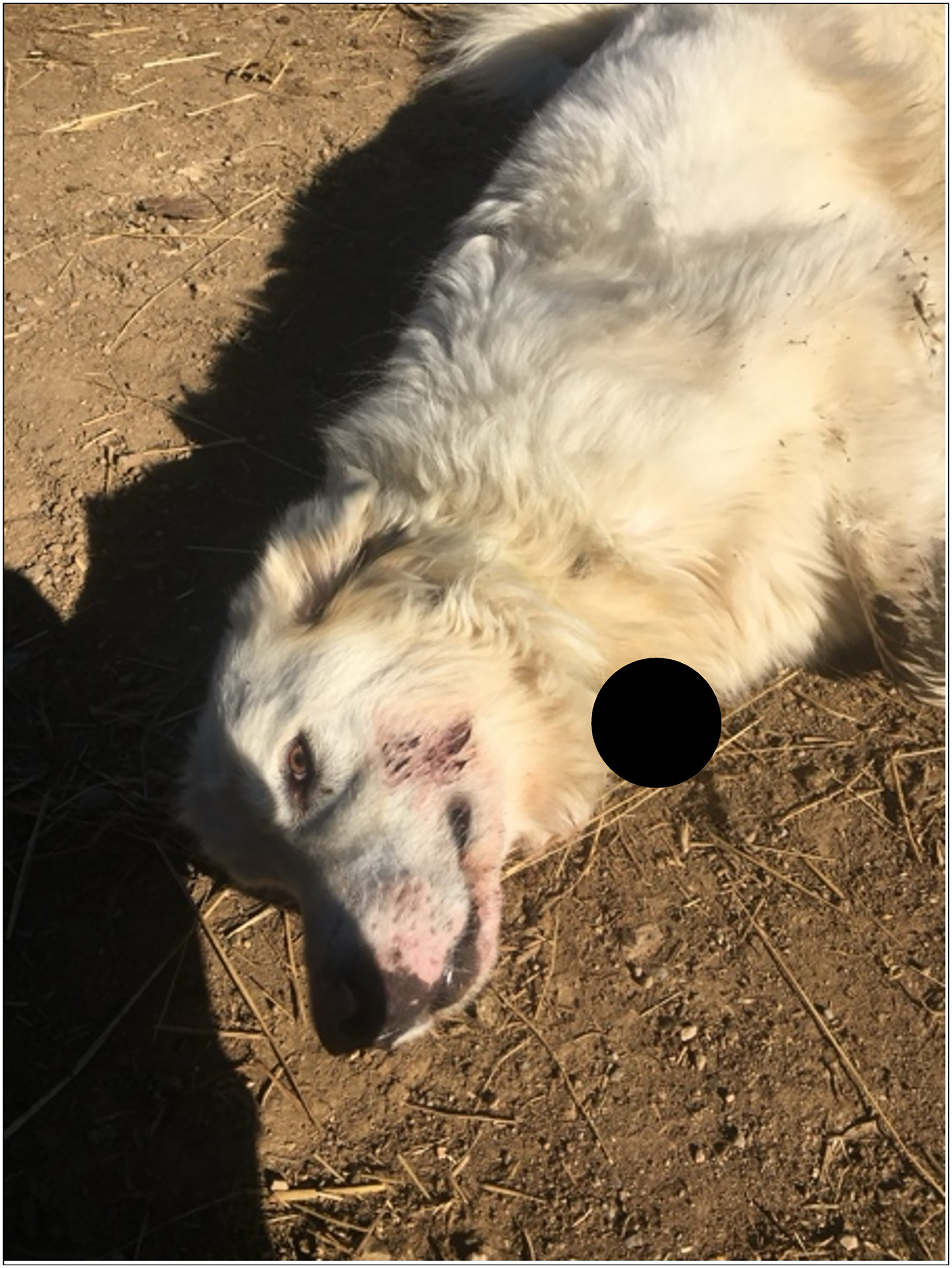
Photo of a livestock guardian dog that, together with the pack of guardian dogs, had been absent from the farm for over an hour and returned with a bloody muzzle, suggesting the dog had been feeding on (and perhaps predating on) wildlife or livestock. The black circle obscures the dog's collar to omit identifiable information. Source: lead author.
Local farmers recalled how their guardian dogs would occasionally leave the sheep unsupervised because there were dogs in heat in the neighbouring farms. They believed that this dynamic also involved the local wolves in heat in the area. The possibility of hybridisation between guardian dogs and wolves was a reason why some farmers refused to get guardian dogs in the first place, to avoid contributing to the increase and mixing of local wolf populations (see below). Following these incidents, some farmers chose to castrate their male guardian dogs. However, others viewed this practice as counterproductive, arguing that castration could reduce the dogs’ aggressiveness and territorial behaviour, making them less effective at deterring wolves. It would also eliminate the possibility of breeding future generations of guardian dogs for the farm.
Wolves’ mobilities are affected by, and emerge as different through, processes of hybridisation. Wolves are afforded greater capacity to find mates by the more numerous presence of free-roaming dogs, in highly anthropized and agricultural contexts like Tuscany. This might have benefitted and accelerated wolves’ expansion and survival in the area. If, on the one hand, hybridisation might have promoted the return of wolves locally, however, on the other hand this seems to have shaped more negative perceptions of the wolves. “Now they are no longer legitimate wolves, they are hybrids, you see? They interbreed with the female [wolves]. The legitimate wolf has litters once a year and has two pups, the hybrids reproduce twice a year and have four, five pups.” (local retired sheep farmer)
In addition to these aspects, there are also some concerns locally that the hybrids might be behaving more confidently and boldly than wolves around people and livestock, suggesting a further and possibly even more drastic shift in wolves’ mobilities. Although, this is an assertion that is difficult to substantiate, as it is often impossible to tell hybrids apart from wolves simply by sight. Hybrids and wolves can look the same, requiring genetic testing to distinguish between them (Donfrancesco et al., 2019).
This entanglement of agrarian political economies, landscapes of bonding and wolves’ mobilities is shaping the emergence of novel configurations of human-dog-wolf relations locally, exacerbating tensions over coexistence with wolves.
Sound-Scapes
Local contexts of agrarian change are affording wolves opportunities to make novel uses of sounds or noises in leading their attacks on livestock. Wolves’ mobilities are emerging through new acoustic dynamics, or sound-scapes, associated with current farming practices and challenges.
When farmers are able to directly attend to and supervise their livestock, or use guardian dogs, they can be relatively less worried about predations. However, not everyone can afford the adoption of these measures, as described above. A practice commonly used by farmers in these instances, is to supervise the sheep acoustically from afar, while engaged in other farm labour.
Gianluca, another local sheep farmer with about four hundred sheep, noted a possible pattern in the way local wolves were using ‘sound-scapes’ to lead more successful attacks on his sheep. To complement his income, Gianluca's farm is partly diversified, including vineyard activities on the side. This means that Gianluca cannot always stay with the sheep, but rather often supervises them from distance, including from the vineyard, which is a hundred or so metres away from some of the main pasture grounds. While at work in the vineyards, he relies on sound cues to monitor the flock. Some of the sheep have bells, and from their noise it is usually possible to tell what the sheep are doing, whether calmly grazing or panickily running around. While Gianluca does not have guardian dogs to alert him of any imminent danger through their barks, the sheep can also make loud noises when they are startled, such as significant baaing. This means that Gianluca can generally notice when there is an imminent wolf attack, and he can try to intervene promptly.
When the sound-scape was quiet, however, Gianluca rarely had to intervene, as depredations did not really occur in these instances. In contrast, recent depredation attempts by wolves, Gianluca found, were happening when there was a lot of confusion around, which prevented an effective acoustic monitoring of the sheep. Gianluca's farm borders other farms that can be active with tractors and chainsaws, making significant noise. Gianluca recalled such an instance of a local wolf conveniently using a loud anthropogenic sound-scape to attack the sheep. “The last time the wolf attacked, there were work noises coming from there [farm next-door]. I think the wolf was using the noise as a distraction to attack the sheep. In the moment I saw it [the wolf attack] I started shouting at the wolf and the noises stopped, maybe because they [farm next-door] heard me scream. In the meantime the wolf had managed to get hold of a sheep, but I kept shouting and without the noises the wolf let go of it and ran away”.
In agrarian contexts in which farmers are struggling economically and rely on an acoustic monitoring of the sheep, wolves’ mobilities are becoming entangled with sound-scapes in novel ways, shaping different dynamics of livestock depredations. Sound-scapes, in this instance, are a more-than-material infrastructure (Barua, 2021) that wolves are using to attack livestock. The possibility for wolves to develop this behaviour is modulated by agrarian contexts in which farmers cannot afford direct supervision of the sheep but have to rely on remote acoustic monitoring. This situation is coming with new, additional costs to farmers, whose pragmatic strategies to deal efficiently with the local wolf presence are sidestepped by adaptive wolves. This is posing new difficulties and challenges for coexistence with wolves, in precarious agricultural contexts.
Smell-Scapes
Olfactory capacities are central to wolves’ lifeworlds, underpinning critical activities such as the tracking and hunting of prey (Mech and Boitani, 2003). Yet, these ‘smell-scapes’ (Henshaw, 2013) are being reconfigured by the combined pressures of agrarian change and climate disruption. As landscapes become drier and livestock production intensifies, wolves’ sensory geographies are being altered, with implications for wolves’ mobilities, behaviour and interactions with livestock.
In Italy, including Tuscany, prolonged summer droughts have become increasingly common, desiccating soils, drying out vegetation, and possibly flattening olfactory gradients across the land (Ali et al., 2022; Bartolini et al., 2022; Vallebona et al., 2015). The ethnographies of the hunts conducted as part of this research revealed that the hunting dogs were particularly successful at tracking game if it had recently lightly rained. The hunters found that when it did not rain for many days and the climate was drier, the dogs struggled to pick up the scent of wildlife, often failing to track it.
The smell-scapes that hunting dogs rely on may become thinner or patchier in dry conditions, erasing the olfactory signatures left by moving prey. Aside from the scent signatures that may permeate the ground for longer in moister soils, such as in the trails and scrubs that wildlife uses, prey animals may also emanate stronger smells when they are damp. A local hunter used the analogy of how a wet dog ‘stinks’ much more than a dry dog, to explain this aspect.
These shifts in smell-scapes may be affecting wolves’ mobilities too, when it comes to tracking wild prey, shaping greater wolf reliance on livestock. While wild prey, which tends to roam unpredictably and leave more ephemeral scent trails, can be harder to detect in drier climates, livestock can represent a more stable and predictable presence in the landscape. Grazing on fixed pastures, livestock may be more reliably scented, especially when its movement patterns are habitual and predictable. Wolves can learn the location of the pastures, usually stable in the local area. During dry spells, when wild prey may become less traceable within smell-scapes, livestock can become an easier and more accessible prey.
This dynamic may be intensified by the recent shifts in agrarian practices. Traditionally, the summer season was a time of reduced production for many livestock farmers. Sheep were often rested from production and pasture use was more flexible. However, increasing numbers of farmers in the region are now keeping their flocks productive year-round, including during the drier summer months.
These shifts are deeply entangled in political-economic processes. Under pressure from volatile markets and the precariousness of agricultural livelihoods in Europe (EC, 2018; Pe’er et al., 2017), many farmers are intensifying production in an effort to stabilise incomes. This includes non-seasonal breeding and more concentrated herding practices, involving bigger flocks. These practices have the effect of increasing both the spatial availability and temporal consistency of livestock in the landscape, at precisely the time when wolves’ ability to rely on scent to hunt wild prey might be most compromised. This dynamic is possibly contributing to local farmers becoming more exposed to risks of livestock depredations during summer (Gervasi et al., 2022).
In addition to this, such a temporal shift in livestock practices overlaps with a critical reproductive period in the life history of wolves, involving pup-raising season in summer. During this period, wolves need to sustain greater nutritional needs, and might seek greater reliance on livestock in sensorially impoverished smell-scapes (also see Ciucci and Boitani, 1998).
Smell-scapes emerge as active sites where multispecies relations, climatic conditions, and political-economic pressures coalesce. They are not just natural features of the terrain, but the outcome of multi-scalar processes, involving agricultural intensification and drier climates—which are deeply entangled with one another, as evidenced by the climate footprint of European agriculture (Cuadros-Casanova et al., 2023; Pe’er et al., 2022). Wolves’ increasing predation on livestock cannot be separated from these political-economic dynamics and ongoing climatic and agricultural transformations. This intersection of wolves’ mobilities, shifting smell-scapes and agrarian change is coproducing socioecological conditions that may be particulalry conducive to conflict, contributing to shaping greater levels of wolf impacts and conflict locally.
Emerging predators’ mobilities in agricultural contexts
This study explored the entanglement of wolves’ mobilities and agrarian political economies in Tuscany, Italy. We have highlighted how shifts in livestock production practices, tied to international agricultural and economic policies, might be affecting wolves not only materially but also sensorially. In particular, aspects such as the hardships in the agricultural sector, the intensification of livestock production, and the ongoing processes of farmland abandonment might be influencing how wolves experience and navigate landscapes of fear, landscapes of bonding, sound-scapes, and smell-scapes (Figure 7). This is shaping different ways wolves interact with human practices, influencing local dynamics of livestock depredations and conflict.
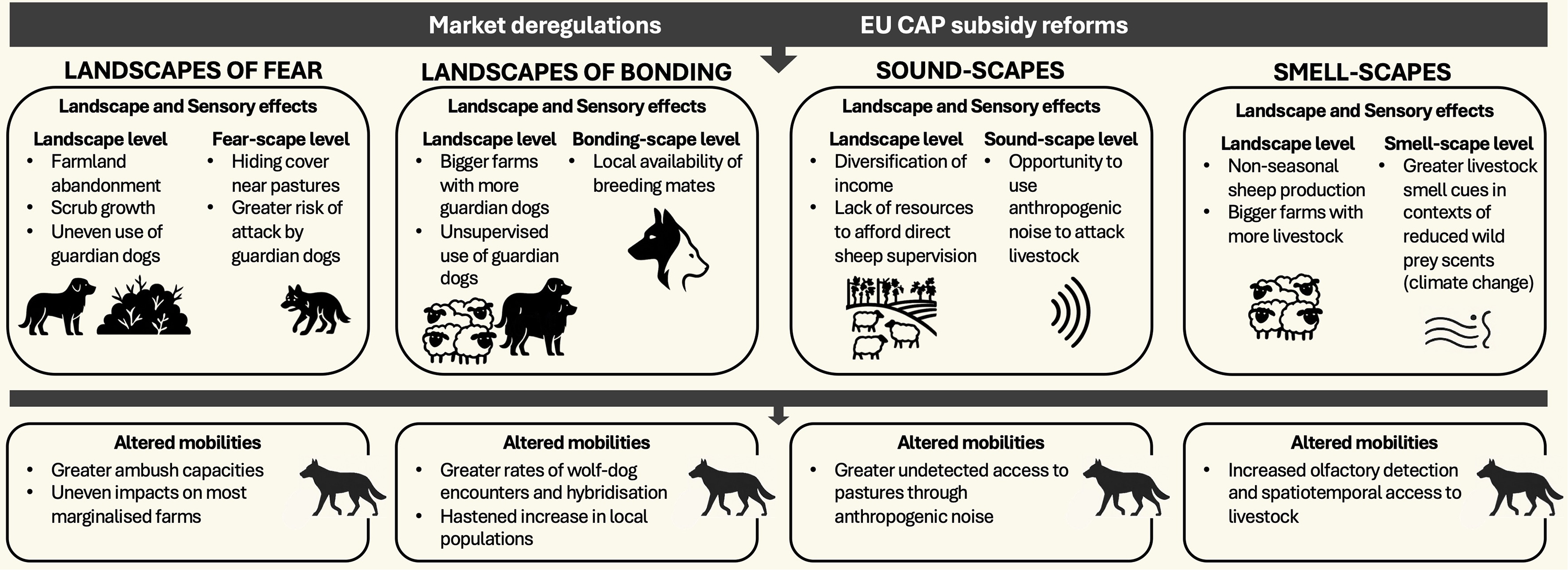
Visual representation of intersecting wolves’ mobilities and agrarian political economy.
The contribution of this work is three-fold. First, this study offers a theoretical contribution to the study of animals’ mobilities in contexts of human-wildlife conflict. We have highlighted how ongoing structural change in agriculture might be affording wolves different kinds of mobilities, including in accessing and predating livestock (Figure 7). This complements previous studies that have looked at the way broader political economies can affect where human-wildlife conflict happens (e.g., closer to people's home; Margulies and Karanth, 2018), and why (e.g., shrinking habitats and resources; lack of local means to use preventive measures or afford livestock losses; de Silva and Srinivasan, 2019; Fletcher and Toncheva, 2021). We have elucidated the link between broader political economies and the how of human-wildlife conflict, by shedding light on the way wolves are adapting their behaviours and responding to different human practices and processes of environmental change.
In advancing this understanding, this study contributes to a more holistic and explicit conceptualisation of animals’ mobilities in contexts of human-wildlife conflict. This entails attending to the animals’ embodied experience of navigating local environments and multispecies interactions. From within this perspective, conflict with predators like wolves emerges not only from a direct, structural vulnerability of farming practices to predations (Donfrancesco, 2024a; Toncheva and Fletcher, 2022), but also from a more indirect increase in wolves’ capacities and mobilities in attacking livestock. These emergent dynamics of conflict arise from a wider network of agencies, including the increase in local scrub and guardian dogs, as linked to agrarian political economies.
This understanding fits within a growing literature seeking a decentring of the human subject in current accounts of environmental change, without losing track of ongoing structural processes (e.g., Barua, 2014b; de Silva and Srinivasan, 2019; Donfrancesco, 2024a; Evans and Adams, 2018; Margulies and Karanth, 2018). By foregrounding the adaptiveness and responsiveness of non-humans like wolves, we have sought to offer a deeper understanding of how conflict takes shape.
The conflict dynamics that we have discussed in this work, can be conceptualised within an understanding of how infrastructural shifts in the built environment shape animals’ mobilities (Barua, 2021). Critical scholarship on infrastructure is showing how this entails both material and sensorial or affective components that shape the way animals travel or move across different landscapes (Barua, 2021; Poerting, 2023). We have emphasised the unfolding of this dynamic in contexts of human-wildlife conflict. Infrastructural change pertaining to rural, agricultural contexts is coproduced by human and non-human agencies, including structural agrarian processes. This includes shifts in vegetation cover, farming practices, and related landscape topologies and affective intensities (Figure 7). Wolves respond to and participate in these transformations, leveraging emergent affordances to sharpen their predatory behaviour and meet their physiological needs.
This understanding of predators’ mobilities takes further current accounts that conceive predation on livestock as not merely an ecological but a political phenomenon (e.g., Fletcher and Toncheva, 2021; Marino and Fry, 2025). Specifically, it imbues these accounts with a finer grain of analysis on the coproduction of space by predators like wolves, and their embodied, sensorial navigation of highly anthropized contexts. In doing so, this study builds on and develops a more-than-human political ecology, engaging with the myriad of human and non-human agencies involved in shaping society-environment relations, under the influence of political-economic drivers.
The second contribution that this work makes is providing practical insights into the management of human-wolf interactions. This study helps us better understand—though not justify—the reasons behind the recent legal downlisting of wolves in Europe. Wolves can often be framed as scapegoats, killed instrumentally for political gain, to appeal to rural masses and address social disputes and cultural tensions (Petridou and Kati, 2025; Salvatori et al., 2021. Zscheischler and Friedrich, 2022). This understanding may underplay the ways wolves are posing real, concrete problems to farmers, even leading to the closing down of farms and contributing to broader trends of rural depopulation (Donfrancesco, 2024b; Mink and Mann, 2022). Wolves can instil fear in people, and the gruesome scenes that can follow livestock depredations can viscerally affect the way farmers perceive and relate to wolves (Gieser, 2024). We have noted how farmers, rather than being stubborn and entirely closed off to the idea of coexistence, can actively try to navigate it within their means. However, wolves’ adaptive capacities, as shaped by the local socioecological changes that we have described here, can make coexistence challenging to manage for already struggling farming communities. In these instances, framing wolves as mere scapegoats may risk ostracising local perspectives and lived experiences of wolf presence, further shaping social conflicts.
We provide a different angle to understand wolf impacts. We contend that wolves become particularly problematic in given social and political-economic contexts. In the current agrarian contexts, wolves are afforded greater capacity to become more impactful on rural livelihoods. Rather than attributing responsibility to wolves for their impacts, we stress wolves’ response-ability (Haraway, 2016), wherein their impacts emerge in response to shifting agrarian and environmental contexts. Within this understanding, responsible coexistence demands approaching cohabitation with wolves as a systemic and relational project—one that foregrounds wolf's agency, needs and adaptive capacities, while grappling with the political-economic conditions that shape human-wolf encounters (also see Komi and Nygren, 2023; Morizot, 2022).
We have explored in particular how the ongoing farmland abandonment, lack of effective economic support to farmers, and trends towards bigger and less manageable farms are facilitating greater instances of human-wolf conflict. These trends in agriculture have been previously discussed at length in relation to capitalist political economies, with an accumulation of profits at the end of supply chains, benefitting transnational corporations at the expense of local producers, especially the smaller ones (McGreevy et al., 2022; McMichael, 2009; van Der Ploeg, 2010; van der Ploeg, 2012). Addressing these aspects gains critical importance towards mitigating and reducing wolf impacts, helping transform local human-wolf interactions. This speaks to amending current international agricultural policies, towards greater support of smaller farms and local incomes (Pe’er and Lakner, 2020).
The promotion of technical fixes, such as in terms of fostering the local uptake of guardian dogs, can be important towards limiting wolf impacts (van Eeden et al., 2018). However, as stand-alone measures, these can risk reinforcing existing inequalities for farmers who cannot afford their use. Pragmatically, it is important to establish funds to support the use and maintenance of guardian dogs, which are currently mainly provided by private initiatives or individual EU-funded projects with limited economic and temporal scope (Oliveira et al., 2021). At a more systemic level, we need to address deeper inequities in agriculture and promote greater farmers’ wellbeing, to enable greater capacity to adopt these dogs.
We have noted how, in the current socioeconomic contexts, guardian dogs can be used largely unsupervised, which is possibly contributing to current high rates of wolf-dog hybridisation locally (Salvatori et al., 2019), as well as in other parts of Europe (Salvatori et al., 2020b). This is shaping local levels of human-wolf conflict, as the hybrids become perceived as contributing to greater wolf expansion and impacts locally. We wish to bring particular attention to the influence of structural dynamics in shaping rates of hybridisation. What could be questioned, in hybridisation management, is not so much human influence per se (Allendorf et al., 2001; Todesco et al., 2016), but how uneven development may be affecting interbreeding encounters. This reframing shifts the management focus from the hybrids per se (e.g., see some scientists’ perspectives on hybrids, like: “we’d like to shoot them all”; Last, 2024) to the underlying drivers of heightened rates of hybridisation. It also enables greater acknowledgement of wolf and dog agency in interbreeding encounters, as we have highlighted here (also see Rutherford, 2018). We do not conceive wolf-dog hybridisation as a problematic issue per se, but rather emphasise the importance of monitoring how structurally augmented rates of hybridisation may be affecting wolf populations—whether contributing to hybrid vigour or the immiseration of wolves. These are aspects on which there continues to be little clarity (Donfrancesco et al., 2019; Hindrikson and Tammeleht, 2025). We argue that it is upon these aspects that hybridisation management should be based, rather than on ideals of preserving ‘pure’ or ‘natural’ wolf populations (also see Fredriksen, 2016).
Finally, this study comes with methodological implications (and limitations) for exploring the mobilities of elusive animals like wolves, which is a recognised methodological challenge (Hodgetts and Lorimer, 2020). While an invasive research approach could have, for instance, consisted in collaring the wolves (as well as the guardian dogs and sheep) and observing their GPS-tracked movements, we have explored an alternative, non-invasive approach. We have primarily engaged ethnographically with local communities, building on their situated knowledges and experiences, to engage with vernacular understandings of wolves’ use and navigation of the local territories (also see Bathla, 2024). In embracing this approach, we have sought to engage with and build on an emergent speculative study of multispecies ethnographies (Kirksey and Helmreich, 2010).
We acknowledge that the reliance on local experiences and understandings of conflict may provide only a partial and limited analysis of wolves’ mobilities and behaviour. Our findings should be seen not as definitive, but as generative—an invitation for further inquiry, rather than a conclusive mapping of wolves’ mobilities. Future investigations could also include other perspectives, such as those of scientists and conservation practitioners, into their approach, to juxtapose and triangulate different ways of knowing. Attending to such multiplicity of knowledges can enrich understandings of predators’ mobilities without collapsing them into a singular, authoritative account (Toncheva and Fletcher, 2022).
We also invite caution in interpreting the parallel we have drawn between the sensory world of wolves and hunting dogs. While some similarities have been suggested (Polgár et al., 2016), we treat these comparisons speculatively, recognising the epistemic humility required when making claims about non-human perception. Our aim is not to fix meanings or map territories with certainty, but to remain attuned to the partial and situated nature of knowledge about non-humans in shared landscapes (Despret, 2016).
While we have focused on predators’ mobilities in this work, we encourage future studies to advance similar investigations in other contexts, concerning other more-than-human entanglements. In a world increasingly defined by ecological volatility and political uncertainty, this kind of work is not only pressing but critical to inform a more radical praxis for learning to live well in a complex multispecies world.
Highlights
We advance and develop current understanding of animals’ mobilities as embedded within wider political economies, focusing on contexts of human-wildlife conflict
Structural processes of agrarian change may be affecting wolves’ experience and navigation of landscapes of fear, landscapes of bonding, sound-scapes and smell-scapes in Tuscany, Italy
These altered mobilities of wolves in changing agrarian and environmental contexts are underpinning particulalry conflictual human-wolf relations locally
Addressing ongoing trends of farmland abandonment and the hardships in the farming sector is central to improving human-wolf relations
We emphasise the importance of exploring the different ways in which wider political economies might be affecting human-wildlife relations and interactions, to inform conflict management
Footnotes
Acknowledgements
We are most grateful to the research participants. We also thank three anonymous reviewers and Editor Prof Srinivasan for insightful comments that improved this manuscript. This work was funded by the Economic and Social Research Council, UKRI (Grant ES/P000738/1).
Authors’ contribution statement
Valerio Donfrancesco: conceptualisation, data collection and analysis, writing. Chris Sandbrook: project supervision, editing.
Data availability statement
Data available upon reasonable request to the corresponding author.
Declaration of conflicting interests
The author(s) declared no potential conflicts of interest with respect to the research, authorship, and/or publication of this article.
Ethical approval and informed consent statements
Ethical clearance for this research was received from the University of Cambridge's Department of Geography Ethics Review Group before commencing this work (research ethics assessment #2075).
Funding
The author(s) disclosed receipt of the following financial support for the research, authorship, and/or publication of this article: This work was funded by the Economic and Social Research Council, UKRI (Grant ES/P000738/1).
